 https://www.popularmechanics.com/science/environment/a27150094/climate-change-could-unleash-long-frozen-radiation/
Atomic bombs, Chernobyl,Fukushima—radiation has traveled and frozen all over the world. Global warming is changing that.
Melting could be one of the most important phenomena of the 21st century. Thanks to man-made climate change, Arctic ice levels have hit a record low this year. Among the many profound changes that could stem from ice melting across the world, according to a new study from an international group of scientists, is the release of deeply buried radiation.
The international team studied 17 icy locations across the globe, including the Arctic, the Antarctic, Iceland, the Alps, the Caucasus mountains, and British Columbia. While radiation exists naturally, the scientists were looking for example of human-made radiation. It was common to find concentrations at least 10 times higher than levels elsewhere.
“They are some of the highest levels you see in the environment outside nuclear exclusion zones,” says Caroline Clason, a lecturer in Physical Geography at the University of Plymouth, speaking in a press statement.
When human-made radiation is released into the environment, be it in small amounts like the Three Mile Island accident of 1979 or larger quantities like the Chernobyl disaster of 1986and the Fukushima Daichii accident of 2011, it goes into the atmosphere. That includes elements like radioactive cesium, which have been known to make people sick to the point of death across the globe.
After Chernobyl, clouds of cesium traveled across Europe. Radiation spread without regard for borders, reaching as far as England through rains. But when rain freezes, it takes the form of ice. And within ice, it can lay trapped.
“Radioactive particles are very light so when they are taken up into the atmosphere they can be transported a very long way,” Clason tells the AFP. “When it falls as rain, like after Chernobyl, it washes away and it’s sort of a one-off event. But as snow, it stays in the ice for decades and as it melts in response to the climate it’s then washed downstream.”
What does that response look like? Humanity is starting to find out, Clason says. She points to wild boar in Sweden, who in 2017 were found to have 10 times the levels of normal radiation.
Traces of human-made radiation last a famously long time. Ice around the globe contains nuclear material not just from accidents involving nuclear power plants, but also man’s use of nuclear weapons.
“We’re talking about weapons testing from the 1950s and 1960s onwards, going right back in the development of the bomb,” Clason says. “If we take a sediment core you can see a clear spike where Chernobyl was, but you can also see quite a defined spike in around 1963 when there was a period of quite heavy weapons testing.”
Elements within radiation have different life spans. Perhaps the most notorious of these, Plutonium-241 has a 14 year half-life. [ed. most plutonium isotopes have half-lives of many thousands of years] But Americium-241, a synthetic chemical element, has a half life of 432 years. It can stay in ice a long time, and when that ice melts will spread. There isn’t much data yet on its ability to spread into the human food chain, but Clason called the threat of Americum “particularly dangerous”.
A term popular in science these days is the Anthropocene, which refers to the idea that humans have permanently altered the very core of how the Earth functions as a living ecosystem. Looking for radiation buried within icy soil and sediment could offer stronger proof of those changes.
“These materials are a product of what we have put into the atmosphere. This is just showing that our nuclear legacy hasn’t disappeared yet, it’s still there,” she says.
“And it’s important to study that because ultimately it’s a mark of what we have left in the environment.”
April 18, 2019
Posted by Christina Macpherson |
2 WORLD, climate change, environment, radiation |
1 Comment
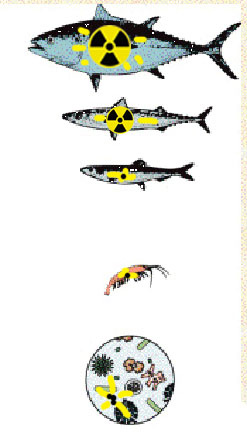 Seoul Welcomes WTO’s Ruling on Fukushima Seafood Ban by Korea Bizwire SEOUL, Apr. 12 (Korea Bizwire)
 — South Korea on Friday welcomed the World Trade Organization’s decision to rule in favor of Seoul’s import restrictions on Japanese seafood in the wake of the 2011 Fukushima nuclear disaster and said it would keep the ban in place going forward.The WTO appellate body overturned several points of the 2018 verdict earlier in the day, saying the Seoul government’s measures are not unfair trade restrictions and do not fall into the category of arbitrary discrimination.
The appellate body, however, sided with Japan on one point, saying that Seoul has not provided enough information to Tokyo in terms of the import ban measures.
“The government has been making all-out efforts to follow the principle of making the health and safety of the people a priority, and the government highly appraises the WTO’s decision,” the Ministry of Trade, Investment and Energy said in a statement.
The South Korean government said it hopes that there would be no further trade dispute with Japan.
In 2015, Japan officially lodged a complaint at the WTO to challenge South Korea’s import bans and additional testing requirements on fish caught after 2013. Tokyo argued that radioactive levels of its fishery product were lower than those from a number of other nations.
The WTO’s dispute settlement body ruled in favor of Japan in February 2018.
South Korea has been placing import restrictions on 28 kinds of fish caught from eight prefectures near Fukushima since the nuclear power plant accident.
The South Korean government said it will keep the existing import ban on all seafood from the eight prefectures. All Japanese seafood companies will be required to hand in safety certificates when any traces of radiation are found, it added.
About 50 countries have maintained bans on imports since the nuclear disaster, but Japan has complained to the WTO about only one country — South Korea.
“Currently, 19 more countries have implemented an import ban (on Japanese seafood) at different levels,” said Yoon Chang-yul, the head of the social policy coordination office under the Office for Government Policy Coordination……..http://koreabizwire.com/seoul-welcomes-wtos-ruling-on-fukushima-seafood-ban/135802
April 13, 2019
Posted by Christina Macpherson |
environment, Japan, South Korea |
Leave a comment
 SOUTH KOREA WTO APPEAL SUCCEEDS IN JAPANESE FUKUSHIMA FOOD DISPUTE, https://www.agriculture.com/markets/newswire/update-2-south-korea-wto-appeal-succeeds-in-japanese-fukushima-food-dispute GENEVA, April 11 (Reuters) – South Korea won the bulk of its appeal on Thursday in a dispute at the World Trade Organization over import bans and testing requirements it had imposed on Japanese seafood in the wake of the 2011 Fukushima nuclear disaster.
Last year a WTO dispute panel supported Japan, saying South Korea was wrong to keep its initial trade restrictions in place. But Thursday’s ruling overturned several key points of that verdict, saying South Korea’s measures were not overly restrictive and did not unfairly discriminate against Japan.
The appeal looked solely at the panel’s interpretation of the WTO rules, without going into the facts about the levels of contaminants in Japanese food products or what the right level of consumer protection should be.
“The South Korean government highly appreciates the WTO’s ruling and welcomes the decision,” South Korea’s Ministry of Trade, Industry and Energy said in a statement.
Following the ruling, South Korea’s current trade restrictions on Japanese seafood will stay in place, the ministry statement added.
South Korea widened its initial ban on Japanese fishery imports in 2013 to cover all seafood from eight Japanese prefectures including Fukushima.
Japan launched its trade complaint at the WTO in 2015, arguing that radioactive levels were safe and that a number of other nations, including the United States and Australia, had lifted or eased Fukushima-related restrictions.
South Korea imported 10.9 billion yen ($102 million) worth of Japanese seafood in the year to August 2013 before it broadened its restrictions. Those imports then fell to 8.4 billion yen the following year, according to the Japanese government. (Reporting by Tom Miles; additional reporting by Jane Chung in SEOUL; Editing by Keith Weir and Hugh Lawson)
April 13, 2019
Posted by Christina Macpherson |
environment, Japan, Legal |
Leave a comment
 https://www.eurekalert.org/pub_releases/2019-04/uoz-mgc040419.php
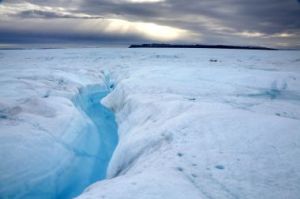
UNIVERSITY OF ZURICH 8 Apr 19, Melting ice sheets in Greenland and the Antarctic as well as ice melt from glaciers all over the world are causing sea levels to rise. Glaciers alone lost more than 9,000 billion tons of ice since 1961, raising water levels by 27 millimeters, an international research team under the lead of the University of Zurich have now found.
Glaciers have lost more than 9,000 billion tons (that is 9 625 000 000 000 tons) of ice between 1961 and 2016, which has resulted in global sea levels increasing by 27 millimeters in this period. The largest contributors were glaciers in Alaska, followed by the melting ice fields in Patagonia and glaciers in the Arctic regions. Glaciers in the European Alps, the Caucasus and New Zealand were also subject to significant ice loss; however, due to their relatively small glacierized areas they played only a minor role when it comes to the rising global sea levels.
Combination of field observations and satellite measurements
For the new study, the international research team combined glaciological field observations with geodetic satellite measurements. The latter digitally measure the surface of the Earth, providing data on ice thickness changes at different points in time. The researchers were thus able to reconstruct changes in the ice thickness of more than 19,000 glaciers worldwide. This was also possible thanks to the comprehensive database compiled by the World Glacier Monitoring Service from its worldwide network of observers, to which the researchers added their own satellite analyses. “By combining these two measurement methods and having the new comprehensive dataset, we can estimate how much ice has been lost each year in all mountain regions since the 1960s,” explains Michael Zemp, who led the study. “The glaciological measurements made in the field provide the annual fluctuations, while the satellite data allows us to determine overall ice loss over several years or decades.”
335 billion tons of ice lost each year
The global mass loss of glacier ice has increased significantly in the last 30 years and currently amounts to 335 billion tons of lost ice each year. This corresponds to an increase in sea levels of almost 1 millimeter per year. “Globally, we lose about three times the ice volume stored in the entirety of the European Alps – every single year!” says glaciologist Zemp. The melted ice of glaciers therefore accounts for 25 to 30 percent of the current increase in global sea levels. This ice loss of all glaciers roughly corresponds to the mass loss of Greenland’s Ice Sheet, and clearly exceeds that of the Antarctic.
April 9, 2019
Posted by Christina Macpherson |
ARCTIC, climate change, oceans |
Leave a comment
Butterfly numbers fall by 84% in Netherlands over 130 years – study, Guardian, Patrick Barkham,@patrick_barkham, Mon 1 Apr 2019
European insect populations shrink as farming leaves ‘hardly any room for nature’ Butterflies have declined by at least 84% in the Netherlands over the last 130 years, according to a study, confirming the crisis affecting insect populations in western Europe.
Researchers analysed 120,000 butterflies caught by collectors between 1890 and 1980 as well as more recent scientific data from more than 2 million sightings to identify dramatic declines in the country’s 71 native butterfly species, 15 of which have become extinct over the last century.
“We are quite sure that the real decline must be much larger,” said Chris van Swaay, of Dutch Butterfly Conservation and one of the co-authors of the study.
The research follows warnings of catastrophic insect declines after a global review calculated that the total mass of insects was falling by 2.5% each year, and a German study found average flying insect abundance had declined by 76% over 27 years.
Since the scientific monitoring of British butterflies began in 1976, there has been a 77% decline in “habitat specialists”, which are found only in certain areas, such as woodland or chalk grassland, while populations of more common species found across the countryside have fallen by 46%. ……. https://www.theguardian.com/environment/2019/apr/01/butterfly-numbers-fall-by-84-in-netherlands-over-130-years-study
April 1, 2019
Posted by Christina Macpherson |
environment, EUROPE |
1 Comment
Inside a Nonprofit That Supports Environmental Journalists Around the World, Julia Travers , Inside Philanthropy, April 2019, Many countries, especially in the Global South, struggle to respond to environmental challenges like over-development, deforestation, poaching, pollution and climate change. When these threats are coupled with weak or corrupt government oversight, the news media—and robust, reliable local reporting—can be the only way to draw attention to what’s happening.Among the organizations and funders who support nonprofit journalism, the
Earth Journalism Network (EJN) plays a unique role by empowering journalists from developing countries to cover local environmental beats effectively. Along with
climate change, the writers it supports work on many intersecting issues like fossil fuel extraction and its effects, biodiversity, wildlife trafficking and more.
Philanthropy upped its journalism game as print news declined and continues to invest in this area as both verbal and violent attacks on the media increase. The Omidyar Network, Democracy Fund and the Knight, MacArthur, International Women’s Media and Ford foundations and others have all contributed substantially to causes like bolstering investigative reporting and local news, combating disinformation, and ensuring safety for reporters. Environmental journalism is one area that’s drawn rising support in recent years, and we’ve written before about the growth of outlets like Grist and InsideClimate News. EJN is different from these publications—operating as a network that provides grants, training and more—but it’s also expanded its reach as funders have grown more concerned about environmental threats.
What Does the Earth Journalism Network Do? …….. https://www.insidephilanthropy.com/home/2019/3/28/inside-a-nonprofit-that-supports-environmental-journalists-around-the-world
April 1, 2019
Posted by Christina Macpherson |
2 WORLD, environment, media |
Leave a comment
RADIOACTIVE contamination from Japan’s Fukushima Daichi nuclear power plant has drifted as far as America, experts claim. By EMILY FERGUSON EXPRESS UK, Mar 28, 2019
When a tsunami and 9.0-magnitude quake hit the Japanese nuclear plant’s reactors in March 2011, meltdowns were triggered at three of the plant’s six reactors. This resulted in radiation leaking into the air, soil and ocean – forcing 160,000 residents to flee. Radioactive contamination has reached as far north as a remote Alaskan island, scientists from the University of Alaska Fairbanks Sea Grant programme announced on Wednesday.
Water tests collected from seawater last year near St. Lawrence Island in the Bering Strait revealed a slight increase in levels of radioactive cesium-137 attributable to the Fukushima disaster.
But scientists say the levels need to be more than 3,000-times higher to pose a safety concern……..
n September last year the Japanese government acknowledge for the first that that a work at the nuclear power plant died from radiation exposure.
The worker, a man in his 50s, had spent his career working at nuclear plants around Japan and worked at the Fukushima Daiichi plant at least twice after the meltdowns at the station.
He was diagnosed with lung cancer in February 2016, an official said.
The Health, Labour and Welfare Ministry had previously ruled exposure to radiation caused the illnesses of four workers at the plant. https://www.express.co.uk/news/world/1106867/ukushima-disaster-latest-japan-nuclear-radiation-found-america
March 30, 2019
Posted by Christina Macpherson |
environment, USA |
Leave a comment
Katsuko Saruhashi made waves internationally when she tracked and raised a global alarm on the dangers of nuclear testing by the U.S. Pacific Standard, MAR 22, 2019
March 25, 2019
Posted by Christina Macpherson |
Japan, oceans, PERSONAL STORIES |
Leave a comment
 Why are insects dying in such numbers? https://www.smh.com.au/environment/conservation/why-are-insects-dying-in-such-numbers-20190319-p515hb.html By Greg Callaghan March 23, 2019
 It’s been dubbed the bugocalypse – study after study rolling in from countries across the globe pointing to dramatic declines in insect populations. In Germany, an 82 per cent fall in midsummer invertebrate populations across 63 nature reserves between 1990 and 2017; in the Puerto Rico rainforest, a 75 per cent reduction in the volume of insects between 1976 and 2013; in the UK, a one-third fall in the honeybee population over the past 10 years. Across the US, monarch butterfly and ladybird beetle numbers are at record lows.
In alpine NSW, there’s been a collapse in bogong moth populations, resulting in starving pygmy possums, who feed on them. Most worrying, a research review of 73 existing surveys, released last month by the University of Sydney’s Institute of Agriculture, discovered that 40 per cent of insect species will likely be in catastrophic decline within a century.
So what’s going on? Just more scary headlines, or a real indicator of an eco-crisis ahead? A bit of both. While certain “beneficial” insect populations (butterflies, grasshoppers, mayflies, dragonflies, ground beetles, fireflies) appear to be in unprecedented retreat, others considered pests and a risk to human health (tsetse flies, ticks, mosquitoes) are on the offensive again.
We’re all sure a decline is happening,” explains Dr David Yeates, director of the Australian National Insect Collection in Canberra. “But to obtain a useful measure, we need to compare insect numbers today with those of 30, 40 or 50 years ago – but invertebrate counts weren’t being done then.”
So what’s causing the bug die-off? The top culprit is likely to be wilderness loss – many insects feed off native plants, and the relentless spread of single-crop farmland and insecticides has shrivelled their range, says Yeates. Another culprit: global warming, which favours some insects over others. Cut out insects and you lose all the creatures that feed on them, including frogs, lizards and birds. Of course, a large proportion of the food we eat comes from plants pollinated by insects, and they also clean up the environment, notes Yeates. “Waking up in a world without insects would be like waking up in a garbage dump.”
March 23, 2019
Posted by Christina Macpherson |
AUSTRALIA, environment, Reference |
Leave a comment

The Rapid Decline Of The Natural World Is A Crisis Even Bigger Than Climate Change
A three-year UN-backed study from the Intergovernmental Science-Policy Platform On Biodiversity and Ecosystem Services has grim implications for the future of humanity. By John Vidal, HuffPost US 16 Mar 19, Nature is in freefall and the planet’s support systems are so stretched that we face widespread species extinctions and mass human migration unless urgent action is taken. That’s the warning hundreds of scientists are preparing to give, and it’s stark.
The last year has seen a slew of brutal and terrifying warnings about the threat climate change poses to life. Far less talked about but just as dangerous, if not more so, is the rapid decline of the natural world. The felling of forests, the over-exploitation of seas and soils, and the pollution of air and water are together driving the living world to the brink, according to a huge three-year, U.N.-backed landmark study to be published in May.
The study from the Intergovernmental Science-Policy Platform On Biodiversity and Ecosystem Services (IPBES), expected to run to over 8,000 pages, is being compiled by more than 500 experts in 50 countries. It is the greatest attempt yet to assess the state of life on Earth and will show how tens of thousands of species are at high risk of extinction, how countries are using nature at a rate that far exceeds its ability to renew itself, and how nature’s ability to contribute food and fresh water to a growing human population is being compromised in every region on earth.
Nature underpins all economies with the “free” services it provides in the form of clean water, air and the pollination of all major human food crops by bees and insects. In the Americas, this is said to total more than $24 trillion a year. The pollination of crops globally by bees and other animals alone is worth up to $577 billion.
The final report will be handed to world leaders not just to help politicians, businesses and the public become more aware of the trends shaping life on Earth, but also to show them how to better protect nature……….
An obsession with economic growth as well as spiraling human populations is also driving this destruction, particularly in the Americas where GDP is expected to nearly double by 2050 and the population is expected to increase 20 percent to 1.2 billion over the same period. …….
Insects, vital to the diets of other animals, as well as the pollinators of our food, are facing a bleak future as populations appear to be collapsing. Land use changes and increased pesticide use are destroying habitats and vastly reducing numbers. In Europe, up to 37 percent of bees and 31 percent of butterflies are in decline, with major losses also recorded in southern Africa, according to the pollinators section of the report…..
This destruction is also driving mass human migration and increased conflict. Decreasing land productivity makes societies more vulnerable to social instability, says the report, which estimates that in around 30 years’ time land degradation, together with the closely related problems of climate change, will have forced 50 to 700 million people to migrate………
The study will also recognize that much of the remaining wealth of nature depends on indigenous people, who mostly live in the world’s remote areas and are on the frontline of the damage caused by destructive logging and industrial farming. According to IPBES, indigenous communities often know best how to conserve nature and are better placed than scientists to provide detailed information on environmental change……..
Saving nature will require a major rethink of how we live and how we think about nature, but that it is possible to turn this dire situation around if governments want it to happen.
“There are no magic bullets or one-size-fits-all answers. The best options are found in better governance, putting biodiversity concerns into the heart of farming and energy policies, the application of scientific knowledge and technology, and increased awareness and behavioral changes,” Watson said. “The evidence shows that we do know how to protect and at least partially restore our vital natural assets. We know what we have to do.”
For more content and to be part of the ‘This New World’ community, follow our Facebook page.
March 21, 2019
Posted by Christina Macpherson |
2 WORLD, environment |
1 Comment
Atmospheric scientists reveal the effect of sea-ice loss on Arctic warming https://www.eurekalert.org/pub_releases/2019-03/ioap-asr030819.php
INSTITUTE OF ATMOSPHERIC PHYSICS, CHINESE ACADEMY OF SCIENCES 8-MAR-2019 Enhanced warming in the Arctic (north of 67°N) is found in both recent observational investigations and model simulations with greenhouse gases (GHGs) emissions increasing. Global warming is occurring twice as fast in the Arctic than anywhere else on Earth. However, why the largest the Arctic amplification (AA) only occurs in certain periods over areas with significant sea-ice loss is still under great debate.
Scientists from State University of New York, Albany and Institute of Atmospheric Physics, Chinese Academy of Sciences found the answers by means of historical data analyzation and climate model simulations. Their analyses indicated that AA would not slow down until the 22nd and 23rd centuries, after almost all of the Arctic’s sea ice has melted away with GHGs emissions increasing.
“Rapid Arctic warming and sea ice loss are attracting a lot of attention in the media, public and scientific community. Our study links the two together and suggests that the sea ice loss is causing the rapid warming in the Arctic,” said the lead author, Aiguo DAI, In a news release. “When the sea ice melts away completely, this elevated warming will also disappear and the warming rate in the Arctic will be similar to the rest of the world,”
According to this research, the large AA only occurs in clod season (October to April), and only over the area of prominent sea-ice loss. This is mainly because seasonal sea-ice melting from May to September causes more extensive upper seawater and absorbs more sunlight during the warm season and the heat energy is stored in sea-surface Arctic waters. Most of this energy is released into the atmosphere through longwave radiation, and latent and sensible heat fluxes to heating the atmosphere during the cold season when Arctic Ocean becomes a heat source, leading to the large AA.
Scientists warn that the melting of Arctic sea ice will greatly enhance warming in Arctic for the coming decades and could also impact weather patterns in mid-latitudes, causing more frequent intrusions of winter polar vortex into China and the continental U.S., leading to extreme events including severe winter weather.
This research was published in Nature Communications.
March 10, 2019
Posted by Christina Macpherson |
ARCTIC, climate change, oceans |
Leave a comment
The future of all life: Indigenous sovereignty and the Fukushima nuclear disaster, Bay View, National Black Newspaper, by Harun Minhaj, March 4, 2019 In 2011, an unprecedented series of die-offs began to strike dead hundreds of millions of sea creatures in the northern Pacific Ocean. As one sailor who frequently travels the Pacific remarked in October of 2013:
“I’ve done a lot of miles on the ocean in my life and I’m used to seeing turtles, dolphins, sharks and big flurries of feeding birds. But this time, for 3,000 nautical miles, there was nothing alive to be seen.”
What precipitated such a dramatic devastation of marine life in the Pacific Ocean?
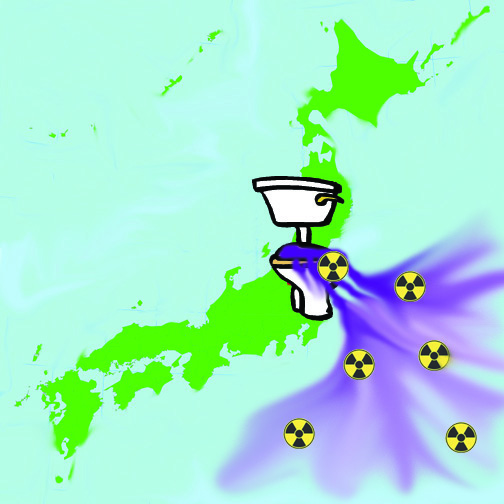
Just a few months before the die-offs began, the meltdown of three nuclear reactors at the Fukushima Daiichi Complex in Japan caused the greatest pollution of the marine environment by radioactive contaminants in history. Far from over, these releases are still ongoing.
More than 400 tons of radioactive water have been flowing into the Pacific every day since the meltdowns began.
Although the full extent of the damage from Fukushima Daiichi has yet to be determined, the volume of these releases alone shows that we are dealing with something unprecedented in history.
Indigenous elders and scientific community sound the alarm
I was first alerted to the severity of the Fukushima disaster by Bay Area Indigenous Elder Zachary RunningWolf. A full-time activist and community leader in the Bay Area, RunningWolf has long campaigned for racial and environmental justice in a myriad of ways……..
For the last nine years, he has also led a four-day monthly stop driving boycott to combat global warming…
When RunningWolf ran for mayor of Berkeley in 2016, he made addressing Fukushima a central component of his campaign. For RunningWolf and many Indigenous elders concerned about the ongoing violence against Mother Earth, stopping the Fukushima nuclear crisis is of the highest priority.
Consider this call for action released in 2013 by a council of Indigenous elders called the Caretakers of Mother Earth:
“The People of the Earth understand that the Fukushima nuclear crisis continues to threaten the future of all life. We understand the full implications of this crisis even with the suppression of information and the filtering of truth by the corporate owned media and nation states. We strongly urge the media, corporations and nation states to acknowledge and convey the true facts that threaten us, so that the international community may work together to resolve this crisis, based on the foundation of truth” (emphasis added).
The deep concern expressed by RunningWolf and the Caretakers of Mother Earth about the impact of Fukushima’s radiation on the Pacific is shared by thousands of scientists. For instance, the platform adopted by the more than 5,000 scientists who make up the Society for Environmental Toxicology and Chemistry declared in 2014 that “the Fukushima nuclear accident on 11 March 2011 emerged as a global threat to marine biodiversity in the Pacific Ocean and human health in coastal communities.”
Other scientific organizations such as the Nordic Probabilistic Safety Assessment Group have gone even further. This institution – which is by no means “anti-nuclear” as it was founded by the nuclear utilities of Finland and Sweden – predicted in 2011 based on official estimates of radioactivity released into the Pacific that around 50-100 million fish would die from just one of the most deadly and prolific isotopes which had been released. ……….
Along with the unprecedented die-offs, a consistent set of symptoms frequently occurring together was observed across species:
Some of these symptoms (such as cancer, hair loss, and mutations) are well-known consequences of radiation sickness, while other more obscure ones such as high levels of parasites have been confirmed in studies of sea life to occur as a consequence of radiation. Altogether, only radiation sickness can produce such a widespread, prolonged epidemic exhibiting all these symptoms.
The genocidal impact of Fukushima radiation in the Pacific
It would be extremely foolish to assume this devastation in the Pacific Ocean will not profoundly impact human life. It is widely recognized that for numerous reasons our very survival depends on the health of the oceans, most notably because they produce the majority of the oxygen that we must breathe to live.
Native peoples, whose traditional livelihoods are often intimately bound up with the health of the ocean, are on the front line of this struggle. ……..
As aboriginal advocates have argued, the violence of nuclear contamination in desecrating their lands and culture must be recognized as a kind of cultural genocide. In this case, where the Pacific Ocean itself has been desecrated, Fukushima’s radiation must be recognized as constituting a genocidal assault on numerous Indigenous peoples’ cultures and livelihoods.
Furthermore, the radiation in Pacific seafood poses a significant health risk to the people who consume it. Estimates calculated by a wide variety of experts in nuclear power, chemistry and medicine show that this risk has been severely underestimated, and in fact more than 1 million people would die from cancer and other diseases if the consumption of radioactive Pacific seafood continues unabated.
In the Bay Area, Indigenous Blackfeet Elder RunningWolf has long been warning the public to avoid consuming Pacific seafood since even before the 2016 Berkeley mayoral race, while calling for the University of California – with its flagship campus located in Berkeley – to be held accountable for issuing no health warnings in turn.
As aboriginal advocates have argued, the violence of nuclear contamination in desecrating their lands and culture must be recognized as a kind of cultural genocide…………… https://sfbayview.com/2019/03/the-future-of-all-life-indigenous-sovereignty-and-the-fukushima-nuclear-disaster/
March 9, 2019
Posted by Christina Macpherson |
environment, Fukushima continuing |
Leave a comment
 Adults failed to take climate action. Meet the young activists stepping up, Some are calling climate change this generation’s civil rights movement. These are the young activists leading the charge, Guardian, by Adrian Horton, Dream McClinton and Lauren Aratani, 4 Mar 19,
Despite being barely two years old, the Sunrise Movement has outpaced established environmental groups in the push to radically reshape the political landscape around climate change. Closely allied with new congresswoman Alexandria Ocasio-Cortez, the youth-led Sunrise Movement has helped set out a sweepingly ambitious plan to address climate change in the form of the Green New Deal.
The movement comprises a small core team of young organizers, supported by a larger group of several hundred volunteers. The group’s elevation of the Green New Deal has clearly riled Trump, who has falsely but repeatedly claimed that the plan would result in the banning of cars, air travel and even cows.
The Guardian spoke to Sunrise members on how the organization has shaken the political and environmental establishment in the US…….. https://www.theguardian.com/environment/2019/mar/04/can-they-save-us-meet-the-climate-kids-fighting-to-fix-the-planet
March 5, 2019
Posted by Christina Macpherson |
environment, USA |
Leave a comment
Rethink Activism in the Face of Catastrophic Biological Collapse, Dahr Jamail and Barbara Cecil, Truthout,
PART OF THE TRUTHOUT SERIES How Then Shall We Live? 4 Mar 19,
It may be that when we no longer know what to do
we have come to our real work,
and that when we no longer know which way to go,
we have begun our real journey.
The mind that is not baffled is not employed.
The impeded stream is the one that sings.
― Wendell Berry
This is a hard piece to write, partly because we, too, are baffled. Environmental collapse, coupled with living in the
sixth mass extinction, are new territory. We are still in the process of confronting the reality of living with the prospect of an unlivable planet. These thoughts emerge out of our sober forays into an uncertain future, searching for the right ways to live and serve in the present. The second reason for our reluctance to share this contemplation is anticipation of the grief, anger and fear it may trigger. We visit these chambers of the heart frequently, and know the challenges of deep feeling, particularly in a culture that denies feelings and pathologizes death.
As the unthinkable settles in our skin, the question of what to do follows closely. What is activism in the context of collapse? Professor of sustainability leadership and founder of the
Institute for Leadership and Sustainability (IFLAS) at the University of Cumbria (UK)
Jem Bendell’sdefinition of collapse is useful: “the uneven ending of our current means of sustenance, shelter, security … and identity.” Bendell isn’t the first to warn of collapse —
NASA warned of it five years ago. Anyone who takes in the realities of our times will need to find their own relationship to the hard truths about converging environmental, financial, political and social unraveling. There are billions on the planet who are already experiencing the full direct effects of this right now.
Forty percent of the human population of the planet is already affected by water scarcity. Humans have annihilated
60 percent of all animal life on the planet since 1970.
Described here, borrowing from Bendell’s analysis, are three responses to imminent collapse. The first is characterized by intensifying efforts to
fix the mess we have created. The idea here is that if we just work harder, we can change the situation. The second is
mitigation of inevitable suffering and loss, easing the pain and harm that is already underway. Mitigation slows the demise down, giving us the time for the third, which is
adaptation to the life-threatening scenarios before us, or in Bendell’s words, “
deep adaptation.”………..
Regardless of the plethora of geoengineering plans to draw down CO2 levels or reflect solar radiation back into space, the tough reality is that the effects of CO2 already present in the biosphere are irreversible, and intensifying rapidly. Barring unforeseen forces at work, a consensus of scientific research tells us that a minimum of
three degrees Celsius (3°C) warming is already baked into the system under current global climate pledges………….
Anyone who thinks there is still time to wholly remedy the situation must answer the question: How do we remove all the heat that’s already been absorbed by the oceans? Invigorated activism, as heartening and important as it is, is not going to completely stem these tides.
Thus, the third level of activism, adaptation, comes into focus.
Adaptation is new territory. Here is the realm of healing, reparation (spiritual and psychological, among other ways) and collaboration. It is strangely rich with a new brand of fulfillment and unprecedented intimacy with the Earth and one another. It invites us to get to the roots of what went astray that has led us into the sixth mass extinction. Given that with even our own extinction a very real possibility, even if that worst-case scenario is to run its course, there is time left for amends, honorable completions, and the chance to reconnect in to this Earth with the utmost respect, and in the gentlest of ways…………
https://truthout.org/articles/climate-collapse-is-on-the-horizon-we-must-act-anyway/
March 5, 2019
Posted by Christina Macpherson |
2 WORLD, environment |
Leave a comment
Kim Kardashian West demands Trump, Newsom, lead cleanup of Santa Susana Field Lab
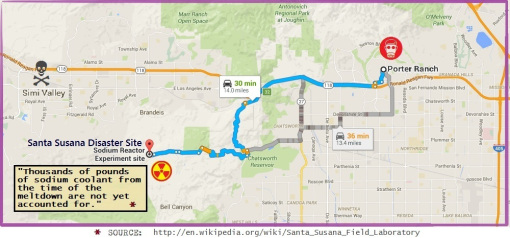
Her tweet has sparked hope among nearby residents that the government will act more quickly to clean up the old Cold War site. https://www.dailybulletin.com/2019/03/01/kim-kardashian-west-demands-trump-newsom-lead-clean-up-of-santa-susana-field-lab/ By OLGA GRIGORYANTS | ogrigoryants@scng.com | Los Angeles Daily News March 1, 2019
Celebrity Kim Kardashian West is calling on President Donald Trump and other government leaders to lead a cleanup of the contaminated Santa Susana Field Laboratory in the hills above San Fernando and Simi valleys, sparking enthusiasm among residents who have long demanded the action.
Kardashian, who lives in nearby Hidden Hills, demanded via Twitter Wednesday that Trump, Gov. Gavin Newsom and U.S. Energy Secretary Rick Perry help push for the clean up the former nuclear and rocket engine testing site near many Valley schools and homes.
“(The California Department of Toxic and Substance Control, or DTSC, the federal Department of Energy and NASA) promised to clean up contaminated Santa Susana Field Lab by 2017, but the job hasn’t even begun!” Kardashian West shared with nearly 60 million followers. “Time to reform DTSC, and for (the federal agency) to keep its promises.”
March 4, 2019
Posted by Christina Macpherson |
environment, USA |
Leave a comment









 nuclear-news