Atomic Balm Part 1: Prime Minister Abe Uses The Tokyo Olympics As Snake Oil Cure For The Fukushima Daiichi Nuclear Meltdowns March 01, 2019,Fairewinds Energy Education, By Arnie Gundersen “……….To determine whether or not Olympic athletes might be affected by fallout emanating from the disaster site, Dr. Marco Kaltofen and I were sponsored by Fairewinds Energy Education to look at Olympic venues during the fall of 2017.We took simple dirt and dust samples along the Olympic torch route as well as inside Fukushima’s Olympic stadium and as far away as Tokyo. When the Olympic torch route and Olympic stadium samples were tested, we found samples of dirt in Fukushima’s Olympic Baseball Stadium that were highly radioactive, registering 6,000 Bq/kg of Cesium, which is 3,000 times more radioactive than dirt in the US. We also found that simple parking lot radiation levels were 50-times higher there than here in the US.
With the upcoming XXXII Olympiad in 2020 hosted by Japan, it is necessary to look into the radioactivity of Olympic venues as well as tourist attractions in the host cities… Since thousands of athletes and millions of visitors are travelling to Japan for the Olympics, there has been widespread concern from the international community about radiation exposure. Therefore, it is important to investigate the extent of radioactive fallout from the Fukushima Dai-ichi incident.
The measured results showed a much higher activity of Cesium-137 in the proposed torch route compared to other areas. Overall, the further away from the Fukushima Dai-ichi Nuclear Power Plant, the lower the radioactivity. The activity of Cesium-137 in Tokyo, the furthest site from the plant, was the lowest when compared to the other sites. Therefore, the activity of Cesium-137 in Tokyo sample was used as the baseline to qualitatively estimate the human exposure to radiation.
At the Azuma Sports Park, the soil and dust samples yielded a range of 78.1 Bq/kg to 6176.0 Bq/kg. This particular Olympic venue is around 90 km from the Nuclear Power Plant. The other sites that are closer to the Nuclear Power Plant like the tourist route, proposed torch route, and non-Olympic samples have higher amounts due to the close proximity to ground zero of the disaster.
… the proposed torch route samples had the highest mean radioactivity due to their close proximity to the plant. Based on the measurement, we estimated qualitatively that the radiation exposure of people living near the Azuma Sports Park area was 20.7 times higher than that of people living in Tokyo. The main tourist and proposed torch routes had radiation exposure of 24.6 and 60.6 times higher, respectively, than in Tokyo…. Olympic officials should consider using the results of this project to decide whether the radioactivity level at the proposed torch route and the Olympic venues are within acceptable level…… https://www.fairewinds.org/demystify/atomic-balm-part-1-prime-minister-abe-uses-the-tokyo-olympics-as-snake-oil-cure-for-the-fukushima-daiichi-nuclear-meltdowns
The Ocean Is Running Out of Breath, Scientists Warn
Widespread and sometimes drastic marine oxygen declines are stressing sensitive species—a trend that will continue with climate change, Scientific American , By Laura Poppick on February 25, 2019 Escaping predators, digestion and other animal activities—including those of humans—require oxygen. But that essential ingredient is no longer so easy for marine life to obtain, several new studies reveal.
In the past decade ocean oxygen levels have taken a dive—an alarming trend that is linked to climate change, says Andreas Oschlies, an oceanographer at the Helmholtz Center for Ocean Research Kiel in Germany, whose team tracks ocean oxygen levels worldwide. “We were surprised by the intensity of the changes we saw, how rapidly oxygen is going down in the ocean and how large the effects on marine ecosystems are,” he says.
It is no surprise to scientists that warming oceans are losing oxygen, but the scale of the dip calls for urgent attention, Oschlies says. Oxygen levels in some tropical regions have dropped by a startling 40 percent in the last 50 years, some recent studies reveal. Levels have dropped more subtly elsewhere, with an average loss of 2 percent globally.
Ocean animals large and small, however, respond to even slight changes in oxygen by seeking refuge in higher oxygen zones or by adjusting behavior, Oschlies and others in his field have found. These adjustments can expose animals to new predators or force them into food-scarce regions. Climate change already poses serious problems for marine life, such as ocean acidification, but deoxygenation is the most pressing issue facing sea animals today, Oschlies says. After all, he says, “they all have to breathe.”
Private firms jolted by beach sand mining ban, Times of India M K Ananth , 24 Feb 19, MADURAI: Environmentalists fighting against rampant illegal sand mining have hailed the gazette notification by the Union ministry of mines changing the rules that earlier allowed private companies to mine rare earth minerals found on beach sand. They said the notification was much awaited and would help save the coastal treasures.
Activist Lal Mohan of Kanyakumari said rampant mining by private players had led to erosion of the shores and many sand dunes that acted as barriers during natural disasters such as tsunami had disappeared. He accused private players of influencing officials and exploiting coastal minerals and exporting monazite.
Stating that monazite on the coast had high concentration of thorium that was considered an atomic mineral, he said research was on to use it instead of uranium. “It is to eliminate the use of uranium and the large reserve s of thorium in India. At many places, private companies have exploited thorium and exported it to Australia, China and Russia, he said… .. https://timesofindia.indiatimes.com/city/madurai/private-firms-jolted-by-beach-sand-mining-ban/articleshow/68133578.cms
Futurity FEBRUARY 19TH, 2010NERISSA HANNINK-MELBOURNEMany people believe that cockroaches could survive a nuclear bomb and the subsequent radiation exposure, but is that actually true? The creepy crawlies do have a reputation for resilience, which media reports have suggested may stem from rumors that insects thrived in the aftermath of the atomic bombings of Hiroshima and NagasakiBut Tilman Ruff, a Nobel Laureate and professor in the School of Population and Global Health at the University of Melbourne who studies the health and environmental consequences of nuclear explosions, says he has yet to see any documented evidence that there were cockroaches scuttling through the rubble.
“I’ve certainly seen photographs of injured people in Hiroshima that have lots of flies around, and you do imagine some insects would have survived,” Ruff says. “But they still would have been affected, even if they appear more resistant than humans.”
ROACHES’ BAD WRAP
The TV series Mythbusters tested the cockroach survival theory in 2012 when they exposed cockroaches to radioactive material. The roaches survived longer than humans would have, but they all died at extreme levels of radiation.
Mark Elgar, a professor at the School of Biosciences, says Mythbusters tests are incomplete because they only looked at how many days the cockroaches lived after exposure. They didn’t look at the cockroaches’ ability to produce viable eggs, thus ensuring the continued survival of the species.
“There is some evidence that they seem quite resilient to gamma rays, although they are not necessarily the most resistant across insects.”
“You could argue,” Elgar adds, “that some ants, particularly those that dig nests deep into the ground, would be more likely to survive an apocalypse than cockroaches.”
Previous tests of insects subjected to radiation found that cockroaches, though six to 15 times more resistant than humans, would still fare worse than the humble fruit fly.
Elgar says the feral American and German species of cockroach—the ones you might recognize from your kitchen nooks and crannies—have given the rest of the species a bad rap.
“I think our view of cockroaches is informed by our frequent interaction with the American and German cockroaches, which have spread throughout the world,” Elgar says. “Their habit of basically acting as an unpaid house cleaner horrifies people.”
There are more than 4,000 species of cockroaches, however, including native Australian cockroaches marked by iridescent colors and patterns……….
For a while they’ll be able to eat dead bodies and other decaying material but, if everything else has died, eventually there won’t be any food. And they’re not going to make much of a living,” Elgar says.
“The reality is that very little, if anything, will survive a major nuclear catastrophe, so in the longer term, it doesn’t matter really whether you’re a cockroach or not.”…….
“The evidence from a disaster like Chernobyl is that every organism, from insects to soil bacteria and fungi to birds to mammals, would experience effects in proportion to the degree of contamination,” Ruff says. …….
uff says that focusing on a single species misses the complexity of the biological environment and how we relate to one another, as well as interactions between multiple stresses at the same time.
“There’s all sorts of factors we have to look at. There are environmental factors. There are chronic exposures, effects across generations, and food shortages, for example,” he says. “The magnitude of effects of a nuclear explosion is far greater than what you might see in carefully controlled experiments and laboratory conditions.”
It is clear from the available empirical data that coastal populations impacted by prevailing onshore winds and living next to sea areas contaminated with liquid radioactive effluents from nuclear sites, are annually exposed to dietary and inhalation doses of man-made marine radioactivity.
Effluents discharged to the sea by nuclear power stations, fuel fabrication sites and reprocessing facilities are transferred from sea to land in airborne sea spray and marine aerosols (micro-droplets). They come in also during episodes of coastal flooding. This problem has been particularly pronounced around the UK Sellafield reprocessing and plutonium production site in Cumbria. In 1988, independent empirical research commissioned by a west Wales local authority reported that
Sellafield-derived, sea-discharged cesium had been found in pasture grass up to 10 miles inland of the Ceredigion coast.
Clearly, this contributes to human dietary doses via the dairy and beef food chain. The research also implies the inevitability of further dietary doses via arable and horticultural crops. Given that airborne radioactivity is driven at least 10 miles inland, it should be assumed that coastal populations are exposed, on a repeated annual basis, to inhalation doses. https://beyondnuclearinternational.org/2019/02/17/radioactive-sea-spray-is-dosing-communities/
Bellona 13th Feb 2019 , Norwegian authorities have reported trace amounts of radioactive iodine 131 in the atmosphere, which emerged last week in measurements taken in the country’s far northeast near the city of Tromsø. Officials with the Norwegian Radiation and Nuclear Safety Authority were at pains to emphasize that levels of the radioactive isotope were extremely low and posed no threat to human health.
But a global review of insect research has found another casualty: 40% of insect species are declining and a third are endangered. It confirms what many have been suspecting: in Australia and around the world, arthropods – which include insects, spiders, centipedes and the like — appear to be in trouble.
The global review comes hard on the heels of research published in the Proceedings of the National Academy of Sciences USA that suggests a potent link between intensifying heat waves and stunning declines in the abundance of arthropods.
If that study’s findings are broadly valid – something still far from certain – it has chilling implications for global biodiversity.
Arthropod Armageddon
In the mid-1970s, researchers on the Caribbean island of Puerto Rico conducted a large-scale study to measure the total biomass (living mass) of insects and other arthropods in the island’s intact rainforests, using sweep nets and sticky-traps.
Four decades later, another research team returned to the island and repeated the study using identical methods and the same locations. To their surprise, they found that arthropod biomass was just one-eighth to one-sixtieth of that in the 1970s – a shocking collapse overall.
And the carnage didn’t end there. The team found that a bevy of arthropod-eating lizards, birds and frogs had fallen sharply in abundance as well.
In the minds of many ecologists, a widespread collapse of arthropods could be downright apocalyptic. Arthropods pollinate some of our most important food crops and thousands of wild plant species, disperse seeds, recycle nutrients and form key links in food chains that sustain entire webs of life.
This ecological ubiquity arises because arthropods are so abundant and diverse, comprising at least two-thirds of all known species on Earth. In the 1940s, evolutionary biologist J. B. S. Haldane quipped that “God has an inordinate fondness for beetles.” Humans might think we rule the world, but the planet really belongs to arthropods.
Killer heat waves
The researchers who documented the arthropod collapse in Puerto Rico considered a variety of possible causes, including pesticides and habitat disruption. But the evidence kept pointing to another driver: rising temperatures.
Weather stations in Puerto Rico indicate that temperatures there have risen progressively in the past several decades – by 2℃ on average.
But the researchers are far less worried about a gradual increase in temperature than the intensification of heat waves—which have risen markedly in Puerto Rico. This is because nearly all living species have thresholds of temperature tolerance.
For example, research in Australia has shown that at 41℃, flying foxes become badly heat-stressed, struggling to find shade and flapping their wings desperately to stay cool.
But nudge the thermometer up just one more degree, to 42℃, and the bats suddenly die.
In November, heat waves that peaked above 42℃ in north Queensland killed off almost a third of the region’s Spectacled Flying Foxes. The ground beneath bat colonies was littered with tens of thousands of dead animals. Dedicated animal carers could only save a small fraction of the dying bats.
The El Niño connection
El Niño events – fluctuations in Pacific sea-surface temperatures that drive multi-year variations in weather across large swaths of the planet – are also part of this story. New research appears to be resolving longstanding uncertainties about El Niños and global warming.
Recent studies published in Nature and Geophysical Research Letterssuggest global warming will in fact intensify El Niños – causing affected areas to suffer even more intensively from droughts and heat waves.
And this ties back to Puerto Rico, because the researchers there believe a series of unusually intense El Niño heatwaves were the cause the arthropod Armageddon. If they’re right then global warming was the gun, but El Niño pulled the trigger.
Beyond heat waves
Puerto Rico is certainly not the only place on Earth that has suffered severe declines in arthropods. Robust studies in Europe, North America, Australia and other locales have revealed big arthropod declines as well.
So, at a planetary scale, arthropods are suffering from a wide variety of environmental insults. There’s no single reason why their populations are collapsing.
The bottom line is: we’re changing our world in many different ways at once. And the myriad little creatures that play so many critical roles in the fabric of life are struggling to survive the onslaught.
By Roger Harrabin, BBC environment analyst, 12 February 2019,
Politicians and policymakers have failed to grasp the gravity of the environmental crisis facing the Earth, a report claims.
The think-tank IPPR says human impacts have reached a critical stage and threaten to destabilise society and the global economy.
Scientists warn of a potentially deadly combination of factors.
These include climate change, mass loss of species, topsoil erosion, forest felling and acidifying oceans.
The report from the centre-left Institute for Public Policy Research says these factors are “driving a complex, dynamic process of environmental destabilisation that has reached critical levels.
“This destabilisation is occurring at speeds unprecedented in human history and, in some cases, over billions of years.”
So what is needed?
The IPPR warns that the window of opportunity to avoid catastrophic outcomes is rapidly closing.
The authors urge three shifts in political understanding: on the scale and pace of environmental breakdown; the implications for societies; and the subsequent need for transformative change.
They say since 1950, the number of floods across the world has increased by 15 times, extreme temperature events by 20 times, and wildfires seven-fold.
At least climate change features in policy discussions, they say – but other vitally important impacts barely figure.
What issues are being under-played?
Topsoil is being lost 10 to 40 times faster than it is being replenished by natural processes
Since the mid-20th Century, 30% of the world’s arable land has become unproductive due to erosion
These matters are close to home for British politicians, the authors argue, with the average population sizes of the most threatened species in the UK having decreased by two-thirds since 1970.
Nearly 85% of fertile peat topsoil in East Anglia has been lost since 1850, with the remainder at risk of being lost over next 30–60 years.
The IPPR says many scientists believe we have entered a new era of rapid environmental change.
The report warns: “We define this as the ‘age of environmental breakdown’ to better highlight the severity of the scale, pace and implications of environmental destabilisation resulting from aggregate human activity.”
Will society take the solutions on offer?
Simon Lewis, Professor of Global Change Science at University College London, told BBC News: “IPPR are right to say that environmental change is happening ever-faster and threatens to destabilise society.
“Future problems with food supplies could cause price spikes that drive civil unrest, while increases in levels of migration can strain societies.
“Both together could overload political institutions and global networks of trade.
“This century will be marked by rapid social and environmental change – that is certain. What is less clear is if societies can make wise political choices to avoid disaster in the future.”
Harriet Bulkeley, a geography professor at Durham University, told BBC News that the IPPR paper was a good interpretation of the current evidence, but she said it raised the question of how firm evidence of environmental threats had to be to prompt government action.
“We know lots of good things to do,” she said, “but often the argument is made that we need to have ‘evidence-based policy’.
“This can, of course, be used as an excuse for delay. So, I guess the question is how much more evidence is needed for action?”
A UK government spokesperson said: “We are committed to leaving our environment in a better state than we found it through our 25 Year Environment Plan and the forthcoming Environment Bill.
“Over 25 years we will replenish depleted soils, rid our seas and rivers of the rubbish trashing our planet, cut greenhouse gas emissions, cleanse our air of toxic pollutants, and develop cleaner, more sustainable energy sources.
“The Environment Bill will also create a new environmental body, the Office for Environmental Protection, to hold us to account on this commitment.”
Microanalysis of Particle-Based Uranium, Thorium, and Plutonium in Nuclear Workers’ House Dust Mary Ann Liebert Publishers , Marco Kaltofen
:4 Feb 2019
Abstract
Scanning electron microscopy and energy dispersive X-ray analysis (SEM/EDS), a technique not routinely used to detect radiation, was used to identify radioactive particulate matter in house and environmental dust. The study focused on elements that are necessarily radioactive, including thorium, plutonium, americium, and uranium. Seventy-nine dust and 31 soil and sediment samples were collected from the Hanford Nuclear Reservation, Los Alamos National Laboratory, the former Rocky Flats Plant in Colorado, and from homes of workers or abutters of these nuclear facilities. Dusts containing percent levels of uranium, plutonium, americium, and both mineral and metallic thorium were detected outside of radiation-controlled areas. These radioactive dusts are a potential source of internal radiation exposure to nuclear site workers, or to their families via secondary contamination. Uranium and thorium-containing particles were fingerprinted as either natural minerals or processed industrial particles, based on elemental composition of the microparticles. Activities of individual uranium-, thorium-, or plutonium-bearing dust particles varied by five orders of magnitude, ranging from <0.005 mBq (millibecquerel) to 2,270 mBq. Hanford workplace dusts also had up to 564 ± 24 Bq/kg of137Cs. SEM/EDS techniques reliably detected environmental radioactivity in samples that had barely detectable results by gamma spectrometry. The technique was able to definitively show that thorium, plutonium, and uranium from nuclear facilities could be found in general population settings outside of radiation protection zones…………..
Conclusions
Dusts in this study contained radioactive particles of uranium, thorium, plutonium, and americium. This study found monazites, uranium mineral, and Th-P-REE particles that were likely of natural origin and industrial (plutonium-containing, metallic or metal oxide) radioactive microparticles.
Dust in the homes of workers and neighbors of Hanford, Los Alamos, and the former Rocky Flats nuclear facility contained radioactive microparticles connected to these sites. This creates potential radiation exposures outside of radiological protection zones. Given the small respirable size of these radioactive microparticles, they are a potential source of internal exposure from inhalation or ingestion.
SEM/EDS coupled with gamma spectroscopy and autoradiography proved a useful technique for distinguishing the origins of particulate-based radioisotopes that have both industrial and natural sources. Micron-sized radioactive industrial particles were detected in samples that had gross activity levels that were near background. This is an especially useful tool for nuclides, such as uranium and thorium, which have both natural and industrial sources. SEM/EDS distinguished metallic (more likely industrial) versus mineral (more likely natural or mining-related) forms of these elements by determining the complete elemental composition of each particle. https://www.liebertpub.com/doi/10.1089/ees.2018.0036?utm_source=sfmc&utm_medium=email&utm_campaign=EES+FP+Feb+8+2019&d=2%2F8%2F2019&mcid=83805056&
The returning residents of Fukushima’s nuclear disaster
Near site of Fukushima nuclear disaster, a shattered town and scattered lives, WP, By Simon Denyer, February 3 2019 NAMIE, Japan — Noboru Honda lost 12 members of his extended family when a tsunami struck the Fukushima prefecture in northern Japan nearly eight years ago. Last year, he was diagnosed with cancer and initially given a few months to live.
Today, he is facing a third sorrow: Watching what may be the last gasps of his hometown.
For six years, Namie was deemed unsafe after a multiple-reactor meltdown at the Fukushima Daiichi Nuclear Power Plant following a 2011 earthquake and tsunami.
In March 2017, the government lifted its evacuation order for the center of Namie. But so far, hardly anyone has ventured back.
Its people are scattered and divided. Families are split. The sense of community is coming apart.
“It has been eight years; we were hoping things would be settled now,” the 66-year-old Honda said. “This is the worst time, the most painful period.”
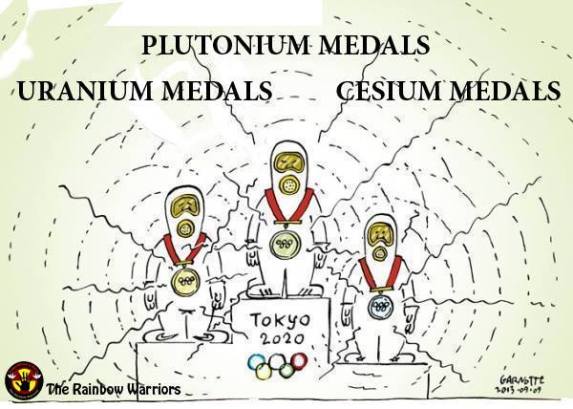
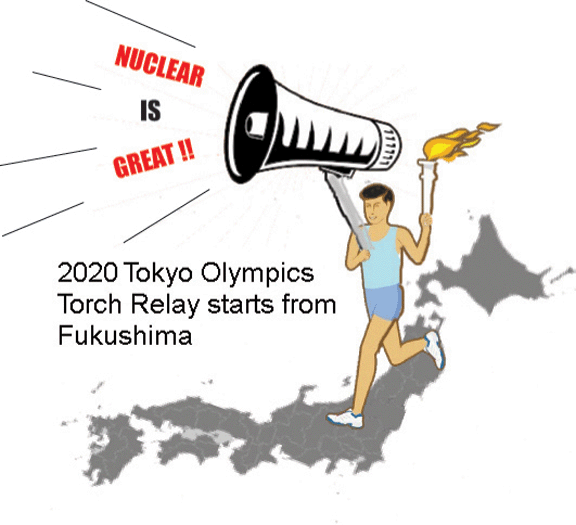
For the people of Namie and other towns near the Fukushima plant, the pain is sharpened by the way the Japanese government is trying to move beyond the tragedy, to use the 2020 Tokyo Olympics as a symbol of hope and recovery,a signthat life can return to normal after a disaster of this magnitude.
Its charm offensive is also tied up with efforts to restart the country’s nuclear-power industry, one of the world’s most extensive networks of atomic power generation.
Six Olympic softball games and a baseball game will be staged in Fukushima, the prefecture’s bustling and radiation-free capital city, and the Olympic torch relay will start from here.
But in Namie, much closer to the ill-fated nuclear plant, that celebration rings hollow, residents say.
This was a close-knit community of farmers, fishermen and potters — of orchards, rice paddies and cattle sandwiched between the mountains and the sea. It was a place where people celebrated and mourned as a community, and families lived together across generations.
That’s all gone. On the main street, a small new shopping arcade has opened. But a short walk away, a barber shop stands abandoned, its empty chairs gathering years of dust. A sign telling customers to make themselves at home is still displayed in a bar, but inside debris litters the floor. A karaoke parlor is boarded up. Wild boars, monkeys and palm civets still roam the streets, residents say.
Just 873 people, or under 5 percent, of an original population of 17,613 have returned. Many are scared — with some obvious justification — that their homes and surroundings are still unsafe. Most of the returnees are elderly. Only six children are enrolled at the gleaming new elementary school. This is not a place for young families.
Four-fifths of Namie’s geographical area is mountain and forest, impossible to decontaminate, still deemed unsafe to return. When it rains, the radioactive cesium in the mountains flows into rivers and underground water sources close to the town.
Greenpeace has been taking thousands of radiation readings for years in the towns around the Fukushima nuclear plant. It says radiation levels in parts of Namie where evacuation orders have been lifted will remain well above international maximum safety recommendations for many decades, raising the risks of leukemia and other cancers to “unjustifiable levels,” especially for children.
In the rural areas around the town, radiation levels are much higher and could remain unsafe for people to live beyond the end of this century, Greenpeace concluded in a 2018 report.
“The scale of the problem is clearly not something the government wants to communicate to the Japanese people, and that’s driving the whole issue of the return of evacuees,” said Shaun Burnie, senior nuclear specialist with Greenpeace. “The idea that an industrial accident closes off an area of Japan, with its limited habitable land, for generations and longer — that would just remind the public why they are right to be opposed to nuclear power.”
Today, Namie’s former residents are scattered across all but one of Japan’s 47 prefectures. Many live in the nearby town of Nihonmatsu, in comfortable but isolating apartment blocks where communal space and interaction are limited. With young people moving away, the elderly, who already feel the loss of Namie most acutely, find themselves even more alone.
A surprising new picture of ocean circulation could have major consequences for climate science, Some experts say the Atlantic Ocean circulation is already slowing down — but we’re just beginning to learn how it really works, WP By Chris Mooney, January 31 2019
It may be the biggest wild card in the climate system. Scientists have long feared that the so-called “overturning” circulation in the Atlantic Ocean could slow down or even halt due to climate change — a change that would have enormous planetary consequences.
But at the same time, researchers have a limited understanding of how the circulation actually works, since taking measurements of its vast and remote currents is exceedingly difficult. And now, a major new research endeavor aimed at doing just that has suggested a dramatic revision of our understanding of the circulation itself.
A new 21-month series of observations in the frigid waters off Greenland has led to the discovery that most of the overturning — in which water not only sinks but returns southward again in the ocean depths — occurs to the east, rather than to the west, of the enormous ice island. If that’s correct, then climate models that suggest the circulation will slow as the climate warms may have to be revised to take this into account.
……….. The new results come from the $ 32 million OSNAP, or “Overturning in the Subpolar North Atlantic,” program, the first attempt to comprehensively measure the circulation in the exceedingly remote regions in question. These icy seas, it is believed, are where cold, salty waters — which are extremely dense — sink below the sea surface into the depths, and then travel back southward again all the way to the Southern Hemisphere.
This “overturning” process is crucial because the sinking in the North Atlantic effectively pulls more warm, salty water northward via a system of currents that includes the Gulf Stream. This heat delivery, in turn, shapes climate throughout much of the region, and especially in Europe.
Better understanding of how the circulation works is key, since some scientists have already proposed that it is slowing down, with major consequences, including ocean warming and sea level rise off the U.S. east coast.
Global temperature maps in recent years have shown a strange area of anomalously cold temperatures in the ocean to the southeast of Greenland, along with very warm temperatures off the coast of New England.
The cold region — which has been dubbed the “cold blob” and also “warming hole” — is strikingly anomalous at a time when the Earth and its oceans are otherwise warming. And the suggestion has been that this represents a decline in the volume of heat being transported northward by the circulation.
Greenland ice melting four times faster than in 2003, study finds, Southwest part of the island could be major contributor to sea level rise, EurekAlert, 21 Jan 19, OHIO STATE UNIVERSITY COLUMBUS, Ohio – Greenland is melting faster than scientists previously thought–and will likely lead to faster sea level rise–thanks to the continued, accelerating warming of the Earth’s atmosphere, a new study has found.
Scientists concerned about sea level rise have long focused on Greenland’s southeast and northwest regions, where large glaciers stream iceberg-sized chunks of ice into the Atlantic Ocean. Those chunks float away, eventually melting. But a new study published Jan. 21 in the Proceedings of the National Academy of Sciences found that the largest sustained ice loss from early 2003 to mid-2013 came from Greenland’s southwest region, which is mostly devoid of large glaciers.
“Whatever this was, it couldn’t be explained by glaciers, because there aren’t many there,” said Michael Bevis, lead author of the paper, Ohio Eminent Scholar and a professor of geodynamics at The Ohio State University. “It had to be the surface mass–the ice was melting inland from the coastline.”
That melting, which Bevis and his co-authors believe is largely caused by global warming, means that in the southwestern part of Greenland, growing rivers of water are streaming into the ocean during summer. The key finding from their study: Southwest Greenland, which previously had not been considered a serious threat, will likely become a major future contributor to sea level rise………https://www.eurekalert.org/pub_releases/2019-01/osu-gim011419.php
Watchdog: Wild mushrooms OK to eat despite lingering Chernobyl radiation, YLE, 16 Jan 19, More than 30 years on, radiation from the Chernobyl disaster remains present in Finnish wild foods.
The Finnish Radiation and Nuclear Safety Authority (Stuk) says that fallout from the Chernobyl nuclear accident can still be detected in Finnish foods, but that it accounts for less than one percent of the average annual radiation dose for people in Finland.
The city of Helsinki’s urban environment division said on Monday that two samples of funnel chanterelle (or yellow leg) mushrooms it tested contained levels of radioactive caesium that exceeded the recommended maximum.
According to EU guidelines, food products offered for sale should not contain more than 600 becquerels per kilo (Bq/kg) of caesium-137. Mushrooms picked in Pälkäne in Pirkanmaa, south-central Finland had a reading of nearly 1,000 Bq/kg. Meanwhile those picked in Hyvinkää, some 60 km from the capital, contained 1,300 Bq/kg. Wild produce from around the country is widely sold at marketplaces in the capital…… https://yle.fi/uutiset/osasto/news/watchdog_wild_mushrooms_ok_to_eat_despite_lingering_chernobyl_radiation/10598680
Technology meant to help solve the world’s growing water shortage is producing a salty environmental dilemma.
Desalination facilities, which extract drinkable water from the ocean, discharge around 142 billion liters of extremely salty water called brine back into the environment every day, a study finds. That waste product of the desalination process can kill marine life and detrimentally alter the planet’s oceans, researchers report January 14 in Science of the Total Environment.
“On the one hand, we are trying to provide populations — particularly in dry areas — with the needed amount of good quality water. But at the same time, we are also adding an environmental concern to the process,” says study coauthor Manzoor Qadir, an environmental scientist at the United Nations University Institute for Water, Environment and Health in Hamilton, Canada.
Between human population growth and climate change, water is becoming increasingly scarce (SN: 8/18/18, p. 14). Desalination technology has become a viable solution to this problem and has grown exponentially in popularity since the 1980s. Almost 16,000 plants now operate worldwide.
Desalination relies on evaporation or specialized membranes to either chemically or electrically separate pure water from a stream of saltwater. But two streams always flow out of the system: one that becomes water that people can use, and another with the leftover, extra-salty brine, which is released back into the environment.
Previous evaluations didn’t assess how much brine these facilities produced, Qadir says. Scientists assumed that desalination facilities on average equally produced brine and pure water — one liter of brine for every liter of pure water. That turned out to be wrong.
Using data on the water sources and technology used at desalination facilities around the globe, Qadir and his colleagues estimated for the first time how much brine is discharged daily. For every liter of pure water made, they found that on average 1.5 liters of highly concentrated brine is released back into the environment. Per day, that value translates to more than half the daily volume of water pouring over Niagara Falls, with 70 percent of it originating from desalination plants in arid North Africa and the Middle East.
As brine re-enters the ocean, “it creates a kind of local environment,” Qadir says. The highly concentrated discharge, which can also contain metals and antifouling chemicals, is denser than seawater, so it flows as a salty plume to the seafloor and can poison marine organisms living nearby. Some brine can also still be hot from evaporative processes during desalination. Because hot water doesn’t hold oxygen as well as cold water, ocean areas where brine enters can become depleted of oxygen.
An international standard requiring wastewater treatment and the use of environmentally friendly chemicals in desalination discharge does exist, says Yoram Cohen, a chemical engineer at UCLA. “But whether all people follow it, I don’t know.”
Save for some scientific studies, not much is being done to resolve the issue, Qadir says. “At the government level, I don’t see that there is a serious attempt that has been made.”
Suggestions have been proposed for repurposing the brine, including for watering salt-tolerant agricultural fields, extracting metals such as magnesium or uranium, or harvesting salt versus mining for it. In terms of technology, you can take the brine “and evaporate it to recover the salt,” Cohen says. “But the price is huge.”
Depending on location and type of technology, desalination alone can cost between $0.50 and over $2 to produce 1,000 liters of drinkable water — about what two people in the United States use in a day. Further evaporating the brine waste only increases the cost.
Modern desalination technologies, such as graphene oxides, are becoming more cost effective and releasing less brine discharge (SN: 8/20/16, p. 22). But they are not universally distributed and are uncommon in the Middle East where desalination is most used. “We need to make sure that with our efforts, we are able to use more of those types of technology which produce more desalinated water than brine,” Qadir says.
Explainer: Why sea levels aren’t rising at the same rate globally, A spinning planet, melting ice sheets and warmer waters all contribute to sea level rise, Science news for Students, KATY DAIGLE, CAROLYN GRAMLING, JAN 10, 2019 The sea is coming for the land. In the 20th century, ocean levels rose by a global average of about 14 centimeters (some 5.5 inches). Most of that came from warming water and melting ice. But the water didn’t rise the same amount everywhere. Some coastal areas saw more sea level rise than others. Here’s why:
Swelling seawater As water heats up, its molecules spread out. That means warmer water takes up slightly more space. It’s just a tiny bit per water molecule. But over an ocean, it’s enough to bump up global sea levels……..
Land a-rising Heavy ice sheets — glaciers — covered much of the Northern Hemisphere about 20,000 years ago. The weight of all that ice compressed the land beneath it in areas such as the northeastern United States. Now that this ice is gone, the land has been slowly rebounding to its former height. So in those areas, because the land is rising, sea levels appear to be rising more slowly.
But regions that once lay at the edges of the ice sheets are sinking. ……..
Land a-falling, Earthquakes can make land levels rise and fall…….
Glaciers begone Melting glaciers also can add water to the oceans. But these huge ice slabs affect sea levels in other ways, too.









 nuclear-news