Nuclear reactors at Bugey, Blayais, Saint-Alban-Sanit-Maurice, Golfech and Tricastin allowed to release hotter water into rivers

New thermal discharge limits applicable to the reactors of the Bugey,
Blayais, Saint-Alban-Saint-Maurice, Golfech and Tricastin power plants have
been set and will be valid until 11 September. The nuclear power plants of
Blayais, Saint-Alban-Saint-Maurice, Golfech, Bugey and Tricastin will
benefit until September 11 from environmental exemptions concerning water
discharge temperatures due to high temperatures, despite impacts possible
negative effects on the environment.
A decree published on Saturday in the
Official Journal sets ” new thermal discharge limits applicable to the
reactors of the nuclear power plant of Bugey, Blayais,
Saint-Alban-Saint-Maurice, Golfech and Tricastin “. It is specified that
the implementation of these measures will be “associated with a
reinforced environmental monitoring program”.
Le Figaro 6th Aug 2022
Fukushima water dumping plan triggers fresh anger from South Korea
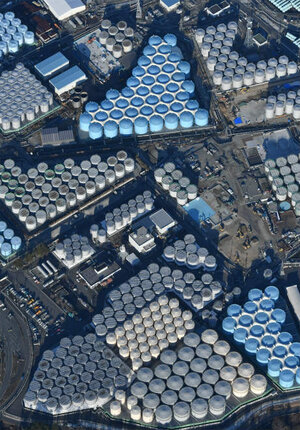
As water-dumping moves advance, S. Koreans seek firm regional stance, http://global.chinadaily.com.cn/a/202208/09/WS62f1be52a310fd2b29e7119d.html By YANG HAN in Hong Kong |2022-08-09
Japan’s plan to dump radioactive wastewater from the stricken Fukushima nuclear power plant will endanger the lives of people in the Asia-Pacific region, say experts who want to see stepped-up efforts against the ocean disposal from the countries most at risk.
South Koreans have been among those expressing their opposition to the plan, and voices have again been raised after Japan moved a step closer to implementing its planned discharge of the nuclear-contaminated water from next year, following the recent approval of the plan’s details by the nation’s nuclear regulator.
“The discharge of wastewater from Fukushima is an act of contaminating the Pacific Ocean as well as the sea area of South Korea,” said Ahn Jae-hun, energy and climate change director at the Korea Federation for Environment Movement, an advocacy group in Seoul.
“Many people in South Korea believe that Japan’s discharge of the Fukushima wastewater is a wrong policy that threatens the safety of both the sea and humans,” Ahn told China Daily.
Last month, Japan’s nuclear regulator approved the plan to discharge wastewater into the Pacific Ocean from the Fukushima Daiichi power plant, after it built up a huge amount of radiation-tainted water. The water has been collected and stored in tanks following efforts to cool down the reactors after an earthquake and tsunami struck Japan in 2011.
The dumping plan has drawn fierce opposition from government officials and civic groups in South Korea, one of the world’s major consumers of seafood.
On Aug 1, South Korea’s Minister of Oceans and Fisheries Cho Seunghwan said the government is considering whether to take the issue to the International Tribunal for the Law of the Sea, Yonhap News Agency reported. Cho said the government’s primary plan is to prevent Japan from releasing the contaminated water. “We do not accept the release plan”, he said.
Ahn said radioactive materials can generate long-term effects and it remains unclear how they will affect the marine ecosystem.
Though the South Korean government is considering taking the issue to the international tribunal, Ahn said it will be difficult to quantify the potential damage.
South Korea has said it will conduct a thorough analysis and revision of the impact of Japan’s plan, but the government has not received enough data from Japan to conduct such research, South Korea’s Hankyoreh newspaper reported in June.
After Japan’s nuclear regulator approved the Fukushima discharge plan, South Korean President Yoon Suk-yeol said Tokyo needs to transparently explain and gain consent from neighboring countries before releasing the contaminated water.
Potential impact
Shaun Burnie, a senior nuclear specialist with Greenpeace Germany, said the environmental group is concerned about the potential impact of the water’s release on the wider Asia-Pacific region.
The level of exposure depends on multiple variables including the concentration in seawater and how quickly it concentrates, disperses and dilutes, forms of life, and the type of radionuclide released and how that disperses or concentrates as it moves through the environment, Burnie said.
“The concentrations are of direct relevance to those who may consume them, including marine species like fish and, ultimately, humans,” Burnie told China Daily.
Noting that the Fukushima contaminated water issue comes under the United Nations Convention on the Law of the Sea as it is a form of pollution to international waters, Burnie said there are strong grounds for individual countries to file a legal challenge against Japan’s plan.
Ahn said joint expressions of opposition in the region could force the Japanese government to choose a safe method to deal with the wastewater instead of dumping it into the sea. China is also among the neighboring countries that have voiced opposition to the Fukushima discharge plan.
Sizewell C nuclear station approval faces legal challenge

Campaigners have begun a legal challenge against the government’s decision to give the Sizewell C nuclear power station the go-ahead amid warnings that UK nuclear plants will be on the frontline of climate breakdown.

Citing the threat to water supplies in an area officially designated as seriously water stressed, the threats to coastal areas from climate change and environmental damage, the challenge is the first step in a judicial review of the planning consent.
The business secretary, Kwasi Kwarteng, overruled the independent Planning Inspectorate to grant permission for the new nuclear reactor in Suffolk in July. Kwarteng is pushing ahead with
government plans to approve one new nuclear reactor a year as part of an energy strategy that aims to bolster the UK’s nuclear capacity, with the hope that by 2050 up to 25% of projected energy demand will come from it.
But Sizewell C has faced stiff opposition from local campaigners, and environmental groups both for its cost and the environmental impact. In a letter to Kwarteng outlining their legal challenge Together Against Sizewell C (TASC) argues that the permission by the government for the plant was given unlawfully. Represented by Leigh Day solicitors and supported by Friends of the Earth, the group says there was a failure to assess the implications of the project as a whole, by ignoring the issue of whether a permanent water supply could be secured, a failure to assess the environmental impact of that project and the suggestion that the site would be clear of nuclear material by 2140, which was not upheld by evidence showing highly radioactive waste would have to be stored on site until a much later date.
The Planning Inspectorate had rejected the scheme saying “unless the outstanding water supply strategy can be resolved and sufficient information provided to enable the secretary of state to carry out his obligations under the Habitats Regulations, the case for an order granting development consent for the application is not made out”.
Pete Wilkinson, chair of TASC, said: “The case against Sizewell C is overwhelming, as has been carefully documented throughout the inquiry stage and was found by the planning inspector to have merit. “Even to consider building a £20bn-plus nuclear power plant without first securing a water supply is a measure of the fixation this government has for nuclear power and its panic in making progress towards an energy policy which is as unachievable as it is inappropriate for the 21st-century challenges we
face.”
Guardian 8th Aug 2022
Drought may force nuclear power production cut
https://journalrecord.com/2022/08/05/drought-may-force-nuclear-power-production-cut/ Associated Press August 5, 2022 0
PARIS — French Prime Minister Elisabeth Borne warned that France is facing the “most severe drought” ever recorded in the country and announced the activation of a government crisis unit.
The crisis unit will be in charge of monitoring the situation in the hardest-hit areas and coordinate measures like bringing drinking water to some places. It will also monitor the impact of the drought on France’s energy production, transport infrastructure and agriculture.
The drought may force French energy giant EDF to cut power production at nuclear plants which use river water to cool reactors.
France now has 62 regions with restrictions on water usage due to the lack of rain.
Borne said many areas in France are going through a “historic situation” as the country endures its third heatwave this summer.
“The exceptional drought we are currently experiencing is depriving many municipalities of water and is a tragedy for our farmers, our ecosystems and biodiversity,” the statement said.
Damage to marine life from seismic testing, and from dumping of radioactive waste.

Concerns raised as the UK starts hunt for undersea nuclear waste disposal
sites. Animal welfare groups and campaigners blast ongoing surveys for
undersea nuclear waste dump. Officials have been warned about the potential
environmental impact of plans to dispose of radioactive nuclear waste
beneath the seabed off the north coast of England.
Yesterday, ELN reported
that the first marine geophysical surveys to determine suitable sites for
nuclear waste disposal started in the Irish sea near Cumbria. Nuclear Waste
Services (NWS), the developer of the Geological Disposal Facility (GDF)
said it is “committed to environmental protection at all times”.
Richard Outram, Secretary of the campaign group Nuclear Free Local
Authorities, told ELN: “The Nuclear Free Local Authorities are opposed to
both the seismic testing and its purpose. “Our concerns regarding the
testing regime itself is that it necessitates the prolonged and repeated
sound blasting of the seabed of the Irish Sea every few seconds for a
period of several weeks whilst the ship patrols a search area of some 250
square kilometres and that this activity will be both disruptive and
harmful to marine life, some of which has protected status, both in the
area and for many miles around it.”
Mr Outram added that he was not
convinced that any nuclear waste dump facility, however well engineered,
could provide a ‘forever guarantee’ against a potential leakage
scenario.
Cetacean Strandings Investigation Programme Manager Rob Deaville
from the Zoological Society of London said: “Many species of odontocetes
are sensitive to noise disturbance, given their primary sense is acoustic
in nature. “Generating impulsive noise, such as through seismic surveys,
can have a disturbance effect and may cause habitat avoidance and
potentially exclusion from an area. “Depending on how close animals are
to the source of impulsive noise, potential impacts can also include direct
physical effects ranging from temporary or permanent threshold shifts in
hearing to direct blast trauma and also the risk of decompression sickness
like conditions in some species that may ascend too rapidly to startle
responses.
“Finally, the area is a known habitat for many cetacean
species, ranging from coastal harbour porpoises to deeper diving Risso’s
dolphins. So, I would still have a concern about the seismic survey efforts
and our teams are very much on standby, in the event we receive increased
reports of live/dead strandings over this period.”
Energy Live News 3rd Aug 2022
https://www.energylivenews.com/2022/08/03/concerns-raised-as-the-uk-surveys-undersea-nuclear-waste-disposal-sites/
Dead fish near SC nuclear fuel site were an early warning. Then came the spills and accidents
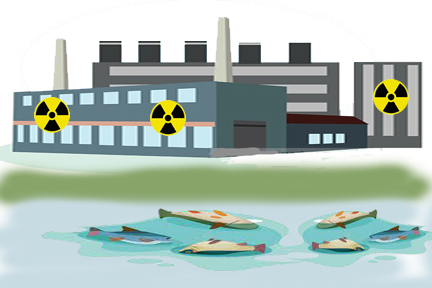
The State, BY SAMMY FRETWELL, JULY 30, 2022
Dead fish floated in a small pond near a nuclear fuel factory one day in 1980, raising concerns about the Columbia plant’s danger to the surrounding environment. A cocktail of contaminants had been documented in groundwater, which seeps into creeks and ponds, and it appeared that one of these pollutants — ammonia — had contributed to the fish kill in Gator Pond, according to environmental studies. It was a disturbing discovery that foreshadowed a variety of environmental and safety troubles the Westinghouse nuclear fuel plant would deal with over the next 40 years.
Since 1980, more than 40 environmental and safety problems have been tied to the Westinghouse plant, ranging from groundwater pollution to nuclear safety violations that endangered plant workers, according to a review of news accounts and public records by The State. Despite those issues, the U.S. Nuclear Regulatory Commission approved a final environmental study Friday that said the future environmental impact of the plant would be small to moderate. The NRC recommended a new license for the plant to operate for an additional 40 years, a decision that greases the skids for final license approval this fall.
John Grego, who is with the Friends of Congaree Swamp organization that supports Congaree National Park, said the fuel factory has had too many troubles of all kinds through the years. “The variety of problems is what troubles me, that this occurred in so many aspects of their culture,’’ Grego said. “It just seems to suggest systemic problems with the safety culture at Westinghouse. You had these long-standing problems that weren’t remediated, problems that weren’t reported.’’
Some of the pollution tied to Westinghouse was not known to the public or government regulators for years, which has incensed some Lower Richland residents who live near the plant. Some residents of the predominantly African-American community have said they were left out of the loop for too long.
Only in recent years, when a flurry of safety issues at the plant arose, did many people learn about past pollution. A key community concern is whether water pollution from the plant could one-day contaminate their drinking water wells. State regulators said mechanisms are now in place to hold Westinghouse more accountable, while resolving past environmental problems. The company struck a binding agreement with the state Department of Health and Environmental Control in 2019 to investigate and clean up pollution on the property. The company also is nearing completion of an investigative study of the site’s environmental problems, according to a statement Friday from DHEC.
……………………… Congaree Riverkeeper Bill Stangler was skeptical. Stangler said he is not confident Westinghouse will improve the operation, despite recent assurances and agreements with state regulators to clean up and do a better job. The plant is located near the Congaree River. “They have a long track record of problems at that facility that would raise anyone’s eyebrows,’’ Stangler said. “It’s concerning if you have an interest in the environment; it’s concerning if you are someone who lives in the surrounding area. Time after time we have seen that they haven’t followed the rules, and they have had problems.’’
………………………
Troubles at Westinghouse began in the 1970s, not long after the plant opened, when a wastewater pond leaked. But problems continued steadily after the 1980 fish kill, sometimes little known to the public. After the company reported a leak of uranium through a hole in the plant floor in 2018, federal and state regulators learned that the company had spilled toxins into the ground in 2008 and in 2011 without telling them or the public. The company said it was not required to report the spills. Contaminants such as fluoride, uranium, solvents and ammonia have been found in groundwater on the Westinghouse site. Technetium, a nuclear pollutant, also has been discovered on the soggy property, but no one has yet pinpointed the cause of the pollution.
Some of the biggest troubles at Westinghouse have revolved around nuclear safety inside the plant. The company has run into trouble through the years for failing to make sure nuclear materials it manages didn’t trigger small bursts of radiation, which can endanger workers. Records show the NRC has expressed concerns multiple times with Westinghouse over the issue, known as criticality safety
……………………… Government records also show that people working at the plant falsified records, including as recently as 2009. In some cases, employees have been injured or threatened by nuclear accidents.
…………………. News accounts and government records also show that Westinghouse has, at times, had trouble handling and keeping track of nuclear material it is responsible for…………………………………………. https://www.thestate.com/news/local/environment/article263945551.html
Grief for the abuse of nature that will come with Sizewell C nuclear station
East Anglia – already in drought and water scarcity, and climate change bringing heat waves – and they want to inflict more water-guzzling nuclear power upon this fragile environment
It’s hard not to be a nimby when nuclear meets nature. The margins of
our village lanes are thick with yellow leaves. It looks autumnal, but
they’ve changed colour and fallen due to heat stress. The fields are
tinder-dry; crop fires have sprung up here and there, some sparked by chaff
from combine harvesters hitting power lines, some thought to have been
started by the sun glancing off glass bottles left as litter.
In my garden the sparrows are no longer busy and voluble but sit out each day’s heat
in the privet, tiny beaks agape.
East Anglia gets little rain; the region
includes some of the driest places in the UK. Even so, aerial images
comparing now with last July are shocking — only the larger forests and
the damper creases of the watercourses still appearing green.
When I went to our local river for a cooling paddle, the water didn’t even reach my
knees. I drove to the coast. Suffolk’s seasides can be busy, but the long
dog-friendly beach south of the fishing hamlet of Sizewell is largely
overlooked by tourists and is a great place to swim. Kwasi Kwarteng, the
business secretary, had just given the proposed new nuclear power station
the go-ahead, and, bobbing in the waves, I gazed at the existing site’s
faraway blocks and sphere and tried to come to terms with what’s likely
to happen to this lovely stretch of coast — not to mention the Minsmere
nature reserve and all the sleepy villages, nightingale-filled woods and
family farms that the long building process will irrevocably change.
My grief for the countryside here is acute. I wish there were other options
than Sizewell on the table. You might say that’s nimbyism, but without
people willing to protect their home patches even more of our precious
landscapes, habitats and creatures will disappear — and that’s not just
a loss to locals, it’s a loss to all of us.
Times 29th July 2022
https://www.thetimes.co.uk/article/its-hard-not-to-be-a-nimby-when-nuclear-meets-nature-sd2wgdt9b
A new nuclear power station needs a vast supply of water. But where will Sizewell C get it from?
As one of the driest parts of the country, Suffolk is described by the Environment Agency as “seriously water stressed”. By 2043, eight years into Sizewell C’s 60-year operating life, the agency anticipates a water deficit in the county of more than 7m litres a day.
https://www.theguardian.com/commentisfree/2022/jul/27/nuclear-power-station-sizewell-c-water-suffolk William Atkins 28 Jul 2022 Plans for the site have got the go-ahead. The knock-on effect for Suffolk’s rivers and seawater will soon be clear
Last week, the government gave the go-ahead for a new nuclear power station to be developed on the Suffolk coast. Providing low-carbon electricity for about 6m homes, Sizewell C will stand alongside two existing stations, Sizewell B and the decommissioned Sizewell A. I live close enough to see the 60-metre tall, white dome of Sizewell B almost every day. When I want to torture myself, I look at developer EDF’s “construction phase visualisations” of the 1,380-acre building site, with its towering spoil heaps and forest of cranes, and wonder if this is what it will take to save the planet.
What might not have been immediately obvious in the coverage of the government’s decision was that the Planning Inspectorate, tasked with assessing such projects, had recommended that permission be refused. The problem, the examiners explained, was fairly simple: EDF couldn’t say exactly where it would obtain one of the main substances needed to make a nuclear power station work, that substance being water.
As well as uranium, a reactor of the kind EDF plans to build needs water in very great volumes. Saltwater will do for part of the process, which is one reason why nuclear power stations are usually built beside the sea. But fresh or “potable” water will also be needed – first, to cool the two reactors, and then, just as importantly, to cool the irradiated fuel once it has been removed from the reactors. For this, absolutely pure water is essential. Sizewell B uses about 800,000 litres of potable water per day; Sizewell C, with its twin reactors, will need more than 2m litres per day, and as much as 3.5m litres per day during construction.
Last September, during the closing hearings of the six-month public planning examination, the question of just where the developer was going to get the water to run Sizewell C, let alone build it, was becoming urgent. Those who had raised concerns about precisely this issue more than 10 years earlier would have been forgiven for feeling frustrated. As one of the driest parts of the country, Suffolk is described by the Environment Agency as “seriously water stressed”. By 2043, eight years into Sizewell C’s 60-year operating life, the agency anticipates a water deficit in the county of more than 7m litres a day. Northumbrian Water, which operates locally as Essex and Suffolk Water, had made it clear to EDF that there was not enough local groundwater for either construction or operation. EDF’s plan, therefore, was to build a pipeline to bring water from the River Waveney, 18 miles away on the Norfolk border. During at least the first two years of construction, while the pipeline was being built, EDF planned to install a temporary desalination plant on the site to turn saltwater from the sea into fresh.
Then, in August, the water company broke the news that its abstraction licenses dictating how much water it could extract from the Waveney, granted by the Environment Agency, were likely to be reduced by up to 60% to safeguard downstream levels. It subsequently confirmed that the Waveney did not, after all, have the capacity to supply water for for any of the 10-year construction phase.
Desalination, opponents of the project noted, was a solution EDF itself had discounted in January 2021 “due to concerns with power consumption, sustainability, cost and wastewater discharge”. And yet, desalination, with all the problems it had set out (including discharging millions of litres a day of saline concentrate and phosphorus into the North Sea), remains EDF’s “fallback” solution for running the station, as well as building it, if another source can’t be found. Northumbrian Water has since confirmed that: “Existing water resources (including the River Waveney) will not be sufficient to meet forecast mains water demand, including the operational demand of Sizewell C.”
Then, in August, the water company broke the news that its abstraction licenses dictating how much water it could extract from the Waveney, granted by the Environment Agency, were likely to be reduced by up to 60% to safeguard downstream levels. It subsequently confirmed that the Waveney did not, after all, have the capacity to supply water for for any of the 10-year construction phase.
Desalination, opponents of the project noted, was a solution EDF itself had discounted in January 2021 “due to concerns with power consumption, sustainability, cost and wastewater discharge”. And yet, desalination, with all the problems it had set out (including discharging millions of litres a day of saline concentrate and phosphorus into the North Sea), remains EDF’s “fallback” solution for running the station, as well as building it, if another source can’t be found. Northumbrian Water has since confirmed that: “Existing water resources (including the River Waveney) will not be sufficient to meet forecast mains water demand, including the operational demand of Sizewell C.”
The more I look at those mock-ups of the building site, the more they seem like a metaphor for another kind of despoilment. Given the government’s stated intention to build a fleet of new nuclear power stations across the country, it’s not just people who live in Suffolk who have reason to wonder what the secretary of state’s decision to wash his hands of Sizewell C’s water problem says about the resilience of the systems we entrust with safeguarding our environment. Still, the foundations will be laid, I suppose, and the cranes will rise, and after 10 years and £20bn (by EDF’s reckoning), Sizewell C will be built. And when the time comes for its reactors to go critical, there will be water, because if there isn’t, Suffolk will have a new tourist attraction to rival Framlingham Castle: the most expensive white elephant in human history.
What this fait accompli means for Suffolk’s rivers and seawater, let alone for the county’s householders and farmers, are not questions that will be answered before building begins. It’s enlightening, in this context, to consider that the past six months have been the driest in Suffolk for more than a quarter of a century, and the driest in England since 1976.
“The secretary of state disagrees with the examining authority’s conclusions on this matter,” Wednesday’s decision letter states, “and considers that the uncertainty over the permanent water supply strategy is not a barrier to granting consent to the proposed development.” During last year’s planning hearings, two stories kept coming back to me: the biblical account of Moses in the desert, making water gush from a rock by striking it with his staff; and the Brothers Grimm tale in which a giant clasps a stone in his fist, and crushes it until, finally, water is forced out.
William Atkins is the author of The Immeasurable World: Journeys in Desert Places and The Moor
SC nuclear fuel plant gets 40-year operating license – a ”license to pollute”
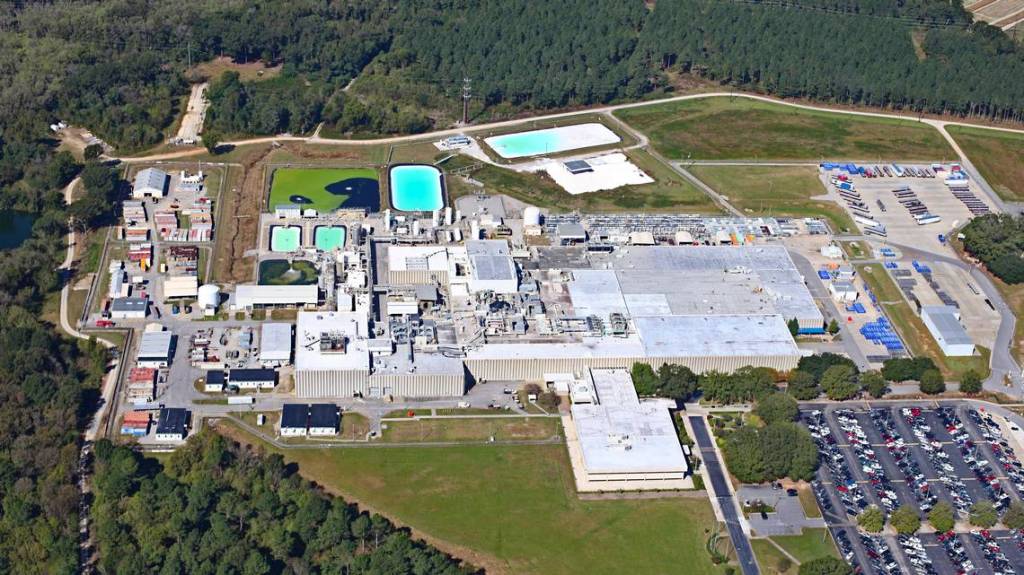
“It has been clear from the start of the license renewal process that the NRC was going to do what Westinghouse requested in spite of a long list of incidents at the facility and even an admission by the NRC that release of contaminants in the future was reasonably foreseeable,”
The State, BY SAMMY FRETWELL, JULY 29, 2022 ”…………………….. Federal regulators approved an environmental study that recommends the Westinghouse nuclear fuel factory southeast of Columbia receive a new 40-year license, virtually assuring that the license will be issued this fall. The U.S. Nuclear Regulatory Commission had considered issuing only a 20-year license because of the safety mishaps and pollution that have occurred at the Westinghouse plant on Bluff Road. But in a federal notice Friday, the NRC said its staff had reviewed a list of environmental issues associated with Westinghouse and determined the new license was warranted.
Westinghouse has tried for eight years to gain a new operating license for the plant, which sits on a 1,156-acre site in eastern Richland County about four miles from Congaree National Park. Groundwater contamination and spills of nuclear material are among the environmental problems Westinghouse has had, particularly in recent years — and neighbors have voiced displeasure with how the factory has operated in the predominantly Black community. Federal agencies, including the U.S. Department of the Interior and the U.S. Environmental Protection Agency, added weight to the chorus of concerns, saying last year the license should not be approved unless an array of environmental problems were resolved. The Interior Department even recommended a 20-year license, instead of 40, in part because of multiple leaks and spills that have polluted the ground and groundwater. The department oversees Congaree National Park.
Westinghouse’s troubles were pronounced enough that the NRC took the unusual step of conducting two major environmental studies to determine how the plant’s future operation might affect the environment. A first environmental study, which initially recommended continued operation, was deemed inadequate. The second study that was approved Friday, known as an Environmental Impact Statement, looked more deeply at the potential effect the plant would have on the surrounding environment if it continues to operate during the next 40 years.
The question has been whether the license should be for 40 years, as Westinghouse has said it should be, or for a lesser amount of time because of the environmental and safety concerns, many of which have surfaced in the past five years. Some environmentalists and people who live near the plant have said the license should be for 10 or 20 years —if issued at all. Westinghouse has said it is working to make improvements, and records indicate it has had fewer mishaps in the past two years. The company said it is happy with the NRC’s decision…………..
The NRC’s next step is to issue a safety review before the final licensing decision is made, the agency said. In a news release, the NRC said the final environmental study found that the plant would have only small to moderate impacts on the environment if the license is renewed. The department said the impacts in issuing a 20-year license would be similar to the impacts from issuing a 40-year license. The NRC last issued a license for Westinghouse in 2007. The biggest environmental impacts from continuing to operate the plant would be on groundwater and surface water, the final environmental impact statement said. Past operation of the plant has had a “noticeable effect’’ on groundwater quality, as well as the quality of surface water, such as creeks and ponds. Uranium, for instance, exceeds federal standards in the mud of Mill Creek, the report said. Even so, groundwater contamination is not forecast to spread offsite, the report said…………………………
Virginia Sanders, a Lower Richland environmental activist and Sierra Club official, said the plant’s continued existence threatens the environment, particularly as more intense rains related to the changing climate pound the Columbia area. The concern is pollution from the site could wash into the surrounding community. “That plant is over 50 years old. That plant should never have been put there in the first place,’’ Sanders said. “Anything in Lower Richland is on low land. And with the number of flooding events on the East Coast and other climate change events, that plant should not be operating there. I’m just waiting for the day when a catastrophe happens.’’
Tom Clements, a nuclear safety watchdog from Columbia, said he’s disappointed in Friday’s decision, but not surprised. He called on the NRC to reconsider its decision. “It has been clear from the start of the license renewal process that the NRC was going to do what Westinghouse requested in spite of a long list of incidents at the facility and even an admission by the NRC that release of contaminants in the future was reasonably foreseeable,” he said in an email to The State. “The 40-year license extension guarantees the risk of accidents and releases that will impact the environment and possibly human health over 40 years. Unfortunately, I now anticipate that careful behavior shown by Westinghouse during the period of the EIS preparation will be relaxed as Westinghouse is essentially now being given a license to pollute.’’
The Westinghouse plant’s environmental and safety challenges emerged within years of the plant opening in 1969. Many of the problems have centered on the company’s failure to handle materials so that they would not create small nuclear accidents that could endanger workers. Many of those concerns can be traced to the early 1980s. The problems continued until 2020. Since 1980, federal and state regulators have discovered more than 40 different environmental and safety problems at the plant, according to newspaper clippings and government records reviewed by The State.. In some cases, the NRC repeatedly told the company to make improvements, but Westinghouse did not move quickly enough to suit the agency. Two of the biggest incidents in the past 20 years involved the buildup of uranium, a nuclear material, in plant equipment — deficiencies that could have endangered workers. The NRC fined Westinghouse $24,000 in 2004 after learning uranium had accumulated in an incinerator to unsafe levels over eight years. The company had assumed the uranium levels were safe, but the problem was discovered in 2004 by an employee. The excess uranium could have caused a nuclear accident that could have injured or killed workers. In 2016, Westinghouse discovered that uranium had accumulated in an air pollution control device — known as a scrubber — to levels that were three times higher than a federal safety standard. Under pressure to explain why the buildup occurred, Westinghouse’s internal inspectors told the NRC that the company had not done enough to ensure employees knew enough about safety in the air scrubber. The company inspectors also said Westinghouse didn’t have strong enough procedures to keep uranium from building up and had a “less than questioning’’ attitude about procedures to prevent a nuclear accident. Two years later, a leak of uranium through a hole in the plant floor brought a barrage of complaints about Westinghouse, a major problem that led to the discovery that some groundwater pollution on the site had been known by the company for years but never reported to federal or state regulators. https://www.thestate.com/news/local/environment/article263833217.html
Undersea nuclear waste dump off Cumbria would imperil marine life, experts warn
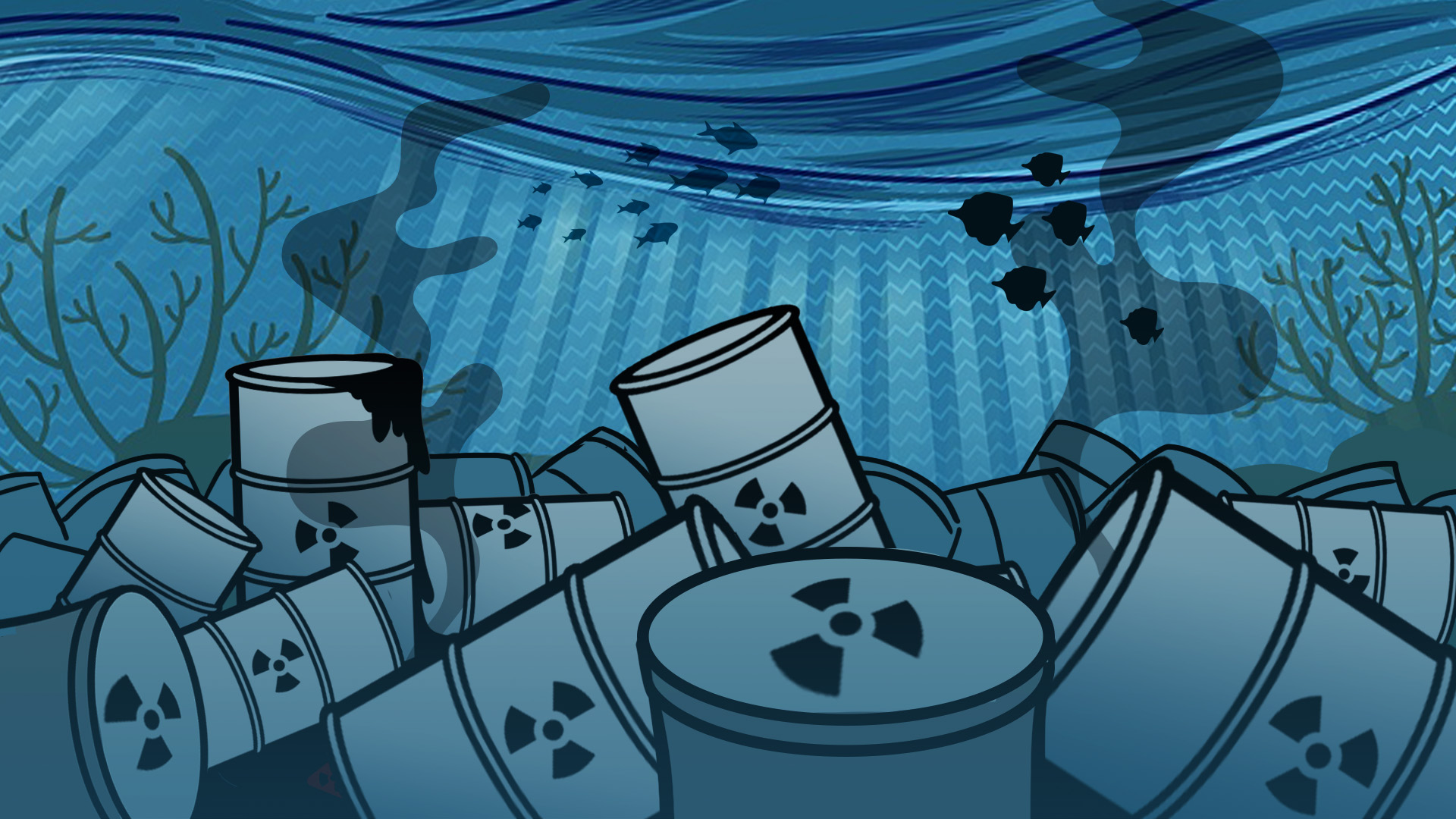
UK looking for storage site for world’s biggest stockpile of untreated waste, including 100 tonnes of plutonium
Guardian, Mattha Busby, Fri 29 Jul 2022
Plans to dispose of radioactive nuclear waste beneath the seabed off the north-west coast of England risk seriously harming marine life including mammals such as dolphins and whales, experts have warned.
Seismic surveys in the Irish Sea near Cumbria get under way on Saturday to explore whether the area is suitable for a proposed facility. The UK government is seeking a location for a deep underground repository to store the world’s largest stockpile of untreated nuclear waste.
Officials have said that a decades-long accumulation of materials including more than 100 tonnes of plutonium – which could create thousands of nuclear bombs – cannot sustainably be stored above ground for ever and they are therefore searching for a site to “keep it safe and secure over the hundreds of thousands of years it will take for the radioactivity to naturally decay”.
In 2019, radioactivity leaked into the soil beneath Sellafield, in Cumbria, which saw a serious leakage in the 1970s and was not built with decommissioning in mind. There are 20 surface facilities that store highly radioactive waste across the UK. About 750,000 cubic metres, equivalent to 70% of the volume of Wembley stadium, is earmarked for “geological disposal”.
But impacts related to noise exposure from seismic gun blasts have been linked to vastly reduced sightings of whales, whose primary sense is acoustic. There is also concern over storing nuclear waste underwater, with just a handful of such sites globally.
The Zoological Society of London’s cetacean strandings investigation programme manager, Rob Deaville, said that seismic blasts can cause habitat avoidance, risk excluding mammals from an area, and raise the risk of decompression sickness. “Potential impacts can also include direct physical effects ranging from temporary or permanent threshold shifts in hearing to direct blast trauma,” he told the Guardian.
There are also concerns that the blasts may drown out mating calls and even cause deaths, after more than 800 dolphins washed ashore in Peru in 2012 after seismic tests. On the Cumbria survey, Deaville added that the area is a known habitat for porpoises, dolphins and other species. “Our teams are very much on standby, in the event we receive increased reports of live/dead strandings over this period.”
In a letter to campaigners shared with the Guardian, an official from the Marine Management Organisation, a public body, acknowledged “the potential disturbance to certain cetacean species” but noted that the plans were largely exempt from regulations.
Critics also suggest it may be impossible to predict the consequences of storing heat-generating nuclear waste beneath the sea in perpetuity.
The chair of Nuclear Free Local Authorities (NFLA), David Blackburn, also leader of the Green party group at Leeds city council, told the Guardian: “The waste would be left in situ for millennia and, no matter how effective the barriers, some of the radioactivity will eventually reach the surface. The rate at which radioactivity would leak from a [geological disposal facility (GDF)] can be poorly predicted and is likely to remain so for an indefinite period.
“Rather than solving a problem for future generations, it could be leaving them a legacy of a nuclear waste dump gradually releasing radioactivity into the environment and cutting off their options for deciding how to deal with this waste.”
The NFLA prefers the idea of a “near surface, near site storage of waste” to allow for monitoring and management, and action in the event of a leakage. “Further scientific research may yield advancements that could mean that radioactive waste can be treated such as to make it less toxic in a shorter time period,” Blackburn added. “Chucking it in a hole in the ground or under the seabed precludes this possibility…………………………….. https://www.theguardian.com/environment/2022/jul/29/undersea-nuclear-waste-dump-off-cumbria-risks-harm-to-marine-life-experts-warn
High anxiety as Japan takes another step toward releasing wastewater from crippled Fukushima nuclear plant into sea.
China, South Korea, Taiwan, Hong Kong and Macau) still have import bans in place.
concern about whether the discharge of enormous amounts of wastewater could set a bad precedent for dealing with future nuclear accidents.
CBS News BY LUCY CRAFT, 25 July 22, Tokyo — The fishing industry around Japan’s Fukushima coast expressed disappointment and resignation over the weekend as long-expected plans to start releasing treated wastewater into the ocean from the crippled Fukushima Daiichi nuclear power plant moved one step closer to reality. The drastic measure has been adopted as the only practical way out of a dilemma that’s plagued the damaged plant for more than a decade……………………..
The unprecedented, controversial disposal operation is likely to take decades.
Since the massive 2011 earthquake and tsunami triggered meltdowns in three of the plant’s reactors, operator Tepco has struggled to manage the vast amount of contaminated water — a combination of reactor cooling water, rainwater and groundwater, all irradiated as it flows through the highly-radioactive melted reactor cores – accumulating at the facility.
As a stopgap, the grounds surrounding the damaged reactors have been converted into a giant tank farm, with more than 1,000 storage vessels holding 1,310,000 tons of wastewater.
Tepco has long warned that it will run out of storage space as soon as spring 2023, and that the structures are hampering the technologically challenging work of decommissioning the plant. The temporary storage solution is also highly vulnerable to any future natural disasters……………
Before construction of the undersea tunnel can even begin, however, Tepco’s proposal must win backing from the regional government in Fukushima Prefecture and the two affected towns of Okuma and Futaba. A Fukushima fish processing company representative told the Asahi newspaper, “to be honest, even if we oppose this, I don’t feel like we have any chance of overturning the decision.”
After years of painstaking efforts to convince the Japanese public and the rest of the world that their seafood is safe, the local fishing industry fears the ocean release will tarnish their brand anew. Tokyo has promised to buy catches if the industry suffers reputational damage.
Of the 55 countries and regions that imposed restrictions on imported Japanese food after the Fukushima Daiichi catastrophe — including the U.S. — five (China, South Korea, Taiwan, Hong Kong and Macau) still have import bans in place.
Regulators solicited public comment and said they had received more than 1,200 responses, including people voicing concern over whether the undersea tunnel would be earthquake-safe, and what was being done to protect workers.
Tokyo has said levels of tritium — the one isotope that can’t be filtered out — will be diluted to below 1/40th of the allowable level for discharge in Japan, and 1/7th the WHO ceiling for drinking water.
Still, some experts have called for greater transparency, fearing unintended consequences of the operation. There is also concern about whether the discharge of enormous amounts of wastewater could set a bad precedent for dealing with future nuclear accidents. https://www.cbsnews.com/news/japan-fukushima-daiichi-nuclear-plant-wastewater-release-into-sea-approved/
France should “rethink the temperature thresholds of rivers”,
Nuclear: with the heat wave, “we should rethink the temperature thresholds of rivers”, says the ASN chief inspector. The news sparked heated controversy: faced with heat records, the Nuclear Safety Authority (ASN) and the Ministry for Energy Transition granted an environmental waiver for four nuclear power plants: Saint-Alban, Golfech, Le Blayais and Le Blayais. Bugey.
Until July 24, these sites will be authorized to exceed the regulatory levels of water temperature discharged into the rivers and rivers in which they feed, in order to be able to operate if necessary for
the electricity network. For La Tribune, the ASN chief inspector, Christophe Quintin, discusses the reasons for this derogation, its implications and the lessons to be drawn from it.
La Tribune 21st July 2022
Guardians of the East Coast (Gotec) fight to stop nuclear waste dumping in the sea near holiday resorts UK

As Boris Johnson forged ahead with plans to triple Britain’s nuclear output in the shift away from a reliance on Russia and fossil fuels, he pledged to build a mini-nuclear reactor in almost every garden across the country.
The outgoing prime minister’s plan was typically bombastic, yet reflected the Government’s ambitious target to deliver up to a quarter of the country’s electricity from nuclear technologies by 2050.
What is less clear, however, is exactly where to put the hazardous waste produced from
reactors. Currently, Britain stores spent nuclear fuel at a number of nuclear sites including Sellafield, in Cumbria, and Sizewell B, in Suffolk.
But these on-land sites are not intended to be a permanent solution to the radioactive material building up as a by-product of Britain’s nuclear programme. The Government’s arms-length body Nuclear Waste Services (NWS) has been tasked with finding a permanent disposal site. Bruce Cairns, chief policy adviser at NWS, says: “We’re talking about a solution that should last hundreds of thousands of years. “What do you trust the most? Do you really want to leave this stuff at the surface, where it is vulnerable to
extreme weather events, climate change, sea level rise, terrorism, war or the breakdown in society?
“Everyone reaches the same conclusion. We just can’t give any guarantees that there will be people on the surface capable of looking after it over those timescales.” Countries worldwide with nuclear programmes are all trying to find ways to store the waste so that it will not endanger future civilisations, with policy makers discussing how to make it completely inaccessible to future populations likely to
speak different languages, hold different values and have access to new technologies. The best way forward, they have decided, is to store the waste in rocks deep underground.
But finding a local area happy to host the site has its challenges, and has come up against opposition. A number of locations in Cumbria are being vetted by the Government, with the communities near Sellafield considered more amenable because they are already better acquainted with nuclear technologies and aware of the economic benefits of the industry.
However, a new entrant has emerged on the east coast. A community group assessing plans for a GDF has been set up in Lincolnshire. The facility’s entrance would be located at a former gas terminal near the village of Theddlethorpe and the popular seaside town of Mablethorpe. Underground tunnels dug out of layers of deep rocks would lead to the underwater site around six miles from the coastline. NWS and other proponents of the site point out that granting a GDF in the area will unlock significant government funding for local projects.
Yet opponents fear it would wreck the local tourism industry. A group called the Guardians of the East Coast (Gotec) are fighting the plans through protests, petitions and coverage in local and national newspapers. Ken Smith, chairman of Gotec, says: “Mablethorpe is one of the east coast’s principle bucket-and-spade holiday resorts. “I imagine that having four square miles of nuclear waste just six miles off the coast is not exactly going to encourage people to send their children along to bathe in the sea.” Local Conservative MP Victoria Atkins has also expressed reservations and held meetings with site organisers.
Telegraph 23rd July 2022
Greenpeace experts find Chornobyl under Russian occupation – radiation levels much higher than the IAEA estimated

Russian military occupation at Chornobyl commits crime against the
environment and global science understanding of radiation risks.
This was stated by the Greenpeace experts during the press conference in the Ukraine
Crisis Media Center on July 20. The Greenpeace investigation team has found
radiation levels in areas where Russian military operations occurred that
classifies it as nuclear waste to be at least three times higher than the
estimation by the International Atomic Energy Agency (IAEA).
In April 2022, the IAEA provided very limited data with assurances that radiation levels
were ‘normal” and not a major environmental or public safety issue.
Ukraine Crisis 20th July 2022
The Royal Society for the Protection of Birds (RSPB) condemns ludicrous Sizewell C planning approval.

The Royal Society for the Protection of Birds (RSPB) has expressed its
disappointment that “ludicrous” plans for a nuclear power plant near the
internationally-important RSPB Minsmere reserve have been approved. RSPB
chief executive Beccy Speight said: “The RSPB is extremely disappointed to
learn that the government has approved plans for Sizewell C, the proposed
new nuclear power station that will affect our nature reserve at Minsmere
in Suffolk.
East Anglian Daily Times 20th July 2022
https://www.eadt.co.uk/news/business/rspb-condemns-ludicrous-sizewell-c-planning-approval-9157422
1 This Month



Shut down the radiation-damaged Heysham nuclear reactors now
To see nuclear-related stories in greater depth and intensity – go to https://nuclearinformation.wordpress.com

Say No to NASA’s Reckless Nuclear Reactor on the Moon
Say No to NASA’s Reckless Nuclear Reactor on the Moon
-
Archives
- October 2026 (256)
- September 2026 (339)
- August 2026 (330)
- July 2026 (355)
- June 2026 (287)
- May 2026 (306)
- April 2026 (356)
- March 2026 (251)
- February 2026 (267)
- January 2026 (308)
- December 2025 (358)
- November 2025 (359)
-
Categories
- 1
- 1 NUCLEAR ISSUES
- business and costs
- climate change
- culture and arts
- ENERGY
- environment
- health
- history
- indigenous issues
- Legal
- marketing of nuclear
- media
- opposition to nuclear
- PERSONAL STORIES
- politics
- politics international
- Religion and ethics
- safety
- secrets,lies and civil liberties
- spinbuster
- technology
- Uranium
- wastes
- weapons and war
- Women
- 2 WORLD
- ACTION
- AFRICA
- Atrocities
- AUSTRALIA
- Christina's notes
- Christina's themes
- culture and arts
- Events
- Fuk 2022
- Fuk 2023
- Fukushima 2017
- Fukushima 2018
- fukushima 2019
- Fukushima 2020
- Fukushima 2021
- general
- global warming
- Humour (God we need it)
- Nuclear
- RARE EARTHS
- Reference
- resources – print
- Resources -audiovicual
- Weekly Newsletter
- World
- World Nuclear
- YouTube
-
RSS
Entries RSS
Comments RSS

