Water shortage at Sizewell: the environmental cost
Pete Wilkinson: (From Feb 2022) Building the Sizewell C plant, which
requires vast amounts of fresh water, in an area of water scarcity makes no
sense. The availability of water is something we barely give a thought to:
only ten percent of people consider water shortage to be an environmental
issue, yet without it, it’s curtains. According to the Environment Agency
(EA), England could fail to meet national demand by 2050.
As the driest part of the country, Eastern England has been designated as a
water-stressed area and future pressures include climate change, economic
and housing development. Suffolk is recognised as an area of water
scarcity, facing predictions of a water shortage in the coming years.
East Anglia Bylines (accessed) 23rd April 2023
Japan hopes to start discharging Fukushima nuclear wastewater in July
Gong Zhe https://news.cgtn.com/news/2023-04-23/Japan-hopes-to-start-discharging-Fukushima-nuclear-wastewater-in-July-1jfbTfpbNvy/index.html
Japan is hoping to start discharging radioactive waste water from its destroyed Fukushima nuclear plant into the ocean in July.
Tokyo Electric Power Company (TEPCO) told Kyoto News on Saturday that the excavator is near the exit of the tunnel located one-kilometer offshore. The 1,030-meter tunnel is used to discharge the treated water stored in the Fukushima Daiichi Nuclear Power Plant into the sea. As long as 1,017 meters of the tunnel have been excavated.
TEPCO is trying to complete the tunnel and other facilities related to water discharging before the end of June, and the possibility of starting discharge operations as early as July has increased.
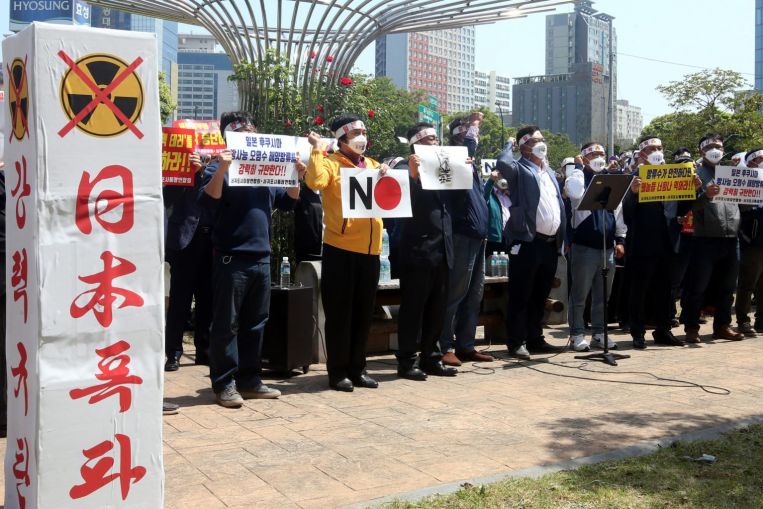
The Japanese government and TEPCO are trying to start discharging around this summer, but fishermen and others continue to oppose it. The plan faces opposition at home and has raised “grave concern” in neighboring countries, including but not limited to China and South Korea.
TEPCO plans to use a large amount of seawater for dilution to make the activity of tritium in treated water less than one-fortieth of national standards, and then discharge it through a seabed tunnel. It is expected to be discharged for several decades.
Fukushima’s fishing industry survived a nuclear disaster. 12 years on, it fears Tokyo’s next move may finish it off.
By Emiko Jozuka, Krystina Shveda, Junko Ogura, Marc Stewart and Daniel Campisi, CNN, April 19, 2023
It is still morning when Kinzaburo Shiga, 77, returns to Onahama port after catching a trawler full of fish off Japan’s eastern coast.
But the third-generation fisherman won’t head straight to market. First, he’ll test his catch for radiation.
It’s a ritual he’s repeated for more than a decade since a devastating earthquake and tsunami triggered a nuclear meltdown at the Fukushima Daiichi power plant in 2011, spewing deadly radioactive particles into the surrounding area.
Radiation from the damaged nuclear plant leaked into the sea, prompting authorities to suspend fishing operations off the coast of three prefectures that had previously provided Japan with half of its catch.
That ban lasted over a year and even after it was lifted, Fukushima-based fishermen like Shiga were for years mostly limited to collecting samples for radioactivity tests on behalf of the state-owned electricity firm Tokyo Electric Power Company, or TEPCO, rather than taking their catches to market.
Ocean currents have since dispersed the contaminated water enough that radioactive Cesium is nearly undetectable in fish from Fukushima prefecture. Japan lifted its last remaining restrictions on fish from the area in 2021, and most countries have eased import restrictions.
Shiga and others in the industry thought they’d put the nightmare of the past years behind them.
So when Japan followed through on plans to gradually release more than 1 million metric tons of filtered wastewater into the Pacific Ocean from the summer of 2023 – an action the government says is necessary to decommission the plant safely – the industry reeled.
The Japanese government and the International Atomic Energy Agency (IAEA), a United Nations body promoting the peaceful use of nuclear energy, say the controlled release, which is expected to take decades, will meet international safety regulations and not harm the environment, as the water will be treated to remove radioactive elements – with the exception of tritium – and diluted more than 100 times.
But with the deadline for the planned water release looming this summer, Fukushima’s fishermen fear that – whether the release is safe or not – the move will undermine consumer confidence in their catches and once again threaten the way of life they have fought so hard to recover…………………………………………………………………..
While radioactive wastewater contains dangerous elements including Cesium and Strontium, TEPCO says the majority of those particles can be separated from the water and removed. TEPCO claims its filtering system, called advanced liquid processing (ALPS), can bring down the amount of those elements far below regulatory standards.
But one hydrogen isotope cannot be taken away, as there is currently no technology available to do so. This isotope is radioactive tritium, and the scientific community is divided on the risk its dissemination carries………………………………………………………
“For decades, nuclear power plants worldwide – including in the United States, Canada, Britain, France, China and South Korea – have been releasing waste contaminated with tritium, each under its own national quota,” said Tim Mousseau, an environmental scientist at the University of South Carolina.
But Mousseau argues tritium is overlooked because many countries are invested in nuclear energy, and “there’s no way to produce it without also generating vast amounts of tritium.”
“If people started picking on TEPCO in Fukushima, then the practice of releasing tritium to the environment in all of these other nuclear power plants would need to be examined as well. So, it opens up a can of worms,” he said, adding the biological consequences of exposure to tritium have not been studied sufficiently.
In 2012, a French literature review study said tritium can be toxic to the DNA and reproductive processes of aquatic animals, particularly invertebrates, and the sensitivity of different species to various levels of tritium needs to be further investigated.
Currently, countries set different standards for the concentration of tritium allowed in drinking water. For example. Australia, which has no nuclear power plants, allows more than 76,000 becquerel per liter, a measure used to gauge radioactivity, while the WHO’s limit is 10,000. Meanwhile, the US and the European Union have much more conservative limits – 740 and 100 becquerel per liter respectively.
Ian Fairlie, an independent consultant on radioactivity in the environment, told CNN that “two wrongs don’t make a right” when it comes to Japan’s decision to release tritiated water. He argues TEPCO should build more storage tanks to allow for the decay of the radioactive tritium, which has a half-life of 12.3 years.
Lack of trust for the ‘nuclear village’
In Japan, the Fukushima wastewater issue has become highly contentious due to a lack of trust among influential advocates of nuclear energy, or what’s locally known as the “nuclear village.”
The informal group includes members of Japan’s ruling party (the Liberal Democratic Party), the Ministry of Economy Trade and Industry and the nuclear industry.
“(The nuclear village) used to tell us that nuclear energy is 100% safe – but it wasn’t, as the Fukushima Daiichi plant accident revealed,” said Koichi Nakano, a political scientist at Sophia University, in Tokyo.
A series of missteps after the disaster further eroded public trust, according to a 2016 report written by Kohta Juraku, a researcher at Tokyo Denki University.
For instance, in 2012, the government and TEPCO presented a proposed action plan to local fishing representatives that involved pumping up groundwater before it flooded into the nuclear reactor buildings and releasing it into the sea. Fishing bodies were on board but the plan was it postponed until 2014 after 300 tons of radioactive water leaked from the plant into the sea, infuriating fishers……………………………………… https://edition.cnn.com/2023/04/19/asia/japan-fukushima-disaster-wastewater-fishing-concerns-hnk-dst-dg-intl/index.html
How Fukushima wastewater into Pacific will disrupt seafood trade
By Ming Wang, Dalian Maritime University, China
Public opinion will dictate how Japanese seafood is received after the wastewater is disposed of into the Pacific Ocean.
The global seafood market faces turmoil with the release of the Fukushima nuclear wastewater from Japan into the Pacific Ocean, computer modelling predicts.
Japan announced in 2021 it would release over 1.25 million tonnes of treated Fukushima radioactive wastewater into the sea as part of its plan to decommission the power station when its storage capacity reaches its limit this year.
Seafood is one of the most important food commodities in international trade, far exceeding meat and milk products. According to the United Nations Comtrade database, global seafood trade has grown from $US7.6 billion in 2009 to $US12.4 billion in 2019, an increase of 63 percent.
The Japanese nuclear wastewater discharge raises global worries about the safety of Japanese seafood as public opinion influences consumers’ preference for seafood.
In this empirical study involving American consumers, 30 percent of respondents said they reduced their seafood consumption following the Fukushima nuclear plant accident and more than half believe Asian seafood poses a risk to consumer health due to the disaster.
Most of Japan’s seafood trading partners, such as China, Russia, India and South Korea, imposed temporary bans on food from several districts around Fukushima in the wake of the accident in 2011.
This paper models the potential impact of the Fukushima nuclear wastewater disposal on the global seafood trade using the import and export data for 26 countries which make up more than 92 percent of the world’s trade in marine products………………..
China, South Korea and the US are expected to increase their seafood imports from Denmark, France, Norway and other community group two countries while reducing seafood exports to them. This is because these three countries have already reduced their seafood trade with Japan.
The increase in exports from community group three to community group two nations leads to a decrease in imports and exports between countries within community group two. For example, the study notes that Denmark, Norway and France are all experiencing a decrease in seafood exports and imports between each other……………………………………..
The model also divided the global seafood market into two segments – the first being the Japanese market and the second comprising 25 other countries. It calculated that Japan’s seafood exports fell by 19 percent in 2021, or $US259 million.
Public opinion after the Fukushima wastewater is discharged will have different impacts on the import and export trade of seafood for each country, especially for countries which trade with Japan.
What people think about the discharge is closely related to the amount of Japanese seafood imported by each country. The higher the amount of Japanese seafood imported by a particular country, the more negative public opinion is likely to be, according to computer modelling…………………………………………………………… more https://www.rnz.co.nz/international/pacific-news/487942/how-fukushima-wastewater-into-pacific-will-disrupt-seafood-trade
Alba MP Neale Hanvey calls for Ministry of Defence to tackle nuclear decontamination at Dalgety Bay
The National, By James Walker @James_L_Walker 19 Apr 23
More than 3,000 radioactive particles have been found at Dalgety Bay.
ALBA Party MP Neale Hanvey has called on the Ministry of Defence to clean-up radiation contamination on the Dalgety Bay shoreline.
In a statement, Hanvey added that “there can be no excuse for inaction”.
Leading a Westminster debate on the issue on Tuesday, the MP for Kirkcaldy and Cowdenbeath – the constituency which includes the West Fife town – listed and condemned what he described as a “historical backlog in remediation”.
Radioactive material was first detected at Dalgety Bay in 1990 and came from WW2 planes, which had aircraft dials coated in radium to help pilots see in the dark.
More than 3,000 radioactive particles, with a half-life of 1,600 years, have been found on the beach and next to Dalgety Bay Sailing Club.
Restrictions were put in place in 2011, with parts of the beach fenced off.
The MoD admitted responsibility for the radioactive pollution in 2014. But plans to tackle the issue have frequently been delayed.
Balfour Beatty took on a £10.5 million contract in 2020 but decontamination work didn’t get under way until May 2021 and hasn’t yet been completed.
Hanvey has repeatedly condemned the Ministry of Defense for continued silence and delays in tackling the issue.
At the debate, Hanvey asked the Minister for Defence Procurement, Alex Chalk, for further clarification as to when the work would be completed, the costs incurred and whether they will be fully covered by the MoD.
Chalk said the cost would be around £15 million. He said that the costs would be be met by the MoD, but added: “I stress that there was absolutely no legal requirement on the Ministry of Defence to do so. However, we decided to take that step.”
Chalk also stressed that many of the delays were unforeseen, including having to “search through many tonnes of sand and soil for minute radioactive particles”.
He added, however, that he was “delighted” to say that work will be completed by September 2023…………………. more https://www.thenational.scot/news/23464754.alba-mp-neale-hanvey-calls-mod-tackle-nuclear-decontamination/
Ignoring science, environmental protection and international law – G7 endorses Japan’s Fukushima water discharge plans

Greenpeace International, 16 April 2023 https://www.greenpeace.org/international/press-release/59193/science-environmental-protection-international-law-g7-japans-fukushima-water-discharge/
Legacy of Fukushima disaster shows nuclear energy is no solution to energy and climate crisis.
Sapporo, Japan – The nations of the G7 have chosen politics over science and the protection of the marine environment with their decision today to support the Japanese government’s plans to discharge Fukushima radioactive waste water into the Pacific Ocean.
The 1.3 million cubic meters/tons of radioactive waste water at the Fukushima Daiichi plant, currently in tanks, is scheduled to be discharged into the Pacific Ocean this year. Nations in the Asia Pacific region, led by the Pacific Island Forum, have strongly voiced their opposition to the plans.[1] Some of the world’s leading oceanographic institutes and marine scientists have criticised the weakness of the scientific justification applied by TEPCO, the owner of the nuclear plant, warned against using the Pacific Ocean as a dumping ground for radioactive contaminated water, and called for alternatives to discharge to be applied.[2]
“The Japanese government is desperate for international endorsement for its Pacific Ocean radioactive water dump plans. It has failed to protect its own citizens, including the vulnerable fishing communities of Fukushima, as well as nations across the wider Asia Pacific region. The aftermath of the nuclear disaster at Fukushima is still strongly felt, and the Japanese government has failed to fully investigate the effects of discharging multiple radionuclides on marine life. The government is obligated under international law to conduct a comprehensive environmental impact assessment, including the impact of transboundary marine pollution, but has failed to do so. Its plans are a violation of the UN Convention Law of the Sea.
The marine environment is under extreme pressure from climate change, overfishing and resource extraction. Yet, the G7 thinks it’s acceptable to endorse plans to deliberately dump nuclear waste into the ocean. Politics inside the G7 at Sapporo just trumped science, environmental protection, and international law,” said Shaun Burnie, Senior Nuclear Specialist at Greenpeace East Asia.
Greenpeace East Asia analysis has detailed the failures of liquid waste processing technology at the Fukushima Daiichi plant and the environmental threats posed by the releases.[3] There is no prospect of an end to the nuclear crisis at the plant as current decommissioning plans are not feasible. Furthermore, the report finds the nuclear fuel debris in the reactors cannot be completely removed and will continue to contaminate the ground water over many decades.[4] Claims that the discharges will take 30 years is inaccurate as in reality, it will continue into the next century. Viable alternatives to discharge, specifically long term storage and processing, have been ignored by the Japanese government.[3]
The Japanese government’s attempt to normalise the Fukushima nuclear disaster is directly linked to its overall energy policy objective of increasing the operation of nuclear reactors again after the 2011 disaster. 54 reactors were available in 2011 compared to only ten reactors in 2022, generating 7.9% of the nation’s electricity in FY21 compared to 29% in 2010.[5] Meanwhile, five of the other six G7 governments led by France, the US and the UK are also aggressively promoting nuclear power development.
The idea that the nuclear industry is capable of delivering a safe and sustainable energy future is delusional and a dangerous distraction from the only viable energy solution to the climate emergency which is 100% renewable energy. The global growth of low cost renewable energy has been phenomenal – but it has to be much faster and at an even greater scale if carbon emissions are to be reduced by 2030. Approval for nuclear waste dumping and nuclear energy expansion sound like the 1970’s but we have no time for such distractions. We are in a race to save the climate in the 21st century, and only renewables can deliver this,” said Shaun Burnie.
Plan for Dumping Nuclear Wastewater Into Hudson River Is Paused
New York Times, By Patrick McGeehan, April 14, 2023
Wastewater from the shuttered Indian Point nuclear power plant in New York will not be dumped into the Hudson River next month as planned, the company that owns the plant said.
The owner, Holtec International, said on Thursday that it would take more time to explain its plan to elected officials and community leaders who have become alarmed about potential harmful effects on the environment.
A Holtec spokesman, Patrick O’Brien, said the company would take a “voluntary pause” in its scheduled release of water from the pools that contained spent fuel rods from Indian Point’s reactors, which stopped generating electricity in 2021.
Why It Matters: Area Residents Feared Contamination of Drinking Water
Releasing water from the spent-fuel pools into the Hudson had always been part of Holtec’s plan for dismantling Indian Point, in Buchanan, N.Y. But a recent notice from the company that it might speed up the process alarmed some environmental activists, who oppose discharging the wastewater because it contains tritium, a radioactive element.
Riverkeeper, an organization that advocates for clean water in New York, opposed the plan, saying: “Ingestion of tritium is linked to cancer, and children and pregnant women are most vulnerable.” Riverkeeper called for the wastewater to be stored in tanks on the site until a safer method of disposal could be devised.
In an April 6 letter to the federal Nuclear Regulatory Commission, New York’s Democratic senators, Chuck Schumer and Kirsten Gillibrand, said that Holtec’s “sudden” announcement had “shocked the community” and would increase public opposition and distrust of Holtec as it continues the decommissioning of Indian Point.
On Thursday, Mr. Schumer said in a statement that he was “relieved that Holtec has heeded our call and will put a stop to its hastily hatched plan to dump radioactive wastewater into the Hudson this May.”
………………………………………… Holtec tried to assure community leaders that the safest way to dispose of the wastewater was to put it in the river. But elected officials proposed legislation in Albany that would ban the “discharge of any radiological agent into the waters of the state.”
What’s Next
Holtec has not abandoned its plan to discharge the wastewater. Mr. O’Brien said the company hoped to “further engage” with elected officials and state agencies and that regulators would gain “time to continue explaining the science and regulations” at public meetings. The Indian Point Decommissioning Oversight Board has scheduled a special online meeting for public comment on April 25. https://www.nytimes.com/2023/04/14/nyregion/hudson-river-nuclear-waste.html
The temperature of the world’s ocean surface has hit an all-time high.
The temperature of the world’s ocean surface has hit an all-time high
since satellite records began, leading to marine heatwaves around the
globe, according to US government data. Climate scientists said preliminary
data from the National Oceanic and Atmospheric Administration (Noaa) showed
the average temperature at the ocean’s surface has been at 21.1C since
the start of April – beating the previous high of 21C set in 2016.
Three years of La Niña conditions across the vast tropical Pacific have helped
suppress temperatures and dampened the effect of rising greenhouse gas
emissions. But scientists said heat was now rising to the ocean surface,
pointing to a potential El Niño pattern in the tropical Pacific later this
year that can increase the risk of extreme weather conditions and further
challenge global heat records.
Guardian 8th April 2023
Sizewell C permits approved despite concerns over potential mass fish deaths
Sizewell C permits approved despite concerns over potential mass fish
deaths. The Environment Agency has issued three new permits to Sizewell C,
despite concerns that the approved cooling system and lack of fish
deterrent device could result in “thousands of fish dying every day”.
ENDS 30th March 2023
Opponents pack Pilgrim Nuclear meeting as potential discharge of radioactive water looms
CAI | By Jennette Barnes, March 28, 2023
Opponents of the proposed discharge of radioactive water from the Pilgrim Nuclear Power Station packed a meeting on the future of the station last night.
Ryan Collins of Bourne received a standing ovation from the audience when he presented a thick binder of signatures from his Change.org petition. The petition calls for a stop to the discharge plan. It garnered more than 200,000 signatures.
The state’s Nuclear Decommissioning Citizens Advisory Panel hosted the meeting at Plymouth Town Hall as part of its regular calendar.
…………………………………… opponents argue that the terms of a state settlement with Holtec would make a release of contaminated water illegal, with or without a permit.
Many members of the audience held orange signs that read, “Protect our bays! No permit!” in reference to the proposed modification of Holtec’s permit under the National Pollutant Discharge Elimination System.
Jo-Anne Wilson-Keenan, of East Dennis, said she’s concerned about contamination. Speaking from the podium, she raised her arm to show the shape of Cape Cod and the location of Dennis.
“We live right here in the elbow, and when the radioactive water comes down from Plymouth, it’s going to land right on our beaches,” she said.
Jim Cantwell, state director for U.S. Sen. Ed Markey, discussed Markey’s March 17 letter to Holtec asking the company to use the ratepayer-funded decommissioning trust fund to pay for an independent scientific study of the risks of discharging the radioactive water stored at Pilgrim.
Last May, at a field hearing hosted by Markey in Plymouth, Singh agreed to allow independent testing.
Meanwhile, state-supervised testing of the Pilgrim water is set to begin with a collection of samples on April 5. Senior staff from the Massachusetts Department of Environmental Protection and Department of Public Health are scheduled to observe, along with a representative of the town of Plymouth.
But Seth Pickering, a deputy regional director with DEP, said the state no longer plans to use the previously identified Colorado lab, Eurofins, to test for non-radioactive pollutants.
The agency will instead rely on Gel Laboratories of South Carolina, which Pickering disclosed is a lab Holtec uses as well.
Members of the audience objected to the idea of using the same lab as Holtec……………. https://www.capeandislands.org/local-news/2023-03-28/opponents-pack-pilgrim-nuclear-meeting-as-potential-discharge-of-radioactive-water-looms
EPA finds radioactive contamination in Missouri landfill
by Allison Kite 29 March 2023
Shortly after MuckRock and the Missouri Independent announced a callout for stories from families impacted by 47,000 tons of radioactive waste buried in the West Lake Landfill in northern St. Louis County, the EPA held a community meeting sharing that the problem was even more widespread than initially believed.
The finding is based on two years of testing at the St. Louis County site, which has held thousands of tons of radioactive waste for decades. An underground “fire” in another area of the landfill threatens to exacerbate the issue, which residents believe is responsible for a host of mysterious illnesses.
Chris Jump, the EPA’s remedial project manager for the site, said the findings don’t change the agency’s planned cleanup strategy or the level of risk the site poses to the surrounding residents. The radioactive waste is still within the footprint of the landfill, she said.
And though the site was placed on the National Priorities List more than 30 years ago, meaning it is among the most contaminated hazardous waste sites in the country, the EPA wouldn’t commit to a timeline for the cleanup during Tuesday’s meeting.
I know this is not what people want to hear,” Jump said, adding that federal law requires certain steps for Superfund sites. “I’m sorry. I can’t give you a specific timeframe.”
The Missouri Independent and MuckRock are partnering to investigate the history of dumping and cleanup efforts of radioactive waste in the St. Louis area. Read the full story by the Missouri Independent’s Allison Kite at MuckRock or at the Missouri Independent’s website.
South Korea to keep Fukushima seafood ban despite thaw with Japan
Aljazeera, 30 Mar 23
President Yoon Seok-yeol’s administration says ‘health and safety’ top priority despite improving Seoul-Tokyo ties.
South Korea has ruled out lifting a ban on Japanese seafood imports from the area around the Fukushima nuclear plant despite warming relations between Seoul and Tokyo.
“
“Seafood imports from near the tsunami-stricken plant will “never come into” South Korea due to health concerns related to leaked radiation, the administration of President Yoon Seok-yeol said on Thursday.
With regard to the import of Japanese seafood products, the government’s stance remains unchanged that the health and safety of the people are the top priority,” the presidential office said in a statement, South Korea’s Yonhap News Agency reported.
South Korea has banned Japanese seafood imports from eight prefectures, including Fukushima, since 2013 due to fears of radiation contamination from the meltdown of the plant following an earthquake and tsunami.
…………………………………………….. Apart from South Korea, mainland China and Hong Kong continue to block imports of food from the region, including all dairy products and fruits and vegetables. https://www.aljazeera.com/economy/2023/3/30/south-korea-to-keep-fukushima-seafood-ban-despite-thaw-with-japan
What’s dumped is not just Fukushima nuclear water
In January, the Japanese government announced that it would begin to release into the Pacific Ocean more than 1.37 million tons of water from the wrecked Fukushima Daiichi nuclear plant sometime this spring or summer. A shadow of nuclear contamination is looming larger.
Although the Tokyo Electric Power Company (TEPCO) insists that the contaminated water has been filtered and diluted and meets the criterion for a safe discharge, a report has shown that 73 percent of the treated water still exceeds the discharge standard.
Unlike normal wastewater from nuclear power plants, Fukushima nuclear-contaminated water contains over 60 kinds of radioactive substances. Besides tritium, which is difficult to remove, the treated water also contains strontium-90 and carbon-14, whose half-lives are 29 years and 5,730 years, respectively.
For those who can’t grasp its meaning, tritium can replace stable hydrogen atoms in the human body and cause chronic radiation syndrome and cancer. Strontium-90 is highly toxic and may induce bone tumors.
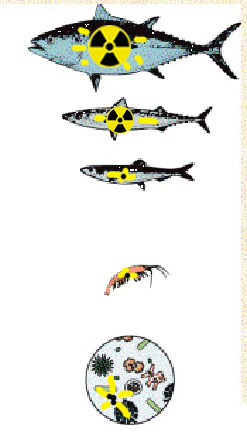
Experts have pointed out that once released into the ocean, the contaminated water would rapidly spread to most parts of the Pacific. Radiation would be absorbed by marine life and enters the human body.
In 2022, it was detected that radiation in black rockfish caught off Fukushima prefecture was 14 times higher than the safe level for humans, even after 11 years have passed since the Fukushima nuclear disaster. The South China Morning Post reported that caesium, one of the most dangerous radionuclides that “can build up in muscle, fat and bone and cause malignant tumors,” was detected in “fish caught at a depth of 24 meters about 9 km off Fukushima prefecture’s town of Shinchi.”
After more than 10 years, the local fishery industry has not fully recovered. In 2012, Japan banned the sale of 36 species of fish caught off Fukushima, and Tokyo’s decision crushed their hopes. Voices of opposition have been ongoing. In Japan, fishery organizations have expressed their concerns. Citizens in Tokyo, Osaka and Shizuoka protested on the streets to demand the government rescind its decision.
On the world stage, Japan’s neighbors including China, Russia and South Korea have asked Tokyo to provide useful information, engage in full consultation, and take responsible measures. The Pacific Island countries urged Japan not to release the contaminated water before there is enough scientific evidence proving that it’s safe. And independent UN human rights experts issued a joint statement calling Japan’s decision “very concerning” and “deeply disappointing.”
To make a clear evaluation of the safety of Japan’s plan, an International Atomic Energy Agency task force was set up to conduct a safety review. Days ago, it completed its second regulatory review and “will release a report on its findings in about three months, as well as a comprehensive report before the discharge.” Nonetheless, even before the task force set out, Tokyo unilaterally announced the planned discharge. The Japanese government has set its mind on the discharge regardless of the review outcome.
When Tokyo decides to discharge the contaminated water without ensuring safety, does it even consider people’s right to life and health? As a party to the UN Convention on the Law of the Sea, the Convention on Early Notification of a Nuclear Accident, and the Convention on Nuclear Safety, does the Japanese government recognize its international obligations? When it puts the whole Pacific and Pacific Rim countries at the risk of environmental disaster, how does it uphold the principle of “environment first”?
When it comes to nuclear contamination, it’s better to err on the side of caution. There could be better alternatives than dumping the contaminated water into the sea. Evaporating, storing underground the tritium-laced water from the plant, or storing and processing the water over the long term, these are all technically reasonable options that are safer than a direct discharge. Unfortunately, Tokyo has chosen to go for the cheapest “quick fix.”
When the earthquake and tsunami struck Fukushima, neighboring countries reached out their helping hands to Japan. Today, the nation is repaying them with tons of nuclear contaminated water.
The Pacific Ocean is home to billions of people, but Japan takes it as its own sewer. Along with contaminated water, Japan’s reputation, conscience and international obligations will be dumped as well.
Sir David Attenborough urges people to unite to save ‘nature in crisis

Sir David Attenborough said “nature is in crisis” as he urged people to
unite to save it for future generations. He spoke out after last night’s
first episode of his five-part show about British wildlife.
His plea comes
as the National Trust, RSPB and WWF have launched their first joint
campaign, Save Our Wild Isles, which encourages people to “go wild”
once a week, by doing activities such as sowing bee-friendly plants or
creating “hedgehog highways”, and urges citizens to call on the
government to make changes to halt nature’s decline.
The series features a
sixth, iPlayer-only episode called Saving Our Wild Isles, commissioned by
the RSPB and WWF. “[It] shows what amazing people are doing to turn the
UK round and how quickly it can recover,” Alastair Fothergill, the
producer, said.
Times 13th March 2023
Independent 13th March 2023
Ocean discharge is the worst plan for Fukushima waste water — IPPNW peace and health blog

Japan may soon start dumping radioactively contaminated waste water from the Fukushima Daichi nuclear plant into the Pacific Ocean, despite warnings from neighboring countries, marine scientists, and health experts. As soon as within a month or two, Japan could begin dumping into the Pacific Ocean 1.3 million tons of treated but still radioactively contaminated wastewater […]
Ocean discharge is the worst plan for Fukushima waste water — IPPNW peace and health blog
As soon as within a month or two, Japan could begin dumping into the Pacific Ocean 1.3 million tons of treated but still radioactively contaminated wastewater from the stricken Fukushima Daichi nuclear plant. Construction of the kilometer long undersea discharge tunnel and a complex of pipes feeding it commenced last August.
This cheap and dirty approach of “out of sight out of mind” and “dilution is the solution to pollution” belongs in a past century. It ignores the significant transboundary, transgenerational and human rights issues involved in this planned radioactive dumping, projected to continue over the next 40 years.
Concerns about Japan’s ocean dumping plans have been strongly voiced by China and South Korea, and by numerous Pacific island nations. Multiple UN Special Rapporteurs have severely criticised the plan, which has also been opposed by the United States National Association of Marine Laboratories and many regional and international health and environmental civil society organisations.
Australia bears a particular responsibility in relation to the aftermath of the ongoing Fukushima nuclear disaster, since fuel fabricated with uranium from Australia was in each of the Fukushima reactors which exploded. Yet my letters to the relevant Australian federal ministers on this matter have gone unanswered for seven weeks, and no evidence is publicly available that the Australian government has supported our Pacific neighbours in raising concerns about the planned discharge with its Japanese counterparts.
We are in the UN Decade of Ocean Science for Sustainable Development (2021-30). As Pacific Islands Forum (PIF) Secretary-General Henry Puna reminded us in his piece in The Guardian on 4 January, in 1985 the Forum welcomed the then Japanese prime minister’s statement that “Japan had no intention of dumping radioactive waste in the Pacific Ocean in disregard of the concern expressed by the communities of the region.” The current plan is inconsistent with this commitment.
In a public event organised by the PIF in Suva on 18 January, Puna noted Prime Minister Kishida’s reassurance during Japan’s regular meeting with the Forum in July 2022 of the need to progress this matter consistent with international law and verifiable science. The Secretary-General reiterated his request on behalf of Forum members for postponement of the planned discharge in order to allow adequate consideration of alternative options and to engage in respectful and full evidence-based consultation with Pacific nations in planning the best course of action. His calls have been ignored.
The most authoritative independent scientific assessment of the planned discharge has been conducted by a five-member independent international scientific panel appointed by the PIF. The experts were unanimous in their conclusions and recommendations. Their main conclusions:
- TEPCO’s knowledge of the specific radionuclide contents of all the tanks is seriously deficient. Only roughly one quarter of the more than 1,000 tanks at the site have been sampled at all, and in almost all cases only nine or fewer of 64 total radionuclides are measured in the data shared with PIF. TEPCO’s assumptions of consistent ratios of various radionuclides across different tanks are contradicted by the data, with show many thousand-fold variation.
Sampling and measurements have been unrepresentative, statistically deficient and biased, and have not included the debris and sludges, which Japan has acknowledged are present in at least some of the tanks. Sludges and debris are likely to be most radioactive, particularly in relation to harmful isotopes like plutonium and americium.- More than 70% of the tanks which had gone through ALPS (Advanced Liquid Processing System), designed to remove most of the radioactive contaminants, will require re-treatment. For some isotopes, the levels after treatment are up to 19,900 times higher than the regulatory limits for discharge. There is no evidence confirming that even repeated processing through ALPS can provide consistently effective purification.
- There has been no adequate consideration of the behavior of radioactive elements in the ocean, with transport by ocean currents and organisms, accumulation in biota and sea floor sediments, or the behavior of organically bound tritium in an ocean environment. The seafloor off Japan’s east coast still contains up to 10,000 times the cesium concentration as before the disaster, before any planned discharge.
- Neither TEPCO nor the IAEA acknowledged or addressed the many serious scientific questions raised by the panel. For example, TEPCO reported that tanks sampled in 2019 contained tellurium-127, an isotope with a half-life of only 9 hours. This signifies either that accidental criticality with fission reactions are occurring on an ongoing basis in the molten reactor cores, which would be very significant, or that the measurements are wrong. However no satisfactory answers were provided. Indeed the IAEA cut off contact with the panel.
- Neither TEPCO, the International Atomic Energy Agency (IAEA) nor the Japanese Nuclear Regulatory Authority have properly considered several viable alternative approaches, including storage in purpose-built seismically safe tanks, possibly after initial purification, subsequent use in concrete for structural applications with little or no potential for contact with humans and other organisms, and bioremediation for some important isotopes such as strontium-90. All the proposed alternatives would have orders of magnitude less impact and avoid transboundary impacts.
The argument that the site is running out of room to store water is spurious. Contaminated water will continue to be generated for many decades hence, and there is plenty of nearby space available that will be unfit for other uses for a very long time and is already being used to store large amounts of contaminated soil from around the prefecture. There is in fact no urgency to begin ocean discharge.
The independent expert panel recommended unanimously that the planned ocean dumping should not proceed. Their overwhelming case, based on scientific evidence and the need to minimise transboundary and transgenerational impacts, is that new approaches and alternatives to ocean dumping are needed and are the responsible way forward.
This matter requires urgent attention. Construction of the pipeline through which the ocean discharge is planned to occur is well underway, and the discharge may commence as soon as this month. Given that the discharge is planned to continue over 30-40 years, reconsideration could still be undertaken even after ocean discharge commenced. However it would be far better if the planned discharge were postponed until better alternatives were properly considered and implemented.
Now is the time for the Australian government, scientists and citizens to join with our Pacific neighbours in calling on Japan to stop its irresponsible plan to use the Pacific Ocean as a radioactive waste dump.
1 This Month



Shut down the radiation-damaged Heysham nuclear reactors now
To see nuclear-related stories in greater depth and intensity – go to https://nuclearinformation.wordpress.com

Say No to NASA’s Reckless Nuclear Reactor on the Moon
Say No to NASA’s Reckless Nuclear Reactor on the Moon
-
Archives
- October 2026 (256)
- September 2026 (339)
- August 2026 (330)
- July 2026 (355)
- June 2026 (287)
- May 2026 (306)
- April 2026 (356)
- March 2026 (251)
- February 2026 (267)
- January 2026 (308)
- December 2025 (358)
- November 2025 (359)
-
Categories
- 1
- 1 NUCLEAR ISSUES
- business and costs
- climate change
- culture and arts
- ENERGY
- environment
- health
- history
- indigenous issues
- Legal
- marketing of nuclear
- media
- opposition to nuclear
- PERSONAL STORIES
- politics
- politics international
- Religion and ethics
- safety
- secrets,lies and civil liberties
- spinbuster
- technology
- Uranium
- wastes
- weapons and war
- Women
- 2 WORLD
- ACTION
- AFRICA
- Atrocities
- AUSTRALIA
- Christina's notes
- Christina's themes
- culture and arts
- Events
- Fuk 2022
- Fuk 2023
- Fukushima 2017
- Fukushima 2018
- fukushima 2019
- Fukushima 2020
- Fukushima 2021
- general
- global warming
- Humour (God we need it)
- Nuclear
- RARE EARTHS
- Reference
- resources – print
- Resources -audiovicual
- Weekly Newsletter
- World
- World Nuclear
- YouTube
-
RSS
Entries RSS
Comments RSS

