Campaigners fear changes at Hinkley Point C ‘could kill millions of fish every day’
By Burnham-On-Sea.com, January 27, 2023
Campaigners fear millions of fish could be killed every day by the Hinkley Point C nuclear power station near Burnham-On-Sea if owner EDF is allowed to back out of a planning condition.
The Stop Hinkley anti-nuclear group has said this week that EDF Energy had refused to fit acoustic fish deterrents on its two off-shore massive cooling water intake heads.
Stop Hinkley spokeswoman Katy Attwater said EDF now looked to be pressuring the Environment Agency to drop the planning condition which required the acoustic fish deterrent measures.
It comes as the Environment Agency launches a four-week consultation on whether the Hinkley C site’s operational water discharge activity permit should be varied.
Stop Hinkley Spokesperson Katy Attwater adds: “It looks to us very much like the Environment Agency is being forced to make a decision which conservation groups fear will result in the death of millions of fish every day.”
“The Severn Estuary supports some of the most important and protected habitats in the UK, EDF appears to be absolutely determined not to spend the money to install AFD’s and is pressurising the Agency into backing down.”
“This change would be disastrous for the Severn estuary and all the fish species it supports, to breed and travel into its tributaries, nine of the greatest rivers of England and Wales.”
However, Chris Fayers, Head of Environment for Hinkley Point C, told Burnham-On-Sea.com: “EDF has decades of experience and data gained from taking cooling water from the Bristol Channel, which shows the activity has an insignificant impact on protected species………… https://www.burnham-on-sea.com/news/campaigners-fear-changes-at-hinkley-point-c-could-kill-millions-of-fish-every-day/
Don’t dump on us
Japan has also benefited from the (inevitable) support of the (nuclear power-promoting) International Atomic Energy Agency, an organization that never met a nuclear danger it couldn’t downplay. The agency has described the proposed discharges as “far below the Japanese regulatory limits,” in a statement last April.
Pacific Islanders, marine scientists, urge Japan not to dump Fukushima radioactive water into ocean
By Linda Pentz Gunter, Beyond Nuclear International, 24 Jan 23,
The nuclear power industry has a long history of disproportionately impacting people of color, Indigenous communities and those living in the Global South. As Japan prepares to dump more than 1 million tonnes of radioactive water from its stricken Fukushima-Daiichi nuclear power plant site into the Pacific Ocean some time this year, history is about to repeat itself.
To remind us of that — and to warn against this reckless and entirely unnecessary action (Japan could and should expand the cask storage pad on site and keep storing the radioactive water there) — the leader of the Pacific Islands Forum (PIF) has spoken out.
In a recent column in the UK daily newspaper, The Guardian, Henry Puna wrote that “continuing with ocean discharge plans at this time is simply inconceivable”, given how directly it once again discriminates against — and will likely seriously harm the health of — the peoples of the Pacific. Puna took care to remind readers “that the majority of our Pacific peoples are coastal peoples, and that the ocean continues to be an integral part of their subsistence living.”
Going forward with the dump without further study and serious consideration of viable alternatives, would, Puna said, mean that “the region will once again be headed towards a major nuclear contamination disaster at the hands of others.” Victims of years of atomic testing, Pacific Islanders are rightly not ready to be dumped on yet again.
Tepco and the lapdog Japanese government announced last May that they would release around 1.3 million tonnes of radioactive waste water from the Fukushima site next spring. Recently, authorities suggested the dump could be delayed until the summer but seem undeterred by the loud chorus of opposition from multiple quarters.
The plant produces 100 cubic metres of contaminated water daily, a combination of groundwater, seawater and water used to keep the reactors cool. The water is theoretically filtered to remove most harmful isotopes, other than tritium, which is radioactive hydrogen and cannot be separated from water. It is then stored in casks on site where authorities claim they are running out of space. However, independent watchdogs are not convinced that the filter system has successfully removed other dangerous radioactive isotopes from the waste water.
Most recently, the 100-member American group, the National Association of Marine Laboratories (NAML), expressed its fervent opposition in a strongly worded position paper released last month. Their opposition, they wrote, “is based on the fact that there is a lack of adequate and accurate scientific data supporting Japan’s assertion of safety. Furthermore, there is an abundance of data demonstrating serious concerns about releasing radioactively contaminated water.”
The report went on: “The proposed release of this contaminated water is a transboundary and transgenerational issue of concern for the health of marine ecosystems and those whose lives and livelihoods depend on them. We are concerned about the absence of critical data on the radionuclide content of each tank, the Advanced Liquid Processing System (ALPS), which is used to remove radionuclides, and the assumption that upon the release of the contaminated wastewater, ‘dilution is the solution to pollution.’”
The scientists accused Japan of ignoring the inevitable processes of bioaccumulation and bioconcentration, which contradict the dilution contention. The Association also called out what it saw as shoddy or incorrect science conducted by Tepco and the Japanese government, including “flaws in sampling protocols, statistical design, sample analyses, and assumptions, which in turn lead to flaws in the conclusion of safety and prevent a more thorough evaluation of better alternative approaches to disposal.”
Japan has consistently rejected on-going onsite storage — presumably due to the expense, given the land space is there and more casks could be provided. In the view of some, the eagerness to dump the water— largely contaminated with tritium (a form of radioactive hydrogen that cannot be separated from water) and likely other undeclared radionuclides — is a public relations exercise to make the problem “go away” and restore normal optics to the site. The site cannot also be fully decommissioned so long as the tanks are there.
Japan has also benefited from the (inevitable) support of the (nuclear power-promoting) International Atomic Energy Agency, an organization that never met a nuclear danger it couldn’t downplay. The agency has described the proposed discharges as “far below the Japanese regulatory limits,” in a statement last April.
After sending in a task force and several earlier reports, the IAEA released a new report in December in which it said “the IAEA will conduct its own independent checks of the radiological contents of the water stored in the tanks and how it will analyse environmental samples (for example seawater and fish) from the surrounding environment.” However, the IAEA has not expressed opposition to the dumping of the radioactive water even now and instead indicates that its safety reviews will continue “before, during, and after the discharges of ALPS treated water.”
Japan has faced down opposition from fishermen and environmentalists, particularly from those in the Marshall Islands who have suffered decades of horrific health issues, especially birth defects, after enduring 67 US atomic tests there. A Pacific region collective advocacy group, Youngsolwara Pacific, expressed dismay that the Japanese, of all people, would not empathize with them and condemn the Fukushima water dump………………………….. https://beyondnuclearinternational.org/2023/01/24/dont-dump-on-us/—
Namibia orders Russian uranium exploration to stop due to environmental concerns
North Africa Post January 2, 2023 https://northafricapost.com/64030-namibia-orders-russian-uranium-exploration-to-stop-due-to-environmental-concerns.html
Namibian authorities have ordered Russia’s state atomic energy agency to stop uranium exploration over concerns about potential contamination of underground water.
Namibia’s Ministry of Agriculture, Water and Land Reform refused to grant Russia’s Rosatom subsidiary, One Uranium, a water use permit required for mining, saying the company failed to prove its uranium extraction method would not cause pollution. Namibia — the world’s second and Africa’s no. 1 producer of the nuclear fuel — granted Russia’s state atomic energy agency exploration rights in 2019.
The Namibian official Calle Schlettwein said Namibia could not grant One Uranium a permit for uranium mining. The Russian entity still needs a water use permit to begin mining.
Schlettwein said no further permit would be granted because the mining method the company proposed, known as the in-situ leaching, was raising environmental concerns. In situ mining involves recovering minerals by dissolving them in an acid pumped into the ground and then pumping the solution back to the surface.
Schlettwein said farmers in Namibia’s eastern Omaheke region had petitioned against the technique. Although One Uranium’s spokesperson, Riaan Van Rooyen, dismissed the concerns, Namibian activists maintain the mining project is not worth the risk. Rosatom’s subsidiary is expected to appeal Namibia’s decision against the water permit for uranium mining.
Hot water — radiation in drinking water

Tighter controls called for as radiation contaminates US drinking water
Hot water — Beyond Nuclear International
Radioactive contamination is creeping into drinking water around the U.S.
https://beyondnuclearinternational.org/2023/01/01/hot-water/ By Lynne Peeples, Ensia 1 Jan 2023
When Jeni Knack moved to Simi Valley, California, in 2018, she had no idea that her family’s new home was within 5 miles of a former nuclear and rocket testing laboratory, perched atop a plateau and rife with contamination. Radioactive cesium-137, strontium-90, plutonium-239 and tritium, along with a mix of other toxic chemicals and heavy metals, are known to have been released at the industrial site through various spills, leaks, the use of open-air burn pits and a partial nuclear meltdown.
Once Knack learned about the Santa Susana Field Laboratory and the unusual number of childhood cancer cases in the surrounding community, she couldn’t ignore it. Her family now only drinks water from a 5-gallon (19-liter) jug delivered by Sparkletts water service. In August of 2021, she began sending her then 6-year-old daughter to kindergarten with two bottles of the water and instructions to not refill them at school, which is connected to the same Golden State Water Company that serves her home.
A federal report in 2007 acknowledged that two wells sourced by the water company were at risk of contamination from the site. “The EPA has said we’re at risk,” says Knack. And Golden State, she says, has at times used “possibly a very hefty portion of that well water.” To date, radioactivity above the natural level has not been detected in Golden State’s water.
Concerns across the country
All water contains some level of radiation; the amount and type can vary significantly. Production of nuclear weapons and energy from fissionable material is one potential source. Mining for uranium is another. Radioactive elements can be introduced into water via medical treatments, including radioactive iodine used to treat thyroid disorders. And it can be unearthed during oil and gas drilling, or any industrial activities that involve cracking into bedrock where radioactive elements naturally exist. What’s more, because of their natural presence, these elements can occasionally seep into aquifers even without being provoked.
The nonprofit Environmental Working Group (EWG, a partner in this reporting project) estimates that drinking water for more than 170 million Americans in all 50 states “contains radioactive elements at levels that may increase the risk of cancer.” In their analysis of public water system data collected between 2010 and 2015, EWG focused on six radioactive contaminants, including radium, radon and uranium. They found that California has more residents affected by radiation in their drinking water than anywhere else in the U.S. Yet the state is far from alone. About 80% of Texans are served by water utilities reporting detectable levels of radium. And concerns have echoed across the country — from abandoned uranium mines on Navajo Nation lands, to lingering nuclear waste from the Manhattan Project in Missouri, to contaminants leaching from phosphate mines in Florida.
While ingesting radioactive elements through drinking contaminated water is not the only route of human exposure, it is a major risk pathway, says Daniel Hirsch, a retired University of California, Santa Cruz, professor who has studied the Santa Susana Field Laboratory contamination. “One thing you don’t want to do is to mix radioactivity with water. It’s an easy mechanism to get it inside people,” he says. “When you drink water, you think you excrete it. But the body is made to extract things from what you ingest.”
Strontium-90, for example, is among elements that mimic calcium. So the body is apt to concentrate the contaminant in bones, raising the risk of leukemia. Pregnant women and young kids are especially vulnerable because greater amounts of radiation are deposited in rapidly growing tissue and bones. “This is why pregnant women are never x-rayed,” says Catherine Thomasson, an independent environmental policy consultant based in Portland, Oregon. Cesium can deposit in the pancreas, heart and other tissues, she notes. There, it may continue to emit radioactivity over time, causing disease and damage.
Scientists believe that no amount of radiation is safe. At high levels, the radiation produced by radioactive elements can trigger birth defects, impair development and cause cancer in almost any part of the body. And early life exposure means a long period of time for damage to develop.
Health advocates express concern that the government is not doing enough to protect the public from these and other risks associated with exposure to radioactive contamination in drinking water. The legal limits set by the U.S. Environmental Protection Agency (EPA) for several types of radioactive elements in community water systems have not been updated since 1976. Further, many elements are regulated as a group rather than individually, such as radium-226 plus radium-228. And water system operators, if they are required to monitor for radioactive elements, only need to do so infrequently — say, every six or nine years for certain contaminants.
Meanwhile, private wells generally remain unregulated with regard to the elements, which is particularly concerning because some nuclear power plants are located in rural areas where people depend on private wells. More than one out of every 10 Americans use private wells or tiny water systems that serve fewer than 15 residences.
The Santa Susana Field Laboratory was rural when it was first put to use about 70 years ago. Today, more than 700,000 people live within 10 miles (16 kilometers). Recent wildfires have exacerbated these residents’ concerns. The 2018 Woolsey fire started on the property and burned 80% of its 2,850 acres (1,153 hectares). Over the following three months, the levels of chemical and radioactive contamination running off the site exceeded state safety standards 57 times.
Hirsch highlights several potential avenues for drinking water contamination related to nuclear weapons or energy development. Wind can send contamination off site and deposit it into the soil, for example. Gravity can carry contaminants downhill. And rains can carry contamination via streams and rivers to infiltrate groundwater aquifers. While vegetation absorbs radioactive and chemical contaminants from the soil in which it grows, those pollutants are readily released into the environment during a fire.
While no tests have detected concerning levels of radioactivity in Golden State’s water, advocates and scientists argue that testing for radioactive elements remains inconsistent and incomplete across the country. Federal and state regulations do not require monitoring for all potential radioactive contaminants associated with the known industrial activity on the site. For some of the regulated contaminants, water companies need only test once every several years.
“This is not an isolated matter,” says Hirsch. “We’re sloppy with radioactive materials.”
“We need stricter regulations”
In 2018, around the same time that fires stirred up radioactive elements in and around the Santa Susana Field Laboratory, drinking water concerns arose just outside of Pittsburgh, Pennsylvania. Guy Kruppa, superintendent of the Belle Vernon Municipal Authority, had been noticing major die-offs of the bacteria in his sewage treatment plant. The bugs are critical for breaking down contaminants in the sewage before it is discharged into the Monongahela River. About 1 mile (1.6 kilometers) downstream is a drinking water plant.
Kruppa and his colleagues eventually linked the low bacteria numbers to leachate they accepted from the Westmoreland landfill. The landfill had begun taking waste from nearby fracking sites — material that included bacteria-killing salts and radioactive elements such as radium.
The Belle Vernon Municipal Authority subsequently got a court order to force the landfill to stop sending its leachate — the liquid stuff that flows off a landfill after it rains. “We sealed off the pipe,” Kruppa says.
Today, radiation is no longer discharging from his plant. Yet he remains concerned about where the leachate might now be going and, more broadly, about the weak regulation regarding radioactive waste that could end up in drinking water. The quarterly tests required of his sewage treatment plant, for example, do not include radium. “The old adage is, if you don’t test for it, you’re not going to find it,” adds Kruppa.
Concerns that radioactive elements from fracking could travel into community drinking water sources have been on the rise for at least a decade. A study led by Duke University researchers and published in 2013 found “potential environmental risks of radium bioaccumulation in localized areas of shale gas wastewater disposal.” Kruppa’s actions in 2018 drove widespread media attention to the issue.
In late July 2021, the state of Pennsylvania announced it would begin ordering landfills that accept waste from oil or gas drilling sites to test their leachate for certain radioactive materials associated with fracking. The state’s move was a “good step in the right direction,” says Amy Mall, a senior advocate with the nonprofit Natural Resources Defense Council, which published a report on radioactive waste from oil and gas production in July. “We do need more data. But we don’t think monitoring alone is adequate. We need stricter regulations as well.”
The EPA drinking water standard for radium-226 plus radium-228, the two most widespread isotopes of radium, is 5 picocuries per liter (0.26 gallon). The California Office of Environmental Hazard Assessment’s public health goal, set in 2006 and the basis of EWG’s study, is far more stringent: 0.05 picocuries per liter for radium-226 and just 0.019 picocuries per liter for radium-228. “There is a legal limit for some of these contaminants, like radium and uranium,” says Sydney Evans, a science analyst with EWG. “But, of course, that’s not necessarily what’s considered safe based on the latest research.”
“We don’t regulate for the most vulnerable,” says Arjun Makhijani, president of the nonprofit Institute for Energy and Environmental Research. He points to the first trimester in a pregnancy as among the riskiest windows of development.
The known toxicities of radioactive contaminants, as well as technology available to test for them, have evolved significantly since standards were established in the 1970s. “We have a rule limited by the technology available 40 years ago or more. It’s just a little crazy to me,” says Evans. Hirsch points to a series of reports from the National Academies of Sciences, Engineering, and Medicine on health risks from ionizing radiation. “They just keep finding that the same unit of exposure produces more cancers than had been presumed,” he says. The most recent version, published in 2006, found the risk of cancer due to radiation exposure for some elements to be about 35% higher per unit dose than the 1990 version.
The EPA has begun its fourth review of national primary drinking water regulations, in accordance with the Safe Drinking Water Act. The results are anticipated in 2023. While advocates hope for stricter standards, such changes would add to the difficulties many drinking water providers already face in finding the finances and technology necessary to meet those regulations.
Seeking solutions
The aquifer beneath Winona, Minnesota — which supplies drinking water to residents — naturally contains radium, resulting in challenges for the city water department to minimize levels of the radioactive element.
Tests of Winona’s drinking water have found levels of radium above federal standards. In response to results, in April 2021 city officials cautioned residents that low-dose exposure over many years can raise the risk of cancer. However, they did not advise people to avoid drinking the water.
The city is now looking to ramp up their use of a product called TonkaZorb, which has proven effective in removing radium at other drinking water plants, notes Brent Bunke, who served as the city’s water superintendent during the time of the testing. The product’s active ingredient is manganese, which binds to radium. The resulting clumps are easy to sift out by the sand filter. Local coverage aptly likened it to kitty litter. Bunke notes that the city also plans to replace the filter media in their aging sand filters. Of course, all these efforts are not cheap for the city. “It’s the cost of doing business,” says Bunke.
Winona is far from alone in their battle against ubiquitous radium. And they are unlikely to be the hardest hit. “Communities that are being impacted don’t necessarily have the means to fix it,” says Evans. “And it’s going to be a long-term, ongoing issue.” Over time, municipalities often have to drill deeper into the ground to find adequate water supply — where there tends to be even larger concentrations of radium.
Some are looking upstream for more equitable solutions. Stanford University researchers, for example, have identified a way to predict when and where uranium is released into groundwater aquifers. Dissolved calcium and alkalinity can boost water’s ability to pick up uranium, they found. Because this tends to happen in the top six feet of soil, drinking water managers can make sure that water bypasses that area as it seeps into or is pumped out of the ground.
The focus of this research has been on California’s Central Valley — an agricultural area rich in uranium. “When you start thinking about rural water systems, or you think about water that’s going to be used in agriculture, then your economic constraints become really, really great,” says Scott Fendorf, a professor of earth systems science at Stanford and coauthor on the study. “You can’t afford to do things like reverse osmosis” — a spendy form of filtration technology.
In general, radiation can be very difficult to remove from water. Reverse osmosis can be effective for uranium. Activated carbon can cut concentrations of radon and strontium. Yet standard home or water treatment plant filters are not necessarily going to remove all radioactive contaminants. Scientists and advocates underscore the need for further prevention strategies in the form of greater monitoring and stronger regulations. The push continues across the country, as the issue plagues nearly everywhere — an unfortunate truth that Knack now knows.
Why doesn’t her family simply move? “I’m not saying we won’t. I’m not saying we shouldn’t,” she says. “But I don’t even know where we’d go. It really looks like contaminated sites are not few, but all over the country.”
In the Pacific, Outcry Over Japan’s Plan to Release FukushimaWastewater.
The proposal has angered many of Japan’s neighbors,
particularly those with the most direct experience of unexpected exposure
to dangerous levels of radiation. Tanks are storing radioactive water at the
Fukushima Daiichi nuclear power plant in Japan.
The government plans to
release the water, treated, but still slightly radioactive, into the
Pacific starting in spring 2023. Every day at the Fukushima Daiichi nuclear
plant in Japan, officials flush over a hundred tons of water through its
corroded reactors to keep them cool after the calamitous meltdown of 2011.
Then the highly radioactive water is pumped into hundreds of white and blue
storage tanks that form a mazelike array around the plant. For the last
decade, that’s where the water has stayed.
But with more than 1.3 million
tons in the tanks, Japan is running out of room. So next year in spring, it
plans to begin releasing the water into the Pacific after treatment for
most radioactive particles, as has been done elsewhere.
New York Times 30th Dec 2022
Highland campaigners ‘disturbed and disappointed’ to learn 15 radioactive particles discovered near Dounreay
Campaigners have expressed their disappointment in learning that 15
radioactive particles were discovered near Dounreay earlier this year. The
particles were found between February and March on the Dounreay shoreline
and Sandside beach, with 73% of them being described as “significant”.
Highlands Against Nuclear Transport (HANT) and the Scottish Nuclear Free
Local Authorities (NFLA) claim this information was spread through the
press rather than properly shared at a meeting of the Dounreay Stakeholder
Group. Both groups have joined forces to seek answers from Dounreay bosses
and to dispel “sketchy” and “incomplete” information.
Press & Journal 20th Dec 2022
Canada’s Feds forgo environmental assessment for controversial nuclear project
By Cloe Logan | News | December 23rd 2022
The federal government has decided not to require a controversial nuclear project to undergo an environmental assessment, prompting criticism from experts opposed to the technology who fear the rejection sets an “unfortunate precedent.”
New Brunswick’s primary energy provider, Énergie NB Power, has proposed the project, which relies on a small modular reactor (SMR) — a portable nuclear technology still in the development stage. The federal government and some provincial governments are betting on SMRs, which don’t produce greenhouse gas emissions, to replace coal and other fossil fuels as an energy source. However, many experts say the risks heavily outweigh the benefits: SMRs are expensive, experimental, produce toxic nuclear waste and are unlikely to be financially viable.
NB Power has plans to operate two SMRs and a spent fuel reprocessing facility at its current site on the Bay of Fundy, the Point Lepreau Nuclear Generating Station. The Moltex SMR and spent fuel reprocessing unit are expected to be in operation by the early 2030s, while the ARC SMR will be up and running by 2029, according to the company. The latter project was being considered for federal assessment after a request from the Coalition for Responsible Energy Development in New Brunswick (CRED-NB) since it does not automatically fall under the federal assessment process. The Moltex project does because it will require recycling nuclear waste, according to CBC News.
The federal government is currently pushing the new technology through its SMR Action Plan, touting its ability to play an essential role in the pathway to net-zero greenhouse gas emissions. Likewise, the provinces of Alberta, Ontario, Saskatchewan and New Brunswick have signed a memorandum of understanding expressing support for SMR technology.
However, because SMRs are still in the development stage, any potential benefits they might have in slashing greenhouse gas emissions wouldn’t happen soon enough to contribute to Canada’s goal of cutting emissions 40 per cent below 2005 levels by 2030, CRED-NB told Canada’s National Observer in March.
CRED-NB, comprised of 20 citizen groups and businesses and more than 100 individuals across the province, asked federal Environment and Climate Change Minister Steven Guilbeault in July to consider the importance of evaluating the SMR project under the Impact Assessment Act, a federal process that examines the environmental impacts of major projects, including all oil and gas, refineries, pipelines and liquefied natural gas (LNG) facilities. The group raised concerns about its potential impacts to the surrounding environment, nuclear waste and Indigenous treaty rights.
The Passamaquoddy Recognition Group, representing the Peskotomuhkati Nation and the Wolastoq Grand Council, which has spoken out about how the storage of nuclear waste and continued funding for nuclear goes against the United Nations Declaration on the Rights of Indigenous Peoples Act (UNDRIP), also sent letters of support.
In the initial request, CRED-NB notes concerns with “project splitting,” which is the “intentional breaking up of the project in its components parts” in order to get around the need for an impact assessment. In 2019, the federal government exempted nuclear reactors with fewer than 200 megawatts of thermal power and SMRs on pre-existing nuclear sites with fewer than 900 megawatts from the Impact Assessment Act. This came after lobbying from the Canadian Nuclear Safety Commission, the federal-level independent regulator of nuclear power, which raised concerns the assessment process would hurt the SMR industry in briefing notes obtained by Greenpeace.
Since there are two SMRs slated for the Point Lepreau site, the coalition argues they are essentially one project with different operators. However, assessing the ARC SMR individually means it falls under the megawatt limit.
In Guilbeault’s decision, he said an impact assessment for the SMR project was “unwarranted” because current legislative processes will address the issues raised by CRED-NB and that his decision was based on analysis from the Impact Assessment Agency. The project is set to undergo provincial assessment and will need to be licensed by the Nuclear Safety and Control Act, he noted.
In a submission to the Impact Assessment Agency, New Brunswick’s environmental assessment branch said concerns raised “would be expected to be addressed as part of the provincial [environmental impact assessment] review.”
However, CRED-NB stressed the federal government process is more thorough than a provincial assessment, which will come in 2023.
“The mechanism we had to uphold environmental justice has been denied,” said Kerrie Blaise, an environmental lawyer who assisted CRED-NB with the impact assessment request.
“The many unknowns and the potential for not only severe but irreversible impacts to the health of communities and the environment will not be subject to a rigorous public and cumulative effects assessment that an IA (impact assessment) provides. This is quite simply something that cannot be achieved by the nuclear regulator in their licence-specific assessment.”
Greenland’s glaciers are melting 100 times faster than estimated
Greenland’s glaciers are melting 100 times faster than estimated according
to a new model that takes into account the unique interaction between ice
and water at the island’s fjords.
Live Science 19th Dec 2022
Past time for action — France should clean up atomic mess in Algeria

Past time for action — Beyond Nuclear International Algerian victims of French atomic tests should be recognized and compensated
By Jean-Marie Collin, Patrice Bouveret and Merzak Remki
Editor’s note: This article (originally in French) was written before the October 9-10 meeting described below, but unfortunately there were no new developments made there. The article explores what needs to happen to deliver restitution and justice to the Algerian victims of French atomic tests.
Last August 27, Presidents Abdelmadjid Tebboune and Emmanuel Macron renewed the partnership between Algeria and France to “embark on a future in the spirit of appeasement and mutual respect.” With the holding of the High Level Intergovernmental Committee in Algiers on October 9 and 10, this intention should translate into new commitments which will reunite the governments of the two states.
Not having been discussed during the meeting of the two presidents, this new encounter must mark a decisive turning point for resolving the issue of the consequences of the nuclear tests that France carried out in Algeria and which still impact the local population today.
Between 1960 and 1966, France carried out a total of 17 atmospheric and underground nuclear tests in the south of Algeria, at Reggane and In Ekker.
Among the 13 underground tests conducted at In-Ekker, two of them (Béryl and Améthyste) resulted in a very large release of rocks and lava from the mountain, which has left the area highly contaminated. In addition to the nuclear tests, there were also approximately 40 explosions conducted at Reggane (Adrar) and at Tan Ataram (Tamanrasset), using small quantities of plutonium, but which did not release nuclear energy (these were subcritical tests).
It is clear that the health and environmental conditions in these areas remain a cause for great concern still today.
As the result of major mobilization, France has, with the law of January 5, 2010, accepted that, in recognizing and compensating the victims of the nuclear tests that these tests, both in Algeria and then in Polynesia, were not “clean”. It has even been admitted that the people present during these tests in South Algeria (civilians, workers, members of the military, scientists) have been affected by radiation-induced illnesses.
The French law requires the applicant seeking compensation to meet very difficult criteria in order to have their status as a victim recognized. Most notably, the person must demonstrate that they were in the geographical area of the test fallout, at the time the tests took place, and must suffer from one of the 23 diseases listed in the decree.
Unfortunately, since 2010, only one single Algerian national has been compensated out of 723 people recognized as victims by the Committee for Compensation of the Victims of Nuclear Tests. The situation points to a serious problem. Moreover, this law has never been translated into Arabic (even though it has been available since 2019 in Polynesian), thus restricting its access to a large population.
Furthermore, we know that present generations — and future ones if no remediation measures are put in place — continue to be impacted by the consequences of these tests. In effect, after numerous testimonials and much research (notably the study by ICAN France and l’Observatoire des armements — “Radioactivity under the sand! The French nuclear tests in Algeria: an analysis regarding the Treaty on the Prohibition of Nuclear Weapons”, published in 2020 by the Heinrich Böll Foundation), it is recognized that France knowingly buried various wastes contaminated with radioactivity at the test sites.
To these wastes must be added radioactive materials (vitrified sand, contaminated rocks and lava), resulting from the atmospheric nuclear explosions that took place on the site of the “Gerboise” shots and on a large area on the side of the Taourirt Tan Afella mountain at In Ekker.
Algeria, for its part, has taken another step in the process of taking charge of this issue at the national level, in creating, on May 31, 2021, the National Agency for the Remediation of former French Testing and Nuclear Explosion Sites in southern Algeria.
But if the two states have been well aware of the existence of this “radioactive heritage” for a number of years, we note, unfortunately, an absence of tangible progress in advancing this important case. The time has come to act quickly, in full cooperation and without taboo, just as Presidents Tebboune and Macron underlined.
Will the fifth session of the High-Level Intergovernmental Committee (HLIC), which is to take place October 9 and 10, be the occasion on which concrete announcements will be made?
In effect, this committee, launched in 2013, has, from the beginning, included a section related to nuclear tests, but the pace it notably slow. The first meeting of the mixed working group on compensation for the Algerian victims of French nuclear tests, on February 3, 2016, came up only with the prospect of “establishing a focused dialogue as soon as possible.”
During the HLIC, a plan of action should be drawn up, made public, and, most importantly for France, must include easy access to the Morin law* for Algerians, and the handing over to the Algerian authorities of all the archives on the consequences of the tests and on the wastes buried on site.
Algeria can realize its desire to act by establishing a cancer registry for the inhabitants of southern Algeria through its ministry of health and by launching an official study on cleanup of the radioactive zones via its remediation agency.
It is left to Algeria, one of the first countries to have signed the 2017 Treaty on the Prohibition of Nuclear Weapons, to begin the process of ratifying it. That would allow it to get international cooperation for environmental cleanup of the contaminated areas.
Algeria can realize its desire to act by establishing a cancer registry for the inhabitants of southern Algeria through its ministry of health and by launching an official study on cleanup of the radioactive zones via its remediation agency.
It is left to Algeria, one of the first countries to have signed the 2017 Treaty on the Prohibition of Nuclear Weapons, to begin the process of ratifying it. That would allow it to get international cooperation for environmental cleanup of the contaminated areas.
The parliamentarians of the two countries also have a role to play in establishing a mixed working group to monitor the timetable of work carried out as close as possible to the field and the populations. NGOs, academics, journalists and local actors must also be involved with this plan of global action, to ensure its implementation for the benefit of affected populations.
A compensation law for French nuclear test victims, or the Morin Law, was enacted on January 5, 2010. Hervé Morin, who was defense minister at the time, promised compensation for the people suffering health problems resulting from exposure to French nuclear tests conducted in Algeria and in French Polynesia. However, the law judges cases individually and places strict limits on how, when and for what health complications compensation is paid.
This article first appeared in Le Journal de Dimanche, just prior to the October meeting, and is republished in translation with permission of the authors. Translation by Linda Pentz Gunter.
US military atomic cleanup crews were sent out in the wake of American nuclear testing, and many paid a heavy price, veterans say
“We’re still fighting. We’re not gonna give up, and we’re just gonna keep going and keep fighting,” Brownell said. “The world needs to know. They need to know how dangerous the radiation is — how dangerous nuclear testing is.”
https://www.businessinsider.com/us-military-atomic-cleanup-crews-heavy-price-nuclear-testing-2022-12 Jake Epstein , Dec 11, 2022
- Over a period of more than a decade, the US military conducted dozens of nuclear tests in the Pacific.
- Years later, soldiers were sent to the Marshall Islands to try and clean up the fallout from the testing.
- But many were exposed to contaminated food and dust, leaving them with severe and lasting health issues.
For over a decade beginning not long after World War II, the US carried out dozens of nuclear weapons tests in the Marshall Islands — a chain of islands and atolls in the middle of the Pacific Ocean.
The largest of the 67 tests that were conducted between 1946 and 1958 was Castle Bravo. On March 1, 1954, the US military detonated a thermonuclear weapon at Bikini Atoll, producing an explosive yield 1,000 times greater than the atomic bomb that devastated Hiroshima, Japan.
Nuclear tests like Castle Bravo produced a substantial amount of nuclear fallout that negatively affected the people of the Marshall Islands, according to the Brookings Institution think tank. Radioactive material was even found in communities thousands of miles away.2
‘There’s no way possibly to clean that up’
Ken Brownell, who was a carpenter when he served in the military in the late 1970s, was sent to the Marshall Islands in 1977 to build a base camp for hundreds of soldiers assigned to cleanup operations. These cleanup efforts involved a concrete dome that was built on Runit Island, one of 40 islands that make up Enewetak Atoll, which was used to deposit soil and debris contaminated by radiation.
The goal, Brownell said, was supposedly to make the area habitable again for the Marshallese people after all the nuclear testing that happened during the US occupation, which began during World War II (the Marshall Islands eventually became independent in 1979).
Brownell, 66, said he worked 12-hour work days, six days a week, while living on Lojwa — an island “deemed safe” at the time because it didn’t host any nuclear tests, even though it was located near islands that did. His job included excavations and pouring concrete.
But despite the US military’s efforts to clean up the islands, Brownell said there was one, massive problem — it just couldn’t be done.
“There’s no way possibly to clean that up. Once that soil was contaminated, the animals that lived on the islands, the birds, the rats, the coconut crabs, all the — whatever wildlife was there — they consumed all that,” Brownell said. “So all this — the radioactive material goes into the ocean, gets into the coral. Now you’ve got it into the fish life. You’ve got it into the lobsters.”
Brownell said exposure to radioactive material could come from “any place on those islands,” whether it was eating contaminated seafood, or just walking around in the dirt and breathing in contaminated dust.
“On our end of it, most of our guys are dead because of the cancers and all the ailments that come along with the radioactive materials that we ingested,” Brownell said, adding that he had nothing in the way of protective gear. On a typical day, he said he would wear an outfit consisting of just combat boots, shorts, and a hat.
Coming from a farming community in New York, Brownell said he had no knowledge of radioactive materials before getting sent to the Marshall Islands. He also said he didn’t receive any prior training in radiological cleanups and that the potential dangers of the mission were never properly addressed beforehand.
“There was no running water … you couldn’t actually wash up. So you’re eating a baloney sandwich with dirty, contaminated hands, sitting in contaminated soil,” Brownell said. “The government said, ‘Oh, don’t worry about it … be careful swimming because there’s sharks out there.'”
Atomic veteran Francis Lincoln Grahlfs echoed Brownell’s remarks about a lack of knowledge on the dangers of nuclear cleanups, writing in a Military Times op-ed last year that “little was known by the public about the long-term effects of radiation exposure.”
Impact of radiation contamination
Nuclear weapons testing in the Marshall Islands had “devastating effects” on the country’s environment that “remain unresolved,” according to a 2019 report by the Republic of the Marshall Islands’ National Nuclear Commission. Some individuals still “live with a daily fear of how their health might be affected by long-term exposure to radiation.”
Several of Brownell’s friends dealt with health complications that he believed to be related to their service in the Marshall Islands — and he was not immune. In 2001, he was diagnosed with stage-four non-Hodgkin’s lymphoma and given only six months to live. That wasn’t the end though.
That six months has turned into 20 years — 21 years,” Brownell said. “So I’m grateful every day that I’m still here.”
Like Brownell, Grahlfs — who was sent to the Marshal Islands in 1946 — wrote in his December 2021 op-ed that he has suffered from health complications, including cancer, believed to be a result of his service.
Brownell and other veterans have been fighting to be covered by government services that could provide compensation and other care. He is currently covered by the PACT Act, which is legislation aimed at improving funding and healthcare access for veterans who were exposed to toxins during their service that was signed by President Joe Biden in August.
However, he, like thousands of others, are excluded from the Radiation Exposure Compensation Act, which only covers veterans present for atmospheric nuclear tests. RECA has had faster response times for claims than those submitted through the VA.
“We’re still fighting. We’re not gonna give up, and we’re just gonna keep going and keep fighting,” Brownell said. “The world needs to know. They need to know how dangerous the radiation is — how dangerous nuclear testing is.”
UK govt goes ahead, seeks financial backing for Sizewell nuclear project, despite strong objections on environmental grounds, especially about water use.

It bears noting that EDF was refused planning consent from Suffolk County Council and the Planning
Inspectorate in 2020 on the grounds that insufficient information was provided about the project’s impacts on local communities and nature.
Particular concerns included procuring water and potential impacts on the local nature reserve.
The UK Government has confirmed approval for the Sizewell C nuclear power
plant after Chancellor Jeremy Hunt moved to back proceeding with the
development at this month’s Autumn Statement. The Department for Business,
Energy and Industrial Strategy (BEIS) has stated that the Government will
take a £679m stake in the 3.2GW project and will urge China General Nuclear
to end its involvement.
It will allocate a multi-million-pound package to
cover buy-out costs, commercial arrangements and tax. This is a significant
increase from the £100m option fee contribution for Sizewell C which the
Government confirmed back in January. It will see the Government becoming a
50% shareholder in the project’s development phase. BEIS has stated that
EDF, which is developing the power plant, will “provide additional
investment to match the Government’s stake”.
But with the total project
cost sitting around £20bn, it is clear that additional backers will need to
be found. Sizewell C will be the UK’s first project to use a new funding
model for nuclear, the Regulated Asset Base (RAB) model. This model
provides investors with regular returns before a plant begins generating
power. It has replaced the previous Contracts for Difference (CfD) approach
to nuclear funding due to the passage of the Nuclear Energy (Financing)
Bill earlier this year, when Kwasi Kwarteng was in the top job at BEIS.
Some local community groups and major environmental groups have argued that
BEIS rushed the decision on Sizewell C without accounting for key
information on impacts such as water extraction and disrupting wildlife.
On the former point, Sizewell B uses about 800,000 litres of potable water
each day. Friends of the Earth moved in August to launch a legal challenge
to BEIS over the Sizewell C approval decision. It bears noting that EDF was
refused planning consent from Suffolk County Council and the Planning
Inspectorate in 2020 on the grounds that insufficient information was
provided about the project’s impacts on local communities and nature.
Particular concerns included procuring water and potential impacts on the
local nature reserve.
The Planning Inspectorate stated that “unless the
outstanding water supply strategy can be resolved and sufficient
information provided to enable the secretary of state to carry out his
obligations under the Habitats Regulations, the case for an order granting
development consent for the application is not made out”.
Friends of the Earth argued that, when it launched its challenge, no more information had
been provided or considered about Sizewell C’s nature and water footprint.
Edie 29th Nov 2022
Fallout from a nuclear past: New book explores human toll of ‘nuclear colonization’ in New Mexico.

From Los Alamos to the Trinity Test site, the human toll of “nuclear colonization” looms large
Las Cruces Sun News, Alicia Inez Guzmán, Searchlight New Mexico, 20 Nov 22,
Of the three waves of colonization New Mexico has undergone — Spanish, American and nuclear — the latter is the least explored. And for author Myrriah Gómez, there were personal reasons to reveal the truth about how “nuclear colonization” has altered the state’s past and continues to shape its future.
Gómez, an assistant professor at the University of New Mexico, is the author of “Nuclear Nuevo México,” a book that explores the history of the Los Alamos National Laboratory and the fundamental tension of living in its shadow. Its publication this month by the University of Arizona Press couldn’t be timelier: Los Alamos is currently preparing to build plutonium “pits” that act as triggers in nuclear weapons, putting the lab front and center in an ongoing national debate about nuclear impacts.
“If Spanish colonialism brought Spanish colonizers and U.S. colonialism brought American colonizers,” as Gómez writes in her book, “then nuclear colonialism brought nuclear colonizers, scientists, military personnel, atomic bomb testing, and nuclear waste among them.”
For Gómez, the story is deeply felt. She grew up in El Rancho, just 20 miles from Los Alamos. And like so many in the Pojoaque Valley and its nearby villages, she was surrounded by relatives and others who worked at “the labs.” The profound, but not uncommon, loss of family members to radiation exposure shaped her writing.
The book describes in great detail how the Manhattan Project’s site was chosen; how the deaths of Nuevo Mexicanos in the 1950s were designated as “classified” and kept secret; and how atomic testing affected the health of people living in the Tularosa Basin, downwind of the world’s first nuclear detonation. She also touches on the plutonium pit production that is gearing up today.
I recently sat down with her to talk about her book, which started as a PhD dissertation and grew from there. We also shared some of our common experiences. As a Truchas native, I myself lost a relative to illness that was linked to his work at Los Alamos.
……………………………………………………………………………….So it’s not just the health, the illness, the disease and the deaths. It’s also the rifts created in the community. The big reduction in the labor forces that happened in the 1990s, the majority of whom were from the valley — that period of time was the biggest reflection of how dependent we are on the labs and why it’s problematic.
It’s not just the illness. It’s not just kicking people off their land. It’s not just the Radiation Exposure Compensation Act, or the ‘Let us give you this lump sum of money for how you’ve been sick.’ This is all treating the symptoms instead of getting to the root of the illness.
Which is to say that it’s systemic, which is why it’s colonialism.
DOE awards millions to restart nuclear operations in southern Ohio as contamination concerns continue
The United States Department of Energy has awarded $30 million to produce
nuclear fuel at the Portsmouth Gaseous Diffusion Plant in Piketon. The
award comes with accolades from some and grave concerns from others.
According to the DOE, the “$30 million cost share during the first year
to start up and operate 16 advanced centrifuges in a cascade” at the
Piketon facility. The announcement raises concerns over radiation
contamination in Pike, Ross, and Scioto counties.
Scioto Valley Guardian 15th Nov 2022
Concern over radioactive particles on Dounreay shoreline – poor monitoring of the nuclear clean-up
Letter Tor Justad: I refer to recent press reports referring to new high
numbers of “harmful” radioactive particles found on the Dounreay
shoreline and Sandside beach which suggested they were related to leaks
between 1958 and 1984, with 73% of the particles described as
“significant”, and 15 particles found between February and March 2022.
Dounreay Site Restoration Ltd (DSRL), responsible for decommissioning the
site, said it was closely monitoring the situation and Sepa (Scottish
Environment Protection Agency) stated “we are content that the monitoring
and retrieval programme in place continues to provide appropriate
protection for the public”. DSRL stated “the foreshore is not used by
the general public”
– this is not a reassurance as nuclear radiation
has no boundaries. Highlands Against Nuclear Transport (Hant) is
represented on the Dounreay Stakeholder Group (DSG) and has regularly asked
for information about the monitoring being carried out and the results –
and has been told that information will be made available when the
monitoring report is provided by an independent body.
Neither the DSG meeting on March 22 nor the Site Restoration Sub Group meeting on October
19 were informed of these findings of concern. Given that this information
has only been made available through press reports to date, Hant would want
the following to be implemented:
i) Regular up-to-date reports provided to
the DSG and by press releases to the local press on the monitoring results,
so that the DSG can provide this information to organisations represented
by members and the general public will be informed by the local press.
Assuming that the results of the monitoring can demonstrate that there is
no danger to the public this will provide reassurance to everyone living in
the area around Dounreay;
ii) That the Dounreay “clean up” reports
provided by DSRL to the Particles Retrieval Advisory Group Dounreay (Prag)
be provided to the DSG and local press – an online search resulted in the
latest information from the Prag online being from 2016 and this is totally
unacceptable;
iii) That a presentation be made to the DSG by the outside
body carrying out the monitoring to describe its methodology and how
regularly it is carried out – to provide local reassurance. Hant looks
forward to the immediate implementation of these proposals and will be
monitoring this issue closely over the next months.
Press & Journal 11th Nov 2022
Closed Dounreay nuclear site records its highest number of radioactive particles in nearly two decades
. Fifteen radioactive particles have been discovered at a
nuclear site in Scotland that is currently being decommissioned, marking
the highest reported number in nearly two decades.
The particles contained niobium 94, which has a half life of 20,300 years, Americium-241, which has
a half life of 432.2 years, caesium 137, which has a half life of 30 years,
and cobalt 60, which has a half life of around 5.3 years. Eleven of the
finds were categorised as “significant”, which is the highest hazard
level used.
ENDS 9th Nov 2022
1 This Month



4 August – WEBINAR – Hiroshima & Nagasaki: Nuclear Bombs Never Again
Tuesday, Aug. 4 at 5 pm PT / 8 pm ET.
Aug 5, 2026 10:00 AM in Australia/Melbourne
Join the Nuclear Bombs Never Again webinar on August 4th at 5pm Pacific Time / 8pm Eastern Time / 9am Japan Standard Time.
Cross generational voices at the intersection of Japan-Korea-US policy and militarization will share their lived experiences, nuclear impacts in these contexts, anti-war strategies, and actions you can take to advocate for a world with Nuclear Bombs Never Again. This 75-minute event is co-hosted by WILPF US and Korea Peace Now.
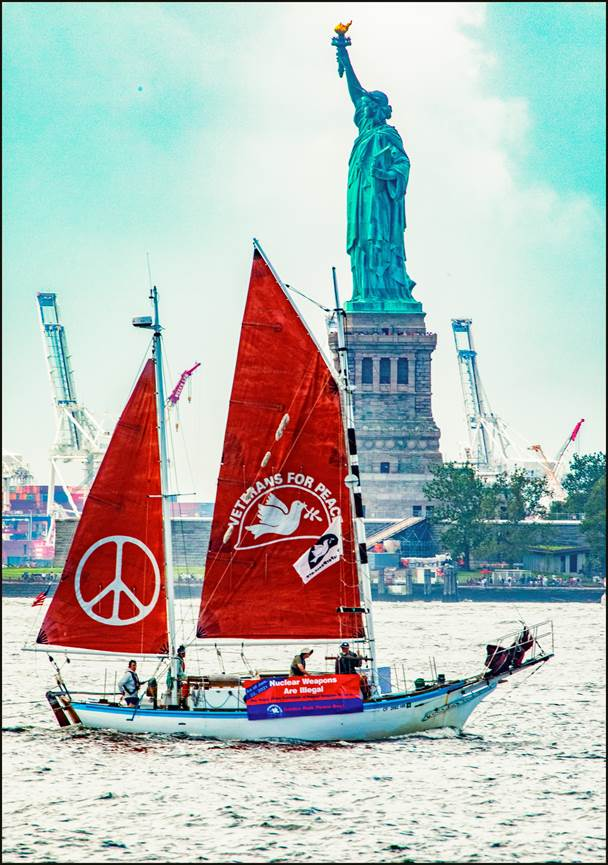
22,000+ miles voyaging for nuclear disarmament
and a radiation-free environment https://vfpgoldenruleproject.org/
To see nuclear-related stories in greater depth and intensity – go to https://nuclearinformation.wordpress.com
-
Archives
- July 2026 (277)
- June 2026 (287)
- May 2026 (306)
- April 2026 (356)
- March 2026 (251)
- February 2026 (267)
- January 2026 (308)
- December 2025 (358)
- November 2025 (359)
- October 2025 (375)
- September 2025 (257)
- August 2025 (319)
-
Categories
- 1
- 1 NUCLEAR ISSUES
- business and costs
- climate change
- culture and arts
- ENERGY
- environment
- health
- history
- indigenous issues
- Legal
- marketing of nuclear
- media
- opposition to nuclear
- PERSONAL STORIES
- politics
- politics international
- Religion and ethics
- safety
- secrets,lies and civil liberties
- spinbuster
- technology
- Uranium
- wastes
- weapons and war
- Women
- 2 WORLD
- ACTION
- AFRICA
- Atrocities
- AUSTRALIA
- Christina's notes
- Christina's themes
- culture and arts
- Events
- Fuk 2022
- Fuk 2023
- Fukushima 2017
- Fukushima 2018
- fukushima 2019
- Fukushima 2020
- Fukushima 2021
- general
- global warming
- Humour (God we need it)
- Nuclear
- RARE EARTHS
- Reference
- resources – print
- Resources -audiovicual
- Weekly Newsletter
- World
- World Nuclear
- YouTube
-
RSS
Entries RSS
Comments RSS
 nuclear-news