Radiation in air, seawater and food show seriousness of Japan’s nuclear disaster
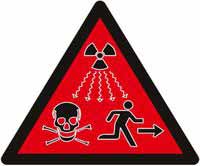 the measurements from food and water were important because they helped confirm that “there has been a very serious release of radioactivity” at Fukushima…..
UPDATE 4-Japan nuclear progress tempered by seawater concern, By Scott DiSavino and Kate Kelland. NEW YORK/LONDON, March 21 (Reuters) – The reconnection of power at the earthquake-damaged reactors in Japan is a big step in managing the nuclear crisis, experts said on Monday, but concerns about radiation in the air, seawater and food showed the dangers are far from over. Continue reading
Raised levels of radioactivity in seawater, in some foods – Japan
Radioactive food fears grow in Japan, By Hayden Cooper and wires ABC News (Australian Broadcasting Corporation), 22 March 11, Japan is continuing to deal with a nuclear emergency as fears of food contamination grow and high levels of radioactive substances are found in seawater near the crippled Fukushima plant.The news comes amid another setback in efforts to cool the earthquake-crippled nuclear plant, with officials spotting grey smoke coming from the roof of the No. 3 reactor……. Continue reading
Asia Pacific countries monitor radiation from Fukushima nuclear plant
As winds took the contaminated clouds from the battered Fukushima Daiichi nuclear plant out into the Pacific Ocean towards Hawaii and the US west coast, Japan’s nearest Asian neighbours stepped up their monitoring of potential nuclear fallout…..Taiwan-based EVA Airways said it would cancel 56 flights between Japan and Taiwan because of radiation concerns.
Radiation fears sweep the region | The Australian, James Hookway and Michael Sainsbury March 17, 2011, FEARS of a cross-border nuclear disaster swept across the Asia Pacific region yesterday as Japan’s nuclear crisis deepened, with experts and officials trying to calm fraying nerves in countries as far away as The Philippines and Canada. Continue reading
Japan has misled public on the radiation exposure from Fukushima
Effects of Japan’s nuclear damage will be either serious or catastrophic
In the best case,……….the immense anxiety triggered by the incident and the toll of the subsequent evacuation on nearby residents.
The consequences of the most dire scenarios are much harder to estimate. They include the loss of the facility, an expensive local cleanup — a foregone conclusion — and a wide-scale disaster that renders the countryside around the plant uninhabitable for decades.
 Ultimate impact of damage to Japan nuclear reactors still unknown, Washington Post, By Brian Vastag, March 13,

The detection of the highly radioactive elements cesium-137 and iodine-131 outside the Fukushima Daiichi nuclear plant heralds the beginning of an ecological and human tragedy. The open question is whether it will be limited, serious or catastrophic Continue reading
Chernobyl tourists warned of radiation risks
Visitors have to sign a waiver, exempting the tour operator from all responsibility in the event that they later suffer radiation-related health problems…..”it is very dangerous to be here,” ….. “There are huge holes in the sarcophagus covering the reactor,”
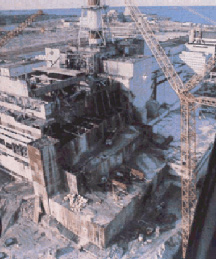
Chernobyl: The toxic tourist attraction – Telegraph, Andrew Osborne 6 Mar 11, “………Chernobyl itself and Pripyat, the Soviet model town that has now become a ghostly monument to humankind’s incompetence, have become ghoulish tourist attractions open to anyone ready to spend the equivalent of about £100 for a day trip. Continue reading
Record rain casts doubt on future of Australian uranium mine
the shutdown was a precaution to ensure any more torrential rain didn’t push the tailings dam higher than allowed.
Mine overflow risk DAVID WOOD ntnews.com.au March 7th, 2011 THE VOLUME of water at Ranger uranium mine’s tailings dam could exceed the approved level if heavy rain continues, Continue reading
Water shortage halts uranium processing plant in India
Uranium processing plant lying idle for water crisis, IBN Live News, Mar 03,2011 Jamshedpur (Jharkhand), The production in the processing plant of Turamdih uranium mine, one of the mines of Uranium Corporation of India Limited (UCIL), has been suspended due to water shortage, officials said.”The processing plant of Turamdih Mines, on the outskirts of Jamshedpur, has been stopped due to water shortage,” S K Srivastav, General Manager of Processing Plant of UCIL, said.He said the processing plant, which has 3000 ton per day capacity, has been lying idle for the last four days as the water source of Kharkhai river has dried up.About 8000 to 9000 cusec water is needed to run the plant, he said.Srivastav said efforts have been underway to draw water from the nearby areas.He said UCIL has decided to transfer the mine water from Jadugora mine to run the mine for a few days. A study has been carried out in the nearby areas to identify a spot from where water could be drawn, officials said.

New uranium mining threat to biodiversity of Grand Canyon
Mining has been banned within the Grand Canyon national park since President Roosevelt declared it a national monument in 1908.
Demand for uranium threatens Grand Canyon biodiversity Government report released on Friday will recommend whether raft of proposed mines in region should go ahead Felicity Caru guardian.co.uk, 17 February 2011 The natural beauty and unique species of the Grand Canyon are “in the crosshairs” because of renewed interest in the region’s uranium reserves. Continue reading
Nuclear Repression, not Nuclear Renaissance, in Jaitapur, India
Jaitapur’s people are more concerned about being treated as sub-humans by the state, which has unleashed savage repression, including hundreds of arrests, illegal detentions and orders prohibiting peaceful assemblies. Eminent citizens keen to express solidarity with protesters were banned, including a former supreme court judge, the Communist party’s secretary and a former Navy chief. Gadgil too was prevented. A former high court judge was detained illegally for five days. Worse, a Maharashtra minister recently threatened that “outsiders” who visit Jaitapur wouldn’t be “allowed to come out” (alive).
This hasn’t broken the people’s resolve or resistance.

The truth behind India’s nuclear renaissance Jaitapur’s French-built nuclear plant is a disaster in waiting, jeopardising biodiversity and local livelihoods Praful Bidwai guardian.co.uk, 8 February 2011 The global “nuclear renaissance” touted a decade ago has not materialised. Continue reading

Concerns raised on danger of uranium tailings in mining on USA’s East coast
Environmentalists and some local residents have opposed tapping the Pittsylvania County deposit because they are fearful the mining and milling will foul the air, rivers, streams and reservoirs with radioactive tailings scattered by torrential rains or hurricanes. Uranium mining in the U.S. has taken place in drier, western climates, and this would be the first on the East Coast.
Uranium mining focus of Richmond meeting, Bloombeerg, By STEVE SZKOTAK , 8 Feb 2011, A National Academy of Sciences committee pressed Virginia mining and environmental officials Monday on the state’s ability to regulate uranium mining if a 1982 state ban is lifted. Continue reading
Chernobyl birds show effects of radiation on their brains
They found that radiation could have a greater effect on a bird’s internal organs than on its brain. This is because the brain is the last organ birds sacrifice when tackling difficult environmental conditions.
Birds living near Chernobyl have smaller brains due to radiation, scientists warn Daily Mail 7th February 2011 Birds living near the site of the Chernobyl nuclear disaster have 5 per cent smaller brains caused by lingering background radiation, according to researchers. Continue reading
St Lawrence River to get radioactive shipment 50 times over international limit
Nuclear shipment angers municipalities By Cheryl Cornacchia, THE GAZETTE February 7, 2011 – City of Montreal officials have joined critics from across Quebec and Ontario in condemning a decision to allow a huge shipment of radioactive waste to travel through the St. Lawrence Seaway……. Continue reading
Radioactive deposits may settle in lake, due to uranium mining
Va. Beach uranium study warns of radioactive lakes, South Hill Enterprise, Virginia/North Carolina News February 6, 2011 The report, “Preliminary Assessment of Potential Impacts of Uranium Mining in Virginia on Drinking Water Sources,” was presented to the Virginia Beach City Council Tuesday afternoon.Wednesday evening, Roanoke River Basin Association (RRBA) members and concerned citizens spoke via tele-conference to share thoughts and put together a game plan, which includes educating the public.According to the study, not only is Virginia Beach’s water supply at risk if uranium mining occurs in Pittsylvania County but the reason for the risk lies with the deposits that will be settling in Kerr Lake (Bugg’s Island Lake)….. Virginia/North Carolina News
Radiation testing for Vermont Yankee Nuclear Plant area
State of Massachusetts to do radiation testing – Boston.com, February 7, BRATTLEBORO, Vt.—The state of Massachusetts will begin testing for radiation in the towns closest to the Vermont Yankee nuclear plant, but not because of radioactive tritium found on the grounds of the Vernon, Vt., power plant. * Massachusetts Department of Public Health officials tell the Brattleboro Reformer that the tests — examining vegetation, agricultural products, fish and surface water — will be conducted in Bernardston, Colrain, Gill, Greenfield, Leyden, Northfield and Warwick, which are in the plant’s emergency preparedness zone.Suzanne Condon, director of the Bureau of Environmental Health……State of Massachusetts to do radiation testing – Boston.com
1 This Month

Protect Sazan Island from the Trump family! https://secure.avaaz.org/campaign/en/protect_sazan_island_from_the_trump_family_loc/?bqFCVab&v=174511&cl=22707147157&_checksum=5e9dde668860e8231c33699735e16a1fbf22ab2cb01da50c999fe8732b9775ef&utm_source=email&utm_medium=blast_email&utm_campaign=174511

25 June- THE PUKE ON NUKES
Thursday, June 25, 2026
7pm Central Time (8pm ET, 6pm MT, 5pm PT) UTC – 5
From NRC & DOE Deregulation to Techno-Fascist Billionaires Going Nuclear, Plus a Few Songs from Atomic Cabaret REGISTER
26 June – Radiation Trainwreck at the NRC / Join the Protect Better Campaign – https://us02web.zoom.us/meeting/register/4ZlZ5_qLSHGiLSCg8FF6Bg#/registration


Cuba Is Not a Failed State – It Is a Besieged State
PETITION: “Global Appeal to Endorse Palestinian Right of Return of Refugees”
To see nuclear-related stories in greater depth and intensity – go to https://nuclearinformation.wordpress.com
-
Archives
- June 2026 (162)
- May 2026 (306)
- April 2026 (356)
- March 2026 (251)
- February 2026 (268)
- January 2026 (308)
- December 2025 (358)
- November 2025 (359)
- October 2025 (376)
- September 2025 (257)
- August 2025 (319)
- July 2025 (230)
-
Categories
- 1
- 1 NUCLEAR ISSUES
- business and costs
- climate change
- culture and arts
- ENERGY
- environment
- health
- history
- indigenous issues
- Legal
- marketing of nuclear
- media
- opposition to nuclear
- PERSONAL STORIES
- politics
- politics international
- Religion and ethics
- safety
- secrets,lies and civil liberties
- spinbuster
- technology
- Uranium
- wastes
- weapons and war
- Women
- 2 WORLD
- ACTION
- AFRICA
- Atrocities
- AUSTRALIA
- Christina's notes
- Christina's themes
- culture and arts
- Events
- Fuk 2022
- Fuk 2023
- Fukushima 2017
- Fukushima 2018
- fukushima 2019
- Fukushima 2020
- Fukushima 2021
- general
- global warming
- Humour (God we need it)
- Nuclear
- RARE EARTHS
- Reference
- resources – print
- Resources -audiovicual
- Weekly Newsletter
- World
- World Nuclear
- YouTube
-
RSS
Entries RSS
Comments RSS
 nuclear-news