Low levels of radioactive cesium produced insect deformities at Fukushima
New study reveals deaths and mutations ”increased sharply’ from exposure to Fukushima contamination, “especially at low doses” — ‘Small’ levels of cesium may be ‘significantly toxic’ — Smithsonian: “In other words, things don’t look good for the animals living around Fukushima” http://enenews.com/just-in-new-study-reveals-sharp-increase-in-deaths-and-mutations-from-exposure-to-fukushima-contamination-especially-at-low-doses-small-levels-of-cesium-may-be-significantly-toxic?utm_source=feedburner&utm_medium=email&utm_campaign=Feed%3A+ENENews+%28Energy+News%29
 Smithsonian Magazine, May 14, 2014: Even Tiny Amounts of Radioactive Food Made Caterpillars Become Abnormal Butterflies […] Researchers in Japan […] discovered, even a small amount of radiation is too much. […] The scientists collected plant material from around Fukushima and fed it to pale grass blue butterfly caterpillars. When the caterpillars turned into butterflies, they suffered from mutations and were more likely to die early [… even if they] had only eaten a small amount of artificial caesium […] In other words, things don’t look good for the animals living around Fukushima.
Nature — Scientific Reports (pdf), Published May 15, 2014: [We] examined possible relationships between the dose of ingested cesium per larva and the mortality and abnormality rates. Both the mortality and abnormality rates increased sharply, especially at low doses […] the mortality and abnormality rates increased sharply, especially at low doses. Additionally, there seemed to be no threshold level below which no biological response could be detected. […] the dose-response data suggests that the relatively small level of artificial cesium from the Fukushima Dai-ichi NPP may be significantly toxic to some individuals in butterfly populations […] the half lethal [i.e. LD50, amount that will kill 50% of a test subjects] dose [is 1.9 Bq per larva] and the half abnormal dose [is 0.76 Bq per larva] […] relatively small [levels] of artificial cesium from the Fukushima Dai-ichi NPP may be significantly toxic to some individuals in butterfly populations […] we assert that the half lethal and abnormal doses we obtained were quite high. […] it should be noted that we sampled contaminated leaves from Fukushima City, which many people inhabit as though nothing had happened […] Implications of the half lethal and abnormal doses we obtained in the present study will impact future discussions on the effects of radioactive exposure on other organisms, including humans. […] In conclusion, it is important to recognize the risk of internal radiation exposure due to ingested radioactive cesium, at least for the pale grass blue butterfly, and likely for certain other organisms living in the polluted area, possibly including humans. […]
Melting shells of the sea butterflies – a sign of global warming endangering oceans
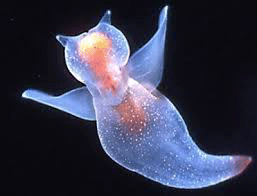 You Know the Ocean’s in Trouble When Your Shell Starts Melting http://www.enn.com/wildlife/article/47393 Things are getting really dicey for a little ocean creature called a pteropod. Better known as the “sea butterfly,” this delicate little sea snail is serving as an unfortunate bellwether of the deteriorating state of our oceans. Why? Conditions in the Antarctic ocean and along the West Coast of the U.S. have become so unnaturally acidic that the shells of sea butterflies are literally dissolving away.
“We did not expect to see pteropods being affected to this extent in our coastal region for several decades,” said Dr. William Peterson, an oceanographer at National Oceanic and Atmospheric Administration (NOAA)’s Northwest Fisheries Science Center, in a NOAA press release.
Damage that’s “several decades” early is a big alarm bell. We’d better pay close attention before it’s too late.
 What We’re Doing to Our Oceans
The chemistry of the world’s oceans is changing, thanks to the carbon dioxide humans continue to spew into our atmosphere. Oceans absorb between one quarter to one third of that carbon dioxide. Over time, it has turned the ocean from a slightly alkaline state to a bit more acidic.
According to some estimates, the ocean’s pH level 150 years ago was about 8.2. It’s now about 8.1. It may seem to be an infinitesimal shift, but it’s worse than it sounds. The more acidic the ocean gets, the harder it is for marine life like oysters, clams and corals to form calcium carbonite skeletons and shells.
In the case of pteropods, the increased acidity of the ocean is actually eating away at their shells.
“The first thing that happens is the dissolution of their shell,” NOAA’s Dr. Nina Bednarsek told PBS. “Dissolution can be mild, [to] very severe. Once you have it dissolving on the outside, you have to put so much more energy into the shell in order to maintain it. The energy that you would otherwise use for other important physiological maintenance you are putting in the shell maintenance.”
Researchers working off the coast of Oregon, Washington and California in 2011 discovered that over half of the sea butterflies they found onshore were victims of “severe dissolution damage.” Offshore, about 24 percent were damaged.
If we don’t change our ways, by 2050, researchers estimate that coastal waters will be 70 percent more acidic than they were in the pre-industrial era.
Continue reading at ENN affiliate, Care2.
Low dose radiation’s harmful effects on fruit flies – implications for the human species
“These results may have broader implications beyond the model organism. In particular, they may indicate an increased risk of pathological response to radiation in humans carrying hypomorphic mutations of these genes in their genome (note that both genes are highly evolutionarily conserved). Such individuals may be more vulnerable than the bulk of the population to even low levels of radiation
 Researchers reveal the secret of radiation vulnerability Medical EXpress, 15 May 14, The scientists – Boris Kuzin, Ekaterina Nikitina, Roman Cherezov, Julia Vorontsova, Mikhail Slezinger, Olga Zatsepina, Olga Simonova, Grigori Enikolopov and Elena Savvateeva-Popova – studied Drosophila flies, in whose genome weak mutations of two different genes were combined. They concluded that these mutations synergistically strengthen their mutual phenotypic expression. In other words, the aggregate effect of these mutations is much greater than that which can be produced by one of them individually.
The mutant flies bred by the scientists have a number of significant peculiarities. The experiments have shown that even low doses of X-ray irradiation (not exceeding 10 R) can cause serious defects in those flies’ legs.
In contrast, in the flies with normal (unchanged) genome such defects could not be caused even by doses of irradiation hundreds of times higher. What is more, the combination of the two mutations worsened the long-term memory impairment, earlier observed in the flies with only one of the mutations. Continue reading
Pilgrim Nuclear Plant’s history of poor safety and dodgy radiation monitoring
 Study: Increase in radiation-linked cancers around Pilgrim “Tobacco Science” versus fact CAPE COD TODAY, OP ED | MAY 10, 2014 BY MARY LAMPERT, PILGRIM WATCH. “….Pilgrim apologists say that radiation from Pilgrim is closely monitored and controlled. Not so. Pilgrim collects its own environmental samples, fewer now than previous years; analyzes the samples in their own lab; and writes its own reports – the equivalent of letting students write and grade their own exams. MDPH has a very limited offsite monitoring program due to lack of finances. Since 2007, there have been onsite monitoring wells to detect radioactive tritium leaks before they enter Cape Cod Bay. Leaks of tritium are evident but not the source. If more wells were installed, would more releases be detected?
In 1990, MDPH recommended that Pilgrim place real-time air monitors in off-site communities. Pilgrim refused to do so. MDPH began its own, very limited offsite air monitoring program in 2010.
Pilgrim’s operational history affects us today. Pilgrim began operations with bad fuel and without filtration. In 1982, Pilgrim blew its toxic filters, spewing hot particles into neighborhoods. A state sponsored study showed that weather conditions then were worst-case for holding contamination over local communities and Cape Cod. Environmental samples showed Cesium-137 in milk samples from a close-by farm was 1,000,000 times greater than expected; no Cesium-137 was found in control samples. A similar pattern was recorded by Pilgrim in other environmental samples. Pilgrim claimed it was due, not to it, but to Chinese test bombs. You decide. Did the Chinese have “smart” test bombs that targeted Pilgrim’s indicator samples but not their control samples?
Spin-doctors cannot raise the dead or make the sick well. If the dead and sick with radiation-linked diseases are significantly more prevalent near Pilgrim than in communities distant, the conclusion seems obvious.
Mary Lampert is a resident of Duxbury, founder and director of Pilgrim Watch, and co-chair of the Town of Duxbury’s Nuclear Advisory Committee. http://www.capecodtoday.com/article/2014/05/10/25347-study-increase-radiation-linked-cancers-around-pilgrim
Fukushima groundwater radioactive contamination getting worse, but not properly measured
 Ongoing Impact of Wastewater from Fukushima Nuclear Power Station Ongoing Impact of Wastewater from Fukushima Nuclear Power StationHydro International, By Shunji Murai Professor Emeritus, University of Tokyo, Japan08/05/2014 Three years on from the Great East Japan Earthquake and Tsunami of 11 March 2011, air contamination is decreasing and is now concentrated in a limited area. Land contamination has also decreased through decontamination processes. However, despite all the efforts by Tokyo Electric Power Company (TEPCO) and the Japanese government, water contamination in surface and ground water is getting worse, simply because there are no effective countermeasures. ……. Even though the wastewater issue is taken seriously by Japanese people as well as people worldwide, the real status of the effect of the contamination is still unknown because neutral third-party organisations have no access to within a 20km radius of Fukushima NPS. The author has tried to make clear what the status of the wastewater issue is by using various sources including a Fishermen Union’s report, which appears to be more reliable than the government report or the report by TEPCO. http://www.hydro-international.com/news/id6913-Ongoing_Impact_of_Wastewater_from_Fukushima_Nuclear_Power_Station.html |
Thirsty nuclear facilities steal precious fresh water
 Nukes thirst for Savannah River water, savannahnow, by Mary Landers on Wed, 2014-05-07 That sucking sound you hear? That’s Georgia Power and its partners preparing to pull 74 million gallons of water a day out of the Savannah River to cool the nuclear reactors at Plant Vogtle near Waynesboro. That’s in addition to the 127 million gallons per day the existing reactors are permitted to draw.
“For downstream users like Savannah there’s going to be a bigger straw in their river and it’s Vogtle,” said Sara Barczak of the Southern Alliance for Clean Energy.
The new nuclear reactors, for which you’re already paying if you live in Savannah and use electricity, aren’t expected to be in operation until 2017 or later. (It keeps getting later.) The state issued a draft water withdrawal permit in January that allows for the maximum daily pull of 74 million gallons per day or a monthly average of 62 million gallons per day.
For comparison, the city of Savannah takes out a maximum of 55 million gallons a day from the river for drinking water. (EPD provides a link to a list of all withdrawals here.) And if you think Vogtle will return most of the water to the river after using it for cooling, think again: the consumptive use is estimated at 71 percent on average. Worst case scenario is that the cooling process will send 88 percent of the water into the atmosphere through evaporation. ……http://savannahnow.com/share/blog-post/mary-landers/2014-05-07/nukes-are-thirsty#.U21McYFdWik
Radiation pollution of Great Lakes – is that really OK?
 Canadian ‘Experts’ Comfy with Radioactive Pollution of Great Lakes http://www.counterpunch.org/2014/05/02/canadian-experts-comfy-with-radioactive-pollution-of-great-lakes/ by JOHN LAFORGE
No matter how cynical you become, it’s never enough to keep up.” — Lily Tomlin
 Ontario Power Generation (OPG) — which owns or leases 20 nuclear reactors across Ontario — would save loads of cash by not having to contain, monitor and repackage leaky above-ground radioactive waste storage casks. Last Sept., I testified in Ontario against the company’s plan to deeply bury some of this waste next to Lake Huron.
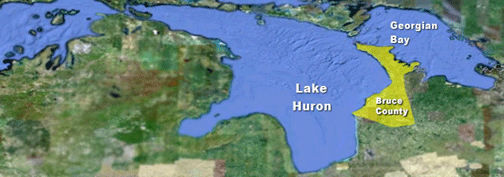
OPG officially plans to let its waste canisters leak their contents, 680 meters underground, risking long-term contamination of the Great Lakes — a source of drinking water for 40 million people including 24 million US residents.
The Bruce reactor complex — the world’s biggest with 8 reactors — is on Huron’s Bruce Peninsula and is the storage site for radioactive waste (other than fuel rods) from all of OPG’s 20 reactors. Digging its dump right next door would save the firm money — and put the hazard out of sight, out of mind.
OPG’s public statements make clear that it intends to poison the public’s water. First, the near-lake dump would be dug into deep caverns of porous limestone. The underground holes are to “become the container” OPG testified last fall, because its canisters are projected to be rotted-through by the waste in 5 years. On April 13 the Canadian government was shocked to learn that OPG grossly understated the severe radioactivity of its waste material, some of which, like cesium, is 1,000 times more radioactive than OPG had officially claimed.
Second, OPG’s callous poisoning plan was broadcast in a December 2008 handout. Radioactive contamination of the drinking water would not be a problem, OPG says, because “The dose is predicted to be negligible initially and will continue to decay over time.”
The ‘expert’ group’s report says it’s possible that as much as 1,000 cubic meters a year of water contaminated with radiation might leach from the dump, but calls such pollution “highly improbable.” (Emphasis on “predicted” and “improbably” here: The US government’s 650-meter-deep Waste Isolation Pilot Project in New Mexico was predicted to contain radiation for 10,000 years. It failed badly on Feb. 14, after only 15.)
OPG’s pamphlet goes further in answer to its own question, “Will the [dump] contaminate the water?” The company claims, “…even if the entire waste volume were to be dissolved into Lake Huron, the corresponding drinking water dose would be a factor of 100 below the regulatory criteria initially, and decreasing with time.”
This fatuous assertion made me ask in my testimony: “Why would the government spend $1 billion on a dump when it is safe to throw all the radioactive waste in the water?” Now, what I thought of then as a rhetorical outburst has become “expert” opinion.
‘Experts’ Unworried About Drinking Industrial Radiation
On March 25, the “Report of the Independent Expert Group” was presented issued to the waste review panel. The experts are Maurice Dusseault, Tom Isaacs, William Leiss and Greg Paoli. They concluded that the “immense” waters of the Great Lakes would dilute any radiation-bearing plumes leaching from the site.
Dusseault advises governments and teaches short courses at the Univ. of Waterloo on oil production, petroleum geomechanics, waste disposal and sand control.
Paoli founded Risk Sciences International and the company’s web site notes his position on Expert and Advisory Committees of Canada’s National Roundtable on the Environment and the Economy.
Isaacs, with degrees in engineering and applied physics, works at the plutonium-spewing Lawrence Livermore National Lab, studying “challenges to the effective management of the worldwide expansion of nuclear energy.” Of course, hiding radioactive waste from public scrutiny is one of his industry’s biggest challenges.
Leiss has degrees in history, accounting and philosophy, and has taught sociology, eco-research, risk communications and health risk assessment at several Canadian universities.
So what level of expertise do the experts bring? None of them have any background in water quality, limnology, radio-biology, medicine, health physics or even radiology, hazardous nuclides, health physics, or radiation risk. As plumes of Fukushima radiation spreading into the Pacific continue to show, the poisons spread from the source and can contaminate entire oceans. Fish large and small, and other organisms, bio-accumulate the cesium, strontium (which persist for 300 years), and cobalt (persisting for 57), etc. in the plumes. The isotopes also bio-concentrate in the food chain as albacore tuna studies repeated in April.
Canada’s expert group’s opinion on how radioactive waste might spread and be diluted in Great Lakes drinking water is inane and meaningless; its cubic meter estimates and risk assessments nothing but fairy tales. You could call the report a rhetorical outburst.
John LaForge works for Nukewatch, edits its Quarterly, and lives at the Plowshares Land Trust out of Luck, Wisconsin.
After many generations of radiation-caused deaths and deformities, some Chernobyl birds have adapted
Some birds adapt to Chernobyl’s radiation, Sarah Zielinski, 2 May 14, https://www.sciencenews.org/blog/wild-things/some-birds-adapt-chernobyl%E2%80%99s-radiation On April 26, 1986, the world saw the worst civilian nuclear disaster in history when Unit 4 of the nuclear power station in Chernobyl, Ukraine, was destroyed. The explosion and subsequent fire released radioactive material into the environment that lingers today. The Soviet government closed off a 30-kilometer area around the plant, and hundreds of thousands of people were evacuated, never to return home. Workers are still trying to cap the site with a giant arch that would entomb the remains of the nuclear reactor.
The effects on local plants and wildlife have been varied. Pine trees close to the disaster died in the days soon after. Other plants thrived in the spaces abandoned by humans. Wildlife, too, seemed to be doing well. Rare birds were spotted. A herd of Przewalski’s horses, escaped from captivity, grew. Wolves and boar were seen on the streets of one town.But all was not good. Radiation, after all, is not healthy for living things. And so studies have documented negative effects of Chernobyl’s radiation on the region’s plants and animals, including changes in abundance, distribution, life history and mutation rates. Scientists have found that birds living in the area have eye cataractsor smaller brains. And insects, microbes and other decomposers aren’t behaving normally.
A new study, however, finds that some birds may be adapting to the low levels of radiation that persist around Chernobyl. Thestudy was published April 24 in Functional Ecology.
Ismael Galván of Paris-Sud University and colleagues captured 152 birds representing 16 species from sites within and near the Chernobyl exclusion zone. They took blood samples and analyzed the birds’ levels of antioxidants, how much their DNA had been damaged and their body condition. They also measured the levels of the pigment pheomelanin in the birds’ feathers.
When the researchers compared birds captured in higher radiation areas with those in lower radiation spots, they found something surprising: The birds from the higher radiation zones were generally in better condition, and they had higher levels of antioxidants. These molecules can help cells by stopping the reaction through which ionizing radiation damages DNA.
“To our knowledge, this represents the first evidence of adaptation to ionizing radiation in wild populations of animals,” the researchers write.
Two species, great tits (Parus major) and barn swallows (Hirundo rustica) didn’t follow the pattern and were doing worse in the high radiation locations. These birds had higher levels of pheomelanin in their feathers. Antioxidants are consumed in the production of pheomelanin, so to produce higher levels, the birds would have used up more antioxidants. Perhaps, the researchers write, these birds aren’t left with enough antioxidants to effectively deal with the DNA damage caused by radiation.
However, anyone thinking that this is good news for Chernobyl’s wildlife should think again. “The effects of radiation at Chernobyl on populations of organisms, and for birds in particular,” the researchers write, “have been negative overall.”
Tomioka a radioactive dead town in Fukushima Prefecture
AP: “This town is dead”… Locals feel Fukushima plant could explode any minute; Yearly ‘safe’ radiation levels exceeded “in a matter of a few hours” — TV: “Fukushima evacuees complain of health problems”; Nearly 70% of households affected http://enenews.com/ap-this-town-is-dead-we-feel-fukushima-plant-could-explode-any-minute-says-evacuee-yearly-safe-radiation-levels-exceeded-in-a-matter-of-a-few-hours-tv-evacuees-complain-of-health?utm_source=feedburner&utm_medium=email&utm_campaign=Feed%3A+ENENews+%28Energy+News%29
NHK WORLD,, Apr. 30, 2014: Fukushima evacuees complain of health problems […] nearly 70 percent of households that evacuated after the March 2011 disaster have members who complain of health problems. The prefecture polled more than 62,800 evacuee households. About one-third responded. [68%] said one or more of their members complain of health problems such as lack of sleep or depression.
AP,, Apr. 30, 2014: […] It’s difficult to imagine ever living again in Tomioka, a ghost town about 10 kilometres from the former Fukushima Dai-chi nuclear plant. […] The streets were abandoned […] The neighbourhood was eerily quiet except for the chirping of the nightingales. […] The long-term goal is to bring annual exposure down to one millisievert […] considered the safe level before the disaster, but the government is lifting evacuation orders at higher levels.
It says it will monitor the health and exposure of people who move back to such areas. In the yellow restricted zone […] a visitor exceeds one millisievert in a matter of a few hours. […] “The prime minister says the accident is under control, but we feel the thing could explode the next minute,” said Michiko Onuki, who ran a ceramic and craft shop out of their Tomioka home. “We would have to live in fear of radiation. This town is dead.” […] “I can survive anywhere, although I had a plan for my life that was destroyed from its very roots,” said [Tomioka city assemblyman Seijun] Ando, tears welling up in his eyes. […]
A continuing danger – at best, Chernobyl is merely dormant
 Tourism, Construction and an Ongoing Nuclear Crisis at Chernobyl NewsWeek, By Alexander Nazaryan / April 17, 2014 “……..For the most part, the defunct station of reactors (the first went live in 1977; the last, the one that blew, in 1983) looks like a tidy industrial park in central Ohio: shorn green lawns, a smattering of abstract art, half-empty parking lots, a canal rife with fish. Nothing indicates that this is the site of the worst nuclear disaster in human history.
Yet as tourists Instagram away at Pripyat’s ruins, Chernobyl is undergoing one of the most challenging engineering feats in the world, as a French consortium called Novarka tries to replace the aging sarcophagus that contains the reactor, a concrete shell hastily and heroically built in the direct aftermath of the meltdown. The place remains a half-opened tinderbox of potential nuclear horrors, and just because much of the world has forgotten about Chernobyl doesn’t mean catastrophe won’t visit here again……..
“It wouldn’t take much of a seismic event to knock it down,” a civil engineer recently explained to Scientific American. The Federation of American Scientists says, “If the sarcophagus were to collapse due to decay or geologic disturbance, the resulting radioactive dust storm would cause an international catastrophe on par with or worse than the 1986 accident……
Nor is the land surrounding the reactor quite the pristine preserve that some have celebrated in nature-has-triumphed-over-our-thoughtlessness-and-incompetence fashion. Earlier this year, a study by University of South Carolina biologist Timothy Mousseau and others indicated that fallen trees weren’t decomposing because, in Mousseau’s words, “the radiation inhibited microbial decomposition of the leaf litter on the top layer of the soil,” turning the ground into a vast firetrap at whose center sits the aged sarcophagus.
So, at best, Chernobyl is merely dormant. To extend that dormancy for a lot longer, Novarka was contracted in 2007 to build the New Safe Confinement. Though sometimes described as a gigantic hangar, having seen the NSC, I see it as something more elegant, its hopeful parabolic curves recalling the smooth grace of the Gateway Arch in St. Louis. In cross section, it is two layers of steel with a 39-foot layer of latticework in between. Its combined shapes and angles are so fluid and simple, you want to put them on a ninth grade geometry quiz.
Currently being built in two pieces, it will rise 30 stories and weigh 30,000 tons-and cost perhaps as much as $2 billion. When completed, the steel contraption will slide along Teflon rails on top of Reactor No. 4 (a process that will take several days). It is believed to be the largest movable structure on Earth. The NSC will be so enormous that, according to the British technology journal The Engineer, it “is one of a handful of buildings that will enclose a volume of air large enough to create its own weather.”……http://www.newsweek.com/2014/04/25/tourism-construction-and-ongoing-nuclear-crisis-chernobyl-248163.htmlNewsWeek,
Slow poison from USA’s 10,000 abandoned uranium mines
Clean Up “America’s Secret Fukushima”, The US Abandoned Uranium Mines (AUMs), Global Research, By Margaret Flowers 23 April 14 National Campaign. Earth Day Actions at Mt. Rushmore & Cheyenne River Expose Toxic Threats Red Shirt Village, Oglala Lakota Nation (SOUTH DAKOTA) – Organizations from throughout the United States held an Earth Day ceremony to launch a nation-wide campaign to clean up hazardous abandoned uranium mines (AUMs). Clean Up The Mines! calls for effective and complete eradication of the contamination caused by the estimated 10,000 abandoned uranium mines that are silently poisoning extensive areas of the U.S.
Clean Up The Mines! volunteers from across the country toured abandoned mines this week. They donned hazardous materials suits at Mount Rushmore and carried a large banner to raise awareness of the 169 AUMs in the Southwestern Black Hills near Edgemont. There are another 103 AUMS in the Northwest corner near Buffalo. The Northern Great Plains Region of Colorado, Montana, Wyoming, North and South Dakota contains more than 3,000 AUMs……http://www.globalresearch.ca/clean-up-americas-secret-fukushima/5378869
Defenders of the Black Hills want old uranium mines cleaned up
Protesters urge state to clean up old uranium mines Argus Leader 21 Apr 14 Nora Hertel, Associated Press PIERRE – A South Dakota group says old uranium mines across the state and U.S. are contaminating water and the air with radioactive chemicals. Defenders of the Black Hills is helping to lead an effort to educate people and clean up old uranium mines across the country with an Earth Day event today.
The event is part of a “Clean Up The Mines” project launched on Earth Day. Charmaine White Face, founder and coordinator for Defenders of the Black Hills, said the river, among others, contains runoff from abandoned uranium mines in South Dakota and Wyoming. Most of the 10,000 abandoned uranium mines are in the western U.S., including more than 250 in South Dakota.
White Face, a former science teacher, said the issue came to her attention more than 10 years ago, but she didn’t understand the extent of it.
“We’ve been hollering about this to the state and anybody that would listen,” White Face said. “The state could do quite a bit if they would.”
She said some of the mines in question are on private land and some on federal land, including a large percentage around Mount Rushmore.
“All those 2 million visitors (a year) to Mount Rushmore, they’re breathing in radioactive dust and they don’t even know it,” White Face said.
Mike Cepak, an engineering manager with the South Dakota Department of Environment and Natural Resources, said the state doesn’t have an abandoned mine program. He said the U.S. Forest Service has reclaimed some mines in the western part of the state, but the process is expensive. It involves rearranging drainage so water doesn’t pass through the mine, filling it in and returning vegetation to the area.
“It’s mainly a funding problem,” Cepak said……….
On the potential health risks of uranium exposure, but White Face attributes it to cases of cancer and brain tumors in the Northern Plains.
She’s concerned that people don’t realize the number of old mines in the state and their potential effects. White Face has given speeches on the East Coast to drum up support for federal legislation that her group is collaborating on.
Defenders of the Black Hills is working with a member of Congress to draft legislation mandating mine reclamation. White Face said they’re on the fourth draft. She hopes it will be complete in a few weeks and sent to Washington, D.C., to be reviewed then presented as a bill for consideration. http://www.argusleader.com/story/news/2014/04/22/protesters-urge-state-clean-old-uranium-mines/7995325/
UK’s Drigg nuclear trash dump will be washed away by climate change’s sea level rise
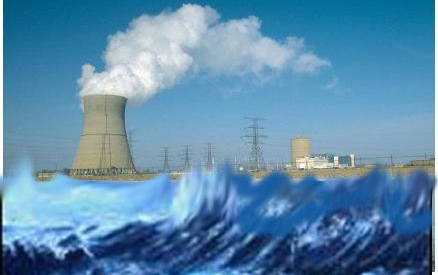 This Huge Nuclear Waste Dump Will Be Washed Away By Rising Sea Levels http://gizmodo.com/uk-nuclear-waste-dump-will-be-washed-away-by-rising-sea-1565513267 21 April 14, Geoff Manaugh A dumping ground for nuclear waste located near the British coast is “virtually certain” to be washed away by rising sea levels, a new
  report warns. The UK Environment Agency has admitted that constructing the Drigg Low-Level Waste Repository so near the coast was a mistake, and that one million cubic meters of nuclear waste will begin leaking into the ocean “a few hundred to a few thousand years from now.”
Sounds bad? Pay no attention, then, to current plans to increase the site’s capacity by another 800,000 cubic meters over the next century, adding new waste that will include “radioactive debris from Britain’s nuclear power stations, nuclear submarines, nuclear weapons, hospitals and universities,” the Guardian reports.
It’s interesting to note that, while the site officially contains only low-level waste, there is suspicion that higher-level wastes with correspondingly higher levels of radioactivity could have been dumped there in the past. Recall the incredible tale of Sellafield nuclear power station—the site from which much of the waste now stored at Drigg originates—where records of previous dumping had been thrown away or lost. This led to the terrifying need to advertise in the local newspaper, saying: “We need your help.” Why? Because they had no idea what was buried there.
“Did you work at Sellafield in the 1960s, 1970s or 1980s?” the ad asked with false calm. “Were you by chance in the job of disposing of radioactive material? If so, the owners of Britain’s nuclear waste dump would very much like to hear from you: they want you to tell them what you dumped—and where you put it.”
In any case, the coastal tomb at Drigg is all but guaranteed to break apart in the waves and wash its mysterious and harmful contents into the sea. “A few hundred to a few thousand years from now” sounds like a long time, of course, but think of that as potentially little more than the time between us and Shakespeare (400 years), and the terrifying urgency of this becomes more clear. [Guardian]
The dangerous myth of “Chernobyl wild paradise”
 Decay takes a holiday: the wickedness beneath the “Chernobyl wild paradise” myth and the rotten implications for ecosystems and radiation science http://www.beyondnuclear.org/russia-ussr/2014/4/18/decay-takes-a-holiday-the-wickedness-beneath-the-chernobyl-w.html 21 April 14
Zombie forest?
April 26, 2014 will mark 28 years since the Chernobyl nuclear reactor exploded causing an unprecedented nuclear catastrophe. In a creepy revelation, the forests around Chernobyl are having difficulty decomposing. A recently published study indicates that forest matter in the contaminated areas around Chernobyl is taking years or even decades longer to decay than it should. In the areas with low radiation, 70 to 90 percent of the leaves were gone after a year. Where radiation levels were higher, “leaves retained around 60 percent of their original weight…”(Smithsonian.com) This indicates a fundamental disruption to the natural cycle of death feeding life, and calls into question the forest’s longer-term viability. Creatures responsible for decay such as microbes, fungi and some types of insects, are essential components of any ecosystem because they recycle organic material back into the soil. Unfortunately, they do not function properly in the areas around Chernobyl, leaving a forest full of “petrified-looking pine trees that no longer seem capable of rotting.” GIZMODO
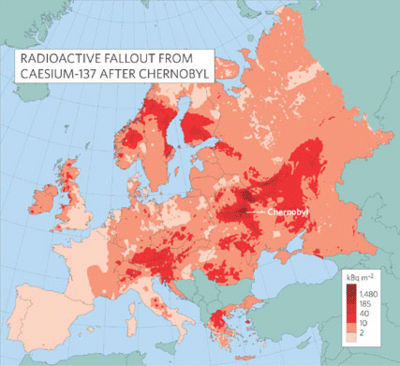
Radiation’s effect on decay processes should be expected, considering how it impacts microbes in food; or considering the results of a bizarre, cavalier and extremely ill-advised series of experiments performed using a “naked reactor” in the late 1950’s and early 1960’s. These experiments intentionally irradiated a number of varying materials and forest land 40 miles north of Atlanta, GA. Wood subjected to this radiation was produced in small-scale and called “Lockwood”, for Lockheed Aircraft Corporation who operated the Georgia Nuclear Laboratory. The building and land is still contaminated with radionuclides.
The lack of decomposer activity has researchers worried that nutrients which trees require for grow are not being recycled, causing trees in the area to grow more slowly. Improper plant decay has potential implications for animal decay as well, although there do not appear to be any Chernobyl studies investigating this yet.
Actual in-the-field examinations of regions contaminated by radioactivity from Chernobyl also reveal evidence for increased mutation rates, abnormal sperm with reduced swimming ability, developmental abnormalities, cataracts, tumors, smaller brains in both birds and mammals, and decreased tree growth rates, a finding of fundamental importance for ecosystem functioning that likely relates to effects on the microbial community. Fewer spiders and insects including bees, butterflies and grasshoppers—live there. Animals and plants show other impacts of radiation after the Three Mile Island nuclear disaster in the US and the Fukushima nuclear disaster in Japan.
Timothy Mousseau, a biologist at the University of South Carolina, Columbia, who collaborated on many of these studies, contends that, fundamentally, this evidence indicates low-dose rate exposures cause significant measurable impacts for the biota inhabiting contaminated regions of Chernobyl. Further, this evidence supports a hypothesis that suggests effects down to very low levels. Further implications for Fukushima should not be ignored.
Humans and animals alike: healthy looking on the outside, disintegrating on the inside
Referencing studies summarized in his book, Chernobyl: Consequences of the Catastrophe for People and the Environment, Alexey Yablokov states:
“Wildlife in the heavily contaminated Chernobyl zone sometimes appears to flourish, but the appearance is deceptive,” says Yablokov. “Levels of incorporated radionuclides remain dangerously high for mammals, birds, amphibians, and fish. Long-term observations of both wild and experimental animal populations in the heavily contaminated areas show significant increases in morbidity and mortality that bear a striking resemblance to changes in the health of humans – increased occurrence of tumours and immunodeficiencies, decreased life expectancy, early aging, changes in blood and the circulatory system, malformations, and other factors that compromise health.
“All of the populations of plants, fishes, amphibians and mammals studied there are in poor condition,” he continues. “This zone is analogous to a ‘black hole’, in which there is accelerated genetic degeneration of large animals – some species may only persist there via immigration from uncontaminated areas. The Chernobyl zone is a micro-evolutionary ‘boiler’, where gene pools of living creatures are actively transforming, with unpredictable consequences. We ignore these findings at our peril.”
Dr. Yablokov’s statement deftly presents the dichotomy between what is observed by a dilettante’s eye – such as lots of members in a wild animal population — versus what is actually happening to these members over time. What is happening to this wildlife has parallel implications for human health.
So where did this “paradise for wildlife” and “biodiversity sanctuary” myth come from? In 2006 the International Atomic Energy Agency, a nuclear power promoter and a member body of the United Nations, released a report entitled Environmental Consequences of the Chernobyl Accident and their Remediation: Twenty Years of Experience. This report references the creation of a nature preserve within the Chernobyl Exclusion Zone and remarks “Without a permanent residence of humans for 20 years, the ecosystems around the Chernobyl site are now flourishing. The CEZ has become a wildlife sanctuary…, and it looks like the nature park it has become.” From another report: “Indeed, the Exclusion Zone has paradoxically become a unique sanctuary for biodiversity.”
The Chernobyl Forum coalition makes this statement in support of “unique biodiversity” in spite of their recognition that “Genetic effects of radiation, in both somatic and germ cells, have been observed in plants and animals of the Exclusion Zone during the first few years after the Chernobyl accident. Both in the Exclusion Zone, and beyond, different cytogenetic anomalies attributable to radiation continue to be reported from experimental studies performed on plants and animals.” They conclude, however, “[w]hether the observed cytogenetic anomalies in somatic cells have any detrimental biological significance is not known.” In order to know this, one has to actually look.
The study summaries compiled by Alexey Yablokov, et al. (studies which had been mostly unavailable in the west until 2009) and the published examinations of researchers Mousseau, et al., indicate rather strongly that there is significant biological detriment to wildlife in the contaminated areas surrounding Chernobyl. And unlike these studies, the Chernobyl Forum documents provide very few references (under ten total) for any claims they make regarding the flourishing of wildlife.
Rio Tinto’s AGM faced with facts on radiological impact of Rossing uranium mine
 Radiological Impact of Rössing Uranium Mine – Namibia http://www.facing-finance.org/en/2014/04/radiological-impact-of-rossing-uranium-mine-namibia/ April 17th, 2014 by jdub / facing finance
At the Annual General Meeting of Rio Tinto in London, 15 May 2014, two recent reports about the impact of the uranium mine Rössing near Arandis, Namibia, on the environment and health were presented to the shareholders.
In cooperation with Earthlife Namibia, the French organizationCRIIRAD (Commission de Recherhe et d’Information Independantes sur la Radioactivite) analyzed the radiation of soil, water and sediments samples taken near Rössing´s mine caused by the tailing dams and waste rock dumps. Results show elevated levels of heavy metals and uranium in the samples up to more than 2000 times higher than WHO recommendations.
In their study, Earthlife Namibia surveyed the health status of current and former workers of the mine. Many of them complained of health problems, among them respiratory problems and illnesses due to the constant exposure to radon gas and dust.
CRIIRAD and Earthlife Namibia demand more independent research on radiation at the Rössing mine, a broad independent examination of the health status of workers and access to monitoring data for experts, as well as workers´ unrestricted access to their own medical reports.
Read CRIIRAD´s report here
Read Earthlife Namibia´s report here
1 This Month



26 September – International Day for the Total Elimination of Nuclear Weapons


PLEASE OPPOSE HR 8255 AND S.3639 – bills would accelerate satellite deployment, with no environmental review or safeguards – https://ncstd5li.quorum.us/campaign/169331/
To see nuclear-related stories in greater depth and intensity – go to https://nuclearinformation.wordpress.com
-
Archives
- September 2026 (272)
- August 2026 (330)
- July 2026 (355)
- June 2026 (287)
- May 2026 (306)
- April 2026 (356)
- March 2026 (251)
- February 2026 (267)
- January 2026 (308)
- December 2025 (358)
- November 2025 (359)
- October 2025 (375)
-
Categories
- 1
- 1 NUCLEAR ISSUES
- business and costs
- climate change
- culture and arts
- ENERGY
- environment
- health
- history
- indigenous issues
- Legal
- marketing of nuclear
- media
- opposition to nuclear
- PERSONAL STORIES
- politics
- politics international
- Religion and ethics
- safety
- secrets,lies and civil liberties
- spinbuster
- technology
- Uranium
- wastes
- weapons and war
- Women
- 2 WORLD
- ACTION
- AFRICA
- Atrocities
- AUSTRALIA
- Christina's notes
- Christina's themes
- culture and arts
- Events
- Fuk 2022
- Fuk 2023
- Fukushima 2017
- Fukushima 2018
- fukushima 2019
- Fukushima 2020
- Fukushima 2021
- general
- global warming
- Humour (God we need it)
- Nuclear
- RARE EARTHS
- Reference
- resources – print
- Resources -audiovicual
- Weekly Newsletter
- World
- World Nuclear
- YouTube
-
RSS
Entries RSS
Comments RSS

