Severe Indian heatwave will bake a billion people and damage crops.

Severe Indian heatwave will bake a billion people and damage crops. An
unusual heatwave forecast across much of India will see temperatures in the
mid-to-high 40s°C. More than a billion people are facing a severe heatwave
across India this week, which will have wide-ranging consequences for the
health of the most vulnerable and will damage wheat harvests. Temperatures
in the mid-to-high 40s°C are forecast for much of the country in the
coming days, with the India Meteorological Department (IMD) issuing
heatwave warnings for several states. The UK Met Office says that
temperatures are currently above average in India and that this will
probably continue into the coming week. India is entering a season ahead of
the monsoon’s arrival when heatwaves are common, the Met Office says, but
this year it follows a period of unusually early sweltering conditions in
India.
New Scientist 26th April 2022
Is New Mexico’s Nuclear Waste dump right now affected by wildfires?
Emergency declaration for multiple wildfires in New Mexico SANTA FE, N.M. (AP) — New Mexico Gov. Michelle Lujan Grisham has signed emergency declarations as 20 wildfires continued to burn Sunday in nearly half of the state’s drought-stricken 33 counties.
One wildfire in northern New Mexico that started April 6 merged with a newer fire Saturday to form the largest blaze in the state, leading to widespread evacuations in Mora and San Miguel counties. That fire was at 84 square miles (217 square kilometers) Sunday and 12% contained. An uncontained wind-driven wildfire in northern New Mexico that began April 17 had charred 81 square miles (209 square kilometers) of ponderosa pine, oak brush and grass by Sunday morning north of Ocate, an unincorporated community in Mora County.
……….. https://www.tri-cityherald.com/news/nation-world/national/article260711157.html#storylink=cpy
Floods in South Africa – a ”climate catastrophe of enormous proportions”
After the relentless rain, South Africa sounds the alarm on the climate
crisis. Many are still missing after this month’s floods. Extreme weather
is becoming more frequent, and it can be devastating.
The South African president, Cyril Ramaphosa, described a “catastrophe of enormous
proportions” and attributed the disaster to the climate emergency. “It
is telling us that climate change is serious, it is here,” Ramaphosa said
as he visited the flooded metropolitan area of eThekwini, which includes
Durban, shortly after the floods. “We no longer can postpone what we need
to do, and the measures we need to take to deal with climate change.”
Guardian 24th April 2022
Overwhelming majority of Members of European Parliament oppose inclusion of nuclear power in Europe’s taxonomy as ”green”

MEPs set to block plan deeming nuclear and gas energy ‘green’
McGuinness seeks to use EU taxonomy of environmentally sustainable activities
Irish Times, Naomi O’Leary, 22 Apr 22, Europe Correspondent A plan by Ireland’s European Commissioner Mairead McGuinness to classify nuclear and gas energy as “green” is facing major opposition in the European Parliament, with MEPs preparing to block the move.
The so-called EU taxonomy was intended as a classification system to label economic activities that are environmentally sustainable in an attempt to direct private investment to industries that help the green transition.
But an attempt by the commission, fronted by Ms McGuinness, to add gas and nuclear to this list is facing a kill vote in the parliament, backed by MEPs from her own centre-right political group, according to the results of an internal consultation seen by The Irish Times.
MEPs from the European People’s Party, of which Fine Gael is a member, have joined with those from the centre-left Socialists and Democrats; Renew, of which Fianna Fáil is a member; the Greens; and the Independents’ Left group, to which Sinn Féin is affiliated, to back an objection that could block the change from coming into force.
At the parliament’s environment and economy committees, an overwhelming majority of 115 MEPs chose to object to the commission’s move, with just 23 from the hard-right Identity and Democracy and ECR groups opting to acquiesce to the addition of nuclear and gas to the taxonomy, the results show.
The MEPs now have weeks to approve a joint objection text in committees. It would then go to a full vote in the European Parliament in its July session, where a majority of at least 353 MEPs would be sufficient to stop gas and nuclear being added to the taxonomy.
Russia’s invasion
The majority is easily achievable if the same political groups back the objection as they have in the committee stage. Observers believe that if the commission’s move is blocked in July, there would be little political will to make another attempt given the difficulties that have dogged the file and the additional controversy that now surrounds gas since Russia’s invasion of Ukraine……………………………………………
The move to add green and nuclear to this list is being done as a so-called “delegated act” – something which updates existing EU legislation rather than creating new law, and does not need the usual vote of approval by the European Parliament to come into force. It can, however, be blocked by an objection procedure backed by a majority of MEPs.
The opposition of MEPs to adding gas and nuclear to the taxonomy is grounded in doubts about the inherent merits of the move, but also in opposition to the commission’s method in using a delegated act to do it………………………….. https://www.irishtimes.com/news/politics/meps-set-to-block-plan-deeming-nuclear-and-gas-energy-green-1.485
Future of Antarctica’s Larsen C ice-shelf will have consequences for sea level rise world-wide

| Scientists know the surface of the Larsen C ice shelf in Antarctica is melting, making it vulnerable to collapse. For the first time, we can rank the most important causes of melting over the recent past. In a new two-part paper in Journal of Geophysical Research: Atmospheres, we show how the amount of energy reaching the ice from the sun is the dominant factor, followed by warm winds, clouds and weather patterns. These drivers of melting can interact and overlap to reinforce or counteract each other, so it is a complex picture. Understanding what is causing melting over Larsen C is vital as it will help predict the future of the ice shelf, which will have knock-on consequences for sea levels worldwide. In 2002, Larsen C’s neighbouring ice shelf, Larsen B, experienced melting so severe that it eventually caused the shelf to collapse completely. Larsen C restrains glaciers that contain enough ice to raise global sea levels by around 22mm. Carbon Brief 14th April 2022 https://www.carbonbrief.org/guest-post-ranking-the-reasons-why-the-larsen-c-ice-shelf-is-melting |
An increased 2 degree Celsius world will not be liveable for vast swathes of humanity – but that’s the latest semi-optimistic research result

| Christiana Figueres: Should we feel joy or despair that we’re on track to keep global heating to 2C? The atmosphere does not react to pledges for the future or reports about past achievements. It only reacts to real emission reductions. The research published in Nature last week showing that the pledges by countries to reduce emissions made since the Paris agreement could keep warming within 2C, if met on time, has therefore understandably sparked a series of conflicting reactions. Outrage that even if the promises are met, they don’t come close to 1.5C; and optimism that 2C is such a huge improvement on where we’d be headed without the Paris agreement. On the one hand, we have to acknowledge this looks very much like failure. A 2C world will not be liveable for vast swathes of humanity, and half of the world’s children are already at extremely high risk from the impacts now, including hunger-inducing floods and droughts. Guardian 19th April 2022 https://www.theguardian.com/commentisfree/2022/apr/19/global-heating-2c-climate-paris-agreement |
Nuclear power stations UK: the new and existing sites at threat of flooding from 2030 amid rising sea levels
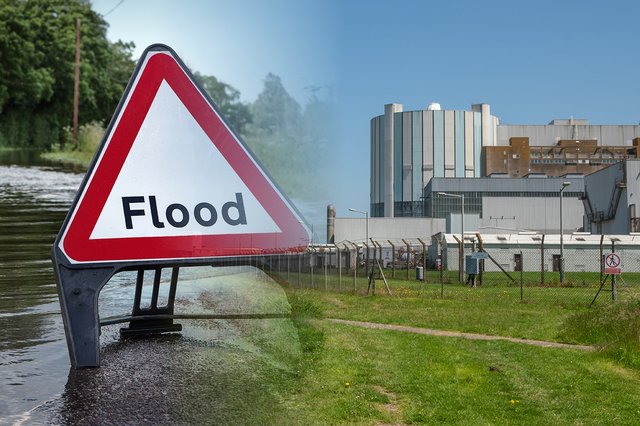
NationalWorld investigates how safe the locations of both the current and proposed nuclear power stations are amid rising sea levels https://www.nationalworld.com/news/environment/nuclear-power-stations-uk-new-existing-sites-threat-flooding-2030-sea-levels-3655640
By Isabella Boneham,, 15th April 2022 All of the current and proposed locations of nuclear power stations in the UK will be at “significant risk” of being flooded from 2030 due to extreme weather events becoming more frequent, a Greenpeace chief scientist told NationalWorld.
UK seas have risen by over 16.5cm since 1901, bringing into question the safety, security and viability of nuclear power stations on Britain’s coastlines. However, in the Government’s latest energy strategy, Boris Johnson ramped up the drive for nuclear energy, proposing plans to build eight new stations with one being approved each year until 2030.
Where are the current and proposed locations of nuclear power stations in the UK?
There are eight nuclear power stations currently generating in the UK
- Hunterston, a coastal area in Ayrshire, Scotland
- Torness, east coast of Scotland
- Hartlepool, located in County Durham
- Heysham, located in Lancashire
- Sizewell, located on the Suffolk coast
- Dungeness, on the coast of Kent
- Hinkley Point, located in Somerset
- Wylfa, on the island of Anglesey in Wales
- In June 2011, eight sites across Britain were chosen as locations for new nuclear stations.
- In the Government’s new energy strategy, announced on 7 April 2022, Boris Johnson confirmed plans for these eight sites:
- Bradwell B is a proposed new nuclear power station at Bradwell-on-Sea in Essex and is currently in the public consultation stages.
- Hartlepool in County Durham was confirmed as a ‘designated nuclear site’ in the Government’s 7 April energy strategy. The town’s existing EDF nuclear power station is due to cease production in 2024.
- Heysham in Lancashire was named in the UK government’s new major energy strategy.
The Government has backed the construction of Hinkley C in Somerset, which will be the largest nuclear station in Britain – it is set to open by the end of 2026.- Oldbury in south Gloucestershire was mentioned as a candidate for a new nuclear reactor site.
- Moorside nuclear power station is proposed for a site near Sellafield in Cumbria – it has received full business case approval from the government.
- There are proposals for a nuclear plant on the coastline of Suffolk called Sizewell C, with ministers throwing in £100m investment to EDF Energy’s £20bn nuclear power station.
- Small Modular Reactors will form a key part of the nuclear project pipeline, with both Trawsfynydd and Wylfa tipped as sites.
- How will rising sea levels affect UK nuclear power stations?
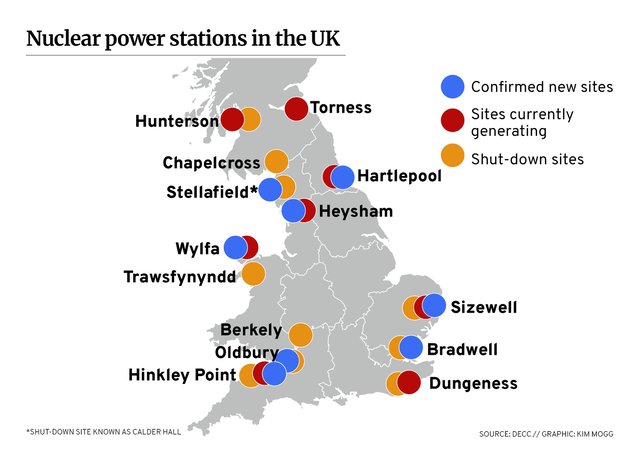
- All of the locations of current and proposed nuclear power stations are deemed to be unsafe.A new interactive tool that looks at flooding risk to coastal regions has revealed the severity of the rising sea level threat to the location of nuclear power stations.
The searchable map from Climate Central, a non-profit organisation focused on climate science, shows the expected rise of sea levels and what areas of the UK are most at risk from flooding.By 2030, based on the current pollution trajectory, it is clear that the locations of current and proposed stations are at threat from rising sea levels.
- The coastlines of these areas, where nuclear stations are located, are at threat of floods from 2030 onwards.These maps identify places that require deeper investigation of risk and are based on global-scale datasets for tides in addition to sea level rise projections.
- Dr Paul Dorfman, Chair of the Nuclear Consulting Group, an independent institute providing expert research and analysis of nuclear issues, told NationalWorld that current and proposed nuclear power stations will be vulnerable to flooding due to rising sea levels and more frequent and severe storms.
How big is the climate threat?
The UK’s sea level has risen by over 16.5cm since 1901, according to the state of the UK Climate Report 2020 published last year by the Met Office.
It also found that 2020 was the third warmest year, fifth wettest and eight sunniest on record.
No other year has fallen in the top 10 for all three variables for the UK
- It also marked the eighth warmest year for UK near-coastal sea-surface temperature in a series from 1870.Parts of the UK will be at risk of being flooded in 2030 due to rising sea levels and warming temperatures.
- Areas at risk of being flooded in 2030 are Portsmouth, East Riding of Yorkshire, Arun (West Sussex), London boroughs on either side of the Thames including Canary Wharf and Fulham, Chichester (West Sussex), Weston-Super-Mare, Cardiff, Great Yarmouth (Norfolk), and West Berkshire (Berkshire) and Worthing (West Sussex), according to Climate Central’s interactive tool.
- Dr Scott Kulp, a senior scientist at Climate Central and lead author of the study, said that these maps show the “potential of climate change to reshape cities, economies, coastlines, and entire global regions within our lifetimes.”
- He added: “As the tideline rises higher than the ground people call home, nations will increasingly confront questions about whether, how much, and how long coastal defences can protect them.”Over 1.3 million residential and commercial addresses in Britain will be at risk of flooding by 2050, intelligence provider Gamma has said.
- What has the government said?
- A spokesperson from the Government’s Department for Business, Energy, and Industrial Strategy, said: “Site licence holders in the civil nuclear industry are required to meet robust standards, overseen by independent regulators, including ensuring that sites have the necessary defences in place to protect them against the effects of climate change, such as flooding, rises in sea levels, coastal erosion and drought.”
The spokesperson added: “The Office for Nuclear Regulation and environmental regulators would not allow a nuclear power station to be developed on a site, or to operate, if they judged that it was not safe to do so.”
Nuclear and gas in EU taxonomy slammed as ‘greenwashing’.
Nuclear and gas in EU taxonomy slammed as ‘greenwashing’,
- The controversial decision to include gas and nuclear in the EU’s taxonomy was the outcome of a lengthy and highly-politicised process EU Observer By ELENA SÁNCHEZ NICOLÁS BRUSSELS, 14 Apr 22, Russia’s invasion of Ukraine, and EU plans to reduce its reliance on Russian fossil-fuel imports, have raised more questions over the fate of the European Commission’s controversial taxonomy proposal.
EU member states were already split over the role of gas and nuclear in the energy transition and, thus, in green finance — even before the war in Ukraine……….
Critics say the proposal undermines the credibility of the EU taxonomy as a science-based investment tool, gives credence to claims of greenwashing, creates confusion in financial markets, and will cause major delays in the much-needed transition away from fossil fuels.
The taxonomy does not ban outright investment in activities not included in the guidelines — but it is designed to steer investments away from companies and investors which falsely claim to be environmentally sustainable.
‘Gold standard’ gone
Experts have warned that including natural gas (with a higher threshold than the one recommended by experts) and nuclear power in the EU’s sustainable finance rules may lead to further greenwashing in financial markets.
University College Dublin professor Andreas Hoepner, who has been one of those leading academic opposition on the taxonomy, describes it as probably “the biggest greenwash ever.”
The proposal, he said, ignores rigorous scientific analysis and weakens the credibility of the whole EU sustainable finance agenda. And it may even lead to an increase in emissions incompatible with the Fit-for-55 package and the EU’s climate targets.
The rules were meant to create common standards for classifying taxonomy-aligned economic activities as environmentally sustainable.
But Laurence Tubiana, one of the key architects of the 2015 Paris Agreement, has warned that investors may go elsewhere to seek more “more reliable science-based criteria” to classify their investments.
“The whole idea of creating a ‘gold standard’ is gone” with gas and nuclear power included in the EU taxonomy, Dutch MEP Bas Eickhout told EUobserver in an interview.
With the credibility of the whole taxonomy hanging by a thread, Eickhout warned of the impact on green bonds, given that funds raised from these bonds could be used for gas and nuclear projects. The transition towards net-zero emissions will require massive investment, but not enough money is currently going into projects delivering climate neutrality, he said.
“If we now lower the standard in order to mobilise the money, then we are still fooling ourselves,” he said, because the taxonomy must be “a credible standard” to fulfil its goal…………………..
“The EU should rapidly transition away from fossil fuels, fossil-fuel investments and subsidies to deliver climate stability,” added Ursula Woodburn from the UK’s cross-sector group of business leaders, CLG Europe,
The decision to include gas and nuclear in the taxonomy was slammed as the outcome of a both lengthy and highly-politicised process.
But the European Commission has also come under fire for looking at this tool purely through a domestic prism — despite its impact beyond EU borders. https://euobserver.com/war-peace-green-economy/154585
The European Commission Platform on Sustainable Finance concludes that nuclear and gas power are not green
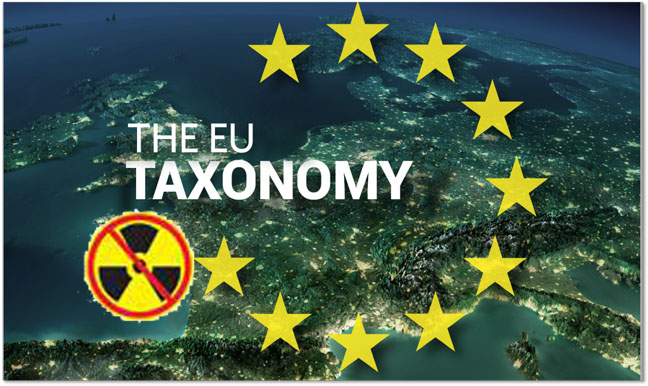
Nuclear and gas power ‘not green’, say EC experts https://environment-analyst.com/global/107948/nuclear-and-gas-power-not-green-say-ec-experts
EC Platform on Sustainable Finance delivers final report on extending sustainable finance rules across the whole EU economy, and includes a bombshell.
A European Commission (EC) expert group has made wide-ranging recommendations on extending the scope of the EU Taxonomy – the classification system that defines environmentally sustainable economic activities – across the European economy.
The EC Platform on Sustainable Finance’s final report will inform important new EU legislation, due in the autumn, which will in turn guide future policy and investment decisions.
The report concludes that gas and nuclear power cannot be described as ‘green’ under the taxonomy’s ‘do no significant harm’ (DNSH) rules – although leaves the final decision to the European Commission.
The expert panel’s final report considers 12 sectors, including manufacturing, transport, agriculture, fishing, building and disaster risk management. It is still finalising criteria for forestry and agriculture.
The report proposes a ‘traffic light’ system, listing red activities requiring urgent transition to avoid significant harm, amber activities that could more easily qualify for taxonomy-recognised investment, and green, low environmental impact (LEnvI) activities.
Welcoming the report, Sebastien Godinot, senior economist at WWF European policy office, commented: “The platform’s recommendations are a crucial step towards the much-needed ‘biodiversity taxonomy’, aimed at driving billions into nature-friendly activities.”
He added: “However, WWF is concerned that some criteria for critical sectors like forestry and agriculture are not [yet] included. The platform must publish recommendations for them no later than May.”
The EU Taxonomy, which came into force earlier this year, provides the technical underpinning for a number of interlinked EU regulations on sustainable finance products, disclosures and reporting. The taxonomy’s purpose is to increase financial flows towards green activities and to reduce green-washing by setting science-based criteria for performance. It is hoped that the taxonomy will become a global ‘gold standard’ for green finance.
The taxonomy is governed by the Taxonomy Regulation, which came into force on 12 July 2020 and identifies activities that improve or diminish six objectives (climate change mitigation, climate change adaptation, sustainable water resources, transitioning to a circular economy, pollution prevention and control and protecting biodiversity and ecosystems). Article 26.2(a) of this regulation requires the commission to report on applying its rules across the wider economy and to define sectors that have no environmental impact or are outside its scope.
At the same time as the taxonomy came into effect, the EC presented the Taxonomy Climate Delegated Act (TCDA). In response to restrictions to Europe’s natural gas supplies at the beginning of the year, the legislation was controversially complemented by a second Delegated Act, which defined nuclear and natural gas powered energy as ‘green’. This caused widespread objections from environmental and climate change groups.
The TCDA is being scrutinised by the European Parliament and the Council, before going back to the EC. The EC is expected to draft a new Delegated Act, building on the platform’s latest recommendations, in the autumn. This should resolve whether nuclear and gas-powered energy will count as sustainable for policy and investment purposes in the EU.
While asserting that nuclear and gas power are not green, the platform’s report gives the commission ‘wiggle room’ by suggesting a “systems-wide approach to the low-carbon transition”.
It says: “The extended Taxonomy framework would acknowledge the reasons why these activities are not green, explaining why, in some cases, [they] may be significantly harmful, but also showing that there is potential for valid and urgent transitions away from significantly harmful performance.”
IPCC new report coming, on limiting global heating
| UN scientists have worked through the weekend to complete a key report on how to restrict the greenhouse gases that are warming the planet. Members of the Intergovernmental Panel on Climate Change are likely to advise a rapid shift from fossil fuels over the next 8 years. They will also suggest the widespread use of carbon removal technology to limit dangerous warming. But disputes over the exact wording of the document have delayed agreement. The IPCC is set to publish their findings on what we can do to stem climate change on Monday. Most of the world’s leading researchers on climate change are involved in the production of IPCC reports – their summaries of the latest science, produced every six or seven years, are used by governments in their negotiations on climate change, such as those that took place at COP26 last November. These IPCC reports are seen as the best, if slightly conservative studies on the state of climate science. For the past two weeks, IPCC scientists and government officials from all over the world have been locked in a virtual approval session, going through this latest report on how to stop climate change line by line. This new study will be the third of three important documents from the IPCC issued over the past eight months. The previous two have looked at the causes and impacts of climate change, but this one will focus on mitigation – or what we can do to stop it. This essentially means that researchers will look at how we can reduce the amount of warming gases that are emitted from human activities. One key part of the summary report will detail what the world can do between now and 2030 to limit heating. BBC 3rd April 2022https://www.bbc.co.uk/news/science-environment-6095930 |
IPCC ‘s dire warning on climate change is being ignored, amid war and economic turmoil
Scientists fear that their last-ditch climate warnings are going unheeded
amid international turmoil caused by the war in Ukraine, and soaring energy
prices. The third segment of the landmark scientific report from the
Intergovernmental Panel on Climate Change – which could be the last
comprehensive assessment of climate science to be published while there is
still time to avoid the worst ravages of climate breakdown – will be
published on Monday, warning that the world is not shifting quickly enough
to a low-carbon economy.
But the previous instalment of the vast report –
known as working group 2 of the IPCC – was published a month ago, just as
Russia invaded Ukraine, and received only muted attention, despite warning
of catastrophic and irreversible upheavals that can only narrowly be
avoided by urgent action now. Scientists told the Observer that Monday’s
fresh scientific warning must spur governments to belated action.
Guardian 3rd April 2022
BAE shipyard – home to nuclear submarine construction ‘set to flood’ due to impact of climate change
BAE shipyard in Barrow ‘set to flood’ due to impact of climate change 31st March DAN TAYLOR, CHIEF REPORTER BARROW’S shipyard is at ‘very great’ risk of flooding in the near future, according to a report.
Findings by the Nuclear Consulting Group suggest BAE’s shipyard would be left ‘profoundly vulnerable’ to flooding from sea-level rises due to the impact of climate change.
It claimed the shipyard was among nine nuclear sites that are threatened by the possibility of increased rainfall and a rise in sea levels.
The report is based on models predicting sea levels in 2050 following the effects of climate change.
…….. Writing in the report Dr Paul Dorfman, the chair of the Nuclear Consulting Group think tank, said: “Present UK coastal military nuclear infrastructure is profoundly vulnerable to flooding from sea-level rise, storm intensity and storm surge – with inland nuclear facilities also facing inundation and flooding.
“Ministry of Defence and nuclear regulatory mitigation efforts will become obsolete, and sooner than planned.
“In other words, UK nuclear military bases are set to flood.”
The next generation of Trident nuclear submarines are being built in Barrow, alongside the Astute hunter-killer boats.
And raising concern about the shipyard, Dr Dorfman warned: “Despite the key role the shipyard plays in the UK nuclear military enterprise, climate change (even in lower-mid range projections) will challenge the utility and viability of the facility due to the combined impact of future sea-level rise, storm surge and flooding.”………… https://www.nwemail.co.uk/news/20028594.shipyard-flood/
Growing resistance to EU proposal to label gas and nuclear as ”sustainable” energy
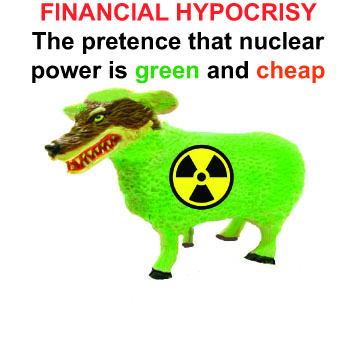
| Resistance has been growing to an EU proposal to label gas and nuclear energy as sustainable investments, officials said this week. The European Commission last month proposed including both in the EU’s sustainable finance taxonomy, a system for labelling climate-friendly investments. The proposal split opinion among the European Parliament and EU countries, which disagree on the fuels’ green credentials and could also still reject it. Two groups of lawmakers – the Greens and the Socialists and Democrats – confirmed that they would file a motion to reject the rules. German Green lawmaker Michael Bloss had confirmed the Greens’ objection earlier in the week. “Nuclear power and fossil gas are not ‘sustainable’, far too dangerous and not a bridge technology,” he said in a tweet. The move is the opening salvo in a months-long process of negotiations, which would culminate in Parliament voting by July on the potential motions to reject the gas and nuclear proposal. Emerging Risks 1st April 2022 https://emergingrisks.co.uk/resistance-grows-to-eu-nuclear-and-gas-taxonomy/ |
Low-lying Dungeness threatened by climate change – sea level rise.
Dungeness could find itself underwater within 30 years, threatening both a
tourist hotspot and a vital conservation area. Dungeness and its nature
reserve are low-lying, which means that they are particularly vulnerable to
climate change and rising sea levels.
Climate Central is an organisation
dedicated to researching the impact of global warming. The organisation
uses UN-approved data to predict which areas of the world could be most
threatened by rising sea levels, with variables concerning pollution levels
and extreme weather events. Here’s an example of one of Climate
Central’s maps, [on original] showing what Dungeness could look like in 2050 should
global warming continue at its current rate. The red parts show areas
beneath the tide level.
Time Out 30th March 2022
https://www.timeout.com/news/dungeness-could-be-underwater-by-2050-033022
Nuclear on the ”frontline of climate change” – and not in a good way!
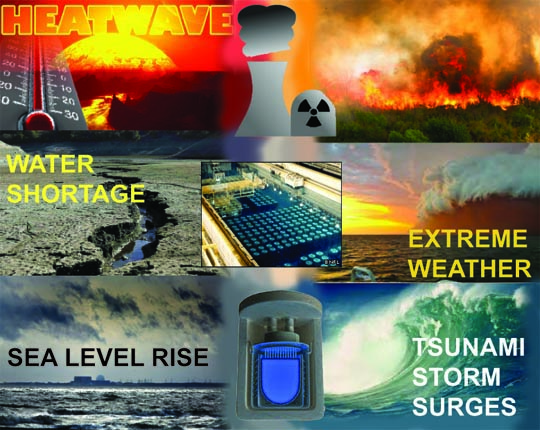
Paul Dorfman, writing in The Conversation, 1 Apr 22, Not everyone is convinced that nuclear power is a reliable tool in the effort to slow global warming and shore up energy supplies. Paul Dorfman is an honorary senior research associate at UCL’s Energy Institute. He argues that “nuclear energy is, quite literally, on the frontline of climate change – and not in a good way”.
“Nuclear power is often credited with offering energy security in an increasingly turbulent world, but climate change will rewrite these old certainties,” Dorfman says.
“Nuclear power plants must draw from large sources of water to cool their reactors, hence why they’re often built near the sea,” Dorfman highlights. “Two in five nuclear plants operate on the coast and at least 100 have been built just a few metres above sea level.”
In a world made increasingly turbulent by climate change, that’s a problem, Dorfman argues.
“A recent US Army War College report also states that nuclear power facilities are at high risk of temporary or permanent closure due to climate threats – with 60% of US nuclear capacity at risk from future sea-level rise, severe storms, and cooling water shortages.”……………….
1 This Month
19 February – VIRTUAL EVENT-Decision Time: AI and Our Nuclear Arsenal
12:45 p.m. Central / 1:45 p.m. Eastern
To see nuclear-related stories in greater depth and intensity – go to https://nuclearinformation.wordpress.com
-
Archives
- February 2026 (161)
- January 2026 (308)
- December 2025 (358)
- November 2025 (359)
- October 2025 (376)
- September 2025 (258)
- August 2025 (319)
- July 2025 (230)
- June 2025 (348)
- May 2025 (261)
- April 2025 (305)
- March 2025 (319)
-
Categories
- 1
- 1 NUCLEAR ISSUES
- business and costs
- climate change
- culture and arts
- ENERGY
- environment
- health
- history
- indigenous issues
- Legal
- marketing of nuclear
- media
- opposition to nuclear
- PERSONAL STORIES
- politics
- politics international
- Religion and ethics
- safety
- secrets,lies and civil liberties
- spinbuster
- technology
- Uranium
- wastes
- weapons and war
- Women
- 2 WORLD
- ACTION
- AFRICA
- Atrocities
- AUSTRALIA
- Christina's notes
- Christina's themes
- culture and arts
- Events
- Fuk 2022
- Fuk 2023
- Fukushima 2017
- Fukushima 2018
- fukushima 2019
- Fukushima 2020
- Fukushima 2021
- general
- global warming
- Humour (God we need it)
- Nuclear
- RARE EARTHS
- Reference
- resources – print
- Resources -audiovicual
- Weekly Newsletter
- World
- World Nuclear
- YouTube
-
RSS
Entries RSS
Comments RSS
 nuclear-news