COP30 won’t save us, but China might.

From Fix the News, 17 Nov 25
We’ve been writing about China’s renewable energy revolution here for years, so we know it’s not news to you. But it does feel like something has shifted in the last few weeks; that mainstream outlets seem to have finally woken up to what’s actually happening and more importantly, what it means. It’s not just that China is building lots of solar and wind. It’s that China might actually be the country that saves us from climate catastrophe.
This is a difficult thing for many of us in the West to get our heads around. China has been the world’s collective climate bogeyman for so long, the largest emitter, still pumping out coal, refusing to make the commitments everyone else has agreed to. But, as negotiations kick off in earnest at COP30 in Belém, the story has flipped. China’s emissions are plateauing and more crucially, they’re now supplying the technology for the energy transition to everyone else.
The Economist says China is “a new type of superpower: one which deploys clean electricity on a planetary scale;” already home to a terawatt of installed solar capacity, more than double what the United States and Europe have combined. It makes more money from exporting green technology than America (the world’s biggest petrostate) makes from exporting fossil fuels.
Reuters notes that China now dominates clean energy supply chains and files three times more clean-tech patents than the rest of the world combined. “China is now the main engine of the global clean energy transition.”
The New York Times reports that China’s overseas investments in clean energy have exceeded $225 billion since 2011, more than the Marshall Plan, adjusted for inflation. In Pakistan, a standalone panel costs farmers $125, and they never have to worry about buying diesel again. In Nepal, electric vehicles now make up 76% of new car sales because the Chinese Seres Mini EV sells for $10,000. These aren’t moral decisions. They’re economic ones.
But the journalist who captures it best is Ambrose Evans-Pritchard in The Telegraph. He starts with the grim reality that CO2 emissions hit record levels last year, oceans are the warmest ever recorded, and forests are burning at unprecedented rates. Then he introduces the idea of a “second derivative” – the early signs of an energy shift most people are missing.
Global fossil use in industry peaked in 2014. Sales of petrol and diesel cars peaked in 2017. Transport emissions are finally rolling over. China’s coal use appears to have peaked. Its emissions have fallen by 1% this year.
His conclusion is worth repeating: “We may or may not avert a scorching runaway world of two degrees plus, but whether we succeed will have nothing to do with anything said or agreed to by the 50,000 people descending on Belém. It will be decided by geopolitics, market prices and the tidal force of technological change.”
Try not to worry too much about the climate summits. What matters far more is that China is now playing midwife to a clean energy transition that makes economic sense for the 80% of humanity that lives in countries that import fossil fuels. Those 6.4 billion people have no reason to stay dependent on shipments from petrostates anymore, when they can import solar panels made by the world’s first electrostate.
This doesn’t mean the problem is solved, energy is too big and complicated for that. China and India are still building coal plants. Almost every country is building fossil gas. But the trajectory has changed. And it’s changed not because of international agreements or appeals to the better angels of our nature, but because national self-interest is finally aligning with climate action.
US Oil Executives Flock to COP30

Top American oil and gas producers are using trade groups to gain access
to this year’s COP30 climate summit in the absence of an official U.S.
delegation, DeSmog can report. ExxonMobil and Chevron — which are among
the fossil fuel industry’s biggest greenhouse gas emitters — have sent
a combined total of 13 executives to the talks, while both companies have
either sponsored events or pavilions at the conference.
In addition, Exxon CEO Darren Woods spoke at a number of COP30 side events, including one in Sao Paolo on November 3, where he noted in an interview with Reuters that crude oil and hydrocarbons were “going to play a critical role in
everybody’s life for a long time to come”.
Desmog 14th Nov 2025,
https://www.desmog.com/2025/11/14/us-oil-executives-flock-to-cop30
6 main issues for COP 30 – and nuclear is no climate solution

Robyn Wood, 12 Nov 25
International climate change COP 30 has begun in Brazil, and will run for 2 weeks. We hope that the pro-nuker delegates won’t be successful in promoting nuclear power as a solution for climate change.
Here are the main issues to be covered according to the UN:
1. How to prevent runaway global warming
2. How to protect communities from climate impacts
3. How to make good on a trillion-dollar promise to developing countries
4. How to leverage creative solutions to the climate crisis
5. How to ensure fair and inclusive transitions
6. How to recapture the mojo of Paris
When the Paris Agreement was adopted in 2015, it brought with it hope that humanity could turn the tide against climate change. Without it, we’d be heading for 3-3.5°C degrees of warming. Today, we’re tracking closer to 2.3-2.5°C. The latter figure could still prove devastating for billions of people around the world.
https://www.unep.org/news-and-stories/story/six-issues-will-dominate-cop30?
Rich countries have lost enthusiasm for tackling climate crisis, says Cop30 chief.

Guardian 10th Nov 2025
Brazil’s André Corrêa do Lago says countries should follow China’s lead on clean energy as conference begins
Rich countries have lost enthusiasm for combating the climate crisis while China is surging ahead in producing and using clean energy equipment, the president of the UN climate talks has said.
More countries should follow China’s lead instead of complaining about being outcompeted, said André Corrêa do Lago, the Brazilian diplomat in charge of the Cop30 conference, which begins on Monday.
“Somehow the reduction in enthusiasm of the global north is showing that the global south is moving,” Corrêa do Lago told reporters in Belém, the city in the Amazonian rainforest where the fortnight-long Cop30 conference is taking place. “It is not just this year, it has been moving for years, but it did not have the exposure that it has now.”
He pointed to the world’s biggest emitter of greenhouse gases, China, which is also the biggest producer and consumer of low-carbon energy. “China is coming up with solutions that are for everyone, not just China,” he said. “Solar panels are cheaper, they’re so competitive [compared with fossil fuel energy] that they are everywhere now. If you’re thinking of climate change, this is good.”…………………………………………………………………………………………………………………………………………… https://www.theguardian.com/environment/2025/nov/10/rich-countries-have-lost-enthusiasm-for-tackling-climate-crisis-says-cop30-chief
Michael Mann to Bill Gates: You can’t reboot the planet if you crash it
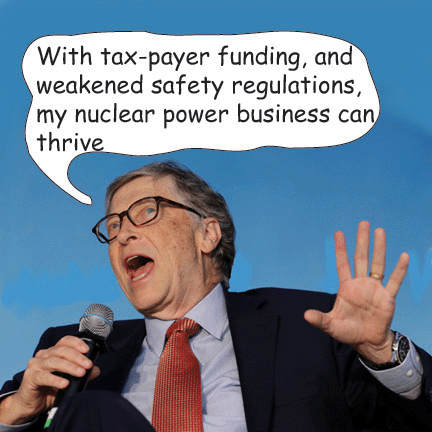
Gates downplays the role of clean energy and rapid decarbonization. Instead, he favors hypothetical new energy tech, including “modular nuclear reactors” that couldn’t possibly be scaled up over the time frame in which the world must transition off fossil fuels.
By Michael E. Mann | October 31, 2025, https://thebulletin.org/2025/10/you-cant-reboot-the-planet-if-you-crash-it/
“I suppose it is tempting, if the only tool you have is a hammer, to treat everything as if it were a nail.” Thus wrote the famous psychologist Abraham Maslow in 1966.
If Maslow were around today, I imagine he might endorse the corollary that if your only tool is technology, every problem appears to have a technofix. And that’s an apt characterization of the “tech bro”-centered thinking so prevalent today in public environmental discourse.
There is no better example than Bill Gates, who just this week redefined the concept of bad timing with the release of a 17-page memo intended to influence the proceedings at the upcoming COP30 international climate summit in Brazil. The memo dismissed the seriousness of the climate crisis just as (quite possibly) the most powerful Atlantic hurricane in human history—climate-fueled Melissa—struck Jamaica with catastrophic impact. The very next day a major new climate report (disclaimer: I was a co-author) entitled “a planet on the brink” was published. The report received far less press coverage than the Gates missive. The legacy media is apparently more interested in the climate musings of an erstwhile PC mogul than a sober assessment by the world’s leading climate scientists.
Gates became a household name in the 1990s as the Microsoft CEO who delivered the Windows operating system. (I must confess, I was a Mac guy.) Microsoft was notorious for releasing software mired with security vulnerabilities. Critics argued that Gates was prioritizing the premature release of features and profit over security and reliability. His response to the latest worm or virus crashing your PC and compromising your personal data? “Hey, we’ve got a patch for that!”
That’s the very same approach Gates has taken with the climate crisis. His venture capital group, Breakthrough Energy Ventures, invests in fossil fuel-based infrastructure (like natural gas with carbon capture and enhanced oil recovery), while Gates downplays the role of clean energy and rapid decarbonization. Instead, he favors hypothetical new energy tech, including “modular nuclear reactors” that couldn’t possibly be scaled up over the time frame in which the world must transition off fossil fuels.
Most troublingly, Gates has peddled a planetary “patch” for the climate crisis. He has financed for-profit schemes to implement geoengineering interventions that involve spraying massive amounts of sulfur dioxide into the stratosphere to block out sunlight and cool the planet. What could possibly go wrong? And hey, if we screw up this planet, we’ll just geoengineer Mars. Right Elon?
Such technofixes for the climate, in fact, lead us down a dangerous road, both because they displace far safer and more reliable options—namely the clean energy transition—and because they provide an excuse for business-as-usual burning of fossil fuels. Why decarbonize, after all, if we can just solve the problem with a “patch” later?
Here’s the thing, Bill Gates: There is no “patch” for the climate crisis. And there is no way to reboot the planet if you crash it. The only safe and reliable way out when you find yourself in a climate hole is to stop digging—and burning—fossil fuels.
It was arguably Gates who—at least in part—inspired the tech-bro villain Peter Isherwell in the Adam McKay film “Don’t Look Up.” The premise of the film is that a giant “comet” (a very thinly veiled metaphor for the climate crisis) is hurtling toward Earth as politicians fail to act. So they turn to Isherwell who insists he has proprietary tech (a metaphor for geoengineering, again thinly veiled) that can save the day: space drones developed by his corporation that will break the comet apart. Coincidentally, the drones are designed to then mine the comet fragments for trillions of dollars’ worth of rare metals, that all go to Isherwell and his corporation. If you haven’t seen the film (which I highly recommend), I’ll let you imagine how it all works out.
For those who have been following Gates on climate for some time, his so-called sudden “pivot” isn’t really a “pivot” at all. It’s a logical consequence of the misguided path he’s been headed down for well over a decade.
I became concerned about Gates’ framing of the climate crisis nearly a decade ago when a journalist reached out to me, asking me to comment on his supposed “discovery” of a formula for predicting carbon emissions. (The formula is really an “identity” that involves expressing carbon emissions as a product of terms related to population, economic growth, energy efficiency, and fossil fuel dependence). I noted, with some amusement, that the mathematical relationship Gates had “discovered” was so widely known it had a name, the “Kaya identity,” after the energy economist Yōichi Kaya who presented the relationship in a textbook nearly three decades ago. It’s familiar not just to climate scientists in the field but to college students taking an introductory course on climate change.
If this seems like a gratuitous critique, it is not. It speaks to a concerning degree of arrogance. Did Gates really think that something as conceptually basic as decomposing carbon emissions into a product of constituent terms had never been attempted before? That he’s so brilliant that anything he thinks up must be a novel discovery?
I reserved my criticism of Gates, at the time, not for his rediscovery of the Kaya identity (hey—if he can help his readers understand it, that’s great) but for declaring that it somehow implies that “we need an energy miracle” to get to zero carbon emissions. It doesn’t. I explained that Gates “does an injustice to the very dramatic inroads that renewable energy and energy efficiency are making,” noting peer-reviewed studies by leading experts that provide “very credible outlines for how we could reach a 100 percent noncarbon energy generation by 2050.”
The so-called “miracle” he speaks of exists—it’s called the sun, and wind, and geothermal, and energy storage technology. Real world solutions exist now and are easily scalable with the right investments and priorities. The obstacles aren’t technological. They’re political.
Gates’ dismissiveness in this case wasn’t a one-off. It was part of a consistent pattern of downplaying clean energy while promoting dubious and potentially dangerous technofixes in which he is often personally invested. When I had the chance to question him about this directly (The Guardian asked me to contribute to a list of questions they were planning on asking him in an interview a few years ago), his response was evasive and misleading. He insisted that there is a “premium” paid for clean energy buildout when in fact it has a lower levelized cost than fossil fuels or nuclear and deflected the questions with ad hominem swipes. (“He [Mann] actually does very good work on climate change. So I don’t understand why he’s acting like he’s anti-innovation.”)
This all provides us some context for evaluating Gates’ latest missive, which plays like a game of climate change-diminishing bingo, drawing upon nearly every one of the tropes embraced by professional climate disinformers like self-styled “Skeptical Environmentalist” Bjorn Lomborg. (Incidentally, Lomborg’s center has received millions of dollars of funding from the Gates Foundation in recent years and Lomborg recently acknowledged serving as an adviser to Gates on climate issues.)
Among the classic Lomborgian myths promoted in Gates’ new screed, which I’ll paraphrase here, is the old standby that “clean energy is too expensive.” (Gates likes to emphasize a few difficult-to-decarbonize sectors like steel or air travel as a distraction from the fact that most of our energy infrastructure can readily be decarbonized now.) He also insists that “we can just adapt,” although in the absence of concerted action, warming could plausibly push us past the limit of our adaptive capacity as a species.
He argues that “efforts to fight climate change detract from efforts to address human health threats.” (A central point of my new book Science Under Siege with public health scientist Peter Hotez is that climate and human health are inseparable, with climate change fueling the spread of deadly disease). Then there is his assertion that “the poor and downtrodden have more pressing concerns” when, actually, it is just the opposite; the poor and downtrodden are the most threatened by climate change because they have the least wealth and resilience.
What Gates is putting forward aren’t legitimate arguments that can be made in good faith. They are shopworn fossil fuel industry talking points. Being found parroting them is every bit as embarrassing as being caught—metaphorically speaking—with your pants down.
For years when I would criticize Gates for what I consider to be his misguided take on climate, colleagues would say, “you just don’t understand what Gates is saying!” Now, with Donald Trump and the right-wing Murdoch media machine (the Wall Street Journal editorial board and now an op-ed by none other than Lomborg himself in the New York Post) celebrating Gates’ new missive, I can confidently turn around and say, “No, you didn’t understand what he was saying.”
Maybe—just maybe—we’ve learned an important lesson here: The solution to the climate crisis isn’t going to come from the fairy-dust-sprinkled flying unicorns that are the “benevolent plutocrats.” They don’t exist. The solution is going to have to come from everyone else, using every tool at our disposal to push back against an ecocidal agenda driven by plutocrats, polluters, petrostates, propagandists, and too often now, the press.
Six pieces of data that give hope for the future of the climate

The world may not be on track to achieve the Paris Agreement goal of keeping the temperature rise ‘well below’ 2C – but there remain grounds for hopeas the international Cop30 summit gets underway.
For starters, the rate at
which emissions are rising has slowed considerably in the years since the
Paris Agreement was signed, even if the achievement of “peak emissions”
remains elusive for now. A key milestone was also marked this year, with
the news that China’s emissions are now believed to have peaked.
One big
reason why the world is beginning to get a handle on emissions is the
soaring growth in the capacity to generate renewable energy. Electric
vehicles have also boomed over the past decade, from less than a million
cars sold in 2015 to more than 15 million sold last year, driven by the
Chinese market. More than 140 countries have pledged to reach net zero,
with 37 of them holding the target in law, according to the think tank
ECIU.
Independent 6th Nov 2025, https://www.independent.co.uk/climate-change/cop30-climate-brazil-paris-agreement-b2859763.html
Can France’s nuclear legacy weather climate change?

The delicate-looking water primrose, an invasive aquatic plant with golden, daisy-like flowers,brought unit 4 at the 3.6 GW Cruas nuclear power plant in southern France to a grinding halt.
In recent years, extreme heat, droughts and warmer
rivers have repeatedly disrupted operations, forcing EDF to reduce output
or shut down reactors at sites along the Garonne and the Rhone. During the
record 2022 heatwave, the government even issued exceptional exemptions so several plants could temporarily exceed environmental discharge limits to avoid potential blackouts.
What’s driving the concern?
River temperatures regularly reaching regulatory thresholds; More frequent
droughts limiting cooling water; Increased ecological pressure on already
stressed river basins; Data showing production cuts clustering in summer
when demand is highest.
France’s Court of Auditors and climate agencies
warn that such shutdowns could become three to four times more common by 2050. EDF says annual impacts remain small overall, but seasonal risks are rising. With an ageing fleet and new reactors planned, the question is how resilient France’s nuclear system can remain in a rapidly warming climate
Montel News 30th Oct 2025, https://montelnews.com/news/2e2e5374-e4ef-433a-ac00-1f2d049478c0/can-france-s-nuclear-legacy-weather-climate-change-2
How thousands of fossil fuel lobbyists got access to UN climate talks – and then kept drilling
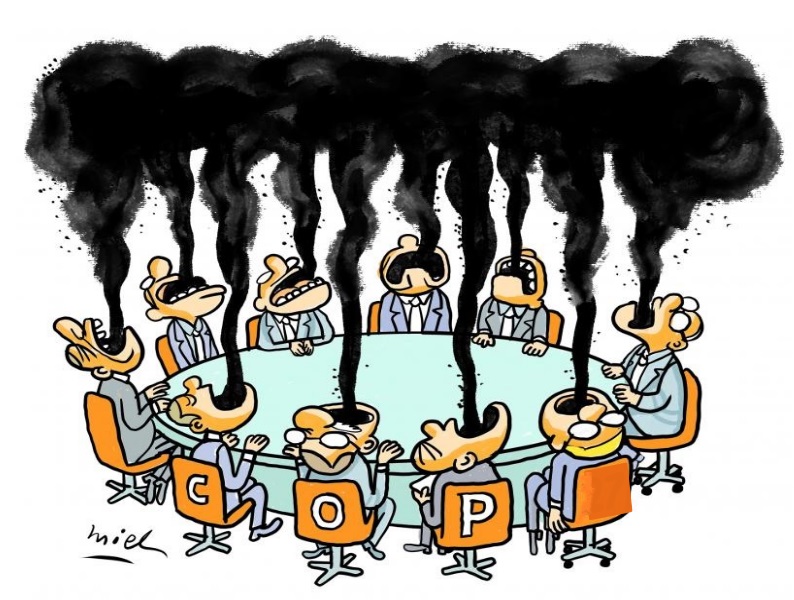
Research shows oil, gas and coal
firms’ unprecedented access to Cop26-29, blocking urgent climate action.
After years of campaigning by civil society groups, Cop delegates this year
are being asked to publicly disclose who is funding their participation –
and confirm that their objectives are in alignment with the UNFCCC.
But the new transparency requirement excludes anyone in official government delegations or overflows, and calls for stricter conflict of interest protections to cut industry influence have not been adequately heeded, advocates say.
Guardian 7th Nov 2025, https://www.theguardian.com/environment/2025/nov/07/fossil-fuel-lobbyists-cop-un-climate
Siting new nuclear at Oldbury deemed ‘problematic’ due to high level of flood risk.

06 Nov, 2025 By Tom Pashby
Maps based on climate data show that land next to the Oldbury nuclear power station, which is being assessed by the government for potentially building small modular reactors (SMRs), is projected to be below the annual flood level by 2050.
The maps also show that land at Wylfa
in North Wales, the other site being considered by the government for
potentially deploying SMRs, will remain above water. Meanwhile, inland
areas at Sizewell C in Suffolk will also be inundated by 2050.
Paul Dorfman said, “…although these coastal flood maps are based on measured local sea surface and local sea-level rise forecasts (plus the height above sea-level of defined local flood types), since they are not based on physical storm and flood simulations, risk from actual extreme flood events may be far greater.
Dorfman added: “The more that we know about
climate-driven sea level rise-driven storm surges, which is when the high
tide meets certain atmospheric conditions, the more we’re beginning to be
deeply concerned about the siting for vulnerable infrastructure such as
nuclear power plants.”
New Civil Engineer 6th Nov 2025,
THE CORRUPTION OF COP30: DODGY CLIMATE DOSSIERS
Here we go again: the annual end-of-year COP fandango is upon us. This
particular Conference of the Parties (signatories to the original Framework
Convention on Climate Change back in 1992) happens to be in Brazil —
generally deemed to be a more sympathetic host country than its two
petrostate predecessors Azerbaijan and the United Arab Emirates.
That may
be true (although rates of deforestation in the Amazon are on the up
again), but COP30 will be just as resounding a failure (as in making not a
ha’p’orth of difference) as the 29 other COPs that have gone before it.
There are many reasons for this: geopolitical, financial, technological and
so on. But I want to look at one aspect that rarely gets mentioned: almost
every single delegate at COP30 will be focused on dodgy data – on things
like the targets set by governments through their revised Nationally
Determined Contributions, or on average temperature increases projected
through to the end of the century (1.5°C and all that jazz), or on endless
attention-grabbing voluntary initiatives about this, that or the other
technology or nature-based ‘solutions’.
Jonathon Porritt 6th Nov 2025, https://jonathonporritt.com/cop30-corruption-dodgy-climate-data/
‘Change course now’: humanity has missed 1.5C climate target, says UN head

‘Devastating consequences’ now inevitable but emissions
cuts still vital, says António Guterres in sole interview before Cop30.
Humanity has failed to limit global heating to 1.5C and must change course
immediately, the secretary general of the UN has warned. In his only
interview before next month’s Cop30 climate summit, António Guterres
acknowledged it is now “inevitable” that humanity will overshoot the
target in the Paris climate agreement, with “devastating consequences”
for the world. He urged the leaders who will gather in the Brazilian
rainforest city of Belém to realise that the longer they delay cutting
emissions, the greater the danger of passing catastrophic “tipping
points” in the Amazon, the Arctic and the oceans.
Guardian 28th Oct 2025, https://www.theguardian.com/environment/2025/oct/28/change-course-now-humanity-has-missed-15c-climate-target-says-un-head
UN CLIMATE TALKS -Revealed: Only a third of national climate pledges support ‘transition away from fossil fuels’
Only around a third of the latest country climate pledges submitted to the
UN express support for the “transition away from fossil fuels”,
according to Carbon Brief analysis.
Several countries even have used their
2035 climate plans to commit to increasing the production or use of fossil
fuels, predominately gas, the analysis finds.
The first global stocktake of
progress to tackle climate change, agreed at the COP28 climate summit in
Dubai in 2023, calls on all countries to contribute to “transitioning
away from fossil fuels”. Countries were meant to explain how they are
implementing the outcomes of the global stocktake, including their
contribution to transitioning away from fossil fuels, in their latest
climate plans.
However, just 23 of the 63 plans submitted to the UN so far
express support for “transitioning away from fossil fuels”, or the
“phase out” or “phase down” of their use.
In addition, sixcountries, including Russia, Nigeria and Morocco, use their climate plans to commit to boosting gas production. Some two-thirds of countries have not yet announced or submitted their pledges, missing not only the UN deadline of 10 February, but also an extension to September. How to address the lack of sufficient action from countries with their latest plans is billed to be one of the major issues up for debate at the COP30 climate summit in Brazil next month.
Carbon Brief 22nd Oct 2025, https://www.carbonbrief.org/revealed-only-a-third-of-national-climate-pledges-support-transition-away-from-fossil-fuels/
Climate disasters in first half of 2025 costliest ever on record, research shows.

The first half of 2025 was the costliest on record for major disasters in
the US, driven by huge wildfires in Los Angeles and storms that battered
much of the rest of the country, according to a climate non-profit that has
resurrected work axed by Donald Trump’s administration that tracked the
biggest disasters.
In the first six months of this year, 14 separate
weather-related disasters that each caused at least $1bn in damage hit the US, the Climate Central group has calculated. In total, these events cost
$101bn in damages – lost homes, businesses, highways and other
infrastructure – a toll higher than any other first half of a year since
records on this began in 1980.
Guardian 22nd Oct 2025, https://www.theguardian.com/environment/2025/oct/22/climate-disasters-2025-cost
Coral die-off marks Earth’s first climate ‘tipping point’, scientists say.

A surge in global temperatures has caused widespread bleaching and death of warm-water corals around the world.
By Jeff Tollefson, Nature 12th Oct 2025
Surging temperatures worldwide have pushed coral reef ecosystems into a state of widespread decline, marking the first time the planet has reached a climate ‘tipping point’, researchers announced today.
They also say that without rapid action to curb greenhouse-gas emissions, other systems on Earth will also soon reach planetary tipping points, thresholds for profound changes that cannot be rolled back.
“We can no longer talk about tipping points as a future risk,” says Steve Smith, a social scientist at the University of Exeter, UK, and a lead author on a report released today about how close Earth is to reaching roughly 20 planetary tipping points. “This is our new reality.”
Temperature spike
Led by Smith and other scientists at the University of Exeter, the report assesses the risk of breaching tipping points such as ice-sheet collapse, rising seas and dieback of the Amazon rainforest. It also discusses progress towards various positive tipping points focused on social and economic change, such as the adoption of clean energy.
The group’s first such assessment, released less than two years ago, raised alarms but did not officially declare that any climate tipping points had been reached. In the past few years, however, global temperatures have surged, sparking concerns among some scientists that global warming is accelerating and could lead to even more widespread impacts in the coming decades than the changes that have already been recorded.
The impact on coral reefs has been particularly severe in the past two years , pushing these ecosystems to their tipping point, the researchers say. The warming waters have caused corals across the globe to bleach, a process that occurs when the organisms expel the symbiotic algae that provide them with nutrients, oxygen and vibrant colours. The fourth global bleaching event in the past few decades began in January 2023, and researchers estimate that it has affected more than 84% of the planet’s coral ecosystems.
The initial tipping-point report talked about large-scale threats to corals in the future tense, but the latest global bleaching event has made it clear that the crisis is now, says Michael Studivan, a coral ecologist at the University of Miami in Florida………………………………………
https://www.nature.com/articles/d41586-025-03316-w
World’s oceans losing their greenness through global heating, study finds.
The world’s oceans are losing their greenness owing to global heating,
according to a study that suggests our planet’s capacity to absorb carbon
dioxide could be weakening. The change in the palette of the seas is caused by a decline of phytoplankton, the tiny marine creatures that are
responsible for nearly half of the biosphere’s productivity. The
findings, which also have alarming implications for oxygen levels and food
chains, are based on a groundbreaking study of daily chlorophyll
concentrations in low- to mid-latitude oceans from 2001 to 2023.
Guardian 17th Oct 2025, https://www.theguardian.com/environment/2025/oct/17/worlds-oceans-losing-their-greenness-through-global-heating-study-finds
1 This Month
10 March A LIVE WEBINAR THE REAL EFFECTS OF NUCLEAR POWER
What the Industry Isn’t Telling Us
1:00 PM Mountain, 2 pm Central, 3 pm Eastern. Live on the Keepers of the Water Facebook page



18 March Webinar @ 1 PM EST: An Assessment of SMR Projects: The Case of Canada
register for the zoom:
https://us02web.zoom.us/webinar/register/WN_o8BIIOUvQ2ONJR1nta65DQ#/registration


of the week – STOP SMALL MODULAR REACTORS IN CANADA
To see nuclear-related stories in greater depth and intensity – go to https://nuclearinformation.wordpress.com
-
Archives
- March 2026 (99)
- February 2026 (268)
- January 2026 (308)
- December 2025 (358)
- November 2025 (359)
- October 2025 (376)
- September 2025 (258)
- August 2025 (319)
- July 2025 (230)
- June 2025 (348)
- May 2025 (261)
- April 2025 (305)
-
Categories
- 1
- 1 NUCLEAR ISSUES
- business and costs
- climate change
- culture and arts
- ENERGY
- environment
- health
- history
- indigenous issues
- Legal
- marketing of nuclear
- media
- opposition to nuclear
- PERSONAL STORIES
- politics
- politics international
- Religion and ethics
- safety
- secrets,lies and civil liberties
- spinbuster
- technology
- Uranium
- wastes
- weapons and war
- Women
- 2 WORLD
- ACTION
- AFRICA
- Atrocities
- AUSTRALIA
- Christina's notes
- Christina's themes
- culture and arts
- Events
- Fuk 2022
- Fuk 2023
- Fukushima 2017
- Fukushima 2018
- fukushima 2019
- Fukushima 2020
- Fukushima 2021
- general
- global warming
- Humour (God we need it)
- Nuclear
- RARE EARTHS
- Reference
- resources – print
- Resources -audiovicual
- Weekly Newsletter
- World
- World Nuclear
- YouTube
-
RSS
Entries RSS
Comments RSS
 nuclear-news