Cernavodă Reactor Shut Down as Drought Lowers Danube Flow

By Romania Journal , Jul 28, 2026
Romania’s Cernavodă Nuclear Power Plant shut down Reactor 1 in a controlled manner on Tuesday at 11:00 a.m. due to the exceptionally low level of the Danube River caused by severe drought.
State-owned nuclear energy producer Nuclearelectrica said the measure is preventive and aimed at protecting the plant’s equipment. The company also warned that Reactor 2 could be shut down if water levels continue to decline.
Energy& Utilities
The decision to disconnect Unit 1 was taken in accordance with operational procedures for severe drought conditions, following the latest forecasts issued by Romania’s National Institute of Hydrology and Water Management (INHGA).
According to Nuclearelectrica, Reactor 1 will be reconnected to the National Energy System once operating conditions allow the safe resumption of activities, with the company set to announce the restart date.
However, the company warned that if the Danube’s water level continues to fall and operational parameters approach safety limits, it may also decide to shut down Reactor 2.
“If certain parameters associated with the low Danube water level approach the permitted operating limits, while fully complying with nuclear safety procedures and standards, the plant’s experts will implement the necessary operational measures to maintain safety margins, including the decision to shut down one or even both units if current conditions do not improve. Such measures are preventive and are intended to protect nuclear safety and the reliability of the facilities,” Nuclearelectrica said in a press release………………..
According to the Energy Ministry, the Danube’s flow has dropped to approximately 1,630 cubic meters per second, prompting the shutdown of Reactor 1 to protect the plant’s three cooling pumps……
Authorities estimate that Romania’s peak electricity demand this week will reach around 7,300 MW, while domestic production is expected to range between 4,000 MW and 4,300 MW. The resulting shortfall will be covered through electricity imports………………….
Former Energy Minister calls for caution over Iron Gates III project
Former Energy Minister Virgil Popescu said the shutdown of Reactor 1 due to the Danube’s low water level highlights how vulnerable Romania’s energy system can become in the face of changing hydrological conditions…………………………. https://www.romaniajournal.ro/top_news/cernavoda-reactor-shut-down-as-drought-lowers-danube-flow/
‘The heat took him from me’: India’s death toll rises amid escalating heat crisis

As extreme heat claims the lives of workers in
India’s poorest areas, many fear the true mortality rate is being
dangerously undercounted.
Guardian 29th July 2026, https://www.theguardian.com/world/2026/jul/29/extreme-heat-deaths-india-climate-crisis-environment
Uganda begins emergency food handouts after 19 die from hunger

Uganda has launched emergency food relief distribution after at least 19
deaths from hunger were reported in an area of prolonged drought in the
east of the country. A crisis has been building in the Karamoja region of
Uganda as crops have failed without the season’s expected rains, leaving
the region’s 1.5 million people facing acute food shortages and rising
malnutrition.
Guardian 27th July 2026,
https://www.theguardian.com/global-development/2026/jul/27/uganda-begins-emergency-food-handouts-after-19-die-from-hunger
‘Fire cloud’ over Bordeaux as France braces for new heatwave

A rare “fire cloud” has formed in Bordeaux as wildfires continue to
ravage France forcing British tourists to flee. The “apocalyptic”
fires, which have so far forced the evacuation of 360,000 people across
France and Spain, have created a “pyrocumulonimbus”, a fire cloud never
seen before in France. The giant cloud, normally caused during volcanic
eruptions, creates its own winds and lightning that can worsen fires.
Telegraph 27th July 2026,
https://www.telegraph.co.uk/world-news/2026/07/27/fire-cloud-over-bordeaux-as-france-braces-for-new-heatwave/
Court says NRC doesn’t have to factor climate extremes into licensing

July 21, 2026, https://beyondnuclear.org/court-says-nrc-doesnt-have-to-factor-climate-extremes-into-licensing/
In a shocking and disappointing decision — and at a time when Texas is flooding, wildfires are making the air unbreathable and New York City is under a tornado warning — a DC court has ruled against an appeal by Beyond Nuclear and the Sierra Club. The court’s decision effectively allows the US Nuclear Regulatory Commission to ignore future (or even the clearly present) harsher and more violent climate change impacts on the safe operation of nuclear power plants, to which the NRC is presently awarding license extensions out to 60, 80 and even possibly 100 years.
Court decision to allow nuclear regulator to ignore climate impacts on future reactor operations does not serve public safety
Groups vow to continue their challenge to extreme reactor license extensions
A unanimous decision by three US Court Of Appeals judges in the District Of Columbia to deny an appeal based on the risks of climate change on nuclear reactor safety is a shocking disregard for the ever worsening weather conditions that could put reactor communities at grave risk, said Beyond Nuclear today, one of the groups that brought the appeal.
The petition denied by the court was brought by Beyond Nuclear and the Sierra Club, against the US Nuclear Regulatory Commission (NRC), and the Nuclear Energy Institute (NEI), et al. The NRC is federally mandated to protect public safety. The NEI is the lobbying arm and trade group representing the nuclear power industry.
The petitioners argued that the NRC and industry did not adequately consider how aging components and climate change would affect the risk of severe accidents involving reactor-core damage. Of greatest concern is the extension of operating the licenses of the country’s already aging nuclear power plants well beyond the initial 40-year licensing period and the NRC’s refusal to view the more extreme conditions caused by climate change as risk factors to future safe operation.
“We are stunned by the court’s decision, which let the NRC get away with the generalized claim that large conservatisms in their accident risk analyses can cover the unique and site-specific effects of climate change,” said attorney Diane Curran, who argued the case on behalf of Beyond Nuclear and the Sierra Club. “The NRC has never provided a shred of evidence to show that it has, in fact, evaluated the effects of climate change on accident risk — so how could it know that?”
Paul Gunter, director of the reactor oversight project at Beyond Nuclear said, “This decision allows the NRC to consider future safety challenges to nuclear plants caused by worsening climate conditions by looking in the rear-view mirror. What we are already experiencing today with raging wildfires and extreme flooding, sea-level rise and more frequent violent storms due to climate change, sends a warning that evaluating reactor safety based on the worst climate conditions of the past is not only unrealistic but reckless.
“Just this past week we have seen extreme climate change-driven conditions with raging wildfires in Canada that could equally easily happen in the hotter United States and catastrophic flooding in Texas,” Gunter said. “It is shocking that the court accepted the NRC’s argument that under future climate conditions the chances of a severe accident are ‘small.’ Instead of evaluating the real risks, the court decided to adjudicate whether or not the NRC’s environmental review was ‘reasonably explained.’ This does not serve the interests of public safety,” Gunter said.
Beyond Nuclear is carefully evaluating its legal options and will continue to challenge the extreme license extensions at the Oconee (SC), Peach Bottom (PA) and North Anna (VA) nuclear power plants.
“Oconee is of particularly alarming concern because it sits downstream of two earthen rock-filled dams and two million acre feet of water,” Gunter pointed out. “In bringing this case, we were striving to ensure that this community does not become the tragic test case for a failure to guarantee robust safety regulations at our nation’s nuclear plants for the remainder of their operating lives.”
A supercharged El Niño is threatening more deadly heatwaves — and Americans are ignoring the risks

Heat is America’s top weather killer
— but two-thirds of adults show little concern, experts discover. For
many Americans, summer now means confronting a punishing heatwave at some
point. The Fourth of July weekend was one such case: Triple-digit
temperatures led to dozens of deaths in New Jersey, canceled holiday block
parties across states and resulted in buckling rail lines.
A historic,
supercharged global El Niño event isn’t going to make matters any better
— with more intense heat domes forecast this year on top of rising
temperatures linked to climate change, meteorologist Jeff Berardelli, told
The Independent. “90 percent of models say this will be a ‘historic
event’…. An event so intense it doesn’t exist in our approximately
175-year record. And the models show big impacts worldwide,” he said.
Despite these extreme conditions, large numbers of Americans appear
indifferent. Some two-thirds of U.S. adults are not moderately or very
worried about extreme heat, according to a recent study by the Yale Program
on Climate Change Communication.
Independent 18th July 2026,
https://www.independent.co.uk/news/world/americas/heat-wave-climate-change-el-nino-images-b3015749.html
‘It’s only going to get worse’: wildfires forcing firefighters to make impossible choices
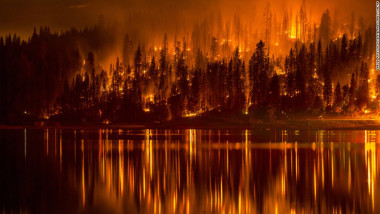
Ajit Niranjan and Caroline Davies
It’s only going to get worse’: wildfires forcing firefighters to
make impossible choices. As the climate crisis fuels more intense blazes,
pushing them to new parts of the world, those tackling them are forced to
ration resources and decide which to fight.
Guardian 18th July 2026,
https://www.theguardian.com/news/ng-interactive/2026/jul/18/the-impossible-choices-of-a-deadly-wildfire-season
Climate Change – It’s only a matter of time…
At the same time, nuclear energy is being consecrated as the answer to climate change and energy self-sufficiency. But, its high cost and long time scales, let alone the wastes and risks it brings, make it no solution at all. And in France closing nuclear power stations during a heatwave has become a routine response.
13 July 2026 Andrew Blowers, Chair of B Blackwater Against New Nuclear Group (BANNG),
https://www.banng.info/news/regional-life/climate-change-a-matter-of-time/
“…………………………………. we seem woefully unprepared for what is becoming the new normal. Serious adaptation is required as the UK’s ‘infrastructure is built for a climate that no longer exists’.
As various ‘tipping points’ are passed the impacts on people and environments will become irreversible. Sea-level rise is already unstoppable and will irrevocably change environments. Here, in the Blackwater estuary there will be destruction of saltmarshes, widespread flooding and inundation of agricultural and urban areas beyond.
Until recently there was a broad political consensus on the need to mitigate the impacts of climate change. Now, the strenuous efforts by successive governments to achieve net zero by 2050 are being undermined by short-term political gestures such as opening up North Sea oilfields which does nothing for either energy or environmental security.
At the same time, nuclear energy is being consecrated as the answer to climate change and energy self-sufficiency. But, its high cost and long time scales, let alone the wastes and risks it brings, make it no solution at all. And in France closing nuclear power stations during a heatwave has become a routine response.
What drilling in the North Sea and building a few nuclear power stations does do is divert attention and resources from the pressing and fundamental need to press ahead with the energy transition as fast as we can.
Meanwhile it is only a matter of time before impacts will become intolerable. We shall have to ensure we can adapt and survive.
The European holiday destinations where 50ºC summers could become the norm
A future where parts of Europe experience 50ºC temperatures may sound
unimaginable, but climate researchers warn that rising temperatures are
increasing the chances of extreme heat events. Liz Bentley, chief executive
of the Royal Meteorological Society, told The i Paper that countries around
southern Europe and the Mediterranean – popular tourism hotspots like
Spain, Portugal and Greece – are most likely to see 50°C summers soon. The
highest temperature ever recorded in Europe was 48.8°C in Sicily in 2021.
But there’s a chance we could soon hit the 50°C threshold, Bentley said.
iNews 17th July 2026 https://inews.co.uk/news/european-holiday-destinations-50c-summers-norm-4649609
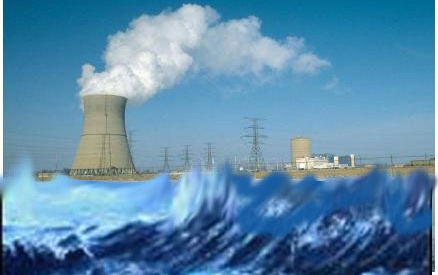
Norwegian rocks to protect Sizewell B on Suffolk coast
15th July, By Sarah Chambers,
Rock armour is being shipped over from Norway to provide temporary coastal flood protection for Sizewell B.
Around 6,700 rocks – each weighing between
three and six tonnes – are being delivered to Sizewell C’s Temporary
Construction Area via the Port of Great Yarmouth. They will be used to
protect the nuclear power station during construction of the neighbouring
Sizewell C site.
East Anglian Daily Times 15th July 2026,
https://www.eadt.co.uk/news/26271343.norwegian-rocks-protect-sizewell-b-suffolk-coast/
Warming Europe complicates France’s bet on nuclear power

“It is certain that climate change is taken into account in deciding the location of new plants. If you invest €13 billion in a site and it becomes obsolete the very next day because there isn’t enough water to cool the core, the investment is not right,”
Extreme heat is forcing the country to shut down nuclear reactors, just as the appetite for cheap, carbon-free electricity is set to explode.
July 13, 2026 ,By Giorgio Leali and Nicolas Camut, https://www.politico.eu/article/warming-europe-complicate-france-nuclear-power/
PARIS — A summer of fierce heat waves in France is fueling concerns about whether the country’s nuclear energy infrastructure can survive life on the planet’s fastest-warming continent.
Monday’s broiling temperatures in France forced EDF to stop three of France’s 57 nuclear reactors and reduce production in another seven, the state-owned utility provider said in a statement. When the mercury rose to record-breaking levels last month, a trio of reactors went offline and five were slowed down, causing an 8.7 percent dip in power production just as air conditioners caused a rise in electricity demand.
None of the shutdowns caused power outages, so we’re a long way from offline reactors plunging people into the dark ages.
But the appetite for France’s cheap, carbon-free electricity is about to explode. Paris has in recent years tried to leverage its abundant nuclear power to court promising, energy-intensive industries like artificial intelligence and cloud computing, hoping new investments in these fields can kickstart a moribund economy.
“Our citizens need to have complete trust in our ability to produce even under these circumstances,” EDF CEO Bernard Fontana said earlier this month.
Politically, the dividing lines have been drawn as expected. Supporters of nuclear power, such as Energy Minister Maud Bregeon and prominent MEP Christophe Grudler, have expressed confidence in the resilience of plants across the country.
“What we are living is ordinary,” Bregeon, who also serves as government spokesperson, said in an interview with radio station RTL on Monday. “Every year nuclear plants face a power reduction when the temperature goes above a certain threshold.”
Opponents of nuclear power, like the far-left France Unbowed, call into question whether its widespread use — nuclear power provides France with about 60 percent of its electricity — is sustainable.
“The situation we are experiencing today should open all of our eyes. Nuclear power is not resilient to climate change,” high-ranking France Unbowed lawmaker Manuel Bompard said Monday.
Analysts, meanwhile, remain sanguine about France’s big bet on nuclear power.
“France has a surplus of low-carbon electricity that could indeed be partly absorbed by data centers. But predicting exactly how much electricity future data centers will require is extremely hard,” said Phuc-Vinh Nguyen, head of the Jacques Delors Institute’s energy center.
“Still, even with more stops due to heat waves, as long as the existing nuclear fleet is authorized to extend its lifetime, there will probably be no problems.”
Warm rivers and jellyfish
Rising temperatures affect nuclear power plants because they rely on rivers and oceans to draw in water to cool reactors and release the warmer water back out. During a heat wave, water gets hotter and scarcer, complicating power production.
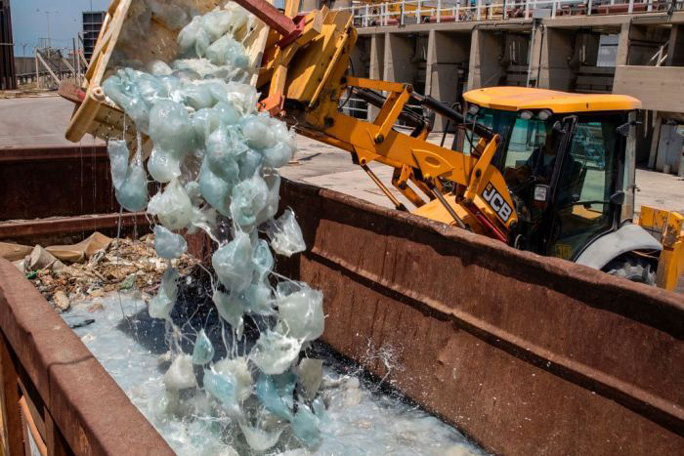
Last summer, the Gravelines plant in northern France was forced to halt operations at four reactors because of a climate-change-fueled jellyfish invasion near where seawater was pumped in. To avoid the same problem this summer, EDF installed cameras and has fishing boats ready to be deployed.
All of the shutdowns this summer have been triggered at riverside plants to protect nearby marine life and biodiversity from the dangers of excessively hot water, not problems with the plants themselves.
EDF plans to invest €8.7 billion between now and 2040 to adapt its nuclear reactors to a warmer France, including by expanding the use of so-called “cooling towers.”
The first such towers were installed near the city of Poitiers, at the Civaux nuclear plant along the Vienne River, where traditionally low water levels have exacerbated climate-related problems. But the cooling towers there use ventilators to chill water by 3 to 7 degrees Celsius before it is reinjected into the Vienne.
“EDF is anticipating the impacts of climate change on its facilities through detailed modeling that extends through the end of the century,” the company said in a statement to POLITICO.
Nuclear expansion
Construction of six new reactors, which are expected to cost more than €80 billion, is underway, and the government is expected to decide by the end of the year whether to build another eight on top of those.
To minimize the risk of local opposition, authorities plan to build any new reactors alongside existing plants. Four of those being built are located at two seaside sites.
Climate change will likely play a decisive role in choosing future locations.
“The water issue is one of the key factors in determining which sites to select,” confirmed one senior French official, who was granted anonymity to speak about the confidential selection procedure, which will conclude by the end of the year.
Grudler, who chairs a cross-party group of pro-nuclear lawmakers in the European Parliament, concurred.
“It is certain that climate change is taken into account in deciding the location of new plants. If you invest €13 billion in a site and it becomes obsolete the very next day because there isn’t enough water to cool the core, the investment is not right,” he said.
Former energy minister Agnès Pannier-Runacher, who helped draw up Macron’s nuclear energy policy during his second term, is confident that the government can find a sufficient number of sites for new nuclear plants, even if “it won’t happen in the blink of an eye.”
“Nuclear power plants have been designed with an overemphasis on safety and security. They are in fact much more robust […] than many other facilities in our energy system,” she said, citing concerns over the electric grid.
“Of course, it needs to be factored into the to-do list, but it isn’t a challenge that stands out on the critical path of nuclear power plant construction,” said Pannier-Runacher.
Atomic rivers. The (Un)sustainability of nuclear power in an age of climate change
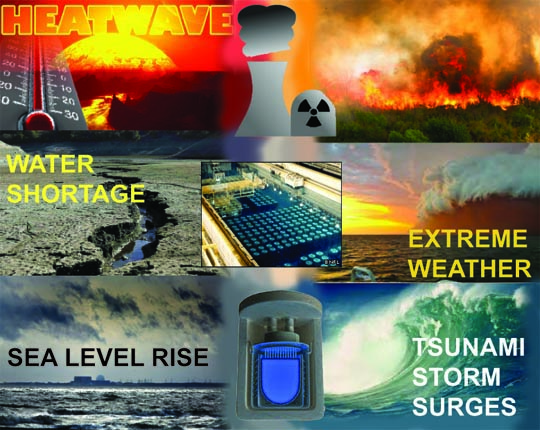
Science Direct, Volume 203, August 2025, 114631, Alicia Gutting Per Högselius a, Patricia Burkhardt-Holm b
Highlights
- •The sustainability of riverine nuclear power plants is questionable.
- •Extreme weather, like heatwaves combined with water scarcity, threatens nuclear reliability.
- •Energy companies seeking exemptions from temperature limits, prioritise energy security over water.
- •Aquatic life is sensitive to temperature changes, and cooling water adds warming, worsened by climate change.
Abstract
The sustainability of nuclear energy amidst climate change and environmental regulations poses critical challenges, particularly in European contexts where major rivers like the Rhine, the Danube, and the Rhône are experiencing declining water levels and rising temperatures. We scrutinise the operational difficulties nuclear power plants encounter, arising from insufficient cooling water and environmental mandates that prevent the discharge of overly warm cooling water into rivers. These conditions have led to partial or full shutdowns of nuclear facilities across France, Germany, Switzerland, Belgium, Spain, Romania, and other countries, emphasising the tension between nuclear energy as a low-carbon solution and its environmental impacts. We explore the concept of sustainability in the context of riverine nuclear energy from three angles: technical challenges posed by water scarcity, regulatory constraints on cooling water temperatures, and the ecological impacts of thermal discharges on riverine ecosystems. Our analysis reveals an emerging contradiction between ensuring electricity supply and adhering to environmental protection, highlighting the need for a reevaluation of nuclear energy’s role in a future sustainable energy landscape.
1. Introduction: The contradictory relationship between nuclear energy and the quest for sustainability
2022 was another consecutive year in which water levels of major European rivers – such as the Rhine, the Danube, and the Rhône – were dangerously low and the water temperatures very high. This caused severe problems for the operation of nuclear power plants across continental Europe. Energy companies in France, Germany, Switzerland, Belgium and elsewhere had to shut down their nuclear power plants partly or fully because there was not enough cooling water available or, more commonly, because the cooling water that was returned to the river became too warm (Barber, 2022; Limb, 2022; Miller and Vladkov, 2022). Environmental regulations, designed to protect the riverine flora and fauna as far as possible, stipulated that nuclear power plants were not allowed to release cooling water above a certain temperature (European Parliament and European Council, 2000; IKSR, 2022b). The resulting unplanned outages — and the efforts by nuclear operators to avoid such disruptions — highlight pressing concerns about the sustainability of nuclear energy, particularly its impact on river ecosystems in an increasingly warming world (see Fig. 1 – on original).
…………………….Nuclear energy is portrayed, by its proponents, as a key technology direly needed if humanity is to come to grips with global warming ………………….
The severe difficulties faced by riverine nuclear power plants in recent years, as referred to above, suggests that this vision of nuclear energy as a distinctly “sustainable” technology is far from unproblematic. In what follows we set out to unpack this paradox of nuclear energy’s (un)sustainability in an age of climate change. ……………………………………………………..
3. The problem of cooling water scarcity
Nuclear energy can be thought of as relying on two natural resources: uranium and water. Uranium is usually considered nuclear’s most central and critical resource, but there is good reason to take a closer look at the water needs of nuclear facilities too…………………………………………………………………………There are different types of nuclear power plants, but all of them depend on very large volumes of water for external cooling……………………………………………………………………
The design of cooling water intake systems show how nuclear-hydraulic engineers of the twentieth century did not always consider the possibility that water levels in the river might be much lower in the future. …………………………………………………………………………………………..
the threat of water scarcity in a warming world is bound to make it very unpopular to build new nuclear power plants along rivers. Instead, future plants are likely to be built mainly at coastal locations…………………………………………………………………………………………………………………………………………………………………………………………………..
we can anticipate an increasing number of unplanned outages due to water scarcity in various continental regions in the future (Linnerud et al., 2011; Ahmad, 2021). This implies that nuclear energy will become more intermittent, and potential nuclear developers will be hesitant to build new nuclear power plants along rivers facing water scarcity issues. Consequently, new nuclear power plants constructed are likely to be situated by the sea more frequently than in the past. Seaside nuclear power plants come with their own difficulties. This is, on one hand, the impact of thermal discharges on the marine environment and its biodiversity,……………………………………………….
Finally, in environmental terms, the combination of global warming and existing thermal pollution problems is certain to have severe adverse effects on riverine ecosystems. We have demonstrated that these effects are more multifaceted, complex, and interrelated than typically assumed in political discussions about nuclear energy. https://www.sciencedirect.com/science/article/pii/S0301421525001387
France Cuts 6.4 GW of Nuclear Power as Heatwave Grips the Country

By Michael Kern – Jul 13, 2026, https://oilprice.com/Latest-Energy-News/World-News/France-Cuts-64-GW-of-Nuclear-Power-as-Heatwave-Grips-the-Country.html
France’s nuclear power generation was slashed by 6.4 gigawatts (GW) on Monday amid a prolonged and intense heatwave that hiked river temperatures and limited the ability of the power plants to use the water to cool reactors.
As many as eight reactors in France, which is Europe’s leader in nuclear power generation, were forced to curtail power output, according to data from the plants’ operator EDF and grid operator RTE cited by Reuters.
The 6.4 GW of curtailed power output was equivalent to 14% of France’s overall power demand as of Monday morning.
The reactors where output has been limited include Saint Alban 1 and 2, reactors 3, 4, and 5 at Bugey, Golfech 2, and Blayais 1 and 3.
The Golfech 2 and Bugey 3 reactors were taken fully offline, while the other six were operating at reduced rates as of Monday morning.
This is not the first time France has had to curb output at reactors and limit the nuclear power production, due to high summer temperatures.
France’s nuclear power generation accounts for around 70% of its electricity mix, and when its reactors are fully operational, it is a net exporter of electricity to other European countries.
Despite the curbs of nuclear generation during the current heatwave, data from RTE suggests that France would remain a net exporter with over 10 GW of power exported to France’s neighboring countries on Monday.
The hydropower generation would also be a concern amid the heatwave that has lasted a least a week and is expected to continue at least until Wednesday this week.
With temperatures topping 40 degrees Celsius (104 F) for days, red alerts have been issued throughout France amid the heatwave, and thousands of people have died of heat-related conditions since late June, when the record-breaking extreme summer temperatures started to disrupt life. Even the most famous and prestigious cycling event, the Tour de France, held a shortened stage on Sunday for the first time ever, due to the extreme heat.
France temporarily shuts down three nuclear reactors over heatwave
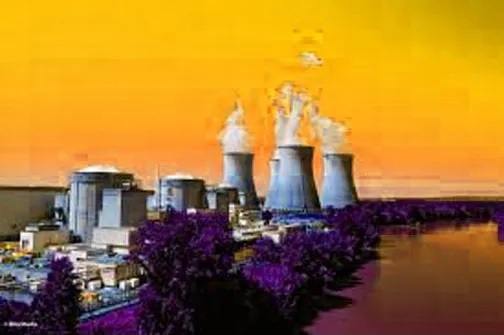
France’s main energy provider on Sunday said that three nuclear reactors have been temporarily shut down, while eight others are operating at reduced power. The measure is an environmental protection requirement to avoid discharging too much hot water into rivers already warming from the heatwave.
FRANCE 24, 12/07/2026, https://www.france24.com/en/france/20260712-france-temporarily-shuts-down-three-nuclear-reactors-over-heatwave
France‘s main energy provider on Sunday said three nuclear reactors had been temporarily shut down and eight others were operating at reduced power due to the heatwave sweeping France.
“Due to the weather conditions and to comply with regulations on (cooling water) discharges, and thus to protect the environment,” reactors at the Golfech, Bugey and Chooz plants, located on the banks of the Garonne, Rhone and Meuse rivers respectively, have been shut down, the EDF energy group told AFP.
The measure is an environmental protection requirement to avoid discharging too much hot water into rivers already warming from the heatwave.
The economy ministry on Saturday issued an exemption to the temperature limits for the heating of the Rhone around the Bugey plant “to ensure the security of the power grid”, valid until July 20.
The shut downs are the second time in recent weeks that EDF has had to stop nuclear reactors due to extreme heat, after a record-breaking heatwave hit France in June.
On Sunday, the third heatwave to sweep the country since May saw more than a third of France under the national weather service’s highest heat alert.
More than 25 million people were baking in temperatures that forecasters said could reach up to 41C, according to an AFP tally based on population data.
The heatwave has forced tourist hotspots to shutter early, event cancellations and a shortened stage on the Tour de France.
Wildfires have proliferated and deaths by drowning have spiked amid the heat.
Since the end of May, France has been hit hard by repeated episodes of intense heat, which have caused excess mortality and exposed problems with infrastructure maladapted to extreme weather, the increasing frequency of which scientists have linked to man-made climate change.
EDF will spend nearly 9 billion euros to adapt to climate change.
By Hector Pietrani, June 13, 2026, https://www.revolution-energetique.com/actus/edf-va-depenser-pres-de-9-milliards-deuros-pour-sadapter-au-rechauffement-climatique/
Dams, nuclear power plants, the entire electricity production, transmission, and distribution infrastructure is affected by climate change. EDF has announced an €8.7 billion investment in adaptation.
Extreme weather events are causing EDF so much concern that it has been forced to open its coffers. The national energy company presented an €8.7 billion adaptation plan over fifteen years in early June. That’s €600 million per year, four times more than the current annual expenditure (€150 million). The goal is to adapt nuclear power plants , among other production facilities, to the inevitable heat waves, low river flows, and regulations governing heat discharge into natural waterways.
Today, EDF’s nuclear power production is sometimes limited in the summer
due to high temperatures or low river flows. EDF is studying the widespread adoption of wastewater cooling systems, which have already been tested, notably at Civaux.
890 million euros lost in twenty years
According to the Court of Auditors, production losses due to environmental causes cost EDF €890 million between 2001 and 2023 and affected 0.3% of the annual production of its fleet. These outages could triple or quadruple by 2050, and reach 1.4% of production by 2035 if EDF does not significantly accelerate its adaptation efforts.
RTE also plans to invest 20 billion euros to ensure that 80% of its electricity network
is resilient to extreme heat and flooding or submersion by 2040. According to the Directorate General for Enterprises, almost all strategic players in energy and transport have now embarked on this approach.
GDP points are disappearing due to climate change
By the end of 2024, 23 companies in the portfolio of the French State Shareholding Agency (APE), representing 91% of its revenue, had completed their climate vulnerability assessment, a 22% increase in one year. At the same time, 15 of them had already submitted their adaptation strategy to their governing bodies (a 13% increase year-on-year).
“Without an ambitious increase in current climate policies, the impact of climate change on activity could amount to [– 11 points of GDP in France in 2050]
. It therefore appears necessary to strengthen actions to reduce greenhouse gas emissions and to accelerate initiatives to adapt to climate change,” assures the Directorate General for Enterprises.
1 This Month
23-25 October – on Zoom – World BEYOND War’s annual global conferenc


Shut down the radiation-damaged Heysham nuclear reactors now
To see nuclear-related stories in greater depth and intensity – go to https://nuclearinformation.wordpress.com

Say No to NASA’s Reckless Nuclear Reactor on the Moon
Say No to NASA’s Reckless Nuclear Reactor on the Moon

-
Archives
- October 2026 (247)
- September 2026 (339)
- August 2026 (330)
- July 2026 (355)
- June 2026 (287)
- May 2026 (306)
- April 2026 (356)
- March 2026 (251)
- February 2026 (267)
- January 2026 (308)
- December 2025 (358)
- November 2025 (359)
-
Categories
- 1
- 1 NUCLEAR ISSUES
- business and costs
- climate change
- culture and arts
- ENERGY
- environment
- health
- history
- indigenous issues
- Legal
- marketing of nuclear
- media
- opposition to nuclear
- PERSONAL STORIES
- politics
- politics international
- Religion and ethics
- safety
- secrets,lies and civil liberties
- spinbuster
- technology
- Uranium
- wastes
- weapons and war
- Women
- 2 WORLD
- ACTION
- AFRICA
- Atrocities
- AUSTRALIA
- Christina's notes
- Christina's themes
- culture and arts
- Events
- Fuk 2022
- Fuk 2023
- Fukushima 2017
- Fukushima 2018
- fukushima 2019
- Fukushima 2020
- Fukushima 2021
- general
- global warming
- Humour (God we need it)
- Nuclear
- RARE EARTHS
- Reference
- resources – print
- Resources -audiovicual
- Weekly Newsletter
- World
- World Nuclear
- YouTube
-
RSS
Entries RSS
Comments RSS

