It’s Getting So Hot That Nuclear Plants Are Being Forced to Power Down

Governments are freaking out.
By Joe Wilkins Aug 14, 2026 , https://futurism.com/science-energy/europe-heat-wave-water-nuclear-plants
Nuclear energy is often touted as an ultra-efficient alternative to dirtier energy sources like coal or natural gas. Expanding the world’s capacity for atomic power is the key to avoiding a cascading climate disaster, some of the industry’s proponents say — but what if it’s too late?
With record setting heatwaves scorching Europe, water levels in the continent’s major rivers are reaching all-time lows. While receding water levels are a huge boon for European archeologists as ancient ruins surface for the first time in centuries, the situation is causing massive headaches for nuclear engineers, who have had to scramble to power down nuclear energy facilities across the continent.
As German broadcaster Deutsche Welle reported, facilities like the two gigawatt Paks nuclear plant in Hungary have come close to powering down completely, as a critical lack of water flowing from the Danube threatened the facility’s ability to cool its reactors. That’s a major crisis, because in any given year, the Paks plant generates nearly half of the country’s total electricity supply.
The Hungarian government is now scrambling to keep things running, ABC reported, mobilizing engineers to deliver some 145,000 cubic meters of rocks into the riverbed to manually slow the current and conserve water upstream.
The situation isn’t much better in Romania, where the state-owned nuclear power producer may be forced to completely shut down its last remaining reactor, per Reuters. That’s not for lack of trying: earlier this month, the Romanian navy detonated 180 kilograms of explosives meant to redirect water from the Danube to cool its nuclear reactors.
Meanwhile in France, a combination of extreme drought and a recurring jellyfish invasion have reduced the nation’s nuclear energy production by 20 percent, though a more diversified energy grid means the situation isn’t quite as hairy as those in Hungary or Romania.
With yet another heat wave already on the horizon, Europe’s nuclear energy woes may really just be the tip of the iceberg.
Hungary to sink two barges near nuclear plant as river runs dry
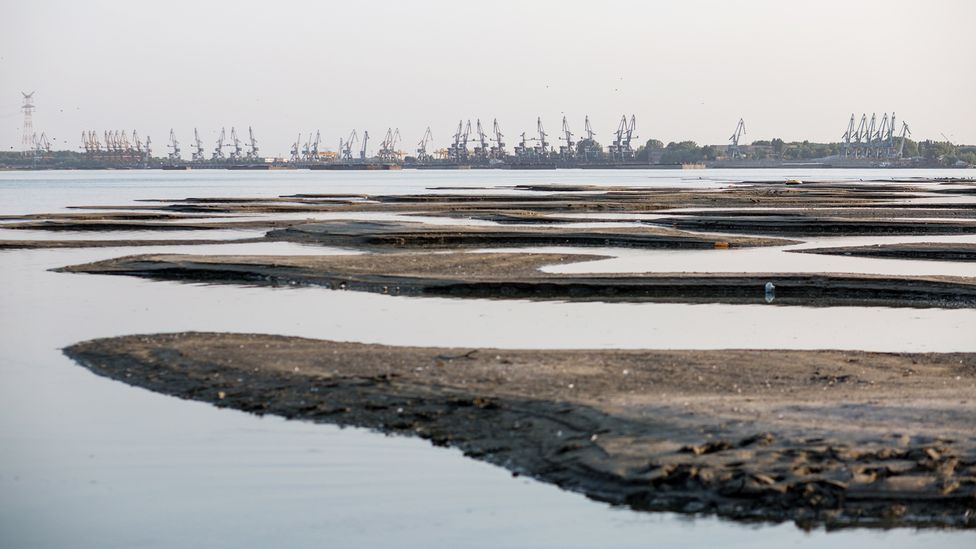
Paks nuclear plant i currently operates at around 25% of its capacity
Rich BoothFriday 14 August 2026, https://www.independent.co.uk/news/world/europe/danube-river-low-hungary-nuclear-power-b3033182.html
Authorities in Hungary will sink two barges today to raise the water level at the Paks nuclear plant in the Danube, Prime Minister Peter Magyar said on Friday.
The plant currently operates at around 25% of its capacity due to a historic drought and record low water levels on the Danube river, from which the nuclear plant draws its coolant.
Neighbouring Romania shut down its last working reactor on Thursday as drought this summer has wreaked havoc in European power production, shipping and public health systems. The drought also raised questions in Hungary and Romania about how to adapt atomic energy to an increasingly extreme climate.
Hungary’s government announced on Wednesday that it would build a riverbed “sill”, a submerged, dam-like structure built crosswise on the bottom of a river channel, to manage water flow. That will take weeks.
The government also said that two 80-metre (260-foot) barges would be submerged near the nuclear plant to raise the water level in the short term so that the plant’s two turbines could be kept working while the riverbed sill was under construction.
“The controlled sinking (of the barges) is expected to begin late this afternoon in order to raise the water level on the Danube,” Magyar said in a Facebook video from Paks on Friday.
Sinking of the barges could raise the water level by 20 centimetres (8 inches) in the short term, while the river sill is expected to raise it by up to 1 metre.
It comes as wrecks of World War Two German warships have resurfaced further up the Danube River in eastern Serbia as record-low water levels exposed sandbanks and stranded boats.
Rusted hulls that have lain submerged for decades since 1945 have emerged, while further north in Novi Sad many small boats docked in marinas remain stranded.
“This has literally never happened before, these wrecks we’re heading towards right now have never been visible like this,” Ljubisa Karalic, a local fisherman in Prahovo, told Reuters.
“They’ve always been completely submerged; what we’re seeing now is utterly unprecedented.” A succession of record-breaking heatwaves in Europe this summer has caused a severe drought in parts of the continent, affecting major waterways such as the Danube and the Rhine. The Danube water temperatures in Serbia hovered around an all-time maximum of 28 degrees Celsius.
“A record has been broken regarding the Danube’s discharge. We hope this represents the minimum, given that rain is forecast for upstream stretches, which should help the situation improve,” Jelena Jerinic of Serbia’s Hydrometeorological Service said. She warned that the river’s biodiversity is threatened as well.
“High (water) temperatures, alongside low water volume, accelerate the proliferation of microorganisms and bacteria while depleting dissolved oxygen levels.”
One-fifth of France’s nuclear capacity offline due to extreme weather and jellyfish
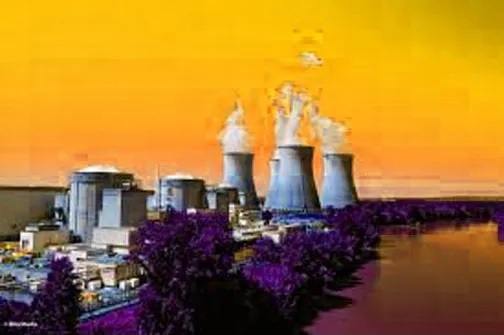
In total, 13 of the 57 reactors in EDF’s nuclear fleet were affected, resulting in a more than 20% shortfall in nuclear power production capacity, a record deficit.
Le Monde with AFPP, August 12, 2026, https://www.lemonde.fr/en/energies/article/2026/08/12/one-fifth-of-france-s-nuclear-capacity-offline-due-to-extreme-weather-and-jellyfish_6756421_98.html
France on Wednesday recorded a more than 20% shortfall in nuclear power production capacity, a record deficit caused by environmentally related outages linked to drought, extreme heat and a jellyfish invasion. France uses nuclear power to generate around 70% of its electricity. The country has seen nuclear power production disrupted by multiple heatwaves and droughts this year.
According to Agence France-Presse (AFP) calculations based on data published by energy group EDF since 2015, 20.4% of generating capacity was unavailable. Between 9:45 am and 10:00 am, EDF’s nuclear fleet recorded a new peak in outages due to “environmental constraints” or “external environmental causes,” both in terms of the number of reactors shut down or operating at reduced output and in terms of lost generating capacity.
In total, 13 of the 57 reactors in EDF’s nuclear fleet were affected. Eight reactors were completely shut down while five were operating at reduced power. Much of the lost nuclear generating capacity was due to full or partial shutdowns at five of the six reactors at the Gravelines nuclear power plant after a swarm of jellyfish clogged pumps used to cool the units.
Experts say overfishing, plastic pollution and warming seas due to climate change have created conditions allowing jellyfish to thrive and reproduce. Outside the Gravelines plant, the largest in Western Europe, the shutdowns or production reductions affecting other reactors are linked to extreme heat and droughts, depriving the plants of the water they need for cooling.
Romania relies on Bulgaria and the wind after shutting down Cernavodanuclear plant
Strong wind, the prosumers shifting their input during peak
hours, and the imports from Bulgaria helped Romania’s power system on the
first day after Nuclearelectrica shut down its last reactor on August 13,
leaving the country without nearly 20% of its electricity production.
Romania Insider 14th Aug 2026,
https://www.romania-insider.com/ro-relies-bulgaria-wind-cernavoda-aug-2026
Hungary’s government plans interventions on Danube River to keep nuclear plant running
By ASSOCIATED PRESS, 13 August 2026 ,
https://www.dailymail.com/wires/ap/article-16047513/Hungarys-government-plans-interventions-Danube-River-nuclear-plant-running.html
BUDAPEST, Hungary (AP) – Authorities in Hungary will begin taking steps to raise the level of the Danube River this week in order to ensure the country’s only nuclear power plant can continue operating, Prime Minister Péter Magyar said on Wednesday.
Persistent drought and successive extreme heat waves in recent months have deprived one of Europe´s largest rivers of water, bringing Danube levels to record lows and pushing the Paks nuclear power plant to the brink of shutting down for the first time in its 44-year history.
The Soviet-built plant, which uses water from the Danube to cool its four reactors, is currently operating at little more than 10% of its 2,000 megawatt capacity due to low water levels. It supplies Hungary with around a third of its electricity.
In a video posted to Facebook on Wednesday, Magyar said authorities would begin building a bed sill – a low concrete or stone structure built into the riverbed to slow the current and raise upstream water levels – on Thursday on a section of the Danube just upriver from the plant.
Delivery of some 145,000 cubic meters of rocks used in its construction would begin on Wednesday evening, Magyar said, adding that the intervention could raise the level of the Danube by up to a meter (3 feet).
Meanwhile, two 80-meter (262-foot) barges will be transported to the site near Paks and may be sunk in order to raise the Danube up to a further 20 centimeters (8 inches) at the plant’s cooling pumps. A decision on whether to sink them will be made on Friday, Magyar said.
“We can no longer consider this extraordinary situation as a one-time natural extreme,” he said, adding that the work must be carried out quickly to avoid a full Paks shutdown.
Magyar referred to the construction of the bed sill as a “long-term” solution which could ensure that water levels never fall below the threshold at which reactors at Paks must be powered down.
He said that after a recent temporary rise in water levels, they were expected to begin falling again in coming days which, without external intervention, could lead to the complete shutdown of the Paks plant.
“The Danube has given us days, not months,” he said.
Similar measures were taken in Romania last week when authorities sank four barges laden with rock into the Danube in an attempt to redirect water downstream toward the Cernavoda nuclear plant, which had already shut down one of its two reactors due to low water levels.
On Wednesday, Magyar said the Paks plant operating at its current output is costing Hungary’s economy up to 50 billion forints ($158 million) per month. By contrast, he said the planned interventions on the Danube will cost around 6 billion forints ($19 million).
Heat, water shortages, jellyfish: nuclear energy is becoming uncontrollable

while a reactor needs water to dissipate its heat, it cannot turn rivers into scalding baths.
What technological advancements are needed to secure water supplies when a river runs dry ?
What will the state of the Danube be in 2050, 2070, or even 2100 ?
Heatwaves, droughts, rivers that are too hot or too low: since June, European nuclear power plants have been experiencing numerous power reductions and shutdowns. One question is becoming increasingly difficult to avoid: is nuclear power still manageable in a warming world ?
By
Laure Noualhat, August 14, 2026 , https://reporterre.net/Le-climat-met-le-nucleaire-europeen-a-sec-Le-nucleaire-rattrape-par-la-question-du
On August 12, shortly before 10 a.m., a fifth of France’s nuclear power plants were offline. Exactly 20.4 % of their production capacity was unavailable due to ”
environmental constraints “ or ” external environmental causes , “ a record since 2015, calculated by AFP using data from EDF .
Thirteen reactors were affected: eight completely shut down, and five operating at reduced capacity. On one hand, rivers were either too hot or too low after five heat waves ; on the other, at Gravelines (Nord), several tons of jellyfish had clogged the water intakes of Western Europe’s largest nuclear power plant. Nuclear power can be controlled, certainly, but it still needs to be cooled.
In Golfech, on the banks of a sweltering Garonne River, the situation has taken on the air of a summer ritual. On August 8, at 9 p.m.,
EDF once again shut down reactor number 2. The Garonne threatened to reach 28°C the following day, the threshold beyond which the power plant must reduce its production or shut down to comply with environmental regulations and avoid harming aquatic life. Since reactor number 1 was already undergoing maintenance, the plant was no longer producing any electricity. The same scenario, to varying degrees, played out at Bugey (Ain), Saint-Alban (Isère), and Tricastin (Drôme), where the Rhône River’s waters, having become too warm, led EDF to adjust its production.
Because while a reactor needs water to dissipate its heat, it cannot turn rivers into scalding baths. Discharges from power plants are regulated by the Nuclear Safety and Radiation Protection Authority (
ASNR ), which sets, for each site, limits on the temperature increase of the watercourse between upstream and downstream, as well as a maximum temperature that must not be exceeded.
What uses will be prioritized as droughts occur ?
This summer, the Bugey nuclear power plant
was the only French plant to request a temporary modification of its thermal regulations , the ASNR ( French Nuclear Safety Authority) told Reporterre . The Rhône River was already very hot upstream, while RTE (the Frenchelectricity transmission network operator) demanded that a minimum power output be maintained to guarantee grid security. The Authority therefore agreed to temporarily raise certain limits, but only between July
10 and 20. This compromise aptly summarizes the dilemma ahead: protecting a river already suffering from the heatwave while preventing the electrical grid from overheating as well.
In Chooz, in the Ardennes region, the problem isn’t the temperature but the amount of water. The Meuse River’s flow rate dropped drastically at the beginning of August. The two reactors were shut down, not because there wasn’t enough water to safely cool the facilities, but to comply with the Franco-Belgian agreement guaranteeing a minimum flow for the various river users. Thus, nuclear power is confronted with a question already familiar to farmers, industrialists, and river conservationists: who has the right to water when it becomes scarce ? Which uses will be prioritized as droughts continue to occur ?
Controllable… but not climate-insensitive
Taken separately, each of these episodes seems almost commonplace.
EDF has long adjusted its power plants’ output during heat waves. In 2003, the utility even sprayed the Fessenheim reactor building with water jets!
But their repetition, and especially their simultaneity, changes the landscape. Up to 7.3 gigawatts of French nuclear power were unavailable on August 12 or constrained by the heat and low flow rates. ” This is a record peak in environmental unavailability ,
“ according to AFP . At the same time, there was a lack of wind in Germany, and air conditioners were running more frequently, which drove up electricity prices.
However, it would be wrong to claim that the nuclear fleet is faltering; it’s simply overheating. It’s actually producing significantly more than during the major crisis of 2022 when 32 reactors were unavailable due to stress corrosion cracking. The real issue lies elsewhere. A nuclear power plant is an enormous thermal machine that must dissipate some of its heat. It can produce electricity without wind or sun, but not without cold water. And this resource, too, is caught up in the whirlwind of climate change.
The Danube is offering a much more stark demonstration this summer. In Hungary, the Paks power plant, which supplies nearly half of the country’s electricity, saw
its production plummet in early August due to the river’s exceptionally low water level.
“A temporary rise in water levels then allowed for the recovery of some production, but the government has announced its intention to re-examine the cooling requirements of the Paks
II project ,” explains András Kéri of the climate policy institute Energiaklub. ”
A power plant built today will only be operating at full capacity in the second half of this century…
“ What will the state of the Danube be in 2050, 2070, or even 2100 ?
It’s difficult to say.
Further downstream, Romania faces an even more critical situation. The country will shut down its only nuclear power plant on August 13th, for the first time since the 2003 drought, as the Danube’s flow has dropped too low. As early as July 28th, the operator of the Cernavodă site shut down Unit 1 due to a Danube level described as ” very low and unprecedented” .
The intake canal had to be dredged and the riprap blasted to redirect the flow. When the river needs to be reshaped locally to maintain electricity production, climate adaptation is no longer just a chapter in an annual report. Switzerland also experienced this very real future firsthand by reducing the two reactors at Beznau to 50% of their capacity when the Aare River reached the critical temperature of 25°C.
In France and Switzerland, most of these power reductions do not signal a loss of safety and are precisely intended to comply with environmental regulations. In Hungary and Romania, the extreme low water level of the Danube more directly impacts operating conditions. But for the electrical grid, the result is comparable: megawatts considered readily available on demand become slightly less so at the very moment when heat increases certain needs.
And as the Anthropocene knows how to keep things interesting, the Gravelines nuclear power plant has added jellyfish to the mix. On August 10, their massive arrival in the water intakes triggered the automatic shutdown of 3 of the 6 reactors. EDF insisted there was no safety issue . And besides, is this becoming a regular occurrence ? A similar incident had already happened in August 2025 .
European nuclear power is therefore not collapsing under the heatwave. But this summer is challenging a simplistic way of speaking: ” controllable “ nuclear power does not mean ” insensitive to climate . “ It depends on it, like everything else.
What about EPR2s
The issue becomes considerably more serious when we look at the reactors currently in the design phase. EDF asserts that it has sized the future EPR2 reactors ” with regard to heatwave risks “ by taking into account the IPCC climate scenarios for 2070 and 2100, ASNR told Reporterre . EDF has allocated €8.7 billion by 2040 to adapt its nuclear, hydroelectric, and island activities to climate change , notably through the Adapt project, which aims to assess, plant by plant, their vulnerability to rising temperatures, droughts, and changes in water resources.
In 2023, the Court of Auditors still estimated investments directly attributable to climate adaptation of the nuclear fleet at around €600 million for the following fifteen years. Going from €600 million to €8.7 billion in three years is a gigantic leap !
The ASNR (French National Agency for Radioactive Waste Management) emphasizes the need to maintain ” margins , “ as tomorrow’s climate may diverge fromprojections. Every ten years,” safety standards must therefore be reassessed,
“ and facilities may need to be adapted to higher temperatures. But how, specifically ?
What technological advancements are needed to secure water supplies when a river runs dry ?
No one is saying.
To date, nuclear power plants evaporate 833 million cubic meters
of fresh water per year. While this water is reintroduced into the water cycle, it remains unavailable for other needs (domestic consumption, agriculture, industry, etc.). With the future EPR2 reactors —particularly those located along rivers—this will increase the amount of water drawn from rivers to
1,232 million cubic meters per year and from the seas to 575 million cubic meters
per year, according to figures from Global Chance.
France’s Power Prices Jump 22% as Heatwave Trims Nuclear Output


By Michael Kern – Aug 11, 2026,
https://oilprice.com/Latest-Energy-News/World-News/Frances-Power-Prices-Jump-22-as-Heatwave-Trims-Nuclear-Output.html
The new heatwave in France is curbing nuclear power generation in Europe’s biggest nuclear electricity supplier and leading to spiking day-ahead power prices.
France’s day-ahead power prices soared by as much as 21.8% to $164.39 (142.5 euros) per megawatt hour (MWh) on Tuesday morning local time, per LSEG data cited by Reuters, as nuclear power generation is expected to be curbed at the mid-day peak on Wednesday.
Data by nuclear power plants operator EDF showed that France would see its nuclear generation cut by 7.3 gigawatts (GW) on Wednesday, equal to 12% of the total capacity, amid this week’s heatwave which is at least the fifth extremely hot wave to grip the country since June.
Power prices in France, where nuclear energy accounts for about 70% of the electricity mix, are now being pressured upwards by reduced nuclear output as water levels in rivers used for cooling reactors are low and/or very warm.
Additional upward pressure comes from the increase in power consumption during these heatwaves.
France has already had to resort to curbing nuclear power generation amid the prolonged and intense heatwaves this summer.
In the middle of last month, France’s nuclear power generation was slashed by 6.4 GW amid a prolonged and intense heatwave that hiked river temperatures and limited the ability of the power plants to use the water to cool reactors.
The heatwaves have also affected nuclear power output in central and eastern Europe, where Hungary and Romania this month were forced to shut down reactors at their respective only nuclear power plants, due to the lowest water level of the Danube river in 90 years.
Hungary saw one of the turbines at the Paks nuclear resume electricity production on Monday as the Danube water level inched up thanks to rainfall in Austria.
Romania, for its part, last week blasted a rock formation and sank barges filled with rocks to deviate the Danube’s flow and secure enough water for cooling the reactors of its only nuclear power plant at Cernavoda.
Swarming jellyfish overrun French nuclear plant on same date two years in a row
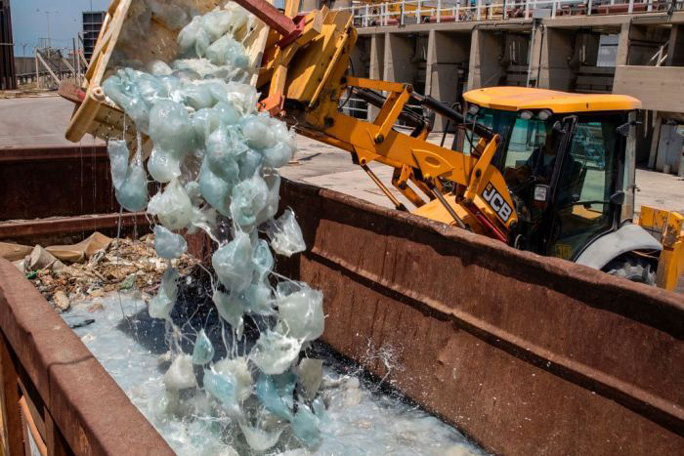
The jellyfish invasion is the latest in a series of climate change-driven incidents that have affected a record number of French nuclear reactors over the summer.
August 11, 2026 By Nicolas Camut,
https://www.politico.eu/article/swarming-jellyfish-overrun-french-nuclear-plant-on-same-date-two-years-in-a-row/
Aug. 11 is quickly becoming jellyfish invasion day at the Gravelines nuclear power plant in northern France.
Despite spending hundreds of thousands of euros to protect the plant from a jellyfish swarm like the one that saw reactors shuttered on Aug. 11, 2025, French utility provider EDF on Tuesday was again forced to bring the parts of the facility offline due to the presence of “several dozen tons” of jellyfish blocking pumping systems.
“On-site teams are fully mobilized to ensure the safety of the facilities and to reconnect the reactors to the national power grid,” EDF said in a statement.
Three fishing vessels are now “constantly patrolling off the coast of the plant” to conduct “preventive fishing operations […] 24/7,” the company added.
Tuesday’s jellyfish invasion is the latest in a series of climate change-driven incidents that have affected French nuclear energy during a particularly infernal summer.
Nuclear power plants are typically built by rivers or on coastlines so they can use nearby water sources to cool their reactors. But a record number in France this summer have been forced to temporarily shut down due to heatwaves and droughts affecting their water supply.
Rising sea temperatures have made jellyfish swarms more common along the French coast in recent years, and those swarms can affect a plant’s ability to bring in seawater — which is what happened at Gravelines. Following last year’s incident at the plant along the North Sea, EDF installed cameras and deployed fishing boats to monitor the situation.
While the vessels “prevented a massive influx of jellyfish” on Saturday and Sunday, they were eventually overwhelmed as the swarm grew from “about 100 kilograms” to “several dozen tons,” the French state-owned utility giant said.
Opponents of nuclear energy were quick to jump on the incident.
“This only highlights that nuclear power plants are ill-equipped to deal with the consequences of climate change,” the French branch of Greenpeace said in statement.
Heatwave leaves Britain with record bill to import power from Europe
Drought and heatwaves are forcing Britain to pay hundreds of millions of
pounds more for power. Britain has paid record sums to buy electricity from
Europe this summer as low river levels force nuclear power stations to
power down across the Continent.
Experts predict the UK will have to pay
high prices again this week as the fifth heatwave of the year hits. The Met
Office has issued an amber warning for extreme heat, with temperatures
expected to peak at around 37C in some southern regions. New government
figures show the UK paid £439m to import power from Europe in May – the
highest monthly total ever recorded outside of the Ukraine energy crisis
and a 54pc increase on the £285m cost of imports in April. The record bill
was linked to the first heatwave of the year, from May 22 to 31.
Telegraph 11th Aug 2026
https://www.telegraph.co.uk/business/2026/08/11/drought-forces-britain-to-pay-more-for-power/
Romania’s sole nuclear power plant prepares to shut down due to low Danube flow
Romania’s Cernavodă Nuclear Power Plant has initiated the technical procedures preceding the controlled shutdown of its second nuclear reactor, the so-called Unit 2, due to the very low flow of the Danube. The river water was essential for the cooling of the pumps used by the plant.
Romania Insider 11th Aug 2026,
https://www.romania-insider.com/cernavoda-full-shutdown-aug-11-2026
Hungary faces nuclear plant crisis as Danube river levels remain dangerously low

Hungary’s main nuclear plant has been operating at approximately 10 per cent of its full capacity since late last week
Krisztina Than, Friday 07 August 2026, https://www.independent.co.uk/news/world/europe/danube-hungary-river-water-levels-paks-nuclear-b3029407.html
Hungary’s Paks nuclear plant continues to face a “difficult” situation, despite expectations of a temporary rise in Danube river levels following rains in Austria. Prime Minister Peter Magyar conveyed this update via a Facebook video on Friday.
The plant has been operating at approximately 10 per cent of its full capacity since late last week.
This drastic reduction is a direct result of a prolonged heatwave and record-low water levels in the Danube, which have severely strained the country’s power supply capabilities.
Government working on solving Paks Plant issues
However, Magyar said the situation at the Paks nuclear plant remains “difficult”, and that the government was working on solutions at Paks if low water levels in the Danube, which the plant uses as a coolant, become permanent.
Europe, the world’s fastest-warming continent, has been ravaged by record-breaking heat and destructive wildfires this summer, with France and Spain particularly hard hit in recent weeks.
Last week Magyar asked companies and citizens to cut back electricity use in the evening hours and dimmed decorative lighting on Budapest’s historic buildings to save energy.
Hungary has switched off decorative and non-essential lighting at all state institutions – including its parliament, most of the Buda Castle and Chain Bridge – at night to save energy.
Magyar said on Friday that temperatures were expected to drop and the country’s energy and water supply were stable, which means there was no longer need for cutbacks in energy consumption and decorative lighting would be switched on on Friday night.
“We have never seen such national cooperation. According to the first surveys released, nearly all Hungarian families took part in savings and changed their energy and water use,” Magyar said.
“We expect the water level to rise a good 20 cm in the next few days, however, as there is no rain expected again from tomorrow, this rise is expected to be temporary,” Magyar said. Magyar also said the government will examine what investments were needed to make Hungary’s energy and water supply more resilient.”
Climate changes is already here, and we need to build a country that can adapt to this,” the prime minister said. Magyar said last week that Hungary will develop 4 gigawatts of wind energy capacity by 2030 to diversify its energy sources.
Climate changes is already here, and we need to build a country that can adapt to this,” the prime minister said. Magyar said last week that Hungary will develop 4 gigawatts of wind energy capacity by 2030 to diversify its energy sources.
Government ‘continues to ignore warnings’ as wildfire rages near Sizewell B.
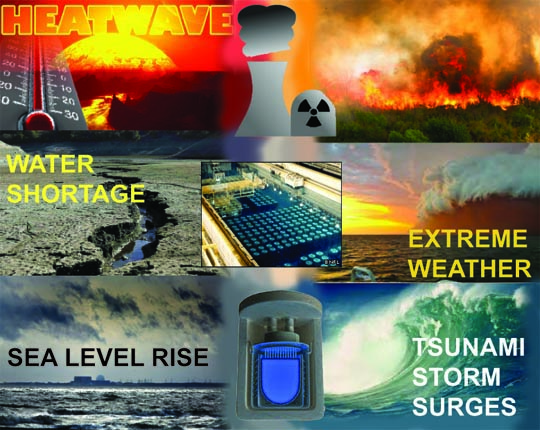
The group has urged the new
Labour administration to “re-evaluate Sizewell C’s climate resilience
against worst-case scenarios”.
“Proceeding with a project vulnerable to
extreme weather events betrays future generations,”
Blaze ‘highlights the vulnerabilities of nuclear infrastructure
to the impacts of climate change’, a campaign group has claimed.
A wildfire
near Sizewell B has stoked concerns around climate-related planning for
nuclear power stations. The heathland fire in Dunwich Heath, near the town
of Sizewell in Suffolk, broke out on 29 July and has continued to spread
across more than 100 hectares of land. Residents were evacuated, but there
were no reported injuries.
Local campaign group Together Against Sizewell C
(TASC) raised concerns that climate resilience is not sufficiently factored
into planning for nuclear power stations. “The fire’s close
proximity—just a few miles from Sizewell B and the Sizewell C development
—highlights the vulnerabilities of nuclear infrastructure to the impacts
of climate change,” the group’s spokesman Chris Wilson told Energy
Voice.
“In the case of emergencies, such as wildfires, affecting the
Sizewell nuclear cluster, the authorities need to ensure that the Emergency
Plan can cope with an influx of 8,500 workers on the Sizewell C
construction site, a thousand extra contractors at Sizewell B during
outages, as well as tourists and residents.”
The group has urged the new
Labour administration to “re-evaluate Sizewell C’s climate resilience
against worst-case scenarios”. “Proceeding with a project vulnerable to
extreme weather events betrays future generations,” Wilson said.
The group has warned of the “risk of severe coastal threats, including
sea-level rise, increased storm surges, and rapid erosion”, and “raised
sea and air temperatures” which, Wilson said, “can affect the plant’s
ability to operate safely”. “Our real key concern now is the project as
approved in the DCO is not resilient to climate change,” he added.
Sizewell C flood barriers. The campaign group took Sizewell C to court in
2025, after energy secretary Ed Miliband allegedly refused to amend
the development consent order to include raised flood barriers for the
project adjacent to the existing Suffolk facility. The case was quashed.
That project would be “located in a severely water-stressed area in the
UK’s driest region and is presently in drought”, the group warned.
They raised the alarm around a rip current that broke nearby banks in January.
“Located on one of Europe’s most vulnerable coastlines, the area
directly in front of the northern development boundary has already
sustained damage,” the spokesman for TASC said. “Consequently, beach
replenishment may be required before the Sizewell C build is complete.
“The project currently relies on an average of 18 tankers of potable
water a day, sourced from the Anglian region, for construction and is yet
to secure a guaranteed sustainable supply for the 2.2 million litres of
potable water per day it needs to operate.”
Energy Voice 5th Aug 2026, https://www.energyvoice.com/renewables-energy-transition/nuclear/601983/government-continues-to-ignore-warnings-as-wildfire-rages-near-sizewell-b/
The Nuclear Regulatory Commission ignores climate danger
Climate impacts on nuclear power reliability, safety
August 5, 2026, https://beyondnuclear.org/climate-impacts-on-nuclear-power-reliability-safety/
The US Government Accountability Office (GAO) published its congressional report on April 2, 2024 titled as a warning, “Nuclear Power Plants: NRC Should Take Actions to Fully Consider the Potential Effects of Climate Change.” Their report to Congress points to increasingly severe and more frequent climate hazards including extreme heat, drought, wildfires, severe storms, atmospheric rivers, floods, hurricanes and sea level rise. Congress’ investigative arm further determined that the U.S. Nuclear Regulatory Commission (NRC) does not adequately consider these climate change risks nor project the hazardous consequences on reactor safety in its licensing and relicensing processes.
Instead, the entrenched federal nuclear agency focuses on the projected climate benefits from nuclear power’s reduced carbon emissions. However, the GAO found that the NRC refuses to analyze and focus on climates’ worsening adverse impacts on future safe and reliable reactor operations by focusing only on historical meteorological data. This unheeded recklessness by the NRC and the nuclear industry is not unlike driving a car through its rear view mirror, unaware of the oncoming hazards that can result in severe radiological accidents.
Current news accounts confirm an accelerating climate crisis while exposing nuclear power’s unsustainability and vulnerability across Europe today as yet another example.
The Canadian (CANDU) heavy water pressurized water reactors at Romania’s two-unit Cernavoda nuclear power station is struggling to maintain reactor cooling water and remain operational. Current actions include raising the Danube River level if even by only centimeters. Romania’s only nuclear power station is on the verge of complete shutdown due to the falling river levels and warming water temperatures. Romania’s Navy has been dynamiting along the Danube to redirect the river flow to keep the reactors’ cooling systems and electricity generation operational.
The four-unit Paks nuclear power station (Soviet Union-era VVER-440 pressurized water reactors) also on the Danube River in Hungary is reported to be on the verge of emergency shutdown of all units. Similarly, the record low water levels in the Danube River are falling and receding away from the reactors’ once through coolant system intake suction pipes. The shallower river is also heating up, dramatically contributing to the loss of reactor cooling efficiency. The Danube is the only source of cooling water for the reactor cores which are now only “a few millimeters away from completely shutting down the Paks Power Plant.”
The American Nuclear Society’s publication Nuclear Newswire reports, “The 1,916-MWe, four-unit Paks is Hungary’s only nuclear power plant and, according to the International Energy Agency, generates about 42% percent of the country’s electricity. But as of Sunday, it was only producing 240 MW of power.”
Europe’s climate-driven heat wave is critically undercutting France’s electrical energy demand given the nation’s unsustainable and over reliance upon nuclear power (now reduced to 70%). The French state-owned nuclear operator, EDF, is also powering down and taking nuclear reactors off line to compensate for the loss of adequate and warming reactor cooling water sources. Bugey unit 3, Chooz unit 2 and Golfech 2 – operating on the Rhône, Meuse and Garonne rivers- have been taken offline to comply with operational technical specifications and regulations on reactor cooling water discharges. At least eight other reactors are operating and transitioning between reduced power and shutdown. Those affected reactors include: Saint Alban units 1 and 2; Bugey units 4 and 5; Blayais units 1 and 3; and Tricastin. These measures are environmental and aquatic protection requirements to avoid discharging too much hot water into rivers already impacted by the heatwave and drought.
At present, in Switzerland, the two-unit Westinghouse Electric pressurized water reactors at Beznau nuclear power station are temporarily shut down, or operated at lower power due to loss of adequate reactor cooling efficiency because of high temperatures in the River Aare.
In a warming climate, nuclear power is not sustainable while its operational safety margins are also narrowing. Inevitably, economic and political pressure on regulatory bodies threaten to relax and exempt nuclear operators from environmental protection standards for hotter cooling water discharges associated with increasing environmental damage and jeopardizing aquatic life while destroying habitat.
Climate Change Is Rewriting Europe’s Nuclear Cooling Assumptions
Romania used explosives to clear the way for redirecting Danube water toward Cernavodă as heat and drought cut nuclear output when cooling demand peaked.
Michael Barnard, Aug 04, 2026,
https://briefing.tfie.io/p/climate-change-europe-nuclear-cooling
On 3 August, Romanian naval engineers used 180 kilograms of explosives to remove a rock outcrop in the Bala Canal, a branch of the Danube. The controlled blast cleared the way for construction of a temporary dam intended to direct more water into the river channel serving the Cernavodă nuclear plant. One of Romania’s two reactors had already stopped as Danube flow fell to about 1,500 cubic metres per second, less than one-third of the normal July level, leaving the country trying to preserve the remaining unit through emergency river engineering.
The intervention made a normally hidden dependency visible. Nuclear reactors produce heat continuously and require somewhere to reject the larger quantity of waste heat that does not become electricity. Fuel supply may be largely insulated from weather, but the cooling systems, intake structures and environmental permits of river-cooled plants are tied to local hydrology. Much of Europe’s existing nuclear fleet was designed around historical ranges of water temperature and flow that are becoming less dependable.
The national consequences are much larger than a Europe-wide fleet percentage suggests. The most severe documented exposure is in Hungary, where the four-reactor Paks plant normally supplies 45.2% of national generation. By the morning of 4 August, the plant had been reduced from 1,916 MW to one 240 MW turbine, leaving nuclear capacity equivalent to approximately 39.5% of Hungary’s normal annual generation unavailable. A complete stop would expose the full 45.2% nuclear share.
Romania’s loss of one 650 MW Cernavodă unit represented about 10.3% of normal national generation on the same annual-equivalent basis. France reached a similar national figure through a much larger absolute reduction in July, when heat constrained more than 9 GW across 12 of its 57 reactors. The reduction was 14.6% of French nuclear capacity, equivalent to about 10% of normal national generation given France’s 68.1% nuclear share. Both Beznau units in Switzerland were shut during the July heatwave when the Aare reached 25°C, representing approximately 6.7% of normal Swiss generation.
Those figures [on table on original] are comparison indicators, not synchronized measurements of electricity actually lost. Hungary and Romania reflect conditions on 3–4 August, while France and Switzerland reflect their July peaks. Each value multiplies the country’s 2025 nuclear generation share by the proportion of nuclear capacity constrained at that snapshot. The method is intentionally simple, but it shows why a moderate continental effect can become a national emergency when a country depends heavily on one plant or river.
Two mechanisms are operating. France and Switzerland primarily faced hot-water constraints. Cooling water returned to an already warm river can push downstream temperatures above environmental limits, so plant operators reduce output or stop reactors to protect river ecosystems. Axpo reduced and subsequently shut the Beznau units when the Aare reached 25°C, while French plants along several rivers reduced production as temperatures crossed site-specific limits.
Hungary and Romania faced insufficient river flow as well as heat. Paks and Cernavodă require adequate water level and flow at their intake systems to operate at power. Record-low Danube levels forced Paks down to just over 10% of capacity and removed half of Cernavodă’s nuclear fleet. The reactors were shut or reduced safely; the power-system problem was that safe operation still removed large blocks of electricity during peak cooling demand.
Human-caused warming is clearly present in the heat component. World Weather Attribution found that the June western European heatwave was about 3.5°C hotter during the day than the same circulation pattern would have produced in the 1976 climate, and about 2°C hotter than a comparable event in 2003. No attribution study has calculated exactly how many megawatt-hours of the French or Swiss nuclear reductions would have remained available without climate change, but the water-temperature thresholds were being crossed in a heat regime substantially intensified by fossil-fuel emissions.
Attribution of the Danube’s low flow is less direct. Eastern Europe entered 2026 with persistent rainfall deficits, but the observed six-month precipitation trend was not statistically robust enough to assign the missing rainfall primarily to climate change. Warming had a much clearer influence on the rate at which the atmosphere pulled moisture from vegetation and soils. The January-to-June eastern European soil-moisture drought became about 11 times more probable because of human-induced climate change, while the extreme potential evapotranspiration became about 40 times more likely and about 8% more intense. Conditions of similar rarity in a climate 1.4°C cooler would have produced moderate rather than extreme drought in eastern Europe.
The defensible interpretation is that natural variability contributed much of the initial rainfall deficit while climate change materially deepened the resulting drought. That does not establish an anthropogenic percentage of the Danube’s missing cubic metres. It does establish that a dry period now loses more water to heat, reaches severe soil-moisture deficits more readily and is more likely to push river-dependent infrastructure across operating thresholds.
The electricity-system problem is the correlation among impacts. Extreme heat raises demand for air conditioning while warming cooling water, increasing evaporation and reducing river flow. Hydropower production falls with depleted rivers, gas turbines lose some output in hotter air, and persistent high-pressure weather can bring weak wind. Reuters reported European summer electricity prices reaching levels usually associated with winter stress as cooling demand increased and French nuclear output was reduced by more than 9 GW.
Air conditioning cannot be treated as a uniformly disposable load during a severe heatwave. Hospitals, care homes, cooling centres and vulnerable households require reliable electricity precisely because the heat is dangerous. The more useful flexibility is found first in industrial production, commercial loads that can be rescheduled, storage, imports and safe thermostat adjustments. Hungary’s voluntary conservation effort reduced demand by 700 MW on 2 August, nearly three times the output of the final Paks turbine, demonstrating that contracted or coordinated demand reduction can provide more immediate capacity than the reactor output still being defended.
Nuclear generation is not uniquely exposed to climate change. Hydroelectric, gas, coal, biomass, transmission and renewable generation all have different weather and climate dependencies. Nuclear’s exposure is unusually consequential because individual units are large and some national systems concentrate much of their electricity production at a single site. Its high historical capacity factors remain valuable, but they do not remove the need to plan for correlated periods of high temperature, low water and high demand.
This matters directly for reactor life extensions. Evaluations that add another 20 or 30 years of operation should use forward projections of river temperature, seasonal flow and extreme low-water events rather than treating the historical record as stationary. The engineering options include modified intakes, additional pumping, cooling towers, hybrid or dry cooling, and revised operating limits, each with costs and efficiency penalties that should be included in the life-extension case.
The grid response is broader than plant adaptation. Stronger interconnection reduces dependence on one national fleet, batteries and demand response cover the evening period when cooling demand remains high and solar production falls, and additional solar generation supplies electricity during many of the hottest daytime hours without depending on river flow. Planning also has to recognize that nuclear and hydro constraints can occur together across the same watershed rather than treating each generator’s risk independently.
Romania’s river intervention does not show that nuclear power has ceased to be a useful low-carbon resource. It shows that a reactor can be technically sound while its inherited cooling assumptions become less reliable. Climate resilience for legacy nuclear generation now belongs inside capacity planning, life-extension economics and grid design, not in an environmental appendix written after the major investment decisions have already been made.
No to Nuclear: why nuclear power and nuclear weapons are interlinked threats to humanity
Our most urgent priority, therefore, must be to immediately address the climate crisis to prevent its worsening; and to push for nuclear disarmament to avoid a nuclear Armageddon. Both of these challenges are made infinitely more difficult — and I would argue impossible — to overcome due to a single major obstacle: the continued use and proposed expansion of nuclear power as an energy source.
In the first of a four-part serialisation from her new book No to Nuclear, LINDA PENTZ GUNTER outlines the case she will make against this dangerous technology.
Linda Pentz Gunter, 4 August 2026,
https://www.morningstaronline.co.uk/article/no-nuclear-why-nuclear-power-and-nuclear-weapons-are-interlinked-threats-humanity
WE FACE multiple threats to our wellbeing and survival, across all sectors of society and among many nations.
Conflict is seemingly everywhere. Working people are struggling while billionaire oligarchs control governments and are intent on destroying democracies. The plundering of our Earth for near-term profit persists, even as the science tells us it is unsustainable and will create an unlivable planet — possibly sooner than any of us imagined.
But beyond the destruction of societal welfare, rampant pollution and even wars lie two existential threats that could end life on Earth as we know it: climate change and nuclear war.
Climate change — now climate crisis — was once viewed as a creeping danger that would gradually destroy our ability to survive. Meanwhile, during the Cold War, our greatest fear was instant obliteration, the result of an all-out nuclear exchange between the world’s superpowers.
Now we must reckon with a new reality. The climate crisis we chose to ignore is upon us, causing the breakdown of essential ecosystems within the web of life much sooner and faster than we predicted.
Nine nations are in possession of nuclear weapons, leaving open the possibility of an all-out life-ending nuclear war, or even a so-called limited one. A nuclear exchange between India and Pakistan, for example, could still result in the collapse of world agriculture and the slow starvation of billions.
Our most urgent priority, therefore, must be to immediately address the climate crisis to prevent its worsening; and to push for nuclear disarmament to avoid a nuclear Armageddon. Both of these challenges are made infinitely more difficult — and I would argue impossible — to overcome due to a single major obstacle: the continued use and proposed expansion of nuclear power as an energy source.
Nuclear power has been given a free pass to date, touted as a climate solution (when, as I argue in this book, it is precisely the opposite), and as a consolation prize for countries who agree never to develop nuclear weapons (as I also argue, access to nuclear power technology only makes nuclear weapons development easier and more likely). As such, the nuclear power elephant, if not removed from the room, will sabotage our quest for survival.
In endeavoring to lay out all of the arguments against the continued use of nuclear power in this book, I seek to follow a path that diverges from the traditional and well-argued tech- nical, scientific and economic analyses. It is time to put the human face on the nuclear power story, to talk about the lives of real people — and of animals too — that have been harmed by this sector.
In doing so, I hope that readers will begin to recognize and empathize with the pain, suffering and above all injustice that has been wreaked upon our fellow human beings and all living things by a profligate industry intent on pleasing its shareholders, not on saving the planet. These corporate and invariably colonialist crimes are the same whether they are committed in the commercial nuclear sector or by the profit-hungry nuclear arms industry.
It should be noted, incidentally, that the same companies who manufacture nuclear weapons are also those who furnish conventional weapons to fuel wars and even genocides such as the one in Gaza. And, ironically, and despite their greenwashing rhetoric, all of the major nuclear power companies are also heavily invested in the continued use of fossil fuels.
I also make the argument that, far from a solution to the climate crisis, as it presents itself, the use of nuclear power can only make climate conditions worse.
The allocation of time and especially the vast funds required — tens of billions of dollars for a single reactor — toward nuclear power strips essential funds from alternatives such as renewable energy.
All the data show that dollar for dollar or pound for pound, more carbon reductions can be achieved faster by investing the same amount in renewable energy instead.
WE FACE multiple threats to our wellbeing and survival, across all sectors of society and among many nations.
Conflict is seemingly everywhere. Working people are struggling while billionaire oligarchs control governments and are intent on destroying democracies. The plundering of our Earth for near-term profit persists, even as the science tells us it is unsustainable and will create an unlivable planet — possibly sooner than any of us imagined.
But beyond the destruction of societal welfare, rampant pollution and even wars lie two existential threats that could end life on Earth as we know it: climate change and nuclear war.
Climate change — now climate crisis — was once viewed as a creeping danger that would gradually destroy our ability to survive. Meanwhile, during the Cold War, our greatest fear was instant obliteration, the result of an all-out nuclear exchange between the world’s superpowers.
Now we must reckon with a new reality. The climate crisis we chose to ignore is upon us, causing the breakdown of essential ecosystems within the web of life much sooner and faster than we predicted.
Nine nations are in possession of nuclear weapons, leaving open the possibility of an all-out life-ending nuclear war, or even a so-called limited one. A nuclear exchange between India and Pakistan, for example, could still result in the collapse of world agriculture and the slow starvation of billions.
Our most urgent priority, therefore, must be to immediately address the climate crisis to prevent its worsening; and to push for nuclear disarmament to avoid a nuclear Armageddon. Both of these challenges are made infinitely more difficult — and I would argue impossible — to overcome due to a single major obstacle: the continued use and proposed expansion of nuclear power as an energy source.
Nuclear power has been given a free pass to date, touted as a climate solution (when, as I argue in this book, it is precisely the opposite), and as a consolation prize for countries who agree never to develop nuclear weapons (as I also argue, access to nuclear power technology only makes nuclear weapons development easier and more likely). As such, the nuclear power elephant, if not removed from the room, will sabotage our quest for survival.
In endeavoring to lay out all of the arguments against the continued use of nuclear power in this book, I seek to follow a path that diverges from the traditional and well-argued tech- nical, scientific and economic analyses. It is time to put the human face on the nuclear power story, to talk about the lives of real people — and of animals too — that have been harmed by this sector.
In doing so, I hope that readers will begin to recognize and empathize with the pain, suffering and above all injustice that has been wreaked upon our fellow human beings and all living things by a profligate industry intent on pleasing its shareholders, not on saving the planet. These corporate and invariably colonialist crimes are the same whether they are committed in the commercial nuclear sector or by the profit-hungry nuclear arms industry.
It should be noted, incidentally, that the same companies who manufacture nuclear weapons are also those who furnish conventional weapons to fuel wars and even genocides such as the one in Gaza. And, ironically, and despite their greenwashing rhetoric, all of the major nuclear power companies are also heavily invested in the continued use of fossil fuels.
I also make the argument that, far from a solution to the climate crisis, as it presents itself, the use of nuclear power can only make climate conditions worse.
The allocation of time and especially the vast funds required — tens of billions of dollars for a single reactor — toward nuclear power strips essential funds from alternatives such as renewable energy.
All the data show that dollar for dollar or pound for pound, more carbon reductions can be achieved faster by investing the same amount in renewable energy instead.
Additionally, the clear pathway that a civil nuclear power programme provides to nuclear weapons development is swept under the rug or denied altogether. Both international treaties that seek to rid the world of nuclear weapons — the nuclear Non-Proliferation Treaty (NPT) and the Treaty on the Prohibition of Nuclear Weapons (TPNW) — afford countries who agree to disavow nuclear weapons “the inalienable right” to “develop research, production and use of nuclear energy for peaceful purposes.” Thus, the back door to nuclear weapons development remains perpetually open.
No to Nuclear is published by Pluto Press, £14.99. Part 2 of this serialisation will appear in tomorrow’s edition.
1 This Month
23-25 October – on Zoom – World BEYOND War’s annual global conferenc


Shut down the radiation-damaged Heysham nuclear reactors now
To see nuclear-related stories in greater depth and intensity – go to https://nuclearinformation.wordpress.com

Say No to NASA’s Reckless Nuclear Reactor on the Moon
Say No to NASA’s Reckless Nuclear Reactor on the Moon

-
Archives
- October 2026 (247)
- September 2026 (339)
- August 2026 (330)
- July 2026 (355)
- June 2026 (287)
- May 2026 (306)
- April 2026 (356)
- March 2026 (251)
- February 2026 (267)
- January 2026 (308)
- December 2025 (358)
- November 2025 (359)
-
Categories
- 1
- 1 NUCLEAR ISSUES
- business and costs
- climate change
- culture and arts
- ENERGY
- environment
- health
- history
- indigenous issues
- Legal
- marketing of nuclear
- media
- opposition to nuclear
- PERSONAL STORIES
- politics
- politics international
- Religion and ethics
- safety
- secrets,lies and civil liberties
- spinbuster
- technology
- Uranium
- wastes
- weapons and war
- Women
- 2 WORLD
- ACTION
- AFRICA
- Atrocities
- AUSTRALIA
- Christina's notes
- Christina's themes
- culture and arts
- Events
- Fuk 2022
- Fuk 2023
- Fukushima 2017
- Fukushima 2018
- fukushima 2019
- Fukushima 2020
- Fukushima 2021
- general
- global warming
- Humour (God we need it)
- Nuclear
- RARE EARTHS
- Reference
- resources – print
- Resources -audiovicual
- Weekly Newsletter
- World
- World Nuclear
- YouTube
-
RSS
Entries RSS
Comments RSS

