1.5C Limit ‘Only Option’ For Saving Earth’s Ice And Snow
Allowing global temperatures to rise two degrees Celsius above
pre-industrial levels will be catastrophic for the world’s ice sheets,
glaciers, polar seas and permafrost, a new report warned Thursday.
The assessment of the global “cryosphere” — parts of the Earth covered in ice
and snow for at least some of the year — urges upcoming climate talks to
commit to keeping warming below 1.5C. “Because of what we have learned
about the cryosphere since the Paris Agreement was signed in 2015, 1.5C is
not merely preferable to 2C. It is the only option,” the report argues.
“This continued rise in carbon dioxide is unacceptable. The melting point
of ice pays no attention to rhetoric, only to our actions.”
Barrons 16th Nov 2023
https://www.barrons.com/news/1-5c-limit-only-option-for-saving-earth-s-ice-and-snow-b8f8e1ef
The End of DOE’s Flagship Small Modular Nuclear Reactor (SMR) — A Cautionary Tale
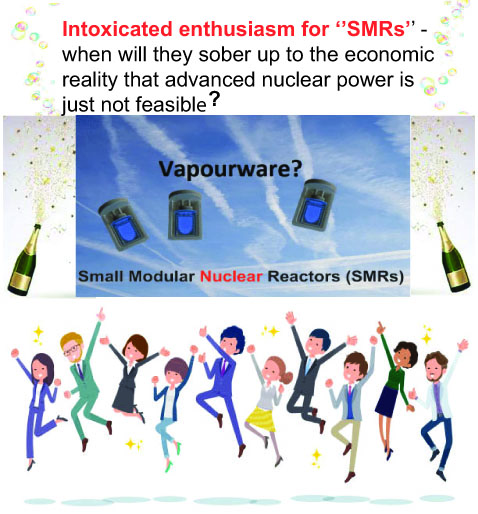
10 years is a long time for investors; and it doesn’t sit well in the context of climate change, which requires solutions now. Since 2011, Congress has appropriated some $6.6 billion for SMRs, out of which DOE has “obligated” some $3 billion, including $583 million for NuScale — more than for any other SMR project. (The other two lead developers, TerraPower and X-energy, have received DOE obligations of $318 million and $242 million, respectively, so far). Yet not one megawatt of commercial carbon-free energy has resulted from this spending.
SMR Craze Continues
Decarbonization goals aren’t being served by wasteful spending on nuclear projects that don’t or won’t deliver the carbon-free power that’s needed. Yet the SMR craze continues both in the US and elsewhere
Fri, Nov 17, 2023, Stephanie Cooke, Washington, https://www.energyintel.com/0000018b-cf50-dbb5-a5ef-df7378750000
The collapse of the US Department of Energy’s (DOE) flagship small modular reactor (SMR) project should serve as a cautionary tale to SMR developers everywhere. When the agency first announced funding for NuScale Power’s SMR project in 2013, then Energy Secretary Ernest Moniz said it represented “a new generation of safe, reliable, low-carbon nuclear energy technology” that would “provide a strong opportunity for America to lead this emerging global industry.” Yet despite years of trying, NuScale failed to deliver. DOE has so far spent some $3 billion on SMRs, according to a department spokesperson, and this is not its first failed SMR project — a Babcock & Wilcox “mPower” design that received the agency’s first SMR funding in 2012 and was regarded as the industry leader in SMRs collapsed in 2017. The question now is whether or when DOE and its multitude of congressional supporters will finally wise up and end the nuclear bonanza?
NuScale and its primary customer, Utah Associated Municipal Power Systems (UAMPS), a nonprofit electricity wholesaler with 50 utility members across seven Western states, couldn’t generate enough interest among the utilities to keep the project going. Under power purchase agreements, individual utility subscribers were obligated to help pay project development costs, which continued to rise, based on their level of offtake. Off-ramps were provided at specific dates with the caveat that any subscriber choosing to take one would have to bear the brunt of its costs to date. Eight subscribers chose to do that in 2020, with a very large offtaker following suit in 2021.
In mid-2021, the target price of power from the proposed 462-megawatt plant, consisting of six 77 MW reactor modules, stood at $58 per megawatt hour; it then rose to $89/MWh, a 53% increase. The project, planned for a DOE site in Idaho, survived despite a sea of local opposition, including from the Utah Taxpayers Association, but it never recovered from the mass exit. The remaining subscribers faced an off-ramp early next year; by deciding to unanimously exit they could avoid bearing costs to date, and instead receive compensation. That’s what they decided to do.
Downward Spiral

The collapse announced on Nov. 8 followed a scathing financial report on NuScale’s prospects by a European short-seller, Iceberg Research, on Oct. 19. That report sent NuScale’s share price into a tailspin, and may have accelerated the decision by the remaining subscribers to leave, which led to another downward spiral. But there were “many reports, articles and opinion pieces published regionally and nationally that raised well-researched questions and doubts about the project’s necessity and financial viability and led potential new subscribers and investors to hesitate,” points out Scott Williams, who spearheaded environmental group Heal Utah’s opposition to the project.
However, the Iceberg report cast a pall over the small community of niche investors in new nuclear. X-energy, one of DOE’s two lead “advanced” reactor developers, cited “challenging market conditions” following the Iceberg report for its decision to pull out of an attempted public offering. The company had planned to follow NuScale’s example and merge with a “blank check” special purpose acquisition company (SPAC) to gain access to stock market investors. The SPAC process has the advantage of allowing a small relatively unknown company to widen its investor base without the regulatory scrutiny involved in a conventional initial public offering.
When Fluor signed the merger deal for the NuScale SPAC in December 2021, the company’s executive chairman, Alan Boeckmann, predicted it would “bolster and accelerate the path to commercialization and deployment of NuScale Power’s unique small modular nuclear reactor technology.” But Fluor itself was under pressure from the market to sell down its majority holding in NuScale — which stands at roughly 55% — something it has been notably unsuccessful in doing. “This is the next step in Fluor’s plan, first outlined 10 years ago, to work closely with NuScale Power, Congress and the Department of Energy to commercialize this unique carbon-free energy technology,” Boeckmann noted.
Decarbonization Goals
10 years is a long time for investors; and it doesn’t sit well in the context of climate change, which requires solutions now. Since 2011, Congress has appropriated some $6.6 billion for SMRs, out of which DOE has “obligated” some $3 billion, including $583 million for NuScale — more than for any other SMR project. (The other two lead developers, TerraPower and X-energy, have received DOE obligations of $318 million and $242 million, respectively, so far). Yet not one megawatt of commercial carbon-free energy has resulted from this spending.
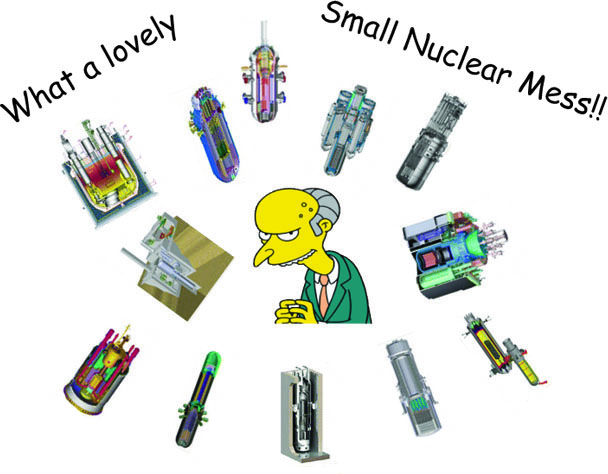
Meanwhile developers have been allowed to chase a rainbow of reactor designs, using different types of coolants and fuels, that date back to the mid-20th century. And as one long-time expert put it, “It’s hard to believe that these more exotic designs will be any cheaper” than the conventional light-water design NuScale was pursuing. A DOE report in March effectively admitted that only large reactors (1 gigawatt or more) deployed en masse have a chance at making an impact on decarbonization, and that “waiting until the mid-2030s to deploy at scale could lead to missing decarbonization targets and/or significant supply chain overbuild.”
The report also noted that “the nuclear industry today is at a commercial stalemate between potential customers and investments in the nuclear industrial base needed for deployment — putting decarbonization goals at risk.”
SMR Craze Continues
Decarbonization goals aren’t being served by wasteful spending on nuclear projects that don’t or won’t deliver the carbon-free power that’s needed. Yet the SMR craze continues both in the US and elsewhere. “I see a clear window of opportunity opening up,” EU Commissioner for Energy Kadri Simson told a European SMR “partnership event” in Bratislava on Nov. 6, two days before NuScale’s announcement. “I am confident that the EU can have a leadership role in achieving technological maturity for SMRs,” Simson added. “The first SMRs must be connected to the European electricity grid within a decade at the latest. This must be our goal.” The day after NuScale’s announcement, on Nov. 9, officials from the US State Department, also in Bratislava, and Slovakia’s Ministry of Economy launched the “Phoenix Project” aimed at replacing aging coal plans with SMRs.
So, what next for DOE’s SMR effort? Should it find another US developer to lead the way and hope for ‘third time lucky’? Or redefine its program in order to justify more foolish spending? Some guess the Canadians might steal the lead on SMRs, a prospect that is loaded with irony, since the project everyone is watching involves a Babcock & Wilcox spinoff called BWX Technologies and a design inspired by a conventional boiling water reactor design that was never built.
More importantly, will Congress wake up and hear the music? The UAMPS subscribers to the NuScale project trusted in NuScale to deliver, and at a reasonable cost, until they no longer did, and wisely chose the off-ramp. Congress should follow suit and stop funding a dead-end enterprise.
US, UK to Push Pledge to Triple Nuclear Power by 2050 at COP28
Nov 14, 2023, John Ainger, Rachel Morison and Akshat Rathi, Bloomberg News
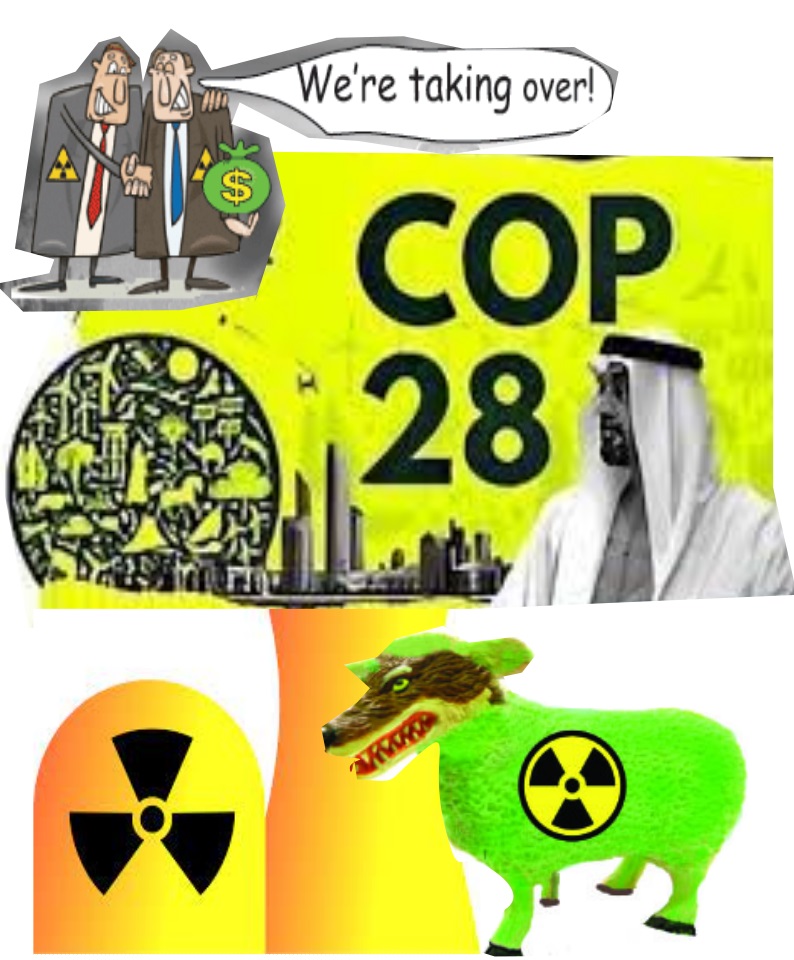
(Bloomberg) — The US will lead a push at the COP28 climate summit to triple the amount of installed nuclear power capacity globally by 2050, marking a major turnaround for the controversial technology at the climate negotiations.
The declaration will call on the World Bank and other international financial institutions to include nuclear energy in their lending policies, according to a document seen by Bloomberg News. The US will likely be joined by the UK, France, Sweden, Finland and South Korea in the pledge to be signed Dec. 1 in Dubai, according to people familiar with the matter.
That will be followed a few days later by a nuclear industry commitment to triple generation resources from 2020 levels, said one of the people, who asked not to be named because the information isn’t public.
“Nuclear is 100% part of the solution,” John Kerry, the US special presidential envoy for climate, said at the Bloomberg New Economy Forum last week. “It’s clean energy.”
The countries recognize “the key role of nuclear energy in achieving global net-zero greenhouse gas emissions/carbon neutrality by or around mid-century,” a draft of the declaration says. ……….
The declaration is the latest sign of shifting sentiment toward nuclear power, which doesn’t produce carbon dioxide emissions, but has often been criticized over the waste it generates, the cost of building plants and potential security issues. ……… The countries will also commit to new technologies, such as small modular reactors.
…… The US is discussing nuclear cooperation agreements with Kenya and Ghana, and renewing a pact with South Africa, according to Joshua Volz, the US Department of Energy’s deputy assistant secretary for Europe, Eurasia, Africa and the Middle East.
……………… The United Nations’ 28th Conference of the Parties, known as COP28, will take place in the United Arab Emirates, which is the only country in the Arabian Peninsula with a nuclear power program. It’s not clear if the hosts will sign……. https://www.bnnbloomberg.ca/us-uk-to-push-pledge-to-triple-nuclear-power-by-2050-at-cop28-1.1998524
Frozen fallout: radioactive dust from accidents and weapons testing accumulates on glaciers.
Physics World, 20 Jun 2023 James Dacey
Glacier surfaces in certain parts of the world contain concerning amounts of toxic radioactive materials, a result of weapons testing and nuclear accidents such as the Chernobyl disaster in 1986. Fallout radionuclides accumulate within cryoconite – a granular sediment found in holes on glacier surfaces – and there is a risk of this material entering local ecosystems as glaciers melt due to climate change. Glaciologists and ecologists say this poses urgent questions. What regions are at highest risk? How diluted is the nuclear material entering proglacial zones? What impact might that have on organisms?…..
Investing in nuclear energy is bad for the climate, NGOs say
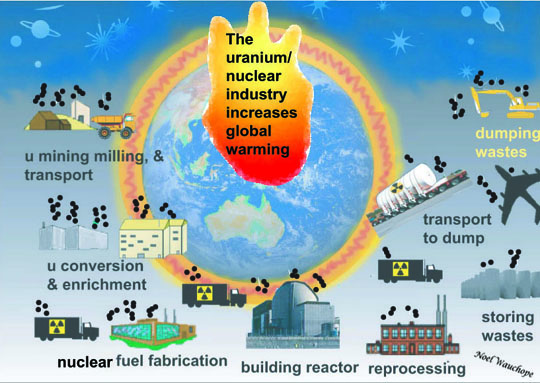
7 November 2023 https://eeb.org/investing-in-nuclear-energy-is-bad-for-the-climate-ngos-say/
Today, EU nuclear energy stakeholders are meeting at the European Nuclear Energy Forum. The nuclear industry and certain EU countries call for more support and subsidies for nuclear power, particularly for Small Modular Reactors (SMRs), in the name of reaching the EU’s climate goals.
Environmental NGOs join voices to contest this claim, arguing that investing in new nuclear power plants will delay decarbonisation and that SMRs fail to answer the industry’s problems. Governments should rather focus on cheap renewable energy, grids and storage.
At the European Nuclear Energy Forum, NGOs call on the EU and its member states to subsidise energy sources that can reliably and cheaply achieve our climate goals, not nuclear power. Rather, investing in new nuclear power plants may prove detrimental to EU climate goals:
Prolonged delays: The latest nuclear plants built in Europe have experienced delays of over a decade. We cannot risk such delays on our path to reduce fossil fuel emissions.
Cost overruns: Nuclear power plants have faced huge cost overruns. The nuclear industry seeks to pass these high costs on to taxpayers and households via state and EU subsidies. The French nuclear industry has been nationalised.
Geostrategic interests: Nuclear energy is being pushed by powerful lobbies and geostrategic interests. Several EU states’ nuclear energy relies on the state-owned Russian nuclear firm Rosatom, importing uranium from unstable countries outside the EU.
Decentralised transition: To quickly decarbonise, we must choose cheap technologies, easy to deploy at scale, like solar panels and windmills. Nuclear power contradicts the vision of a decentralised energy system with citizen engagement.
Environmental impact: According to the IPCC report published in March 2023, nuclear power is one of the two least effective mitigation options (like Carbon Capture and storage). It’s an inefficient option that poses serious contamination risks during use and for future generations due to everlasting toxic waste
Small Modular Reactors (SMRs) do not answer any of the industry’s fundamental problems:
- Unproven technology: Even the simplest designs used today in submarines will not be available at scale until late next decade, if at all.
- Waste and proliferation risks: SMR designs fail to address the persistent nuclear waste problem and pose new risks associated with the proliferation of nuclear materials.
Quotes
Luke Haywood, from the European Environmental Bureau, said:
“It is highly unlikely that small modular reactors will change anything about the poor economics of investments in nuclear energy. Our focus should be on what we know works to rapidly reduce emissions: energy savings and renewables. Every euro invested in nuclear could help replace fossil fuels faster and cheaper if directed to renewables, grids and energy storage. This would also reduce air pollution, radioactive waste, and energy bills while allowing for more citizen participation.”
Marion Rivet, from Réseau Sortir du nucléaire, said:
“New nuclear power plant projects in France are estimated to cost around 52 billion euros. All this money should be invested in immediate and effective solutions for a real energy transition. The reduction of the greenhouse gas our countries produce has to be effective in the next 10 years and has to come from a source fully sustainable (meaning that does not create long-term wastes, that does not rely on uranium.”
Antoine Bonduelle, from Virage Energie, said:
“Small reactors are not an option for the Climate Crisis. At best, they cost double or more per kWh than other nuclear options, and even much more than efficiency or renewables, as shown extensively in the models and in the consensus of the recent AR6 IPCC report. Small reactors would produce more waste than classical reactors, and use more materials and fuels. Accidents are still possible and proliferation risks are much higher. In France, several proposed projects are shady arrangements aimed at using more public money or justifying unproductive research teams. In the end, it is a costly impasse, a loss of time and public money.”
Antoine Gatet, from France Nature Environnement, said:
“For France Nature Environnement, energy choices must be discussed democratically taking on board citizens in general and organized civil society in particular. Discussions must be based on transparent economic, social and environmental data. Discussions must include the whole lifecycle from mining to waste management. To this day, the nuclear renaissance has fallen flat every time, and the 100% renewables options are winning. When will we move to environmental democracy?”
Signatories
European Environmental Bureau (EU), Foundation for Environment and Agriculture (Bulgaria), France Nature Environnement (France), Global Chance (France), Klimaticka Koalicia (Slovakia), Réseau Sortir du Nucléaire (France), Virage Énergie (France), NOAH Friends of the Earth Denmark, Védegylet/Protect the Future (Hungary), Estonian Green Movement – Friends of the Earth Estonia, MKG – Swedish NGO Office for Nuclear Waste Review (Sweden), Milkas – The Swedish Environment Movement`s Nuclear Waste Secretariat (Sweden).
Contact persons in Bratislava:
- Luke Haywood, European Environmental Bureau, Luke.Haywood@eeb.org
- Albena Simeonova, Foundation for Environment and Agriculture (Bulgaria), ealbenas@gmail.com, agroecobg@gmail.com
- Antoine Bonduelle, Virage Énergie (France), contact@ee-consultant.fr
- Jan Haverkamp, WISE (Netherlands), jan@wisenederland.org
- Lucia Szabová, Klimaticka Koalicia (Slovakia), luia.szabova@gmail.com #nuclear #antinuclear #nuclearfree #NoNukes
Is Nuclear Energy Really the Solution for a Greener Future?
Misconceptions about nuclear power
by Jade-Allegra Galli, November 6, 2023, https://www.mcgilldaily.com/2023/11/is-nuclear-energy-really-the-solution-for-a-greener-future/
In a world grappling with the urgent need to combat climate change, the debate surrounding nuclear power remains a disputable and often misunderstood topic. Nuclear power has been praised as an alternative to fuels and a potential solution to global warming as it does not emit greenhouse gasses unlike the commonly used energies. However, like any energy source, nuclear power has its drawbacks that significantly impact safety and the environment.

One of the concerns around nuclear power is the handling of radioactive waste. This waste needs to be segregated or diluted in order to render it safe and prevent radionuclides from leaking into the atmosphere. Repositories are one of the current arrangements – a subterranean, excavated facility created, built, and run for the long-term, safe and secure disposal of high-level waste. In Canada, the Nuclear Waste Management Organization (NWMO) plans to “contain and isolate all the country’s used nuclear fuel – including that created by new and emerging technologies – in a deep geological repository, using multiple-barrier systems.” This will translate into the building of 500 meters (1,640 feet) deep area, called geological repository, which will rely on a multiple-bar- rier system where each barrier is part of the system but provides a higher level of security since each next barrier will come into play if some where to deteriorate. Regretfully, there are hazards associated with them. There is a chance that these repositories will experience breaches and spills that could contaminate the environment and pose long-term health problems since the decay rate for radio- active material is very slow, remaining extremely dangerous for thousands of years, accumulating very rapidly. As Gerald S. Frankel stated: “It’s a societal problem that has been handed down to us from our parent’s generation, And we are – more or less – handing it to our children.” Some age-old containers have begun leaking their toxic contents and, with more than a quarter million metric tons of radioactive waste, it is now time to truly investigate a long term solution to store these harmful chemicals before it is too late and before this becomes a bigger problem than it already is.
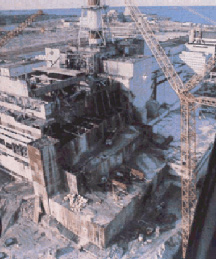
Another danger of nuclear power is the risk of major accidents and mishaps. The specter of accidents and meltdowns haunt the legacy of nuclear energy with two notable disasters serving as stark reminders of the possible catastrophic results of using nuclear energy. The shadows of the nuclear meltdowns, such as the Chernobyl disaster of 1986 and the Fukushima Daiichi accident in 2011, haunt the nuclear power industry. These events not only endangered the lives of the workers at the affected power plants but also released large amounts of radiation into the environment, leading to long-lasting damage to the environment and severe health issues for nearby populations. The prospect of future accidents leading to similar magnitudes of disasters continues to cast a dark shadow over the nuclear industry, demanding unwavering diligence and stringent safety when handling such powers if there continues to be a pursuit of nuclear energy to achieve a “greener” world. The high costs of nuclear power plants that are fully safe are difficult to justify. Nuclear power is more expensive than renewables, around $112-189 per megawatt hour (MWh) compared to $26-56 MWh for onshore wind and $36-44 MWh for solar power, while being exponentially more unsafe. Additionally, the slow development of power plants delays the progress to fight climate change as in the meantime we rely on polluting fossil fuels to generate the needed energy for daily activities. All of these factors, in addition to its dangerous nature, form an unjustifiable case to use this energy form to address the issue of greenhouse gasses.
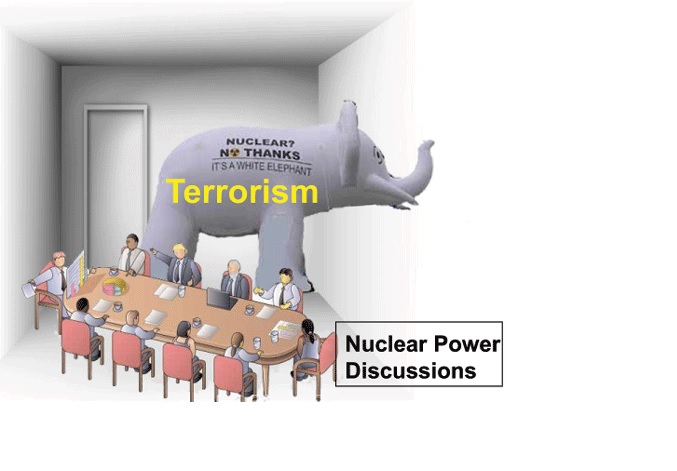
With nuclear energy being so destructive, it has to be considered that some people or terrorist organizations might want to use it as a catalyst for mass destruction. As Zambia’s speaker stated at the UN thematic debate on nuclear weapons: “Nuclear weapons have no place in the modern world and there is no justification for their proliferation, testing and stock- piling. Their destructive power has fuelled international tensions and created an uncertain, unsafe world. Relying on deterrence for security only perpetuates a cycle of fear, where mutually assured destruction looms over the world community.” Terrorist attacks might target nuclear power facilities and the materials they employ, resulting in potential theft of radioactive materials and seriously jeopardizing national security.

Nuclear power facilities have sturdy engineering facilities built to survive catastrophic natural calamities like hurricanes, tornadoes, and earthquakes. But because they aren’t built to resist strikes from missiles and airstrikes, they are the golden target for war crimes. Only a little over a year ago, Russia attacked Ukraine’s electricity infrastructure with a series of airstrikes. Of the forty-three cruise missiles used in the strike, thirty-six were shot down by Ukrainian air defense troops and the remaining missiles struck western and central Ukrainian energy infrastructures. This shows how the use of hybrid warfare tactics, more specifically on energy infra- structures, is a growing concern in the modern world. While the Russian attack on Ukraine was largely contained, it serves as a stark reminder of the vulnerabilities in our energy systems, particularly highlighting the need for diversified energy sources and a strong focus on its security. Nuclear energy, while capable of providing a significant power output, is also susceptible to similar attacks and poses a far greater set of risks. Such large-scale attacks would have resulted in catastrophic consequences if the attacked infrastructures were nuclear, resulting in flying debris and radiation. In the face of such threats, it is crucial to prioritize the development and implementation of alternative and renewable energy sources that are less vulnerable to geopolitical conflicts and sabotage, ensuring a more stable and resilient energy future as we can- not afford for these accidents to happen.
In the next few years, as we search for more sustainable energy sources, we must carefully weigh the trade-offs related to nuclear power. Developing a comprehensive strategy to tackle climate change without sacrificing environmental responsibility, safety, or security requires finding a balance between the benefits and drawbacks that come with it. Amidst all the information and confusion, it is also important to acknowledge that even if nuclear energy isn’t an ideal solution for a perfectly green future, the current widely used methods like fossil fuels, coal, and oil still represent a threat and silently kill millions of people every year worldwide. #nuclear #antinuclear #nuclearfree #NoNukes #climate
Storm Ciarán: Hinkley Point C workers transported off site

HINKLEY Point C workers are set to be transported off site imminently as
works have been paused due to the threat posed by Storm Ciarán. A bus
fleet will work to relocate the majority of the 10,000 workers on site, as
all but essential works have come to a halt as a result of the adverse
weather conditions. The office-based staff will continue working as normal,
and the nightshift is expected to continue as scheduled. A spokesperson for
the Hinkley Point C project said: “We will continue to monitor the
situation closely.”
Bridgwater Mercury 2nd Nov 2023
https://www.bridgwatermercury.co.uk/news/23897372.storm-ciaran-hinkley-point-c-workers-transported- #nuclear #antinuclear #nuclearfree #NoNukes #climatechange
We can now only stay under 1.5°C target if we achieve net zero by 2034

The amount of carbon dioxide we can still emit to have just a 50 per cent
chance of limiting warming to 1.5°C is even smaller than previously
thought.
To have just a 50/50 chance of limiting warming to 1.5°C, the
world must keep future emissions to about 220 gigatonnes of carbon dioxide,
according to the latest estimate. With annual emissions at around 40
gigatonnes and still rising, we are on course to exceed this by 2029 or
earlier.
As a result, keeping that 1.5°C goal alive now requires us to hit
net-zero globally by 2034 rather than by 2050, says Joeri Rogelj at
Imperial College London. “There are no social or technical scenarios in
the scientific literature that even describe how that would be possible.”
However, it is still feasible to limit warming to well below 2°C, says
Robin Lamboll, also at Imperial College. To have a 50/50 chance of keeping
warming to 2°C, the world must not emit more than 1200 gigatonnes of CO2
(GtCO2). This wouldn’t be exceeded until 2046 if emissions continue at
current levels.
New Scientist 30th Oct 2023
Deep divisions could hamper progress at the UN’s crucial COP28 climate summit

There are already signs that deep divisions could hamper progress at the
UN’s crucial COP28 climate summit. More than 70 environment ministers and
100 national delegations have been meeting in Abu Dhabi ahead of talks that
begin in Dubai on November 30. Many delegates doubt that a summit hosted by
a petrostate – the United Arab Emirates – can shepherd the world towards a
low carbon future. This year is on track to be the hottest ever recorded
globally. That makes the urgent need for action clearer than ever. In Abu
Dhabi this week Mr Al Jaber was at pains to lay to rest any doubts about
his ambitions for the main talks. He restated that the key goal would be
keeping the world on track to limiting temperature rise to 1.5C above
pre-industrial levels. Scientists say that should provide a good chance of
avoiding the worst impacts of climate change. And Mr Al Jaber accepted that
achieving that will require deep emissions cuts.
BBC 31st Oct 2023
https://www.bbc.co.uk/news/science-environment-67271688 #climate
Future of fossil fuels leaves nations at odds ahead of UN climate summit
The world’s nations remained at odds over any agreement for an end to new
oil and gas projects ahead of the upcoming UN climate summit, with France,
Spain, Ireland, Kenya and 11 other countries calling for the phasing out of
fossil fuel production at preliminary talks this week.
After discussions
over the past two days in Abu Dhabi in preparation for the COP28 summit
that kicks off in the United Arab Emirates on November 30, the group of 15
nations known as the High Ambition Coalition joined a cohort of countries
pushing for a global accord to dump oil and gas.
“Fossil fuels are at the
root of this crisis. We must work together to develop a comprehensive
global clean energy access approach to accelerate the transition away from
fossil fuels,” said a statement signed by 15 ministers, including some
from poorer countries such as Ethiopia, Vanuatu and Samoa.
FT 1st Nov 2023
https://www.ft.com/content/6428fe5a-33ef-4094-8859-227bed4b545d
Ohio House bill would declare nuclear power as ‘green energy

Cleveland.com By Jake Zuckerman, jzuckerman@cleveland.com 27 Oct 23
COLUMBUS, Ohio – A lengthy, bipartisan list of Ohio House lawmakers introduced legislation Tuesday that would expand the legal definition of “green energy” to include nuclear power.
The bill is a way of saying that Ohio should increase its nuclear generation, and that the state is open for business to the industry, according to state Rep. Sean Brennan, a Parma Democrat who sponsored it………..
Last year, state lawmakers added a provision to state law that created a new legal definition for the term “green energy” that explicitly includes energy generated via natural gas.
The new law also includes any energy resource that either releases “reduced” air pollutants or is more sustainable “relative to some fossil fuels” – an expansive definition for a term usually reserved for renewable resources like wind or solar power……………………………….
The bill has not yet been assigned to a committee, where it would undergo hearings before any future votes. https://www.cleveland.com/open/2023/10/ohio-house-bill-would-declare-nuclear-power-as-green-energy.html #nuclear #antinuclear #NoNukes
Earth close to ‘risk tipping points’ that will damage our ability to deal with climate crisis, warns UN

Humanity is moving dangerously close to irreversible tipping points that
would drastically damage our ability to cope with disasters, UN researchers
have warned, including the withdrawal of home insurance from flood-hit
areas and the drying up of the groundwater that is vital for ensuring food
supplies.
These “risk tipping points” also include the loss of the
mountain glaciers that are essential for water supplies in many parts of
the world and accumulating space debris knocking out satellites that
provide early warnings of extreme weather.
A new report from the UN
University (UNU) in Germany has set out a series of risk tipping points
that are approaching, but said having foresight of these meant that it
remained possible to take action to prevent them. Tipping points are
triggered by small increases in their driving force but rapidly lead to
large impacts.
Guardian 25th Oct 2023
https://www.theguardian.com/environment/2023/oct/25/climate-crisis-threatens-tipping-point-of-uninsurable-homes-says-un #climate #globalheating
Al Gore on why the ‘deck is stacked against’ COP28

Al Gore kicked off the Moral Money Summit Americas yesterday with an
impassioned attack on the “buddy-buddy” relationship between political
leaders and the fossil fuel industry, which he said was threatening the
prospects for global climate action.
“We need to remove the political
obstacles and opposition being put in place by the fossil fuel companies
that use their legacy network of financial and political ties and lobbying
and campaign contributions . . . for the destruction of humanity’s
future,” the former US vice-president and chair of Generation Investment
Management told me.
A month before the start of the UN’s COP28 climate
conference in Dubai, Gore warned that “the deck is stacked against a
successful outcome”, in part due to the appointment of Sultan al-Jaber,
chief executive of the Abu Dhabi National Oil Company, as its president.
FT 25th Oct 2023
https://www.ft.com/content/be225dc7-e230-4a50-9751-29843b23cb3c
How criminalisation is being used to silence climate activists across the world
As wildfires and extreme temperatures rage across the planet, sea
temperature records tumble and polar glaciers disappear, the scale and
speed of the climate crisis is impossible to ignore. Scientific experts are
unanimous that there needs to be an urgent clampdown on fossil fuel
production, a major boost in renewable energy and support for communities
to rapidly move towards a fairer, healthier and sustainable low-carbon
future.
Many governments, however, seem to have different priorities.
According to climate experts, senior figures at the UN and grassroots
advocates contacted by the Guardian, some political leaders and law
enforcement agencies around the world are instead launching a fierce
crackdown on people trying to peacefully raise the alarm.
Guardian 12th Oct 2023
How “Dumb Money” Nukes Boil & Bankrupt The Earth
So today’s real reactor battle is not over new ones, which essentially don’t exist.
It’s about the risks posed by the old ones, all of which lack comprehensive liability insurance.
Harvey Wasserman 10 Oct 23 https://www.downwithtyranny.com/post/how-dumb-money-nukes-boil-bankrupt-the-earth
No new U.S. reactors, big or small, fission or fusion will be built here within at least the next five years…more like ten. Those that try will do nothing but divert resources away from the Solartopian technologies needed to save the Earth.
They’ll also lose big money for their billionaire backers and the taxpayers who’ll be forced to bail them out.
There are now 93 large uninsured light-water reactors licensed for operation in the US. One more– Georgia’s Vogtle #4– may open within the next year or so.
All of them emit radioactive Carbon-14. They release additional greenhouse gasses through the process of mining, milling and enriching uranium-based fuel, as well as attempting to store it once it’s become radioactive waste.
All commercial reactors burn at ~570 degrees Fahrenheit, warming the planet on their own.
Meanwhile, there are zero such commercial nukes in the pipeline. None are under construction.
No credible observer– pro-nuke or no nuke– contends that any large new reactor could be ordered, built, licensed, insured and brought on line in the United States within the next decade or two… well beyond whatever window we might have to solve our worsening climate crisis.
The whole industry, which is inseparable from the nuclear weapons complex, was sold to the public on the premise that its electricity would come “too cheap to meter.”
But consider the last eight major reactor projects in the US and Europe:

Finland’s Olkiluoto3 opened last year, billions of Euros over budget and more than a decade behind its original 2009 promise date. Though brand new, it’s already been forced to scale back operations at least once due to a massive influx of far cheaper solar/wind/hydro-generated electricity.

France’s Flamanville remains under construction, also years late and billions over budget.

Two reactors at England’s Hinckley, again years late, have soared beyond E35 billion. Odds on them ever opening are up for grabs. Odds on them ever cost competing with wind or solar are less than zero.

Two huge reactors at VC Summer are stillborn. Their $9 billion in construction costs have stuck South Carolina with a dusty mausoleum that will never generate power.

After fifteen years, Georgia’s Vogtle #3 has finally gone critical. Unit #4 may open next year. Projected in 2008 at $14 billion, the pair together may yet exceed $40 billion. They’ll certainly be the last big light water reactors built in the U.S.
Together Summer and Vogtle bankrupted Westinghouse. The European projects have bankrupted Electricite de France.
Thus Wall Street’s unwillingness to fund big new nukes is likely to deepen.
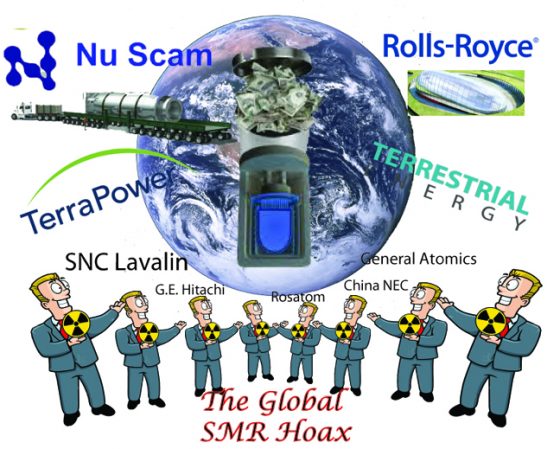
So now we hear instead about “Small Modular Reactors.” With backing from the likes of Bill Gates and Oliver Stone, the idea of mass producing small, simple nukes claims major media fandom. The critiques of SMRs are widespread and varied.
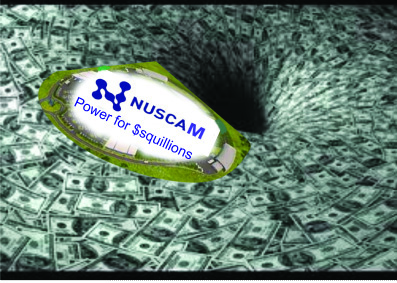
But there’s no more hilarious proviso than one coming from the industry itself, in the form of a sort of disclaimer from NuScale in a recent announcement. The list of “warnings” resembles one we hear on the air for various prescription drugs, but stretches in length to resemble a documentary film, practically matching this article in length. Take a look by scrolling down to the section that begins “Forward Looking Statements.” You may want to settle in with a cup of coffee.
At this point, there are currently no proven SMR prototypes. Cost projections again recall that 1950s “too cheap to meter” lie told by Atomic Energy Commission Chair Lewis Strauss (the villain in the film Oppenheimer).
NuScale’s promised delivery date has already slipped from 2026 to 2029. Independent assessments put that well into the 2030s. The billions squandered on such projects divert capital that should otherwise fund renewables.
Likewise much-hyped thorium reactors, which remain untested, unproven, and of uncertain costs.

As for fusion, its operations would concentrate temperatures of 100 million degrees Fahrenheit on an increasingly fragile planet. And that despite decades of intense research, and gargantuan expenditures, its future availability, ecological impacts and financial costs remain naggingly uncertain.
Thus, in the vital window from now until decade’s end, no new nukes, large or small, fission or fusion, will be ready to tangibly replace the burning of fossil fuels. The once-beloved nuclear genie can’t cure global boiling. There’s simply no there there.
Which makes our current fleet of atomic elders even more dangerous. Thoroughly decayed reactors like California’s Diablo Canyon and Michigan’s Palisades soak up billions in public funds to keep operating. But they’ve yet to secure comprehensive liability insurance. At a current average age of more than forty (Diablo opened in 1985) they cost far more to operate than proven, readily available wind, solar, battery and efficiency technologies.
Diablo in particular is plagued by deadly flaws such as embrittlement, cracked pipes, seismic vulnerability, an aging workforce and much more.
So today’s real reactor battle is not over new ones, which essentially don’t exist.
It’s about the risks posed by the old ones, all of which lack comprehensive liability insurance.
And about how quickly we can bury at last the immensely powerful fossil fuel industry that threatens us all.
For that, the only clear solution comes with a fast-as-possible shift to safer, cleaner, cheaper truly green Solartopian renewables that actually do exist. That are constantly evolving.
They may not be too cheap to meter (except in rare cases, like nighttime wind power in west Texas).
But they comprise today’s last, best hope to cool our boiling Earth…while creating jobs and profit for those wise enough to see it now. #nuclear #antinuclear #NuclearFree #NoNukes
1 This Month
19 February – VIRTUAL EVENT-Decision Time: AI and Our Nuclear Arsenal
12:45 p.m. Central / 1:45 p.m. Eastern
To see nuclear-related stories in greater depth and intensity – go to https://nuclearinformation.wordpress.com
-
Archives
- February 2026 (141)
- January 2026 (308)
- December 2025 (358)
- November 2025 (359)
- October 2025 (376)
- September 2025 (258)
- August 2025 (319)
- July 2025 (230)
- June 2025 (348)
- May 2025 (261)
- April 2025 (305)
- March 2025 (319)
-
Categories
- 1
- 1 NUCLEAR ISSUES
- business and costs
- climate change
- culture and arts
- ENERGY
- environment
- health
- history
- indigenous issues
- Legal
- marketing of nuclear
- media
- opposition to nuclear
- PERSONAL STORIES
- politics
- politics international
- Religion and ethics
- safety
- secrets,lies and civil liberties
- spinbuster
- technology
- Uranium
- wastes
- weapons and war
- Women
- 2 WORLD
- ACTION
- AFRICA
- Atrocities
- AUSTRALIA
- Christina's notes
- Christina's themes
- culture and arts
- Events
- Fuk 2022
- Fuk 2023
- Fukushima 2017
- Fukushima 2018
- fukushima 2019
- Fukushima 2020
- Fukushima 2021
- general
- global warming
- Humour (God we need it)
- Nuclear
- RARE EARTHS
- Reference
- resources – print
- Resources -audiovicual
- Weekly Newsletter
- World
- World Nuclear
- YouTube
-
RSS
Entries RSS
Comments RSS
 nuclear-news