How the Intergovernmental Panel on Climate Change works
 Explainer: how are IPCC reports written? , The Conversation, 29 March 14 David Karoly, Professor of Atmospheric Science at University of Melbourne This week in Yokohama, Japan, a group of scientists and representatives of more than 120 governments are meeting to approve the report Climate Change 2014: Impacts, Adaptation and Vulnerability. They will also agree on its Summary for Policymakers – an arduous process of negotiation and line-by-line approval. On Monday they will release it to the media and public.
This is the second part of the Assessment Report of the IPCC. It follows last September’s release of the first part, Climate Change 2013: The Physical Science Basis.
The IPCC was established in 1988 to undertake comprehensive assessments of the scientific basis of climate change and the impacts and future risks to different sectors and regions. It also assesses the options for adapting to these impacts, and opportunities to mitigate climate change.
The IPCC is the accepted global authority on climate change. A recent explainer on The Conversation has described the structure of the IPCC and how it works.
It has three “Working Groups”: one on Climate Change Science; one on Impacts, Adaptation and Vulnerability; and one that deals with Mitigation of Climate Change. They work together to prepare comprehensive Assessment Reports roughly once every six years. The IPCC Third Assessment Report was released in 2001 and the Fourth Assessment Report in 2007.
Now we are in the middle of the release of the various parts of the Fifth Assessment Report, one from each Working Group and finally the Synthesis Report, to be released later this year.

How are the reports written?
The IPCC assessments are written by hundreds of leading scientists who volunteer their time. They undertake comprehensive assessments of the scientific literature across a very wide range of topics relevant to climate change. The reports are required to present policy-relevant information, but it must be presented in a policy-neutral manner, so there are no recommendations in any IPCC assessment.
Each part of the report goes through three stages of drafting and review by experts and governments. All review comments and the responses from the authors on how they addressed the comments are made public. This review process is more open and comprehensive than for any other scientific publication or assessment, including the peer-reviewed science publications on which the reports are based.
The final stage, the approval of the Summary for Policymakers, is often misunderstood. The government representatives go through the final draft line by line, seeking to ensure that the text is scientifically accurate, that any uncertainties are carefully explained, and that the language is as clear as possible. The authors of the chapters ensure their scientific accuracy and can veto any text that they consider to be inaccurate. Every line is approved by consensus by the representatives of all the governments present. It takes a long time.
A very helpful explainer on how to read an IPCC report was published on The Conversation last September.http://theconversation.com/explainer-how-are-ipcc-reports-written-24641
New IPCC climate report coming up
 Explainer: how are IPCC reports written? , The Conversation, 29 March 14 David Karoly, Professor of Atmospheric Science at University of Melbourne #………This week, the IPCC has been meeting to approve the second part of its Fifth Assessment Report – the volume that covers “Impacts, Adaptation and Vulnerability”. This assesses the impacts of climate change and vulnerabilities to these impacts, as well as options for how we can adapt to minimize the impacts.
It considers a wider range of sectors than previous reports, as well as more regions of the globe. This means that this Impacts Assessment has twice as many chapters and is nearly twice as long as the previous IPCC Working Group 2 report in 2007.
The different sectors include water resources, terrestrial, coastal and ocean systems, food production, urban and rural areas, human health and human security, as well as approaches to adaptation and multi-sector risks and vulnerabilities. The regions include each of the continents, plus the poles, small islands, and the oceans.
The IPCC has worked hard to include a broader and more representative group as authors. Working Group 2’s writing team consists of 310 scientists from 73 countries, divided into Coordinating Lead Authors, Lead Authors and Review Editors. Most have not previously been involved in any of these roles in the past decade. Some 40% of the writing team come from developing countries and economies in transition.
When the report comes out on Monday, make sure to read its Summary for Policymakers (as well as The Conversation’s IPCC coverage).http://theconversation.com/explainer-how-are-ipcc-reports-written-24641
Climate change bad for nuclear industry? Britain will get more floods
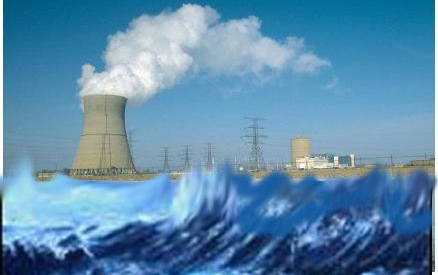 Britain had to close down its Dungeness nuclear power plant for 5 months, for fear of flooding.
Floods in Britain: a sign of things to  come? http://www.enn.com/ecosystems/article/47190 21 Mar 14, A new investigation of long-term weather records suggests that the recent flooding in the south of England could signal the onset of climate change. The research, from UWE Bristol, Loughborough University and the University of East Anglia has produced a new index of flooding trends called the Fluvial Flood Indices. This enables widespread flooding and weather patterns to be viewed in the context of the last 150 years, revealing that four of the six most severe flood episodes since 1871 have occurred in the last 30 years. The new index was developed by Professor Rob Wilby from Loughborough University and Associate Professor Nevil Quinn from UWE Bristol, and was published in the Journal of Hydrology last year. With the collaboration of Dr. Colin Harpham from the University of East Anglia, the index has been updated to cover the most recent flooding.
The indices match weather patterns and river flow data collected over the last 60 years to reconstruct the likelihood of widespread flooding in Britain back as far as the 1870s. The index is broken down by British region and updated weekly from atmospheric pressure data.
Professor Quinn, who is a hydrologist and specialist in flood risk management, said, “One of the greatest difficulties in flood estimation is that recorded flood data are rare — very few stations were operating prior to 1950. The index is based on the association between the atmospheric pressure patterns at the time and the concurrent recorded flood events. Since we have a classification of atmospheric pressure patterns called Lamb Weather Types going back to 1871 we can contextualize floods in relation to a much longer period.”
The indices reveal that the sequences of weather leading to the recent floods in southern England occur on average once every 25 years. The worst flooding suggested by the series happened in 1872, with later flood-rich episodes in the 1950s, 1980s and 2000s. Professor Wilby said, “The extraordinary events in 1872 show the extent to which flood severity varies from one decade to the next. This flooding was so significant it was even captured in a painting by Monet. However, to experience four of the six most severe episodes in the last 30 years is disconcerting. Such a flood-rich period in the context of a 144-year record is very unusual and linked to the large number of cyclones passing over the country.”
It is envisaged researchers and agencies interested in tracking long-term changes in weather patterns linked to widespread flooding could use the indices.
Read more at ENN affiliate Click Green.
Climate change bad for nuclear industry: floods disrupt uranium mining
Thursday March 20, 2014, The World Nuclear Association reported that melting snow is to blame for the disruption of a number of uranium operations in Southern Kazakhstan.
According to the WNA:
National atomic company Kazatomprom reported that snow melt has damaged roads near the village of Taykonur in the Sozak region of South Kazakhstan oblast. This has restricted access of vehicles delivering chemical reagents to the Inkai in-situ leach (ISL) uranium mine and processing plant in central Kazakhstan. The Inkai project is owned and operated by Joint Venture Inkai, which is 60% owned by Canada’s Cameco and 40% by Kazatomprom.
Geo-engineering no Cure-all for Global Climate Change Sourceable 12 Mar 14 A new study by scientists in Germany has concluded that geo-engineering is unlikely to have anything more than a minor impact on global climate change. Research conducted by scientists from the Helmholtz Centre for Ocean Research in Kiel, Germany, has concluded that even the most ambitious and large-scale forms of geo-engineering are unlikely to have much of a diminishing impact on global warming.
The study was led by oceanographer Dr. David Keller and published in the scientific journal Nature Communications. It looked at five forms of geo-engineering which have the potential to reduce the effects of global climate change, modelling the outcome of their deployment.
According to Keller, the study is one of the most thorough and comprehensive ever undertaken with respect to the real world impact of climate engineering……..The methods examined included the mass forestation of arid desert areas in North Africa and Australia, and the reduction of solar radiation levels via measures such as the sowing of aerosols in the atmosphere to produce artificial cloud cover.
Three of the methods entail tinkering with the earth’s seas to raise their carbon dioxide uptake by means including the pumping of cold water rich in nutrients from the lower strata of the ocean; the sowing of iron to raise the fecundity of phytoplankton and thus foster the proliferation of plant life; and the dissemination of lime to increase CO2 absorption.
Despite the imaginative and ambitious nature of these geo-engineering methods, the study concluded that none of them are potent enough to significantly reduce levels of carbon dioxide in the atmosphere.
Even if they were deployed as early as the end of this decade, they would fail to make much of a difference given projected increases in the volume of greenhouse gases entering the atmosphere.
Modelling performed by the scientists concluded that the outcome for the earth’s atmosphere remains the same irrespective of whether or not geo-engineering measures are implemented…..
The methods would also have extreme ramifications for local ecosystems, given the radical nature and immense scale of any measures intended to influence the climate of the planet as a whole…….http://sourceable.net/geo-engineering-no-cure-all-for-global-climate-change/
Renewable energy help to climate-change affected States – from UAE
“During the campaign we saw the impacts of climate change. We know those islands are among the most vulnerable to climate change.”The desire to more effectively conduct projects in the Pacific was also the reason the UAE signed the partnership arrangement with the New Zealand ministry of foreign affairs and trade.
Renewable energy projects key to UAE’s diplomatic efforts http://www.thenational.ae/uae/environment/renewable-energy-projects-key-to-uaes-diplomatic-efforts 26 Jan 14 ABU DHABI // Renewable-energy projects are now a mainstay of diplomatic efforts with developing nations, the Ministry of Foreign Affairs says.
At Abu Dhabi Sustainability Week last week, technology partnerships were signed with New Zealand and Denmark, and plans announced to give US$20 million (Dh73.4m) in aid to Pacific Island states.
Dr Thani Al Zeyoudi, director of energy and climate change at the ministry, said clean energy had been identified as a major area of focus for UAE diplomacy. Dr Al Zeyoudi said the money would go to Fiji, Kiribati, Samoa, Tuvalu and Vanuatu. Continue reading
Nuclear power no solution to climate change – say 300 influential gtoups
While the cost of these [ clean renewable] technologies continues to decline and enjoy further technological advancement, the cost of nuclear power continues to increase and construction timeframes remain excessive. And we emphasize again that no technological breakthrough to reduce its costs or enhance its operation will occur in the foreseeable future.”
For more:
– see the letter
 Climate change battle: Nuclear vs. an efficient, renewable grid http://www.fierceenergy.com/story/climate-change-battle-nuclear-vs-efficient-renewable-grid/2014-01-09 January 9, 2014 | By Barbara Vergetis Lundin More than 300 U.S. and international environmental and clean energy groups are expressing their disagreement with climate change scientist Dr. James Hansen’s claims that nuclear power is the solution to global warming. A joint letter from more than 311 groups — including 237 from 46 U.S. states and the District of Columbia and 74 from 44 other nations around the world, which includes those on the ground dealing with the aftermath of the Fukushima nuclear reactor disaster — is being issued in response to a November 3, 2013 statement from Hansen and three of his academic world colleagues, Ken Caldeira, Kerry Emanuel, and Tom Wigley. Continue reading
Climate change – real and serious – Dr. Reese Halter
 Earth’s New Normal: Wild Weather 2014, HUFFINGTON POST Dr. Reese Halter 01/04/2014 Each year in early January (2011, 2012, 2013) I have tallied a scorecard on the vicious effects of burning in excess of 85 million tons of carbon fuels daily on our planet. Irrespective of where you live the human-induced effects of global warming are irrefutable and deadly.
As humans ramp-up the destruction of nature in Australia, Canada, Indonesia and elsewhere to feed the insatiable coal and petroleum markets in China, India and the U.S. the amount of melting ice at both poles continues to erode at an astounding rate.
In the Northern Hemisphere less Arctic ice cover in September means that a warming Arctic Ocean is easily able to infuse its latent heat into the Arctic atmosphere. As this occurs an all-hell-break-loose scenario is felt elsewhere – particularly on the eastern half on the North American continent and in the U.K.
The Arctic is warming at least two times faster than the rest of our planet. It’s not just the loss of the white surface, which reflects solar radiation back to space and helps keep Earth at a habitable temperature range for our species that is a concern.
A warming Arctic Ocean of 1.8 degrees (F) has caused the upper atmosphere to change, dramatically. The polar jet stream is a powerful upper atmosphere, sinuous river of air, which normally hugs the North Pole tightly, but since it has been super-charged with Arctic Ocean heat it’s migrating with regularity – southward.
A meandering polar jet stream spells epic wild weather.A massive winter blizzard on January 3, 2014 throughout the Northeast dumped feet of snow with Arctic air spilling bone-chilling temperatures across at least half of the United States. On the Northern Plains, including Iowa, Minnesota, Dakotas and eastern Montana the mercury has plummeted with wind chills reaching in excess of -50 degrees (F)………
The meandering polar jet stream is wreaking havoc on the other side of the Atlantic in the U.K. where the Brits have been lashed and pummeled, again by walls of 30-foot waves in concert with king tides (the highest of the year) and colossal hailstones leaving a horrible wake of destruction including destroyed roads, rail lines and floods that with regularity are breaching the defenses. That destruction may be tame compared to the 50-foot waves predicted for Monday (January 6, 2014).
In the Southern Hemisphere, Australia is broiling and enveloped by yet another drought fraught with bushfires. 2013 was their hottest year ever recorded. At 2degrees (F) above the long-term average it easily surpassed 2005 as the hottest year.Every month in 2013 was 0.9 degree (F) above the normal dating back to the inception of continuous record keeping in 1910. Australia has experienced just one cooler than average year in the last decade — 2011.
Temperatures of 120 degrees (F) occurred January 2, 2014 in South Australia whilst New South Wales is enduring its worst-ever drought. And in tropical Queensland asweltering heat wave has temperatures there reaching 117 degrees (F). Elderly people with chronic illness, especially diabetes and obese people are at terrible risk. In addition, all pets left outside in these inferno-like temperatures stand little chance of survival.
While most North American early January (2014) temperatures resemble the inside of deep freezer – California, on the other hand, is warm and bone-dry. A high-pressure system has stalled over the Eastern North Pacific Ocean diverting the moisture carried by the jet stream northward toward British Columbia and Alaska………
Currently 85 percent of California is experiencing a severe drought; this is very serious because without water the nations leading agricultural producer at $16 billion annually (including the world’s largest almond crop at $3 billion, alone) is in dire straights. The drought is predicted to cost farmers at least $1 billion.
Clearly, the most precious substance on a warming Earth is its fresh water. Until we address our voracious addiction to coal and petroleum and allow innovation our best friend in the 21st century to guide us beyond the present crisis, we can expect more brutal wild weather with its massive price tag of devastation to continue.
Earth Dr Reese Halter is a broadcaster, biologist, educator and author of The Incomparable Honeybee. http://www.huffingtonpost.com/dr-reese-halter/earths-new-normal-wild-we_b_4543416.html
Elegant exposing of a paid climate denialist shill
In the end, what we have here is a paid shill writing garbage for more paid shills whose only goal is to misrepresent facts, lie and distort so the people who write their paycheques can continue to make money by polluting the Earth.
Heartland relying on more non-experts with vested interests to spin garbage uknowispeaksense 4 Jan 14 Normally I couldn’t care less what the privately funded (fossil fuels, pharmaceutical, tobacco etc) loony right-wing Heartland Institute have to say, but there’s only tennis on the television and I’m a little bored. Anyway, their blog, ironically called Somewhat Reasonable has a post entitled “There is no denying mother nature” written by some bloke by the name of Paul Crovo. I’m not sure I’ve ever read a larger pile of crap.
So, before we begin looking at this no doubt informative article about mother nature (biology, ecology, physics, chemistry etc) let’s check the credentials of the author.
Heartland describe Paul Crovo as “an energy analyst [working] for a major financial institution in Philadelphia……Allow me to paraphrase…Paul Crovo is a loony tea party capitalist petroleum analyst whose job it is to make money for his bank out of fossil fuels. He has no actual climate science expertise
A search of scientific literature databases reveals that globally, there were more than 55000 peer-reviewed papers published on the subject of climate change covering hundreds of different topics including atmospheric physics, ocean chemistry, cryosphere, species range shifts, hydrology, economics, disease, tropical storms, soil carbon sequestration, plant physiology. The list is extensive. For the 5 or 6 examples of these alleged defeats, Mr Crovo offers no credible references to any scientific (or political science) journals. ………First, he mentions the Australian election. Yes, Australians elected a conservative government. Yes, that political party had removal of the carbon “tax” as one of its election commitments. Does that mean Australian voters are rejecting UN protocols? In short, no. Tony Abbott was elected by default by an electorate that had gro wn tired of the progressives. Most of the sentiment had to do with issues of party stability. Tony Abbott ran a negative campaign for three years, aided completely by a print media dominated by right-wing Murdoch owned newspapers and a compliant mainstream television media and right-wing shock jocks on radio. Interestingly, Abbott didn’t actually secure a majority with most of the disaffected shifting their vote not to Abbott, but to new parties and independents, with preferences getting Abbott over the line in marginal seats. In the end, it was only 30000 votes in marginal seats that decided it. He also didn’t secure a majority in the upper house of parliament either. Hardly a convincing win and definitely no mandate as he claims.,,,,,,,
In the end, what we have here is a paid shill writing garbage for more paid shills whose only goal is to misrepresent facts, lie and distort so the people who write their paycheques can continue to make money by polluting the Earth. They are unconscionable and don’t care about anyone but themselves. Well, all I can say is the title of Mr Crovo’s dodgy article is the only thing he got right. There is no denying Mother Nature and she is starting to let her fury be known. Eventually, the vast majority will know the Paul Crovo’s and his ilk for what they are and future historians will not be kind. What a legacy to leave. http://uknowispeaksense.wordpress.com/2014/01/04/heartland-relying-on-more-non-experts-with-vested-interests-to-spin-garbage/
Tsunami near US nuclear plant: a sign of thngs to come?
6-foot tsunami that hit near New Jersey nuclear plant may be first of its kind in U.S. — People injured, swept out to sea by wave detected as far as Puerto Rico — NOAA said continental shelf may have slumped, now suspects ‘atmospheric event’ (VIDEO) http://enenews.com/6-foot-tsunami-that-hit-near-new-jersey-nuclear-plant-may-be-first-of-its-kind-in-u-s-people-injured-swept-out-to-sea-by-wave-detected-as-far-as-puerto-rico-noaa-said-continental-shelf-may-hav
2014 Ocean Sciences Meeting — CODAR Ocean Sensors & Rutgers University, Dec. 14, 2013: Tsunamis are generally thought of as low-frequency waves that are generated by an underwater disturbance be it an earthquake or landslide. A tsunami can also be generated by an atmospheric disturbance such as a rapid pressure change. These tsunamis are referred to as meteotsunamis because of their meteorological origin. A meteotsunami was detected and tracked off the coast of New Jersey on June 13, 2013. […]
NOAA Tsunami Simulation (Published Dec. 9, 2013)
CODAR Newsletter, Fall 2013: A strange series of blogs and anecdotal community gossip described people getting swept off breakwaters and out to sea in New Jersey on June 13. It received only local attention for several days. Later someone put these together with an unusual storm system […] and proposed it may have launched a “meteotsunami” […] rarely mentioned in the U.S. [NOAA] stepped in to investigate this 13 June event, and put forward another possible origin besides meteorological: an undersea landslide in the Hudson Canyon. The fact that it was indeed a tsunami was confirmed by 30 tide gages [sic] along the East coast up through New England, and as far away as Puerto Rico. […] A panel of scientists was convened by NOAA to study this event […] A number of tentative conclusions were reached […] The tsunami was definitely spawned by the “derecho” atmospheric event depicted in the first figure, not an undersea landslide. […] this event is considered a “first” in the U.S., supported by extensive observations and modeling […]
Red marker: Oyster Creek nuclear power plant — Hand: Barnegat Inlet
NPR report from two weeks after the event: NOAA: A Rare Tsunami Hit The East Coast […] The West Coast and Alaska Tsunami Warning Center said the source of the wave is “complex and under review,” but they believe it was caused by a strong storm and perhaps even the “the slumping at the continental shelf east of New Jersey.”
NOAA’s National Weather Service:: A first-hand description was provided by Brian Coen who observed the event at Barnegat Inlet in New Jersey: Around 3:30pm on Thursday June 13, 2013, Brian Coen was spear fishing near the mouth of Barnegat Inlet […] At approximately 3:30, the outgoing tide was amplified by strong currents which carried divers over the submerged breakwater (normally 3-4 feet deep). This strong outrush continued for 1-2 minutes and eventually the rocks in the submerged breakwater were exposed. Brian backed his boat out before being sucked over as well. At this point, Brian noticed a large wave coming in, approximately 6 feet peak-to-trough and spanning across the inlet. The upper 2 feet of the wave was breaking. This wave occurred in conjunction with a reversal of the current such that even though the tide was going out, a strong surge was entering the inlet. This surge carried the divers back over the submerged reef and into the inlet from where they were picked up. On the south jetty three people were swept off the rocks which were 5 to 6 feet above sea level at the time. At least two were injured requiring medical treatment. […]
Watch NOAA’s latest simulation of the tsunami published Dec. 9, 2013 here
Climate Change global catastrophe – Nuclear Winter could happen very quickly
 it could occur in stages. The first is climate change. Existing literature shows that a regional nuclear war between India and Pakistan could drastically affect temperatures throughout the world. A 2007 study published in Atmospheric Chemistry and Physics predicts that the soot created by such an event could reduce temps by 1.25°C per year for at least a half-decade.
This would wreak havoc on global crops.
The final stage of this catastrophe is starvation.
“This is a disaster so massive in scale that really no preparation is possible. We must prevent this.”
Experts Fear Nuclear Famine: “A Disaster So Massive in Scale that No Preparation is Possible” Peak Oil, Dec 20 13, “…… Whether that war is a widespread nuclear conflict involving the world’s super powers, or a more limited event in the middle east involving Pakistan and India, according to a new report published by the International Physicians for the Prevention of Nuclear War, a nuclear engagement (even a limited one) would lead to widespread destruction across planet earth, with at least 2 billion people at risk of starvation or death.
The kicker? The effects will be so long-lasting, according to the author of the study, that there’s pretty much nothing we can do to survive it:
The threat of nuclear war has been embedded in global consciousness since the invention of the atomic bomb. Most fears are focused on blast radius and radioactive fallout; but the long-term effects of a nuclear conflict could be far more concerning. Continue reading
The $bilion political movement to stop action on climate change
“It is not just a couple of rogue individuals doing this. This is a large-scale political effort.”
Conservative groups spend $1bn a year to fight action on climate 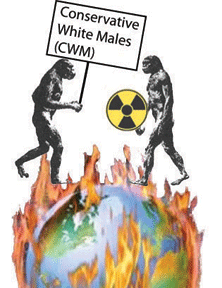 change http://www.theguardian.com/environment/2013/dec/20/conservative-groups-1bn-against-climate-change
• Author: ‘I call it the climate-change counter movement’
• Study focuses on groups opposing US political action Suzanne Goldenberg US environment correspondent. Conservative groups have spent $1bn a year on the effort to deny science and oppose action on climate change, according to the first extensive study into the anatomy of the anti-climate effort.
The anti-climate effort has been largely underwritten by conservative billionaires, often working through secretive funding networks. Continue reading
Bible-bashing climate change and evolution – an American phenomenon
How did these issues get wrapped up together? On its face, there isn’t a clear reason—other than a marriage of convenience—why attacks on evolution and attacks on climate change ought to travel side by side. After all, we know why people deny evolution: Religion, especially the fundamentalist kind. And we know why people deny global warming: Free market ideology and libertarianism. These are not, last I checked, the same thing. (If anything, libertarians may be the most religiously skeptical group on the political right.)
And yet clearly there’s a relationship between the two issue stances. If you’re in doubt, watch this Climate Desk video of a number of members of Congress citing religion in the context of questioning global warming:
Using the Bible to Resist Climate Action: A Supercut
Indeed, recent research suggests that Christian “end times” believers are less likely to see a need for action on global warming……. http://www.motherjones.com/blue-marble/2013/11/why-climate-change-skeptics-evolution-deniers-joined-forces
Solomon Islanders facing the prospect of climate change caused evacuations
Climate-threatened Solomon Islanders prepare for evacuation, trust.org, Source: Thomson Reuters Foundation – Mon, 25 Nov 2013 Catherine Wilson AUKI, MALAITA PROVINCE, Solomon Islands – In the Solomon Islands, where the sea level rise of 8 millimetres per year is almost three times the global average, survival of communities on the low-lying atoll of Ontong Java is already threatened.
But identifying a new home for those who are eventually displaced will be difficult, even in this sprawling nation of more than 900 islands located northwest of Fiji, in the southwest Pacific region. “The number one obstacle will be access to land,” said Hudson Kauhiona, deputy director of the government’s climate change division, in the capital, Honiara. “It is going to be a very big challenge when moving people.”…….
Resettlement is the last option for atoll communities impacted by climate change. But the situation is becoming critical as the encroaching sea erodes Ontong Java, which is an average of 2-3 metres (6-10 feet) above sea level and has just 12 square kilometres (4.6 square miles) of land area.
Adaptation activities, including an atoll agriculture project and installation of rainwater tanks to provide salt-free drinking water, are currently being implemented by the Anglican Church of Melanesia’s mission programme………
The Solomon Islands is not only on the frontline of climate change, but also a pioneer in developing new strategies to deal with climate-related displacement. The European Union is currently assisting the Solomon Islands government in developing its first climate change relocation policy, which is expected to be finalised by the end of 2014.
“According to scientific projections, the climate change situation is not going to get better,” Kauhiona said. “Cases such as Ontong Java, where people have to move to other islands, will only increase. So we might as well put ourselves in a better position now, rather than in 30 or 50 years time when things are happening and we aren’t prepared.” According to the Pacific Climate Change Science Program, ocean acidification, extreme rainfall and temperatures will steadily increase in the Solomon Islands, while the sea could rise by up to 15 centimetres (6 inches) by 2030. Looking ahead is vital given that an estimated 1.7 million people in the Pacific Islands could be displaced due to climate change by mid-century, programme officials say.Catherine Wilson is a journalist based in Sydney, Australia. http://www.trust.org/item/20131125112530-1wkla
A bit of a breakthrough at Warsaw climate talks
Rich vs poor deadlock broken at UN climate talks
* Warsaw talks go into overtime due to deadlock
* Delegates still discussing “climate aid”
By Alister Doyle and Nina Chestney WARSAW, Nov 23 (Reuters) – Almost 200 nations kept a plan to reach a new U.N. climate pact in 2015 alive on Saturday when rich and poor countries reached a compromise on sharing out the efforts needed to slow global warming.
A two-week negotiation in Warsaw had been due to end on Friday, but was blocked over a timetable for the first U.N. climate accord that would set greenhouse gas emissions requirements for all nations. The pact is due to be agreed in 2015 and come into force after 2020.
Negotiators finally agreed that all countries should work to curb emissions – a process described in the jargon as “intended nationally determined contributions” – as soon as possible and ideally by the first quarter of 2015.
The agreement ended deadlock between rich and poor about sharing out the burden of limiting emissions blamed for causing more heatwaves, floods, droughts and rising sea levels.
Under the last climate pact, the Kyoto Protocol, only the most developed countries were required to limit their emissions – one of the main reasons the United States refused to accept it, saying rapidly growing economies like China and India must also take part.
“Just in the nick of time, the negotiators in Warsaw delivered enough to keep the process moving,” said Jennifer Morgan of the World Resources Institute think-tank…..http://www.trust.org/item/20131123161140-rkh7z
1 This Month





PLEASE OPPOSE HR 8255 AND S.3639 – bills would accelerate satellite deployment, with no environmental review or safeguards – https://ncstd5li.quorum.us/campaign/169331/
To see nuclear-related stories in greater depth and intensity – go to https://nuclearinformation.wordpress.com
-
Archives
- October 2026 (29)
- September 2026 (339)
- August 2026 (330)
- July 2026 (355)
- June 2026 (287)
- May 2026 (306)
- April 2026 (356)
- March 2026 (251)
- February 2026 (267)
- January 2026 (308)
- December 2025 (358)
- November 2025 (359)
-
Categories
- 1
- 1 NUCLEAR ISSUES
- business and costs
- climate change
- culture and arts
- ENERGY
- environment
- health
- history
- indigenous issues
- Legal
- marketing of nuclear
- media
- opposition to nuclear
- PERSONAL STORIES
- politics
- politics international
- Religion and ethics
- safety
- secrets,lies and civil liberties
- spinbuster
- technology
- Uranium
- wastes
- weapons and war
- Women
- 2 WORLD
- ACTION
- AFRICA
- Atrocities
- AUSTRALIA
- Christina's notes
- Christina's themes
- culture and arts
- Events
- Fuk 2022
- Fuk 2023
- Fukushima 2017
- Fukushima 2018
- fukushima 2019
- Fukushima 2020
- Fukushima 2021
- general
- global warming
- Humour (God we need it)
- Nuclear
- RARE EARTHS
- Reference
- resources – print
- Resources -audiovicual
- Weekly Newsletter
- World
- World Nuclear
- YouTube
-
RSS
Entries RSS
Comments RSS

