Nuclear power? Its account is (almost) OK
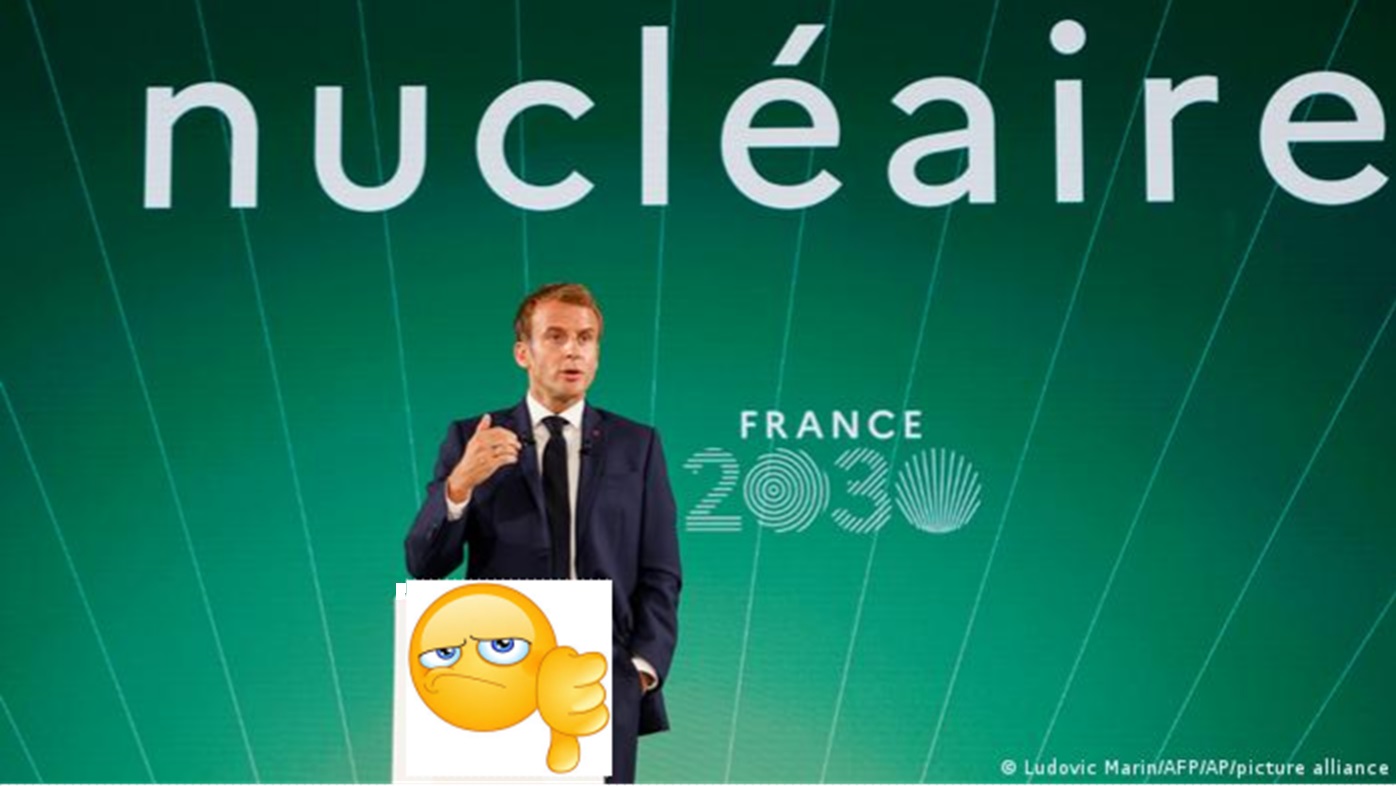
In France, it has been decided that widespread electrification will mean a nuclear revival. But the feasibility and viability of this revival are questionable. Technically, industrially… and also economically and financially. Laure Noualhat delivers a damning indictment of the cost of nuclear power for the coming years and envisions France defaulting on its debt due to this investment choice. A provocative statement designed to shock: intrigued, the public might be inclined to watch her documentary, ”
Nuclear Power Will Ruin France, ” or read her book of the same name to discover figures recently validated by the Court of Auditors. Perhaps even underestimated.
Science involving nuclear power is nothing but the ruin of the state.
This new nuclear perspective rests on a risky gamble, devoid of any studies or clearly established facts. The long-awaited third multi-year energy program (PPE) has not yet been published, but the decision is already considered final:
three pairs of EPR2 reactors have been announced, with four more expected to follow. And the current dithering at the highest levels of government will not allow for the swift publication in the Official Journal of the implementing decrees for the corresponding laws passed in 2019 and 2021, relating to renewable energies and nuclear power. While the second PPE was largely dominated by the question of the pace of reducing the share of nuclear energy in electricity production, this third version intends to prioritize nuclear power, while curbing the development of wind and solar power.
Plans drawn up without much detail regarding the financial arrangements. A vague understanding of the economic impact of such investments in France. This is the general observation, which is hardly reassuring given the sums involved.
Aside from the future design and construction of new reactors ( whose final design is not yet complete ), the nuclear sector faces expenses related, for example, to the annual operating costs of the existing fleet. While considered minor compared to the initial investment and expected to decrease continuously, these costs are actually increasing each year for an aging fleet due to so-called “refurbishment” investments and safety upgrades (the “major overhaul” plan). These are all bills to be paid, essential for ensuring the fleet’s operation beyond 40 or 50 years and beyond, and considerably larger than initially anticipated.
This is clearly considered in the numerous reports conducted by the Court of Auditors (CC) on EDF (
2012 report ,
updated in 2014 ,
2021 report ). Given the difficulty of extracting the precise elements for a comprehensive analysis of the situation from EDF’s financial reports, the Court’s reports prove to be a valuable journalistic contribution. Valuable, but still incomplete. The Court of Auditors itself admits that the reports are systematically produced with little cooperation from the national company: the CC emphasizes that projections sometimes had to be established “without EDF’s data,” disregarding “hidden costs,” “concealed amounts,” and “difficult calculations,” despite the various accounting methods that are always prone to significantly altering the evolution of the different parameters.
So much so that the CC finally admits to having to put forward the figures ‘with caution’, not without difficulty since EDF is playing with the withholding of sensitive information…………….
From this murky situation, Laure Noualhat takes on the almost sacred mission of reconstructing the future burden of nuclear power in France. And, in addition to the costs of the EPR2 reactors, it turns out that costs are also rising through operating expenses, maintenance investments, the cost of future expenses (decommissioning, waste and spent fuel management), changes in the fleet’s production, the level of economic lease payments…
This interview returns to the investment problems raised, the growing financial consequences of this technology, deemed totally unreasonable by Laure Noualhat.
Published in the Reporterre media collection , the bias with which the book could be accused easily falls away: the figures are corroborated by the Court of Auditors itself.
The goal would therefore be to find €200-250 billion, a conservative estimate reconstructed by Laure Noualhat. This is equivalent to the investment costs for the construction of the 58 existing civilian reactors (€106 billion in 2018; the two reactors at Fessenheim have since been shut down ). However, the national electricity provider remains heavily indebted (by approximately €54 billion) and cannot claim to finance the new nuclear program on its own. Furthermore, the cost has increased by 100% since the announcement in 2019 (the initial estimate was €52.7 billion). Undoubtedly, all of this will require guarantees from the State.
However, there is nothing very attractive about it for investors given the hypothetical financial returns which could be considered insufficient over a period running from the construction phase to the operation phase, i.e. more than 60 years.
The costs of existing reactors will increase, particularly in the event of generic defects, combined with the risks associated with the aging of the fleet that will inevitably come to light. This growth will be difficult to control and anticipate. Therefore, given the significant investments it may require, this issue has become urgent, as it will severely impact the budget.
The risk of insufficient performance of the nuclear fleet is among the most critical in the group’s risk assessment. It is directly affected by the occurrence of generic faults, which can reduce fleet availability while they are being addressed. This risk has been assigned the highest impact level and a control level ranging from medium to low.
It’s an open secret that all this is because the premature aging of internal materials and components has been known since 1986. The Energy Regulatory Commission itself noted that EDF believed that with the aging of the fleet, generic hazard problems would become more structural: this was the case during the episode of stress corrosion cracking discovered quite by chance, and there is reason to fear that others will occur.
Indeed. Just recently, an ASNR meeting revealed that new cracks measuring 2 to 3 millimeters had been detected and confirmed at the Civaux nuclear power plant on reactor 2 (1450 MW). The piping of the affected RRA circuit (the primary circuit under normal operating conditions) has reportedly already been dismantled and sent for analysis, suggesting that the cracks were detected well before this announcement. This specter of renewed stress corrosion cracking raises concerns about the technical and technological control of this accelerated aging process under irradiation and extreme operating conditions (temperature, pressure).
An already outdated figure
The Court of Auditors’ investigation into EDF is far from over. A new
report was just published at the end of September 2025. The findings are alarming: EDF faces a massive investment challenge of €460 billion over 15 years…………………………………………………………………………………………………………………………………………………………………………….
Protected like few others, supported by the political class, the nuclear sector deviates from certain minimal procedures in terms of accounting and transparent financing. It is decidedly not subject to any of the economic rules that prevail in other industrial sectors.
The aim of this investigation, led by Laure Noualhat, was to shed more light on the expenses generated by undebated political decisions. Mission accomplished.
Will these colossal investments put an end to the new nuclear program in France? https://homonuclearus.fr/nucleaire-compte-presque-bon/?utm_source=Homo+nuclearus&utm_campaign=3e0276f781-EMAIL_CAMPAIGN_2020_02_12_08_27_COPY_01&utm_medium=email&utm_term=0_338d2a581d-3e0276f781-433658419
No comments yet.
-
Archives
- October 2026 (112)
- September 2026 (339)
- August 2026 (330)
- July 2026 (355)
- June 2026 (287)
- May 2026 (306)
- April 2026 (356)
- March 2026 (251)
- February 2026 (267)
- January 2026 (308)
- December 2025 (358)
- November 2025 (359)
-
Categories
- 1
- 1 NUCLEAR ISSUES
- business and costs
- climate change
- culture and arts
- ENERGY
- environment
- health
- history
- indigenous issues
- Legal
- marketing of nuclear
- media
- opposition to nuclear
- PERSONAL STORIES
- politics
- politics international
- Religion and ethics
- safety
- secrets,lies and civil liberties
- spinbuster
- technology
- Uranium
- wastes
- weapons and war
- Women
- 2 WORLD
- ACTION
- AFRICA
- Atrocities
- AUSTRALIA
- Christina's notes
- Christina's themes
- culture and arts
- Events
- Fuk 2022
- Fuk 2023
- Fukushima 2017
- Fukushima 2018
- fukushima 2019
- Fukushima 2020
- Fukushima 2021
- general
- global warming
- Humour (God we need it)
- Nuclear
- RARE EARTHS
- Reference
- resources – print
- Resources -audiovicual
- Weekly Newsletter
- World
- World Nuclear
- YouTube
-
RSS
Entries RSS
Comments RSS


Leave a Reply