Nuclear power’s ‘second renaissance’ is built on a myth
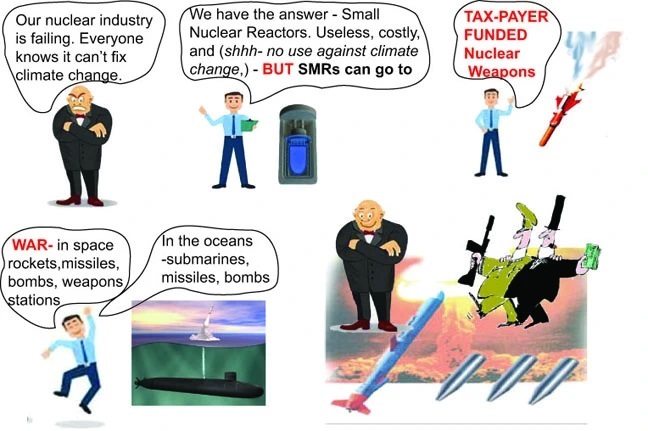
the civil nuclear sector has also made the case that it provides an essential flow of qualified personnel to the military nuclear sector, ensuring the maintenance of the so-called nuclear deterrent. This reasoning has justified not only the squandering of billions of taxpayer dollars to prolong the use of nuclear power but also an obscene increase in military spending, all to prepare for a nuclear war that can be neither fought nor won. As we are seeing today in the US and the UK, especially, this comes at the expense of essential social welfare programmes, plunging more people into poverty.
In the second of a four-part serialisation from her new book No to Nuclear, LINDA PENTZ GUNTER highlights how the industry is searching for ways to preserve its relevance
Linda Pentz Gunter, 9 Aug 26 https://www.morningstaronline.co.uk/article/nuclear-powers-second-renaissance-built-myth
SO WHY the sudden renewed enthusiasm for nuclear power? Although nuclear power has been in existence as a commercial energy source since the 1950s, it is now finding itself eclipsed as a technology by more advanced and far cheaper renewable energy sources, in particular solar and wind power. While nuclear power has demonstrated what is known as “negative learning” — in other words, the longer it has been around, the more expensive and slower to deploy it has become — renewable energy is getting faster and cheaper almost by the month.
Nuclear power has seen its global electricity share plummet from a global high of just over 17 per cent in 1996 to less than 9 per cent today, while renewables have soared in the same timeframe from a 2 per cent share to well over 15 per cent today.
Consequently, the economically failing nuclear power industry is desperately seeking ways to remain relevant. There are only two ways to do this: by making the argument that it is essential to mitigate climate change, thereby securing massive subsidies funded by taxpayers and consumers; and by providing the pathway to the atomic bomb.
To achieve the former, the nuclear power industry is rolling out its second “renaissance” regardless of the fact that the first one resulted in abject failure. In the US, for example, only two of the 34 promised new reactors heralded under the “Nuclear Renaissance” of the early 2000s ever reached completion.
In France, home to what was supposed to be the flagship “renaissance” reactor with the wildly exaggerated name of Evolutionary Power Reactor (EPR), evolution ended up going in reverse with the vaunted EPR taking longer to build than any of its predecessors. Prices in most cases doubled or even tripled into the tens of billions of euros.
These economic disasters prompted the nuclear industry to revert to an old formula with an even worse track record than that of the current large reactor designs. The small modular reactor (SMR), typically 300 megawatts (MW) or smaller and gaining much hype and fanfare, is a concept rejected long ago because of its poor economies of scale.
Hundreds if not thousands of SMRs would be needed to meet the same energy needs as delivered by a traditional-sized reactor (usually 1,000 MW), including upfront costs for the factory to produce them. But the SMR has been revived to make the convincing-sounding argument that smaller is better and therefore, somehow, also cheaper and safer.

None of this is borne out by reality. The SMR designs in circulation are either simply miniature versions of the current large reactors, with the same vulnerabilities to accident and meltdown and making the same highly radioactive waste. Or they are based on what is known as a “fast reactor” design, one that uses materials volatile to fires and explosions and that produces plutonium, the trigger in atomic bombs. All of this would allow for the continued and seamless transition to nuclear weapons production.
Further, the civil nuclear sector has also made the case that it provides an essential flow of qualified personnel to the military nuclear sector, ensuring the maintenance of the so-called nuclear deterrent. This reasoning has justified not only the squandering of billions of taxpayer dollars to prolong the use of nuclear power but also an obscene increase in military spending, all to prepare for a nuclear war that can be neither fought nor won. As we are seeing today in the US and the UK, especially, this comes at the expense of essential social welfare programmes, plunging more people into poverty.
Those frustrated with fission reactors have turned to another revivalist theme — fusion. The dreams and delusions of fusion — which would involve the fusing rather than splitting of atoms to generate electricity — have been harbored for decades. Fusion is the “breakthrough” that has remained perpetually 30 years away since it was first embarked upon in the 1930s and will likely remain so in perpetuity. The few minor “advances” that garnered recent headlines were minuscule and hugely expensive and, when considered in the context of the immediate, or even future, needs of climate mitigation, entirely irrelevant.
In this book, I endeavor to deliver some clarity and to set the record straight about what “zero carbon” actually means (no energy sources are) and why nuclear weapons do not protect us. But writing the book led me to ask a bigger question. Our nuclear crimes are not committed in isolation, so what underpins our pervasive compunction to continue such a reckless plunder of our planet, actions that can only accelerate and ultimately ensure our own collective demise?
Aside from burning fossil fuels, exploding atomic bombs and melting down nuclear power plants, we have also blotted out the night sky, clear-cut essential forests, sprayed chemicals across our landscapes, and filled the oceans with plastics.
In following such a clearly self-destructive path, we have not only harmed ourselves but also disregarded the survival of the thousands of other remarkable creatures whose homes we have turned into our refuse dumps. (The fact that we refer to “animals” in a derogatory way, worthy of ill-treatment and viewed as lesser than, is already a problem and symptomatic of our misplaced hubris.) In wantonly destroying these crucial members of the web of life, we have set ourselves on the pathway to our own demise.
No To Nuclear: Why Nuclear Power Destroys Lives, Derails Climate Progress and Provokes War by Linda Pentz Gunter is published by Pluto Press, £14.99 (www.plutobooks.com). Part 3 of this serialisation will appear in tomorrow’s edition.
Europe’s Electricity Prices Spike to €500 a Megawatt-Hour as Drought Bites

By Haley Zaremba – Aug 06, 2026, https://oilprice.com/Energy/Energy-General/Europes-Electricity-Prices-Spike-to-500-a-Megawatt-Hour-as-Drought-Bites.html
- Hungary shut down its Paks nuclear plant for the first time in 44 years after the Danube’s water level dropped too low to cool the reactors, cutting 40 percent of the country’s power generation overnight.
- The outage sent regional electricity prices spiking to €500 a megawatt-hour, with Prime Minister Péter Magyar warning of a broader energy crisis as temperatures climb this week.
- France also throttled nuclear output last month, underscoring how heat and low river levels are becoming a recurring threat to Europe’s nuclear and hydropower capacity.
Intense summer heat waves are threatening energy security across Europe. The continent is facing a scorching and arid summer, causing electricity demand for air conditioning to skyrocket at the same time that rivers warm up and dry out with devastating consequences for the nuclear energy industry and for hydropower reserves.
Last month, France had to reduce output and shut down nuclear reactors at a record pace without sufficient and safe water supplies to cool its reactors. And now, this week, Hungary had to shut down the Paks nuclear power plant over the weekend in a historic last-ditch effort, effectively cutting off 40 percent of the country’s electricity generation overnight. “Due to the further drop in the Danube’s water level,” Prime Minister Péter Magyar tweeted on Saturday, “tomorrow it will be completely shut down for the first time in 44 years.”
Taking Paks offline led to an enormous swing in electricity prices across the region, with costs reaching a blistering €500 a megawatt-hour. And Hungary is not out of the woods yet. This whole week will be a crunch time for the country as temperatures soar to dangerous levels. “An energy crisis situation may arise from Monday,” Magyar went on to warn. “Coordinated steps and self-restraint will be needed to avoid more severe consequences.”
The crippling of Hungary’s energy output is also occurring when access to air-conditioning could be a matter of life and death for vulnerable individuals and the elderly. Nearly half a million people in the world died of heat every year between 2000 and 2019 according to a study from the Lancet, most of whom were elderly and therefore more vulnerable to high temperatures. Under these conditions, air conditioning is not a luxury but a life-saving necessity, preventing approximately 190,000 deaths each year.
And things could soon get a whole lot worse. It’s only the beginning of August, and historically Europe faces its lowest water levels in key waterways like the Danube toward the end of the month or in September. Plus, the impacts of climate change are only going to become more pronounced as time goes on. Europe, the world’s fastest-warming continent, needs to prepare for sweltering heat and water stress quickly becoming the new normal.
“We have to plan our power system so that this might be our new reality,” Zsuzsanna Pató, power system lead for Europe at the non-profit Regulatory Assistance Project, recently told Bloomberg. “We don’t usually have such hot spells, but we just have to get used to it.”
It’s a double-edged sword – the more that round-the-clock clean energy technologies like nuclear and hydropower are needed, the harder they are to maintain and expand. “As it gets hotter, things stop working quite so well,” Iain Staffell, associate professor of sustainable energy at Imperial College London, was recently quoted by DW. “I think we do need to adapt the power system to cope with the changing weather,” he went on to add.
Nuclear power is far thirstier than many other energy sources, drinking up far more water than renewables like solar and wind power on a per-kilowatt basis. These needs are stymying the growth of the sector in many water-stressed regions, and causing considerable political conflict in places like Australia where water is a precious resource.
But, luckily, according to the Breakthrough Institute, “nuclear reactors don’t need to be so thirsty.” To support the expansion of nuclear power in a changing climate, stricter guidelines are needed for water recycling processes at nuclear power plants. What is more, nuclear reactor design is continuing to evolve at a rapid pace as the sector becomes increasingly competitive and privatized. In the future, some reactors will rely on gas instead of steam, while others will use air cooling or molten salt models, both of which require far less water to operate.
Moltex’s prospective buyer ends attempt to raise $50M for purchase
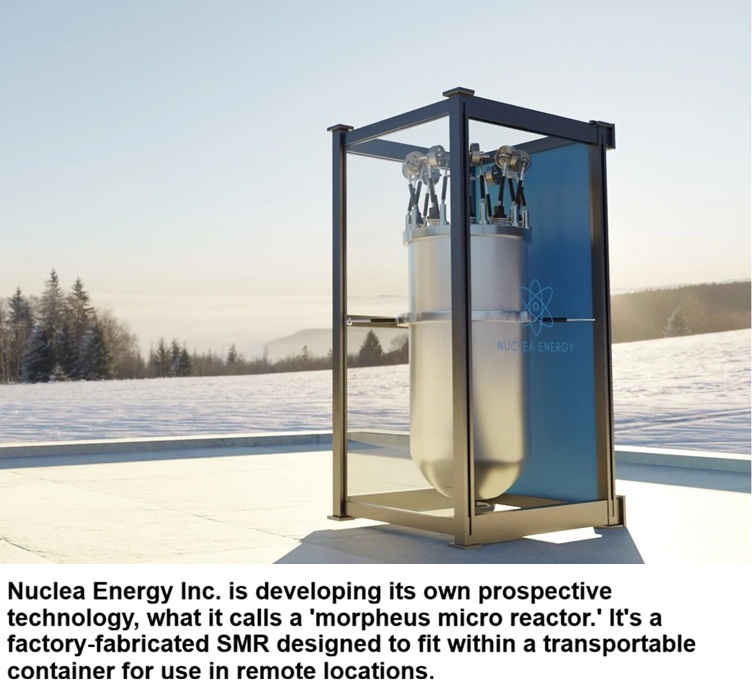
Ontario-headquartered Nuclea Energy Inc. instead merges with telemedicine company selling erectile dysfunction treatment in move to access capital quicker
Adam Huras, Aug 06, 2026, https://tj.news/new-brunswick/moltexs-prospective-buyer-ends-attempt-to-raise-50m-for-purchase#comments-area
The company that was in talks to buy Saint John-based Moltex Energy Canada has ended its attempt to raise $50 million.
It was money Ontario-headquartered Nuclea Energy Inc. was going to use, in part, to purchase the New Brunswick small modular nuclear reactor startup’s technology, which has spent more than a year stalled in its parent company’s receivership.
Instead, in a twist, Nuclea Energy has announced it is merging with a telemedicine company based in Dallas, Texas, that sells lifestyle medications online, specializing in erectile dysfunction, hair loss, and weight management treatments.
It’s being framed as a way to get Nuclea access to capital quicker.
Meanwhile, the heads of both Nuclea and Moltex say negotiations toward a purchase continue, despite the new flurry of moves.
“We are still in exclusive negotiations with Nuclea,” Moltex CEO Rory O’Sullivan said in an email.
Asked what the impact of the new moves mean to those talks, O’Sullivan directed questions on funding sources and plans to Nuclea.
In an email, Nuclea president Sagar Sanghera stated that “at this time, we are still in exclusivity with Moltex,” without answering further questions on how a deal would be financed.
Brunswick News reported in April that Moltex was on the verge of being sold to another advanced nuclear technology startup for $11.5 million.
The pending sale to Nuclea, although still yet to be finalized, was revealed in that company’s filing for an initial public offering on the New York Stock Exchange.
Nuclea stated in documents filed that it was to use the proceeds from the selling of shares, in part, for the acquisition of the distressed assets from Moltex Energy Limited, the British parent company of the New Brunswick SMR developer that went for sale last year as part of a U.K. insolvency proceeding amid money trouble.
That specifically includes Moltex’s efforts in New Brunswick to build a small modular reactor that converts existing nuclear waste into carbon-free energy through a proprietary recycling process.
It’s as Nuclea is also developing its own prospective technology.
What it calls a “morpheus micro reactor,” a factory-fabricated SMR designed to fit within a transportable container for use in remote locations, was also to benefit from the money raised through an initial public offering on the New York Stock Exchange.
Nuclea’s filing in April was to raise $50 million by offering 5.6 million shares at a price range of $8 to $10.
But that has now abruptly ended.
Last Friday, Nuclea withdrew its plans for an initial public offering.
Nuclea did so while announcing the merger.
A press release from the company states it has entered into a “definitive business combination agreement” with Mangoceuticals, Inc.
It’s a company that describes itself as “focused on developing a variety of men’s health and wellness products and services via a secure telemedicine platform.”
“To date, the company currently offers pharmaceutical-based products specifically related to the treatments of erectile dysfunction, hair growth, hormone replacement therapies, and weight management,” it states.
It delivers those treatments through its subsidiary Mango and Peaches Corp., and its brand, MangoRx.
But now, in its own release announcing the deal, Mangoceuticals states it’s pivoting to “bring Nuclea’s lead-cooled Morpheus Microreactor to the public markets amid surging power demand from AI and data centres.”
“The scale of capital being committed to power the AI build-out is enormous, and we believe advanced nuclear and micro reactors will be a critical part of how that demand is met,” said Mangoceuticals CEO Jacob Cohen in a release.
Mangoceuticals is already listed on the American stock exchange.
Releases from both companies are clear that the transaction is intended to provide Nuclea with that public listing on the Nasdaq to get better access to capital in order to accelerate the development of its reactor.
Neither release makes mention of Moltex.
“As a public company, we expect to have the capital access and visibility to advance Morpheus toward first-of-a-kind delivery and to execute on our commercialization roadmap,” Nuclea CEO Josef Freundorfer said in the company’s release.
“This agreement gives Nuclea a faster path to the public markets at a defining moment for our industry.”
Azets Holdings Ltd., the accounting firm serving as the insolvency administrator for the UK-based parent company Moltex Energy Ltd., also confirmed that talks to sell assets to Nuclea continue.
“Sale negotiations with the preferred purchaser remain ongoing,” spokesperson Shaun Staff said in an email.
Burnham is wrong – increased nuke spending will lose more jobs than create
July 30, 2026, https://cnduk.org/press-release-burnham-is-wrong-increased-nuke-spending-will-lose-more-jobs-than-create/
Prime Minister Andy Burnham has made his inaugural trip as Prime Minister to BAE’s shipyard in Barrow-in-Furness, announcing a £8.4 billion contract for the latest phase of Britain’s Dreadnought nuclear-armed submarine programme.
Ahead of the trip, Burnham made the claim that the spending would help revitalise the economy and local community.
“Keeping this country safe is the first responsibility of any government – but security is not only about what we build; it is about who builds it, and who benefits from it,” Burnham said ahead of the trip. Downing Street said that this phase of contracts would support 18,000 extra jobs in nuclear weapons sector and 22,000 additional apprentices by 2035.
“To every young person across the country, I want you to know that there is a path for you into a reindustrialised Britain, and it starts with the apprenticeships we are funding through this investment today,” Burnham added.
Successive British governments have claimed that hikes to military spending will result in improving the economy.
However, the government’s own data shows that the ‘defence’ industry is jobs-poor. For the same level of spending, double the number of jobs are created in social care for instance. This is because the vast majority of the spending goes on the weaponry and on profits for the arms companies like BAE.
Burnham has gone along with the Defence Investment Plan – of which £64 billion has been allocated to nuclear weapons. This is being funded through at least £7 billion in cuts to public services. Research by the Transition Security Project has found that this will result in a net loss of at least 10,000 jobs.
CND General Secretary Sophie Bolt said:
“Spending billions of pounds on nuclear weapons is not keeping us safe. In fact, Britain’s role in replacing its nuclear submarines and buying the US F-35A nuclear-capable fighter jets is only increasing the risk of nuclear weapons being used. The government is making Britain less safe because of its aggressive, expansionist nuclear and foreign policy. British bases like RAF Fairford are now a target because the government has continued to allow Trump to use this base to illegally bomb Iran.
“On the economic front, the argument that Burnham is making – that more money for nuclear and military spending will revitalise the economy – is totally false and not backed up by facts. The Defence Investment Plan – precisely because it is based on cuts to far more jobs-rich areas like health, transport and education – will result in a net loss of jobs. This will only drive social deprivation even further.
“Right now, thousands of people are dying in this country because of the underfunding to our health service and because of the total lack of preparedness to tackle the climate-driven extreme heatwave.
“The British government needs to fundamentally shift direction. It needs to focus on diplomacy and dialogue, and scrap its nuclear weapons and cut back its military spending. It needs to prioritise funding our hospitals, schools, and mitigating climate change. That should be the priority of this government, not preparing for the next war that could lead to a nuclear confrontation.”
Venture Capitalists Money Floods Into U.S. Nuclear Startups as AI Power Demand Explodes

By Haley Zaremba – Jul 31, 2026, https://oilprice.com/Energy/Energy-General/VC-Money-Floods-Into-US-Nuclear-Startups-as-AI-Power-Demand-Explodes.html
- Global VC funding for nuclear fission and fusion startups has already topped $4.5 billion across 81 companies in 2026, on pace to beat 2025’s $6.2 billion record.
- Big Tech figures including Sam Altman and Bill Gates are pouring money into fusion to keep up with AI’s ballooning electricity demand.
- Critics warn the startup boom is skipping voluntary safety guardrails and pulling attention from proven large-scale reactor technology.
Venture capitalists are taking a major interest in nuclear energy start ups. Funding is surging for both nuclear fusion and fission firms as the technology becomes an increasingly essential part of a feasible pathway toward sustainable energy security in the face of the artificial intelligence boom.
According to reporting by Axios, global investment in both fission and fusion has topped USD $4.5 billion across 81 companies in 2026 so far. At this pace, by year’s end, this year will shatter 2025’s previous record of $6.2 billion for 93 companies.
Data center hyperscalers are driving up energy demand projections to previously unthinkable levels that will require an all-of-the-above approach to energy development that is likely to prominently feature nuclear energy as a round-the-clock source of zero-emissions electricity. In the United States, the public and private sectors alike are extremely bullish on the technology and clearly eager to usher in a new nuclear era. As a result, the majority of this year’s funding surge is going to U.S. companies.
Big Tech has taken a particular interest in expanding nuclear energy deployment and technological advancement to feed its own ballooning energy needs. Some of the tech sector’s biggest names, including Bill Gates and OpenAI’s Sam Altman, are major investors in and advocates of nuclear fusion as an answer to AI’s ballooning energy problem. “There’s no way to get there without a breakthrough,” he said at the 2024 World Economic Forum in Davos, Switzerland. “It motivates us to go invest more in fusion.”
The Trump administration, too, is a major proponent of nuclear energy expansion, with a particular focus on next-gen nuclear technologies as part of a broader push to “reestablish the United States as the global leader in nuclear energy” and “produce lasting American dominance in the global nuclear energy market.” To this end, Executive Order 14301, signed by Trump in May 2025, mobilizes significant resources from the U.S. Department of Energy’s Reactor Pilot Program to fast-track the testing and commercialization of advanced nuclear technologies in order to bring them to scale.
These advanced technologies include nuclear fusion as well as small modular reactors (SMRs) which hold major promise for overcoming some of the hurdles that have been causing nuclear energy to fall out of fashion in the United States. Traditional nuclear power plants are enormously costly and face long timelines and miles of red tape to come online. The country’s most recent traditional nuclear power plant, Georgia’s Plant Vogtle, finally came online years late and billions over budget. The hope is that modular and alternative technologies won’t face the same issues, as they can be built offsite relatively cheaply.
SMRs are still an emerging technology. While one SMR design has been officially approved for development in the United States, and many more firms are seeking approval for their plans, zero SMRs have yet come online in the country. “The U.S. Nuclear Regulatory Commission took about six years to approve the first advanced small reactor design, from fission developer NuScale,” Axios reports. “President Trump has sought to accelerate the process, aiming for 18 months. But that still could give first movers a major advantage in locking down contracts with data centers and electric utilities.”
With the backing of both the federal government and Silicon Valley, it’s no surprise that nuclear startups are going gangbusters. But while the increasing fragmentation and privatization of the nuclear energy sector could be great for innovation and expansion of the technology, it also poses some key drawbacks. For one thing, nuclear startups have so far shown a concerning disregard for voluntary safety guidelines that were tacitly accepted in the nuclear sector until now.
In addition to safety concerns, some critics have argued that a focus on cutting-edge nuclear energy technologies and startups may be diverting energy and funding from proven technologies that would better serve nuclear power capacity addition goals. A recent op-ed for the Wall Street Journal argued that “The administration is chasing unproven technology when it could encourage Wall Street investment in large-scale reactors,” and, as a result, Trump’s nuclear renaissance is stalling.
Cost needs for the growing nuclear industry

“The industry body has estimated that achieving the existing governments’ nuclear ambitions of 1,446 GWe by 2050, which would be more than tripling current capacity, would require around $6 trillion of nuclear investment over the next 25 years. That’s an average of approximately $250 billion per year, roughly three times today’s annual investment of $75 billion, the association said.”
https://oilprice.com/Latest-Energy-News/World-News/World-Nuclear-Association-6-Trillion-Needed-to-Hit-2050-Capacity-Goals.html
A stormy future? Financial impact of climate change-related disruptions on nuclear power plant owners
Ali Ahmad , Andrei Covatariu , M.V. Ramana, https://www.sciencedirect.com/science/article/abs/pii/S0957178722001485
Highlights
- •Globally, climate change driven extreme events are impacting nuclear power plants.
- •Nuclear reactors in Western Europe are particularly vulnerable to extreme weather.
- •We project an increase in climate-linked unplanned outages in Western Europe nuclear reactors.
- •Adaptation options include financial and contractual measures and maintenance planning.
Abstract
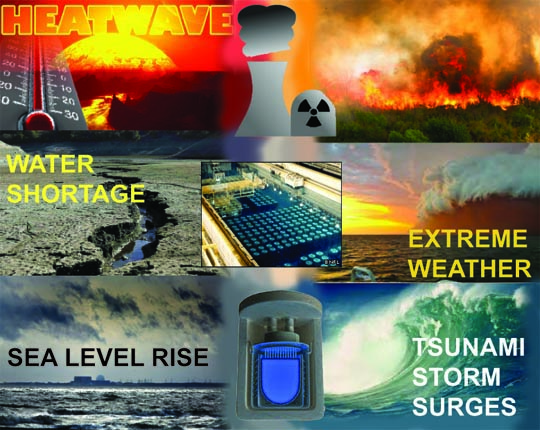
In recent years, extreme weather events potentially caused by climate change have led to several nuclear power plants being shut down for varying periods, and such unplanned outages will become more frequent in the future. Nuclear plants are already finding it difficult to compete in electricity markets due to the availability of cheaper alternatives. We quantitatively assess the additional impact of such extreme weather events on the finances of plant owners using Western Europe as a case study and draw some policy implications for existing owners and those considering new nuclear plants.
Introduction
In May 2022, Electricite de France (EDF) warned that unusually warm river temperatures would likely result in it being forced to reduce power generation from its nuclear power plants (Starn, 2022), an increasingly frequent event in recent years; the concern was not misplaced. In 2018, EDF was forced to halt operations of three power plants due to heatwaves, showcasing the utility’s vulnerability to extreme weather events, especially at its river-based nuclear power plants (WNISR, 2021). With increasingly sophisticated methods employed to demonstrate the attributability of extreme weather events to anthropogenic climate change, it has become more apparent that the kind of hot weather events that disrupted these nuclear power can be linked to climate change with a high degree of attributability (Diffenbaugh, 2020; Schiermeier, 2019). IEA, 2021, the IPCC Working Group I report reported that “recent hot extreme events would have been extremely unlikely to occur without human influence on the climate system” (IPCC et al., 2018).
Other kinds of extreme events are also becoming more frequent. In 2018, the Intergovernmental Panel on Climate Change warned that human-induced warming “has likely increased the chance of compound extreme events” and predicted that almost all parts of the world would record increased climate disruptions (IPCC et al., 2018). Other international and scientific bodies have come to similar conclusions.
Many agencies, like the International Energy Agency (IEA) and the International Atomic Energy Agency (IAEA), posit that an expansion of nuclear power will be a critical component of any effort to mitigate climate change (IAEA, 2020; IEA, 2021). For nuclear power to significantly reduce global emissions, new nuclear plants would have to be built in many countries (Deutch et al., 2003). Many of these areas will be subject to extreme weather events in the coming decades.
At the same time, nuclear power generation is vulnerable to climate change-related extreme weather events (Ahmad, 2021). Climatic disruptions affect nuclear power plants for days or weeks (Becker et al., 2020; D’Agostino, 2021; Lyons, 2020; Neuhauser, 2019). Financial institutions realize the challenges that climate change brings to the financial position of nuclear power plant owners (Lahiri, 2020).
To give an illustration of the financial impact of climate change on nuclear power, we build on earlier work on the vulnerability of nuclear plants to extreme weather events (Ahmad, 2021) by quantifying the impact of extreme weather events on nuclear power plant operations by estimating the losses in energy production and revenues in Western Europe. The region consists of six countries with active nuclear power programs.
Together, these nuclear plants generated 565 TW h of electricity in 2020, approximately 42 percent of the total electricity generation in Western Europe – see Fig. 1. Almost two-thirds of this electrical generation is in France, which generated around 70 percent of its electricity in 2020 from nuclear power plants. The reason behind choosing Western Europe as a case study is the availability of data and the fact that it has a higher reliance on nuclear power than any other region.
Section snippets
The Economics of Nuclear Power
Before discussing the financial impact of climate change-related extreme events, we briefly discuss the economics of nuclear power. In 2003, an influential interdisciplinary study by the Massachusetts Institute of Technology stated, “Today, nuclear power is not an economically competitive choice” (Deutch et al., 2003). That study compared nuclear power to coal and natural gas plants.
In the two decades since, what has changed enormously is the cost of other low-carbon non-fossil-fuel alternative
The effect of extreme weather events on nuclear generation
In recent years, the impact of extreme weather events on the reliability of electricity provision in many parts of the world has become more noticeable (Perera et al., 2020).3 Extreme weather can disrupt all energy sources and the grid that connects them. As such, the high frequency,
Method
We use a “bottom-up” approach that identifies climate-linked disruptions in nuclear power plants and aggregates the impact of climatic disruptions over the last decade (2010–2019) in Western Europe to assess the effects of extreme weather events on the economics of nuclear power generation. The methodology is based on the same type of analysis presented in (Ahmad, 2021). However, in comparison to that analysis, which provided a global view of climate-linked power outages, this paper adds two….
Results
The first set of insights that can be obtained from the analyzed data is related to the time distribution of climatic outages of nuclear power plants in Western Europe. Fig. 3 shows the monthly probability distribution of such outages once they took place, based on actual historical data. Climate-driven outages can happen at any time of the year. However, they seem to be most probable in the summertime. As shown in Fig. 3, about two-thirds of the total climatic outages occur between June and
Policy recommendations
Extreme weather events have numerous policy implications for nuclear power. Because of the expected increase in the frequency of outages, nuclear power plant operators will have to undertake various adaptation measures. The financial impacts of these measures make the role of nuclear even more precarious than it already is, due to the high costs and the combination of safety and financial risks.
One adaptation measure might involve aligning plant shutdowns for refueling and maintenance with…..
REFERENCES ………………………………………
Nuclear needs $6tn investment surge to meet 2050 ambitions
Huge world wide opportunity in nuclear growth predicted for the next 25 years
29/07/2026, https://www.energylivenews.com/2026/07/29/nuclear-needs-6tn-investment-surge-to-meet-2050-ambitions/
Global nuclear investment must rise above $250 billion (£187bn) a year to meet growing electricity demand and triple generating capacity by 2050, according to the World Nuclear Association.
Its new investment guide estimates the sector represents a cumulative opportunity worth around $6 trillion (£4.5tn) over the next 25 years.
The Roadmap to Mainstream Finance sets out how nuclear could move away from bespoke, state-led funding and become a mainstream infrastructure asset backed by banks, pension funds and other institutional investors.
Investment will be needed not only for new reactors but across the nuclear fuel cycle, supply chains and supporting infrastructure required to deliver projects at scale.
The association said nuclear must expand beyond a handful of established markets if it is to strengthen energy security and support global decarbonisation.
Its roadmap identifies six conditions needed to attract capital: stronger institutional support, standardised business models, clearer risk and reward, market frameworks that properly value nuclear power, mature supply chains and mechanisms to move projects from development into operation.
It argues other capital-intensive industries including offshore wind and liquefied natural gas have followed similar paths when governments, developers and investors created common frameworks.
Dr Sama Bilbao y León, Director General of World Nuclear Association, said: “The challenge is not a shortage of capital. The challenge is creating the confidence, capability and investment architecture that allow capital to flow to nuclear projects at scale.“
Financial institutions are being urged to improve their understanding of nuclear, build teams capable of assessing projects and support clearer allocation of construction, regulatory and market risks.
Early transactions could then help establish the track record needed to unlock larger pools of private capital.
Nuclear revival needs $250bn a year, industry says
Banks urged to unlock
private capital as governments consider more atomic energy projects. Global
annual investment in nuclear power needs to triple to about $250bn if
governments want to meet their stated energy goals, the industry’s main
lobby group said as it urged banks to channel more private capital into the
sector.
Nuclear power has recently enjoyed a revival as countries around
the world seek reliable low-carbon electricity to meet rapidly rising
demand. Countries that had previously shut down nuclear stations, such as
Japan and Taiwan, are bringing them back online while German Chancellor
Friedrich Merz has said the country’s decision to shut down its plants in
2013 was a “serious strategic error”.
But the industry continues to
struggle to attract investment because new plants are expensive, take years
to build and carry significant construction and political risks. Bilbao y
León the director-general of the World Nuclear Association, argued the
sums were not excessive when set against spending elsewhere in the energy
system. The International Energy Agency expects about $665bn to be invested
in renewable power globally this year, while spending on oil, gas and coal
is forecast to reach $1.2tn.
FT 29th July 2026,
https://www.ft.com/content/f78ab650-062d-4058-bbcb-315901a1eeb6
“Jobs Jobs Jobs” screams the media again as the nuclear lobby plans to brink Japan’s nuclear wastes to Cumberland

COMMENT Plan to Bring Failed Japanese Fast Breeder Reactor’s Contaminated Sodium to Workington – https://radiationfreelakeland.substack.com/p/plan-to-bring-failed-japanese-fast
Japanese reactor decommissioning to bring jobs to UK
Federica Bedendo 26 July 26, https://www.bbc.com/news/articles/c0kmxl6ydpjo
New “highly skilled jobs” have been promised in the UK as part of plans to clean-up a nuclear reactor in Japan.
Cavendish Nuclear and Amentum are planning to build a facility at the Port of Workington, Cumbria, to support the decommissioning of the Monju Prototype Fast Breeder Reactor (FBR), in Fukui Prefecture, Japan.
Cumberland Council, which owns the port, said the plant would support skilled jobs directly and across the supply chain.
Leader Mark Fryer said: “This is fantastic news for the port as this new development, subject to the necessary approvals, will bring good quality jobs to Workington.”
The construction phase is expected to be worth more than £25m and employ about 20 people during its seven-year operation, those behind the plans said.
The FBR was a sodium-cooled reactor that had been designed to burn most of its spent fuel, however it encountered several problems during its lifespan.
The Workington plant would be treating the sodium coolant, turning it into sodium hydroxide, a commercially usable product.
West Cumbria is a well-known area for the nuclear sector, due to the presence of the Sellafield nuclear plant, which is being decommissioned.
The Labour-led council has started work to clear the land at Workington’s Oldside as part of its wider regeneration plans in the town.
The aim is for the area to become a hub for clean energy, manufacturing and logistics, the council said.
A Cavendish Nuclear and Amentum spokesperson said: “We are fully committed to adding real social value to west Cumbia and this new venture will contribute to the regeneration on the Port of Workington and support the local economy.”
A mad for nuclear world?
July 25, 2026, https://renewextraweekly.blogspot.com/2026/07/a-mad-for-nuclear-world.html
While renewables are being supported in the UK by private sector investment, most recently via the Contracts for Difference market system, with no direct government cash input, over 70% of the UK Department of Energy Security and Net Zero expenditure is now nuclear related. DESNZ’s annual report and accounts says that ‘Great British Energy – Nuclear has remained a key component of the Government’s approach to energy security and decarbonisation, with work continuing to support the delivery of new nuclear projects, providing greater certainty for industry and investors, supporting highly skilled jobs across the supply chain, and contributing to a resilient, low carbon energy mix’.
It notes that through the Spending Review the department secured a capital settlement of £62.8bn from 2025-26 to 2029-30 and a resource settlement of £5.8bn from 2026-27 to 2028-29, including £8.3bn for GBE/GBE-Nuclear including SMRs and £14.2bn for the new Sizewell C European Pressurised-water Reactor.
However, the theory is that this government support will attract private sector investment, for example for new Small Modular Reactors (SMRs). The government has put aside £2.5 bn for its SMR programme, to be led by Rolls Royce, but there are signs of entrepreneurial interests, with SGE, a consortium led by Polish billionaire industrialist Michał Sołowow talking about a £35bn plan to build 14 GE/Hitachi Boiling Water SMRs, on three sites across the UK, possibly including on the former Olbury nuclear plant site.

There have also been some UK government backed moves by US developers for SMR projects in the UK, including from X Energy, Holtec and TerraPower, but not everyone is convinced that any of them will be successful, certainly not soon, or sees the wider UK nuclear programme, including the big Sizewell project, as value for money, especially given that there are security risks. Will anyone want SMRs near them given the safety and security issues? The UK government has been revamping the planning system to make it easier for projects like this to go ahead, but local opposition is still likely. In particular, Labour ministers in London have been slammed for identifying sites in Scotland for nuclear power plants despite the devolved Scottish Government’s ongoing opposition to new nuclear developments. Very provocative, especially given that Scotland often produces more green power than it needs and exports the rest south…
However, the big UK push to nuclear continues, with some odd twists. For example, enriched uranium is to be produced by UK based Urenco for use by Ukraine in its nuclear plants. This at a time when the US is making strenuous efforts to stop Iran from developing and using uranium enrichment technology. But then consistency is often not very apparent in nuclear policy around the world. For example the US is, it seems, keen to allow Saudi Arabia to enrich uranium. Meanwhile the UK is still importing enriched fuel for Sizewell B derived from Russia. While its claimed that this is only a temporary aberration (the UK is to build its own new specialist enrichment plant), some contrarian outliers see Russia as the EU’s best supplier!

Will any of this help us deal with climate change? Not everyone is convinced that it will -based on past experience, we may need to be wary of nuclear hype. It is interesting then to look at what is happening in China. An Australian review noted that China has been installing ‘record amounts of solar and wind, while scaling back once-ambitious plans for nuclear’. Based on 2024 data, it said that China had installed the wind & solar equivalent of 5 large nuclear plants per week, although, in output terms, that was more like 1 nuclear power equivalent, given the different capacity factors. But the disparity in outputs has grown since 2024, with renewables roaring ahead as the favoured new energy option.
By comparison, the USA is stalling on renewables and trying to push nuclear ahead as fast as possible, with US energy secretary Jennifer Granholm calling for ‘hundreds’ of new large plants by 2050. Not everyone is convinced that this is possible, even with the new US loan scheme, but the Trump government is obviously keen and is pushing for reduced worker and public radiation exposure standards to help, with the Nuclear Regulatory Commission (NRC) seemingly being compliant on this and other related issues. Clearly some see NRC reg. changes as being vital for the success of multiple SMRs. And, following a court ruling, it seems that NRC may no longer need to take account of climate issues in plant licensing decisions. This at a time when nuclear plants in Europe are having to be shut down due to heat waves…
So, with shifts like that underway, how is it likely to go in the USA? It’s not clear if any big new projects will go ahead, but there are a lot of new SMR players entering the game, and some progress has been made, for example with a go ahead on some micro SMR safety test programmes. However, it is very early days with SMRs and big technical and economic uncertainties remain. That’s true for new nuclear generally, a view that seems to be shared quite widely, as was summed up well in a recent letter in Lancet, which ended by calling for the focus to be on renewables instead. Quite so, along with storage and smart demand management…But then there are evidently people who think differently, for example in Germany and Japan, in relation to reactor restarts, although that risks opening up old issues, not least, where to put the active wastes. Do we really need to face all that again?
* Back in the UK, there has been no word yet on the nuclear issue from the new Labour Cabinet. Andy Burham has been supportive of nuclear in the past. Miatta Fahnbulleh, his new secretary of state for energy security and net-zero, is seen as likely to be a strong supporter of Labours clean energy and decarbonisation strategy. But she was chair of the New Economics Foundation which has been consistently anti-nuclear. So things may yet change. As I argued in my last post, there is certainly a strong case for a rethink on new nuclear.
Nuclearelectrica’s proposal to review SMR options rejected by Romania ministry


Thursday, 23 July 2026,
https://www.world-nuclear-news.org/articles/nuclearelectricas-proposal-to-review-smr-options-rejected-by-ministry
Romania’s state-owned nuclear company had asked shareholders to approve “the initiation of steps to reassess the initial development strategy for small modular reactors by expanding the analysis to include other SMR technologies and broadening the list of potential sites (in the event of a decision to scale up
In a statement after the proposal was voted against by shareholders, including the majority shareholder, the Ministry of Energy, Nuclearelectrica (SNN) said: “The company’s intention was for our shareholders to approve the conduct of a technology benchmarking study and multiple scenarios, based on recent technological developments, to serve as the foundation for an informed decision-making process leading to the most advantageous solution for Romania, given that a number of conditions associated with the Final Investment Decision for the Doicești Project could not be met for reasons beyond the control of both Nuclearelectrica and the project company RoPower Nuclear SA.”
As the vote was against the proposal, Nuclearelectrica says it “will continue, in accordance with the shareholders’ approval from February 2026, their efforts to reach a commercial consensus with NuScale regarding the terms for the acquisition of the SMR modules and the Framework Agreement, in parallel with discussions with representatives of the Romanian government regarding the feasibility of fulfilling the other conditions, some of which were requested by the majority shareholder, the Ministry of Energy, itself”.
A Final Investment Decision was taken by Nuclearelectrica shareholders in February for the small modular reactor (SMR) project, which is aiming for 462 MWe installed capacity, using NuScale technology with eventually six modules at the former coal plant site at Doicești – about 90 kilometres northwest of Bucharest – each with an installed capacity of 77 MWe.
The company said in its statement – issued on the day of the meeting on 15 July – that discussions were continuing with the Ministry of Energy regarding conditions relating to the Final Investment Decision and financial support. It also stressed that a first-of-a-kind project “by its very nature, entails a higher degree of technical, operational, and financial complexity than in the case of replicated projects”.
In a press statement the following day, the Energy Secretary Cristian Bușoi said: “The proposal submitted for approval did not concern an actual strategy nor the concrete update of the Small Modular Reactors Project Implementation Strategy, but exclusively the initiation of steps to assess the opportunity for a possible update. Under these circumstances, in the absence of sufficient data, analysis and substantiation, we considered that the request addressed to the … [shareholders meeting] is not justified and not addressed appropriately. The documentation, substantiation and initiation of such an approach falls under the responsibility of the Company’s executive management, which is obliged to take all necessary steps to assess the situation and protect the interests of the Company and its shareholders.
“As Secretary of State responsible for international relations and the implementation of nuclear projects, I am in permanent dialogue with the SNN (Nuclearelectrica) leadership, but also with American partners, through bimonthly videoconference working meetings with the responsible team from the US Department of Energy, to assess the most appropriate decision regarding the continuation of the SMR project, including by examining the opportunity to use other American SMR technologies.”
In a statement to World Nuclear News, NuScale said: “NuScale continues to work with SNN and RoPower to satisfy the conditions that were attached to the shareholders’ approval of the Financial Investment Decision.”
The background
The partnership between the USA and Romania on SMRs began in March 2019 with a memorandum of understanding between state-owned nuclear power corporation Nuclearelectrica and NuScale to study potential developments. In 2021, NuScale and Nuclearelectrica signed a teaming agreement to deploy a NuScale VOYGR-6 power plant in Romania by the end of the decade. In June 2022, the two companies signed a memorandum of understanding to begin conducting engineering studies, technical reviews, and licensing and permitting activities for the project.
NuScale Power and RoPower Nuclear – owned jointly by Nuclearelectrica and Nova Power & Gas – completed Phase 1 of a Front-End Engineering and Design (FEED) study in late 2023, which analysed the preferred site of the first VOYGR-6 SMR power plant. The FEED 2 study has also been completed – this saw Fluor Corporation provide RoPower Nuclear with the design and engineering services required for the implementation of the project, including an updated cost estimate and schedule as well as the safety and security analyses needed for the final investment decision.
The US Export-Import (Exim) Bank approved in 2024 a USD98 million loan for pre-project services, and the US International Development Finance Corporation (DFC) and Exim also issued Letters of Interest for potential support of up to USD1 billion and USD3 billion, respectively, for project deployment.
Saudi Arabia, the Khashoggi murder case: the nuclear connections with Terra Power, Bill Gates, Breakthrough etc.

 US Nuclear Energy Policy & Khashoggi Murder: Appeasement Or Threat? Clean Technica, December 12th, 2018 by Tina Casey “…………..The Nuclear Energy Connection
Either way, that brings us around to the idea that the corporate world needs to step up and press for meaningful action on the Khashoggi case, since the White House is falling down on the job.
In particular, the tech sector is feeling the pressure not only because of its financial ties to Saudi Arabia, but also because of the high profile of its biggest players.
That brings us right back around to the nuclear energy angle, where the US nuclear company TerraPower has been making waves.
TerraPower was formed back in 2006 and crossed the CleanTechnica radar during COP 2015, when it popped up in relation to a newly launched investor umbrella organization called the Breakthrough Energy Coalition.
Breakthrough is a tech incubator with a focus on clean energy and rapid decarbonization, and nuclear energy makes the cut.
As a global organization, Breakthrough can provide TerraPower with a platform for pitching its technology overseas — a key consideration, given the morbid state of demand for new nuclear power plants here in the US.
So far TerraPower has been focusing on foreign markets, particularly China, for its new technology.
If all of this is beginning to ring some bells, that’s where the tech and Silicon Valley connections kick in.
Microsoft’s Bill Gates is financial backer of TerraPower and chairman of its board.
Gates is also the chair of the Breakthrough Coalition’s Breakthrough Energy Ventures, where you’ll find a host of other familiar top-dollar investors with an interest in decarbonization including Jeff Bezos, Richard Branson, Vinod Khosla, and Michael Bloomberg.
Saudi Arabia is represented among Breakthrough members through Prince Alwaleed bin Talal, who is Chairman of Alwaleed Philanthropies and a supporter of Gates’s “giving pledge.”
Saudi Arabia is also represented among the 24 countries (including the EU) that support the Mission Innovation clean energy initiative, which is in turn receives considerable support from Breakthrough, so there’s that.

Not for nothing, but as of last August the Department of Energy has supported a TerraPower molten salt reactor project with $28 million in cost-shared funds.
When Will The Silicon Valley Crickets Stop Chirping And Start Acting?
All this is by way of saying that when it comes to the Saudi government, the Khashoggi murder, and the cash flow, all roads lead back to Silicon Valley and the US tech sector.
The New York Times raised a red flag on Saudi financial ties to Silicon Valley last year. Among other developments since then, Tesla has been ramping up its profile in the country, and Google has expressed interest in building data centers there.
Perhaps it’s not fair for the tech sector to take all the heat, but on the other hand these are the guys who promised to make life better for millions if not billions of people all over the world. More is expected of them than, say, the CEO of a local pest control company.
The Trump family’s financial ties with Saudi Arabia seem to be the driving force behind Trump’s response to the Khashoggi murder, and now it seems those same ties have silenced the US tech sector.
The fact is that the Khashoggi murder is not going away. New details about the murder are emerging on a regular basis, and even Trump’s Republican allies have finally stirred into action.
In the latest development, today the US Senate is reportedly set to debate cutting off US support for the Saudi-lead war in Yemen. The measure has been linked directly to outrage over the country’s role in the Khashoggi killing.
Meanwhile, CleanTechnica is reaching out to TerraPower for comment, so stay tuned for more on that.
Follow me on Twitter. https://cleantechnica.com/2018/12/12/us-nuclear-energy-policy-khashoggi-murder-appeasement-or-threat/
A nuclear deal for the Saudis, media blackout for Kushner’s corruption

Judd Legum, Rebecca Crosby, and Noel Sims, Jul 23, 2026,
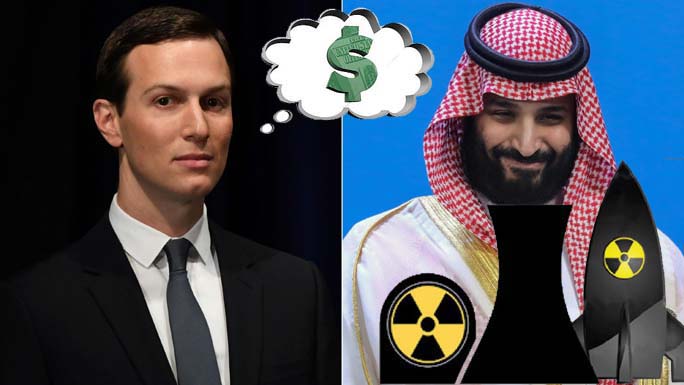
On Wednesday, the Trump administration signed a 30-year nuclear agreement with Saudi Arabia that paves the way for the kingdom to enrich its own uranium. The Saudi government has been aggressively seeking such a deal for years, eager to gain an edge over regional rivals. The agreement lacks safeguards that previous administrations, and many independent foreign policy analysts, viewed as essential to prevent nuclear proliferation.
The deal comes after the Saudi government’s Public Investment Fund (PIF) invested $2 billion in Jared Kushner’s private equity fund, Affinity Partners. Since 2021, Kushner, President Trump’s son-in-law, has collected over $110 million from the Saudi government in management fees. In March, Kushner was seeking billions more from the Saudis. (After Kushner’s fundraising was exposed, his efforts were purportedly put on hold.)
Kushner also has a close personal relationship with Saudi Crown Prince Mohammed bin Salman (MBS) — the pair are known to communicate regularly over WhatsApp. In 2021, when the PIF committee originally recommended rejecting Kushner’s proposal due to the high price and Kushner’s inexperience, MBS overruled the recommendation.
As he continues to collect fees from the Saudi government, Kushner has resumed his role as a top foreign policy aide to Trump. He has played a key role in virtually every significant foreign policy negotiation since Trump returned to the White House.
.Kushner’s specific involvement in the nuclear pact, if any, has not been disclosed. But the fact that one of the president’s top foreign policy advisors is receiving large, ongoing financial payments from the Saudi government is unquestionably relevant to the story.
Innovative geotechnical sub-alliance formed for Sizewell C construction
“the chances of Sizewell C being delivered on schedule are slim to none, and the new prime minister and energy secretary would be better off cancelling it now.”
22 Jul, 2026 By Tom Pashby, https://www.newcivilengineer.com/latest/innovative-geotechnical-sub-alliance-formed-for-sizewell-c-construction-22-07-2026/
Balfour Beatty Ground Engineering (BBGE), VSL Systems (UK) Ltd (VSL), and Bachy Soletanche (BSL) have formed the Geotechnical Sub-Alliance (GSA) at Sizewell C, believed to be the first of its kind.
The three firms have come together to form the GSA which sits within the wider Civil Works Alliance (CWA), which includes Sizewell C, Balfour Beatty, Laing O’Rourke, and Bouygues Travaux.
The alliance is responsible for delivering the project’s main civil engineering works.
In an announcement on 17 July, Sizewell C said the GSA “is thought to be the first geotechnical sub-alliance of its kind in the UK” and will “deliver a range of specialist ground engineering solutions – including piling, soil mixing, diaphragm walls and plastic cut-off walls”.
The GSA was “created to maximise operational safety, capability, quality, and delivery”, and it “will create a stable and watertight platform capable of supporting the immense loads associated with the construction of the new nuclear power station”, Sizewell C said.
GSA alliance manager Vincent Leblois said: “We bring together a wealth of global capability, sector expertise and experience to the Sizewell C project.
“We are working very much as one team delivering one outcome on a ‘best for project’ basis through joint decision-making, strong delivery and using the best people for the job.
You are here:Latest
Innovative geotechnical sub-alliance formed for Sizewell C construction
22 Jul, 2026 By Tom Pashby
Balfour Beatty Ground Engineering (BBGE), VSL Systems (UK) Ltd (VSL), and Bachy Soletanche (BSL) have formed the Geotechnical Sub-Alliance (GSA) at Sizewell C, believed to be the first of its kind.
The three firms have come together to form the GSA which sits within the wider Civil Works Alliance (CWA), which includes Sizewell C, Balfour Beatty, Laing O’Rourke, and Bouygues Travaux.
The alliance is responsible for delivering the project’s main civil engineering works.
In an announcement on 17 July, Sizewell C said the GSA “is thought to be the first geotechnical sub-alliance of its kind in the UK” and will “deliver a range of specialist ground engineering solutions – including piling, soil mixing, diaphragm walls and plastic cut-off walls”.
The GSA was “created to maximise operational safety, capability, quality, and delivery”, and it “will create a stable and watertight platform capable of supporting the immense loads associated with the construction of the new nuclear power station”, Sizewell C said.
GSA alliance manager Vincent Leblois said: “We bring together a wealth of global capability, sector expertise and experience to the Sizewell C project.
“We are working very much as one team delivering one outcome on a ‘best for project’ basis through joint decision-making, strong delivery and using the best people for the job.
“Together and as part of the CWA at Sizewell C, we are creating the foundations to power our future, excited to be contributing to the build and completion of this vital investment in new infrastructure for Britain.”
Balfour Beatty Ground Engineering managing director Jane Towse-Laval said: “Sizewell C represents one of the most significant infrastructure projects in the UK, and we are proud to bring our specialist geotechnical expertise to this pioneering sub-alliance.
“By working collaboratively, we will combine innovation, technical excellence and our collective expertise, laying the essential foundations for the safe and efficient delivery of this nationally significant energy asset.”
Sizewell C CEO Nigel Cann said: “This unique alliance reflects what our project is all about – true partnerships bringing together world-leading expertise, delivering big gains in innovation and productivity.”
Separately, Sizewell C’s latest annual report has provided further insight into the project. Published on 6 July, it is titled Sizewell C: Annual Report & Accounts FY25/26.
On 15 July, Department for Energy Security and Net Zero (DESNZ) minister of state Michael Shanks issued a written statement about Sizewell C.
“The [report] provides a comprehensive account of the company’s activities during 2025-26, recording a year of major milestones for the project, including the expansion of construction activity on site, growth in the workforce, and continued development of the project’s delivery arrangements.
You are here:Latest
Innovative geotechnical sub-alliance formed for Sizewell C construction
22 Jul, 2026 By Tom Pashby
Balfour Beatty Ground Engineering (BBGE), VSL Systems (UK) Ltd (VSL), and Bachy Soletanche (BSL) have formed the Geotechnical Sub-Alliance (GSA) at Sizewell C, believed to be the first of its kind.
The three firms have come together to form the GSA which sits within the wider Civil Works Alliance (CWA), which includes Sizewell C, Balfour Beatty, Laing O’Rourke, and Bouygues Travaux.
The alliance is responsible for delivering the project’s main civil engineering works.
In an announcement on 17 July, Sizewell C said the GSA “is thought to be the first geotechnical sub-alliance of its kind in the UK” and will “deliver a range of specialist ground engineering solutions – including piling, soil mixing, diaphragm walls and plastic cut-off walls”.
The GSA was “created to maximise operational safety, capability, quality, and delivery”, and it “will create a stable and watertight platform capable of supporting the immense loads associated with the construction of the new nuclear power station”, Sizewell C said.
GSA alliance manager Vincent Leblois said: “We bring together a wealth of global capability, sector expertise and experience to the Sizewell C project.
“We are working very much as one team delivering one outcome on a ‘best for project’ basis through joint decision-making, strong delivery and using the best people for the job.
Related questions you can explore with Ask NCE, our new AI search engine.
- Can major infrastructure projects effectively utilize regional talent hubs?
- How does Sizewell C support local communities beyond construction?
- How does modular construction improve nuclear power plant productivity?
If you would like to ask your own question you just need to login, register or subscribe.
“Together and as part of the CWA at Sizewell C, we are creating the foundations to power our future, excited to be contributing to the build and completion of this vital investment in new infrastructure for Britain.”
Balfour Beatty Ground Engineering managing director Jane Towse-Laval said: “Sizewell C represents one of the most significant infrastructure projects in the UK, and we are proud to bring our specialist geotechnical expertise to this pioneering sub-alliance.
“By working collaboratively, we will combine innovation, technical excellence and our collective expertise, laying the essential foundations for the safe and efficient delivery of this nationally significant energy asset.”
Related Articles
Why and how the Civil Works Alliance changed Sizewell C tunnel designs from Hinkley Point C
UK ‘most expensive’ in the world for nuclear projects due to complex regulation, taskforce finds
Sizewell C challenged on cost overruns transparency and provides infrastructure update
Sizewell C reaches financial close by securing £5bn loan and signs power contract
Sizewell C has awarded almost £1bn in local contracts at two-year mark of construction
Sizewell C’s financing places more risks on public purse ‘than other electricity projects’
Sizewell C CEO Nigel Cann said: “This unique alliance reflects what our project is all about – true partnerships bringing together world-leading expertise, delivering big gains in innovation and productivity.”
Separately, Sizewell C’s latest annual report has provided further insight into the project. Published on 6 July, it is titled Sizewell C: Annual Report & Accounts FY25/26.
On 15 July, Department for Energy Security and Net Zero (DESNZ) minister of state Michael Shanks issued a written statement about Sizewell C.
“The [report] provides a comprehensive account of the company’s activities during 2025-26, recording a year of major milestones for the project, including the expansion of construction activity on site, growth in the workforce, and continued development of the project’s delivery arrangements.
“It also provides updates on the project’s strategic priorities looking ahead, project finances, governance arrangements, and its approach to managing delivery risks and opportunities.”
The also report includes a diagram showing “key milestones in the Sizewell C power station life”, which says the project is currently between “financial Close and Revenue Commencement – Regulated Asset Base (RAB) model and financing arrangements in place”, which happened in November 2025, and in future “main earthworks” which includes site preparation, excavation and groundworks, scheduled to take approximately three years.
The report does not specify when the main earthworks will begin.
After reviewing the report, a Stop Sizewell C spokesperson told NCE: “Sizewell C’s Annual Report broadly complies with Ministers’ obdurate refusal to give any useful information about how long Sizewell C will take to build, which, considering that taxpayers and householders are stumping up vast quantities of cash, is unjustifiable and disrespectful to struggling local communities.
“The only reveal is that “J-zero” is expected sometime in 2029. Given the complex site de-watering, cut-off wall construction and platform raising, it is little wonder that it will be at least five years since works formally began, in January 2024, before Sizewell C can even begin above-ground construction.
“We maintain that the chances of Sizewell C being delivered on schedule are slim to none, and the new prime minister and energy secretary would be better off cancelling it now.”
University of Greenwich emeritus professor of energy policy and Energy Policy editor-in-chief Steve Thomas told NCE that the construction timeline in the report shows “how hollow all the Fingleton nonsense was, that it takes five years of site prep to get to construction start. Not because of regulation or planning.”
The Nuclear Regulatory Taskforce published the Nuclear Regulatory Review 2025 in November 2025, which was also called the Fingleton Review. It found that regulations including the planning system were to blame for the delays and cost overruns faced by nuclear projects.
1 This Month
23-25 October – on Zoom – World BEYOND War’s annual global conferenc


Shut down the radiation-damaged Heysham nuclear reactors now
To see nuclear-related stories in greater depth and intensity – go to https://nuclearinformation.wordpress.com

Say No to NASA’s Reckless Nuclear Reactor on the Moon
Say No to NASA’s Reckless Nuclear Reactor on the Moon

-
Archives
- October 2026 (247)
- September 2026 (339)
- August 2026 (330)
- July 2026 (355)
- June 2026 (287)
- May 2026 (306)
- April 2026 (356)
- March 2026 (251)
- February 2026 (267)
- January 2026 (308)
- December 2025 (358)
- November 2025 (359)
-
Categories
- 1
- 1 NUCLEAR ISSUES
- business and costs
- climate change
- culture and arts
- ENERGY
- environment
- health
- history
- indigenous issues
- Legal
- marketing of nuclear
- media
- opposition to nuclear
- PERSONAL STORIES
- politics
- politics international
- Religion and ethics
- safety
- secrets,lies and civil liberties
- spinbuster
- technology
- Uranium
- wastes
- weapons and war
- Women
- 2 WORLD
- ACTION
- AFRICA
- Atrocities
- AUSTRALIA
- Christina's notes
- Christina's themes
- culture and arts
- Events
- Fuk 2022
- Fuk 2023
- Fukushima 2017
- Fukushima 2018
- fukushima 2019
- Fukushima 2020
- Fukushima 2021
- general
- global warming
- Humour (God we need it)
- Nuclear
- RARE EARTHS
- Reference
- resources – print
- Resources -audiovicual
- Weekly Newsletter
- World
- World Nuclear
- YouTube
-
RSS
Entries RSS
Comments RSS

