Economist urges Saudi Arabia to wards solar energy,not nuclear
 “Spending this amount on solar energy projects will be relatively safer compared with nuclear energy, which is a time bomb that could explode at any time, as with what occurred in Japan.”.
Region urged to embrace renewable energy projects Japan’s Fukushima plant disaster should serve as a warning to Middle East countries bent on spending billions of dollars on nuclear plants Gulf News By Orlando Crowcroft, Business News Editor June 13, 2011 “……..Speaking just months after the explosion at Japan’s Fukushima plant in April, Abdul Gani Bin Melaibari, coordinator of scientific collaboration at the King Abdullah City for Atomic and Renewable Energy, said that Saudi Arabia intended to build a total of 16 nuclear reactors by the end of 2030. At a cost of some $300 billion..
….. Critics point out that the investment in nuclear power comes at a time when other countries are shying away from nuclear energy, due to risks demonstrated all to clearly at Fukushima. For the kind of money that Saudi Arabia is willing to invest, there are far safer forms of renewable energy avaliable. Economic analyst Omar Al Jutraifani suggests that rather than spend billions of dollars on advancing nuclear energy — with all the risks that it involves — why not spend the money on other forms of renewable energy? ”
I think that the level of risks in such projects will be very high in all criteria,” he said. “Spending this amount on solar energy projects will be relatively safer compared with nuclear energy, which is a time bomb that could explode at any time, as with what occurred in Japan.”….. gulfnews : Region urged to embrace renewable energy projects
Power transmission companies benefit from Germany’s nuclear shutdown

 Dealtalk: German nuclear exit a boon for Siemens, ABB, By Marilyn Gerlach, FRANKFURT | Jun 10, 2011 (Reuters) – Germany’s nuclear exit and power shortages in China may help boost demand for switchgears and transformers, benefiting European power transmission suppliers such as Siemens and ABB.
Germany’s parliament began debating its new energy bill on Thursday, clearing the way for the shutdown of 17 nuclear reactors from 2015. Analysts say the nuclear capacity gap could be replaced mostly by renewables, which are volatile sources of energy and so trigger a need to invest in grid transmission infrastructure. ….http://www.reuters.com/article/2011/06/10/us-germany-siemens-idUSTRE7592YQ20110610
Japanese will need to conserve electricity as unofficial nuclear shut-downs increase
A spokesman for Kansai Electric, which supplies electricity to Osaka, Japan’s second-largest city after Tokyo, said Wednesday that it may have to ask its customers to save electricity this summer if many of the nuclear power reactors that supply electricity to the company remain idle, and if temperatures are high.
 Japan Expects Power Shortages Amid Growing, Unofficial Nuclear Shutdown, WSJ 11 June 11By MARI IWATA, TOKYO—Japan’s electricity shortages may be intensified over the coming months by a wide-scale unofficial shutdown of nuclear power plants across the country. Continue reading
Doom and gloom in the uranium industry
 Paladin reacts to share price drop, SMH, June 10, 2011 Uranium miner Paladin Energy Ltd has sought to dampen market rumours about the company’s financing arrangements, a potential capital raising and a potential sale by Newmont Mining of its 6.71 per cent stake in Paladin.
Paladin issued a statement on Friday to clarify its position, after the company’s shares came under “considerable selling pressure” for two days……http://news.smh.com.au/breaking-news-business/paladin-reacts-to-share-price-drop-20110610-1fvoe.html
EYE ON EQUITIES
Analyst urges caution as First Uranium dips to all-time lows, DARCY KEITH Globe and Mail Update Jun. 09, Shares in First Uranium Corp. (FIU-T0.56-0.02-3.45%) remain snuggled close to all-time lows after getting smacked Wednesday in response to weaker than expected fourth-quarter results. A resurgence in negative sentiment toward uranium producers after the Japanese nuclear crisis hasn’t helped matters.
Raymond James Ltd. analyst Bart Jaworski thinks investors may be wise backing away from the stock for the time being…..http://www.theglobeandmail.com/globe-investor/investment-ideas/features/eye-on-equities/analyst-urges-caution-as-first-uranium-dips-to-all-time-lows/article2053830/
 Reply |
Forward |
TEPCO’s 570 billion Yen loss – then trillions in compensation
 It is expected to become necessary for TEPCO to seek further loans from banks and support from the government to cover the nuclear crisis-related compensation, which is said to reach several trillion yen
TEPCO to see Y570 bil net loss, excluding nuclear compensation Japan Today 06 June, :Tokyo Electric Power Co is expected to post a parent-only net loss of 570 billion yen for the business year to March 2012, excluding compensation to those affected by the ongoing crisis at its crippled Fukushima Daiichi nuclear power plant, according to an internal document. Continue reading
Uranium producers face a very uncertain future
investors may wonder whether Germany could be the first of many to pull the plug on nuclear projects. John Meyer, a commodities analyst at Fairfax, said: ‘The German pronouncement over the weekend was surprising and extraordinary and is a huge blow to the nuclear industry.’ He added: ‘If other countries follow Germany then the nuclear expansion forecast by uranium producers may be largely limited to the US and China
Geiger Counter: nuclear power vs nuclear peril, CityWire Money — by Rob Mackinlay Jun 02, 2011 Germany’s plans to ditch nuclear power this week failed to unnerve uranium investors but uranium focused investment trust Geiger Counter may become a power or a peril in an investor’s portfolio. Continue reading
Nuclear events and policies spell gloom for uranium stocks
political pressure continues to mount against nuclear energy…..Many countries have announced in-depth safety reviews of their nuclear reactors, placing moratoriums on any new plants in the near-term…...
Uranium sector hurt by Germany’s ban By Jonathan Ratner, Vancouver Sun, May 29, 2011 TORONTO – The uranium sector came under some selling pressure on Monday after Germany announced it will shut down all of its nuclear reactors by 2022, reversing a nuclear energy policy put in place in October 2010. Continue reading
Would you trust Japan to lead global nuclear safety discussions?
 Japan Seeks Lead Role in Nuclear Safety Guidelines, WSJ.com, 27 May 11 By GEORGE NISHIYAMA DEAUVILLE, France—Japan wants to host an international meeting to discuss nuclear safety issues next year, as part of its efforts to share lessons learned from the nuclear crisis triggered by the March 11 earthquake and tsunami, Prime Minister Naoto Kan said Thursday.
Addressing a lunch session marking the start of the G-8 leaders summit, Mr. Kan also said Japan wanted to contribute to creating an international standard on nuclear safety.
“It is our nation’s obligation to share information and lessons learned from the unprecedented experience we went through, and to achieve the highest possible safety standards for nuclear energy,” Mr. Kan told G-8 leaders after the summit host, French President Nicolas Sarkozy, asked him to make the opening remarks…..Japan Seeks Lead Role in Nuclear Safety – WSJ.com
Japan’s nuclear lobby still promoting nuclear power
 The sun sets on Japan’s nuclear age, The Irish Times -DAVID McNEILL, May 27, 2011 “……..Japan’s largest business lobby, the Keidanren, has made its position very clear. Chairman Hiromasa Yonekura this month demanded that Kan rescind his decision on Hamaoka, which he called “extralegal” and a “political performance”. With Japanese businesses already struggling to compete with mighty China, the nation cannot afford to ditch nuclear power, he warned.For that reason, many analysts say that Kan’s more recent pronouncements are rhetoric designed to appease angry voters. Continue reading
Costly necessity to buy higher land for nuclear reactors
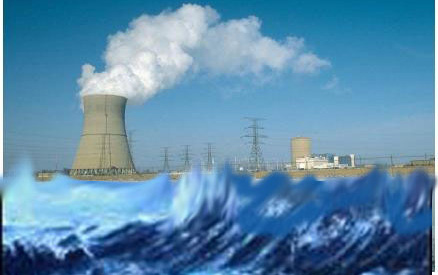 OECD Says Nuclear Land Costs to Rise by Up to 10% Post-Fukushima Bloomberg By Lars Paulsson – May 23, 2011 The cost of buying land to build nuclear reactors may increase by as much as 10 percent because the earthquake and tsunami in Japan on March 11 will force developers to buy in safer areas, according to the Organization for Economic Cooperation and Development’s Nuclear Energy Agency.
Luis Echavarri, the agency’s director general, spoke on May 17 by phone from Paris.
On nuclear land costs: “I think the cost associated to the location could increase. You need locations better protected against earthquakes, tsunamis and floods. You will have to build plants at higher elevation than the sea and river levels. I think we are talking of something between 5 and 10 percent, but that is very significant.”..
Ameren electricity company doesn’t support nuclear deal – too costly to customers
Ameren no longer backs nuclear permit compromise , Kansas City.com , 18 May 11 JEFFERSON CITY | Electricity provider Ameren Missouri says it no longer supports a proposed deal that emerged on the final day of the state legislative session to finance a site permit for a potential nuclear power plant.
The legislation had represented a last-ditch compromise among utility companies and industrial energy consumers, among others. It would have let customers be billed for some costs of a site permit application before a nuclear power plant actually is built. But the legislation failed to pass.
Richard Mark is the senior vice president of customer operations for Ameren Missouri. He said Thursday that the company now has concerns the deal could have resulted in significant rate increases for residential customers……Read more: http://www.kansascity.com/2011/05/19/2887911/ameren-no-longer-backs-nuclear.html#ixzz1MrHa4LRQ
Global nuclear industry slowdown, as investment in renewables grows
 The deepening nuclear debate over nuclear energy in France, meanwhile, may have global implications…….Even France’s allegiance to nuclear appears to be loosening…..several candidates vying to take on Nicolas Sarkozy in the presidential election next year have called for France to begin shifting from nuclear to renewable energy.China and the U.S. are also showing signs of strain over the issue…..In the U.S., nuclear investment plans are wavering
A Worldwide Nuclear Slowdown Continues – Technology Review, May 18, 2011, By Peter Fairley“……….The German government has already identified renewable energy as the future, setting plans to boost renewable generation to 50 percent of electrical consumption by 2030 (from 17 percent last year) and to 80 percent by 2050.
….Germany’s accelerated nuclear phase-out may also threaten plans in Eastern Europe by undermining support for subsidies. Continue reading
Flawed analysis of risks of Grand Canyon uranium mining
“There is entirely too much risk, too many unknowns and too many identified impacts to justify threatening one of the most important U.S. landmarks and one of the most world-renowned national parks to justify the relatively small economic benefit associated with mining of uranium in the Grand Canyon region,”
Critics blast report on G. Canyon uranium mining, NewsTimes , May 15, 2011 FLAGSTAFF, Ariz. (AP) — Conservation groups and officials in a northern Arizona county say there are serious flaws in a new federal analysis of the risks and benefits of uranium mining near the Grand Canyon. Continue reading
Namibia: government and unions waking up to exploitation by foreign miners
“A lot of mining companies are at it to exploit people together with the minerals. They either employ people on fixed term contracts or outsource certain functions of their business simply to reduce labour costs,” he said.
“This practice results in poverty jobs where employees of these contractors sometimes earn as little as 20% of the basic salary offered by the Eastern Platinum (EPL) holder for the same job.
| Second mining expo to be held amid fears of ‘nationalisation’ |  |
 |
 |
| Namibia Economist, by Nyasha Francis Nyaungwa | ||||||
| 13 MAY 2011 | ||||||
| The 2011 Mining Expo which kicks off next week in the capital is being held at a time when the mining sector faces uncertainty after government recently declared uranium, copper, coal, diamonds and rare earth metals as strategic minerals. Last month, government through cabinet endorsed a decision that the right to own licenses for strategic minerals will only be issued to a state company. The dramatic shift in policy has caught many investors and would-be investors unaware …..“….the mining sector’s contribution to government revenue is not commensurate with its share to the gross domestic product. Such contribution is mainly through royalties levied on the market value of the minerals. This means that Namibia benefits from its natural endowment mainly through rent-seeking. This situation is untenable” the minister said……http://www.economist.com.na/index.php?option=com_content&view=article&id=23739:second-mining-expo-to-be-held-amid-fears-of-nationalisation&catid=588:special-focus&Itemid=70
President of the Mineworkers Union of Namibia (MUN), John Ndeutepo, says that in order to create a conducive labour environment for workers in the mining sector, there is a need for a paradigm shift…. companies try by all means to prevent its employees from being organised. Some even deny them their rights to freedom of association. It is a proven fact that one cannot make people work any longer; you will need to motivate workers in order for them to perform,” Ndeutepo added. He said that the mining labour sector is faced with great challenges that calls for urgent change. One such challenge is the ability of unions to address labour issues involving contract and agency labour cases. |
Some multi national companies do not even bother to monitor adherence especially when it comes to contractors and they even end up corrupting compliance officials,” he said.
Ndeutepo also called for the recognition of unions in the sector. He said that a lot of companies cannot yet get any returns from this relationship as they view the union as an enemy.—http://www.economist.com.na/index.php?option=com_content&view=article&id=23738%3Aunion-calls-for-a-paradigm-shift-within-the-mining-industry&catid=588%3Aspecial-focus&Itemid=70
Australian uranium companies take heavy losses
Risk fallout hasn’t left uranium stock, May 13, 2011, SYDNEY (MarketWatch) — Australian-listed uranium firms are sporting heavy year-to-date losses after the recent disaster in Japan, and while investors appear to be slowly returning to some shares, analysts say the risks haven’t gone away.
Further afield, Canada’s Cameco Corp. has seen its stock fall 37.1% year-to-date, while Uranium One Inc. shares are down 19.8% in Toronto. Continue reading
1 This Month



19 November – Webinar – The Reality of Reprocessing
Time: 11:00 AM Pacific Time (US & Canada) / 2:00 PM Eastern / 7:00 PM UK / 8:00 PM CET
Register for the Zoom Event Here



Shut down the radiation-damaged Heysham nuclear reactors now
To see nuclear-related stories in greater depth and intensity – go to https://nuclearinformation.wordpress.com

Say No to NASA’s Reckless Nuclear Reactor on the Moon
Say No to NASA’s Reckless Nuclear Reactor on the Moon
-
Archives
- November 2026 (74)
- October 2026 (302)
- September 2026 (339)
- August 2026 (330)
- July 2026 (355)
- June 2026 (287)
- May 2026 (306)
- April 2026 (356)
- March 2026 (251)
- February 2026 (267)
- January 2026 (308)
- December 2025 (358)
-
Categories
- 1
- 1 NUCLEAR ISSUES
- business and costs
- climate change
- culture and arts
- ENERGY
- environment
- health
- history
- indigenous issues
- Legal
- marketing of nuclear
- media
- opposition to nuclear
- PERSONAL STORIES
- politics
- politics international
- Religion and ethics
- safety
- secrets,lies and civil liberties
- spinbuster
- technology
- Uranium
- wastes
- weapons and war
- Women
- 2 WORLD
- ACTION
- AFRICA
- Atrocities
- AUSTRALIA
- Christina's notes
- Christina's themes
- culture and arts
- Events
- Fuk 2022
- Fuk 2023
- Fukushima 2017
- Fukushima 2018
- fukushima 2019
- Fukushima 2020
- Fukushima 2021
- general
- global warming
- Humour (God we need it)
- Nuclear
- RARE EARTHS
- Reference
- resources – print
- Resources -audiovicual
- Weekly Newsletter
- World
- World Nuclear
- YouTube
-
RSS
Entries RSS
Comments RSS

