Duke – Progress Energy a powerful nuclear lobbying merger
At Progress Energy’s final annual meeting, it’s all in for nuclear power, Tampa Bay.com By Robert Trigaux, May 10, 2011 “…….it’s the latest tale of the bigger devouring the big. In 2000, Progress Energy gobbled up St. Petersburg’s Florida Power, arguing utilities must get larger to compete. We hear a similar message in Duke’s $13 billion-plus purchase of Progress Energy.……..A merged Duke-Progress Energy will lobby aggressively for such pro-nuclear aid as cheaper government loans and energy incentives.
It will seek the power to charge more consumers up front for the expense of building nuclear plants.
Florida lawmakers already allow utilities with nuclear ambitions to charge customers in advance.
Leery of Japan’s predicament, North Carolina legislators recently rebuffed Duke and Progress Energy for seeking similar powers in their home state…. http://www.tampabay.com/news/business/energy/at-progress-energys-final-annual-meeting-its-all-in-for-nuclear-power/1168665
US Japan nuclear marketing scheme, with secret plans for Mongolian waste dump
 Negotiations on building the facilities were kept secret as it was feared that if the plans came to light at the negotiation stage, then China and Russia — countries through which the fuel could pass — might interfere and protests could erupt from Mongolian residents.
Japan, U.S. negotiating construction of nuclear waste facility in Mongolia, Mainichi Daily News 10 May 11 ULAN BATOR, Mongolia –“…….the marketing of nuclear plants is big business — a single reactor sells for hundreds of billions of yen. The Japanese government regards the overseas sale of nuclear power plants as a pillar of the nations’ growth strategy. It has already tied a deal with Vietnam and is in negotiations with India and Turkey. However, Russia and other countries have gone a step ahead by marketing their reactors and the collection of spent nuclear fuel together as a set, which has put Japan and the U.S. on the back foot. Continue reading
Insurmountable problem of nuclear power’s financial risks
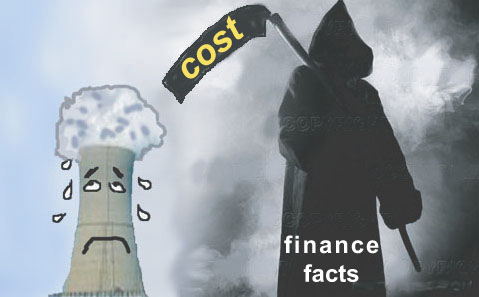 the insurance industry and financial markets still have not altered their long held position that nuclear power poses unacceptable financial risk.
‘ Smart money’ reflects nuclear power risks Burlington Free Press David R. Abbott, 8 may 11, Is nuclear power safe? Not surprisingly, the owner of Vermont Yankee is spending heavily in an effort to convince us that it is. Perhaps, instead, we should follow the smart, disinterested money in attempting to answer that essential question because, in the case of the nuclear power industry, an unacceptable financial risk is, at the same time, an unacceptable safety risk.
The smart money here is represented by the insurance industry and the financial markets. Continue reading
Nuclear industry worldwide enjoys the “mother of all subsidies”
Twenty-five years after the disaster at Chernobyl’s reactor number 4, the global community is struggling to find 2.2 billion dollars to build a permanent shelter to replace the collapsing cement and steel sarcophagus hastily built after the accident.
That 2.2 billion dollars does not include the costs of dismantling the radioactive material nor the costs of building a safe storage facility for the spent and damaged nuclear fuel from the plant. This material will be dangerously radioactive for thousands of years.

The Nuclear Cost Shell Game, By Stephen Leahy, UXBRIDGE, Canada, May 6, 2011 (IPS) – The nuclear energy industry only exists thanks to what insurance experts call the “mother of all subsidies”, and the public is largely unaware that every nuclear power plant in the world has a strict cap on how much the industry might have to pay out in case of an accident.In Canada, this liability cap is an astonishingly low 75 million dollars. In India, it is 110 million dollars and in Britain 220 million dollars. If there is an accident, governments – i.e. the public – are on the hook for all costs exceeding those caps. Continue reading
Projections of costs for nuclear plants leave out full fuel cycle and risks
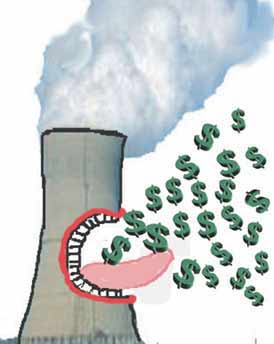 When comparing energy choices, nuclear versus solar for instance, the full life cycle costs are rarely used. Nor are the financial risks taken into account,
The Nuclear Cost Shell Game, By Stephen Leahy, UXBRIDGE, Canada, May 6, 2011 (IPS)“…….Experts estimate the U.S. nuclear industry’s liability cap of 10 billion dollars amounts to “an indirect subsidy of about 33 million dollars per plant per year over the lifetime of a nuclear plant,” according to a study published in Energy Policy in April.
If that 33 million dollars-per-plant-per-year indirect subsidy was instead used for loan guarantees for solar panel manufacturing plants, the U.S. would gain 5.3 trillion dollars worth of additional electricity over a 100-year time span, the study reported.”Wind might be even better than solar under this scenario,” said co- author Joshua Pearce, a mechanical and materials engineer at Queen’s University in Kingston, Ontario.
“We’re wasting money on nuclear energy. It makes no economic sense,” Pearce told IPS. Continue reading
Fukushima nuclear accident could cost tax-payer $trillions
“In America, ….. the necessary insurance for nuclear operators is capped at just $375 million by law,
Ultimate costs from nuclear accidents can be difficult to predict, but many estimates place total damages, including economic loss, in the trillions.……
a severe accident at just one of Southern Company’s existing Plant Vogtle reactors in Georgia could cause up to 39,000 immediate injuries and cost over $70 billion (in 1982 dollar and Census figures).
Japan Nuclear Disaster Update, CleanEnergy Footprints May 5“…….Despite all of the concern over health, radiation and environmental hazards raised by this disaster, Tepco shockingly does not have disaster insurance. Speculations are that the company will be nationalized and that the Japanese government, which likely means taxpayers, will assume the burden of Tepco’s massive liabilities. Continue reading
Grave financial risk for Japanese government if TEPCO insolvent
unlimited liability could push TEPCO into insolvency and force the government to take a majority stake in the company
Japan’s Nuclear Rescue Plan: The Unintended Consequence of Unlimited Liability, BNet, By Kirsten Korosec | May 3, 2011, The Japanese government — once bosom buddies with Tokyo Electric Power — wants the company to face unlimited liability for damages from itstroubled Fukushima nuclear power plant. Continue reading
Calvert Cliffs nuclear project a dead cat
 a new one [nuclear plant] would cost many billions with big financing costs. The French would like the state of Maryland or somebody else to guarantee the purchase of electricity from Calvert Cliffs 3, but that’s not going to happen.
Exec: Exelon deal won’t revive Calvert Cliffs project, Baltimore Sun, by Jay Hancock, APRIL 29, 2011, Exelon’s announced purchase of Constellation Energy prompted speculation that the dormant project to build a third reactor at Calvert Cliffs on Maryland’s Chesapeake shore would be revived. Continue reading
Fukushima a disaster for the uranium industry
Today , in Fn Arena Greg Peel reports that the Uranium Market is Becalmed. USA’s Energy department is continuing to sell its uranium the spot price continues to fall.
Uranium Prices Plummet in the Wake of Nuclear Explosions, Insane Planet May 1, 2011 By N. Solomon, The Japan disaster has spelt a concomitant disaster to uranium prices as both spot prices as well as shares of uranium-mining companies crash. Uranium prices have suffered due to the explosions that happened in Japan and the attendant problems which are obvious to everyone, many countries in the world which had nuclear agendas especially as a means of power generation are either developing cold feet or planning to scrap the project is completely–and justifiably so.
As it stands, it is believed among investors that many countries are going to react to the radiation leaks that followed explosions at the Japanese Fukushima plant by enforcing tighter restrictions even if they do not take the alternative of completely abandoning the project. Either way, uranium prices will be forced down.
New nukes not viable for Exelon, old nukes a “cash cow”
“They can buy them much more cheaply than they can build them,” …….[Exelon] is also expected to seek 20-year operating license renewals on the remaining reactors that have not yet been cleared for the license extension
Why Older Nuclear Power Plants Remain ‘Cash Cows’ Despite Fukushima, NEW York Times, By PETER BEHR , April 29, 2011 There are no new nuclear plants in the foreseeable future for Exelon Corp., the largest U.S. reactor operator. Old plants, though, are a different story Continue reading
How USA’s nuclear industry stalled, despite government propping it up
There are many reasons those 896 reactors went missing. Number one is the fact that the No Nukes movement stopped the industry from gouging from the government the trillion or more dollars it would have taken to build that fleet. Continue reading
USA unprepared for power losses from nuclear plants
Nuclear chief questions emergency power at plants. 28 April 11 By Tennille Tracy, WASHINGTON -(MarketWatch)– The U.S. nuclear chief questioned Thursday whether U.S. nuclear plants are prepared to deal with major losses of power that last several hours or even days.
In a meeting of the Nuclear Regulatory Commission, NRC Chairman Gregory Jaczko said existing standards for emergency power might not be “reasonable” given the damage that major catastrophes can cause at nuclear facilities…… In the wake of the Fukushima disaster, nuclear experts have raised questions about the adequacy of emergency power supplies at U.S. facilities. They have taken particular issue with nuclear plants that rely on batteries because the batteries have limited lifespans…… http://www.marketwatch.com/story/nuclear-chief-questions-emergency-power-at-plants-2011-04-28
USA politicians pledge tax-payer funds, but nuclear industry still failing
Even supporters of the technology doubt that new projects will surface any time soon to replace those that have been all but abandoned…If the builders default, as happened on some nuclear construction projects in the 1980s, the taxpayer liabilities could run into the billions of dollars……
Despite Bipartisan Support, Nuclear Projects Falter, New York Times, By MATTHEW L. WALD, April 28, 2011, WASHINGTON — In an effort to encourage nuclear power, Congress voted in 2005 to authorize $17.5 billion in loan guarantees for new reactors. Now, six years later, with the industry stalled by poor market conditions and the Fukushima disaster, nearly half of the fund remains unclaimed. And yet Congress, at the request of the Obama administration, is preparing to add $36 billion in nuclear loan guarantees to next year’s budget. Continue reading
Centennial Project – uranium mining’s poor prospects
(USA) Powertech pauses uranium mine Company: Nuke disaster hurt industry, Centennial Project, Coloradoan.com , Apr. 27, 2011“…..The March 11 Tohoku earthquake in Japan and nuclear meltdown at the Fukushima Dai-ichi nuclear power plant that followed sent uranium prices plummeting….. “This is about as bad a story as you can imagine for the U.S. nuclear power industry,” said Charles Mason, True Chair of energy economics in the economics and finance department at the University of Wyoming, who is writing a book about uranium exploration and its impacts. “It certainly is bad news.”
Once it became clear the quake would lead to prolonged nuclear disaster, nuclear industry forecasters started to predict unhappy consequences for uranium prices….. Powertech’s current financial state could cast even more doubt on the future of the Centennial Project, according to the filing. Powertech said in its report that to maintain “a portion” of its interest in the Centennial Project, the company is required to make “significant” option payments in June.
Japan makes convenient new rules on “acceptable” nuclear radiation
it has the effect of legalizing illness and deaths from nuclear radiation, or at least the state’s responsibility for them…..the state’s concern appears to be less the health of employees and more the cost of caring for nuclear victims.
 Dying for TEPCO? Fukushima’s Nuclear Contract Workers, The Asia Pacific Journal , Paul Jobin 28 April 11“……On March 14th, the Ministry of Health and Labor raised the maximum dose for workers to 250 mSv a year, where previously it was set at 100 mSv over 5 years (either 20 mSv a year for five years or 50 mSv for 2 years, which is in itself a strange interpretation of the recommendations of the International Commission on Radiological Protection’s guideline stipulating a maximum of 20 mSv a year. Continue reading
1 This Month





PLEASE OPPOSE HR 8255 AND S.3639 – bills would accelerate satellite deployment, with no environmental review or safeguards – https://ncstd5li.quorum.us/campaign/169331/
To see nuclear-related stories in greater depth and intensity – go to https://nuclearinformation.wordpress.com
-
Archives
- October 2026 (39)
- September 2026 (339)
- August 2026 (330)
- July 2026 (355)
- June 2026 (287)
- May 2026 (306)
- April 2026 (356)
- March 2026 (251)
- February 2026 (267)
- January 2026 (308)
- December 2025 (358)
- November 2025 (359)
-
Categories
- 1
- 1 NUCLEAR ISSUES
- business and costs
- climate change
- culture and arts
- ENERGY
- environment
- health
- history
- indigenous issues
- Legal
- marketing of nuclear
- media
- opposition to nuclear
- PERSONAL STORIES
- politics
- politics international
- Religion and ethics
- safety
- secrets,lies and civil liberties
- spinbuster
- technology
- Uranium
- wastes
- weapons and war
- Women
- 2 WORLD
- ACTION
- AFRICA
- Atrocities
- AUSTRALIA
- Christina's notes
- Christina's themes
- culture and arts
- Events
- Fuk 2022
- Fuk 2023
- Fukushima 2017
- Fukushima 2018
- fukushima 2019
- Fukushima 2020
- Fukushima 2021
- general
- global warming
- Humour (God we need it)
- Nuclear
- RARE EARTHS
- Reference
- resources – print
- Resources -audiovicual
- Weekly Newsletter
- World
- World Nuclear
- YouTube
-
RSS
Entries RSS
Comments RSS

