USA’s Airforce to give nuclear officers a special high pay rate
AF approves special pay for nuclear career fields, US AirForce, October 02, 2014 WASHINGTON (AFNS) —
Assignment incentive pay and special duty assignment pay for select total force nuclear career fields became effective Oct. 1, following Secretary of the Air Force Deborah Lee James’ recent announcement.
“The purpose of these special pays is to incentivize Airmen to volunteer for and perform duties in a particular career field, location and/or special assignment where the scope of responsibility and required skills exceed those of other Airmen in the same career field and rank,” said Brig. Gen. Brian Kelly, director of force management policy.
Select officers and enlisted members serving in eleven nuclear career fields and assignment areas will receive between $75 and $300 per month. Nuclear careers fields selected for these special pays include enlisted service members assigned to command post, nuclear aircraft maintenance, security forces, missile maintenance, aircraft armament systems, nuclear weapons and support personnel who deploy to the ICBM complex. Missile launch, security forces and missile maintenance officers will be eligible to receive special pays as well……..http://www.af.mil/News/ArticleDisplay/tabid/223/Article/503220/af-approves-special-pay-for-nuclear-career-fields.aspx
$1 billion increase in price for new South Carolina nuclear power plant
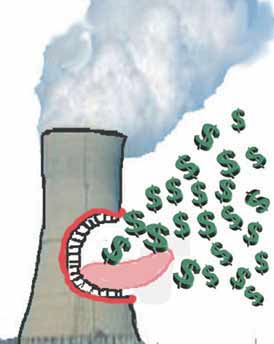
 Price tag for SC nuclear plant could grow by $1B http://www.postbulletin.com/news/nation/price-tag-for-sc-nuclear-plant-could-grow-by-b/article_ac849e2f-4c85-59e7-8144-9b7408674671.html 2 oct 14,
ATLANTA (AP) — The firms building a new nuclear plant in South Carolina say their construction costs could grow by more than $1 billion.
That development is troubling for a nuclear industry trying to prove it can build new power plants without the cost overruns that plagued its projects decades ago. SCANA Corp. announced Thursday that the firms building and designing two new reactors at its V.C. Summer plant say the utility’s costs could grow by about $660 million dollars in 2007. Co-owner Santee Cooper would face a roughly $540 million charge.
Officials for SCANA Corp. and Santee Cooper say they have not accepted any financial responsibility for those costs, and the charges could change.
The plant being built in South Carolina is a sister project to another facility under construction in Georgia.
Regulators order Duke Energy to repay customers $54 million for nuclear equipment never produced
 PSC orders Duke to refund to customers $54 million for nuclear plant equipment that was never produced
Ivan Penn, Tampa Bay Times Staff Writer Thursday, October 2, 2014 TALLAHASSEE — In the face of growing public outcry, state regulators today ordered Duke Energy Florida to credit $54 million to customers for nuclear equipment that was never produced for the now canceled Levy County nuclear project……..
state Attorney General Pam Bondi joined a growing chorus of state leaders urging the PSC to refund to ratepayers money they paid for equipment for a nuclear plant. Neither the plant nor the equipment was ever built.
In a letter to commission Chairman Art Graham, Bondi said, “I am writing to express my deep concerns over the Public Service Commission . . . staff’s recent recommendation to side with Duke Energy to withhold $54 million in credits rightfully due to its customers.”
Today’s “meeting of the Commission presents an opportunity to do what is in the best interest of those customers who have been shouldering the burden of the $54 million for a nuclear plant project that will never come to fruition,” Bondi wrote.
Duke, the state’s second largest investor owned utility, had expected to have more than 3,000 megawatts of power from the upgrades to the Crystal River nuclear power plant in Citrus County and construction of a pair of new reactors in Levy County.
But a botched upgrade of the Crystal River facility led Duke to permanently close the plant and soaring costs of the Levy nuclear plant led the utility to cancel that project.
The two nuclear projects’ costs to Duke ratepayers reached $3.2 billion, though customers will never receive a kilowatt of power from the plants for that money.
The PSC vote to order the $54 million refund means customers will stop paying for expenses related to the Levy project by mid 2015. Without that order, payments of $3.45 a month for the average residential customer would have run through early 2016.
An eight-year-old state law enabled Duke to collect the money in advance for the Levy project. The law, the Nuclear Cost Recovery Clause, or so-called “nuclear advance fee,” allows Florida utilities to collect money from their customers for nuclear projects before they begin producing power.
Duke is suing its former contractor, Westinghouse Electric Co., in federal court in North Carolina to reclaim the $54 million because the company never produced the equipment after receiving the money. Westinghouse is counter-suing Duke for $512 million for canceling the contract for the Levy project. http://www.tampabay.com/news/business/energy/bondi-urges-psc-to-order-duke-to-refund-54-million-for-nuclear-equipment/2200407
OECD and IAEA warn of uranium industry’s uncertain future
OECD/IAEA Red Book The latest edition of the ‘Red Book’ − ‘Uranium 2014: Resources, Production and Demand’ − has been released by the OECD Nuclear Energy Agency and the International Atomic Energy Agency.8………
“Uranium miners have been hit harder by the Fukushima Daiichi accident than any other segment of the nuclear fuel cycle,” the Red Book states, and Fukushima “has eroded public confidence in nuclear power in some countries and prospects for growth in nuclear generating capacity are in turn being reduced and subject to even greater uncertainty than usual.”
 Uranium’s dead cat bounce as miners play chicken Dr Jim Green − Nuclear Monitor 2 Oct 2014 “…..the price increase has been driven by supply-side concerns and speculation instead of increased demand or even speculation regarding increased demand. UBS commodities analyst Daniel Morgan said in early September: “There’s been a few supply-side issues which has been enough for a very modest price rise. What the market really needs is a demand-side driver to get the price going and in my view we don’t have one at the moment.”2
Macquarie Group’s Stefan Ljubisavljevic predicts a uranium supply surplus for the next five years unless some unprofitable mines close.1 Raymond James analyst David Sadowski said in May that many utilities around the world “are sitting on near-record piles” of uranium.11 For example China has stockpiled about eight years’ supply (at its current rate of consumption) while it may take Japanese utilities a decade or more before they exhaust existing stockpiles.12
The long term price, where most uranium business is conducted, was still languishing at US$44 / lb in late August, a six-year low.3
A number of mines have been put into care-and-maintenance over the past year, including Paladin Energy’s Kayelekera mine in Malawi, and the Honeymoon mine in South Australia, owned by a Rosatom subsidiary. Many other planned mining projects have been cancelled or deferred or scaled down, and some uranium mining companies are being downgraded. Recent examples include:
Secrecy and poor labour conditions at Fukushima nuclear plant
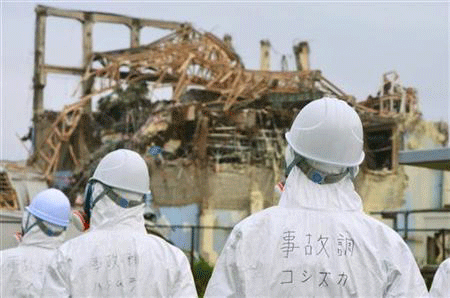 Fukushima Worker: “All sorts of troubles going on in plant”; Officials won’t tell public what really happens — People should worry, it’s not under control — Employees wear disguises over fear of retaliation — Reporter: Tour of plant “was very strange… feels completely dead… not many people” (VIDEO) http://enenews.com/fukushima-worker-all-sorts-troubles-going-inside-plant-officials-arent-disclosing-problems-public-im-concerned-safety-employees-wear-disguises-fear-retaliation-plant-control-people-be-worried-vi?utm_source=feedburner&utm_medium=email&utm_campaign=Feed%3A+ENENews+%28Energy+News%29
NHK, Sept. 24, 2014 (at 2:15 in): [A Fukushima Daiichi worker’s attorney] warns that the current system could endanger the entire decommissioning process… “Tepco should be held accountable for turning a blind eye. It needs to improve labor conditions, otherwise the situation will make it impossible to secure enough workers to deal with the nuclear accident.” >>Watch the video here
The Guardian, Sept. 9, 2014 (emphasis added):Fukushima fallout continues… [There’s an] unprecedented attempt by four Fukushima Daiichi workers to sue the utility for unpaid wages… [T]he four men… wore masks in court for fear of reprisals from their employers… “A year ago, the prime minister told the world that Fukushima was under control. But that’s not the case,” Tsuguo Hirota told Reuters… “It’s becoming a place for amateurs only, and that has to worry anyone who lives near the plant.”… “My health could suffer… I believe there are many people who can’t speak out about this kind of problem,” one of the workers told public broadcaster NHK.
Time Magazine correspondent Hannah Beech, Sept. 7, 2014: Just to get into the plant it –again — it’s like a Hollywood movie… What was very strange about walking into this place is that it feels completely dead. You don’t see that many people moving around. And those people that you do see, there’s not a palpable sense of urgency, but you realize that the work that they’re doing is so important. And they may not be getting the full of backing that they should to be able to do this. >> Full interview here
NPR, March 11, 2014: About 100 out of the 4,000 people working in the plant every day are TEPCO employees. The rest are subcontractors… Workers [are barred from] speaking to the media… I met a TEPCO worker who was on the job when the quake and tsunami hit… and talked in his car… on the condition that we not identify him and disguise his voice. He says it’s well known at the plant that shoddy work is being done… Many problems inside the Fukushima plant go unreported… The worker says that the Japanese government now needs to step in and guarantee the welfare and safety of all the workers…
TEPCO employee at Fukushima Daiichi (at 2:45 in): I’m concerned about my safety… There are things they feel they don’t have to disclose. There are all sorts of troubles going oninside the plant.
Full interview with the anonymous Fukushima worker here http://enenews.com/fukushima-worker-all-sorts-troubles-going-inside-plant-officials-arent-disclosing-problems-public-im-concerned-safety-employees-wear-disguises-fear-retaliation-plant-control-people-be-worried-vi?utm_source=feedburner&utm_medium=email&utm_campaign=Feed%3A+ENENews+%28Energy+News%29
“The nuclear industry is in decline” – a report that upsets the industry
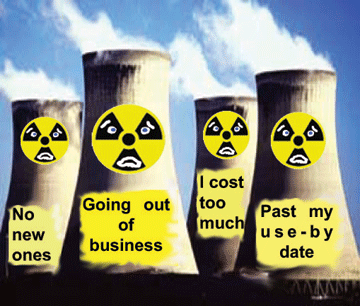 Nuclear’s fortunes on the wane THE AUSTRALIAN SEPTEMBER 29, 2014 Robin Bromby Business columnist
Sydney :……….now along comes some disquieting analysis of the nuclear electricity story. Normally, we would have seized on the annual report during the week fromManhattan Corp (MHC), which has the Ponton uranium project in Western Australia, and which coincided with yet another rise in the spot uranium price, up $US2.50 a pound to $US36.50/lb. Executive chairman Alan Eggers writes that the uranium sector has been dominated by “negative industry sentiment, falling supply and lacklustre demand among buyers of nuclear fuel”. He then outlines a reasonably cheerful outlook, and one to which Pure Speculation has been an adherent.
Until we read another report written by eight European and Japanese heavyweight thinkers in the field, headed by Paris-based Mycle Schneider. Their World Nuclear Industry Status Report 2014 has a stark and simple message: “The nuclear industry is in decline”.
There are 388 operating reactors around the world, 50 fewer than in 2002. Installed capacity is back to where it was 20 years ago.
The nuclear share of the world’s power generation declined from its peak of 19.6 per cent in 1996 to 10.8 per cent in 2013. In terms of revenue, nuclear now accounts for a lower percentage than in 1984.
In all, there are 67 “current” nuclear reactor projects, which sounds impressive until the report explains that eight of those reactors have been listed as “under construction” for more than 20 years; at least 49 have encountered construction delays, some for several years, and for the first time Chinese projects have also been delayed; for the remaining 18 reactors, either construction began within the past five years or the reactors have not yet reached projected start-up dates.
“Delays have occurred in the development of the nuclear programs for most of the more advanced newcomer countries, including Bangladesh, Jordan, Lithuania, Poland, Saudi Arabia, Turkey and Vietnam,” the report adds……..http://www.theaustralian.com.au/business/opinion/nuclears-fortunes-on-the-wane/story-fnciihm9-1227073165703
Doubtful that Japan’s nuclear reactors will ever restart

 Rocky road ahead for Japan’s nuclear restart, Ecologist Jim Green and Peer de Rijk / Nuclear Monitor 26th September 2014 Japan’s government is trying to get its failing nuclear power industry up and running, write Jim Green and Peer de Rijk. But in the post-Fukushima world, it faces formidable obstacles. Experts believe most reactors will never restart – and Japan’s stricken utilities may have to find $30 billion or more to finance their decommissioning……… Continue reading
The US Nuclear Power Program is Based on an Exceedingly Bad Business Model
Will Fukushima Become An Extinction Level Event? “Fukushima: Dispossession or Denuclearization?” — The Final Chapter, The Millennium Report 13 Sept 14 “……….Bear in mind that the following quote comes from a 1986 issue of Forbes Magazine, and that the economic and financial status quo throughout the US nuclear power industry has only sunk lower since the mid 1980s.The failure of the U.S. nuclear power program ranks as the largest managerial disaster in business history. The utility industry has already invested $125 billion, with an additional $140 billion to come before the decade is out – and only the blind, or the biased, can now think that money has been well spent. – Forbes Magazine, February 1986
Maintenance procedures and preventative measures, plant overhauls and cold shutdown, temporary plant closures and premature decommissionings have plagued the nuclear energy industry from the very beginning. It is now experiencing a snowballing of these events, as the costs associated with them are skyrocketing. What relevance does this worsening predicament have to Earth changes and technospheric breakdown?
First, both of these major co-factors — Earth changes and technospheric breakdown — will only intensify for the foreseeable future. As they do, the business model that undergirds the nuclear energy industry will become more untenable. Not only is nuclear power generation the most cost ineffective of all the major energy-producing platforms, it is vulnerable to the greatest costs associated with required maintenance and repair, as well as failure prevention and remediation in the wake of a nuclear accident.
Clearly, because of unrealized revenue generation targets and cost overruns alone, the NEP business model is unsustainable. Global Climate Change and Technospheric Breakdown will only create an environment wherein costs will continue to escalate dramatically as the many aging plants worldwide get older and more decrepit. Ultimately, a breaking point will be reached whereby the current form of the Nuclear Energy Paradigm will no longer be a reasonable business proposition; not that it ever has been.
That Fukushima has placed such an exceptional financial burden on TEPCO validates this ubiquitous and ongoing scenario. Not only has Fukushima effectively bankrupted TEPCO, it has placed a huge cost burden on the Japanese government. It also has the potential to drag down every other business concern associated with TEPCO. The Japanese government is not immune to the extraordinary claims which may be filed in the future by the countless citizens and businesses that have legitimate grievances. These unfunded liabilities alone may end up taxing the people in ways never seen before.
The international cost ramifications have been curiously downplayed in this regard. However, given the current state of tensions between Japan and some of its neighboring countries, the current compassionate stance can easily be replaced with an understanding that Japan really screwed up, and that it ought to be held liable for damages related to all Fukushima-generated radiation damage. If damages could be proven in an international court of law, both China and North Korea might have a serious change of attitude in the not-too-distant future.
Perhaps then the politicians in Tokyo will begin to respond to this matter with prudence and foresight. The current energy policy surrounding nuclear power has been a gross failure, even when based on economics alone. Since 2011, so much has happened, and not happened, throughout the Japanese nuclear energy industry that it is a wonder any money is still allocated toward its proliferation.http://themillenniumreport.com/2014/09/will-fukushima-become-an-extinction-level-event/
Poor outlook again for uranium market, with renewed glut
Uranium Rally Threatened by Surplus as Mine Strike Eases Bloomberg, By Ben Sharples September 23, 2014 The rally in uranium spurred by speculation of further sanctions against Russia is poised to unravel as a supply surplus builds with the end of a labor strike at the world’s biggest mine in Canada……
Market Glut
Cantor estimates a uranium market surplus of 13.2 million pounds in 2014 while Raymond James Ltd., a financial adviser, on Aug. 27 forecast an overhang of about 10 million…….
Paladin Energy Ltd. said it would close its Kayelekera operation in Malawi until uranium climbs above $70 a pound, while Russia’s Atomredmetzoloto shut the Honeymoon mine in Australia last year…….http://www.businessweek.com/news/2014-09-23/uranium-rally-threatened-by-surplus-as-mine-strike-eases
The delusion that nuclear power is economically viable
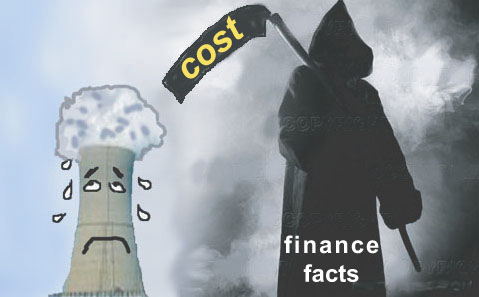 Rio Tinto’s great big nuclear delusion Business Spectator MATTHEW WRIGHT 22 Sept 14, Rio Tinto’s energy chief, quoted in The Australian Financial Review article this month believes “there will be a return to nuclear” and that China will lead it, stating that a joint venture has “quietly developed” between China’s state nuclear technology company and the Toshiba Westinghouse Corporation”.
The problem is that that consortium hasn’t produced a third-generation nuclear reactor. In fact, nobody has and all the so-called Gen III-plus reactors under construction globally are behind schedule and over budget – including those in China.
Kenyon-Slaney is living in hope as Rio is invested so heavily in uranium – a mineral which peaked in 2005, well before Germany decided to exit nuclear and Japan idled their entire reactor fleet.
It would be comical if it wasn’t so serious, but Kenyon-Slaney’s nuclear industry just can’t put a foot right. Delays are mounting up in the west, and OECD countries and huge resources are being spent keeping old ageing reactors online. The expenditure that could be better directed is immense.
As a well-known supporter of serious action on climate change, including decarbonisation of all sectors, I have on numerous occasions written about nuclear energy. Following those articles, supporters of nuclear energy have often asked, if I’m serious about climate change, why would I oppose nuclear (a low emissions source of electricity)? In this column I’ll answer that question. But, first I’ll give an update on a few of the latest nuclear industry disaster stories from around the globe.
Japan
The Fukushima disaster clean-up bill will now exceed $112 billion*……….
Europe
 Europe’s nuclear industry is struggling. Many reactors are currently off-line for much longer periods than scheduled, Germany and Switzerland are phasing out their reactors and most countries –including Spain, Austria, Sweden and Italy – won’t be building any reactors.
Areva, the world’s biggest builder of nuclear along with French utility EDF, can’t deliver on a new reactor project. Reactors under construction at Flamanville, France and Olkiluoto in Finland are years behind schedule and billions over budget. In the last couple of weeks, Areva has admitted that the Finnish project, originally planned to be online and delivering electricity in 2008, will now be delayed until late 2018. This is another way of saying 2019, 2020 or … never.
United States
All four nuclear reactors being constructed in the US are suffering costly delays. The reactors rated at 990MWe (2100MWe gross) under construction in Georgia and South Carolina were supposed to begin power generation in 2016. These four reactors are reported to cost $28 billion………
 China
China
The central government had ambitious plans to build a significant amount of nuclear power plants, but since Fukushima their local Gen II designs being used on every project have been scrapped for future projects, and Gen III designs. These Gen IIIs have never been built anywhere, and are the only acceptable options for future projects. And here’s the problem: just like in France, Finland, Georgia and South Carolina, China’s projects aresignificantly over budget and behind schedule, adding millions of dollars of cost for every additional day without power generation. Back in 2010, China claimed that it would build 80GW of new nuclear by 2020, but the reality is it is likely to add just 20GW, around 75 per cent short of their target……. (*All figure are in Australian dollars. ) http://www.businessspectator.com.au/article/2014/9/22/energy-markets/rio-tintos-great-big-nuclear-delusion?utm_source=exact&utm_medium=email&utm_content=919754&utm_campaign=cs_daily&modapt=
China joins the nuclear marketing frenzy to sell to India
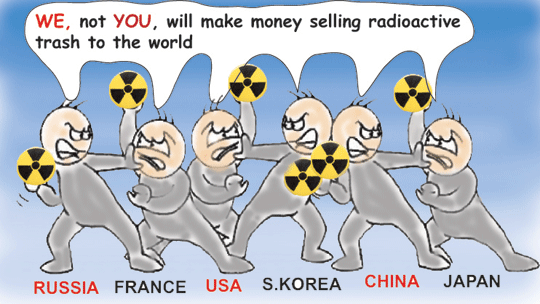 China joins nations eyeing India’s civil nuclear sector, Cold Air Currents, 21 Sept 14 Yahoo News UK: NEW DELHI (Reuters) – China became the latest nation to line up for a stake in India’s civil nuclear energy drive on Thursday, agreeing to open talks on cooperation in a sector that New Delhi sees as the solution to its chronic power problems.
...”I think the Chinese are looking basically at the commercial angle, since India is going to be giving contracts for nearly $150 billion in the next 10-15 years,” said Srikanth Kondapalli, a China watcher at Delhi’s Jawaharlal Nehru University.
The announcement, made after Xi met Prime Minister Narendra Modi in New Delhi, comes on the heels of a deal India struck earlier this month to buy uranium from Australia to increase its fuel supplies.
Days before that, Modi and Japanese Prime Minister Shinzo Abe agreed to accelerate talks on a nuclear energy pact……http://coldaircurrents.luftonline.net/2014/09/china-joins-nations-eyeing-indias-civil.html
Financial problems for South Africa in planned nuclear deal

 Nuclear economist warns SA will ‘run into problems’http://www.bdlive.co.za/business/energy/2014/09/19/nuclear-economist-warns-sa-will-run-into-problems BY CAROL PATON, 19 SEPTEMBER 2014, SA’s last tender to build nuclear power stations was canned in 2008 after credit rating agencies made it clear that they would downgrade Eskom to junk if it went ahead, Steve Thomas of the University of Greenwich said in a lecture on nuclear economics at the University of Cape Town on Thursday.
Details of Eskom’s nuclear tender in 2006 have not been fully disclosed, except that Eskom dropped it for being too expensive.
Eskom had expected a construction price of $2,500/kW but bids came in at $6,000/kW. It was also made clear, said Prof Thomas, that ratings agencies demanded “unconditional, timely guarantees” across all Eskom’s debt stock for it to maintain its credit rating.
Prof Thomas, visiting as guest of antinuclear lobby group EarthLife, said he expected SA’s nuclear endeavour to run into the same problems. Financing of nuclear projects had become highly risky and was regarded as credit-negative by ratings agencies.
“In the past, financing was not a problem. Utilities were blue-chip stock. They built plants and the costs were passed on to consumers. From a banking point of view this was ideal,” he said.
But accidents such as Chernobyl had led to increased costs in nuclear construction as additional safety measures must be included. Cost and time overruns had led banks to see nuclear power as too risky.
New regulatory approaches, in which prices are set by an independent regulator that assesses their fairness, have made it more difficult for utilities to pass on price increases to consumers.
“Of 70 nuclear power plants under construction, 50 are significantly late and the odds are against you to build to time and cost. So if banks won’t take the risk, then consumers must. But regulators are less likely to say consumers should sign a blank cheque. “For most countries that is not a viable option,” he said.
The remaining option was for taxpayers to provide the guarantees, should the nuclear vendor or utility go bankrupt.
n the UK, where a new plant is under construction at Hinkley Point, the British government has provided £10bn in loan guarantees, equal to 62% of the estimated cost.
“Unless SA consumers or taxpayers can guarantee the loan, a nuclear deal will not be financeable.”
An insight onto the nuclear industry’s manipulations to shift their cost burdens
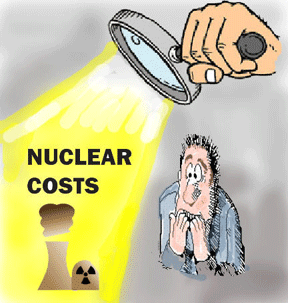 Vendors adapt to financing role World Nuclear News, 5 September 2014 Nuclear power reactor vendors have been forced to adapt to the fact that governments are no longer willing to assume the financial risks associated with nuclear new build projects, Jerry Hopwood, vice president of product development at Candu Energy, said on 12 September….
Private sector models are difficult to execute for nuclear projects due to first-of-a-kind issues, their large capital requirement, long construction timescales and investor return expectations. But they can work within a positive framework of incentives – for example the UK’s contract for difference model, he said..
Several emerging markets are still developing state-owned models, but are incorporating mechanisms where risks are placed with the appropriate parties, such as nuclear initial public offerings and build-own-operate-transfer.
“Public-private partnership seems to be where the sector is going,” he said.
Public-private partnerships
This combination means a project is financed by both the government and a private investor, with the public share able to attract export credit. Such a model requires a power purchase agreement matched to debt obligations and the project risks are allocated between government agencies and private companies.
Regulatory and technology risks are “two separate sides to the same coin,” he said. Other risks include engineering, supply and project management; technical services; skilled labour and availability and rates; training and commissioning, and lifetime operational support.
Government sponsored financial incentives encourage private sector companies to take increased financial responsibility for nuclear new build projects.
These include contracts for difference and power purchase agreements, loan guarantees, export credits, carbon credits, and cost and schedule overruns.
“Vendors play a critical role in the success of the public-private partnership model by focusing on key areas, which are project risk reduction and regulatory feedback. No matter how the risks are allocated, if they are too high, you won’t get the financing,” he said…….
Collaboration
“Working closely with regulators, vendors can ensure that reactor designs meet safety and environmental standards before project deployment,” he said. “A vendor pre-project design review of a new nuclear power plant allows the regulatory body an opportunity to assess a design prior to any licensing activities and to identify potential issues that would require resolution.”
Further co-ordination between regulators, either bilaterally or through multi-lateral forums, such as MDEP [Multinational Design Evaluation Program], can help to harmonize views and mitigate risks. In that way a design qualified in the home country can be used elsewhere. We need regulatory cooperation across the world,” he said.
The success of future new build projects is “imperative” to ensure the long-term sustainability and growth of the industry, he said. “Failure is not an option.“……
Vendor-led financing is not sustainable in the long term, Hopwood said.
“I think it’s a sort of kick starting mechanism, a way to get projects going so that we start to have a track record,” he told World Nuclear News. “Whether it be in a big way or a small way, it’s showing vendor commitment and it’s getting some projects on the books and going and creating a track record and that’s the value of it and necessarily it must lead to more.”
“If we picture a world with many nuclear projects going ahead – there are 71 nuclear units under construction at the moment – the financing requirement is far more than any vendor or even any individual utility can finance, so financing has to come from aggregating from many sectors in order to have a flourishing nuclear industry. The demand for money is going to be so great that it will necessarily require us to seek out all sorts of funding, all kinds of capital formations,” he said. http://www.world-nuclear-news.org/NN-Vendors-adapt-to-financing-role-1509201401.html
South Africa’s very suspect plan for vendor-financed nuclear power
A nuclear tale that sounds too good to be true Business Day BY CAROL PATON, 15 SEPTEMBER 2014, BUILD now, pay much later. That is the good news story about nuclear energy being told to SA’s decision-makers. In this model, a nuclear vendor and a financier — usually the government of the country of the vendor or a state-owned enterprise or bank — come as a package. The loan from the financier is repaid from the electricity tariff over the long term, 15 to 20 years, and repayments begin when electricity is produced.
The vendor-financed option has made the scary R1-trillion price tag, wielded by Department of Energy and Treasury officials as a warning to their political principals, disappear in a puff of smoke. The nuclear option appears even more attractive when vendors move onto the next part of the story: as operating costs for nuclear energy are low, and the expense lies in construction, once the loan is repaid, energy becomes a virtual “cash cow” for the operator, and any private investors, for up to 30 years………
The clear frontrunners in this are French company Areva and Russian state-owned enterprise Rosatom. Both offer technology and finance in one package, with some differences. At the heart of both is a power purchase agreement in which the operator of the grid, Eskom, would make an irrevocable commitment to purchase the electricity at an agreed tariff………
An important part of the financing package for vendors interested in SA is the government’s commitment in the nuclear policy of 2008 to a fleet approach. Vendors are able to offer better prices if a fleet of reactors is procured as they get better at building them. Some vendors will not consider SA at all without a fleet procurement.
This is what lies behind SA’s curious decision in the IRP 2010, SA’s electricity plan, to include 9,600MW of nuclear power in the energy mix. This would amount to a fleet of six Areva reactors (or more, if other vendors with smaller reactors are selected). As electricity demand is far from certain, and has not grown as expected over the past two years or more, overbuilding capacity is a risk.
Independent analysts, such as Prof Harald Winkler of the University of Cape Town, argue that even a nuclear fleet would be more expensive than other options and would lock SA into even higher electricity prices with negative effects on the economy.
Costs such as insurance in the event of a nuclear accident, dealing with the waste, and decommissioning the plant, are not built into the construction prices.
The conclusion of all of this is that the magnitude of the government guarantees required in a R400bn-R800bn nuclear plant building exercise remain very difficult to estimate. Whatever the size of the guarantee and its purpose — for construction or as a guarantee to purchase the power — it would have to find its way onto SA’s contingent liabilities……..
Despite the good “build now, pay later” message being punted by nuclear vendors, the probability is that it will be business and consumers that not only pay later, but pay much more. http://www.bdlive.co.za/business/energy/2014/09/15/news-analysis-a-nuclear-tale-that-sounds-too-good-to-be-true
The high financial risk of nuclear power
A nuclear tale that sounds too good to be true Business Day BY CAROL PATON, 15 SEPTEMBER 2014, “…….The World Nuclear Industry Status Report 2014, sponsored in part by the anti-nuclear Green Party in the European Parliament, contains dire warnings on accepting these undertakings at face value. The report shows that nuclear energy globally is in decline due in the most part to nuclear accidents, the scale of the finance required, and the enormous risk of cost and time overruns during construction. The world has 50 fewer nuclear plants today than in 2002, with an installed capacity less than two decades ago.
The high risk in the construction of nuclear plants means that the only way that nuclear power plants are built any more is when the vendors bring the financing.
“Commercial banks will not finance it; development banks won’t finance it. Not only are these very large loans, but nobody knows what the plant will cost in the end. The only options for financing are through government subsidies or when the vendor brings its own backing,” the report’s lead writer, energy analyst Mycle Schneider, said in an interview.
Of the 67 reactors under construction, eight have been under construction for more than 20 years and 49 have encountered construction delays, most of them significant, says the report.
Who bears the risk of cost and time overruns? With international experience indicating that cost overruns are between 50% and 200%, the Treasury would need to assume at least a 100% overrun. How this risk is managed will depend on contracting arrangements. While vendors insist there are models in which the vendor takes all the risk, this has not persuaded Treasury officials.
Apart from the fact that nuclear vendors usually want governments to share the construction risk, the undertaking to purchase the power they produce is irrevocable. The key way in which vendors have tried to mitigate risk is through the agreed feed-in tariff. In the example of the Hinkley Point power plant under construction in the UK, the guaranteed tariff will be £92.50/MWh, more than double Eskom’s average electricity price and much more expensive than other base-load options considered in SA’s electricity plan, the Integrated Resource Plan (IRP). It is also roughly twice the current bulk level price in the UK, says Mr Schneider, and “by the time the reactors are scheduled to generate power in 2023, the price will reach a staggering £121/MWh”.
Rosatom’s Turkey project, where construction has not begun, involves a 15-year power purchase agreement, with a guaranteed tariff of $123.5/MWh rising to $153.3/MWh if necessary to ensure payback of the project. The higher limit is 50% higher than the wholesale price for electricity in Turkey in 2010…………http://www.bdlive.co.za/business/energy/2014/09/15/news-analysis-a-nuclear-tale-that-sounds-too-good-to-be-true
1 This Month





PLEASE OPPOSE HR 8255 AND S.3639 – bills would accelerate satellite deployment, with no environmental review or safeguards – https://ncstd5li.quorum.us/campaign/169331/
To see nuclear-related stories in greater depth and intensity – go to https://nuclearinformation.wordpress.com
-
Archives
- September 2026 (339)
- August 2026 (330)
- July 2026 (355)
- June 2026 (287)
- May 2026 (306)
- April 2026 (356)
- March 2026 (251)
- February 2026 (267)
- January 2026 (308)
- December 2025 (358)
- November 2025 (359)
- October 2025 (375)
-
Categories
- 1
- 1 NUCLEAR ISSUES
- business and costs
- climate change
- culture and arts
- ENERGY
- environment
- health
- history
- indigenous issues
- Legal
- marketing of nuclear
- media
- opposition to nuclear
- PERSONAL STORIES
- politics
- politics international
- Religion and ethics
- safety
- secrets,lies and civil liberties
- spinbuster
- technology
- Uranium
- wastes
- weapons and war
- Women
- 2 WORLD
- ACTION
- AFRICA
- Atrocities
- AUSTRALIA
- Christina's notes
- Christina's themes
- culture and arts
- Events
- Fuk 2022
- Fuk 2023
- Fukushima 2017
- Fukushima 2018
- fukushima 2019
- Fukushima 2020
- Fukushima 2021
- general
- global warming
- Humour (God we need it)
- Nuclear
- RARE EARTHS
- Reference
- resources – print
- Resources -audiovicual
- Weekly Newsletter
- World
- World Nuclear
- YouTube
-
RSS
Entries RSS
Comments RSS

