Ponzi economics: endless growth in a finite ecology
Ponzi schemes are stable for a short while in their initial operations, but depend on unrestricted growth through finding ever-more new investors. Ponzis have to collapse because of their growth and they can’t exist without it.
To grow or not to grow
So it is with modern economics; growth is the central mantra, but no system dependent on finite resources can continue to grow forever.
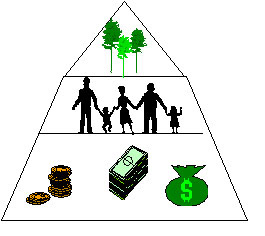 Modern economics count on Ponzi ecology ABC Science Capitalist economies suffer from
the lack of scope and accounting for all the environmental resources needed to make them work, argues Paul Willis. 5 Nov 14 Recently an ecologist friend of mine commented that modern capitalist economies are little more than elaborate Ponzi schemes, complicated frauds that can only end in their own spectacular collapse in direct proportion to their stratospheric success………
The problem with a Ponzi scheme is that it can only sustain paying profits in the initial stages, as long as an increasing number of new investors enter the scheme. Once there is a decline in the number of new investors, the profits cannot be paid to the older investors and the whole scheme comes undone with most investors losing their investment without seeing any profit………
Ecological flaws
Swedish energy company to dump brown coal, move to renewable energy
Europe energy giant to dump brown coal, focus on renewables, REneweconomy, By Petra Hannen on 4 November 2014 As Australia’s conservative governments and fossil fuel industry hail the future of coal, one of the biggest generators of brown coal in Europe, Vattenfall, is looking to exit from its huge brown coal generation portfolio in Germany, and focus instead on renewable energy.
State-owned Swedish energy giant Vattenfall will in the future concentrate on renewable energy. President and CEO Magnus Hall has announced that the company is considering a “new ownership structure” for its lignite division.
Vattenfall’s lignite operations in Germany’s Lusatian region have created more than 15,000 direct and indirect jobs in the area.
Sweden’s new left-of-center governing coalition, headed by Social Democratic Prime Minister Stefan Löfven and including the country’s Green Party, has made its plans for the state-owned energy company Vattenfall clear: The group’s future must lie in the development of renewable energy and not in coal and gas, the Social Democrats announced earlier this month in Stockholm.
The company’s board has now confirmed that it is fundamentally changing its corporate energy policy. “We have a clear strategy to improve our CO2 footprint and refocus our portfolio on renewable energy,” said Vattenfall CEO Magnus Hall on Thursday. To that end, the board has decided to review a new and lasting ownership structure for the group’s lignite division.
“We recognize the current and future significance of lignite for the local economy and the German energy policy,” Hall said. The German states of Brandenburg and Saxony are significant stakeholders in Vattenfall’s activities in the region of Lusatia (Lausitz), which stretches across both states. The company said it would remain in close dialogue with state leaders. Hall added that Vattenfall would hold on to its other business units in Germany………..http://reneweconomy.com.au/2014/vattenfall-focus-renewable-energy-preps-exit-lignite-business-17001
Nuclear power – the crippling cost factor
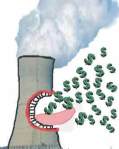 Nuclear power is expensive.http://gsihn.blogspot.com.au/
The energy source of nuclear power is limited just like fossil fuel. Uranium is an element used in nuclear reactor, and only few countries around the world have access to this resource. World Nuclear Association states that “about half of world production comes from just ten mines in six countries: Australia, Canada, Kazakhstan, Namibia, Niger and Russia” (“How Uranium Ore Is Made Into Nuclear Fuel” 1). Although the United States has quite large uranium resources, most of them are low to medium-grade. According to Physicians for Social Responsibilities, the United States signed the Continuing Resolution into law in September 2008 for Russian highly enriched uranium through 2020, and “the U.S. will continue to rely on Russia for a significant amount of uranium for commercial nuclear reactors” (“Dirty, Dangerous and Expensive: The Truth about Nuclear Power” 3). Since enriched uranium is critical and limited for global supply, price of uranium is expected to increase just like fossil fuel.
The estimates for construction and maintenance of a new nuclear plant are rising. Totty points out an expensive construction of a nuclear reactor, especially after several nuclear disasters around the world, addressing “FPL Group, of Juno Beach, Fla., estimates that two new reactors planned for southeast Florida would cost between $6 billion and $9 billion each” (4). Physicians for Social Responsibilities states that loan guarantees are “most important subsidy for the nuclear industry, and the nuclear industry is seeking over $100 billion in guarantees;” however, only $18.5 billion is authorized because “failure rate for nuclear projects is very high – well above 50 percent” (“Dirty, Dangerous and Expensive: The Truth about Nuclear Power” 3). If nuclear power receives public subsidies and leads to failure, taxpayers will be held responsible for the payouts, which is unbearable in free market (Rowell 2). Rowell further informs about the Finnish reactor subsidized by the French nuclear industry, which is under investigation by the Finnish nuclear safety regulator STUK due to cost overruns and delays (2). The prices of constructing and maintaining a nuclear power plant are increasing at exponential rates every year, and the nuclear energy is already inefficient both economically and politically.
Work Cited
“Dirty, Dangerous and Expensive: The Truth about Nuclear Power.” Physicians for Social Responsibility: United States Affiliate of International Physicians for the Prevention of Nuclear War. Web.
“How Uranium Ore Is Made Into Nuclear Fuel.” World Nuclear Association. Web.
Rowell, Alexis. “Ten Reasons Why New Nuclear Was a Mistake – Even Before Fukushima.”Transition Culture. Web. 15 March. 2011.
Totty, Michael. “The Case For and Against Nuclear Power.” The Wall Street Journal. Web. 30 June. 2008.
Failed laser uranium enrichment project adds to Cameco’s losses
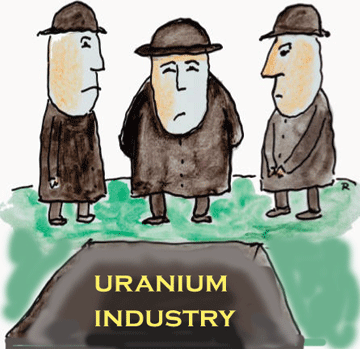 Uranium producer Cameco reports a third-quarter loss By Jim Brumm StarNewsOnline.com, November 3, 2014 “……..The Canadian uranium producer reported a third-quarter loss last week after writing off its $184 million investment in Global Laser, citing General Electric’s unexpected July cut in funding to “pace our investment in line with market.”
At the time Silex, the Australian owner of the laser technology, said GE responded “to worsening trading conditions in the global nuclear fuel markets, initially triggered by the events in Fukushima, Japan, in March 2011.”
“The market has declined more than 50 percent since” the Global Laser project started in 2007, GE spokesman Christopher White said in July without describing the measurement cited………
Cameco’s charge indicates a total Global Laser worth of $767 million and values GE’s 51 percent at $391 million. Hitachi, which owns the remaining 25 percent, hasn’t discussed a charge.
GE has declined to discuss the dollar value of the Global Laser charge it took against second-quarter earnings, but Nuclear Intelligence Weekly put the amount at $194 million. That would be 49.6 percent of the total value of GE’s Global Laser holdings as indicated by Cameco. http://www.starnewsonline.com/article/20141103/ARTICLES/141109942/-1/topic24?Title=Uranium-producer-Cameco-reports-a-third-quarter-loss-
China’s nuclear power programme has dubious economic future
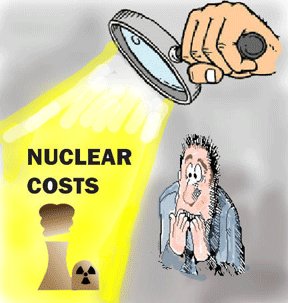
 China’s Risky Nuclear Renaissance http://online.wsj.com/articles/heard-on-the-street-chinas-risky-nuclear-renaissance-1414508639 CGN Power’s Plan to Go Public Could Be Dicey By ABHEEK BHATTACHARYA Oct. 28, 2014
Nuclear energy: It’s risky stuff. Hence, there is often a heavy degree of government control over it—which makes it a doubly risky investment proposition.
Especially when that government is China’s.
A number of Chinese state-owned nuclear companies are going public these days. CGN Power, the country’s largest with 9.4 gigawatts of operating capacity, will likely offer $3 billion worth of new shares in Hong Kong next month, reports The Wall Street Journal. A small affiliate, CGN Meiya Power , raised $262 million in Hong Kong last month and has seen its shares rise by 20% since. Meanwhile, another top operator, China National Nuclear Power, also plans an initial public offering.
Once listed, these will be one of a handful of stocks globally, including the likes of Exelon of the U.S. and EDF of France, offering high or pure exposure to nuclear energy. And while much of the rest of the world is ambivalent about or hostile to nuclear energy, Beijing has big expansion plans. The Chinese government suspended new project approvals after Japan’s Fukushima accident in March 2011. But the need to diversify away from smog-causing coal has put its nuclear ambitions back on track. China now targets nearly tripling the nuclear capacity that’s up and running to 58 gigawatts by 2020. The IPOs will help fund that ambition.
The state’s involvement can cut both ways, though. CGN Power sells most of its output to state-run electricity grids at regulated tariffs. For power plants that began operating before 2013, these tariffs are tailored to yield a “reasonable” profit, according to CGN’s prospectus. Yet its net profit has fallen since 2011 because of either surging costs or weakening sales.
For newer plants, the tariff is supposed to be fixed—except when it isn’t. In a bid to avoid competition, these plants are required to cut tariffs if neighboring coal-fired power is cheaper. That’s quite likely as coal prices spiral downward. Energy prices are heavily regulated precisely because consumers are rather attached to light and heat. That makes them subject to political, as well as economic, forces.
In France, for example, shares in state-run EDF tanked 14% in June when the government scrapped a planned tariff increase. There’s even more reason to worry in China since governments could keep down power prices as a stimulus to troubled heavy industries. Growth prospects are high, which is likely one reason that CGN Meiya already trades at 10.9 times 2013 earnings before interest, tax, depreciation and amortization. That is far higher than EDF’s 4.8 times or Exelon’s 6.6 times.
Double-digit multiples are no doubt tempting for IPO bankers but look too much for a large nuclear generator carrying this much political risk. Problem is, CGN’s balance sheet means it needs a high multiple, or fast growth in profits, to make its IPO math work.
Net debt as of this March is a hefty 5.1 times 2013 Ebitda, and still high at four times even if related-party loans are excluded. And less than 10% of the IPO proceeds are currently earmarked for paying off borrowings. As if nuclear power wasn’t risky enough
TEPCO’s ¥130 billion pretax profit for year

Tepco projects ¥130 billion pretax profit for year KYODO Japan Times, OCT 25, 2014 Tokyo Electric Power Co., manager of the disaster-struck Fukushima No. 1 nuclear plant is expecting to log a group pretax profit of ¥130 billion for the business year through March 2015, even without restarting the giant Kashiwazaki-Kariwa plant or hiking rates again, sources familiar with the matter said Friday. … (subscribers only) http://www.japantimes.co.jp/news/2014/10/25/business/tepco-projects-%C2%A5130-billion-pretax-profit-for-year/#.VE6s1CLF8nk
USA keen to market nuclear reactors to Malaysia (or anyone?)
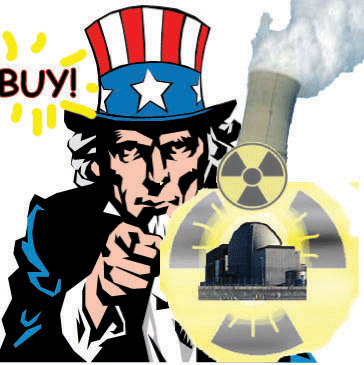 US: We’ll help build nuclear plant The Star 26 Oct KUALA LUMPUR: The United States is willing to help Malaysia should it decide to build a nuclear power plant, says American diplomat Laura E. Kennedy.
Kennedy, charge d’affaires at the Permanent Mission of the US to the International Organisations in Vienna, said her country had a long standing nuclear power industry with the right expertise………
The envoy, who is in the country to promote the peaceful use of nuclear energy, said Malaysians should be aware that nuclear technology could be beneficial in fields such as health and agriculture……http://www.thestar.com.my/News/Nation/2014/10/26/US-Well-help-build-nuclear-plant/
For US government, exporting nuclear technology is more important than public safety
US opposes pos t-Fukushima nuclear safety proposal http://rt.com/usa/199024-cns-nuclear-safety-proposal/
But while Reuters says the Swiss-led initiative is tentatively being backed by other European countries, the newswire alleges that energy officials in the US, Russia and Canada are all opposed to the measure, which would likely increase industry costs.
Although details of the proposed pact have not been made public, Bloomberg reported that it would involve rewriting “international standards to ensure nuclear operators not only prevent accidents but mitigate consequences if they occur, by installing costly new structures built to survive natural disasters.” In a report published on Thursday this week by Reuters, the newswire said that the proposed changes would not only apply up-to-date safety standards for new reactors, but also carry out back-fitting measures on sites that are already in operation.According to this week’s reports, however, some of the world’s top energy powers are opposed because, as Reuters’ Fredrick Dahl wrote, any changes to the CNS could take years to be installed if, of course, they are ratified by the dozens of nations involved. “You are trying to drop a Ferrari engine into a Volkswagen. If you want a new car, let’s go to the show room” and buy one, a senior but unnamed Department of State official said to Dahl.
But experts have previously said American facilities, in particular, are in need of upgrades, with a July 2014 report published by the National Academy of Science that said the US “should access their preparedness for severe nuclear accidents associated with offsite-scale disasters.” Additionally, the authors of that study wrote that America’s current approach to nuclear safety is “clearly inadequate for preventing core-melt accidents and mitigating their consequences,” yet newly-initiated upgrades in the US are being conducted on a scale hardly comparable to what’s occurring overseas: according to Bloomberg, Electricite de France SA is spending around $13 billion on implementing safety measures on its 59 reactors, whereas American utilities will spend only $3 billion on portable generators and cooling reserves for roughly 100 reactors.
Nevertheless, officials in Berne remain optimistic that the countries currently opposed to the proposed changes will come to an agreement that makes facilities around the world more secure.
“Switzerland, as the initiator of the proposal, will continue to collaborate with all delegations and do everything to find a solution that is acceptable to all of us,” Georg Schwarz, deputy director general of the Swiss nuclear-safety regulator, ENSI, wrote to Bloomberg Business Week.
Russian officials did not immediately respond to Bloomberg’s requests for comment, and neither BusinessWeek nor Reuters included remarks from Canada in their report.
UK’s National Audit Office investigating subsidy price for Hinkley nuclear power electricity
Hinkley C deal goes under scrutiny again Somerset County Gazette, 23 October 2014
ANOTHER investigation into the controversial Hinkley C deal has begun.
Just two weeks ago, the European Commission approved plans for the £16bn nuclear power plant.
They had been investigating whether the subsidy deal between energy company EDF and the Government constituted as illegal State aid.
While the project was approved, the National Audit Office has now begun investigating the deal to make sure the subsidy price of £92 a megawatt hour represented value for money.
The NAO is a financial watchdog which scrutinises public spending on behalf of Parliament……….
The Stop Hinkley Campaign welcomed the news about the investigation. Spokesperson Allan Jeffrey said: “This is an extraordinarily bad deal, locking consumers into high prices until almost 2060.
“Worse still, it will use up most of the money available to subsidise non-fossil fuel energy, leaving almost nothing available for renewables at a time when their costs are plummeting.
“The European Commission’s ill-thought through decision has turned UK Energy Policy into even more of a dog’s breakfast than it was to begin with…….
Energy supplier Ecotricity has said it is considering taking legal action against the deal along with the Austrian Government and Germany………http://www.somersetcountygazette.co.uk/news/11554761.Hinkley_C_deal_goes_under_scrutiny_again/
US Dept of Energy warding research grants to universities

Pitt researchers awarded a nearly $1-million grant for nuclear power safety research By Stephanie Ritenbaugh / Pittsburgh Post-GazetteOctober 22, 2014 Researchers at the University of Pittsburgh were awarded a $987,000 grant from the U.S. Department of Energy’s Nuclear Energy University Programs to develop a fiber optical sensor network to improve safety in nuclear power reactors……..The grant was part of $11 million awarded for 12 research and development projects. http://powersource.post-gazette.com/powersource/companies-powersource/2014/10/22/Pennsylvania-DEP-fines-Regency-Marcellus-Gas-Gathering-more-than-300-000/stories/201410220158
South Africa a juicy target for the nuclear reactor marketers
 State shops for ‘nuclear vendor’ IOL October 20 2014 Cape Town – The government has confirmed it is shopping around for its nuclear build programme and says it is consulting “nuclear vendors” in the US, South Korea, Russia, France, Japan and China.

The announcement by the Department of Energy yesterday comes weeks of controversy about the multibillion-rand nuclear project since it emerged last month that a R1-trillion agreement had been signed with Russia, followed by another with France.
The department said the government was consulting “nuclear vendor countries” with pressurised water reactor nuclear technology, similar to that used at Koeberg………
DA leader Helen Zille has said the nuclear co-operation agreement with France, signed by Joemat-Pettersson on Wednesday, is nothing more than a “decoy”.
“This is… to muddy the waters and divert attention from the Russian deal negotiated by President (Jacob) Zuma and signed by Minister Joemat-Pettersson last month.
“We are led to believe a similar agreement with the Chinese is next and that a proper procurement process has yet to begin, but all evidence points to a done deal with the Russians. No amount of obfuscation can allow our focus to shift from this.” – Cape Times http://www.iol.co.za/business/companies/state-shops-for-nuclear-vendor-1.1767746#.VEcGcSJ4pBE
4 decades and 4 $billion later, Watts Bar nuclear power plant might be finished by end of 2015
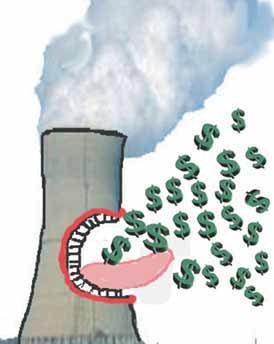
 In Tennessee, Time Comes for a Nuclear Plant Four Decades in the Making, NYT, By MATTHEW L. WALDOCT. 19, 2014………..The agency started Watts Bar as part of a campaign to build 17 reactors, but dropped the project in 1988 after spending about $1.7 billion, when it was supposedly 80 percent complete. In 2007, with electricity demand growing again, the T.V.A. board voted to restart work because, consultants said, it could be finished for $2 billion. But by the end of next year, when commercial operation is now expected, the T.V.A. will have spent more than $4 billion…………..Not everyone is convinced that finishing the job is a good idea.
The underlying difficulty, according to S. David Freeman, whom President Jimmy Carter appointed to chair the T.V.A. in 1977, and who tried to shut many of the nuclear projects, is that the agency’s executives are “nuke-aholics.”
“They’re addicted to nuclear power,” said Mr. Freeman, the author of a bookthat argues that renewable energy can meet nearly all electricity needs. He said that when he joined the T.V.A. board, “they were telling me Watts Bar was 90 percent finished, but a few years later it was 84 percent finished.”
Stephen A. Smith, executive director of the Southern Alliance for Clean Energy, is another skeptic. “There are elements of T.V.A. that are drawn to nuclear like a moth to the flame,” he said. “And the reality is T.V.A. has been burned very, very badly by nuclear power over the years.”
The contractors lowballed the price to build it in 1970 and again in 2006, Mr. Smith said. “To make it like new, they’re pulling out equipment that has never operated, and replacing it with new equipment,” he said. For people who pay electric bills, he added, “this has been a disaster.”…..http://www.nytimes.com/2014/10/20/us/in-tennessee-time-comes-for-a-nuclear-plant-four-decades-in-the-making.html?_r=0
South Africa’s Treasury advised against getting Russian nuclear reactors, but Putin is pushing for the sale
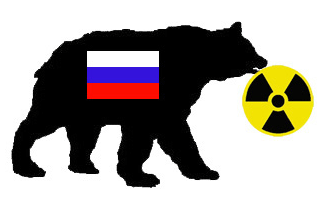 Vladimir Putin’s quest for a nuclear monopoly, Mail & Guardian, South Acfrica 17 OCT 2014 00:00 QAANITAH HUNTER Somehow Russia has persuaded President Jacob Zuma into agreeing to a deal for a nuclear fleet that the treasury opposed. The Russians are coming. The nuclear deal with Russia is to dominate the agenda when the South Africa-Russia joint intergovernmental committee on trade and economic co-operation meets next month.
Even though the South African government insists it has not entered into the procurement phase for the nuclear fleet, it has become clear that Russian President Vladimir Putin managed to sway President Jacob Zuma and Energy Minister Tina Joemat-Pettersson into giving Russia the entirety of the deal.
Zuma and his most trusted Cabinet ministers went against the strict advice of the national treasury and his senior advisers when a nuclear energy “agreement” was signed with Russia last month.
Two sources who also advised against it revealed this week to the Mail & Guardian that an initial bid made by Russian nuclear company Rosatom last year was rejected by the treasury and a number of Zuma’s advisers. A third credible source who was close to the negotiations confirmed their version of events.
The treasury this week did not deny advising against the initial Russian proposal.
“Nuclear would be a substantial financial commitment and government can only make that kind of commitment after careful and thorough-going modelling and an affordability assessment,” said spokesperson Jabulani Sikhakhane.
He said they had yet to discuss how the treasury would pay for nuclear energy.
Exclusive rights
It has emerged that the Russians wanted exclusive rights to South Africa’s nuclear industry. This was substantiated by a statement made by Putin in March last year, following his visit to South Africa, saying his country did not want to merely build the nuclear plants but would bid to run the entire nuclear industry here.
South Africa plans to enhance its energy mix by creating 9.6 gigawatts of nuclear energy by 2030.
The M&G spoke to three highly placed sources – all of them indicated that:
- The initial Russian proposal was not affordable and the treasury rejected it;
- The technology proposed was sub standard and dangerous;
- It would exclude and be damaging to local industries; and
- Even public servants who seemed loyal to Zuma had concerns about it.
One source close to the nuclear talks said the signing of the agreement was a result of about two years of courting by the Russians……….http://mg.co.za/article/2014-10-16-vladimir-putins-quest-for-a-nuclear-monopoly
World Bank leader calls for development banks to mobilise climate funds
 Development banks should mobilize climate funds: World Bank’s Kim BY VALERIE VOLCOVICI REPORTING BY VALERIE VOLCOVICI,; EDITING BY ROS KRASNY AND FRANCES KERRY) WASHINGTON Thu Oct 16 (Reuters) – The World Bank and other multilateral financeinstitutions should pool their resources to help developing countries combat and adapt to climate change, helping smooth the path to a global climate agreement in Paris next year, World Bank President Jim Yong Kim said on Thursday.
One important disagreement looming over the climate talks is how countries will reach an agreed target of raising $100 billion in annual funding for climate change projects in developing countries by 2020, Kim told the Reuters Global Climate Change Summit.
The World Bank, other multilateral organizations, climate funds and regional development banks can help mobilize money prior to the Paris talks to give developing countries confidence in the negotiating process, he said.
“We are doing everything we can to really make sure that issue doesn’t stop the proceedings,” Kim said.
“Can we take all of the money that is floating around out there, and put it together in a package that would make the developing countries feel a lot better about the available financing for tackling both mitigation and adaptation?”……….
Beyond the financing question, Kim said strong signs of an agreement between the United States and China on climate would set a “strong foundation” for the Paris meeting.
He added that a declaration by 74 countries and over 1,000 private companies announced at the U.N. Climate summit in September, in support of carbon pricing measures such asmarkets and taxes, could also bolster prospects for success in Paris.
Kim said the decision by China, the world’s biggest carbon emitter, to sign the declaration was a surprise to World Bank officials, and had raised the pressure on other countries……..http://www.reuters.com/article/2014/10/16/us-climatechange-summit-worldbank-idUSKCN0I52QK20141016
Britain’s $27 Billion Bond Plan with EDF hailed as the beginning of big nuclear market

 EDF $27 Billion Bond Plan Offers Nuclear Blueprint: U.K. Credit http://www.bloomberg.com/news/2014-10-13/edf-s-27-billion-of-nuclear-bonds-seen-as-template-u-k-credit.html By Sally Bakewell Oct 14, 2014 Electricite de France SA’s plan to raise as much as 17 billion pounds ($27 billion) of bonds for Britain’s first nuclear project in two decades is being seen as a template for financing expansion in the industry.
EDF won approval from the European Commission last week to build the 24.5 billion-pound plant at Hinkley Point in southwest England, a year after agreeing to the project. The U.K. government will back the debt, which will be the nation’s largest bond offering on a single project, according to Deloitte LLP.
“The use of bonds with a U.K. government guarantee will be a highly influential template in the nuclear sector,”Kevin Magner, director for corporate finance in the government and infrastructure team at Deloitte, said by phone. “For projects of this sheer size which developers can’t finance on their balance sheets, they’re turning more to the bond market for large volumes of debt where the projects can achieve the necessary credit quality.”
Other nuclear projects that may follow include Hitachi Ltd.’s plan to build 5.4 gigawatts of plants at sites in Wales and south Gloucestershire, and a power station with as much as 3.4 gigawatts in west Cumbria being developed by a venture between Toshiba Corp. and GDF Suez SA, Magner said. The U.K. government announced a program in July 2012 to offer as much as 40 billion pounds in debt guarantees for infrastructure projects to lift the economy.
‘Big Market’
“There will be a big market for this debt since it’s guaranteed by the government,” Continue reading
1 This Month



19 November – Webinar – The Reality of Reprocessing
Time: 11:00 AM Pacific Time (US & Canada) / 2:00 PM Eastern / 7:00 PM UK / 8:00 PM CET
Register for the Zoom Event Here



Shut down the radiation-damaged Heysham nuclear reactors now
To see nuclear-related stories in greater depth and intensity – go to https://nuclearinformation.wordpress.com

Say No to NASA’s Reckless Nuclear Reactor on the Moon
Say No to NASA’s Reckless Nuclear Reactor on the Moon
-
Archives
- November 2026 (74)
- October 2026 (302)
- September 2026 (339)
- August 2026 (330)
- July 2026 (355)
- June 2026 (287)
- May 2026 (306)
- April 2026 (356)
- March 2026 (251)
- February 2026 (267)
- January 2026 (308)
- December 2025 (358)
-
Categories
- 1
- 1 NUCLEAR ISSUES
- business and costs
- climate change
- culture and arts
- ENERGY
- environment
- health
- history
- indigenous issues
- Legal
- marketing of nuclear
- media
- opposition to nuclear
- PERSONAL STORIES
- politics
- politics international
- Religion and ethics
- safety
- secrets,lies and civil liberties
- spinbuster
- technology
- Uranium
- wastes
- weapons and war
- Women
- 2 WORLD
- ACTION
- AFRICA
- Atrocities
- AUSTRALIA
- Christina's notes
- Christina's themes
- culture and arts
- Events
- Fuk 2022
- Fuk 2023
- Fukushima 2017
- Fukushima 2018
- fukushima 2019
- Fukushima 2020
- Fukushima 2021
- general
- global warming
- Humour (God we need it)
- Nuclear
- RARE EARTHS
- Reference
- resources – print
- Resources -audiovicual
- Weekly Newsletter
- World
- World Nuclear
- YouTube
-
RSS
Entries RSS
Comments RSS

