Obama keen to sell USA nuclear technology to China
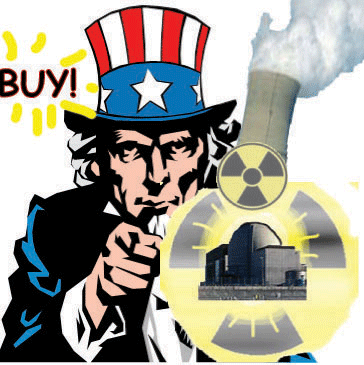 Obama proposes 30-year agreement with China on nuclear power WASHINGTON
(Reuters) 22 Apr – President Barack Obama on Tuesday proposed a 30-year agreement to cooperate with China on nuclear power, a deal that would allow the transfer of material, reactors, components and technology between the two nations, if approved by the U.S. Congress.
(Reporting by Roberta Rampton and Jeff Mason!) http://www.reuters.com/article/2015/04/21/us-usa-china-nuclear-idUSKBN0NC29220150421
South Korea hopes new deal with USA will forward its nuclear technology export business
 S. Korea, US strike new civil nuclear deal, Phys Org 22 Apr 15
 South Korea and the United States agreed a new nuclear cooperation pact Wednesday that stopped short of granting Seoul the permission it had sought to start reprocessing spent nuclear fuel.
But Seoul welcomed the deal, saying it provided a framework for improving spent fuel management and boosting nuclear exports. The new pact, which replaces an existing 1974 accord, was struck after four-and-a-half years of intense, drawn-out negotiations.
The main sticking point had been South Korea’s desire to develop uranium enrichment and reprocessing capabilities in order to address concerns about energy security and the management of spent nuclear reactor fuel.
Seoul says its storage facilities for spent fuel will reach capacity in 2016.
Long-standing US policy opposes the spread of such capabilities because they can be used to produce weapons-grade nuclear material and therefore pose a significant proliferation risk.
A South Korean statement on the new deal was short on specific detail but suggested it opened the door to reprocessing sometime in the future, by allowing South Korea to conduct “research” into spent fuel management.
That includes research into “pyroprocessing”—a new technology considered largely proliferation resistant, since the product is thermally and radioactively far too hot to use for a weapon.
“We established a pathway to lift some restrictions on activities in Seoul-owned facilities and to allow certain activities in the future,” the statement from the foreign ministry said……..
The deal was signed by Park and the US ambassador to Seoul, Mark Lippert, and will now go through an internal review process in both countries prior to ratification.
South Korea is a key US military ally and analysts say Washington’s concerns on allowing reprocessing stem less from a distrust of Seoul’s ultimate intentions than from the impact it might have on negotiations with other countries.
There are also worries that wider concessions on reprocessing could further complicate efforts to roll back North Korea’s nuclear programme.
Currently, Japan is the only non-nuclear weapons state that has both the technical capability and international permission to operate a commercial spent-fuel reprocessing programme.
Seoul had argued that allowing Japan to reprocess while denying South Korea the same concessions, smacks of double-standards, but Japan was forced to accept highly intrusive safeguards and, US officials point out, it doesn’t have North Korea on its border.
South Korea is the fifth-largest consumer of nuclear energy in the world, and relies on 23 nuclear reactors to meet about 30 percent of its annual power needs.
It has sought to become a leading exporter of nuclear power plants since it won a $20 billion deal in 2009 to build nuclear reactors in the United Arab Emirates. http://phys.org/news/2015-04-south-korea-nuclear.html#jCp
Flamanville nuclear safety problem – a knockout blow for UK’s EPR reactor project?
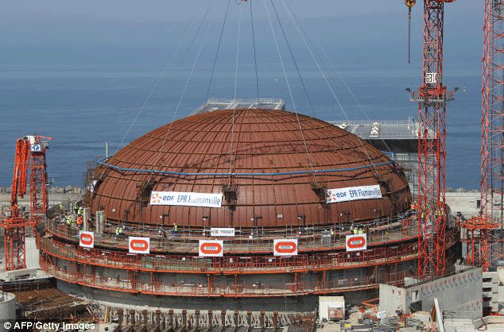 France’s nuclear calamity has UK worried, The Local, 21 Apr 2015 France’s world renowned prowess in the nuclear industry is being seriously undermined by its efforts to build a flagship nuclear reactor which is fast becoming a costly calamity. The future of the Flamanville 3 project appears to hang in the balance after yet another major setback that has London worried.
It was supposed to showcase the expertise of France’s nuclear energy industry to the world and is key to the UK’s own nuclear strategy. But after being beset by hold-ups and snags – the latest and potentially most serious one coming last week, the flagship project to build a new state of the art nuclear reactor, France is getting a reputation for all the wrong reasons and London has been left looking on nervously.
In 2005 the French government proudly gave the green light for construction to begin on the first third-generation nuclear reactor at Flamanville in Normandy on the north coast, a site environmentalists say is threatened by flooding.The third-generation “European Pressurized Reactor” (EPR), built by EDF and Areva, was supposed to be in operation by 2012 and is meant to be one of the safest reactors in the world, and the most energy efficient. It was commissioned as part of France’s nuclear renaissance programme that will see the country’s aging nuclear plants replaced over time.
However Flamanville 3, as it is known, is unlikely to start producing power anytime soon after being hampered by a litany of problems and incidents, including the death of a construction worker in 2011 (see below).
The latest setback came last week when it was revealed that “a very serious fault” had been detected in the steel of the “pressure vessel” – a key component of the reactor, meaning another delay of at least a year was likely. “It is a serious fault, even a very serious fault, because it involves a crucial part of the nuclear reactor,” said Pierre-Franck Chevet, head of France’s nuclear safety agency (ASN).
That “fault” means construction is unlikely to be completed before 2018 and more worryingly, the budget, initially set at €3.3 billion, is now estimated at more than €9 billion and counting.
In short Flamanville has become France’s own “nuclear catastrophe” as it was described in one of the many critical articles in the French press. Tests will need to be carried out on the steel vessel but if after these tests the vessel still does not meet necessary safety standards, it will need to be changed.
“That’s a very difficult operation in terms of costs and time,” said the ASN’s Chevet. The steel vessels weigh around 425 tonnes and stand around 11 metres high so building a new one would take considerable time and come at a huge cost.Changing the vessel would be a major headache given all the construction work that would need to be undone.
Some in the business of nuclear safety have even suggested that if the steel vessel needs replacing then the whole project could be scrapped. That will have authorities in the UK sweating as the same steel has been used to build two vessels destined for the planned EPR nuclear reactors at Hinkley Point in the UK.…….
“This is clearly the knock-out blow for the EPR reactor,” said Yannick Rousselet from Greenpeace. “What foreign client would want to purchase a reactor of this type, if even France itself is not able to complete the construction?
“The bill from the EPR reactor will be so high that it won’t end up showcasing what to do, but exactly the opposite,” said Rousselet. “This is a huge blow to the know-how of the French nuclear industry.”
Greenpeace has called for work at Flamanville to be called off.
“It must be stopped immediately so there is no more wasting of public funds on this industrial nightmare,” said Rousselet, who added that France should be concentrating resources on finding renewable energy solutions……..http://www.thelocal.fr/20150421/flamanville-frances-own-nuclear-nightmare
Exelon’s strategies indicate that the nuclear industry is a thing of the past
 Did Exelon Corporation Just Quietly Admit That Nuclear Power Is Dead?, Motley Fool, By Maxx Chatsko | April 21, 2015 | “………..The fast-falling costs of renewable energy and sudden global abundance of natural gas have turned the tables on nuclear power generators, which suffer from relatively high maintenance costs and, for newer plants, absurdly high upfront construction costs.
Therefore, it should also not come as a surprise that Exelon has been carefully hedging against its existing nuclear power plants by investing in lower-cost generation. For instance, the company recently handed General Electric Company (NYSE: GE ) over $500 million for four next-generation natural gas turbines, which will combine to generate over 2,000 MW of electricity for the Texas grid. Is this a quiet admission that traditional nuclear power is dead?……….
Although the details surrounding the natural gas fired turbines look favorable for investors, some simple number-crunching certainly favors the thesis that traditional nuclear power is dead, even if Exelon hasn’t explicitly mentioned the possibility (or considered it internally). While the company won’t be ditching its existing nuclear facilities anytime soon, investors surely shouldn’t expect it to build any new nuclear capacity, either………
Or think about it another way: Exelon’s investment will increase its 2013 natural gas capacity by 25% and represent more capacity than the company’s total wind and solar assets. Even if the company paid twice as much for future next-generation natural gas turbines, or $1 billion for 1,000 MW of capacity, it could replace its entire 19,000 MW nuclear fleet for just $19 billion. That’s 126% of the price tag Southern Co is shelling out for just 2,500 MW of new nuclear capacity!
If that doesn’t communicate the fact that new construction of traditional nuclear power is a thing of the past, then perhaps nothing will…….
The fact that Exelon is going all-in on cheaper and more profitable power generation is terrific news for investors, and the wider trend sweeping the power industry will be great news for General Electric investors, too. ………http://www.fool.com/investing/general/2015/04/21/did-exelon-corporation-just-quietly-admit-that-nuc.aspx
Germany’s nuclear exit costly: other countries’ exit might be worse

Costs for Germany’s nuclear exit could rise to $75 billion http://www.reuters.com/article/2015/04/20/us-germany-utilities-nuclear-exit-idUSKBN0NB18S20150420 BERLIN Reuters) – The bill for shutting down Germany’s nuclear power plants and building a safe disposal site for nuclear waste could rise to 70 billion euros ($75 billion), the head of a government commission told daily Frankfurter Rundschau in an interview
E.ON, RWE, EnBW and Vattenfall [VATN.UL] are due to switch off their nuclear plants by a 2022 deadline set by Chancellor Angela Merkel’s government after the Fukushima disaster in Japan in 2011.
A decision by E.ON to restructure its business and spin off its conventional power plants raised additional fears that taxpayers may end up footing a portion of the bill for dismantling the nuclear plants and storing waste.
“There are significant financial risks coming up for the state,” said Michael Mueller, head of the government’s task force charged with finding a disposal site for nuclear waste.
The costs for the nuclear exit could rise to up to 70 billion euros over the next decades, meaning that the 36 billion euros ($38 billion) in provisions set aside by the four nuclear operators were not sufficient, he added.
Spokesmen from E.ON and EnBW said in separate statements that the companies’ provisions were sufficient and that they were certified on a regular basis by external auditors. conomy Minister Sigmar Gabriel has told lawmakers from his center-left Social Democrat (SPD) party that he wants to look into creating a public body to oversee the multibillion-euro risks associated with the nuclear switch-off.
The government is sounding out the option of subjecting the balance sheets of the four nuclear power plant operators to a stress test to ensure their provisions are adequate.
(Reporting by Michael Nienaber, Markus Wacket, Vera Eckert and Chris Steitz, editing by William Hardy)
Tax battle, indigenous opposition – add to woes of uranium company Cameco
Multi-million dollar tax battle casts shadow over Canada-India uranium deal, Vancouver Observer The Canadian mining company selected to provide uranium to India is still fighting Canada Revenue Agency over millions in unpaid back taxes. Danny Kresnyak
Apr 19th, 2015 “……….. Cameco, the Saskatchewan-based company hired to supply India with 3,220 metric tonnes of uranium over five years, is wrapped up in legal a fight with Canada Revenue Agency over millions in owed taxes. In 2013, the Globe and Mail reported the company owes $800 million in back taxes………
in addition to the tax battle with Canada Revenue Agency, the company’s drilling operations in Saskatchewan are facing significant opposition from the Clearwater Dene First Nation…….
In a road north of La Loche, Saskatchewan, a group called “Holding the Line Northern Trappers Alliance” (HLNNTA) has been camping in the area to block companies from further exploratory drilling in their territory. The group first set up camp last November, and promises to remain until mining companies leave.
The HLNNTA argued they are unable to pursue the traditional, ecologically sound way of life of their ancestors, due to incursion by companies like Cameco looking for mineral deposits on their land.
HLNNTA spokesperson Candyce Paul told the Vancouver Observer she was opposed to the Cameco uranium deal with India. She said “scientific evidence is building towards proving that the uranium mining industry is killing the Indigenous people of northern Saskatchewan.”………
Obama keen to sell USA nuclear technology to China
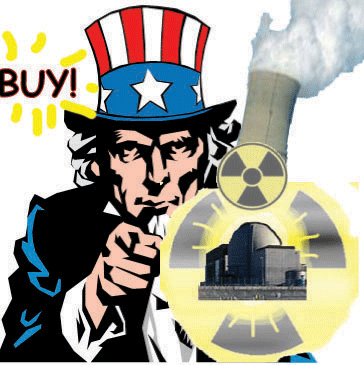 Obama Submits to Congress 30-year Civil Nuclear Power Agreement With China Obama submitted to Congress a 30-year civil nuclear cooperation agreement between the United States and China for approval.
The US Congress has to approve the nuclear cooperation agreement for it to go into effect. http://sputniknews.com/us/20150421/1021197861.html#ixzz3Xz1ERlru
UK’s £14bn Hinkley project – future now in doubt, as faults found in identical French project
 UK nuclear strategy faces meltdown as faults are found in identical French project The faults could also scare off the Chinese state investors who are supposed to cover part of the cost of the £14bn Hinkley project Independent JOHN LICHFIELD
  PARIS Friday 17 April 2015 A “very serious” fault has been discovered in a French nuclear power station which is at the heart of David Cameron’s strategy to “keep the lights on” in Britain in the next decade.
The future of two nuclear reactors planned for Hinkley Point in Somerset has been thrown into doubt by the discovery of a potentially catastrophic mistake in the construction of an identical EPR power plant in Normandy.
“It is a serious fault, even a very serious fault, because it involves a crucial part of the nuclear reactor,” said Pierre-Franck Chevet, head of France’s nuclear safety inspectorate.
A second investigation has been ordered into the quality of the steel used to make a 50ft-high safety casing, or “pressure vessel”, which encloses the groundbreaking new reactor at Flamanville, near Cherbourg. If the steel proves to be defective, the completion of the prototype EPR plant – already behind schedule and nearly three times over budget – could be delayed for several years.
Mr Chevet also revealed that the same manufacturing techniques had been used in the steel for the identical safety casings destined for Hinkley Point, which “have already been manufactured”.
The fault could undermine the already fragile finances of the French state-owned nuclear construction company Areva, which is supposed to build two EPR reactors at Hinkley by 2023 and a third at Sizewell in Suffolk. It could also scare off the Chinese state investors who are supposed to cover part of the cost of the £14bn Hinkley project, intended to supply six per cent of Britain’s energy needs for six decades.
A final “investment” decision for Hinkley, several times delayed, is now expected in June. The French Prime Minister Manuel Valls called a crisis meeting on 17 April to discuss the threat posed by the fault to France’s nuclear construction industry – the largest in the world.
Mark Hackett, a councillor in Manchester who chairs Nuclear Free Local Authorities, said: “This is a devastating blow to proponents of new-build nuclear power stations in the UK. It is likely to scare off the Chinese backers. If I was a betting man, I would now bet that Hinkley Point will never be built.”
Yannick Rousselet, of Greenpeace France, said the latest problems to beset the prototype power station in Normandy are “clearly the coup de grâce for the EPR idea”. He asked: “What foreign client would want to buy this reactor when France itself is not capable of completing its construction?”
Apart from Britain, the United States and China are in the process of buying versions of the new generation of European Pressurised Reactor (EPR) – supposedly safer and more efficient – from France. Both Areva and Eléctricité de France (EDF), the French energy giant which will own and operate Hinkley Point, have refused to comment in detail………
Sources in the French nuclear industry told the newspaper Le Parisien yesterday that dismantling the faulty pressure vessel and ordering and manufacturing a new one could take several years. “If the weakness of the steel is proved, I don’t hold out much hope for the survival of the EPR project,” a former senior nuclear safety official told Le Parisien………..http://www.independent.co.uk/news/uk/home-news/uk-nuclear-strategy-faces-meltdown-as-faults-are-found-in-identical-french-project-10186163.html
Dozens of USA nuclear reactors at risk of closure for economic reasons.
 As many as three dozen reactors are considered at risk of closure for economic reasons.
Electricity producers in several states are asking for hundreds of millions of dollars in financial support to keep costly nuclear power plants in business—a move that is likely to boost customers’ power bills. Continue reading
No easy fix for France’s multi-billion dollar Evolutionary Power Reactor (EPR)

 France’s nuclear power giant beset by setbacks France 24 17 April 15 France, which has one of the most advanced nuclear energy systems in the world, is struggling to remain a major player in the nuclear field as its state-owned company Areva leaks cash and faces safety concerns.
France’s nuclear security authority ASN (Autorité de surete nucléaire) last week declared that a multi-billion dollar Evolutionary Power Reactor (EPR) being built by Areva in Flamanville, Normandy has “a serious anomaly”.
The anomaly comes at a difficult time for the French company as it faces a host of setbacks related to the construction of nuclear power plants around the world. ……..
“Either EDF abandons the project or it takes out the vessel and starts building a new one… this would be a very heavy operation in terms of cost and delay,” Pierre-Franck Chevet, head of the ASN, told the French daily ‘Le Parisien’.
So what next for the EPR?
Overall, there doesn’t seem to be an easy fix.
Yannick Rousselet, a nuclear specialist at Greenpeace in France, says that replacing the tank in Flamanville is more difficult than one might think.
“The tank is the only element that you cannot move easily,” Rousselet told FRANCE 24.
“Historically, tanks were not designed with the idea of dismantling them. In addition, the one at Flamanville is already welded in place, and fixed to the pipe of the reactor.”
Because EDF is state-owned, tax payers will ultimately pay the bill for the expensive project, says Rousselet.
“It’s the French who will pay for the mistakes. Officials collectively took us to a dead end.”…….http://www.france24.com/en/20150417-french-nuclear-company-faces-major-setbacks/
Japan’s nuclear restart is stalled – causing yet more depression in the uranium market
Japanese Court Blocks Reactor Restarts on Safety Concerns, Uranium Investing News
April 16, 2015, By Staff Writer The U3O8 spot price has floundered a little since the start of April. Though it was sitting at $39.50 at the beginning of the month, it’s since dropped down to $39 per pound.
 Compounding that stagnancy, the uranium market was dealt a heavy hit this week when a Japanese court issued an injunction to block the restart of two reactors at Kansai Electric Power Company’s (TSE:9503) Takahama nuclear power plant. Reactor restarts are a key psychological catalyst for the uranium market, and the news is expected to have a negative impact on the space.
Safety concerns
Nuclear power is not looked upon favorably in all areas of Japan, and the Fukui Prefecture, where the Takahama plant is located, is one such place. It’s thus perhaps not too surprising that the Fukui District Court shelved plans to restart the two reactors.
The court’s decision was reportedly made on the basis of safety concerns and is the first injunction against any nuclear power plant in Japan in 50 years. Specifically, the court ruled that regulations implemented after the 2011 Fukushima disaster are no guarantee against another accident.
“The new regulations are not reasonable, therefore there is no need to study whether the Takahama plant satisfies them,” the court said, adding that the regulations are “so loose that compliance with these regulations wouldn’t secure the safety of this plant.”
According to NHK, residents of the Fukui Prefecture are in favor of blocking the reactors, and have “argu[ed] that the government’s plans ignored or underestimated risks and failed to meet tougher safety standards that were imposed after the Fukushima crisis.”
Kansai Electric is working on getting the injunction lifted. Originally, the reactors were scheduled to restart later this year, but that is now unlikely given the setback……..
It it is unclear if Japan’s pro-nuclear central government will be able overturn district courts like the one in Fukui Prefecture. In addition, the court’s decision could still have a negative impact on equities, and could slow down the process of bringing nuclear power back to Japan. Sadowski also believes that if more utilities are blocked, the uranium price could bear the burden, sinking lower as the market factors in the implications…….
investors would do well to watch not only what’s going on in Fukui Prefecture, but also what’s happening in Kagoshima Prefecture. According to NDTV, activists there are seeking an injunction to stop the restart of reactors at Kyushu Electric Power Company’s (TSE:9508) Sendai nuclear power plant. A court ruling is expected there on April 22. http://uraniuminvestingnews.com/21492/japan-kansai-electric-power-takahama-nuclear-power-plant.html
Surge in renewable energy trade n Europe
Renewable energy surge revives Europe’s power trade FRANKFURT/LONDON | BY VERA ECKERT AND NINA CHESTNEY(Reuters) 17 Apr 15 – The rise of renewable energy is delivering a boost to Europe’s declining power market as traders get busy in short term deals to juggle unpredictable supplies of wind and solar.
Exchanges show more trade as suppliers buy and sell power closer to when demand will appear, to meet their delivery obligations, because electricity cannot be stored effectively. New players are also attracted by lower capital requirements and risks.
“As the percentage of renewables generation increases, the need for short-term adjustments will grow, reflecting the limited precision of forecasts for wind and solar generation in comparison to schedules of conventional thermal plants,” said Bonn-based independent energy consultant Thomas Niedrig.
“Over the last five years, (spot) volumes jumped by 25 percent, making the spot sector a growth star in difficult times,” UK research company Prospex said in a study………
German government data shows renewables capacity almost quadrupled from 2003 to 2014 and renewables now account for 26 percent of total electricity generation………
The market leader is the Nordic countries’ Nord Pool Spot, followed by EPEX Spot, Italy’s GME, Spain’s OMIE and N2EX in Britain, according to Prospex.
EPEX last December introduced a German auction for 15 minute intraday power, held at 3pm in the afternoon of the previous day as a tool to concentrate liquidity.
A number of big trading houses already active in EPEX Spot’s short term market, among them Geneva’s Vitol SA, Noble Clean Fuels Ltd. and Total Gas & Power, signed up for it in 2015, it said.
But there is also money to be made by smaller operators.
“Whereas previously intraday trading was largely the preserve of utilities…now it’s definitely very much in vogue and seen as a profitable activity, especially with the flexibility of not being tied to assets,” said Chris Panton, senior analyst at Energy Fundamentals, a London based investment and advisory firm……http://www.reuters.com/article/2015/04/17/us-europe-power-trading-idUSKBN0N814H20150417
France’s State owned nuclear company AREVA now a costly burden
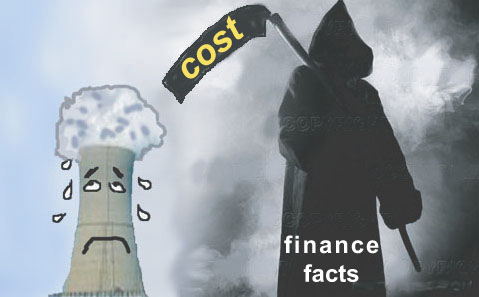 Areva Is Costing France Plenty The company thought it had a winning nuclear reactor technology http://www.bloomberg.com/news/articles/2015-04-16/france-s-areva-falters-in-reactor-business-leaks-cash Nuclear plants supply almost three-fourths of France’s electricity, and they boast a near-spotless safety record and some of the cheapest electric rates in Europe. In 2001 the government created a state-owned company, Areva, to export French reactors and nuclear know-how to the rest of the world. Those ambitions are now in tatters, offering an object lesson in the dangers of French dirigiste industrial policy.
Areva, along with competing reactor builders Westinghouse Electric and General Electric, was hit hard when orders dried up after the 2011 Fukushima accident in Japan. Cheap shale gas and development of renewable energy have compounded those woes. But “you can’t really blame Areva’s plight on Fukushima,” says Steve Kidd, a British nuclear consultant and former executive of the World Nuclear Association, a London-based trade group.
$5.1b
Areva’s loss in 2014, on sales of $8.9 billionFrench authorities reported on April 7 that flaws were found in some of the steel used in the reactor vessel of an EPR being built in Normandy. That reactor is five years behind schedule, and its price tag has ballooned from $3.5 billion to $9.3 billion. Areva also is facing an investigation of its 2007 acquisition of Uramin, a Canadian uranium mining company. In 2011, Areva wrote off almost all of the $2.5 billion purchase price after concluding that the ore deposits were of negligible value. The government’s chief auditor, who faulted management for inadequate oversight and possible “dissimulation,” asked prosecutors to look into the Uramin purchase.
The next step for Areva may be a tieup with EDF, its top customer—an idea that horrified the utility’s investors, who dumped the stock after Energy Minister Ségolène Royal suggested it in March. Other government officials have suggested that Areva might work with EDF on engineering and maintenance, stopping short of a full merger.
The company still makes money supplying fuel and reprocessing waste for nuclear plant owners. It’s already clear, though, that Areva won’t be selling many new reactors. North American and European utilities stopped ordering them after the Fukushima accident, and the EPR’s problems have cast a pall over the company’s prospects in China, which now accounts for more than half of the new reactors expected to come online by 2030. Thanks to past collaboration with Areva and other Western suppliers, the Chinese have developed the technology they need to build their own reactors, says Steve Thomas, a professor at the University of Greenwich in England who studies the industry. The reactors built by Areva and Westinghouse “are just too expensive for the Chinese,” he says.
The French government’s 80 percent ownership of Areva helped mask its problems, consultant Kidd says. “Everyone was laughing” at the company’s projections for reactor sales, he says. “Everyone in the know could tell the chickens were going to come home to roost. I don’t think that would have happened in a private business.”
—With Francois de Beaupuy and Tara Patel
The bottom line: Areva’s bid to be the globally dominant maker of reactors was undone by cost overruns and strategic blunders.
How investments are damaged by the continuing nuclear radiation crisis at Fukushima
5 Ways Fukushima The radiation Emits Tend to be Poisoning Ventures. International Health Insurance and Medical Health 16 Apr 15 (? weird translation)
“…….1. Investors with Uranium are usually Hurt:
The purchse price for every lot associated with uranium has tanked since the 03, 2011 nuclear meltdown with Fukushima, which in turn brought about cutbacks for anybody invested in uranium exploration gives. ……..
 |
Click here to Reply or Forward
|
Financial success for investors who dumped holdings in coal, gas and oil
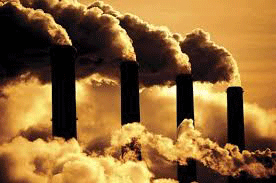 Fossil fuel-free funds outperformed conventional ones, analysis shows, Guardian, Patrick Collinson 11 Apr 15 Investors who dumped holdings in coal, oil and gas earned an average return of 1.2% more a year over last five years, data from the world’s leading stock market index reveals Investors who have dumped holdings in fossil fuel companies have outperformed those that remain invested in coal, oil and gas over the past five years according to analysis by the world’s leading stock market index company,
MSCI, which runs global indices used by more than 6,000 pension and hedge funds, found that investors who divested from fossil fuel companies would have earned an average return of 13% a year since 2010, compared to the 11.8%-a-year return earned by conventional investors.
The figures indicate that if a major charitable institution or foundation with £100m in funds had divested from fossil fuels in November 2010 they would be around £7m better off today than if they had maintained their holdings in coal, oil and gas companies.
In total, a portfolio of shares with fossil fuel companies included has grown in value by 62.2% since 2010, but this compares to the 69.9% growth of a fund without fossil fuel investments.
The data will challenge the widespread belief among asset managers that divestment hurts the financial performance of investment funds……….http://www.theguardian.com/environment/2015/apr/10/fossil-fuel-free-funds-out-performed-conventional-ones-analysis-shows
1 This Month




PLEASE OPPOSE HR 8255 AND S.3639 – bills would accelerate satellite deployment, with no environmental review or safeguards – https://ncstd5li.quorum.us/campaign/169331/
To see nuclear-related stories in greater depth and intensity – go to https://nuclearinformation.wordpress.com
-
Archives
- September 2026 (339)
- August 2026 (330)
- July 2026 (355)
- June 2026 (287)
- May 2026 (306)
- April 2026 (356)
- March 2026 (251)
- February 2026 (267)
- January 2026 (308)
- December 2025 (358)
- November 2025 (359)
- October 2025 (375)
-
Categories
- 1
- 1 NUCLEAR ISSUES
- business and costs
- climate change
- culture and arts
- ENERGY
- environment
- health
- history
- indigenous issues
- Legal
- marketing of nuclear
- media
- opposition to nuclear
- PERSONAL STORIES
- politics
- politics international
- Religion and ethics
- safety
- secrets,lies and civil liberties
- spinbuster
- technology
- Uranium
- wastes
- weapons and war
- Women
- 2 WORLD
- ACTION
- AFRICA
- Atrocities
- AUSTRALIA
- Christina's notes
- Christina's themes
- culture and arts
- Events
- Fuk 2022
- Fuk 2023
- Fukushima 2017
- Fukushima 2018
- fukushima 2019
- Fukushima 2020
- Fukushima 2021
- general
- global warming
- Humour (God we need it)
- Nuclear
- RARE EARTHS
- Reference
- resources – print
- Resources -audiovicual
- Weekly Newsletter
- World
- World Nuclear
- YouTube
-
RSS
Entries RSS
Comments RSS

