France’s nuclear corporation AREVA in deep financial trouble – needs tax-payer bailout
 Areva in Deep Financial Trouble, The Energy Collective, Dan YUrman 10 Mar 15 French government and investors ask whether it has hit bottom?
It is no secret that state-owned nuclear energy giant Areva has ten tons of financial debt on a five ton truck. After several years of smacking the bumper with a 2 x 4 to keep half of the IOUs in the air, the truck has hit a red light and all the weight of that debt has come down in one place and at one time. This week Areva’s senior leadership went public with the numbers and what they say is a path toward new earnings. Phillip Knoche, the new CEO of Areva, said, “We have to cut our costs and master difficult projects.”
Here’s the bad news
Areva is facing huge financial challenges with reported losses of {e}4.8 billion ($5.4 billion US) compared to a loss of just {e} 500 million last year. Sales were down in 2014 by 8% compared to 2013. The company wrote down assets by {e}1.5 billion, took a {e}1.1 billion charge on three nuclear projects, and wrote off another nearly {e}1billion in assets that it now believes are essentially worthless. They include a uranium mine bought by former CEO Anne Lauvergeon who’s expansionist strategy overextended the company in terms of its capital requirements.
The bad news isn’t over
This year the firm expects to see a further reduction in sales of at least 5% compared to 2014. The firm will sell off its unprofitable renewable energy business, and other assets, for {e}430 million. It will scale back other investments. Overall, debt has risen to {e}5.8 billion compared to a market cap of {e}3.6 billion. Essentially, the firm is underwater and needs a huge infusion of capital from the French government………
Bulgaria pulls out of $4bn Westinghouse nuclear deal
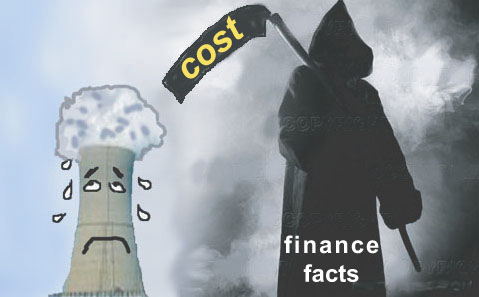 Bulgaria drops $4bn Westinghouse nuclear deal Yahoo 7 News, April 1, 2015 Sofia (AFP) – Bulgaria has dropped a deal with US-based firm Westinghouse Electric to build a new reactor at its only nuclear plant because of financial pressures, Prime Minister Boyko Borisov announced Wednesday.
“We cannot uphold the agreement” which is worth $4 billion (3.8 billion euros), Borisov told parliament, adding that the cash-strapped country was unable to shoulder the costs…….
Westinghouse, a subsidiary of Japanese company Toshiba, had initially planned to take a 30-percent stake in the Kozloduy project, but Bulgarian media reported that it now refused to invest in the deal.
The company has not yet commented on Borisov’s announcement.
In 2012, Bulgaria was forced to drop another project, this time to build two Russian VVER 1,000-megawatt reactors at the planned Belene nuclear plant in the country’s north.http://news.yahoo.com/bulgaria-drops-4bn-westinghouse-nuclear-deal-161118449.html?soc_src=mediacontentstory&soc_trk=tw
UK’s Hinkley nuclear plant developments stalled as financial negotiations drag on
 Hinkley Point C nuclear project workers face layoff , Guardian 2 Apr 15 Up to 400 constructors at site of new nuclear power station could be laid off as preparation work comes to end before final investment decision by owner EDF. As many as 400 workers at the site of a new nuclear power station at Hinkley Point face being laid off while the French owners of the project decide whether to make an investment in the £16bn project.
EDF has almost completed the project’s preparatory earthworks, drainage, welfare facilities and roadworks, but is yet to decide on the investment to mark the beginning of the construction the plant in Somerset.
The company said a decision would be reached in the coming months, and it has already launched a 45-day redundancies consultation, said the unions…….
It is the first new new nuclear plant in the UK in decades and is scheduled to start producing electricity in 2023. EDF, however, is still negotiating with UK authorities about government debt guarantees for the project, along with decommissioning costs and other details.
It is also negotiating with two Chinese utilities about their role in Hinkley Point and possible future UK nuclear projects with EDF……http://www.theguardian.com/environment/2015/apr/02/hinkley-point-c-nuclear-project-workers-face-layoff-power-station-investment-edf
A risky precedent – if ratepayers bail out Ginna nuclear plant

 Bailout of nuclear power plant would set bad precedent, Times Union By David O. Carpenter, March 30, 2015 The New York state Public Service Commissionand the Cuomo administration will soon decide whether ratepayers can be forced to bail out Exelon, the nation’s largest nuclear power plant operator, and its Ginna nuclear plant, one of the world’s oldest commercial reactors, built near Rochester in 1969. A bailout would set a costly, dangerous precedent with state and national implications.
Across New York and the U.S., as older nuclear plants age, their operating costs are rising while prices for electricity from competing sources are falling, making many of them uneconomical, including a third of Exelon’s fleet. So they seek shelter from market forces that increasingly favor cleaner, cheaper alternatives, including wind and solar.
Ginna is an important test case. It lost $100 million in the last three years. So Exelon negotiated a new purchase agreement withRochester Gas & Electric worth $735 million — $165 million above the market price for electricity — passing on its losses to customers by raising their rates.
Exelon threatens that without a bailout, it will close Ginna and other uneconomical reactors, undermining electricity supply. Supply fears are overblown — Ginna could be phased out and its power replaced more cost-effectively, including by improving substations and transmission lines. The PSC may be more worried about losing Ginna’s 600 jobs (though there would be hundreds of decommissioning jobs if the reactor shut down).
Meanwhile, many oppose the bailout. Physicians for Social Responsibility’s New York chapter opposes it because of growing public health and safety risks as Ginna ages. New York utilities and power producers oppose it because it violates established procedure for shuttering plants. A group of 60 large industrial, commercial and institutional energy consumers oppose it because it would distort electricity markets and trigger “potentially staggering” rate hikes. Alliance for a Green Economy opposes unjustly forcing consumers to subsidize Exelon and its obsolete reactor, which would also pre-empt better energy alternatives. It wants Ginna’s losses borne by RG&E, not ratepayers, and swift, orderly decommissioning.
New York City Mayor Bill de Blasio‘s administration opposes a Ginna bailout as bad precedent for other troubled plants, which might try to hold his city’s residents hostage to closure threats. For example, what if the aging, leaking Indian Point nuclear plant, which should be decommissioned, followed suit and demanded to be propped up through extortionate rate hikes?
These are all good reasons to say “no” to bailing out Ginna and other aging nuclear plants that might seek to follow in its wake…….. http://www.timesunion.com/tuplus-opinion/article/Bailout-of-nuclear-power-plant-would-set-bad-6168217.php
France struggles to save its financially strapped nuclear company AREVA
 France Renews Push for Nuclear Shake Up Economy Minister Emmanuel Macron urges stronger cooperation between the state-controlled businesses. By INTI LANDAURO April 2, 2015 PARIS—The French government has turned up the heat on the country’s biggest nuclear-power companies to restructure the industry to help stem multibillion-euro losses at state-controlled equipment maker Areva SA.
Economy Minister Emmanuel Macron has asked Eléctricité de France SA–the operator of France’s fleet of nuclear power stations which provide most of the country’s electricity—to come to the rescue of Areva by deepening their industrial and possibly financial ties.
EDF and Areva, which are both majority-owned by the French state, have to cooperate better over the construction of  nuclear reactors and tendering for international business, Mr. Macron said on Thursday. He said that he has asked both companies to make proposals in the coming weeks………
Changing international attitudes to nuclear power, notably after the Fukushima disaster in Japan in 2011, have complicated the task for the French government by crimping demand for new business at Areva………
For now, Areva is working on a plan to sell assets, cut costs, reduce capital expenditure and start talks with unions over possible job cuts after posting a €4.8 billion ($5.4 billion) net loss in 2014, the fourth loss in as many years.
The company faces major hurdles with its contract to build a reactor in Finland, which has suffered a series of delays and cost overruns, and has also made a poor investment in uranium mining,……..http://www.wsj.com/articles/french-government-pushes-areva-edf-to-make-tie-up-proposal-1427961063
New coal plants being cancelled twice as fast as ones being built
For Every New Coal Plant Being Built, Two Are Being Cancelled, Clean Technica, March 21st, 2015 Originally published on The Carbon Brief. By Sophie Yeo
The global coal boom has started to slow, a new report says, as more plans for new power plants are now being shelved than completed.
The number of cancelled coal projects across the world has outstripped those completed at a rate of two to one since 2010, according to Sierra Club and CoalSwarm – two campaign groups that have tracked the progress of 3,900 intended plants since 1 January 2010.
The findings update a 2012 report by the World Resources Institute, which estimated that 1,199 new coal-fired power plants, with a total capacity of 1,401 gigawatts, were in the pipeline for construction.
New figures suggest that, by 2014, this had shrunk by 23% to a proposed 1,083 gigawatts of new coal-fired capacity. The report puts this down to citizen opposition, competition from renewables, new policy initiatives and political scandals putting a freeze on the highly polluting projects………
Stranded assets
The current rate of coal project cancellations is already causing a headache for investors in the industry, Ted Nace, one of the report’s authors, tells Carbon Brief:
“The clearest example right now is in coal mining stocks like Peabody, Arch, and Alpha Natural Resources. Arch’s stock, for example, hit $75 per share in 2008 and now sells for 88 cents per share. An individual or an institutional investor that invested $75,000 in Arch stock in 2008 would have lost over $74,000 in the past seven years.”
The decline in the European and US coal fired capacity growth has been taking place for over a decade, but mining companies had hoped that exports to China and other Pacific Rim nations would help to make up the difference.
This has not happened. China’s coal consumption fell by 2.9% in 2014, while the use of existing coal plants dropped to 54% – a 35-year low.
Meanwhile, new renewable energy capacity exceeded new coal capacity in China for the first time in 2013, and then again in 2014 – although coal remains the dominant source of Chinese electricity.
The rate at which projects are being shelved in India has also had an impact on connected projects overseas, explains Nace:
“With capacity growth stalling in India, numerous overseas mega-projects such as mines, railroads, and terminals designed to increase imports of coal to India are now on turning into white elephants.”……..
The rate at which coal plants are being cancelled is an improvement upon previous estimates on the future growth of the industry.
But with international efforts targeted towards keeping global warming to below two degrees, the news that there is still 1,083 gigawatts of coal capacity in the pipeline is little cause for celebration. http://cleantechnica.com/2015/03/21/for-every-new-coal-plant-being-built-two-are-being-cancelled/
Switzerland’s revised nuclear liability law makes things much more expensive for nuclear companies
Switzerland revises nuclear liability law World Nuclear News, 30 Mar 15 Switzerland’s government has adopted a total revision of the federal ordinance on civil nuclear liability. The ordinance governs the enforcement of the country’s new civil nuclear liability law, which was passed by parliament in 2008 but has yet to come into force.
The Federal Council adopted a revision of the ordinance on 25 March, the Swiss Federal Energy Office (SFOE) announced. Under the revision, the minimum coverage to be provided at the national level increased from CHF 1 billion ($1 billion) to €1.2 billion ($1.3 billion), which corresponds to provisions of international civil liability……
SFOE said the revision also simplifies the compensation procedure, improving the protection of Swiss victims in the event of a nuclear incident occurring abroad. It said that in such cases, the conditions for compensation and procedural provisions that would apply to Switzerland would be the same as for all other signatory states to the Paris Convention on Third Party Liability and the Brussels Supplementary Convention……
the revised ordinance “burdens the owners of nuclear facilities by the end of the term with unnecessary additional premium costs.”
The organization claims the revision means that operators of nuclear facilities will not only have to pay for insurance cover for their plants, but also separate coverage for each transportation of even low-level material. This, it says, “reduces the international competitiveness of the Swiss electricity industry once more.” http://www.world-nuclear-news.org/NP-Switzerland-revises-nuclear-liability-law-3003154.html?utm_source=twitterfeed&utm_medium=twitter
Don’t buy the hype for new nuclear plants: energy alternatives are better
Plant Closure Opportunity: Hitting Those Clean Energy Notes The Energy Collective By Larissa Koehler, 28 Mar 15 When the door to one power plant closes, a window to more clean energy solutions opens.
It may seem logical that once a power plant closes, another one needs to be built to replace it – after all, we need to make up for its potential energy generation with more natural gas or nuclear-powered energy, right? San Diego Gas & Electric (SDG&E) is certainly trying to convince Californians this is true. Trouble is, EDF and other environmental groups, along with theCalifornia Public Utilities Commission (CPUC), aren’t buying it. And you shouldn’t either……..
a plethora of clean, efficient resources exist that can help us manage energy demand more effectively without turning to fossil fuels. For example:
- California can make much greater use of demand response programs. Demand response sends a signal to customers to voluntarily and temporarily reduce their energy use at times when the grid is most burdened – thereby preventing the need to ramp up fossil fuel resources to meet demand and reducing system costs and emissions.
- Incorporate time-of-use (TOU) electricity pricing. By charging lower energy prices to encourage use during off-peak times, or when renewables are available, California can integrate more clean energy resources and relieve strain on the power grid during peak times. In fact, EDF has demonstrated that if half of Southern California Edison’s residential customers adopted a voluntary TOU electricity price, they could replace two-thirds of SONGS’ lost capacity, saving $357 million per year – and the same trend would likely follow in SDG&E’s service territory.
- Bolster energy efficiency programs. Emphasizing the use of energy-efficient technology will lower demand, offset the need for expensive and dirty fossil fuels, and reduce system costs by avoiding additional power plant, transmission, and distribution infrastructure. For example, in 2010 and 2011, CPUC energy efficiency programs produced enough energy savings to power more than 600,000 households and offset 1,069 megawatts (MW) of electric capacity.
- Utilize increasing viable storage technologies. By storing energy at times when the sun is shining or the wind is blowing, and drawing on that energy when these resources are not available, storage provides a powerful mechanism to integrate more clean energy and greatly reduces the need for fossil fuels. As demonstrated by the CPUC’s storage mandate for utilities – as well as the fact that Southern California Edison already went above and beyond this directive– storage is a reliable and growing part of the solution.
EDF applauds the CPUC for issuing a clear statement on how the SONGS capacity should be replaced – making it apparent that SDG&E should commit to more than the minimum required procurement of energy efficiency, renewable energy, energy storage, demand response, and other clean energy resources. And with SDG&E’s history of forward-thinking energy policy, they should embrace this opportunity for continued leadership. The key to California’s energy needs lies in a suite of solutions that are good for the grid, the environment, and the health of California’s citizens. The CPUC’s statement highlights an important priority for the state in the coming decades to address these needs. This should be the beginning, not the end, of Southern California’s push to adopt preferred resources. Diversifying the region’s energy mix opens the door to a clean, sustainable, and healthy future. http://theenergycollective.com/edfenergyex/2209746/hitting-those-clean-energy-notes
France’s nuclear industry now a liability, with AREVA’s down ward spiral
France’s Nuclear Decline Exposed as Areva Confronts Cash Crunch by Tara Patel, 27 Mar 15, (Bloomberg) — For decades France’s nuclear industry was seen as a source of economic strength, providing cheap power for factories, high-tech exports and tens of thousands of well-paid jobs. Today, it’s looking more like a liability.
Electricite de France SA, the world’s largest nuclear operator, must spend $63 billion over the next decade to keep the country’s aging fleet of 58 reactors running safely. More urgently, nuclear engineer Areva SA, touted as an export champion for a new atomic age, has lost billions from a project in Finland and investments in African uranium mines, raising the prospect of a state bailout…. The financial “sickness” at Areva could prove contagious to the whole nuclear industry, said Juan Camilo Rodriguez, an analyst at Alphavalue SAS…..
“The situation is difficult for Areva,” French Energy Minister Segolene Royal said Monday, just hours after the company shocked investors by saying losses for 2014 would be about 4.9 billion euros ($5.5 billion), more than its market capitalization……
Areva has been in a downward spiral since the meltdown at Fukushima’s atomic plant in Japan shook the global industry in 2011. The nuclear engineering company, which services existing reactors and supplies them with fuel, has lost about 75 percent of its value since as nations pulled back from atomic projects.
Last November, Areva’s credit rating was reduced to junk status by Standard & Poor’s after it abandoned financial targets. The company blamed its losses on construction of a new reactor on a Finnish island, delays in restarting Japanese plants and a worsening outlook for other export orders.
Before Fukushima, France’s atomic industry was readying for a nuclear energy renaissance. Former EDF Chief Executive Officer Pierre Gadonneix predicted France’s flagship reactor, the giant EPR model, would sell “like hotcakes” around the world.
Over Budget Fukushima ended the prospect of new reactors in many countries, including Italy and Switzerland, in addition to damping a number of potential export markets for Areva and EDF. Germany decided to shut all its nuclear reactors.
Not a single EPR has yet fired up as construction projects in France’s Normandy region as well as in Finland and China are behind schedule and mostly over budget…….
Against the backdrop of Areva’s financial uncertainty, a long-delayed law that would reduce France’s reliance on nuclear power is in the Senate. Prospects for Areva and EDF will be affected by the decision of lawmakers on whether to shut some reactors……http://www.bloomberg.com/news/articles/2015-02-27/france-s-nuclear-decline-exposed-as-areva-confronts-cash-crunch
Mako Oshidori on the plight of TEPCO’s nuclear plant workers
 Mako Oshidori in Düsseldorf “The Hidden Truth about Fukushima”, Fukushima Voice version 2E 28 May 2014 “…..Next, I would like to talk about the nuclear power plant workers. This man [photo in original] used to work for TEPCO as a nurse at a medical clinic inside FDNPP. I interviewed him when he quit his job at TEPCO in 2013. [photo]
There was an NPP worker who died in January 2012. I did a fairly thorough investigation after I was able to obtain police report on him. We got an address for the guarantor for the deceased worker, so we went to that address. There was an apartment building at this address without a unit numbered 204 which was supposed to be where the guarantor lived. In Japan, number four could mean bad luck (Note: In Japanese, number 4 phonetically sounds just likea Japanese word for “death”). After room 203, there was room 205, skipping room 204. I asked the other occupants of the apartment building, but there was no resident there by the name of this guarantor, so it didn’t seem like I wrote down the number wrong. Even though the building could be located on a map, you have to go there to verify the room is actually there. This might have been an guarantor with an imaginary address. This is the dark side of the construction and nuclear industries, not just post-nuclear accident, that those without families, especially elderlies, are given harsh work.
Workers who were exposed to 100 mSv in 2011 are entitled to annual cancer screening and thorough medical care. However, most workers get exposure doses below 100 mSv, such as 90, 95, or 83 mSv, and they don’t qualify for thorough medical care. Workers who had been working at NPP since before the accident know what could happen to them a after reaching a certain exposure dose in one year, or what it means to get exposed to 35 mSv in 2 hours during a particular work. They talk about how they probably won’t live too long. They are determined not to have any children, and they often talk about how uncertain they are about their lives in 5 years.
In current Japan, even children are not being protected, but there are some who are determined to protect children’t health. However, there is hardly any group or individuals advocating for protecting the workers in the most dangerous environment at FDNPS. I believe that is our responsibility. My article about the deceased worker from the January 2012 investigation was actually published in a weekly magazine Shukan Bunshun. However, a singer Ayumi Hamazaki suddenly got divorced right then, and I was asked to cut 75% of the article. I think a big reason why information such as this is not publicized is because readers are not craving for such information. We are in essence not fulfilling our duty to be informed……….http://fukushimavoice-eng2.blogspot.com.au/2014/05/mako-oshidori-in-dusseldorf-hidden.html
India to get $1 Billion ExIm Bank Credit, nearly all of it for renewable energy development
 Renewables to Get Most of $1 Billion ExIm Bank Credit Reed Landberg (Bloomberg) 27 Mar 15 – Renewable energy developers will receive “the vast majority” of a $1 billion credit line the Export-Import Bank of the U.S. extended to India, the institution’s president said.
Regulatory policies in India, including terms for selling power, are conducive to financing solar- and wind-power projects, and make it easier for the bank to ensure it will be repaid, said Fred Hochberg, who is also chairman of the Washington-based lender.
The comments are an indication that the ExIm bank’s funding for renewables is poised to rise ….. The credit line sealed during President Barack Obama’s visit with Indian Prime Minister Narendra Modi in January is part of the U.S. effort to back an unprecedented expansion of clean energy in developing nations and check rising pollution blamed for global warming.
India’s Ambitions
Modi wants to install by 2022 five times as many photovoltaics as the U.S. has now, an ambition that may cost $160 billion, according to the Council on Energy, Environment & Water, a research group in New Delhi. Obama wants India to join in a global deal limiting greenhouse gases, and India’s ministers are seeking financial support from the West to cut the cost of emissions.
The U.S. developer SunEdison Inc. announced in January plans to build as much as 5 gigawatts of wind and solar power in India, and First Solar Inc., the largest U.S. solar manufacturer, is also developing power plants in the country. Regulations in India permit power purchase agreements that extend as long as 20 years. That makes it easier for banks to finance solar and wind projects…….http://www.bloomberg.com/news/articles/2015-03-26/renewables-to-get-most-of-1-billion-exim-bank-credit
Tepco’s nuclear clean-up wasted $1.6 billion of tax-payers’ money
Japanese audit finds $1.6 billion wasted in Fukushima nuclear plant cleanup Fox News, 24 mar 15 TOKYO – Japanese government auditors say the operator of the Fukushima Dai-ichi nuclear plant has wasted more than a third of the 190 billion yen ($1.6 billion) in taxpayer money allocated for cleaning up the plant after it was destroyed by a March 2011 earthquake and tsunami.
A Board of Audit report describes various expensive machines and untested measures that ended in failure. It also says the cleanup work has been dominated by one group of Japanese utility, construction and electronics giants despite repeated calls for more transparency and greater access for international bidders……
 Some of the failures cited in the report:
FRENCH IMPORT: Among the costliest failures was a 32 billion yen ($270 million) machine made by French nuclear giant Areva SA to remove radioactive cesium from water leaking from the three wrecked reactors. The trouble-plagued machine lasted just three months and treated only 77,000 tons of water, a tiny fraction of the volume leaking every day. It has since been replaced with Japanese and American machines.
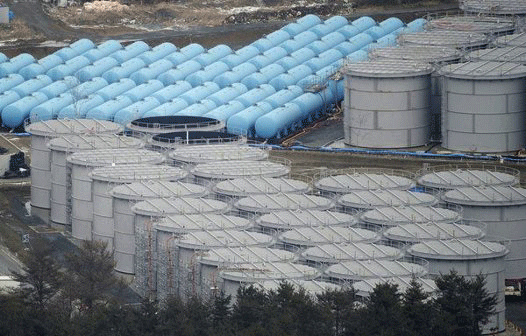 SHODDY TANKS: TEPCO hurriedly built dozens of storage tanks for the contaminated water at a cost of 16 billion yen ($134 million). The shoddy tanks, using rubber seals and assembled by unskilled workers, began leaking and some water seeped into the ground and then into the ocean. The tanks are now being replaced with more durable welded ones.
GIANT UNDERGROUND POOLS: A total of 2.1 billion yen ($18 million) was spent on seven huge underground pools built by Maeda Corp. to store the contaminated water. They leaked within weeks, and the water had to be transferred to steel tanks.
 UNFROZEN TRENCH: A 100 million yen ($840,000) project to contain highly contaminated water in a maintenance tunnel by freezing it failed because the water never completely froze. TEPCO subsidiary Tokyo Power Technology even threw in chunks of ice, but eventually had to pour in cement to seal the trench. http://www.foxnews.com/world/2015/03/24/japanese-audit-finds-millions-dollars-wasted-in-fukushima-nuclear-plant-cleanup/
Russia’s economic woes delaying the build of nuclear reactors in Turkey
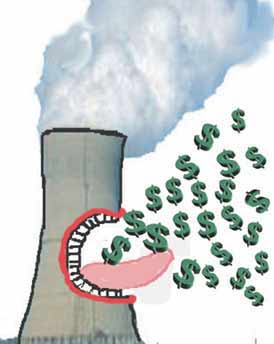 Russian Nuclear Plants in Turkey ‘Not Ready Before 2022’, Moscow Times Reuters Mar. 23 2015 Turkey’s first nuclear power plant is unlikely to be ready before 2022, energy officials said on Monday of the $20-billion project that has been beset by regulatory hurdles and complicated by Russia’s financial woes…..Rosatom initially pledged to have the first of the four reactors in the southern Turkish town of Akkuyu ready by 2019.
A senior Turkish energy official said the project would not be online before at least 2022, given that ground-breaking has yet to happen. “The first reactor can be online at least seven years after the ground-breaking so the 2019-2020 date is impossible,” the official said…..
-
 Economic Worries
Analysts say Russia’s economic troubles because of collapsing oil prices and Western sanctions over Ukraine may also have weighed on Rosatom’s finances.
“The Akkuyu timeline was — and remains — completely unrealistic,” Aaron Stein, associate fellow at British defense and security think-tank the Royal United Services Institute (RUSI), said. “The issue has, in recent months, become far more complicated because of Russia’s economic deterioration.”……http://www.themoscowtimes.com/opinion/business/article/russian-nuclear-plants-in-turkey-not-ready-before-2022/517868.html

Cost of Small Nuclear Reactors is greater than cost of large ones

Doubts that American nuclear companies will sell reactors to India
IS THE INDIA NUCLEAR AGREEMENT REALLY THE ‘BREAKTHROUGH’ OBAMA PROMISED? Chauthi Duniya, March 20th, 2015 Analysts and experts familiar with the negotiations say that the legal issues remain so complex that private U.S. companies may continue to shy away from new deals in India,….
The Indian Government has already slated sites for nuclear power facilities for Westinghouse Toshiba in the western state of Gujarat and GE Hitachi Nuclear Energy in the state of Andhra Pradesh. “My feeling is that there’s not as much there,” said Daryl Kimball, executive director of the nonprofit Arms Control Association, a non-proliferation watchdog group. “The real test is, will GE or Westinghouse say ‘this is good enough for us’ or not and whether they will sign contracts.”…….
The key issue will be whether the conflict between international law and Indian law can be waved away by a memorandum from India’s Attorney General. The memorandum would have to say that the 2010 liability law “doesn’t mean what it says,” said a Washington lawyer familiar with the issues but who asked for anonymity to protect his professional relationships. Continue reading
1 This Month




PLEASE OPPOSE HR 8255 AND S.3639 – bills would accelerate satellite deployment, with no environmental review or safeguards – https://ncstd5li.quorum.us/campaign/169331/
To see nuclear-related stories in greater depth and intensity – go to https://nuclearinformation.wordpress.com
-
Archives
- September 2026 (339)
- August 2026 (330)
- July 2026 (355)
- June 2026 (287)
- May 2026 (306)
- April 2026 (356)
- March 2026 (251)
- February 2026 (267)
- January 2026 (308)
- December 2025 (358)
- November 2025 (359)
- October 2025 (375)
-
Categories
- 1
- 1 NUCLEAR ISSUES
- business and costs
- climate change
- culture and arts
- ENERGY
- environment
- health
- history
- indigenous issues
- Legal
- marketing of nuclear
- media
- opposition to nuclear
- PERSONAL STORIES
- politics
- politics international
- Religion and ethics
- safety
- secrets,lies and civil liberties
- spinbuster
- technology
- Uranium
- wastes
- weapons and war
- Women
- 2 WORLD
- ACTION
- AFRICA
- Atrocities
- AUSTRALIA
- Christina's notes
- Christina's themes
- culture and arts
- Events
- Fuk 2022
- Fuk 2023
- Fukushima 2017
- Fukushima 2018
- fukushima 2019
- Fukushima 2020
- Fukushima 2021
- general
- global warming
- Humour (God we need it)
- Nuclear
- RARE EARTHS
- Reference
- resources – print
- Resources -audiovicual
- Weekly Newsletter
- World
- World Nuclear
- YouTube
-
RSS
Entries RSS
Comments RSS

