Pacific Gas and Electric Co. faces problems in trying to extend last Californian nuclear station’s license
 Californians debate future of state’s last nuclear plant , The Oregon, MICHAEL R. BLOOD, Associated Press, 29 Nov 15 LOS ANGELES (AP) — Six years ago, the company that owns California’s last operating nuclear power plant announced it would seek an extended lifespan for its aging reactors. Pacific Gas and Electric Co. envisioned Diablo Canyon as a linchpin in the state’s green energy future, with its low-carbon electricity illuminating homes to nearly midcentury.
Now, with a much changed nuclear power landscape, the company is evaluating whether to meet a tangle of potentially costly state environmental requirements needed to obtain renewed operating licenses.
If it doesn’t move forward, California’s nuclear power age will end.
That prospect is remarkable considering it was once predicted that meeting California’s growing energy needs would require a nuclear power plant every 50 miles along its coast. But vast fields of solar panels, wind turbines that in places are as common as fence posts and developments in power storage speak to changed times.
“We are not talking about either go dark or go nuclear. There are clearly now so many alternatives,” said former California Environmental Secretary Terry Tamminen, a green energy advocate who served under Republican Gov. Arnold Schwarzenegger.
The issues in play at Diablo Canyon range from a long-running debate over the ability of structures to withstand earthquakes — one fault runs 650 yards from the reactors — to the possibility PG&E might be ordered by state regulators to spend billions to modify or replace the plant’s cooling system, which sucks up 2.5 billions of gallons of ocean water a day and has been blamed for killing fish and other marine life……..
Without new operating licenses, the plant can’t run past 2025. Renewing a nuclear power license is a lengthy proposition, and so even with years to go it’s fast becoming a late hour.
The uncertainty around PG&E’s 3-decade-old plant comes at a challenging time for the company and the U.S. nuclear industry, once thought on the verge of a renaissance. Continue reading
China marketing nuclear technology etc to Czech Republic
 China, Czech pledge closer nuclear power, finance cooperation BEIJING, Nov. 27 (Xinhua) — Chinese Premier Li Keqiang and his Czech counterpart Bohuslav Sobotka pledged to boost cooperation in nuclear power, finance and other sectors during talk on Friday.
“China’s nuclear power technology and equipment are safe and inexpensive, which has made them competitive globally,” Li said, adding that the Chinese side is willing to participate in Czech’s nuclear power business.
Sobotka, who is making his first official visit to China, said he welcomes China’s participation in Czech’s nuclear power business. He added that the two sides can study the feasibility of conducting nuclear power cooperation in markets outside of the two territories.
Earlier this week, Sobotka attended the fourth summit of China and Central and Eastern European (CEE) countries in east China’s Suzhou city, where Li proposed to set up a multilateral financial firm between China and the 16 CEE countries.
On the financial front, Li said on Friday that he hopes China and Czech will innovate and expand the mode of financial cooperation within the framework if the “16+1” financial firm in discussion, which he said will strongly support practical cooperation between the two countries.
China stands ready to talk with Czech on establishing a RMB settlement mechanism in Prague, Li added……..http://news.xinhuanet.com/english/2015-11/27/c_134862920.htm
Is nuclear power competitive? Actually – NO!
Nuclear Power Is No Fix for Climate, Energy Intelligence, M.V. Ramana, 27 Nov 15
Once actual projects were on the drawing board, however, these hypothetical numbers moved quickly north. In Europe, two French-led flagship projects were initially estimated at around $2,250-$2,475/kW in the case of the Olkiluoto-3 reactor in Finland in 2004, and around $2,600/kW in the case of the Flamanville plant in France in 2006, both higher than the figures assumed by the academic and industry studies. In the US, cost estimates by electric utilities building reactors were higher — the corresponding initial estimates for two Westinghouse AP1000 reactors under construction at the Vogtle nuclear power plant in Georgia were $4,700/kW, for just the nuclear reactor, and $6,412/kW, when the other costs associated with the project were included.
When construction actually started, those numbers were soon obsolete and costs once again rose. Today, as work on these projects continues and completion dates are extended well beyond original dates, the cost estimates keep rising. As of early 2015, Vogtle’s total cost was estimated at around $7,300/kW. Likewise, the costs of the two European projects have more than doubled. The story is similar in Russia, India and China, although the starting cost estimates were lower.
Original construction timelines now seem completely absurd. Olkiluoto-3’s construction time went from four years to 13 and Flamanville-3 from five to 11. One of the Koodankulam reactors in southern India took 12 years to be commissioned, in comparison with the initial estimate of six years; the second one is yet to start operating, and the construction period count there is upwards of 13 years. All of these experiences should serve as reminders that cost and time overruns for reactor construction, long the bugbears of the nuclear industry, have not been exorcised by modern construction and manufacturing methods.
The industry typically attempts to explain these cost and time overruns as the result of teething problems in first-of-a-kind projects and argues that as more projects get under way these problems will be sorted out. Unfortunately, historical experience belies this expectation: Nuclear construction costs have typically gone up, not down, as more reactors are built, and this trend has been extensively documented in the US, France and India. The tendency toward increased costs despite experience is being demonstrated currently, with the estimated cost of a planned French reactor at Hinkley Point in the UK higher than estimates for the same reactor at Flamanville and Olkiluoto, and with the estimated cost of the Russian reactors proposed to be constructed in Turkey and in Bangladesh being higher than the Koodankulam reactors in India.
Higher Generating Costs
For a long time now, the nuclear industry had a comforting answer to this problem of high construction costs: it may take a lot, both of time and money, to build a reactor, but once built and paid for, the reactor will generate low-cost electricity that can be sold for handsome profits. The experiences of the last few years have burst that bubble. Marginal costs associated with producing nuclear electricity have been rising, to the point that some utilities are doing the unthinkable: shutting down nuclear reactors even though their licenses would allow them to operate for a decade or more beyond the planned shutdown date.
Annual expenditures in the US averaged for the whole fleet — not counting initial construction costs, which have largely been paid off — cover fuel purchases, salaries for workers and activities like uprating generation capacity, replacing equipment and regulatory work. The total is in the vicinity of $40 to $45 per megawatt hour, which should be seen in the context of recent bids for new solar photovoltaic projects (including the cost of recouping initial construction expenditures) that are around $50/MWh, and even lower than $40/MWh in some parts of the country. These higher-than-expected nuclear generating costs and the falling costs of competing sources of electricity explain why in the past few years US utilities have decided to prematurely shut down at least eight reactors — particularly stand-alone single units that don’t enjoy the economies of scale of plants with two or more reactors.
Across the Atlantic, Vattenfall, the Swedish state-owned utility, is closing down two reactors at the Ringhals nuclear power plant earlier than planned. Another large utility, E.On, justified its decision to shut down two of the reactors at Sweden’s Oskarshamn power plant by saying that “there are no prospects of generating financial profitability either in the short or the long term.” Although there have been no shutdowns yet in France, its audit court, Cour des Comptes, estimated that production costs for EDF’s 58 reactors had risen from €49.6 to €59.8/MWh between 2010 and 2013. The company has also been selling much less electricity to its competitors than in earlier years, leading analysts to conclude that “nuclear energy is less competitive than it was in the past.” This, in France, the country most reliant on nuclear power — and which has also decided to pare back nuclear’s contribution to its overall generation from just under 80% to 50% by 2025……….. http://www.energyintel.com/pages/worldopinionarticle.aspx?DocID=906841
Russia keen to market nuclear power to impoverished Cambodia
Russia to help Cambodia build capacity for nuclear power, REUTERS, YEKATERINBURG,  RUSSIA/PHNOM PENH 26 Nov
  Russia will help Cambodia work towards building a nuclear power plant under an agreement the two countries signed this week, said Sergei Kirienko, the head of state nuclear firm Rosatom.
Cambodia depends heavily on imported fuel and power. Electricity in the country is among the most expensive in Southeast Asia and a common source of complaint from investors.
“The Cambodian government is mulling, in future, a nuclear power station construction,” Kirienko told reporters on Wednesday when asked about the agreement.
Cambodian energy officials declined to comment on the deal on Thursday.
The agreement was signed during a visit by Russian Prime Minister Dmitry Medvedev to Cambodia this week. His visit was the first to Cambodia by a senior Russian politician since 1986.
Under the terms of the agreement, Russia will provide expertise, research and training to Cambodia…… http://www.reuters.com/article/2015/11/26/us-cambodia-russia-nuclear-idUSKBN0TF0W220151126#siJ8T6T4vdeKAEm8.97
USA anxious about nuclear proliferation, but keen to market nuclear technology to South Korea
 US, South Korea ratify deal on nuclear energy http://www.dw.com/en/us-south-korea-ratify-deal-on-nuclear-energy/a-18875053 A pact between Seoul and Washington on nuclear energy has officially entered into effect. The deal, almost five years in the making, stops short of allowing South Korea to reprocess nuclear fuel from the US. The 20-year accord came into force on Wednesday, with South Korea’s foreign minister and the US ambassador exchanging documents in Seoul.
South Korea is among top five consumers of nuclear energy in the world, and home to 23 nuclear power plants.
However, all of the nuclear fuel in the country is provided by the US.
Seoul has repeatedly urged Washington to allow South Korea to develop uranium enrichment and reprocessing capabilities, citing energy concerns and environmental issues. The US is opposing the move, fearing that such technology could also be used for weapons-grade nuclear material.
The US government is concerned about sparking the nuclear rivalry between Seoul and North Korea,the country that already conducted three successful nuclear tests.
The latest accord denies South Korea the right to reprocess and enrich the US-origin fuel.
However, Seoul and Washington agreed to establish a high-level committee to discuss the issue, which South Korean officials described as a step towards securing a possible consent from Washington in the future.
South Korea is also seeking to become a key exporter of atomic power plants.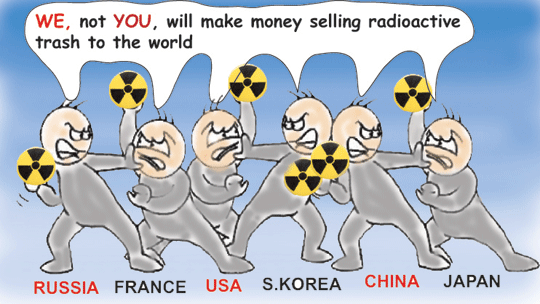
The US ally could also research technologies such as “pyroprocessing” which are generally considered safe from the proliferation standpoint.
Why pilots and air hostesses are classified as radiation workers
 Here’s why airline crewmembers are classified as radiation workers http://www.techinsider.io/airplane-flight-cosmic-radiation-exposure-altitude-2015-11 Julia Calderone Nov. 19, 2015
Airline crewmembers have tough jobs. They have to maintain an aircraft’s safety while dealing with grumpy and inattentive passengers — all while keeping smiles on their faces.
But flight attendants and pilots also face an unseen menace on the job: Cosmic radiation.
You can’t see it or feel them, but at any given moment, tens of thousands of highly charged particles are soaring through space and slamming into Earth from all directions.
These particles, sometimes called cosmic rays or cosmic ionizing radiation, originate from the farthest reaches of the Milky Way. They’re bits and pieces of atomic cores shot to nearly light-speed by black holes and exploding stars, and they smash into (and through) anything and everything in their way.
With that incredible speed and energy, it’s no surprise cosmic rays can easily penetrate human flesh and, in the process, pose risks to our health. Their damage to tissues and DNA have been linked to cancer and reproductive problems, for example.
The good news is that these rays don’t pose much of a risk to humans on Earth. That’s because our planet’s atmosphere and magnetic field form a mighty shield against these rays. But the shield isn’t impenetrable, and some particles leak through.
Those who spend a lot of time high up in the atmosphere — flight crews, for instance — face much higher exposure to cosmic radiation. The closer to the ground you are, the less exposure you’ll get. For this reason, the Centers for Disease Control and Prevention (CDC) classifies airline crewmembers as radiation workers.
In fact, the National Council on Radiation Protection and Measurements reported in 2009 that aircrews have, on average, the highest yearly dose of radiation out of all radiation-exposed workers in the US.
The annual hit to aircrews is an estimated 3 millisieverts (mSv) — a complicated-sounding measure of the amount of background radiation a person receives in one year in the US — which beats out the annual doses received by other high-radiation jobs, such as X-ray technicians and nuclear power workers. (Only astronauts are more exposed; 10 days in spaces delivers about 4.3 mSv to the skin alone, which is about 4.3 years’ worth of cosmic radiation on the surface of Earth.)
Flying through the sky increases your exposure of two different types of cosmic radiation: galactic cosmic radiation, which is always soaring through an aircraft, and solar particle events, which only occur during solar flares. The latter, very intense bursts of energy from the sun can occur anywhere from one to 20 times per day.
We know that ionizing radiation — which not only comes from space, but from X-rays, nuclear power generation, and atomic bombs — causes cancer and reproductive issues in humans, including miscarriage and birth defects. But we don’t know the health effects of cosmic radiation alone.
Most studies have looked at people bombarded with high amounts of various kinds of radiation, such as atomic bomb survivors and those who received radiation therapy. For this reason we don’t know what level of cosmic radiation is safe for humans,according to the CDC. Which is why there are no official limits on the amount of radiation a crew member can receive in a given year.
There are some worldwide guidelines, however. The International Commission on Radiological Protection recommends that a crew member not be exposed to more than 20 mSv per year. The ICRP says that the general public, on the other hand, should receive less than 1 mSv per year. That same 1 mSv recommendation goes for those who are pregnant, both in the sky or on the ground.
But for crewmembers, these limits are difficult to abide, according to the CDC, and such exposures may put them at greater risk for health effects.
To minimize exposures, crew members should try to limit working on flights that are very long, at high altitudes, or that fly over the poles, which are all associated with heightened exposures. Pregnant crewmembers are also particularly at risk and should try not to fly during their first trimester, or at all when the sun is having a solar particle event, which can deliver a higher dose of radiation in one flight than is recommended for the entirety of the pregnancy, according to the CDC.
To calculate your exposure on a typical flight, check out this handy Federal Aviation Administration online tool.
Japan to step up radiation protection, as worker’s leukaemia attributed to radiation
 Leukemia case recognized Last month, the Health, Labor and Welfare Ministry acknowledged a man in his 40s who developed leukemia after working at the Fukushima plant as a sufferer of work-related illness. He was the first decommissioning worker to be recognized as such.
Appropriate radiation control vital for Fukushima decommissioning http://the-japan-news.com/news/article/0002580144, November 22, 2015 The Yomiuri Shimbun It will take about 40 years to decommission reactors at Tokyo Electric Power Co.’s Fukushima No. 1 nuclear power plant. To secure the personnel necessary for that task, it is important to thoroughly safeguard the health of such personnel.
TEPCO has started stepping up its safety measures. The utility has established a consultative body in cooperation with subcontracting firms that dispatch personnel to the plant, thereby increasing the frequency of visits and inspections at their work sites. Measures also include expanding worker safety education. These steps are in keeping with a set of safety guidelines laid down by the government in late August.
An average of about 7,000 personnel work at the Fukushima facility every day, and not a small number of accidents tied to construction and other work have occurred. We hope TEPCO will comprehensively improve the work environment of these personnel.
It is particularly important to reduce the workers’ radioactive exposure. Continue reading
France still keen to market nukes to South Africa
 FRANCE STILL KEEN ON SA’S NUCLEAR POWER DEAL http://ewn.co.za/2015/11/22/France-still-keen-on-SAs-nuclear-power-deal French Foreign Minister says France named a special envoy to make the pitch to supply SA’s needs. Jean-Jacques Cornish | about 13 hours ago
PRETORIA – French Foreign Minister Laurent Fabius says his country is still willing to take part in South Africa’s nuclear power project despite reports of a deal being made with Russia.
He told President Jacob Zuma France has named a special envoy to make the pitch to supply South Africa’s needs. Fabius says the purpose of his talks with Zuma yesterday was to ensure South African participation in the climate change summit in Paris at the end of this month.
But he took the opportunity in their Pretoria meeting to assure the South African president that France has the competency to supply and install the nuclear power station it’s looking for.
Despite reports that Russia has already clinched the deal with South Africa, France does not regard this as a fair accomplishment. (Edited by Winnie Theletsane)
Sale of nuclear reactors to Egypt entails big debt to Russia
Russia to finance Egypt’s nuclear power plant, Utilities, by Baset Asaba on Nov 22, 2015 Moscow and Cairo signed an agreement for Russia to build a nuclear power plant in Egypt, with Russia extending a loan to Egypt to cover the cost of construction.
A spokesman for Russia’s state-owned nuclear firm Rosatom said the plant, Egypt’s first, would be built at Dabaa in the north of the country and was expected to be completed by 2022, reported Reuters.
Egyptian President Abdel Fattah al-Sisi, speaking on state TV, gave few details but said the project would involve the building of a ‘third-generation’ plant with four reactors.
It is not clear how much the deal is worth but Sisi said the loan from Russia would be paid off over 35 years………http://www.utilities-me.com/article-3882-russia-to-finance-egypts-nuclear-power-plant/
Price Anderson Act lets nuclear companies off the hook when big accidents occur
The Atomic Age and limited liability for nuclear accidents, The Hill, 20 Nov 15 By William F. Shughart II.……….Half a century ago, the United States was the only member of the global nuclear club. After detonating atomic bombs at Hiroshima and Nagasaki, Washington’s attention turned to civilian uses of nuclear power. “Atoms for Peace” was a catchphrase of the day. The Cold War was well underway then and civilian reactors were seen as a key producer of nuclear materials destined for military use.
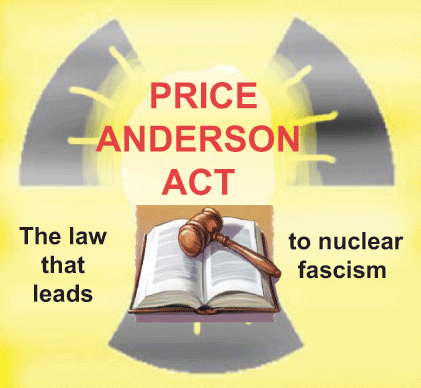
To jumpstart nuclear power in the United States, and to assuage fears that utilities would go bankrupt if radioactive materials were accidentally released into the atmosphere, Congress passed – and President Eisenhower signed – the Price-Anderson Nuclear Industries Indemnity Act in 1957.
-…………-the very large expected costs of a major nuclear event, unlikely as it may be, explain why private insurers are unwilling to underwrite fully any and all future accident claims.
Price-Anderson clearly is a form of corporate welfare that indemnifies the nuclear industry in a worst-case scenario. Although the law doesn’t allow the industry to get off scot-free for all injuries it may cause and it doesn’t prevent injured parties from seeking compensation, the industry’s support for its periodic reauthorization suggests that it highly values Price-Anderson protections.
From an economist’s perspective, the downside of Price-Anderson, as with insurance in general, is that it encourages behavior known as “moral hazard.” Because the nuclear industry itself will not bear the full costs of a devastating accident, such accidents are more likely to happen than otherwise. http://thehill.com/blogs/congress-blog/energy-environment/260837-the-atomic-age-and-limited-liability-for-nuclear
Investment Bank Lazar finds wind and solar beat coal and nuclear on costs
 Wind and solar beating conventional fuels on costs – Lazard, REneweconomy, By Giles Parkinson on 18 November 2015 The latest study by US investment bank Lazard has highlighted the extent to which wind and solar technologies are beating conventional fuels – coal, gas and nuclear – on costs of production, and also on abatement.
The study, the “Levellised Cost of Energy Analysis 9.0 notes that utility scale solar PV has fallen 25 per cent in the last year alone, since its most recent study. Since 2009, when it began the analysis, solar and wind energy have fallen by 80 per cent and 60 per cent respectively.
Lazard says that because of this, and despite big falls in the cost of natural gas in the US, wind and solar are beating conventional fuels in most situations, as revealed in their success in competitive capacity auctions.
And so, to its graphs [on original]
………It is interesting to note that compared to Lazard’s previous reports, wind, solar and gas costs have fallen, coal has remained static, while nuclear is the only technology to show a significant increase……http://reneweconomy.com.au/2015/wind-and-solar-beating-conventional-fuels-on-costs-lazard-26273
Russia marketing nuclear reactors to Egypt, involving big debt for Egypt
 Egypt, Russia sign deal to build a nuclear power plant Reuters, 19 Nov 15 CAIRO Moscow and Cairo signed an agreement on Thursday for Russia to build a nuclear power plant in Egypt, with Russia extending a loan to Egypt to cover the cost of construction.
A spokesman for Russia’s state-owned nuclear firm Rosatom said the plant, Egypt’s first, would be built at Dabaa in the north of the country and was expected to be completed by 2022.
Egyptian President Abdel Fattah al-Sisi, speaking on state TV, gave few details but said the project would involve the building of a ‘third-generation’ plant with four reactors.
It is not clear how much the deal is worth but Sisi said the loan from Russia would be paid off over 35 years……..http://www.reuters.com/article/2015/11/19/us-nuclear-russia-egypt-idUSKCN0T81YY20151119#BuK0P0P54h5xD8LD.97
China to finance and build two nuclear stations in Argentina
 China to build two nuclear plants in Argentina in $15bn deal, Ft.com, Jamil Anderlini in Beijing and John-Paul Rathbone, Latin America Editor , 17 Nov 15
China will finance and build two nuclear power plants in Argentina in a deal worth up to $15bn underlining Beijing’s continued presence in Latin America despite its slowing economy.
The deal comes amid a push to export China’s homegrown atomic technology, often by offering cheap technology and generous financing. It follows China’s move last month to take a one-third stake in a French-led project to build the first in a new generation of UK nuclear plants.
Buenos Aires has been one of Beijing’s larger clients, with $19bn of lending for Chinese-led infrastructure projects since 2007, according to the Inter-American Dialogue’s China database.
Although China has started to scale back its exposure to more risky Latin American borrowers, such as Venezuela, it provided an $11bn currency swap arrangement last year to bolster Argentina’s sagging reserves.
Both reactors will be built by state-owned China National Nuclear Corp in co-operation with Argentina’s state-owned Nucleoeléctrica. When finished, they will roughly double the country’s nuclear power capacity provided by its existing three nuclear plants.
Chinese banks and companies will provide loans and investment to cover 85 per cent of the projects’ costs, with the loans to be paid back over 18 years with an annual interest rate below 6.5 per cent, according to Argentine media.
CNNC’s domestic state-owned rival, China General Nuclear Power Group (CGN), will apply to UK regulators next year for approval of its similar nuclear power technology as it seeks to build more plants in Britain.
CGN has already agreed to take a one-third stake in the French group EDF’s £18bn Hinkley Point power station, and wants to build a series of new reactors in the UK.
Analysts say success in exporting its nuclear technology to Britain will help China sell more nuclear plants around the world because of the perceived rigour of the UK’s regulatory regime.
“We have our first foot in the UK,” Zheng Dongshan, senior vice-president at CGN, told the Financial Times during a visit to the UK last month. “This could have a good effect to kick the door of other countries.”
Chinese economic planners have identified more than 60 countries between China and Europe as potential customers. They hope to provide 30 of the 200 nuclear plants they estimate will be under construction in those countries by 2030……
In recent years Beijing has stepped in to provide financing and investment to several countries locked, like Argentina, out of international credit markets or shunned by global investors because of war, sanctions or corruption.
Latin America has been an area of particular interest to China because of the ruling Communist party’s desire to expand Chinese influence into America’s traditional “backyard”.
Argentina to buy nuclear technology from China
Argentina says signs nuclear plant construction deals with China, Reuters, BUENOS AIRES Nov 15 Argentina has signed two nuclear power plant construction deals with China for about $15 billion, the Argentine government said in a statement on Sunday, calling the deals “a fundamental step toward diversifying our energy matrix.”…...”Between both deals we are talking about financing of close to $15 billion” over 18 years, the Argentine statement said. (Reporting by Maximilian Heath; Editing by Leslie Adler)
http://www.reuters.com/article/2015/11/15/argentina-china-energy-idUSL1N13A0GF20151115#0Y2dUv0yhLfBpo7L.99
Employee-shareholders of EDF call for halt to too-costly British Hinkley Point nuclear project

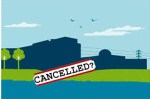 Hinkley Point nuclear plan puts survival of EDF at risk, say employee shareholders http://www.theguardian.com/environment/2015/nov/13/hinkley-point-nuclear-plan-puts-survival-edf-at-risk-say-employee-shareholders
French energy firm should halt expensive UK project in which it has has nothing to gain and everything to lose, says association of employee-shareholders EDF’s £18bn project to build two nuclear reactors in Hinkley Point, Britain, is so expensive and so risky that it puts the survival of the French utility at risk, an association of employee-shareholders said on Thursday.
EDF Actionnariat salarié (EAS) said in a statement that the interests of EDF are gravely threatened by the Hinkley Point project, which it calls “a financial catastrophy foretold” in which EDF has nothing to gain and everything to lose.
“EAS asks the management of EDF to stop this risky project, whose financial risks are to big for our company and which could put EDF’s very survival at risk,” the association said.
EDF staff own 1.72% of the utility’s capital, making employees the second-largest shareholder after the state, which hold 84.5%, according to ThomsonReuters data.
Last month, EDF announced a partnership with Chinese utility CGN to build Hinkley Point, but the two companies have not yet made the final investment decision to go ahead with the project, which EDF reluctantly agreed to finance on its already stretched balance sheet after other partners pulled out.
EDF, which already has to borrow money every year to pay its dividend, faces a €55bn (£39bn) upgrade of its nuclear fleet over the next decade, will spend some €5bn to install Linky smart meters in coming years and needs to invest billions in the reactor unit of Areva, which it plans to buy next year.
Standard & Poor’s last month warned that it might downgrade EDF’s debt if it goes ahead with Hinkley Point, because of the project’s high execution risks and substantial investment needs.
1 This Month




PLEASE OPPOSE HR 8255 AND S.3639 – bills would accelerate satellite deployment, with no environmental review or safeguards – https://ncstd5li.quorum.us/campaign/169331/
To see nuclear-related stories in greater depth and intensity – go to https://nuclearinformation.wordpress.com
-
Archives
- September 2026 (339)
- August 2026 (330)
- July 2026 (355)
- June 2026 (287)
- May 2026 (306)
- April 2026 (356)
- March 2026 (251)
- February 2026 (267)
- January 2026 (308)
- December 2025 (358)
- November 2025 (359)
- October 2025 (375)
-
Categories
- 1
- 1 NUCLEAR ISSUES
- business and costs
- climate change
- culture and arts
- ENERGY
- environment
- health
- history
- indigenous issues
- Legal
- marketing of nuclear
- media
- opposition to nuclear
- PERSONAL STORIES
- politics
- politics international
- Religion and ethics
- safety
- secrets,lies and civil liberties
- spinbuster
- technology
- Uranium
- wastes
- weapons and war
- Women
- 2 WORLD
- ACTION
- AFRICA
- Atrocities
- AUSTRALIA
- Christina's notes
- Christina's themes
- culture and arts
- Events
- Fuk 2022
- Fuk 2023
- Fukushima 2017
- Fukushima 2018
- fukushima 2019
- Fukushima 2020
- Fukushima 2021
- general
- global warming
- Humour (God we need it)
- Nuclear
- RARE EARTHS
- Reference
- resources – print
- Resources -audiovicual
- Weekly Newsletter
- World
- World Nuclear
- YouTube
-
RSS
Entries RSS
Comments RSS

