Mississipi nuclear workers victims of radiation
 Nuclear tests in South Mississippi cost government millions in claims BY PAUL HAMPTON jphampton@sunherald.com, Sun Herald, 12 Dec 15 The Department of Labor has paid almost $5.5 million to people who are suffering medical problems after working at the Salmon Nuclear Explosion Site southwest of Hattiesburg.
Combined with money paid to workers who lived in Mississippi but didn’t necessarily work on the Salmon site, the total is $16.8 million. A total of 56 claims came from the Salmon site, commonly known as the Tatum Salt Dome.
The medical claims were from workers exposed to radiation and other toxic substances at the site from 1964 through June 29, 1972, said Amanda McClure of the Department of Labor’s Office of Public Affairs. The money came from the Energy Employees Occupational Illness Compensation Program Act.
“Former DOE federal workers and DOE contractors and subcontractors who were diagnosed with cancer and whose cancer was caused by exposure to radiation while working at the Salmon Nuclear Explosion Site during the covered time period are eligible for lump-sum compensation and medical benefits,” she said in an email……..
Shortly after the blast, scientists drilled down into the dome to lower instruments into it, and the drill bit brought contaminated soil to the surface. The mistake was repeated in 1966. Several cleanup attempts were made.
The buildings were razed and sent to the Nevada Test Site in 1972. A monument at the site warns people not to drill or dig.
In 1979, about 15 families were evacuated, some in the middle of the night, after scientists believed they had found deformed and radioactive wildlife in the area. That radioactivity later was attributed to contaminated lab equipment used to test the wildlife.
In the 1990s, scientists with the U.S. Department of Energy drilled 55 wells near the site to test the water. The DOE also spent $1.9 million for a water system so residents wouldn’t have to use well water……http://www.sunherald.com/news/article49448010.html
Gloomy prediction for USA’s nuclear industry
new designs are at least 10-30 years away from being commercially viable. “It’s not a technology problem, it’s an engineering and project management problem,” he said. “[Nuclear] is a fundamentally flawed technology.”
“The idea that we would have fusion this century is not credible,” he said. “This is not an engineering problem, it’s a lack of physics understanding
 The Outlook For Nuclear Power In The US Really Sucks, Gizmodo, 13 Dec 15 JENNIFER OUELLETTE “……. what’s really killing nuclear power in this country is garden-variety economics: in the emerging energy market of the 21st century, nuclear just can’t compete — particularly with ultra-cheap natural gas.
“There are a lot of climate scientists talking about how we need nuclear power or we can’t solve climate change,” said Greg Jaczko, a former chair of the NRC who is now a consultant in Washington, DC. “I hear that and I think, well, then we’re never gonna solve climate change, because nuclear power is not gonna do it. We’re not doing today what would need to be done to maintain that massive fleet of reactors in the future.”
Jaczko estimates that it would cost $US540 ($750) billion to build 90 new plants over the next 20 years — equivalent to the entire Department of Defence budget. Even if you staggered that, building five new plants each year, that still amounts to $US30 ($42) billion per year — equivalent to the entire Department of Energy (DOE) budget. And that’s assuming energy demand stays constant, when it is far more likely to increase.
Koonin acknowledges that construction costs for nuclear plants are heavily front loaded, but he argues that once that considerable initial investment is paid off, there are just operating costs like fuel, maintenance and personnel to contend with. “It’s basically a cash machine,” he told Gizmodo.
Investors don’t seem to share his optimism. “I talk to the kinds of people who finance these projects, and they’re very supportive of the technology, but privately they will tell me, we’d love to go nuclear, but the performance just hasn’t been good enough to justify the capital investment,” said Jaczko. “Nobody is investing in nuclear power plants.”
So how about upgrading existing plants instead? The NRC is doling out licensing extensions bit by bit, but Jaczko is sceptical that this will be a viable solution, since fully 80% of existing plants would need licence extensions to meet the country’s electricity needs. The oldest plants in particular would require expensive refurbishment, and they still would not be able to compete, price-wise, with natural gas. The profit margins just aren’t there. “Bottom line, most [nuclear] plants in the country are going to shut down in two decades or or so,” said Jaczko.
It’s already begun. Entergy shut down its Vermont Yankee nuclear plant in January of this year after 42 years in operation, even though it is licensed to operate until 2032. The company is also closing its Fitzpatrick plant in Oswego, New York; that facility is expected to lose around $US40 ($56) million in 2016 alone. Also closing: the Kewaunee facility in Wisconsin and Florida’s Crystal River plant.
In northern Illinois, Excelon will likely be closing its small single reactor plant, even though the NRC agreed to relicense the plant for another 20 years. But it did so on the condition that the plant be refurbished, which could cost as much as $US1 billion. The company can build a shiny new combined cycle gas-fired plant for a comparatively affordable $US500 ($694)-$US600 ($833) million. ……..
There are some innovative new reactor designs on the horizon, such as small modular reactors — a design favoured by Koonin, and being developed by a startup called NuScale. Then there is TerraPower, a project that Bill Gates is developing with China: it uses sodium as a coolant and depleted uranium as fuel. Thiel is backing a company called Transatomic Power, founded by two MIT graduate students. That design can burn liquid uranium (LWRs burn solid uranium); the startup claims its reactor should be able to run on the spent fuel of other nuclear reactors, thereby addressing the waste storage issue as well.
But Jaczko says new designs are at least 10-30 years away from being commercially viable. “It’s not a technology problem, it’s an engineering and project management problem,” he said. “[Nuclear] is a fundamentally flawed technology.”
And what about fusion? Despite the recent news of an experimental fusion reactor, the Wendelstein 7-X(W7X), starting up on Germany, Rosner — who served on the DOE’s fusion energy advisory committee — insists that the fusion option just isn’t on the table right now. “The idea that we would have fusion this century is not credible,” he said. “This is not an engineering problem, it’s a lack of physics understanding, both for magnetic and inertial fusion.”……
Unpalatable news for nuclear industry: reprocessing may be found to be ‘wasteful spending’
 Japan may review spending on plutonium fuel cycle http://www.japantoday.com/category/national/view/japan-may-review-spending-on-plutonium-fuel-cycle By Aaron Sheldrick and Linda Sieg DEC. 11, 2015 TOKYO —
Japan may review spending on reprocessing plutonium for use in nuclear reactors, a minister appointed to identify wasteful spending told Reuters, following years of government outlays on the controversial program that has yielded no results.
The minister’s comments come after the operator of Japan’s fast breeder reactor, designed to use plutonium extracted from spent reactor fuel, was declared unfit following decades of accidents, missteps and falsification of documents.
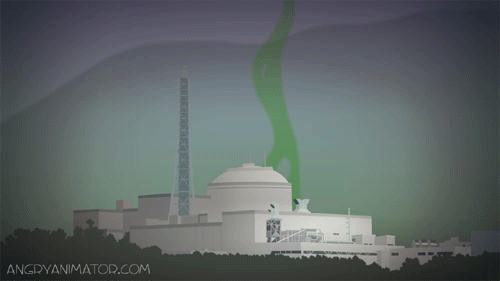 Costs for the Monju breeder reactor have ballooned to about 1 trillion yen ($8 billion) while Japan’s public debt is the highest among industrialized nations. Taro Kono, a ruling Liberal Democratic Party member who is a critic of the Monju facility and the nuclear industry in general, was appointed to examine government spending in a recent cabinet reshuffle by Prime Minister Shinzo Abe.
While Kono emphasized he cannot overturn government policy, he can review public projects and said Abe had told the cabinet that wasteful spending had to be taken “out of the budget.”
He has been reviewing part of the government budget request of 102 trillion yen for the fiscal year starting March, including a little-used ship carrying nuclear fuel and subsidies to towns that host nuclear power plants. “In my portfolio, I can ask them if the money is spent wisely and that’s what I have been doing and the nuclear fuel cycle is no exception,” the U.S.-educated Kono said.
He said next year’s review could be widened to include all government spending on nuclear projects, something that might resonate with voters after the Fukushima disaster in 2011 turned the public against atomic power. “If they are not doing a good job, the review next year will be all nuclear, maybe,” Kono said.
His comments could have implications for another costly nuclear project that is mostly in private hands but has strong government support and receives some public funds. The Rokkasho plutonium reprocessing facility in northern Japan is meant to provide fuel for Monju and some of Japan’s nuclear reactors, but completion was delayed for a 23rd time last month.
The plant has been beset with problems since the first concrete was laid in 1993 and costs have ballooned to 2.2 trillion yen ($18 billion) from 760 billion yen.
 Meanwhile, Japan’s plutonium stockpile has expanded to nearly 50 tons, with stocks held in Britain and France as well as in Japan. Recently, a group of 31 scientists wrote to Abe urging him to abandon reprocessing.
With all but two of Japan’s reactors shut down in the wake of the Fukushima disaster and no immediate use for the plutonium, there is little meaning to the costly exercise of extracting more from spent fuel, critics say.
“The PM’s directive is very clear. If we point out any items that are not spent well it has to be out of the budget,” Kono said. “That’s why a few ministers are not speaking to me right now,” he added, with a laugh.
Toshiba’s financial travails threaten UK’s nuclear power plans
Toshiba travails pose another threat to UK’s nuclear future, The Week Dec 11, 2015
Company is said to be touting for new investment as costs of its accounting scandal bite. First it was Hinkley Point, now it’s Moorside. Another project to add to the UK’s new generation of nuclear power plants has apparently hit the rocks.
Sources “with direct knowledge of the matter” told Reuters that Toshiba is asking around among Japanese financial institutions for help to fund the Moorside project, being built near the Sellafield site in west Cumbria. The plant will house three reactors designed by Toshiba subsidiary Westinghouse Electric to produce 3.4 gigawatts of power, slightly more than Hinkley Point in Somerset.
Two years ago the project was estimated to cost around £8bn, the Guardiannotes, but this could have doubled since, as the assumed cost of labour and meeting stringent regulations has increased. Reuters says Toshiba’s share of the costs would be £2bn, but since its accounting scandal it is now thought to have “become difficult for Toshiba to do this on its own”.
The sources said Toshiba “had made requests to Japanese insurers as well as some banks, including Norinchukin Bank, and has hired HSBC as a financial adviser”…..http://www.theweek.co.uk/67731/toshiba-travails-pose-another-threat-to-uks-nuclear-future
Toshiba having problems getting money to build UK nuclear power project
 Toshiba seeks financial help with £8bn UK nuclear project http://www.theguardian.com/business/2015/dec/10/toshiba-seeks-financial-help-with-8bn-uk-nuclear-project, Terry Macalister
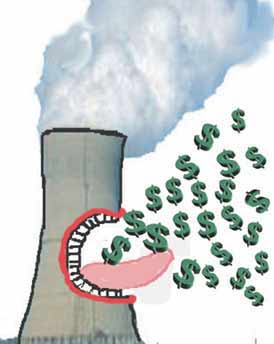
Japanese technology firm in talks with financial institutions to support atomic construction programme after share price tumbles Toshiba, the technology company at the centre of plans to build more nuclear reactors in Britain, is looking for outside help to fund its £8bn programme after a collapse in its share price.
The Japanese group is in talks with local financial institutions to support the construction of an atomic plant near the Sellafield facility in Cumbria, after running up losses following an accounting scandal.
The emergence of Toshiba’s problems will add to worries over Britain’s nuclear plans after the French energy group EDF, which plans to build the Hinkley Point C station in Somerset, dropped out of France’s CAC 40 index of leading shares.
There is widening concern in the City about the escalating costs of huge nuclear projects, which are damaging company share valuations and undermining the government’s commitment to new nuclear at a time when it has promised to phase out coal-fired power stations.
It has become difficult for Toshiba to do this (fund the NuGen programme in the north-west of England) on its own,” one source told Reuters, which reported that Toshiba had hired HSBC bank to help find new funds.
On Monday, the Japanese financial regulatorrecommended that Toshiba be fined 7.37bn yen (£40m) for overstating profits and the share price of the company is down 40% since the start of the year.
Toshiba is a 60% shareholder in the NuGen project to build 3.4 gigawatts (GW) of electricity generating capacity close to the Sellafield plant, where spent fuel is reprocessed.
Neither Toshiba nor NuGen, a partnership with Engie (formerly GDF Suez) of France, was available for comment. The cost of building three reactors designed by a Toshiba subsidiary, Westinghouse, was estimated two years ago at £8bn but experts believe that figure could have at least doubled. That is in line with the price tag for Hinkley, which EDF puts at £18bn.
The 3.2GW Somerset reactors, to be built by EDF with the help of Chinese state companies, have been given the go-ahead by the UK government but the project is awaiting the final investment decision from France.
This week EDF blamed the 85% holding by the French state and lack of free float shares for its removal from the CAC index. But many analysts in the City of London have released gloomy equity forecasts on EDF, fearing Hinkley might go over budget like the company’s Flamanville reactor project in Normandy.
India’s PM Modi visiting Russia re nuclear purchase deal
 Nuclear expansion on agenda of PM visit to Russia, Zee News, , December 9, 2015 – New Delhi: The upcoming visit of Prime Minister Narendra Modi to Russia is expected to see the two countries deciding on expansion of nuclear programme, government told theLok Sabha on Wednesday. Minister of State for PMO Jitendra Singh said the earlier visits of the Prime Minister to various countries were also marked by signing of agreements to procure uranium and give boost the nuclear programme…….
He said during Modi’s visit the US, a deal was finalised for the construction of nuclear reactors in Gujarat and during the visit to France, a deal was finalised with AREVA, world’s leading nuclear power company.
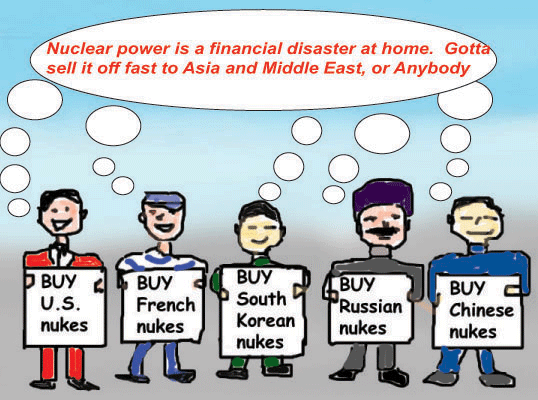
“For the visit of the Prime Minister to Russia, a programme has been finalised for expansion of nuclear programme,” he said about the trip expected later this month……http://zeenews.india.com/news/india/nuclear-expansion-on-agenda-of-pm-visit-to-russia_1832478.html
Russia trying to sell to Egypt nuclear reactors with 80 year operation
 Moscow, Cairo to Discuss Construction of Nuclear Power Plant on January 31, Sputnik News, 8 Dec 15 Egyptian Ambassador to Russia Mohamed Badri said that Russia and Egypt will discuss the construction of a nuclear power plant within the framework of the Russia-Egypt intergovernmental committee on January 31……
On November 19, Moscow and Cairo signed an intergovernmental deal on the construction of a nuclear power plant in Egypt.
According to the Russian state nuclear corporation Rosatom, the plant will take around 10 years to build and will be in operation for around 80 years…….. http://sputniknews.com/business/20151208/1031425665/russia-egypt-nuclear-power.html#ixzz3tldVDvoI
Britain’s nuclear power programme a cash cow for overseas companies
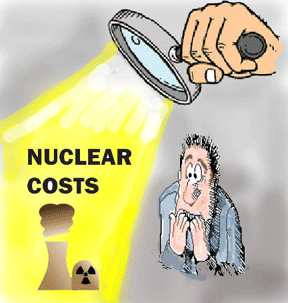 Half of £24bn nuclear reactor investment will go to overseas suppliers More than £12bn of the UK government spend on two new power plants will go abroad, mainly to companies in France, a government adviser warns, Guardian, Terry Macalister, 7 Dec 15 More than half of the £24bn expected to be spent on the first British nuclear reactors for two decades could go abroad to foreign suppliers, a leading UK academic and government adviser has warned.
The issue is of extreme political sensitivity because George Osborne has already faced criticism for providing huge subsidies to Hinkley, which is being developed by EDF Energy of France.
It will be seriously tough for British manufacturers to meet the needs of EDF in line with the commitment that 60% of the value of the project will remain in this country,” said Sir Keith Burnett, who is a member of the Council of Science and Technology reporting to the prime minister, David Cameron.
Burnett, the vice-chancellor of Sheffield University, said that 40% of the total value of the work at Hinkley Point atomic plant would largely go to French firms.
At least £4bn worth of spending on items such as pipes and pumps – around 15% of the project by value – will be up for grabs for the UK but only if local companies can provide the higher specification supplies required by EDF. Burnett thinks that will be difficult to achieve…….
Part of the problem is that small and medium-sized British firms have not had the opportunity to supply equipment to a new nuclear power station since Sizewell C in Suffolk was completed in 1995.
The Hinkley Point C facility in Somerset is still awaiting the final investment decision from the largely state-owned EDF and its Chinese partners, although ground preparation is already under way………http://www.theguardian.com/business/2015/dec/06/nuclear-reactor-investment-pay-overseas-suppliers-hinkley-point
Despite the hype, India’s Kudankulam nuclear plant isn’t working out too well
2 years on, Kudankulam isn’t working. Where are its cheerleaders now?Catch News, KUMAR SUNDARAM
The promises
- Kudankulam nuclear power plant was built despite opposition from locals, scientists
- It was projected as the answer to Tamil Nadu’s power woes
The reality
- Tamil Nadu continues to be short of electricity
- The Kudankulam plant has worked in first and starts and remains shut for 3 months now
More in the story
- How the project is proving to be ineffective – a white elephant
- Who is responsible for this mess
After all the brouhaha, however, the reality is that the plant has not been working for the last three months: Reactor No. 1 of the plant was shut down for “annual maintenance” on 26 June this year. It was to restart on 22 August, but the date was initially pushed back to 23 September.
Then the Nuclear Power Corporation of India, which operates the project, postponed the reopening to 7 October and then again to 15 October. The plant is yet to start, despite a public assurance from MR Srinivasan, former chariman of Department of Atomic Energy.
In fact, after a much-celebrated start, the power plant near Idinthakarai – a hamlet by the Bay of Bengal – has been under “routine maintenance” or has tripped and shut down, leaving the authorities red-faced.
Kudankulam has abnormally high ‘trip rate’. Basically, it fails much more than other N-power plants
After being commissioned, the plant took a long time to function at full capacity and was declared commercially operational only in 31 December, 2014. In these 14 months, the reactor shut down 19 times due to tripping and there were three maintenance outages.
Soon after the outset, the rotor of the power went into ‘reverse power’ mode and tripped. Instead of adding power to the grid, it started sucking power back. In reality, the NPCIL had declared the project to be commercially open in a hurry as the unending tests became an embarrassment………
Manmohan Singh govt made it an ego issue. But Kudankulam is now proving to be a non-starter
The issue can earn the BJP some brownie points against the Congress. But it also seems to be avoiding the issue as it supports nuclear energy in principle and as it may also expose Modi’s global nuclear shopping spree to uncomfortable questions……..
Can we rethink?
The world is moving towards sustainable and renewable energy sources which have become increasingly more efficient and viable.
After all the heavy investment in Kudankulam, deliberate neglect of environmental and safety concerns and the bulldozing of local people’s dissent, India has got a nuclear reactor that’s not working. Will policy-makers and their cheerleaders now stop and re-think?
It’s too dangerous to allow Kudankulam to fade away as it doesn’t suit the dominant interests that underpin the public gaze in India. The issue may have become unattractive for them or have simply outlived its shelf-life as a headline, but it concerns safety of Indian citizens, larger public policy on an issue of national importance and the emptiness of promises made to people to sell the expensive and dangerous project to them. http://www.catchnews.com/environment-news/kudankulam-is-not-working-where-are-its-cheerleaders-now-1445501297.html
UK Government’s Nuclear Plans – Will they work?
NU CLearNews Dec 15 Last month we asked why the Government is persevering with the world’s most expensive power plant ever at the same time slashing support for renewable energy. (1) Renewable energy is going from strength to strength. Solar photovoltaics could provide the same amount of electricity as Hinkley Point C for half the subsidy cost (2) and we could have six times the power-generation capacity for the same money by investing in wind turbines instead of Hinkley. (3) Although the Government’s motivation is still a bit of a mystery – either it thinks we still need baseload; it wants to sustain a national nuclear industrial capability sufficient to maintain the UK’s nuclear-armed status; or it is prepared to pay over the odds to the nuclear industry to avoid democratising the energy industry.
Japan’s PM Abe visiting India to market nuclear reactors

 Ahead of PM Abe’s visit, India-Japan racing to seal nuclear pact http://www.hindustantimes.com/india/ahead-of-pm-abe-s-visit-india-japan-racing-to-seal-nuclear-pact/story-TwhHbjC7kPuNYNSWoU6iUK.html Jayanth Jacob, Hindustan Times, New Delhi Dec 04, 2015
India and Japan are working to seal a nuclear pact during the visit of Prime Minister Shinzo Abe from December 11-13 for the annual summit between the two countries.
“We hope it will be a done deal this time. But considering the complex nature of negotiations that mark the civil nuclear agreements till the last moment, we should be guided by caution till the pact is finally sealed,” said a senior official.
Japanese firms play a crucial role in the US and French nuclear industries. An Indo-Japanese pact is crucial for fully realising the ongoing civilian nuclear cooperation India has with these two countries. Japanese forging major, Japan Steel Works (JSW), is a supplier of the critical reactor equipment of reactor pressure vessel for most firms worldwide.
But the sides have to agree upon the text of the agreement that will satisfy both countries. Nuclear issue is a sensitive one in Japan — the only country to have suffered a nuclear attack. For instance, Japan wants explicit commitment on testing clauses —the deal will be off in event of a nuclear test by India. India says this touches upon the issue of ‘strategic autonomy’, which is outside the purview of civil nuclear pact that the country has been negotiating with Japan.
But sources said Japan has stopped pressuring India into signing the non-proliferation treaty (NPT) that New Delhi finds discriminatory.
Abe will visit Varnasai, the constituency of PM Narendra Modi who is likely to accompany him on the visit.
Entergy will definitely shut down Fitzpatrick nuclear power plant
 Entergy rejects Exelon’s offer to cover FitzPatrick’s fuel cost By PAYNE HORNING , 3 Dec 15 “•…………We have explored every legitimate commercial arrangement that might have changed the decision regarding Fitzpatrick’s retirement,” Holden [Fitzpatrick spokeswoman Tammy Holden] said in a statement. “The [nuclear] plant will retire at the end of 2016 or early 2017, as we have previously announced and formally advised the NRC.”…..http://wrvo.org/post/entergy-rejects-exelons-offer-cover-fitzpatricks-fuel-cost#stream/0
German utility RWE splits, in order to deal with costs of nuclear station closures
Germany’s RWE splits to better absorb cost of nuclear plant closures , Reuters, 1 Dec 15
* Nuclear provisions will remain with parent group
* Plans follows spin-off by larger peer E.ON
* RWE shares close up nearly 17 pct
* Utility being advised by Goldman Sachs (Recasts, adds fund manager, details)
By Christoph Steitz FRANKFURT, German utility RWE moved to restructure its businesses to better absorb the cost of nuclear plant closures on Tuesday, sending its shares up nearly 17 percent, their biggest one-day gain in seven years.
To extract funds from its healthier businesses, Germany’s second-biggest utility will hive off its renewables, grids and retail units into a separate entity and sell a 10 percent stake in an initial public offering late next year.
It said it would keep its conventional power generation business, including its remaining nuclear plants and the liability for their shutdown, hoping to avoid a political stand-off over nuclear provisions that led peer E.ON to backtrack on a similar plan.
RWE’s Chief Executive Peter Terium was tight-lipped as to why the group decided to split now, a year after larger peer E.ON said it would spin off power plants, energy trading and oil and gas activities into a separate unit, Uniper.
Analysts, however, said RWE’s plan should ease concerns in Berlin, which has been worried that utilities would not honour the costs of Germany’s policy to close its nuclear plants by 2022. Political pressure forced E.ON to change its plans and take back its German nuclear plants along with the 16.6 billion euros ($17.6 bln) in provisions…….
NUCLEAR EXIT
Squeezed by a decline in wholesale power prices and a surge in renewables, German utilities are struggling to make money operating coal- and gas-fired power plants.
In addition to falling prices, the utilities have suffered from concerns over their ability to come up with as much as 80 billion euros in combined funding to pay for shutting down the country’s nuclear plants by 2022….. http://www.reuters.com/article/2015/12/01/rwe-restructuring-idUSL8N13Q2CP20151201#CbUEEVuQLV8LBJoJ.97
A new nuclear dream: Westinghouse wants its employees to produce new reactor designs
 Westinghouse, again, looks for the next generation of nuclear reactors, Power Source, December 1, 2015 By Anya Litvak / Pittsburgh Post-Gazette Westinghouse Electric Co.’s CEO Danny Roderick in January challenged his employees to come up with the next big thing in nuclear energy — the next generation reactor.
It had been a very long time since such words were uttered at the Cranberry-based nuclear company……
No new nuclear reactor has been built in the U.S. on time and on budget, and the overruns haven’t been trivial. That track record, along with cheap and plentiful natural gas and a lack of environmental policy that incentivizes low carbon generation, has held back the nuclear renaissance predicted a decade ago.
Even operating nuclear plants with capital costs far behind them are having trouble competing. A handful are headed for premature retirement.
For that reason, economics and scale are top priorities…….
DOE seeks new ideas for reactors Last month, Westinghouse submitted its proposal to the Department of Energy, which had solicited ideas about advanced nuclear reactors that could be built by 2035. The agency plans to award $80 million to two teams over the next five years, but that depends on Congress’ approval going forward. In the meantime, the department is getting ready to announce the winners of a much smaller opportunity.
Westinghouse hasn’t said yet who else it has enlisted to be part of its team, only that there are more than a dozen entities and that they include universities, national labs and vendors.
A spokesman for the agency said the response has been strong with more than a dozen teams vying for funding. The winners — there will be two, and each will be awarded $6 million — are expected to be announced before the end of the year.
By nuclear standards, that’s a drop in the bucket.
“At one time, there was a fair amount of investment going on in Generation IV,” said Larry Foulke, adjunct professor at the University of Pittsburgh’s Swanson School of Engineering……“A number of nations were working together on these reactors,” he said. “But as with most research activities where you’re studying reactors on paper and not making them,” investment dwindles.
“Generation IV reactors are suffering from a lack of funding worldwide,” he said…..http://powersource.post-gazette.com/powersource/companies/2015/12/01/Westinghouse-again-looks-for-the-next-generation-of-nuclear-reactors/stories/201512010005
Pacific Gas and Electric Co. faces problems in trying to extend last Californian nuclear station’s license
Californians debate future of state’s last nuclear plant , The Oregon, MICHAEL R. BLOOD, Associated Press, 29 Nov 15 LOS ANGELES (AP) — Six years ago, the company that owns California’s last operating nuclear power plant announced it would seek an extended lifespan for its aging reactors. Pacific Gas and Electric Co. envisioned Diablo Canyon as a linchpin in the state’s green energy future, with its low-carbon electricity illuminating homes to nearly midcentury.
Now, with a much changed nuclear power landscape, the company is evaluating whether to meet a tangle of potentially costly state environmental requirements needed to obtain renewed operating licenses.
If it doesn’t move forward, California’s nuclear power age will end.
That prospect is remarkable considering it was once predicted that meeting California’s growing energy needs would require a nuclear power plant every 50 miles along its coast. But vast fields of solar panels, wind turbines that in places are as common as fence posts and developments in power storage speak to changed times.
“We are not talking about either go dark or go nuclear. There are clearly now so many alternatives,” said former California Environmental Secretary Terry Tamminen, a green energy advocate who served under Republican Gov. Arnold Schwarzenegger.
The issues in play at Diablo Canyon range from a long-running debate over the ability of structures to withstand earthquakes — one fault runs 650 yards from the reactors — to the possibility PG&E might be ordered by state regulators to spend billions to modify or replace the plant’s cooling system, which sucks up 2.5 billions of gallons of ocean water a day and has been blamed for killing fish and other marine life……..
Without new operating licenses, the plant can’t run past 2025. Renewing a nuclear power license is a lengthy proposition, and so even with years to go it’s fast becoming a late hour.
The uncertainty around PG&E’s 3-decade-old plant comes at a challenging time for the company and the U.S. nuclear industry, once thought on the verge of a renaissance. Continue reading
1 This Month




PLEASE OPPOSE HR 8255 AND S.3639 – bills would accelerate satellite deployment, with no environmental review or safeguards – https://ncstd5li.quorum.us/campaign/169331/
To see nuclear-related stories in greater depth and intensity – go to https://nuclearinformation.wordpress.com
-
Archives
- September 2026 (330)
- August 2026 (330)
- July 2026 (355)
- June 2026 (287)
- May 2026 (306)
- April 2026 (356)
- March 2026 (251)
- February 2026 (267)
- January 2026 (308)
- December 2025 (358)
- November 2025 (359)
- October 2025 (375)
-
Categories
- 1
- 1 NUCLEAR ISSUES
- business and costs
- climate change
- culture and arts
- ENERGY
- environment
- health
- history
- indigenous issues
- Legal
- marketing of nuclear
- media
- opposition to nuclear
- PERSONAL STORIES
- politics
- politics international
- Religion and ethics
- safety
- secrets,lies and civil liberties
- spinbuster
- technology
- Uranium
- wastes
- weapons and war
- Women
- 2 WORLD
- ACTION
- AFRICA
- Atrocities
- AUSTRALIA
- Christina's notes
- Christina's themes
- culture and arts
- Events
- Fuk 2022
- Fuk 2023
- Fukushima 2017
- Fukushima 2018
- fukushima 2019
- Fukushima 2020
- Fukushima 2021
- general
- global warming
- Humour (God we need it)
- Nuclear
- RARE EARTHS
- Reference
- resources – print
- Resources -audiovicual
- Weekly Newsletter
- World
- World Nuclear
- YouTube
-
RSS
Entries RSS
Comments RSS

