How the nuclear lobby plans to get tax-payers to keep funding their industtry
 Innovative ways of funding nuclear power projects. World Nuclear News, 18 Feb “….set-up costs can be prohibitively high. Given the tight constraints on national balance sheets, governments and developers are creating new and often innovative funding methods for nuclear plants, writes Fiona Reilly.
Traditionally, nuclear power plants were financed, developed and operated by governments. During the mid-20th century, when a number of countries – notably the UK, US, France and Russia – chose to build nuclear power plants, they used direct government funding, partly because it was policy at the time and partly to maintain a high level of control. Later some countries adopted different ownership strategies, such as privatising plants (in the case of the UK) or maintaining their plant as national assets (Slovenia and Croatia).
A further shift in recent years is that government financing has taken on a new cross-border perspective, with Russia and China in particular offering complete solutions for developing nuclear projects in other countries.
Under these schemes, the country offering the solution puts together a consortium to deliver the project together with financing from its government, its government export credit agencies (ECAs) and/or national banks.
All in all, we’re seeing seven types of nuclear financing used across the world today. Aside from ‘traditional’ government funding, there are now six alternative methods: corporate balance sheet financing; the French Exceltium model; the Finnish Mankala model; vendor equity; ECA and debt financing; and private financing with government support mechanisms. In practice, projects tend to progress using a mix of these funding mechanisms.
Here’s a quick review of each of the six alternative models:
Corporate balance sheet financing
Financing a nuclear plant from a company’s own resources is really only an option for the largest utilities and developers. The cost of a large nuclear plant – with two or three reactors – is usually around $20 billion. For even the largest and most established company, it’s a huge challenge to carry such a large capital commitment for the average construction period of five to seven years before the plant starts producing revenue.
The French Exceltium model
Between 2005 and 2010, in an effort to address the increase in energy prices, a number of industrial investors – and banks – came together in France to form ‘Exceltium’. The purpose was to enter into a contractual arrangement with EDF to help finance its new-build plants in return for cheaper electricity from EDF’s portfolio. The payback to the investors – as opposed to the banks – comes over a period of 24 years through agreements to provide electricity to the industrial investors for a mix of fixed and variable pricing. The industrial investors can either use the electricity themselves or sell it to the market.
The Finnish Mankala model
The shareholders in the Mankala are a number of industrialists and utilities, and the Mankala takes a shareholding in the power plant being built. The owners of the Mankala are allowed and obliged to purchase electricity from the power plant equal to their shareholding at a cost price. This electricity can then be used by the investors or can be sold into the market. Other countries are now establishing laws to allow them to follow this model. As well as nuclear power generation plant, the Mankala concept has been used in Finland to help develop various other forms of infrastructure.
Vendor equity
In the late 2000s, it was recognised that reactor technology vendors may be able to support new build projects financially as well as technologically. This realisation gave rise to vendor equity, which helps to finance a project in return for the vendor’s technology being deployed in the new facility. However, technology vendors do not have the infinite balance sheets needed to allow them to invest in unlimited projects. In reality, they will only invest in the most advanced projects that are likely to succeed, will allow them to receive a return on their investment in the shortest possible time, and provide an option to exit the project at the earliest possible opportunity.
Export Credit Agencies (ECA) debt and financing
Non-recourse/limited recourse financing, where the lenders have no/limited recourse to the borrower and the only collateral for the loan is the project itself, is seen as the nirvana of nuclear new-build. However in reality this dream scenario still some way off. In the meantime, commercial banks are becoming less reluctant to lend to nuclear projects, and the support of a number of the ECAs has helped this shift to happen. ECAs have provided the backbone of debt lending to a number of projects in recent years through either direct or guaranteed lending to projects. The key is that the lending is there to support the export of goods or services from the ECA’s home country.
Private financing with government support mechanisms
For projects seeking private financing, the role of the government is key – and the government support mechanisms that are being made available can be crucial to getting deals underway. These mechanisms can take a number of forms, including a guarantee to support debt coming into a project (such as a sovereign guarantee or Infrastructure UK Guarantee), a revenue support mechanism (such as a Power Purchase Agreement or Contract for Difference), or in some cases both together. Much depends on the country in which the plant is being developed, taking into account a range of factors including its credit rating, financial reserves, electricity market, off-take regime, and the rights and obligations of generators. …...
Fiona Reilly
Fiona Reilly is head of nuclear Capital Projects & Infrastructure at PricewaterhouseCoopers.
EDF in its financial woes, extends the life of four nuclear reactors
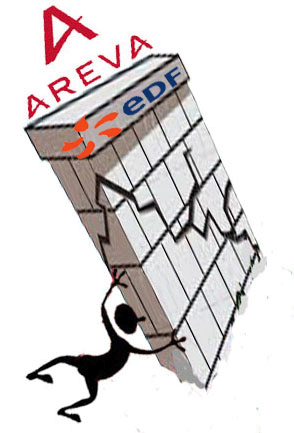 EDF extends life of four nuclear reactors Final decision on investment in Hinkley Point still pending, with analysts and activists casting doubt on the project, Guardian, Sean Farrell 16 Feb 16, EDF plans to extend the life of four nuclear power plants in the UK and has said it is close to announcing a decision on its investment in two new reactors at Hinkley Point.
The French energy company said the lives of the Heysham 1 and Hartlepool plants would be extended by five years until 2024, and the closure dates of Heysham 2 and Torness will be delayed by seven years to 2030………
EDF, which is 85% owned by the French government, announced the extensions as it reported a 68% plunge in profits last year and cut its annual dividend. The company, which has been hit by falling power prices, said net debt increased by €3.2bn (£2.5bn) to €37.4bn.
The fall in EDF’s annual net profit to €1.19bn was caused by a tripling of provisions, asset writedowns and other one-off items to €3.64bn. EDF surprised markets by cutting its dividend to €1.10 a share after paying €1.25 for the previous three years.
But the company restated the appeal of the £18bn Hinkley Point project in Somerset. EDF has delayed deciding on the plan due to funding problems, according to reports in France…….
Paul Dorfman of the UCL Energy Institute said EDF’s financial position cast doubt on the prospects for Hinkley Point. “Unfortunately, with the best will in the world, it may just not happen,” he told the BBC’s Today programme. “EDF shares have crashed to half their value a year ago; the budget for Hinkley alone is bigger than EDF’s entire market value.”
Greenpeace said EDF and the French government were in disarray over the cost and risk of the Hinkley project.
Doug Parr, Greenpeace UK’s policy director, said: “EDF’s accounts show growing debts and falling earnings. Hinkley is a bad investment and most people with an ounce of financial acumen have now come to realise this. George Osborne stands alone in defending Hinkley’s honour.” http://www.theguardian.com/business/2016/feb/16/edf-extends-life-of-four-nuclear-reactors-hinkley-point-decision
Britain’s nuclear power project to be derailed unless private investment magically comes to the party
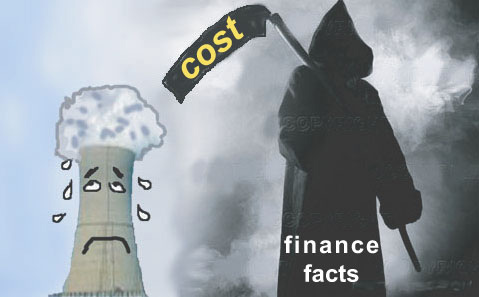 UK new nuclear plan will fail without private investors, says Horizon chief Britain cannot just rely on state-backed enterprises like EDF and its Chinese partners to build a fleet of new nuclear reactors, Alan Raymant warns , Telegraph UK By Emily Gosden, Energy Editor 14 Feb 2016 It wasn’t meant to be this way.
By now, construction of EDF’s new nuclear reactors at Hinkley Point in Somerset was supposed to be well underway, ready to fill the looming energy supply crunch as old coal plants close.
More reactors were supposed to be following on Hinkley’s heels, with 16 gigawatts – enough to meet about a third of peak winter UK electricity demand – up and running by 2025, replacing Britain’s existing nuclear plants as they retired.
Instead, cash-strapped EDF is still to take a final decision on Hinkley, with the latest hoped-for decision date, this Tuesday, likely to be missed.
First power from the Somerset plant is not due until 2025 and while other developers are aiming to start generating around the same time, they are years off investment decisions.
“Everybody would have liked the nuclear new build programme to have happened sooner,” admits Alan Raymant, chief operating officer of Horizon Nuclear Power, which plans to build two reactors at Wylfa on Anglesey, followed by two more at Oldbury in Gloucestershire……..
With new owners bringing a different reactor technology to the project – twin Advanced Boiling Water Reactors (ABWRs) with a combined capacity of 2.7GW – Horizon pushed its target for first power from Wylfa back to the “first half of the 2020”. This remains the aim, Raymant confirms: “We are looking at 2024, 2025.”
To do that, it needs to take a final investment decision on the plant in “early 2019”. That gives Horizon three short years to secure planning consent, safety approval for the ABWR design, a Government subsidy contract, EU state aid clearance, and the backing of investors……..
the biggest hurdle will be finding the money. If the UK wants to deliver16 gigawatts of new nuclear – now by a revised target of 2030 – it is going to need to secure many tens of billions of pounds of investment.
“We have to look to widen the pool of investors as far as we can,” says Raymant. “We can’t just rely on state-owned enterprises to provide that investment.”
The comment is a clear reference to Hinkley. EDF (85pc French state-owned) had hoped to build the plant in partnership with Centrica, the listed UK utility, but Centrica withdrew in 2013, citing spiralling costs and delays.
EDF set out to bring other investors on board: pension funds and Middle Eastern sovereign wealth funds were touted, but none signed up. “For third parties observing the announcements of delays and cost overruns for the EPRs [the Hinkley reactor technology] under construction, it is difficult to commit,” Jean Bernard-Levy, EDF chief, admitted.
Only China’s state nuclear corporation has so far agreed to invest, taking a lower share than EDF had hoped and even then only in return for a red carpet invitation to build its own reactor technology at Bradwell.
EDF also abandoned the idea of project-financing Hinkley, despite securing £17bn of Government loan guarantees; it has since emerged the loans had been awarded a sub-investment grade, BB+ rating by Infrastructure UK. EDF is now struggling to get the project over the lineby funding its share from its own balance sheet.
Hiroaki Nakanishi, the head of Hitachi, has already warned that the debacle raises “very serious concerns” about its own investment in the UK and questions over the “real solutions for setting up financial support”.
For Horizon, Raymant says, project-financing is a must. Hitachi only plans to retain a minority stake in the eventual construction.
“The challenge for us and for Government is to make sure that the framework that’s in place actually enables a wider range of investors to participate,” he says. “If it doesn’t do that, we won’t deliver a programme of new nuclear.”…… http://www.telegraph.co.uk/finance/newsbysector/energy/12156773/UK-new-nuclear-plan-will-fail-without-private-investors-says-Horizon-chief.html
EDF’s financial woes increases delay on decision about Hinkley nuclear plant
 EDF funds shortfall adds to nuclear plant delay Michael Stothard in Paris and Kiran Stacey in London, Ft.com 14 Feb 16 High quality global journalism requires investment.
EDF has still not secured funding for a £18bn nuclear plant at Hinkley Point in Somerset, further delaying one of the UK’s biggest energy projects.
Board members at the French utility will meet on Monday to sign off on the company’s annual results. Some supporters of the Hinkley Point plant had hoped they would use the meeting to give the scheme their final approval, but two people close to the process told the Financial Times EDF has not secured the necessary funding.
The final investment decision is not on the formal agenda, those people said, with one person saying it could be several months before all the financing is lined up…….
The market turmoil this year has made discussions over the financing more difficult, one person close to the talks said. EDF is in discussions with the French government to help find financing.
EDF is also spending at least €1.25bn to buy a majority stake in Areva reactor unit, Areva NP, as part of a government-backed bailout. It also faces a €100bn bill to upgrade its ageing nuclear power stations by 2030.
EDF said in September last year that the plant it is building in Flamanville, Normandy — already years overdue — would be delayed another year until 2018 and would cost €10.5bn, up from an initial budget of €3bn.
The UK government and EDF executives had hoped a final investment decision would swiftly follow the company’s agreement in October with CGN, the Chinese state-owned nuclear group, on how much of the deal each would finance. http://www.ft.com/intl/cms/s/0/34a0fbee-d1a0-11e5-92a1-c5e23ef99c77.html#axzz40BFAOtmS
Corporate elites push their toxic nuclear products onto India
Perverted Logic of Powerful Corporate Interests drive the India-France Nuclear Connection Mainstream Weekly, VOL LIV No 8 New Delhi by Harsh Kapoor The French President was in India as the chief guest at the surreal nationalist military parade of January 26, 2016. As is the practice, he was accompanied by a high-powered delegation and many multilateral deals got signed between the two countries. There are big ones that have been in the news, have been in the making for many years and may still take time to fructify. These concern the sale by France of nuclear power plants and of flying war toys to India.
India’s proposed purchase of military weaponry and nuclear power plants from France constitute the big centrepiece—attention and money involved in the overall scheme of Franco-Indian ties of the moment. These involve the sale of the Rafale-Multi Role Fighter jets, made by Dassault, said to be the most expensive in the world, and the sales of EPR (European Pressurised Reactors) nuclear reactors, made by Areva, also in the league of the most expensive.

Both these, that is, the civilian nuclear programme and defence procurement, are holy cows that are tightly sealed off by a firewall insulating them from reasoned public scrutiny; all this is managed and scripted by bureaucrats, lobbyists and keepers of ‘national interest’ who hold the keys. The Indian establishment of recent times seems to have grown very big pockets and a big-time ‘folie de grandeur’ where the bigger, more expensive, noisier, higher, shinier are seen as better benchmarks. (A sign of times we are in, that India’s Prime Minister walks about in clothes with his name printed on it all over.) Undue influence of foreign vendors and big Indian and foreign firms and lobbyists is a new reality in the corridors of our decision-making circles. That a new corporate-military industrial complex is shaping India’s drive down this road is a matter which should be the subject of social and economic enquiry by the academia. That is the Indian side of the picture.
But what is driving the French establishment in this foray into India?
The French authorities and the corporate elites see India (and China) as the new market to push their wares. It’s as banal and straight as that. It’s mostly about shoring up economic ties and in the process principally to bailout two crises-ridden sections of the French economy, namely, the civilian nuclear sector and the sagging military-industrial sector. Both of these continue to exercise a considerable hold over the French elites……..
Let us look at the story of the crisis-ridden French civilian nuclear programme to under-stand why the sale of the French EPR reactors for the proposed Jaitapur nuclear park is important to the French……..
The European Pressurised Reactor or EPR was a new generation design and a big bet of the French reactor-maker, Areva NP. The initial optimism from the EPR and the orders for new plants—first in Finland in 2003 (Olkiluoto), then in France in 2006 (Flamanville) and thereafter in China in 2007 (Taishan)—has dissolved with both Olkiluoto and Flamanville now nearly three times over-the-budget and at least 10 years and five years late respectively. Even the Chinese plants under construction are running late. Not a single functioning nuclear plant running the EPR reactor exists so far. There have been huge problems with the reactor design and construction quality despite years of experience in nuclear plant engineering in France. The highly trusted and independent-minded French nuclear safety agency (ASN) has found problems with the pressure vessel forgings in the Flamanville plant……..
The initial cost of the French EPR reactor was to be 3 billion euros but current estimates say it would be close to 11.5 billion euros. [One billion euros come to Rs 7000 crores and one French reactor would cost more then Rs 70,000 crores whereas the annual plan outlay for Maharashtra is Rs 47,000 crores.] The very largely state-owned company, Areva, that made the EPR has been running huge losses. In 2014 the losses were close to 5 billion euros. In July 2015 Areva sold off its reactor business to the French state-run electricity utility, EDF, which is also the biggest operator of nuclear power plants. Now the EDF, which has been economically sound, will have to manage the many very economically risky foreign projects of the former Areva. Experts say the EPR’s design problems and costs have dragged down Areva economically and the EDF is unlikely to want a similar fate for itself. The EDF has been developing its own designs for smaller nuclear reactors. Given the construction and operation problems of the EPR there is a possibility that the EDF could shelve the EPR’s giant reactor programme and place it in long-term cold storage.
The in-principle sale of six EPR reactors to India is a bet for the rescue of the crisis-marked French nuclear sector — imagine an injection of 60 billion euros if the price is, say, 10 billion dollars a piece. There was a joint venture by Areva and L & T, the Indian engineering major, which is negotiating the price of building the Jaitapur reactors with the Nuclear Power Corporation of India (NPCIL). They say the will bring down the price by sourcing the parts under a ‘make an India’ bid. All this will need to be reworked with the EDF being the new French entity in charge……….http://www.mainstreamweekly.net/article6209.html
USA Government quietly funding billionaires’ nuclear folly
 The Breakthrough Energy Coalition is Bill Gates again, and loaded to the hilt with his fellow billionaires all salivating at the prospect of old nuclear pots to mend.
But given the Breakthrough Coalition is entirely “separate” and “private,” what is it doing even being mentioned in a government budget rollout?
Radioactive Handouts: the Nuclear Subsidies Buried Inside Obama’s “Clean” Energy Budget CounterPunch, by LINDA PENTZ GUNTER FEBRUARY 12, 2016 “……..Cut to page 19 of the Office of Management and Budget’s Fiscal Year 2017 Budget document. Here we find “clean energy,” a phrase no longer to be trusted at face value, having been purloined into meaning at times something quite the reverse. For example, nuclear energy tends to hide beneath the “clean energy” mantel, muddling the message and undermining cause for optimism.
…….. let’s gerund away anyway and see what lurks beneath the section entitled, “Doubling the Investment in Clean Energy R&D.” Here we learn that the U.S. Government indeed intends to double its current $6.4 billion investment in clean energy for 2016 to arrive at $12.8 billion by 2021. A hefty chunk — $7.7 billion — will be given as discretionary funding to the Department of Energy in 2017 alone for “clean energy R&D.”
But for what, exactly? “About 76 percent of the funding is directed to DOE for critical clean energy development activities, including over $2 billion for energy efficiency and renewable energy technologies,” the Budget document reads. Just two billion dollars for energy efficiency and renewable energy combined? That leaves $5.7 billion for something else that the DOE considers “clean energy.” One of those claimants undoubtedly is nuclear power.
More clues to the likely destination of this unassigned mystery money can be found in a later section where the Budget document reveals that the $7.7 billion is actually earmarked as funding for the “first step toward the Mission Innovation doubling goal.”…….
there is only one logical explanation for this “fair and balanced” energy policy nonsense: corporate captivity.
To oversimplify: Barack Obama, the Senator from Illinois, emerged from Rahm Emanuel’s clamshell, and Emanuel invented Exelon and Exelon is today the country’s leading nuclear behemoth. Exelon’s chief lobbyist in the early days was David Axelrod. Team Obama was born in the country’s nuclear cradle, then. Nevertheless, it’s high time that a U.S. president as committed to renewables as Obama, ceased tossing favors — aka our money— to his corporate nuclear cronies.
And so it goes on. Sitting on that Paris stage last December for the Mission Innovation announcement was Bill Gates, whose only energy agenda is tinkering around with nuclear unicorns, an exercise so devoid of relevance to the urgent battle to address climate change that every dime spent there is a dime wasted. OK they are his dimes, trillions of them. But think what he could really do for climate change if he spent his riches wisely.
Let’s follow the trail of budget breadcrumbs a little further. The OMB goes on to say: “Mission Innovation is complemented by the Breakthrough Energy Coalition, a separate, private sector-led effort whose purpose is to mobilize substantial levels of private capital to support the most cutting-edge clean energy technologies emerging from the R&D pipeline.”
The Breakthrough Energy Coalition is Bill Gates again, and loaded to the hilt with his fellow billionaires all salivating at the prospect of old nuclear pots to mend. But given the Breakthrough Coalition is entirely “separate” and “private,” what is it doing even being mentioned in a government budget rollout?
What comes out of the Clean Energy R&D pipeline rather depends on what goes into it. It would be good if that turned out to be a true renewable energy revolution and not more deadly radioactive effluent from an obsolete fleet of new nuclear power plants.
Linda Pentz Gunter is the international specialist at Beyond Nuclear. She also serves as director of media and development. http://www.counterpunch.org/2016/02/12/radioactive-handouts-the-nuclear-subsidies-buried-inside-obamas-clean-energy-budget/
Electricite De France (EDF) faces €100bn bill for upgrading ageing nuclear power stations
EDF faces €100bn bill for upgrading ageing nuclear power stations, Ft.com Michael Stothard in Paris , 11 Feb 16 French utility EDF is facing a €100bn bill for upgrading its ageing nuclear power stations at the same time as a new law could force it to close a third of its reactors, according to the country’s state audit office.
The report by the Cour des Comptes comes at a bad time for the world’s largest nuclear power generator as it scrambles to secure financing for a contentious £18bn nuclear project in the UK.
Unions and analysts have already raised concerns that EDF might be biting off more than it can chew with the proposed nuclear plant at Hinkley Point in Somerset. The utility is grappling with a large debt load as well as increased competition in its domestic market.
Shares in EDF, which is 85 per cent owned by the French government, have fallen 55 per cent in the past year, reducing its market capitalisation to €21bn. The group has net debt of €37bn.
The audit office said on Wednesday that the cost of increasing the life expectancy of the 58 nuclear plants in France from their current 40 years would be €100bn during the 2014-2030 period.
This is well above EDF’s €55bn estimate for the 2014-2025 period. The difference is in part because the €100bn also includes EDF’s operating expenses over that period.
The audit office also said that a law passed last year to reduce the share of nuclear in French energy production from 75 per cent at the moment to 50 per cent by 2025 could lead to the closure of 17 to 20 EDF reactors.
The law was set to “jeopardise planned investments” by EDF and “force it to close a third of its plants,” with possible consequences for jobs, said the report. It suggested that EDF might have to turn to the state for compensation………
EDF has said it wants to keep all of its 58 reactors running. It said that it wants the reduction of the share of nuclear in the French energy mix from 75 per cent to 50 per cent in the law to come from growing demand.
But the Cour des Comptes said this kind of growth in demand was unlikely. “Only a very significant increase of electricity use or power exports could limit the number of closures, but experts do not expect this will happen,” it said. http://www.ft.com/intl/cms/s/0/581cb61a-d00d-11e5-92a1-c5e23ef99c77.html#axzz3ztplMhin
Confusion about financing of UK’s Hinkley nuclear power project
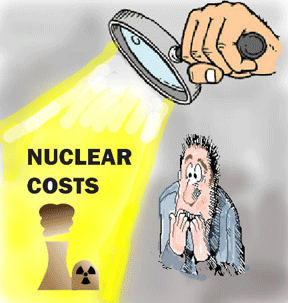
 nuClear News, No 82 Feb 2016, Hinkley’s Troubles Continue ……..The original idea for financing Hinkley was for the promoters to put in £7.5bn in equity and then to borrow £17bn supported by UK Government Credit Guarantees (for which a premium would be paid). This £24.5bn total was made up of £16bn cost plus £8.5bn interest. Now the cost seems to have gone up to £18bn (or adjusted for today’s prices). But EDF Energy seems to be talking about largely funding this out of equity. EDF said on 21st October: “The project is due to be equity funded by each partner, at least during a first stage.” (19) Of course, there is no indication given by EDF of how long the “first stage” would last. However The Telegraph reported that EDF had originally been expected to use project financing for Hinkley, backed up by up to £16bn in UK Government guarantees via Infrastructure UK. But Mr Lévy announced in October a “radical change” to what he said was a “more efficient” option of delivering its £12bn share of the project from EDF’s own balance sheet. (20)
Sizewell A final investment decision on Hinkley is expected to trigger the launch of the next round of public consultation over plans for Sizewell C. (26) But if EDF is struggling to find its 66.5% share of Hinkley C, how will it ever find the 80% it is expected to put into Sizewell C? References ……http://www.no2nuclearpower.org.uk/nuclearnews/NuClearNewsNo82.pdf

Ukraine buying Western technology, plans to double its nuclear power
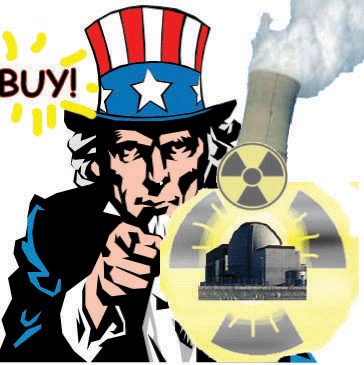 Thirty Years After Chernobyl, Ukraine Doubles Down On Nuclear Power, Radio Free Europe, By Tony Wesolowsky February 08, 2016 Nearly 30 years after Chernobyl spewed nuclear dust across Europe and sparked fears of fallout around the globe, a strapped, war-torn Ukraine is opting for “upgrades” rather than shutdowns of its fleet of Soviet-era nuclear power reactors.
Kyiv is planning to spend an estimated $1.7 billion to bring the facilities, many of which are nearing the end of their planned life spans, up to current Western standards.
Ukrainian officials hope to further their energy independence from Moscow and potentially export some of the resulting electricity to Western Europe as part of an “EU-Ukraine Energy Bridge” that can further cement Kyiv’s ties with Brussels.
But can they allay fears, in Ukraine and beyond, that the plans will put Europe at risk of another Chernobyl?
The project has the backing of the West, including a $600 million contribution split evenly between the European Bank for Reconstruction and Development (EBRD) and Euratom, the EU’s nuclear agency…….
Most of the reactors came online in the 1980s, with the oldest — Unit 1 at the Rivne nuclear plant — generating power since December 1980, three years before the ill-fated reactor No. 4 at Chernobyl started churning out power……..
critics have their doubts.
They say Ukraine’s nuclear reactors should be shut down as soon as possible, noting that one of the reactors still churning out power is older than the unit that exploded at Chernobyl on April 26, 1986. They also raise doubts over whether the program will be carried out to the highest standards……..
The [Ukrainian] Nuclear Regulatory Commission is discussing the possibility of raising the extension period to 80 years.”
The upgrade work is just part of a bold plan to make Ukraine a major energy player in Europe beyond its decades-long role as a major transit country. In a state energy strategy document released in 2006 and covering the sector until 2030, Kyiv foresaw the construction of 11 new nuclear units.
Ukraine’s current financial straits could put such bold plans on hold. However, Kyiv appears to be moving ahead with intentions to make Ukraine part of the European power grid by 2017, a target set out by President Petro Poroshenko after he took office in mid-2014……..
Ukraine is also opening other doors with Western nuclear partners.
In November, Enerhoatom signed an agreement with the French engineering firm Areva “for safety upgrades of existing and future nuclear power plants in Ukraine, lifetime extension, and performance optimization.”
U.S.-based Westinghouse, which has been operating in Ukraine since 2003, signed a deal with Kyiv in December 2014 “to significantly increase” nuclear fuel deliveries to Ukraine until 2020.
Russia’s Foreign Ministry reacted to the deal between Westinghouse and Kyiv by calling it “a dangerous experiment.”
Ukraine still depends on TVEL, a nuclear-fuel subsidiary of Russia’s Rosatom, for fuel at 13 of its 15 reactors, highlighting Russia’s continuing sway over Ukraine’s nuclear program.
Westinghouse has been challenging TVEL for a bigger cut of the nuclear-fuel market in Eastern and Central Europe, where Russian-designed reactors are the norm.
The U.S. Export-Import Bank has offered significant loans for several Westinghouse projects in the region, and U.S. officials have lobbied governments to diversify away from dependence on TVEL, according to Statfor, a U.S.-based analytical center…….. http://www.rferl.org/content/thirty-years-after-chernobyl-ukraine-doubles-down-nuclear-power/27539152.html
New Texas nuclear reactors not going to happen anytime soon, despite Fed approval
 Feds approve new nuclear reactors near Houston Fuel Fix, February 9, 2016 | By Jordan Blum The federal government on Tuesday approved the construction of two new nuclear reactors at the South Texas Project nuclear plant southwest of Houston.
But the massive cost of the project coupled with cheap Texas power prices mean that NRG Energy and its partners have no plans to build the new nuclear reactors anytime soon, if at all.
The partnership is continuing to look for new U.S. investors to eventually move the stalled project forward, said NRG spokesman David Knox. NRG said five years ago it wasn’t investing any more money in the expansion. Near that time, NRG estimated the project would cost about $14 billion with financing……..
The potential expansion project is through the Nuclear Innovation North America, or NINA, which is 90 percent owned by NRG and 10 percent by Toshiba. NINA owns 92.4 percent of the expansion. NRG has sought additional partners in the expansion since CPS Energy, once a 50 percent partner, reduced its stake to 7.6 percent.
After several years of review, the Nuclear Regulatory Commission said Tuesday it approved the issuance of the licenses to build two new nuclear reactors. The plant in Matagorda County already has two reactors. The South Texas Project, one of two nuclear power plants in Texas, opened in 1988, but is still one of the nation’s newer nuclear plants.
The project previously faced delays in the wake of the 2011 Fukushima nuclear disaster in Japan. The NRC said Tuesday the new licenses would include the agency’s upgraded post-Fukushima safety requirements. http://fuelfix.com/blog/2016/02/09/feds-approve-new-nuclear-reactors-near-houston/
Should Georgia’s electricity customers get hit with the ballooning costs of Vogtle nuclear power plant?
 Are our Georgia Power bills set to be nuked? Feb. 8, 2016 By Matt Kempner – The Atlanta Journal-Constitution Warm up your checkbook and get your debit and credit cards ready. Reckoning day is coming on the most gigantic construction project in Georgia and, in particular, on its blown budget.
This spring the expansion of the Vogtle nuclear power plant near Augusta was supposed to be finished, with the first of two new reactors cranking out electricity for businesses and homes all over Georgia.
Not going to happen.
It’s not going to happen next year either. Best case at this point is that it will be more than three years late. And consultants for the state worry even that timeline is wishful thinking.
But elected state regulators – members of the Georgia Public Service Commission, which most Georgians probably don’t even know exists – recently decided it’s now time to try to figure out if customers of Georgia Power should be forced to swallow all the company’s costs, including what looks like at least $1.7 billion in higher-than-expected expenses. That could send monthly power bills up in years to come.
The alternative is that Georgia Power and its shareholders eat some or all of the overage.
Guess which option Georgia Power thinks is right?
Critics of the Vogtle project have for years demanded tough analysis of Vogtle spending, rather than waiting to do so when the project is essentially completed…….
Company executives didn’t like a column I wrote last year. Or an earlier news story about last-minute pay-for-performance changes that boosted bonuses for leaders at Georgia Power and parent Southern Company. Or a story showing how Georgia Power morphed from giving assurances about its original Vogtle cost projections to expressing surprise that anyone would be surprised by the project’s surging costs and delays.
Tough questions are reasonable and prudent. Let’s hope the PSC treats Vogtle costs as a topic worthy of rigorous scrutiny, not a way to try to bolster support for its past decisions.
Find Matt on Facebook (facebook.com/mattkempnercolumnist) and Twitter (@MattKempner) or email him atmkempner@ajc.com. http://www.myajc.com/news/business/are-our-georgia-power-bills-about-to-be-nuked/nqLhc/
Creeping costs for Duke Energy’s proposed Lee Nuclear Station
Planning costs for Duke Energy’s Lee nuclear plant creep toward $500M, Charlotte Business Journal,
Feb 3, 2016, Duke Energy’s pre-construction costs for its proposed Lee Nuclear Station are creeping toward the half-billion dollar mark with no clear indication when the company will decide whether to go ahead and build the project.
From July through December, Charlotte-based Duke (NYSE:DUK) has spent more than $21.5 million on Lee. That brings total spending to more than $471.1 million on the project since it was announced in 2007.
Even at the greatly slowed pace of spending in the last couple of years, the project costs are on track to exceed $500 million before the end of this year.
Duke expects to get a combined construction and operating license for the $12 billion-plus project from the U.S. Nuclear Regulatory Commission this year. But the company has declined to put any deadline on when it will decide whether to build the project or when it might go to the S.C. Public Service Commission for state authority to proceed with the project, which would be built in Gaffney…….
Of the total spent since the project was announced, more than a third of it, almost $173.8 million, is interest expense……. http://www.bizjournals.com/charlotte/blog/energy/2016/02/planning-costs-for-lee-nuclear-plant-creep-toward.html
Ambiguities in marketing nuclear reactors to India
 Nuclear ambiguities, THE HINDU, 7 Feb 16 India’s nuclear politics was in the limelight again last week, and not for the best of reasons. More than five years after it signed the Convention on Supplementary Compensation (CSC), India ratified the insurance pooling agreement, which pertains to civil liability in the event of a nuclear accident in any of the acceding countries. Prima facie, this was a good move, bringing to an end a game of will-they-or-won’t-they, which had cast India in poor light internationally and which sat uncomfortably beside three hard-fought nuclear landmarks — the India-U.S. Civil Nuclear Agreement (CNA) and the Nuclear Suppliers Group (NSG) waiver, both passed in 2008, and India’s Civil Liability for Nuclear Damage Act (CLNDA), which became law in 2010.
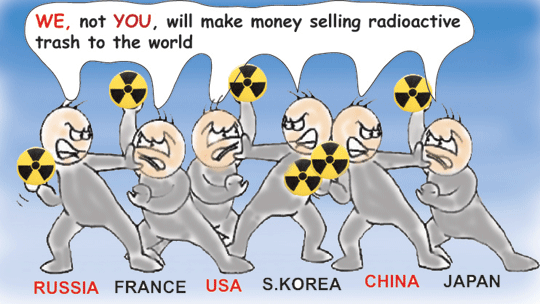
Problems for China’s nuclear power plans
Nuclear utility Vattenfall in crisis – third consecutive annual loss
 Nuclear tax and low prices continue to impact Vattenfall, World Nuclear News, 04 February 2016 Swedish utility Vattenfall has announced a loss of SEK19.8 billion ($2.4 billion) in 2015, its third consecutive annual loss. It attributed this partly to continued low electricity prices and unprofitable Swedish nuclear power reactors…….
Vattenfall CEO Magnus Hall said, “The major challenge in 2015 continued to be the impact that today’s very low electricity prices have on Vattenfall’s profitability and the valuation of our assets. Unfortunately, combined with new regulatory requirements, this led to further write-downs, mainly on the values of Swedish nuclear power and German lignite in the summer.”
He added, “Continued falling prices and a nuclear tax corresponding to SEK0.07 per kilowatt-hour have put Swedish nuclear power in a critical situation…….http://www.world-nuclear-news.org/C-Nuclear-tax-and-low-prices-continue-to-impact-Vattenfall-0402164.html
1 This Month



PLEASE OPPOSE HR 8255 AND S.3639 – bills would accelerate satellite deployment, with no environmental review or safeguards – https://ncstd5li.quorum.us/campaign/169331/
To see nuclear-related stories in greater depth and intensity – go to https://nuclearinformation.wordpress.com
-
Archives
- September 2026 (330)
- August 2026 (330)
- July 2026 (355)
- June 2026 (287)
- May 2026 (306)
- April 2026 (356)
- March 2026 (251)
- February 2026 (267)
- January 2026 (308)
- December 2025 (358)
- November 2025 (359)
- October 2025 (375)
-
Categories
- 1
- 1 NUCLEAR ISSUES
- business and costs
- climate change
- culture and arts
- ENERGY
- environment
- health
- history
- indigenous issues
- Legal
- marketing of nuclear
- media
- opposition to nuclear
- PERSONAL STORIES
- politics
- politics international
- Religion and ethics
- safety
- secrets,lies and civil liberties
- spinbuster
- technology
- Uranium
- wastes
- weapons and war
- Women
- 2 WORLD
- ACTION
- AFRICA
- Atrocities
- AUSTRALIA
- Christina's notes
- Christina's themes
- culture and arts
- Events
- Fuk 2022
- Fuk 2023
- Fukushima 2017
- Fukushima 2018
- fukushima 2019
- Fukushima 2020
- Fukushima 2021
- general
- global warming
- Humour (God we need it)
- Nuclear
- RARE EARTHS
- Reference
- resources – print
- Resources -audiovicual
- Weekly Newsletter
- World
- World Nuclear
- YouTube
-
RSS
Entries RSS
Comments RSS

