Russia flogging nuclear to Africa
 More African countries interested in nuclear energy: Russia, SABC News,31 May
  2016 Amina Accram, Moscow “…….8th annual ATOM EXPO and conference currently underway in Moscow Russia…….. The Nigerian government aims to electrify at least eighty percent of its population by the year 2035. It is now investing in nuclear energy to meet this target. …
General Director Atomic Energy Commission in Nigeria Frannklin Osaisai says Nigeria is seeking to diversify its economy by increasing agriculture output. It will use nuclear technology to advance this. …….
Russia flogging nuclear to Nigeria
Rosatom to prepare agreement on nuclear power plant project in Nigeria http://tass.ru/en/economy/879335 May 31, MOSCOW, Russian state nuclear corporation Rosatom will prepare an agreement on construction of a nuclear power plant in Nigeria, first deputy head of Russian state owned nuclear corporation Rosatom Kirill Komarov said at the Atomexpo 2016 forum.
“We established a joint coordination committee. We have already held the first meeting of the committee and plan to hold a second meeting this summer,” he said, adding that he hopes the sides will prepare an agreement on the development of the project, he said.
According to him, this document will determine further steps on implementation of the project on construction of nuclear power plants in Nigeria.
Russia flogging nukes to Bolivia
 Agreement on Bolivia’s nuclear research center may be signed at SPIEF MOSCOW, May 31. /TASS/. An agreement on construction of a nuclear research center in Bolivia may be signed at the Petersburg International Economic Forum due to be held in June 2016, Kirill Komarov, the first deputy CEO of Russia’s state nuclear corporation Rosatom, said on Tuesday.
“We are set for very serious work. Soon, we plan to sign an agreement on the project implementation, to sign an agreement on the site examination,” he said. “It is not ruled out that some of our documents will be signed in a span of two weeks, at the Petersburg Economic Forum.”…….
Russia and Bolivia signed intergovernmental agreements on cooperation in the area of peaceful use of nuclear energy and on cooperation in the construction of a nuclear research and technology center on March 6…….http://tass.ru/en/economy/879346
You think the oil industry’s in trouble? Try nuclear!
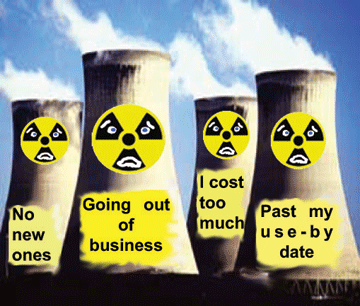 Nuclear power in more trouble than oil Utilities shutting down plants earlier than expected Houston Chronicle , By Chris Tomlinson , 31 May 16 If you think folks in the oil and gas business have it tough, talk to someone in the nuclear power industry where 20 percent of the reactors operating today may shut down early.
The last time the United States opened a new nuclear reactor was 30 years ago, when state commissions set the price for electricity and a generator could rely on steady, reliable profits for the lifetime of the plant. But since then, states have deregulated electricity markets and have forced generators to compete to sell the cheapest electricity by the 15 minute interval.
That’s a problem a nuclear power plant, which requires a huge investment to build and a huge amount of cash to decommission. The electricity may be marginally cheap, but what experts call the levelized cost of electricity that includes all the expenses is actually quite high.
That’s why the Nuclear Energy Institute reports that 15 to 20 of the nation’s 99 commercial reactors are at risk of premature closure in the coming years. If they have to compete solely on the spot-market price for electricity, keeping them going doesn’t make economic sense…….http://www.houstonchronicle.com/business/outside-the-boardroom/article/Nuclear-power-in-more-trouble-than-oil-7943174.php?t=2d6e26d409&cmpid=twitter-premium
Once more with fervour – nuclear marketing: theme for June 2016
The nuclear lobby is playing a high stakes gamble – marketing nuclear power with renewed fervour. It’s a gamble, because they’ve gotta sell it off fast, before the next radioactive catastrophe.
INTERNAL Nuclear Marketing is going on like crazy, especially in the USA, They’re still toting nuclear as a climate change action – a patently false story. They push that for Big Nuclear, and then they push a new set of lies for New Little Nuclear
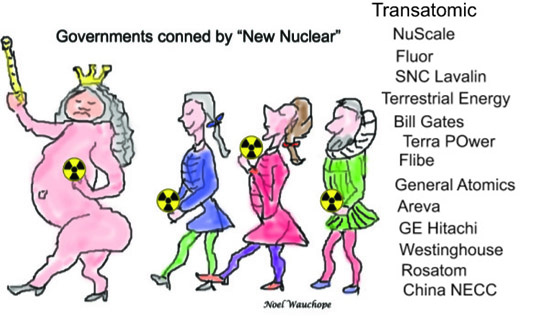
EXTERNAL Nuclear marketing. Any country that already has this unsafe, uneconomic, trash-producing technology is mad keen to salvage the drastic financial nuclear situation – by flogging their nuclear technology off to other countries.

Up to 20 USA uneconomic nuclear stations soon to close
 Economics Point Toward Closure for Up To 20 U.S. Nukes, The Energy Mix, May 24, 2016 A leading nuclear industry lobby group in the United States says its members aren’t being paid enough for their power, threatening the shutdown of 15 to 20 generating stations in the country………
Speaking at a U.S. Department of Energy summit last week, Marvin Fertel, president and CEO of the Nuclear Energy Institute, said more than a dozen plants face possible early closure because they are uneconomic at today’s market wholesale power rates……..
Earlier this month, the Omaha Public Power District proposed closing its 478-MW Fort Calhoun nuclear plant, the smallest in the U.S., and the Tennessee Valley Authority gave up on its unfinished Bellefonte nuclear station in Alabama and put it up for sale. Last month, Moody’s Investor Services reported that low natural gas prices threatened widespread nuclear and coal plant closures.
Those closures may bring owners less financial relief than they anticipate. As expensive as nuclear power plants are to build, safely shutting them down will also cost hundreds of billions, potentially trillions of dollars, Climate News Network reported last month. http://smartershift.com/energymix/2016/05/24/economics-point-toward-closure-for-up-to-20-u-s-nukes/
Florida consumers still being slugged unfairly for Turkey Point delayed nuclear expansion

 Consumers deserve ‘pause’ in FPL’s nuclear plant recovery costs, Miami Herald, 29 May 16
FPL’s plans to expand its nuclear energy plant at Turkey Point are on hold for four years
However, the utility’s plan to still charge customers for “recovery costs” has caused a stir
FPL should also pause charging its Florida customers — it’s only fair
Given a string of setbacks regarding FPL’s plans to expand the nuclear energy plant at Turkey Point, the recent disclosure that it plans to delay construction for up to four years is a victory for common sense and for critics who worry about the project’s impact on safety and the environment.
What doesn’t make sense is the utility’s desire to charge consumers for costs related to the project, particularly when the delay raises the prospect that it may not go forward at all.
FPL says the recovery costs will decrease during the delay, but remain necessary as part of the licensing procedure and the need to learn from other nuclear energy projects around the country that have also experienced unforeseen delays.
The company wants to charge customers $22 million in 2017 — on top of $281 million it has already recovered for planning and licensing costs — even though the utility said in anApril 27 filing with the state’s Public Service Commission that it wants to maintain its “current state” without going forward on the construction phase until 2020.
On top of that, the utility also wants the PSC to waive the requirement that it file a feasibility report that essentially states that the project it applied for nearly a decade ago is still viable.
That drew a volley of challenges from consumers groups, the Office of Public Counsel (which represents the public in rate cases) and others. A brief filed by the city of Miami said feasibility studies are required to assure the public that such projects are prudent. “If a project is no longer feasible or practical, then the costs incurred are not prudent,” wrote city of Miami attorney Victoria Mendez.
FPL’s decision followed several developments that cast doubt on the wisdom of the proposed expansion. Among them:
▪ Reports dating back to 2014 that water in the canals designed to cool reactors were running too high, requiring waivers from nuclear regulators to operate the canals at higher-than-normal temperatures. If the existing nuclear plant is causing problems, wouldn’t an expansion make matters worse?
▪ In February, A Tallahassee judge ordered state environmental regulators and FPL to clean up the utility’s cooling canals at Turkey Point after blaming the system for polluting South Florida’s groundwater.
▪ In March, this newspaper reported that a study released by Miami-Dade County Mayor Carlos Gimenez found that a tracer element of nuclear power plant spillages had been detected in Biscayne Bay at levels up to 215 times higher than normal in ocean water……..http://www.miamiherald.com/opinion/editorials/article80438112.html
Consumers keep footing the bill for nuclear project
Post and Courier, BY TERESA ARNOLD May 29 2016 Did you know that South Carolina law allows utility companies to charge consumers more for cost overruns on big projects like building a nuclear power plant?
It sounds shocking, but the Office of Regulatory Staff (ORS) just published a report showing that SCE&G’s V.C. Summer project has cost $1.5 billion more than originally estimated.
And guess who is footing the bill? South Carolina consumers, many of whom live on modest incomes and cannot afford these additional costs.
AARP South Carolina continues to raise concerns about the cost overruns that have resulted during the current SCE&G capital improvement projects. The most serious questions we raised about the state regulations that allow SCE&G to charge consumers for cost overruns remain unanswered.
AARP South Carolina asked the Office of Regulatory Services to answer the following questions:
1) Is there less incentive for a utility like SCE&G, operating under current state law, to prevent “risk shifting,” since the monetary risk or cost overruns are being borne by consumers, rather than the traditional method that expects the utility to bear that risk? The analysis ORS commissioned does not answer this question.
2) ORS has acknowledged that the current state law governing utility capital improvements, in this case — V.C. Summer nuclear plants — prevents refunds or rebates to the consumer, if a project goes bad. But are there any actions that ORS could take under the law to ensure that cost overruns are not borne by captive consumers? Or does state law prevent ORS from taking action to protect consumers from cost overruns?
3) Is there any other provision in current law that would allow SCE&G to provide voluntary rebates or future rate increase offsets to consumers?……….http://www.postandcourier.com/20160529/160529294/consumers-keep-footing-the-bill-for-nuclear-project
Indian company exits nuclear project, switches to wind energy
Nalco pulls out of JV with NPCIL for nuclear power plant in Gujarat Business Standard, Dillip Satapathy | Bhubaneswar May 30, 2016 Aluminium major Nalco has decided to drop its plan to foray into nuclear energy generation. The company had signed a memorandum of understanding (MoU) with Nuclear Power Corporation of India Ltd (NPCIL) in 2012 to set up two units of Kakrapara Atomic Power Station in Gujarat with capacities of 700 Mw each. The cost of the project was estimated at Rs 12,000 crore…….
We have decided to pull out of the JV with NPCILfollowing change in technology of the project. Initially, it was decided to build the plant with indigenous technology. But later, it was decided to use foreign technology. The foreign technology will not only be more expensive, the gestation period of the project will also be more and we are not in a mood to wait that long with so much of investment exposure,” said Nalco Chairman and Managing Director Tapan Kumar Chand……..
Notwithstanding its unsuccessful bid to foray into nuclear energy, Nalco has identified renewable energy as its next focus area. “We have set up wind mills in Andhra Pradesh (50.4 Mw) and Jaisalmer, Rajasthan (47.6 Mw). We plan to set up more wind power mills in Rajasthan and Maharashtra (50 Mw each) and a 20 Mw solar power plant in Madhya Pradesh. We are also in the processing of installing a 14-Mw wind power mill at Damanjodi,” said Chand. http://www.business-standard.com/article/companies/nalco-pulls-out-of-jv-with-npcil-for-nuclear-power-plant-in-gujarat-116052900518_1.html
Change “renewable” to “clean” – Exelon’s plan to get taxpayer money for nuclear power
With hard times setting in for some nuclear power plants, Illinois state legislators are trying to decide whether they should put nuclear facilities on life support, or lay them to rest early…….

Nuclear spruikers head to Cumbria for a marketing talkfest
 Carlisle to host two-day Cumbria Nuclear Conference, News & Star, 27 May 2016 The nuclear industry is coming to Carlisle this autumn, when the city hosts the first Cumbria Nuclear Conference.
The two-day event on September 21 and 22 will attract movers and shakers from across the sector and highlight the opportunities – and challenges – to businesses arising from the new nuclear plant at Sellafield.
Speakers confirmed include NuGen chief executive Tom Samson, energy minister Andrea Leadsom, the former defence secretary and Barrow MP Lord Hutton, and John Clarke, chief executive of the Nuclear Decommissioning Authority.
Carlisle MP John Stevenson has organised the event. He said: “Nuclear is a big opportunity for Cumbria – that much is widely recognised.
“But how we do maximise the benefits for the county? That’s what the conference will address. We need to raise awareness of the opportunities.”…….
NuGen – a partnership between Toshiba of Japan and the French energy company ENGIE – has plans to build three Westinghouse AP1000 reactors…….NuGen is due to make a final decision on whether to proceed with the Moorside project in 2018 and had hoped to start construction two years later and have the first reactor on stream by 2024, although it now says the target date has slipped to 2025……
Illinois the perfect illustration of the plight of the nuclear and coal industries
 Where Free Wind Meets Cheap Gas in U.S., Power Dynamics Changing
-
Illinois could lose more than 10 percent of power capacity
-
Exelon, Dynegy asking legislature to save aging plants
-
For a snapshot of the woes of the U.S coal and nuclear industries, take a look at Illinois.
Following a four-year drop in electricity demand, power companies there announced the closing of coal and nuclear plants that account for more than 10 percent of generating capacity. The shutdowns come amid a fourfold increase in cheap wind from neighboring states and growing competition from generators burning low-cost natural gas.
- Exelon Corp., the operator of 11 nuclear reactors in Illinois, and Dynegy Inc., which has 10 coal-fired plants in the state, are asking lawmakers to bail out their money-losing assets to prevent further job-cutting, closures
- “You’ve got free wind power coming from the west and cheap gas coming from the east and that’s not a good place to be for coal and nuclear power plants,” said Travis Miller, a utility analyst for Morningstar Inc., an investment research firm.
- Illinois isn’t alone. The power industry upheaval is playing out in more than a dozen states that deregulated their electricity markets, opening their borders to competition, over the past two decades. In those locations, owners of aging generators are particularly vulnerable as the average wholesale power price has dropped by about half since 2008. In response, electricity providers in places like Ohio and New York are asking for millions of dollars to keep their units running.
Nowhere has the confluence of market forces produced such a profound dislocation as in Illinois. Continue reading

Chicago’s electricity costs to be twice as much as for others in the grid
Chicago to pay twice as much for electricity reliability as others in grid http://www.chicagobusiness.com/article/20160525/NEWS11/160529907/chicagoans-to-pay-double-for-reliability-than-others-in-its-power-grid By STEVE DANIELS Chicagoans will pay more than twice as much to keep their lights on during high-demand periods as the rest of the regional power grid they’re part of.
Beginning in mid-2019, the Chicago region will pay about $9 per megawatt-hour in extra “capacity” charges to ensure power plants deliver when they’re most needed. The charges are set per a power-generator auction conducted by PJM Interconnection, which oversees the power grid from Chicago east to the Mid-Atlantic states.
Results of the auction were unveiled May 24. PJM conducts the bidding three years in advance. The prices will take effect in June 2019 and be embedded in the energy costs all commercial and residential customers pay.
The results are good news for Exelon, which has campaigned for higher revenues both through the PJM auction and also from the state of Illinois for its five Illinois nuclear plants in the PJM.
But the company’s bidding behavior will limit the revenue windfall it might have received. Its Quad Cities plant bid too high to get any revenue at all, and only a portion of the capacity at its Byron plant qualified.
If all of Byron had cleared the auction, Exelon would have received $653 million in revenue beginning in mid-2019. As it is, the company will see about $513 million, according to calculations based on a Securities and Exchange Commission filing.
That’s still higher than the $495 million it will get in the year beginning this coming June 1. And that’s with all the plants—Quad Cities and all of Byron included—getting paid.
Exelon says it will close Quad Cities as soon as mid-2018 without passage of a state law hiking electricity rates statewide to make that money-losing facility profitable. Had it cleared, Quad Cities would have received more than $100 million.
As it is, that’s money Chicago-area ratepayers will have to replace if the bill Exelon is pushing in Springfield passes. Exelon’s legislation demands a surcharge on electric bills sufficient to pay Quad Cities and the downstate Clinton nuke (which isn’t in PJM and isn’t eligible for the auction) $42 per megawatt-hour. The $9 Quad Cities isn’t getting because it didn’t qualify would have to be made up through the surcharge under the bill.
Of course, had Quad Cities qualified under the auction, Exelon would have been committed to keep it open until mid-2020. As of now, Exelon can close it as early as mid-2018.
In a statement, Exelon CEO Chris Crane said the high PJM-set prices aren’t enough to save Quad Cities.
“The capacity market alone can’t preserve zero-carbon emitting nuclear plants that are facing the lowest wholesale energy prices in 15 years,” Crane said.
Critics decried the outcome of the auction.
“There is a surplus of nuclear and coal in Northern Illinois,” said Howard Learner, executive director of Chicago-based Environmental Law and Policy Center. “Electricity demand is dropping. . . . There’s no reason revenues in the ComEd region should be twice as high as the rest of the region.”
A PJM spokeswoman said the price for ComEd was so much higher than the rest of PJM, which includes all or part of 12 other states and Washington, D.C., because of “transmission constraints inhibiting the ability to import cheaper power.”
Transmission is tighter than it used to be to move power generated to the west into Illinois, she said. And coal-plant retirements also are playing a part.
The fact that Quad Cities didn’t qualify for the PJM payments, though, also means that the 1,871-megawatt plant isn’t needed to meet Chicago-area electricity demand even during the hottest summer days. So, while Exelon has made the argument that reliability would suffer with the plant’s closure, PJM believes there’s enough capacity without Quad Cities to keep the lights on and provide a substantial cushion above that.
PJM last year overhauled its capacity market to boost prices consumers pay to power generators that promise to deliver even during the most extreme weather events like the polar vortex two years ago that crippled some plants.
Power generators face steeper penalties if they don’t produce under the new system, and consumers pay them more for the ironclad promise.
Exelon is pushing hard in Springfield for wide-ranging energy legislation, including the rescue package for the two money-losing nukes. The company has said it will move to close the plants, putting at risk about 1,500 high-paying jobs in parts of the state that aren’t flourishing economically.
Exelon had issued a May 31 deadline for Springfield action, but observers believe if anything happens at all, it won’t be until summer or early fall.
1MDB Unit Bought by China Nuclear Firm Was Distressed, Auditor Says
1MDB Unit Bought by China Nuclear Firm Was Distressed, Auditor Says China General Nuclear Power bought Edra Global Energy from debt-laden 1MDB last year, WSJ, By YANTOULTRA NGUI May 26, 2016
KUALA LUMPUR, Malaysia—An audit of a key energy group sold by troubled state investment fund 1Malaysia Development Bhd. to a Chinese state-owned nuclear-power company flagged deep uncertainty over the company’s viability.
Notes from auditor Deloitte in the 140-page financial accounts of Edra Global Energy Bhd. for the year ended March 31, 2015, said the audit found “an existence of a material uncertainty which may cast significant doubt about the group’s and company’s ability to continue as a going concern.”
The auditor’s notes, reviewed by The Wall Street Journal, are part of the most detailed account of Edra’s finances at the time that China General Nuclear Power Corp.purchased the firm for 9.83 billion ringgit ($2.4 billion) last November as the fund, known as 1MDB, was struggling to meet its debt obligations……..http://www.wsj.com/articles/1mdb-unit-bought-by-china-nuclear-firm-was-distressed-auditor-says-1464251503
Standard & Poor’slowers the credit rating of the Finnish firm Teollisuuden Voima Oyj (TVO)

 Credit ratings agencies downgrade nuclear power company TVO, YLE, 24 May 16
One of the big three credit ratings agencies operating on the world stage, Standard & Poor’s, has lowered the credit rating of the Finnish firm Teollisuuden Voima Oyj (TVO) from BBB-/A-3 to BB+/B.
The nuclear power company is owned by a consortium of power and industrial companies in Finland, the largest shareholders being the energy firms Pohjolan Voima and Fortum…….
Construction of a third TVO plant unit, Olkiluoto 3, has been plagued with problems from the start and is now seven years behind schedule. TVO has several pending disputes with the unit’s suppliers. In 2012, TVO submitted a claim and defence to the International Chamber of Commerce for damages due to delays……
In July 2010 the Finnish Parliament ratified a decision-in-principle from the government concerning TVO’s application to construct a fourth plant unit, Olkiluoto 4. In September 2014, the government however rejected TVO’s application to have the validity of the decision-in-principle extended. http://yle.fi/uutiset/credit_ratings_agencies_downgrade_nuclear_power_company_tvo/8902267
1 This Month




PLEASE OPPOSE HR 8255 AND S.3639 – bills would accelerate satellite deployment, with no environmental review or safeguards – https://ncstd5li.quorum.us/campaign/169331/
To see nuclear-related stories in greater depth and intensity – go to https://nuclearinformation.wordpress.com
-
Archives
- September 2026 (330)
- August 2026 (330)
- July 2026 (355)
- June 2026 (287)
- May 2026 (306)
- April 2026 (356)
- March 2026 (251)
- February 2026 (267)
- January 2026 (308)
- December 2025 (358)
- November 2025 (359)
- October 2025 (375)
-
Categories
- 1
- 1 NUCLEAR ISSUES
- business and costs
- climate change
- culture and arts
- ENERGY
- environment
- health
- history
- indigenous issues
- Legal
- marketing of nuclear
- media
- opposition to nuclear
- PERSONAL STORIES
- politics
- politics international
- Religion and ethics
- safety
- secrets,lies and civil liberties
- spinbuster
- technology
- Uranium
- wastes
- weapons and war
- Women
- 2 WORLD
- ACTION
- AFRICA
- Atrocities
- AUSTRALIA
- Christina's notes
- Christina's themes
- culture and arts
- Events
- Fuk 2022
- Fuk 2023
- Fukushima 2017
- Fukushima 2018
- fukushima 2019
- Fukushima 2020
- Fukushima 2021
- general
- global warming
- Humour (God we need it)
- Nuclear
- RARE EARTHS
- Reference
- resources – print
- Resources -audiovicual
- Weekly Newsletter
- World
- World Nuclear
- YouTube
-
RSS
Entries RSS
Comments RSS

