Hidden in the U.S. Infrastructure Bill, a fat subsidy for the nuclear industry, and another $50 billion in the offing.
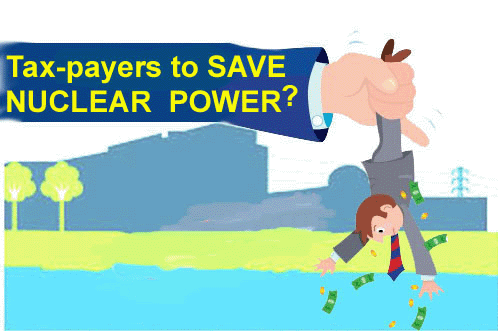
Critics Decry $12 Billion For Nuclear In Infrastructure Bill https://www.upr.org/post/critics-decry-12-billion-nuclear-infrastructure-bill#stream/0, By ERIC TEGETHOFF • AUG 12, 2021 The U.S. Senate has passed a massive infrastructure bill, and buried within the package is $12 billion for the nuclear industry, but critics said the money would be better spent elsewhere.Half of the money is reserved for nuclear facilities under threat of shutting down due to economic factors. The other half is for research and development, such as on the small modular nuclear reactor model being built in Idaho.
Tim Judson, executive director of the Nuclear Information and Resource Service, said the industry as a whole is struggling, with even the Idaho project being scaled back.
“By propping up the existing reactors and preventing them from being replaced with renewable energy, the nuclear industry’s essentially trying to keep sort of a foothold in the energy system until they can try to ram some of these new reactor projects like the one in Idaho through, if it ever happens,” Judson said.
He hopes the U.S. House makes changes to the investments in nuclear. The industry and some environmental groups have touted nuclear energy as an alternative to fossil fuels as the country moves toward clean energy sources.
Judson noted it is a big deal many nuclear power plants need a bailout, adding it is as if nuclear companies are holding cities and states hostage.
“It’s been this kind of perpetual process of a power plant’s closure being announced, the company demanding a bailout, the state not knowing what else to do, so it gives the bailout,” Judson said. “And this federal subsidy is going to be the same thing. There’s no planning procedure included in this legislation.”
He argued there needs to be more consideration about what to do with old power plants and aging infrastructure.
Judson pointed out another bill in Congress could provide up to $50 billion in subsidies for the industry over the next decade.
According to his organization’s research, it will not mean any new jobs and the money would be more beneficially spent on electricity projects such as renewables, transmission systems and battery storage.
“If you spent that $50 billion on those things, it would create more than 60,000 new jobs,” Judson said. “And that’s more than four times the number of workers that are employed at these nuclear plants that would get bailed out.”
Strong call for New York City to legislate against investment of pension funds into nuclear weapons production

“We call on Speaker Corey Johnson and the City Council to vote and urgently pass Res. 976 and Intro.1621 to divest pension funds from nuclear weapon producers and reaffirm New York City as a Nuclear Weapons Free Zone. The legislation introduced by Council member Danny Dromm already inspired a historic hearing in City Hall and has the support of a majority of the City Council. As New Yorkers this is our moment to make hope and peace possible for a new generation.”
Nuclear disarmament campaigners press for legislation in New York City on 76th Anniversary of Hiroshima and Nagasaki Bombings. Pressenza, 13.08.21 – US, United States – Pressenza New York In a commemoration of the August 6 and August 9, 1945 bombings of Hiroshima and Nagasaki that was both somber and spirited, New York City-based nuclear disarmament advocates assembled outside the Municipal Building in downtown New York City. Advocates joined members of the International Campaign to Abolish Nuclear Weapons (ICAN), 2017 Nobel Peace Laureate in honoring New York nuclear disarmament heroes and urging Council Speaker Corey Johnson to reaffirm NYC as a nuclear weapons free zone.
Speakers included Michie Takeuchi, second generation Hiroshima Hibakusha survivor, Robert Croonquist, Hibakusha Stories Project founder, Bud Courtney of the Catholic Worker, Dr. Emily Welty, Director of Peace and Justice Studies at Pace University, Seth Shelden, ICAN representative at the United Nations and Brendan Fay ogranizer with NYCAN (New York Campaign to Abolish Nuclear Weapons).
Dr. Emily Welty reminded the gathering that the site for the Vigil is profound with history, because the development of the atomic bombs began across the street from City Hall at the Manhattan Project headquarters, at 270 Broadway.
In remarks Brendan Fay, Irish gay activist and nuclear disarmament advocate highlighted the legacy of LGBTQ New Yorkers in the global movement for nuclear disarmament.
- Bayard Rustin (1912-1987) highlighted the connection between colonialism, racism and nuclear weapons and traveled to Algeria in 1959 to protest French nuclear testing.
- James Baldwin (1924 –1987) as a member of National Committee for a Sane Nuclear Policy was among the leading speakers at the 1961 Peace Rally in Washington, DC. He said, “What am I doing here? Only those who would fail to see the relationship between the fight for civil rights and the struggle for world peace would be surprised to see me. Both fights are the same.”
- David McReynolds (1929-2018) was the first openly gay presidential candidate, a socialist and lifelong pacifist. During his 40-year career with the War Resisters League he became an international hero of the nuclear disarmament movement.
- Leslie Cagan (b. 1947) was a lead organizer of the largest disarmament rally in US history, the June 12, 1982 Rally Against the Arms Race.
- Peter Ciccchino (1960-2000) was arrested over two dozen times for peace, for nuclear disarmament, and for housing and human rights.
Fay thanked Council Member Danny Dromm (District 25) for introducing the nuclear divestment legislation in 2019. “Council Member Dromm follows the steps of previous council members including Council President and civil rights leader Paul O’Dwyer (1907 – 1998) who was a strong advocate for nuclear disarmament in City Hall.
Holding a poster of African American Civil rights leader and nuclear disarmament advocate Bayard Rustin,
Fay said, “As LGBTQ+ New Yorkers we join the rest of the human family this August 6th and August 9th in raising our voices to demand a world without nuclear weapons, for the sake of the children, for a future of hope. On this 76th anniversary of the bombing of Hiroshima and Nagasaki we say there is no Pride in bomb production. There is no Pride in raising the rainbow flag while investing in weapons of death.”
What of the nuclear weapons New York worker pensions are invested in? They are built to divide, harm, maim, kill. $475 million (0.25%) of New York worker pension funds are currently invested in the production of nuclear weapons. Our worker pensions must no longer be used as weapons of war. We are nurses, doctors, teachers, sanitation workers, firefighters, social workers, artists – our common cause is justice and peace……..
Fay said, “We call on Speaker Corey Johnson and the City Council to vote and urgently pass Res. 976 and Intro.1621 to divest pension funds from nuclear weapon producers and reaffirm New York City as a Nuclear Weapons Free Zone. The legislation introduced by Council member Danny Dromm already inspired a historic hearing in City Hall and has the support of a majority of the City Council. As New Yorkers this is our moment to make hope and peace possible for a new generation.”…….
Resolution 976 calls on the Comptroller to instruct pension funds to divest from companies involved in the production of nuclear weapons (approximately $475 million dollars) and re-affirms New York City as a Nuclear Weapons Free Zone.
Introduction 1621 establishes a Nuclear Disarmament Advisory Committee to advise the City Council.
The Treaty on the Prohibition of Nuclear Weapons, adopted by 122 countries in 2017, makes nuclear weapons comprehensively illegal and became international law on January 22, 2021. https://www.pressenza.com/2021/08/nuclear-disarmament-campaigners-press-for-legislation-in-new-york-city-on-76th-anniversary-of-hiroshima-and-nagasaki-bombings/
Utah Taxpayers Association is very wary of Small Nuclear Reactors

Imagine you picked up a gallon of milk that was labeled at $4, but by the time you made it to the cash register the price had gone up. Worse still, there was an automatic agreement that forced you to buy with no guarantee that the lid would ever open or that the price wouldn’t increase again by the time you had to pay. That’s essentially the situation in which UAMPS is putting municipalities.
Imagine you picked up a gallon of milk that was labeled at $4, but by the time you made it to the cash register the price had gone up. Worse still, there was an automatic agreement that forced you to buy with no guarantee that the lid would ever open or that the price wouldn’t increase again by the time you had to pay. That’s essentially the situation in which UAMPS is putting municipalities.
Utah cities shouldn’t gamble on nuclear power https://www.deseret.com/opinion/2021/8/11/22620772/utah-cities-shouldnt-gamble-with-taxpayer-funds-on-modular-nuclear-power-plant
An Idaho project is a financial risk that is best borne by the private sector. By Rusty Cannon Aug 11, 2021, ”………….. one of our critical missions is to protect taxpayers when it comes to the use of public funds, and we believe strongly that the taxpayers and communities of Utah should not act as venture capitalists for risky bets.
The bet that’s on the table now for Utah municipalities is nuclear. Specifically, it’s a type of nuclear called “small modular,” and the Utah Associated Municipal Power Systems (UAMPS) is recruiting towns and communities around the West to pay for it. The project, if it happens, would be located in Idaho.
Last fall, seven Utah cities from Logan to Lehi wisely withdrew their support for the UAMPS nuclear project due to financial risks that their residents should not be asked to accept. But many municipalities, such as Brigham City, Hyrum, Hurricane, and Washington City, are still gambling with their taxpayers’ dollars.
If modular nuclear power is ready for market, let the private sector show it by putting up its money. Governments ought to stay out of it, particularly when risking public funds.
The participation commitments UAMPS has been getting from Utah communities to buy the power come with required upfront payments from residents for a product that is full of uncertainty. The developer — Oregon-based NuScale — hasn’t built a plant like this before, its design keeps changing, and it’s nearly a decade away from even being potentially operational.
While we still believe the project is risky and that municipalities should withdraw, any investment of public dollars must be done in the open with public scrutiny. Sadly, the information exchange between UAMPS and its potential payers has been opaque. The public receives only a trickle of information, and it’s vague at best.
When we do see information, it’s troubling. For example, the project’s budget has ballooned from an initial $3.1 billion to a more recent estimate of $6.1 billion. It was only recently uncovered that the company that was going to operate the plant, Energy Northwest, backed out in March.
The financial sand is shifting in other ways, as well. In late June, UAMPS suddenly decided to reduce the number of modules at the power plant by half because they’ve struggled to get more communities to commit. That led to a hike in the power price that UAMPS had been promising, putting still-participating municipalities in a bind.
Imagine you picked up a gallon of milk that was labeled at $4, but by the time you made it to the cash register the price had gone up. Worse still, there was an automatic agreement that forced you to buy with no guarantee that the lid would ever open or that the price wouldn’t increase again by the time you had to pay. That’s essentially the situation in which UAMPS is putting municipalities.
Plenty of Utah city council members have listened to their constituents and said “thanks but no thanks.” Bountiful, Kaysville, Murray, Lehi and Heber were some of the largest subscribers to the modular nuclear proposal, but have since bowed out.
However, other communities remain officially interested in this particular power project, and are keeping it in their shopping cart so far. If you reside in these communities, pay attention and watch your wallet. There may still be time to withdraw from the project.
Utah municipalities should remain conservative watchdogs of tax dollars. Say yes to prudent and transparent use of public money. Say no to unproven technology and murky promises that keep shifting. At this point modular nuclear power is a venture, not a product. So let private venture capital come in and pay for it, not Utah taxpayers.
Rusty Cannon is President of the Utah Taxpayers Association
Why Are We Still Building Nuclear Weapons? Follow the Money

Why Are We Still Building Nuclear Weapons? Follow the Money, Forbes, William Hartung, 11 Aug 21,

The FY 2022 Pentagon budget proposal includes billions of dollars for new nuclear delivery vehicles, with a handful of prime contractors as the primary beneficiaries. For example, Northrop Grumman’s NOC+0.9% twelve largest subcontractors for its new ICBM include some of the nation’s largest defense companies, including Lockheed Martin LMT+0.3%, General Dynamics GD+0.8%, L3Harris, Aerojet Rocketdyne AJRD+0.2%, Honeywell, Bechtel, and the Collins Aerospace division of Raytheon RTX+1.1% Technologies. Other beneficiaries of the funding of new nuclear delivery vehicles include Raytheon (a nuclear-armed cruise missile), General Dynamics (ballistic missile submarines), Lockheed Martin (submarine-launched ballistic missiles), and Northrop Grumman – again – for the new nuclear-armed bombers.
This month marks the 76th anniversary of the bombings of Hiroshima and Nagasaki, events that resulted in the immediate deaths of well over 100,000 people and underscored the devastating consequences of building, deploying, and using nuclear weapons. Those attacks should have served as a wake-up call on the need to control and eliminate these potential world-ending weapons, but determined efforts by scientists, political leaders, policy advocates, and grassroots advocates around the world have yet to abolish them……………
the international community, under the leadership of the International Campaign to Abolish Nuclear Weapons (ICAN), has created and brought into force the Treaty on the Prohibition of Nuclear Weapons, which has been signed by 86 nations and ratified by 55 of them. This is an historic accomplishment, but the real culprits – the major nuclear weapons states that possess the vast bulk of the world’s nuclear weapons – have yet to sign onto the measure.
The United States maintains an active nuclear stockpile of roughly 4,000 nuclear weapons, including over 1,500 deployed warheads. Russia’s stockpile is comparable, at roughly 4,400, while China follows with roughly 300 strategic nuclear warheads. Despite its considerably smaller arsenal, recent revelations regarding China’s construction of new silos for long-range nuclear missiles are cause for real concern as they raise the risk of accelerating the nuclear arms race at great risk to the future of the planet. These developments demand dialogue to roll back the production of new nuclear weapons systems, leading to reductions in the size of global arsenals and the ultimate elimination of this existential threat.
The continued development and deployment of intercontinental ballistic missiles (ICBMs) is of particular concern. As former Secretary of Defense William Perry has noted, ICBMs are “some of the most dangerous weapons in the world” because a president would have only a matter of minutes to decide whether to launch them upon warning of a nuclear attack, increasing the possibility of an accidental nuclear war based on a false alarm.
Given all of the above, why is the United States still building nuclear weapons, more than seven decades after the devastation of Hiroshima and Nagasaki? The U.S. is not alone in building a new generation of nuclear weapons – Russia and China are doing so as well. But the Pentagon’s 30-year plan to build new nuclear-armed bombers, missiles, and submarines – along with new nuclear warheads to go with them at a cost of up to $2 trillion – is the height of folly and an unnecessary, grave risk to the lives of current and future generations. A major reason for this misguided policy can be summed up in a phrase – there is money to be made in perpetuating the nuclear arms race.
The FY 2022 Pentagon budget proposal includes billions of dollars for new nuclear delivery vehicles, with a handful of prime contractors as the primary beneficiaries. For example, Northrop Grumman’s NOC+0.9% twelve largest subcontractors for its new ICBM include some of the nation’s largest defense companies, including Lockheed Martin LMT+0.3%, General Dynamics GD+0.8%, L3Harris, Aerojet Rocketdyne AJRD+0.2%, Honeywell, Bechtel, and the Collins Aerospace division of Raytheon RTX+1.1% Technologies. Other beneficiaries of the funding of new nuclear delivery vehicles include Raytheon (a nuclear-armed cruise missile), General Dynamics (ballistic missile submarines), Lockheed Martin (submarine-launched ballistic missiles), and Northrop Grumman – again – for the new nuclear-armed bomber.
Additional recipients of nuclear weapons-related funding are the firms that run the nuclear warhead complex. Major contractors include Honeywell and Bechtel, which run key facilities for the development and production of nuclear warheads.
Nuclear weapons contractors spend millions of dollars on campaign contributions and lobbying efforts every year in their efforts to shape nuclear weapons policy and spending. While not all of this spending is devoted to lobbying on nuclear weapons programs, these expenditures are indicative of the political clout they can bring to bear on Congress as needed to sustain and expand the budgets for their nuclear-related programs.
The major nuclear weapons contractors made a total of over $119 million in campaign contributions from 2012 to 2020, including over $31 million in 2020 alone. The companies spent $57.9 million on lobbying in 2020 and employed 380 lobbyists among them.
The only way to be truly safe from nuclear weapons is to eliminate them altogether, as called for in the United Nations Treaty on the Prohibition of Nuclear Weapons. As noted above, the major nuclear powers have yet to sign onto the treaty but pressing them to do so should be a central component of efforts to rein in nuclear dangers.
It’s time that we stopped allowing special interest lobbying and corporate profits to stand in the way of a more sensible nuclear policy. The future of humanity depends on it. https://www.forbes.com/sites/williamhartung/2021/08/10/why-are-we-still-building-nuclear-weapons—-follow-the-money/?sh=442b7ad15888
New ”Natrium” nuclear reactors – a very risky gamble.

A July 2021 Foreign Affairs article reports that in the past sixty years eight countries have spent $100 billion to produce sodium cooled fast reactors such as the one proposed for Wyoming. All have failed. The money’s spent and the lights are out.
While the Natrium design posits less risk of a meltdown, the sodium coolant is under high pressure and is explosive in the event of any breach in the containment area. And while Natrium plants produce less radioactive waste than traditional nuclear plants, there’s still the necessity to safely and permanently store this waste. How much will it cost? World Nuclear Industry Status Report’s editor Mycle Schneider says, “No one knows…because there is no functioning permanent storage facility.” Nowhere.
How much power are we talking about anyway? Writing for Canary Media, Eric Wesoff reported that in 2020, 2.4 gigawatts of new nuclear power plants were installed worldwide while there were 100 gigawatts of new solar and 60 gigawatts of new wind power generators. Meanwhile, old nuclear plants close—Indian Power in New York, Diablo Canyon in California, Exelon’s Byron and Dresden plants in Illinois. What do we do with decommissioned nuclear plants? A cooling tower in Germany has become a climbing wall.
Romtvedt: Proposal for nuclear power calls for caution https://trib.com/opinion/columns/romtvedt-proposal-for-nuclear-power-calls-for-caution/article_ecb135f0-1378-5728-9992-abd11b681ba4.html, David Romtvedt, Aug 10, 2021
In conjunction with PacifiCorp, Rocky Mountain Power’s parent company, owned by Berkshire Hathaway Energy, a subsidiary of Warren Buffett’s Berkshire Hathaway, Inc; and TerraPower, a nuclear reactor design company founded by Bill Gates, Wyoming Governor Mark Gordon has announced his support for the construction of a nuclear reactor demonstration plant in Wyoming. According to Berkshire Hathaway, the project is intended to “validate the design, construction and operational features” of TerraPower’s Natrium nuclear plant design which uses liquid sodium as a coolant rather than water.
Governor Gordon believes that Natrium offers a safe, reliable solution to Wyoming’s economic woes, saying, “I am thrilled to see Wyoming selected for this demonstration pilot project as our great state is the perfect place for this type of innovative utility facility and our experienced workforce is looking forward to the jobs this project will provide.”
So the benefits of the nuclear plant are said to be increased economic security and diminished environmental risk than with other forms of nuclear power plants. But it’s not so clear. Both in construction and operation, Natrium nuclear plants require uniquely skilled workers employing specialized materials and building techniques. Other economic issues include the temporary nature of construction work, long lead times for safety and licensing reviews (Natrium is not licensed by the Nuclear Regulatory Commission), and diminished severance tax revenues as a result of the shift from coal to nuclear.
There’s also the fuel—Natrium uses high-assay low-enriched uranium (HALEU). Power Magazine reports that there is no current supply of HALEU and that it will take at least seven years with sufficient demand to develop a fuel cycle infrastructure. Edwin Lyman of the Union of Concerned Scientist cautions that Russia is currently the only source of suitable fuel. In whatever quantity, the fuel is not likely to come from Wyoming uranium mines.
After construction there’s generation. World Nuclear Industry Status Report has recorded the changing costs of electric generation per kilowatt hour (in US cents) between 2009 and 2020. They are: solar—35.9 to 3.7, down 90%; wind—13.5 to 4.0, down 70%; gas—8.3 to 5.9, down 29%; coal—11.1 to 11.2, up 1%; and nuclear 12.3 to 16.3, up 33%. Nuclear is the most expensive way to generate electricity.
And time—the Wyoming proposal projects seven years to completion. Since no new nuclear power plant with a license application submitted since 1975 has yet begun operation, we may question the Wyoming timeline. More time equals more cost. Georgia Power’s Vogtle nuclear plants are years behind schedule with costs having risen from $14 billion to over $25 billion. But it may not matter as Georgia Power can charge cost overruns to its customers—the more the project is over budget, the more the company profits. In Florida, Duke Power, after seeing a cost increase from $5 billion to $22 billion, abandoned a Natrium nuclear project after passing $800 million dollars in excess costs to ratepayers.
A July 2021 Foreign Affairs article reports that in the past sixty years eight countries have spent $100 billion to produce sodium cooled fast reactors such as the one proposed for Wyoming. All have failed. The money’s spent and the lights are out.
While the Natrium design posits less risk of a meltdown, the sodium coolant is under high pressure and is explosive in the event of any breach in the containment area. And while Natrium plants produce less radioactive waste than traditional nuclear plants, there’s still the necessity to safely and permanently store this waste. How much will it cost? World Nuclear Industry Status Report’s editor Mycle Schneider says, “No one knows…because there is no functioning permanent storage facility.” Nowhere.
I’m guessing that Governor Gordon’s decision was driven in part by his hope to protect the lives and livelihoods of Wyoming workers. But generating radioactive waste without a procedure for safe permanent storage of that waste will protect no one—not unemployed coal miners, not me, not the governor.
How much power are we talking about anyway? Writing for Canary Media, Eric Wesoff reported that in 2020, 2.4 gigawatts of new nuclear power plants were installed worldwide while there were 100 gigawatts of new solar and 60 gigawatts of new wind power generators. Meanwhile, old nuclear plants close—Indian Power in New York, Diablo Canyon in California, Exelon’s Byron and Dresden plants in Illinois. What do we do with decommissioned nuclear plants? A cooling tower in Germany has become a climbing wall.
The questions loom. If I were a betting man, given initial costs, cost overruns, lost tax revenue, the increasing viability of renewables, the history of nuclear failure, and the health and safety hazards surrounding nuclear waste, I’d pause before I put my money on nuclear power. Not being a betting man, I wouldn’t consider it.
David Romtvedt is a writer and musician from Buffalo, Wyoming. A former activist with the Ground Zero Center for Nonviolent Action, he serves as a board member for the Powder River Basin Resource Council.
French nuclear company EDF is postponing its decision on whether or not to go ahead with the Sizewell nuclear project in Britain
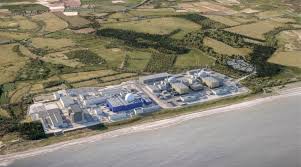
EDF delays final decision on Sizewell C. French energy giant now expects to leave it as late as 2023 before deciding whether to proceed with Suffolk nuclear power project. The timeline for EDF to decide whether to go ahead with the £20bn Sizewell C power station has slipped amid a lengthy planning approval process that is playing out as funding negotiations with ministers continue.
The French power giant now expects to make a final investment decision on the Suffolk plant at the end of 2022 or in 2023, compared to its previous expectations of mid-2022. EDF is in negotiations with the Government about a funding deal for Sizewell C and will also need external investors. Legislation is likely to be brought forward to allow developers to recoup costs during construction from household energy bills.
However, talks have been overshadowed in recent weeks by reports that ministers are seeking ways to block CGN from Sizewell and future UK nuclear projects. CGN has a 20pc development stake in Sizewell with an option to participate in the construction phase.
Telegraph 8th Aug 2021
https://www.telegraph.co.uk/business/2021/08/08/edf-delays-final-decision-sizewell-c/
Comparing the costs of nuclear and solar power
Solar challenging nuclear as potential climate change solution https://www.pv-magazine.com/2021/08/09/solar-challenging-nuclear-as-potential-climate-change-solution/
Research suggests that we can power 80% of the United States with wind, solar, and 12 hours of energy storage, but the replacement of nuclear power plants hasn’t been financially viable. Is that about to change?AUGUST 9, 2021 JOHN FITZGERALD WEAVER Nuclear power delivers almost 20% of all electricity in the United States, and about 50% [ if you don’t count the uranium-nuclear fuel chain] of all low-emission electricity. Moreover, the United States has almost 100 nuclear power units operating more than 90% of the time, providing a steady base of power generation.
But moving forward, it seems nuclear has lost its swagger. Price increases, project delays, and cancellations have caused what may prove to be generational damage to nuclear power’s reputation. pv magazine USA has previously reported on industry pricing models, showing nuclear’s lagging pricing.
Now, Georgia Power’s Vogtle Unit 3 and Unit 4 – the nation’s only nuclear generating units currently under construction – have announced further delays and price increases. Conservative cost estimates suggest the two 1.117 GW facilities will require at least $30 billion to complete, including $3 billion in finance costs and $27 billion in construction costs.
Solar+storage costs
As solar and energy storage professionals, we must be conscious of the limitations of the sun, and the cost of energy storage. As we all know, the sun also sets. And while research suggests we can power 80% of the U.S. with wind, solar, and 12 hours of energy storage, being able to replace a nuclear power plant that runs 24/7/365 in wind, rain, snow, and sleet simply hasn’t been financially viable.
But is it today?
The chart above [ on original] shows the price of solar panels from 1976 through the end of 2019. Here, we see prices fall by more than 99.8% from over $100 per watt down to nearly $0.20 per watt. Below, we see the price of battery packs starting in 2010 and ending in 2020, based on data from Bloomberg New Energy Finance. Here, we see costs fall from $1,191/kWh to $137/kWh – a price decrease of greater than 88%.
In both cases, we can expect prices to continue trending downward in both the middle and long term. And so, what can we expect to pay when we replace a nuclear power plant with solar power plus batteries?
Cash to spend
The chart above [ on original] shows the price of solar panels from 1976 through the end of 2019. Here, we see prices fall by more than 99.8% from over $100 per watt down to nearly $0.20 per watt. Below, we see the price of battery packs starting in 2010 and ending in 2020, based on data from Bloomberg New Energy Finance. Here, we see costs fall from $1,191/kWh to $137/kWh – a price decrease of greater than 88%.
In both cases, we can expect prices to continue trending downward in both the middle and long term. And so, what can we expect to pay when we replace a nuclear power plant with solar power plus batteries?
Cash to spend
In order to replace the two nuclear plants while the sun is down, the batteries would need to replicate two 1.117 GW power sources for 16 hours. The total energy storage capacity would be 39.3 GWh, after we add an extra 10% for safe measure.
Roughly speaking, the total cost of these solar+storage facilities would be:
- $8.4 billion for 10.55 GWdc of solar power, fully installed at $0.80/watt
- $527 million for hypothetical power grid upgrades at $0.05/watt
- $7.8 billion for 39.3 GWh of energy storage fully installed at $200/kWh
- Around $16.8 billion grand total, no incentives
So, Georgia, pv magazine USA just saved you more than $13 billion (as of today, anyway).
Some caveats
It’s almost certain that a solar facility of this magnitude – roughly 27,000 acres, or around 0.07% of Georgia’s land – would be split among many landowners in the state. If land lease rates in Georgia are comparable to what might be earned in Pennsylvania, the project could provide as much as $27 million per year in income to Georgia landowners for decades to come.
Furthermore, the solar power plants would start generating electricity and revenue within about three years of the first signature, and two years after groundbreaking. The new Vogtle reactors began construction in 2013 (planning began much earlier), and are projected to complete in 2022-23.
With these considerations in mind, the repowering costs to get a solar+storage facility to a 40 to 80-year lifetime would likely be offset by the fact that the solar facility will enter service at least eight years earlier than the equivalent nuclear site. Additionally, during the solar plant’s operating lifetime, it saves massive amounts of regular operations and maintenance costs,
as well as specialist engineer labor costs. The nuclear facility will easily last 40 years, and potentially as long as 80. However, the ongoing operations and maintenance costs are significant, as well as upgrades and equipment replacements that start to become necessary after 40 years. And sometimes, those $1 billion dollar upgrades go wrong, and a nuclear power plant gets trashed.
When we do repower the batteries and solar panels, they almost certainly will be cheaper, and operate at a higher efficiency, likely stretching the life of the solar facility to 50+ years. Again, this solar+storage facility would generate 20% more juice in the summer (when the power is needed most in Georgia) because we oversized it for the winter.
In the end, it would be best if we had a healthy ecosystem of clean energy generation systems that include nuclear [but nuclear is not clean]. However, if we’re going to debate the costs of nukes vs. solar, then it is no longer a discussion.
Complicit – The countries, companies and think tanks that support the deadly nuclear arms trade

The world spends $137,000 a minute on nuclear weapons
Complicit — Beyond Nuclear International 8 Aug 21, The countries, companies and think tanks that support the deadly nuclear arms trade
From ICAN
A new report from ICAN — Complicit: 2020 Global Nuclear Weapons spending — names names and produces some horrifying spending numbers, made all the more immoral by the desperate needs around the world due to the COVID-19 pandemic, along with the ever worsening conditions brought on by the climate crisis.
As the report notes, “In 2020, during the worst global pandemic in a century, nine nuclear-armed states spent $72.6 billion on their nuclear weapons, more than $137,000 per minute, an inflation adjusted increase of $1.4 billion from last year.”
It goes on to ask the obvious question: Why? The answer lies in the profits to be made by the world’s nuclear weapons companies, not to mention the funding flowing to a few think tanks, some of which have missions that should make taking this money unacceptable. “Not only does this report reveal the massive spending on nuclear weapons during the worst global pandemic in a century, it also shines a light on the shadowy connection between the private companies building nuclear weapons, lobbyists and think tanks,” wrote ICAN’s Susi Snyder in an email to launch the report.
She also narrates this short video above that explains the findings.
“The exchange of money and influence, from countries to companies to lobbyists and think tanks, sustains and maintains a global arsenal of catastrophically destructive weapons. Each person and organisation in this cycle is complicit in threatening life as we know it and wasting resources desperately needed to address real threats to human health and safety”, says the report’s executive summary. It goes on:
“The $72.6 billion spent on nuclear weapons was split between governmental departments and private companies. Companies in France, the United Kingdom and the United States received $27.7 billion from nuclear-weapon-related contracts in 2020, of which $14.8 billion was new.
“Those companies then funded think tanks that research and write about nuclear weapons policies. At least twelve major think tanks that research and write about nuclear weapons in India, France, the United Kingdom, and the United States received collectively between $5 million and $10 million from companies that produce nuclear weapons.
“The CEOs of companies that produce nuclear weapons sit on their advisory boards and are listed as ‘partners’ on their websites.
“And to make sure the enormous budgets are approved to pay for these contracts, those same companies hire lobbyists. In 2020, nuclear weapons producers spent $117 million in lobbying on defence. For every $1 spent lobbying, an average of $236 in nuclear weapon contract money came back.
“Nuclear-armed states spent an obscene amount of money on illegal weapons of mass destruction in 2020, while the majority of the world’s countries support a global nuclear weapons ban. But the story doesn’t stop there. Companies, lobbyists and think tanks are complicit and deserve to be held accountable for their role in building and shaping a world with more than 13,000 life- ending weapons. We need to call on them to cut it out.”
The executive summary of the report then calls out the names of the countries, companies and think tanks complicit in effectively planning the world’s destruction.
Country Spending On Nuclear Weapons In 2020
The United States: $37.4 billion; $70,881 / minute
China: $10.1 billion; $19,149 / minute
Russia: $8 billion; $15,222 / minute
The United Kingdom: $6.2 billion; $11,769 / minute
France: $5.7 billion; $10,786 / minute
India: $2.48 billion; $4,567 / minute
Israel: $1.1 billion; $2,059 / minute
Pakistan: $1 billion; $1,968 / minute
North Korea: $667 million; $1,265 / minute
2020 Total: $72.6 billion; $137,666 / minute
2019 Total: $71.2 billion* $135,424 / minute
*Adjusted for inflation…………………..
more https://beyondnuclearinternational.org/2021/08/08/complicit/
Costs of Ontario’s nuclear program will be the burden of the great-grandchildren of babies born in 2021.
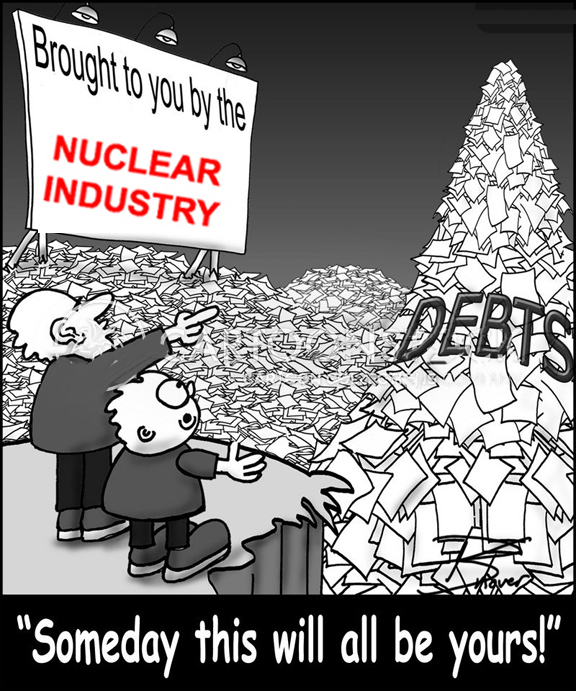
Ontario’s Unfunded Nuclear Decommissioning Liability Is In The $18–$27 Billion CAD Range Clean Technica, By Michael Barnard 8 Aug 21, Ontario’s nuclear program will be a fiscal burden on Ontarian’s to the tune of around $40 billion CAD which will be spent through roughly 2135, finally being paid off by the great-grandchildren of babies born in 2021.
Late last year I worked up the likely amount of public money that would have to be thrown at the nuclear industry in order to successfully and safely decommission the 100 operational reactors and the now shut down ones. Unsurprisingly, the nuclear industry had been very optimistic in its estimates of decommissioning costs and timeframes, when the global empirical averages were trending to a billion USD and 100 years per reactor.
Recently I was asked by an Ontario journalist what I thought the likely situation in Ontario would be, and whether the decommissioning trusts were equally underfunded. I was unsurprised to find that Canada is in the same boat as the US, with highly optimistic schedule and cost projections which belie Canadian empirical experience with the CANDU reactor, and that the fund had nowhere near the money necessary for the job. Let’s run the numbers.
Ontario Power Generation (OPG) is the chunk of the provincial utility that was carved apart in the late 1990s by the Mike Harris Conservatives to handle generation alone. It operates 18 aging CANDU reactors across three sites: Bruce, Pickering, and Darlington.
OPG has a nuclear decommissioning fund of about $5 billion CAD or US$4 billion right now. If the experience of other countries on the actual cost of a billion USD per reactor and an actual timeline of decommissioning of a century holds true, and I see no reason why it doesn’t, that means that there is currently a $17.5 billion CAD gap in Ontario, in addition to the existing $19.3 billion CAD in debt still being serviced from their construction. When the government of the era split up the utility, it moved all of the debt off of the components and into general debt. One of the many appropriate and sensible things that the McGuinty Administration did in the 2000s, in addition to shutting down coal generation entirely, was to move the debt back into the utility and set about servicing it from utility bills.
Most of the reactors at Bruce Nuclear are aging out, with several over 40 years old and the remainder approaching 40. Darlington’s are around 30, so they have a bit of runway. Pickering’s reactors are going to be shut down in 2024 and 2025 and start decommissioning in 2028. While refurbishment could bridge Ontario’s for another 20 years in many cases, that’s expensive and typically won’t pass any economic viability assessment compared to alternatives.
The likelihood is that all reactors in Ontario will reach end of life by 2035, and be replaced by some combination of renewable energy and HVDC transmission from neighboring jurisdictions, with both Manitoba and Quebec having excellent, low-carbon hydroelectric to spare…………
So yes, Ontario’s nuclear program will be a fiscal burden on Ontarians to the tune of around $40 billion CAD which will be spent through roughly 2135, finally being paid off by the great-grandchildren of babies born in 2021.
Nuclear, the gift that keeps on giving. https://cleantechnica.com/2021/08/06/ontarios-unfunded-nuclear-decommissioning-liability-is-in-the-18-27-billion-cad-range/
The ”Think Tanks” that get funding from nuclear weapons makers

The countries, companies and think tanks that support the deadly nuclear arms trade, From ICAN 8 Aug 21, ”’……………Think tank reported income from nuclear weapon producers
Atlantic Council: $835,000 – $1,724,998
Brookings Institution: $275,000 – $549,998
Carnegie Endowment for International Peace: $50,000 – 199,998
Center for New American Security: $1,085,000 – $1,874,991
Center for Strategic and International Studies: $1,530,000 – $2,794,997
Fondation pour la recherche stratégique (FRS): amount not specified
French Institute of International Relations: amount not specified
Hudson Institute: $170,000 – $350,000
International Institute of Strategic Studies: $800,640 – $1,146,744
Observer Research Foundation: $71,539
Royal United Services Institute: $610,210 – $1,445,581
Stimson Center: $50,500
Total $5 – 10 million
Headline photo: “Nuclear Nightmare – Open Your Eyes And Awake !” by Daniel Arrhakis is licensed under CC BY-NC 2.0 https://wordpress.com/read/feeds/72759838/posts/3488978062
more https://wordpress.com/read/feeds/72759838/posts/3488978062
Bribing politicians pays off for weapons companies

The countries, companies and think tanks that support the deadly nuclear arms trade, From ICAN 8 Aug 21,
” ………….Company defence contract awards and defence lobby spending in 2020
Aerojet Rocketdyne: Awarded: $132 million Spent lobbying: $2.3 million
Airbus: Awarded: $170 million Spent lobbying: $6.1 million
BAE Systems: Awarded: $10.8 billion ($72.5 million for nuclear weapons) Spent lobbying: $5.6 million
Bechtel: Awarded: $2.9 billion Spent lobbying: $990,000
Boeing: Awarded: $50 billion ($105 million for nuclear weapons) Spent lobbying: $15.6 million
Constructions Industrielles de la Méditerranée (CNIM): Awarded: $39.1 million Spent lobbying: $17,226
Charles Stark Draper Laboratory: Awarded: $443.5 million ($342.3 million for nuclear weapons) Spent lobbying: $120,000
Fluor: Awarded: $3.9 billion Spent lobbying: $5.1 million
General Dynamics: Awarded: $39.4 billion ($10.8 billion for nuclear weapons) Spent lobbying: $13.9 million
Honeywell International: Awarded: $14 billion ($41.6 million for nuclear weapons) Spent lobbying: $7.4 million
Huntington Ingalls Industries: Awarded: $7.4 billion ($53 million for nuclear weapons); Spent lobbying: $5.2 million
Jacobs Engineering: Awarded: $2.6 billion Spent lobbying: $900,000
L3 Harris Technologies: Awarded: $5.6 billion ($60 million for nuclear weapons) Spent lobbying: $200,000
Leidos: Awarded: $10.8 billion Spent lobbying: $2.4 million
Leonardo: Awarded: $728.8 million Spent lobbying: $86,644
Lockheed Martin: Awarded: $124.5 billion ($2.1 billion for nuclear weapons) Spent lobbying: $15 million
Northrop Grumman: Awarded: 29.1 billion ($13.7 billion for nuclear weapons) Spent lobbying: $13.3 million
Raytheon Technologies Corporation: Awarded: $27.5 billion ($450 million for nuclear weapons) Spent lobbying: $15.2 million
Safran: Awarded: $12.3 million Spent lobbying: $382,211
Serco: Awarded: $896 million Spent lobbying: $420,000
Textron: Awarded: $1.8 billion ($3.2 million for nuclear weapons) Spent lobbying: $5.1 million
Total: Awarded: $332 billion ($27.7 billion for nuclear weapons) Spent lobbying: $117 million………
more https://wordpress.com/read/feeds/72759838/posts/3488978062
The nuclear industry is dying. Bitcoin to the rescue?

Some lawmakers have called for greater regulation of cryptocurrency, citing the enormous amount of resources required to produce it. “There are computers all over the world right now spitting out random numbers around the clock, in a competition to try to solve a useless puzzle and win the bitcoin reward,” Sen. Elizabeth Warren (D., Mass.) said in June, calling for a crackdown on “environmentally wasteful cryptocurrencies.”
Zero-carbon [?] bitcoin? The owner of a Pennsylvania nuclear plant thinks it could strike gold
Talen Energy plans to build a $400 million bitcoin mine at its Pa. nuclear plant. “I think this is a great opportunity to prolong the life of a lot of nuclear plants.”
Could bitcoin mining be the salvation of the embattled nuclear energy industry in America?
The owners of several nuclear power plants, including two in Pennsylvania, have formed ventures with cryptocurrency companies to provide the electricity needed to run computer centers that “mine” bitcoin. Since nuclear energy does not emit greenhouse gases, [ except that the whole nuclear fuel chain DOES] the project’s investors say, the zero-carbon [ a lie] bitcoin would address climate concerns that have tarnished the energy-intensive cryptocurrency industry.
Talen Energy, the owner of the Susquehanna Steam Electric Station near Berwick, Pa., announced this week that it has signed a deal with TeraWulf Inc., an Easton, Md. cryptocurrency mining firm, to build a giant bitcoin factory next to its twin reactors in northern Pennsylvania. The first phase of the venture, dubbed Nautilus Cryptomine, could cost up to $400 million.
Talen’s project could eventually use up to 300 megawatts — or 12% of Susquehanna’s 2,500 MW capacity. It’s the second bitcoin-mining venture in the last month that involves owners of Pennsylvania nuclear facilities.
Last month Energy Harbor Corp., the former power-generation subsidiary of First Energy Corp., announced it signed a five-year agreement to provide zero-carbon [nuclear is NOT zero-carbon] electricity to a new bitcoin mining center operated by Standard Power in Coshocton, Ohio. Energy Harbor owns two nuclear units in Ohio and the twin-unit Beaver Valley Power Station in Western Pennsylvania.
A nuclear fission start-up, Oklo, also announced last month it signed a 20-year deal with a bitcoin miner to supply it with power, though the company has not yet built a power plant.
In recent years, commercial nuclear operators have struggled to compete in competitive electricity markets against natural gas plants and upstart renewable sources such as wind and solar. Unfavorable market conditions have hastened the retirements of several single-unit reactors, such as Three Mile Island Unit 1 in Pennsylvania. Lawmakers in New Jersey, New York and Illinois have enacted nuclear bailouts, paid by electricity customers, to stave off early retirement for other plants.
The cryptocurrency deals would provide nuclear generators with reliable outlets for their power, and bitcoin miners with predictable sources of power at cheap prices, along with a zero-carbon [nuclear is NOT zero-carbon] cachet…….
The nuclear industry views the crypto craze not as a crutch but as a launching pad for expansion. “U.S. nuclear power plants are ready and able to supply miners with abundant, reliable carbon-free [ but nuclear is NOT carbon-free] power while also providing new business pathways for the nuclear developers and utilities, increasing their operating profits, and potentially accelerating the deployment of the next generation of reactors,” John Kotek, senior vice president of policy development and government affairs at Nuclear Energy Institute, said……
Energy and cryptocurrency experts say several trends are shifting the market in favor of U.S. nuclear power producers.
In May, Chinese regulators announced new measures to limit bitcoin mining in several regions that failed to meet Beijing’s energy-use targets. Bitcoin production levels have fallen since then, forcing bitcoin producers to relocate to places with low operating costs and cool climates to reduce the costs of cooling the bitcoin data centers. The state of Washington, which has lots of inexpensive hydroelectric power, has undergone a huge boom in bitcoin mining.
How mining is done
Bitcoin is a peer-to-peer virtual currency, operating without a central authority, and which can be exchanged for traditional currency such as the U.S. dollar. It is the most successful of hundreds of attempts to create virtual money through the use of cryptography, the science of making and breaking codes — hence, they are called cryptocurrency.
Bitcoin mining is built around blockchain technology, and it involves generating a string of code that decrypts a collection of previously executed bitcoin transactions. Successful decryption is rewarded with a new bitcoin. The supply of bitcoins is limited to 21 million — nearly 90% have already been mined. So the remaining bitcoins become increasingly scarce and more difficult to extract
Data centers operated by bitcoin miners randomly generate code strings, called “hashes,” to solve the puzzle and earn new coins. Worldwide, miners on the bitcoin network generate more than 100 quintillion hashes per second — that’s 100,000,000,000,000,000,000 guesses per second, according to Blockchain.com. The first phase of the Nautilus project in Pennsylvania would generate five quintillion hashes per second.

Such guesswork requires muscular [doncha love that word ”muscular” when they mean ”huge”] computing power, robust internet connections, and lots of electricity. Smaller bitcoin miners have teamed up in consortiums to pool their computing power. Bigger players have built huge data centers devoted exclusively to producing lines of random code.
“Mining cryptocurrency is an international, profitable, and energy-intensive business,” ScottMadden a management consulting firm, said in a paper it published last year. Bitcoin mining consumes an estimated 0.5% of the electricity produced worldwide or about as much as the country of Greece.
Some lawmakers have called for greater regulation of cryptocurrency, citing the enormous amount of resources required to produce it. “There are computers all over the world right now spitting out random numbers around the clock, in a competition to try to solve a useless puzzle and win the bitcoin reward,” Sen. Elizabeth Warren (D., Mass.) said in June, calling for a crackdown on “environmentally wasteful cryptocurrencies.”
………. Unlike other crypto projects in which the power generator is an arms-length electricity supplier, the Nautilus Cryptomine is a 50-50 venture between Talen and TeraWulf. The project would be directly connected to the Susquehanna plant — “behind the meter,” in industry parlance — and would avoid any transmission costs from the grid…….
The cryptomine would be located inside a 200,000-square-foot building — about four football fields. The mining operation would be built on a data center campus that Talen is developing next to the Susquehanna plant……..
“As you look across the United States, and you look at kind of the challenges that are facing nuclear plants, I think this is a great opportunity to prolong the life of a lot of plants,” said Dustin Wertheimer, vice president and divisional chief financial officer of Talen Energy https://www.inquirer.com/business/cryptocurrency-bitcoin-pennsylvania-nuclear-power-talen-susquehanna-20210806.html
US companies announce plans for nuclear-powered bitcoin mine

US companies announce plans for nuclear-powered bitcoin mine WNN, 04 August 2021 Talen Energy Corporation has announced a joint venture with US-based bitcoin mining company TeraWulf to develop up to 300 MW of zero-carbon bitcoin mining capacity. The Nautilus Cryptomine will be powered by Talen’s Susquehanna nuclear power plant.Phase I of the Nautilus Cryptomine facility will be a 180 MW bitcoin mining facility, which will be built on Talen’s digital infrastructure campus adjacent to the nuclear power plant in Berwick, Pennsylvania. The facility will be powered via a direct interconnection to Susquehanna …………. https://www.world-nuclear-news.org/Articles/US-companies-announce-plans-for-nuclear-powered-bi
Bitcoin’s electricity use is boundless. No wonder that Elon Musk etc now want nuclear power to fuel it.
Here’s what a modern massive Bitcoin mining operation in upstate New York looks like:

How Bitcoin is Heating This Lake and Warming the Planet more https://earthjustice.org/blog/2021-june/bitcoin-dirty-power?utm_source=facebook&utm_medium=social&utm_term=page&fbclid=IwAR30Z3V5q_FlRtyr1NnIZCQ6tU34tMs1AQUp8rgFRVGNTYaNoXl7I6Au8dg
Bitcoin is bringing dirty power plants out of retirement. Earthjustice is fighting this new trend in order to put an end to fossil fuels once and for all.By Ben Arnoldy | June 1, 2021 Seneca Lake in upstate New York is drawing attention to Bitcoin’s impact on the environment. A nearby Bitcoin mining plant is heating the lake waters — and the climate.
Bitcoin, the first and most famous cryptocurrency, is now burning through as much energy and pumping out as much greenhouse gas as entire nations.
Current estimates put the currency’s electricity usage on par with countries like the Netherlands. This is, shall we say, not helpful at a time when humanity is racing to switch to clean energy before we cook the planet.
In fact, Bitcoin’s energy demands are so high that the people who get rich from producing it want to pull dirty power plants out of retirement to power their operations. Earthjustice is urging regulators not to let that happen.
Bitcoins aren’t physical coins, so you might be asking why does a virtual currency require much energy?
The appeal of Bitcoin for some people is it allows them to trust no person, bank, or government. Bitcoin is entirely decentralized. But there needs to be some system to prevent fraudsters from making copies of the coins and trying to spend them twice.
To solve this, the system incentivizes many people rather than one trusted entity to devote computing power to validating transactions. The system is competitive, awarding new Bitcoins only to one “miner” who completes the validating and other tasks first, leading to an arms race of ever faster and more powerful computer rigs. While other cryptocurrencies use much less energy, Bitcoin’s particular solution to security without trust, it turns out, is extremely energy-intensive.
That monster requires a lot of energy to run the machines and to keep them from overheating. The cooling system for this rig uses cold water from Seneca Lake and discharges it back at temperatures reportedly as high as 98 degrees — with a permit to go even higher — harming trout and promoting algal blooms. For years, Bitcoin miners have sleuthed for places to set up shop where power is cheap and the climate cool, such as China’s Inner Mongolia or the hydro-abundant Pacific Northwest.
But the mining operation pictured above went next level. They own their own damn power plant:
Investors bought this plant in 2014. It was a fixer-upper. Mothballed power plants lying around for sale tend to be dirty fossil fuel plants.
The Greenidge Generation station in New York had been built in the 1930s as a coal-fired power plant. By 2011, there was not enough demand for its costly, dirty power and it was shut down. After not operating for several years, the new owners switched its fuel to dirty gas and re-started its operations, using the plant’s old pollution permits.
The plant struggled to find demand for its electricity, and the operators turned their attention instead to mining Bitcoin. Pollution started to skyrocket. In just one year, emissions of greenhouse gases increased ten-fold. The plant currently uses 19 MW of power, enough to power 14,500 homes if it weren’t mining Bitcoin. And it has plans to go to 55 MW and the capacity to go to 106 MW. At full capacity, the plant would blow past its current pollution permit — but that permit is up for renewal.
Earthjustice and the Sierra Club have sent a letter to regulators urging them not to allow the company, Greenidge Generation LLC, to expand the air permit and to take notice of the emerging trend of cryptocurrency miners taking over power plants and operating them 24 hours a day, 7 days a week, 365 days a year. At least one other plant in the region is planning to get in on the game, and there are nearly 30 plants in upstate New York alone with the potential to convert to full-time Bitcoin mining. A coal plant in Montana is also ramping back up for cryptocurrency mining.
“The aim of the letter to the New York Department of Conservation is to say this is not some random or isolated thing. Cryptocurrency is real and increasingly important, and dirty power plants are coming back from the dead,” says Earthjustice attorney Mandy DeRoche. “Greenidge just gave other retired, retiring, or peaking plants a roadmap of how to do it, how to recruit investors, how to go public on NASDAQ.”
Earthjustice has spent years fighting in public utility commissions around the country to ensure old, dirty power plants get pushed into retirement — and if replacement power is needed, steer clear of dirty gas in favor of clean energy. Our goal is to hasten the day when everything is powered with 100% clean energy.
New York state has a new climate law, and DeRoche says the commitments made in that law won’t be met if dirty power plants get resurrected and operate 24/7. That should spur legislators and regulators to clarify the regulatory gray zone that miners have exploited here with power generation that’s not sent to the grid.
There are many ways to tackle this issue, and we are exploring them,” says DeRoche. “One solution may be to require renewable generation for cryptocurrency mining, with an excess renewable generation requirement on top, so that the mining is not preventing renewables from going directly into the grid. We need that clean power on the grid as fast as possible to mitigate the unequal and most harmful impacts of climate change.”
The climate crisis is accelerating, and we have less than a decade to dramatically cut our carbon emissions if we hope to preserve a livable planet. Tell your members of Congress it’s time to build a sustainable and just future with the American Jobs Plan.
Degrowth: the necessary climate solution no-one is talking about

The Necessary Climate Solution No-one is Talking About https://www.tasmaniantimes.com/2021/08/degrowth-necessary-climate-solution-no-one-is-talking-about/ Erin Remblance 1 Aug 21,
For all the talk of renewable energy, electric vehicles and plant-based diets, there’s a gaping hole in the way we’re trying to solve accelerating climate change.
We will not stay below 2°C of warming while pursuing economic growth – yet barely anyone talks about it.
Since the end of World War II Gross Domestic Product (GDP) growth has been the metric of human prosperity in Western nations – the idea being that if the productivity of the economy increases so will the wellbeing of the people within that economy. And for a while that was the case – but since the 1970’s increases in GDP have, on average, failed to translate into increases in wellbeing and happiness.
It is not surprising. Research has shown that once a certain GDP threshold, or level of wellbeing, has been met people gain little from consuming more ‘stuff’ – a necessary requirement for continuous GDP growth.
Robert F Kennedy eloquently summed up the inadequacy of GDP as a metric of wellbeing at a speech he gave in 1968:t]
The gross national product does not allow for the health of our children, the quality of their education or the joy of their play. It does not include the beauty of our poetry or the strength of our marriages, the intelligence of our public debate or the integrity of our public officials.
It measures neither our wit nor our courage, neither our wisdom nor our learning, neither our compassion nor our devotion to our country, it measures everything in short, except that which makes life worthwhile.

What’s more, GDP has never been, and can’t be, decoupled from material footprint, including energy[i]. This means we cannot roll out renewable energy fast enough to meet the objectives of the Paris Agreement – to keep warming below 2°C – if we continue growing our economy.
Three percent growth every year for the rest of this decade is 30% growth by 2030. Achieving a 75% reduction on 2005 greenhouse gas (GHG) emissions by 2030 is a Herculean effort already, let alone if the economy is 30% bigger by that time. And surely, given the urgency with which we must decarbonise, reducing energy demand must be a part of the mix, even if it means reducing GDP?
There are nearly 8 billion people in the world today – but they haven’t all contributed equally to the climate crisis. Between 1990 and 2015 the world’s wealthiest 1% were responsible for double the greenhouse gas (GHG) emissions of the poorest 50%. Over that same period, the wealthiest 10% of the world’s population were responsible for 52% of the world’s GHG emissions, while the poorest 50% were responsible for only 7% of the world’s GHG emissions.
Degrowing our economy to fit back within the planetary boundaries will also allow people living below satisfactory standards of human wellbeing to improve their living conditions. Data from 2016 showed that 940 million people still didn’t have access to electricity, and 3 billion people didn’t have access to clean fuels for cooking. These people don’t even own a washing machine, let alone a car and they certainly aren’t flying anywhere. Degrowth is not only necessary to solve the climate crisis, it’s the only way to address widening inequality across the globe.
For all the talk of renewable energy, electric vehicles and plant-based diets, there’s a gaping hole in the way we’re trying to solve accelerating climate change.
We will not stay below 2°C of warming while pursuing economic growth – yet barely anyone talks about it.
Since the end of World War II Gross Domestic Product (GDP) growth has been the metric of human prosperity in Western nations – the idea being that if the productivity of the economy increases so will the wellbeing of the people within that economy. And for a while that was the case – but since the 1970’s increases in GDP have, on average, failed to translate into increases in wellbeing and happiness.
It is not surprising. Research has shown that once a certain GDP threshold, or level of wellbeing, has been met people gain little from consuming more ‘stuff’ – a necessary requirement for continuous GDP growth.
Robert F Kennedy eloquently summed up the inadequacy of GDP as a metric of wellbeing at a speech he gave in 1968:t]he gross national product does not allow for the health of our children, the quality of their education or the joy of their play. It does not include the beauty of our poetry or the strength of our marriages, the intelligence of our public debate or the integrity of our public officials.
It measures neither our wit nor our courage, neither our wisdom nor our learning, neither our compassion nor our devotion to our country, it measures everything in short, except that which makes life worthwhile.
What’s more, GDP has never been, and can’t be, decoupled from material footprint, including energy[i]. This means we cannot roll out renewable energy fast enough to meet the objectives of the Paris Agreement – to keep warming below 2°C – if we continue growing our economy.
Three percent growth every year for the rest of this decade is 30% growth by 2030. Achieving a 75% reduction on 2005 greenhouse gas (GHG) emissions by 2030 is a Herculean effort already, let alone if the economy is 30% bigger by that time. And surely, given the urgency with which we must decarbonise, reducing energy demand must be a part of the mix, even if it means reducing GDP?
There are nearly 8 billion people in the world today – but they haven’t all contributed equally to the climate crisis. Between 1990 and 2015 the world’s wealthiest 1% were responsible for double the greenhouse gas (GHG) emissions of the poorest 50%. Over that same period, the wealthiest 10% of the world’s population were responsible for 52% of the world’s GHG emissions, while the poorest 50% were responsible for only 7% of the world’s GHG emissions.
Degrowing our economy to fit back within the planetary boundaries will also allow people living below satisfactory standards of human wellbeing to improve their living conditions. Data from 2016 showed that 940 million people still didn’t have access to electricity, and 3 billion people didn’t have access to clean fuels for cooking. These people don’t even own a washing machine, let alone a car and they certainly aren’t flying anywhere. Degrowth is not only necessary to solve the climate crisis, it’s the only way to address widening inequality across the globe.
What could life in a degrowth economy look like? It would involve shorter working weeks and less commuting, giving us more time to do things we enjoy. Less individual ownership and more sharing. Less debt and more services provided by the government. A focus on community and connection rather than individualism and perpetually trying to find happiness through our next purchase, holiday or experience.In a degrowth economy environmentally destructive and resource intensive industries would be scaled back, and more people would be working in jobs that benefited one another and the planet, putting more meaning and purpose into our lives.
We would value different things in a degrowth economy and define success differently. A degrowth economy does not need to mean a degrowth lifestyle, indeed we could be richer for it.

It’s probably tempting to define a ‘degrowth’ economy as socialism, but it’s a false binary that an economic system is either capitalism or socialism. All economies are a mix of both, often with other bits of ‘isms’ thrown in for good measure. Let’s use our imaginations and contemplate what life could look like if we focused on the things that really matter, and not simply the amount of growth in our economy.

In the end, the economy is a man-made construct. It can be changed. The laws of nature, however, cannot. It would be tragic to look back and think we gave it all up because we weren’t brave enough to challenge the insane notion of endless growth on a finite planet with the urgency it deserves.
[i] Chart page 102, Less is More, Jason Hickel Global GDP & Material Footprint.
Erin Remblance is a mother-of-three who works in carbon reduction, is a climate activist and is studying wellbeing economies.
1 This Month



26 September – International Day for the Total Elimination of Nuclear Weapons


PLEASE OPPOSE HR 8255 AND S.3639 – bills would accelerate satellite deployment, with no environmental review or safeguards – https://ncstd5li.quorum.us/campaign/169331/
To see nuclear-related stories in greater depth and intensity – go to https://nuclearinformation.wordpress.com
-
Archives
- September 2026 (245)
- August 2026 (330)
- July 2026 (355)
- June 2026 (287)
- May 2026 (306)
- April 2026 (356)
- March 2026 (251)
- February 2026 (267)
- January 2026 (308)
- December 2025 (358)
- November 2025 (359)
- October 2025 (375)
-
Categories
- 1
- 1 NUCLEAR ISSUES
- business and costs
- climate change
- culture and arts
- ENERGY
- environment
- health
- history
- indigenous issues
- Legal
- marketing of nuclear
- media
- opposition to nuclear
- PERSONAL STORIES
- politics
- politics international
- Religion and ethics
- safety
- secrets,lies and civil liberties
- spinbuster
- technology
- Uranium
- wastes
- weapons and war
- Women
- 2 WORLD
- ACTION
- AFRICA
- Atrocities
- AUSTRALIA
- Christina's notes
- Christina's themes
- culture and arts
- Events
- Fuk 2022
- Fuk 2023
- Fukushima 2017
- Fukushima 2018
- fukushima 2019
- Fukushima 2020
- Fukushima 2021
- general
- global warming
- Humour (God we need it)
- Nuclear
- RARE EARTHS
- Reference
- resources – print
- Resources -audiovicual
- Weekly Newsletter
- World
- World Nuclear
- YouTube
-
RSS
Entries RSS
Comments RSS
 nuclear-news