Plaintiffs suing over Fukushima nuclear disaster form nationwide network
 Ruiko Muto, who heads a group seeking criminal charges against TEPCO and government officials, declares the establishment of a liaison conference concerning the Fukushima nuclear disaster.
NIHONMATSU, Fukushima Prefecture–Ten groups of plaintiffs in lawsuits and other legal actions over the Fukushima nuclear disaster have joined forces to demand compensation and accountability from the government and Tokyo Electric Power Co.
The groups held a liaison conference, called Hidanren (coalition of nuclear accident victims), to mark its establishment in Nihonmatsu, Fukushima Prefecture, on May 24. The network comprises 20,000 people.
Ruiko Muto, who heads a group pursuing criminal responsibility of TEPCO and government officials, expressed frustration over the developments since the nation’s worst nuclear accident unfolded in March 2011 at TEPCO’s Fukushima No. 1 nuclear power plant.
She called on the groups to work together to press their demands.
“So far, no one has been charged with criminal responsibility,” Muto said. “Few (of the affected) are receiving compensation that they agree with, and few have a clear vision of how to rebuild their lives.”
She also said evacuees are under growing pressure to return to their homes soon amid a government campaign to label their hometowns as safe.
The goals set by the conference include: having authorities and TEPCO offer an apology and full compensation to the victims; restore the victims’ livelihoods and lifestyles; provide medical service coverage; and introduce measures to reduce radiation exposure among residents.
The participants of the conference included a group of plaintiffs from Fukushima Prefecture who fled to Tokyo, Kanagawa, Kyoto and Okayama and other prefectures after the Great East Japan Earthquake and tsunami caused the nuclear disaster. They are demanding compensation.
Also present were plaintiffs from Fukushima municipalities, including Minami-Soma, Kawamata, Iitate and Kawauchi, who are seeking compensation; a group preparing to file a lawsuit in connection with the nuclear disaster; and a group of plaintiffs calling for legal steps to deal with radiation exposure among children.
Toyohiro Akiyama, a former TV journalist and astronaut who was involved in organic farming in Tamura, Fukushima Prefecture, before the nuclear disaster, said little progress has been made in terms of phasing out nuclear power generation because of a lack of imagination on the part of the public.
“We should have a wholesale review of people’s way of life in a metropolis,” said Akiyama, 72, professor of agriculture at Kyoto University of Art & Design, who spoke as a supporter of the network.
He was alluding to the fact that the Fukushima plant was built to transmit electricity to the Tokyo metropolitan area.
Source : Asahi Shimbun
http://ajw.asahi.com/article/0311disaster/fukushima/AJ201505260003
A thermometer of Reactor 2 indicates 89℃ / Reaching 100℃ in 4.7 days at this rate Cs-134/137 measured from 92 of 92 swallow nests in Fukushima / Highest density was 90,000 Bq/kg

On 5/22/2015, Yamashina Institute for Ornithology reported that they detected Cesium-134/137 from 92 of 92 swallow nests in Fukushima.
Overall, Cs-134/137 was measured from 150 of 182 swallow nests collected in 12 prefectures and Tokyo to include all the prefectures in Kanto, North East, North West coast and Mid Japan area except Tochigi.
The highest reading was 90,000 Bq/Kg in Fukushima. They measured Cs-134/137 even from the sample collected in Shizuoka prefecture.
This research was implemented by Yamashina Institute for Ornithology and National Institute for Environmental Studies. The samples were collected from 2011 to 2012.
It is stated in the report that the Cs-134/137 density of a nest is in proportion to the soil contamination level of the surrounding area, the reproductive performance needs to be reviewed. However, they concluded that the Cs-134/137 density of the swallow nests is not high enough to give an immediate effect to human health.
Click to access 20150522_prelease.pdf
Source : Fukushima Diary
Cs-134/137 measured from 92 of 92 swallow nests in Fukushima / Highest density was 90,000 Bq/kg
People affected by Fukushima accident launch group
More than 20,000 people affected by the 2011 nuclear accident in Fukushima have set up an association to demand an apology and full compensation from Tokyo Electric Power Company and the national government.
They include members of the 12 organizations suing the utility and the government as well as people who had been acting individually.
About 300 of them met on Sunday in Nihonmatsu City, Fukushima Prefecture.
The group aims to join forces, saying that the government is moving towards lifting evacuation orders and cutting compensation while local residents continue to worry about the ongoing decommissioning of the reactors.
The rally adopted a declaration of organization, which says it will aim to win an apology and full compensation from Tokyo Electric Power Company and the government, and to pursue their criminal responsibility.
Each participant raised a piece of paper on which the words “hold hands” were written, and chanted “We will not give up”.
The group’s joint representative, Ruiko Muto, said those who suffered from the accident have not been fully compensated. She says they want to make their voices bigger by getting organizations to connect with each other.
Source: NHK
http://www3.nhk.or.jp/nhkworld/english/news/20150524_16.html
Risk of hydrogen explosion from waste storage tanks At Fukushima Daiichi Nuclear Plant
 Filter waste containers stored at Fukushima Daiichi
Tepco released documents on Friday detailing in depth the analysis of the stored HIC (high impact container) containers at the disaster site. Radioactive water had been found puddling up in the lip of the plastic and steel containers a few months ago. The end result is that the highly radioactive sludge in the containers is generating hydrogen gas. The sludge in these containers can be as high as 3 Sv/hour – 9 Sv.hour just for a single type of isotope. Container W6 was found to have concentrations high enough to cause an explosion of it encountered a spark or flame.
It said no radioactive water was found to have escaped outside the concrete structures that encase the containers.
According to TEPCO, there were about 1,300 such containers at the plant as of May 20.
They store waste water from the ALPS (advanced liquid processing system) equipment that removes radioactive substances from contaminated water.
The containers, which are made of polyethylene, are 1.8 meters high and have diameters of 1.5 meters.
The first leak was discovered in a lid on April 2.
TEPCO began inspecting others to see if they had similar problems. Of the 278 it had examined by May 20, it found 26 had some sort of leak or were bleeding from their lids.
The operator said the leaks and bleeding were likely caused by hydrogen and other types of gases that resulted from the water’s exposure to high levels of radiation.
Such gases appear to have accumulated in sediment at the bottom of the containers, expanding the volume of the liquid.
An NRA official said the accumulating hydrogen poses a potential danger.
“If the concentration level is high, a spark caused by static electricity could cause a container to explode,” the official said.
Although all the lids of the containers were supposed to be fitted with pressure-release valves to allow gasses to escape, TEPCO’s survey found that one did not have the mechanism.
Further review of the delivery records for the containers showed there may be as many as 333 that are also defective, a TEPCO official said.
Sources :
NHK : http://www3.nhk.or.jp/nhkworld/english/news/20150522_27.html
Asahi Shimbun : http://ajw.asahi.com/article/0311disaster/fukushima/AJ201505230059
Fukuleaks : http://www.fukuleaks.org/web/?p=14772
Japan still aims to start removing fuel debris from stricken reactors in 2021
Japan still aims to start removing fuel debris from stricken reactors in 2021
Japan still aims to start removing nuclear fuel debris at the three damaged reactors at Tokyo Electric Power Co.’s Fukushima No. 1 power plant in 2021, it was learned Thursday.
The schedule remained intact in a draft update to the government’s roadmap to the decommissioning of reactors 1, 2 and 3, all of which experienced fuel meltdowns during the nuclear disaster from March 2011. The draft was submitted to a meeting of a government task force on the matter.
But it looks inevitable that the government will review the schedule. The exaction location of the molten nuclear fuel in the reactors is still unknown and radiation levels in and around the reactors are very high.
In autumn last year, the government and Tepco discussed a delay of about five years in the start of work to remove the fuel debris from reactor 1.
But the draft said Japan will choose the method to remove the debris by the end of September 2018 and start taking out the molten fuel by the end of 2021. It is still unclear which reactor Japan will choose for the first removal work.
Meanwhile, the government is reviewing the schedule for removing spent fuel at storage pools at the three reactors.
Removal work has been slated to begin for reactor 3 by the end of this September. But the work will likely be delayed because radiation levels remain high and operations to remove rubble from the damaged building have not progressed as planned.
Source : Japan Times
http://www.japantimes.co.jp/news/2015/05/22/national/science-health/japan-still-aims-start-removing-fuel-debris-stricken-reactors-2021/#.VV-gTEZZNBR
Fukushima N-fuel debris schedule may be reviewed
Japan still aims to start removing nuclear fuel debris at the three damaged reactors at Tokyo Electric Power Co.’s Fukushima No. 1 power plant in 2021, it has been learned.
The schedule remained intact in a draft update to the government’s roadmap to the decommissioning of the No. 1 to No. 3 reactors. The draft was submitted to a meeting of a government task force on the matter.
But it looks inevitable that the government will review the schedule. The whereabouts of the molten nuclear fuel are still unknown and radiation levels in and around the reactors are very high.
In autumn last year, the government and TEPCO discussed a delay of about five years in the start of work to remove the fuel debris at the No. 1 reactor.
But the draft said Japan will choose the method to remove the debris by the end of September 2018 and start taking out the molten fuel by the end of 2021.
Source : Yomiuri
http://the-japan-news.com/news/article/0002167947
LDP wants to let evacuees move back to areas tainted with 50 millisieverts or less by March 2017
 LDP wants to let evacuees to move back to areas tainted with 50 millisieverts or less by March 2017

A team from the ruling Liberal Democratic Party is requesting that Fukushima’s nuclear evacuees be allowed to return to parts of the prefecture where the annual radiation dose is 50 millisieverts or less by March 2017.
The proposal to prematurely lift the nuclear evacuation orders was made Thursday by the LDP’s Headquarters for Accelerating Reconstruction after the Great East Japan Earthquake. The conservative party will submit this and other related measures to its leader, Prime Minister Shinzo Abe, later this month after consulting with coalition partner Komeito.
The LDP’s proposal covers two of the three restricted areas around the Fukushima No. 1 power plant, which tainted much of the prefecture during the three core meltdowns triggered by the March 2011 earthquake and tsunami.
One of the areas has an estimated annual radiation dose of 20 millisieverts or less. It has been designated as an area where residents can prepare for evacuation orders to be lifted.
The other has an estimated annual radiation dose of between 20 and 50 millisieverts.
The 55,000 or so registered residents in the two areas are only allowed entry for a handful of activities, including short visits and business.
The third restricted area, which won’t see its evacuation status lifted by March 2017, is the most heavily polluted and is estimated to have an annual radiation dose beyond 50 millisieverts. The area, which has about 22,000 registered residents, remains a no-go zone.
The LDP team said the government should take steps to pave the way for a smooth transition in the two less-polluted areas by accelerating decontamination work and rebuilding infrastructure.
Tokyo Electric Power Co. is paying ¥100,000 in consolation money to each displaced resident in the two areas every month. The payments are to be terminated one year after the evacuation orders are lifted.
The LDP team proposed that Tepco continue making the payments until March 2018, regardless of when the evacuation orders are lifted for the two areas.
Last year, Japan lifted evacuation orders in parts of Tamura and the village of Kawauchi that had been included in the least-polluted of the three areas. The proposed uniform expiration rules for the consolation payments should also apply to Tamura and Kawauchi residents, said key headquarters official Shinji Inoue, former state minister of the environment.
The LDP team also said the two years through fiscal 2016 should be designated as a period of intensive assistance to help residents restore their independence in their hometowns.
The government should create a new assistance organization for that purpose, the team said, urging the government to instruct Tepco to compensate a wider range of businesses damaged by the nuclear disaster.
The team also said disaster-affected municipalities should cover a portion of the costs for some reconstruction projects. So far, the central government, which had placed responsibility for both promoting nuclear energy and overseeing the industry under the same ministry for decades, has been footing the entire bill.
Source : Japan Times
Nuclear disaster evacuees voice doubts about LDP recovery plan
Evacuees of the Fukushima nuclear disaster have voiced skepticism over a Liberal Democratic Party (LDP) plan to lift evacuation recommendations for all but the most heavily contaminated areas by March 2017, questioning whether decontamination will have advanced sufficiently by then.
The plan would lift evacuation recommendations for all areas except those with the most severe designation by March 2017. Compensation for emotional stress of 100,000 yen per month per resident would continue to be paid across the board until one year after that.
Naraha, Fukushima Prefecture, could have its evacuation recommendation lifted as early as this summer. Under the current system, compensation to its residents would end next summer, but if the LDP plan is adopted, compensation would be extended for as long as a year and a half.
Miyoko Matsumoto, 84, who evacuated from Naraha to adjacent Iwaki, lives alone in temporary housing.
“I am glad that the compensation will be extended, but money is not the only reason that I cannot go back,” she says.
While she wants to return to her hometown, her home there was badly damaged in the Great East Japan Earthquake and needs to be rebuilt. However, with construction workers busy rebuilding the area, she doesn’t know when her turn will come. She adds, “If the neighbors don’t come back with me, I won’t be able to live there, as my legs and back are weak.”
Another evacuee, Fumitaka Kanazawa, 58, fled with his family from the town of Namie to the city of Fukushima.
“Will the evacuation recommendation really be lifted by March 2017?” he asked doubtfully.
Under the decontamination plan for Namie, removal of radioactive materials is scheduled to be completed by March 2017, but that is three years behind the initial schedule.
“They probably timed the lifting of evacuation recommendations and the end of compensation payments to lessen the financial burden on Tokyo Electric Power Co. (TEPCO),” he says.
The LDP plan states that “for the two years through the end of next fiscal year, the national government will guide TEPCO into providing proper compensation” for businesses and industries affected by the nuclear disaster. For the period after that, however, it only states, “We will react appropriately according to individual circumstances.”
Mikiko Matsumoto, 64, used to run a craft store with her family in the village of Katsurao, which is also subject to an evacuation recommendation. The business had continued for over 100 years.
“Now I am getting by on compensation payments, but what will I do if they end?” she asks. Although she wants to reopen her store in the old location, there will likely only be a limited number of residents who return to the village.
“I can’t receive compensation forever, but it is obvious that sales will be lower than before the disaster,” she says.
Katsurao Mayor Masahide Matsumoto comments, “Not everyone will come back, so many people will see fewer sales than before if they resume business here. Support will be needed for some time even after residents return.”
Source : Mainichi
http://mainichi.jp/english/english/newsselect/news/20150522p2a00m0na019000c.html
Japan pushes its contaminated food products to neighbor countries

Japan food exports to Taiwan contain cesium
In the wake of the continuing Fukushima catastrophe, countries such as Korea and China are concerned that contaminated food is being exported from Japan. In a recent report by SimplyInfo.org, data from Taiwan showing food imports (primarily green tea) from Japan have contained radioactive cesium levels below Taiwan’s limit of 370 Bq/kg, but above Japan’s limit of 100 Bq/kg. The monitoring program in Taiwan is spot-checking these imports, so this contaminated tea was discovered in only a fraction of food coming from Japan, meaning additionally contaminated food could have been missed. In addition, Taiwan had already banned food from areas in Japan considered most contaminated, so this food was imported from areas in Japan considered “safe”. Taiwan tested teas that were harvested after the Fukushima catastrophe began. However, in 2011 and 2012, the US Food Drug Administration only tested tea varieties that would have been harvested in 2010, thereby having escaped contamination, making the FDA tea tests completely meaningless.
This unsettling discovery demonstrates that people in other countries are being sold food that is contaminated above Japan’s allowable limit, but below that of the receiving country—a concern that has been expressed time-and-again by Fukushima Fallout Awareness Network (FFAN) of which Beyond Nuclear is a coalition partner. While the allowable limit of radioactive cesium in Japan is 100 Bq/kg, in Taiwan it is 370 Bq/kg, and in the U.S. it is 1200 Bq/kg with no real explanation as to why, say, a pregnant woman in the U.S. should be allowed to ingest 12 times the radioactive poison of a pregnant woman in Japan. These inconsistent limits may not make biological sense, but they do make sense when taken in context of this statement by ICRP (International Commission on Radiological Protection–the body which generates statements governments rely on to set radiation exposure standards.) “There may be a situation where a sustainable agricultural economy is not possible without placing contaminated food on the market. As such foods will be subject to market forces, this will necessitate an effective communication strategy to overcome the negative reactions from consumers outside the affected areas.” This is the price of the continued use and catastrophic meltdowns of nuclear power.
Japan has filed a complaint with the WTO over Korean Fukushima-related import bans and additional testing requirements, demonstrating that countries trying to protect themselves from contaminated food could be facing international adjudication through the WTO. Japan told the WTO in October 2014 “more than 99 percent of food items were below standard limits, and strict measures prevented the sale or export of any food exceeding those limits.” But since measurement of food is so spotty, both from the importer and exporter, a statement like this is not only meaningless, but deceptive. Further, if every country’s contamination limits are different, in reality, there are no standard limits, no matter what the WTO or Japan contends.
If the Trans-Pacific Partnership is approved, these penalties could get a lot worse (link to Part 1 of a 5 part FFAN series on the TPP and contaminated food from Japan) and could include taxpayer compensation for corporate lost revenue due to such disputes.
But the radioisotope cesium isn’t the only concern. There is also strontium. Strontium-90 is much more difficult to measure than cesium-137. To avoid this inconvenience, strontium is often assumed or calculated to be in a ratio with cesium-137 such that a certain amount of measurable cesium would have a known accompanying smaller amount of strontium-90. Originally for contamination in Japan, strontium content was thought to be 10% of whatever the cesium-137 content was. However, after testing food in Japan, researchers have discovered that the initial ratio of strontium to cesium-137 is more than two times the amount of cesium-137. More importantly, it also means that the various country limits set for radioactive cesium in food may no longer protect from the increased health impact of the strontium-90 that may be lurking in imports from Japan.
Source : Beyond Nuclear
http://www.beyondnuclear.org/food/2015/5/21/japan-food-exports-to-taiwan-contain-cesium.html
Japan takes South Korea to WTO over Fukushima-related food import restrictions
GENEVA – The central government launched a trade complaint at the World Trade Organization on Thursday to challenge South Korea’s import bans and additional testing requirements for Japanese food after the 2011 Fukushima nuclear disaster.
South Korea expressed regret at Japan’s action and said its ban on some Japanese seafood was necessary and reflected safety concerns.
Japan says several measures taken by South Korea violate the WTO’s sanitary and phyto-sanitary (SPS) agreement and Seoul has failed to justify its trade restrictions as required, the WTO said in a statement.
Under WTO rules, South Korea has 60 days in which to deal with Japan’s concerns in bilateral talks. After that Japan could ask the WTO to adjudicate on the matter.
“In upcoming talks with Japan, we plan to explain fully that the import ban is necessary for people’s safety, and actively deal with Japan over the issue they raised based upon WTO’s dispute settlement procedures,” South Korea’s trade, agriculture, foreign affairs and other related ministries said in a joint statement.
Details of Japan’s complaint were not immediately available, but Japan has repeatedly raised the issue in committee meetings at the WTO, where it has also voiced concerns about Fukushima-related trade restrictions imposed by Taiwan and China.
Japan’s representative told the WTO’s SPS committee in March that radioactive levels in Japanese food had declined substantially since the nuclear crisis began at Tepco’s crippled Fukushima No. 1 plant. It noted that the United States, Australia, the European Union, Singapore and Vietnam had all lifted or eased their Fukushima-related restrictions.
“We’ve urged the South Korean government to lift the ban, but we expect it is unlikely to be dropped quickly,” Agriculture, Forestry and Fisheries Minister Yoshimasa Hayashi said in a statement on Thursday.
South Korea extended its ban on Japanese fishery imports in September 2013 to cover imports from eight Japanese prefectures, including Fukushima.
Last October, the Japanese representative at the WTO committee said contamination levels in more than 99 percent of food items were below standard limits, and strict measures prevented the sale or export of any food exceeding those limits.
South Korea’s representative told the same meeting that its restrictions were in line with WTO rules, but Japan had not provided it with sufficient data for an objective and science-based risk assessment.
Japan’s representative also cited an assessment from the International Atomic Energy Agency in September 2014, which found its measures to deal with contamination were appropriate, according to minutes of the WTO committee.
The average annual value of South Korean imports of Japanese fish and seafood was $96 million in 2012-2014, less than half the average of $213 million in 2006 through 2010, according to data from the International Trade Center in Geneva.
Source : Japan Times
http://www.japantimes.co.jp/news/2015/05/22/business/japan-takes-south-korea-to-wto-over-fukushima-related-food-import-restrictions/#.VV-d1kZZNBQ
The Nuclear Regulation Authority raised the maximum radiation exposure limit for nuclear workers in emergencies to 250 millisieverts

The Nuclear Regulation Authority decided Wednesday to raise the maximum radiation exposure limit for nuclear workers in emergencies to 250 millisieverts from the current 100, starting from next April.
Following the 2011 disaster at Tokyo Electric Power Co.’s Fukushima No. 1 nuclear complex, the maximum limit of cumulative exposure was raised to 250 millisieverts as an emergency measure for workers at the plant, but was lowered back to the previous limit of 100 in December 2011.
In light of the Fukushima meltdowns, the regulator had been considering raising the limit in the event of another disaster as Japan gets closer to reactivating some of its reactors, which remain offline amid heightened safety concerns.
Shunichi Tanaka, the NRA’s chairman, told a news conference that the current limit could be an obstacle in containing a crisis in the future, and the revision, which will entail a legal amendment, is “a step forward” in addressing the issue.
The regulator said it believes raising the limit to 250 millisieverts is appropriate based on overseas standards and scientific studies.
Source : Japan Times
http://www.japantimes.co.jp/news/2015/05/21/national/nra-raise-nuclear-worker-radiation-exposure-limit-emergencies/#.VV-cgEZZNBT
Futaba Ex-Mayor Idogawa Katsukata sues Govt and Tepco
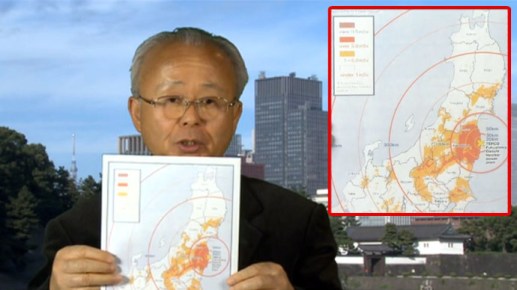 Ex-Futaba mayor sues state, Tepco over Fukushima nuclear disaster
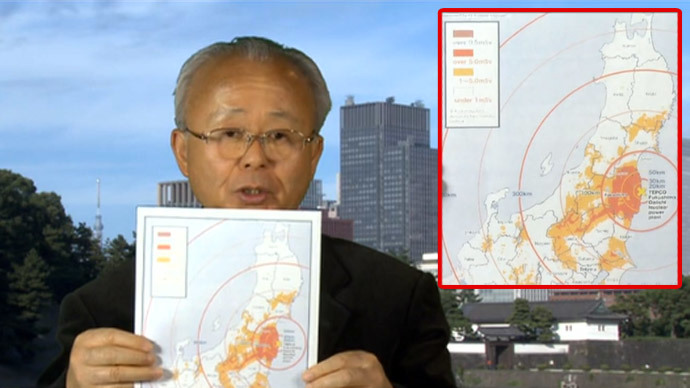
Katsutaka Idogawa, the former mayor of Futaba in Fukushima Prefecture, filed a lawsuit against the central government and Tokyo Electric Power Co. on Wednesday for exposing him to excessive radiation since the March 2011 nuclear disaster.
Seeking ¥148.5 million in damages, Idogawa, 69, claimed that sloppy management by the central government and Tepco caused him to receive radiation over the annual limit during the early phase of the disaster, when hydrogen explosions and the venting of steam from reactor containment vessels took place.
Futaba is one of the two municipalities that host Tepco’s crippled Fukushima No. 1 nuclear power plant, the site of the disaster.
At a news conference, Idogawa expressed regrets for his inability to protect local residents from radiation. He also asked Futaba residents to join the lawsuit.
In his petition, Idogawa claimed to have received the excessive radiation between March 11, 2011, when the disaster started, and March 19 that year, when residents evacuated Futaba for Saitama Prefecture.
This was because as Futaba mayor he took part in work to collect information, secure places to which local residents could evacuate, and instruct and guide fleeing locals, according to the petition.
The suit, filed with the Tokyo District Court, is the first seeking compensation for health damage from events early in the nuclear crisis, according to Idogawa’s attorney.
Source : Japan Times
Ex-mayor sues state, TEPCO for stress caused by nuclear disaster
A former mayor who was exposed to high levels of radiation after the 2011 nuclear disaster is suing the central government and the operator of the wrecked Fukushima power plant for stress.
Katsutaka Idogawa, the former mayor of Futaba in Fukushima Prefecture, filed the lawsuit on May 20 at the Tokyo District Court. He is seeking 148.5 million yen ($1.22 million) in compensation.
“Even after the accident, I was forced to stay in the town as mayor and thus exposed to a high dose of radiation from the plant,” the complaint said.
“The central government delayed giving evacuation orders and even when they were issued, the areas under evacuation orders were inappropriate.”
Idogawa, 69, said the excessive radiation he was exposed to caused him to become stressed over health concerns.
His written complaint pointed out the central government failed to issue evacuation orders to the town appropriately following the March 2011 triple meltdown at the Fukushima No.1 nuclear power plant.
Idogawa also lambasted the government and Tokyo Electric Power Co., the plant operator, for their reluctance to take necessary measures to protect against future tsunami disasters.
“The government and TEPCO bear responsibility for neglecting to implement advance countermeasures against potential tsunami, even though they recognized such need,” the complaint said.
Four years after the disaster, evacuation orders are still in place for Futaba town, which co-hosts the crippled Fukushima nuclear power plant. Most areas are designated as “difficult-to-return” zones because annual accumulated radiation levels exceed 50 millisieverts.
During a news conference in Tokyo on May 20, Idogawa said: “We could not protect the town residents because we believed in the words the government and TEPCO said that the nuclear accident would never happen. I hope I can guide those suffering from concerns over radiation exposure.”
Source : Asahi Shimbun
http://ajw.asahi.com/article/0311disaster/fukushima/AJ201505210042
Japanese Government disengages its support to Fukushima victims
 As the political class pushes for reactor restarts, their commitment towards Fukushima has turned to outright betrayal.
Starting in 2016 local governments will be forced to pay for part of the reconstruction costs.
Last week the central government announced they plan to reopen any area below 50 mSv/year for people to return by 2017. There have also been problems with animals forcing their way in or thieves ransacking homes.
The government also announced that they would terminate compensation payments for all evacuees except those from the “difficult to return zone” by 2018. There is no consideration being given to the prospect of these people having a functioning home to return to or not.
Asahi Shimbun made this comment about the issue:
“However, it is not clear whether radiation levels will drop as expected by March 2018. Even if evacuation orders remain in place because of delays in decontamination work, the compensation payments will still end in 2018 for the two zones, the sources said.”
Efforts to decontaminate many places in the evacuation zone has proven futile. Some areas defied decontamination attempts, others recontaminated as runoff from forests and other areas migrated back in. In previous years the government had said they would not do further follow up decontamination in many areas, telling residents to just accept living in the higher areas. The government statement that compensation payments would end even if decontamination work had not been completed brings the entire plan full circle.
The government has however decided to give businesses a one year extension on compensation payments.
Compounding all of this will be the individual situation of many evacuees. Towns that have reopened so far only saw a small number of residents return.
What will ultimately happen to these people as aid is taken away while the evacuation areas remain unsafe and there is no plan to rebuild their damaged homes remains to be seen.
Sources :
Quake-hit Tohoku areas to share reconstruction costs starting next April
LDP Wants To Reopen Much Of Evacuation Zone By 2017
http://www.fukuleaks.org/web/?p=14745
Fukushima may end free housing for voluntary nuclear evacuees in 2017
Ministry plans to end TEPCO compensation to 55,000 Fukushima evacuees in 2018
http://ajw.asahi.com/article/0311disaster/fukushima/AJ201505190055
Survey: Large majority of Fukushima evacuees have family members with health problems
http://ajw.asahi.com/article/0311disaster/fukushima/AJ201505190054
Ministry plans to end TEPCO compensation to 55,000 Fukushima evacuees in 2018

The government will instruct Tokyo Electric Power Co. to terminate compensation payments to 54,800 evacuees from the Fukushima nuclear disaster in March 2018, regardless of radiation levels in their hometowns, sources said.
The new compensation plan of the Ministry of Economy, Trade and Industry is based on the assumption that decontamination work will lower radiation levels and enable the government to lift evacuation orders in those areas, the sources said May 18.
Currently, the homes of about 80,000 evacuees are located in three zones designated by the government in terms of severity of radiation contamination.
Around 31,800 evacuees’ homes are in “zones being prepared for the lifting of evacuation order,” while 23,000 people have fled their homes in what are now “no-residence zones.”
TEPCO currently pays each of these 54,800 evacuees 100,000 yen(about $834) in compensation a month.
The new plan will affect evacuees from these two zones.
The remaining 24,400 people have homes located in“difficult-to-return zones,” where there are no prospects of lifting the evacuation orders. TEPCO has paid a total of 14.5 million yen to each of these evacuees.
The government’s current guidelines on compensation stipulate that payments should end one year after evacuation orders are lifted.
Under the new plan, the government and ruling parties assume that the evacuation period for people in the first two zones will end “six years after the March 2011 nuclear accident.” That assumption is based on another assumption that decontamination work will be completed by March 2017 and evacuation orders can be called off by that time.
As a result, compensation payments for people from the two zones will end in March 2018. Each of the evacuees will have received atotal of 8.4 million yen during the seven years since the accident started at the Fukushima No. 1 nuclear plant.
The current compensation system allows evacuees to receive additional compensation payments if their evacuation periods are extended. Some critics say evacuees are hoping for a continuation of evacuation orders so that they can receive more money.
But the new plan will terminate compensation payments for the two zones in 2018 without exception. If the evacuation order is lifted five years after the nuclear accident, the evacuees from the area can still receive compensation for two more years, even though they are qualified for only one additional year under the current system.
Adoption of the new plan will make it easier for the government to work out support measures for people who return to their hometowns in the two zones, the sources said.
“The lifting of evacuation orders will proceed,” a government official said. “We will be able to construct houses and attract plants and firms (to the areas) more positively.”
However, it is not clear whether radiation levels will drop as expected by March 2018.
Even if evacuation orders remain in place because of delays in decontamination work, the compensation payments will still end in 2018 for the two zones, the sources said.
Source: Asahi Shimbun
http://ajw.asahi.com/article/0311disaster/fukushima/AJ201505190055
Survey:Large majority of Fukushima evacuees have family members with healthproblems

Nearly 70 percent of evacuees from areas around the damaged Fukushima No. 1 nuclear power plant have family members complaining of physical or mental problems, a recent survey showed.
Released by the Fukushima prefectural government, the survey covering fiscal 2014 revealed that 66.3 percent of households that fled the disaster area–after the nuclear crisis triggered by the March 2011 Great East Japan Earthquake and tsunami–have at least one member suffering health problems. The figure was 67.5 percent in the previous survey covering fiscal 2013.
In February, the prefecture sent questionnaires to all 59,746 households that evacuated for the latest study–the second of its kind–and received responses from 18,767 households, or 33.6 percent.
Of the respondents, 13,703 households, or 73 percent, said they were forced to evacuate, while 5,054, or 27 percent, said they voluntarily evacuated.
The survey covered about 20 categories, such as the state of the lives of the evacuees, their health conditions and their intent to return to their homes.
Asked about what bothers them, 57.9 percent said they cannot sleep well. While 56.6 percent said they are unable to enjoy their daily lives as they did before the disaster, 49.3 percent said they tire more easily.
Households that are still in temporary housing or rented apartments for evacuees accounted for 62.1 percent, a 10-percentage-point decrease from the previous survey. Meanwhile,19.7 percent–10 points higher than the first study–said they live in their own homes.
Although in the fiscal 2013 survey, 40.4 percent hoped they would be allowed to continue living in temporary housing longer than originally planned, 48.7 percent hope so in the latest findings.
In the latest study, 55.8 percent said they hope to continue living in temporary housing because the evacuation order has yet to be lifted for their hometowns. While 42.1 percent said they are currently unable to rebuild their homes on their own, 40.0 percent said they do not have sufficient funds to leave temporary housing.
In March, the central government released results of its survey of nine municipalities ordered to evacuate since the onset of the Fukushima crisis. The prefectural survey asked evacuees from areas other than the nine municipalities where they hoped to reside in the future. The latest findings show 37.3 percent of households that are evacuees living within Fukushima Prefecture said they hope eventually to return to their homes. Those who want to settle where they currently reside accounted for 16.5 percent, and 11.7 percent said they have yet to decide where to live in the future.
In contrast, 31.6 percent of households that evacuated outside the prefecture said they have not determined where to live in the future, whereas respondents who want to settle where they now live or return to their hometowns accounted for 24.2 percent and 19.8 percent, respectively.
Source: Asahi Shimbun
http://ajw.asahi.com/article/0311disaster/fukushima/AJ201505190054
Fukushima finds 16 new cases of thyroid cancer in young people – “unlikely” a direct result of the nuclear accident

Sixteen young people who lived near the crippled Fukushima No. 1 nuclear power plant have been diagnosed with thyroid cancer, prefectural authorities said May 18, although they added it is “unlikely” a direct result of the nuclear accident.
Fukushima Prefecture has been conducting thyroid tests on about 385,000 residents and others who were 18 years old or younger at the time of the onset of the March 2011 nuclear disaster caused by the Great East Japan Earthquake and tsunami.
A prefectural panel said the results of the first round of tests that concluded in March 2014 revealed the ratio of those diagnosed orsuspected of having thyroid cancer who live near the Fukushima plant was no different than the ratio of the same age group from elsewherein Japan.
The 16 new cases were detected between January and March, and bring the total number of young people diagnosed with the disease in the testing program to 103. Thyroid cancer can be confirmed only after surgery.
The prefecture is currently conducting its second survey of test subjects, which will be concluded in March 2016.
The latest 16 include 12 individuals who were suspected of having the disease during the first study, and four who were believed to have the disease during the second study.
According to prefectural officials, 112 young people were diagnosed or suspected of having thyroid cancer during the first study, with the figure at 15, thus far, in the second survey, bringing the total to date to 127 people.
Because babies and small children are particularly susceptible to the effects of radiation, many cases of thyroid cancer in infants were reported after the 1986 Chernobyl disaster. However, this has not proven to be the case so far with regard to the Fukushima nuclear crisis.
The prefectural panel will further study the impact of radiation exposure on the frequency of thyroid cancer cases by comparing the findings of the first survey with results of the second study and future check-ups.
http://ajw.asahi.com/article/0311disaster/fukushima/AJ201505190041
Fukushima Contamination Found In Tap Water Around Japan
Testing conducted in February and March of 2015 found cesium in many tap water samples collected around Japan. In the readings, Tokyo had higher tap water contamination levels than Fukushima City.
One reading that may cause confusion is the reading for Ichihara Chiba. It indicated iodine 131 was found in that tap water sample. The reading is isolated, no other cities found iodine 131 in their water. This same problem was encountered in the US soon after the disaster were iodine 131 was being found in some east coast municipal water supplies. What may be happening is linked to medical treatments.
People receiving iodine 131 radiation therapy treatments, used for certain thyroid disorders excrete the substance in their urine. This is intended to allow any iodine 131 in the waste water to decay away. If a containment system is not used or not properly operating, iodine 131 can flow into waste treatment plants and eventually to the waterways. This directly adds contamination to waste water.
If that treated waste water is released into a water way and picked up soon enough downstream it could then contaminate public drinking water supplies.
Source: http://radioactivity.nsr.go.jp/en/contents/10000/9766/24/194_20150512.pdf
Fukushima may end free housing for voluntary nuclear evacuees in 2017

FUKUSHIMA – The Fukushima Prefectural Government may stop providing free accommodations at the end of March 2017 for people who voluntarily left areas in the prefecture not subject to nuclear evacuation advisories, sources said.
Officials hope to encourage people who evacuated on their own to return home, but the proposed end to the assistance will certainty draw objections from them.
There have been calls in some Fukushima municipalities that are worried about the lack of progress in the return home of evacuees for an end to the support program.
The prefecture will decide after listening to the opinions of local officials later this month, the sources said.
Of about 115,000 people who have taken refuge in and outside the prefecture, some 36,000 are believed to be from areas that are not covered by the central government’s evacuation advisories for radiation from the nuclear crisis that started in 2011.
Many voluntary evacuees are people with children as well as former residents of such areas as the town of Hirono, the village of Kawauchi and the city of Minamisoma, all geographically close to the government-designated evacuation zones.
They sought refuge outside their hometowns mainly due to concerns over exposure to radiation from the reactor meltdowns at Tokyo Electric Power Co.’s Fukushima No. 1 plant.
Under the Disaster Relief Act, the prefectural government provides prefabricated temporary housing for nuclear evacuees for free and fully finances their rent for private apartments.
The aid program was originally supposed to run two years, but it was extended by a year twice, with the current version set to expire at the end of next March. For voluntary evacuees, the prefecture hopes to terminate the assistance after another one-year extension, the sources said.
It is looking at continuing the free accommodations for people who fled the designated evacuation areas, the sources said.
http://www.japantimes.co.jp/news/2015/05/18/national/fukushima-may-end-free-accommodations-voluntary-nuclear-evacuees-2017/#.VVoO40ZZNBR
1 This Month



26 September – International Day for the Total Elimination of Nuclear Weapons


PLEASE OPPOSE HR 8255 AND S.3639 – bills would accelerate satellite deployment, with no environmental review or safeguards – https://ncstd5li.quorum.us/campaign/169331/
To see nuclear-related stories in greater depth and intensity – go to https://nuclearinformation.wordpress.com
-
Archives
- September 2026 (269)
- August 2026 (330)
- July 2026 (355)
- June 2026 (287)
- May 2026 (306)
- April 2026 (356)
- March 2026 (251)
- February 2026 (267)
- January 2026 (308)
- December 2025 (358)
- November 2025 (359)
- October 2025 (375)
-
Categories
- 1
- 1 NUCLEAR ISSUES
- business and costs
- climate change
- culture and arts
- ENERGY
- environment
- health
- history
- indigenous issues
- Legal
- marketing of nuclear
- media
- opposition to nuclear
- PERSONAL STORIES
- politics
- politics international
- Religion and ethics
- safety
- secrets,lies and civil liberties
- spinbuster
- technology
- Uranium
- wastes
- weapons and war
- Women
- 2 WORLD
- ACTION
- AFRICA
- Atrocities
- AUSTRALIA
- Christina's notes
- Christina's themes
- culture and arts
- Events
- Fuk 2022
- Fuk 2023
- Fukushima 2017
- Fukushima 2018
- fukushima 2019
- Fukushima 2020
- Fukushima 2021
- general
- global warming
- Humour (God we need it)
- Nuclear
- RARE EARTHS
- Reference
- resources – print
- Resources -audiovicual
- Weekly Newsletter
- World
- World Nuclear
- YouTube
-
RSS
Entries RSS
Comments RSS

