Fukushima System Failure Case Study ( NASA )
“the NAIIC concluded that “the disaster was man-made and the result of collusion between government, the regulators and TEPCO, and a lack of governance by said parties,” citing that the organizational and regulatory systems supported faulty rationales for decisions and actions. Regulators served TEPCO’s business interests through tailored regulation and weak enforcement.“(NASA)
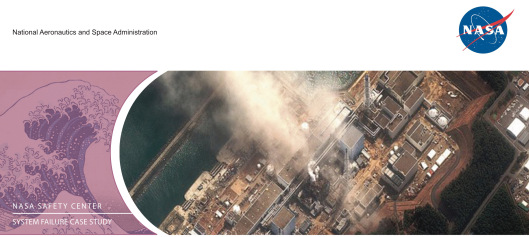
NASA Failure Studies [Comments added in brackets]:
“October 2015 Volume 8 Issue 7
PROXIMATE CAUSE
• Loss of electricity and backup power left the Fukushima complex crippled and unable to adequately cool the reactors
UNDERLYING ISSUES
• Disregard of Regulations
• Poor Safety History
• Lack of Response to Natural Disaster Concerns
AFTERMATH
• Recommendation pertaining to the creation of a permanent committee to deal with issues regarding nuclear power in order to supervise regulators and provide security to the public.
The Great Wave of Reform The Prophetic Fallacy of the Fukushima Daiichi Meltdown
March 11, 2011, off the Pacific coast of Tohoku, Japan: At 14:46 (2:46 p.m.) Japan Standard Time (JST) a magnitude 9.0 earthquake occurred 43 miles east of the Oshika Peninsula. The undersea megathrust earthquake shifted the mainland of Japan an estimated 8 feet east and deviated Earth’s axis by estimates between 4 to 10 inches. The Great East Japan Earthquake generated massive tsunami waves that peaked at heights of 133 feet and travelled up to 6 miles into areas of mainland Japan… The disaster also triggered the second Level 7 International Nuclear Event (after Chernobyl) in history — the Fukushima Daiichi nuclear disaster.
Background
The Fukushima Daiichi Catastrophe
Analysis of the safety history of the Fukushima Daiichi nuclear power complex reveals a catastrophic failure of prediction on behalf of the plant’s Tokyo Electric Power Company (TEPCO) management. How could planners overlook the tsunami?
Hazards of Predicting the Future
In 1958, Arthur C. Clarke, already recognized for major contributions to the fields of rocketry and space flight, began writing a series of magazine essays that were later combined and published in 1962 as Profiles of the Future; a lexicon of universal scientific possibilities.
The book’s introductory essay, “Hazards of Prophecy, ” concerned itself with the two traps of assumptions: “failures of nerve” and “failures of imagination. ”
Failure of the imagination manifests when presently known facts are respected but vital truths are still unknown, and the possibility of the unknown (the unknown unknowns) is not confessed.
Failure of nerve, the more common fallacy (noted by Clarke), “occurs when given all the relevant facts the would-be prophet cannot see that they point to an inescapable conclusion. ”
What happened
The seismic activity of the Great East Japan Earthquake forced the emergency shut-down feature on reactors 1, 2 and 3. Off-site electricity to the power plant was also disrupted by the tremors and backup power was tapped from a 66kV transmission line from the Tohoku Electric Power Company Network. However, the back-up line failed to power reactor 1 due to a mismatched circuit connection.
Beginning at 15:37 (3:17 p.m.) JST, the peak tsunami waves broke upon Japan and flooded and destroyed the emergency diesel generators at the Fukushima complex. Seawater cooling pumps and electric wiring system for the DC power supply for reactors 1, 2 and 4 failed shortly after. All power was effectively lost except for emergency diesel generator power to reactor 6. The tsunami also destroyed vehicles, heavy equipment and many installations.
Without power, the operators at the complex worked tirelessly to monitor and cool the overheating reactors, at one point salvaging car batteries from destroyed vehicles to power necessary equipment. Hydrogen explosions from emptying coolant reservoirs led to interruptions in the recovery operations, which failed when the Unit 2 reactor suppression chamber failed and discharged radioactive material.
Proximate cause
The loss of electric power after flooding made it difficult to effectively cool down the reactors in a timely manner. Cooling operations and observing reactor temperatures were heavily dependent on electricity for coolant injection and depressurization of the reactor and reactor containers, and removal of decay heat at the final heat sink. Lack of access due to the disaster obstructed the delivery of necessities like alternative seawater injection via fire trucks“.
[Note: Loss of cooling made it impossible to cool the reactors, not difficult.]
“Underlying issues
The Nuclear Accident Independent Investigation Commission (NAIIC), formed on Oct. 30, 2011 to investigate the direct and indirect causes of the Fukushima accident, was the first independent commission created in the history of Japan’s constitutional government. In its legal investigation, the NAIIC concluded that “the disaster was man-made and the result of collusion between government, the regulators and TEPCO, and a lack of governance by said parties,” citing that the organizational and regulatory systems supported faulty rationales for decisions and actions. Regulators served TEPCO’s business interests through tailored regulation and weak enforcement.
Disregard of Regulations
The 1967 constructions plans for the Fukushima Daiichi isolation condenser deviated from the original reactor plans submitted to the government in 1966. The changes were not reported in violation of regulation. TEPCO’s configuration control was scrutinized in February 2012 by Japan’s Nuclear and Industrial Safety Agency (NISA). NISA requested explanation by March 12, 2012; however, TEPCO, unable to supply an official explanation, only speculated on why the change occurred.” [1966 to 2012 is how many years? FORTY-SIX YEARS.]
“In 2002, employees of General Electric (GE), the contractor responsible for designing the reactor, reported to the Japanese government that TEPCO injected air into the containment vessel of Fukushima reactor Number 1 to artificially lower the rate of a leak. The resulting scandal, in addition to a fuel leak at Fukushima Daini, forced TEPCO to temporarily shut down all 17 reactors. Falsified safety records and inspections in conjunction with the number 1 unit dating back to 1989 were revealed by other GE employees. Contractors admitted to falsifying reports at the request of TEPCO. The exposure led to numerous resignations of senior TEPCO executives and more disclosures of previously unreported issues, some of which imply that GE ignored warnings of major design failings from members of its contract staff (who later resigned in protest of negligence) in 1976.
Poor Safety History
On Dec. 29, 2011, TEPCO officials admitted to events occurring in 1991” [TEN YEARS LATER AND AFTER THE START OF THE FUKUSHIMA DISASTER IN MARCH], “where one of two backup generators for Number 1 failed after it was flooded with seawater leaking into the turbine building from a corroded seawater cooling pipe. Superiors were informed about the accident, and of the possibility that a tsunami could inflict similar damage to the generators in the turbine-buildings near the sea. In lieu of moving the generators to higher ground, TEPCO installed leak-proof doors in the generator rooms. After the event, the Japanese Nuclear Safety Commission stated its intent to enforce the installation of additional power supplies and that it would modify safety guidelines for future nuclear plant designs.
According to the NAIIC, regulators and TEPCO were aware of the risk that a total loss of electricity at Fukushima Daiichi would occur if flooding from a tsunami were to reach the level of the site since 2006, and that they were doubly aware of a risk of reactor core damage from loss of seawater pumps in the case of tsunami waves over 10 meters high. The NISA understood the TEPCO had not taken any protective or mitigating measures, but did not provide instructions to TEPCO to do so.
Lack of Response to Natural Disaster Concerns
A 2008 study performed by TEPCO’s nuclear supervisory department concluded that there was an immediate need for improved seawater flooding protection. The study additionally mentioned the possible threat of tsunami waves over 10 meters tall. TEPCO headquarters officials dismissed the perceived risk as unrealistic; concluding that, even when presented with historical data, there was a failure to imagine that such conditions would recur.
Concerns from outside of Japan came from the International Atomic Energy Agency (IAEA) regarding the abilities of Japan’s nuclear plants to withstand seismic activity; citing that an earthquake of a 7.0 or higher magnitude posed a serious threat at a 2008 G8 Nuclear Safety and Security Group assembly.”
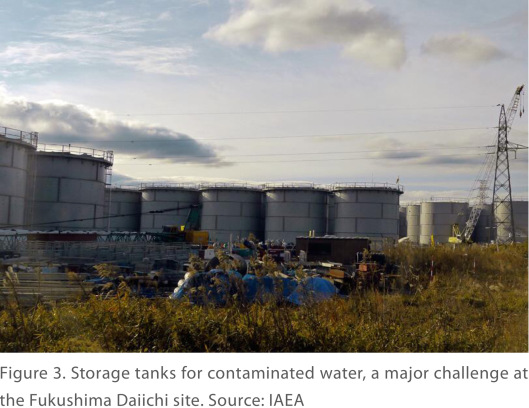
[They pose the biggest risk to the Pacific,where Japan has continued to dump or let leak large amounts of the radioactive water.]
“On Oct. 2, 2011, the Japanese government released a report from TEPCO to NISA that proved TEPCO was aware of the possibility that the plant could be hit by a tsunami with waves far higher than the 5.7 meters which the plant was designed to withstand. The 2008 simulations based on the destruction caused by the 1896 earthquake in this area, revealed the likelihood of waves between 8.4 and 10.2 meters capable of flooding the site.
Further studies by scientists and an examination of the plant’s tsunami resistance measures were not planned by TEPCO before April 2011, and no mitigation was planned before October 2012“.
[THIS IS WHAT THE US NRC DOES – THEY ALLOW THE UTILITIES TO PUT OFF IMPLEMENTATION OF SAFETY MEASURES FOR MONTHS OR SOMETIMES YEARS, EVEN POST FUKUSHIMA. AND THEY ACTIVELY FIND WAYS TO HELP UTILITIES AVOID HAVING TO EVER IMPLEMENT THEM.]
“TEPCO stated that the company did not feel the need to take prompt action on the estimates, which were still tentative calculations in the research stage. An official of NISA said that these results should have been made public by TEPCO, and that the firm should have taken measures right away; however, NISA believed these actions should have been taken on by the operator and not demanded by regulators. NAIIC viewed this a tacit consent on behalf of NISA to allow for a delay in TEPCO’s planned work. After the tsunami, a TEPCO spokesman conceded that TEPCO would have been better prepared if it had taken the study seriously and reinforcement of its reactor houses.
In contrast, the Tokai Nuclear Power Plant protective dike was raised to 6.1 meters after simulations showed the possibility of higher than expected tsunami waves. Even unfinished at the time of the March 11, 2011, tsunami, the dike protected two seawater pumps and emergency diesel generators and allowed for the reactor to be kept in cold shutdown even though external power was lost.
Aftermath
The Nuclear Safety Commission Chairman told a parliamentary inquiry in February 2012 that, “Japan’s atomic safety rules are inferior to global standards and left the country unprepared for the Fukushima nuclear disaster last March.” There were flaws in, and lax enforcement of, the safety rules governing Japanese nuclear power companies, and this included insufficient protection against tsunamis.
The NAIIC made a recommendation pertaining to the creation of a permanent committee to deal with issues regarding nuclear power in order to supervise regulators and provide security to the public. The committee should be responsible for conducting regular investigations and explanatory hearings of regulatory agencies, academics and stakeholders and for establishing an advisory body to stay abreast of industry and government dealings.
The new regulatory body must be independent from the chain of command of the government, operators, and politics; transparent in decision making processes to the national government and exclude involvement of stakeholders in decision making; and technically proficient in nuclear technology.
The NAIIC also made recommendations pertaining to the reforming of nuclear energy laws to adhere to global standards, including the monitoring of operators and backfit of outdated reactors.
Many other organizations and think tanks have suggested possible corrective actions and future improvements after the disaster. Some of the actions relate to failure management such as having at least one diesel generator, fuel, and related switch gear isolated at high elevation or in a waterproof room (or both) to preserve onsite AC power in an emergency. Emergency response organizations could also maintain diesel generators or gas turbine generators that could be rapidly transported to a site to restore power.”
[This doesn’t work if the diesel generator fails to start. Whereas Waterford Nuclear Power Station near New Orleans ran off of generators for a week post-Katrina, it appears to have had one or both diesel generators inoperable (2013, 2015) or potentially so (2014: in the event of heavy rain) for at least 3 years (2013, 2014, 2015) in a row, including 2014 and 2015 hurricane seasons. At least one of the defective parts was from Japanese Toshiba-owned Westinghouse. See more below. The US backup response allows 24 hrs for backup equipment to arrive, which may be too late. For Katrina they brought in extra generators and fuel ahead of time.]
“Regulators could demand more on-site personnel to have independent and timely sources of information and the ability to influence the owner/ operator behavior during the accident. Current spent fuel pools could be retrofitted with passive cooling systems that can survive the initiating external event.
Relevance to Nasa
Fukushima-Daiichi planners used of a narrow slice of historical environmental data when estimating the risk of external initiating event which contributed to a failure of imagination that a tsunami beyond the design basis of the Fukushima-Daiichi break wall could happen again. Beyond the multiple failures on behalf of TEPCO and Japanese nuclear regulatory agencies, the critical question remains of when to draw the line — when safe is safe enough — in the design basis process.
Teams with diverse viewpoints and broad, deep experience can overcome individual cognitive biases that can carve a path toward failure of imagination from the very beginning. Additionally, policy checks and balances on teams, such as NASA technical and safety requirements, are only as effective as the accountability behind them and depend upon how well both operators and regulators understand the technical basis behind such requirements.
Sometimes the rationale behind a requirement stems from the context surrounding a failure. If the rationale (the context) is lost to history, it can rob a team of the technical argument (and nerve) to defend safety margins…
… harder to overcome is the instance when a regulator itself places public safety below the business interests of a powerful industry. Safety hazards needing thorough mitigation can be perceived instead as business problems that demand efficiencies …” (By NASA-Steve Lilley – See References below info on Waterford, etc.; emphasis and comments in brackets added; things which made the point less clear; and seriously dim-witted or BS statements by Mr. Lilley were removed and replaced with …. Original found here: https://nsc.nasa.gov/SFCS/SystemFailureCaseStudyFile/Download/606 )
Re Waterford Nuclear Power Station backup generator; Toshiba owns Westinghouse:
PART 21 – WESTINGHOUSE TYPE KIR-60 CURRENT TRANSFORMER
The following is excerpted from LER 2015-007 submitted by the licensee:
“On October 9, 2015, Waterford 3 received information from the external evaluation concerning the Generator Differential Current Transformer. The evaluation concluded that a manufacturing defect internal to the current transformer was the cause of the failure. On October 22, 2015, engineering evaluation determined the manufacturing defect could create a substantial safety hazard, as defined in 10 CFR 21, and provided the site vice president information of the defect the same day. Additional information identified in the report is as follows:
“Constructor – Westinghouse Type KIR-60 current transformer, style 7524A01 Gi6, serial number 28218571; Defect and safety hazard – There were voids found in the insulation, and the thickness of the insulation material around the fault area appeared reduced when compared to the other areas of the current transformer. There is only one transformer of this type remaining installed in the plant. Scheduled replacement is no later than November 15, 2015.” http://www.nrc.gov/docs/ML1530/ML15303A004.pdf
Another Diesel Generator failure: “General Electric CR1 05X300 auxiliary contactor. The auxiliary contactor was manufactured by General Electric Company and supplied by Nuclear Logistic, Incorporated, as an auxiliary part of a General Electric CR305 contactor.”
http://www.nrc.gov/docs/ML1219/ML12199A222.pdf GE is approximately half owned by Japan’s Hitachi. (In the US it’s GE-Hitachi at 60/40 and in Japan it’s Hitachi GE at 60/40 ownership.)
Both Emergency Diesel Generators at Waterford Steam Electric Station, Unit 3 (Waterford 3) were declared inoperable in the peak of Hurricane Season
“On August 26, 2015, both Emergency Diesel Generators at Waterford Steam Electric Station, Unit 3 (Waterford 3) were declared inoperable, causing entry into Technical Specification 3.8.1.1 action f.”
https://adamswebsearch2.nrc.gov/webSearch2/view?AccessionNumber=ML15296A464
“Waterford 3… is receiving additional NRC oversight based on … a violation issued March 31, 2014, for failing to ensure the operability of an exhaust fan in a room housing the plant’s emergency diesel generators.” http://www.nrc.gov/reading-rm/doc-collections/news/2014/14-019.iv.pdf (Found here: https://miningawareness.wordpress.com/2014/08/20/nuclear-safety-failure-open-house-re-killona-waterford-nuclear-reactor-in-louisiana/ ) See: http://www.nrc.gov/docs/ML1325/ML13254A168.pdf
Yet another problem found in late Hurricane Season: “During a walkdown of the Emergency Diesel Generator Feed Tank A and B vent lines on October 22, 2014, an NRC Component Design Basis Inspection inspector identified corrosion on the Emergency Diesel Generator Feed Tank A and B vent lines where the vent lines pass through the roof. A visual inspection was performed and revealed that the corrosion had created through wall holes that could allow water into both the train A and B Emergency Diesel Generator Feed Tanks.
Follow up analysis has determined that some rainfall amount less than the postulated Probable Maximum Precipitation event could have resulted in water intrusion into the Emergency Diesel Generator A and B Feed Tanks that exceeds the 0.1 percent water content allowed by the vendor technical manual. This could have potentially affected the operability of both the A and B Train Emergency Diesel Generator Feed Tanks and subsequently both trains of the Emergency Diesel Generators. It is unknown how long this corrosion has existed. Compensatory measures were put in place to prevent water ingress should a large rainfall event occur.
This condition is reportable under the following criteria: 10 CFR 50.73(a)(2)(i)(B), 10 CFR 50.73(a)(2)(v)(D), and 10 CFR 50.73(a)(vii)“.http://www.nrc.gov/docs/ML1435/ML14352A449.pdf
During and After Hurricane Katrina Waterford Nuclear Reactor ran for a week or more on diesel generators. https://miningawareness.wordpress.com/2014/08/20/nuclear-safety-failure-open-house-re-killona-waterford-nuclear-reactor-in-louisiana/
Another example at another nuclear power station: “For instance, although the reactors were supposed to have back-up electric power in case the main electricity source was disrupted, there were many occasions in which both the emergency diesel generator and the emergency gas turbine were down, but officials kept operating the reactor. That meant a critical safety measure needed to insure that the reactor would be kept cool and not suffer a meltdown was not in place in the event of an emergency, officials of the regulatory agency said. http://www.nytimes.com/1997/12/11/nyregion/government-fine-on-nuclear-plant-is-largest-ever.html
NASA References:
“References
Acton, James M.; Mark Hibbs. Why Fukushima Was Preventable. The Carnegie Papers, Carnegie Endowment for International Peace. March 2012.
Buongiorno, J.; R. Ballinger; M. Driscoll; B. Forget; C. Forsberg; M. Golay; M. Kazimi; N. Todreas; J. Yanch. Technical Lessons Learned from the Fukushima- Daichii Accident and Possible Corrective Actions for the Nuclear Industry: An Initial Evaluation. Center for Advanced Nuclear Energy Systems, Massachusetts Institute of Technology. July 26, 2011.
Caldwell, Cindy. Reflections on Sensemaking at Fukushima Daiichi. Highly Reliable Performance: Office of C o rporate S a fety A n alysis, D e partment of Energy. September 10, 2012. http://hsshpi.wordpress. com/2012/09/10/ reflections-on-sensemaking-at-fukushima-daiichi/, accessed June 5, 2013.
Fukushima Daiichi: Two Years On: Photo Essay. IAEA. March 11, 2013. https://www.iaea. org/newscenter/multimedia/photoessays/fukushima-daiichi-two-years, accessed May 5, 2015.
Hultman, Nathan. Fukushima and he Global “Nuclear Renaissance. ” Brookings Institute March. March 14, 2011. http://www.brookings. edu/ research/opinions/2011/03/14-japan-nuclear-hultman, accessed July 1, 2013.
Kuroda, Hiroyuki. Lessons Learned from the TEPCO Nuclear Power Scandal. Tokyo Electric Power Company. March 27, 2004.
TEPCO, Reports on the reflection of the changes in the connection method of the drain pipe in Isolation Condenser in Unit 1at Fukushima Daiichi Nuclear Power Station to the re-circulating system, March 12, 2012.
SYSTEM FAILURE CASE STUDY
Responsible NASA Official: Steve Lilley steve.k.lilley@nasa.gov
This is an internal NASA safety awareness training document based on information available in the public domain. The findings, proximate causes, and contributing factors identified in this case study do not necessarily represent those of the Agency. Sections of this case study were derived from multiple sources listed under Ref-erences. Any misrepresentation or improper use of source material is unintentional. Visit nsc.nasa.gov/SFCS to read this and other case studies online or to subscribe to the Monthly Safety e-Message. https://nsc.nasa.gov/SFCS/SystemFailureCaseStudyFile/Download/606
In the original but excluded because it doesn’t add much: “Figure 2. Workers in protective clothing and masks outside the Emergency Response Centre, the main control hub at the Fukushima Dai-ichi site. Source: IAEA“
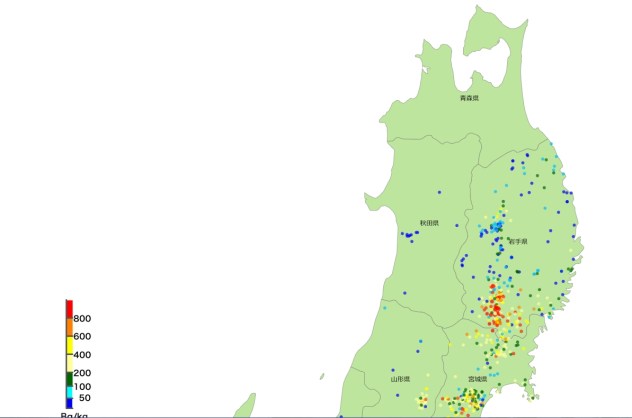
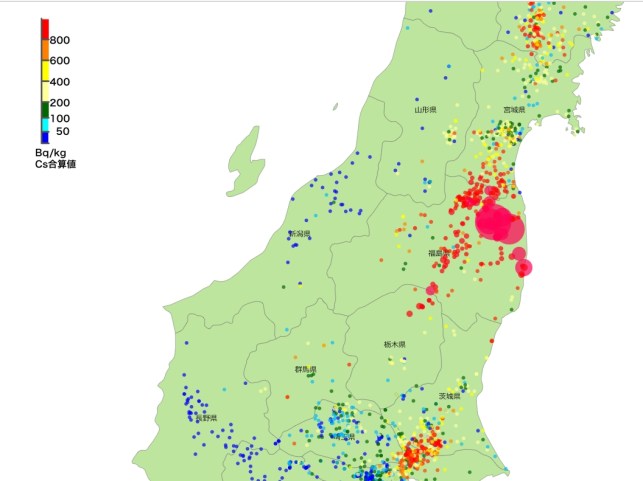
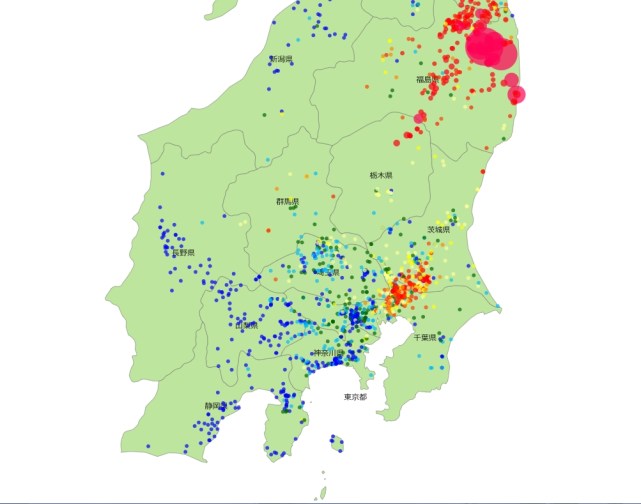
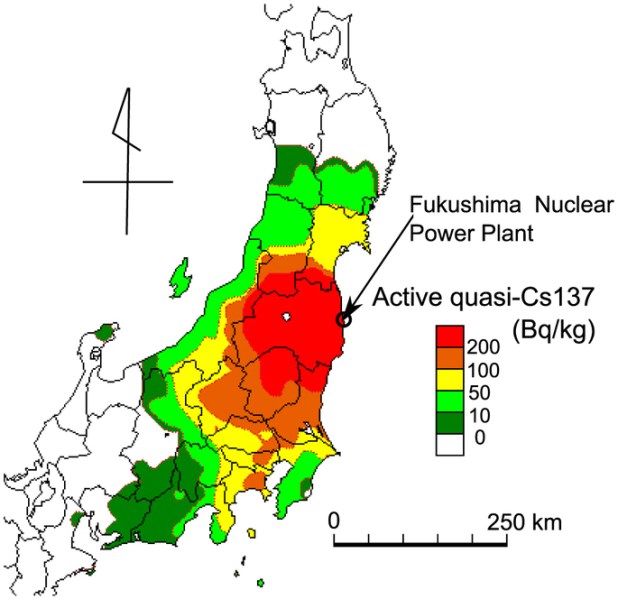
Interactive Map of Cesium in Japan by citizen’s monitoring project.
As you may see the contamination is well spread all along the eastern coast of Japan, the highest contamination found of course in the Fukushima prefecture.
But also numerous hot spots are found in the two prefectures above Fukushima prefecture, the Iwate and Miyagi prefectures, and also near Tokyo in the Ibaraki, Saitama, Kanagawa and Chiba prefectures.
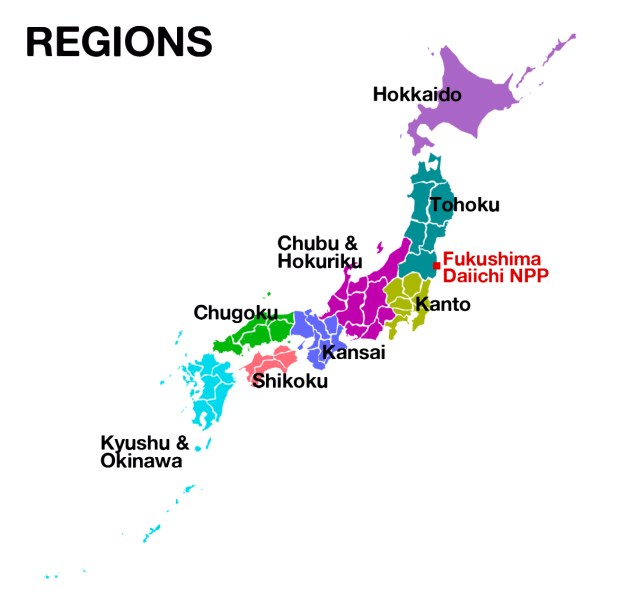
The contamination is concentrated in the two eastern regions of Japan: the Tohoku region in the north-east, and the Kanto region in the east. It is less pronounced once you leave the eastern part of Japan going towards the central regions of nearby Chubu and distant Kansai.
Assessment of residual doses to population after decontamination in Fukushima Prefecture
“….Fukushima Prefecture. Our probabilistic model considers the variabilities in behavioral patterns and Cs-137 surface-activity levels.
Five years after the initial contamination, the 95th percentiles of indoor workers and pensioners in 53 of the 59 municipalities were found to receive annual effective doses of below 1 mSv/y (0.026–0.73 mSv/y).
However, for outdoor workers in 25 municipalities, the annual doses were over 1 mSv/y (1.0–35 mSv/y).
Therefore, the guidance value is effective for indoor workers and pensioners; to determine whether additional countermeasures for outdoor workers should be implemented, a detailed assessment that uses more realistic assumptions is required……”
http://www.sciencedirect.com/science/article/pii/S0265931X16302247
5.0-magnitude quake hits eastern Japan; Tokyo checks nuclear power station
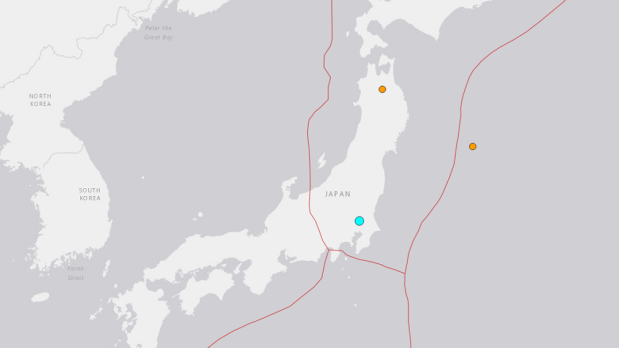
An earthquake with a magnitude of 5.0 struck eastern Japan on Sunday(Jul 17)
TOKYO: An earthquake with a magnitude of 5.0 struck eastern Japan on Sunday(Jul 17), Japan’s Meteorological Agency and the US Geological Survey (USGS) said, rattling buildings in Tokyo.
The USGS put the epicentre of the quake 44km northwest of Tokyo at a depth of about 44km. There were no were immediate reports of damage.
Broadcaster NHK reported that the Tokai No. 2 nuclear power station, which has been shut since 2011, was checked for damage after the quake but none was found.
http://www.channelnewsasia.com/news/asiapacific/tokyo-halts-nuclear-power/2963558.html
Some restricted zones to be lifted near Fukushima nuclear plant
Soft propaganda from the Asahi Shimbun, supporting the Government lifting of the evacuation order in some of the restricted zones, encouraging people to return into the evacuated zones.
Saying “In some of the areas, however, radioactive contaminants have been washed away by rain or blown away by wind. Radiation from those substances has also dissipated naturally.”
Conveniently omitting to mention, that in many decontaminated places, radiation soon returns to pre-decontamination level, thanks to the accumulated radionuclides of the mountain forests (80% of Fukushima prefecture) always ruisseling down with the rain or carried everywhere by the wind, not mentioning also that something in Fukushima Daiichi still fissioning, releasing radionuclides loaded gassings into the environment.
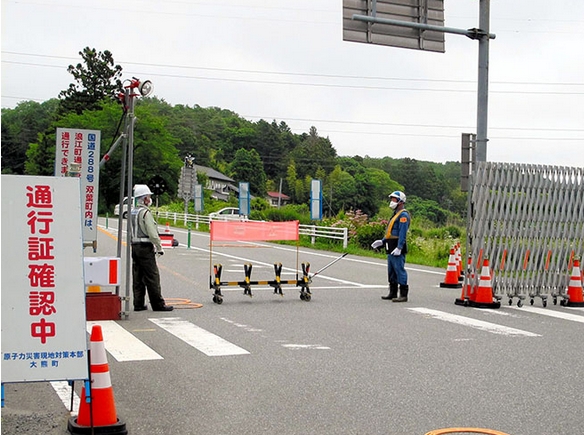
A gate is set up on a national road in Okuma, Fukushima Prefecture, restricting entrance to “difficult-to-return zones.” Permits from the central government are required to enter the areas.
For the first time since the 2011 nuclear disaster in Fukushima Prefecture, the government will lift the designation of some “difficult-to-return zones” around the crippled nuclear plant.
The rescinding is expected to be done gradually from around 2021. By that time, the government plans to undertake intensive decontamination work in central districts of municipalities, where residents will likely return, and districts along main roads.
The “difficult-to-return zones,” which cover a total of 337 square kilometers, are areas where the radiation level exceeded 50 millisieverts per year after the accident at the Fukushima No. 1 nuclear plant. Those areas are off-limits, in principle.
In some of the areas, however, radioactive contaminants have been washed away by rain or blown away by wind. Radiation from those substances has also dissipated naturally.
In front of the Environmental Radioactivity Monitoring Center of Fukushima in the central district of Okuma town, the radiation level is now about 9 millisieverts per year, about one-fifth the level of five years ago.
According to the policies of the government and the ruling parties, if radiation levels are reduced to 20 millisieverts or lower in some areas due to decontamination work, people are allowed to live there.
Of the areas, those where residents or workers for decommissioning of crippled nuclear reactors are expected to live will be subject to intensive decontamination work along with areas on both sides of main roads.
The government and the ruling parties will discuss the lifting of “difficult-to-return zones” with seven municipalities, including Okuma, and will make the official decision in August.
However, even if the designation is lifted, it is uncertain if residents will return to their homes.
According to the annual survey conducted by the Reconstruction Agency on evacuees, only about 10 percent of households evacuating from four municipalities around the nuclear plant are hoping to return home.
Before the nuclear crisis occurred, about 24,000 people of 9,000 households were living in areas that are currently designated as “difficult-to-return zones.”
Japan Reverts to Fascism
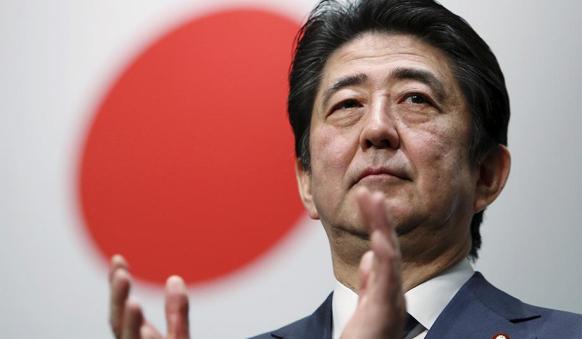
http://www.nationalreview.com/article/437950/japans-new-fascism
State minister rules out sarcophagus option
Japan’s state minister for industry has ruled out the option of sealing off disabled reactors at the Fukushima Daiichi nuclear plant with a Chernobyl-style sarcophagus.
Yosuke Takagi met Fukushima Governor Masao Uchibori in Tokyo on Friday.
Uchibori said he was shocked to hear the word “sarcophagus” and called the option unacceptable.
Two days earlier, a government body charged with decommissioning the plant operated by Tokyo Electric Power Company mentioned the sarcophagus method for the first time.
The body said it remained committed to removing fuel debris from the reactors that suffered meltdowns in the March 2011 accident. But it presented a technical report that left room for entombing the reactors in a massive metal and concrete structure.
Responding to Uchibori, Takagi said the government has no intention of using such an option, and that completing the decommissioning process is the top priority.
Takagi said the government’s policy is to stand by the people of Fukushima, and that his ministry has told the decommissioning body to rewrite its technical report.
http://www3.nhk.or.jp/nhkworld/en/news/20160715_27/
Radioactive Forest
July 9, 2016
The Fukushima nuclear accident in 2011 turned the surrounding towns into a desolate land, making the area into a “radioactive forest”. Without human presence, the land is roamed by wildlife like civets, macaques and wild boars. A project is underway to study the deserted areas by attaching a camera to wild boars to record the conditions of the former farmlands. 5 years after the disaster, we take a close look at how radiation has affected the wildlife, and what it entails for us humans.
Preventing Recriticality in Fuel Debris at Fukushima Daiichi Nuclear Power Station
This video released on July 16, 2016 by Tepco intends to explain the conditions of the fuel retained in the reactors of Units 1-3 at Fukushima Daiichi Nuclear Power Station, and TEPCO’s measures to prevent recriticality- return to a point at which a nuclear reaction becomes self-sustaining- in the fuel debris there.
Kagoshima’s new governor vows to halt Sendai nuclear plant for safety checks
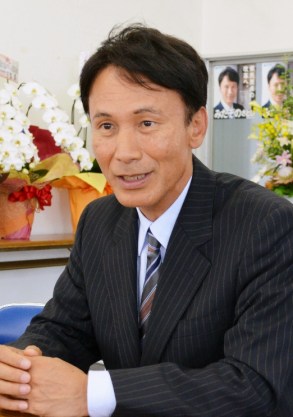
KAGOSHIMA – Incoming Kagoshima Gov. Satoshi Mitazono says he plans to ask Kyushu Electric Power Co. to suspend operation of the Sendai nuclear power plant for safety checks.
In an interview on Wednesday, Mitazono said he will make the request to the utility at a yet to be decided date to examine the effects of powerful earthquakes that hit nearby Kumamoto and Oita prefectures in April.
The former TV commentator was elected Sunday as governor of the only prefecture in Japan with an operating nuclear power plant.
During campaigning, Mitazono pledged to halt its operation.
“I will require Kyushu Electric to temporarily suspend the operation” for a survey of nearby faults and a review of evacuation plans to ensure safety, he said.
“There are many citizens in this prefecture concerned about the nuclear power plant operating after the quakes in Kumamoto,” he said.
Prefectural governors are not authorized to stop the operation of a nuclear reactor, but utilities require local consent to restart them.
Backed by an anti-nuclear camp, Mitazono defeated incumbent Yuichiro Ito, who allowed two reactors at the Sendai complex to be reactivated last year.
Iodine jelly to be handed out to infants living within 30 km of nuclear plants
As a reminder:
A fallout, is the residual radioactive material propelled into the upper atmosphere following a nuclear reaction conducted in an unshielded facility, so called because it “falls out” of the sky after the explosion and the shock wave have passed. It commonly refers to the radioactive dust which can also originate from a damaged nuclear plant. Fallout may take the form of black rain (rain darkened by particulates).
This radioactive dust, consisting of material either directly vaporized by a nuclear blast or charged by exposure, is a highly dangerous kind of radioactive contamination.
Some radiation taints large amounts of land and drinking water causing formal mutations throughout animal and human life.
Iodine tablets only protect the thyroid gland from the Iodine 131, it does not protect anyone from the other occuring fallout radionuclides: 91Sr, 92Sr, 95Zr, 99Mo, 106Ru, 131Sb, 32Te, 134Te, 137Cs, 140Ba, 141La, 144C etc. Iodine 131 has also a very short half-life, 8 days, meaning a full life of 80 to 140 days, whereas most of the other fallout radionuclides have a much longer life span. By example Cesium 134 has a half life of 2 years, a full life of 20 to 30 years, Strontium 90 a half life of 28,8 years, a full life of 288 to 432 years, Cesium 137 a half life of 30 years, a full life of 300 to 450 years.
Another thing, even if the population with the Fukushima catastrophe was only evacuated within a 30km radius, the Fukushima March plume has spread heavily within a 90km radius and less heavily up to a 250km radius.
Iodine jelly to be handed out to infants living within 30 km of nuclear plants
The Cabinet Office said it will soon start distributing iodine jelly to infants living within 30 km of nuclear power plants in a bid to protect their thyroids from possible radiation exposure in the event of a nuclear disaster.
According to the office, about 110,000 infants qualify for the iodine jellies.
There are 21 prefectures where the 30-km radius applies. In addition, infants living within three other prefectures — Kanagawa, Osaka and Okayama — which have nuclear fuel processing facilities are also part of the initiative.
Some local governments have been distributing iodine tablets to all residents for over three years, including in a tablet form for infants that would have to be crushed and mixed with syrup in the event of an accident. But to date this had not been in an iodine jelly form.
The local governments will receive about 300,000 packages, starting as early as this fall, which have a shelf life of three years, the Cabinet Office said.
There are two types of iodine jelly: one for babies under 1 month old and another for those over 1 month and up to 3 years.
Taking the jelly or tablets is supposed to stop the thyroid glands from absorbing iodine contained in radiation in the event of a nuclear disaster, as iodine tends to accumulate in the thyroid.
Study shows bulk of fuel still in crippled Fukushima No. 2 reactor

TOKYO, July 14, Kyodo
A study on the disaster-hit Fukushima Daiichi nuclear power plant has found that most of the melted fuel in the No. 2 reactor is still present in the reactor core area, sources close to the matter said recently.
According to the study that used a cosmic ray imaging system, around 200 tons of fuel and other melted substances is estimated to have accumulated at the bottom of the pressure vessel, the first time the current location of the fuel has been specified.
The finding is important for devising ways to remove the so-called fuel debris, the most challenging task in decommissioning the Nos. 1 to 3 reactors that suffered meltdowns in the nuclear crisis that began in March 2011.
https://english.kyodonews.jp/news/2016/07/421290.html
Deposition of radiocesium on the river flood plains around Fukushima

The environment in the area around Fukushima Daiichi Nuclear Power Plant has been contaminated by widely deposited significant amount of radioactive materials, which were released to the atmosphere caused by the Fukushima Daiichi Nuclear Power Plant accident due to the Great East Japan Earthquake, which occurred on March 11, 2011. The radiocesium released in the accident mainly affects radiation dose in the environment. Decontamination work in the contaminated area except a mountain forests has been conducted to decrease the radiation dose. However, there are concerns that the redistribution of this radiation due to water discharge will occur due to the resulting transport of radiocesium. In particular, the deposition of soil particles containing radiocesium on the flood plains in the downstream areas of Fukushima’s rivers can potentially increase the local radiation dose. Therefore, it is important to understand the influence of the deposition behavior of radiocesium on the radiation dose.
Investigations of rivers have been performed to enhance the understanding of the mechanisms by which radiocesium is deposited on these flood plains. It was found that the spatial distribution of the radiocesium concentration on the flood plain along the river is heterogeneous with a dependence on the depositional condition and that the number of points with high air dose rates is limited. In detail, the radiocesium concentration and air dose rates in flood channels are higher than those at the edges of the river channels. Based on these heterogeneity and hydrological events, the deposition and transport mechanisms of the radiocesium due to water discharge at rivers were also interpreted, and a conceptual model was constructed.
http://www.sciencedirect.com/science/article/pii/S0265931X16301187

Ultraconservative lobby Nippon Kaigi backs constitution revision

TOKYO — An influential political lobby in Japan will do its utmost to capitalize on Prime Minister Shinzo Abe’s election victory and push for the constitution to be revised to allow a more active military, the group’s chairman said Wednesday.
Abe’s gains in the upper house in last weekend’s election mean his party can cobble together the crucial two-thirds majority in both houses to propose a revision and put it to a referendum, if it gets support from lawmakers in other parties open to the changes.
Tadae Takubo, chairman of Nippon Kaigi, or Japan Conference, said the war-renouncing constitution that makes Japan’s defense “defective” needs to be corrected.
It’s time to grow out of Japan’s “silly” postwar goal of becoming an economic power with lightweight military, and seek to restore Japan with more self-respect, traditional family values and principles under the emperor as head of nation, said Takubo, international politics professor at Kyorin University.
“This is a golden opportunity that has never happened before. If I were in the prime minister’s position, I will go all out to accomplish a revision during the current term,” Takubo said. His organization will provide full support to push forward the drive, he said.
For Abe and his ultra-conservative supporters, like Nippon Kaigi, the 1947 constitution is the legacy of Japan’s defeat in World War II and an imposition of the victor’s world order and values. The charter renounces the use of force in international conflicts and limits Japan’s military to self-defense only, although Japan has a well-equipped modern army, navy and air force that work closely with the United States, its top ally.
Abe’s ruling party proposed revisions to the constitution in 2012 that intended to restore traditions similar to prewar-era family values centered on the emperor, and to put national interest before individuals’ basic human rights in some cases. It was never formally submitted to parliament.
Abe did not make the constitution a focus of the election, but said on Monday he takes Sunday’s victory as a public endorsement for a revision, pledging to launch a parliamentary committee to discuss which articles to change and how.
Founded in 1997, Nippon Kaigi has strived to revise the constitution to restore traditional gender roles, increase imperial worshipping and put public interest before individuals. The group is believed to be behind Abe’s comeback in 2012 and has become increasingly influential.
Their grass-roots movement backed by Shinto shrines and other new religious groups has a growing membership that reportedly includes many of Abe’s Cabinet ministers and hundreds of national and local lawmakers.
The organization holds lectures and other events to spread its views and defends Japan’s wartime atrocities while accusing China and South Korea of lying or exaggerating their suffering. It also believes the U.S. postwar occupation brainwashed Japanese with guilt and that education since the war was self-degrading.
‘Stone coffin’ eyed for decommissioning Fukushima plant: report
The government-funded Nuclear Damage Compensation and Decommissioning Facilitation Corp. (NDF) eyes an option of covering the disaster stricken Fukushima No. 1 Nuclear Power Plant with concrete in the future as in the Chernobyl disaster, it has been learned.
In its first planning report drawn up on July 13, the NDF leaves room for adopting the “sarcophagus (stone coffin) method,” in which nuclear fuel debris that melted in the Fukushima crisis will be confined inside reactor buildings using concrete and other materials.
The NDF points out in the report that it will be difficult to manage such a sarcophagus safely over a long period of time, and emphasizes that it is planning to remove fuel debris from the Fukushima nuclear plant for now. However, the report also says, “It is appropriate to flexibly review the plan in accordance with the conditions inside (nuclear reactors and other parts) that will be revealed later.”
The report also states, “It is necessary to fully consider the uncertainties over passing down responsibilities for a long period of time and concerns over easy postponement from one generation to another.”
The sarcophagus method was adopted at the Chernobyl nuclear complex in the former Soviet Union in the wake of the core meltdowns there in 1986.
http://mainichi.jp/english/articles/20160714/p2a/00m/0na/009000c
-
Archives
- October 2026 (91)
- September 2026 (339)
- August 2026 (330)
- July 2026 (355)
- June 2026 (287)
- May 2026 (306)
- April 2026 (356)
- March 2026 (251)
- February 2026 (267)
- January 2026 (308)
- December 2025 (358)
- November 2025 (359)
-
Categories
- 1
- 1 NUCLEAR ISSUES
- business and costs
- climate change
- culture and arts
- ENERGY
- environment
- health
- history
- indigenous issues
- Legal
- marketing of nuclear
- media
- opposition to nuclear
- PERSONAL STORIES
- politics
- politics international
- Religion and ethics
- safety
- secrets,lies and civil liberties
- spinbuster
- technology
- Uranium
- wastes
- weapons and war
- Women
- 2 WORLD
- ACTION
- AFRICA
- Atrocities
- AUSTRALIA
- Christina's notes
- Christina's themes
- culture and arts
- Events
- Fuk 2022
- Fuk 2023
- Fukushima 2017
- Fukushima 2018
- fukushima 2019
- Fukushima 2020
- Fukushima 2021
- general
- global warming
- Humour (God we need it)
- Nuclear
- RARE EARTHS
- Reference
- resources – print
- Resources -audiovicual
- Weekly Newsletter
- World
- World Nuclear
- YouTube
-
RSS
Entries RSS
Comments RSS

