0,353 µSv/hour on a Fukushima Train
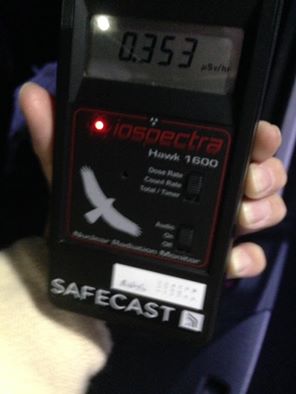
This is taken on a train in Nihonmatsu, Fukushima. Nihonmatsu is located in a straight line or air distance at 52.75 km west of Okuma (Fukushima Daiichi).
On a running train, inside of a train, radiation is measured already at 0,353 µSv/hour, you can imagine how much more outside of the train, on the ground.
PM Abe’s government forces the population to return despite the obvious contamination, and people are getting fed up with the given continuous lies.
Credit to Kuniko Yamanoi for that information and photo.
Outside power temporarily cut to Okayama uranium processing facility after quake
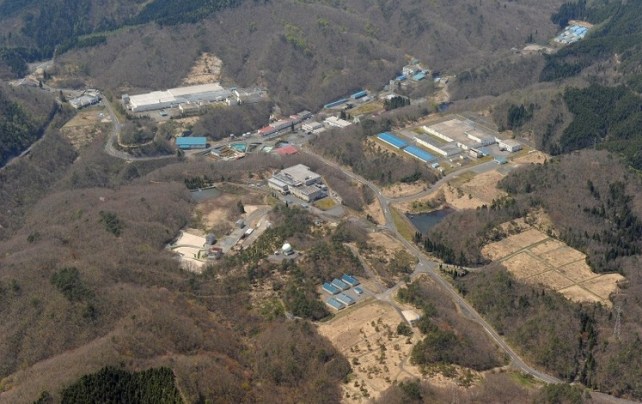
The Japan Atomic Energy Agency’s Ningyo-toge Environmental Engineering Center in Kagamino, Okayama Prefecture, is pictured in this May 2013
The external power supply to a uranium processing facility in Okayama Prefecture was temporarily cut following a powerful Oct. 21 earthquake that hit Tottori Prefecture and surrounding areas, the Nuclear Regulation Authority (NRA) said.
External power was lost for a time at the Japan Atomic Energy Agency’s Ningyo-toge Environmental Engineering Center in Kagamino, Okayama Prefecture, after the magnitude-6.6 quake. Locally, the quake registered an upper 5 on the 7-point Japanese seismic intensity scale, according to the NRA.
However, no problems were reported at the plant, as an emergency power supply system kicked in immediately. The facility was not in operation at the time of the quake.
In related news, operations at the No. 3 reactor at Shikoku Electric Power Co.’s Ikata Nuclear Power Plant in Ehime Prefecture have not been disrupted. There is reportedly no problem with Chugoku Electric Power Co.’s Shimane nuclear plant in Shimane Prefecture, which is not in operation.
http://mainichi.jp/english/articles/20161021/p2a/00m/0na/013000c
Opposition to nuclear energy grows in Japan
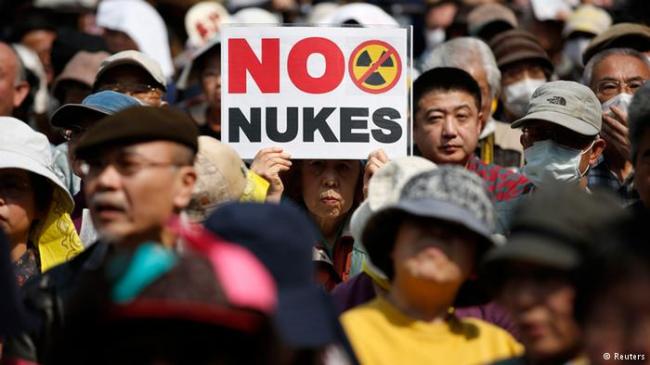
”Opinion polls show the Japanese people oppose nuclear plants going back into operation. It underlines the scale of the problem facing the government in convincing everyone that it’s safe. Julian Ryall reports from Tokyo.”
Before October 16, Ryuichi Yoneyama had contested four regional elections and been soundly beaten each time. Now, however, the 49-year-old qualified doctor and lawyer is to be sworn in as governor of Niigata Prefecture after defeating a candidate who had the backing of the ruling Liberal Democratic Party (LDP) and was considered the firm favorite.
Yoneyama worked hard for his victory over Tamio Mori, a former bureaucrat with the construction ministry, but when the voters stepped into the voting booths there was a single issue that occupied their minds.
Mori and the LDP want to restart the world’s largest nuclear power station, the sprawling Kashiwazaki-Kariwa plant, which lies on the prefecture’s coast. They insist that as Japan moves towards the sixth anniversary of the March 2011 earthquake and tsunami that crippled the Fukushima Dai-Ichi nuclear plant, triggering the second-worst nuclear crisis in history, new safety measures have been implemented that ensure the same thing could not happen in Niigata.
The voters did not agree, with 528,455 supporting Yoneyama’s pledge to not grant approval for Tokyo Electric Power Co.’s (TEPCO) Kashiwazaki-Kariwa plant to be restarted. In comparison, 465,044 voted for Mori.
Nationwide opposition
Those figures are broadly replicated across Japan, with a poll conducted by the Asahi Shimbun newspaper on October 15 and 16 determining that 57 percent of the public is against the nation’s nuclear power plants being restarted, and just 29 percent supporting the resumption of reactors that have nearly all been mothballed since 2011.
At present, only two of the nation’s 54 reactors have been restarted – and that after much wrangling through the courts after local residents and environmental groups expressed their opposition.
Nevertheless, a report issued by the Institute of Energy Economics, Japan (IEEJ) in July predicts that seven additional reactors will be on-line by the end of March next year and a further 12 will be operational one year later.
But as the opinion polls show, the majority of the public is against a policy that the government tells them is in the nation’s best interests.
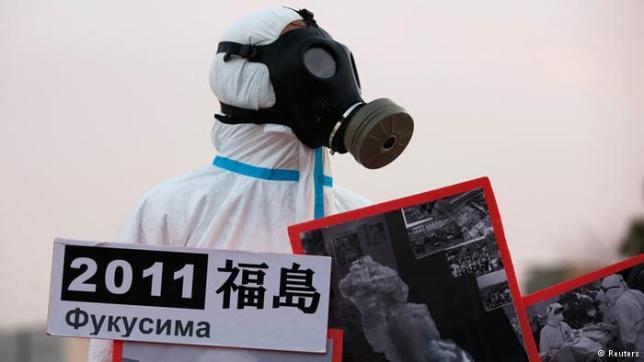
“Since the accident at Fukushima, many people have realized the negatives that go along with the positives of nuclear power, and they simply do not want to take that sort of risk again,” said Hiroko Moriwaki, a librarian who lives in Tokyo.
“And many think that we do not need to,” she added. “Since the disaster, the reactors have not been operational and look around you; we have all the electricity that we need, there are no blackouts and everything is normal.
“Just after the earthquake, we were told to do everything we could to save energy, but not any more,” Moriwaki told DW.
“So maybe we have reached the point where we don’t actually need nuclear energy and that this is in fact an opportunity that the country can take advantage of,” she said.
Japan is an advanced and industrialized nation with vast amounts of skills and technologies that could be put to use to develop and then commercialize new sources of safe, environment-friendly energy, she said.
As well as solar and wind power, which are already visible across Japan, there are moves afoot to harness Japan’s tidal and wave energy, while vast amounts of potential geothermal energy remain virtually untapped.
“We have so much technology, so wouldn’t it be best to divert some of that away from more investment in nuclear energy and put it into fuel sources that are safer and do not harm the environment at all?” Moriwaki asked.
Japan’s energy needs
Critics of this approach – of which the government is one – say Japanese industry needs a secure supply of energy right now and that Japan is presently importing 84 percent of its energy needs, primarily in the form of coal, gas and oil. And that is both expensive and to blame for the nation’s emissions of carbon dioxide and other harmful greenhouse gases climbing.
Still, the Japanese public is far from convinced that nuclear energy is the answer.
“It’s complicated and we keep hearing from the government how important it is to have the nuclear plants operating again, but after Fukushima, I think, a lot of people no longer trust the operators or the government,” said Kanako Hosomura, a housewife whose family home is north of Tokyo and only about 250 km from the Fukushima plant.
Inquiries after the disaster revealed that TEPCO ignored experts’ warnings about the potential size and power of tsunami and had failed to take precautions such as ensuring a backup power supply in the event the generators used to cool the reactors were out of operation.
The government also came under fire after the media reported that it did not have a full understanding of the severity of the crisis, while it was also issuing statements that the situation was completely under control at the same time as drawing up plans to evacuate tens of millions of people from a huge swathe of eastern Japan.
“When it comes down to it, I have a young son and a family and their safety is my number one priority,” said Hosomura. “Maybe Japan was lucky the Fukushima disaster was not worse than it was. Maybe next time we will not be so lucky.”
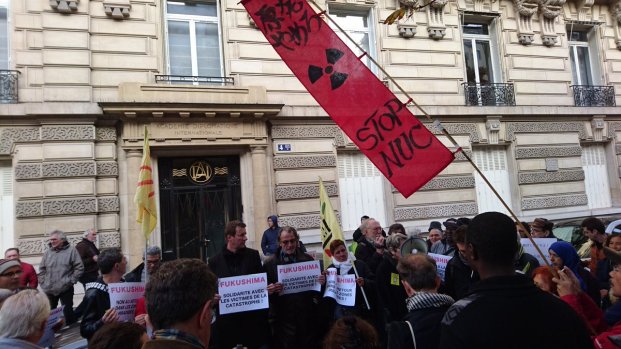
Protest at Japanese Embassy in Paris Against Fukushima Evacuees Forced Return and the 2020 Tokyo Olympics

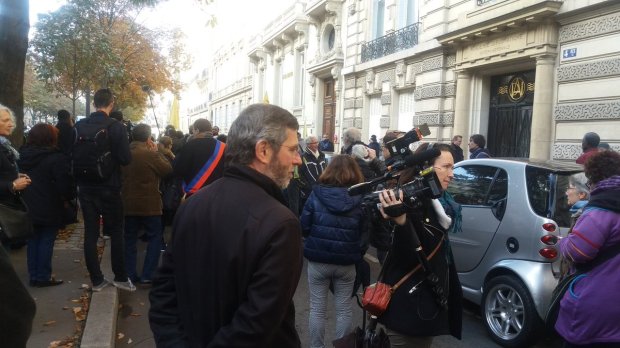
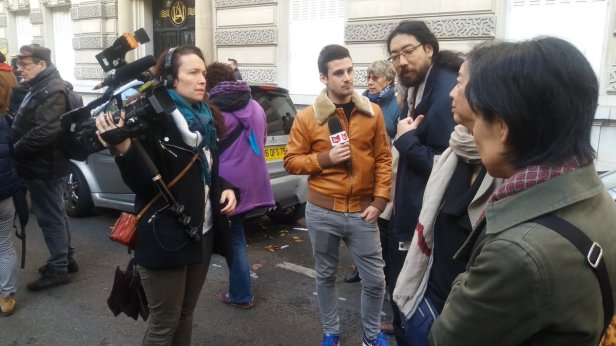
Today October 22, 2016, in Paris, the French Green Ecology Party (EELV), Green Peace France and Réseau Sortir du Nucléaire, joined together to organize a Fukushima protest in front of the Japanese Embassy.
They denounced the Fukushima evacuees forced return by the Japanese government, and insisted that no one should be compelled to live in irradiated town with high level of radiation. That it is plainly criminal on the part of the Japanese Government.
Since Eastern Japan and Tokyo included, have been contaminated by the now five years and a half ongoing nuclear catastrophe at Tepco’s Fukushima Daiichi nuclear plant, a catastrophe yet neither under control nor resolved, the 2020 Olympics should be relocated somewhere else.
Some officials of the French Green Ecology Party (EELV) and personalities of Green Peace France and Réseau Sortir du Nucléaire attended the protest. Among those were also present Yannick Jadot and Michele Rivasi, both Europe Ecology deputies at the European Parliament, one of the two to be the French Ecology Party presidential candidate at the coming French presidential election in 2017. Were also present members of the Japanese community.
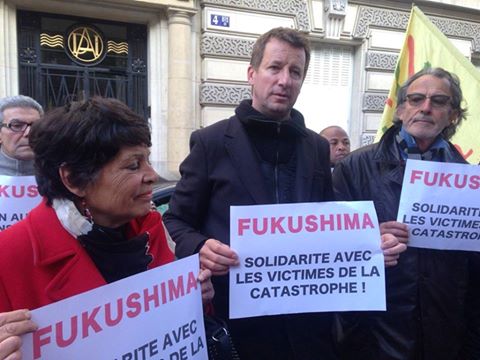
Michele Rivasi and Yannick Jadot
Containment Repair Research for Fukushima Unit 2 Ongoing
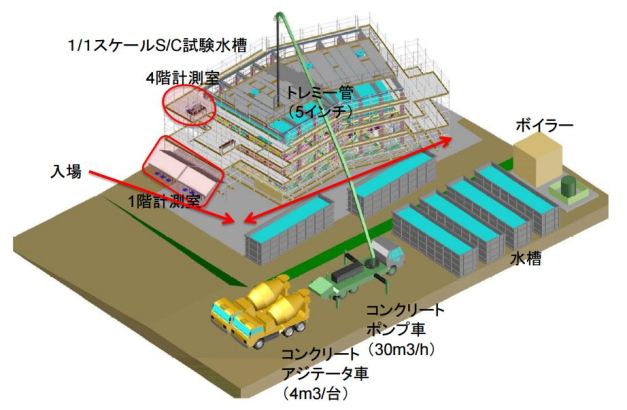
IRID announced the details of the ongoing research for repairing the unit 2 suppression chamber.
Based on their previous investigations IRID has determined that there could be a hole or series of holes of around 50mm in the unit 2 suppression chamber.
The research work is to determine if filling with concrete that structure could work. The proposed plan would use a concrete pump truck with a 5 inch diameter flexible hose to inject concrete into the suppression chamber.
Initial work took place at the Ando Hazama Technical Research Institute (Tsukuba City, Ibaraki Prefecture) on October 15th.
It seems they succeeded in layering the concrete mixture, sinking properly in the bottom of the suppression chamber tube. A 28 day pressure test will be conducted to assure the concrete properly plugs the leak.
Future work may be conducted at the new decommissioning research center at Naraha.
Source IRID :
<添付資料1:1/1スケールS/C試験に関する現場状況・概要図>
http://irid.or.jp/wp-content/uploads/2016/10/20161018_001.pdf
<添付資料2:コンクリート打設進捗に伴う時経列事象・解説図>
http://irid.or.jp/wp-content/uploads/2016/10/20161018_002.pdf
Residents Who Fled Fukushima Meltdown Fear Return to Ghost Town
Japan seeks to lure evacuees back to town near nuclear plant
Abe looks to win support for restarting mothballed reactors
Weed-engulfed buildings and shuttered businesses paint an eerie picture of a coastal Japanese town abandoned after a monstrous earthquake and tsunami triggered meltdowns in the Fukushima nuclear plant.
Namie, one of the communities hardest hit by the 2011 disaster, had 21,000 residents before they fled radiation spewing from the reactors eight kilometers (five miles) away. Prime Minister Shinzo Abe is now looking to repopulate the town as early as next year, a symbolic step toward recovery that might also help soften opposition to his government’s plan to restart Japan’s mostly mothballed nuclear industry.
“The national and local governments are trying to send us back,” said Yasuo Fujita, 64, a sushi chef who lives alongside hundreds of other Fukushima evacuees in a modern high rise in Tokyo more than 200 kilometers away. “We do want to return — we were born and raised there. But can we make a living? Can we live next to the radioactive waste?”

The main street in Namie, Fukushima
So far few evacuees are making plans to go back even as clean-up costs top $30 billion and Abe’s government restores infrastructure. That reluctance mirrors a national skepticism toward nuclear power that threatens to erode the prime minister’s positive approval ratings, particularly in areas with atomic reactors.
Mothballed Reactors
Officials in his government are calling for nuclear power to account for as much as 22 percent of Japan’s electricity supply by 2030, nearly the same percentage as before the Fukushima meltdown, in part to help meet climate goals. Only two of the nation’s 42 operable nuclear plants are currently running, leaving the country even more heavily reliant on imports of oil and gas.
A poll published by the Asahi newspaper this week found 57 percent of respondents were opposed to restarting nuclear reactors, compared with 29 percent in favor. One of Abe’s ministers lost his seat in Fukushima in an upper house election in July, and the government suffered another setback when an anti-nuclear candidate won Sunday’s election for governor of Niigata prefecture, home to the world’s largest nuclear plant.
Some 726 square kilometers — roughly the size of New York City — of Fukushima prefecture remain under evacuation orders, divided by level of radioactivity. While the government is looking to reopen part of Namie next year, most of the town is designated as “difficult to return to” and won’t be ready for people to move back until at least 2022.
“We must make the area attractive, so that people want to return there,” Reconstruction Minister Masahiro Imamura said this week. “I want to do everything I can to make it easy to go back.”

Workers are cleaning by scraping up soil, moss and leaves from contaminated surfaces and sealing them in containers. Still, the operation has skipped most of the prefecture’s hilly areas, leading to fears that rain will simply wash more contamination down into residential zones. Decommissioning of the stricken plant itself is set to take as many as 40 years.
The bill for cleaning up the environment is ballooning, with the government estimating the cost through March 2018 at $3.3 trillion yen ($32 billion). That’s weighing on Tokyo Electric Power Co. Holdings Inc., which is already struggling to avoid default over decommissioning costs.
“They are spending money in the name of returning things to how they were” without having had a proper debate on whether this is actually possible, said Yutaka Okada, senior researcher at Mizuho Research Institute in Tokyo. “Was it really right to spend this enormous amount of money?”
Namie officials, operating from temporary premises 100 kilometers away in the city of Nihonmatsu, are plowing ahead with preparations. A middle school in the town is scheduled for remodeling to add facilities for elementary pupils — even though they expect only about 20 children to attend. Similar efforts in nearby communities have had limited success.
Only 18 percent of former Namie residents surveyed by the government last year said they wanted to return, compared with 48 percent who did not. The remainder were undecided.
Staying Put
Fujita, the sushi chef, has joined the ranks of those starting afresh elsewhere. He opened a seafood restaurant near his temporary home last year, and is buying an apartment in the area. In a sign the move will be permanent, he even plans to squeeze the Buddhist altar commemorating his Fukushima ancestors into his Tokyo home.

For those that do return, finding work will be a headache in a town that was heavily dependent on the plant for jobs and money.
Haruka Hoshi, 27, was working inside the nuclear facility when the earthquake struck, and she fled with just her handbag. Months later she married another former employee at the plant, and they built a house down the coast in the city of Iwaki, where they live with their three-year-old son. They have no plans to return.
“It would be difficult to recreate the life we had before,” she said. “The government wants to show it’s achieved something, to say: ‘Fukushima’s all right, there was a terrible incident, but people are able to return after five years.’ That goal doesn’t correspond with the reality.”
LDP may lose next election if nuclear exit becomes main issue: ex-PM
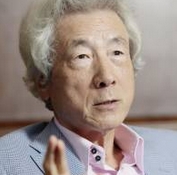
Former Prime Minister Junichiro Koizumi said the pro-nuclear ruling party of Prime Minister Shinzo Abe could lose the next Lower House election if nuclear power becomes the main election issue.
Citing recent gubernatorial election wins for candidates concerned about restarting nuclear power plants in Niigata and Kagoshima prefectures, Koizumi said during a recent interview with Kyodo News, “(Anti-nuclear) opinions are beginning to grow . . . that could influence the (next) House of Representatives election.”
If opposition parties unite in fielding anti-nuclear candidates and make complete phase-out of the country’s nuclear plants one of the top election issues, they can defeat the ruling Liberal Democratic Party by tapping into voter fears following the 20111 Fukushima meltdowns, Koizumi said.
The current term of Lower House lawmakers expires in December 2018, but some senior LDP officials have said Abe might dissolve the house for an election early next year.
Koizumi, who promoted nuclear power generation as prime minister between 2001 and 2006, has become an active anti-nuclear campaigner. He has repeatedly criticized Abe and the way his government is dealing with the aftermath of the Fukushima nuclear disaster.
“There is no way that a party which ignores the will of the public can maintain its hold on power,” said Koizumi, who retired from politics in 2009.
Koizumi also said that the main opposition Democratic Party “has not realized that the nuclear issue can be the biggest election issue.”
“The slogans by promoters of nuclear power that (nuclear power) is safe, low-cost and clean, are all lies,” Koizumi said.
He noted that the government would be forced to pour more funds into Tokyo Electric Power Company Holdings Inc., operator of the Fukushima Daiichi nuclear power plant crippled following the 2011 quake-tsunami disaster, to decontamination costs at the plant and compensation.
The government should give up its nuclear-fuel recycling policy, including the use of the Monju fast-breeder reactor, Koizumi said. The government has not decided on the fate of the trouble-prone reactor, which was intended to play a key role in the recycling policy.
On Abe’s drive to revise the war-renouncing Article 9 of the Constitution, Koizumi said it will not be possible due to a lack of sufficient public support.
Koizumi said a breakthrough on the decades-old territorial dispute over a group of Russian-held islands off Hokkaido will also be difficult as Russia will not accept Japan’s ownership of the islands.
Abe hopes to make progress on the issue, which has prevented the two countries from signing a post-World War II peace treaty, when he meets Russian President Vladimir Putin on Dec. 15 in Japan.
Kansai Electric manager’s suicide result of excess overtime
A manager working on technology for the Takahama nuclear power plant killed himself after working excessive overtime hours, sources have revealed.
The man, in his 40s, was found dead in April in a hotel in Tokyo where he was staying on a business trip.
The suicide of the Kansai Electric Power Co. manager was recognized as a work-related death by the Tsuruga Labor Standards Inspection Office in Tsuruga, Fukui Prefecture, sources said.
It had been a especially hectic time for the Osaka-based utility as two 40-plus-year-old reactors in Takahama, Fukui Prefecture, were at risk of being decommissioned if the safety screening process by the Nuclear Regulation Authority was not completed by July 7.
The company was pushing hard to have the No. 1 and No. 2 reactors at the nuclear power plant pass safety evaluations so that their operational lives could be extended by 20 years.
The dead man was the head of a department in charge of engineering regarding construction at the company, according to the sources.
He was tasked with responding to the NRA as he was responsible for having the construction plans on upgrading the two reactors approved by the nuclear watchdog.
Under the Labor Standards Law, work hours are not restricted for supervisors and managers such as the suicide victim. However, employers still have a responsibility to maintain the health of such employees by ensuring they avoid overwork.
Study: Possible water problem at storage sites in Fukushima
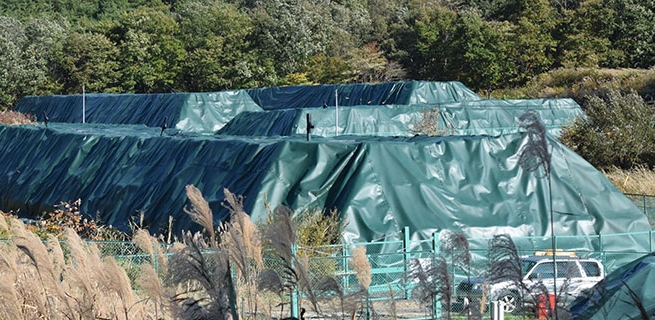
It might be difficult to measure radiation levels in water at this temporary storage site for contaminated soil in Fukushima Prefecture.
Bags of radiation-contaminated soil could be sinking into the ground at temporary storage sites in Fukushima Prefecture, allowing water to accumulate within instead of flowing to outside tanks for testing, the Board of Audit said.
No confirmation has been made that the ground at the sites is actually sinking or if contaminated water has pooled inside. But Board of Audit officials are asking the Environment Ministry to consider additional safety measures if signs indicate that this is actually occurring.
The board’s study focused on 34 of the 106 temporary storage sites that the Environment Ministry set up for soil removed through decontamination work after the disaster in March 2011 unfolded at the Fukushima No. 1 nuclear power plant.
Construction of the storage sites started in 2012, and the transfer of contaminated soil to these facilities was completed in 2015.
The temporary storage sites were designed to have a slight mound on the ground in the center to allow water from the bags to flow down into surrounding collection tanks for periodic measurements of radiation levels.
Internal Environment Ministry guidelines called for this setup at storage sites containing bags that are not waterproof.
The Board of Audit studied 34 temporary storage sites where the bags are not waterproof. These bags were piled five deep or higher at those sites.
The study showed that at 31 of the sites, the weight of the bags may have not only flattened the mound in the center, but it also could have created an indent in the ground where the leaking water could accumulate.
If the water does not flow to the tanks, it will be difficult to determine the radiation levels.
The study also noted that the foundations at the sites were soft to begin with and may be unable to support the bags of soil. The sinking phenomenon could worsen as time passes.
The Environment Ministry played down the risk of the water contaminating areas around the storage facilities.
“Even if the ground has sunk, the structure is designed so water does not leak outside the site,” a ministry official said. “Eventually, the water should collect in the tanks. We will make every effort to oversee the sites as well as use waterproof bags as much as possible.”
A total of 4.16 billion yen ($40 million) was spent to construct the 31 temporary storage sites.
The Environment Ministry designed the temporary storage sites under the precondition they would be used for only three years and then removed. For that reason, measures were not taken to strengthen the foundations to prevent the ground from sinking, even if soft farmland was chosen for a site.
The plan is to eventually return the land where the temporary storage sites have been built to its original state and return it to the landowners
However, the Board of Audit’s study adds another concern for residents, many of whom had opposed construction of the temporary storage sites in their neighborhoods.
Toshio Sato, 68, has evacuated to Fukushima city from his home in Iitate village, where four of the possible problem storage sites are located.
“There are some people who want to resume growing rice once they return home,” Sato said. “If water is accumulating, there is the possibility it could unexpectedly overflow into surrounding areas. The concerns just seem to emerge one after another.”
The government plans to lift the evacuation order for a large part of Iitate in March 2017.
6.6 Magnitude Earthquake in Western Japan
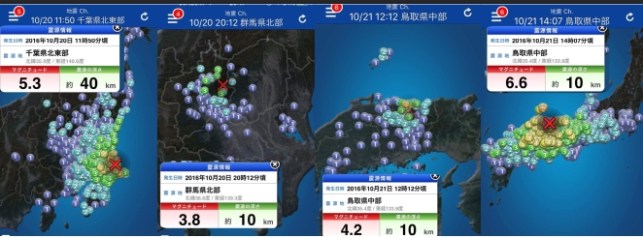
Since the strong earthquake today at 2:07 p.m. in Tottori, of 6.6 magnitude and 6 intensity that shook half of Japan, the earth continues to shake with an impressive number of aftershocks. Officials at the Meteorological Agency say seismic activity continues in Tottori and are asking people to be prepared and take precautions against another possible earthquake.
On this coast of West Japan lies the largest concentration of nuclear power plants in the world. Though stopped, they are full of potentially very dangerous spent nuclear fuel. The epicenter of this earthquake was at 76km from the Shimane nuclear power plant. Of course, no damages say the Authorities, as usual…
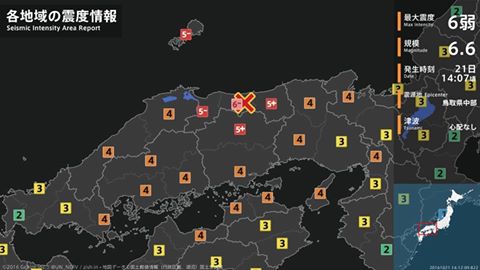
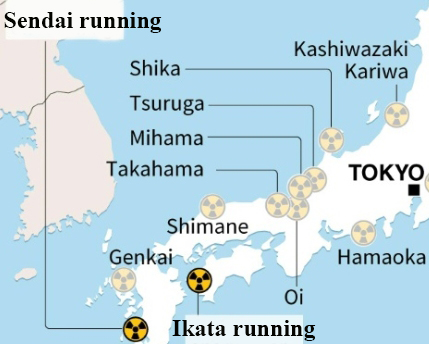
Strong quake in western Japan
An earthquake with a preliminary magnitude of 6.6 struck Tottori Prefecture in western Japan on Friday afternoon. The Japan Meteorological Agency says there is no tsunami theat.
The jolt registered 6 minus on the Japanese seismic scale of 0 to 7 in central Tottori. The focus was 10 kilometers deep in the prefecture.
There are some reports of injuries and houses collapsing.
About 30,000 households in the prefecture are without power.
The tremors have disrupted transportation.
Local airports have cancelled flights.
Some bullet train services in central Japan are suspended. Parts of highways have been closed to check for damage.
Officials at the nearby Shimane nuclear power plant say there are no irregularities. The plant was off-line at the time of the quake.
http://www3.nhk.or.jp/nhkworld/en/news/20161021_27/
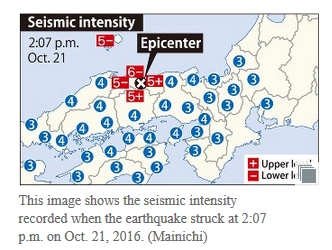
M6.6 quake strikes western Japan, no tsunami warning issued
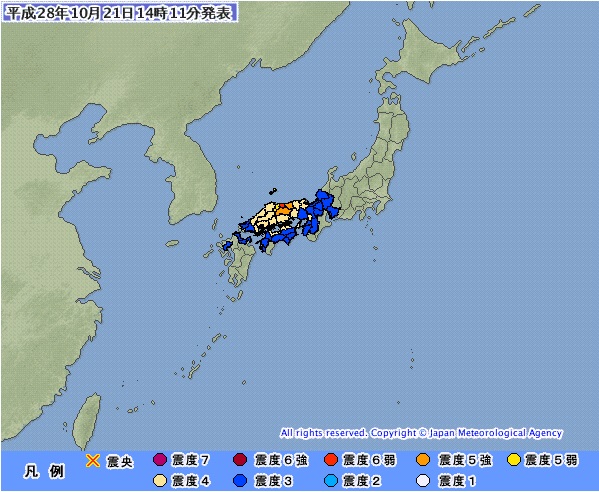
A powerful earthquake struck Tottori Prefecture and surrounding areas shortly after 2 p.m. on Oct. 21, the Japan Meteorological Agency said. No tsunami warning was issued.
The 2:07 p.m. quake, which had an estimated magnitude of 6.6, measured a lower 6 on the 7-point Japanese seismic intensity scale in some parts of the Tottori Prefecture city of Kurayoshi, the town of Yurihama and the town of Hokuei, the agency said. It measured an upper 5 in parts of the city of Tottori, as well as in parts of neighboring Okayama Prefecture.
Reports said that several homes in Yurihama had collapsed. The Tottori Prefectural Government is in the process of confirming the information. The quake caused a blackout affecting nearly 32,000 households in Tottori Prefecture, Chugoku Electric Power Co. reported.
Firefighters in Tottori said that a female employee at a supermarket restaurant was taken to hospital with burns to her legs after an accident with hot oil when the quake struck. Elevators also stopped in the quake and there were reports that at least one person had been trapped.
Broken windows were reported over a wide area of Kurayoshi. A 53-year-old architect in the city, Katsunori Choda, said he was about to get in a vehicle when the ground started shaking, and pedestrians crouched on the ground to balance themselves. Soon afterward there was a blackout. Ambulance sirens could be heard and tiles fell from the roofs of old homes.
“I’d never felt an earthquake this big before,” the architect said. “There is a lot of old town scenery in the area and I’m worried about damage.”
Earthquake sounds could still be heard 30 minutes after the quake and aftershocks were reportedly continuing. The earthquake struck at an estimated depth of 10 kilometers, the meteorological agency said.
Services on the Sanyo Shinkansen bullet train were suspended between Shin-Osaka and Hakata stations following the quake, but resumed at 2:27 p.m., West Japan Railway Co. announced.
http://mainichi.jp/english/articles/20161021/p2g/00m/0dm/062000c
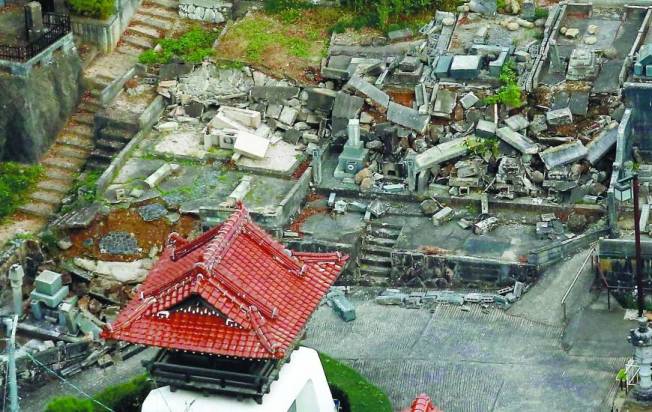
This aerial photo shows broken grave markers and collapsed walls at a cemetery in Kurayoshi, Tottori Prefecture, following a strong earthquake that shook the area Friday.
Homes damaged, power cut after strong quake rattles parts of western Honshu
A powerful earthquake with a preliminary magnitude of 6.6 shook parts of western Honshu early Friday afternoon, damaging homes and roads and cutting power to almost 40,000 households.
The Meteorological Agency said the earthquake occurred at 2:07 p.m. in central Tottori Prefecture, about 700 km west of Tokyo, at a depth of 10 km. It was followed by a weaker aftershock about 30 minutes later.
The agency said there was no danger of a tsunami from the inland temblor.
Two houses collapsed in the town of Hokuei, Tottori Prefecture, according to the local fire department. Roads were cracked and roof tiles laid strewn in the town.
In Kurayoshi in the prefecture, ATMs at some local banks temporarily went offline due to a power outage.
All up, the blackout affected nearly 40,000 households in Tottori Prefecture, according to Chugoku Electric Power Co.
Okayama City Fire Department said a woman in her 70s was taken to hospital after she fell and broke her right leg. Five people are reported to have been injured in Tottori Prefecture.
West Japan Railway Co. temporarily suspended all services on the Sanyo Shinkansen Line between Shin-Osaka and Hakata stations.
The quake registered lower 6 on the Japanese seismic scale of 7 in parts of Tottori Prefecture, and upper 5 in a wide area in Tottori and Okayama prefectures, according to the agency.
No abnormalities were detected at the Shimane nuclear plant, which is currently off-line, in nearby Shimane Prefecture, according to the utility.
Okayama airport closed its runway to check its safety, airport officials said.
According to local officials a house in the town of Yurihama, in central Tottori Prefecture, was destroyed, and a number of dwellings in other parts of the prefecture suffered damage
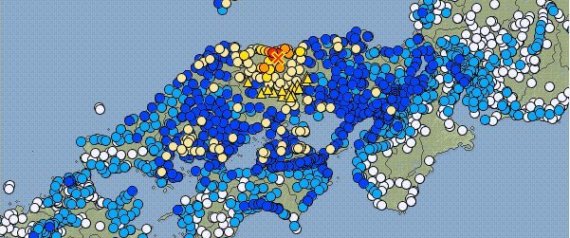
UPDATE: Quake rattles buildings in Tottori; 6 injured
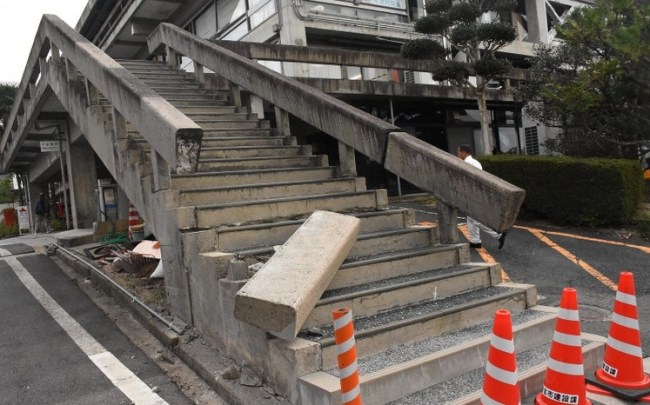
Tottori Prefecture in western Japan was struck by a series of major earthquakes on Oct. 21, causing structural damage to some buildings and homes and at least six injuries.
A quake measuring lower 6 on the Japanese intensity scale of 7 was recorded at 2:07 p.m.
The focus was about 10 kilometers underground, and the temblor had an estimated magnitude of 6.6.
Shaking was felt in a wide area of western Japan and as far as the Kanto and Kyushu regions.
Japan Meteorological Agency officials urged caution because there was a possibility of another quake measuring lower 6 in intensity striking over the next week in areas where the shaking was particularly strong.
Among the buildings damaged was the Kurayoshi city government building. Government workers evacuated as the building has been declared off-limits.
Homes in Yurihama were also heavily damaged, according to Tottori prefectural officials.
One individual suffered burns at a shopping center in Tottori city while a woman in her 70s in Okayama city, south of Tottori, fell and broke her leg.
Meanwhile, officials of Chugoku Electric Power Co. said about 31,900 households in the prefecture suffered a blackout after the quake struck, centered mainly on Kurayoshi.
However, the quake did not affect the two reactors at the Shimane nuclear power plant in the neighboring prefecture. Both reactors were not operating when the temblor struck.
Various stretches of expressways were closed to traffic.
Bullet train services between Shin-Osaka and Hakata stations operated by West Japan Railway Co. were stopped for about 20 minutes immediately after the quake. Service on the Tokaido Shinkansen line was also temporarily suspended between Shin-Osaka and Toyohashi in Aichi Prefecture.
http://www.asahi.com/ajw/articles/AJ201610210040.html
Testing of Seawater Off Fukushima Daiichi
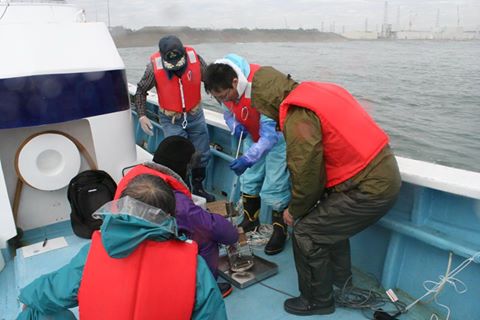
Results of seawater testing off the Fukushima Daiichi Nuclear Plant by Tarachine, the Mother’s Radiation Lab & Clinic of Iwaki, Fukushima
Item measured: Cesium 137 (method by treatment with phosphomolybdic acid)
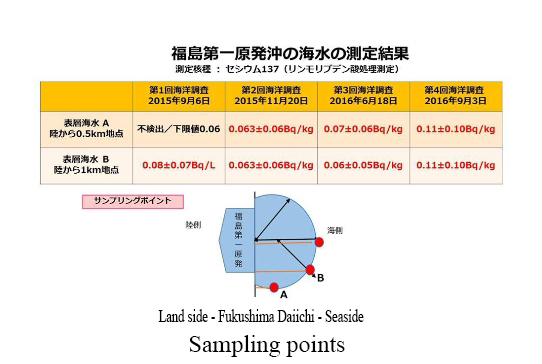

https://www.actbeyondtrust.org/campaign/pledge/tarachine/jp/
Another Chernobyl or Fukushima risk plausible: Experts
The “flawed and woefully incomplete” public data from the nuclear industry is leading to an over-confident attitude to risk, the researchers warned.
The study, which put fresh pressure on the nuclear industry to be more transparent with data on incidents, also called for a fundamental rethink of how accidents are rated, arguing that the current method (the discrete seven-point International Nuclear Event Scale or INES) is highly imprecise, poorly defined, and often inconsistent.
For example, the Fukushima accident and the Chernobyl accident are rated 7 — the maximum severity level — on the INES scale.
However, Fukushima alone would need a score of between 10 and 11 to represent the true magnitude of consequences, the researchers said.
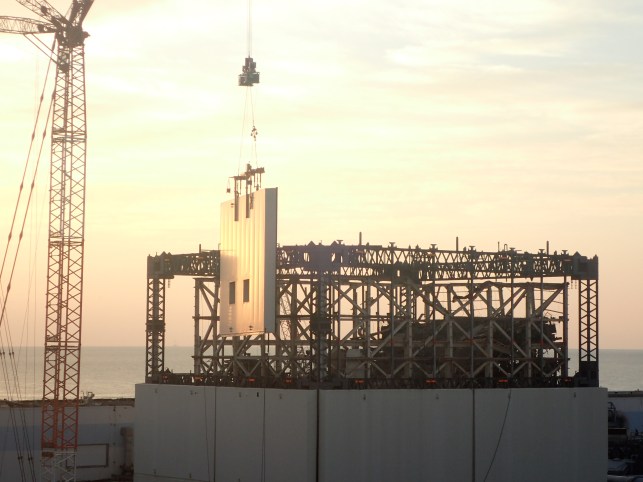
Catastrophic nuclear accidents like Chernobyl disaster in the US that took place in 1986 and the more recent Japan’s Fukushima disasters in 2011 may not be relics of the past. But the risk of such disasters are still more likely to occur once or twice per century, a study has warned.
The study found that while nuclear accidents have substantially decreased in frequency, this has been accomplished by the suppression of moderate-to-large events.
The researchers estimated that Fukushima and Chernobyl-scale disasters are still more likely than not once or twice per century, and that accidents like 1979 meltdown at Three Mile Island in the US are more likely than not to occur every 10-20 years.
For the study, a team of international risk experts analysed more than 200 nuclear accidents — the biggest-ever analysis of nuclear accidents — which provided a grim assessment of the risk estimated by the nuclear industry.
The “flawed and woefully incomplete” public data from the nuclear industry is leading to an over-confident attitude to risk, the researchers warned.
“We have found that the risk level for nuclear power is extremely high,” said lead author Spencer Wheatley, Professor at ETH Zurich in Switzerland.
“The next nuclear accident may be much sooner or more severe than the public realises,” added Benjamin Sovacool, Professor at the University of Sussex in Britain.
Further, the standard methodology used by the International Atomic Energy Agency to predict accidents and incidents — particularly when focusing on consequences of extreme events — is also problematic, the researchers said.
The study, which put fresh pressure on the nuclear industry to be more transparent with data on incidents, also called for a fundamental rethink of how accidents are rated, arguing that the current method (the discrete seven-point International Nuclear Event Scale or INES) is highly imprecise, poorly defined, and often inconsistent.
For example, the Fukushima accident and the Chernobyl accident are rated 7 — the maximum severity level — on the INES scale. However, Fukushima alone would need a score of between 10 and 11 to represent the true magnitude of consequences, the researchers said.
To remove a possibility of such disasters would likely require enormous changes to the current fleet of reactors, which is predominantly second-generation technology, Wheatley noted.
But, “even if we introduce new nuclear technology, as long as older facilities remain operational — likely, given recent trends to extend permits and relicense existing reactors — their risks, and the aggregate risk of operating the global nuclear fleet, remain,” Sovacool said.
The results were published in the journals Energy Research & Social Scienceand Risk Analysis
Rainwater flood in Shika nuclear plant raises concerns at NRA

The Shika nuclear plant in Ishikawa Prefecture operated by Hokuriku Electric Power Co.
The Nuclear Regulation Authority has instructed Hokuriku Electric Power Co. to further investigate and prevent a recurrence of flooding that short-circuited the emergency lighting system at its Shika nuclear plant in Ishikawa Prefecture.
The 6.6 tons of rainwater that entered the No. 2 reactor building at the Shika plant in late September also came close to drenching power batteries prepared for emergency use.
“It was never imagined that such a volume of rain would flood the building,” NRA Chairman Shunichi Tanaka said Oct. 19. “There was the possibility of losing an important safety function.”
The Shika plant is currently offline, but the flooding incident could prompt the NRA to review the screening process required before the nuclear reactor is cleared to resume operations.
Hokuriku Electric President Yutaka Kanai apologized for the incident at a special meeting with the NRA on Oct. 19 and acknowledged that the downpour caught the company off-guard.
“Measures to stop flooding were an afterthought because the altitude of the plant site is comparatively high,” Kanai said. “There was a delay in dealing with the warning signals because of a weak sense of crisis among those on duty at the time.”
According to the utility’s report submitted to the NRA, a drainage ditch next to the reactor building was partially covered for road construction work. The rainfall on Sept. 28 flooded the road, and some of the water entered cable piping leading to the reactor building because a lid had been partially moved to allow for passage of a temporary cable.
The rainwater eventually reached the first floor of the reactor building, and power sources for emergency lighting short-circuited. Some of the rainwater leaked through cracks in the floor and fell as far as the second floor basement, according to the report.
The water reached the floor just above the room on the first floor basement where power batteries are kept. Those batteries are a crucial power source for the plant’s operations in the event electricity is cut off in an earthquake.
According to the Japan Meteorological Agency, as much as 26 millimeters of rain fell per hour on that day.
The 2011 disaster at the Fukushima No. 1 nuclear power plant was caused in part by the loss of emergency power sources in the tsunami that swamped the plant.
That accident led to the creation of stricter safety standards on measures to prevent flooding of reactor buildings, including erecting levees against tsunami and installing watertight doors.
However, not much attention was focused on the possibility of flooding through piping.
Anti-flooding measures were not high on the priority list at the Shika plant because there are no nearby rivers. Piping into the reactor building was also not required to be sealed off.
The NRA will ask Hokuriku Electric for new safety measures when it screens the No. 2 reactor at the Shika plant under the utility’s application to resume operations.
The NRA is also expected to wait until Hokuriku Electric presents a more detailed report before looking into whether the incident was unique to the Shika plant or whether there is a need to expand the safety measures to other nuclear plants when conducting screenings before operations can resume.
http://www.asahi.com/ajw/articles/AJ201610200027.html

Mother’s Radiation Lab & Clinic in Iwaki, Fukushima
A radiation measuring center organized and run by independent citizens, after being lied, betrayed and abandoned by the Japanese Government.
About them :
http://www.iwakisokuteishitu.com/english/aboutus.html
Here is the page of Tarachine in English with donation information using PayPal.
Iwaki Radiation Measuring Center NPO “Tarachine”
http://www.iwakisokuteishitu.com/english/e-donations.html
And some of their participating actions:
Fukushima Children Fund
https://dunrenard.wordpress.com/2016/09/25/fukushima-children-fund/
East Japan Soil Measurement Project of Minna no Data, Dec.2015 to Sept. 2016
Fukushima Apples Are Very Hot In Cocktails
Here is another propaganda article on Forbes from James Conca, the highest paid pro-nuke shill, wanting us to believe that Fukushima Apples are dynamite in cocktails.
They are certainly not dynamite, but surely hot!

Fukushima Apples Are Dynamite In Cocktails
The 42nd World Cocktail Championships, which kicked off in Tokyo this week, is an unusual event to discuss a nuclear disaster. But that is exactly what Yoshikazu Suda, a bartender in Tokyo’s Ginza district who hails from Fukushima, is doing.
And his demonstration of solidarity with farmers and the people of Fukushima is in the form of some very cool drinks.
Bartenders and mixologists from over from 53 countries will gather in Tokyo to take part in the drink-creating championships. But the International Bartenders Association is no ordinary group. Founded in 1951, the IBA represents the National Bartender Guilds in 64 countries around the world. Over 500 bartenders and mixologists will gather at the event, which is being held in Japan for the first time in 20 years.
The International Bartenders Association is committed to responsible drinking and dispelling myths about alcohol. But this World Cocktail Championship will dispel a completely different type of myth – that Fukushima food is contaminated by radiation. It certainly is not.
During the contest at Tokyo’s Imperial Hotel, several varieties of fruit will be used, but only Fukushima-grown apples will be used in the fruit-cutting event, specifically apples grown by Fukushima farmer Chusaku Anzai.
Five years ago, a magnitude 9 earthquake on the Tohoku Fault off the east coast of Japan sent a 50-foot tsunami crashing into the coast with almost no warning, flooding over 500 square miles of land, killing almost 20,000 people and destroying a million homes and businesses.
1 This Month

To see nuclear-related stories in greater depth and intensity – go to https://nuclearinformation.wordpress.com
-
Archives
- September 2026 (194)
- August 2026 (330)
- July 2026 (355)
- June 2026 (287)
- May 2026 (306)
- April 2026 (356)
- March 2026 (251)
- February 2026 (267)
- January 2026 (308)
- December 2025 (358)
- November 2025 (359)
- October 2025 (375)
-
Categories
- 1
- 1 NUCLEAR ISSUES
- business and costs
- climate change
- culture and arts
- ENERGY
- environment
- health
- history
- indigenous issues
- Legal
- marketing of nuclear
- media
- opposition to nuclear
- PERSONAL STORIES
- politics
- politics international
- Religion and ethics
- safety
- secrets,lies and civil liberties
- spinbuster
- technology
- Uranium
- wastes
- weapons and war
- Women
- 2 WORLD
- ACTION
- AFRICA
- Atrocities
- AUSTRALIA
- Christina's notes
- Christina's themes
- culture and arts
- Events
- Fuk 2022
- Fuk 2023
- Fukushima 2017
- Fukushima 2018
- fukushima 2019
- Fukushima 2020
- Fukushima 2021
- general
- global warming
- Humour (God we need it)
- Nuclear
- RARE EARTHS
- Reference
- resources – print
- Resources -audiovicual
- Weekly Newsletter
- World
- World Nuclear
- YouTube
-
RSS
Entries RSS
Comments RSS
 nuclear-news