Silverdale is UK hotspot for earthquakes – with nearby Heysham and its Dodgy Nuclear Reactors on the fault line.

Shut down the radiation-damaged Heysham nuclear reactors now
On By mariannewildart, https://mariannewildart.wordpress.com/2026/10/14/silverdale-is-uk-hotspot-for-earthquakes-with-nearby-heysham-and-its-dodgy-nuclear-reactors-on-the-fault-line/
Nuclear Roulette is ON – let switch it OFF.
An Update on our Petition to Shut Heysham’s Radiation Damaged Reactors NOW!
Please do sign and share and lets get the word out about the ticking time bomb at Heysham a stones throw from the urban conurbation of the City of Lancaster.
Thanks to everyone who has signed the petition. We have been working away behind the scenes contacting the local MP Lizzie Collinge who continues to accuse those concerned about the state of Heysham’s radiation damaged reactors of “alarmist rhetoric.”
The latest news to report is from the British Geological Society who have named the Silverdale area a UK hotspot for earthquakes with 25 earthquakes reported in the last year. Many of these were ‘felt’ earthquakes. The photograph illustrating this update shows the area of Silverdale the earthquakes are originating as you can see it is a really attractive bay (part of Morecambe Bay) with Heysham 1 and 2 sat like a giant toxic toad (sorry toads!) at the head.
The local press has reported:
“In September three earthquakes struck Silverdale in September, with shaking reported across Lancashire and Cumbria.
Two of these were felt by the public with magnitudes of 2.7 and 1.5 on September 21 and 22.
The third was not felt by the public at a magnitude of 0.9 on September 13.
Reports came from Carnforth, Warton, Morecambe, Bolton-le-Sands, Burton-in-Kendal, Borwick, Holme, Grange and Arnside.
Residents described houses, floors, furniture and household items moving. Some heard a rumble, while others said walls or buildings shook.
The BGS recorded all three earthquakes at a depth of 3km.
The seaside village also felt earthquakes in May and June, both with a magnitude over 2, one being described as a ‘small explosion’.
The BGS said: “The activity in Silverdale is likely related to the magnitude 3.2 event that occurred in the same area on the 3 December 2025. When an earthquake occurs, it redistributes stress within the surrounding crust, promoting the occurrence of more earthquakes (aftershocks) on nearby faults.
“In slowly deforming regions such as the UK, crustal stresses – and therefore seismicity rates – may take a long time to return to normal following an earthquake.”
So as well as Heysham’s graphite reactor core’s being cracked the area is an earthquake hotspot.
Please share the petition and get the word out that the North West is playing Nuclear Roulette with our safety by continuing to run these old reactors well past their ‘safe’ lifetime.
FISN Investors Have Opportunity to Join Deep Fission, Inc. Fraud Investigation with SBS Law

Business Wire, Oct 4, 2026
LOS ANGELES–(BUSINESS WIRE)–Schall, Brown & Schwartz LLP (“SBS”), a national shareholder rights litigation firm, announces that it is investigating claims on behalf of investors of Deep Fission, Inc. (“Deep Fission” or “the Company”) (NASDAQ: FISN) for violations of the securities laws.
INVESTIGATION DETAILS: The investigation focuses on whether the Company issued false and/or misleading statements and/or failed to disclose information pertinent to investors. Deep Fission conducted its initial public offering (“IPO”) on June 18, 2026, selling 2.5 million shares of stock at $16.00 per share. The Company is the subject of a report published by Iceberg Research on September 26, 2026, that claims the Company’s technology is overhyped and unlikely to become commercially viable. Based on this news, shares of Deep Fission fell sharply.
If you are a shareholder who suffered a loss, click here to participate……………………………………………….. https://www.businesswire.com/news/home/20261004164639/en/FISN-Investors-Have-Opportunity-to-Join-Deep-Fission-Inc.-Fraud-Investigation-with-SBS-Law
To fund the Burnham Government’s priorities, abandon Hinkley Point C, Sizewell C and Wylfa
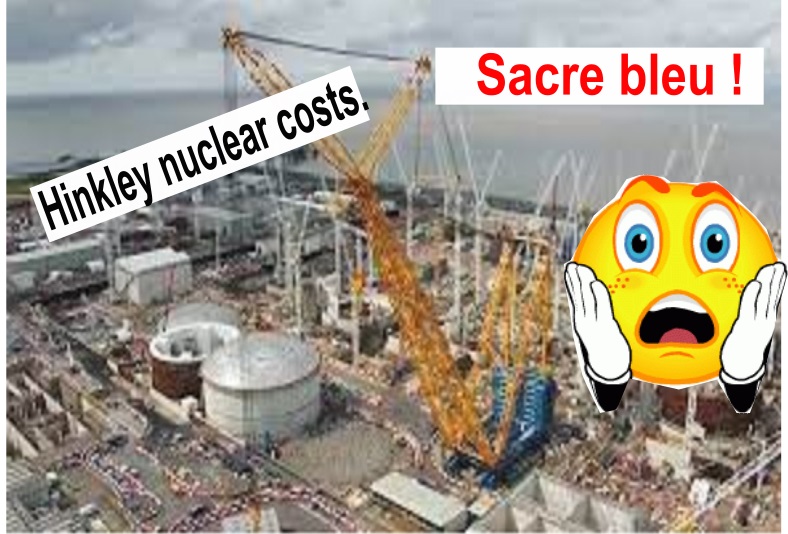


Experience with Sizewell C shows that private investors are not willing to be exposed to any significant part of this risk and if a deal is to be done the risk will fall on the public, as taxpayers and electricity consumers.
Britain’s three new nuclear projects – Hinkley Point C, Sizewell C and Wylfa – now depend on public money, above all from the National Wealth Fund, which has committed up to £36.6bn to Sizewell C alone: about twice what it can lend to all its other projects. Abandoning all three would save consumers £93–133bn and free the NWF to back renewables, energy storage and the government’s regional and industrial priorities.
. Introduction
If we strip away the rhetoric of a “golden age for nuclear power” and “ripping up rules to fire up nuclear power”, Britain’s nuclear programme looks very tired, with just three projects that have a reasonable chance of completion. Two of these (Hinkley Point C and Sizewell C) had their origins nearly 20 years ago while the third (Wylfa1) was launched under Boris Johnson’s government. Increasingly, what these three projects have most in common is not the reactors, but who is paying for them. The government’s National Wealth Fund (NWF) – set up to catalyse private investment across the economy – has already had to commit up to £36.6bn of the finance for Sizewell C, on top of a loan to design Wylfa’s reactors. If the Advanced Nuclear Framework succeeds in bringing forward the Cottam, Hartlepool and Oldbury projects too, the NWF could find itself committing a further £60bn to nuclear – in total 3.5 times what it has budgeted for the other 24 sectors it exists to support.
A fund created to unlock private investment across the economy risks becoming a vehicle for channelling public money into the most expensive, slowest and least certain to be delivered of all the forms of power generation available. An analysis of costs and benefits suggests that, far from rushing to launch new nuclear projects as the nuclear industry would advocate, the British people would be better served by abandoning these projects. The money and resources released – including by freeing the National Wealth Fund to do the job it was set up to do – can be redeployed to options that will reduce electricity bills, save taxpayers money and improve our prospects of meeting our climate change goals quickly and reliably.
2. Our nuclear capacity
The UK currently has only five operating nuclear power plants: the four remaining Advanced Gas-cooled Reactor stations (4.7GW) which are likely to be retired by 2031/32,2 and Sizewell B (1.2GW), which is expected to operate until 2055. Hinkley Point C (3.26GW) is under construction and will not be complete before 2032.3 Sizewell C (3.26GW) is three years away from an above ground construction start and, if all goes to plan, might be on-line by the start of 2040.4 The Wylfa Small Modular Reactor (SMR) station (1.5GW) is three years from a firm order being placed so is also unlikely to be generating much before 2040.5
Beyond the Hinkley and Sizewell projects, there is no evidence that further large reactor projects will be pursued (the prime site for large reactors is Wylfa and this has been allocated to an SMR project). There are also no specific government-led proposals for projects to follow on from Wylfa. It appears the government is relying on private sector projects to provide additional nuclear capacity and in February 2026 it published its Advanced Nuclear Framework, which is meant to provide government support for private sector-led projects.6 Under this, several forms of support were offered including:
- Finance via the government’s National Wealth Fund;
- Support via Great British Energy – Nuclear in finding sites;
- Help negotiating power purchase agreements such as contracts for difference that would remove any exposure of the plant to the competitive electricity wholesale market;
- Assessment of the projects by Great British Energy – Nuclear.
Two private sector SMR projects – Cottam and Hartlepool, both of about 1GW capacity – had been announced in September 2025 in association with President Trump’s visit to the UK.7 In June 2026, Holtec announced its application to the Advanced Nuclear Framework for the Cottam project.8 By the end of August 2026, X-Energy, the proposed reactor vendor for the Hartlepool site, had not made an application for entry into the Advanced Nuclear Framework.
Beyond Hinkley and Sizewell, there is no evidence that further large reactor projects will be pursued. There are also no specific government-led proposals for projects to follow on from Wylfa.
In July 2026 GE Vernova, via its Polish Partner SGE (Synthos Green Energy), announced an application to the Advanced Nuclear Framework to build up to 14 BWRX-300 SMRs (4.2GW).9 The application involves a proposal to site the first six reactors at the Oldbury site located on the River Severn, currently owned by Great British Energy – Nuclear (GBE-N). This is a problematic site and the Chair of GBE-N, Simon Bowen, told the ESNZ Committee: “If you look at Oldbury, particularly, the site that is close to you, we are aware that the only way to develop the Oldbury site for nuclear development will be with a significant investment in flood defences.”10 SGE’s target to complete the first reactor by 2034 is unrealistic given that it is several years behind the Rolls-Royce Wylfa project, where the first reactor is not expected to be complete before the ‘mid-30s’.11 It lags behind Wylfa in terms of siting, finance, and regulatory approval by the Office for Nuclear Regulation. GBE-N has stated it has not been contacted by SGE about the Oldbury site.12 There is no evidence yet as to whether the Advanced Nuclear Framework will be an effective route for promoting nuclear projects.
So, if there are no further delays with Hinkley Point C, Sizewell C and Wylfa, it is likely that it will be around 2040 before nuclear capacity exceeds today’s levels and even then, will only have got back to 2019 capacity levels. The current government’s target was to essentially remove all fossil-fuel generation by 2030 so new nuclear capacity can play no role in achieving that. If the AGRs are retired in 2031/32 probably on safety grounds (due to graphite moderator issues13) the British electricity system will have to survive with only about 4.5GW of nuclear capacity and no fossil fuel generation for around a decade. So, if there is a need for new base-load capacity, nuclear cannot provide it before 2040, and even then nuclear capacity will be much less than base-load (defined as the lowest level of demand in the year).
The government’s claim that “Unlike traditional large-scale nuclear plants, these projects [SMRs] usually need smaller sites, allowing more flexibility in where they can be built” is belied by the fact that the Wylfa project (1.5GW) and the potential Oldbury project (1.8GW) are substantially larger than any completed nuclear power plant in the UK and the Hartlepool project is about the same size as the AGR stations and Sizewell B. The reality is that sites that are suitable for nuclear projects in terms of physical factors and public acceptance are, and always will be, hard to find and there will be an overwhelming incentive to fit as many SMRs on to an accepted site as possible.
3. Wylfa
In June 2025, the government announced the winner of its competition to select a Small Modular Reactor (SMR) design for deployment in the UK.14 The design was the 470MW Rolls-Royce PWR SMR for which three reactors are expected to be built at the Wylfa site in North Wales (1.5GW). In June 2025, the government announced that it had allocated £2.6bn to the Wylfa project up to the end of fiscal year 2029/3015. A Final Investment Decision (FID) is not expected until 2029 with the process handled by the government-owned Great British Energy – Nuclear (GBE-N) entity. A significant number of hurdles must be overcome before the FID can be taken. These include completion of the Generic Design Assessment by the Office for Nuclear Regulation (ONR). This was expected in July 2026, but unofficial reports suggest the decision will not be before December 2027. The delay is said to be due to the need for design changes. The requirements the nuclear regulator imposes will be an important determinant of the reactor cost. The Wylfa site is widely portrayed as being the best of the existing reactor sites for new development and it did undergo some investigation when it was proposed as a site for two large reactors a decade ago. Nevertheless, the site investigations must be rigorous given the site is unlikely to be cleared after reactor operation until perhaps 150 years from now. However, site work done so far will be minimal, much of it funded by GBE-N so remediation costs would be small.
None of the important financial details about the Wylfa project have been announced. These include ownership, finance method, source of finance and power sales arrangements. However, experience with Hinkley Point C and Sizewell C gives strong indications of what would be needed to finalise the project. They include a substantial government equity stake, possibly as high as 100%; a power sales agreement that ensures all investor costs are passed on to consumers/taxpayers; and cheap finance provided from the National Wealth Fund.
Private investors will be wary of this project given that, in addition to the risks all nuclear projects suffer, the design is completely untested and Rolls-Royce has no experience as a vendor of civil nuclear power plants. These risks exist and will not be changed by different methods of funding and finance. All that can be changed is who bears these risks. Experience with Sizewell C shows that private investors are not willing to be exposed to any significant part of this risk and if a deal is to be done the risk will fall on the public, as taxpayers and electricity consumers. A deal will be easiest to reach if government owns all or practically all the equity so that the risk will fall on taxpayer and electricity consumers. This will avoid the lengthy delays that occurred getting the Sizewell C project to an FID from having to negotiate, not very successfully, with potential investors.
Rolls-Royce has not made predictions of the construction cost since the design was little more than a conceptual one. In 2021, it claimed the cost would fall to £1.8bn for the ‘nth of a kind’ (NOAK) with the first expected to be generating by 2030. The NOAK costs would apply when the supply chain is well established, and learning has made the construction process well established and repeatable. In practice, how many reactor orders it will take to get to ‘n’ is not well-established and most reactor designs are superseded by new or modified designs well before they reach any credible ‘n’.16 So, these forecasts have no value in forecasting the actual cost of a Rolls-Royce SMR.
By June 2026, GBE–N had let contracts worth nearly £900m for the Wylfa project so the compensation payable as a result of abandoning these contracts would be significantly less than £1bn.17 The government’s National Wealth Fund agreed to lend it £599m to develop the design in April 2026 demonstrating that the design is still far from complete.18
4. Sizewell C
The Sizewell C plant is nearly a decade behind Hinkley Point C and the costs incurred so far are correspondingly smaller. The Final Investment Decision (FID) was taken in July 2025 with the government’s central estimate for completion at the end of 2039 at a cost of £40.5bn (2024 money).19 In the June 2025 Spending Review, ahead of the FID, then-Chancellor Rachel Reeves allocated £14.2bn of public money to be spent on the project by the end of fiscal year 2029/30.20 The government claims the “(p)roject will be built for around 20% less than virtual replica Hinkley Point C”, claiming the project “builds on lessons learnt from the construction of Hinkley Point C.” It is misleading to compare in this way the estimated cost at Final Investment Decision (FID) of a project that has not yet had a chance to go wrong – Sizewell C – with one that has been under construction for eight years – Hinkley Point C – for which five delays and cost increases have been announced. The appropriate comparison is with the forecast costs at the point of FID. For Hinkley Point C it was £24bn (2024 money) compared to £40.5bn (2024) for Sizewell C, a real increase of nearly 70%. The time from Final Investment Decision (FID) to completion for Hinkley Point C was forecast to be nine years whereas for Sizewell C it is forecast to be 14 years. So, the learning from Hinkley Point C has led to large real estimated cost increases and a much longer expected lead-time.
The government was only able to complete the deal by offering huge public subsidies and, even then, had to take nearly half the equity. In the government’s Subsidies Database, the government estimates the value of these subsidies as £54.6bn.
The government was only able to complete the deal by offering huge public subsidies and, even then, had to take nearly half the equity. In the government’s Subsidies Database, the government estimates the value of these subsidies as £54.6bn.21 This is a ‘discounted’ figure so the actual amount paid by taxpayers and electricity consumers will be substantially more.22 During the construction period, consumers will pay a surcharge on their electricity bills. This will pay all the investors’ finance charges (approximately £25bn) and will also provide a ‘gift’ to investors of 60% of the equity the investors will be required to put into the project23 worth about £8bn. Finance will mainly be provided by the government’s National Wealth Fund with a budget of up to £36.6bn, at an advantageous rate initially set at a real rate of only 4.5%.
4.1. What will the price of power from Sizewell C be?
he key element in determining the cost-benefit balance for abandoning Sizewell C is the price consumers must pay for its output. One of the few good features of the Hinkley Point C deal is that consumers know what price they will be charged for power, albeit a very high one, regardless of what costs are. As EDF states in its announcements of cost increases: “Under the terms of the Contract for Difference, there is no impact for UK consumers [of cost increases].”24 The contract was for 35 years whereas for Sizewell C it is for 60 years, so consumers will be locked into the Sizewell deal for 25 years longer. For Sizewell, the price of power will be whatever it takes to generate the revenue the investors are contractually entitled to – consumers have had a blank cheque signed on their behalf. Every project using the EPR technology chosen for Sizewell C has far exceeded the cost and time estimates made when the investment decision was taken. So, the power price forecasts for Sizewell C based on estimates made at the time of FID must be regarded as highly likely to be a gross underestimate of the outturn power price. If construction or operating costs are higher than forecast, they will be passed on to consumers. Sizewell C Ltd has made some highly optimistic predictions about the price of power from Sizewell C claiming it would be £88-102/MWh (2026 money)25 – well below Hinkley. But this comes from the project’s promoter, rests on its best-case assumptions, including no cost overrun at all, and carries no consequences for the company if it proves wrong. Given the record of every EPR built so far, it should be treated as a floor rather than a forecast.
Unlike Hinkley Point C, consumers will be required to pay all the finance costs incurred in the construction period as they arise and they will also pay more than half of the investors’ equity contributions. The National Wealth Fund is providing most of the finance at subsidised rate representing a taxpayer subsidy. These additional costs must be factored into any projection of the cost of power from Sizewell C. So, all things being equal, the price to consumers of power from Sizewell C ought to be significantly less than for Hinkley Point C which had none of these subsidies. However, all things are not equal: the forecast construction cost of Sizewell is 70% higher in real terms than the cost of Hinkley on which the power purchase price of £89.5/MWh (2012 prices) was based.
If the outcome cost and time did reach the HRT, it would mean that the construction cost, which would be passed on to consumers as part of the Regulated Asset Base (RAB), would be double the forecast level for Hinkley Point C, the level on which its power price was calculated.
The Sizewell deal includes a Higher Regulatory Threshold (HRT) level with construction costs £47.7bn and completion in 2043 compared to the central assumption, the Lower Regulatory Threshold (LRT), which assumes a construction cost of £40.5bn and completion at the end of 2039. Sizewell C Ltd’s baseline estimate is completion in July 2039 at a cost of £38.2bn. Unlike the LRT and HRT, this estimate has no contractual force and there will be no financial consequences when it is proved wrong. While the HRT is described by government as having a ‘remote’ probability, all experience with nuclear projects, especially those involving EPR technology, suggests that an outcome of costs less than 20% over budget and a three-year delay would be an unprecedentedly good result. If the outcome cost and time did reach the HRT, it would mean that the construction cost, which would be passed on to consumers as part of the Regulated Asset Base (RAB), would be double the forecast level for Hinkley Point C, the level on which its power price was calculated. At that point, the contractual requirement on investors to continue to invest would end with no penalty to them – they keep the full return on what they have already invested – and government would either have to take over funding or abandon the project. By contrast, if Hinkley Point C is not completed by 203626, the government has the option to tear up the power purchase agreement leaving EDF to try to negotiate a new deal or abandon the project and lose the money it invested in the project.
4.1.1. The NAO report
The NAO report on the Sizewell C project publishes a large amount of data on the project including the forecast range of costs of Sizewell over its entire life in real terms.27 Its lower figures correspond to the LRT values and the higher to the HRT. Its data show the flow of cash during the construction period including the ‘net consumer payments’ figure of £24.7-34.5bn. We assume this includes the consumer contribution to investors’ equity costs. NAO’s figures show the cash flow during operation and the total consumer contribution in that period is £111.8-124.0bn making a total consumer contribution of £136.5-158.5bn.
The NAO analysis reports that the price of power is expected to be £133–155/MWh (2024/25 prices), or £152–178/MWh without the ‘recycling’ of the government’s profit as the 44.9% shareholder. Recycling passes that profit to consumers’ bills instead of to the Exchequer. It is a large subsidy from taxpayers to electricity consumers, and it means the lower price understates the full cost of Sizewell C’s power to the public. It is also a very bad precedent to invest so much taxpayers’ money for no return. The NAO notes: “Recycling is a policy decision, which the government could stop or modify at a later point, changing the cost to consumers.”28……………………………………………………………………………………………………………………………………………………….
Given the improbability of the Sizewell C project being completed on time and to budget even under the LRT assumptions, the price of power from Sizewell C will inevitably exceed the price of power from Hinkley Point C and probably by a large amount……………………………………………………………………………………………………………………………………………………………..
he savings in consumer power price from abandoning Sizewell C, assuming recycling continues, range from £58bn in the highly optimistic lower price case to £98bn in the still optimistic higher case. If the taxpayer subsidy that recycling represents is withdrawn, the savings go up to £87-132bn.
4.2. What would the cost of abandonment be?
The cost of remediating the Sizewell C site would be relatively small…………………………………………………………..
5. Hinkley Point C……………………………………………………………………………………………
5.2. What would the cost of abandonment be?…………………………………………………………………………………………………………………………………………………………………..
6. Bygones are bygones
British government ministers have repeatedly failed to abandon projects that were clearly going badly wrong preferring to pass the problem to their successor…………………………………………………………………………………..
7. Opportunity costs
Pursuing nuclear power will inevitably take resources away from options that would more effectively help the UK meet its climate change goals (see Annex 2). Of all the power generation technologies, nuclear power is by far the most capital intensive and the longest to build and the most likely to fail at some point between project announcement to completion. Nuclear power also consumes a large proportion of the government’s financial and human resources…………………………………………………………….
7.1. The National Wealth Fund………………………………………………………………………………………………..
Its financing of Sizewell C, 130% of its budget for other projects, is grossly disproportionate and distortive. Indeed, only £17.8bn of the NWF’s £27.8bn is for loans and equity – the rest is guarantees – so its lending to Sizewell C is about twice what it can lend to all its other projects put together.
……………………………………………………………………………………………………………………………………………
9. Conclusion
It is possible to make some estimate of the costs and benefits of completing Hinkley Point C and Sizewell C and in both cases, the evidence is decisively in favour of immediate abandonment. The case for abandoning Sizewell C is clearly the strongest, but the case for abandoning Hinkley Point C is also strong even after construction has been underway for eight years.
Little is known about the costs and commercial arrangements for the Wylfa project, particularly who will bear the economic risk, but if a deal is to be concluded, it is only likely to be possible if these risks are borne by the public. Wylfa therefore represents a major gamble with public money……………….
For a new government with a substantial mission for regional growth and tackling the cost-of-living crisis, reallocating funds from nuclear energy to economic growth should be viewed as a real option.
…………………………………………………………………………………………
Annexes 1 and 2…………
MULTIPLE REFERENCES ……………. https://policybrief.org/briefs/to-fund-the-burnham-governments-priorities-abandon-hinkley-point-c-sizewell-c-and-wylfa/
UK Civil-Military Nuclear Policy: ‘radical reset’ or ‘misleading fig leaf’?

the deep entangling of civil and military nuclear infrastructures. …………………. study found a net flow of value from civil to military nuclear infrastructures amounting to more than £5 billion per year42.
The declared costs of the UK nuclear-propelled submarine programme are already questioned even by advocates44. Without this massive cross-subsidy, it is clear these burdens would become even more unaffordable4
The government’s nuclear deregulation drive rests on assumption, not evidence, never comparing nuclear with cheaper, faster alternatives, downplaying safety risks, and denying trade-offs outright. A less visible driver, they suggest, is military pressure: sustaining Britain’s submarine-building base costs over £5 billion a year.
Andy Stirling– Emeritus Professor, Science Policy Research Unit (SPRU), University of Sussex, Phil Johnstone– Visiting Fellow, Global Studies, University of Sussex, October 2026, https://policybrief.org/briefs/uk-civil-military-nuclear-policy-radical-reset-or-misleading-fig-leaf/
Much has happened since Starmer’s King’s Speech1 on 26 May 2026. On the face of it, that “radical reset” of arrangements governing both civil and military nuclear activities still stands as the basis for Andy Burnham’s own policy direction on these crucial issues. Certainly, this major boost in official commitments to all things nuclear remains evident in the direction taken by Andy Burnham’s early initiative2. Building on the Nuclear Regulatory Taskforce Review3 initiated in 2025, the biggest overhaul of nuclear regulation for decades seems to be ‘full speed ahead’.
But does this renewed momentum make sense, for the most expensive energy on the grid and a military posture that has remained unchanged for decades despite a massively transformed world? What is the evidence underpinning these moves? Where has this been properly interrogated? The Taskforce review is treated as if it has already answered these questions. This briefing will examine whether and to what degree this is so.
Whatever view is taken of nuclear power or nuclear weapons, the major nuclear regulatory reforms now in play are extraordinarily important. Nuclear technologies touch on issues of energy, climate, public spending, environmental protection, health, security and national strategy. If regulation is to be weakened, streamlined or redesigned, all sides might agree that the case for doing so should be rigorous, transparent and evidence-based4.
Accordingly, the stated aims of the Review were to make regulation more efficient, affordable and proportionate. Yet the new nuclear policy is undermined right at the outset by such claims being more assumed than supported by evidence. Indeed, the Taskforce itself says that “[w]e have taken the Government’s commitment to civil and defence nuclear power as given for the purposes of this review”5.
As a result, conclusions are presented as though they are self-evident. Without duly attending to cross-country comparisons6, the UK is asserted to be an “international leader” in nuclear technology7. Existing UK nuclear regulation is likewise said to be “well respected”. But it is not mentioned specifically by whom, nor on what particular grounds, this should be true of a country which has, under any view, slipped far behind others in this field over the past fifty years8. Taking these claims as “given” risks substituting reasoned analysis with nationalistic posturing9.
Nuclear technology is likewise revealingly characterised as a given: as “essential” for national security, energy security and net zero10. Again, detailed evidence for such claims is almost entirely absent. Declared priorities of efficiency, affordability and proportionality are further undermined by failing anywhere in more than 160 pages to substantiate how these values are met by furthering nuclear technologies rather than their many alternatives11. As if nuclear power existed in isolation, the attention is virtually all on this one option alone.
So, it may seem scarcely believable, but is nonetheless true, that the comparative case made by the Taskforce for nuclear power in relation to alternatives is not merely flawed: it is non-existent. Perhaps the reason for this lies in the inconvenience for official interests, of what is an increasingly compelling comparative picture. Despite the official impressions given otherwise, nuclear power is in fact clearly generally more costly12, slower and less effective13 than alternative strategies for economical, secure, firm-equivalent, domestic zero carbon energy14. This is true both internationally15 and even in official UK data16 (on the rare occasions and obscure corners where it is looked at17).
The Taskforce’s conclusions are presented as though they are self-evident: the UK is “international leader” in nuclear technology though it has slipped far behind others in this field over the past fifty years. Taking these claims as “given” risks substituting reasoned analysis with nationalistic posturing.
Nor are these core considerations all that the Taskforce falls short of properly addressing. The Review nowhere refutes that nuclear continues to present disproportionate risks of distinctive low-probability, high-consequence accidents18, yet seemingly does not consider this an issue of importance warranting further discussion. Likewise neglected is a scientific literature increasingly pointing to locally elevated health problems around nuclear facilities19. Even without accepting this evidence, examining it should be a priority.
lso under-addressed by the Taskforce are concerns that nuclear presents: unresolved eye-wateringly expensive radioactive waste challenges20; extraordinary vulnerabilities to climate-driven sea-level rise21; and highly concentrated pre-distributed iconic targets for enemies in times of war22. Again, conclusions may vary, but – unless the aim is simply to force through a manifestly unfavourable option – why not at least look at such issues?
Perhaps most disturbing of all is the wider context. This failure by the Taskforce even to attempt duly detailed comparative analysis is also a feature of high-profile official UK analysis for many years. Again, neither the Taskforce, nor the UK Government now enthusiastically taking up its prescriptions23, make any reference to any official attempt to compare nuclear power with its alternatives. This remarkable blind spot means current deregulatory action is seriously under-substantiated.
In the one area where the Taskforce does address issues of risk, neglect for rigorous assessment comes even more to the fore. In particular, critical attention is given to the long-established international ALARP principle24 – the requirement that risks be reduced “as low as reasonably practicable”. Here, without making underlying evidence readily checkable, the Review simply asserts current interpretations of nuclear risks to be “overly cautious25”.
But ALARP has evolved over many decades26 precisely because nuclear activities can involve severe and long-lasting consequences. Far from being “overly cautious”, a general pattern is for risks that were initially denied to eventually be acknowledged by events27.
So, any move to weaken ALARP inevitably raises questions about trade-offs. Faster approvals, lower costs and greater flexibility may all be desirable goals on their own. Yet it is difficult to see how significant regulatory changes can occur without affecting the balance currently struck between efficiency and protection.
It makes no reference to any official attempt to compare nuclear power with its alternatives. This remarkable blind spot means current deregulatory action is seriously under-substantiated.
Oddly, these trade-offs are also rarely discussed in detail by the Taskforce. And in the ensuing King’s Speech28, they are explicitly framed as a “win-win”. So, it is not so much that a case is made as to why relaxing nuclear regulation will incur benefits greater than risks. The unsupported claim is even stronger: that negative trade-offs effectively don’t exist. Given both the history of nuclear technologies29 and the current world situation30, this again seems an eccentric position to assert without evidence.
All this matters still more, because the Taskforce recommendations now being acted on are not modest adjustments. The Taskforce itself repeatedly calls for “radical reform” and a “radical reset” of the regulatory system31. Keir Starmer put it even more strongly in claiming that his “Government rips up rules to fire-up nuclear power”32. There is no suggestion of any change of direction by Andy Burnham. Yet if the existing nuclear regulatory system is as genuinely well respected as is claimed, why is radical change necessary at all? If radical change is necessary, what exactly is wrong with the current arrangements? Does this contradiction not also suggest rhetoric more than substance?
A further striking feature of the Review is its lack of historical perspective. For nearly two decades, successive UK governments have sought to streamline planning, nuclear licensing and approval procedures33. New institutions have been created. Planning procedures have been reconfigured34. Regulatory processes have been accelerated. Yet despite all this, nuclear projects remain slow, costly and difficult to deliver35.
Before proposing another round of deregulation, then, it seems reasonable to ask why previous attempts failed. Was regulation really the main obstacle? What are the implications if the key difficulties lie in the economics and engineering of nuclear technologies themselves36? What if – like so many technologies before – nuclear power is simply becoming obsolete?37
If there were no alternatives38, the Taskforce’s blinkered focus on nuclear alone might be understandable. But in the UK, as worldwide39, the main story is – again under any view – the phenomenally rapid overtaking of nuclear power by other domestic, secure, zero carbon technologies40. If the Taskforce were to be true to its stated principles of proportionality, efficiency and affordability, surely it would have something to say about this?
Perhaps the most important issue, then, concerns democratic accountability.41 Treating the case for nuclear technologies as ‘given’ diverts attention from the actual pros and cons of nuclear activities to how best they should be regulated. In this, safety problems are not directly denied but implied to be insufficient to outweigh “the UK’s nuclear ambitions”.
Was regulation really the main obstacle? What are the implications if the key difficulties lie in the economics and engineering of nuclear technologies themselves? What if – like so many technologies before – nuclear power is simply becoming obsolete?
What then are the drivers of these ambitions? The Review itself and associated Kings Speech confirm the deep entangling of civil and military nuclear infrastructures. So – albeit not asked officially – the question reasonably arises as to whether the flows of resources from mixed civil and military budgets (as funded by taxpayers or electricity consumers) match the patterns of costs as actually incurred on civil and military sides. Or is there a mismatch that leads one side to gain disproportionately by the sharing of resources? Cui bono?
When this oddly-neglected question was actually addressed by a study in 2024 for a UK Foreign Office-funded research programme, the answer was clear. The study drew on officially stated budgets of government civil and military nuclear-related agencies and programmes and on flows of revenues from consumers for purchase of excessively expensive wholesale nuclear electricity – that would cost less, according to Government data, if alternative zero carbon sources were used. Even when calculated in a conservative way – that diminishes the size of the observed imbalance – this provisional study found a net flow of value from civil to military nuclear infrastructures amounting to more than £5 billion per year42.
In the absence of officially audited figures, this kind of external analysis is all there is in the UK at the moment. Although the Government itself is silent on the matter, it seems clear who benefits from the emphasised integration of civil and military nuclear industrial base. And this corroborates the openly stated position in defence documents discussed earlier in this briefing. The reason for UK perseverance with unnecessarily expensive and otherwise substitutable nuclear power seems largely to reflect military pressures43.
Whatever side they are viewed from, the implications are very serious. The declared costs of the UK nuclear-propelled submarine programme are already questioned even by advocates44. Without this massive cross-subsidy, it is clear these burdens would become even more unaffordable45. So it is evidently for this reason that the Taskforce asserts nuclear technologies to be “essential” for the UK. This seems why the Taskforce links a “high-performing national nuclear enterprise” so strongly to defence objectives.
This picture is reinforced by the provisions of the King’s Speech. Accepting in principle all 47 recommendations of the Nuclear Taskforce, the King’s Speech was even more clear in expressing the remarkable intensity of commitment that exists in UK policy for sustaining a combined civil-military nuclear complex. The Nuclear Regulation Bill itself is explicitly justified as speeding nuclear delivery and reducing costs “in a boost to the UK’s energy sovereignty and the nuclear deterrent”.46
In conclusion, the key point applies even though reasonable people may disagree about the morality, wisdom and efficacy of nuclear weapons as well as about the pros and cons of any future role for nuclear power. Under any view, such disagreements should surely be addressed openly? It is here that both the Taskforce Report, and the wider grounds for current policies being implemented on this basis, might be seen from all sides as problematic.
The core issue is not whether nuclear regulation should change, or how. It is whether proposals for the present “radical reset” are supported by analysis that is sufficiently rigorous, balanced and transparent47 to justify the profound consequences that may follow for UK electricity consumers, taxpayers and citizens in the widest sense. On that question, important doubts remain.
REFERENCES – (many) ……………………………………………………………
Romania’s SMR project with NuScale hits deadlock as 80% of conditions are not met
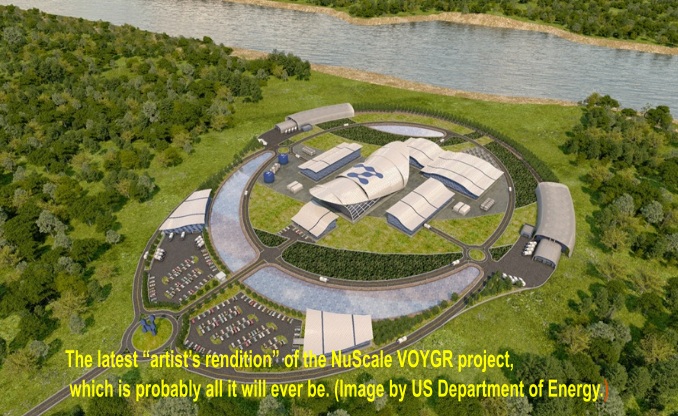
Romania Insider 12th Oct 2026
Romanian nuclear group Nuclearelectrica (BVB: SNN) said that more than 80% of the conditions specified when it approved the Final Investment Decision (FID) for the Doicești small modular reactor (SMR) project in February remain unmet. These include critical commitments assumed by US partner NuScale.
This implies that the project as it was planned can not continue; the company said that it will reassess the SMR technologies and decide accordingly.
It concluded that there currently exist premises for the initiation of steps to update the SMR Implementation Strategy in Romania, “for which we continue to appreciate the openness of the American partners.”……………………………………….. (Subscribers only) https://www.romania-insider.com/business/romanias-smr-project-nuscale-hits-deadlock-80-conditions
Questions raised over new Faslane base ballistic shelters
PLANS to install ballistic security shelters at the UK’s nuclear submarine
base on the Clyde have sparked questions from anti-nuclear campaigners over
what threats military chiefs believe Faslane could face.
Construction firm
Henry Brothers has been appointed to deliver specialist ballistic security
shelters at HMNB Clyde as part of a £2.55 million package of infrastructure
works commissioned by Babcock International Group. The programme also
includes enhanced security fencing and refurbishment of an existing
pressure test building, with Babcock saying the investment will help ensure
facilities supporting the Royal Navy’s Vanguard and Astute-class submarine
fleets remain “resilient, secure and fit for the future”.
However, the
Scottish Campaign for Nuclear Disarmament (CND) said the plans raise
important questions about both the purpose of the shelters and the risks
associated with hosting the UK’s nuclear weapons system in Scotland.
The National 12th Oct 2026,
https://www.thenational.scot/news/26630106.questions-raised-new-faslane-base-ballistic-shelters/
Caitlin Johnstone: Netanyahu’s Attack on Truth in ‘NAZA’
October 13, 2026, https://scheerpost.com/2026/10/13/caitlin-johnstone-netanyahus-attack-on-truth-in-naza/
The 24 soldiers interviewed for the film are being prosecuted not because they told lies about Israel, but because they told the truth.
Israel is so evil that it’s actually illegal for Israelis to tell the truth about it.
Prime Minister Benjamin Netanyahu has just ordered Israel’s military, its attorney general, and its security agency Shin Bet to investigate and prosecute the soldiers who anonymously shared their experiences in the Gaza Strip with the award-winning investigative documentary “NAZA.”
According to Haaretz, Netanyahu accused the soldiers of “serious information security offenses, criminal defamation and harm to Israel’s diplomatic and security interests,” adding that “there is concern that those involved in the defamatory film committed serious criminal offenses by exposing highly classified information and creating a breach in the information security of a highly sensitive intelligence unit.”
Netanyahu’s accusations of “defamation” are contradicted by his other accusation of “exposing highly classified information.” The 24 soldiers interviewed for the film are being prosecuted not because they told lies about Israel, but because they told the truth. The prime minister is claiming the truth causes “harm to Israel’s diplomatic and security interests” because Israel is a state that can only exist on a foundation of endless lies.
If Israel considers the truth a national security threat, then Israel should not exist.
“That which can be destroyed by the truth should be.” This quote by the American writer PC Hodgell certainly applies to an apartheid state which assassinates Palestinian journalists, bans the foreign press from witnessing its atrocities in Gaza, constantly attacks press outlets that report on its abuses, spends hundreds of millions of dollars a year on foreign propaganda and prosecutes soldiers who tell the truth about its war crimes.
It also applies to the U.S. empire, which prosecutes whistleblowers, imprisons journalists for exposing U.S. war crimes, shrouds its actions in a veil of government secrecy, exerts extensive control over the flow of information via Silicon Valley and manipulates the minds of the public using the most sophisticated propaganda system ever devised.
It also applies to abusive relationships that would collapse if the community could see what was happening, or if the victim fully understood what was being done to them.
It also applies to marriages where one spouse isn’t being truthful about who they are and what they do in secret.
It also applies to worldviews that would crumble if contradicting facts were heard and deeply listened to with courage and intellectual honesty.
It also applies to the psychological constructs we hold within ourselves that were built when we were too young to understand the traumas we were experiencing and the maladaptive coping habits we were subconsciously forming to deal with them.
It also applies to the ego itself, which dissolves when sufficient attention and clarity has been brought to its mechanisms through rigorous self-inquiry.
At all levels, human dysfunction is held in place by untruth and dispelled by truth. The lies we hold onto as individuals, as communities, and as a society are what allows suffering and abuse to continue at whatever scale you’re looking at.
Humanity’s collective quest is to become a truth-driven species with a truth-based relationship with reality, because if you’re not dealing with reality as it actually is then you’re not able to respond to your challenges with wisdom and efficacy. We move in this direction by seeing through the mental narratives and perceiving reality as it is actually happening: as individuals, as a society and as a species.
Tell the truth uncompromisingly, come what may. Let all that would crumble under untruth do so as swiftly as possible. May all be revealed. Let us face the ever-expanding light of truth with heroic courage.
Freedom, democracy in Ukraine sure a bit bizarre.
Walt Zlotow West Suburban Peace Coalition, Glen Ellyn IL, 16 Oct 26
The recent Trump, Putin diesel fuel deal designed to drop diesel under $6 a gallon ahead of the election has got the endless Ukraine war crowd promoting Ukrainian freedom and democracy as the cause they’re fighting for.
But these folks, shielded from the reality of political life in Ukraine, are oblivious how unfree, undemocratic Ukraine is, and how unpopular acting President Zelensky and his endless war against Russia are.
Zelensky’s 5 year term expired May 20, 2024 but he’s cancelled elections while he rules Ukraine dictatorially under martial law. He’s banned all opposition media and rivals, even jailing and torturing some. Over 7 million Ukrainians have fled the former Ukrainian democracy. Running out of troops to serve as cannon fodder, young men and teens are scooped up off the streets while their wives and mothers beg for their release.
No wonder Zelensky’s approval and trust ratings hover around 40%. Three quarters of Ukrainians want immediate negotiations to end the war destroying all vestiges of life in Ukraine with no hope of reversal.
And in alleged despotic Russia? Putin, in his third year as duly elected Russian president, enjoys approval and trust ratings over 70%. Thousands of recruits flock to enlistment centers monthly to complete pushback to NATO expansion to put nukes on Russia’s borders in Ukraine and prevent further destruction of Russian leaning Ukrainians in Donbas.
Supporters of continuing the war in Ukraine till the last Ukrainian soldier is dead can use thousands of words in their support. But freedom and democracy are two words that should be left out.
Caitlin Johnstone -When The Gates Of Tech Dystopia Snap Shut
.
Caitlin Johnstone – Oct 13, 2026, https://www.caitlinjohnst.one/p/when-the-gates-of-tech-dystopia-snap?utm_source=post-email-title&publication_id=82124&post_id=220117526&utm_campaign=email-post-title&isFreemail=true&r=1ise1&triedRedirect=true&utm_medium=email
There’s a viral video clip showing a group of wild boars getting caught in a corral trap. When the gate snaps shut the poor animals run around in a panic, searching in vain for an exit.
According to the caption that’s been going around, the trapper waited patiently for five days for the entire sounder to get comfortable enough to take the bait and enter the trap all at once. The gate didn’t close until the final pig walked into the enclosure.
“They’re putting guns on those robot dogs!”
“The state AI canceled my digital money because I tried to start a union!”
“I said Free Palestine and now I can’t access the internet!”
They’ve been quietly constructing a cage around us this entire time in order to lock us into this capitalist dystopia forever. The oligarchs and empire managers have been rapidly developing technologies that will facilitate mass surveillance and autonomous weapons systems — already being field-tested in places like Gaza — which just so happen to be exactly what the ruling class would require in order to undermine and quash any revolutionary movements which might emerge in response to the ever-increasing abuses and inequalities of capitalism.
Caitlin’s Newsletter
When The Gates Of Tech Dystopia Snap Shut
Oct 13, 2026

There’s a viral video clip showing a group of wild boars getting caught in a corral trap. When the gate snaps shut the poor animals run around in a panic, searching in vain for an exit.
According to the caption that’s been going around, the trapper waited patiently for five days for the entire sounder to get comfortable enough to take the bait and enter the trap all at once. The gate didn’t close until the final pig walked into the enclosure.
And, yeah. That’s pretty much where we’re at right now.
We’ve been standing around munching on our bait, enjoying our bread and our circuses, blissfully unaware of the trapper who is patiently waiting for the perfect moment to slam the gate shut on us all.
“Man, AI sure is great.”
“Check it out, we’re all Miyazaki characters!”
“I let ChatGPT choose my outfit for today!”
“I wrote a song just by typing in a prompt! Can you believe it? I’m making music!”
“We’re ALL artists now!”
“Oh shit, the gate just closed!”
“They’re listening to everything we say!”
“Fuck, there are police drones everywhere!”
“They’re putting guns on those robot dogs!”
“The state AI canceled my digital money because I tried to start a union!”
“I said Free Palestine and now I can’t access the internet!”
They’ve been quietly constructing a cage around us this entire time in order to lock us into this capitalist dystopia forever. The oligarchs and empire managers have been rapidly developing technologies that will facilitate mass surveillance and autonomous weapons systems — already being field-tested in places like Gaza — which just so happen to be exactly what the ruling class would require in order to undermine and quash any revolutionary movements which might emerge in response to the ever-increasing abuses and inequalities of capitalism.
The trapper is patiently pacing us into accepting mass surveillance, unfettered artificial intelligence advancement, militarized robots, police drones, digital currencies, propaganda, censorship, and the AI-assisted manipulation of the flow of information.
And then, when the time is right, the gate will come crashing down.
It’s essentially a race between revolution and high-tech totalitarianism. A race between the awakening of public consciousness to the urgent need for revolutionary change, and the ability of our rulers to prevent revolutionary change from ever occurring. A race between our ability to start using the power of our numbers to force an end to the abusive systems under which we live, and the ability of rich and powerful dominators to use surveillance, robotics and AI-assisted control mechanisms to nullify all the advantages we hold over them.
And right now our biggest disadvantage is that most of us don’t even know we’re in this race. Our rulers know it, but the average member of the public does not. Most of us are still chewing on the bait in the trap.
There is still time. The trap isn’t shut yet. But we need to awaken the other piggies in the pen to the reality of what the bastards have planned for us, and help them understand that the race is underway.
Iran fortifying nuclear sites; warns of land incursions into Gulf states if the US launches new strikes – report
i24NEWS, October 13, 2026, https://www.i24news.tv/en/news/middle-east/iran-eastern-states/artc-iran-fortifying-nuclear-sites-warns-of-land-incursions-into-gulf-states-if-the-us-launches-new-strikes-report
Iran is fortifying its defenses, rallying loyalists and threatening a wider, harsher response against the US and its Gulf allies as it prepares for potential American attacks after the midterms, The Wall Street Journal reported. Iranian officials warned publicly and privately that Tehran will respond with further escalation across the Middle East if the US launches new strikes.
People familiar with the warnings said some officials hinted that Iranian forces could conduct land incursions into neighboring countries. Mohsen Rezaei, Secretary of the Supreme National Security Council, said Sunday that Tehran could target the United Arab Emirates, as well as data centers and internet cables across the region.
Tehran also warned Arab officials it could strike Saudi oil facilities, some of the people said.
The US military is also gearing up. A third aircraft carrier strike group and another Marine expeditionary unit are heading to the Middle East.
President Donald Trump ruled out an attack before the Nov. 3 midterms last week, but has publicly mulled hitting the Pickaxe Mountain nuclear site, and US officials said the military is preparing a range of options for new strikes.
At home, Iran is preparing the public for renewed war. Satellite images analyzed by the Institute for Science and International Security showed Iran built makeshift dirt mounds last month around its Pickaxe Mountain and Natanz nuclear sites to impede any ground raid.
Brig. Gen. Gholamreza Jalali, who oversees contingency plans, said Iran’s airports, seaports and power plants “have prepared for wartime conditions.” Billboards in Tehran also advertise civilian courses in firing shoulder-launched anti-aircraft missiles.
Separately, IAEA chief Rafael Mariano Grossi had previously told Bloomberg Television that “there are some indications that there is movement around this construction site,” referring to Pickaxe Mountain, but added: “We don’t have any concrete information as to activities that may be taking place there,” Ynet reported, citing Bloomberg.
Agreement aims to support US maritime nuclear
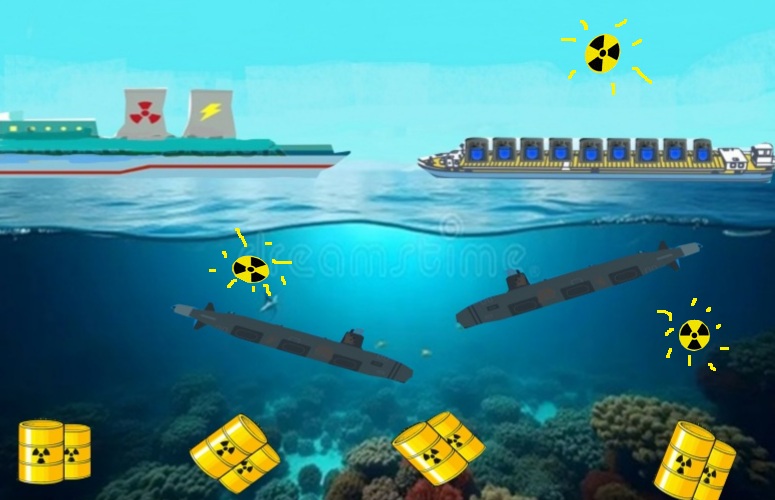
Tuesday, 13 October 2026, https://www.world-nuclear-news.org/articles/agreements-and-deals-support-us-maritime-nuclear-developments
The American Bureau of Shipping and the US Department of Energy have signed a memorandum of understanding to advance modern commercial nuclear technology at sea.
The agreement between the American Bureau of Shipping (ABS) – a global maritime classification society – and the Department of Energy (DOE) Office of Nuclear Energy covers floating power solutions, nuclear-powered vessels and the development of the ports, shipyards and industrial base needed to build and sustain them.
Key priorities include concept and feasibility studies for floating nuclear power and nuclear transportation corridors, and support for developing a US shipbuilding sector capable of building and operating nuclear-powered assets safely.
The agreement will see the American Bureau of Shipping co-managing the Maritime Nuclear Applications Group research hub and resource centre, which is aligned with the Department of Energy’s National Reactor Innovation Center, as well as providing technical, regulatory, economic and policy support on concept and feasibility studies. It will coordinate related work through the US Maritime Administration’s US Center for Maritime Innovation.
“Advanced nuclear technology is moving from concept to application, and the maritime industry needs to be ready for it,” said John McDonald, American Bureau of Shipping (ABS) Chairman and CEO. “This agreement with DOE reflects the depth of work already under way and provides a framework to go further. Through our collaborations with the DOE and industry leaders, ABS is pioneering the future of nuclear energy in maritime. We’re well-positioned to help turn this technology into a safe, real and practical option for commercial maritime applications.”
DOE is leading US government initiatives on maritime nuclear applications. Under the memorandum of understanding, the American Bureau of Shipping will co-manage the Maritime Nuclear Applications Group and provide technical, regulatory, economic and policy support on concept and feasibility studies. ABS will work with DOE to foster interagency coordination to develop a viable US maritime nuclear sector.
“Advanced nuclear technology has the potential to transform the commercial maritime industry and open new markets for American innovation,” said Assistant Secretary for Nuclear Energy Ted Garrish. “The Department of Energy’s partnership with the American Bureau of Shipping will help explore how we can build on decades of experience to safely bring next-generation nuclear technologies to the maritime sector and position America to lead this emerging industry.”
Nuclear future mapped out in new five-year plan

The plan focuses on nuclear science, fuel security and the future of the industry
Skye Morley, 14/10/2026, https://www.energylivenews.com/2026/10/14/nuclear-future-mapped-out-in-new-five-year-plan/
This week, the United Kingdom National Nuclear Laboratory (UKNNL) launched its strategic plan for the future of nuclear over the next five years.
The plan is built around fuel security, appropriate infrastructure, science and evidence needed for safe operations, safe plutonium science and environmental restoration and health.
Michael Shanks, Energy Minister, said: “We are committed to developing the next generation of nuclear power, and UKNNL plays a key role in making these ambitions a reality, working to accelerate the science behind future reactors, keeping systems running safely and securing the UK’s fuel supply.
“This strategic plan will help us take a lead in the industries of the future, powering growth and jobs up and down the country.”
The UKNNL say in the plan that the UK is building nuclear again at a scale not attempted in a generation, with large scale reactors in construction and small modular reactors under development, alongside advanced reactors and fuels.
The previous strategic plan, released in 2021, was met with uncertainty and sector instability.
Andrew Howarth, VP Strategy at UKNNL, said: “Now, government policy is a lot clearer, and we know what’s happening across new build, defence and decommissioning. That changes what the national laboratory has to be ready for.”
UKNNL say the purpose and missions of the plan is nuclear science to benefit society.
Threat of AI share crash puts world financial stability at risk, says IMF

High valuations and debt put sector in danger, while fund also warns on government borrowing and cyber-attacks
Heather Stewart in Bangkok and Kalyeena Makortoff in London, Tue 13 Oct 2026 , https://www.theguardian.com/business/2026/oct/13/ai-share-crash-risk-global-imf-debt-corrowing-cyber-attacks
The threat of an AI share price crash rippling out across global markets is putting world financial stability at risk, the International Monetary fund has warned.
In its twice-yearly Global Financial Stability Report, the IMF highlighted the sky-high valuations for AI companies along with their increasing debt pile as one reason that risks in the system are “elevated”.
“The consequences of an AI correction could be global,” it warned. Aside from the US, Asian markets would be most exposed, and the UK and euro area potentially more insulated – though investors with US holdings would be hit.
Athanasios Vamvakidis, the deputy director of the IMF’s monetary and capital department, launching the report, said: “The exposure of the rest of the world to US assets, particularly AI, is the highest it has ever been. So this is supporting the global economy through wealth effects today; but if we get a market correction it could have broad implications.”
An AI crash was one of three “salient risks” to stability identified by the IMF, alongside rising government borrowing costs and the threat of a big cyber-attack.
It called this trio of factors “plausible near-term catalysts for a sharp tightening of financial conditions and market turmoil”.
The IMF’s analysis underlined the interconnected nature of big AI companies, and the high levels of borrowing being undertaken to fund investment in the sector.
“Weaker or less durable investment and profitability in AI could trigger a correction in AI-related asset prices, exacerbated by rising leverage, concentrated exposures, and circular financing arrangements,” it said.
Such a reassessment would then “sharply reduce investment, trigger equity market corrections, and tighten financial conditions, with global spillovers”.
The “magnificent seven” big tech stocks – Alphabet, Amazon, Apple, Meta, Microsoft, Nvidia and Tesla – account for more than 35% of the S&P 500 share index in the US, up from 12% a decade ago, and their total market capitalisation has increased by more than 50% in the past two years.
Yet the IMF warned of “growing evidence” that the successful rollout of AI “may not require investment on the massive scale being undertaken by ‘hyperscaler’ firms”, and “potential economic gains may not be as large as expected”.
The hyperscalers are the companies building the underlying infrastructure for the AI rollout, including many vast datacentres. They include Amazon Web Services, Google, Meta and Oracle.
Shares in semiconductor companies fell on Tuesday after the boss of Broadcom compared many AI investors to “casino” gamblers. Reports that the Chinese memory chip maker CXMT was making good progress on a new chip architecture also hit South Korean tech companies.
The IMF also highlighted the growing leverage, or borrowing, that underpins the current boom and could amplify the effects of a crash.
In particular, it identified soaring debts contracted by the companies themselves; hedge fund investment in the sector; and retail investors borrowing to speculate in AI stocks.
In the event of an AI-led market downturn “these growing sources of leverage heighten the potential for forced selling and surges in equity volatility”, it said.
It also pointed to the prevalence of “circular financing” deals, tying stronger AI companies to weaker partners in the same sector, and potentially exacerbating the impact of a share price correction.
It identified $300bn (£227bn) worth of transactions between hyperscalers and “weaker AI firms” in just the past three years, supplemented by $650bn in debt, in exchange for $1.4tn in future financial commitments.
In London, the chief executive of the UK’s Financial Conduct Authority, Nikhil Rathi, urged every small business across the financial sector to take out insurance to protect themselves against AI-related cybersecurity threats.
He told MPs on the Commons Treasury committee that not all companies would have the resources to pay for access to “frontier” AI models such as Anthropic’s Mythos, which has been released on a restricted basis after it was said to be rapidly identifying gaps in government and corporate cybersecurity systems.
“One message I’d give to every small business: you should consider making sure you are insured,” Rathi said.
Trump’s California dreaming is a nuclear nightmare

The president’s latest deranged invitation to Iran to annihilate two West Coast US cities should finally be cause for removing him from office, writes LINDA PENTZ GUNTER
11 October 2026, https://www.morningstaronline.co.uk/article/trumps-california-dreaming-nuclear-nightmare
‘The massive number of blatant, impeachable acts by the lawless, corrupt, violent, systemically racist, unstable, dangerous tyrant increases by the day’
AGENERAL rule of thumb in journalism when researching a story, especially a controversial one, is always to get a second source. These days that needs to apply to the general public too, given all the AI-fabricated content in circulation.
Under normal circumstances, if a US president invited a foreign power to take out two of his own country’s cities, that would be cause for an immediate double fact check, if not total disbelief.
But we are not in normal times. Nor do we have a normal US president. So when Donald Trump said of Iran: “Let ’em take out Los Angeles, let ’em take out San Diego. This is a very small price to pay,” no-one had to check at all. While being both reprehensible and psychopathically insane, it is also entirely plausible.
There is, of course, also the question of whether Iran is militarily capable of “taking out” a US city and if they would even want to? “No” and “no” appear to be the answers. Tehran is approximately 7,500 miles away from Los Angeles and Iran does not have missiles capable of reaching that far, experts say.
Nor has Iran ever threatened to attack US cities and is far more likely to launch strikes against US targets in the Middle East region. Such an attempt took place on March 20, when Iran fired two intermediate-range ballistic missiles at the joint US-British military base on Diego Garcia in the Indian Ocean. Neither missile hit the base.
But the bigger issue is the response Trump got when he made that invitation to Iran to annihilate Americans on their own soil. He was speaking before an audience in Grand Island, Nebraska, and they cheered. These are the depths of depravity to which Trump has dragged a depressingly large swath of the US population.
The Maga crowd of blind Trump acolytes has no concept of “We the people,” just as Trump is routinely trashing the US constitution for which those are the opening words. Instead, where once Americans were obsessed with the price of eggs, today it is the price of petrol for their gas-guzzlingly inefficient trucks and SUVs that dominate US highways, almost always occupied solely by the driver.
AGENERAL rule of thumb in journalism when researching a story, especially a controversial one, is always to get a second source. These days that needs to apply to the general public too, given all the AI-fabricated content in circulation.
Under normal circumstances, if a US president invited a foreign power to take out two of his own country’s cities, that would be cause for an immediate double fact check, if not total disbelief.
But we are not in normal times. Nor do we have a normal US president. So when Donald Trump said of Iran: “Let ’em take out Los Angeles, let ’em take out San Diego. This is a very small price to pay,” no-one had to check at all. While being both reprehensible and psychopathically insane, it is also entirely plausible.
There is, of course, also the question of whether Iran is militarily capable of “taking out” a US city and if they would even want to? “No” and “no” appear to be the answers. Tehran is approximately 7,500 miles away from Los Angeles and Iran does not have missiles capable of reaching that far, experts say.
Nor has Iran ever threatened to attack US cities and is far more likely to launch strikes against US targets in the Middle East region. Such an attempt took place on March 20, when Iran fired two intermediate-range ballistic missiles at the joint US-British military base on Diego Garcia in the Indian Ocean. Neither missile hit the base.
But the bigger issue is the response Trump got when he made that invitation to Iran to annihilate Americans on their own soil. He was speaking before an audience in Grand Island, Nebraska, and they cheered. These are the depths of depravity to which Trump has dragged a depressingly large swath of the US population.
The Maga crowd of blind Trump acolytes has no concept of “We the people,” just as Trump is routinely trashing the US constitution for which those are the opening words. Instead, where once Americans were obsessed with the price of eggs, today it is the price of petrol for their gas-guzzlingly inefficient trucks and SUVs that dominate US highways, almost always occupied solely by the driver.
There is, of course, genuine hardship sweeping the US, and, with the midterm election just weeks away, Trump is anxious to blame shift by suggesting that the price of petrol will plummet just as soon as he pummels Iran into submission. Never mind that the petrol price shock is entirely due to his decision to unnecessarily attack Iran in the first place.
In encouraging the annihilation of San Diego as a “small price” to pay for stabilising petrol prices, Trump seems to have forgotten that San Diego is an enormous and critically important military hub, with close to 130,000 active-duty service members in the US navy and marines stationed there.
Washington, DC, is a closer target for Tehran than San Diego, if Iran really did have the capability for such an attack. But Trump’s singling out of two California cities is part of his own manic plan to eliminate inconvenient “Left Coast” electorates.
Subsequent attempts by the White House to walk back Trump’s remarks were met with derision and growing alarm. White House communications director Stephen Cheung suggested that Trump “was clearly stating US cities would have been threatened if a nuclear Iran hadn’t been stopped.” But anyone listening to the speech knew perfectly well what Trump “clearly” stated.
Trump’s derangement
This left Americans concluding that if Trump is making such barbaric and inflammatory statements without knowing what his words mean, then we have a clinically deranged person in the White House who should be removed from office post haste.
There is a mechanism in place to do this under that same US constitution Trump and his cabal violate daily, the 25th amendment, which allows for the removal of the president if he becomes mentally or physically incapable of carrying out the duties of his office. If the US president doesn’t himself (or perhaps one day herself) invoke it, then the vice-president and a majority of the cabinet can. If the president contests their decision, it goes to Congress.
Given the current coterie of obsequious lackeys surrounding President Trump, this is an unlikely outcome. Impeachment is the other option. So far, efforts by a handful of Democrats to impeach Trump on a number of different grounds have not found favour, even with members of their own party, which, being in the minority, would not be able to pass articles of impeachment anyway without some defectors from the Republican side of the aisle.
But after the November 3 elections, all that may change. Trump’s weasel Speaker of the House, Mike Johnson, has already predicted that outcome.
It’s guaranteed, probably on the first day — first or second day,” Johnson said in a recent interview when asked if a Democratic majority would pursue impeachment. “Remember, they’ve already filed articles of impeachment in this Congress. And they’re raring to go.”
Democratic leadership, however, have been less than “raring to go” on impeachment thus far. On the contrary, House Democratic Leader Hakeem Jeffries has made repeated excuses for rejecting that path, repeatedly declaring it not a priority throughout Trump’s current term and more recently in response to questions about whether the Democrats would move on impeachment if they regain full political control in November.
But there are plenty of grounds already, even without Trump’s latest inflammatory statement. “The massive number of blatant, impeachable acts by the lawless, corrupt, violent, systemically racist, unstable, dangerous tyrant increases by the day,” wrote lawyer and consumer and democracy advocate Ralph Nader of Trump back in September.
Nader is one of the most outspoken voices calling for Trump’s impeachment and has held two impeachment symposiums on Capitol Hill already. On both occasions, panels of mostly legal scholars and former members of the government delivered a long list of constitutional grounds under which Trump could and should be impeached.
“The Democrats and electorally frightened Republicans pushed Richard Nixon out in 1974 for far, far lesser transgressions than those committed by Trump in a week,” Nader said.
During a January 2016 campaign rally in Iowa before being elected to the presidency the first time, Trump most notoriously bragged that “They say I have the most loyal people — did you ever see that? Where I could stand in the middle of Fifth Avenue and shoot somebody, and I wouldn’t lose any voters.” Like this week’s audience in Nebraska, the people there reacted positively.
While Trump is yet to pull the trigger himself, his Ice immigration enforcement agents have been shooting people across the country, so far with impunity. Trump’s base continues to cheer him on. Likewise, they are content to let a foreign power do Trump’s shooting for him.
How much weirder must things get before Republicans in Congress start to realise Trump is doing them no political favours? Perhaps a crushing Republican defeat in November will finally wake them up to the monster under their bed.
Why Spent Nuclear Fuel Reprocessing Is Recycling in Name Only

October 14, 2026By: Ross Matzkin-Bridger
Reprocessing promises to recycle nuclear waste, but it fails on technology, cost, security, and waste management—and distracts from the nuclear technologies that actually work.
Spent nuclear fuel reprocessing, often erroneously conflated with recycling, is the latest in a long list of technologies and products that have exploited human desire for silver-bullet solutions, but in reality deliver more problems than fixes. The formula is a familiar one: a charismatic salesman captures our attention with a product they market as a remedy for a persistent problem; the explanation for how the technology works is muddled or oversimplified; funders and other stakeholders are driven by their desire to believe; and the venture ends in disappointment, wasted money, and sometimes worse.
The future of nuclear energy is promising, but only if policymakers and industry make smart investment choices that focus on the technologies that work. Reprocessing is a distraction that takes attention away from sensible solutions.
There are four main reasons why spent fuel reprocessing is a bad idea and should be shelved in favor of the nuclear energy technologies that can actually deliver on their promises.
Why Reprocessing Doesn’t Work as Advertised
The goal of reprocessing is to “recycle” spent fuel, but the two are very different. Reprocessing is a technology that chops up spent nuclear fuel, dissolves it, then separates the resulting slurry into various streams of waste and potentially reusable material. The recycling of that potentially reusable material into new fuel is where the pitch falls short.
Understanding the technical process helps explain where the problems emerge. When fresh fuel goes into a nuclear power reactor, it is composed only of low-enriched uranium. After the nuclear reaction, spent fuel has a composition broadly binned into four types of elements: low-enriched uranium; plutonium; highly radioactive materials such as strontium and cesium that are collectively called fission products; and ultra-heavy metals like neptunium and americium, which are referred to as minor actinides. The uranium, plutonium, and minor actinides look like reusable assets if separated from the fission products, which are mostly waste.
However, the varying levels of radiotoxicity, decay heat, and volatility across spent fuel’s elements make it enormously complex to handle. Those potentially reusable materials are not as appealing in real life as they are on a PowerPoint slide. Plutonium and minor actinides are very difficult to manipulate and manufacture into fuel, and reprocessed uranium has contaminants that cannot be removed. In the end, these elements don’t make such good fuel after all. This is a large reason why, in the few countries that have attempted reprocessing, approximately 99 percent of all recovered material is never recycled.
France, often heralded as a gold standard for the technology, offers a prime example. Despite hosting the world’s most extensive reprocessing infrastructure, it actually recycles very little. Against a goal of recycling 96 percent of its spent fuel volume, the country’s recycling rate in practice is approximately 1 percent. The remaining 99 percent of material either goes to waste or is stored indefinitely.
Today, there are claims of “advanced recycling” technologies that purport to solve these problems. But these are just decades-old technologies that vendors have dusted off, rebranded, and marketed with flowery adjectives and no evidence of a working product. The two reprocessing technologies that vendors are marketing today—aqueous reprocessing and pyroprocessing—were developed in the 1940s and 1960s, respectively. The truth is that there have been no major technical breakthroughs in either of these approaches that address the core problems with reprocessing.
Why the Economics of Reprocessing Fail
The high costs of reprocessing and attempted recycling dwarf the more economical alternative of manufacturing fuel from abundant fresh uranium. Thorough studies have demonstrated the economic advantage of choosing fresh uranium over reprocessing—and that advantage bears out in real life. In the countries that have deployed commercial-scale reprocessing—France, Japan, Russia, and the United Kingdom—the industry has survived only with massive government subsidies. It simply cannot compete on its own.
The United States presents an excellent case in point. Industry attempted commercial reprocessing in West Valley, New York, in 1966. When it proved unprofitable, the plant’s operator closed up shop and left the community with a contaminated site and 600,000 gallons of high-level liquid waste in underground tanks.
After the Carter administration paused US reprocessing in the 1970s, former President Ronald Reagan came into office with a different idea. In 1981, President Reagan announced that reprocessing would be allowed to continue but had to compete in the free market—there would be no government handouts. The budding reprocessing industry dried up nearly overnight. This was the downfall for the United States’ most ambitious attempt, the Barnwell reprocessing plant, which was intended to receive spent fuel from a sizable share of the country’s commercial reactor fleet. But without government money, there was no business model. The owners abandoned the plant soon after Reagan’s announcement.
Today, the government’s commitment to avoiding subsidies is on shaky ground. The Trump administration is considering opening a pathway for electricity consumers to fund tens of billions of dollars for reprocessing efforts. This development proves the point: Reprocessing cannot compete in a free market filled with better and less costly options, forcing vendors to try tapping into taxpayer funds as a lifeline.
How Reprocessing Creates Nuclear Proliferation and Security Risks
All reprocessing technologies result in a purified form of plutonium that can be used to make nuclear weapons. Obtaining weapons-usable material is the most difficult part of making a nuclear bomb, which is why global nonproliferation and nuclear security efforts have put so much focus on restricting such materials and their means of production. The expansion of reprocessing would result in more weapons-usable materials in more civilian facilities at home and abroad.
Some claim that so-called “advanced recycling” technologies are proliferation resistant. This is a particularly common refrain from proponents of pyroprocessing, who assert that the technology neutralizes proliferation concerns by commingling plutonium with minor actinides like neptunium, americium, and curium. Yet experts from seven national laboratories examined this issue in two independent studies and found that the proliferation risk of plutonium commingled with minor actinides is very similar to pure plutonium. Further, the US Nuclear Regulatory Commission (NRC), the US Department of Energy (DOE), and the International Atomic Energy Agency (IAEA) all classify plutonium commingled with minor actinides as material of the highest risk for weaponization, on par with pure plutonium and weapons-grade uranium. In other words, this material could be used to make a bomb.
The facts and science are clear. Reprocessing is a dangerous technology that increases security risks and flies in the face of nonproliferation best practices. Unsubstantiated claims of proliferation resistance from reprocessing advocates do not pass muster.
Why Reprocessing Makes Nuclear Waste Harder to Manage
Disposing of nuclear waste is a politically sensitive topic that requires open, honest engagement with communities. Advocates sometimes disingenuously present reprocessing and recycling as a way to sidestep the need for a long-term waste repository. The truth is that reprocessing not only produces waste but also makes waste management a more complex problem.
Reprocessing increases the overall volume of waste and the number of waste forms; it yields solid, liquid, and gaseous wastes that have unique management requirements. Reprocessing advocates correctly point out that it also concentrates hot, highly radioactive waste into a smaller volume. But that smaller volume does not ease disposal requirements, because the footprint needed for a repository is a function of heat load, not volume. Hot, radioactive packages require significant spacing.
France and the United Kingdom learned this lesson the hard way. Both countries have reprocessed for roughly six decades (the United Kingdom stopped in 2022) and now face greater waste management challenges than countries that have pursued the direct disposal of spent fuel, in which spent fuel is sealed in canisters and placed in a deep underground repository. Today, France and the United Kingdom are not only working on developing a deep geologic repository like other countries with nuclear power, but they also have the extra burden of managing the various, often messy, waste forms that reprocessing produces.
Direct disposal remains the easiest, safest, and most cost-effective waste management option for policymakers and industry.
What US Nuclear Policy Should Focus on Instead
Industry and scientists have had eight decades to advance reprocessing technology and come up with a model that enables fuel recycling, is cost-efficient, meets common-sense security standards, and minimizes waste. They have failed on all fronts, and there is no evidence of any meaningful breakthroughs on the horizon.
With a policy goal of quadrupling nuclear energy capacity by 2050, the United States needs to move now to deploy the technologies that can work, scale efficiently, and are safe. Thankfully, there are many strong options within the realm of proven reactor designs, a uranium fuel cycle, and direct disposal of spent fuel. This is the path to abundant, secure, and cost-effective electricity for consumers.
Wall Street Journal investigative reporter John Carreyrou has written extensively about the “fake it till you make it” ethos that has embedded itself into the culture of technology development. The philosophy may make sense for consumer electronics or software that can be patched and improved over time. But it is irresponsible when it comes to nuclear technologies that have much higher stakes—especially when proven technologies are ready to deploy. Reprocessing has had 80 years of faking it. It is time to move on.
About the Author: Ross Matzkin-Bridger
Ross Matzkin-Bridger serves as senior advisor for the Nuclear Scaling Initiative and senior director for the Nuclear Threat Initiative’s Nuclear Materials Security Program. He served as a senior advisor at the US Department of Energy under both Presidents Donald Trump and Joe Biden.
1 This Month
23-25 October – on Zoom – World BEYOND War’s annual global conferenc

Shut down the radiation-damaged Heysham nuclear reactors now
To see nuclear-related stories in greater depth and intensity – go to https://nuclearinformation.wordpress.com

Say No to NASA’s Reckless Nuclear Reactor on the Moon
Say No to NASA’s Reckless Nuclear Reactor on the Moon

-
Archives
- October 2026 (247)
- September 2026 (339)
- August 2026 (330)
- July 2026 (355)
- June 2026 (287)
- May 2026 (306)
- April 2026 (356)
- March 2026 (251)
- February 2026 (267)
- January 2026 (308)
- December 2025 (358)
- November 2025 (359)
-
Categories
- 1
- 1 NUCLEAR ISSUES
- business and costs
- climate change
- culture and arts
- ENERGY
- environment
- health
- history
- indigenous issues
- Legal
- marketing of nuclear
- media
- opposition to nuclear
- PERSONAL STORIES
- politics
- politics international
- Religion and ethics
- safety
- secrets,lies and civil liberties
- spinbuster
- technology
- Uranium
- wastes
- weapons and war
- Women
- 2 WORLD
- ACTION
- AFRICA
- Atrocities
- AUSTRALIA
- Christina's notes
- Christina's themes
- culture and arts
- Events
- Fuk 2022
- Fuk 2023
- Fukushima 2017
- Fukushima 2018
- fukushima 2019
- Fukushima 2020
- Fukushima 2021
- general
- global warming
- Humour (God we need it)
- Nuclear
- RARE EARTHS
- Reference
- resources – print
- Resources -audiovicual
- Weekly Newsletter
- World
- World Nuclear
- YouTube
-
RSS
Entries RSS
Comments RSS

