Japan rejects EU plan to steal Russian assets – Politico.
09 Dec 2025, https://www.sott.net/article/503419-Japan-rejects-EU-plan-to-steal-Russian-assets-Politico
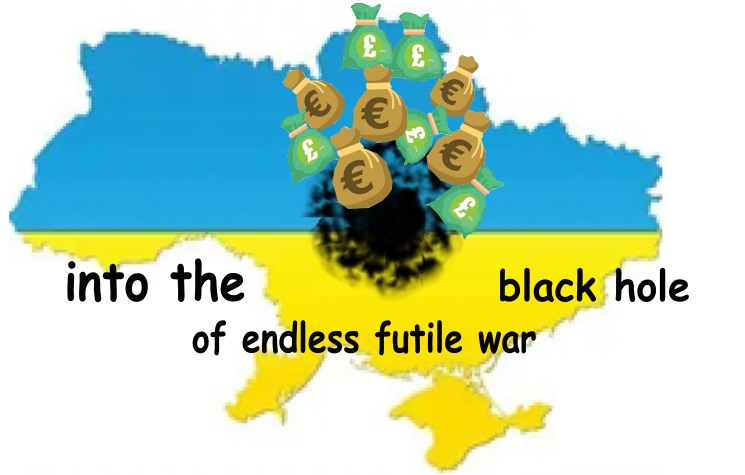
The bloc wants to use Moscow’s funds immobilized in the West to cover Ukraine’s budget deficit.
Japan has reportedly dismissed a European Union initiative to tap frozen Russian sovereign assets to help finance Ukraine’s massive budget shortfall.
Brussels hopes to issue a so-called “reparation loan” backed by Russian funds immobilized in the West – a plan that Moscow has denounced as outright theft. Belgium, where most of the money is held by the Euroclear clearinghouse, has refused to greenlight the proposal unless other nations agree to share associated legal and financial risks.
Belgian Prime Minister Bart De Wever has said broader international backing, particularly from non-EU countries holding Russian assets, would bolster the European Commission’s case for what he called the effective confiscation of a foreign state’s funds. But at a meeting of G7 finance ministers on Monday, Japan’s Satsuki Katayama made clear her government would not support the plan due to legal constraints, Politico reported, citing EU diplomatic sources.
Officials told the outlet they believe Japan’s stance aligns with that of the United States, which also opposes the EU approach and views the frozen assets as leverage in negotiations with Moscow.
France has reportedly likewise declined to touch any assets held on its soil, while Canada and the UK have signaled possible participation if the EU ultimately pursues the scheme.
Ukraine’s parliament last week adopted a 2026 budget with a staggering $47.5 billion deficit, expecting foreign donors and creditors to fill the gap. Roughly half that anticipated support – an estimated $23.6 billion – remains uncertain pending the fate of the EU loan plan.
Ukrainian media noted that lawmakers pushed the budget through despite unresolved questions over foreign financing, in part to project stability following the removal of Andrey Yermak, formerly the most powerful aide to the country’s leader, Vladimir Zelensky. Yermak was dismissed as a corruption scandal engulfed Kiev’s political establishment.
Israel’s biggest con trick: Hiding the true numbers it has killed in Gaza

10 December 2025, https://www.jonathan-cook.net/blog/2025-12-10/israel-con-numbers-killed-gaza/
Israel has penned us all into a ‘debate’, one entirely divorced from reality, that relates only to those killed directly by its bombs and gunfire – not the genocide it is waging by other means
The biggest con trick Israel has managed to pull off over the past two years is imposing entirely phoney parameters on a “debate” in the West about the credibility of the death toll in Gaza, now officially standing at just over 70,000.
It is not just that we have been endlessly bogged down in rows about whether Gaza’s medical authorities can be trusted, or how many of the dead are Hamas fighters. (Despite Israeli disinformation campaigns, the Israeli military itself believes more than 80 per cent of the dead are civilians.)
Or even that these “debates” always ignore the fact that, early on, Israel wrecked Gaza’s capacity to count its dead by destroying the enclave’s governmental offices and its hospitals. The 70,000 figure is likely to be a drastic under-estimate.
No, the biggest con trick is that Israel has successfully penned us all into a “debate”, one entirely divorced from reality, that relates only to those killed directly by its bombs and gunfire.
The truth is that far, far larger numbers of people in Gaza have been actively killed by Israel not through these direct means but through what statisticians refer to as “indirect” methods.
These people were killed by Israel destroying their homes and leaving them with no shelter. By Israel destroying their water and electricity supplies and their sanitation systems. By Israel levelling their hospitals. By Israel starving them. By Israel creating the perfect conditions for disease to spread. The list of ways Israel is killing people in Gaza goes on and on.
Imagine your own societies levelled in the way Gaza has been.
How long would your elderly parents survive in this hellscape?
How well would your diabetic child fare, or your sister with asthma, or your brother with cancer?
How well would you cope with catching pneumonia, or even a common cold, if you hadn’t had more than one small meal a day for months on end?
How would your wife deal with a difficult childbirth if there were no anaesthetics, or no hospital nearby, or a barely functioning hospital overwhelmed with victims from Israel’s latest bombing run.
And what would be the chances of your baby surviving if its mother could produce no milk from her starvation diet? And if you could not give the baby formula feed because Israel was blocking supplies from entry into the enclave? And if, anyway, the contaminated water supply could not be mixed into the formula powder?
None of these kinds of deaths are included in the figure of 70,000. And all precedents show that many, many times more people are killed through these indirect methods than directly through fatal injuries from bombs and bullets.
According to a letter from experts in this field to the Lancet, studies of other wars – most of them far less destructive than Israel’s on the tiny enclave – indicate that between three and 15 times more people are killed by indirect, rather than direct, methods of warfare.
The authors conservatively estimate an indirect death toll four times greater than the direct death toll. That would mean, at a minimum, 350,000 Palestinians have been killed in Gaza through Israel’s actions.
The reality is likely to be even worse. That is without even mentioning the hundreds of thousands of Palestinians who have been left with horrific injuries and psychological trauma.
Israel’s war planners know exactly how this direct-to-indirect ratio works. Which is why they chose to destroy nearly every home in Gaza, to bomb the power, sanitation and water facilities, to level the hospitals, and to block aid month after month.
They knew this would be the way Israel could carry out a genocide while offering its allies – western governments and its army of lobbyists – a “get out of jail card” for their active complicity.
Donald Trump’s so-called “ceasefire” is just another layer of deception in this endless game of smoke and mirrors. The UN’s child protection agency, Unicef, reports that less than a quarter of aid trucks are getting into Gaza, past Israel’s continuing starvation blockade, despite Israeli commitments agreed as part of the “ceasefire”. Apparently, this doesn’t register as a gross ceasefire violation. It goes unnoticed.
Unicef reports further that in October alone, at the start of the “ceasefire”, nearly 18,000 new mothers and babies had to be hospitalised in Gaza from acute malnutrition.
The genocide isn’t over. Israel may have slowed the rate of direct killings it is committing by bombing Gaza, but the indirect killings continue unabated. And so does the Israeli-engineered “debate” in the West, one designed to obscure and excuse the mass murder of Gaza’s population.
Cashing in on war: Why stealing Russia’s assets actually makes things worse for the EU.
The loan is also, implicitly, seen as an invitation to keep the war going – thus not only keeping the Kiev regime afloat but complicating the prospects for a comprehensive settlement.
03 Dec 2025 , https://www.sott.net/article/503422-Cashing-in-on-war-Why-stealing-Russias-assets-actually-makes-things-worse-for-the-EU
For bloc taxpayers, it could mean Brussels has walked them into a fait accompli where they simply have to stump up for funding a corrupt regime in Kiev.
After a week of humiliation in which her much-touted plot to sequester Russian assets to fund Kiev’s war chest was outright rejected by both Belgium and the European Central Bank, European Commission boss Ursula von der Leyen has told EU member states they have two choices, both of which would send cash to Kiev’s coffers.
According to the embattled EC president, either EU countries will have to borrow cash for Ukraine and make their taxpayers foot the bill, or allow her to push through her – potentially illegal – “reparations plan” and kick the repayment can down the road.
Let’s take a look at what all the talk is about.
Russia’s frozen assets: How much is where?
It is known that Belgium-based clearinghouse Euroclear holds some €180 billion in Russian central-bank funds. Reports that Luxembourg held some €20 billion in Russian assets was denied by the country itself, which claimed it holds “less than €10,000.”
Switzerland, which is in neither the EU nor G7 and thus not subject to von der Leyen’s demands, has declared some 7.45 billion Swiss Francs (€8 billion).Germany has refused to disclose what it holds, citing data protection laws. Japan is thought to hold some €30 billion, while former French Finance Minister Bruno de Maire has spoken about immobilizing some €22.8 billion. The US is believed to hold around $5 billion.
What are the Russian assets frozen in the EU?
The assets mainly consist of European short- and mid-duration bonds that have mostly already come due. When the bonds matured, the principal was paid. Because Euroclear wasn’t prepared to hold that much money itself, the proceeds were invested by Euroclear’s house bank in an account at the European Central Bank. The money is earning interest that legally belongs to Euroclear, although in ordinary circumstances the clearinghouse would send those funds (minus fees) to the client (the Russian central bank).
What is the proposed reparations loan?
The plan entails the EU loaning Ukraine up to €140 billionusing the Russian assets as collateral. Technically, this would involve Euroclear making an interest-free loan of the same value as the Russian assets it holds.
The EU would sign for the cash and give it to Kiev where it would ostensibly be used to fight the war and cover budget expenses, although past experience indicates that much of it could end up in offshore accounts belonging to insiders close to Ukrainian leader Vladimir Zelensky.
The sweetener for Kiev is that Ukraine only has to pay back the EU in the highly unlikely event that Russia loses the war and agrees to pay Ukraine reparations. In that case, Kiev would then have to pass those reparations back to Brussels, which would pay back Euroclear, which, in turn, would be able to honor its liability to the Russian central bank.
Why is Belgium afraid to go through with the scheme?
Continue readingWhy this nuclear energy stock could face a meltdown in 2026

by Devesh Kuma, Dec 9, 2025, https://invezz.com/news/2025/12/09/why-this-nuclear-energy-stock-could-face-a-meltdown-in-2026/
- Nuclear stocks soared in 2025 as AI-driven energy demand boosted investor enthusiasm.
- Licensing deadlines, dilution, and execution challenges threaten its 2027–2028 targets.
- High valuation and rising losses make this stock one of the most vulnerable nuclear plays in 2026.
At a time when the stock markets across the world are focusing on artificial intelligence, long-term players are also looking at sectors that will power the future of the AI space, most notably nuclear energy.
The year 2025 was massive for nuclear energy stocks, which saw exponential growth on the backs of AI boom and high-profile partnership.
Oklo stock (NYSE: OKLO) exploded nearly 379% in 2025 on soaring enthusiasm for small modular reactors, but is facing sharp headwinds next year in the form of regulatory approvals, dilution risks, and execution challenges.
As Oklo races against a July 2026 Department of Energy deadline and faces a fresh $1.5 billion share offering, 2026 will reveal whether the company’s promise is genuine or merely speculative froth.
Will Oklo stock clear the final hurdles?
Oklo’s entire business model hinges on clearing one of the nuclear industry’s most daunting challenges: winning approval from the Nuclear Regulatory Commission while delivering a first-of-a-kind reactor on time and on budget.
The company completed Phase 1 of the NRC’s pre-application readiness assessment in July and plans to submit its Combined Operating License Application by late 2025, but the real tests arrive in 2026.
The agency is expected to issue a draft evaluation of Oklo’s Principal Design Criteria in early 2026, a shortened timeline compared to traditional reviews, yet still unproven territory.
Any regulatory surprise or request for additional design modifications could cascade into months of delays, directly threatening the company’s stated goal of reaching commercial operation at Idaho National Laboratory by late 2027 or early 2028.
What amplifies the risk is that Oklo remains entirely pre-revenue and dependent on federal support.
Cash burn is accelerating, with operating losses widening from $17.8 million in Q2 2024 to $28 million in Q2 2025, even as the company boasts a $683 million cash buffer.
Sky-high valuation and the reversal risk
The market has priced in perfection. Oklo’s stock has swung wildly from a low of $17.42 to a peak of $193.84 in 2025.
Analyst price targets diverge sharply, ranging from $14 to $175, reflecting deep uncertainty about whether the company can justify a $16.3 billion market capitalization without any revenue streams visible before 2027 at the earliest.
In his latest article in The Motley Fool, analyst Adam Spatacco outlined that the nuclear energy sector has already priced in a lot of future optimism.
In 2026, I think investors will witness sharp corrections across a number of nuclear energy stocks, with Oklo being by far the most vulnerable in my opinion.
Oklo’s aggressive dilution, boosting share count by roughly 50% since 2024, creates a precarious scenario.
Even if the Aurora reactor succeeds, the accumulated shareholder dilution may offset long-term returns.
Investors should weigh Oklo’s long-term promise against the near-term gauntlet of approvals and capital raises.
Venezuela and the colonial enterprise
By Ben Laycock | 11 December 2025, https://independentaustralia.net/politics/politics-display/venezuela-and-the-colonial-enterprise,20471
When small nations resist the United States, democracy becomes a game of pressure, writes Ben Laycock.
U.S. PRESIDENT DONALD TRUMP claims his belligerence towards Nicolás Maduro is in the noble cause of restoring democracy to Venezuela, but history shows us that the U.S. is no friend of democracy in Latin America.
The U.S. is renowned for interfering in the democratic process in every single country south of the border of America. It is common knowledge that it is nigh on impossible to maintain power in any Latin American democracy if the U.S. decides it is time for you to go.
The way the world economy works like this rich countries make products that poor countries need, like technology. To afford those products, poor countries must offer something the rich folks need. This is usually minerals or fossil fuels. If the rich folks don’t like the way you run your country, basically, if you don’t run your country the way they tell you to, they use their immense economic power to cripple your economy by cutting off the most vital thing you need, finance. The rich folks control the money supply. They turn off the tap. Your country goes broke, the people get angry and throw you out. The U.S.-backed mob get in, the tap is turned on again. The anger of the masses subsides, the status quo returns, without a shot being fired, all perfectly democratic.
A nation cannot maintain its independence via democratic means if the powers-that-be object to that independence, as they so often do.
The only way to maintain your independence is to suspend normal democratic rights and be prepared to defend your country via military means. If you take this drastic course of action, you will face the approbation of the entire “democratic” world. You will no longer be seen as a legitimate state. That is when they really turn the screws, imposing an economic blockade on your struggling little country. This forces you to turn to less popular regimes for life support, thus placing you firmly in the enemy camp, ripe for full-scale military invasion.
The U.S. imposed an extremely strict economic blockade on Cuba in 1962. That blockade is ongoing, the longest economic blockade in history. No company that trades with Cuba can trade with the U.S., full stop.
But only a fool would think these actions have anything to do with democracy. Here in the rich world, democracy is a game we play. If we are losing the game, that’s when things get serious. The USA is going through the painful process of shedding long-held notions of democracy at this very moment.
Donald Trump’s best friends are not leaders of democracies: Mohamed Bin Salman, his present best friend, is a Prince. Saudi Arabia and all the other Gulf states are monarchies, ruled by kings. His other bosom buddy is Benjamin Netanyahu, a man who runs a brutal military dictatorship over many of his subjects, divided along racial lines. Israel reserves democratic rights for Jews only, plus a small minority of arabs that they neglected to exterminate long ago (something they have come to regret). The rest of their subjects are subject to military dictatorship. All Jewish people are allowed to vote, no matter where they live in Palestine. Arabs citizens are allowed to vote unless they live in Gaza or the West Bank. There are 9.5 million citizens in Israel (this includes Jewish settlers in the West Bank), two million of them are Arabs. Until recently, there were over two million people living in Gaza. (The I.D.F. is going to extraordinary lengths to reduce that number). There are 2.5 million people living in the West Bank. That makes a total population under Israeli control of 14 million, 9.5 million of whom have the right to vote, the other 4.5 million are living in an extremely brutal military dictatorship, and have been for generations.
So we can say that the land of Israel is 63 per cent democracy and 37 per cent military dictatorship.
This is not so different to how Australia was run until quite recently.
Our nation began as a military dictatorship. Eventually, the invaders and settlers were allowed to vote, while the indigenous population continued to be ruled by a brutal military dictatorship right up until 1967. The “blackfullas” were seen as the enemy, to be shot on sight. The last recorded massacre was the Conniston Massacre in 1928. It is a rule of thumb for any self-respecting colonising power to keep the local indigenous population out of the democratic process until you have reduced their numbers to the point where they no longer pose a threat to your idea of “civilisation.”
A colonial enterprise must reduce the ratio of locals to interlopers. This is achieved by two simultaneous methods: Reducing the population of locals via extermination, whilst flooding the place with immigrants from “the home country.”
When Captain Cook arrived in Australia, there were around one million blackfullas. This number was swiftly and efficiently reduced to a far more manageable size. In Tasmania, the number of full-blood blackfullas was reduced to zero. In Victoria, it was reduced to three. Yet it still took nearly 200 years before the interlopers felt safe enough to grant the last indigenous remnants their democratic rights.
To return to Palestine. The interlopers arrived en masse around 1947-8. They immediately set about adjusting the ratio of locals to invaders (following the colonial textbook to the letter) via a campaign of mass terror. The Zionists expelled over one million Palestinians from their homes, at gunpoint, with nothing more than they could carry on their backs. They then blew up their homes and planted booby traps so they could never return. This is how the state of Israel was founded, on ethnic cleansing. Since that time, some 80 years ago, the Palestinians have lived under brutal military rule, but until now, there has been little attempt to get rid of them altogether. That policy has changed. The Arab Palestinian cohort is growing faster than the Jews. Partly because the Arabs are outbreeding the Jews about 3-1, well done team! But also because Israel is no longer such a popular place to come and live, for obvious reasons. The Israeli regime is aware that it cannot maintain a Jewish state once the Arab population approaches parity. So they are now talking about expelling the Arabs from the Israeli enclave, as well as from Gaza and the West Bank. In their eyes, this would reduce the threat of violence that is putting off potential immigrants, whilst freeing up new lands to give them, problem solved!
Schemes of Bankruptcy: The United Nations, Funding Dues and Human Rights

Increasingly shrivelled and shrunken, the UN’s far from negligible role in seeking to conserve peace, flawed as it can be, or distributing aid and protecting human rights, risks vanishing into history.
11 December 2025 Dr Binoy Kampmark, https://theaimn.net/schemes-of-bankruptcy-the-united-nations-funding-dues-and-human-rights/
The United Nations, in turning 80, has been berated, dismissed and libelled. In September, US President Donald Trump took a hearty swipe at the body’s alleged impotence. “What is the purpose of the United Nations?” he posed to gathered world leaders. All it seemed to do was “write a really strongly worded letter and then never follow that letter up. It’s empty words and empty words don’t solve war.” Never once did he consider that many of the wars he has allegedly ended have not so much reached their pacific terminus as having gone into simmering storage.
While harsh geopolitics has become violently fashionable and sneery of international law, an organisation whose existence depends on solidarity, support and cooperation from its often uncooperative Member States, is seeing itself slide into what has been described as a “worsening liquidity crisis.” The crisis was given much stimulus by the organisation’s US$135 million deficit as it entered 2025. By September’s end, it had collected a mockingly inadequate 66.2 per cent of the year’s assessments.
In October, the UN Secretary-General António Guterres, in speaking to the Fifth Committee of the General Assembly responsible for the entity’s budget, warned that the organisation was facing a “race to bankruptcy” unless Member States forked out their dues. Last year, arrears totalled US$760 million. With the need to return credits worth US$300 million to Member States at the start of 2026, some 10 per cent of the budget would be emptied. “Any delays in collections early in the year [2026] will force us to reduce spending even more … and then potentially face the prospect of returning US$600 million in 2027, or about 20 per cent of the budget.”
While discussing finances can induce a coma, some preliminary discussion about the structure of contributions to the UN is necessary. Assessed or mandatory contributions for 2025, measured by the “capacity to pay” formula, comprised the regular budget of the organisation covering administrative and operational costs (approximately $US3.7 billion); funding for international tribunals ($US43 million); the Capital Master Plan covering the renovation of the UN headquarters in New York; and peacekeeping operations (US$5.4 billion). Voluntary contributions are self-explanatory enough, comprising optional donations from Member States and various other entities for humanitarian and development agencies, in addition to sustaining the broader UN system.
States discharging their obligations in making contributions to the regular budget receive proud mention in the Honour Roll of the UN. Those not doing so risk losing their vote in the organisation if their financial lethargy continues for two years or more after the due date of contributions – not that this injunction has been well observed. The United States remains famously tardy, and under Trump, boisterously so. As the body’s primary contributor to the regular budget – assessed as 22 per cent in 2025 – and 26 per cent to the peacekeeping budget, this is particularly galling.
Since January, the current administration has savaged funding to various UN bodies. On his first day of office, the President signed an executive order withdrawing his country from the World Health Organization due to its “mishandling of the COVID-19 pandemic that arose out of Wuhan, China, and other global health crises, its failure to adopt urgently needed reforms, and its inability to demonstrate independence from the inappropriate political influence of WHO member states.”
The UN Human Rights Council was the next fashioned target, with February’s withdrawal from the body justified on the basis that it had “protected human rights abusers by allowing them to use the organization to shield themselves from scrutiny”. In sympathy for Israel, funding was also frozen to the UN Relief and Works Agency for Palestine Refugees in the Near East (UNRWA), citing the allegation that employees had been “involved in the October 7, 2023, Hamas attacks on Israel.”
Revealing its crass, impulsive philistinism, the Trump administration proceeded to withdraw from the United Nations Educational, Scientific and Cultural Organization (UNESCO) in July. “UNESCO,” declared State Department spokesperson Tammy Bruce, “works to advance divisive social and cultural causes and maintains an outsized focus on the UN’s Sustainable Development Goals, a globalist, ideological agenda for international development at odds with our America First foreign policy.” Amidst all of this, the parochial agenda was made clear: UNESCO, in admitting Palestine as a Member State was “highly problematic, contrary to US policy, and contributed to the proliferation of anti-Israel rhetoric within the organization.”
Washington has been singular in this regard only in terms of scale. China and Russia are also conspicuous in being late with their contributions while other Member States have simply pared back their UN contributions for reasons of defence and domestic expenditure. War mongering is proving catching, while peacemaking, despite the boasts of the US President, is falling out of vogue. A most conspicuous area to suffer has been human rights.
In October 2025, the International Service for Human Rights identified an ongoing campaign to defund the UN human rights agenda being waged in the General Assembly’s Fifth Committee. In a report using material gathered from 37 diplomats, UN officials and experts, along with data analysis of UN documents and the organisation’s budget from 2019 to 2024, the ISHR identified a campaign of “coordinated obstruction” by Member States steered by China and Russia. Coupled with Washington and Beijing’s “failure to pay their assessments in full and on time (respectively)”, the UN’s means of funding and implementing its human rights programs has been stymied.
Most to suffer has been the Office of the High Commissioner for Human Rights (OHCHR), which finds itself $90 million short of what it needs for 2025. Some 300 jobs have already been shed by the organisation. “Our resources have been slashed, along with funding for human rights organisations, including at the grassroots level, around the world,” warns UN High Commissioner for Human Rights, Volker Turk. “We are in survival mode.”
The UN Office for the Coordination of Humanitarian Affairs (OCHA), responsible for humanitarian aid and crisis, has had to resort to the beggar bowl. Facing its own budgetary razor, the body is seeking US$23 billion as a matter of immediacy, with the hope that it will save 87 million lives. “Ultimately, in 2026,” the body announced on December 8, “the aim is to raise a total of US$33 billion to support 135 million people through 23 country operations and six plans for refugees and migrants.”
While wobbly, scarred by imperfections and marked by contentiousness, an organisation built from the ashes of murderous global conflict in 1945 risks becoming the very model of impotence Trump claims and no doubt wishes it to be. In this, he can count on a number of countries, friendly or adversarial to the US. Increasingly shrivelled and shrunken, the UN’s far from negligible role in seeking to conserve peace, flawed as it can be, or distributing aid and protecting human rights, risks vanishing into history.
Zelensky’s rush to elections is an effort to cling to power and keep the money flowing

Signing a peace deal that takes NATO off the table will kill his chance of re-election
Ian Proud, The Peacemonger, Dec 11, 2025
In a recent interview with Politico, President Trump said, ‘they’re (Ukraine’s government) using the war as an excuse not to hold an election.’
This is not a new criticism. Republican figures who have long opposed open-ended financial aid to Ukraine have often targeted Zelensky’s lack of a democratic mandate. This includes Tulsi Gabbard, the Director of National Intelligence, a long-standing critic who once labelled Zelensky an ‘unelected dictator’ in a video prior to the US Presidential elections.
Always a slick media operator, Zelensky has responded to the US President’s criticism by offering to hold a plebiscite while Ukraine remains under martial law, if European states and the US can guarantee security. Mainstream media have, predictably, seized on this as further proof of Zelensky’s democratic credentials and his commitment to deliver peace under the most difficult circumstances of war.
However, only around 20% of Ukrainians favour an election prior to any peace deal, according to an August poll, compared to 75% who believe elections should happen after the war. Until recently, Zelensky used this data to shoot down critics who called him out as anti-democratic. Now, he’s willing to sidestep the will of his people and go to the polls while war is still raging.
Trump’s criticism doesn’t, in my eyes, represent a challenge to hold elections now, but first to sign a peace deal with Russia, paving the way for elections upon the cessation of martial law.
Right now, only, 20.3% of Ukrainians would vote for Zelensky, a drop of 4% since October polling, in the light of collapsing support for the war effort and the ongoing corruption scandal.
That still makes Zelensky the most popular candidate from a long list, his closest rival being former military commander Zaluzhny. Although the same poll suggests that a new political party headed by the current Ukrainian Ambassador to London would defeat Zelensky’s Servant of the People faction.
The New York Times’ recent investigation has shown Zelensky’s government has actively sabotaged oversight, allowing corruption to flourish. This story was eye-opening both for the depth of the investigation and its source – a newspaper that had hitherto backed the Ukrainian President’s endeavours to the hilt. Now, rather than sitting above the issue, blind to the activities of his closest political allies, Zelensky is increasingly viewed as an integral part of Ukraine’s corruption problem.
He may be gambling on running for the polls early to increase his dwindling chance of clinging on to power. Despite the logistical challenges, a vote under martial law might work in his favour.
………………………………………………………………………………. In a country as corrupt as Ukraine, anyone who seriously believes that Zelensky wouldn’t attempt to rig the vote in his favour is, I fear, worryingly naïve.
And holding elections under martial law would also allow the war train to keep rumbling forward, and the billions from Europe to keep flowing in
At no point since he rejected the draft Istanbul peace agreement in April 2022 has Zelensky appeared like he wanted to see the war conclude. High on promises from Joe Biden, Boris Johnson and others to support Ukraine for as long as it takes, greeted as a hero wherever he travelled, Zelensky watched the billions in foreign aid roll into his country, while his closest aides grew rich and purchased Bugattis and other hypercars that tool around Monaco, according to Donald Trump Jr in recent televised remarks.
All of Zelensky’s pronouncements since mid-2022 have sought to position himself as on the side of the angels, to situate President Putin as the aggressor, to keep western leaders at his back every step of the way, and to keep the money flowing.
A natural actor, he has a line for every occasion.
‘No one wants peace more than me.’
‘Putin doesn’t want peace.’
‘Putin refuses to talk to Ukraine.’
‘Only pressure on Russia will force Putin to make compromises.’
‘Ukraine can win!’
Yet for over two years, after a failed summer counter-offensive that the UK military helped to plan, it has been clear that Ukraine cannot win.
Even if you gave Ukraine the same amount of foreign funding that was provided in previous years, that would at best allow it to continue to lose slowly on the battlefield.
But fighting to the last Ukrainian appears a better bet politically, for Zelensky. A peace deal in which, at the very least, Ukraine gives up its aspiration to join NATO will be catastrophic politically for Zelensky, almost certainly ruining his chance of re-election. He knows it. Everyone in Ukraine knows it. And, of course, Putin knows it
Meanwhile, Russia can afford to wait it out…………………………………………………………. https://thepeacemonger.substack.com/p/zelenskys-rush-to-elections-is-an?utm_source=post-email-title&publication_id=3221990&post_id=181320366&utm_campaign=email-post-title&isFreemail=true&r=1ise1&triedRedirect=true&utm_medium=email
Nuclear power? Its account is (almost) OK
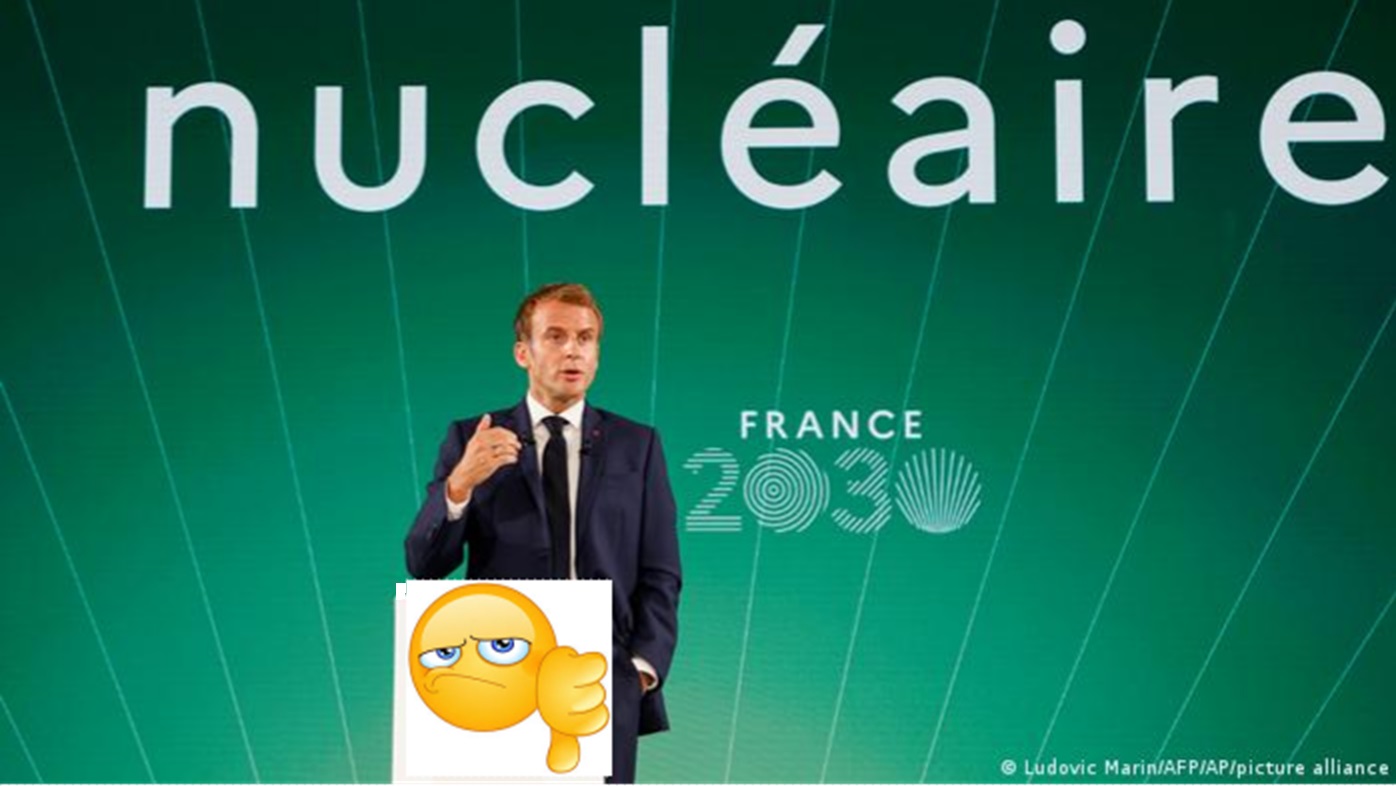
In France, it has been decided that widespread electrification will mean a nuclear revival. But the feasibility and viability of this revival are questionable. Technically, industrially… and also economically and financially. Laure Noualhat delivers a damning indictment of the cost of nuclear power for the coming years and envisions France defaulting on its debt due to this investment choice. A provocative statement designed to shock: intrigued, the public might be inclined to watch her documentary, ”
Nuclear Power Will Ruin France, ” or read her book of the same name to discover figures recently validated by the Court of Auditors. Perhaps even underestimated.
Science involving nuclear power is nothing but the ruin of the state.
This new nuclear perspective rests on a risky gamble, devoid of any studies or clearly established facts. The long-awaited third multi-year energy program (PPE) has not yet been published, but the decision is already considered final:
three pairs of EPR2 reactors have been announced, with four more expected to follow. And the current dithering at the highest levels of government will not allow for the swift publication in the Official Journal of the implementing decrees for the corresponding laws passed in 2019 and 2021, relating to renewable energies and nuclear power. While the second PPE was largely dominated by the question of the pace of reducing the share of nuclear energy in electricity production, this third version intends to prioritize nuclear power, while curbing the development of wind and solar power.
Plans drawn up without much detail regarding the financial arrangements. A vague understanding of the economic impact of such investments in France. This is the general observation, which is hardly reassuring given the sums involved.
Aside from the future design and construction of new reactors ( whose final design is not yet complete ), the nuclear sector faces expenses related, for example, to the annual operating costs of the existing fleet. While considered minor compared to the initial investment and expected to decrease continuously, these costs are actually increasing each year for an aging fleet due to so-called “refurbishment” investments and safety upgrades (the “major overhaul” plan). These are all bills to be paid, essential for ensuring the fleet’s operation beyond 40 or 50 years and beyond, and considerably larger than initially anticipated.
This is clearly considered in the numerous reports conducted by the Court of Auditors (CC) on EDF (
2012 report ,
updated in 2014 ,
2021 report ). Given the difficulty of extracting the precise elements for a comprehensive analysis of the situation from EDF’s financial reports, the Court’s reports prove to be a valuable journalistic contribution. Valuable, but still incomplete. The Court of Auditors itself admits that the reports are systematically produced with little cooperation from the national company: the CC emphasizes that projections sometimes had to be established “without EDF’s data,” disregarding “hidden costs,” “concealed amounts,” and “difficult calculations,” despite the various accounting methods that are always prone to significantly altering the evolution of the different parameters.
So much so that the CC finally admits to having to put forward the figures ‘with caution’, not without difficulty since EDF is playing with the withholding of sensitive information…………….
From this murky situation, Laure Noualhat takes on the almost sacred mission of reconstructing the future burden of nuclear power in France. And, in addition to the costs of the EPR2 reactors, it turns out that costs are also rising through operating expenses, maintenance investments, the cost of future expenses (decommissioning, waste and spent fuel management), changes in the fleet’s production, the level of economic lease payments…
This interview returns to the investment problems raised, the growing financial consequences of this technology, deemed totally unreasonable by Laure Noualhat.
Published in the Reporterre media collection , the bias with which the book could be accused easily falls away: the figures are corroborated by the Court of Auditors itself.
The goal would therefore be to find €200-250 billion, a conservative estimate reconstructed by Laure Noualhat. This is equivalent to the investment costs for the construction of the 58 existing civilian reactors (€106 billion in 2018; the two reactors at Fessenheim have since been shut down ). However, the national electricity provider remains heavily indebted (by approximately €54 billion) and cannot claim to finance the new nuclear program on its own. Furthermore, the cost has increased by 100% since the announcement in 2019 (the initial estimate was €52.7 billion). Undoubtedly, all of this will require guarantees from the State.
However, there is nothing very attractive about it for investors given the hypothetical financial returns which could be considered insufficient over a period running from the construction phase to the operation phase, i.e. more than 60 years.
The costs of existing reactors will increase, particularly in the event of generic defects, combined with the risks associated with the aging of the fleet that will inevitably come to light. This growth will be difficult to control and anticipate. Therefore, given the significant investments it may require, this issue has become urgent, as it will severely impact the budget.
The risk of insufficient performance of the nuclear fleet is among the most critical in the group’s risk assessment. It is directly affected by the occurrence of generic faults, which can reduce fleet availability while they are being addressed. This risk has been assigned the highest impact level and a control level ranging from medium to low.
It’s an open secret that all this is because the premature aging of internal materials and components has been known since 1986. The Energy Regulatory Commission itself noted that EDF believed that with the aging of the fleet, generic hazard problems would become more structural: this was the case during the episode of stress corrosion cracking discovered quite by chance, and there is reason to fear that others will occur.
Indeed. Just recently, an ASNR meeting revealed that new cracks measuring 2 to 3 millimeters had been detected and confirmed at the Civaux nuclear power plant on reactor 2 (1450 MW). The piping of the affected RRA circuit (the primary circuit under normal operating conditions) has reportedly already been dismantled and sent for analysis, suggesting that the cracks were detected well before this announcement. This specter of renewed stress corrosion cracking raises concerns about the technical and technological control of this accelerated aging process under irradiation and extreme operating conditions (temperature, pressure).
An already outdated figure
The Court of Auditors’ investigation into EDF is far from over. A new
report was just published at the end of September 2025. The findings are alarming: EDF faces a massive investment challenge of €460 billion over 15 years…………………………………………………………………………………………………………………………………………………………………………….
Protected like few others, supported by the political class, the nuclear sector deviates from certain minimal procedures in terms of accounting and transparent financing. It is decidedly not subject to any of the economic rules that prevail in other industrial sectors.
The aim of this investigation, led by Laure Noualhat, was to shed more light on the expenses generated by undebated political decisions. Mission accomplished.
Will these colossal investments put an end to the new nuclear program in France? https://homonuclearus.fr/nucleaire-compte-presque-bon/?utm_source=Homo+nuclearus&utm_campaign=3e0276f781-EMAIL_CAMPAIGN_2020_02_12_08_27_COPY_01&utm_medium=email&utm_term=0_338d2a581d-3e0276f781-433658419
Oil and gas industries join with nuclear to fight renewable energy.

For decades oil, gas and coal backers were locked in a rivalry with nuclear interests, competing for shares of America’s energy grid; but today many on both of those sides have teamed up to counter the rise of renewable power.
Bloomberg Businessweek previously reported on how the
backers of a politically connected nuclear startup are working, at times covertly, to neutralize the industry’s chief regulator, the Nuclear Regulatory Commission. Many of the nuclear industry’s most energetic backers are simultaneously engaged in efforts to kill the competition—wind and solar.
Bloomberg 9th Dec 2025, https://www.bloomberg.com/news/features/2025-12-09/nuclear-energy-fossil-fuel-interests-join-forces-against-renewable-energy
Search for UK fusion plant engineering partner to restart in 1-2 years after failed first attempt

09 Dec, 2025 By Thomas Johnson
The procurement for an engineering partner to construct the UK’s Spherical Tokamak for Energy Production (Step) fusion power plant will resume “in a year or two” after a failed first attempt, but the choice of a construction partner is imminent.
……………………..
The government launched a competition to select engineering and construction partners for the prototype fusion energy plant in Nottinghamshire in May last year, with the contracts rumoured to be worth close to £10bn. Then in January, the shortlist for both partners was revealed.
The shortlisted organisations for Step’s engineering partner were:
- Celestial JV: consisting of Eni UK Limited as the lead member and AtkinsRéalis, Jacobs Clean Energy (now Amentum), Westinghouse and Tokamak Energy as other members.
- Phoenix Fusion Limited: consisting of Cavendish Nuclear as the lead member, KBR and Assystem Energy and Infrastructure as other members.
Engineering procurement hits the wall
Despite announcing the two-consortia shortlist, the project recently divulged that the process of selecting the engineering partner had broken down, with the approach being taken as being deemed “not suitable”…………………………………………………………..
Speaking at the Nuclear Industry Association (NIA) annual conference on 4 December, UKIFS chief executive Paul Methven stated procurement for the engineering partner would resume “in a year or two”……………………………………………………………… https://www.newcivilengineer.com/latest/search-for-uk-fusion-plant-engineering-partner-to-restart-in-1-2-years-after-failed-first-attempt-09-12-2025/
Sizewell C sea defences at centre of High Court challenge

A campaign group against the project is due to raise concerns about flooding and rising sea levels.
Jasmine Oak, 10th Dec 2025, https://www.hellorayo.co.uk/greatest-hits/norfolk/news/sizewell-c-sea-defences-at-centre-of-high-court-challenge
A campaign group opposing the Sizewell C nuclear power station is due to challenge the government in the High Court over concerns about flooding and sea level rise.
Together Against Sizewell C (TASC) will appear in court today (Tuesday, the 9th December), when a judge will decide whether the group can proceed to a full judicial review against the Secretary of State for Energy Security and Net Zero, Ed Miliband.
The legal challenge focuses on two additional sea defences that Sizewell C Ltd has committed to installing but were not included in the original planning application for the project.
Chris Wilson, from Together Against Sizewell C, said the hearing is a “permission hearing where the judge will decide whether we can go to a full judicial review”.
He said the group discovered at the end of 2024 that Sizewell C Ltd had committed to the Office for Nuclear Regulation to install additional coastal defences to prevent flooding in extreme sea-level rise scenarios.
“What we subsequently found out was that these additional sea defences had been known about by EDF, who put in the planning application for Sizewell C,” he said.
“They’ve known about them since 2015, and in 2017 they’d actually carried out an assessment for the platform height for Sizewell C, which is particularly relevant for flood protection.”
What’s the importance of these defences not being reviewed?
Mr Wilson said the approved platform height of 7.3 metres meant that, in an extreme sea level rise scenario caused by climate change, additional flood defences would be required.
He said these defences were not part of the original Development Consent Order (DCO) and had therefore not been assessed for their environmental or community impact.
“Sizewell C has been approved and got DCO approval to be built, but it doesn’t include these additional sea defences,” he said.
“That means they’ve never been assessed as to their environmental impact or impact on other places, like RSPB Minsmere or the village of Sizewell.”
According to Mr Wilson, one of the proposed sea defences could extend around 500 metres across the land.
Infrastructure across Suffolk
He also raised concerns about the concentration of energy infrastructure in east Suffolk.
“To have 30% of the whole nation’s energy infrastructure in one small area of Suffolk, with the wind farm infrastructure and Sizewell C, it doesn’t provide security of supply in our mind,” he said.
“It just seems to be a big target for someone who wants to disrupt us.”
Mr Wilson said the cumulative impact of ongoing and planned developments was already affecting the area.
“The area of outstanding natural beauty has long been recognised as a very special place, and it’s just been decimated by all the works going on at the moment,” he said.
He added that further infrastructure, including a proposed water pipeline, could disrupt residents’ lives and damage the local tourism economy.
Chris Wilson also expressed concern for future generations. He said decisions taken now would have long-term consequences in Suffolk and beyond.
He warned that delaying scrutiny of the additional sea defences could leave those in the future facing greater environmental damage, higher financial costs and fewer options. He said any infrastructure with a lifespan stretching into the next century should be fully assessed for climate change impacts from the outset, arguing that failure to do so risks passing the burden of unresolved problems, including coastal erosion and flood protection, onto people not yet born.”
What they want to see
TASC argues the Secretary of State should reconsider or amend the project’s consent order to allow for public scrutiny of the defences before construction continues.
Mr Wilson said the group wants the government to “actually listen to those that have raised concerns and have an objective review” of whether Sizewell C is needed.
He said: “If it was determined it was, which I don’t think it would be, there are other options. We’ve got renewables plus storage that could meet the requirement quicker and cheaper.”
Government response
The Department for Energy Security and Net Zero has previously said Sizewell C would provide secure, low-carbon electricity for millions of homes once operational.
The High Court will decide on Tuesday whether TASC can proceed to a full judicial review of the government’s decision.
Mr Wilson said he hoped the judge would allow the challenge to continue.
“I just hope that the judge can see the validity of our arguments and that we get a full judicial review hearing,” he said.
Examining myths about the war in Ukraine.

Peter Kuznick on the new National Security Strategy
ACURA December 9, 2025
ACURA’s James W. Carden spoke this week with Peter Kuznick, professor of history and director of the award-winning Nuclear Studies Institute at American University
“………………………………………………………………………………… JC: Over the past couple of weeks, you can see from certain stories published by the mainstream media about Ukraine that reality is now starting to slowly dawn on these people. Ukraine is corrupt. Well, that’s not news to people like you and me. Ukraine is not doing so well on the ground. That’s also not news. Ukraine has a population problem, also not news, but all of the sudden now we’re seeing stories in the New York Times, Washington Post, Reuters, and amazingly the Telegraph (because Britain has the worst, most irresponsible media in the West) that things aren’t as rosy as the American people have been led to believe. With regard to Ukraine, what is your sense? We’re getting reports now that Russia is making gains slowly in the east, while Ukraine is having trouble fielding and raising an army.
PK: Yeah, I know they’re picking up people off the streets and forcing them to serve. We know that morale is very low and the desertion rates among Ukrainian troops is very, very high. They’re just totally outmanned, outgunned, out-strategized at this point. The New York Times just had a very extensive article about the extent—and also how close to the corruption scandal Zelensky is; how he has intervened to try to dismantle or weaken the agencies that try to monitor corruption. When Yermak resigned, that was a real sign of a significant problem. Even if Zelensky is not personally implicated, everybody around him has been implicated.
Plus, as you say, the support for Ukraine was based on several myths. The first myth is that it was a full scale Russian invasion, which it wasn’t for a long time. The second myth is that it was unprovoked. How many times have we read about an unprovoked invasion? It was the most highly provoked invasion imaginable going back to 2013-14; the third myth was that if we kept on giving enough support, Ukraine could win on the battlefield and claw back the territory that Russia had taken. That hasn’t been possible. We’ve known this for more than two years already, but they repeated it constantly. Then the last huge myth to me is that if Russia succeeds in Ukraine, it’s going to gobble up one piece of Europe after another.
That is not what this is about.
That is not Putin’s mindset. If Putin has this much difficulty gaining more than 20% of Ukraine in four years, does he really want to take on NATO? Even if the US security guarantee is not ironclad, this is not what Russia needs and it’s not what the Russian people want.
I was in Russia in April. I spoke to hundreds of Russian people. And what I heard was that they all wanted the war to end either on principle, because they hated war, or because they were weary of the war. They were not critical of Putin because they thought that Russia was forced into this position, but they were very ready and eager for this to end, even if Russia has to make some compromises that many of the leaders don’t want to see.
But I also know from friends of mine who have spoken to Putin recently that Putin sees himself as a kind of in the middle here. He’s got nationalists and hawks to his right who think he should be much more aggressive. It’s not just Medvedev—there are a lot of others who are putting pressure on Putin to be much more aggressive.
JC: So one last question. How do you see this thing ending? My own guess is that this goes on through the the spring and summer of next year. Russia finally frees the rest of the Donbas and then they call it a day. I don’t foresee any big push to Odessa or anything like that. How do you see this thing wrapping up?
“…………………………………………………………………………………………………………….. I look at [German Chancellor] Merz and the things he says and what he’s doing, and it’s frightening to me.
Just a few weeks ago, Sergey Naryshkin who is the head of the Russian SVR, the Russian Foreign Intelligence Agency, said that this is the most fragile moment for international security since World War II. And he’s right. https://usrussiaaccord.org/acura-exclusive-peter-kuznick-on-the-new-national-security-strategy/
Danger of letting AI into the nuclear weapons chain of command

Peter Kuznick on the new National Security Strategy
ACURA, December 9, 2025
ACURA’s James W. Carden spoke this week with Peter Kuznick, professor of history and director of the award-winning Nuclear Studies Institute at American University.
JC: I’d like to start with your thoughts about the new National Security Strategy (NSS). It seems to me that there was some good stuff and some not-so-good stuff in there. I’m curious to get your overall take and then maybe we can drill down a little bit….
PK: The thing about it is that the Trump administration is quite schizophrenic. They’ve got bonafide neocons and then they’ve got the MAGA base, which wants to not only avoid Forever Wars, but wants to avoid overseas involvements.
It is very concerned about what’s going on in the Caribbean now, and very concerned about Trump’s blind support for Israel……………………………………………………………………………..
the overall picture is that the US is going to maintain its hegemony. What it wants is empire on the cheap. So Trump says, we want the Europeans and the Asians to spend 5% of GDP on their militaries so that the US doesn’t have all that responsibility.
Even though the NSS criticizes NATO and criticizes the Europeans over Ukraine. Trump, I think, sincerely, would like to end the war in Ukraine, not only to get the Nobel Peace Prize that he so covets. But Trump does not deserve the Nobel Peace Prize, no matter what he does in terms of Ukraine or for the other conflicts that he says he settled……………………………………………………………………………………………………………………………………………………………………..
JC: The other parts of the NSS that stuck out at me was the reference to the Golden Dome and the references to AI which were sort of like, this is something that we need to harness and encourage. I look at AI and see something on the order of a nuclear danger. In other words, I think our policy towards AI should be non-proliferation, stop feeding this beast. What do you think?
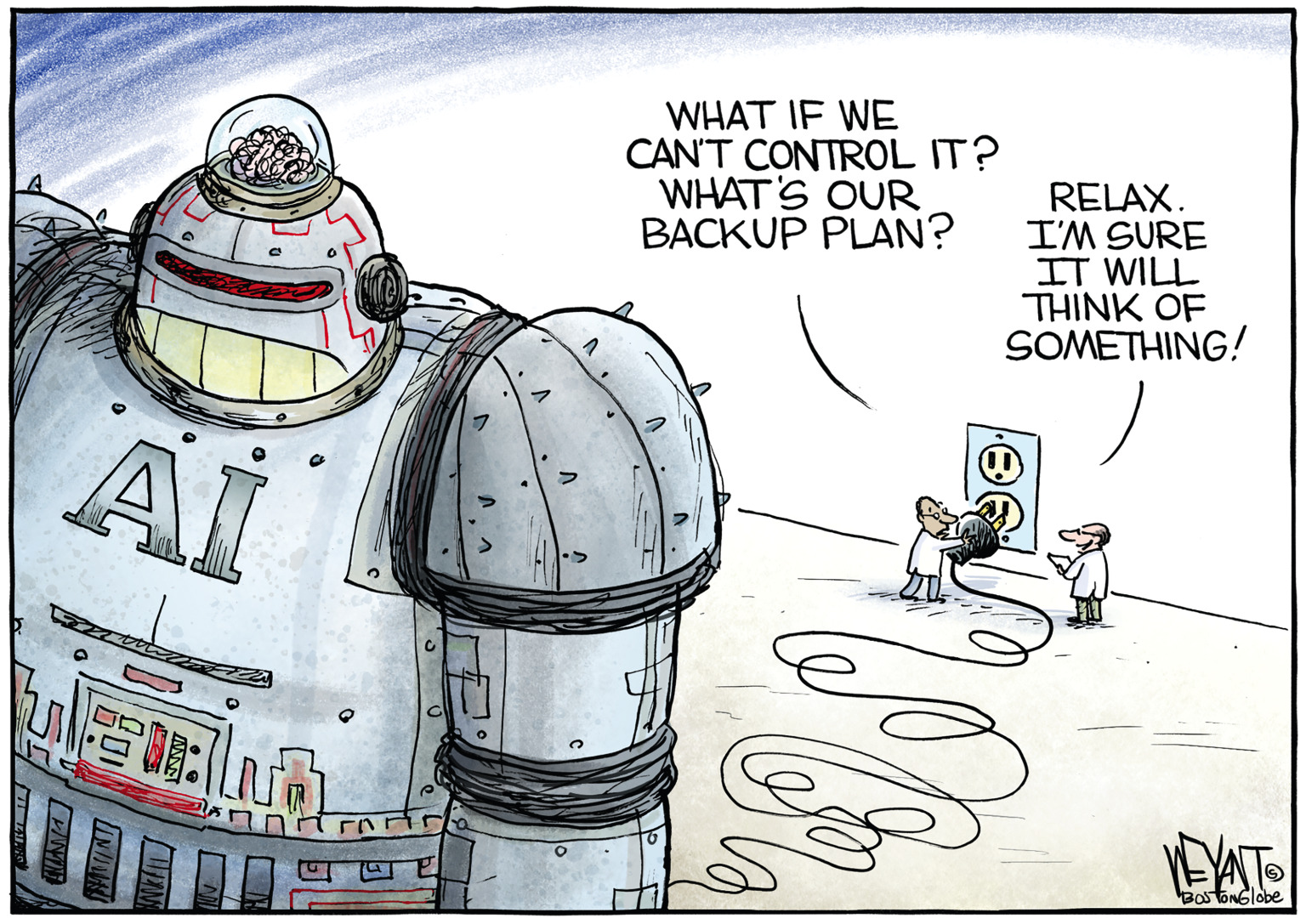
PK: Yes, I agree that we need strict regulation of AI. If you leave this in the hands of the tech bros and the billionaires, it could be a disaster. I mean, one of the things that I’m glad is that there seems to be some recognition to not let AI into the chain of command when it comes to nuclear command and control. As you know, we’ve averted several World War III scenarios because there were human beings in the chain who intervened to stop launching retaliatory strikes based on faulty radar intelligence. (see, for eg., https://nsarchive.gwu.edu/document/19919-national-security-archive-doc-21-william-odom)
So AI worries me a lot. And the Golden Dome is another loony idea because it’s so much easier to overwhelm these missile defense systems with decoys, you can’t shoot ’em all down. We say it’s hitting a bullet with a bullet, but it’s hitting a bullet and all these decoys too. Also, it is a waste, another waste of more than a couple hundred billion dollars, and then the cost overruns always skyrocket. So it’s a fantasy. It’s an illusion just like it was when Reagan proposed Star Wars, it’s an illusion now…………………………………………………………………………………………………………………………………………………………… https://usrussiaaccord.org/acura-exclusive-peter-kuznick-on-the-new-national-security-strategy/
Tony Blair’s digital ID dream, brought to you by Keir Starmer
Why is Britain’s PM set on introducing such a wildly unpopular policy as digital ID? Parliament debated the issue last night after a petition against the policy was signed by three million people. It’s a policy that has done the improbable job of uniting Nigel Farage, Jeremy Corbyn, Boris Johnson and Zack Polanski in opposition to the idea. In today’s column, Carole Cadwalladr joins the dots between Starmer’s policy and the Tony Blair Institute – and argues that the whole thing is a “techno-authoritarian’s wet dream”.
If Keir Starmer’s digital ID is the question, Tony Blair is the answer
The government’s wildly unpopular new policy is backed by Britain’s wildly unpopular former PM. It’s also a techno-authoritarian’s wet dream, argues Carole Cadwalladr
We live in polarising times. Britain is a nation united only by the occasional sporting fixture and intermittent bursts of outrage at the BBC. Yet somehow, Keir Starmer has achieved the impossible: he has announced new legislation so wildly unpopular that it has hit a mythical political g-spot, uniting not only Nigel Farage and Jeremy Corbyn, but even more miraculously, it’s brought together Jeremy Corbyn and Zarah Sultana.
The issue at stake is digital ID. And if it has so far passed you by, it’s not because you’ve failed to pay attention, it’s because digital ID is a political ghost, a phantom that appeared from nowhere and now looks set to haunt what remains of Starmer’s credibility.
This is a policy that wasn’t in the Labour Party’s manifesto, that no party faithful campaigned for and that no voters were told about on the doorstep. Instead, after some brief ground softening by pet journalists in friendly newspapers, it appeared out of almost nowhere in late September.
Last week, the Office of Budget Responsibility calculated that it would cost £1.8bn over the next three years (a figure rejected by the government, who also couldn’t point to any savings). And yesterday evening, parliament debated the issue, not because the government had tabled it but because it had no choice: it had been forced to hold a ‘Westminster Hall’ debate, triggered by a petition signed by nearly three million people.
The obvious question is why? Why is Starmer pinning his political reputation on such a manifestly unpopular policy? When he announced it, he claimed it would stop illegal immigration by putting an end to illegal work, an argument so hopeless that even he’s abandoned it (people who employ illegal immigrants being the least obvious demographic to abide by any new rules).
Instead he’s tweeted a series of increasingly desperate reasons, all of which have been comprehensively ratioed (ie comments vastly outnumbering shares) and community noted (fact-checked by users).
I wish there was a more complicated reason behind Starmer’s kamikaze moves. But there’s a perfectly straightforward explanation behind all of this: Tony Blair.
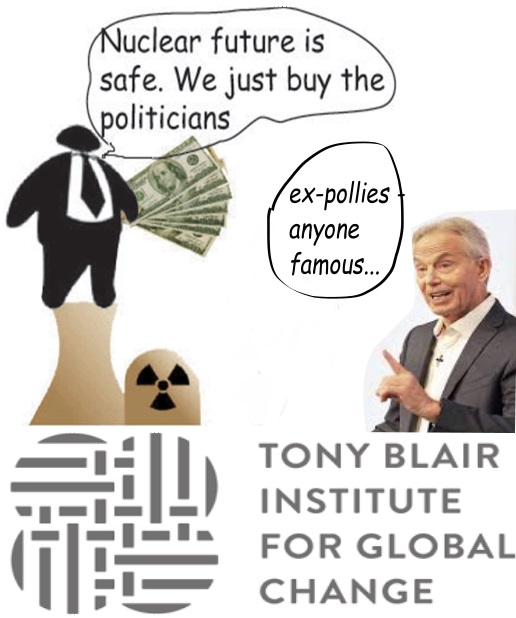
The Nerve has mapped the political landscape to illustrate who’s for digital ID and who’s against it. And what our research shows is a web of influence that radiates out from Tony Blair’s Institute for Global Change. In the ‘for’ camp is a grab bag of people who are mostly associated with Blair. And against it…is everyone else.
The pro-Digital ID list includes William Hague who authors reports, for which he’s presumably being paid, with Tony Blair for TBI, including one on Digital ID – a report forgot to mention in his tweet claiming the concept is simply ‘common sense’.
There are also historic allies like Peter Mandelson and those in Blair’s grace and favour, including various Labour proteges in key cabinet positions, Peter Kyle, Wes Streeting and publications that include the Times and the Observer.
This list of those against includes not just Farage, Corbyn and Sultana but also Zack Polanski, Ed Davey and Boris Johnson.
The fight has only just begun, but digital ID is already shaping up to resemble less a policy than a suicide vest Tony Blair has strapped to Starmer’s back.
Digital ID is Blair’s pet policy. Cut it in half and you’ll find the letters T-O-N-Y running through the middle. It’s lodged deep in Blair’s political psyche – his obsession with a national ID card goes back to the 90s – but it’s also now the basis for a technology that is a surveillance capitalist’s wet dream.
“The £260m Larry Ellison has put into Tony Blair’s institute is an extraordinary amount of money. It dwarves the budget and expenditure of other UK think tanks“
And while it may look like a 90s throwback, it cleaves closely to the 21st century business goals of Blair’s billionaire patron. That billionaire patron is Larry Ellison, the man who’s backed Blair’s ‘Institute for Global Change’ to the tune of £260m.
We chose to launch the Nerve with an investigation into Starmer, Blair and Ellison because if Larry Ellison is the eminence grise behind Blair, Blair is the eminence grise behind Starmer.
Ellison, the founder of Oracle, has emerged as one of the most powerful of the broligarchs, close to both Trump and Netanyahu. He’s poised to take over American TikTok with Rupert Murdoch, while his son has bought Paramount and installed a right-wing commentator as the head of CBS News. He’s also the most powerful man in Britain that most people have never heard of.
The £260m he’s put into Tony Blair’s institute is an extraordinary amount of money by British standards. It dwarves the budget and expenditure of other UK think tanks. Digital ID is only the latest policy that’s been incubated in the steel and glass central London offices that seemingly operate a revolving door between TBI and the Starmer government, all closely align with Ellison’s.
Nor is TBI Ellison’s only UK venture. He’s also funded the Ellison Institute of Technology, a research institute at Oxford University that includes the life sciences, and a nationwide centralised database that incorporates health and other data that could have huge research possibilities.
Data is the raw fuel of AI foundation models and our personal data, the most intimate facts about us, is the most valuable data of all. (Especially to a man like Ellison who’s obsessed with ageing and is funding health research that he hopes will extend human life, including importantly his own.) Some of the worst companies on the planet will seek to exploit that data and digital ID is an irreversible step: a genie that once out of the bottle, is never going back.
It’s the techno-authoritarian possibilities of a centralised database that’s alarmed both the libertarian wing of the Conservative and Reform parties, spearheaded by David Davis, but also tech and press freedom organisations, including the Electronic Freedom Foundation, Open Rights Group, Big Brother Watch and Article 19. It’s not hyperbole to say that creating a centralised database is what the Stasi would do because it is exactly what they did.
One doesn’t have to speculate about Ellison’s views on mass data collection and what it means for surveillance: he’s already said all the quiet parts out loud. “Every police officer is going to be supervised at all times,” he has said. “And if there’s a problem, AI will report that problem and report it to the appropriate person. Citizens will be on their best behaviour because we are constantly recording and reporting everything that’s going on.”
Tony Blair is an undeclared lobbyist. Ellison is his client. And TBI is an influencing machine whose tentacles spread across both the political and media establishments: if you read any article about digital ID that doesn’t include the Blair/Ellison connection, ask yourself why.
Carole Cadwalladr is an award-winning investigative journalist and co-founder of the Nerve, a new platform for fearless, independent journalism.
Russia says it awaits an answer from the US on New START as nuclear treaty ticks down.

By Guy Faulconbridge and Lucy Papachristou, December 10, 2025, https://www.reuters.com/world/china/russia-says-it-awaits-an-answer-us-new-start-nuclear-treaty-ticks-down-2025-12-10/
- Summary
- New START expires on February 5
- Russia awaits an answer from US, top official says
- Putin has proposed keeping the treaty’s limits
- Trump has said it is a good idea
MOSCOW, Dec 10 (Reuters) – Russia on Wednesday said it was still awaiting a formal answer from Washington on President Vladimir Putin’s proposal to jointly stick to the last remaining Russian-U.S. arms control treaty, which expires in less than two months.
New START, which runs out on February 5, caps the number of strategic nuclear warheads that the United States and Russia can deploy, and the deployment of land- and submarine-based missiles and bombers to deliver them.
Putin in September offered to voluntarily maintain for one year the limits on deployed strategic nuclear weapons set out in the treaty, whose initials stand for the (New) Strategic Arms Reduction Treaty.
Trump said in October it sounded “like a good idea.”
“We have less than 100 days left before the expiry of New START,” said Sergei Shoigu, the secretary of Russia’s powerful Security Council, which is like a modern-day politburo of Russia’s most powerful officials.
“We are waiting for a response,” Shoigu told reporters during a visit to Hanoi. He added that Moscow’s proposal was an opportunity to halt the “destructive movement” that currently existed in nuclear arms control.
NUCLEAR ARMS CONTROL IN PERIL
Russia and the U.S. together have more than 10,000 nuclear warheads, or 87% of the global inventory of nuclear weapons. China is the world’s third largest nuclear power with about 600 warheads, according to the Federation of American Scientists, opens new tab.
The arms control treaties between Moscow and Washington were born out of fear of nuclear war after the 1962 Cuban Missile Crisis. Greater transparency about the opponent’s arsenal was intended to reduce the scope for misunderstanding and slow the arms race.
U.S. AND RUSSIA EYE CHINA’S NUCLEAR ARSENAL
Now, with all major nuclear powers seeking to modernise their arsenals, and Russia and the West at strategic loggerheads for over a decade – not least over the enlargement of NATO and Moscow’s war in Ukraine – the treaties have almost all crumbled away. Each side blames the other.
In the new U.S. National Security Strategy, opens new tab, the Trump administration says it wants to “reestablish strategic stability with Russia” – shorthand for reopening discussions on strategic nuclear arms control.
Rose Gottemoeller, who was chief U.S. negotiator for New START, said in an article for The Arms Control Association this month that it would be beneficial for Washington to implement the treaty along with Moscow.
“For the United States, the benefit of this move would be buying more time to decide what to do about the ongoing Chinese buildup without having to worry simultaneously about new Russian deployments,” Gottemoeller said.
1 This Month



PLEASE OPPOSE HR 8255 AND S.3639 – bills would accelerate satellite deployment, with no environmental review or safeguards – https://ncstd5li.quorum.us/campaign/169331/
To see nuclear-related stories in greater depth and intensity – go to https://nuclearinformation.wordpress.com
-
Archives
- September 2026 (330)
- August 2026 (330)
- July 2026 (355)
- June 2026 (287)
- May 2026 (306)
- April 2026 (356)
- March 2026 (251)
- February 2026 (267)
- January 2026 (308)
- December 2025 (358)
- November 2025 (359)
- October 2025 (375)
-
Categories
- 1
- 1 NUCLEAR ISSUES
- business and costs
- climate change
- culture and arts
- ENERGY
- environment
- health
- history
- indigenous issues
- Legal
- marketing of nuclear
- media
- opposition to nuclear
- PERSONAL STORIES
- politics
- politics international
- Religion and ethics
- safety
- secrets,lies and civil liberties
- spinbuster
- technology
- Uranium
- wastes
- weapons and war
- Women
- 2 WORLD
- ACTION
- AFRICA
- Atrocities
- AUSTRALIA
- Christina's notes
- Christina's themes
- culture and arts
- Events
- Fuk 2022
- Fuk 2023
- Fukushima 2017
- Fukushima 2018
- fukushima 2019
- Fukushima 2020
- Fukushima 2021
- general
- global warming
- Humour (God we need it)
- Nuclear
- RARE EARTHS
- Reference
- resources – print
- Resources -audiovicual
- Weekly Newsletter
- World
- World Nuclear
- YouTube
-
RSS
Entries RSS
Comments RSS

