THE NEXT WARS WERE ALWAYS HERE: How Post 9/11 Law and the Monroe Doctrine Converged in the Caribbean.
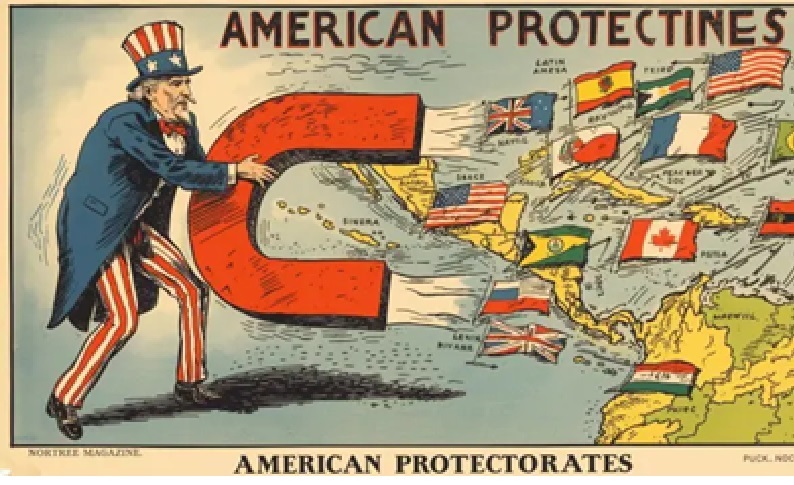
December 9, 2025 By Michelle Ellner, https://scheerpost.com/2025/12/09/the-next-wars-were-always-here-how-post-9-11-law-and-the-monroe-doctrine-converged-in-the-caribbean/
The first U.S. missiles that struck the boats in the Caribbean in early September 2025 were described by Washington as a “counter-narcotics operation,” a sterile phrase meant to dull the violence of incinerating human beings in an instant. Then came the second strike, this time on survivors already struggling to stay afloat. Once the details emerged, however, the official story began to fall apart.
Local fishermen contradicted U.S. claims. Relatives of those killed have said the men were not cartel operatives at all, but fishermen, divers, and small-scale couriers. Relatives in Trinidad and Venezuela told regional reporters their loved ones were unarmed and had no connection to Tren de Aragua, describing them instead as fathers and sons who worked the sea to support their families. Some called the U.S. narrative “impossible” and “a lie,” insisting the men were being demonized after their deaths. U.N. experts called the killings “extrajudicial.” Maritime workers noted what everyone in the region already knows: the route near Venezuela’s waters is not a fentanyl corridor into the United States. Yet the administration clung to its story, insisting these men were “narcoterrorists,” long after the facts had unraveled. Because in Washington’s post 9/11 playbook, fear is a tool. Fear is the architecture of modern American war.
The U.S. did not emerge from the Iraq War into peace or reflection. It emerged into normalization. The legal theories invented and abused after 9/11 – elastic self-defense, limitless definitions of terrorism, enemy combatants, global strike authority – did not fade. They became the backbone of a permanent war machine. These justifications supported drone wars in Pakistan, airstrikes in Yemen and Somalia, the destruction of Libya, special operations in Syria, and yet another military return to Iraq. And behind every expansion of this global battlefield was a U.S. weapons industry that grew richer with each intervention, lobbying for policies that kept the country in a constant state of conflict. What we are seeing today in the Caribbean is not an isolated action; it is the extension of a militarized imperial model that treats entire regions as expendable.
The next wars were always there because we never confronted the political and economic system that made endless wars a profitable cornerstone of U.S. power.
A Post-9/11 Legal Framework Built for Endless War
The Trump administration has advanced several overlapping legal arguments to justify the strikes, and together they reveal a post-9/11 framework that stretches executive power far beyond its intended limits.
According to detailed reporting in The Washington Post, a classified Justice Department Office of Legal Counsel (OLC) memo argues that the United States is engaged in a “non-international armed conflict” with so-called narcoterrorist organizations. Under this theory, the strikes qualify as part of an ongoing armed conflict rather than a new “war” requiring congressional authorization. This framing alone is unprecedented: drug-trafficking groups are criminal networks, not organized armed groups targeting the U.S.
A second pillar of the memo, described by lawmakers to the Wall Street Journal, claims that once the president designates a cartel as a Foreign Terrorist Organization, it becomes a lawful military target. But terrorism designations have never created war powers. They are financial and sanctions tools, not authorizations for lethal force. As Sen. Andy Kim put it, using an FTO label as a “kinetic justification” is something “that has never been done before.”
The OLC memo also invokes Article II, claiming the president can order strikes as part of his commander-in-chief authority. Yet this argument depends on a second unsupported premise: that the boats posed a threat significant enough to justify self-defense. Even internal government lawyers questioned this. As one person familiar with the deliberations told The Washington Post, “There is no actual threat justifying self-defense — there are not organized armed groups seeking to kill Americans.”
At the same time, the administration has publicly insisted that these operations do not rise to the level of “hostilities” that would trigger the War Powers Resolution because U.S. military personnel were never placed at risk. By the administration’s own logic, that means the people on the boats were not engaged in hostilities and therefore were not combatants under any accepted legal standard, making the claim of a wartime self-defense strike impossible to reconcile with U.S. or international law.
Under international law, executing people outside a genuine armed conflict is an extrajudicial killing. Nothing about these strikes meets the legal threshold for war. Because the people on the boats were not lawful combatants, the operation risks violating both international law and U.S. criminal law, including statutes on murder at sea, a concern reportedly underscored by Admiral Alvin Holsey’s early resignation.
The memo goes further still, invoking “collective self-defense” on behalf of regional partners. But key regional partners, including Colombia, Brazil, and Mexico, have publicly criticized the strikes and said they were not consulted, undermining the very premise of “collective” defense.
This internal contradiction is one reason lawmakers across both parties have called the reasoning incoherent. As Sen. Chris Van Hollen put it, “This is a memo where the decision was made, and someone was told to come up with a justification for the decision.”
And beneath all of this lies the most dangerous element: the memo’s logic has no geographic limits. If the administration claims it is in an armed conflict with a designated “narcoterrorist” group, then, by its own theory, lethal force could be used wherever members of that group are found. The same framework that justifies strikes near Venezuela could, in principle, be invoked in a U.S. city if the administration claimed a cartel “cell” existed there.
If Trump truly believes he leads “the most transparent administration in history,” then releasing the memo should be automatic. The American people have the right to know what legal theory is being used to justify killing people in their name.
For decades, OLC memos have been used not simply as legal advice but as the internal architecture that allows presidents to expand their war-making power. The Bush torture memos treated torture as lawful by redefining the word “torture” itself, calling it “enhanced interrogation,” thereby enabling years of CIA black-site operations and abusive interrogations. The Libya War Powers memo argued that bombing Libya did not constitute “hostilities,” allowing the administration to continue military action without congressional approval. Targeted-killing memos, including those related to drone strikes on U.S. citizens abroad, constructed a legal theory that lethal force could be used outside traditional battlefields, without trial, based on executive determinations alone. In each case, the memo did not merely interpret the law; it reshaped the boundaries of presidential war powers, often without public debate or congressional authorization.
The American people have the right to know what “legal theory” is being used to justify killing people in their name. Congress needs it to conduct oversight. Service members need it to understand the legality of the orders they receive. And the international community needs clarity on the standards the U.S. claims to follow. There is no legitimate reason for a president to hide the legal basis for lethal force, unless the argument collapses under scrutiny. A secret opinion cannot serve as the foundation for an open-ended military campaign in the Western Hemisphere.
The Older Foundation: A 200-Year-Old Doctrine of Control
If the legal foundation comes from the post-9/11 era, the geopolitical foundation is older. Almost ancestral. For 200 years, the Monroe Doctrine has served as the permission slip for U.S. domination in Latin America.
The Trump administration went even further by openly reviving and expanding it through what officials called a “Trump Corollary,” which reframed the entire Western Hemisphere as a U.S. “defense perimeter” and justified increased military operations under the language of counter-narcotics, migration control, and regional stability. In this framework, Latin America is no longer treated as a diplomatic neighbor but as a security zone where Washington can act unilaterally.
Venezuela, with its vast oil reserves, sovereign political project, and refusal to submit to U.S. pressure, has long been marked as a target. Sanctions softened the terrain. Disinformation hardened public opinion. And now, military strikes near its waters test how far Washington can push without triggering public revolt at home. The term “narcoterrorism” is simply the newest mask on a very old doctrine.
The strikes in the Caribbean are not isolated. They are the predictable intersection of two forces: a post-9/11 legal regime that allows war to expand without congressional approval, and a 200-year-old imperial doctrine that treats Latin America as a zone of control rather than a community of sovereign nations. Together, they form the logic that justifies today’s violence near Venezuela.
The Label that Opened the Door
After 9/11, every administration learned the same lesson: if you label something “terrorism,” the public will let you do almost anything. Now, this logic is being used everywhere. The cruel, decades-long blockade on Cuba is justified by claiming that the island is a “state sponsor of terrorism.” Mass surveillance, border militarization, endless sanctions, all wrapped in the language of “counterterrorism.” And now, to authorize military action in the Caribbean, they simply take the word “narco” and attach it to the word “terrorism.” The label does all the work. The danger is not confined to foreign policy: after Charlie Kirk’s assassination, the same elastic definition of “terrorism” is now being used domestically to justify crackdowns on NGOs the administration claims are inciting “anti-American” political violence.
The only reason Trump has not launched a full-scale attack on Venezuela is that he is still testing the ground, testing resistance inside Venezuela, testing Congress, testing the media, and testing us. He knows nearly 70% of people in the United States oppose a war with Venezuela. He knows he cannot sell another Iraq. So he is probing, pushing, looking for the line we will not let him cross.
We are that line.
If we do not challenge the lie now, if we do not demand release of the memo, if we stay silent, “narcoterrorism” becomes the new “weapons of mass destruction.” If we allow this test case to go unanswered, the next strike will be a war. We are the only ones who can stop him. And history is watching to see whether we learned anything from the last twenty years of fear, deception, and violence.
Because the next wars were always here, looming. We just need the clarity to see them and the force to stop them before they begin.
Across the world we are marking 5 years since the Treaty on the Prohibition of Nuclear Weapons became international law.
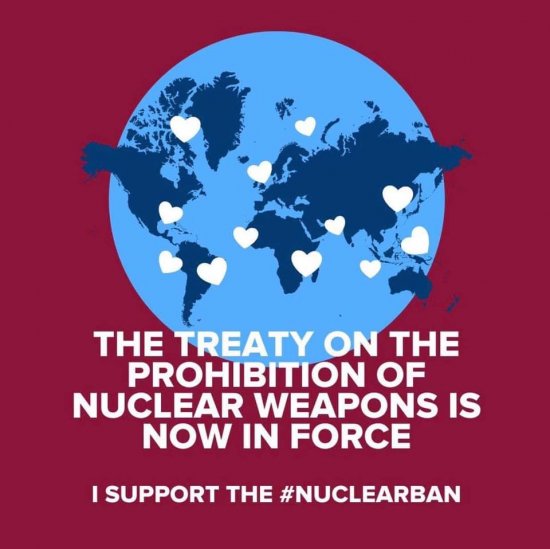
11 Dec 25, https://www.icanw.org/resources_for_5_years_since_the_nuclear_ban_went_into_effect
There are so many ways the Treaty on the Prohibition of Nuclear Weapons is making a difference:
Making nuclear weapons illegal and illegitimate
The treaty has closed the legal gap! Nuclear weapons are now banned under international law. It has also reinforced the nuclear taboo by creating a new international norm that nuclear weapons can never be used because of the catastrophic humanitarian and environmental harm they cause. TPNW states have condemned nuclear threats unequivocally and have encouraged other states to do the same – for example, through the G20. The TPNW is the first multilateral treaty to prohibit nuclear threats. It has solidified the international consensus that nuclear threats are inadmissible.
Demanding nuclear justice
Prior to the TPNW’s entry into force, there were few opportunities for states to discuss victim assistance and environmental remediation in a multilateral setting and in a focused way. The Treaty has brought the fight for nuclear justice to the fore and provided an important forum for communities affected by the use and testing of nuclear weapons to discuss their ongoing needs.
Cutting financial support for nuclear weapons manufacture, development and production
Hundreds of banks, pension funds and other financial institutions have pledged never to finance nuclear-weapon-producing companies on the basis that such weapons are now prohibited under international law.
Providing a rallying place for those who demand an end to nuclear weapons forever
Representatives of hundreds of non-government organisations, along with parliamentarians, mayors, religious leaders and academics, have attended each of the TPNW meetings of states parties. New actors have become involved.
Read more about how the TPNW has changed the world
Action Ideas: What can I do?
Nuclear weapons affect all of us, so it’s up to all of us to push back against the threats and absurd concept that they provide any security whatsoever. This anniversary is an opportunity to celebrate that the global majority of countries have signed onto the Treaty.
Ways to show your support………………………………………………………………..
Ontario’s Nuclear Folly

Ontario’s nuclear expansion a blunder of epic proportions
David Robertson, Canadian Dimension, December 9, 2025 https://watershedsentinel.ca/article/nuclear-folly/
The last time the nuclear industry got its way in Ontario, the province’s erstwhile publicly-owned electrical utility, Ontario Hydro, spent over two decades building 20 nuclear reactors.
It was a mashup of missed deadlines, cost overruns and a troubling pattern of declining nuclear performance. Even more troubling, the last generation of nuclear reactors forced Ontario Hydro to the edge of bankruptcy. It saddled the province with a mountain of nuclear debt that we are still paying off.
The Ford government is now repeating those costly mistakes in what amounts to the largest expansion of the nuclear industry in Canada’s history – risking a blunder of historic proportions.
Past debt due
In 1999, Ontario Hydro collapsed under the staggering weight of its nuclear debt. At the time, Hydro’s assets were valued at $17.2 billion, but its debt amounted to $38.1 billion. The government was faced with a stranded debt of $20.9 billion.
In response, the Province split Ontario Hydro into five separate organizations. Ontario Power Generation (OPG) took over the generating facilities (hydro, coal, gas, nuclear) and Hydro One (later privatized) the transmission grid. The debt was transferred to Ontario families through special charges on electricity bills and the tax system. It was the world’s largest nuclear bailout – one we are still paying for.
This is a $290 billion nuclear gamble.
Ontario Power Generation is now leading Ontario’s nuclear resurrection, following a series of government directives that put nuclear onto the fast-track while shouldering clean, cost-effective and safe renewables to the side of the road.
It is an astonishing coup. Without putting up their own money, and without bearing the financial risks, the nuclear industry has captured Ontario’s energy policy.
Even a few years ago this would have seemed impossible. Catastrophic accidents at Three Mile Island, Chernobyl, and Fukushima had severely tarnished the nuclear safety image. All around the world the cost overruns and lengthy build times of nuclear plants had chilled utility and government interest in new projects. In Europe only one nuclear plant has been built and come online since the late 1990s.
the nuclear industry to deliver electricity on time and on budget. It also demonstrated that nuclear reactors couldn’t provide affordable electricity. In fact, Ontario Hydro’s last public cost comparison (1999) revealed the cost of nuclear energy to be more than six times the cost of hydroelectricity.
Now it seems that all those hard lessons have been forgotten, as the Ford government launches a multipoint nuclear power offensive. It has passed legislation to ensure nuclear is Ontario’s energy priority. It has made commitments to build untested and costly small modular reactors. It has decided to refurbish antiquated nuclear plants when there is no business case to do so. And it has opened the public purse to the appetite of the nuclear industry.
Small modular reactor hype
There will be four new SMRs built at the Darlington nuclear location. Site preparation work is already underway on the first one, for which OPG has convinced the Canadian Nuclear Safety Commission to forego an environmental assessment.
SMRs are not small and they are not that modular. And they are also not that new. The designs have been kicking around for a long time, but no one wanted to build them and investors were loathe to put up their own money. The fate of SMRs changed when the industry convinced governments in Canada to develop a hype-heavy “SMR Roadmap,” followed by a federal “SMR Action Plan.” The plan includes a wide range of supports, from relaxing regulatory requirements through public relations efforts to absorbing the financial risks of an untried technology.
The Ford government is committing a colossal amount of money to its nuclear gamble
The World Nuclear Industry Status Review is an annual independent assessment of the global nuclear industry. In its 2022 review it concluded: “SMRs continue to hog the headlines in many countries, even though all evidence so far shows that they will likely face major economic challenges and not be competitive on the electricity market. Despite this evidence, nuclear advocates argue that these untested reactor designs are the solution to the nuclear industry’s woes.”
In the 2024 review, analysts note: “The gap between hype about [SMRs] and reality continues to grow. The nuclear industry and multiple governments are doubling down on investments in SMRs, both in monetary and political terms.”
Mortgaging our future
The Ford government is committing a colossal amount of money to its nuclear gamble, including $40 billion for refurbishments at 14 reactors, $20 billion for four SMRs at Darlington, $75 billion for Bruce C, and $156 billion for Port Hope.
That is a $290 billion nuclear gamble. If we add the $26 billion which is the official preliminary estimate for the deep geological repository of nuclear waste, then we are well beyond $300 billion.
Three hundred billion is an almost unthinkable amount of money. For most of us it’s hard to get a sense of what those funds could achieve.
Some examples:
• Provide every dwelling in Ontario with a free $20,000 heat pump and a free $20,000 rooftop solar system
• Replace half of the passenger vehicles in Ontario with a free electric vehicle
• Replace transit fares in Toronto for the next 300 years
• Provide every farm in Ontario with a free 10 kilowatt wind turbine
• Replace all the school buses in Ontario with new electric ones
Expensive nuclear plants produce expensive electricity and those costs are paid for through our taxes and electricity bills. It is already the case that nuclear is one of the most expensive energy options available. The Ontario Clean Air Alliance, using data from the Independent Electricity System Operator (IESO) and Lazard, has reported that the mid-point cost of new nuclear will be 24.4 cents per kilowatt-hour compared to solar with storage at 10 cents per kilowatt-hour.
There is a global energy transition underway. Renewable power generation capacity is expected to rise from 4,250 GW today to nearly 10,000 GW in 2030 – short of the tripling target set at COP28 but more than enough, in aggregate, to cover the growth in global electricity demand.
The Ford government is clearly on the wrong energy pathway.
David Robertson is a climate activist with Seniors for Climate Action Now. Excerpted with permission from the original at www.canadiandimension.com
New York Times Wants The US Military Built Up For War With China.
Caitlin Johnstone, Dec 10, 2025, https://www.caitlinjohnst.one/p/new-york-times-wants-the-us-military?utm_source=post-email-title&publication_id=82124&post_id=181225843&utm_campaign=email-post-title&isFreemail=true&r=1ise1&triedRedirect=true&utm_medium=email
Just as the United States hits its first official trillion-dollar annual military budget, the New York Times editorial board has published an article which argues that the US is going to need to increase military funding to prepare for a major war with China.
The article is titled “Overmatched: Why the U.S. Military Must Reinvent Itself,” and to be clear it is an editorial, not an op-ed, meaning it represents the position of the newspaper itself rather than solely that of the authors.
This will come as no surprise to anyone who knows that The New York Times has supported every American war throughout its entire history, because The New York Times is a war propaganda firm disguised as a news outlet. But it is surprising how brazen they are about it in this particular case.
The article opens with graphics I saw one commenter describe as “Mussolini-core” because of their conspicuously fascistic aesthetic, accompanied by three lines of text in all-caps which reads as follows:
“AMERICA’S MILITARY HAS DEFENDED THE FREE WORLD FOR 80 YEARS.
OUR DOMINANCE IS FADING.
RIVALS KNOW THIS AND ARE BUILDING TO DEFEAT US.”
The narrative that the US war machine has “defended the free world” during its period of post-world war global dominance is itself insane empire propaganda. Washington has abused, tyrannized and starved the world at levels unrivaled by any other power during that period while spearheading the theft of hundreds of trillions of dollars from the global south via imperialist extraction. The US empire has not been defending any “free world”, it has been actively obstructing its emergence.
The actual text of the article opens with another whopper, with the first sentence reading, “President Xi Jinping of China has ordered his armed forces to be ready to seize Taiwan by 2027.”
This is straight-up state propaganda. The New York Times editorial board is here uncritically parroting a completely unsubstantiated claim the US intelligence cartel has been making for years, which Xi Jinping explicitly denies. While it is Beijing’s official position that Taiwan will eventually be reunited with the mainland, not one shred of evidence has ever been presented to the public for the 2027 timeline. It’s a US government assertion being reported as verified fact by the nation’s “paper of record”.
And it doesn’t get any better from there. The Times cites a Pentagon assessment that the US would lose a hot war with China over Taiwan as evidence of “a decades-long decline in America’s ability to win a long war with a major power,” arguing that this is a major problem because “a strong America has been crucial to a world in which freedom and prosperity are far more common than at nearly any other point in human history.”
“This is the first of a series of editorials examining what’s gone wrong with the U.S. military — technologically, bureaucratically, culturally, politically and strategically — and how we can create a relevant and effective force that can deter wars whenever possible and win them wherever necessary,” The New York Times tells us.
The Times argues that the US needs to reshape its military to defeat China in a war, or to win a war with Russia if they attack a NATO member, saying “Evidence suggests that Moscow may already be testing ways to do this, including by cutting the undersea cables on which NATO forces depend.”
The “evidence” the Times cites for this claim is a hyperlink to a January article titled “Norway Seizes Russian-Crewed Ship Suspected of Cutting an Undersea Cable,” completely ignoring the fact that Norway released that ship shortly thereafter when it was unable to find any evidence linking it to the event, and completely ignoring reports that US and European intelligence had concluded that the undersea cable damage was the result of an accident rather than sabotage.
And then, of course, comes the call for more military funding.
“In the short term, the transformation of the American military may require additional spending, primarily to rebuild our industrial base. As a share of the economy, defense spending today — about 3.4 percent of G.D.P. — remains near its lowest level in more than 80 years, even after Mr. Trump’s recent increases,” the Times writes, adding that US allies should also be pressured to ramp up spending on the war machine.
“A more secure world will almost certainly require more military commitment from allies like Canada, Japan and Europe, which have long relied on American taxpayers to bankroll their protection,” the authors write, saying “China’s industrial capacity can only be met by pooling the resources of allies and partners around the world to balance and contain Beijing’s increasing influence.”
Of course the idea that perhaps the United States should avoid fighting a hot war with China right off the coast of its own mainland never enters the discussion. The suggestion that it’s insane to support waging full-scale wars with nuclear-armed great powers to secure US planetary domination never comes up. It’s just taken as a given that pouring wealth and resources into preparations for a nuclear-age world war is the only normal option on the table.
But that’s the New York Times for you. It’s been run by the same family since the late 1800s and it’s been advancing the information interests of rich and powerful imperialists ever since. It’s a militarist smut rag that somehow found its way into unearned respectability, and it deserves to be treated as such. The sooner it ceases to exist, the better.
Japan inspects nuclear sites as seismologists warn of another large quake.

Authorities assessed the damage from Monday’s 7.5-magnitude earthquake, amid warnings of aftershocks and a potentially larger tremblor in the coming days.
Nuclear facilities were inspected in Japan on Tuesday as
authorities assessed the damage from a 7.5-magnitude earthquake, amid
warnings of aftershocks and a potentially larger tremblor in the coming
days. As cleanup operations began, Prime Minister Sanae Takaichi told
reporters that an emergency task force was formed to urgently assess
damage, according to The Associated Press. “We are putting people’s
lives first and doing everything we can,” she said……………………………………………………………..
Japanese officials found “no abnormalities” at Fukushima, the International Atomic Energy Agency said early Tuesday.
But as inspections were carried out on other nuclear sites, the country’s Nuclear Regulation Authority said in a statement that nearly 120 gallons of water spilled from a fuel cooling system at a nuclear fuel processing plant in the city of Aomori near the epicenter of Monday’s earthquake……………………….
NBC News 9th Dec 2025, https://www.nbcnews.com/world/asia/japan-earthquake-nuclear-sites-damage-injuries-emergency-rcna248160
The War Department Unleashes AI on New GenAI.mil Platform
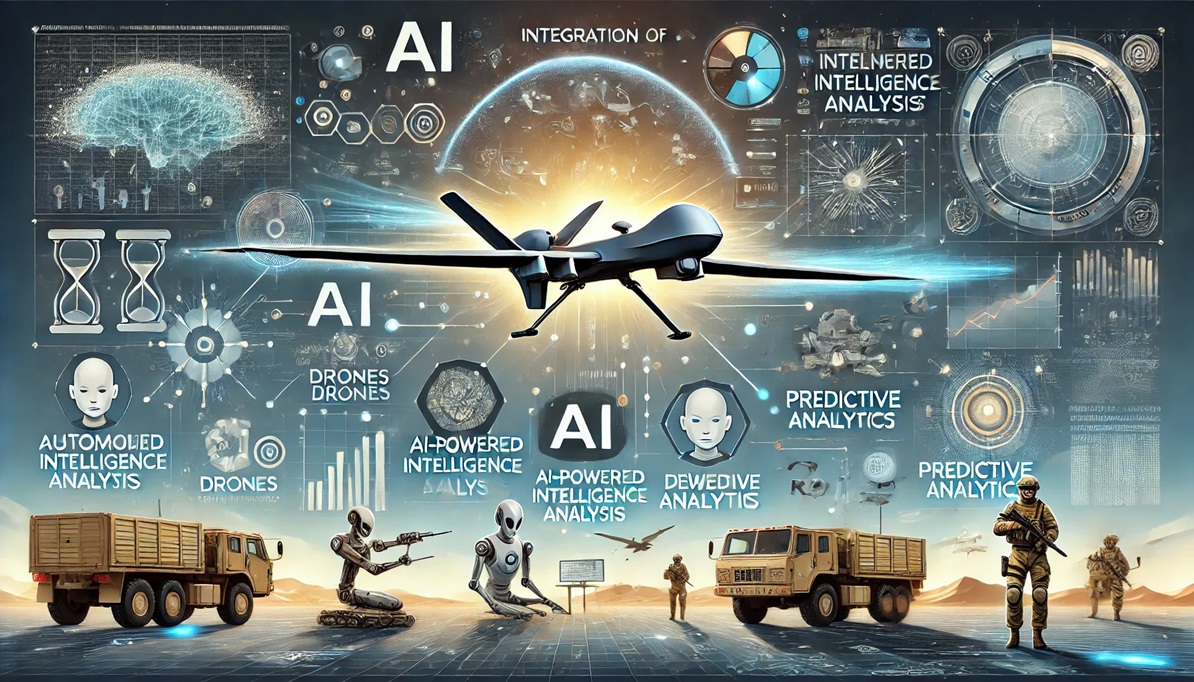
U.S. Department of War, Dec. 9, 2025
The War Department today announced the launch of Google Cloud’s Gemini for Government as the first of several frontier AI capabilities to be housed on GenAI.mil, the Department’s new bespoke AI platform. This initiative cultivates an “AI-first” workforce, leveraging generative AI capabilities to create a more efficient and battle-ready enterprise. Additional world-class AI models will be available to all civilians, contractors, and military personnel, delivering on the White House’s AI Action Plan announced earlier this year.
This past July, President Donald Trump instituted a mandate to achieve an unprecedented level of AI technological superiority. The War Department is delivering on this mandate, ensuring it is not just ink on paper. In response to this directive, AI capabilities have now reached all desktops in the Pentagon and in American military installations around the world.
The first instance on GenAI.mil, Gemini for Government, empowers intelligent agentic workflows, unleashes experimentation, and ushers in an AI-driven culture change that will dominate the digital battlefield for years to come. Gemini for Government is the embodiment of American AI excellence, placing unmatched analytical and creative power directly into the hands of the world’s most dominant fighting force………………
The launch of GenAI.mil stands as a testament to American ingenuity, driven by the AI Rapid Capabilities Cell within the War Department’s Office of Research & Engineering. Their achievement directly embodies the Department’s core tenets of reviving the warrior ethos, rebuilding American military capabilities, and re-establishing deterrence through technological dominance and uncompromising grit.
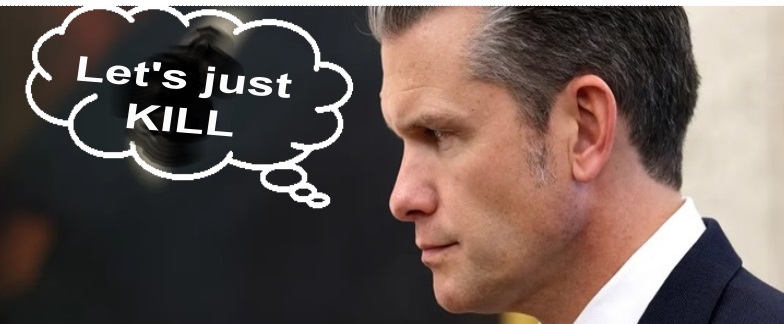
“We are pushing all of our chips in on artificial intelligence as a fighting force. The Department is tapping into America’s commercial genius, and we’re embedding generative AI into our daily battle rhythm.” Secretary of War Pete Hegseth remarked
“AI tools present boundless opportunities to increase efficiency, and we are thrilled to witness AI’s future positive impact across the War Department.”………………..https://www.war.gov/News/Releases/Release/Article/4354916/the-war-department-unleashes-ai-on-new-genaimil-platform/
Iran says bombed nuclear sites present radiation risk
Iran International, Dec 8, 2025,
ran’s foreign minister Abbas Araghchi says there is a risk of radiation release at nuclear facilities bombed during the 12-day war in June, contradicting earlier assurances from Tehran.
In an interview with Japan’s Kyodo News on Sunday, Araghchi said strikes on Iran’s nuclear facilities had created serious dangers, including possible radiation exposure and unexploded ordnance.
“We are now facing security threats and safety concerns,” he said.
Following the joint US-Israeli attacks, Iranian authorities refused to evacuate surrounding towns and repeatedly dismissed public fears.
In late June, deputy health minister Alireza Raeisi said enrichment “does not involve nuclear fission” and therefore cannot generate harmful radiation, adding that measurements around Natanz and Fordow showed the areas were completely safe……………………………………………….
………………………………………… Still, Araghchi told Kyodo News that Iran cannot currently allow the resumption of IAEA inspections halted after the war because no protocol or guideline exists for inspectors entering damaged facilities.
IAEA director general Rafael Grossi has said most of Iran’s enriched-uranium stockpile is being kept at sites in Isfahan, Fordow and Natanz where inspectors lack access, and warned in October that monitors had observed activity around storage locations.
US officials under President Trump have demanded zero enrichment, dismantling of proxy forces and limits on Iran’s missile program – terms Tehran calls unacceptable. https://www.iranintl.com/en/202512081602
Trump warns Ukraine is ‘losing’ Russia war, calls for new elections despite wartime prohibition.

Trump occasionally says something sensible, even if by accident.
New York Post, By Richard Pollina, Dec. 9, 2025
President Trump said in an interview Monday that Ukraine should hold new elections despite its ongoing war with Russia — prompting Ukrainian President Volodymyr Zelensky to declare he’s “ready” for them to begin when voters can be safe.
“I think it’s time. I think it’s an important time to hold an election,” the president told Politico reporter Dasha Burns. “They’re using war not to hold an election, but, uh, I would think the Ukrainian people would, should have that choice.”
Under Ukraine’s constitution, elections cannot be held during period of martial law — which President Volodymyr Zelensky imposed in response to Russia’s invasion in February 2022. Under normal circumstances, the terms of Zelensky and Ukraine’s parliament would have ended in May and August 2024, respectively.
Speaking to reporters on Tuesday, Zelensky said he has the “will and readiness” to hold elections. But he cited issues in Ukraine’s way, including the security of voters in a war zone at risk of missile strikes and Ukrainian law that prevents elections when the country is under martial law.
Zelensky said he’s seeking a legislative fix, and if he has help from the US on ensuring the safety of voters during a war, Kyiv would be ready to hold elections in “the next 60 to 90 days.”
“Maybe Zelensky would win,” Trump said of the prospect of a wartime election. “I don’t know who would win. But they haven’t had an election in a long time. You know, they talk about a democracy, but it gets to a point where it’s not a democracy anymore.”
The president also responded to a weekend claim by first son Donald Trump Jr. that the commander-in-chief may be willing to walk away from Ukraine, saying: “It’s not correct. But it’s not exactly wrong.”
“We have to, you know, they have to play ball,” the president went on. “If they, if they don’t read agreements, potential agreements, you know, it’s not easy with Russia because Russia has the upper, upper hand. And they always did. They’re much bigger. They’re much stronger in that sense.
The president’s comments came as his administration makes another effort to end Europe’s deadliest conflict since the Second World War, with Trump telling reporters Sunday that Zelensky had yet to read the latest peace framework hashed out by US and Ukrainian negotiators.
“It would be nice if he would read it,” the president told Politico Monday. “You know, a lot of people are dying. So it would be really good if he’d read it. His people loved the proposal. They really liked it. His lieutenants, his top people, they liked it, but they said he hasn’t read it yet. I think he should find time to read it.”
Zelensky disputed the accusation on Thursday, telling reporters he has in fact “read many different versions of this plan.” https://nypost.com/2025/12/09/us-news/trump-says-ukraine-should-hold-elections-despite-wartime-prohibition/
Further delay in Finnish repository licence review

WNN, 5 December 2025
Finland’s Ministry of Employment and the Economy has granted the country’s nuclear regulator a third extension to the deadline to complete its assessment of Posiva Oy’s operating licence application for the world’s first used nuclear fuel repository. The regulator’s statement is now expected by mid-2026.
Radioactive waste management company Posiva submitted its application, together with related information, to the Ministry of Economic Affairs and Employment on 30 December 2021 for an operating licence for the used fuel encapsulation plant and final disposal facility currently under construction at Olkiluoto. The repository is expected to begin operations in the mid-2020s. Posiva is applying for an operating licence for a period from March 2024 to the end of 2070.
The government will make the final decision on Posiva’s application, but a positive opinion by the Radiation and Nuclear Safety Authority (STUK) is required beforehand. The regulator began its review in May 2022 after concluding Posiva had provided sufficient material. The ministry had requested STUK’s opinion on the application by the end of 2023. However, in January last year, STUK requested the deadline for its opinion be extended until the end of 2024. In December, the ministry extended the deadline for the regulator’s opinion to 31 December 2025.
The ministry has now extended the deadline until the end of June 2026, “if it is possible to do so by then”. According to STUK, the new timetable is possible, but tight, for both the authority and the licence applicant.
Although STUK’s assessment of the application is in the final stages, the statement and safety assessment cannot be completed until it has assessed and approved all of Posiva’s operating licence application materials……………
At the repository, used fuel will be placed in the bedrock, at a depth of about 430 metres. The disposal system consists of a tightly sealed iron-copper canister, a bentonite buffer enclosing the canister, a tunnel backfilling material made of swellable clay, the seal structures of the tunnels and premises, and the enclosing rock
…………… The operation will last for about 100 years before the repository is closed.
….STUK said. “In particular, the demonstration of the performance of the clay material, which acts as one of the barriers to the spread of radioactive substances, is still under way. Posiva replaced the clay material in the original plans with another, and the effects of the new material on the long-term safety of the final disposal still need to be assessed.” https://www.world-nuclear-news.org/articles/further-delay-in-finnish-repository-licence-review#:~:text=Finland’s%20Ministry%20of%20Employment%20and,now%20expected%20by%20mid%2D2026
UN environment report ‘hijacked’ by US and others over fossil fuels, top scientist says.

A key UN report on the state of the global environment has been “hijacked”
by the United States and other countries who were unwilling to go along
with the scientific findings, the co-chair has told the BBC. The Global
Environment Outlook, the result of six years’ work, connects climate
change, nature loss and pollution to unsustainable consumption by people
living in wealthy and emerging economies. It warns of a “dire future” for
millions unless there’s a rapid move away from coal, oil and gas and fossil
fuel subsidies. But at a meeting with government representatives to agree
the findings, the US and allies said they could not go along with a summary
of the report’s conclusions. As the scientists were unwilling to water down
or change their findings, the report has now been published without the
summary and without the support of governments, weakening its impact.
Researchers say the objections to this new report reflect similar concerns
expressed by countries at the recent COP30 talks.
BBC 9th Dec 2025,
https://www.bbc.co.uk/news/articles/c1w9ge93w9po
Britain’s AI boom is running straight into an energy wall
Nuclear power was supposed to act as its crutch to get around it. Instead, the government has hit pause, just as data centre demand is set to explode, leading investors wondering whether the UK risks talking itself out of its opportunity.
Recent analysis from the Nuclear Industry Association and
Oxford Economics warned that data-centre electricity demand will jump more than fivefold by 2030, swallowing nearly nine per cent of the UK’s total
power use.
The AI labs and hyperscalers behind that surge want plug
in-ready, 24/7 power, all within two years. Britain currently hands out
grid connections on a ten year timetable. This forms the backdrop to Rachel Reeves’ decision to stall a sweeping package of planning reforms that had promised to finally streamline nuclear development. Fingleton’s review, which coined the now-infamous ‘fish disco’ as a symbol of regulatory overreach, was meant to clear undergrowth.
City AM 9th Dec 2025,
https://www.cityam.com/britains-nuclear-lag-could-cost-its-ai-crown/
Activists fight plans for nuclear power station over threat to rare bird.
Ed Miliband’s plans to build the Sizewell C nuclear power station are facing a High Court legal threat over claims it will destroy a rare bird habitat.
Activists are seeking a judicial review to force the Government to revisit plans for the project, which they say is being built on land occupied by endangered marsh harriers. In a hearing on Tuesday, the Together Against Sizewell C (TASC) campaign group raised concerns over Sizewell C’s plans to build 10-metre-high flood defences on Suffolk marshland.
They argue that this will threaten the marsh harrier, a rare
bird that was almost driven to extinction before enjoying a recovery in recent years, particularly alongside the Suffolk coastline.
The group claims that details of the flood defences were Activists fight plans omitted from the original planning proposals in 2022. This now forms the basis of the group’s
argument, as it claims that work on Sizewell C should be paused while a further environmental assessment is carried out.
Chris Wilson, of TASC, said: “TASC’s legal challenge focuses on two additional sea defences that Sizewell C has committed to installing – but despite EDF, who is building Sizewell, being aware of the potential need for them since 2015,
they were not included in their planning application for the project.
Rowan Smith, the solicitor at Leigh Day representing TASC, said: “The failure to assess these impacts was alarming. “Our client is concerned about the revelation that provisions have been made for further flood defences at Sizewell C, which could harm the environment, yet the impact of this has never been assessed.”
Telegraph 9th Dec 2025, https://www.telegraph.co.uk/business/2025/12/09/activists-nuclear-power-station-threat-rare-bird/
Perfectly Appropriate: Trump, Infantino and the FIFA Peace Prize

10 December 2025 Dr Binoy Kampmark, https://theaimn.net/perfectly-appropriate-trump-infantino-and-the-fifa-peace-prize/
He craves it, and, to some extent, his desire was satisfied. President Donald Trump did get a peace prize. Not the peace prize picked out by self-important Norwegian non-entities, but the inaugural curiosity of FIFA, an organisation famed for opacity, corruption and graft. What the critics missed in all of this was its sheer appositeness.
In a two-hour ceremony held on December 5 at Washington’s Kennedy Center, which included the World Cup draw for participants at next year’s games, Trump was presented with a prize few FIFA officials seem to know existed. Last month, FIFA president Gianni Infantino announced the award, expressing the view that Trump also deserved that other coveted gong, the Nobel Peace Prize. One senior FIFA official boldly told BBC Sport that the football organisation’s prize deserved serious attention: “Why can’t this be bigger than the Nobel Peace Prize? Football has huge global support, so it’s right that it recognises extraordinary efforts to bring about peace every year.”
That football – grand sport of sublimated aggression, contest and rivalries – is an agent of peace, is one of those shibboleths sporting administrators feed. Go through the records of any famous club rivalry, and peace is found wanting. Violence and politics, however, can be found in abundance. But Infantino did not become FIFA President on his mastery of such details. His formula was simple if hypocritical: athletes should play and shut up about politics, leaving it to the administrative class to do the rest.
With fawning relish, he heaped high praise on the winner. “This is what we want from a leader; a leader who cares about the people. We want to live in a safe world, in a safe environment. We want to unite – that’s what we do here today, that’s what we’ll do at the (FIFA) World Cup, Mr President.” Trump, in deserving the inaugural award, could count on Infantino’s support and that “of the entire football community – or ‘soccer’ community – to help you make peace and make sure the world prospers all over the world.”
Infantino has never been a strict observer of the dusty ethics clause stating that the organisation maintains neutrality “in matters of politics and religion” and that “all persons bound by the code remain politically neutral … in dealings with government institutions.” He has hobnobbed with the leaders of Qatar, Saudi Arabia and Russia, ostensibly pursuing the footballing cause. He was the only sports leader present at the Egyptian “Summit for Peace” held in October, when a clutch of significant figures, marshalled by Trump and Egyptian President Abdel Fatah El-Sisi, agreed to implement the first phase of the Gaza peace plan. (There was much personal gratitude for Trump, praised as “absolutely fundamental and crucial in the [peace] process.) He has gathered a swag of awards and accolades from governments, hardly an affirmation of neutrality in any strict sense.
In keeping with the mood, Trump spoke about everything other than football. He was in the business of saving lives, and peace prizes did not matter much. (You need to get one in orderto dismiss its merits.) For good measure, he had also “saved a lot [of lives], millions even.”
In keeping with the absurd occasion was the furious criticism of the choice, when its absurdity was most apt. Infantino, derided over his stance on not suspending Israel over its military operations in Gaza, was now receiving rebukes for eschewing neutrality. “Not satisfied with two years of FIFA complicity in genocide in Palestine, Infantino and his cronies have now invented a ‘peace prize’ in order to curry favour with Donald Trump,” fumed former UN official Craig Mokhiber and campaigner against Israeli’s membership of FIFA.
Andrea Florence, Executive Director of the Sports & Rights Alliance, acknowledged that the World Cup had been the political plaything of states in rinsing stained human rights records. “But FIFA is now doing the sportswashing itself. Giving this so-called FIFA ‘Peace Prize’ to US President Donald Trump with no clear criteria or process – and despite his administration’s violent detentions of immigrants, crackdowns on freedom of expression, and militarization of US cities – it’s sportswashing on steroids.”
This grumbling was bound to take a more formal shape, and it came in the form of an eight-page letter of complaint from the non-profit advocacy organisation, FairSquare. Unfortunately for the organisation, it was sent to FIFA. In the letter, the organisation demands that the ethics committee (the joke keeps giving) “investigate the circumstances surrounding the decision to introduce and award a FIFA Peace Prize and their conformity with FIFA’s procedural rules.” It makes reference to various remarks of Infantino’s, including those in an Instagram post from Trump’s inauguration on January 20 declaring that, “Together we will make not only America great again, but also the entire world.”
Studiously referencing FIFA statutes – not that this will get them far – the group goes on to state that awarding such a prize “to a sitting political leader is in and of itself a clear breach of Fifa’s duty of neutrality.” Infantino lacked the power to unilaterally determine “the organisation’s mission, strategic direction, policies and values.”
Identity politics books
As with most things relevant to that organisation, the complaint is unlikely to get far. Politics and sport do mix, as they have always done. Infantino, chief of the world’s foremost unchallenged sporting mafia, may claim otherwise, but his tenure shows that he knows that crude reality all too well.
Making Sense of The Après-Ukraine.
What it might mean and what it might not mean.
Aurelien, Dec 11, 2025
“…………………………………………………………………………………………………………………..Because I’m not a military specialist, I’m going to skip over very technical questions, where there is anyway a great deal of disagreement. Moreover, the way in which these questions are posed is often not very helpful, and frequently involves weapons fetishists flourishing performance statistics at each other. In the end, whether the planned FX69 or the planned Su141 is a “better” fighter isn’t really the point, unless you take the overall scenario into account. If dogfights (albeit at very long range) will be a feature of future conflicts, and these planned aircraft are involved, then performance characteristics have their place. But we know, for example, that Russian doctrine for air superiority relies very largely on missiles and, even if the FX69 were in some senses “better” when it arrived in service, it might not get near enough to Russian aircraft for that superiority to be useful. The real lessons of crises and conflicts are always at a more general level.
………………………………. let’s turn to Ukraine, repeating the very important provisos that “lessons” are only of value if we can expect future conflicts with at least some of the same features, and if the “lessons” are likely to be reasonably enduring, given the huge cost and time involved in developing and adapting military equipment.
………………….So far as the first is concerned, we have to remember that Ukraine is a very specific type of conflict.
It’s being fought between two advanced technology nations with indigenous defence industries, whose equipment is similar, and in some cases identical, and largely from the same technological tradition.
It’s being fought between countries with a shared military tradition, and a capacity for large-scale land/air operations, (less influenced by the West in the case of Ukraine than is sometimes thought) and between countries where patriotism and a willingness to fight for one’s country are still political forces.
And finally it’s being fought between the largest country in the world, mainly self-sufficient economically, and with the tacit acquiescence of China, and a smaller country backed financially and militarily by the entire western world.
So obviously the chances of exactly the same situation developing elsewhere are zero. The question, as always, is how far, if at all, the particularities of the Ukraine conflict are applicable to potential conflicts elsewhere.
The first question is obviously whether we are going to see any more heavy-metal conflicts of this kind anywhere the world. There are a number of nuances hidden in that question: the war in Ukraine has gone on as long as it has because the two sides are capable of raising and training large armies (Ukraine with more difficulty, certainly) and supplying and equipping them from stocks and new production (transferred in the case of Ukraine.) This means that very large forces can fight each other continuously for years, and, in the Russian case, more than replace losses of personnel and material.
Now the obvious place for such a future war is Europe against NATO forces, but it’s doubtful whether the scenario is very likely. As I’ll explain in a minute, it’s very hard to imagine NATO forces reconfiguring themselves to absorb the lessons of Ukraine, and in any event it’s not necessary for the Russians to attack NATO nations with ground forces. They can destroy NATO forces from a safe distance with missiles and drones. Moreover, NATO forces are small, and are unlikely to get much bigger, and their stocks of ammunition and logistics will be exhausted in a matter of days. (Unlike Russia, and in spite of planned increases in stocks, NATO nations cannot replace their losses and consumption in real time, as Russia can.) So a direct military clash would be, as they say, nasty brutish and short, even if NATO “learned the lessons” of Ukraine
It’s hard to imagine any wars of similar scale and intensity elsewhere in the world. One possibility is a ground war involving the two Koreas, where the level of technology, even on the Northern side, is generally high, although the terrain is very different. Moreover, whilst border clashes here and there in the world are obviously possible (India and Pakistan or China are illustrative examples) it’s hard to imagine a full-scale war of the type we are now seeing.
……………….. one thing that the Ukraine experience has demonstrated is the importance of these boring, mundane things like logistic support, resupply and sheer numbers of weapons………………………………………………………………………………………………………………………..
It’s worth pointing out that drones did not feature much at the beginning of the conflict, but have now become a significant factor. (This is especially true for Ukraine, which would be in a much worse state without them.)
“drone” (Unmanned Air Vehicle until recently) is a very generic term. It’s clear, for example, that Russian drones that fly beyond Kiev are effectively pilotless aircraft, with significant destructive capability. At the other extreme, footage of a lot of Ukrainian drone attacks shows small, short-range craft dropping grenades onto small groups of soldiers. This leads us to one of the most important conclusions from the war so far: much depends on overall command and control and the ability to use capabilities together, as part of an overall plan.
……………………………………………………….In spite of the current excitement, it seems unlikely that the West will adopt drones in the way that the Russians and Ukrainians have. There are all sorts of reasons for this, but the principal one is that those two countries are fighting a war, and in wartime innovation tends to impose itself as a priority. Both sides, and especially the Russians, were caught unawares by the nature of the war as it developed in 2022, and as a consequence innovation has been very rapid in all areas. There is no chance of this happening in the West: the political urgency is not there.
………………………………….Effectively, either a NATO working group spends ten years trying to develop a concept, by which time the technology will have changed, or dozens of nations just decide to do their own thing……………………
…………………. Drone attacks on tanks are the latest iteration of a struggle between attack and defence which has been going on for fifty years and will no doubt evolve further. Defensive technologies are now being developed which may be able to disrupt and protect against drones to the point where so many would be needed to secure a kill that their use would be uneconomic. It would be unwise to write off the tank yet, and indeed unwise to jump to too many conclusions about drones.
……………………………………………………………………………………….. Finally, the technologies introduced in Ukraine, and those still being developed, will find uses that for the moment no-one can foresee, some good, some bad. (Organised crime may find drone technologies useful for transporting drugs, for example.) https://aurelien2022.substack.com/p/making-sense-of-the-apres-ukraine?utm_source=post-email-title&publication_id=841976&post_id=181176162&utm_campaign=email-post-title&isFreemail=true&r=ln98x&triedRedirect=true&utm_medium=email
U.S. Military Budget Bill Would Ramp Up Israel Aid to Fill In ‘Gaps’ When Other Countries Impose Embargoes Over Genocide.

“this means the US would explicitly use federal law to step in and supply weapons to Israel whenever other countries cut off arms to halt Israel’s ongoing violations across the region.”
The House Armed Services Committee said in September that the measure “combats antisemitism.”
Stephen Prager, Dec 09, 2025, https://www.commondreams.org/news/us-israel-weapons-gap-ndaa
A little-reported provision of the latest military spending bill would direct the US to create a plan to fill the “gaps” for Israel whenever other nations cut off arms shipments in response to its acts of genocide in Gaza.
As Prem Thakker reported Monday for Zeteo, the measure is “buried” more than 1,000 pages into the more than 3,000-page National Defense Authorization Act (NDAA), which is considered by lawmakers to be “must-pass” legislation and contains a record $901 billion in total spending.
Republicans are shepherding the bill through the US House of Representatives, where—as is the case with most NDAAs—it is expected to pass on Wednesday with Democratic support, even as some conservative budget hardliners refuse to back it, primarily over its $400 million in military assistance to Ukraine.
Since the genocide began following Hamas’ attack on October 7, 2023, the US has provided more than $21.7 billion to Israel, including hundreds of millions that have been supplied through NDAAs.
The new NDAA includes at least another $650 million to Israel, an increase of $45 million from the previous one, even though this is the first such bill to be introduced since the “ceasefire” that went into effect in October. This aid from the Pentagon comes on top of the $3.3 billion already provided through the State Department budget.
But this NDAA also contains an unprecedented measure. It calls for the “continual assessment of [the] impact of international state arms embargoes on Israel and actions to address defense capability gaps.”
The NDAA directs Secretary of Defense Pete Hegseth, Secretary of State Marco Rubio, and Director of National Intelligence Tulsi Gabbard to assess “the scope, nature, and impact on Israel’s defense capabilities of current and emerging arms embargoes, sanctions, restrictions, or limitations imposed by foreign countries or by international organizations,” and “the resulting gaps or vulnerabilities in Israel’s security posture.”
As Drop Site News explains, “this means the US would explicitly use federal law to step in and supply weapons to Israel whenever other countries cut off arms to halt Israel’s ongoing violations across the region.”
“The point of this assistance, to be clear, is to make up for any identified insufficiencies Israel may have due to other countries’ embargoing it as a result of its ongoing genocide in Palestine,” Thakker wrote.
A similar provision appeared in a September version of the NDAA, which the House Armed Services Committee praised because it supposedly “combats antisemitism”—explicitly conflating a bias against Jewish people with weapons embargoes that countries have imposed to stop Israel from continuing its routine, documented human rights violations in Gaza.
Among the nations that have cut off weapons sales to Israel are Japan, Canada, France, Italy, and Spain. Meanwhile, other major backers, such as the United Kingdom and Germany, have imposed partial freezes on certain weaponry.
While official estimates from the Gaza Ministry of Health place the number of dead from Israel’s military campaign at over 70,000, with more than 170,000 wounded, an independent assessment last month from the Max Planck Institute for Demographic Research in Germany and the Center for Demographic Studies in Spain found that the death toll “likely exceeds 100,000.” This finding mirrored several other studies that have projected the true death toll to be much higher than what official estimates show.
Embargoes against Israel have been called for by a group of experts mandated by the United Nations Human Rights Council, including Francesca Albanese, the UN Special Rapporteur on the occupied Palestinian territories. Meanwhile, numerous human rights organizations, including the leading Israeli group B’Tselem, have said Israel’s campaign in Gaza has amounted to genocide.
1 This Month




PLEASE OPPOSE HR 8255 AND S.3639 – bills would accelerate satellite deployment, with no environmental review or safeguards – https://ncstd5li.quorum.us/campaign/169331/
To see nuclear-related stories in greater depth and intensity – go to https://nuclearinformation.wordpress.com
-
Archives
- September 2026 (330)
- August 2026 (330)
- July 2026 (355)
- June 2026 (287)
- May 2026 (306)
- April 2026 (356)
- March 2026 (251)
- February 2026 (267)
- January 2026 (308)
- December 2025 (358)
- November 2025 (359)
- October 2025 (375)
-
Categories
- 1
- 1 NUCLEAR ISSUES
- business and costs
- climate change
- culture and arts
- ENERGY
- environment
- health
- history
- indigenous issues
- Legal
- marketing of nuclear
- media
- opposition to nuclear
- PERSONAL STORIES
- politics
- politics international
- Religion and ethics
- safety
- secrets,lies and civil liberties
- spinbuster
- technology
- Uranium
- wastes
- weapons and war
- Women
- 2 WORLD
- ACTION
- AFRICA
- Atrocities
- AUSTRALIA
- Christina's notes
- Christina's themes
- culture and arts
- Events
- Fuk 2022
- Fuk 2023
- Fukushima 2017
- Fukushima 2018
- fukushima 2019
- Fukushima 2020
- Fukushima 2021
- general
- global warming
- Humour (God we need it)
- Nuclear
- RARE EARTHS
- Reference
- resources – print
- Resources -audiovicual
- Weekly Newsletter
- World
- World Nuclear
- YouTube
-
RSS
Entries RSS
Comments RSS

