Katsurao Village contamination map: the latest map of Fukuichi (Fukushima Daiichi) Area Environmental Radiation Monitoring Project.
In English & in Japanese.
PLEASE SHARE !
Katsurao Village: its whereabouts and evacuation/return policy history
In June 2016, the evacuation order applied to Katsurao village after the Fukushima Daiichi Nuclear accident was lifted for 80% of its territory. The northeast part of the village in the vicinity of Namie town is still classed as a ”difficult-to-return” zone, where the annual airborne radiation dose is over 20mSv. The lifting of the evacuation order of this area is not planned.
Katsurao in relation to the crippled Fukushima Daiichi NPP
In June 2018, approximately 300 people are living in the village, which is about 20% of the population before the accident. In April 2018, primary and junior high schools opened where 18 children are currently studying, whereas in 2010, before the accident, 112 children were attending schools.
The village is covered by hilly forests as you can see in the Google Earth below.
グーグルアースの地図で見れるように、葛尾は緑豊かな山村です。
Picture Google Earth
Katsurao village contamination map 葛尾村土壌汚染マップ
Since last year, Fukuichi (Fukushima Daiichi) Area Environmental Radiation Monitoring Project Team has been measuring contamination in Namie Town, Tomioka Town and in a part of Okuma Town (the-not-permitted-to-live zone). Compared to these areas, the radio-contamination of Katsurao village is relatively low. However, the soil contamination is still well above 185000Bq/m2, the value over which Chernobyl law grants the inhabitants the right to evacuate. Allowing, or more exactly forcing the population to live in such highly contaminated areas by cutting public aid and therefore depriving the financial means for evacuees to live outside of the contaminated area is a strong violation of human rights. (See the article in Beyond Nuclear International: Fukushima mothers at UN tell their story).
チームは昨年から、浪江町・富岡町・大熊町の1部(居住制限区域)とモニタリングをおこなってきましたが、それと比較すると放射能汚染の程度は低いと感じられます。それでも、土壌汚染密度の平均は、チェルノブイリ法の「移住の権利」基準(185,000Bq/㎡)を大きく超えています。このような高度汚染地域の避難指示を解除し、公的支援を打ち切り、汚染地域の外で生活することが経済的に困難な状況を作り出すことで人々を帰還させるのは基本的人権の侵害に他なりません。(Beyond Nuclear Internationalの以下の記事をご参照ください。 Fukushima mothers at UN tell their story)
Project team at work モニタリングチームの作業
As we can see in the pictures, the team members are elderly or relatively elderly, therefore less radio-sensitive than younger people. They have volunteered to enter in highly contaminated areas to do the measuring work since neither central nor local governments are willing to carry out such work. We thank them greatly for their help and devotion.
The appearance of the temporary depositories of radioactive soil from the decontamination efforts is different. In Minamisoma or in Namie, they are surrounded by 2m high fences, whereas those of Katsurao village are covered by dark green sheeting without conspicuous fencing. As one of the monitoring team members says sarcastically, ”they melt perfectly in their natural environment.”
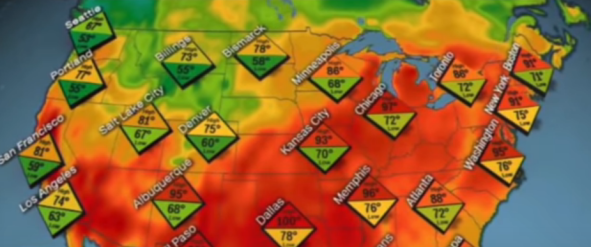
The failure to link the increasing frequency and intensity of heat waves means that the general population remains relatively unaware of the urgency of climate change, says Jennifer Marlon of the Yale Program on Climate Change Communication Visit http://therealnews.com for more stories and help support our work by donating at http://therealnews.com/donate.
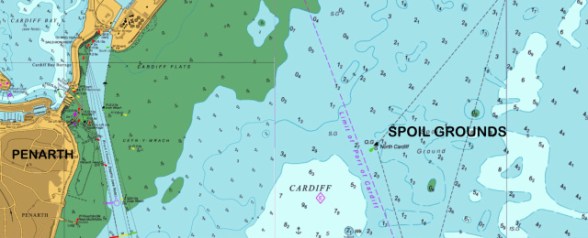
Natural Resources Wales is in a very difficult position. They are responsible for issuing the Marine Licence that Electricité de France needs before they can dredge 300,000 tonnes of sediment from the Severn Estuary and dump it on Cardiff. But NRW knows almost nothing about how much radioactivity is in the mud.
CEFAS, a laboratory sponsored by Westminster Government, tested the mud but destroyed the data. Later they took samples only from the top layer although EdF proposes to scrape down to bed rock. They examined the samples only with a technique that cannot detect Uranium and Plutonium.
NRW says the mud is safe but they have no expertise on radiation and health. They rely on the English Environment Agency. But the Environment Agency told us and other NGOs they aren’t competent to talk about new evidence of the dangers of Uranium. They say we must discuss it with COMARE and Public Health England.
NRW claims to be open to fresh approaches and new information. We have reported to them on the evasion and dishonesty of COMARE and PHE when addressing new evidence. We have emphasised the sociological angle, telling them that a classic Scientific Revolution is happening in front of their eyes. We have pointed out that, rather than engaging with the science, COMARE has recruited a sociologist to help them deal with challenging dialogues (peep behind the scenes in Minute 2.5 of COMARE’s meeting in November 2017).
The majority of AMs who spoke in the Welsh Assembly mud dump debate on 23rd May emphasised the precautionary principle. Suspending the licence is an obvious first move so that proper tests can be done. Full reports.
Deception is RIFE
Recently we paid Harwell a lot of money to analyse sediment from Newbiggin near Sellafield. It turns out to be ten times as hot as CEFAS says in Radioactivity in Food and the Environment for the same location. If CEFAS is lying about Newbiggin we must infer that all the millions the Government has spent on RIFE reports over the last 23 years have been wasted. It also casts further doubt on what they have told Natural Resources Wales about the Cardiff Mud Dump.
I just published a new report (www.llrc.org) on the bogus science behind the Cardiff mud dump. It’s for Natural Resources Wales, forwarded by my AM Kirsty Williams.
Scientists have been protesting at the bogus modeling of radiation risk since WW2 but now it’s totally bizarre. The English Environment Agency has backed away from discussing it, leaving Natural Resources Wales, who relied on them, with no science but a dumping decision to defend. My report reproduces official responses from the people who can’t avoid discussing it because it’s their job — Public Health England, COMARE, and Westminster’s Department of Business, Energy and Industrial Strategy (BEIS) — together with my replies dissecting their total b….x, sorry I mean “unscientific reasoning”.
I have alerted Sophie Howe, the Future Generations Commissioner for Wales, that the dump is imminent. I have asked her to persuade NRW to withdraw or suspend the licence until new samples have been taken from the full depth of the sediment and tested with protocols that EdF’s critics agree with and can scrutinise. Please, Get with.…”
Japan’s government on July 3 approved a new Basic Energy Plan for the country, saying it is committed to increasing the role of renewable resources for power generation while also confirming it wants nuclear power to remain a vital part of the nation’s energy strategy.
Japan issues a revised Basic Energy Plan, which outlines the country’s mid- and long-term energy policy, every few years as required by law. The plan issued today is the second under the administration of Prime Minister Shinzo Abe. The new plan is first time Japan has announced a commitment to renewable energy such as solar and wind, though it noted widespread adoption of renewable resources could be limited by the country’s fluctuating weather. The plan also says renewables will include batteries and hydrogen-based technologies.
The new plan says the country will continue to rely on coal-fired power generation as a baseload energy source, even as it discusses ways to reduce carbon emissions in its energy sector. Japan has a goal of an 80% reduction in greenhouse gas emissions in fiscal 2050 from 2013 levels.
At least eight new coal-fired plants have come online in Japan over the past two years, and there are plans to build at least three dozen more over the next decade. The government in early 2017 said it wanted to build new plants using high energy, low emissions (HELE) technology, which some experts say enables a plant to produce half the emissions of a traditional coal plant.
The Abe administration’s first energy plan in 2014 promoted nuclear energy and reversed the policy of the previous government, which pledged to phase out nuclear power by 2039 due to public concern about safety after the Fukushima nuclear disaster in 2011. Japan took all its nuclear units offline after Fukushima, rewrote its safety regulations, and said reactors needed to pass rigorous inspectionsbefore being allowed to re-enter commercial operation. The new energy plan does say safety is a priority and says the nation will cut dependence on nuclear power generation “as much as possible.”
The new plan lists targets for the country’s energy mix in 2030, with nuclear at 20-22%, renewables at 22-24%, and coal at 26%, mostly in line with previous levels. Energy analysts said about 30 of the country’s reactors would need to be restarted to reach the nuclear target; just eight have come back onlinepost-Fukushima; a ninth, Unit 4 at Genkai, is expected to re-enter commercial operation this month. Some companies have discussed building new reactors—Tokyo Electric Power Co. Holdings Inc. (TEPCO) last week said it plans to resume its planned Higashidori nuclear plant project in Aomori Prefecture, which was suspended after Fukushima—though the new plan makes no mention of new nuclear facilities.
Construction of the first of two reactors at Higashidori began in January 2011 but was stopped after March 2011 Fukushima incident. TEPCO said its plans for the plant still include two advanced boiling water reactors with total generation capacity of 2.77 gigawatts.
The latest energy plan says the government will maintain its nuclear policy, noting its importance to the Abe’s administration’s strategy for expanding the Japanese economy. According to the Basic Energy Plan, “Japan is determined to make a positive contribution to enhancing the safety of nuclear energy and the peaceful use of nuclear energy” through exports of nuclear plants.
The government’s plan for more coal plants is part of a strategy developed due to concerns about power demand outstripping power supply as nuclear plants went offline after Fukushima. The country’s coal strategy includes funding for new technologies to reduce emissions; Japan earlier this year said the Japan Coal Energy Center and Kawasaki Heavy Industries would spend $9 million to fund research into carbon capture at a facility near Gillette, Wyoming. It follows a 2016 agreement Wyoming Gov. Matt Mead signed to collaborate with the Japan Coal Energy Center for research and technology.
The country also is participating in research for using coal as an energy source for hydrogen-powered vehicles. Kawasaki Heavy Industries and Australia are working together at a $390 million pilot plant in Melbourne, Australia, that would turn coal into hydrogen gas.
It’s not a secret that nuclear radiation is dangerous: Not only does it cause cancer, even seemingly small amounts of the stuff can be lethal. Exposure to high enough levels can be deadly in frighteningly short periods of time. But for the survivors of the Fukushima disaster, and those living in surrounding areas, radiation and cancer aren’t the only health concerns. New research has shown that in communities nearest the power plant, cases of type 2 diabetes are on the rise.
Researchers have been analyzing the secondary health effects of the nuclear disaster, which took place seven years ago now. Dr. Masaharu Tsubokura, from the Department of Radiation Protection at Minamisoma Municipal General Hospital in Fukushima, has been working alongside other researchers to better understand the full scope of Fukushima’s health consequences. Their findings indicate both an increase in the number of cases, and a rise in severity of, health conditions like diabetes, high blood pressure, obesity and depression.
Dr. Tsubokura says that the social disruption caused by the evacuation has played an under-reported role on public health. As the research reveals, the elderly in particular have been hardest hit by the disaster — especially when it comes to diabetes. In the wake of Fukushima, “diabetes trumps radiation as a threat to life expectancy by a factor of 33,” sources say.
This is not to say that diabetes is more dangerous than radiation — but the finding shows that the number of people being afflicted by diabetes post-disaster is surprisingly high. The risk of type 2 diabetes, and poor diabetes management, as an indirect effect of the nuclear spill is substantial.
More than just a disrupted lifestyle?
The 2017 research paper highlights the fact that the effects of such disasters extend far beyond the acute: Indirect health issues abound after such an extreme disruption to normal life. But, is that really the only explanation?
Dr. Vivian Fonseca, assistant dean for clinical research at Tulane University in New Orleans reported similar effects in her post-Hurricane Katrina research. She noted that diabetes management “goes haywire” during the aftermath of a disaster — and the condition is heavily influenced by lifestyle factors like diet and exercise. The social stress of an evacuation and potential social isolation also weigh quite heavily on people who’ve already been diagnosed with the condition.
Scientists say the full scope of health ramifications is difficult to accurately ascertain; it’s hard to say what the mediating factors are (outside of the radiation, of course). But, that hasn’t stopped the Japanese government from wanting to build roads out of radioactive Fukushima dirt.
Some research from the Ukraine has documented a staggering increase in cases of diabetes and other non-cancer endocrine disorders. Even 30 years after the Chernobyl power plant incident, increased cases of diabetes and other conditions in survivors are still being documented. Scientists from the Ukraine reported in 2017 that levels of diabetes in radiation-exposed survivors (including site clean-up workers) remain noticeably higher than the rest of the population.
This finding could raise questions about the purported increase of diabetes in Fukushima survivors. While scientists say that this increase is due to the massive social disruption caused by the evacuation, one might wonder if there’s more to it than that. As the Ukrainian scientists note, research has shown that the endocrine system may be more affected by exposure to radiation than previously thought, especially the pancreas.
The first four chemical weapons experts from the OPCW have arrived in Syria on a fact-finding mission (FFM) into the April 7 Douma incident, while Western leaders continue to blame the government for the alleged attack. https://www.rt.com/news/423970-opcw-syria-douma-experts/
“We will facilitate the arrival of the team to anywhere they want, in Douma, to check whether or not there was use of chemical substances,” said Bashar Jaafari, Syria’s envoy to the UN in New York, adding that a second team is due to arrive on Friday.
The Damascus suburb of Douma was recaptured by the government this week, so experts from the UN-backed Organisation for the Prohibition of Chemical Weapons are expected to have easier access than on previous occasions when the alleged attacks happened in areas of ongoing fighting or those controlled by radical Islamists.
Syria and Russia both requested an FFM team to be dispatched after opposition groups claimed that the Syrian army executed a chemical weapons attack there, alleging there were scores of deaths and hundreds of casualties.
Both countries have claimed that the incident was “staged” with the purpose of galvanizing Western rebel backers after the US earlier announced that it was planning to pull out of Syria, and they say that there may not have been any chemical use at all.
In a television interview on Thursday, French President Emmanuel Macron said, “that chemical weapons were used [in Douma] at least with chlorine, and that they were used by the regime of Bashar al-Assad,” but he did not disclose the nature of the evidence.
A day earlier, the US said that it was “still assessing intelligence” and that it was “confident” that Damascus was involved.
The FFM experts, whose mission was set up in 2014, are not entitled to place responsibility for the incident on either side, but they are expected to say if and what chemicals were used, and how they were disseminated.
Meanwhile a Video description from Fukushima – – Supposedly clean area! Also, original dose limit was 1 millisievert per year as per ICRP rules! [Arclight2011]
OKUMA, Fukushima — Citizens of one part of this town in the Fukushima nuclear disaster evacuation zone will be able to return home for overnight stays beginning on April 24, the municipal government decided on April 11.
The stays — the first in either Okuma or the town of Futaba, cohosts of the Fukushima No. 1 nuclear plant — are in preparation for the eventual lifting of the nuclear evacuation order. They will mark the first time since the March 2011 triple-meltdown at the plant that Okuma citizens will be permitted to stay in their homes overnight.
The eased rules will apply to two of the town’s districts: Ogawara, already a “restricted residency” zone with annual accumulated radiation doses more than 20 millisieverts and less than 50 millisieverts; and Nakayashiki, an “evacuation order cancellation preparation” zone with annual doses less than 20 millisieverts. Together, the districts make up Okuma’s “recovery base,” but with 379 people in 139 households, they make up just 3.6 percent of the town’s pre-disaster population.
The scheduled opening this month of a new hospital in neighboring Tomioka played a part in the Okuma town government’s decision, as the facility guarantees emergency medical care will be available nearby.
The central government is aiming to lift the evacuation order for both the Ogawara and Nakayashiki districts by the time the Okuma municipal government has finished its new town hall in spring 2019.
Okuma Mayor Toshitsuna Watanabe said, “We have finally come this far. We will make an effort to create better conditions for residents to return home through ‘recovery bases.'”
(Japanese original by Seiichi Yuasa, Fukushima Bureau)
A Russian state-run TV station warned of nuclear war and gave viewers advice on what to pack for WW3 bomb shelters as tensions between Syria and the U.S. rise following reports that Syria executed a chemical attack on civilians, including children.
Kremlin-owned Rossiya-24 told citizens to get iodine in case of a nuclear attack as well as water, “tinned meat,” and rice, which it said can last up to eight years, the Daily Mirror reported. Oatmeal, which lasts three to seven years, also was suggested, along with powdered milk, sugar, and salt.
“Russian tradition suggests we should buy pasta in times of cataclysms,” anchor Alexey Kazakov said, the Daily Mail reported. “But professional survivors do not recommend taking this product into bomb shelters.”
Although glucose is a good source of energy, Kazakov said chocolate and sweets should be left behind because “sweets cause thirst, and water will become the most precious source for residents of bomb shelters,” the Mail reported.
The same news report accused American media of having too many scare stories about a potential World War 3 and the painted the American public as being more panicked than the Russians.
“It is interesting whether Russians believe this nonsense,” experts reported in the segment, the Mirror reported. “After electing Trump, the business of American producers of bomb shelters is booming.”
Our neighbors in Bedford, Lexington, Lincoln and Concord may become unsuspecting targets for a nuclear strike as a result of the new nuclear arms race underway.
Hanscom Air Force Base has been designated as the location of the Program Executive Office (PEO) for Nuclear Command, Control, and Communications (NC3).
Hanscom, the only active duty Air Force Base in New England, is an 846-acre base located in Bedford, Lexington and Lincoln, bordering Concord. The NC3 program, described by the Department of Defense, “executes a portfolio of 17 programs valued at $1.2B… that provide survivable and endurable communications for the nuclear enterprise. Additionally, the directorate is responsible for integrating over 60 individual nuclear command and control communications systems that underpin and enable nuclear deterrent operations.”
The Air Force’s new role for Hanscom is part of the military’s plan to spend $1.2 trillion on “modernizing” the nation’s nuclear weapons forces over the next 30 years. President Trump’s recently released Nuclear Posture Review further expands this effort by pushing for development and production of “low-yield”, “tactical” nuclear weapons, and by seeking to authorize the use of such weapons in response to conventional conflict or cyber-attacks.
In an interview with The Boston Globe, Sen. Markey said: “You cannot survive a ‘winnable’ nuclear war. That is insanity. That’s part of the old nuclear war-fighting paradigm that we worked very hard to end when military strategists used to talk about the tens of millions of deaths that we could survive.”
Despite this risk, the Massachusetts Congressional delegation, including Sens. Markey (a purported nuclear weapons opponent) and Warren and Hanscom area Congressional Reps. Moulton, Clark and Tsongas, have expressed support for the DoD’s decision to house the NC3 program in the heart of suburban, “cradle-of-liberty,” Massachusetts!
With the Doomsday Clock set at two minutes to midnight, no negotiations taking place or set for the future among the nuclear nations, and other nuclear nations following the U.S. lead in developing smaller, more usable nuclear weapons, it is up to us — “we the people” to raise our voices of concern — the lives we work to protect are our very own.
On April 16, 2018, there will be a walk and rally to protest the new NC3 Command at Hanscom. Assemble in Lexington Center at 1 p.m. and walk to Hanscom Air Force Base Main Entrance where the rally will take place at 3 p.m.
BOISE, Idaho — A barrel containing radioactive sludge ruptured at an Idaho nuclear facility, federal officials said Thursday, resulting in no injuries and no risk to the public but possibly slowing progress in shipping waste out of the state.
The U.S. Department of Energy said the 55-gallon (208-liter) barrel ruptured late Wednesday at the 890-square-mile (2,305-square-kilometer) site that includes the Idaho National Laboratory, one of the nation’s top federal nuclear research labs.
The rupture triggered a fire alarm, and three Idaho National Laboratory firefighters extinguished the smoldering barrel and pulled it away from a dozen other barrels nearby.
When the firefighters left the building, emergency workers detected a small amount of radioactive material on their skin, said department spokeswoman Danielle Miller.
The material was washed off the firefighters, who were taken to a nearby medical facility as a precaution, she said.
Initial assessments showed they did not inhale the radioactive material and were not injured, Miller added.
None of the radioactive material was detected outside of the building where the rupture occurred, she said.
Federal officials said it’s the first known rupture of a barrel containing radioactive sludge at the site but might not be the last.
That’s because secretive record-keeping during the Cold War makes it hard for officials to know the exact contents of similar barrels, said Idaho National Laboratory Joint Information Center spokesman Don Miley.
The barrel contains a mixture of fluids and solvents that came from nuclear weapons production at the Rocky Flats Plant near Denver.
Officials during the Cold War were extremely secretive about the contents of the barrels for fear that the process of making nuclear weapons could be revealed if the contents were known, Miley said.
A preliminary theory about the cause of the rupture is that radioactive decay made the barrel heat up and ignite particles of uranium, he said.
“They haven’t run into anything like this actually happening,” he said. “They’ve got a really good idea of what’s in (the barrels), but they might not always know the concentrations.”
He said an investigation will try to determine if there are other barrels at risk of rupturing.
Workers entering the structure, even before the breach, must use self-contained breathing apparatus and wear full protective clothing. Officials said no radiation has been detected outside the structure, which has special filters to prevent radioactive particles from escaping.
It’s not clear how many barrels are in the earthen-floor structure that’s 380 feet (116 meters) long and 165 feet (50 meters) wide. The barrel that ruptured had been moved to the containment structure in preparation for shipment to the Waste Isolation Pilot Plant near Carlsbad, New Mexico.
At the underground repository in 2014, a barrel of radioactive waste ruptured after being inappropriately packed at Los Alamos National Laboratory, another of the nation’s nuclear research labs. The waste had been mixed with organic cat litter to absorb moisture, resulting in a chemical reaction.
The incident resulted in a radiation release that forced the closure of the repository for nearly three years and prompted an expensive recovery effort and a major policy overhaul for handling Cold War-era waste.
The sprawling Idaho site in high-desert sagebrush steppe sits atop the giant Eastern Snake Plain Aquifer that’s used by cities for drinking water and farmers for irrigation. The area is near the striking 7,550-foot (2,300-meter) Big Southern Butte, which has a road to the top for adventurous drivers.
The site has been used for nuclear waste disposal and storage beginning in the 1950s. The federal government has been cleaning it up following court battles and several agreements with Idaho in the 1990s amid concerns by state officials that Idaho was becoming the nation’s nuclear waste dump.
The Energy Department has already missed several deadlines under those agreements involving moving nuclear waste out of Idaho and has paid about $3.5 million in fines.
Idaho is also preventing research quantities of spent nuclear fuel from entering the state to be analyzed by Idaho National Laboratory scientists due to a missed deadline.
The federal agency also faces deadlines concerning waste stored in barrels, and the radioactive release and investigation could slow the process of moving that waste out of state.
The Energy Department has floated the idea of bringing in more nuclear waste from Hanford in Washington state for treatment at a $500 million facility at the Idaho site.
Idaho Attorney General Lawrence Wasden on Thursday declined to comment on the situation.
Wendy Wilson of the Snake River Alliance, an Idaho-based nuclear watchdog group, said the incident is a reminder of why the state should not allow more nuclear waste to be shipped into Idaho for treatment.
“It sure demonstrates how much things can go wrong when you’re dealing with waste that hasn’t been fully assessed,” she said.
Police have used armoured vehicles to demolish structures at an eco-camp in Western France. Activists gathered again on Wednesday to try and prevent police from entering the site near the city of Nantes. They clashed with officers, throwing stones and bottles
Over 2,000 French police officers took part on Monday in the expulsion of the last holdouts from an anti-capitalist camp at the site of an abandoned airport project near the western city of Nantes.
Officers swarmed the site at Notre-Dame-des-Landes before dawn to evict around 100 of the protesters who had occupied it to prevent the construction of a controversial airport and then refused to leave after the project was ditched.
The police fired tear gas to disperse the protesters, who hurled petrol bombs at the security forces and tried to block their advance with burning barricades of tyres and wooden pallets.
One officer was injured in the eye, the interior ministry said, while security sources said one person was arrested.
In January, the government scrapped the decades-old plans for a new airport to serve the Atlantic coast and told the protesters to clear out by spring.
But some of the motley group of eco-warriors, farmers and anti-capitalists, who had turned the area into a utopian experiment in autonomous living, had demanded the right to stay put.
In a statement, the protesters expressed anger over the destruction of their huts and shelters, vowing that “We will not leave”.
The activists moved onto the site in 2008 and have since built up a community that they bill as a model of sustainable farming and political debate.
A first attempt to evacuate them in 2012 failed.
In January, President Emmanuel Macron buried plans for the airport, ending years of dithering by successive governments.
Supporters had argued that it would boost the local economy but environmentalists countered that the area had unique flora and fauna and that a new facility costing 730 million euros was unnecessary given relatively light traffic at the existing Nantes airport.
Thirdly, behind the scenes and not very well reported have been recent moves within the EU to clamp down on Tax evasion and other more corrupt financial practices which much of the main stream media are not discussing in any great detail. It seems as though the USA Petro- Dollar model and UK financial industries are heavily under attack;
Answering a question about Taiwan – Will there be a war with the USA? “We will see what will happen” said the Chinese Ambassador to the USA
Posted to nuclear-news.net by Shaun McGee 6th April 2018
Following up on the video posted by Chris Busby concerning the threat of nuclear war looming where he mentions the issue of xenophobic and threatening rhetoric from the UK and USA, he mentioned the Chinese Petro Yuan.
For your information there are some serious issues occurring, that might explain the ramping up of the rhetoric to both Russia and China concerning the blame game from NATO partners. The situation today is on a par with the Cuban Missile Crisis.
Firstly, in the UK and USA there is the mid term elections coming up and the local elections in the UK. This rhetoric will help the Governments of both countries pander to their home audience…
Following the latest barrage of insults and threats at the UN Security Council on the 9th April 2018, it would seem that the USA, UK, Denmark, Sweden and 4 other countries are blaming Russia and its allies for the alleged Chemical attack reported by the White Helmets in E. Ghouta in Syria. The USA is threatening unilateral action if the UNSC does not support the USA,UK position.
The Irish Taoiseach had talks with Prime minister T. May reported on the 6th April 2018trying to state the case for Irish business interests with the Russians. At the centre of the Irish interests are the conversational Aluminium plant near Limerick city Ireland.
In an new report from The Irish Times reporter meeting in Moscow before the UNSC, it would seem that the Taoiseach`s objectives may soon be underlined by this statement reported on the 6th April 2018;
“….But Brendan Howlin pointed out: “This is a temporary measure that will apply until May – despite this concession we can expect that the Trump administration will continue to press its case.”….” (Limerick Leader report).
According to a report from the US treasury Irish individuals or companies could also face sanctions as stated here;
“…..All assets subject to U.S. jurisdiction of the designated individuals and entities………. and U.S. persons are generally prohibited from dealings with them. Additionally, non-U.S. persons could face sanctions for knowingly facilitating significant transactions for or on behalf of the individuals or entities blocked today…..”
After the meeting today and the response from the US representative at the meeting and the pressures existing on the RUSAL group companies, this could bode ill for Irish business interests and especially the RUSAL owned plant near Limerick city as RUSAL`s Shares plummet.
To compound the problems, The USA uses Shannon airport near Limerick for transportation of military personnel and equipment to the Middle East which is also controversial because it contravenes Irish neutrality. The USA interests in Ireland will surely cause problems for Russian business interests in Ireland.
Whilst the UK illegally boarded a Russian outbound aircraft recently at Heathrow airport to search it, The Irish Government has repeatedly ignored calls by Irish NGO Shannonwatch and many others in Ireland who want to check the planes for illegal military goods transit that may be breaking Irish laws.
SOURCES FOR ARTICLE;
10th April
“……In other fallout from the new sanctions, Russian aluminum giant Rusal saw its share price plummet after the company and co-owner Deripaska were targeted, prompting the producer to warn of potential debt defaults.
Rusal stock nearly halved to HK$2.39 in Hong Kong trading on April 9, while aluminum prices surged. Rusal shares were losing more than 20 percent in the Moscow stock exchange.
Trading of Deripaska’s En+ Group, which manages Deripaska’s assets, was temporarily halted in London after its shares lost almost one quarter of their value…..”
But despite the cool breeze between Europe and Russia, the Department of Foreign Affairs and Trade this week moved to reassure those who rely on Russian industry.
“There is no reason to believe that our trade and economic relations with Russia will be affected by recent events,” said a spokesperson from the department in a statement to the Limerick Leader.
“We have much to gain from each other in our trade and economic exchanges and, indeed, in people-to-people contacts. We hope that we can continue to build on the many positives in our relationship.”
Both Rusal and EN+ said in separate statements on Monday that their “initial assessment is that it is highly likely that the impact may be materially adverse to the business and prospects of the group”. EN+ owns a controlling stake in Rusal and the energy company that powers its aluminium smelters.
Separately, Rusal warned that the sanctions impact “may result in technical defaults in relation to certain credit obligations of the group, and the company is currently evaluating the impact (if any) of such technical defaults on the financial position of the group”.
“The biggest blow was taken by public companies controlled by Oleg Deripaska,” Moscow brokerage Aton wrote in a briefing note, adding that the market was looking for “possible actions to minimise” the damage.
“All assets subject to U.S. jurisdiction of the designated individuals and entities, and of any other entities blocked by operation of law as a result of their ownership by a sanctioned party, are frozen, and U.S. persons are generally prohibited from dealings with them. Additionally, non-U.S. persons could face sanctions for knowingly facilitating significant transactions for or on behalf of the individuals or entities blocked today.’
There is now hope that official research priorities will change. There is a continually growing movement to free up the World Health Organisation from its present inability to do medical research in Chernobyl and Fukushima. From 1959 until now, the World Health Organisation has been hamstrung by its agreement with the IAEA. On May 12, 2011 history was quietly made when the new WHO Director-General Margaret Chan said “There is no safe low level of radiation.”
“A baby that has no head is a baby that has no head.” – a different approach to the question of radiation and birth deformities, How do you find out if low levels of ionising radiation cause birth defects and genetic abnormalities? by Noel Wauchope, 23/10/12
The usual approach is to look at causes – at radiation as a cause. Scientists measure radiation levels in an area, and study or predict health results. Studies on small animal life in Chernobyl and Fukushima, have indicated genetic damage due to radiation.
But, as the nuclear lobby loves to remind us – a link is not a proof And the World Health Organisation has remained silent on these matters. Why? Since 1959, an agreement signed…
At the Shannon peace vigil today we had the usual force of Gardai (police) providing security for Shannon airport for one hour, from peaceful non-violent peace activists. This charade occurs once a month for one hour on the second Sunday of each month from 2pm to 3pm. Access along the main road to the airport is restricted and peace activists are not allowed into airport, for one hour each month. At almost any other time, indeed from 3.30 pm this evening anyone who wishes, including the same peace activists can freely go the airport, as the Gardai will all have gone home or back to the Garda Barracks.
Today there were two US war-planes at the airport. One was an OMNI air chartered aircraft carrying up to 300 armed US troops to or from US wars in the Middle East. The other was a US air force executive jet, probably carrying US generals who of course would never travel in humble chartered aircraft together with their troops.
There are an average of about 720 hours in each month, so that means that for 719 hour in most months there is no Garda security on the main road into Shannon airport, and precious little real security up at the airport either, except when there may be a US military aircraft at the airport, and even then, security is very inadequate, given that Shannon airport is possible terrorist target. Do the Middle Eastern terrorist know the US military are using Shannon airport. Yes we do know that the Middle Eastern terrorist do know that the US military are using Shannon airport.
It is highly irresponsible of the Irish Government, firstly to allow the US military to use Shannon airport and even more so not to provide virtually any proper anti-terrorist security at Shannon airport. If or when a terrorist attack occurs at Shannon airport our Irish Government will of course say they took all necessary precautions, which will be a lie, and that such an attack could not have been foreseen, which will be another lie. Anybody killed or injured at Shannon airport will be just collateral damage.
For more information on how the USA uses Ireland for criminal and unconstitutional purposes see this link http://www.shannonwatch.org/












 nuclear-news