On Tuesday, May 13, at 15.00, Turkey witnessed one of the greatest workplace murders in its history. More than 700 mine workers were trapped in Soma Coal, a private lignite mine in Soma, in the western province of Manisa. The Justice and Development Party (AKP) government has tried to minimize the figures, while deploying hundreds of military troops and police forces to the town and the miners’ village of Eynes to head off possible unrest.
Ten hours after the explosion, Energy Minister Taner Yılmaz declared the death toll as 166, but the numbers are expected to rise. The Disaster and Emergency Directorate (AFAD) declared on Wednesday, at 2.30 that 265 bodies had been reached at the moment. Calls for immediate action are rising everywhere in the country
At “Soma Coal,” a private lignite mine company operating in Soma in the Aegean province of Manisa, one of the greatest workplace murders in Turkish history occurred on Tuesday, May 13 at 15.15. Mr. Çetin Uygur, a former chairperson of the Underground Mine Workers Trade Union, an affiliate of the Confederation of Progressive Trade Unions (DİSK), as well as a mining engineer, said in the early hours after the accident that this was the greatest workplace massacre in the history of the Turkish working class. Uygur stated that nearly 700 mine workers were trapped in the mine while adding that the AKP government was sending large numbers of military troops and police forces to the region with an eye to using force in order to suppress widespread reactions.
While hundreds of mine workers were trapped underground, the AKP government tried to minimize the death toll figures for a number of hours by declaring that only five were killed in the explosion. However, toward midnight, a widespread news blockage by the mainstream media broke down, and Mr. Uygur’s statement regrettably proved to be real.
Energy Minister Taner Yıldız, who initially said the “death toll figures are not important,” was forced to declare the number of killed mine workers first as 151, then as 166 following Manisa Mayor Cengiz Ergün’s statement that the death toll had already reached 157.
Minister Yıldız continued to dismiss the non-official statements, by saying: “Even though the previous information given by the unauthorized persons about the death roll correspond to our present data, this does not make them right.”
Minister Yıldız’s statement was not a coincidence. Soma Holding, the parent company of Soma Coal, has close ties with the AKP government. Melike Doğru, the wife of the general director of Soma Holding Mine Enterprises, is a councilor from the government party. Soma Coal also provided the infamous charity coal bags which were distributed by the AKP during the previous local elections. Charity distribution is one of the most important political tools of the government party in recruiting support from the country’s poor.
Soma Holding has profited greatly from its relations with the AKP government. The holding, which entered the underground mining sector during the privatization drive of the 1990s, was strengthened by the decision of the AKP government to legalize the “royalty” system which is based on renting in return for a coal share in 2005.
According to the previous statements of the president of Soma Holding, Alp Gürkan, thanks to the royalty system, the company has been able to reduce the cost of coal from 130-140 dollars per ton to 23.80 dollars per ton, including the royalty share. The subcontracting of unskilled mining labour was one of the main factors in reducing the costs, as the average monthly wage of nearly 5,000 mine workers is only 500 dollars.
The company also entered into the field of urban pillage in 2006 by buying the Tilage construction firm and beginning to transfer its profits obtained in the sub-contracted lignite mining sector to investments in the high-profit real estate/construction sector in İstanbul. The company has two important construction investments in İstanbul, one the Maslak Spine Tower in Sarıyer and the other a shopping mall in the Anatolian-side district of Kartal.
A parliamentary proposal of investigation about the working conditions into Soma mine workers and work accidents in the town proposed by opposition parties was refused just two weeks ago, on April 29, by the majority votes of AKP deputies.
If the KKNPP reactors are the best in the whole world, why doesn’t Russia want to give any liability to the people? Why do they sign a secretive IGA (Inter-Governmental Agreement) with the Government of India and hide behind such moves and avoid the whole issue of liability?
March 19, 2012 – Just in: Some 10 people, including Struggle Committee members have been arrested.
The Tamil Nadu State government is increasing the police strength in front of the Koodankulam Nuclear Power Project (KKNPP). Heavy police force has been posted in a few major junctions around Koodankulam. The ADGP (Additional Director General of Police) three DIGs (Deputy Inspector Generals) and ten SPs (Superintendents of Police) are present at Koodankulam.
The Tirunelveli District Collector has been inviting us (specifically five people, S.P. Udayakumar, M. Pushparayan, M.P. Jesuraj, S. Sivasubramanian, and Fr. F. Jayakumar) since last evening to get some clarifications on the petition we had given to the Chief Minister on February 29, 2012.
We pointed out that only our experts could answer those questions. It is pertinent to note that no attempt has been made so far to talk to them by the central or state governments or the expert teams constituted by these governments. In the meantime, the State government’s cabinet is meeting at 12:30 PM and they are expected to announce their stand on the KKNPP issue.
There are rumors that we all could be arrested soon and they may decide to re-start the KKNPP. WE ARE READY! We have a few specific issues we want you to know about though:
[1] The Government of India, the Department of Atomic Energy (DAE), the Nuclear Power Corporation of India Ltd. (NPCIL), and the KKNPP have not conducted any emergency preparation drills or evacuation exercises to prepare the people within 30 km radius for any possible nuclear disasters.
If these authorities try to load nuclear fuel rods without doing these mandatory exercises, it would be deemed illegal by India’s Atomic Energy Regulatory Board (AERB) rules, IAEA’s and other international stipulations. These authorities should reveal to the world the complete and exhaustive details of these exercises if they had conducted them. The date, time, place, location, and the names of the participants of all these exercises should be revealed by these authorities in concurrence with the District Collector of Tirunelveli
[2] The Government of India and the State Government of Tamil Nadu should consult our experts and study their findings with the help of Indian and international experts if they care for the lives of Indian citizens and not for the profits of Russian corporations.
[3] If the KKNPP reactors are the best in the whole world, why doesn’t Russia want to give any liability to the people? Why do they sign a secretive IGA (Inter-Governmental Agreement) with the Government of India and hide behind such moves and avoid the whole issue of liability?
The tension is increasing; the government is acting in a high-handed manner. Please keep an eye on us.
(S.P. Udayakumar, Ph.D. – IS FROM tamil Nadu, India AND THE CONVENOR OF THE PEOPLES STRUGGLE MOVEMENT PROTESTING A NUCLEAR REACTOR IN KOODANKULAM)
Today’s accident comes less than a week after the Honourable Supreme Court ruled that it was satisfied with the safety features installed at the plant.
NEWS ALERT: Accident at Koodankulam Nuclear Reactor; At least 6 people injured
14 May, 2014. 2.00 p.m.
Shopkeepers from Anjugramam, a village about 15 km from Koodankulam nuclear complex, reported seeing at least 6 ambulances rushing by at around 1.15 p.m. today (14 May). Anjugramam lies near a fork in the road, where one fork leads to Kanyakumari town and the other to Nagercoil. Another Idinthakarai resident, Mildred, who was at Myladi (25 km from Koodankulam) reported seeing 3 ambulances rush by at around1.45 p.m. Myladi is en route Nagercoil. Nagercoil and Kanyakumari are two major towns within 30 km of the nuclear plant, with large hospitals. Predictably, the nuclear establishment denied the occurrence of any accident first. Later they admitted to a minor incident and are reported to have said that the injured were taken to the hospital in the NPCIL township, where they were well enough to walk on their own. Sources from inside the plant report that at least three of the injured were contract workers and the other three were NPCIL staff. Reports also suggest that the accident happened in or around the boiler section of Unit 1, which reportedly attained criticality mid-year last year.
After initially flashing news about the incident, the media is now reportedly playing NPCIL’s statements denying and downplaying the incident. If NPCIL’s past record is anything to go by, truth will be a while in coming. Dr. APJ Abdul Kalam was unavailable for comment.
Today’s accident comes less than a week after the Honourable Supreme Court ruled that it was satisfied with the safety features installed at the plant.
Women have played significance role around the world in the anti nuclear movements of 1980s where they have gone to the extent of creating a women’s forum which was aiming to get away from Nuclear Weapons where in women from Europe, the US, Canada, Australia and Japan have taken the lead, did base camps in army bases and have shown to the world the significance of feminist approach to fight nuclear establishments across the world. It is high time we realize it in this part of the world.
Gathering some thoughts around Women’s day (March 8th) – Fukushima Day (March 11th)
On the wake of the 3rd anniversary commemorating the world’s worst catastrophic failure at the Fukushima Daiichi Nuclear Power Plant and the rise of fear among the citizens of other Countries thereafter, we all have many lessons to learn yet, are we even trying hard to learn these is a big question.
Fukushima disaster triggered an ultimate fear in the minds of the people far away in the small coastal village called Idinthakarai in Tamilnadu State of India. Television footages of people wearing masks, dressed in white suits, running from one place to another, living in boxes in isolation, going through several radioactive tests and having to leave their homes created an intense impact in the minds of these villagers who share compound walls with a Nuclear Reactor on one side and the sea on the other. The Tsunami colony of this village which was built by the Tamilnadu Government for resettling the people, who were affected by Tsunami that struck the Indian Ocean in 2004, is a place where people wake up every day to face the big domes of the Nuclear Reactors of the Kudankulam Atomic Power Plant. This feeling of “between the devil and the deep sea” is the strong catalyst which is still driving the struggle in the ground at Idinthakarai after several instances of repression, Filing thousands of false cases, police firings, coast guard raids, implementing bombs in the village, dividing the struggling group by playing the ‘money games’, by arresting the important struggle committee members and the numerous inhuman tortures.
We have read enough about the struggles in the ground against the Nuclear Energy establishments several times and have criticized as well as supported a few. Yet, there is always a great divide and disconnect between other social movements and the anti nuclear movements.
Ms. Aruna Roy while talking at the Panel discussion on “Abolishing Nuclear Weapons” on the 8th of November 2013 organized by the Coalition for Nuclear Disarmament and Peace and Pakistan India Peoples’ Forum for Peace and Democracy at IIC, Delhi said “The anti nuclear movements need to re-strategize and there should be a change in language and idiom of this conversation. The issue needs to be publically debated and a common people’s perspective need to be developed this will in turn make the other social movements to realize ‘What nuclearisation means to them?’ or ‘why is it a non issue for the struggles which fight on the ground for land rights, right to Information and women’s rights?’ There should also be a gender discourse and debate around the nuclear issues”
In the moments before and after the arrival of the powerful typhoon that killed 17 peope in eastern Japan, I sensed that they will be more and more people who will be nosebleeding. Following my senses, I did a simple count on tweets that continue to complain about nosebleeding during the three days from 12:00am 10/15 – 12:00am 10/18. Impressively enough, there were 359 people complaining about nosebleeds on 10/15 (before and since the typhoon landed) while there were 215 people in 10/16 (after the tyhoon has left), a substantial decrease after the typhoon left. It appears the typhoon has ‘blown away’ some of the causes of the nosebleeds. The number marked on 10/15 was the second largest accounted since the initial observation conducted during the two week period of 9/20-10/3 (364 people in 9/29). On 10/17, there were 212 people, indicating the number was decreasing or maintaining its level after the typhoon left.
FACT: 359 people tweeted “Can’t stop my nosebleed” on 10/15/2013
FACT: 217 people tweeted “Can’t stop my nosebleed” on 10/16/2013
FACT: 212 people tweeted “Can’t stop my nosebleed” on 10/16/2013
“SENSES” CAN BE PROVEN TO BE RIGHT
So my “senses” were right. Even if an observation starts from “sensing” something, you can prove yourself right easily by simply collecting the practical facts. No need of theory or scientifict proof. Of course, my “senses” were backed by my empirical thoughts–through training with my previous observation conducted earlier.
I believe MOTHERS have these senses too, in the name of ‘maternal instincts’.
Mothers have these instincts that can feel the danger for their children. These ‘senses’ cannot be outruled by simply saying that they are “Groundless, or without sufficient proof.” We cannot, and we should not. What we need is something to supplement these ‘senses’.
A society that neglects and undermines the cries and pleas of mothers is not a healty society. Those mothers complaining about nosebleeds and other symptoms are genuinely concerned of their children’s health and well-being. So intuitively and instinctively, the mothers dig into their past memory with their children; on how and when they became sick and how they were treated and became well. This mother’s memory could sometimes be more accurate than any medical records. This is the power of a maternal instinct.
And it turns out their ‘senses’ are also right.
CHILDREN UNDER 13 ARE THE BIGGEST VICTIMS
MOTHERS OF THOSE CHILDREN ARE THE BIGGEST STAKEHOLDERS
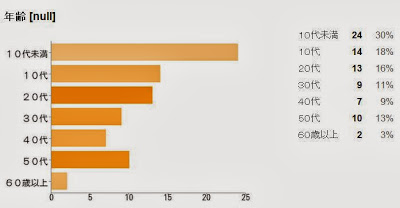
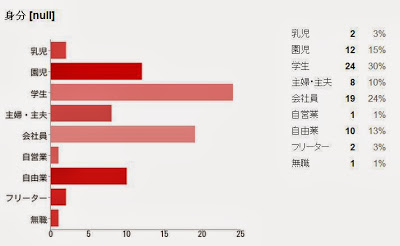
Athough the results are still very few (81 samples) , through my newly deployed survey (Survey I) I have found the following results. (The actual “Survey I” results)
Of 81 respondents nationwide:
FACT: 48% were mothers of children in teens or under 10 (10代未満) + (10代)
FACT: 30% were students (学生)
FACT: 3% were infants (乳児)
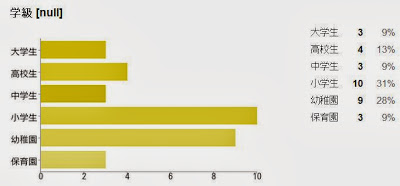
Of 24 students that accounted for 30% nationwide:
FACT: 31% were elementary school students (小学生)
FACT: 15% were kindergarteners (園児)
Through these findings, however limited in number of total samples taken, we can safely say this: Mothers of these children are the biggest stakeholders of this ‘nosebleed epidemic.’
Until I started conducting the series of survey, no one could pinpoint as to who is the biggest stakeholder of the massive number of episodes of nosebleeds and other symptoms reported since the end of September 2013. But through conducting this survey, we now know who they are, albeit short number of samples.
My hope is to gain momentum for this survey. To empower it, and empower THEM.
SUREVEYS DESIGNED TO EMPOWER STAKEHOLDERS
Survey I began under pitch darkness; without empirically knowing who the stakeholders are at all, it aimed towards helping EVERYONE who suffered from the episodes. Yet still, we have 359 people tweeting in the internet in just one day. We still don’t know the exact figures beyond the realm of all Twitter users in Japan (around 13 million nationwide).
Nevertheless, Survey I has produced a concrete result that “mothers of children of age under ten and over have finally voiced their silent outcries” They are the ones who are most victimized by the situation and are those who are crying out for most help. I believe the series of survey I’m conducting will serve to protect and arm these mothers. In particular, the newly released pilot version of “Survey II”.
Survey II: accmulates information on the details and past + present of episodes and treatment *English version(NEW)
The newly deployed “Survey II” supplements “Survey I” by accumulating past and present data of the episodes of nosebleeds and other symptoms and their diagnosis, treatment, and medication. What it will serve to do is to supplement mothers’ memories.
Under Japanese law, the maximum number of years a medical record can be kept is up to 5 years. So mothers can go back at least 5 years to request for these medical records. “Survey II” serves to work as a sort of a ‘memo pad’ where mothers can travel back 5 years into their memory and official records: it advises mothers to go back to the medical records and certificates of their children.
By answering to the carefully navigated questions, their responses will be recorded onto an online spreadsheet that can be downloaded upon request for archiving. (10 responses received so far on the pilot version of Survey II in spreadsheet format )
LETS GIVE THEM THE POWER TO VOICE THEIR CONCERNS
The two surveys are not designed for mothers only from the onset. It aims to support all those suffer from the episodes by acting as a supplementary information to be used when inquired by medical institutions and doctors. It aims to give them the power of appeal by supplementing their memories that are often ambiguous that are prone to neglect by the doctors as irrelevant information, so that all those suffer from the various episodes will be able to exercise their right to receive better tests, better diagnosis, and better treatments.
But the fact remains that the surveys are powerless without having a critical mass. We need more people responding to these two surveys. No matter how secure I make these surveys to protect the anonymity of the respondents, they are still very few are willing to voice their situations. Unfortunately, our society is not open enough to allow them. But I want to help make them break out of this deadlock. I want to empower those people who are voicing these silent outcries.
To give these surveys the power they need, and to empower those people who are just beginning to voice their “silent outcries”, to help the Japanese children, the people, please spread the word of these surveys to your friends in Japan, ask them to post it on their blogs, Facebook, tweet about it, discuss it on listserves, or even personal websites. We desperately need your help.
Thank you.
Takahiro Katsumi (“Taka”)
Founder of this survey, activist and owner, Office BALÉS
Don Hancock, Director of Southwest Research and Information Center in Albuquerque, NM, brings us up to date on the Waste Isolation Pilot Plant (WIPP) site, including his take on the “green kitty litter” now being blamed for the “explosion that was not an ‘explosion’” that caused a radiation leak at the government’s only site for nuclear waste disposal.
CONTACT INFO for DOE Media Spokesmodel Bradley Bugger at WIPP:
Ray Lutz of Citizen’s Oversight Project interprets the confusing shenanigans about the California Public Utility Commission’s “done deal” bailout of defunct San Onofre nuclear power facility’s operators Southern California Edison, to the tune of $3.3 BILLION in taxpayer funds. But it’s not over yet!
NUMNUTZ OF THE WEEK:
Kyushu Electric Power and Hokkaido Electric Power are complaining: “Mom, TEPCO got a bailout from the Japanese government and they made a profit of $4.3 BILLION last year, why can’t we get a multi-billion dollar bailout of our own, huh, huh???????”
PLUS:
NRC sets seismic analyses of 21 nuclear reactors as “a priority” – as long as it takes place by 2019 <!>.
Fukushima Prefecture goes bonkers over Manga comic with characters who tell the truth about nosebleeds, fatigue;
Worker sues TEPCO for radiation exposure, cites USS Reagansailors;
N. America’s Fukushima fallout exposure estimated at 400 TRILLION bequerels of Cesium-137;
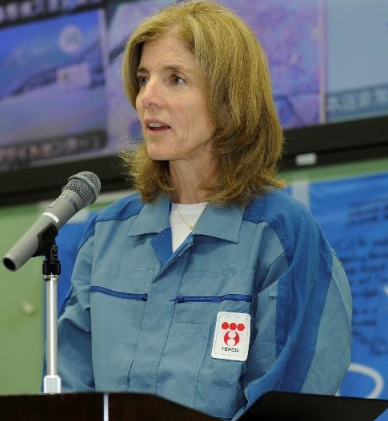
Earlier today, I visited the Fukushima Dai-ichi Nuclear Power Station. I am grateful to the Tokyo Electric Power Company and relevant Japanese government authorities for making this visit possible. I was struck that more than three years after the tragic events of March 11, 2011, the destructive force of the Great East Japan Earthquake and the resulting tsunami are still visible. TEPCO and Japan face a daunting task in the cleanup and decommissioning of Fukushima Dai-ichi. Decommissioning will take years of careful
planning and arduous work, under difficult conditions. Today, I was able to see firsthand these challenges, and I gained new appreciation for the dedication and determination of the workers at the Fukushima site.
Immediately following the Fukushima Dai-ichi accident, the United States—through the Department of Energy, the Nuclear Regulatory Commission, and other agencies—began supporting the Government of Japan and TEPCO in response efforts, decommissioning, and cleanup activities. We are committed to providing support as long as it is necessary. At Fukushima Dai-ichi, I saw examples of the assistance we provided, as well as the continuing partnerships between TEPCO, U.S. Government agencies, U.S. national laboratories, and U.S.
companies. The United States Government will offer our experience and capabilities, in particular, toward the near term resolution of ongoing water contamination issues. We welcome Japan’s steps toward ratification of the Convention on Supplementary Compensation for Nuclear Damage which will make it easier for American and other international firms to add their expertise to Fukushima cleanup and decommissioning efforts.
Tomorrow, I will have an opportunity to visit a wind turbine and a power substation in the Fukushima Floating Wind Farm Demonstration Project. This project is one of the symbols of the Tohoku region’s recovery from the Great East Japan Earthquake. It is one of many examples of how the Japanese people have realized new opportunities, even in the midst of great tragedy. Such projects are creating new employment and industries, as well as potential trade opportunities. The United States looks forward to contin
uing a strong cooperative relationship with Japan in the energy security and clean energy arenas, in addition to our ongoing assistance in the Fukushima region.
Public Meeting in House of Commons, 3rd anniversary of Fukushima meltdowns, 7:00-9:00pm, Monday 10th March 2014, Committee Room 10. No To Nuclear Power!!
Rik from Kick Nuclear in London breaks down the situation at the Fukushima Daichi nuclear power plant disaster site. He explains the process that has led to the disastrous situation today.
In 15 minutes you will understand the situation in a quick and easy fashion. This is a good video for people that have little knowledge of the disaster and wish to know more. Please share this video to your family and friends who are wondering what all the fuss is about!
Kick Nuclear is a London-based grassroots group campaigning against the UK’s addiction to nuclear power – and supporting sustainable alternatives.
We hold regular meetings and actions in the London area. If you would like to find out more about what we do, please contact us at the email address below or check out what’s going on via the ‘Boycott EDF’ Facebook page. You might also like to see what’s going on around the rest of the UK on the ‘Stop New Nuclear’ Facebook page
There are many things happening, too many to process.
Following last night’s opening of ‘A2-B-C’ in Tokyo (INFO), I went for a walk in a Japanese garden this morning to clear my head before heading to the airport on my way to the Canadian and South American premiers (INFO).
I am tired. It is not the “bad kind of tired” that is accompanied by the dreading of getting out of bed and having to face another day. Nor is it the “good kind of tired” that comes with the feeling that one has after working hard but sensing that it was somehow all worth it.
This is the tired one has when turning back is unimaginable, how to move forward is yet unknown, and staying where one is is not an option.
Someone recently commented to me that with all that has happened over the past year, I am finally standing on the “start line”. I was taken aback at first, thinking “how can I have come this far and only just now be approaching the starting line?”.
But I know now they were right. Everything I have done up until now has been in preparation to begin the work ahead. And that work is about to begin.
“….In the summer of 2012, when Takenouchi started to raise her voice against Fukushima ETHOS on twitter, a suspicious man appeared in her neighborhood and picked up Takenouchi’s then 2 year old boy. I reported this incident to the local police…..”
Mari Takenouchi has been under attack from JTRIG and its five eyes network. The reason I say this is because of the methods that have been deployed against her.
Firstly, I have to explain the methodology of JTRIG UK and the five eyes network and how they connect to Japan.
There is plenty of evidence that lets us know that the UK USA and Japan have homogenised their security systems;
1 The geo political manipulations aimed at China and Russia where a heavily militarised Japan with dozens of US military bases and the recent RUSI conference announcing confirmation of a Japan-UK military joint effort aimed at sending a clear message to Japan.
2 The decision of both Japan and the UK to redefine a new version of the secrets act to be brought in (coincidental) in March/April 2104 which is supported by global trade agreements being discussed in private that include the heavy censoring of the INTERNET by use of copyright laws and creating a two tier INTERNET system (to be fully implemented in the very near future)
Thanks to the revelations of various whistle blowers including Edward Snowden we can begin to see how the INTERNET has been manipulated by JTRIG using the five eyes security arrangement that encompasses The UK, USA, New Zealand, Canada and Australia.
In fact this blog has been under attack from the Australian section of five eyes and we have even been contacted by an anonymous source that allowed us to find out the actual social media campaign company that was used to overload Christina Mac Phearson with multiple tweets, insults and the types of attacks mentioned in the released JTRIG training manual.
This brings me nicely on to Mari Takenouchis case that I have been closely observing and trying to document and reveal for the JTRIG Psy Ops attack that is was.
When I heard of Maris case I wondered best how to tackle it and gain information. I decided that I would go with the advice she received, which was to make public the insults and threats made against her and highlight the more gruesome aspects of this campaign, whilst highlighting the fact that she was a single parent and a caring soul.
The tact that I took which was helped by a recent Reporters Without Borders article seemd to stop much of the aggressive tweets against her. This was to be expected if the tweeters were “sockpuppets” controlled from a central source. But this could be construed as coincidental and I needed further proof that there was a single point of decision making behind these attacks such as might be expected from a secretive and subtle group like JTRIG.
VIDEO OF CLEVER “DISRUPT” GMAIL HACK
Looking into the JTRIG manual, techniques such as using “Target Templating methodology”, where JTRIG where the target is analysed to see how they connect to the INTERNET and use these forms of attack; Destroy, Deny, Degrade, Deceive, Disrupt, Protect.
All these terms are part of the larger operation and in the case of Mari Takenouchi we see these techniques as part of a psy ops operation happening over a period of years.
So, Mari has had to block 3,000 twitter accounts in recent years, Her emails have been tampered with in novel ways that are described nicely in the JTRIG training manual using the technology against her. Her twitter accounts have been closed when she has needed them to provide evidence to law enforcement officials and other, then later switched back on when it was of no use to her as evidence. The nature of these attacks has been designed to frighten her and in fact it is likely it had the effect also of encouraging real people such as has been described in my earlier posts, gleaned from Mari`s web blog, to tweet foul things which might actually have had the unintended consequence of helping Mari as she could actually fight back.
Other ways of attacking Mari that can be seen in other high profile cases such as the attacks on Chris Busby by George Monbiot and George Galloway by the Daily Mail are to use high profile people/organisations to degrade the personality and therefore reduce the support of the cause that the target is supporting.
However, Mari has proved tenacious and adaptable and so JTRIG and their Japanese colleagues are trying the next type of attack still based on degrading character and destroying psychological balance. They have decided to attack her for asking for money to support her journalism and translation. This is a very common form of attack and one that was used against myself and Christina MacPherson (By Roger Helbig), as well as the Chernobyl Childrens International Charity in Ireland and amongst many other targets of JTRIG. Also you can see this technique being used on the comments sections of articles in main stream media publications as well as Blogs, Youtube comments, Face book and Talk radio shows.
Mari has also had her family drawn into this by having her son actually being picked up by a stranger in 2012 and her mother being insulted and having to make a statement to try to protect her daughter and grandson in more recent manipulations.
But still the tenacious Mari Takenouchi carries on with her mission to be a spokesperson for the forgotten people of Fukushima and Myiagi who are pressured into silence and having to suffer the effects and fears of the Fukushima Nuclear Disaster.
I might add that also at the disposal of this clandestine operation are the likes of Ogilvey and Maher (who also managed the PR campaign for BP after the disastrous Gulf oil spill) and the Japanese Science Media Center who was set up by the UK Science Media Centre to provide hand picked Scientists to give the “right science”. Also in the frame is the legal profession fronted by the likes of Mr Yabe and the French construct that manages the Chernobyl cover up called ETHOS fronted by Ms. Ryoko Ando for the Japanese version. This helps to combat the points that Mari is making. Also it is obvious that planted main stream articles come out and are promoted by social media above any counter stories.
Also, it is becoming obvious to many bloggers and activists that recently, Google and Facebook are being managed to limit the likelihood of stories going viral. This is described in the JTRIG manual and also the JTRIG operators have techniques for the stories and articles they want to go viral, thus sidelining posts.
Here is a couple of extract from maris recent blog post concerning harassment
“….In the summer of 2012, when Takenouchi started to raise her voice against Fukushima ETHOS on twitter, a suspicious man appeared in her neighborhood and picked up Takenouchi’s then 2 year old boy. I reported this incident to the local police…..”
“…..Even my twitter seemed to be a target of attacks, such as decreasing number of followers in an unnatural way and inability to find my own tweets through searching my own account @mariscontact, resulting in much fewer RTs, and frequent automatic log-out.
My English twitter account @SaveKidsJapan had been suspended for use by the attacks by internet obstructer’s the day before I went to the local police to report the their harassement. (Several days later, @SaveKidsJapan went back to service.)
I have been harassed by these people beyond description, which has inflicting me tremendous stress.
On April 26th, a teacher at my 4 year old son’s nursery school asked me, “It seems that your son has been under some sort of stress especially since this April. Has there been anything different for him?”…..”
Below are some links giving evidence to my findings concerning the mysterious JTRIG mentioned above;
The intercept (Glen Greenwalds new media outlet) is worth bookmarking as he will be releasing more on internet manipulation on that link-
….”We’re not aware of past cases in which tweets were found to be the basis for criminal contempt, but the law is the law.”….
….If they go ahead with the case, she may be held without bail until her trial, as is often the case in Japan, without a right to see a lawyer or have one present during questioning. Police told VICE News they would not comment on the case “due to privacy matters.”…
In 2012, more than 15,000 people living near the crippled Fukushima nuclear power plant filed a criminal complaint at the Fukushima prosecutors’ office. They alleged that Tokyo Electric Power Company (TEPCO) and the Japanese central government were criminally negligent for the March 2011 Fukushima meltdown and the way in which the resulting cleanup was handled.
The Fukushima police, however, declined to investigate. And prosecutors quietly dropped all charges against TEPCO, arguing that it was too difficult to prove criminal negligence even though several third-party watchdogs found that TEPCO and government officials had failed to carry out measures necessary to prevent the disaster despite knowing that a devastating earthquake could potentially strike near the plant. Even an independent investigative commission set up by the Japanese National Diet had concluded, “The meltdown was a manmade disaster.”
Meanwhile, Fukushima police and prosecutors have set their sites on a 47-year-old single mother named Mari Takenouchi because she wrote a tweet critical of a nuclear lobbyist. Takenouchi may go to jail for it.
* * *
Fukushima police and prosecutors are currently investigating Takenouchi for criminal contempt; if found guilty, she could face a month in jail. Prosecutors confirmed they will be flying to Okinawa, where Takenouchi lives, to question her on May 13. Police have already traveled from Fukushima to Okinawa to interrogate her — an unusual occurrence.
“We only send police officers from one prefecture to another if the subject is really a potentially dangerous criminal,” Fukushima police spokesman Lieutenant Tadashi Terashima told VICE News.
Takenouchi, the potentially dangerous criminal in question, is a journalist and blogger who fled her hometown of Tokyo with her infant son days after the disaster, hoping to avoid fallout from Fukushima. (She was too late; radiation had already reached Tokyo.) Today, she reports on the health of children in Fukushima. This is the translation of the tweet that has authorities flying across the country to interrogate her:
There is a common point between the two criminals of the century: Yasuhiro Nakasone, who introduced nuclear power to Japan, and Ryoko Ando, a government-sided citizen activist who leads Fukushima Ethos. It is their human experimentation project.
Nakasone was an influential Japanese politician for much of the second half of the 20th century — he served as Prime Minister in the 1980s — who championed Japan’s exploration of nuclear power in the 1950s. Ando is the Japanese head of Fukushima Ethos, a project lead by French NGO the Center of Studies on the Evaluation of Protection in the Nuclear Field (CEPN) and funded by the French nuclear energy lobby. Fukushima Ethos encourages residents to continue living in contaminated areas as long as decontamination procedures and radiation measurements continue to be done.
“Ryoko Ando blocked me on Twitter and rejected my offer to engage in an open debate with a mediator,” Takenouchi told VICE News, “and instead filed a criminal accusation against me.”
After the tweet appeared, Ando reported it to the Fukushima Prefectural Police, accusing Takenouchi of either criminal defamation or criminal contempt. This past January 29, Takenouchi received a telephone call from Fukushima police, notifying her that Ando had filed a complaint against her. Two weeks later, Takenouchi said police came to her apartment in Okinawa and examined her computer.
OK so 16th March 2014 the NY TIMES prints an article about media censorship where scientists are reported to not be able to talk to the press and are steered clear of doing studies that concern the Daichi power plant in Japan.. the reason for this is the Japanese government using the likes of the Science Media Centre in Japan set up by Herr Fiona Fox of the UK Science Media Centre.. Funding is also impossible to get for studies.. Then on the 17 March 2014 the NYtimes is asked to post this retraction ..
“Correction: March 17, 2014
An earlier version of the headline with this article misstated the actions of the Japanese government. There are deep differences over how to determine the health impact of the Fukushima disaster. The authorities are not ‘‘squelching”efforts to measure the effects of the accident. ”
HAHAHA !! HERR Fiona Fox and her USA branch “sense about Science” strikes again, giving the “right ” science approach … And we wondered why the NY times recently did a Pro Nuke article.. UMMMMM?
Looks like the editorial staff got a letter from a solicitor eh? and they had to go to the USA equivalent of the Goebbels like Science media Centre (SMC)for some reprogramming.
Heres what the Japanese Science Media Centre has to say about the “right ” Science;
As Asia’s first Science Media Centre, our goal is to help give science a voice on a national and international scale. Developing the Science Media Centre of Japan (SMCJ) began in 2008, when we found that although the country had a strong R&D industry, scientists were unwilling to talk to the media and focused on talking to the scientific community.
We also found that although the media regarded science as important, there was an overflow of science information, and they had difficulty in finding a scientist who could explain things in a way the average citizen could understand.
As a way to bridge the communication gap between scientists and the media, the SMCJ opened up for service in 2010. We have been helping scientists share their knowledge about controversial issues with the media in order to help society get access to accurate and good quality information.
Not long after we opened, we were faced with covering the March 11 earthquake, tsunami, and Fukushima. A huge challenge for a new SMC, but amidst the chaos we managed to send out reliable information, and gain respect from the science community.
Working in Japanese and English has enabled us to take the extra step. As part of the SMC network, we have been able to help the Japanese and overseas media get in touch with scientists from both sides. http://www.sciencemediacentre.net/smc-japan.html
Herr Fiona Fox
Does science just right for the corporations
Ewen Callaway
10 July 2013
“..Regardless, the SMC model is now spreading around the world, with the latest franchise slated to open in the United States around 2016. The centres are all run independently, but they abide by a unified charter crafted by Fox.
This means that Fox is about to take her message to a much wider audience. “I think there are problems with her reach,” says Connie St Louis, director of the science-journalism course at City University London and one of Fox’s loudest critics. “She’s becoming one of the most powerful people in science.”…”
“…That is a message that Fox has honed well since establishing the SMC in London in 2002. The centre’s aim is to get scientific voices into media coverage and policy debates …”
“… “Our philosophy is we’ll get the media to DO science better when scientists DO the media better,” says Fox. …”
The UK government tells the SMC to manage the news..
The SMC is pro fracking and pro GMO too!
basically pro big buisness…
I think you were to kind with Cameron Christine.. The UK is managing climate change by saying it will be too far into the future to have any immediate effects. even after the weird weather and flooding we have been having in the UK over the winter. Also, they are commissioning some weather modification studies and has asked the SMC to deal with it.. So no articles on weather modification..
The SMC is funded and supported by petroleum, nuclear, pharma, BBC and the Department of Energy and Climate Change (DECC UK) etc etc
follow the money! The SMC did
I would like to bring to your attention the mechanism by which science journalism is being undermined.. It may explain George Monbiot`s conversion to the nuclear industry among other things. This mechanism is the Science Media Centers of the world and the nuclear industry driven PR machine
There is growing evidence that the existence of SMCs is also encouraging news organizations to downgrade science reporters. Recently the newspaper The Australian sacked its science reporter, Leigh Dayton. The reason she was given by the editors was..
“they could rely on the supply of press releases from the Australian SMC so that their general reporters could write the science news”. “一般のレポーターたちが科学ニュース記事をかけるぐらい十分な情報がオーストラリアSMCからの広報から得られるため、だという。”
There is growing evidence that the existence of SMCs is also encouraging news organizations to downgrade science reporters. Recently the newspaper The Australian sacked its science reporter, Leigh Dayton. The reason she was given by the editors was..
“they could rely on the supply of press releases from the Australian SMC so that their general reporters could write the science news”. [Ed: Leigh Dayton denies having said this and we are currently endeavouring to check with the author of the Columbia Journalism Review paper as to the veracity or otherwise of the above statement.]
A large empirical study carried out recently by Andy Williams of Cardiff University, UK also confirmed that..
Science PR was increasing and independent science journalism was decreasing.
I knew that quality science journalism in Australia was dwindling. It took the most recent pro-nuclear advertorial in the Fairfax media to really wake me up to this. John Watson, ‘Senior writer’ at Fairfax Media, wrote an article entitled, Want to kill fewer people? Go nuclear…..
Why have The Age, Sydney Morning Herald and others sunk to this level of sloppy journalism?
Apart from the obvious fact they don’t want to offend their corporate backers, this kind of writing is symptomatic of what happens when you get rid of your qualified dedicated science journalists. Amongst the plethora of Fairfax journalists encouraged to depart their jobs were science editor Deborah Smith, health editor Julie Robotham, health correspondent Mark Metherell and environment reporter Rossyln Beeby.
“Evaluations of the accuracy and relevance of this report should be based on close reading and an understanding of issues such as those presented in this commentary at the very least. It is an extremely challenging document to navigate and parse, and perhaps this is cause for criticism in itself. There is room for valid criticism in several areas, and several underlying assumptions deserve scrutiny. Now is a good opportunity for informed commentary and feedback, because the forward steps taken in this report show that incremental change is possible. The only way to provide useful criticism is to examine the report in detail and address specific content”
1. Guide to the UNSCEAR 2013 Fukushima report (released April 2, 2014) Azby Brown, SAFECAST Revised April 30, 2014 v04 [This revision: Clarifies that “10% per Sv” refers to fatal solid cancer risk, not to cancer incidence in general.] [Previous revision: Includes feedback from an UNSCEAR contact who was able to closely observe the drafting of the report, but who asked to remain anonymous. Their comments mainly concern clarification of the report’s stance on LNT, DDREF, and collective dose; the approach taken towards release estimates; and UNSCEAR’s intended role.] This is a work in progress. Comments and corrections welcome. http://www.slideshare.net/safecast/unscear-2013-fukushima-final-report-commentary-v02 ++++++++++++++++++++++++++ ++++++++++++++++++++++++++ The full title of the report is: SOURCES, EFFECTS AND RISKS OF IONIZING RADIATION UNSCEAR 2013 Report It includes: VOLUME I: Report of the United Nations Scientific Committee on the Effects of Atomic Radiation to the General Assembly Scientific Annex with appendices Released earlier: VOLUME II: Scientific findings on effects of radiation exposure of children Annex B . Effects of radiation exposure of children Available at: http://www.unscear.org/docs/reports/2013/13-85418_Report_2013_Annex_A.pdf ++++++++++++++++++++++++++ ++++++++++++++++++++++++++
BRIEF SUMMARY: The report’s findings are summarized in greater length below (along with many caveats, exceptions, and explanations). But very briefly, some of the key points of the report include: –AGE GROUPS: The report provides separate dose and health risk estimates for three age groups: 1yr old, 10 yr old, and 20 yr old. This summary will look mainly at doses for 1 yr olds, because they received the highest doses. –GEOGRAPHIC DIVISIONS: Geographically, it is split into four areas: Group 1: Parts of Fukushima Pref. that were evacuated Group 2: Parts of Fukushima Pref. that were not evacuated Group 3: Nearby prefectures (Iwate, Miyagi, Tochigi, Gunma, ibaraki, Chiba) Group 4: The rest of Japan. –METHODS: Because not enough actual dose measurements (in-vivo data) were available for the early weeks of the disaster, the dose estimates are primarily based on models derived from ground deposition data. Atmospheric Transport and Dispersion Modeling (ATDM) was used to derive concentrations in air when necessary, such as when estimating inhalation doses. The range of doses for each settlement or district was estimated and cross-checked against other available data. The dose ranges presented in most graphs and tables are based on the averages of all the settlement or district doses in a particular geographic zone (such as Group 2: Parts of Fukushima Pref. that were not evacuated), not necessarily the highest and lowest doses estimated for that zone. The range of uncertainty is usually such that actual doses could be as little as 30% of the estimated average, or as much as 3 times more. This is confusing, but as described below, the uncertainties needed to be acknowledged, though the available data often did not allow them to be determined more precisely. — FIRST-YEAR DOSES, UNEVACUATED AREAS: The highest average first-year doses (in addition to background exposures) were received by: –Effective dose (full body): 1 yr olds in Group 2 (non-evacuated areas of Fukushima pref) : 2.0- 7.5mSv –Absorbed dose to thyroid: 1 yr olds in Group 2: 33-52 mSv –EVACUATION ZONE: The WHO Fukushima reports did not include dose estimates for residents of the original 20km evacuation zone. This report does. These were estimated as the sum of doses received before and during evacuation, and doses received during the remainder of the year at the location to which they were evacuated. Highest average first-year dose ranges for people from evacuated areas (1-year olds): “Precautionary” evacuation areas, i.e early evacuations (Futaba, Okuma, Tomioka, Naraha and Hirono etc) –Effective dose: 1 yr old,: 1.6 – 9.3mSv –Absorbed dose to thyroid: 1 yr old: 15-82 mSv Later “deliberate” evacuation areas (Iitate, Namie, Kawamata, etc) –Effective dose: 1 yr old,: 7.1 – 13 mSv –Absorbed dose to thyroid: 1 yr old: 47-83 mSv] –ACCUMULATED DOSES: Dose estimates are provided for the first year, accumulated after 10 years, and accumulated after 80 years. Group 2, 1yr old effective dose: 1 year exposure; 2.0-7.5 mSv 10 year exposure: 2.1 -14 mSv
2. lifetime (80 years): 2.1-18 mSv –COLLECTIVE DOSES: There was reportedly much debate about whether or not to include these, but collective effective doses and collective absorbed doses to the thyroid for the Japanese public are described. Collective effective dose (in man-sieverts): 1st yr: 18,000 after 10 yrs: 36,000 after 80 years: 48,000 The report does not take the additional step of calculating the illness and mortality implications of this (and gives reasons why this was not done), but based on LNT it can be calculated that about 5000 persons in Japan will die of cancer from this radiation exposure over the course of 80 years. –AVERTED DOSES: Despite the problems with the evacuation, they estimate that thyroid doses of infants would have been about 10 times higher without it, i.e. up to 750 mGy instead of about 80 mSv. They also estimate that residents of a number of towns would have received lower doses if they had not evacuated. –DOSES TO WORKERS: These are dealt with extensively, and the data provided by TEPCO is scrutinized and in some cases its validity could not be confirmed. –UNCERTAINTIES: The estimation models introduce various uncertainties. The doses are generally given as averages for districts or settlements. Doses to individuals in each settlement might be 30-50% lower than the settlement average, or up to 2 or 3 times higher. If doses could be based on in-vivo data, the uncertainty range would be much smaller. [According to the UNSCEAR contact, the available data did not generally allow an actual uncertainty analysis, so statements about uncertainty are the result of sensitivity analyses instead. This is a bit confusing but the important thing to keep in mind is that statistical uncertainty bounds are generally not provided, while rough estimates of possible variation are. The uncertainties will be revisited in the future.] –COMPARISONS TO OTHER DATA: The dose estimates coincide fairly well with those provided by WHO, but are about a factor of two or more higher than what has been shown by personal dosimetry and WBC monitoring. Nevertheless all of these generally agree within an order of magnitude. –DOES IT UNDERESTIMATE DOSES?: Taken as a whole, the report’s dose estimates for the public can be said to err on the side of overestimation, and no data has emerged yet that suggests gross underestimation of the doses themselves. The range of variability has been clearly noted, along with other uncertainties. They state that, “in some cases sizeable population groups may have been exposed to doses at the higher end of this distribution.” The report might be criticized for not illustrating the range of uncertainty more informatively in the dose graphs and tables themselves. –HEALTH IMPLICATIONS: The report states, “No discernible increased incidence of radiation-related health effects are expected among exposed members of the public or their descendants.” This is not a claim that no disease will occur. They explain clearly and precisely that health risks might exist, but: –Any increase will be within the bounds of normal variation of the disease without radiation. –Risks can be inferred theoretically but not directly detected with current science or statistically. –Compared to normal occurrence of the disease, the risk is relatively small. –The group of people affected is too small to make a meaningful statistical analysis. –They’re not saying they don’t care about the people who are affected, however few they might be. Nevertheless this language is easy to misinterpret, oversimplify, or just misquote. Disease estimates in the report are based on current radiation risk standards, which seem to have been carefully applied, with a higher risk per dose being assumed in general than in the past. Contrary to some claims, doses themselves do not seem to be underestimated, and arguments that health effects are systematically discounted in the report will need to be based on criticism of the underlying standards themselves, particularly concerning very low doses. Some reliable research already points at the potential need for revising the standards, and UNSCEAR itself has a number of things on its agenda to discuss in this regard (including low-dose issues in general, DDREF, age and sex functions, and thyroid), but this process has never moved quickly, and we should expect it to take years. [An earlier version of this summary listed ICRP and BEIR VII as the standards being applied in this report, but an UNSCEAR contact explained that while UNSCEAR has its own risk models, particularly what’s known as UNSCEAR 2006, these are due for revision, and so this report basically adopts the models used by WHO in its earlier Fukushima risk assessments.] –THYROID CANCER: In particular, the report notes, “An increased risk of thyroid cancer in particular can be inferred for infants and children. The number of infants that may have received thyroid doses of 100 mGy is not known with confidence…” but is estimated to be fewer than a thousand. The thyroid dose estimates in the report are up to five times higher than what the limited in-vivo screening data suggest. The report uses thyroid screening data that was available by the end of July 2013, and discusses at length the anomalies and thyroid cancers that have been discovered, and the implications. –ASSUMPTIONS IN THE REPORT INTENDED TO HELP AVOID UNDERESTIMATION AND WHICH MIGHT LEAD TO HIGHER DOSE AND/OR RISK ESTIMATES: –The report uses LNT to infer that risks from doses under 100 mSv exist. [The UNSCEAR contact explained that the report does not in fact “clearly endorse” the use of LNT, as I had originally written, because opinion on this was not unanimous. Nevertheless, the dose and health effects calculations assume risk at low doses as predicted by LNT. This is a compromise that the committee could agree on.] –The report abandons the assumption that doses received over time are less damaging than those received all at once, and so uses a DDREF of 1.0. [Similarly, according to the UNSCEAR contact, while some committee members wanted to officially change DDREF to 1.0, the purpose of the report was to describe the consequences of the Fukushima accident, not to review risk models per se; the WHO had used DDREF = 1.0 in its calculations, so it was adopted here as well.] — The added lifetime fatal cancer risk per Sv of exposure has commonly been assumed to be 5%, but in this report, UNSCEAR effectively doubles the assumed risk to 10% per Sv. –Lifetime doses are based on a period of 80 years, instead of 70, because of longer Japanese lifespans. This leads to higher doses because people are assumed to be exposed 10 years longer. –UNSCEAR could not determine exactly who among the public received potassium iodide (KI) and when, so in their calculations they assumed that no-one did. Also, they did not assume any benefit in reducing thyroid doses from the high iodine content of the Japanese diet. –The report assumes that no-one had or will have better shelter than that provided by wooden buildings, i.e., it uses the lowest sheltering factor. –Accumulated dose estimates over time assume that no remediation would be done and so no reduction of doses will be achieved by it.
3. –They assumed that 100% of the food eaten by Fukushima residents was produced locally, and that all of it contained at least 10Bq/kg of Cs but not more than 100 Bq/kg; the overall contamination levels were based on official food testing databases for marketed food. They note that measurements of food actually consumed by families indicate much lower levels of internal contamination from food than this modeling suggests. –ASSUMPTIONS IN THE REPORT THAT MIGHT LEAD TO UNDERESTIMATES OF DOSE AND/OR RISK: — Assumes that doses from inhaling resuspended particles, etc. are insignificant: This may in fact be true, but it would be better to include these, along with a discussion of the kinds of situations that could make these exposures more significant. — Assumes that direct doses from seafloor sand and sediment are insignificant: They did not include possible exposures from offshore sediment or sand, reasoning that these would only be relevant outside the 20km evacuation zone, where they would contribute only small exposures, whereas within 20km access is restricted. Access has been relaxed in many areas closer to the NPP, however, so more care should probably have been taken to determine potential exposures, particularly in coming years. –UNSCEAR estimates ocean releases of 3-6 PBq direct, and 5-8 PBq from the atmosphere to the ocean. While there’s a wide range of ocean deposition estimates, and a fair amount of relevant data was released after this report’s Sept. 2012 cutoff date, Aoyama gives 15PBq as his estimate of deposition from the atmosphere to the ocean, and Buesseler has said that the estimates for direct releases to the ocean are converging at 15-30 PBq. UNSCEAR’s estimates for this are on the low end. [The UNSCEAR contact explained that actual release quantities were used as intermediate values, to help determine the relative ratios of nuclides that were released; assessments of nuclide levels in the environment were based on actual deposition measurements wherever possible.] –Assumes that food screening will continue in an effective manner in coming decades; in reality the continuing political will to do so cannot be guaranteed, and doses from contaminated food could increase in the future. It would have been instructive to include what the food intake doses would be if testing and intervention were stopped. –PSYCHO-SOCIAL EFFECTS NOT COVERED IN DETAIL: The report notes the importance of mental health issues and a notable increase in these problems in Fukushima and elsewhere, and explains that they examined these, but only briefly, noting that, “Evaluating such effects is not part of the Committeeʼs mandate.” [This is clearly within WHO’s mandate, though, according to the UNSCEAR contact]. –NON-HUMAN BIOTA: The report discusses findings from a number of studies of effects on terrestrial and ocean organisms, and concludes that effects on non-human biota in the marine environment would be confined to areas close to where highly radioactive water was released into the ocean, and any radiation effects for terrestrial organisms would be constrained to a limited area where the deposition density of radioactive material was greatest. The available data would seem to be inadequate to make firm estimates, however. [See comments below about how this overlaps with the mandate of UNEP] –SOURCES OF INFORMATION: Primary sources are predominately Japan gov’t agencies, other member states (like US DOE), TEPCO, and international intergovernmental organizations (WHO, CBTO, IAEA, FAO, WMO). Secondary sources used for independent confirmation of official data include several NGO’s, including CRIIRAD, ACRO, Greenpeace, Union of Concerned Scientists (UCS), and SAFECAST. In addition, the committee made use of hundreds of peer-reviewed studies, most of which can be considered independent. –end of brief summary– ========================================================================================== ========================================================================================== LONG SUMMARY: GENERAL COMMENTS: This report is long-delayed, and is apparently the first time a major accident report took UNSCEAR more than three years to produce [The UNSCEAR contact commented that they have only produced one major accident report besides this, for Chernobyl, and that took two and a half years]. The reasons for this include, apparently, long delays in obtaining information from Japanese sources, difficulty reaching consensus on several points, and the desire to integrate information which became available after the initial Sept., 2012 cutoff date. The Japanese govt proposed that the report be undertaken, and it was approved as a “future program of work” in May, 2011. A nearly-complete draft was produced in May 2013, and then entered a long approval, amendment, and publication process. The findings were presented to the UN General Assembly in Oct, 2013, and it was approved in Dec. 2013, and released on April 2, 2014. The authors express frustration with the amount of time required to move a report like this through the system on p.12, saying: “Nevertheless the Committee suggested that the General Assembly might request the United Nations Secretariat to continue to streamline the procedures, recognizing that, while maintaining quality, the timeliness of their publication is paramount to fulfil the expected accomplishments approved in the programme budget, and expecting that the report ought to be published within the same year in which it is approved.” [The UNSCEAR contact stressed that these sorts of administrative delays are a problem with any report it issues, not just the Fukushima report.] Those who have been following know that the draft report was the object of contention and protest, and the final report has been as well. Some of the criticism is valid, while some seems based on misunderstanding or misrepresentation of what’s actually in the report. In Oct 2013, Physicians for Social Responsibility (PSR), as well as other groups including the International Physicians for the Prevention of Nuclear War (IPPNW), released a list of 10 criticisms, based on the May 2013 draft, which had been leaked: http://www.ippnw.de/commonFiles/pdfs/Atomenergie/ Ausfuehrlicher_Kommentar_zum_UNSCEAR_Fukushima_Bericht_2013__Englisch_.pdf It’s worth keeping the points they made in mind while reading the final report. Most of their criticisms seem to have been addressed to some degree, though in fact many already had been in the draft. We heard unconfirmed reports that committee members had been discussing most of the issues raised and gathering support for the inclusion of DDREF=1 and collective dose which were meeting resistance, and that the protest and widespread circulation of the leaked draft in fact were making it more difficult for people pushing for changes within the agency to do so effectively. IPPNW has issued a new press release, in German only so far, restating several of the criticisms, and they may well produce a longer critique of the final report: Original: http://www.ngo-online.de/2014/04/2/fukushima-unscear-bericht/
4. Machine translation: https://nuclear-news.net/2014/04/03/unscear-cover-up-of-health-consequences-of-the-nuclear-disaster/ It may be worthwhile at some point to compare these criticisms with what’s actually in the report. The process of producing a report like this is unwieldy, overly politicized, and open to incremental change only. It’s like steering an oil tanker with dozens of captains. Seen as a whole, it’s easy to call the entire international nuclear regulatory apparatus dysfunctional, particularly in times of emergency when information needs to be gathered and decisions made quickly. This report involved a committee of over 80 people from 18 countries, and the Japanese contingent played an important role. We have heard rumors that Japanese committee members strongly resisted some of the changes, particularly using DDREF =1 (which means that doses received over a long period of time are assumed to have the same effect as those received all at once; until now it had been assumed that they were about half as damaging). [The UNSCEAR contact commented that UNSCEAR itself is intended to be a scientific body, not a regulatory agency, is not involved in policy decisions like the IAEA, and is not directly involved in either emergency response or radioprotection. In addition, he pointed out that the committee that was convened for this report was much larger than any UNSCEAR has assembled previously; they have usually worked with a small group of experts. The size of the committee presented organizational challenges, but the overall depth of expertise it made available and the wide range of opinions represented resulted, he felt, in a stronger committee. Some areas where differences of opinion existed include LNT, DDREF, and collective dose, and the language with which these are dealt with in the report often reflects compromise. Nevertheless, ultimately everyone on the committee approved the final version that was released.] Despite the problems, my initial take is that this report is better than expected in many important respects, and not as bad as some critics make it out to be. UNSCEAR is not a monolith, and a few prominent nuclear critics who have been lobbying for decades for greater recognition of the harmful effects of low-dose radiation have had very positive things to say about Malcolm Crick, the UNSCEAR Secretary who oversaw the report. In the end, a report like this is a compromise, and the system makes it easier to block things than to get them included. Despite the fact that the language in the report is generally very precise, and the sections that treat the issues in depth describe many assumptions, qualifications, and uncertainties, almost all press reports will be based on the brief summary, and it’s easy to misinterpret, oversimplify, or just misquote this. This means it can and will be used to support various agendas, and also as a straw man for critics. There should be a better way: a process that is quicker, more open, more easily understood by journalists and the public, less focussed on producing a massive “authoritative” document and more on rapidly evaluating, discussing, and making use of a broad spectrum of information as it comes in. ++++++++++++++++++++


 Shopkeepers from Anjugramam, a village about 15 km from Koodankulam nuclear complex, reported seeing at least 6 ambulances rushing by at around 1.15 p.m. today (14 May). Anjugramam lies near a fork in the road, where one fork leads to Kanyakumari town and the other to Nagercoil. Another Idinthakarai resident, Mildred, who was at Myladi (25 km from Koodankulam) reported seeing 3 ambulances rush by at around1.45 p.m. Myladi is en route Nagercoil. Nagercoil and Kanyakumari are two major towns within 30 km of the nuclear plant, with large hospitals. Predictably, the nuclear establishment denied the occurrence of any accident first. Later they admitted to a minor incident and are reported to have said that the injured were taken to the hospital in the NPCIL township, where they were well enough to walk on their own. Sources from inside the plant report that at least three of the injured were contract workers and the other three were NPCIL staff. Reports also suggest that the accident happened in or around the boiler section of Unit 1, which reportedly attained criticality mid-year last year.










 nuclear-news