Russia and Central Asia could rely on an economically viable 100 percent renewable energy system—wind and solar—in 2030, says a report commissioned by the Neo-Carbon Energy Research Project in Finland. (By economical they mean a price per kilowatt-hour slightly higher than € 0.045 but lower than the cost of energy produced by today’s solar plants.) It’s highly doubtful that Russia will actually move to such an energy system, according to the report’s authors, but their simulation at least showed that it’s possible.
The analysis is in line with other reports created by the team for North-East Asia, South-East Asia (including China), South America, and Finland, explains Breyer. “What we found is that in all the regions where we did the modeling, simulation results show that a 100 percent renewable energy supply is possible at low cost.” One of the important results is that the energy will be 50 to 80 percent cheaper than a fossil-fuel based energy supply with carbon capture and storage, clearly showing that carbon capture is not a way forwards, says Breyer.
These reports are the fruit of the LUT Energy System Model, a software system that is still in development. It operates on an input of a detailed collection of projections for 2030 that include weather conditions, biomass, geothermal and hydraulic energy sources, natural gas reserves, expected power demand, grid structure, economic and trade trends, financial aspects of hardware and structures, energy distribution, storage and conversion to gas, and even the 3 percent of produced electricity that remains unused.
As with the other investigated geographical areas, the core generation is solar and wind, but the distribution between the two technologies can vary widely, says Breyer. “There are huge differences: in India solar is the key technology, while in Eurasia we found that the wind share is the highest at 50 to 60 percent. “What is more interesting is that in Eurasia there is more wind power available where there is more demand,” says Breyer.
In the Russia of 2030, photovoltaic energy would only supply 14 percent of the 550 gigawatts anticipated total energy production capacity (which corresponds to the power output of 500 large nuclear reactors), while wind power would amount to about 60 percent of the total capacity.
The surveyed region, Russia and a number of former Soviet states in Central Asia, is huge, and therefore the researchers divided it for the modeling into 14 to 18 regions with different interconnections. An efficient network for energy exchange combined with local energy production would need less storage capacity, thus increasing the overall efficiency of electricity supply.
Now the question is this: Is Russia, with its coal and nuclear plants, and relatively little installed solar and wind energy as compared to its neighbors, prepared to embark on a large scale development of renewable energy?
“I think, not yet. When you start to analyze the current power plant infrastructure then you notice that Russia and Central Asia is the region in the world with the lowest level of new renewables in the system. There is practically no investment in photovoltaic or wind energy, perhaps a total of one or two gigawatts. There is a lot of insecurity and investors are not very interested in investing in new projects,” says Breyer.
Things could change, however, if Russia would look at China, where the most important two drivers are the need for a low-cost power source for industry and the fact that the current energy system is extremely expensive, says Breyer. “Currently there are more than a million people dying of lung cancer per year because of air pollution caused by coal. The total cost of coal-fired electricity is twice that of the total cost of solar and wind,” says Breyer.
The research represents the first step in LUT’s renewable energy plans. “The second step will include mobility [electric cars] and heating. The third step will start from today’s capacities, going up to 2050 with a five-year time slice system, and show which technologies should be fazed out and which new technologies should come online,” says Breyer.
“I’m one of those who are skeptical about this project. I think the facts on this project are pretty well established. We don’t know for sure what DOE has in mind for Otero County,” Coffman said. “We don’t know for sure what this project entails. I can tell you what drives this project, and that is a huge problem with nuclear waste that’s building up in power plants and nuclear waste from bomb making that is in the various labs in this country.”
ALAMOGORDO — Otero County residents voiced their concerns and opinions on the controversial Salt Basin Deep Borehole Research Project proposed by the U.S. Department of Energy (DOE) in conjunction with TerranearPMC (TPMC), an environmental company that works across the country.
TPMC C.E.O. Kenneth T. Fillman along with Program Manager and Senior Geologist Peter Gram were at Thursday’s County Commission meeting to brief Commissioners on the project once again and answer any questions.
According to Fillman, TPMC was awarded one of four research contracts from DOE to conduct deep borehole research on private property in Otero County. The research is to determine if the geology would be suitable for evaluating the feasibility of the concept of deep borehole disposal of nuclear material.
Fillman reassured Commissioners and the public that it’s merely a research project only and TPMC has secured a land lease with the private property owner, Greg Duggar, which states that no nuclear waste material will be stored or disposed at the site now or in the future.
He also stated that the DOE will also enter into an agreement with Otero County that no waste will be stored or disposed at the site now or in the future as well.
Fillman explained the DOE phased schedule of the project.
He said phase I is public outreach which would occur now until May. The DOE may eliminate a site at any time during this time. Phase II is permitting and draft work planning which would occur from May through August. At this point, the DOE may eliminate up to three sites. Phase III is the final work planning which is from August through November. The DOE will have a site selected and possibly keep another one for backup for up to six months. Phase IV is the drilling and testing stage which will occur from January 2018 through April 2019. Phase V would be the site closure and restoration or continuation phase which may possibly close up the borehole or use it for further scientific research.
Several residents stood up and asked questions about the projects. Some were in full support of the project while others were skeptics.
Concerned resident Walt Coffman said although he believed the project’s intentions was truly for research purposes, he still had some doubt about DOE’s motives.
SALLISAW, Okla. (AP) — The state of Oklahoma and the Cherokee Nation are working together in court to stop the permanent disposal of radioactive waste near the Arkansas and Illinois rivers.
The pair obtained a temporary restraining order against the owner of a long-out-of-business uranium plant on Thursday, the Tulsa World (http://bit.ly/2kQfMgP ) reported.
Statements from the Cherokee Nation said the Sequoyah Fuels facility, which converted yellowcake uranium into fuel for nuclear reactors, left tons of “uranium-contaminated sludge” in many “basins, lagoons and ditches at the site” when it closed in 1993.
Cherokee officials said the company agreed in 2004 to spend about $3.5 million to remove the waste and dispose of it off-site. But Sequoyah Fuels recently told the tribe that it couldn’t find a suitable site to dispose of the waste. The company said it intended to put the waste into a permanent disposal cell on-site.
The restraining order will temporarily keep the company from disposing of the waste at the site. Court records said tribal and state officials want their own experts to review options for off-site disposal.
“The safety of the environment, our citizens and all people in and around Gore is our highest priority,” said Sara Hill, the Cherokee Nation’s secretary of natural resources.
According to reports, the U.S. Nuclear Regulatory Commission ordered the plant to close after an accidental release of toxic gas caused about 34 people to seek medical treatment in 1992.
Sequoyah Fuels and the company’s law firm didn’t respond to the newspaper’s request for comment.
PAKISTAN on Thursday drew attention of world community towards India’s nuclear ambitions and the threat they pose to regional security and stability. During his weekly news briefing, Foreign Office spokesman Nafis Zakaria referred to building of a secret nuclear city by India, huge stockpile of nuclear weapons and testing of inter-continental ballistic missiles and warned that these threaten to undermine strategic balance in the region.
It was in December 2015 that a prestigious American magazine published details of the secret nuclear city being developed by India at Challakere and its strategic implications especially for Pakistan and China. Again in September 2015, an investigative report by Al Jazeera television confirmed that India was building a huge nuclear complex to produce highly enriched uranium and allow the country to produce thermonuclear bombs, one thousand times more powerful than those used against two Japanese cities in World War-II. These reports were not taken as seriously by the world media as they should have been but it was strange enough that there was also no worthwhile reaction from Pakistan, which is directly threatened by such dangerous developments across its Eastern borders.
Possession of nuclear and thermonuclear devices as well as inter-continental ballistic missiles by a country that has extremist and narrow-minded coterie at the helm of affairs should be a matter of deep concern not only for Pakistan but for the region and beyond. Pakistan has reasons to be alarmed as India has a cold start doctrine, its Army Chief boasts of surgical strikes, its Prime Minister takes pride in being part of the conspiracy to dismember Pakistan and is willing to repeat the episode, and its Home Minister had the audacity to suggest referendum in Pakistan to determine whether its people want to join India – a country worst than a jail for minorities.
In this backdrop it is regrettable that a country, with proven aggressive agenda, is being doled out all sorts of technological, diplomatic and political cooperation by some western countries to become a monster. Pakistan has no other option but to take credible measures to safeguard its security interests.
In early November 1983, after President Ronald Reagan denounced the Soviet Union as the “evil empire” and unveiled his so-called Star Wars missile defense strategy, Kremlin leaders were growing convinced that war games planned by the United States and NATO in Western Europe were, in fact, a disguised prelude to a nuclear first strike on Russia.
Their fear was almost palpable. On Sept. 27, a Soviet early warning station had received signals that five incoming Minuteman intercontinental missiles had been launched from American bases. The duty officer, Col. Stanislav Petrov, made a split-second gut decision that proved correct: He concluded that a satellite glitch had triggered a false alarm.
Six weeks later, as the war games began with realistic precision, fully armed Soviet fighters were placed on alert at Polish and East German bases for the first and only time in the Cold War. Soviet helicopters began ferrying nuclear weapons from storage sites to launching pads. Civilian aircraft in Warsaw Pact nations were grounded while the Soviets launched three dozen spy-plane flights over Western Europe to assess whether the mobilization presaged a sneak attack.
At Ramstein Air Base in West Germany, where the United States Air Force had its European headquarters, Lt. Gen. Leonard H. Perroots, the deputy chief of staff for intelligence there, faced, like Colonel Petrov, a quandary — one with profound potential consequences.
The war games had already made Moscow jumpy. NATO planes visibly armed with what turned out to be dummy nuclear warheads were seen leaving their hangars. A further tit-for-tat escalation could have provoked war.
But General Perroots, making his own quick judgment call, defused the situation. He saw the signs of an elevated Soviet military alert but decided not to respond.
Conflict was averted, but more than 30 years would pass before his pivotal role in the episode was disclosed. A top-secret presidential advisory board analysis released in 2015 concluded that he had made a “fortuitous, if ill-informed” decision during the training exercise, designated Able Archer 83.
General Perroots died on Jan. 29 in Lake Ridge, Va. He was 83.
“Had Perroots mirrored the Soviets and escalated the situation, the War Scare could conceivably have become a war,” Nate Jones wrote last year in “Able Archer 83: The Secret History of the NATO Exercise That Almost Triggered Nuclear War.”
He added, “Fortunately, Perroots trusted his gut, and Able Archer 83 ended without nuclear incident.”
Mr. Jones is director of the Freedom of Information Project of the National Security Archive at George Washington University, a nongovernment group that focuses on transparency. The organization had sought the declassification of the report, written in 1990.
General Perroots went on to direct the Defense Intelligence Agency from 1985 to 1988 under President Reagan. He also oversaw efforts to find American military veterans still missing in action in Southeast Asia more than a decade after the Vietnam War ended.
Leonard Harry Perroots Sr. was born on April 24, 1933, in Morgantown, W. Va., the son of Phillip Perroots, an Italian-born stone mason, and the former Alma Perrini….
In the wake of President Trump’s comments that NATO is “obsolete”, and European ‘leaders’ renewed calls for a European army, Angela Merkel has been forced to deny Germany is interested in acquiring nuclear weapons amid calls for it to lead a European “nuclear superpower.”
As we noted previously, calls for an EU Army pre-exist current trends among Europeans and Americans to reject international institutionalism for a more nationalistic, sovereign state oriented model of governance. The Guardian was reporting in 2015 that European Commission President Jean-Claude Juncker was calling for an EU Army to show Russia that the bloc was “serious about defending its values.” The shock result of Brexit merely accelerated plans within the EU that were already in progress.
But with Trump’s NATO comments, chatter picked up further in recent weeks of the need for the European Union to invest in its own nuclear deterrent.
Jaroslaw Kaczynski, the head of Poland’s ruling party, told a German newspaper this week he would “welcome an EU nuclear superpower”.
A senior MP from Mrs Merkel’s Christian Democrat party (CDU) has called for Germany to press for a European nuclear deterrent.
Spiegel magazine has questioned whether it is time for Germany to acquire its own nuclear weapons.
And the Financial Times has called for Germany to “think the unthinkable” on the issue.
As The Guardian reports, the German Government has moved quickly to stymie those rumors…
“There are no plans for nuclear armament in Europe involving the federal government,” a spokesman for Angela Merkel said.
Leading voices in Germany have warned that the country acquiring its own nuclear weapons is not the solution.
“We would open Pandora’s box and start an arms race,” General Hans-Lothar Domröse, a former Nato commander, said. “It would make it even more difficult to prevent other countries like Iran from getting the bomb.”
The Canadian Nuclear Safety Commission (CNSC) is offering participant funding to assist members of the public, Indigenous groups and other stakeholders in reviewing its Regulatory Oversight Report for Canadian Nuclear Power Plants: 2016 (2016 NPP Report) and in submitting comments to the Commission. This report provides CNSC staff’s assessment of the Canadian nuclear power industry’s safety performance during 2016 and details the progress of regulatory issues and initiatives up to April 30, 2017.
The CNSC will hold a public meeting on August 16 or 17, 2017 in Ottawa, where CNSC staff will present the 2016 NPP Report to the Commission. The report assesses how well plant operators are meeting regulatory requirements and program expectations in areas such as human performance, radiation and environmental protection, and emergency management and fire protection.
Participant funding of up to $35,000 is being offered for the provision of new, distinctive and valuable information, through informed and topic-specific written submissions to the Commission.
The CNSC regulates the use of nuclear energy and materials to protect health, safety, security and the environment; to implement Canada’s international commitments on the peaceful use of nuclear energy; and to disseminate objective scientific, technical and regulatory information to the public.
The CNSC publishes a report on the safety performance of Canada’s nuclear power plants each year.
The report highlights emerging regulatory issues pertaining to the industry at large and to each licensed station.
The CNSC evaluates how well licensees meet regulatory requirements and its expectations for the performance of programs in 14 safety and control areas.
We read with interest the paper by Ohira et al. of thyroid ultrasound examinations in Fukushima, which examines the relation between external radiation dose and thyroid cancer prevalence among Fukushima children.1 However, we point out that their classification of 59 municipalities in Fukushima prefecture into 3 areas is inappropriate. The “lowest dose area” was constituted of Aizu area with least thyroid dose and a distant Iwaki city with the highest thyroid dose, which led to a wrong conclusion that the external radiation dose was not associated with thyroid cancer prevalence among Fukushima children.
Ohira et al. of Fukushima Medical University examined the association between the prevalence of thyroid cancer and radiation dose among Fukushima residents.1 They used external radiation dose estimated by Fukushima Health Management Survey (FHMS) based on individual external doses from behavior data of 26.4% residents who responded the questionnaire.2 They classified municipalities based on fraction of respondents: “highest dose area” (≥1% received external radiation exposure of ≥5 mSv), “lowest dose area” (≤1% received ≥1 mSv), and the other “middle dose area”. Mainly because the prevalence of thyroid cancer was found not to decrease in this order of decreasing external dose, they concluded that external dose due to nuclear accident is not associated with thyroid cancer prevalence. However, their classification of municipalities based on fraction of residents (1%) whose exposure exceeds 5mSv and 1mSv does not represent the average exposure dose in each municipality. Moreover, they seem to have made a serious mistake in their classification as follows.
Internal exposure to I-131 is known to be closely associated with the incidence of thyroid cancer among children. The UNSCEAR report on absorbed dose in thyroid 3a,b shows that the Ohira et al.’s “lowest external dose area” is composed of the Aizu area with least thyroid dose and a distant Iwaki city with the highest thyroid dose in Fikushima prefecture except evacuation zone. In a recent estimation of internal thyroid dose using a combination of thyroid measurement data, whole-body counter measurement data and atmospheric transport dispersion simulations, the residents of three municipalities including Iwaki city were shown to have the highest thyroid equivalent dose in Fukushima prefecture. 4 The “lowest external dose area” is found to be composed of the lowest dose Aizu area and the highest thyroid dose Iwaki city. Incidence rates of thyroid cancer for the highest, middle and lowest external dose areas in ref. 1 and those for Aizu and Iwaki districts constituting the “lowest dose area” are listed in Table 1. The average total effective dose to 10-year-old children estimated by UNSCEAR3b,c shows that the effective dose of Iwaki city is the 18th highest in 59 municipalities. If Iwaki city is classified as “middle external dose area” instead of “the lowest external dose area”, dose response of thyroid cancer prevalence may be recovered.
The conclusion of ref. 1 that external radiation dose due to nuclear accident is not associated with thyroid cancer prevalence among Fukushima children is found to come from the wrong constitution of the “lowest dose area” as a sum of Aizu with lowest thyroid dose and Iwaki city with the highest thyroid dose. External radiation dose estimation may possibly reveal the dose dependence of thyroid cancer, if it is used carefully with referring to various estimations of external dose and absorbed dose in thyroid.
1. Ohira, T, Takahashi H, Yasumura S, et al. Comparison of childhood thyroid cancer prevalence among 3 areas based on external radiation dose after the Fukushima Daiichi nuclear power plant accident: The Fukushima health management survey. Medicine. 2016; 95(35): p e4472 doi: 10.1097/MD.0000000000004472
2. Fukushima Health Management Survey, Basic Survey Appendix: Estimated external radiation dose, Web site. http://fmu-global.jp/?wpdmdl=1872 Published Sep. 15, 2016, Accessed January 11, 2017.
3. UNSCEAR 2013 Report Vol. I Sources, Effects and Risks of Ionizing Radiation. Published 2014 March, Accessed January 11, 2017.
4. Internal thyroid doses to Fukushima residents—estimation and issues remaining. Kim E, Kurihara O, Kunishima N, Momose T, Ishikawa T, Akashi M. J Radiat Res. 2016 Aug; 57(Suppl 1): i118–i126.
I find it strange to see al the bloster from the corporate media claiming that nuclear is good and MAYBE we should build more nuclear plants. What everyone (including the main stream media doesn’t know, is that the executive orders from Herr Trump have already been signed. Nuclear is coming to a town near you soon (IF YOU LIVE IN THE USA) and both the Tax payer and energy customer will have to pay for it (technically twice if you live near one of these upcoming new builds). Its way worse than getting the Mexican tax payer to pay for the wall. Regards Arclight2011
Law360, New York (January 23, 2017, 6:13 PM EST) — The House of Representatives on Monday pushed through a series of changes to the Federal Energy Regulatory Commission and the Nuclear Regulatory Commission, in bills meant to change how courts treat FERC decisions and give more flexibility to new nuclear plants.
The two bills, passed by a voice vote, are meant to help consumers in the existing power industry and to help the development of new nuclear reactor technologies. The Fair Rates Act would expand the reviewability of FERC rate change decisions and the Advanced Nuclear Technology Development Act of 2017 would direct the U.S. Department and of Energy and the NRC to come up with a plan to allow for regulatory approvals of more advanced technology in nuclear reactors.
Rep. Joe Kennedy, D-Mass., the prime sponsor of the Fair Rates Act, said that the legislation would avoid the situation that power consumers in the Northeast faced. Following a rate auction, FERC deadlocked on approving the results, and they went into place automatically but consumers could not challenge them without a final FERC decision.
“With no official decision from the agency, there was no decision to appeal, leaving my constituents completely voiceless,” Kennedy said.
The bill would prevent situations in which consumers are forced to pay higher rates without the opportunity to appeal the decision either through the agency or through the courts, Kennedy said.
“Although this situation may sound completely isolated to New England, there’s not a corner of this country that’s immune from the unpredictability of the American energy market and the resulting burden they are forced to bear as a result,” Kennedy said.
Kennedy’s bill alters Section 205 of the Federal Power Act, designating that if a rate approval becomes final through action of law, it should be treated as a final agency action for purposes of agency and court appeals.
The court case that spurred the passage of the law came from Public Citizen and the state of Connecticut, which argued to overturn the approval of regional grid operator ISO New England Inc.’s 2014 auction — through which power generators offered their resource capacity for future power needs — by default.
However, in October, the D.C. Circuit ruled that it cannot review the approval of the auction without a final decision by the agency; the 2-2 deadlock kept the state and public consumers out of the courtroom.
Rep. Buddy Carter, R-Ga., said that one of the other bills the House passed on Monday, the Advanced Nuclear Technology Development Act of 2017, would help bring more advanced nuclear reactor designs to market more quickly. The language mandates that the Energy Department and the NRC enter into a memorandum of agreement to “knock down those walls to innovation and provide an opportunity to develop advanced nuclear reactor designs.”
The bill specifically includes advances on existing light-water reactor technologies that are intended to be more efficient and generate less waste as well as nuclear fusion reactors — which have not yet been built on an economically feasible scale. According to press reports, research institutions in both the United States and abroad have continued work on scaling up the power and sustainability of such reactors.
The bill would require a uniform, predictable plan for approval of more advanced reactors, which is meant to be based on mathematical models of their behavior.
Rep. Diane Degette, D-Colo., said that the changes to the NRC would be “a commonsense way for the federal government to safely advance the goals of the advanced nuclear power industry” and pave the way for lowering America’s overall carbon emissions.
It would appear that the accident today was due to some work that was ongoing on the Flamaville nuclear site over at least a couple of days.
I noticed that on the 7th February 2017 between approx 22.00hrs GMT and 24.00 hrs GMT that there is some missing data from the local radiation monitors;
And this one;
These releases were seen as a low rise on the Jersey monitor about an hour later here;
Whilst these levels in Jersey are not excessive I just thought I would show how quickly a plume from the Flamaville site could reach the Channel Islands. A report by UK “Experts” said that there would be no risk to the Channel Islands even if there was a serious accident. These are the same claims that are made about ireland concerning the Sellafield nuclear disaster site in the west coast of the UK and they come with pretty graphs and lots of complicated equations.
I, for one, do not believe the UK experts reassurances. Thats why I sent in a petition to the Irish EPA calling for a re-justification of the Euratom Treaty concerning Sellafield.. The Irish EPA is currently about 4 weeks late in officially responding to this (hoping for an Irish version of Brexit perhaps). More on this later.
Aside from that, once again we can see that the official releases from French reactors are being played down as is the official take on the health effects of these normal working releases. The nuclear industry and EDF need to become more transparent but in recent years they have become even less so.
If any Europeans wish to apply for a re-justification on the Euratom treaty based on new evidence of the real risk of health effects please follow this link where you can contact them for help and support to fill in the form.
Yesterday we tried to post a list of demonstrations around the world and it caused nuclear-news.net to corrupt the home page. It also stopped us informing #NODAPL supporters of the water defenders where these demonstrations were. I eventually worked out what was happening and had to delete the post to correct the blog but too late to give you all the information. This video last 1 hour, it starts slow but then we get to hear how some of these water defenders feel and what their perception is of the the situation, I recommend watching it Regards Shaun McGee aka arclight2011
This video is relating to this article concerning todays explosion at Flamaville nuclear power plant and EDF hiding radiation data from the public. The winds are heading to the Channel Islands; The full censored article can be seen here;
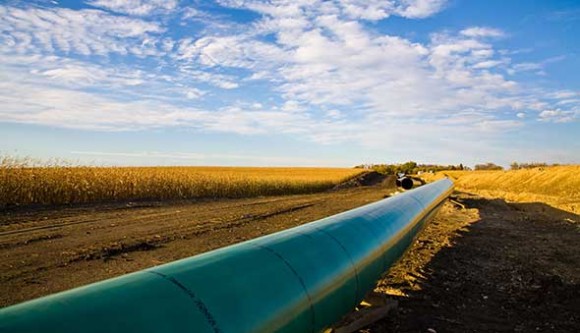
The US Army Corps of Engineers Tuesday decided to grant a final permit for the controversial Dakota Access pipeline after an order from the Trump administration to expedite its permit.
The US Army Corps of Engineers Tuesday decided to grant a final permit for the controversial Dakota Access pipeline after an order from the Trump administration to expedite its permit.
A court filing submitted by the Army represents the first concrete challenge to American commitments to mitigating climate change, and the pipeline could begin operation as soon as June.
The Army corps had previously backed off the project in December after thousands had joined protests by the Standing Rock Sioux tribe, who say the pipeline will tread across ancestral lands and threaten their water supply.
The so-called easement to resume building the 1,885 kilometer pipeline, which will run from shale fields in North Dakota to refineries on the Gulf of Mexico, is the first of two pipeline projects enjoying reinvigoration by Trump, threatening serious damage to US climate commitments reached in the Paris Agreement of 2015.
The second is the Keystone XL pipeline, which Trump has also raised from the grave and green lighted. That pipeline, which would run from the carbon intensive tar sands oil projects in Alberta, Canada, and again to the Gulf of Mexico, was halted by the Obama Administration over the climate damage that would result of bringing the tar sands to market.
Pipes for Keystone XL construction. (Photo: Wikipedia)
It’s been jokingly suggested that the Dakota Access pipeline posed less of a threat to the global climate than the Keystone XL, but that can’t really be determined yet because the Army Corps hasn’t performed an environmental impact study. In any event, the oil it will bring to market cause the same damage as would 30 coal burning plants.
It also represents a stark break with the Obama administration’s policy of moving cautiously where questions of impact to the climate are concerned. Slated to move 470,000 barrels of oil a day, the pipeline contributes to maintaining a carbon intensive economy when smarter markets are moving toward renewables.
It likewise offers an insulting rejoinder to Native American tribes who have been protesting it. Running the pipeline under the Missouri River, as planned, endangers the tribes’ drinking water in the event of a rupture, and poses a danger of downstream contamination. The pipeline also opens social wounds afresh: It’s hard not to regard the pipeline as later-day federal land grab from indigenous populations.
By nudging the project along, the Trump White House highlights its blunt disregard for ethics as well: Trump reportedly holds or held up to $1 million in shares in Energy Transfer Partners, but since he refuses to release his federal tax returns, there’s now way to objectively establish that.
Even if he has dumped the stock, the pipeline project is still pure patronage – Kelcy Warren, CEO of Energy Transfer Partners, was a major contributor to Trump’s campaign.
The Dakota Access project bulldozes the way for the resurrected Keystone XL pipeline, but its fate is less certain. Trump’s order to complete that project came with a promise to “renegotiate” the terms of the 1,897 kilometer pipeline with Canada so that only American steel is used for its construction.
TransCanada, the company responsible for building it, has yet to indicate whether it will accept those terms. The company had originally planned to build 45 percent of the pipeline with Canadian steel.
But the Keystone XL’s threat to the climate is obvious. Analysis suggests that, once the pipeline is complete, it will move enough climate-volatile tar sands oil to pump 181 million tons of greenhouse gasses into the atmosphere each year, or the pollution equivalent to that put out by 37.7 million new cars on the road each year.
More generally, the Trump administration is aligning to assail Obama’s signature Clean Power Plan limiting emissions from power plants, which has long been tied up in court proceedings, but which also draws its force from a long established law called the Clean Air Act of 1970. That law imparts to the Environmental Protection Agency the right to say greenhouse gases are, in fact, harmful and subject to regulation.
Any challenges to the Clean Power Plan will certainly end up in the US court system, a system to which Trump is already openly hostile. A review of his Twitter insults toward the judges reviewing his precipitous Muslim ban is sufficient to illustrate his tendency toward judicial intimidation.
Trump’s reanimation of two damaging pipeline projects will have baleful consequences for the world climate. But the method he used to do it – executive orders – are easy ways for him to jeer and bear his teeth at the environmental movement and the pipeline protestors who have already taken to the streets.
Dismantling matters of law, like the Clean Air Act, would take a willing judicial branch. The more he mocks judges over his Muslim ban – and he shows no signs of running out of taunts – the less likely other judges will be to cooperate in his project.
Image; Flamaville radiation monitoring stations and the Channel Islands
Posted to nuclear-news.net
By Shaun McGee
Date 9 February 2017 12.50 hrs GMT
Even though many media sources had claimed that there was no threat of radiation releases I checked the radiation monitoring network of Europe called EURDEP at 12.18 hrs GMT to see if the incident at Flamaville had triggered any spikes showing a radiation release.
Obviously, after the Chernobyl, Budapest Medical Isotope Institute and Fukushima incidents etc there is little trust in the nuclear industry reports of such incidents. I noticed that although the incident happened just after 10.00 hrs GMT that the French monitoring system had stopped its hourly reading at around 10.30 hrs GMT;
I then checked the UK based monitoring system at Alderney in the Channel Islands that is located east of the nuclear power plant and that monitoring system was still doing up to date reports;
The next thing i checked was the wind directions to assess the movement of any likely plumes and there is a slow wind that is moving to the east (Towards the Channel Islands) at 12.50 hrs GMT;
Obviously the reactor, where the incident took place, has been reported to have been shut down and presuming that there is no release or radiation plume happening at the moment I thought it would be a good idea to work out where the Off Gassing from the shut down reactor (A normal operation in the event of a reactor shut down to enable works to be done in and around the reactor) might head towards so I checked the wind map projection for 21.00 hrs GMT this evening. The wind will be heading east for the rest of the day and possibly the night as well;
Summary;
Presuming that EDF are telling the truth, it is likely that they will be Off Gassing the reactor radioactive gases and that those will be heading towards the Channel Islands. The Off gassing will possibly not register locally in france as the Chimney stack and increasing wind speed will take it over the local radiation monitors (picture at top of the page). The fact that EDF have switched of the EURDEP monitoring map that is for the emergency services is worrying but we see this happening all the time and it has been reported as an issue because it skews the yearly reportable total radiation output from Europes nuclear reactors and so plays down the calculations of health effects caused by these “normal” releases.
We will keep you posted if we get any further news on this breaking situation but, as we see, the nuclear industry is already trying to mitigate any bad news and cover up any resulting spikes for their paid for epidemiologists calculations. We can thank the IAEA for this practice as we have seen in the past.
An explosion has erupted at EDF’s Flamanville nuclear power plant in northern France. At least five people suffered light injuries in the blast.
EDF has confirmed that one reactor has been taken offline adding there is no nuclear risk.
“It is a significant technical event, but it’s not a nuclear accident,” a representative of the local prefecture said, adding that the accident occurred outside of the ‘nuclear zone’.
According to Ouest France newspaper, firefighters were alerted to a fire and an explosion in the engine room around 10am local time and emergency services were sent to the location.
The plant lies 105km from the UK mainland and between 40-50km from Guernsey and Jersey in the Channel.
an hour ago
Explosion at EDF’s nuclear power plant
An explosion has been reported at an EDF nuclear reactor at its Flamanville facility. The incident was reported by Ouest France newspaper on its website.
According to first indications, there may be injuries but there is no risk of a nuclear leak.
Stay tuned here for updates as this story develops.
7 minutes ago
On Jan. 18, ASN Chairman Pierre-Franck Chevet gave his New Year’s best wishes — but he issued a warning. The nuclear situation in France is worrying.
“A year ago,the situation with regard to nuclear installations was worrying in the medium term. If I had to summarize my thoughts today, I would say that the situation is worrying. I omit “in the medium term“
28 minutes ago
EDF confirms the incident at Flamanville. Specifies:
A fire near to reactor 1 led to an explosion at 09h40 in an engineering sector of the facility. Fire crews immediately responded and extinguished the blaze. Firefighters responded to the incident and have confirmed the absence of fire.
Reactor 1 has been taken offline following the blast. There are no reports of injuries and no environmental risks.








 nuclear-news