Published time: 10 Mar, 2017 01:34
https://www.rt.com/news/380068-china-nuclear-response-thaad/
An editorial in China’s state-run Global Times newspaper says Washington should “pay the price” for the deployment of missile defense system THAAD to South Korea. China should build up its nuclear arsenal and closer ally with Russia in response, it says.
The article in the paper, often viewed as Beijing’s mouthpiece, refers to the Terminal High Altitude Area Defense system (THAAD) battery that began to arrive to Osan Air Base in South Korea this week.
It says that China has “maintained a low profile” when it comes to nuclear armaments, and that its number of nuclear warheads is small – but that could now change.
“The United States has deployed a missile defense system right in front of China’s door, and they must pay for that decision,” the editorial says. “China must make sure THAAD deployment is being made in vain, by strengthening its own nuclear deterrent.”
The author says that “China has ample financial resources to expand its nuclear arsenal.”
“In the game between China and the United States, there is not just the hand of the Washington side,” the article continues.
It notes that sanctions are not the way forward when it comes to the US, given the size of its economy. It also points out that Lockheed Martin, the US maker of THAAD, does not have any business dealings in China, thus making it impossible to introduce sanctions on the company.
The article also called on China to form an alliance with Russia – a fellow critic of THAAD’s deployment –to form a “solid partnership against the missile defense system.”
Such an alliance would “give a new blow to the United States,” the editorial states.
THAAD is an advanced system designed to intercept short, medium and intermediate-range ballistic missiles during their terminal flight phase. Equipped with long-range radar, it is believed to be capable of intercepting North Korea’s intermediate-range ballistic missiles.
China has long spoken out against the system, which will be based at a former golf course near Seoul, over fears that it will undermine Beijing’s own ballistic missile capabilities.
Beijing previously urged the US and South Korea not to go ahead with the deal, with Chinese Foreign Ministry spokesman Geng Shuang warning last month of “consequences” should the agreement go ahead.
China says that THAAD will not help peace and stability in the Korean Peninsula – a sentiment shared by Moscow, which previously urged Seoul and Washington to consider escalated tensions which will inevitably be caused over the deployment.
Although the editorial has stated that sanctions against the US would be a poor move, Seoul says that Beijing has implemented unofficial sanctions on South Korea, claiming it believes authorities have told travel agencies to stop selling trips to the country.
Just weeks ago, Chinese authorities also stopped construction at a multibillion-dollar real estate project being commissioned by South Korean retail giant Lotte. The company struck a land swap deal with Seoul in February, trading the golf course which will be used to host THAAD for a parcel of military-owned land.
In December, China made the decision to deny applications to South Korean airlines to expand charter flights, in a move which Seoul says was “indirect” retaliation for the deployment of the missile system. South Korean Minister of Strategy and Finance Yoo Il-ho later said Beijing had not taken any retaliatory measures that merited an official response.
China also canceled visits from South Korean celebrities in China in response to the deal, with several newspapers calling for boycotts of all such entertainers in China.
Meanwhile, the US and South Korea have consistently maintained that THAAD is a defensive measure against Pyongyang, as it is believed to be capable of intercepting North Korea’s intermediate-range ballistic missiles.
South Korean officials have said they expect the THAAD missile system to be deployed and operational this year, with one official saying last month that deployment could be completed by August.
March 10, 2017
Posted by arclight2011part2 |
Uncategorized |
Leave a comment
To back up Defense Secretary “Mad Dog” Mattis’ warning last month, that the U.S. “remains steadfast in its commitment” to its allies, President Donald Trump is sending B-1 and B-52 bombers to Korea.
Some 300,000 South Korean and 15,000 U.S. troops have begun their annual Foal Eagle joint war exercises that run through April.
“The two sides are like two accelerating trains coming toward each other with neither side willing to give way,” says Chinese Foreign Minister Wang Yi, “Are (they) really ready for a head-on collision?”
So it would seem.
It is Kim Jong Un, 33-year-old grandson of that Stalinist state’s founding father, who launched the first Korean War, who brought on this confrontation.
In February, Kim’s half-brother was assassinated in Malaysia in a VX nerve agent attack and five of Kim’s security officials were executed with anti-aircraft guns. Monday, Kim launched four missiles toward U.S. bases, with three landing in the Sea of Japan.
U.S. response: Begin immediate deployment of the Terminal High Altitude Area Defense missile shield in Korea.
This set off alarms in China. For while THAAD cannot shoot down Scuds on the DMZ, its radar can detect missile launches inside China, thereby, says Beijing, imperiling her deterrent.
For accepting THAAD, China has imposed sanctions on Seoul, and promised the U.S. a commensurate strategic response.
Minister Wang’s proposal for resolving the crisis: The U.S. and Seoul cancel the exercises and North Korea suspends the nuclear and missile tests.
How did we reach this crisis point?
In his 2002 “axis of evil” address, George W. Bush declared, “The United States … will not permit the world’s most dangerous regimes to threaten us with the world’s most destructive weapons.”
He then launched a war on Iraq, which had no such weapons. But North Korea, hearing Bush’s threat, built and tested five atom bombs and scores of missiles, a few of intercontinental range.
Pyongyang has tested new presidents before.
In April 1969, North Korea shot down a U.S. EC-121 over the Sea of Japan, killing its entire crew. President Nixon, a war in Vietnam on his hands, let it pass, which he regretted ever after.
But this crisis raises larger questions about U.S. foreign policy.
Why, a quarter of a century after the Cold War, do we still have 28,000 troops in Korea? Not only does South Korea have twice the population of the North, but an economy 40 times as large, and access to U.S. weapons far superior to any in the North.
Why should Americans on the DMZ be among the first to die in a second Korean War? Should the North attack the South, could we not honor our treaty obligations with air and naval power offshore?
Gen. James Mattis’ warning last month was unambiguous:
“Any attack on the United States or our allies will be defeated and any use of nuclear weapons would be met with a response that would be effective and overwhelming.”
JFK’s phrase in the Cuban crisis, “full retaliatory response,” comes to mind.
Hence the next move is up to Kim.
New tests by North Korea of missiles or atom bombs for an ICBM could bring U.S. strikes on its nuclear facilities and missile sites, igniting an attack on the South.
For China, this crisis, whether it leads to war, a U.S. buildup in the South, or a U.S. withdrawal from Korea, is problematic.
Beijing cannot sit by and let her North Korean ally be bombed, nor can it allow U.S. and South Korean forces to defeat the North, bring down the regime, and unite the peninsula, with U.S. and South Korean soldiers sitting on the Yalu, as they did in 1950 before Mao ordered his Chinese army into Korea.
However, should U.S. forces withdraw from the South, Seoul might build her own nuclear arsenal, followed by Japan. For Tokyo could not live with two Koreas possessing nukes, while she had none.
This could leave China contained by nuclear neighbors: to the north, Russia, to the south, India, to the east, South Korea and Japan. And America offshore.
What this crisis reveals is that China has as great an interest in restraining North Korea as do we.
While the United States cannot back down, it is difficult to reconcile a second Korean war with our America first policy. Which is why some of us have argued for decades that the United States should moves its forces out of South Korea and off the Asian continent.
Events in Asia – Chinese claims to reefs and rocks in the South and East China Seas and North Korea’s menacing her neighbors – are pushing us toward a version of the Nixon Doctrine declared in Guam in 1969 that is consistent with America first:
While we will provide the arms for friends and allies to fight in their own defense in any future wars, henceforth, they will provide the troops.
March 10, 2017
Posted by arclight2011part2 |
Uncategorized |
3 Comments

Hi readers
Every now and again, we here at nuclear-news.net find ourselves in a financial situation where our computers wear out due to the stress and abuse we give them trying to get quality science journalism out to you for free.
We do not ask for money on a subscription basis as this would take money away from those great NGO`s that support the victims of Fukushima and other nuclear disaster support groups like Chernobyl Children International, Trident Ploughshares, World Nuclear News 🙂 , Bellona, CRIIRAD, Nuclear Hotseat etc etc.
However, as we work on a voluntary basis and are self supporting sometimes even our meager needs to publish this blog (and other blogs and social media we are involved in ) overwhelm our personal budgets.
Herve Courtois is one of the 3 authors who contribute to nuclear-news to make this the most informative and balanced nuclear resource blog on the planet and his posts speak for themselves.
Herve has a child in Fukushima and is an invaluable resource for non click bait information concerning the Fukushima 2011 nuclear meltdown disaster. I would humbly request that you might help him to get a new computer so he can continue and even expand his work here and around other social media platforms. Many of his friends had to really push him to start a Go Fund Me page because he prefers donations to go to the victims of Fukushima etc.
Please help our good friend Herve out by sending him a donation towards his new computer and I feel you will be compensated over the coming months and years with articles, interviews and memes from this dedicated, humble and selfless activist and Science Media Journalist who is appreciated by both pro and anti nuclear followers of this blog.
Please share this post on any media format you are on and within your workplace or activist group to help him make his small target goal!
Regards Shaun and Christina (the other contributers to this blog)
Link to his Go Fund Me page here;
https://www.gofundme.com/fukushima-311-watchdogs
March 5, 2017
Posted by arclight2011part2 |
Uncategorized |
2 Comments

Just a quick forward to this article from Bellona.org. Bellona is a Norwegian based NGO specialists in nuclear waste cleanup and safety. Both Nils Bohmer and Charles William Digges were in Tokyo within the first days of the Fukushima nuclear meltdown and offered their services and high specification radiation detection equipment to the Japanese government to measure the all important first days releases from the nuclear disaster of 2011.
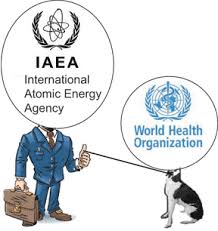
These early measurements would have been crucial and also a requirement of the IAEA`s safety protocols (post Chernobyl) to ascertain the likely heath impacts to the surrounding areas to the Fukushima nuclear plant meltdown disaster. The Japanese government refused their kind offer and it was another 2 years before Nils and Charles could get to the Fukushima disaster site.
This lack of nuclear safety culture and cover up was mentioned in the official IAEA Fukushima accident report and it seems also ignored by the Halden management.

So, this couldnt happen again could it? Well it has no only happened again but there was no media reporting of the October 2016 meltdown (ongoing) that is producing iodine 131 and hydrogen to either the Norwegian public nor Bellona (that is based in Oslo Norway just north of the Halden Thorium Research reactor) until Bellona were contacted by myself (Shaun McGee arclight2011 the blogger) only a week ago asking for clarification of the safety of the melted fuel rods and radiation emission status.
Nils has seen fit to make a report on the few facts he could glean. No early radiation measurements to this disaster have been released except that EURDEP has some gaps in its radiation data from the Halden and Oslo radiation monitors even from as late as February 2017 (Screenshots from EURDEP radiation mapping EU below);
And Sweden ;

Here is a statement from Nils Bohmer from Bellona on this nuclear situation and some of the history and facts he has been able to get an update on;
Norway’s Halden Reactor: A poor safety culture and a history of near misses
 Inside the Halden reactor before the meltdown. (Photo: Wikipedia)
Are those who operate Norway’s only nuclear research reactor taking its safety seriously? A new report raises concerns.
October 25th brought reports that there was a release of radioactive iodine from the Halden Reactor. The Norwegian Radiation Protection Authority subsequently withdrew the reactor’s operating license from the Institute for Energy Technology. The NRPA has pointed out several issues the institute must resolve before the reactor goes back online.
It’s not the first time the NRPA has had to issue an order to the IFE. The NRPA had been supervising the IFE since 2014 over its lack of safety culture. The incident in October shows this frame of mind persists.
Reactor cooling blocked
So what happened in October? The iodine emission began when the IFE should have dealt with damaged fuel in the reactor hall. This led to a release of radioactive substances via the ventilation system. The release began on Monday, October 24 at 1:45 pm, but was first reported to the NRPA the next morning.
The next day, the NRPA conducted an unannounced inspection of the IFE. The situation was still unresolved and radioactive released were still ongoing from the reactor hall. The ventilation system was then shut off to limit further releases into the environment.
This, in turn, created more serious problems. When the ventilation system was closed down, the air coming from the process should also have been turned off. Pressurize air kept the valves in the reactor’s cooling system open, which in turn stopped the circulation of cooling water.
‘A very special condition’
In the following days, the NRPA continued to monitor the reactor’s safety, and many repeated questions about the closure of the primary cooling circuit. The IFE initially reported that the situation at the reactor was not “abnormal.” By November 1, the NRPA requested written documentation from the responsible operating and safety managers. A few hours later, the NRPA received notice from the IFE that the reactor was in “a very special condition.”
What that meant was that the IFE had discovered temperature fluctuations in the reactor vessel indicating an increased neutron flux in the core, and with that the danger of hydrogen formation. Bellona would like to note that it was hydrogen formation in the reactor core that led to a series of explosions at the Fukushima Nuclear Power Plant in March 2011.
The IFE therefore had to ask the NRPA for permission to open the valves again, even if that meant releasing radiation to the public. The release that followed was, according to the NRPA, within the emission limit values specified in the operating permit.
In Summary
The IFE has been under special supervision by the NRPA, but it doesn’t seem to Bellona that the IFE has taken the requirement for increased reporting nearly seriously enough. It seems they further didn’t understand the seriousness of the situation that arose in October. The IFE either neglected procedures it’s obligated to follow, made insufficient measurements, or failed to report the results satisfactorily.
Bellona is concerned that the reactor core may become unstable by just closing the vents. Hydrogen formation in the reactor core is very serious, as Fukushima showed. The IFE has previously stopped circulation in the primary cooling circuit for, among other things, maintenance while the reactor has been shut down.

Those who live around Halden had previously been satisfied with guarantees that the ravine in which the reactor could hermetically seal it off. As the incident in October shows, this guarantee no longer applies.
Nils Bøhmer is Bellona’s general director.
Norway’s Halden Reactor: A poor safety culture and a history of near misses
March 5, 2017
Posted by arclight2011part2 |
Uncategorized |
19 Comments
He believes the current arsenal is more than capable of defending against even a more aggressive Russia.“There’s been no military requirement, no need to develop new types of warheads or delivery systems,” Reif said. “There aren’t gaps. The alleged gaps are mirages.”
The United States has “fallen behind on nuclear weapon capacity,” President Donald Trump said last week, and he wants to make sure the U.S. is at the “top of the pack” among the world’s nuclear powers. He has bluntly criticized the treaty that sets the U.S. and Russian nuclear arsenals at equal levels as “one-sided.” And he’s called for a formal nuclear posture review.
Words like those cause ears to perk up at Offutt Air Force Base, where Gen. John Hyten, who heads U.S. Strategic Command, is the keeper of the keys to the U.S. nuclear arsenal. He’s also the chief adviser to the president and senior military leaders on all matters nuclear.
His top concern, Hyten said in an interview this month with The World-Herald, is not so much the size of the U.S. nuclear force but whether it remains fit to deter its enemies. He believes updating the arsenal — much of it built in the 1980s or earlier — is more important than enlarging it.
“If you look at every element of the nuclear enterprise, it has to be modernized,” Hyten said. “All our stuff is old. It’s still ready, safe, secure, reliable. But it’s old.”
He believes the size of his current force is enough to deter America’s adversaries, and he could even live with cuts — as long as Russia cuts its arsenal too.
“Nobody wants to decrease our deterrent posture,” Hyten said. “Not with Russia the way it is right now, not with China building in the Pacific. And not with, goodness, what’s going on right now in North Korea and Iran.”
He does welcome the nuclear posture review.
“Every new administration that comes in, one of the first things they should do is take a look at our nuclear capabilities, because it is the most sobering, daunting, powerful element of our defensive architecture,” Hyten said. “The way you do that is through a nuclear posture review. I look forward to participating in it myself.”
Hyten said no timetable has been set for the review, but he expects it will take 12 to 18 months. StratCom will be heavily involved.
“In this building there are some of the best and brightest nuclear thinkers, nuclear operators in the country today,” Hyten said. “And we’ll provide the expertise we need to do it.”
Trump has consistently said he wants to be less predictable than his predecessors, and the broad strokes of his nuclear policy have yet to be colored in. In the early days of his administration he has shown a great deal of deference to his new defense secretary, retired Marine Gen. James Mattis — who also commands the respect of many of Trump’s critics.
“I think Mattis is the wild card here,” said Kingston Reif, director of disarmament and threat reduction policy for the non-proliferation advocacy group Arms Control Association. “He may be the check on some of those more Strangelovian impulses.”
The New START treaty with Russia, signed in 2010, requires both the U.S. and Russia to cut the size of their nuclear arsenals to 1,550 deployed warheads and 700 delivery systems (sea-launched missiles, ICBMs and nuclear bombers) by February 2018 and maintain parity for 10 years. The treaty is up for renewal in 2021, but Trump has complained to Reuters that it is a “one-sided deal.”
Russia’s nuclear force also is old, but the country is several years into a program to modernize its aging nuclear force, while the U.S. remains a few years behind.
That worries Michaela Dodge, a senior policy analyst specializing in nuclear weapons policy with the Heritage Foundation, a national think-tank that generally advocates for conservative causes.
“There already is a nuclear arms race,” she said, “but the U.S. isn’t in it.”
In recent years Republicans and Democrats have more or less worked together on the early stages of funding the expensive new bombers and submarines and gravity bombs Pentagon officials say will be needed to deter future attacks on the U.S. and its allies.
But in an era of strong taxpayer resistance to big spending programs, the reconstruction of the U.S. nuclear force is sure to be one of the biggest. A new report by the Government Accountability Office estimated the cost of rebuilding the arsenal at $400 billion over the next 10 years.
And the work will continue for years, or even decades, beyond that. For example, development work on the new Columbia-class ballistic-missile submarine already has started, even though the first subs aren’t scheduled for delivery until the early 2030s.
Hyten’s job, as he sees it, is to keep making the case for updating the arsenal — hopefully, stiffening the spines of wavering members of Congress who balk at the price tag. That’s the same thing his two predecessors, Adm. Cecil Haney and Gen. C. Robert Kehler, did during their StratCom tours.
“The good part right now is that we have broad support in the new administration, broad support in the Congress to modernize all elements of it,” Hyten said. “But because they are nuclear weapons and because there will be some expense for the taxpayers, I think that’s why it gets so much discussion.”
As the new chairwoman of the Senate’s Strategic Forces Subcommittee, Nebraska Sen. Deb Fischer will have a lot of influence over future spending on nuclear weapons.
Like Hyten, she is committed to rebuilding the bombers, submarines and missiles that make up America’s nuclear force — even if the price is high.
“We didn’t build new types of nuclear delivery systems for the last 25 years. I think we need to modernize,” Fischer said in an interview Saturday.
But, she added, “I don’t believe our (arsenal) is second-rate.”
Fischer interprets Trump’s call for expansion as support for the modernization program — which, she notes, President Barack Obama also backed.
“I’m not disputing that it’s going to be expensive,” she said, “but we have to make the commitment.”
In spite of Trump’s criticism of the New START treaty, Fischer believes it’s a framework that the U.S. and Russia should stick with.
“I’m not advocating re-looking at these treaties at this point,” the Republican said. “We are on target right now. We need to meet the obligations, and the Russians need to meet the obligations.”
Although Trump has complimented Russian President Vladimir Putin on his toughness and leadership, Fischer said she has no illusions about the threat the Russian leader poses to the U.S., and to his neighbors.
“I think Putin’s a thug,” she said. “We need to be aware of what (the Russians) are doing. We need to monitor them.”
There’s been some talk in recent years — among anti-nuclear activists on the left and budget hawks on the right — about scrapping the air, land and sea triad that has formed the bedrock of nuclear deterrence since the 1960s.
Like his predecessors, Hyten said all three legs of the triad are essential. ICBMs are cheaper and faster to launch, heavy bombers are highly flexible, and submarine-launched missiles are easiest to hide and most likely to survive a first strike.
“Each element of the triad is fundamental to defending ourselves against any threat on the planet today,” Hyten said.
The last nuclear posture review took place soon after Obama’s famous Prague speech in 2009, during which he called for an eventual end to nuclear weapons in the world. It was undergirded by the assumption that Russia wasn’t an adversary, Dodge said, and that a nuclear confrontation with the Russians was unlikely.
“If you assume Russia is friendly, you probably have a different target set,” Dodge said. “Eight years later we kind of have more evidence that it’s not true.”
Hans Kristensen, director of the Nuclear Information Project at the Federation of American Scientists, doesn’t know what form Trump’s call for an expanded arsenal will take. He believes the president will quickly run into economic reality if he tries to propose more weapons, or new ones.
“Trump is going to be more than busy trying to find funding for the modernization program,” Kristensen said. “He cannot afford to come in with fantastic new weapons systems in the nuclear realm.”
Reif hopes Trump will stick with Obama’s policy of pledging no new classes of weapons, no new nuclear capabilities, and no new missions for the nuclear force. He believes the current arsenal is more than capable of defending against even a more aggressive Russia.
February 26, 2017
Posted by arclight2011part2 |
Uncategorized |
Leave a comment

Sunday 26th February, 2017
Cape Town – A nuclear agreement with Russia has far-reaching consequences for the budget the Western Cape High Court heard on Friday, as it places all liability for a nuclear accident on South Africa, while indemnifying Russia completely.
David Unterhalter, SC, appearing for Earthlife Africa and the Southern African Faith Communities’ Environmental Institute, who are challenging government’s nuclear procurement process in court, said liability for nuclear accidents fell on South Africa even if it occurred outside the country.
If the Russian company building the proposed eight new nuclear power stations had an accident while transporting nuclear material from Vladivostok to Qatar, for instance, causing extensive damage, the Russian inter-governmental agreement made South Africa liable for what could be “massive” costs, GroundUp reported.
“South Africa bears the burden under the indemnity clause. A country making this kind of offer would have to make very special provision for this in its budget,amp;” Unterhalter said.
Such liability was not even consistent with the Vienna Convention on liability for nuclear damage, he said.
“So we have gone very far in seeming to court Russia and to say, ‘We will pay and we will indemnify'” Unterhalter said.
The court is not being asked to decide on the merits of the Russian nuclear agreement, as this would be beyond its powers. However, the contents are relevant as the court is being asked to decide whether an international agreement of this nature should first have been tabled in Parliament for approval, particularly because of the massive financial implications.
The litigants argue that tabling the agreement without Parliamentary approval was unlawful as it did not comply with the Constitution and the agreement should be set aside.
Counsel for Minister of Energy Tina Joematt-Pettersson, who tabled the Russian agreement, argued that it did not need to come before Parliament, nor was there a need to allow the public to make representations. This was because it fitted into the category of agreements between countries that dealt with “technical, administrative or executive” matters, which did not have extra-budgetary consequences.
Marius Oosthuizen, SC, for the government, argued that the minister’s tabling of it under this category therefore did not contradict constitutional requirements.
One of the two presiding judges, ED Baartman, commented that a government guideline indicated that international agreements which dealt with minor, everyday issues did not need Parliamentary approval.
“Are you saying the Russian agreement is a minor, everyday issue?” she asked.
Oosthuizen replied that the Russian agreement would not constitute something that was high on the South African agenda as it was about co-operation between governments on an executive level.
The litigants are also asking the court to set aside the minister’s “determinations”, made under the Electricity Regulation Act, that South Africa needed 9600MW of new nuclear power.
One was made in 2013, where the Department of Energy was the body that would buy the nuclear power, and the other in 2016 that made Eskom the procurer.
“Both are infected with administrative error and neither should survive” Unterhalter said.
The court heard submissions on whether the minister’s decisions were administrative in nature – which meant they could be reviewed and set aside – or whether they were policy decisions, which could not be.
One of the tests in deciding whether a decision was administrative was whether it had consequences and whether it affected anyone.
Oosthuizen argued the decision to determine that South Africa needed 9600MW of nuclear power had not affected anyone’s rights, but had merely imposed an obligation on the National Energy Regulator of SA (Nersa) which had the statutory duty to issue electricity-generating licences.
Judge LJ Bozalek said, “You can’t just look at this through the prism of Nersa’s rights. You have to look at the rights of people.”
Oosthuizen replied, “Yes. But that decision did not affect my electricity bill by one cent.”
Baartman said, “Not yet.”
The case has ended. No date was set for judgment.
http://www.irishsun.com/index.php/sid/252004073
Letter against nuclear energy proposal in South Africa
I UNDERSTAND President Zuma and team have made a deal with the Russians to build a nuclear plant here in South Africa.
Many hundreds of South Africans are totally against this deal – why aren’t we marching with banners, “No Nuclear”? You know the dangers of the nuclear plant from radiation to storing the radioactive waste, which has to be kept secure for years.
We all remember the Cheronbyl accident which led more countries to abandon the nuclear option and go for renewables.
We need to stand up against this deal – someone said, “it will show the Arms Deal as a picnic” so, no doubt, many stand to gain bribes and illegal pay-outs.
Through the Highway Mail, we can stand up against this programme. Apparently we only have till the end of March to object. It is so important – please make it a priority.
Liz Purdham
Pinetown http://highwaymail.co.za/252113/so-no-to-nuclear-plants/
February 26, 2017
Posted by arclight2011part2 |
Uncategorized |
Leave a comment
Fukushima: A Lurking Global Catastrophe?
by Robert Hunziker / February 19th, 2017
Year over year, ever since 2011, the Fukushima Daiichi nuclear meltdown grows worse and worse, an ugly testimonial to the inherent danger of generating electricity via nuclear fission, which produces isotopes, some of the most deadly poisonous elements on the face of the planet.
Fukushima Diiachi has been, and remains, one of the world’s largest experiments; i.e., what to do when all hell breaks lose aka The China Syndrome.
Scientists still don’t have all the information they need for a cleanup that the government estimates will take four decades and cost ¥8 trillion. It is not yet known if the fuel melted into or through the containment vessel’s concrete floor, and determining the fuel’s radioactivity and location is crucial to inventing the technology to remove the melted fuel.1
As it happens, “inventing technology” is experimental stage stuff. Still, there are several knowledgeable sources that believe the corium, or melted core, will never be recovered. Then what?
According to a recent article, “Potential Global Catastrophe of the Reactor No. 2 at Fukushima Daiichi,” February 11, 2017 by Dr. Shuzo Takemoto, professor, Department of Geophysics, Graduate School of Science, Kyoto University: The Fukushima nuclear facility is a global threat on level of a major catastrophe.
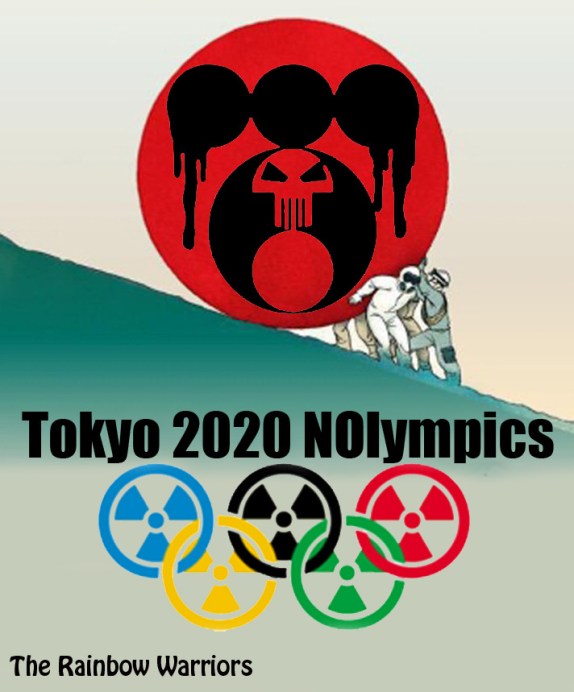
Meanwhile, the Abe administration dresses up Fukushima Prefecture for the Tokyo 2020 Olympics, necessitating a big fat question: Who in their right mind would hold Olympics in the neighborhood of three out-of-control nuclear meltdowns that could get worse, worse, and still worse? After all, that’s the pattern over the past 5 years; it gets worse and worse. Dismally, nobody can possibly know how much worse by 2020. Not knowing is the main concern about holding Olympics in the backyard of a nuclear disaster zone, especially as nobody knows what’s happening. Nevertheless and resolutely, according to PM Abe and the IOC, the games go on.
Along the way, it’s taken Tokyo Electric Power Company (TEPCO) nearly six years to finally get an official reading of radiation levels of the meltdown but in only one unit. Analysis of Unit #2 shows radiation levels off-the-charts at 530 Sieverts, or enough to kill within minutes, illustrative of why it is likely impossible to decommission units 1, 2, and 3. No human can withstand that exposure and given enough time, frizzled robots are as dead as a door nail.
A short-term, whole-body dose of over 10 sieverts would cause immediate illness and subsequent death within a few weeks, according to the World Nuclear Association.2
Although Fukushima’s similar to Chernobyl Exclusion Zone in some respects, where 1,000 square miles has been permanently sealed off, Fukushima’s different, as the Abe administration is already repopulating portions of Fukushima. If they don’t repopulate, how can the Olympics be held with food served from Fukushima and including events like baseball held in Fukushima Prefecture?
Without question, an old saw – what goes around comes around – rings true when it comes to radiation, and it should admonish (but it doesn’t phase ‘em) strident nuclear proponents, claiming Fukushima is an example of how safe nuclear power is “because there are so few, if any, deaths” (not true). As Chernobyl clearly demonstrates: Over time, radiation cumulates in bodily organs. For a real life example of how radiation devastates human bodies, consider this fact: 453,391 children with bodies ravaged, none born at the time of the Chernobyl meltdown in 1986, today receive special healthcare because of Chernobyl radiation-related medical problems like cancer, digestive, respiratory, musculoskeletal, eye disease, blood disease, congenital malformation, and genetic abnormalities. Their parents were children in the Chernobyl zone in 1986.3
Making matters worse yet, Fukushima Diiachi sets smack dab in the middle of earthquake country, which defines the boundaries of Japan. In that regard, according to Dr. Shuzo Takemoto, professor, Department of Geophysics, Graduate School of Science, Kyoto University:
The problem of Unit 2… If it should encounter a big earth tremor, it will be destroyed and scatter the remaining nuclear fuel and its debris, making the Tokyo metropolitan area uninhabitable. The Tokyo Olympics in 2020 will then be utterly out of the question.4
Accordingly, the greater Tokyo metropolitan area remains threatened for as long as Fukushima Diiachi is out of control, which could be for generations, not years. Not only that, Gee-Whiz, what if the big one hits during the Olympics? After all, earthquakes come unannounced. Regrettably, Japan has had 564 earthquakes the past 365 days. It’s an earthquake-ridden country. Japan sits at the boundary of 4 tectonic plates shot through with faults in zigzag patterns, very lively and of even more concern, the Nankai Trough, the candidate for the big one, sits nearly directly below Tokyo. On a geological time scale, it may be due for action anytime within the next couple of decades. Fukushima Prefecture’s not that far away.
Furthermore, the Fukushima Diiachi nuclear complex is tenuous, at best:
All four buildings were structurally damaged by the original earthquake some five years ago and by the subsequent hydrogen explosions so should there be an earthquake greater than seven on the Richter scale, it is very possible that one or more of these structures could collapse, leading to a massive release of radiation as the building falls on the molten core beneath.5
Complicating matters further, the nuclear site is located at the base of a mountain range. Almost daily, water flows from the mountain range beneath the nuclear plant, liquefying the ground, a sure-fire setup for cascading buildings when the next big one hits. For over five years now, radioactive water flowing out of the power plant into the Pacific carries isotopes like cesium 134 and cesium 137, strontium 90, tritium, plutonium americium and up to 100 more isotopes, none of which are healthy for marine or human life, quite the opposite, in fact, as those isotopes slowly cumulate, and similar to the Daleks of Doctor Who fame (BBC science fiction series, 1963-present) “Exterminate! Exterminate! Exterminate!”
Isotopes bio-concentrate up the food chain from algae to crustaceans to small fish to big fish to bigger humans. Resultant cancer cells incubate anytime from two years to old age, leading to death. That’s what cancer does; it kills.
Still, the fact remains nobody really knows for sure how directly Fukushima Diiachi radiation affects marine life, but how could it be anything other than bad? After all, it’s a recognized fact that radiation cumulates over time; it’s tasteless, colorless, and odorless as it cumulates in the body, whether in fish or further up the food chain in humans. It travels!
An example is Cesium 137, one of the most poisonous elements on the planet. One gram of Cesium 137 the size of a dime will poison one square mile of land for hundreds of years. That’s what’s at stake at the world’s most rickety nuclear plant, and nobody can do anything about it. In fact, nobody knows what to do. They really don’t.
When faced with the prospect of not knowing what to do, why not bring on the Olympics? That’s pretty good cover for a messy situation, making it appear to hundreds of thousands of attendees, as well as the world community “all is well.” But, is it? Honestly….
The Fukushima nuclear meltdown presents a special problem for the world community. Who knows what to believe after PM Abe lied to the IOC to get the Olympics; see the following headline from Reuters News:
“Abe’s Fukushima ‘Under Control’ Pledge to Secure Olympics Was a Lie: Former PM,” Reuters, September 7, 2016.
Abe gave the assurances about safety at the Fukushima plant in his September 2013 speech to the International Olympic Committee to allay concerns about awarding the Games to Tokyo. The comment met with considerable criticism at the time… Mr. Abe’s ‘under control remark, that was a lie,’ Koizumi (former PM) now 74 and his unruly mane of hair turned white, told a news conference where he repeated his opposition to nuclear power.
As such, a very big conundrum precedes the 2020 games: How can the world community, as well as Olympians, believe anything the Abe administration says about the safety and integrity of Fukushima?
Still, the world embraces nuclear power more so than ever before as it continues to expand and grow. Sixty reactors are currently under construction in fifteen countries. In all, 160 power reactors are in the planning stage and 300 more have been proposed. Pro-Nuke-Heads claim Fukushima proves how safe nuclear power is because there are so few, if any, deaths, as to be inconsequential. That’s a boldfaced lie.
Here’s one of several independent testimonials on deaths because of Fukushima Diiachi radiation exposure (many, many, many more testimonials are highlighted in prior articles, including USS Ronald Reagan sailors on humanitarian rescue missions at the time):
It’s a real shame that the authorities hide the truth from the whole world, from the UN. We need to admit that actually many people are dying. We are not allowed to say that, but TEPCO employees also are dying. But they keep mum about it.6
- Emi Urabe, “Fukushima Fuel-Removal Quest Leaves Trail of Dead Robots“, The Japan Times, February 17, 2017. []
- Emi Urabe, “Fukushima Fuel-Removal Quest Leaves Trail of Dead Robots”, The Japan Times, February 17, 2017. []
- “Chernobyl’s Legacy: Kids With Bodies Ravaged by Disaster”, USA Today, April 17, 2016). []
- Shuzo Takemoto, “Potential Global Catastrophe of the Reactor No. 2 at Fukushima Daiichi”, February 11, 2017. []
- Helen Caldicott: “The Fukushima Nuclear Meltdown Continues Unabated”, Independent Australia, February 13, 2017. []
- Katsutaka Idogawa, former mayor of Futaba (Fukushima Prefecture), “Fukushima Disaster: Tokyo Hides Truth as Children Die, Become Ill from Radiation – Ex-Mayor”,RT News, April 21, 2014. []
Robert Hunziker (MA, economic history, DePaul University) is a freelance writer and environmental journalist whose articles have been translated into foreign languages and appeared in over 50 journals, magazines, and sites worldwide. He can be contacted at: rlhunziker@gmail.com. Read other articles by Robert.
This article was posted on Sunday, February 19th, 2017 at 11:15pm
February 24, 2017
Posted by arclight2011part2 |
Uncategorized |
1 Comment
 Comment by
  Comment by
  regards shaun
 A satellite image shows damage at Fukushima I Nuclear Power Plant
 Greenpeace documentation of radioactive decontamination work in Iitate district, Japan.
 A mother of three, Akiyo Suzuki and her family evacuated to Hokkaido for a month following the 11 March disaster. The family lives in Watari, a district in Fukushima City. When the nuclear disaster occurred she found it hard to find clear information about the dangers from the accident, and discovered great differences on the internet compared with newspapers and television.


 nuclear-news