Kennedy’s Nuclear Nightmare – Sunday Flik
http://www.youtube.com/watch?v=plwDAzhKYag
Published on 16 Nov 2013 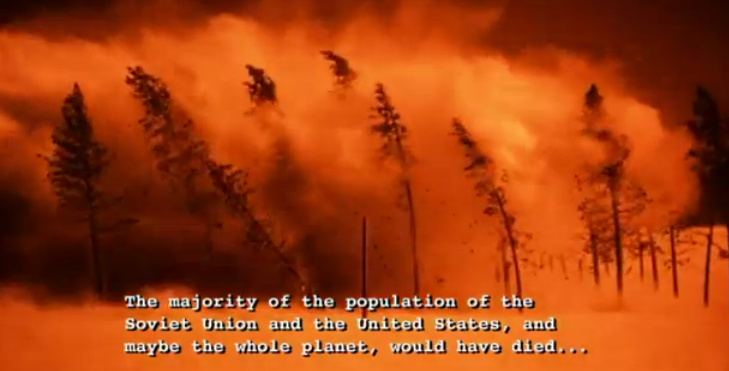
The story of the Cuban Missile Crisis – possibly the most dangerous moment in the history of mankind – told in the words of key witnesses from the US, the former USSR and Cuba
(lots of adverts at the start so go make a coffee while they are running through (about 4 mins).. Otherwise a free documentary from the Channel 4 you tube site.. Powerful stuff too! Embedding was disabled for this video but follow the link for your Sunday Film
Fukushima high school permanently closes its doors
December 1, 2013
Jiji Press
http://the-japan-news.com/news/article/0000835400
FUKUSHIMA (Jiji Press)—A private high school near Tokyo Electric Power Co.’s disaster-stricken Fukushima No. 1 nuclear power plant will close its doors permanently at the end of March, it has been learned.
Shoei High School in the city of Minami-Soma will be the first primary, middle or high school in Fukushima Prefecture to be closed due to the nuclear crisis at the plant, according to the prefectural government.
The Fukushima prefectural government has approved the plan to shut the school.
Located 22 kilometers north of the plant, it has gone unused since the nuclear accident in March 2011. Soon after the accident, its neighborhood was designated by the national government as an area that needed to be evacuated.
About 110 students, including those who were to enter the school in April 2011, have since transferred to an affiliated school in the city of Fukushima or schools in locations where they took shelter.
2 Coal-fired power plants to be built in Fukushima and 1 Wind turbine
…However, it is possible that the new power plants are a political project, sponsored and supported by the Prime Minister Shinzo Abe….
Valentin Mândrăşescu
30 November 2013
http://voiceofrussia.com/2013_11_30/Coal-fired-power-plants-to-be-built-in-Fukushima-3349/
Tokyo Electric Power Company (TEPCO) announced its intention to build two advanced coal-fired power plants in Fukushima. Company officials claim that the new power plants will help the region recover after the nuclear disaster.
TEPCO promises that the new construction project will help fight unemployment by creating two thousand jobs and a source of cheap energy. The intended capacity of the power plants is 1000 MW. TEPCO estimates that the project will be finished in seven or eight years.
While Japan really needs cheap electric power, the plans to build two new coal-fired power plans in Fukushima prefecture were met with extreme skepticism. There are several issues with the project presented by the TEPCO CEO Yoshiyuki Ishizaki. One of them is the dire state of the company’s finances.
TEPCO has incurred huge losses after Fukushima disaster and still has a lot to pay in compensations to victims of disaster and for decontamination services. It also has to decommission the remaining units of the Dai-Ichi Nuclear Power Plant and the costs of this operation will be substantial. A clear estimation of TEPCO’s future expenses doesn’t exist yet.
The company has been subjected to “stealth nationalization” by the Japanese government in order to prevent its untimely bankruptcy. It is hard to find economic sense in launching an ambitious investment project when the company is unable to service its debts without external help.
However, it is possible that the new power plants are a political project, sponsored and supported by the Prime Minister Shinzo Abe. Building a better and safer Fukushima power plants or at least promising to finalize such a project can increase Abe’s approval ratings that have suffered in the aftermath of the Fukushima debacle.
So, while TEPCO doesn’t have the expertise and the money required for the project, the Japanese government can provide both or at least ensure that private banks help TEPCO. It doesn’t make economic sense, but political expediency often trumps all other considerations.
Deloitte advises cheaper funding for thermal reactors
BS Reporter | Mumbai
Imported light water reactors (LWRs) will play a key role in India’s nuclear capacity addition. But, due to high capital costs of LWRs and high interest rate regime in the country, the power produced will be expensive.
Deloitte, in its report on ”Nuclear power in India – A way forward”, says if LWRs are funded with long-duration, cheaper debt, then power tariff becomes comparable to the tariff of power produced from pressurised heavy water reactors (PHWRs), and will be able to compete with fossil fuels. The report was released by Atomic Energy Commission chairman R K Sinha at the Indian Nuclear Energy Summit recently.
Currently, the state-run Nuclear Power Corporation is in the process of acquiring several LWRs with foreign collaborations with unit with capacities ranging between 1,000 Mw and 1,650 Mw.
”The corporation is correctly following a strategy of a combination of indigenous PHWRs and imported LWRs. Given the price sensitivity of electricity market in India, it is important to get right finance for LWRs – both tenure and rate – to get a competitive tariff,” Deloitte said.
According to the report, there will be opportunities in the fuel value chain, including mining, fuel processing, enrichment, reprocessing, waste management and heavy water production. There will be more joint ventures or acquisition by Indian companies to gain expertise in various areas of nuclear supply chain. ”This will help in possible localisation of design and production of equipment for nuclear power plants. This association could possibly be extended to supply conventional equipment to other countries,” Deloitte observed.
Post-Fukushima nuclear accident, there has been a lot of apprehension on safety of nuclear power and the country has seen public resistance at several proposed nuclear power plant sites. Deloitte suggested the apprehensions on nuclear power need to be allayed by familiarising general public on India’s approach to safety standards, its policies and regulations on safety and its spectacular safety record.
The $38 billion nuclear waste fiasco
Doing nothing often has a cost — and when it comes to storing the nation’s nuclear waste, the price is $38 billion and rising.
That’s just the low-ball estimate for how much taxpayers will wind up spending because of the government’s decades of dithering about how to handle the radioactive leftovers sitting at dozens of sites in 38 states. The final price will be higher unless the government starts collecting the waste by 2020, which almost nobody who tracks the issue expects.
The first $15 billion is what the government spent on a controversial nuclear waste repository at Nevada’s Yucca Mountain until the Obama administration scrapped the project. The other $23 billion is the Energy Department’s estimate of the damages the government will have to pay to nuclear power utilities, which for the past 30 years have paid a fee to DOE on the promise that the feds would begin collecting their waste in 1998.
Industry argues that the damages are closer to $50 billion — which raises the bottom line to $65 billion including the money spent on Yucca.
The cost of the refunds is little known to the public, but it’s such a huge liability that DOE tracks the figure closely. The government is still fighting the utilities’ claims in court, but utilities have been racking up a string of wins.
The costs of inaction don’t just include dollars. The lack of a final resting place for the waste means that each nuclear plant has to stockpile its own. Thousands of tons of waste are stranded at sites around the country, including at plants that have shut down.
“I’m trying to think of some fancy words but at the end of the day it’s just a massive consumer rip-off,” said Greg White, a regulator on the Michigan Public Service Commission who also heads the nuclear waste panel for the National Association of Regulatory Utility Commissioners. NARUC, which represents state-level regulators, won a legal victory this month when the D.C. Circuit Court of Appeals ordered DOE to stop collecting the fee.
Salo Zelermyer, a former George W. Bush-era DOE attorney who works at the law firm Bracewell & Giuliani, says the waste program has “plainly broken down” and that the government had made “no discernable progress towards its commitments.”
Japan tries to plug leaks about leaks, donning Russia’s mantle of nuclear and Olympic explosions
…If Japan’s secrecy law goes through, there could well be a proliferation of Nikitins, this time along the Pacific Rim as those who would dare to leak as much as Fukushima attempt to bear witness to one of the world’s greatest ongoing nuclear catastrophes….
http://www.bellona.org/articles/articles_2013/japan_leak_law
The Japanese government’s powerful lower house of Parliament passed a stiff new secrecy bill that would visit harsh penalties on bureaucrats who leak information, and reporters who seek it – a move environmentalists fear would allow official collusion and corruption of the kind unearthed during the Fukushima Daiichi nuclear disaster to flourish.
The ruling block and its supporters hope the weaker upper house will pass the legislation next month, the Associated Press reported.
According to the Asashi Shimbun newspaper, the government of heavily pro-nuclear Prime Minister Shizo Abe seeks information restrictions in four basic areas: defense, diplomacy, counter-terrorism and counter-espionage.
This, according to the Japanese press, will likely include information on the vulnerability of nuclear power plants – a keen area of interest to most Japanese and countries that surround it after the March 2011 Fukushima-Daiichi nuclear disaster which forced some 160,000 from their homes, and from which radioactive water continues to leak.
Apparently, frustrated that it can’t stop the leaks at Fukushima Daiichi, the Japanese government is taking a crack at stopping the leaks about the leaks. And officials caught leaking, stipulates the new law, could face as many as 10 years in prison.
Putting a tight lid on these kinds of unseemly radioactive emissions is especially important in light of the recent awarding by the International Olympic Committee of the 2020 Summer Games to Japan – a sort of pity plug for the situation the country has been plunged into by the nuclear disaster the government worked so hard to obscure.
Olympic pressures to shut up are not just Japan’s problem, and are something that bring it closer in spirit to its neighbor, Russia – an irony not lost on Nils Bøhmer, Bellona’s general director and nuclear physicist. He noted that Japan’s potential new law smacked of that not so post-Soviet sensibility in Russia of “dictating the truth and by making it illegal to tell the truth.”
The screws being put to Russian civil society activists and journalists in the run up to Sochi’s 2014 Winter Games to gouge out their eyes (or have them gouged out) over the massive environmental and social ruin Russia’s Olympic preparations have entailed and the massive corruption it has enabled is, according to international rights activists, unprecedented.
Add that the Russo-Soviet phobia to the truth about to nuclear disasters from accidental nuclear submarine sinkings, fires at ship repair yards, temperamental nuclear power reactors, a massive explosion at Chernobyl, the jailing of activists who draw attention to environmental and rights problems and the gagging of NGOs with President Vladimir Putin’s “foreign agent” law, and Tokyo and Moscow could become kissing cousins by the candle light of an Olympic torch.
Fukushima: Condition unknown
The current condition of the Fukushima Daiichi plant is precarious – arguably worse off than it was directly following the initial catastrophe, during which the plant lost all primary and back up cooling, leading to three reactor meltdowns, hydrogen explosions, vulnerability of spent nuclear fuel pools and a seemingly continuous leaks of highly radioactive water after it was hit by an 11-meter tsunami.
The disposition of the fuel in the melted down reactors is unknown. Efforts to extract spent nuclear fuel from a pool balanced 30 meters above the ground at the No 4 reactor building, which was heavily damaged by a hydrogen explosion, remain piecemeal, and there is as yet no real consensus on what on what might stop or at least diminish the leaks of some 400 metric tons a day of radioactive water into the Pacific.
On top of that, extremely inconvenient reports about worker radiation exposure and rock bottom wages for performing lethal work at the plant keep emerging from the lips of poorly paid subcontractors.
Gag on Fukushima essential to Japanese nuke renaissance
As plant owner Tokyo Electric Power Co. (Tepco) proceeds with its spit and string efforts to bring this ongoing catastrophe under control, it’s understandable that Abe would like to stuff a sock in the bad news bullhorn from Fukushima.
At the moment, all of Japan’s 50 nuclear reactors are shut down as they undergo stringent safety tests by the country’s new regulatory agency, which may result in many of them being chucked as unfit for operation.
Yet, Abe has promised a bright, safe nuclear future to a Japanese public that could largely care less about that, and, in fact, opposes it.
Tepco and several echelons of the Japanese government have, meanwhile, over the last two years and eight months, distinguished themselves as some of the most unreliable organizations in the world, most significantly in their connivance to withhold radiation data from the public and the world in the disaster’s immediate aftermath. The lie by omission sent thousands fleeing Fukushima’s fallout directly into its path.
Taro Yamamoto, a lawmaker in Japan’s upper hose of parliament told a Tokyo news conference Wednesday that the government’s role in hiding radiation information showed it was predisposed to hiding information from its citizens and this law would only make things worse, according to the newspaper, The Australian.
Meanwhile Tepco’s continuing post-Chernobyl Soviet-style campaign of disinformation, misinformation, incompetence, and secrets kept that have later been blown by the press has put its credibility under serious attack, if not destroyed it altogether.
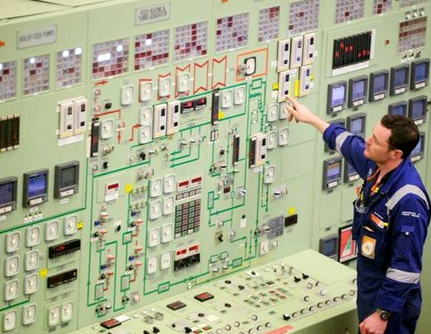
News > UK In pictures: Hunterston B nuclear power station will operate until 2023
Hunterston B nuclear power station in Ayrshire has been given an extension after EDF Energy evaluated the plant.The operating extension was announced by company’s chief executive Vincent de Rivaz.
Japan’s Nuclear Regulation Authority Reports IAEA on Fukushima Nuclear Power Station
29 November 2013
Geneva (ABC Live): The Nuclear Regulation Authority (NRA) of Japan provided the IAEA an update on radioactivity in seawater at TEPCO’s Fukushima Daiichi Nuclear Power Station (NPS).
http://www.iaea.org/newscenter/news/2013/f1issues271113.pdf
This update states that the concentrations of Cs-134, Cs-137, total Beta and H-3 were relatively stable from 18 to 24 November 2013 at the nuclear power station.
In addition, the NRA provided an update on the monitoring report of sea area radioactivity obtained from samples taken in the vicinity of TEPCO’s Fukushima Daiichi NPS and in the open sea.
http://radioactivity.nsr.go.jp/en/contents/8000/7651/24/Sea-monitoring%2820131126%29.pdf
To provide and track specific details on the transfer of fuel from the spent fuel from Unit 4 of the Fukushima Daiichi NPS that commenced on 18 November 2013, a new section on the TEPCO website is now available.
TEPCO has also provided information on the review that was undertaken following the operation of fuel removal from the Unit 4 spent fuel pool in a document dated 25 November 2013 titled Work Procedure Review Following Unused Fuel Removal at Fukushima Daiichi NPS Unit 4. Details are availablehere.
A series of photos and videos of the transfer process of the unused fuel removal at the Fukushima Daiichi NPS Unit 4 can be accessed at the following links:
- http://photo.tepco.co.jp/en/date/2013/201311-e/131120-01e.html
- http://photo.tepco.co.jp/en/date/2013/201311-e/131121-01e.html
- http://photo.tepco.co.jp/en/date/2013/201311-e/131122-01e.html
- http://photo.tepco.co.jp/en/date/2013/201311-e/131126-01e.html
- http://photo.tepco.co.jp/en/date/2013/201311-e/131127-01e.html
The above PDF`s show low levels of contamination so why do the fish have high levels? -Arclight2011
Repost
Fukushima marine contamination update
「汚染水はアンダーコントロール」とは、とても言えない状況。
■魚介類の核種分析結果<福島第一原子力発電所港湾内>平成25年11月20日 http://www.tepco.co.jp/nu/fukushima-np/f1/smp/2013/images/fish01_131120-j.pdf
≪放射性セシウム Cs134+Cs137 1000Bq/kg以上≫(単位Bq/kg)
クロソイ(筋肉) 1F港湾内(物揚場付近) 平成25年10月18日 3,800
ヒラメ(筋肉) 1F港湾内(東波除堤付近) 平成25年10月4日 1,110
カサゴ(筋肉) 1F港湾内(東波除堤付近) 平成25年10月29日 101,000
シロメバル(筋肉) 1F港湾内(東波除堤付近) 平成25年10月29日 3,900
ムラソイ(筋肉) 1F港湾内(北防波堤付近) 平成25年10月10日 110,000
ムラソイ(筋肉) 1F港湾内(北防波堤付近) 平成25年10月31日 73,000
アカエイ(筋肉) 1F港湾内(港湾口付近) 平成25年10月3日 3,100
ヒラメ(筋肉) 1F港湾内(港湾口付近) 平成25年10月7日 1,370
マコガレイ(筋肉) 1F港湾内(港湾口付近) 平成25年10月7日 2,550
クロダイ(筋肉) 1F港湾内(港湾口付近) 平成25年10月17日 2,870
アカエイ(筋肉) 1F港湾内(港湾口付近) 平成25年10月19日 10,800
マコガレイ(筋肉) 1F港湾内(港湾口付近) 平成25年10月19日 18,800
タケノコメバル(筋肉) 1F港湾内(港湾口付近) 平成25年10月29日 84,000
マコガレイ(筋肉) 1F港湾内(港湾口付近) 平成25年10月29日 1,270
ヒラメ(筋肉) 1F港湾内(港湾中央付近) 平成25年10月9日 3,270
クロソイ(筋肉) 1F港湾内(港湾中央付近) 平成25年10月22日 34,000
H/t https://www.facebook.com/kodomo.zenkokunet?ref=stream
Bing translate
Chikuwa, kamaboko and hanpen processed food also needs attention.
Situation not so water pollution is under control. ■ seafood radionuclide analysis results [Fukushima first nuclear power plant Harbor in] 11/20/2013 http://www.tepco.co.jp/nu/fukushima-np/f1/smp/2013/images/fish01_131120-j.pdf «radioactive caesium
Cs 134 Cs137 1000Bq/kg +» (units Bq/kg)
Fingerling (muscle) 1 F port in (ones lighters near) 10/18/2013 3,800
soleus (muscle) 1 F in the port (Near East Bank except wave) 10/4/2013 1,110
Scorpion ( muscle) 1 F in the port (Near East Bank except wave) 10/29/2013 101,000
シロメバル (muscle) 1 F in the port (Near East Bank except wave) 10/29/2013 3,900
Murthy (muscle) 1 F in the port (near the North breakwater) 10/10/2013 110,000
Murthy (muscle) 1 F in the port (near the North breakwater) 10/31/2013 73,000
Stingray (muscle) 1 F in the port (near the harbour mouth) 10/3/2013 3,100
harbors in the soleus (muscle) 1 F ( Near the harbour mouth) 10/7/2013 1,370
marbled sole pleuronectes yokohamae (muscle) 1 F in the port (near the harbour mouth) 10/7/2013 2,550
black sea bream (muscle) 1 F in the port (near the harbour mouth) 10/17/2013 2,870
Stingray (muscle) 1 F in the port (near the harbour mouth) 10/19/2013 10,800 marbled sole pleuronectes yokohamae (muscle) 1 F in the port (near the harbour mouth) 10/19/2013 18,800
タケノコメバル (muscle) 1 F in the port (near the harbour mouth) 10/29/2013 84,000
marbled sole pleuronectes yokohamae (muscle) 1 F in the port (near the harbour mouth) 10/29/2013 1,270
soleus (muscle) 1 F in the port (port near the middle) 10/9/2013 3,270 Fingerling (muscle) 1 F in the port (port near the middle) 10/22/2013 34,000 (Translated by Bing)
http://www.tepco.co.jp/nu/fukushima-np/f1/smp/2013/images/fish01_131120-j.pdf
Electricity: Ethiopia mulls 1,200MW from nuclear energy
Published: Nov 29, 2013
The Ethiopian government says it would target generating up to 1,200 Megawatts (MW) of electricity from nuclear energy as part of the objectives under its national energy expansion master plan.
This was disclosed on Tuesday by a consulting firm hired by the state-run Ethiopian Electric Power Corporation (EEPCo) as it presented its report to donors, financiers and academics.
The horn of Africa country needs to consider generating between 300-1,200 MW of power from nuclear energy to meet its total power demand of 37,000 MW by 2037, consulting outfit Parsons Brinckerhoff said.
Out of this total power to be generated after 25 years, some 4,000 MW will be exported.
“We need to broaden our options; that is why we are considering energy sources such as nuclear,” EEPCo chief executive Mihret Debebe later told reporters.
Media reports say that uranium deposits were found six years ago in Bale zone in the country’s Oromia Region.
Currently Russian Geological Survey firm Zaru Bezggeologia and its Ethiopian counterpart are analysing it.
The country’s 25 years power system master plan shows that $156 billion is required for about 550 projects that would be implemented to meet the demand by 2037.
Hydropower covers some 80 per cent of total energy the country plans to generate, followed by geothermal sources.
“Investment in power is the least risky and sustainable investment. I am sure the banks will get their money back on time when we link to the anticipated regional power market where power price is regulated under the East African Power Pool,” Mr Mihret said.
Currently the country generates around 2,270 MW of electricity mainly from hydropower and 170 MW from two wind farms – Adama I and Ashegoda projects.
Source: africareview.com
Graffiti maestro 281 Antinuke covers Tokyo walls with Fukushima message
…Many of his bold designs depict children threatened by nuclear power, with the atomic symbol taking the place of flower petals, a biscuit or an inflatable swimming ring….
South China Morning Post 2013-11-29


Graffiti maestro’s sticker illustrations provide a grim reminder of Japan’s nuclear nightmare
With his face hidden behind sunglasses and a white surgical mask, the artist is almost as invisible as the radioactive contamination he is protesting against.
Yet his stickers are graphic reminders of the Fukushima nuclear disaster.
Known as 281 Antinuke, Japan’s answer to Banksy has covered Tokyo streets in images depicting politicians as vampires and children being shielded from radioactive rain.
They are designed to highlight the consequences of the meltdown at Fukushima after the earthquake and tsunami in March, 2011. The disaster and the response by plant operator Tokyo Electric Power stoked anti-nuclear sentiment and the biggest public protests in Japan since the 1960s.
But the movement has since lost momentum.
“Perhaps because everyone believes people telling them on television that everything is fine, they don’t seem so worried,” 281 Antinuke said.
“I hope by leaving my art I can remind people we’re not safe at all … and that they will do something to protect themselves.”
Cardiac arrests rise after 2011 Fukushima quake
….Drs. Kitamura and Iwami said in their email that they are not sure what effect the nuclear meltdown might have had on the higher rates of cardiac arrest, if any. “The news might be a stress and affect the occurrence of sudden cardiac arrest, but in this study we did not aim to evaluate the impact of the nuclear accident.”….
29 November 2013,
http://voiceofrussia.com/news/2013_11_29/Cardiac-arrests-rise-after-2011-Fukushima-quake-3938/
Japan’s 2011 Fukushima earthquake, the most powerful ever recorded in that country, generated a killer tsunami, a nuclear power plant disaster and aftershocks of another sort – a 70 percent rise in cardiac arrests, particularly among people age 75 and older, according to a new study.
Kitamura and coauthor Dr. Taku Iwami of Kyoto University Health Service said in a joint email to Reuters Health that, based on past experience, the increase was not surprising.
“Earthquake was well-known to be one of the risk factors for sudden cardiac arrest and acute coronary syndrome (heart attack),” they said. “However, little is known about the impact of earthquake on these diseases by age and sex, and in this study, showing the differences provides new insights on disaster medicine.”
Using an ambulance-based registry, they looked at weekly counts of cardiac arrest cases that occurred outside a hospital from four weeks before and eight weeks after the date March 11 in the years 2005 to 2011.
Cardiac arrest is when the heart stops beating entirely, often due to an electrical problem that causes abnormal rhythms – which in turn can be brought on by anxiety or stress or by defects in the heart. Once it stops, unless the heart is restarted within minutes, cardiac arrest is usually fatal.
Normally, roughly 75 cardiac arrests would have been expected each week during the period researchers examined. But the week after the quake itself, the number of cases jumped 70 percent compared to that week in the previous years. The number was 48 percent higher the following week.
The risk kept declining gradually – it was 47 percent higher than in pre-quake years the third week, 26 percent higher the fourth week and 25 percent higher the fifth week. In the sixth week after the disaster, the rate was close to the same as that of previous years, despite two strong aftershocks above 7.0 magnitude on April 7 and April 11.
The researchers found that not all groups were affected equally. Residents age 75 and older faced a much greater risk than younger residents, probably because of age-related risk factors, they said.
Drs. Kitamura and Iwami said in their email that they are not sure what effect the nuclear meltdown might have had on the higher rates of cardiac arrest, if any. “The news might be a stress and affect the occurrence of sudden cardiac arrest, but in this study we did not aim to evaluate the impact of the nuclear accident.”
Voice of Russia, solarnews.ph, Reuters
Read more: http://voiceofrussia.com/news/2013_11_29/Cardiac-arrests-rise-after-2011-Fukushima-quake-3938/
Naoto Kan – Fukushima Lessons for California – Excerpt 1
Published on 27 Nov 2013
This is the first of 6 excerpts from the webcast ‘The Fukushima Nuclear Accident –
Lessons for California from then Prime Minister Kan and other distinguished speakers.’
In this segment, Mr. Kan relates his experiences and conclusions regarding the on-going Fukushima disaster and shares his views on the dangers of nuclear power.
The public forum, held June 4, 2013 in the San Diego City Council
Call to arms against Japans censorship law – Save our right to know!
http://www.avaaz.org/en/days_to_save_our_rights_to_know_d_eng/?pv
=38&rc=fb

Posted: 27 November 2013
The Lower House just passed Prime Minister Abe’s new
Secrecy Bill, even though 77% of Japan’s citizens oppose it.
His message to us is simple: You elected us, but you’re not
allowed to know what we’re doing.

Under the new law, anything can be classified as ‘secret’:
decisions taken regarding nuclear energy, those taken regarding
trade agreements such as the secretive TPP, or even in an
extreme case, the cost of redecorating a senior civil
servant’s office.

In days the bill will arrive in the upper house where the
LDP is counting on the support of the Your Party and
Restoration party. But concerned members in both parties
are wavering, and a public show of support for them can
help stop the bill from becoming law.

We’ve only got days to act. Click below to sign this
urgent petition calling on the Your Party and Restoration
party to withdraw their support for the Secrecy Bill.
If we reach 20,000 we’ll deliver the message to key
representatives before the vote.
Fukushima – Children should not play here for more than one hour because of radiation
http://www.save-children-from-radiation.org/2013/11/27/ne-pas-jouer-ici-plus-d-une-heure/
A park in Fukushima : Do not bring children here the age of elementary school or less.
Akemi , a mother of Fukushima voluntarily evacuated to Kyoto, more than 500 km.
She took the following photos during a visit to his parents’ house in March 2013.
The fallout from the accident are called ” radiation environment” as if they were natural .
There are differences between the official level of radiation in the air after decontamination and levels detected by personal dosimeter .

translation:
Users of the park:
– Do not stay more than an hour a day in the park
– Wash your hands, face and gargle after your visit
– Do not wear earth, sand your mouth
– For further information : contact the division of parks and green spaces Fukushima ( tel: 525-3765 )

translation:
That the radioactivity of the environment on April 22 is greater than the regulatory limit , observe the following guidelines when you are in the park :
( the regulatory limit of 2.8 mSv / h )

– Do not bring children here of elementary school age or younger
– limit the stay to one hour per day for children ” junior highschool ” or older .
– Do not use the sandbox
– Wash your hands, face and gargle after you left the park
(Division of parks and green spaces Koriyama – tel 924-1227 )
This is the park where the sign is placed . Akemi said similar signs are installed in three neighboring parks his parents’ house .
The sandbox is covered with a blue tarp weighted .
Akemi tells us that it was a green park. She had sent his son to Kyoto first , but while she was visiting him in Kyoto for a week in August 2012, the green park area has been transformed into platform game .
Was it a part of the decontamination work ?
Every day a child through the park on the way to school .
In each park displayed on the official level radiation after decontamination.
The measure in this park was made March 11, 2013 : the level in the air was posted 0.186 Sv / h .
However, the Radex Akemi displays 0.49 Sv / h , more than 2.5 times the official level.

TV station showing the levels of radiation from the Fukushima Prefecture, accompanied by light music as if it were an issue of weather .

(Translation from English into French by http://www.vivre-apres-fukushima.fr
http://www.vivre-apres-fukushima.fr/ne-pas-jouer-ici-plus-dune-heure/)
Prof. Chris Busby talks about internal radiatio dose and breaks the UN “dose” myth
Published on 28 Nov 2013
Independent scientist, Prof Busby talks in front of the celebration of the works of Yablakov on his 80th anniversary at the “Man and Biosphere – Problems and solutions” conference, held in Moscow in October 2013.
Prof Busby described the real problem with the dose measurement system used by western science – ICRP IAEA and UNSCEAR etc.
Poor audio quality 30 mins approx
Link to update on Prof C.Busby here..
1 This Month





PLEASE OPPOSE HR 8255 AND S.3639 – bills would accelerate satellite deployment, with no environmental review or safeguards – https://ncstd5li.quorum.us/campaign/169331/
To see nuclear-related stories in greater depth and intensity – go to https://nuclearinformation.wordpress.com
-
Archives
- October 2026 (81)
- September 2026 (339)
- August 2026 (330)
- July 2026 (355)
- June 2026 (287)
- May 2026 (306)
- April 2026 (356)
- March 2026 (251)
- February 2026 (267)
- January 2026 (308)
- December 2025 (358)
- November 2025 (359)
-
Categories
- 1
- 1 NUCLEAR ISSUES
- business and costs
- climate change
- culture and arts
- ENERGY
- environment
- health
- history
- indigenous issues
- Legal
- marketing of nuclear
- media
- opposition to nuclear
- PERSONAL STORIES
- politics
- politics international
- Religion and ethics
- safety
- secrets,lies and civil liberties
- spinbuster
- technology
- Uranium
- wastes
- weapons and war
- Women
- 2 WORLD
- ACTION
- AFRICA
- Atrocities
- AUSTRALIA
- Christina's notes
- Christina's themes
- culture and arts
- Events
- Fuk 2022
- Fuk 2023
- Fukushima 2017
- Fukushima 2018
- fukushima 2019
- Fukushima 2020
- Fukushima 2021
- general
- global warming
- Humour (God we need it)
- Nuclear
- RARE EARTHS
- Reference
- resources – print
- Resources -audiovicual
- Weekly Newsletter
- World
- World Nuclear
- YouTube
-
RSS
Entries RSS
Comments RSS

