Radioactive Japan: Strange Case of 1,660 Bq/kg of Cesium from Ornamental Apple in Abiko City, Chiba
From EXSKF

Well I could. After 4 clicks, I landed on this particular page which has a link to the
The apple in question was brought by a city resident and tested on August 20, 2012 using the city’s NaI scintillation survey meter. As the number was extraordinarily high, the city sent officials to the resident’s home to collect more samples and tested them using the germanium semiconductor detector to be more precise. The result using the germanium detector was even higher.
The city says it was cautious in releasing the information, for fear that it might generate “baseless rumors”. The amount of radioactive cesium in the apples, leaves and branches from the particular tree was extremely high, and couldn’t be explained by comparing it to the samples taken in the same yard and in the neighborhood.
Fukushima reactors 5 and 6- radiated water discharge rising to June high
Radioactivity Density of the Seawater at the North of 1F Unit 5-6 Discharge Channel (Bq/L)
see chart here
http://www.tepco.co.jp/en/nu/fukushima-np/f1/images/2012sampling/seawater_120926-e.pdf
Nuclear capacity growth slowing after Fukushima-IAEA- Understatement statement
Extract from IAEA website concerning the statement referred to by Reuters below..
[…]
Assumptions
The low projection assumes current trends continue with few changes in policies affecting nuclear power. It does not assume that all national targets for nuclear power will be achieved. It is a “conservative but plausible” projection.
The high projection assumes that the current financial and economic crises will be overcome relatively soon and past rates of economic growth and electricity demand will resume, notably in the Far East. It assumes stringent global policies to mitigate climate change.
The low and high projections are developed by experts from around the world who are assembled by the IAEA each spring. They consider all the operating reactors, possible license renewals, planned shutdowns and plausible construction projects foreseen for the next several decades. They build the projections project-by-project by assessing the plausibility of each in light of, first, the low projection’s assumptions and, second, the high projection’s assumptions.
The projections are made at a regional, rather than national, level. The new low scenario is compatible with a potential decline of the share of nuclear power in Japan’s electricity mix.
[..]
and it looks like Reuters doesnt want people to know the way the conclusions were scientifically and in a peer review setting realised, so they left out the above qoute..
And here is the Reuters article
[…]
VIENNA, Sept 26 (Reuters) – The U.N. atomic agency cut its forecast for nuclear energy growth for a second year as the industry continued to feel the effect of the Fukushima disaster in Japanand said most of the expansion would be in Asia.
The International Atomic Energy Agency (IAEA) said its projection for global nuclear generating capacity by 2030 was down between one and nine percent compared with last year.
Against expectations before the March 2011 earthquake and tsunami in Japan, the projections are between eight and 16 percent lower.
The IAEA said on its website that overall capacity would grow between 25 and 100 percent by 2030, depending on a wide range of factors such as global economic growth.
“Continuing growth in nuclear power following the Fukushima Daiichi nuclear accident is expected, however at a rate lower than estimated a year ago,” the IAEA said.
[…]
http://uk.reuters.com/article/2012/09/26/nuclear-energy-growth-idUKL5E8KQ41E20120926
IAEA Updates Its Projections for Nuclear Power in 2030
25 September 2012
China nuclear reactor programme to resume
BEIJING, Sept 26 (Reuters) – China’s ambitious reactor building programme is set to resume in the fourth quarter following a suspension imposed after Japan’s March 2011 Fukushima nuclear disaster, official media reported on Wednesday.
The Shanghai Securities News, citing government sources, said new safety regulations were about to be published, paving the way for China to launch new projects for the first time since an earthquake and tsunami left the Fukushima Daiichi reactor complex in northeast Japan on the verge of meltdown.
Following the disaster, the Chinese government suspended construction at all nuclear power projects and ended all new project approvals pending a nationwide safety inspection, and it also promised to “adjust and improve” its plans for the sector.
Before the disaster, Beijing had been expected to set a new 2020 nuclear capacity target of more than 80 gigawatts, but that target is now expected to be scaled back. China’s current total nuclear installed capacity stands at 12.57 gigawatts.
Shanghai Securities News said China’s Ministry of Environmental Protection had already started accelerating the approval process for the nuclear sector.
It also said the second phase of the Sino-Russian Tianwan nuclear project in Jiangsu province on the eastern coast was certain to start construction in December. (Reporting by David Stanway; Editing by Ken Wills)
Fragments of Fukushima (Pictures)
Fragments of Fukushima
By SHREEYA SINHA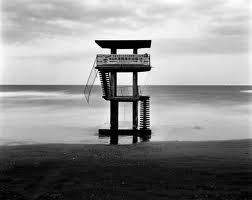
[…]
The first time the Tokyo-based photographer Kosuke Okahara visited a town near the Fukushima Daiichi Nuclear Power Plant in Japan, he grabbed his dosimeter, a device used to measure radiation levels, and looked at his watch to see how much time he could spend at the location.
“I was very scared because of radiation,” he said. “After four to five months, I became calm, and I went back to the beginning of why I was taking pictures.”
That was August 2011, five months after an earthquake and tsunami ravaged Japan and set off the world’s worst nuclear crisis since Chernobyl.
Since then, Mr. Okahara has traveled to Fukushima Prefecture almost every month. On Sept. 6, at the Visa pour l’Image photojournalism festival in France, Getty Images awarded him $20,000 to support his investigation of the fallout from the nuclear accident, and of those who suffered most.
“I’m collecting fragments,” Mr. Okahara said of his work, which includes both photos and audio.
[…]
http://lens.blogs.nytimes.com/2012/09/25/fragments-of-fukushima/
KOSUKE OKAHARA -DOCUMENTARY PHOTOGRAPHER
Sellafield beach radiation monitoring cover up?
According to the UK HSA website, there is no extra risk associated with the alpha and beta particles because the new Synergy radiation monitoring vehicle for beaches did not find any increase in the particle amounts on the beach near Sellafield Nuclear repossessing plant . However, according to a report on the effectivness on this device appear to be found to be wanting.

The date of the test was 2010 but the publish date of the PDF is 2012 august.
Title: Large scale beach trials to evaluate the operational performance of the
Groundhog Synergy system
[…]
The detection of socalled ‘alpha-rich’ particles has improved since Synergy was brought into operation, but the trials have not demonstrated in what way the improvement was achieved. Nuvia is currently investigating why this is the case and how the performance can be improved.
[…]
http://sellafieldsites.com/wp-content/uploads/2012/08/Synergy-report-Issue-1.pdf
and that curious paragraph says that they dont know how that it was achieved? yet they made this statement on the cover for the above PDF.
[…]
Good evidence was found that the increased object find rate of Synergy can be attributed to its increased sensitivity, rather than to any real increase in the number of objects present on the beaches.
New estimates were made of the health risks to beach users from the ingestion of alpha-rich objects and the changes in the estimated health risks were small and judged not to be significant. The conclusions of the original study therefore remain unchanged.
[…]
http://www.hpa.org.uk/Publications/Radiation/CRCEScientificAndTechnicalReportSeries/HPACRCE038/
Note;
but in early 2011 they gave the results instead, from the so called “inferior” testing system. maybe to hide the fact that the new synergy system was not worth the extra money? and no update on the companies findings into the failed results?
It doesnt sound like they managed to find the small alpha and beta particles if the are below the sand very well.. so it doesnt really work!
Dumped Russian nuclear sub shows no radioactive leaks, but still presents chain reaction dangers
Update..
[…]
“The focus on K-27 shows that the concern for the possibility of chain reaction developing in the reactors of the submarine is well-founded,” he said.
“The Russians dismantled several reactors with liquid metal coolant of the same type as those aboard the K-27 – which were stored on shore – and gained a knowledge that rang the alarm bells,”
[…]
That the expedition focused nearly exclusively on the integrity of the K-27 when there are so many other objects to check, underscores that the concern of a chain reaction aboard the scuttled submarine is very real, said Kudrik.
“The focus on K-27 shows that the concern for the possibility of chain reaction developing in the reactors of the submarine is well-founded,” he said.
[…]
But neither Strand nor Bellona’s Igor Kudrik, an expert on Russian Naval nuclear waste issues, believe this is a complete accounting of the waste.
Indeed, acknowledged Bellona President Frederic Hauge, a precise accounting from the Russian side could hardly be expected given Russia’s own ignorance of the extent of the dumped radioactive waste.
[…]
“K-27 is a dangerous object and there are plans to lift it from the sea bottom for proper disposal,” Yablokov said in remarks to the Bloomberg news agency today. “Technically it’s possible.”
[…]
A group of 16 Russian and Norwegian researchers who sailed to take measurements surrounding a Russian nuclear submarine that was scuttled for nuclear waste off the coast of the former Soviet nuclear test archipelago Novaya Zemlya in the Kara Sea have found no radioactive leaks, Norwegian radiation authorities said today.Bellona, 25/09-2012
Per Strand, a director at the Norwegian Radiation Protection agency told Bellona, however, that the primary purpose of the expedition, which returned today, was to inspect the possibility of an uncontrolled chain reaction aboard the K-27 Russian nuclear submarine, which was sunk in 50 meters of water in Novaya Zemlya’s Stepovogo Bay in the Kara Sea as nuclear waste in 1981.
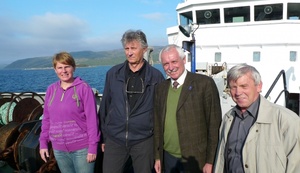
“The Russian side indicated there might be a hypothetical possibility that spent nuclear fuel in the reactor in extreme situations could cause an uncontrolled chain reaction, which can lead to heat and radioactivity releases,” Strand said in a telephone interview from Kirkeness.
The K-27, was dumped by the Soviet Navy in 1981, with spent nuclear fuel packed in its reactors, after a 1968 reactor leak aboard the killed nine sailors. The navy tried to repair it before deciding to seal the nuclear units and sinking the sub.
Impact to US West Coast from Fukushima disaster likely larger than anticipated, several reports indicate

Non-naturally occurring radionuclides from the Fukushima-Daiichi nuclear power plant’s triple meltdown last year radioactively contaminated the entire northern hemisphere within days and the US west coast bore a significant brunt of so called hot particles, an independent scientific paper released yesterday claims.
[…]
US government environmental agencies remain mum
In the immediate aftermath of the Fukushima accident, the US Environmental Protection Agency (EPA) refused to answer questions or to explain the exact location and number of monitors, or the levels of radiation, if any, being recorded at existing monitors in California, the San Jose Mercury News reported.
On March 21, 2011, the EPA pulled 8 of 18 air monitors in California, Oregon and Washington state that track radiation from Japan’s nuclear reactors out of service for “quality reviews.”
By April, 2011 the EPA had temporarily raised limits for radiation exposure by rewriting its Protective Action Guides (PAGs) to radically increase the allowable levels of iodine-131 by 3,000 times, a 1,000-fold hike for exposure to strontium-90, and a 25,000-fold increase in exposure limits to radioactive Nikel-63.
The EU followed suit by implementing an “emergency” order without informing the public that increased the amount of radiation in food by up to 20 times previous food standards, according to Kopp Online and Xander News. According to EU bylaws, radiation limits may be raised during a nuclear emergency to prevent food shortages.
[…]
CRIIRAD of France tried to warn us though, as did the euractive web-site
Radiation risks from Fukushima ‘no longer negligible’
[..]The risks associated with iodine-131 contamination in Europe are no longer “negligible,” according to CRIIRAD, a French research body on radioactivity. The NGO is advising pregnant women and infants against “risky behaviour,” such as consuming fresh milk or vegetables with large leaves.[…]
Reality in Fukushima Prefecture 2012 Sept.
Published on Sep 20, 2012 by aristoman007
Me visiting Nihonmatsu and Motonomiya.
more from the bellona article here
The lies of nuclear food, alcohol, water and the IAEA cover up!
Official Journal of the European Union February 2011
Radioactive contamination of foodstuffs ***I
P7_TA(2011)0055
European Parliament legislative resolution of 15 February 2011 on the proposal for a Council
regulation (Euratom) laying down maximum permitted levels of radioactive contamination of
foodstuffs and of feedingstuffs following a nuclear accident or any other case of radiological
emergency (recast) (COM(2010)0184 – C7-0137/2010 – 2010/0098(COD))
Note
This report came out a month before the japan earthquake nuclear disaster. It made requirements of European countries to monitor and manage levels of contamination. Since Fukushima the European governments have covered up the large contamination incident in Hungary that has doomed many young people from around the Bucharest medical isotope institute, and others further downwind too. The IAEA was instrumental to this play down and cover up as were the main stream media. And the fallout from fukushima in Europe, though minor was not a minor health hazard as we were told to believe by the paid for university specialists. Also, the releases from hungary brought drinking water Pb210 lead contamination to above safety drinking standards in the uk according to a cached copy of a removed link to a USA military base in the UK (Milford Haven) no measurement for iodine isotopes of any sort, but the warning level was changed and a second reading was done a month later that mathched the new limit, just!
Here are some links you might not have seen that outline these hidden nuclear horrors. Continue reading
What do Tony Blair, nuclear power, depleted uranium, radioactive tobacco and the Nobel family have in common?
 The real point of this wide ranging article is to highlight the international scope of this cover up on contamination issues and allowing high levels in the rest of the world while showing the low levels in japan.
Op Ed by Arclight2011, 9 September 2012
 In a previous article I posed the question concerning the whereabouts of Japans contaminated food supply. Continue reading
New! Nuked Radio Special: Busby Speaks. 9.4.2012
http://www.youtube.com/watch?v=HdxTw0el6Lw
Published on Sep 5, 2012 by ichicax4
Interview with Dr Christopher Busby from his home in Wales via Skype.
Hiroshima: Postcards from Japan – Dave Sweeney. (Videos)
http://www.youtube.com/watch?v=F7sqkfL0X44
Published on Sep 4, 2012 by AusConservationTV
On the morning of August 6th 1945 the Japanese port city of Hiroshima was destroyed by the world’s first atomic bomb — and the nuclear age began. In August 2012 a major international medical conference was held in Hiroshima to explore ways to reduce all forms of nuclear threat. In the shadow of the continuing Fukushima nuclear crisis, this meeting was a powerful place for a renewed call for action from all countries — including Australia. ACF’s nuclear campaigner Dave Sweeney sends this message from Hiroshima.
Text and presentation: Dave Sweeney, ACF
Images and sound: James Norman, ACF
Postcards from Japan: Fukushima housing
Dave Sweeney sent this message from an ’interim’ accommodation facility housing residents affected by the stricken Fukushima nuclear complex.
Around 150,000 Japanese people remain unable to return to their homes because of continuing radiation contamination from the stricken Fukushima Daiici nuclear reactor complex. Their communities have been disrupted, lives turned upside down and the social impacts of the accident have been profound. In August 2012 ACF representatives visited and spoke with re-located residents in an ’interim’ accommodation facility that is now home to re-located residents from where ACF’s nuclear campaigner Dave Sweeney sends this message.
Text and presentation: Dave Sweeney
Images and sound: James Norman
http://www.acfonline.org.au/news-media/blog/postcards-japan-fukushima-housing
EDF losses-£30 billion, China bail out for UK planned Reactors
http://www.guardian.co.uk/environment/2012/sep/02/edf-china-nuclear-reactor
[…]
EDF has been holding talks with China about sharing the soaring cost of building £10bn worth of new reactors at Hinkley Point, Somerset.
The move underlines growing pressure on the French company’s internal finances and has reignited a fractious debate about Communist state-run businesses playing a critical role in sensitive western energy infrastructure.
[…]
EDF faces growing investment demands in France and the UK that have sent debt levels rocketing to €39.7bn (£30bn).
[…]
The energy company – majority owned by the French state – is also facing mounting cost overruns and delays on its planned new reactor scheme at Flamanville in northern France.
A final green light for Hinkley Point C depends on receiving an acceptable “strike price”, agreed with the government, that would guarantee future returns.
EDF insists this strike price – seen by critics as unfair subsidy – will be lower than the £140 per megawatt hour that is roughly the current cost of producing offshore wind power.
[…]
Shock! The Japanese corporations are holding the government to ransom! (Video)
NATIONAL SEP. 05, 2012
[…]
Most experts have expected Prime Minister Yoshihiko Noda to opt for a policy that would put nuclear power’s share at about 15% of electricity production by 2030.
But anti-nuclear protests and strong support for the zero option had forced a rethink, experts and politicians said.
Business lobbies have warned that an aggressive program to end nuclear power would force up electricity rates and could push companies and jobs overseas.
Furukawa acknowledged that while a majority of people wanted to be rid of nuclear power, there were different points of view on whether that was achievable and how soon it could be done.
Furukawa said he and some other ministers had raised the possibility that “basic energy policy” would be reviewed later.
[…]
Cash-Rich Japanese Firms Go on Global Buying Spree (Video)
May 29, 2012, 11:12 p.m. ET
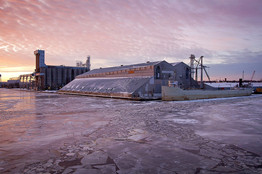
WSJ assistant managing editor John Bussey stops by Mean Street to discuss cash-rich Japanese companies going on a worldwide buying spree and lessons the companies might have learned from the 1980s. Photo: Bloomberg News.
http://online.wsj.com/article/SB10001424052702303505504577403743150818820.html
And the article with that here, I have highlighted the points that show the corporations are already leaving Japan and the REAL reasons why..
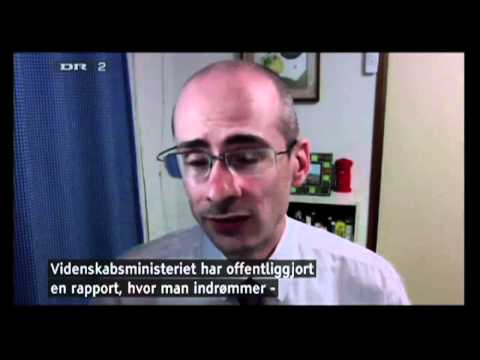
The Fallout of Fukushima – James Corbett on Danish TV
James Corbett, an independent news blogger running “The Corbett Report” has been covering the Fukushima crisis as well as other matters. He has a great presenting style with some well researched topics. i thought i would show how bloggers have reached out to the main stream media to give detailed and precise information. a short video but he has many more on his You Tube site. Well worth a browse!
http://www.youtube.com/watch?v=E6Zl2BA-1PE&feature=plcp
Published on Jul 3, 2012 by corbettreport
James Corbett joins Danish TV program Deadline 22:30 to talk about Fukushima and what has occurred in the wake of the nuclear accident. Access the Deadline 22:30 website here:
http://www.dr.dk/dr2/deadline2230
And a more recent video here…
Corbett: IAEA and Nuclear Monopolists a “Gang of Thugs”
Published on Aug 24, 2012 by corbettreport
Iran and the UN’s nuclear watchdog are set to resume talks later on Friday – more than two months after the previous round failed. Tehran insists it only wants peaceful energy, but the West remains suspicious of its nuclear ambitions. Hopes aren’t high for these negotiations either – while Iranian citizens continue to be hit hardest by US and European sanctions. For more on this we RT talks to James Corbett – journalist and editor of The Corbett Report – an online multi-media news and information source.
1 This Month





PLEASE OPPOSE HR 8255 AND S.3639 – bills would accelerate satellite deployment, with no environmental review or safeguards – https://ncstd5li.quorum.us/campaign/169331/
To see nuclear-related stories in greater depth and intensity – go to https://nuclearinformation.wordpress.com
-
Archives
- October 2026 (29)
- September 2026 (339)
- August 2026 (330)
- July 2026 (355)
- June 2026 (287)
- May 2026 (306)
- April 2026 (356)
- March 2026 (251)
- February 2026 (267)
- January 2026 (308)
- December 2025 (358)
- November 2025 (359)
-
Categories
- 1
- 1 NUCLEAR ISSUES
- business and costs
- climate change
- culture and arts
- ENERGY
- environment
- health
- history
- indigenous issues
- Legal
- marketing of nuclear
- media
- opposition to nuclear
- PERSONAL STORIES
- politics
- politics international
- Religion and ethics
- safety
- secrets,lies and civil liberties
- spinbuster
- technology
- Uranium
- wastes
- weapons and war
- Women
- 2 WORLD
- ACTION
- AFRICA
- Atrocities
- AUSTRALIA
- Christina's notes
- Christina's themes
- culture and arts
- Events
- Fuk 2022
- Fuk 2023
- Fukushima 2017
- Fukushima 2018
- fukushima 2019
- Fukushima 2020
- Fukushima 2021
- general
- global warming
- Humour (God we need it)
- Nuclear
- RARE EARTHS
- Reference
- resources – print
- Resources -audiovicual
- Weekly Newsletter
- World
- World Nuclear
- YouTube
-
RSS
Entries RSS
Comments RSS

