Nuclear Waste Storage Sites In The United States – Analysis

, By CRS, By Lance N. Larson, https://www.eurasiareview.com/15112026-nuclear-waste-storage-sites-in-the-united-states-analysis/
Key Takeaways:
- The United States still lacks a permanent geologic repository for commercial spent nuclear fuel and high-level waste; Yucca Mountain remains stalled, forcing on-site wet-pool and dry-cask storage at 80 sites while the government has paid $12.2 billion in judgments.
- Twenty-six of those sites are “stranded,” storing waste without an operating reactor to generate revenue, and the volume of stored spent fuel is projected to roughly double by 2048.
- Recent legislation and Trump Administration memoranda with five states explore consolidated interim storage, reprocessing and Nuclear Lifecycle Innovation Campuses as alternatives to the long-delayed Yucca Mountain plan.
Congressional interest in nuclear waste is generally focused on managing commercial spent nuclear fuel (SNF), the waste produced from commercial nuclear power plants, and other high-level nuclear wastes (HLW), largely from Cold War–era nuclear weapons materials production. No country, including the United States, has a permanent geologic repository for disposal of commercial SNF and other HLW.
Currently, commercial nuclear power plants generally store SNF on site, awaiting disposal in a permanent repository. The Nuclear Waste Policy Act of 1982 (NWPA; P.L. 97-425) authorized the Department of Energy (DOE) to site a geologic repository for the permanent disposal of high-level radioactive waste. Congress amended the NWPA in 1987 to designate Yucca Mountain, NV, as the only location to be considered by DOE to construct a national high-level nuclear waste repository. Political and legal opposition to the project has delayed the licensing, construction, and operation of the proposed Yucca Mountain repository.
NWPA authorized DOE to enter into agreements with nuclear utilities and other reactor owners to collect fees to pay for DOE’s disposal of the SNF. However, due to the delay in operation of a permanent repository, the federal government has paid $12.2 billion from the Judgment Fund to nuclear utilities and other reactor owners pursuant to court settlements and final judgments through September 30, 2025.
Figure 1 [on original] shows the locations of 80 sites in the United States where nuclear waste is currently stored. At 54 of these sites, 95 operating nuclear reactors generate approximately 20% of the total annual electricity production for the United States. A “site” in Figure 1 is a geographically distinct location. In some instances, multiple nuclear reactors may be co-located (operating or not) at a single site.
Generation of Spent Nuclear Fuel and Other High-Level Nuclear Waste
Commercial civilian nuclear reactors use low-enriched uranium oxide to generate nuclear power through fission reactions. The heat from fission in the reactor drives a steam turbine and a generator. Over time, the reactor fuel becomes incapable of economically producing power (i.e., “spent”) and must be replaced. Fuel assemblies removed from the reactor following power production are called spent nuclear fuel. SNF is stored in one of two ways: in wet storage pools and in dry casks.
Immediately following power production, SNF is discharged from the reactors and stored in wet storage pools on site, as it remains intensely radioactive and thermally hot. Wet pools provide regulated conditions allowing the SNF to cool while water is circulated and maintained to keep it from boiling off and uncovering the SNF. Some sites store SNF using a combination of wet storage and dry casks. Following the initial cool-down period, most facilities transfer SNF to dry casks and store it on site.
Dry cask storage of SNF does not require active cooling dependent upon pumps. Plant operators place dry casks within a security perimeter outside of the reactor building, either vertically on a concrete pad or within an engineered concrete bunker. HLW stored at DOE sites is characteristically different from SNF produced at commercial nuclear reactors.
The historical production of nuclear warheads by DOE and its predecessor agencies generated most HLW, which consists of radioactive liquids from reprocessing SNF and extracting special nuclear materials. DOE manages most HLW as liquids in underground tanks. DOE has converted some HLW to a powder form and some HLW has been solidified in glass for future disposal.
Nuclear Waste Storage
Commercial nuclear power plants have been storing SNF on site pursuant to regulations promulgated by the Nuclear Regulatory Commission under the Atomic Energy Act, as amended (P.L. 83-703). The U.S. Nuclear Waste Technical Review Board estimates the quantity of SNF stored as of 2012 at commercial nuclear power plants will approximately double by 2048.
Stranded Sites
At 26 nuclear waste storage sites (33% of the total sites), there are no ongoing reactor operations. These “stranded sites” are facilities that store nuclear waste but lack an operating reactor generating power and revenue. Stranded does not imply that the waste has been abandoned or lacks regulatory oversight. Sites where operating and shutdown reactors are co-located are not considered stranded sites regardless of the presence of stored SNF from a co-located closed reactor.
Issues for Congress
Some Members of Congress have introduced legislation in the current and over the past several Congresses intended to identify potential solutions to the challenge of long-term management and storage of SNF. Those bills have varied widely in scope and effect and included authorizing DOE to initiate a program for developing consolidated interim nuclear waste storage sites, research and funding for reprocessing of SNF, and repealing the provision in the NWPA selecting the Yucca Mountain site, among others.
The Trump Administration has supported alternative SNF storage proposals to Yucca Mountain. Subject to an executive order, DOE has entered Memoranda of Understanding with five states—Utah, Tennessee, Oklahoma, Louisiana, and Idaho—to establish Nuclear Lifecycle Innovation Campuses. According to DOE, the “proposed campuses could support activities across the full nuclear fuel lifecycle, including fuel fabrication, enrichment, reprocessing used nuclear fuel, and disposition of waste.”
Ukraine’s Collapse Will Be Sudden and Catastrophic — and Europe Is Still Acting Like It’s Winning

Von der Schulenburg was blunt about the consequences of letting the war continue until Ukraine collapses. A broken Ukrainian state will not simply disappear. It will produce more refugees, more weapons in circulation, and long-term reconstruction costs that Europe will largely have to carry. He stressed that Europe’s interest in Ukraine has been mainly in fighting Russia, not in the long-term viability of the Ukrainian state itself. Once the fighting stops, that interest will fade — but the costs will not.
A conversation with Michael von der Schulenburg MEP
Ian Proud, Nov 15, 2026, https://thepeacemonger.substack.com/p/ukraines-collapse-will-be-sudden?utm_source=post-email-title&publication_id=3221990&post_id=225011077&utm_campaign=email-post-title&isFreemail=true&r=1ise1&triedRedirect=true&utm_medium=email
Michael von der Schulenburg, A veteran German diplomat and MEP and Former Assistant Secretary General at the UN, warns that the Ukraine war is already decided on the battlefield. Ukraine is close to breaking, and Europe’s refusal to face reality will make the final stage far more costly for everyone.
The war decides the diplomacy
Von der Schulenburg has spent decades in war zones and peace negotiations for the United Nations. In a recent conversation he argued that diplomacy does not shape wars — wars shape diplomacy. Right now Russia dominates both the land and the air war. Ukraine is close to a collapse that will not be gradual. In his experience, these things break suddenly.
He pointed to the destruction of bridges over the Dnipro, the loss of port access through Odesa, the steady degradation of energy and transport infrastructure, and the growing role of irregular forces. These are classic signs of a state losing central control. At the same time Ukraine’s population has fallen dramatically since independence. A country that once had over 50 million people now has roughly half that number, with a large share dependent on social support.
Europe is still talking like the winner
While the military situation has shifted, European governments continue to act as if they hold the stronger hand. In recent meetings they have insisted on maximalist conditions — full Russian withdrawal, reparations, and war-crimes trials — that no longer match what is happening on the ground. Von der Schulenburg described the European approach in Dublin as still behaving “as if we are the winners.”
He noted that large groups of European representatives cannot negotiate effectively. They block each other, repeat the same demands, and have little room to compromise. Meanwhile the real discussions involving the United States and Russia have largely left the Europeans on the outside. This exclusion, he argued, is not an accident. It follows from the military balance.
A failed state will cost Europe more
Von der Schulenburg was blunt about the consequences of letting the war continue until Ukraine collapses. A broken Ukrainian state will not simply disappear. It will produce more refugees, more weapons in circulation, and long-term reconstruction costs that Europe will largely have to carry. He stressed that Europe’s interest in Ukraine has been mainly in fighting Russia, not in the long-term viability of the Ukrainian state itself. Once the fighting stops, that interest will fade — but the costs will not.
He also criticised the broader European strategy. Sanctions have hurt European economies more than they have stopped Russian ones. Opportunities to negotiate earlier were repeatedly rejected. Now Europe occupies a weaker position and still refuses to adjust. The result, in his view, is an irrational policy that increases the risk of escalation while reducing Europe’s influence.
What needs to change
The only realistic way to limit the damage, von der Schulenburg said, is for Europe to talk directly to Russia about ending the war in a way that preserves Ukraine as a functioning state. Continuing to tell Ukraine to fight on while ignoring the military facts will not change the outcome. It will only make the final phase bloodier and more expensive.
Collapse, he repeated, is usually sudden. The longer Europe pretends otherwise, the less leverage it will have when the moment arrives.
You can watch the full interview with Michael von der Schulenburg here:
California is clueless about what comes next after iconic nuclear plant demolition
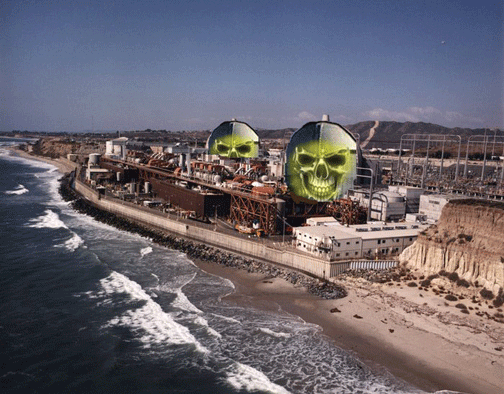
The news is that the twin domes at the San Onofre nuclear power plant are
finally being demolished. As The California Post has reported, the infamous
“nuclear boobs,” which greeted (and distracted) drivers along the
Interstate 5 for many decades, are going to be demolished.
What’s not in
the news: Any mention of future nuclear power plants. The San Onofre plant
was shut down in 2013, partly due to its age. It was built in the 1960s,
and its newest units were already 30 years old. What really killed it was
an event that happened on the other side of the world: the devastating
tsunami of 2011 in Japan, which caused meltdowns at the Fukushima nuclear
plant. Like Fukushima, the San Onofre plant was right on the water’s
edge. And it was close enough to population centers for many people in the
area to feel suddenly uncomfortable about it.
New York Post 14th Nov 2026, https://nypost.com/2026/11/14/opinion/california-is-clueless-about-what-comes-next-after-iconic-nuclear-plant-demolition/
Behchokǫ̀ residents worry about health impacts of old uranium mine on Tłı̨chǫ lands
Federal gov’t says no risk outside contaminated site, but Monfwi MLA wants more cancer research from N.W.T.
Luke Carroll· CBC News · Nov 09, 2026
Multiple residents of Behchokǫ̀, N.W.T., say they are worried about the impact of a long-closed, but only recently remediated, uranium mine.
The Rayrock remediation project includes cleanup work on a uranium mine north of Behchokǫ̀ and Whatì.
The underground mine operated from 1957 to 1959, and included chemicals like arsenic, but remediation work didn’t begin until 1996. In 2017, it was determined that more cleanup was needed. That work didn’t begin until 2024, and is expected to continue up until 2029. As a nuclear waste site, it will be monitored by the federal government indefinitely.
Three residents of Behchokǫ̀, some of whom lived at the mine site, worry about those toxins that were left untreated in the lands and water, and feel they aren’t being told about what impact that exposure could be having on community members.
Cancer rates around Behchokǫ̀
J.P. Rabesca said he lived at the mine site’s village during the 1950s when his father worked there.
“There was no safety,” he said, adding workers would return to their homes wearing the same boots and clothes they wore while they worked around the toxins.
Rabesca has been dealing with cancer for eight years and said he wonders if it came from the time he spent being exposed to those toxins. He said many in the community, including young people, are being diagnosed with cancer.
Marcellin Zoe, who lives in Behchokǫ̀, also lived at the mine site’s village.
He said he feels his concerns aren’t being taken seriously and the public isn’t being given enough information on the dangers of what they may have been exposed to.
“The world should know what the uranium does to us,” he said.
Zoe worries toxins like arsenic could have been moved all over the region through water or animals.
“It doesn’t stay in one spot,” he said.
MLA wants territory to look into cancer rates
He’s not alone in this worry.
Monfwi MLA Jane Weyallon Armstrong, who represents the four Tłı̨chǫ communities, raised the exact issue in the Legislative Assembly last week after hearing similar concerns from other community members.
Weyallon Armstrong, like many in the Tłı̨chǫ region, has connections to the mine; her father and brother worked there.
She also used to paddle by the mine as part of Trails of Our Ancestors, where Tłı̨chǫ citizens from the communities travel historical routes to gather for the annual assembly.
She said they would paddle on the contaminated lakes and an elder warned them not to splash the water while crossing.
Weyallon Armstrong raised the issue of cancer rates in the communities and what the territory is doing to understand them…………………………………………………………………………………………………………………………..https://www.cbc.ca/news/canada/north/behchoko-residents-worry-about-health-impacts-of-old-uranium-mine-on-tlicho-lands-9.7412510
Protest in Edinburgh on Saturday – Greens to join the march, questioning data centres
Friends of the Earth say they would like there to be a national
conversation about data centres before any decisions are made on the 24
applications which are in the planning process. The organisation claims
these would have “massive consequences” for energy bills, health, water
supplies and climate.
Edinburgh Reporter 14th Nov 2026,
https://theedinburghreporter.co.uk/2026/11/protest-in-edinburgh-on-saturday-greens-to-join-the-march/
Trump, Xi and Putin to meet Thursday, discuss nukes
President Donald Trump will meet with the leaders of China and Russia next
week to discuss possible reductions in the three countries’ nuclear
arsenals, the White House confirmed Friday. A senior administration who
briefed reporters on the planned meeting said that Trump, Chinese President
Xi Jinping and Russian President Vladimir Putin will discuss reducing
nuclear stockpiles.
There are currently no legal controls over the size of
the three countries’ strategic weapons stockpiles. The treaty that limited
the size of Russia’s and America’s nuclear arsenals expired in February.
China has resisted calls to engage in nonproliferation talks on the basis
that its nuclear forces are considerably smaller than those of the U.S. and
Russia.
Politico 14th Nov 2026,
https://www.politico.com/news/2026/11/13/trump-xi-and-putin-to-meet-thursday-discuss-nukes-01166354
Nuclear power site transfer programme wins national award
The team behind the first transfer of an Advanced Gas-cooled Reactor (AGR)
nuclear site from EDF to the Nuclear Decommissioning Authority (NDA) group
has won a major national project management award. The Nuclear Restoration
Services (NRS) and EDF Transition and Transfer Programme won Programme of
the Year at the Association for Project Management Awards 2026. It was also
a finalist for the Innovation in Project Management award. The judges
praised the programme’s joint governance, collaborative culture and
success in bringing hundreds of stakeholders together around a shared goal.
Having completed their electricity generation and defueling phases, the
first two of seven AGR nuclear sites, Hunterston B in North Ayrshire and
Hinkley Point B in Somerset, transferred from EDF ownership to the NDA
earlier this year. NRS is now the site licensee responsible for
decommissioning. Five further sites will follow over the next decade.
NRS 19th Nov 2026, https://www.gov.uk/government/news/nuclear-power-site-transfer-programme-wins-national-award
WNF & NIA announce strategic partnership to maximise Wales’s nuclear opportunity
The Wales Nuclear Forum (WNF) has announced a new strategic partnership
with the Nuclear Industry Association (NIA), strengthening cooperation
between the two organisations and creating new opportunities for both WNF
and NIA members. The agreement formalises a relationship which has
developed through more than 18 months of close collaboration. Under the
partnership, WNF and the NIA will remain separate organisations,
maintaining their own identities, memberships and activities. WNF members
will continue to receive the services and support they do today, while
benefiting from closer cooperation, shared expertise and stronger links
across the wider UK nuclear industry.
Building, Design and Construction 19th Nov 2026, https://bdcmagazine.com/2026/11/wnf-and-nia-announce-strategic-partnership-to-maximise-waless-nuclear-opportunity/
The AUKUS Public Inquiry is not going to just fade away

16 November 2026, Noel Wauchope, https://theaimn.net/the-aukus-public-inquiry-is-not-going-to-just-fade-away/
The repercussions of this Inquiry may take a while, but angst about AUKUS is something that is not confined to Australians – more on this, later.
Meanwhile, militarism continues to thrive, and our Prime Minister is busy in Manila, doing defence deals with the Philippines and Japan – because we all know that China is such a military threat to everyone.
And I have been pressing on, carefully reading another 60 of the 1028 Submissions to the Inquiry.
55 of these submissions clearly opposed AUKUS. Two were sort of neutral, and three were in favour of AUKUS.
In the arguments against AUKUS, once again, the main issue was the exorbitant cost. However, many submissions just focussed on the cost, without mentioning any alternative ways towards Australia’s security. So, the more convincing submissions were those that also dealt with the nuclear submarines themselves – as being unsuitable for Australia’s needs, or obsolete by the time we get them if we ever do. Some submissions went into detail on this, and on practical alternatives.
There were many powerful arguments about Australia’s loss of sovereignty, in becoming part of the USA’s military strategy. A Western Australian group writes:
The military interoperability and increased implementation of the Force Posture AgreementM(FPA) implicit in AUKUS will ensure further subservience to the USA, obliging Australia to continue following the US into wars of its choosing. The assumption that subservience to the US or having US bases on our soil will ensure Australia’s security and safety is false particularly in light of the prevailing “America First” agenda. The recent attacks on US Bases in West Asia are also testimony to this.
And many felt strongly that AUKUS will draw Australia into a USA war with China., and that China, our important trading partner, is not a threat to Australia.
Another passionate consideration was concern for democracy – the secretive, undemocratic way in which Australia’s decision on AUKUS came about:
The complete absence of meaningful community consultation regarding Australia’s entry into the AUKUS agreement is also deeply concerning, and is one of the reasons for this inquiry. Many members of the community feel powerless, alienated and angry by the lack of transparency surrounding such a significant and locked in costly national commitment. (Mothers for a Sustainable South Australia.)
The Mothers for a Sustainable South Australia reflected a particularly South Australian perspective on nuclear submarines:
South Australian Traditional Owners have consistently rejected proposals for nuclear waste facilities because of their lived experience with the devastating legacy of radioactive contamination. The historical trauma resulting from British nuclear weapons testing during the 1950s and 1960s – including displacement, illness and ongoing damage to Country – continues to affect communities today.
The experience of South Australia demonstrates that proposals involving nuclear waste have profound social, environmental and cultural consequences, particularly for First Nations peoples. Past failures in consultation and the enduring impacts of nuclear activities on Traditional Owners highlight the need for a transparent, inclusive and evidence-based decision-making process.
Submissions from South Australians were prominent, as were those from Stirling, Western Australia, and from the Port Kembla area in New South Wales, – all areas which are earmarked for nuclear submarine activities.
The need for Australia to have a defence strategy that suits its role in the region was a big topic of concern – a regional security strategy, rather than being a part of U.S militarism.
Many submissions were very concerned about transparency, and the failure of the Australian Parliament to scrutinise or debate AUKUS. Former Prime Minister Malcolm Turnbull’s submission went into detail on this, as well as on the background and unsuitability of the planned nuclear submarines:
The Pillar I submarine acquisition, as currently structured, was created by the Morrison Government and adopted by the Albanese government. It is a bipartisan error; a submarine deal that will likely result in Australia not receiving any submarines at all.
It will certainly leave Australia with long gaps in submarine capability. The AUKUS bargain is thoroughly unfair to Australia. It makes Australia even more dependent on the United States as the US is becoming, by design, a less dependable ally.
There has been no comprehensive parliamentary inquiry into AUKUS Pillar I comparable in depth or rigour to the scrutiny applied by the United States Congress or the British House of Commons… This Inquiry, whatever its formal limitations, performs a function that Parliament should have.
Finally, I can’t help quoting from my favourite Submission – this one – We need a smart defence strategy, not the AUKUS fantasy – from Merrill Stokes:
The fact that this contract requires Australia to pay a very large sum of money even if we never take possession of the Virginia class submarines seems like something out of ‘Alice and Wonderland’ where reality has been turned on its head. That is not a contract; That is called tribute. We need to remember Kissinger’s statement that “to be an enemy of the United States is dangerous but to be a friend is fatal.”
Reframing radiation exposure as a “benefit”

the NRC labels “increased worker and public exposure” and “increased effluent release” as benefits in its draft regulatory analysis. Characterizing increased exposures as “benefits” is misleading and dangerous because increasing radiation exposure will increase disease.
by beyondnuclearinternational, https://beyondnuclearinternational.org/2026/11/15/reframing-radiation-exposure-as-a-benefit/
In its rush to help fast-track new nuclear plants, the regulator is relinquishing its duty to protect public health, writes Cindy Folkers
The Nuclear Regulatory Commission (NRC) is abandoning its duty to protect public and worker health. Using a recent rulemaking proposal — NRC-2025-1140 Reforming and Modernizing the NRC’s Radiation Protection Framework — the NRC would allow nuclear facilities to release larger amounts of radioactive pollution under circumstances which are somewhat random and obscured from public input.
Under the rulemaking proposal, the NRC reframes radiation exposure as a benefit, ignores independent research, and prioritizes industry costs. In doing so, the NRC may be violating the Atomic Energy Act (AEA).
The NRC claims that it is executing mandates given in Executive Order 14300, but that order is based on a flawed assumption that a model of damage stipulating even small radiation exposures can cause harm, is not based in science. But research on workers and the public upholds the model, known as linear-no-threshold (LNT).
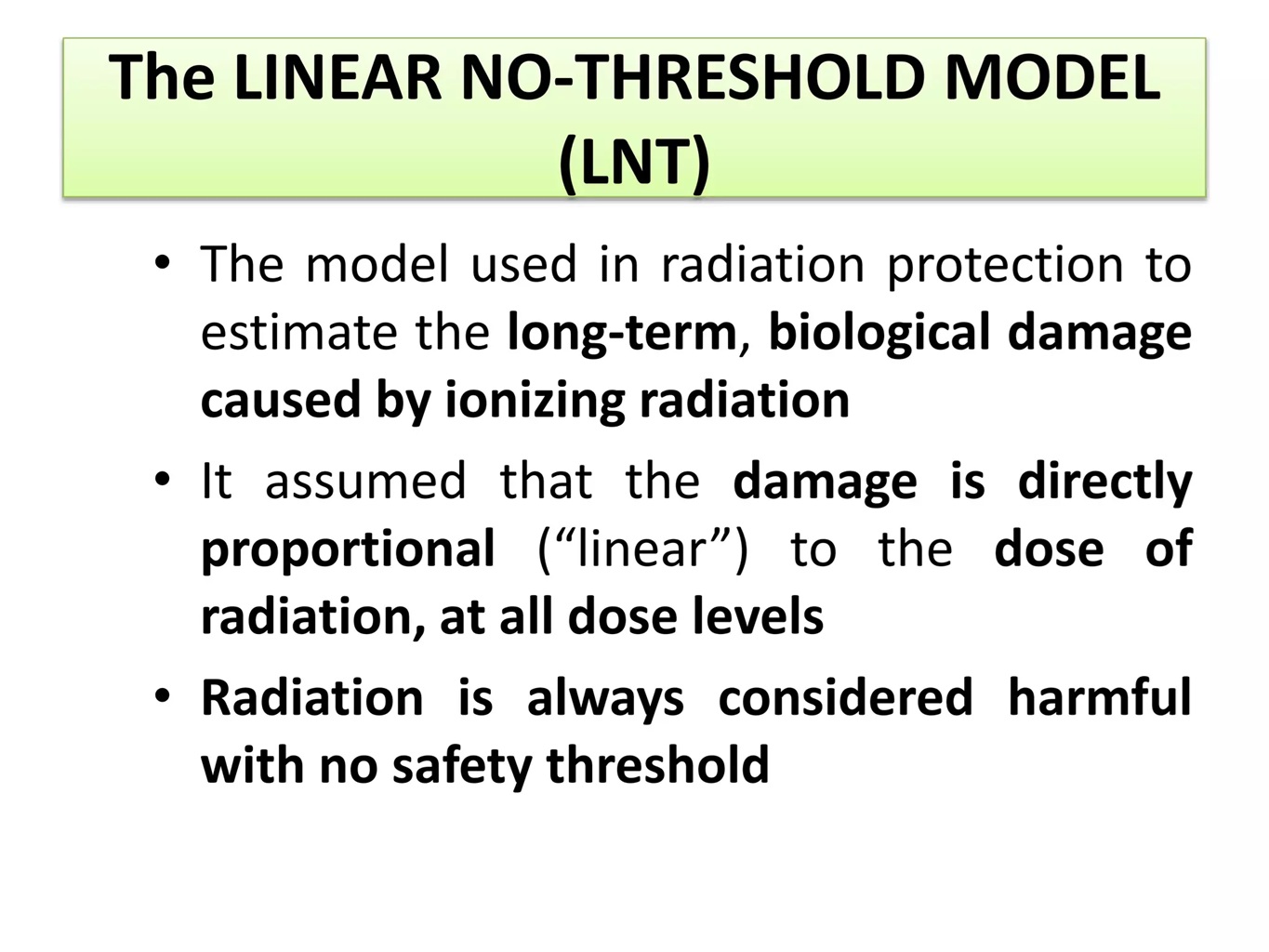
Radiation is dangerous even at low levels. The NRC wants to loosen rules, making it easier for nuclear reactor operators to expose workers and the public to radiation. This benefits the nuclear industry but puts people—especially women, children, and future generations—at greater risk.
What NRC’s proposal would do
In essence, the NRC is proposing a deregulatory framework that favors industry cost savings over health. There is no given or obvious process for people or states to know on a case-by-case basis when this deregulation allowing more radioactive pollution is happening, nor any indication of a clear opportunity to comment and protest its implementation.
More specifically, the NRC is proposing, through this rule, to double allowed radiation exposure to workers, eliminate dose limits to the general public (especially impacting those in rural communities) and allow up to ten times higher releases of radioactive effluent. The principle of ALARA (“As Low As Reasonably Achievable”), which gives incentive to minimize radiation exposure, has been largely abandoned.
It is important to note that the nuclear industry does not now measure public exposures. It instead calculates exposures using questionable assumptions and extremely limited data — a flaw that should be corrected by real-time monitoring and lowering allowable releases, not increasing them.
Radiation exposure as a “benefit”
One of the most troubling points of the proposed rule is that the NRC labels “increased worker and public exposure” and “increased effluent release” as benefits in its draft regulatory analysis. Characterizing increased exposures as “benefits” is misleading and dangerous because increasing radiation exposure will increase disease.
Simultaneously, the NRC has excluded the real costs—cancer treatment, long-term health impacts and multigenerational harm. By treating these as “externalities,” the NRC is ignoring its legal duty.
When asked what the public benefit of this rule would be, the NRC staff claimed, in an August 10 public meeting, that there is “a real strong demand for more energy as more data centers go in place.” NRC chairman Ho Nieh — a Trump nomination — echoed this sentiment in an August 24 interview with The Federal Drive: “the reason we’re taking these regulatory reforms is because there’s an urgent demand for more electricity in the United States due to artificial intelligence, data centers and industrial growth.”
Framing increased exposures as benefits, and excluding the cost of treating radiation induced disease, redoubts to the benefit of industry. Data centers are controversial, but renewable energy could provide electricity to power these faster, more affordably, and without radiation risks. Further, any risk-benefit framing violates the right to health according to the UN Human Rights Commission, which (in the wake of the ongoing Fukushima nuclear catastrophe) has warned that risk-benefit analysis is not compatible with protecting individual health rights.
Past harm
At the same August 10, 2026 public meeting referenced above, the NRC admitted it is incapable of creating regulations that account for cumulative impacts of legacy pollution and historic exposure, ostensibly due to agency jurisdictional issues; yet studies show past exposures (even to naturally occurring background radiation) can cause cancer and fertility issues. The NRC, nevertheless, allows additional exposure on top of these historic exposures to natural background, effectively doubling unavoidable doses.
In addition to health impact from naturally occurring background radiation exposure, past exposures from weapons testing and manufacture, and catastrophic releases from civilian reactors cause compounding harm.
Past nuclear weapons tests left widespread contamination, with remnants of radioactive cesium still present in human bodies, and studies estimate millions of cancer deaths worldwide from these tests.
Civilian nuclear reactors, through routine operations and accidents such as Chornobyl and Fukushima, have left long-lasting contamination, with cancer, and genetic damage and birth defects, persisting across generations. Ignoring these legacy exposures is irresponsible since research indicates adding more exposure makes health outcomes worse.
The Environmental Protection Agency (EPA) has made attempts at accounting for compounding damage from other pollutants so asking the NRC to account for compounding damage from radiation is not without precedent, even if imperfect. The NRC should not be allowed to ignore this very important, multigenerational issue.
Current and future harm
The Atomic Energy Act mandates that health protection is a core duty of the NRC. Therefore, the NRC’s weakening of its standards may very well violate the Act because in the NRC’s effort to “reform and modernize” radiation exposure standards, the agency ignores current and past research showing that standards for workers and the public need to be strengthened. Instead, the NRC focuses on what the nuclear industry finds “reasonable” in terms of cost — not what is safe for people — leaving women, children, and other susceptible groups at higher risk.
The US public has reason to be concerned as recent research shows increases in diseases among adult populations around nuclear power reactors. However, this research does not include data on children and does not yet fully address whether radiation exposure is responsible for the disease increases.
Worse yet, the NRC avoids addressing independent research that could further clarify the cancer and non-cancer risks of low-dose radiation, while simultaneously claiming that not enough is known about low dose impacts.
For example, in 2015, the NRC canceled a National Academy of Sciences study on cancer risks near nuclear reactors. This was despite European studies showing increased childhood leukemia near reactors.
Radiation’s impacts extend beyond cancer. Studies looking at the aftermath of the still ongoing March 2011 Fukushima disaster show increased miscarriages, birth defects, with excess perinatal deaths recorded years after the accident began (Körblein, 2003) (Körblein, A. 2004) (Scherb, et al. 2016). Prenatal exposure can reduce IQ and cause behavioral problems. Nordic studies found children exposed to Chornobyl fallout performed worse in school.
Low doses can trigger chronic immune problems, leading to infections, allergies, and autoimmune diseases. Radiation exposure is also linked to heart disease, Parkinson’s, and Alzheimer’s.
These impacts are well-documented, yet the NRC claims it cannot regulate for them because of “uncertainty.” This falsely manufactured gray area deliberately sows doubt about the health impacts caused or triggered by lower radiation exposure; and gives the NRC the excuse to not protect workers and the public better, allowing industry to operate under the protection of doubt regarding radiation’s health impacts at so called “lower” exposures.
Uncertainty, manufactured or not, should lead to stricter standards, not weaker ones.
What an independent regulator should advocate
To address these concerns, we need the following:
- Independent research on women and children, funded through public health agencies such as the National Institute of Environmental Health Science (NIEHS), to examine radiation impacts on pregnancies and vulnerable populations that current worker studies do not adequately cover.
- Independent real-time monitoring of radiation releases, environmental contamination, and biological exposure. Industry self-reporting has been, and continues to be, insufficient.
- Account for non-cancer impacts, since radiation affects pregnancy, fertility, cardiovascular health, and neurological development. We recommend using EPA tools to calculate these costs. We advocate following the EPA’s 2024 draft cumulative impacts framework that emphasizes considering cumulative pollution impacts. The NRC should adopt similar principles to protect communities.
- Inclusion of the real costs of treating radiation-induced cancers, especially childhood cancers such as leukemia and brain tumors.
- Expansion of compensation programs. We must urge Congress to broaden the Radiation Exposure Compensation Act (RECA) and Energy Employees Occupational Illness Compensation Program Act (EEOICPA) programs to cover civilian nuclear radiation exposures, not just military or occupational ones. These compensation programs do not rely on dubious dose reconstruction and the unscientific assumption that doses were too low to cause disease. Instead, compensation worthiness is based on more reliable data such as geographic location, type of disease and other factors.
Universal disapproval
Out of over 2,000 public comments submitted to NRC by the August 31, 2026 deadline, approximately 93% oppose at least some aspects of the proposed NRC rule. The removal of ALARA and attacks on the LNT model ranked as top concerns, according to a private analysis by the Samuel Lawrence Foundation.
Attorneys General of 11 states (Illinois, California, New Mexico, Washington, Colorado, Oregon, Delaware, Maryland, Minnesota, Vermont, and Massachusetts) have written a letter to the NRC asking them to withdraw the rulemaking for a number of reasons, including inadequate environmental review and regulatory analysis, the removal of ALARA, the vagueness of some of the proposed changes, inadequate length of the public comment period, and as yet unknown unintended consequences.
The NRC is set to publish the final rule for this rulemaking on February 25, 2027 as of this writing. This date is subject to change. However, what will not change is the fact that radiation exposure—even at low doses—has proven harmful, especially for susceptible women, children and pregnancy. The NRC should be strengthening exposure standards, not weakening them.
Cindy Folkers is the Radiation and Health Hazard Specialist at Beyond Nuclear.
In Korea a Tribunal Is Underway on U.S. Atomic Bombings
By David Swanson, World BEYOND War, November 13, 2026 [ALSO IN KOREAN LANGUAGE. COPIOUS ILLUSTRATIONS AND VIDEOS], https://worldbeyondwar.org/in-korea-a-tribunal-is-underway-on-u-s-atomic-bombings/
A major tribunal is underway here in Seoul, South Korea, in a huge, packed auditorium on a university campus, with participants, witnesses, and judges from around the world, including the United States and Japan. See http://abombtribunal.org
This is a people’s tribunal, not a government-run affair. The expertise and legal authorities are unmatched, and the findings will clearly deserve to be acted on when the political will can be found.
Welcoming events happened on Thursday and the first day of the tribunal took place on Friday, with two more days to come.
Survivors of the atomic bombings of Hiroshima and Nagasaki testified, a number of them in their 80s. Before they die, one of them remarked, they would like to hear these words from the U.S. government: “The dropping of the atomic bombs was wrong. We are sorry.” These survivors were not Japanese, but Korean.
According to tribunal witness Oh Eun-Jeong, 70,000 Koreans were exposed to radiation at Hiroshima and Nagasaki, of whom 40,000 died and 30,000 survived. Of the survivors, 20,000 returned to Korea. These were people forced, under Japanese colonialism, to work in Japan during World War II. They were told they were Japanese. Even after the bombings, they were told that all the victims had been Japanese. They also faced fear, prejudice, discrimination, and ongoing physical agony for years to come.
Children and grandchildren of the first-generation victims developed horrible illnesses, though it took decades to identify the cause and to achieve general recognition thereof. “I will offer my body to be dissected to prove the truth,” said second-generation victim Kim Hyung-ryul before he died at 35.
It having been well established that there are victims, those victims tend to ask: “How can there be victims but no perpetrators?” Japan has not apologized for its imperialism and forced labor. The United States has not apologized for the atomic bombings. What victims (and advocates for extending the existence of life on Earth) demand are apologies, reparations, and steps to avoid repetition. Said steps must clearly include the abolition of war to effect the abolition of nuclear weapons.
Attending this conference are first- and second-generation victims from Hiroshima and Nagasaki, and U.S. survivors of hundreds of nuclear explosions in Nevada. Those impacted by all of the nuclear “testing” in the world includes all of us.
In addition to an apology and reparations, we need a renunciation of the lies about the bombings saving lives or otherwise being justifiable. Attorney Park Kyu-hoon pointed out that the U.S. government tried to lie and coverup the results of the bombings immediately after the destruction.
Multiple witnesses on Friday laid out a legal case for the criminality (under the laws of the time) of the dropping of the atomic bombs. They cited the Hague agreements of 1899 and 1907 and numerous other treaties, and argued that the bombings illegally caused unnecessary suffering, violated “laws of humanity and public conscience,” violated bans on targeting civilian populations (in fact intentionally aimed at the most densely populated areas), violated bans on chemical and/or poisoned weapons, and illegally went beyond what was necessary for legitimate military purposes (whatever those may be).
Of course, the losers of World War II were prosecuted for anything they did as part of a war illegal in its entirety under the Kellogg-Briand Pact. Were this tribunal to apply the same logic to the victors of World War II, the atomic bombings would be illegal as parts of a war rather than as improper parts of a war. One witness late in the day on Friday argued that the Kellogg-Briand Pact and other treaties had made force illegal except as self-defense, as it has been made customary to claim despite the Kellogg-Briand Pact having very carefully not included that loophole.
By the end of this week there should be a judgement reached for us all to send to the U.S. government. That judgement should be livestreamed at 5:10 p.m. Korea Standard Time, Sunday.
Richard Falk opened the tribunal, saying it aimed to “lift the curse of nuclearism from the bent shoulders of humanity.” Marjorie Cohn pointed out how close the United States is to using nuclear weapons again. This 81-year-old history couldn’t be more urgent.
Korean peace activists are very busy planning a big rally for Saturday opposing the use of Korean troops in the Strait of Hormuz. That subservience to Trump suggests how far the Korean government is from demanding truth and justice out of Washington even over matters from 81 years ago.
The people and organizations who have put this tribunal together, on the other hand, have beautifully honored and memorialized victims with dance, song, and readings of their stories, while laying out a powerful legal case for the criminality of one of most immoral actions ever taken.
Toward the end of Day 1 of the Tribunal, former U.S. Army Colonel Ann Wright, a World BEYOND War Advisory Board Member, spoke passionately and apologized on behalf of the U.S. government. Wright pointed out that after many years of work the U.S. government was finally brought to compensate some of the downwinder victims of its U.S. nuclear explosions — and more work could bring about the same for Koreans.
Following the tribunal, Ann Wright and I will be taking part in an event on Jeju Island.
Small nuclear reactors could soon power the next generation of AI data centers — modular reactors could soon power Dow Texas chemical plant. The approval ignores critical outstanding safety concerns
By Efosa Udinmwen, Tech Radar 14th Nov 2026, https://www.techradar.com/pro/small-nuclear-reactors-could-soon-power-the-next-generation-of-ai-data-centers
No small modular reactor currently operates commercially in the United States
- X-energy receives approval to construct four small modular nuclear reactors
- Each Xe-100 reactor will generate 80 MW of electricity
- The approval ignores critical outstanding safety concerns
Artificial intelligence companies are increasingly turning toward nuclear energy as electricity demand rises alongside expanding computing infrastructure.
X-energy has secured federal permission to construct modular reactors at a chemical manufacturing complex in Texas.
The approval allows the nuclear startup to bring its technology closer to commercial deployment, although operational reactors remain years away.
X-energy secures approval for four nuclear reactors
The Nuclear Regulatory Commission (NRC) has authorized construction of four Xe-100 reactors at a Dow industrial facility in Texas.
Each unit is designed to generate 80 megawatts (MW) of electricity alongside another 200 MW of thermal energy – so together, the proposed installation would provide 320 MW of electrical generation, giving the chemical manufacturer an additional source of industrial power.
X-energy describes the regulatory decision as the first construction authorization for an advanced nuclear installation at an American industrial location.
However, receiving permission to begin construction does not mean the reactors are ready to supply electricity for data centers.
The company expects Dow’s installation to enter service sometime during the early 2030s, leaving several years before commercial operation begins.
The proposed technology uses uranium-bearing fuel pellets, with helium gas circulating through the reactor to carry away generated heat.
X-energy argues this arrangement offers safety advantages over conventional nuclear power systems, although independent experts have questioned those assurances.
The Union of Concerned Scientists also criticized the regulatory process, particularly the handling of outstanding safety considerations before construction approval.
“The NRC only accomplished this feat by pushing consideration of critical safety questions to a later date,” said Edwin Lyman, director of nuclear power safety at the Union of Concerned Scientists.
He argued that regulators should have resolved those outstanding concerns before authorizing construction at the industrial location.
Technology companies are betting on nuclear electricity
Demand from artificial intelligence infrastructure operators has given emerging nuclear developers another potential source of commercial interest.
Large technology companies need substantial electricity supplies for computing facilities, particularly as increasingly powerful AI systems require additional processing capacity.
Conventional electricity providers face growing pressure to accommodate those requirements, creating opportunities for alternative generation technologies.
Amazon has become one of X-energy’s major financial supporters through its Climate Pledge Fund investment.
The technology company led a $500 million Series C-1 financing round in October 2024 and separately committed to purchasing 5 gigawatts of nuclear generating capacity, an agreement which gives X-energy a significant potential customer as it works toward developing commercial reactors.
The startup also attracted substantial investor interest through its initial public offering earlier this year, which generated $1 billion in proceeds.
However, enthusiasm among investors has moderated since the April listing, suggesting that commercial expectations remain sensitive to development timelines.
The company still faces the challenge of turning regulatory permission and financial commitments into functioning electricity-generating infrastructure.
Small modular reactors have attracted attention because their developers expect factory-oriented production and smaller installations to simplify construction.
Those proposed advantages include shorter development schedules and lower costs, although neither benefit has been conclusively established.
No small modular reactor currently operates commercially in the United States, leaving X-energy’s proposed installation dependent on successful construction and regulatory oversight.
Via Techcrunch
Oregon nuclear company sued by investors over executives’ stock sales
By April Ehrlich (OPB), PORTLAND, Ore. Nov. 17, 2026
An Oregon company that has been a global leader in small nuclear reactors is facing a lawsuit from shareholders who say top executives artificially inflated stock prices before cashing out.
Investors who purchased securities in NuScale Power Corp. earlier this year are suing the company, saying its top executives misled the public about the company’s financial solvency and success in advancing nuclear technology. They filed their legal complaint in the U.S. District Court of Oregon on Wednesday, alleging the company violated federal securities laws…………………
The lawsuit alleges that four NuScale executives intentionally overstated the company’s competitive advantage and financial health to inflate stock prices. It says those executives failed to disclose the company’s stalled projects as other nuclear companies advanced their own small nuclear reactor designs.
While stock prices were high, NuScale’s executives sold their shares for more than $3.25 million, the lawsuit says, even while they touted the company’s financial success.
Investors say they didn’t know the company’s two biggest projects were troubled until September, when UBS, a Swiss multinational bank, slashed NuScale’s price target from $10 per share to $6, citing a projected $700 million negative free cash flow.
In 2023, NuScale became the first American company to get federal approval for one of its designs. But it has hit major roadblocks in recent months.
The company had been exploring building reactors for the Tennessee Valley Authority, a federally owned electric corporation and the largest public power provider in the country. The Tennessee Valley Authority provides electricity to about 10 million people in seven southern states.
NuScale has yet to enter into a binding agreement with the utility, the lawsuit says…………………..
Shareholders are asking the court for a class-action lawsuit designation, jury trial, and a judgment requiring NuScale and the four executives compensate investors for their losses.
NuScale’s stock price fell 7.8% on Thursday, closing at $4.82 per share., https://www.opb.org/article/2026/11/12/oregon-nuclear-company-sued-by-investors-over-executives-stock-sales/
Ottawa stands by Darlington small modular reactor amid delays and rising costs.

The project is being watched globally because it’s the first small modular reactor to begin construction in a Group of Seven country. There are also proposals to build BWRX-300s in several other countries including the U.S., Britain and Poland.
“We should never think because we’ve invested so much, we should keep investing,”
Aya Dufour and Matthew McClearn, 14 Nov 26, https://www.theglobeandmail.com/business/article-ottawa-darlington-small-modular-reactor-delay-rising-cost/
Canada’s federal government is shrugging off an engineering setback at Ontario’s Darlington small modular reactor project, with Energy Minister Tim Hodgson calling it “a reality in all first-of-a-kind projects.”
Mr. Hodgson defended the Canada Growth Fund’s $2-billion equity investment in the project, saying it aligns with the taxpayer-backed fund’s mandate to shoulder risk for technologies that can drive economic growth and advance climate goals.
“It’s important for Canada that we do not balk on making these important investments,” he said.
Earlier this week, Ontario Power Generation said it would undertake a comprehensive assessment after filings with the Ontario Energy Board indicated the Darlington SMR project is facing cost overruns and delays.
The Crown corporation reported that the overruns reflected the “ongoing engineering” work of its partner, GE Vernova Hitachi Nuclear Energy, which is responsible for designing the BWRX-300 reactor and other aspects of the facility.
In a statement, GE Vernova Hitachi spokesperson Jonathan Allen pointed to other factors outside his company’s control.
“While engineering and design maturity are important considerations, as OPG’s update recognizes, there are multiple interconnected contributions across engineering, procurement and construction, as well as evolving market conditions, including inflation and geopolitical risks.”
In quarterly financial statements released Tuesday, OPG said the first reactor unit would not be completed within its previously disclosed $7.7-billion budget.
The utility did not specify the size of the cost overrun or the extent of the delay, although a production forecast included in the filing suggests the project’s timing could slip by at least a year. OPG had previously targeted an in-service date of October 2030.
The delay could ultimately prove shorter than a year, depending on the outcome of an assessment that is expected to be completed by mid-2027.
The project was among the first to be shepherded through the Major Projects Office last year and later received significant equity commitments from the federal and provincial governments via the Canada Growth Fund and the Building Ontario Fund.
In an e-mail, CGF spokesperson Mathieu St-Amand wrote that “the equity commitment is being deployed over time.”
A corporate presentation from the fund said the investment is subject to certain conditions, but Mr. St-Amand declined to say whether those conditions were tied to specific project timelines or cost estimates.
In a separate corporate presentation, the CGF says its capital will be deployed in two tranches: one tied to the first reactor unit and another for the remaining three units, contingent on the achievement of certain milestones.
Asked about whether the investment is a prudent use of public funds, Mr. Hodgson said every project has contingencies built in.
“There are on and off ramps for the CGF to be involved, and I’m confident that it is well structured project-to-project to protect the CGF,” he said.
The Darlington New Nuclear Project (DNNP), with a total budget of $20.9-billion, involves building four BWRX-300 reactors and accompanying infrastructure adjacent to the existing generating station in Clarington, Ont.
The project is being watched globally because it’s the first small modular reactor to begin construction in a Group of Seven country. There are also proposals to build BWRX-300s in several other countries including the U.S., Britain and Poland.
In the U.S., GE Vernova Hitachi has partnered with the Tennessee Valley Authority to build the first single BWRX-300 on American soil at its Clinch River site. Although no construction date has yet been announced, the U.S. Nuclear Regulatory Commission recently issued a construction licence for that project.
“It would be premature to speculate on any direct impact to TVA’s potential projects,” wrote TVA spokesperson Elizabeth O’Connor in a statement.
“TVA remains committed to a disciplined approach to deploying advanced nuclear technology and will continue working through partnerships to ensure costs are managed responsibly to protect TVA customers.”
Ontario’s Independent Electricity System Operator did not respond directly to questions about how the DNNP delays might affect plans to supply electricity to Ontarians in the early 2030s.
IESO spokesperson Michael Dodsworth noted that the IESO was in the middle of a large competitive electricity procurement known as Long-Term 2, “which was expanded from 5,000 to 7,500 megawatts to meet growing electricity demand.” The organization was also promoting electricity efficiency to reduce peak demand.
He added: “The IESO will continue to work with OPG as the Darlington New Nuclear Project advances, and relevant information will be considered as part of future system plans to determine if any incremental actions are needed.”
Pierre-Olivier Pineau, chair in energy sector management at HEC Montréal, said the challenges facing the Darlington SMR project “underscore the fact that we need to be very cautious and honest in our energy and electricity policy across Canada.”
He argued governments should take their time to evaluate any potential future investment in the project.
“We should never think because we’ve invested so much, we should keep investing,” he said, describing the initial costs as already more than what anyone would ever want to pay for electricity.
“If they add more billions to this already expensive experiment, then we definitely can take a few more years to think about it.”
Over 100 medical journals call for nuclear weapons elimination
November 15, 2026, by IPPNW, https://peaceandhealthblog.com/2026/11/15/medical-journals-call-for-nuclear-abolition/
Over 100 medical and health journals, including The Lancet, The BMJ and the International Nursing Review, have issued a joint call to move rapidly to eliminate nuclear weapons. Leaders of the global health community warn that any use of nuclear weapons would be catastrophic for humanity, and they call for primary prevention by abolishing the weapons before they can be used.
The call comes as nuclear risk reaches levels unseen even during the Cold War. In January, the Bulletin of the Atomic Scientists set its Doomsday Clock to 85 seconds to midnight, the closest in history, and the facts support this move. The nine nuclear-armed states spent a record US $119 billion on their arsenals in 2025, a 19% rise in a single year; New START, the last treaty limiting the US and Russian arsenals, expired in February 2026 with no replacement in the works; and implicit and explicit nuclear threats have become a recurring feature of today’s wars.
The call takes the form of an editorial co-authored by the editors of 12 leading medical and health journals, the World Association of Medical Editors (WAME), and leaders of International Physicians for the Prevention of Nuclear War (IPPNW). It follows joint editorials on nuclear risk in 2023 and 2025. It is published this week ahead of the first Review Conference of the Treaty on the Prohibition of Nuclear Weapons (TPNW), which meets at UN Headquarters in New York from 30 November to 4 December 2026.
“Humanity’s survival is…in the hands of a few fallible decision-makers,” the editorial warns.
Citing the special responsibility of the health community, the editorial states, “Health professionals have a vital role to play in keeping a health focus in public discussions on nuclear risk. We need a verifiable, deadline-driven agreement to eliminate all nuclear weapons. This is why it is essential that the health sector continues to demand that every country – including the nuclear armed states – should join the Treaty on the Prohibition of Nuclear Weapons. The flourishing, and even the survival, of the human species is at stake.”
The editorial is the first introducing a series of four total. The other three will cover:
- New insights from psychology and neurology on nuclear risk and deterrence
- The potential One Health consequences of nuclear war
- The role of AI, other new technologies and information disorders (mis- and disinformation) on nuclear risk
According to Chris Zielinski, Past President of the World Association of Medical Editors (WAME) and co-author of the editorial, “This is not merely a broad communications effort. There has never been anything remotely like it in the health sector – or in any other sector.”
“Nuclear war would be the end of human civilisation,” added Dr. Kati Juva, IPPNW Co-President and co-author of the editorial. “As health professionals, we have a duty to work for the prevention of the use of nuclear weapons, and push all governments to join the Treaty on the Prohibition of Nuclear Weapons.”
Read the joint editorial, Critical Condition: What Are We Doing About Nuclear War?, here.
See the full list of participating journals here.
1 This Month
Tell Congress: Prevent Nuclear Catastrophe in Iran

Tell Congress: Prevent Nuclear Catastrophe in Iran

Read the Public Inquiry Report, the Commissioners’ report, Surrendering Australia: The AUKUS Deception is available to download for free at aukuspublicinquiry.com. Or just watch the replay of the National Press Club Luncheon.


Shut down the radiation-damaged Heysham nuclear reactors now
To see nuclear-related stories in greater depth and intensity – go to https://nuclearinformation.wordpress.com

Say No to NASA’s Reckless Nuclear Reactor on the Moon
Say No to NASA’s Reckless Nuclear Reactor on the Moon
-
Archives
- November 2026 (246)
- October 2026 (302)
- September 2026 (339)
- August 2026 (330)
- July 2026 (355)
- June 2026 (287)
- May 2026 (306)
- April 2026 (356)
- March 2026 (251)
- February 2026 (267)
- January 2026 (308)
- December 2025 (358)
-
Categories
- 1
- 1 NUCLEAR ISSUES
- business and costs
- climate change
- culture and arts
- ENERGY
- environment
- health
- history
- indigenous issues
- Legal
- marketing of nuclear
- media
- opposition to nuclear
- PERSONAL STORIES
- politics
- politics international
- Religion and ethics
- safety
- secrets,lies and civil liberties
- spinbuster
- technology
- Uranium
- wastes
- weapons and war
- Women
- 2 WORLD
- ACTION
- AFRICA
- Atrocities
- AUSTRALIA
- Christina's notes
- Christina's themes
- culture and arts
- Events
- Fuk 2022
- Fuk 2023
- Fukushima 2017
- Fukushima 2018
- fukushima 2019
- Fukushima 2020
- Fukushima 2021
- general
- global warming
- Humour (God we need it)
- Nuclear
- RARE EARTHS
- Reference
- resources – print
- Resources -audiovicual
- Weekly Newsletter
- World
- World Nuclear
- YouTube
-
RSS
Entries RSS
Comments RSS

