The Nuclear Financing Gap

Fundamental changes to market structures and risk profiles following deregulation of the world’s electricity markets have left nuclear financing options adrift.
The concern is that the power plant will remain capable over the long term of selling its output at a price that is high enough to cover its costs. Adding to this concern is the possible emergence of any new, competing technology that can sell electricity at a lower price.
NS ENERGY, By Dr Stephen Dansky16th Nov 2026
When the ‘on’ switch was thrown at the first electric power plant, Thomas Edison was not there celebrating with his team of scientists and engineers. Rather, he was celebrating quite a distance away on Wall Street with the bankers who financed his endeavour. Throughout his prolific career, he understood that a great new design is nothing more than an academic exercise unless the banking community is willing to provide the requisite funds for construction.
Today’s nuclear engineers may want to consider that moment in history. The designs for the next generation of nuclear power imply greater safety, and modular construction may improve costs. They may also help countries meet their greenhouse gas targets. Nonetheless, recent research has demonstrated that within deregulated electricity markets, such as those that comprise two-thirds of the US electric market, there should be little expectation of obtaining the requisite financing to construct these new designs.
Market evolution
Much has changed about electricity markets over the last few decades. Previously, all utilities in the US that owned nuclear power plants operated within a regulated cost-of-service framework. These long-standing cost-of-service regulations extend back to several US Supreme Court decisions including Smyth v. Ames and Hope Natural Gas v. Federal Power Commission which led to the ‘used and useful’ doctrine for regulated monopoly utilities. Moreover, all retail customers within the geographic boundaries of a utility’s service territory were legally captive – they could not switch electric providers no matter how high the regulators set the electric rates following placement of a new nuclear plant into the rate base, or how volatile due to an oil embargo. From the viewpoint of lenders and investors, these captive customers provided the ultimate credit support for a utility’s construction plans. Under a regulated monopoly utility framework, the revenue and cost risks of owning a nuclear plant were reduced to a point sufficient to satisfy the financiers.
This regulatory framework supported the financing of more than 90 GW of nuclear capacity in the US. Globally, it supported the financing of over 400 nuclear power plants in 32 countries, and every one of these nuclear plants was financed under some form of government regulation. Referred to as the “sovereign form” of financing by the International Atomic Energy Agency, either the government agreed to assume some or all of the revenue and cost risks, or the government passed the risks on to captive retail customers. Without some form of sovereign assistance, no nuclear power plant in any country has successfully secured financing anywhere in the world.
Within the US, electricity deregulation began with the passage of the Public Utility Regulatory Policies Act of 1978, followed by the Energy Policy Act of 1992, and then by various Federal Energy Regulatory Commission (FERC) rulings. These rulings included Orders 888, 889, 1000, and 2000 to further promote competitive economic efficiencies by providing open access to electric transmission lines and establishing the independent system operators (ISO), thus creating an ‘arms-length’ separation between the operation of the transmission grid and its owners.
Arising from this string of legal and regulatory changes was a restructured electricity market serving approximately two-thirds of the US market. Here, electric utilities were required to divest their regulated electric generating assets, and electric plants are now developed, owned, and operated by non-utility independent power producers (IPPs). No longer are there regulated monopolies for the generation of electricity. There are competitive wholesale and retail electricity markets, and retail customers are free to choose their electric suppliers the same as they choose cell-phone carriers. These IPPs sell their electricity into the wholesale electric grid as a commodity using prices provided by each IPP to the ISO on a daily basis. Cost-of-service regulations are not available to these IPPs. They survive, or not, on their ability to make a return on investment in a competitive market – the same as other competitive businesses such as automotive manufacturing, oil and gas, pharmaceuticals, and food products.
The goal of engineering economists several decades ago to deregulate and restructure the electricity generation market, and bring economic efficiencies through competition, has largely succeeded. Numerous studies have shown that deregulation led to increases in operating performance and plant efficiency, as well as lower electricity prices for customers. However, deregulation also shifted some risks away from electric ratepayers and toward power plant investors. There are multiple types of risk which affect the construction and operation of a power plant, and it is the shifting of revenue risk and how this risk affects different types of power plants differently that is a key to private sector investment in power generation.
Changes in dispatch risk
It is well established that the economics of a high fixed cost/low variable cost technology such as nuclear power improve at higher capacity factors, typically represented as the baseload segment of the market. Capacity factors of 90%+ are considered the critical range of operation if nuclear power is to be cost-competitive vis-à-vis competing technologies, and this characteristic has important financing implications. In other words, it is important to maintain a high output quantity (Q) to keep average fixed costs (AFC) down because nuclear plant fixed costs are high relative to its variable costs. Thus, by operating as a baseload unit, the high fixed costs of a nuclear plant can be allocated over a greater quantity of kWh to minimise AFC, which in turn, minimises the plant’s average total electric costs.
Thus, it is economics, not physics, that restricts nuclear plants from being dispatchable (changing Q during the course of a day to meet changes in electric demand) as this would lower Q and, in turn, increase AFC. The nuclear plant would have insufficient cash flow to meet its debt and equity obligations.
This economic principle that nuclear plants should not be dispatchable also applies to any of the proposed advanced nuclear plant designs. These new designs do not alter the high fixed cost/low variable cost relationship that is inherent to nuclear power, and it is this relationship that dictates whether a power plant economically operates as a baseload, intermediate, or peaking unit. The new designs do not alter the economic issue at the centre of our analysis with its important financing implication that nuclear plants require baseload operation.
The conundrum, whether analysing existing nuclear plant technology or a proposed advanced modular design, is that the daily quoted price (P) of the electricity supplied by the owner of the plant to the ISO must remain low enough to ensure that the plant will be dispatched by the ISO in order to sell a high quantity (Q) of the plant’s output, and thus be a baseload unit, yet the total revenue (TR = P x Q) must be large enough to cover all costs, including the plant’s high capital costs. This is a tight operating window, and the nuclear plant must be able to satisfy this constraint over the plant’s life, despite changes in competing technologies, regulations, and customer demand in order to attract financing. The debt and equity financiers of the nuclear plant seek to have this operating risk minimised because the tight operating window leaves little cushion to absorb the effects of other long-term revenue risks.
Prior to deregulation, nuclear plant owners were able to eliminate this dispatch risk by designating each nuclear plant as “must run”. Today, under deregulation, this ability no longer exists because the dispatch sequence is determined by the ISO and not by the owner of the power plant.
Changes in price and output quantity risks
Lenders and equity investors have concerns about long-term price certainty for all types of power plants, not just nuclear. The concern is that the power plant will remain capable over the long term of selling its output at a price that is high enough to cover its costs. Adding to this concern is the possible emergence of any new, competing technology that can sell electricity at a lower price. The ISO may sequence the new technology to run each day ahead of the older technology. When this occurs, the new technology will push the older plant ‘up the dispatch curve’ which will result in a shortfall of total revenue for the older technology and affect its ability to make payments to lenders and investors.
Prior to deregulation, power plant owners were able to eliminate this long-term price risk based on the previously noted Supreme Court decisions which established the ‘used and useful’ doctrine for regulated monopoly utilities. Under this doctrine, once a power plant is deemed to be used and useful by the appropriate regulatory body, then the prudently incurred costs, including the plant’s fixed capital and the variable fuel costs, plus a reasonable rate of return, continue to be included in the electric rates charged to customers. Today, under deregulation, this ability no longer exists.
Another financing concern is price volatility…………………………………………………………………………………………………………………………………………………………………………………………………………………………………………………………………………………………………………………………………………….
Advanced reactor strategy shift required
At the end of the day, the issue facing the financial community is not whether a technology provides firm vs. interruptible power, or where it fits into the dispatch queue. For project-financed projects within deregulated markets, the issue boils down to the IRR:WACC ratio. Debt and equity investors will continue to prudently pour money into wind and solar projects (and any other forthcoming technology) that have higher IRR:WACC ratios. Unless nuclear power can increase its IRR:WACC ratio on par with other technologies, either by lowering revenue risk to lower its WACC or by lowering its capital costs to increase its IRR, nuclear power will not succeed in attracting private investment within competitive deregulated markets.
Deregulation is here to stay in those markets that have been deregulated. Given that there are multiple technologies, and more to come, to combat greenhouse gases, there isn’t the political appetite to rescind the successes of deregulation. Today’s designers of advanced modular reactors may want to adjust their marketing plans to exclude deregulated markets and focus on regulated markets where there isn’t the competition for funds against other technologies having higher IRR:WACC ratios.
This article first appeared in Nuclear Engineering International magazine. https://www.nsenergybusiness.com/analysis/the-nuclear-financing-gap/
Darlington’s First SMR Is Late and Over Budget. Ontario Needs to Rethink the Next Three.

the BWRX-300 is still a new design, and the promised economies of repeat construction depend on its becoming stable enough to repeat.
The problem is treating a first-of-a-kind nuclear construction programme as reliably cheap future supply before engineering and costs support that conclusion.
Michael Barnard, 17 Nov 26, https://cleantechnica.com/2026/11/15/darlington-smr-cost-overrun-four-reactor-risk/
Ontario Power Generation has acknowledged that its first GE Vernova Hitachi BWRX-300 small modular reactor at Darlington will exceed its C$7.7 billion approved budget and miss its October 2030 commercial-operation target. There is no replacement cost or completion date yet. OPG expects its engineering, cost and schedule review to be substantially complete by mid-2027.
The reason matters. In its November 10 financial results, OPG identified continuing first-of-a-kind reactor engineering and its effects on construction execution and supply-chain performance. Ontario started physical work while parts of the design governing that work were still evolving. The project is now living with the consequence.
This is not a story about a construction crew failing to install a basemat. The 2.1-million-pound reactor foundation is in place, work on the turbine building has progressed, and the cooling-water tunnel equipment has been assembled. These are real achievements. They do not settle the engineering dependencies, supplier requirements and delivery sequence for a first-of-a-kind reactor. Construction progress and schedule certainty are different things.
Megaproject researcher Bent Flyvbjerg calls the better approach “think slow, act fast.” Engineering, interfaces and execution plans need enough maturity that construction can advance without a succession of disruptive changes. Design and construction can overlap on controlled, ready-to-build work packages. Darlington’s own disclosure shows that the required boundary has not been maintained.
My TFIE Strategy Briefing on Darlington’s SMR examines the November disclosure, the historical nuclear construction record and the consequences for Ontario’s four-reactor plan.
Ontario is an unusually favourable test for the Western SMR industry. OPG operates a large nuclear fleet and has an experienced workforce, an established site, transmission infrastructure and public financial backing. GE Vernova Hitachi has extensive boiling-water reactor experience. Yet the BWRX-300 is still a new design, and the promised economies of repeat construction depend on its becoming stable enough to repeat.
The four-reactor programme originally carried a C$20.9 billion budget. Within that were C$6.1 billion for the first reactor, C$1.6 billion of common infrastructure and C$13.2 billion for Units 2 through 4. The financial proposition depends on the later reactors becoming cheaper after the first teaches suppliers and builders how to execute the design.
In my October 2025 assessment I applied historical nuclear construction reference-class uplifts rather than relying only on the project’s internal estimates. A 67% uplift to the Unit 1 reactor component, with shared infrastructure held unchanged, produces a C$11.8 billion first-stage cost. A 202% uplift produces about C$20.0 billion, or nearly 96% of the original budget for all four reactors. These are illustrative stress outcomes from the historical construction class, not new OPG estimates. They show how much of the programme’s financial margin depends on getting the first design and subsequent learning right.
The uncertainty has already reached Ontario’s electricity planning. In its November 10 filing to the Ontario Energy Board, OPG withdrew the Darlington SMR generation forecast from its 2027–2031 rate application. Previously planned production of about 0.5 TWh in 2030 and 1.9 TWh in 2031 is no longer included. The filing does not announce a post-2031 commissioning date. It shows that the earlier production assumptions cannot support the regulatory request.
Ontario does not need to suspend other electricity decisions while it waits for a revised reactor budget. The Independent Electricity System Operator’s May 2026 LT2 energy procurement secured 1,115 MW of new wind and solar contracts, with expected annual generation of about 2.37 TWh and a weighted average fixed price of C$88.84/MWh. That is approximately the annual electricity a 300 MW reactor would generate at a 90% capacity factor. Ontario also contracted 640 MW of battery capacity at C$563.48 per MW-business day.
Wind and solar provide energy on a different hourly profile from a nuclear reactor. The battery procurement buys capacity services, not 640 MW of round-the-clock generation. Ontario’s decision is to assemble a reliable portfolio from the new energy, existing nuclear and hydroelectric generation, storage, interties, transmission and flexible demand. The whole-system cost of that portfolio is the relevant comparator for the next three SMRs, not a claim that a wind farm is a nuclear reactor with a different name.
This distinction also matters for the C$127/MWh comparison in my longer analysis. That figure allocates the renewable contracts’ initial energy payments and separate battery capacity payments across expected renewable production. It establishes a useful procurement spending benchmark. Additional charging, integration, transmission and dependable capacity requirements must be assessed to establish a comparable delivered system service.
Before Ontario commits to Units 2 through 4, it should require a credible outside-view update of the first unit’s cost and schedule, disclosure of outstanding design packages and their interfaces, measured evidence of construction learning, and a system-level comparison against resources that can be delivered during the same period. Each proposed later reactor is an investment decision, not an automatic entitlement created by spending on the first.
Ontario’s existing nuclear fleet is a valuable low-carbon resource. Keeping it productive and refurbishing it where justified remains important. The problem is treating a first-of-a-kind nuclear construction programme as reliably cheap future supply before engineering and costs support that conclusion.
Read the full Darlington assessment for the reference-class cost exposure, financing sensitivities and the investment gates Ontario should apply. The linked Flexibility Mesh report develops the system-services and grid-utilisation side of the comparison.
A.I. Weapons Need Data for Their Training. Ukraine Has a Lot to Offer.

The software models created by A.I. are a black box to humans because their internal reasoning is largely opaque. That is a problem, said Anna Bacciarelli, an analyst of A.I. and conflict at Human Rights Watch, because the “black box obscures accountability” in self-targeting weapons. “It’s hard to pinpoint the moment when something goes wrong,” she said.
The software models created by A.I. are a black box to humans because their internal reasoning is largely opaque. That is a problem, said Anna Bacciarelli, an analyst of A.I. and conflict at Human Rights Watch, because the “black box obscures accountability” in self-targeting weapons. “It’s hard to pinpoint the moment when something goes wrong,” she said.
The Ukrainian government has opened up a trove of five million battlefield videos to defense companies at home and abroad.
Nov. 12, 2026, https://www.nytimes.com/2026/11/12/world/europe/ukraine-ai-weapons.html
Behind this feat lay vast volumes of data. Just as ChatGPT and other A.I. chatbots must be exposed to how humans write, military A.I. systems must be exposed to how humans fight. In Ukraine, this happens through a huge trove of battlefield videos, audio and text data collected over nearly five years.
The war database is being used by about 30 Ukrainian defense companies to develop A.I. weapons. Ukraine is now opening this repository, which it calls Avenger Labs, to firms in allied countries, hoping to deepen security partnerships.
Ukraine is providing the data at no charge, but companies must give the Ukrainian military licenses to any software they develop. Under the first agreement to be reached, 12 British defense companies will gain access. Ukraine is in talks with other countries.
While there is no shortage of Western companies developing autonomous weapons, there is a shortage of the data needed to train them. Ukraine can offer more of it than any other potential partner.
Ukraine is sharing the data even as it remains unsettled internationally how the Geneva Conventions and other laws of war apply to A.I. weapons. Kyiv, which is struggling to draft enough soldiers to hold the front line and is running out of traditional antiaircraft weapons to defend its cities, wants to hasten the development of such weapons for its defense.
Russia, too, has been collecting war data for use in A.I. It is unclear how Moscow handles this information, or whether it shares it with allies like Iran, China and North Korea.
Most A.I. drone systems now in use require a human pilot to confirm a target before striking. But both Russia and Ukraine have employed small numbers of fully autonomous exploding drones, including one model made by Russia that killed three people in a southern Ukrainian city in July.
A former Ukrainian defense minister, Mykhailo Fedorov, who directed the development of the Avenger Labs platform, has formed an investment fund with a goal of deploying a fully autonomous A.I. weapon next year. Alex Karp, the chief executive of the data analysis company Palantir, is a lead investor.
Recently, the Ukrainian Defense Ministry provided a demonstration of how Ukraine creates A.I. weapons.
When training a killer drone, a first step is deciding what it will kill. A data set must be chosen — thousands or tens of thousands of images of the type of target the weapon should hunt.
Avenger Labs holds more than five million drone surveillance and strike videos. Many of them are raw footage of small, buzzing drones that chase Russian soldiers and blow them up. But a menu bar in the platform can call up thousands of annotated battlefield videos matching a wide range of targets. Among them are tanks during wintertime; trucks at night; and exploding Russian drones viewed through thermal imaging cameras.
The encrypted platform is hosted by a cloud service outside Ukraine. Defense companies do not directly view the videos. They run the data within a so-called sandbox, or isolated computer system. Over time, as they are fed the wartime videos, they learn to identify military targets.
Once an A.I. model becomes proficient in the sandbox, as measured by false positives and false negatives, a company can load it into the targeting computer of an aerial drone, ground robot or sea drone.
With that, the menu item on the Avenger Labs platform — for example, tanks — becomes a menu item on the A.I. weapon. A soldier can click on this menu item, then release a drone to autonomously hunt for the target.
An executive for one company that has used the system for an A.I. model now deployed on the battlefield said statistics from training showed false positives of less than 5 percent. The executive spoke on the condition of anonymity because of a secrecy agreement with Avenger Labs. Whatever the qualms about killer A.I. weapons, the executive said, they will be developed one way or another.
The Ukrainian war database has limitations. It is not clear how relevant the images are to conflicts outside Ukraine, said Kateryna Bondar, a senior fellow at the Wadhwani AI Center at the Center for Strategic and International Studies in Washington.
“If you train your computers to recognize Russian assets, what are you going to do with that” away from Ukraine, she asked. In a war in the Middle East, A.I. weaponry might need to recognize, for example, Iranian missile launchers in a desert landscape.
There are also questions about potential unlawful use of the data. The licensing agreement does not include a human rights clause. Ukraine is opening access under government-to-government agreements. These governments, Ukrainian officials say, are responsible for ensuring that their militaries adhere to the Geneva Conventions and other treaties.
In any case, Ukraine is opening its war data into a legal void. Last month at United Nations talks in Geneva, Russian and U.S. diplomats opposed a requirement for “meaningful human control” of lethal autonomous weapons. These talks will resume on Monday to consider a draft treaty.
The software models created by A.I. are a black box to humans because their internal reasoning is largely opaque. That is a problem, said Anna Bacciarelli, an analyst of A.I. and conflict at Human Rights Watch, because the “black box obscures accountability” in self-targeting weapons. “It’s hard to pinpoint the moment when something goes wrong,” she said.
Oleksandra Matviichuk, a Nobel Peace Prize laureate and director of the Center for Civil Liberties in Kyiv, said Ukraine and other countries that had ratified the Rome Statute, the agreement that created the International Criminal Court, were obliged to extradite for trial military officers responsible for war crimes, regardless of the weapon used.
Ukraine should be cautious, Ms. Matviichuk said, in sharing data with countries that have not accepted this principle of international law, such as the United States.
Evelina Riabenko contributed reporting.
Andrew E. Kramer is the Kyiv bureau chief for The Times, who has been covering the war in Ukraine
Israel resumes its lethal assaults on Gaza’s healthcare with new massacre at Nasser Medical complex
The health facility was subjected to several airstrikes, raids, and sieges during Israel’s genocidal aggression on Gaza, which has now entered its fourth year.
Aseel Saleh, November 12 2026, https://breakthroughnews.org/2026/11/12/israel-resumes-its-lethal-assaults-on-gazas-healthcare-with-new-massacre-at-nasser-medical-complex/
In yet another horrific assault on Palestinian healthcare system in Gaza and a major violation of the US-brokered “ceasefire” deal, Israeli warplanes struck Nasser Medical Complex in the southern city of Khan Younis on Thursday, November 12.
The deadly airstrike, which hit the Al-Yassin surgery building at the complex, killed six people and injured dozens of others. Among the dead was a 13-year-old boy and a surgeon, Dr. Rizk Abu Shaaira. Dr. Abu Shaaira who appears in the recently-released documentary “American Doctor”.
Nasser Medical Complex: a target for frequent Israeli assaults
The massacre is not the first Israeli offensive on the facility, as the site has been targeted in multiple previous airstrikes since day one of Israel’s genocidal aggression on the Gaza Strip.
On October 7, 2023, an Israeli airstrike targeted a Palestinian Red Crescent ambulance outside Nasser Medical Complex, leaving several casualties including a paramedic.
On March 23, 2025, the surgical department of the hospital was struck, leaving five people killed.
Less than two months later, the burns unit within the same surgical department was targeted by an Israeli drone. Palestinian journalist Hassan Islayeh and local police official Ahmed Al-Qudra were assassinated in the strike, while twelve other patients receiving medical treatment were wounded.
On May 19, 2025, Israeli fighter jets hit a warehouse at Nasser Medical Complex, destroying 30% of the medical supplies stored there.
Three months later, the Israeli air forces carried out a double-tap strike on the complex, killing 22 people. The fatalities included five journalists and four medical personnel.
In addition to the repeated strikes, the renowned medical facility, which is deemed the largest hospital in southern Gaza, was raided and besieged between January and February 2024.
At the time, Israeli forces had surrounded the compound for weeks, targeting it with heavy shelling and sniper fire that depleted vital supplies of fuel, food, and medicine. The Israeli military also forced thousands of displaced civilians to evacuate the facility, which was their only shelter during the coldest months of the year.
Between March and April of the same year, Israeli forces renewed the siege on the hospital, which resulted in a complete operational shutdown. After the military withdrew from the facility, investigators discovered mass graves containing hundreds of bodies on the property.
Israel uses same pretext, accuses Hamas of using facility as military headquarters
Citing the same pretext it already used every time a medical facility in Gaza was struck, the Israeli military announced that it attacked Nasser Hospital on Thursday because Hamas allegedly converted its second floor into a military headquarters.
The Israeli forces further claimed that the commander of Hamas’s Khan Younis Brigade, Mohammad Abu Ismail, and a number of the Palestinian group’s fighters were targeted in the airstrike.
Hamas describes Israel’s claims as “repeated lies” to cover up a new war crime
Hamas issued a statement refuting Israel’s allegations and describing them as “repeated lies” that aim to cover up the crime of targeting a medical facility.
“The attacks on patients, doctors, and health workers disproves the occupation’s narrative and exposes its systematic targeting of the health sector in Gaza,” the statement asserted.
Analysts viewed this escalation as an attempt by Israeli Caretaker Prime Minister Benjamin Netanyahu to prove that he is more capable of “eradicating Hamas” than his rival, Gadi Eisenkot, especially as the latter is racing against time to form a new Israeli government – a race for which civilians in Gaza and other parts of the region would seemingly pay the price.
It is worth noting that Thursday saw the killing of a number of other people in separate Israeli attacks across different parts of the war-ravaged enclave, including Gaza City (particularly near the entrance of Al-Shifa Hospital), Deir al-Balah, Bureij, and Jabalia.
Nuclear Waste Storage Sites In The United States – Analysis

, By CRS, By Lance N. Larson, https://www.eurasiareview.com/15112026-nuclear-waste-storage-sites-in-the-united-states-analysis/
Key Takeaways:
- The United States still lacks a permanent geologic repository for commercial spent nuclear fuel and high-level waste; Yucca Mountain remains stalled, forcing on-site wet-pool and dry-cask storage at 80 sites while the government has paid $12.2 billion in judgments.
- Twenty-six of those sites are “stranded,” storing waste without an operating reactor to generate revenue, and the volume of stored spent fuel is projected to roughly double by 2048.
- Recent legislation and Trump Administration memoranda with five states explore consolidated interim storage, reprocessing and Nuclear Lifecycle Innovation Campuses as alternatives to the long-delayed Yucca Mountain plan.
Congressional interest in nuclear waste is generally focused on managing commercial spent nuclear fuel (SNF), the waste produced from commercial nuclear power plants, and other high-level nuclear wastes (HLW), largely from Cold War–era nuclear weapons materials production. No country, including the United States, has a permanent geologic repository for disposal of commercial SNF and other HLW.
Currently, commercial nuclear power plants generally store SNF on site, awaiting disposal in a permanent repository. The Nuclear Waste Policy Act of 1982 (NWPA; P.L. 97-425) authorized the Department of Energy (DOE) to site a geologic repository for the permanent disposal of high-level radioactive waste. Congress amended the NWPA in 1987 to designate Yucca Mountain, NV, as the only location to be considered by DOE to construct a national high-level nuclear waste repository. Political and legal opposition to the project has delayed the licensing, construction, and operation of the proposed Yucca Mountain repository.
NWPA authorized DOE to enter into agreements with nuclear utilities and other reactor owners to collect fees to pay for DOE’s disposal of the SNF. However, due to the delay in operation of a permanent repository, the federal government has paid $12.2 billion from the Judgment Fund to nuclear utilities and other reactor owners pursuant to court settlements and final judgments through September 30, 2025.
Figure 1 [on original] shows the locations of 80 sites in the United States where nuclear waste is currently stored. At 54 of these sites, 95 operating nuclear reactors generate approximately 20% of the total annual electricity production for the United States. A “site” in Figure 1 is a geographically distinct location. In some instances, multiple nuclear reactors may be co-located (operating or not) at a single site.
Generation of Spent Nuclear Fuel and Other High-Level Nuclear Waste
Commercial civilian nuclear reactors use low-enriched uranium oxide to generate nuclear power through fission reactions. The heat from fission in the reactor drives a steam turbine and a generator. Over time, the reactor fuel becomes incapable of economically producing power (i.e., “spent”) and must be replaced. Fuel assemblies removed from the reactor following power production are called spent nuclear fuel. SNF is stored in one of two ways: in wet storage pools and in dry casks.
Immediately following power production, SNF is discharged from the reactors and stored in wet storage pools on site, as it remains intensely radioactive and thermally hot. Wet pools provide regulated conditions allowing the SNF to cool while water is circulated and maintained to keep it from boiling off and uncovering the SNF. Some sites store SNF using a combination of wet storage and dry casks. Following the initial cool-down period, most facilities transfer SNF to dry casks and store it on site.
Dry cask storage of SNF does not require active cooling dependent upon pumps. Plant operators place dry casks within a security perimeter outside of the reactor building, either vertically on a concrete pad or within an engineered concrete bunker. HLW stored at DOE sites is characteristically different from SNF produced at commercial nuclear reactors.
The historical production of nuclear warheads by DOE and its predecessor agencies generated most HLW, which consists of radioactive liquids from reprocessing SNF and extracting special nuclear materials. DOE manages most HLW as liquids in underground tanks. DOE has converted some HLW to a powder form and some HLW has been solidified in glass for future disposal.
Nuclear Waste Storage
Commercial nuclear power plants have been storing SNF on site pursuant to regulations promulgated by the Nuclear Regulatory Commission under the Atomic Energy Act, as amended (P.L. 83-703). The U.S. Nuclear Waste Technical Review Board estimates the quantity of SNF stored as of 2012 at commercial nuclear power plants will approximately double by 2048.
Stranded Sites
At 26 nuclear waste storage sites (33% of the total sites), there are no ongoing reactor operations. These “stranded sites” are facilities that store nuclear waste but lack an operating reactor generating power and revenue. Stranded does not imply that the waste has been abandoned or lacks regulatory oversight. Sites where operating and shutdown reactors are co-located are not considered stranded sites regardless of the presence of stored SNF from a co-located closed reactor.
Issues for Congress
Some Members of Congress have introduced legislation in the current and over the past several Congresses intended to identify potential solutions to the challenge of long-term management and storage of SNF. Those bills have varied widely in scope and effect and included authorizing DOE to initiate a program for developing consolidated interim nuclear waste storage sites, research and funding for reprocessing of SNF, and repealing the provision in the NWPA selecting the Yucca Mountain site, among others.
The Trump Administration has supported alternative SNF storage proposals to Yucca Mountain. Subject to an executive order, DOE has entered Memoranda of Understanding with five states—Utah, Tennessee, Oklahoma, Louisiana, and Idaho—to establish Nuclear Lifecycle Innovation Campuses. According to DOE, the “proposed campuses could support activities across the full nuclear fuel lifecycle, including fuel fabrication, enrichment, reprocessing used nuclear fuel, and disposition of waste.”
Ukraine’s Collapse Will Be Sudden and Catastrophic — and Europe Is Still Acting Like It’s Winning

Von der Schulenburg was blunt about the consequences of letting the war continue until Ukraine collapses. A broken Ukrainian state will not simply disappear. It will produce more refugees, more weapons in circulation, and long-term reconstruction costs that Europe will largely have to carry. He stressed that Europe’s interest in Ukraine has been mainly in fighting Russia, not in the long-term viability of the Ukrainian state itself. Once the fighting stops, that interest will fade — but the costs will not.
A conversation with Michael von der Schulenburg MEP
Ian Proud, Nov 15, 2026, https://thepeacemonger.substack.com/p/ukraines-collapse-will-be-sudden?utm_source=post-email-title&publication_id=3221990&post_id=225011077&utm_campaign=email-post-title&isFreemail=true&r=1ise1&triedRedirect=true&utm_medium=email
Michael von der Schulenburg, A veteran German diplomat and MEP and Former Assistant Secretary General at the UN, warns that the Ukraine war is already decided on the battlefield. Ukraine is close to breaking, and Europe’s refusal to face reality will make the final stage far more costly for everyone.
The war decides the diplomacy
Von der Schulenburg has spent decades in war zones and peace negotiations for the United Nations. In a recent conversation he argued that diplomacy does not shape wars — wars shape diplomacy. Right now Russia dominates both the land and the air war. Ukraine is close to a collapse that will not be gradual. In his experience, these things break suddenly.
He pointed to the destruction of bridges over the Dnipro, the loss of port access through Odesa, the steady degradation of energy and transport infrastructure, and the growing role of irregular forces. These are classic signs of a state losing central control. At the same time Ukraine’s population has fallen dramatically since independence. A country that once had over 50 million people now has roughly half that number, with a large share dependent on social support.
Europe is still talking like the winner
While the military situation has shifted, European governments continue to act as if they hold the stronger hand. In recent meetings they have insisted on maximalist conditions — full Russian withdrawal, reparations, and war-crimes trials — that no longer match what is happening on the ground. Von der Schulenburg described the European approach in Dublin as still behaving “as if we are the winners.”
He noted that large groups of European representatives cannot negotiate effectively. They block each other, repeat the same demands, and have little room to compromise. Meanwhile the real discussions involving the United States and Russia have largely left the Europeans on the outside. This exclusion, he argued, is not an accident. It follows from the military balance.
A failed state will cost Europe more
Von der Schulenburg was blunt about the consequences of letting the war continue until Ukraine collapses. A broken Ukrainian state will not simply disappear. It will produce more refugees, more weapons in circulation, and long-term reconstruction costs that Europe will largely have to carry. He stressed that Europe’s interest in Ukraine has been mainly in fighting Russia, not in the long-term viability of the Ukrainian state itself. Once the fighting stops, that interest will fade — but the costs will not.
He also criticised the broader European strategy. Sanctions have hurt European economies more than they have stopped Russian ones. Opportunities to negotiate earlier were repeatedly rejected. Now Europe occupies a weaker position and still refuses to adjust. The result, in his view, is an irrational policy that increases the risk of escalation while reducing Europe’s influence.
What needs to change
The only realistic way to limit the damage, von der Schulenburg said, is for Europe to talk directly to Russia about ending the war in a way that preserves Ukraine as a functioning state. Continuing to tell Ukraine to fight on while ignoring the military facts will not change the outcome. It will only make the final phase bloodier and more expensive.
Collapse, he repeated, is usually sudden. The longer Europe pretends otherwise, the less leverage it will have when the moment arrives.
You can watch the full interview with Michael von der Schulenburg here:
California is clueless about what comes next after iconic nuclear plant demolition
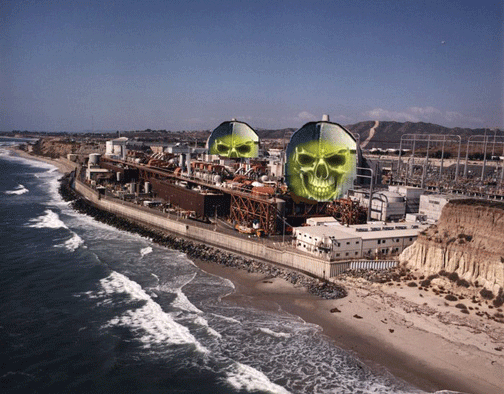
The news is that the twin domes at the San Onofre nuclear power plant are
finally being demolished. As The California Post has reported, the infamous
“nuclear boobs,” which greeted (and distracted) drivers along the
Interstate 5 for many decades, are going to be demolished.
What’s not in
the news: Any mention of future nuclear power plants. The San Onofre plant
was shut down in 2013, partly due to its age. It was built in the 1960s,
and its newest units were already 30 years old. What really killed it was
an event that happened on the other side of the world: the devastating
tsunami of 2011 in Japan, which caused meltdowns at the Fukushima nuclear
plant. Like Fukushima, the San Onofre plant was right on the water’s
edge. And it was close enough to population centers for many people in the
area to feel suddenly uncomfortable about it.
New York Post 14th Nov 2026, https://nypost.com/2026/11/14/opinion/california-is-clueless-about-what-comes-next-after-iconic-nuclear-plant-demolition/
Behchokǫ̀ residents worry about health impacts of old uranium mine on Tłı̨chǫ lands
Federal gov’t says no risk outside contaminated site, but Monfwi MLA wants more cancer research from N.W.T.
Luke Carroll· CBC News · Nov 09, 2026
Multiple residents of Behchokǫ̀, N.W.T., say they are worried about the impact of a long-closed, but only recently remediated, uranium mine.
The Rayrock remediation project includes cleanup work on a uranium mine north of Behchokǫ̀ and Whatì.
The underground mine operated from 1957 to 1959, and included chemicals like arsenic, but remediation work didn’t begin until 1996. In 2017, it was determined that more cleanup was needed. That work didn’t begin until 2024, and is expected to continue up until 2029. As a nuclear waste site, it will be monitored by the federal government indefinitely.
Three residents of Behchokǫ̀, some of whom lived at the mine site, worry about those toxins that were left untreated in the lands and water, and feel they aren’t being told about what impact that exposure could be having on community members.
Cancer rates around Behchokǫ̀
J.P. Rabesca said he lived at the mine site’s village during the 1950s when his father worked there.
“There was no safety,” he said, adding workers would return to their homes wearing the same boots and clothes they wore while they worked around the toxins.
Rabesca has been dealing with cancer for eight years and said he wonders if it came from the time he spent being exposed to those toxins. He said many in the community, including young people, are being diagnosed with cancer.
Marcellin Zoe, who lives in Behchokǫ̀, also lived at the mine site’s village.
He said he feels his concerns aren’t being taken seriously and the public isn’t being given enough information on the dangers of what they may have been exposed to.
“The world should know what the uranium does to us,” he said.
Zoe worries toxins like arsenic could have been moved all over the region through water or animals.
“It doesn’t stay in one spot,” he said.
MLA wants territory to look into cancer rates
He’s not alone in this worry.
Monfwi MLA Jane Weyallon Armstrong, who represents the four Tłı̨chǫ communities, raised the exact issue in the Legislative Assembly last week after hearing similar concerns from other community members.
Weyallon Armstrong, like many in the Tłı̨chǫ region, has connections to the mine; her father and brother worked there.
She also used to paddle by the mine as part of Trails of Our Ancestors, where Tłı̨chǫ citizens from the communities travel historical routes to gather for the annual assembly.
She said they would paddle on the contaminated lakes and an elder warned them not to splash the water while crossing.
Weyallon Armstrong raised the issue of cancer rates in the communities and what the territory is doing to understand them…………………………………………………………………………………………………………………………..https://www.cbc.ca/news/canada/north/behchoko-residents-worry-about-health-impacts-of-old-uranium-mine-on-tlicho-lands-9.7412510
Protest in Edinburgh on Saturday – Greens to join the march, questioning data centres
Friends of the Earth say they would like there to be a national
conversation about data centres before any decisions are made on the 24
applications which are in the planning process. The organisation claims
these would have “massive consequences” for energy bills, health, water
supplies and climate.
Edinburgh Reporter 14th Nov 2026,
https://theedinburghreporter.co.uk/2026/11/protest-in-edinburgh-on-saturday-greens-to-join-the-march/
Trump, Xi and Putin to meet Thursday, discuss nukes
President Donald Trump will meet with the leaders of China and Russia next
week to discuss possible reductions in the three countries’ nuclear
arsenals, the White House confirmed Friday. A senior administration who
briefed reporters on the planned meeting said that Trump, Chinese President
Xi Jinping and Russian President Vladimir Putin will discuss reducing
nuclear stockpiles.
There are currently no legal controls over the size of
the three countries’ strategic weapons stockpiles. The treaty that limited
the size of Russia’s and America’s nuclear arsenals expired in February.
China has resisted calls to engage in nonproliferation talks on the basis
that its nuclear forces are considerably smaller than those of the U.S. and
Russia.
Politico 14th Nov 2026,
https://www.politico.com/news/2026/11/13/trump-xi-and-putin-to-meet-thursday-discuss-nukes-01166354
Nuclear power site transfer programme wins national award
The team behind the first transfer of an Advanced Gas-cooled Reactor (AGR)
nuclear site from EDF to the Nuclear Decommissioning Authority (NDA) group
has won a major national project management award. The Nuclear Restoration
Services (NRS) and EDF Transition and Transfer Programme won Programme of
the Year at the Association for Project Management Awards 2026. It was also
a finalist for the Innovation in Project Management award. The judges
praised the programme’s joint governance, collaborative culture and
success in bringing hundreds of stakeholders together around a shared goal.
Having completed their electricity generation and defueling phases, the
first two of seven AGR nuclear sites, Hunterston B in North Ayrshire and
Hinkley Point B in Somerset, transferred from EDF ownership to the NDA
earlier this year. NRS is now the site licensee responsible for
decommissioning. Five further sites will follow over the next decade.
NRS 19th Nov 2026, https://www.gov.uk/government/news/nuclear-power-site-transfer-programme-wins-national-award
WNF & NIA announce strategic partnership to maximise Wales’s nuclear opportunity
The Wales Nuclear Forum (WNF) has announced a new strategic partnership
with the Nuclear Industry Association (NIA), strengthening cooperation
between the two organisations and creating new opportunities for both WNF
and NIA members. The agreement formalises a relationship which has
developed through more than 18 months of close collaboration. Under the
partnership, WNF and the NIA will remain separate organisations,
maintaining their own identities, memberships and activities. WNF members
will continue to receive the services and support they do today, while
benefiting from closer cooperation, shared expertise and stronger links
across the wider UK nuclear industry.
Building, Design and Construction 19th Nov 2026, https://bdcmagazine.com/2026/11/wnf-and-nia-announce-strategic-partnership-to-maximise-waless-nuclear-opportunity/
1 This Month
19 November – Webinar – The Reality of Reprocessing
Time: 11:00 AM Pacific Time (US & Canada) / 2:00 PM Eastern / 7:00 PM UK / 8:00 PM CET
Register for the Zoom Event Here

Tell Congress: Prevent Nuclear Catastrophe in Iran

Tell Congress: Prevent Nuclear Catastrophe in Iran

Read the Public Inquiry Report, the Commissioners’ report, Surrendering Australia: The AUKUS Deception is available to download for free at aukuspublicinquiry.com. Or just watch the replay of the National Press Club Luncheon.


Shut down the radiation-damaged Heysham nuclear reactors now
To see nuclear-related stories in greater depth and intensity – go to https://nuclearinformation.wordpress.com

Say No to NASA’s Reckless Nuclear Reactor on the Moon
Say No to NASA’s Reckless Nuclear Reactor on the Moon
-
Archives
- November 2026 (190)
- October 2026 (302)
- September 2026 (339)
- August 2026 (330)
- July 2026 (355)
- June 2026 (287)
- May 2026 (306)
- April 2026 (356)
- March 2026 (251)
- February 2026 (267)
- January 2026 (308)
- December 2025 (358)
-
Categories
- 1
- 1 NUCLEAR ISSUES
- business and costs
- climate change
- culture and arts
- ENERGY
- environment
- health
- history
- indigenous issues
- Legal
- marketing of nuclear
- media
- opposition to nuclear
- PERSONAL STORIES
- politics
- politics international
- Religion and ethics
- safety
- secrets,lies and civil liberties
- spinbuster
- technology
- Uranium
- wastes
- weapons and war
- Women
- 2 WORLD
- ACTION
- AFRICA
- Atrocities
- AUSTRALIA
- Christina's notes
- Christina's themes
- culture and arts
- Events
- Fuk 2022
- Fuk 2023
- Fukushima 2017
- Fukushima 2018
- fukushima 2019
- Fukushima 2020
- Fukushima 2021
- general
- global warming
- Humour (God we need it)
- Nuclear
- RARE EARTHS
- Reference
- resources – print
- Resources -audiovicual
- Weekly Newsletter
- World
- World Nuclear
- YouTube
-
RSS
Entries RSS
Comments RSS

