The AUKUS Public Inquiry is not going to just fade away

16 November 2026, Noel Wauchope, https://theaimn.net/the-aukus-public-inquiry-is-not-going-to-just-fade-away/
The repercussions of this Inquiry may take a while, but angst about AUKUS is something that is not confined to Australians – more on this, later.
Meanwhile, militarism continues to thrive, and our Prime Minister is busy in Manila, doing defence deals with the Philippines and Japan – because we all know that China is such a military threat to everyone.
And I have been pressing on, carefully reading another 60 of the 1028 Submissions to the Inquiry.
55 of these submissions clearly opposed AUKUS. Two were sort of neutral, and three were in favour of AUKUS.
In the arguments against AUKUS, once again, the main issue was the exorbitant cost. However, many submissions just focussed on the cost, without mentioning any alternative ways towards Australia’s security. So, the more convincing submissions were those that also dealt with the nuclear submarines themselves – as being unsuitable for Australia’s needs, or obsolete by the time we get them if we ever do. Some submissions went into detail on this, and on practical alternatives.
There were many powerful arguments about Australia’s loss of sovereignty, in becoming part of the USA’s military strategy. A Western Australian group writes:
The military interoperability and increased implementation of the Force Posture AgreementM(FPA) implicit in AUKUS will ensure further subservience to the USA, obliging Australia to continue following the US into wars of its choosing. The assumption that subservience to the US or having US bases on our soil will ensure Australia’s security and safety is false particularly in light of the prevailing “America First” agenda. The recent attacks on US Bases in West Asia are also testimony to this.
And many felt strongly that AUKUS will draw Australia into a USA war with China., and that China, our important trading partner, is not a threat to Australia.
Another passionate consideration was concern for democracy – the secretive, undemocratic way in which Australia’s decision on AUKUS came about:
The complete absence of meaningful community consultation regarding Australia’s entry into the AUKUS agreement is also deeply concerning, and is one of the reasons for this inquiry. Many members of the community feel powerless, alienated and angry by the lack of transparency surrounding such a significant and locked in costly national commitment. (Mothers for a Sustainable South Australia.)
The Mothers for a Sustainable South Australia reflected a particularly South Australian perspective on nuclear submarines:
South Australian Traditional Owners have consistently rejected proposals for nuclear waste facilities because of their lived experience with the devastating legacy of radioactive contamination. The historical trauma resulting from British nuclear weapons testing during the 1950s and 1960s – including displacement, illness and ongoing damage to Country – continues to affect communities today.
The experience of South Australia demonstrates that proposals involving nuclear waste have profound social, environmental and cultural consequences, particularly for First Nations peoples. Past failures in consultation and the enduring impacts of nuclear activities on Traditional Owners highlight the need for a transparent, inclusive and evidence-based decision-making process.
Submissions from South Australians were prominent, as were those from Stirling, Western Australia, and from the Port Kembla area in New South Wales, – all areas which are earmarked for nuclear submarine activities.
The need for Australia to have a defence strategy that suits its role in the region was a big topic of concern – a regional security strategy, rather than being a part of U.S militarism.
Many submissions were very concerned about transparency, and the failure of the Australian Parliament to scrutinise or debate AUKUS. Former Prime Minister Malcolm Turnbull’s submission went into detail on this, as well as on the background and unsuitability of the planned nuclear submarines:
The Pillar I submarine acquisition, as currently structured, was created by the Morrison Government and adopted by the Albanese government. It is a bipartisan error; a submarine deal that will likely result in Australia not receiving any submarines at all.
It will certainly leave Australia with long gaps in submarine capability. The AUKUS bargain is thoroughly unfair to Australia. It makes Australia even more dependent on the United States as the US is becoming, by design, a less dependable ally.
There has been no comprehensive parliamentary inquiry into AUKUS Pillar I comparable in depth or rigour to the scrutiny applied by the United States Congress or the British House of Commons… This Inquiry, whatever its formal limitations, performs a function that Parliament should have.
Finally, I can’t help quoting from my favourite Submission – this one – We need a smart defence strategy, not the AUKUS fantasy – from Merrill Stokes:
The fact that this contract requires Australia to pay a very large sum of money even if we never take possession of the Virginia class submarines seems like something out of ‘Alice and Wonderland’ where reality has been turned on its head. That is not a contract; That is called tribute. We need to remember Kissinger’s statement that “to be an enemy of the United States is dangerous but to be a friend is fatal.”
Reframing radiation exposure as a “benefit”

the NRC labels “increased worker and public exposure” and “increased effluent release” as benefits in its draft regulatory analysis. Characterizing increased exposures as “benefits” is misleading and dangerous because increasing radiation exposure will increase disease.
by beyondnuclearinternational, https://beyondnuclearinternational.org/2026/11/15/reframing-radiation-exposure-as-a-benefit/
In its rush to help fast-track new nuclear plants, the regulator is relinquishing its duty to protect public health, writes Cindy Folkers
The Nuclear Regulatory Commission (NRC) is abandoning its duty to protect public and worker health. Using a recent rulemaking proposal — NRC-2025-1140 Reforming and Modernizing the NRC’s Radiation Protection Framework — the NRC would allow nuclear facilities to release larger amounts of radioactive pollution under circumstances which are somewhat random and obscured from public input.
Under the rulemaking proposal, the NRC reframes radiation exposure as a benefit, ignores independent research, and prioritizes industry costs. In doing so, the NRC may be violating the Atomic Energy Act (AEA).
The NRC claims that it is executing mandates given in Executive Order 14300, but that order is based on a flawed assumption that a model of damage stipulating even small radiation exposures can cause harm, is not based in science. But research on workers and the public upholds the model, known as linear-no-threshold (LNT).
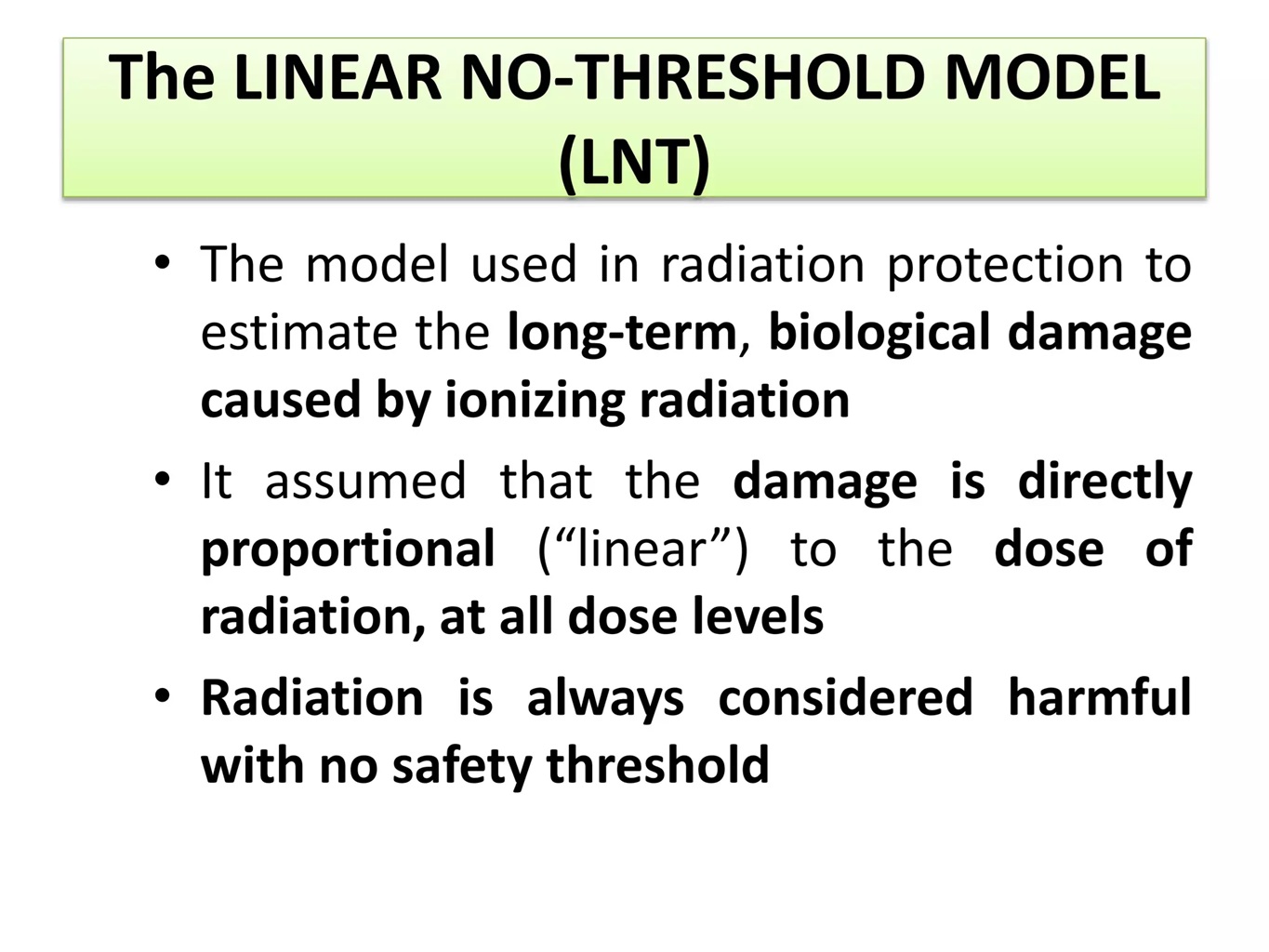
Radiation is dangerous even at low levels. The NRC wants to loosen rules, making it easier for nuclear reactor operators to expose workers and the public to radiation. This benefits the nuclear industry but puts people—especially women, children, and future generations—at greater risk.
What NRC’s proposal would do
In essence, the NRC is proposing a deregulatory framework that favors industry cost savings over health. There is no given or obvious process for people or states to know on a case-by-case basis when this deregulation allowing more radioactive pollution is happening, nor any indication of a clear opportunity to comment and protest its implementation.
More specifically, the NRC is proposing, through this rule, to double allowed radiation exposure to workers, eliminate dose limits to the general public (especially impacting those in rural communities) and allow up to ten times higher releases of radioactive effluent. The principle of ALARA (“As Low As Reasonably Achievable”), which gives incentive to minimize radiation exposure, has been largely abandoned.
It is important to note that the nuclear industry does not now measure public exposures. It instead calculates exposures using questionable assumptions and extremely limited data — a flaw that should be corrected by real-time monitoring and lowering allowable releases, not increasing them.
Radiation exposure as a “benefit”
One of the most troubling points of the proposed rule is that the NRC labels “increased worker and public exposure” and “increased effluent release” as benefits in its draft regulatory analysis. Characterizing increased exposures as “benefits” is misleading and dangerous because increasing radiation exposure will increase disease.
Simultaneously, the NRC has excluded the real costs—cancer treatment, long-term health impacts and multigenerational harm. By treating these as “externalities,” the NRC is ignoring its legal duty.
When asked what the public benefit of this rule would be, the NRC staff claimed, in an August 10 public meeting, that there is “a real strong demand for more energy as more data centers go in place.” NRC chairman Ho Nieh — a Trump nomination — echoed this sentiment in an August 24 interview with The Federal Drive: “the reason we’re taking these regulatory reforms is because there’s an urgent demand for more electricity in the United States due to artificial intelligence, data centers and industrial growth.”
Framing increased exposures as benefits, and excluding the cost of treating radiation induced disease, redoubts to the benefit of industry. Data centers are controversial, but renewable energy could provide electricity to power these faster, more affordably, and without radiation risks. Further, any risk-benefit framing violates the right to health according to the UN Human Rights Commission, which (in the wake of the ongoing Fukushima nuclear catastrophe) has warned that risk-benefit analysis is not compatible with protecting individual health rights.
Past harm
At the same August 10, 2026 public meeting referenced above, the NRC admitted it is incapable of creating regulations that account for cumulative impacts of legacy pollution and historic exposure, ostensibly due to agency jurisdictional issues; yet studies show past exposures (even to naturally occurring background radiation) can cause cancer and fertility issues. The NRC, nevertheless, allows additional exposure on top of these historic exposures to natural background, effectively doubling unavoidable doses.
In addition to health impact from naturally occurring background radiation exposure, past exposures from weapons testing and manufacture, and catastrophic releases from civilian reactors cause compounding harm.
Past nuclear weapons tests left widespread contamination, with remnants of radioactive cesium still present in human bodies, and studies estimate millions of cancer deaths worldwide from these tests.
Civilian nuclear reactors, through routine operations and accidents such as Chornobyl and Fukushima, have left long-lasting contamination, with cancer, and genetic damage and birth defects, persisting across generations. Ignoring these legacy exposures is irresponsible since research indicates adding more exposure makes health outcomes worse.
The Environmental Protection Agency (EPA) has made attempts at accounting for compounding damage from other pollutants so asking the NRC to account for compounding damage from radiation is not without precedent, even if imperfect. The NRC should not be allowed to ignore this very important, multigenerational issue.
Current and future harm
The Atomic Energy Act mandates that health protection is a core duty of the NRC. Therefore, the NRC’s weakening of its standards may very well violate the Act because in the NRC’s effort to “reform and modernize” radiation exposure standards, the agency ignores current and past research showing that standards for workers and the public need to be strengthened. Instead, the NRC focuses on what the nuclear industry finds “reasonable” in terms of cost — not what is safe for people — leaving women, children, and other susceptible groups at higher risk.
The US public has reason to be concerned as recent research shows increases in diseases among adult populations around nuclear power reactors. However, this research does not include data on children and does not yet fully address whether radiation exposure is responsible for the disease increases.
Worse yet, the NRC avoids addressing independent research that could further clarify the cancer and non-cancer risks of low-dose radiation, while simultaneously claiming that not enough is known about low dose impacts.
For example, in 2015, the NRC canceled a National Academy of Sciences study on cancer risks near nuclear reactors. This was despite European studies showing increased childhood leukemia near reactors.
Radiation’s impacts extend beyond cancer. Studies looking at the aftermath of the still ongoing March 2011 Fukushima disaster show increased miscarriages, birth defects, with excess perinatal deaths recorded years after the accident began (Körblein, 2003) (Körblein, A. 2004) (Scherb, et al. 2016). Prenatal exposure can reduce IQ and cause behavioral problems. Nordic studies found children exposed to Chornobyl fallout performed worse in school.
Low doses can trigger chronic immune problems, leading to infections, allergies, and autoimmune diseases. Radiation exposure is also linked to heart disease, Parkinson’s, and Alzheimer’s.
These impacts are well-documented, yet the NRC claims it cannot regulate for them because of “uncertainty.” This falsely manufactured gray area deliberately sows doubt about the health impacts caused or triggered by lower radiation exposure; and gives the NRC the excuse to not protect workers and the public better, allowing industry to operate under the protection of doubt regarding radiation’s health impacts at so called “lower” exposures.
Uncertainty, manufactured or not, should lead to stricter standards, not weaker ones.
What an independent regulator should advocate
To address these concerns, we need the following:
- Independent research on women and children, funded through public health agencies such as the National Institute of Environmental Health Science (NIEHS), to examine radiation impacts on pregnancies and vulnerable populations that current worker studies do not adequately cover.
- Independent real-time monitoring of radiation releases, environmental contamination, and biological exposure. Industry self-reporting has been, and continues to be, insufficient.
- Account for non-cancer impacts, since radiation affects pregnancy, fertility, cardiovascular health, and neurological development. We recommend using EPA tools to calculate these costs. We advocate following the EPA’s 2024 draft cumulative impacts framework that emphasizes considering cumulative pollution impacts. The NRC should adopt similar principles to protect communities.
- Inclusion of the real costs of treating radiation-induced cancers, especially childhood cancers such as leukemia and brain tumors.
- Expansion of compensation programs. We must urge Congress to broaden the Radiation Exposure Compensation Act (RECA) and Energy Employees Occupational Illness Compensation Program Act (EEOICPA) programs to cover civilian nuclear radiation exposures, not just military or occupational ones. These compensation programs do not rely on dubious dose reconstruction and the unscientific assumption that doses were too low to cause disease. Instead, compensation worthiness is based on more reliable data such as geographic location, type of disease and other factors.
Universal disapproval
Out of over 2,000 public comments submitted to NRC by the August 31, 2026 deadline, approximately 93% oppose at least some aspects of the proposed NRC rule. The removal of ALARA and attacks on the LNT model ranked as top concerns, according to a private analysis by the Samuel Lawrence Foundation.
Attorneys General of 11 states (Illinois, California, New Mexico, Washington, Colorado, Oregon, Delaware, Maryland, Minnesota, Vermont, and Massachusetts) have written a letter to the NRC asking them to withdraw the rulemaking for a number of reasons, including inadequate environmental review and regulatory analysis, the removal of ALARA, the vagueness of some of the proposed changes, inadequate length of the public comment period, and as yet unknown unintended consequences.
The NRC is set to publish the final rule for this rulemaking on February 25, 2027 as of this writing. This date is subject to change. However, what will not change is the fact that radiation exposure—even at low doses—has proven harmful, especially for susceptible women, children and pregnancy. The NRC should be strengthening exposure standards, not weakening them.
Cindy Folkers is the Radiation and Health Hazard Specialist at Beyond Nuclear.
In Korea a Tribunal Is Underway on U.S. Atomic Bombings
By David Swanson, World BEYOND War, November 13, 2026 [ALSO IN KOREAN LANGUAGE. COPIOUS ILLUSTRATIONS AND VIDEOS], https://worldbeyondwar.org/in-korea-a-tribunal-is-underway-on-u-s-atomic-bombings/
A major tribunal is underway here in Seoul, South Korea, in a huge, packed auditorium on a university campus, with participants, witnesses, and judges from around the world, including the United States and Japan. See http://abombtribunal.org
This is a people’s tribunal, not a government-run affair. The expertise and legal authorities are unmatched, and the findings will clearly deserve to be acted on when the political will can be found.
Welcoming events happened on Thursday and the first day of the tribunal took place on Friday, with two more days to come.
Survivors of the atomic bombings of Hiroshima and Nagasaki testified, a number of them in their 80s. Before they die, one of them remarked, they would like to hear these words from the U.S. government: “The dropping of the atomic bombs was wrong. We are sorry.” These survivors were not Japanese, but Korean.
According to tribunal witness Oh Eun-Jeong, 70,000 Koreans were exposed to radiation at Hiroshima and Nagasaki, of whom 40,000 died and 30,000 survived. Of the survivors, 20,000 returned to Korea. These were people forced, under Japanese colonialism, to work in Japan during World War II. They were told they were Japanese. Even after the bombings, they were told that all the victims had been Japanese. They also faced fear, prejudice, discrimination, and ongoing physical agony for years to come.
Children and grandchildren of the first-generation victims developed horrible illnesses, though it took decades to identify the cause and to achieve general recognition thereof. “I will offer my body to be dissected to prove the truth,” said second-generation victim Kim Hyung-ryul before he died at 35.
It having been well established that there are victims, those victims tend to ask: “How can there be victims but no perpetrators?” Japan has not apologized for its imperialism and forced labor. The United States has not apologized for the atomic bombings. What victims (and advocates for extending the existence of life on Earth) demand are apologies, reparations, and steps to avoid repetition. Said steps must clearly include the abolition of war to effect the abolition of nuclear weapons.
Attending this conference are first- and second-generation victims from Hiroshima and Nagasaki, and U.S. survivors of hundreds of nuclear explosions in Nevada. Those impacted by all of the nuclear “testing” in the world includes all of us.
In addition to an apology and reparations, we need a renunciation of the lies about the bombings saving lives or otherwise being justifiable. Attorney Park Kyu-hoon pointed out that the U.S. government tried to lie and coverup the results of the bombings immediately after the destruction.
Multiple witnesses on Friday laid out a legal case for the criminality (under the laws of the time) of the dropping of the atomic bombs. They cited the Hague agreements of 1899 and 1907 and numerous other treaties, and argued that the bombings illegally caused unnecessary suffering, violated “laws of humanity and public conscience,” violated bans on targeting civilian populations (in fact intentionally aimed at the most densely populated areas), violated bans on chemical and/or poisoned weapons, and illegally went beyond what was necessary for legitimate military purposes (whatever those may be).
Of course, the losers of World War II were prosecuted for anything they did as part of a war illegal in its entirety under the Kellogg-Briand Pact. Were this tribunal to apply the same logic to the victors of World War II, the atomic bombings would be illegal as parts of a war rather than as improper parts of a war. One witness late in the day on Friday argued that the Kellogg-Briand Pact and other treaties had made force illegal except as self-defense, as it has been made customary to claim despite the Kellogg-Briand Pact having very carefully not included that loophole.
By the end of this week there should be a judgement reached for us all to send to the U.S. government. That judgement should be livestreamed at 5:10 p.m. Korea Standard Time, Sunday.
Richard Falk opened the tribunal, saying it aimed to “lift the curse of nuclearism from the bent shoulders of humanity.” Marjorie Cohn pointed out how close the United States is to using nuclear weapons again. This 81-year-old history couldn’t be more urgent.
Korean peace activists are very busy planning a big rally for Saturday opposing the use of Korean troops in the Strait of Hormuz. That subservience to Trump suggests how far the Korean government is from demanding truth and justice out of Washington even over matters from 81 years ago.
The people and organizations who have put this tribunal together, on the other hand, have beautifully honored and memorialized victims with dance, song, and readings of their stories, while laying out a powerful legal case for the criminality of one of most immoral actions ever taken.
Toward the end of Day 1 of the Tribunal, former U.S. Army Colonel Ann Wright, a World BEYOND War Advisory Board Member, spoke passionately and apologized on behalf of the U.S. government. Wright pointed out that after many years of work the U.S. government was finally brought to compensate some of the downwinder victims of its U.S. nuclear explosions — and more work could bring about the same for Koreans.
Following the tribunal, Ann Wright and I will be taking part in an event on Jeju Island.
Small nuclear reactors could soon power the next generation of AI data centers — modular reactors could soon power Dow Texas chemical plant. The approval ignores critical outstanding safety concerns
By Efosa Udinmwen, Tech Radar 14th Nov 2026, https://www.techradar.com/pro/small-nuclear-reactors-could-soon-power-the-next-generation-of-ai-data-centers
No small modular reactor currently operates commercially in the United States
- X-energy receives approval to construct four small modular nuclear reactors
- Each Xe-100 reactor will generate 80 MW of electricity
- The approval ignores critical outstanding safety concerns
Artificial intelligence companies are increasingly turning toward nuclear energy as electricity demand rises alongside expanding computing infrastructure.
X-energy has secured federal permission to construct modular reactors at a chemical manufacturing complex in Texas.
The approval allows the nuclear startup to bring its technology closer to commercial deployment, although operational reactors remain years away.
X-energy secures approval for four nuclear reactors
The Nuclear Regulatory Commission (NRC) has authorized construction of four Xe-100 reactors at a Dow industrial facility in Texas.
Each unit is designed to generate 80 megawatts (MW) of electricity alongside another 200 MW of thermal energy – so together, the proposed installation would provide 320 MW of electrical generation, giving the chemical manufacturer an additional source of industrial power.
X-energy describes the regulatory decision as the first construction authorization for an advanced nuclear installation at an American industrial location.
However, receiving permission to begin construction does not mean the reactors are ready to supply electricity for data centers.
The company expects Dow’s installation to enter service sometime during the early 2030s, leaving several years before commercial operation begins.
The proposed technology uses uranium-bearing fuel pellets, with helium gas circulating through the reactor to carry away generated heat.
X-energy argues this arrangement offers safety advantages over conventional nuclear power systems, although independent experts have questioned those assurances.
The Union of Concerned Scientists also criticized the regulatory process, particularly the handling of outstanding safety considerations before construction approval.
“The NRC only accomplished this feat by pushing consideration of critical safety questions to a later date,” said Edwin Lyman, director of nuclear power safety at the Union of Concerned Scientists.
He argued that regulators should have resolved those outstanding concerns before authorizing construction at the industrial location.
Technology companies are betting on nuclear electricity
Demand from artificial intelligence infrastructure operators has given emerging nuclear developers another potential source of commercial interest.
Large technology companies need substantial electricity supplies for computing facilities, particularly as increasingly powerful AI systems require additional processing capacity.
Conventional electricity providers face growing pressure to accommodate those requirements, creating opportunities for alternative generation technologies.
Amazon has become one of X-energy’s major financial supporters through its Climate Pledge Fund investment.
The technology company led a $500 million Series C-1 financing round in October 2024 and separately committed to purchasing 5 gigawatts of nuclear generating capacity, an agreement which gives X-energy a significant potential customer as it works toward developing commercial reactors.
The startup also attracted substantial investor interest through its initial public offering earlier this year, which generated $1 billion in proceeds.
However, enthusiasm among investors has moderated since the April listing, suggesting that commercial expectations remain sensitive to development timelines.
The company still faces the challenge of turning regulatory permission and financial commitments into functioning electricity-generating infrastructure.
Small modular reactors have attracted attention because their developers expect factory-oriented production and smaller installations to simplify construction.
Those proposed advantages include shorter development schedules and lower costs, although neither benefit has been conclusively established.
No small modular reactor currently operates commercially in the United States, leaving X-energy’s proposed installation dependent on successful construction and regulatory oversight.
Via Techcrunch
Oregon nuclear company sued by investors over executives’ stock sales
By April Ehrlich (OPB), PORTLAND, Ore. Nov. 17, 2026
An Oregon company that has been a global leader in small nuclear reactors is facing a lawsuit from shareholders who say top executives artificially inflated stock prices before cashing out.
Investors who purchased securities in NuScale Power Corp. earlier this year are suing the company, saying its top executives misled the public about the company’s financial solvency and success in advancing nuclear technology. They filed their legal complaint in the U.S. District Court of Oregon on Wednesday, alleging the company violated federal securities laws…………………
The lawsuit alleges that four NuScale executives intentionally overstated the company’s competitive advantage and financial health to inflate stock prices. It says those executives failed to disclose the company’s stalled projects as other nuclear companies advanced their own small nuclear reactor designs.
While stock prices were high, NuScale’s executives sold their shares for more than $3.25 million, the lawsuit says, even while they touted the company’s financial success.
Investors say they didn’t know the company’s two biggest projects were troubled until September, when UBS, a Swiss multinational bank, slashed NuScale’s price target from $10 per share to $6, citing a projected $700 million negative free cash flow.
In 2023, NuScale became the first American company to get federal approval for one of its designs. But it has hit major roadblocks in recent months.
The company had been exploring building reactors for the Tennessee Valley Authority, a federally owned electric corporation and the largest public power provider in the country. The Tennessee Valley Authority provides electricity to about 10 million people in seven southern states.
NuScale has yet to enter into a binding agreement with the utility, the lawsuit says…………………..
Shareholders are asking the court for a class-action lawsuit designation, jury trial, and a judgment requiring NuScale and the four executives compensate investors for their losses.
NuScale’s stock price fell 7.8% on Thursday, closing at $4.82 per share., https://www.opb.org/article/2026/11/12/oregon-nuclear-company-sued-by-investors-over-executives-stock-sales/
Ottawa stands by Darlington small modular reactor amid delays and rising costs

The project is being watched globally because it’s the first small modular reactor to begin construction in a Group of Seven country. There are also proposals to build BWRX-300s in several other countries including the U.S., Britain and Poland.
“We should never think because we’ve invested so much, we should keep investing,”
Aya Dufour and Matthew McClearn, 14 Nov 26, https://www.theglobeandmail.com/business/article-ottawa-darlington-small-modular-reactor-delay-rising-cost/
Canada’s federal government is shrugging off an engineering setback at Ontario’s Darlington small modular reactor project, with Energy Minister Tim Hodgson calling it “a reality in all first-of-a-kind projects.”
Mr. Hodgson defended the Canada Growth Fund’s $2-billion equity investment in the project, saying it aligns with the taxpayer-backed fund’s mandate to shoulder risk for technologies that can drive economic growth and advance climate goals.
“It’s important for Canada that we do not balk on making these important investments,” he said.
Earlier this week, Ontario Power Generation said it would undertake a comprehensive assessment after filings with the Ontario Energy Board indicated the Darlington SMR project is facing cost overruns and delays.
The Crown corporation reported that the overruns reflected the “ongoing engineering” work of its partner, GE Vernova Hitachi Nuclear Energy, which is responsible for designing the BWRX-300 reactor and other aspects of the facility.
In a statement, GE Vernova Hitachi spokesperson Jonathan Allen pointed to other factors outside his company’s control.
“While engineering and design maturity are important considerations, as OPG’s update recognizes, there are multiple interconnected contributions across engineering, procurement and construction, as well as evolving market conditions, including inflation and geopolitical risks.”
In quarterly financial statements released Tuesday, OPG said the first reactor unit would not be completed within its previously disclosed $7.7-billion budget.
The utility did not specify the size of the cost overrun or the extent of the delay, although a production forecast included in the filing suggests the project’s timing could slip by at least a year. OPG had previously targeted an in-service date of October 2030.
The delay could ultimately prove shorter than a year, depending on the outcome of an assessment that is expected to be completed by mid-2027.
The project was among the first to be shepherded through the Major Projects Office last year and later received significant equity commitments from the federal and provincial governments via the Canada Growth Fund and the Building Ontario Fund.
In an e-mail, CGF spokesperson Mathieu St-Amand wrote that “the equity commitment is being deployed over time.”
A corporate presentation from the fund said the investment is subject to certain conditions, but Mr. St-Amand declined to say whether those conditions were tied to specific project timelines or cost estimates.
In a separate corporate presentation, the CGF says its capital will be deployed in two tranches: one tied to the first reactor unit and another for the remaining three units, contingent on the achievement of certain milestones.
Asked about whether the investment is a prudent use of public funds, Mr. Hodgson said every project has contingencies built in.
“There are on and off ramps for the CGF to be involved, and I’m confident that it is well structured project-to-project to protect the CGF,” he said.
The Darlington New Nuclear Project (DNNP), with a total budget of $20.9-billion, involves building four BWRX-300 reactors and accompanying infrastructure adjacent to the existing generating station in Clarington, Ont.
The project is being watched globally because it’s the first small modular reactor to begin construction in a Group of Seven country. There are also proposals to build BWRX-300s in several other countries including the U.S., Britain and Poland.
In the U.S., GE Vernova Hitachi has partnered with the Tennessee Valley Authority to build the first single BWRX-300 on American soil at its Clinch River site. Although no construction date has yet been announced, the U.S. Nuclear Regulatory Commission recently issued a construction licence for that project.
“It would be premature to speculate on any direct impact to TVA’s potential projects,” wrote TVA spokesperson Elizabeth O’Connor in a statement.
“TVA remains committed to a disciplined approach to deploying advanced nuclear technology and will continue working through partnerships to ensure costs are managed responsibly to protect TVA customers.”
Ontario’s Independent Electricity System Operator did not respond directly to questions about how the DNNP delays might affect plans to supply electricity to Ontarians in the early 2030s.
IESO spokesperson Michael Dodsworth noted that the IESO was in the middle of a large competitive electricity procurement known as Long-Term 2, “which was expanded from 5,000 to 7,500 megawatts to meet growing electricity demand.” The organization was also promoting electricity efficiency to reduce peak demand.
He added: “The IESO will continue to work with OPG as the Darlington New Nuclear Project advances, and relevant information will be considered as part of future system plans to determine if any incremental actions are needed.”
Pierre-Olivier Pineau, chair in energy sector management at HEC Montréal, said the challenges facing the Darlington SMR project “underscore the fact that we need to be very cautious and honest in our energy and electricity policy across Canada.”
He argued governments should take their time to evaluate any potential future investment in the project.
“We should never think because we’ve invested so much, we should keep investing,” he said, describing the initial costs as already more than what anyone would ever want to pay for electricity.
“If they add more billions to this already expensive experiment, then we definitely can take a few more years to think about it.”
Over 100 medical journals call for nuclear weapons elimination
November 15, 2026, by IPPNW, https://peaceandhealthblog.com/2026/11/15/medical-journals-call-for-nuclear-abolition/
Over 100 medical and health journals, including The Lancet, The BMJ and the International Nursing Review, have issued a joint call to move rapidly to eliminate nuclear weapons. Leaders of the global health community warn that any use of nuclear weapons would be catastrophic for humanity, and they call for primary prevention by abolishing the weapons before they can be used.
The call comes as nuclear risk reaches levels unseen even during the Cold War. In January, the Bulletin of the Atomic Scientists set its Doomsday Clock to 85 seconds to midnight, the closest in history, and the facts support this move. The nine nuclear-armed states spent a record US $119 billion on their arsenals in 2025, a 19% rise in a single year; New START, the last treaty limiting the US and Russian arsenals, expired in February 2026 with no replacement in the works; and implicit and explicit nuclear threats have become a recurring feature of today’s wars.
The call takes the form of an editorial co-authored by the editors of 12 leading medical and health journals, the World Association of Medical Editors (WAME), and leaders of International Physicians for the Prevention of Nuclear War (IPPNW). It follows joint editorials on nuclear risk in 2023 and 2025. It is published this week ahead of the first Review Conference of the Treaty on the Prohibition of Nuclear Weapons (TPNW), which meets at UN Headquarters in New York from 30 November to 4 December 2026.
“Humanity’s survival is…in the hands of a few fallible decision-makers,” the editorial warns.
Citing the special responsibility of the health community, the editorial states, “Health professionals have a vital role to play in keeping a health focus in public discussions on nuclear risk. We need a verifiable, deadline-driven agreement to eliminate all nuclear weapons. This is why it is essential that the health sector continues to demand that every country – including the nuclear armed states – should join the Treaty on the Prohibition of Nuclear Weapons. The flourishing, and even the survival, of the human species is at stake.”
The editorial is the first introducing a series of four total. The other three will cover:
- New insights from psychology and neurology on nuclear risk and deterrence
- The potential One Health consequences of nuclear war
- The role of AI, other new technologies and information disorders (mis- and disinformation) on nuclear risk
According to Chris Zielinski, Past President of the World Association of Medical Editors (WAME) and co-author of the editorial, “This is not merely a broad communications effort. There has never been anything remotely like it in the health sector – or in any other sector.”
“Nuclear war would be the end of human civilisation,” added Dr. Kati Juva, IPPNW Co-President and co-author of the editorial. “As health professionals, we have a duty to work for the prevention of the use of nuclear weapons, and push all governments to join the Treaty on the Prohibition of Nuclear Weapons.”
Read the joint editorial, Critical Condition: What Are We Doing About Nuclear War?, here.
See the full list of participating journals here.
Trump outlines Cuba plan

The US president has not ruled out a military invasion of the island, which is already struggling under an American oil blockade
13 Nov, 2026, https://rt-english.com/news/648804-trump-outlines-cuba-plan/
US President Donald Trump has said he wants to “get Cuba done” before leaving office in two years, adding that he is open to ordering a military operation against the island.
Speaking to conservative radio host Hugh Hewitt on Thursday, Trump made clear that he “would certainly consider” a week-long campaign against Cuba, which the US has kept under a de facto blockade while openly advocating for regime change,
“I want to get Cuba done before I leave. And we have a very good, talented guy for Cuba named Marco,” he said, referring to US Secretary of State Marco Rubio, whose parents emigrated from Cuba and who has been particularly critical of the government in Havana.
Last month, Rubio urged Cuban dissidents seeking “positive change” to establish a “discrete partnership with the CIA.” He has also defended US sanctions, blaming Cuba’s leadership rather than the six-decade-old American embargo for the country’s worsening economic crisis.
Cuban Deputy Foreign Minister Carlos Fernandez de Cossio mocked Rubio’s comments, saying “there must be a great deal of desperation or misery within the agency for it to be forced to sell its services like a tube of toothpaste.”
The US escalated pressure on Cuba after the kidnapping of Venezuelan leader Nicolas Maduro in January. Washington essentially cut Cuba off from crucial Venezuelan oil, while also threatening tariffs against other countries supplying the island.
The resulting fuel shortages have aggravated an already severe humanitarian crisis, bringing repeated nationwide blackouts and disrupting water supplies, transport, and healthcare. Russia, one of Cuba’s long-time close partners, sent hundreds of thousands of barrels of oil to the island as humanitarian aid, although the shipment provided only temporary relief.
In July, CBS News reported that Pentagon planners had considered an air assault against Cuba involving thousands of US troops from the elite 101st Airborne Division. In September, the network reported an Army Reserve inquiry about support units, including police forces and medical personnel, which might be needed within 90 to 120 days as part of potential Cuba-related planning. Neither report indicated that Trump had ordered a military operation.
Cuban Foreign Minister Bruno Rodriguez has accused Washington of seeking to create a “humanitarian catastrophe” through its fuel restrictions. President Miguel Diaz-Canel has also insisted that Cuba’s future would never be decided in Washington, warning that Havana would fight back against any US invasion.
1.4 Million People in Gaza Live In Tents. Winter Storms Can Be A Death Sentence.
SCHEERPOST, November 14, 2026, By Shahad Ali
Making unlivable conditions even more dire, flooding in Gaza is just the first disaster of a long winter to come.
The recent deep low-pressure system that struck the Gaza Strip earlier this month resulted in a widespread humanitarian disaster. According to Gaza’s Government Media Office, flooding inundated 70,000 tents, leaving 350,000 people without shelter. The United Nations Office for the Coordination of Humanitarian Affairs (OCHA) also stated that more than 26,000 Palestinian families in the Gaza Strip had requested assistance after their shelters and belongings were damaged by rainfall. In addition, Gaza’s Civil Defense reported that a mother and three of her children died after a rain-soaked sand embankment collapsed onto their tent in Deir al-Balah.
Around 1.4 million people in Gaza — roughly 65 percent of the population — are currently living in tents in overcrowded camps after the Israeli assault destroyed 82 percent of residential buildings. Most are living in worn-out tents that they have been using for years but cannot afford to replace or repair to make them more resistant to heavy rainfall. Shelter materials are extremely expensive in Gaza. For example, a single tent costs around $350, while a tarpaulin costs approximately $50.
For the fourth consecutive winter, Israel continues to restrict the entry of essential winter supplies, including blankets, warm clothing, proper tents, tarpaulins, basic materials needed to repair damaged homes, and heavy machinery required to drain floodwater and repair sewage networks. According to the Al Mezan Center for Human Rights, approximately 200,000 tents across the Gaza Strip have become completely worn out and can no longer provide even minimal protection against cold and rain. The International Organization for Migration has also confirmed that currently available shelter stocks cover only 17 percent of Gaza’s actual winter needs. The organization has stressed that Palestinians in Gaza need more durable and sustainable shelter solutions, including wooden structures, prefabricated housing units, and caravans………………………………………………………………………………………………………………………………………………………………………………………………………………………………………………………. https://scheerpost.com/2026/11/14/1-4-million-people-in-gaza-live-in-tents-winter-storms-can-be-a-death-sentence/
How Israelis Spent Millions to Spread anti-Muslim Hate on the Internet and even in Times Square
Marc Owen Jones, INFORMED COMMENT. 11/14/2026, https://www.juancole.com/2026/11/israelis-millions-internet.html
Marc Owen Jones kindly gave Informed Comment an email interview, below, on his blockbuster research showing a massive Israeli influence operation to spread hate speech on the internet.
This major new report by Marc Owen Jones, associate professor of media analytics at Northwestern University in Qatar, and Sohan D’Souza, a Visiting Researcher with the Max Planck Institute for Human Development in Berlin, blows the whistle on a massive digital influence operation mainly aimed at Europe and headquartered in Israel, which sought to spread hatred of Muslims by accusing them of attempting to displace white people, a trope frequently deployed against Jews.
Jones writes, “Fellow researcher Sohan Dsouza and I have spent almost three years following the trail behind these adverts, videos and websites. It has taken us from Vietnam to Brazil, to fake Eurovision entries, to billboards in Times Square and to two former beauty queens, a Miss Mississippi and a Miss Tennessee. Our findings point to production in Israel and raise the possibility that Israeli actors are financing an effort to strengthen Britain’s far right, inflame hostility towards Muslims and undermine support for Palestine.”
He noted, “Facebook pages with names such as Save Europe and The Plot Against Europe spent more than £500,000 ($660,000) putting hundreds of adverts in front of British users in 2024 alone. Britain was one target in a much wider operation spanning continental
Europe, the US and beyond, one of the largest paid digital influence campaigns ever documented. As far as we can tell, this is the biggest covert influence operation targeting the UK by recorded reach and ad spend.”
Here is the interview:
Juan Cole: You discovered that for the past few years, Israel paid for ads on Facebook and other social media that gained nearly a billion impressions, mainly in Europe, and cost millions of dollars. Those ads attempted to spread hatred of immigrants and Muslims. Has there been any official reaction to your investigation on the part of the governments of countries targeted by this dangerous and sleazy campaign?
Marc Owen Jones: The response has been muted. As far as I know, no targeted government has announced a substantive public investigation into our findings. We have had considerable media coverage and concern from civil-society organisations, but we are still waiting for governments to treat this with the seriousness it deserves. Someone has spent years buying audiences for racist propaganda aimed at their populations. That should be a major concern.
On the numbers, Sohan and I recorded 533 million exposures, with a projection of around 831 million accounting for gaps in the advertising archives. The campaign began in October 2023. The evidence points strongly to production in Israel, although we have not identified the ultimate funder. Finding out who paid should be an obvious next step for investigators……………………………………………………………………………………………………………………………………………………………………………………………………………………………………………………….. https://www.juancole.com/2026/11/israelis-millions-internet.html
Defence nuclear push targets twenty-two thousand apprentices

The defence nuclear sector aims to create around 22,000 apprenticeship
opportunities by 2034-35, backed by £290 million in the Defence Investment
Plan, Luke Pollard, Minister for Defence Readiness and Industry, has said,
according to answers given in Parliament. Stuart Anderson, the Conservative
MP for South Shropshire, asked a series of questions on defence skills. On
apprentices, Pollard replied: “The Ministry of Defence, working with
industry and academia through the Nuclear Skills Plan, aims to create
around 22,000 apprenticeship opportunities in the defence nuclear sector
over the decade to 2034-35.”
On funding, he said: “The Defence
Investment Plan allocated £290 million of funding to support growth of the
defence nuclear workforce through increased investment in apprenticeships,
graduates, PhDs and wider workforce development activity over the Defence
Investment Plan period to 2029-2030. The Ministry of Defence is in the
process of refining the latest programme plans and forecasts.” On
doctoral places, he said:
“The Government is investing £65.6 million
through the Nuclear Skills Plan to support more than 500 doctoral students
across the civil and defence nuclear sectors. The investment will support
four cohorts beginning in the 2026-27 academic year, helping to build the
pipeline of highly skilled specialists required to support the UK’s civil
nuclear ambitions and the Defence Nuclear Enterprise.”
UK Defence Journal 16th Dec 2026,
https://ukdefencejournal.org.uk/defence-nuclear-push-targets-twenty-two-thousand-apprentices/
Trident submarine returns home after record-breaking undersea patrol
A Royal Navy submarine carrying Trident nuclear missiles has returned to
its Scottish base after a record-breaking 217 days spent submerged on
patrol. The 140-strong crew of HMS Vengeance have spent the tour in almost
total isolation beneath the surface after setting out from Faslane, near
Helensburgh, Argyll and Bute, on 12 April. Defence Secretary Wes Streeting
was at HM Naval Base Clyde to welcome them home after the longest undersea
deployment at sea for a British vessel. The typical patrol length for the
UK’s Vanguard-class ballistic missile submarines has more than doubled in
recent years, with six-month durations now routine due to a shortage of
seaworthy vessels.
BBC 15th Nov 2026
https://www.bbc.co.uk/news/articles/c32l5ny1r7x9o
1 This Month
19 November – Webinar – The Reality of Reprocessing
Time: 11:00 AM Pacific Time (US & Canada) / 2:00 PM Eastern / 7:00 PM UK / 8:00 PM CET
Register for the Zoom Event Here

Tell Congress: Prevent Nuclear Catastrophe in Iran

Tell Congress: Prevent Nuclear Catastrophe in Iran

Read the Public Inquiry Report, the Commissioners’ report, Surrendering Australia: The AUKUS Deception is available to download for free at aukuspublicinquiry.com. Or just watch the replay of the National Press Club Luncheon.


Shut down the radiation-damaged Heysham nuclear reactors now
To see nuclear-related stories in greater depth and intensity – go to https://nuclearinformation.wordpress.com

Say No to NASA’s Reckless Nuclear Reactor on the Moon
Say No to NASA’s Reckless Nuclear Reactor on the Moon
-
Archives
- November 2026 (178)
- October 2026 (302)
- September 2026 (339)
- August 2026 (330)
- July 2026 (355)
- June 2026 (287)
- May 2026 (306)
- April 2026 (356)
- March 2026 (251)
- February 2026 (267)
- January 2026 (308)
- December 2025 (358)
-
Categories
- 1
- 1 NUCLEAR ISSUES
- business and costs
- climate change
- culture and arts
- ENERGY
- environment
- health
- history
- indigenous issues
- Legal
- marketing of nuclear
- media
- opposition to nuclear
- PERSONAL STORIES
- politics
- politics international
- Religion and ethics
- safety
- secrets,lies and civil liberties
- spinbuster
- technology
- Uranium
- wastes
- weapons and war
- Women
- 2 WORLD
- ACTION
- AFRICA
- Atrocities
- AUSTRALIA
- Christina's notes
- Christina's themes
- culture and arts
- Events
- Fuk 2022
- Fuk 2023
- Fukushima 2017
- Fukushima 2018
- fukushima 2019
- Fukushima 2020
- Fukushima 2021
- general
- global warming
- Humour (God we need it)
- Nuclear
- RARE EARTHS
- Reference
- resources – print
- Resources -audiovicual
- Weekly Newsletter
- World
- World Nuclear
- YouTube
-
RSS
Entries RSS
Comments RSS

