Espoo Convention under pressure: member states must confirm violations by French nuclear power plants
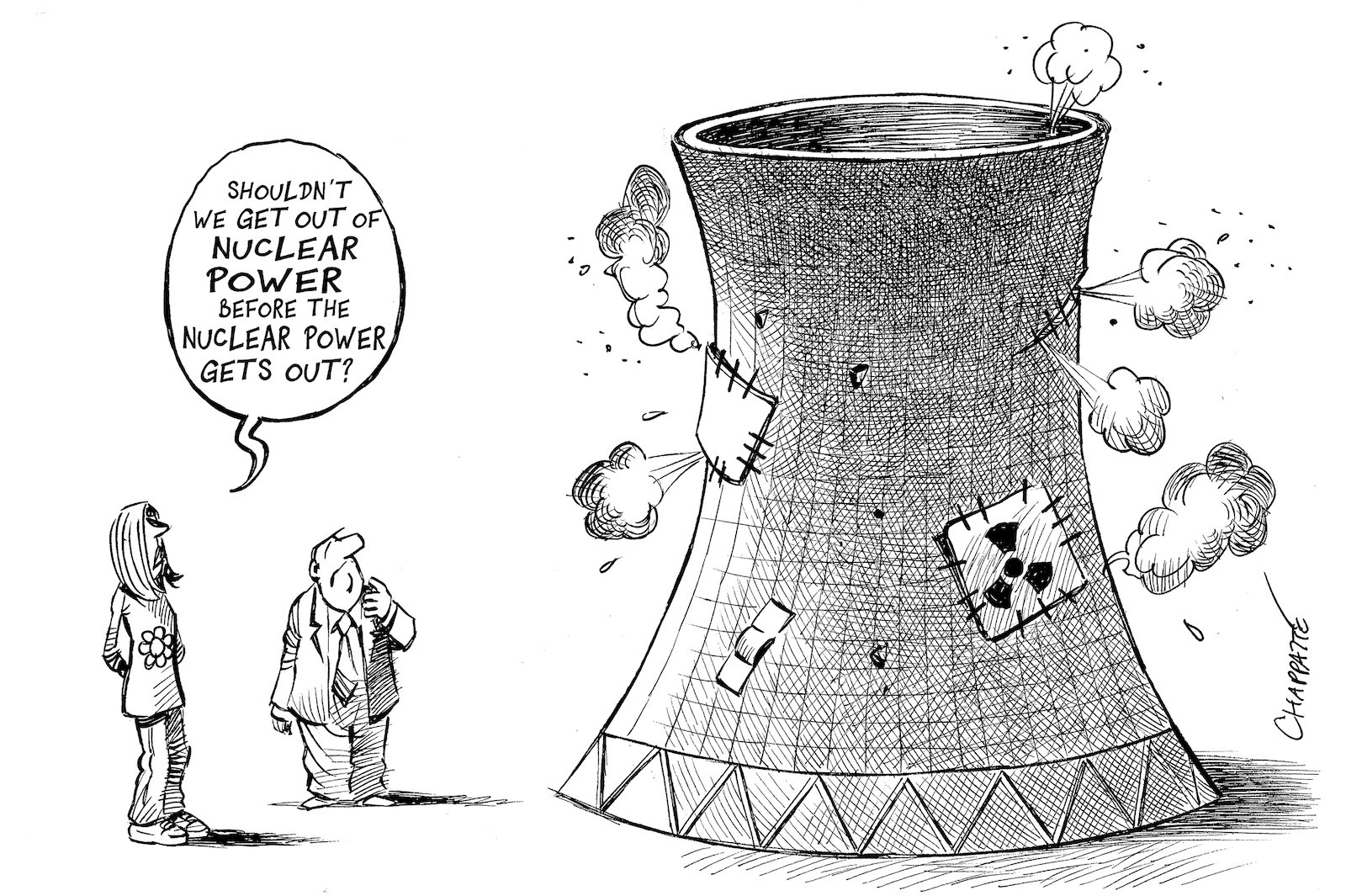
Environmental organizations call for compliance with international law regarding nuclear power plant license extensions / Cross-border nuclear risks require cross-border participation by those affected
Basel/Luxemburg/Hamburg, 23. November 2026,
https://www.ausgestrahlt.de/presse/uebersicht/espoo-konvention-auf-dem-prufstand-staaten-mussen/
– Environmental organizations from Germany, Switzerland, and Luxembourg are warning of an impending erosion of international law by countries that continue to rely on nuclear power.
This warning comes in response to France’s attempt to approve lifetime extensions for old nuclear power plants, without first conducting an environmental impact assessment. This violates the Espoo Convention on transboundary environmental impact protection. A conclusion reached by the relevant UN review body, the Espoo Implementation Committee, following a complaint filed by Greenpeace regarding the operating lifetime extension of the Tricastin 1 nuclear power plant.
To avoid a formal finding of non-compliance, France intends to block its adoption at the upcoming Espoo Conference of the Parties, to be held December 1–4 in Geneva. .ausgestrahlt, Greenpeace Luxembourg, and the Trinational Association for Nuclear Safety (TRAS) are calling on the States Parties to the Espoo Convention to oppose this attempt, to accept the ruling, and to advocate for consistent compliance with international law.
“The Implementation Committee has clearly determined that France violated several provisions of the Espoo Convention by extending the operating life of Tricastin 1. The parties to the Espoo Convention must not allow France to shirk its responsibilities,” says Roger Spautz, nuclear campaigner for Greenpeace Luxembourg and France.
“Cross-border risks, such as the continued operation of an ancient nuclear power plant, must also be assessed on a cross-border basis. Neighboring countries and their populations, as potentially affected parties, must have a say in the matter. According to the Espoo Convention, this also means addressing the crucial question: Does this old reactor even need to remain in operation—or wouldn’t renewable energy and storage be the better, far less dangerous alternative?” explains Armin Simon, nuclear policy analyst at .ausgestrahlt.
According to Stephanie Eger, executive director of the Trinational Nuclear Safety Association, what is at stake in Geneva goes far beyond the Tricastin case: “When it comes to environmental impact assessments, we’re not talking about a voluntary gesture of good neighborliness. The Espoo Convention is binding international law. France’s actions are a clear violation of the Espoo Convention. If France gets its way, other countries could also ignore the agreed-upon rules.”
Tricastin is not an isolated case. In France alone, the Espoo Commission has so far identified 13 other operating life extensions that do not comply with the rules. Similar complaints have also been filed against the Swiss Leibstadt nuclear power plant, as well as against two nuclear power plants in Ukraine. Across Europe, dozens more nuclear power plants are set to enter extended lifetime operations in the coming years.The environmental organizations are therefore urging for the ruling on Tricastin 1 to be fully accepted and for the Espoo Convention to be consistently applied in order to ensure the protection of the public and their right to have a say in nuclear projects across national borders.
No comments yet.
1 This Month


Tell Congress: Prevent Nuclear Catastrophe in Iran

Tell Congress: Prevent Nuclear Catastrophe in Iran

Read the Public Inquiry Report, the Commissioners’ report, Surrendering Australia: The AUKUS Deception is available to download for free at aukuspublicinquiry.com. Or just watch the replay of the National Press Club Luncheon.
To see nuclear-related stories in greater depth and intensity – go to https://nuclearinformation.wordpress.com
Say No to NASA’s Reckless Nuclear Reactor on the Moon
-
Archives
- November 2026 (281)
- October 2026 (302)
- September 2026 (339)
- August 2026 (330)
- July 2026 (355)
- June 2026 (287)
- May 2026 (306)
- April 2026 (356)
- March 2026 (251)
- February 2026 (267)
- January 2026 (308)
- December 2025 (358)
-
Categories
- 1
- 1 NUCLEAR ISSUES
- business and costs
- climate change
- culture and arts
- ENERGY
- environment
- health
- history
- indigenous issues
- Legal
- marketing of nuclear
- media
- opposition to nuclear
- PERSONAL STORIES
- politics
- politics international
- Religion and ethics
- safety
- secrets,lies and civil liberties
- spinbuster
- technology
- Uranium
- wastes
- weapons and war
- Women
- 2 WORLD
- ACTION
- AFRICA
- Atrocities
- AUSTRALIA
- Christina's notes
- Christina's themes
- culture and arts
- Events
- Fuk 2022
- Fuk 2023
- Fukushima 2017
- Fukushima 2018
- fukushima 2019
- Fukushima 2020
- Fukushima 2021
- general
- global warming
- Humour (God we need it)
- Nuclear
- RARE EARTHS
- Reference
- resources – print
- Resources -audiovicual
- Weekly Newsletter
- World
- World Nuclear
- YouTube
-
RSS
Entries RSS
Comments RSS


Leave a Reply