Omigawd – a little bit of integrity creeping into the nuclear “debate”!
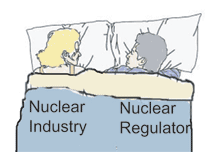
I hasten to reassure worthy political, industry, and media leaders, that this little aberration in the current gung ho pro-nuclear enthusiasm is nothing vitally and forcefully upsetting. After all, it comes only from a couple of boring old Baronesses, and an old retired HM Chief Inspector of Nuclear Installations. No doubt all three are just trying to look as though they’re still relevant, in this progressive modern period. These three have raised questions about the British government’s chummy relationship with the nuclear industry,
Now look – it really is “All Systems Go” for the global nuclear industry. We hardly need to consider Russia, as for the Kremlin, nuclear industry expansion has long been a top policy, and the public there don’t get a look in on nuclear decisions. China is a different and more complex story, as government and public are most supportive of renewable energy growth, while still pursuing some new nuclear projects.
In the West, the push for a new ‘nuclear renaissance’ is well and truly underway, and thanks to quite superb media management by the nuclear industry, public opinion seems all for it. In the USA, a network of donors, advocates, investors, and industry leaders has run a sophisticated, well-funded campaign to change public perceptions and government policies on nuclear power. Much of this apparent groundswell of support for nuclear energy can be traced back to what we can call the pro-nuclear network (PNN): a relatively small, interconnected cluster of people and organizations with influence, wealth, and nuclear industry ties, who have played a singular role in jump-starting this surge. This has been documented in detail by THE COMMITTEE TO BRIDGE THE GAP. These writers have really done their homework on the sources behind the prevailing pro-nuclear opinion.
When it comes to Europe, the picture is more complex, with differing perspectives between the 27 member states. However, overall there is a clear trend in favour of nuclear energy, seen as safer now, and as an important tool against climate change. I am assuming that the same sort of pro nuclear persuasion is behind the trend.
So we come to the UK, where there still is some real debate about this industry. That is largely because of those pesky anti-progress Scots, who are forever making a nuisance of themselves. The British nuclear industry has had to tighten things up.
The previous chancellor Rachel Reeves had written an open letter calling for a nuclear sector-wide reset, with the sponsor department of the Office of Nuclear Regulation being the Department for Work and Pensions (DWP). Baroness Jo Valentine queried that, so it was changed to the Department for Energy Security and Net Zero (Desnz). Baroness Thérèse Coffey then asked:
“… what safety protections are in place for the functioning independence of the Office for Nuclear Regulation after its transfer to the Department for Energy Security and Net Zero, recognising that as it is not a non-ministerial department, ministerial directions can be issued.”
In response to the open letter from the Chancellor calling for a nuclear sector-wide reset… Leaders from across the UK nuclear industry have come together to set out how the sector will drive a fundamental change in culture, They set up the Nuclear Industry CEO Forum led by the Office for Nuclear Regulation (ONR), that unites senior leaders from across industry, government, and regulation to drive a sector-wide culture and reform agenda.
The Forum sent a letter to the Chancellor John Healey on 12 November, “the first time industry and regulators have come together to respond collectively to the chancellor’s call for reform.” The letter called for “Urgent, system-wide reform… ensuring we work together to build the nuclear capacity we need at pace.”
The letter was signed by ONR chief executive and chief nuclear inspector Mike Finnerty and listed as being “On behalf of The UK Nuclear Industry CEO Forum.”
The other signatories were from:
- AWE (the Atomic Weapons Establishment) Nuclear Security Technologies
- Babcock International Group, including Cavendish Nuclear
- BAE Systems Submarines
- Great British Energy – Nuclear
- NNB Genco (Hinkley Point C)
- Nuclear Decommissioning Authority
- Nuclear Restoration Services
- Rolls-Royce SMR (small modular reactor)
- Rolls-Royce Submarines
- Sellafield Ltd
- Sizewell C Ltd
- UK National Nuclear Laboratory
Sam Harbison, former Health and Safety Executive (HSE) Nuclear Installations Inspectorate chief inspector told New Civil Engineer:
“I feel very uncomfortable with the ONR sending a letter to the government on behalf of the CEOs of the UK’s private nuclear industry.
“I feel that it undermines the separation between promotion and regulation that is regarded internationally as the building block for ensuring safety in licensed nuclear activities.
“I don’t believe that the regulator can have a shared purpose with the industry that it is regulating.”
Mmmmm… this sort of thing is probably happening all over the world wherever there’s a nuclear industry. Too much money at risk, too many jobs depending on it. Those criticisms by backward-looking old fogies might not make an impact, but at least they’re showing a bit of integrity.
Boiling Point: The Road To War And Ukraine’s Uncertain Future

in the end, the only way there is ever going to be peace and stability in Europe is if there is a security architecture that takes into account the security interests of all countries, including Russia
SCHEERPOST, November 18, 2026, John P. Ruehl TRNN
The narrative surrounding the Ukraine war often marks its beginning on February 24, 2022, when Russia launched its full-scale invasion. But the rivalries and political decisions that brought the two countries into conflict stretch back centuries. The start of the Cold War, meanwhile, was the beginning of sustained US efforts to further antagonize Ukraine’s relationship with Moscow.
In his new book, Boiling Point: How America Brought War to Ukraine, author Stephen Kinzer presents an account of how successive US administrations sought to cultivate Ukrainian nationalism and challenge Moscow, helping set the stage for conflict. Instead of viewing the invasion in isolation, Kinzer details Washington’s involvement over decades, from covert CIA operations in Soviet Ukraine during the early Cold War to Ukrainian independence and the post-Cold War tensions with Russia over NATO expansion, which all culminated in the outbreak of war.
Kinzer provides an extensive, detailed account of the history of US foreign policy in the region, without losing sight of the larger geopolitical forces at play. By challenging the conventional narrative of the war’s origins, Kinzer offers a deeply researched perspective largely absent from mainstream discussions.
Understanding the decades of geopolitical competition and political motives that preceded the war is essential to seeing why it began and where it might lead. Any eventual peace settlement will pose difficult questions about territory and security guarantees, as well as Ukraine’s reconstruction and place between Europe and Russia. The war will likely end without resolving Ukrainian and Russian divisions that, as Kinzer describes in his book, US policy helped deepen, leaving both countries and the wider region to contend with the consequences for years to come.
As a journalist, author, and historian, Kinzer has spent decades examining American foreign policy, interventionism, and the consequences of US involvement abroad. His work has appeared in The New York Times and other major publications, and he’s written several books exploring America’s role in shaping international affairs. I spoke with him about the history behind Boiling Point, the choices that might have prevented the war, and what he believes lies ahead for Ukraine.
John P. Ruehl: Your new book, Boiling Point, examines the history of US policy toward Ukraine and Russia, tracing Washington’s efforts since the end of World War II to cultivate Ukrainian nationalism and challenge Moscow’s influence. It looks at how those efforts contributed to the tensions that ultimately erupted into the ongoing war in Ukraine.
To start, could you tell us a little about the book, its central argument, and the history you believe readers need to understand to make sense of the war today?
Stephen Kinzer: One of the points that I hope people will take away from this book is that much of what we have been told about the Ukraine war is wrong. And, in particular, there’s one word we constantly hear about the Russian invasion, and it was that word, really, that set me off after about the 200th time I heard it, and that word, of course, is unprovoked. We always read about that not just the February invasion, or the Russian invasion, or the military invasion, but the unprovoked invasion. Now, you can say a lot of things about this invasion, for example, that it was illegal under international law, just like many American operations have been, but it was definitely not unprovoked. How do I justify that statement? That’s my book.
The book traces 75 years of uninterrupted American plans to turn Ukraine into a battering ram against Russia. This began with the dropping of armed commandos into Ukraine back in the late 1940s, and it continued through a whole series of covert actions leading up to Ukrainian independence in 1991; then the project went into overdrive. [The US] spent huge amounts of money promoting anti-government groups in Ukraine and groups that would support the idea of confrontation with Russia.
That finally exploded. You might make an argument that we did the right thing to provoke Russia and to promote all this nationalist feeling in Ukraine. And I’m okay with that. But before you make any judgment on the justice or nature of the Ukraine war, you should know what happened before.
If you look at a snapshot of… February 24, 2022, you will see what happened. Russia invaded a peaceful country, Ukraine. But that picture should really be seen as just one frame in a very long movie that unfolded over 75 years. My book is an attempt to show you the real background of the Ukraine war.
JPR: Do you think Washington still has a bipartisan commitment to supporting Ukraine, or has it largely achieved what it set out to accomplish and now is unsure about how to proceed, amid the Trump administration’s efforts to negotiate peace?
SK: I think most people in Washington still think the Ukraine war is a great idea. It comes out of a deep-seated hatred for Russia, a belief that Russian expansion or anything good for Russia is bad for the world. I actually think that many Americans consider this war a success. The reason is, we’ve killed a lot of Russians. The fact that tens of thousands of Ukrainians have been killed and their country has been devastated doesn’t really register in Washington.
Most of the people in Washington who are most eagerly promoting this war can hardly find Ukraine on a map. They are not interested in Ukraine. All they’re interested in is Russia. … The result is that Ukraine has gotten wrecked, but for Americans, and I think for some Europeans as well, it seems like a win because it has wounded Russia…………………………………………………………………………………………………………………………………
JPR: You dedicate the book to the Ukrainian people and argue that they didn’t really understand the consequences of the policies pursued by the United States and NATO toward Russia.
SK: I don’t think Russia is seeking to capture Ukraine, much less further territories, but Russia has a fear that is understandable, and that is, they don’t want a nuclear-armed military alliance that they are not a member of right on their border. I pose this analogy: suppose China decided with Mexico that it would open a military base in Veracruz, or suppose Russia would open an air base in Quebec. Would the United States say, “Well, every country has a right to choose its own security partners, so I guess there’s nothing we could do about it.” Of course, we wouldn’t do that. We would bomb those bases. We would never tolerate that. So we’re now expecting Russia to accept something we would never accept.
There is room for negotiation, but only if the United States and the Europeans, who are now really taking on the extreme burden of the war, accept that they have to recognize Russia’s security interests. This is a horrific idea in some European capitals. But in the end, the only way there is ever going to be peace and stability in Europe is if there is a security architecture that takes into account the security interests of all countries, including Russia………………………………………………………………………………………………………………………………………………………………………………………………………………………………..https://scheerpost.com/2026/11/18/boiling-point-the-road-to-war-and-ukraines-uncertain-future/
Judges Find U.S. Responsible for War Crimes in 1945 Atomic Bombing

| The A-Bomb Tribunal Organizing Committee | Nov 20, 2026, |
Judges of the International People’s Tribunal Find in Favor of Korean Claimants Holding the United States Guilty of War Crimes and Crimes Against Humanity in the 1945 Atomic Bombings of Hiroshima and Nagasaki Which Claimed 70,000 Korean Victims
Announcement of the Preliminary Judgment, Obligations, and Recommendations, November 15, 2026, Seoul, South Korea.
Tribunal’s Preliminary Judgment
On November 15, 2026, in Seoul, South Korea, after three days of testimony from Korean atomic bomb victims and after hearing arguments from international attorneys, the Tribunal’s panel of four Judges found for the Korean claimants in a People’s Tribunal case brought by Korean victims of the 1945 atomic bombings in Hiroshima and Nagasaki.
The Judges found that the United States was obligated to acknowledge the unlawfulness of the bombings, issue an official apology, and provide direct compensation to the Korean victims. It is notable that of the four Judges, three are American.
The Tribunal Judges found that the atomic bombings constituted war crimes and crimes against humanity under international law as it stood in 1945, a finding reaffirmed under contemporary international law.
The Tribunal’s Preliminary Judgment, Obligations, and Recommendations are now available on the Tribunal’s official website. The Judgment will be presented by the Korean claimants to the United Nations in New York City during the Review Conference of the Treaty on the Prohibition of Nuclear Weapons on November 30, 2026. The Judgment will also be delivered to the U.S. government.
Korean Atomic Bomb Victims and Testimonies
During the 1930s, approximately 1.2 million Koreans were forcibly removed by the Japanese from their homeland. Many were brought to the cities of Hiroshima and Nagasaki to work for the Japanese. The U.S. knowingly dropped the world’s first atomic bombs on these two civilian cities on August 6 and August 9, 1945, claiming over 700,000 victims in total, 70,000 of which were Korean nationals.
Park Jeong-sun, a first-generation Korean atomic bomb victim and claimant to the Tribunal stated at its conclusion:
“After receiving this Judgment here in Seoul at the age of 93, I feel that I can now close my eyes without any regrets.”
United States Col. Ann Wright (retired) testified at the Tribunal and stated the following at its conclusion:
“To this day, 81 years later, some legal scholars and U.S. government officials still maintain that the U.S. dropping the atomic bombs on two Japanese cities was legal, but to those of us who look without bias, we know the actions to be immoral and criminal. As a retired U.S. Army Colonel, I offer my apologies to the Korean victims of the 1945 U.S. atomic bombings of Hiroshima and Nagasaki.”
During the three-day Tribunal, thirty-one victim and expert witnesses testified before the Judges and provided evidence about the effects of the atomic bombings as well as their illegality under international law as it stood in 1945. Specifically, the time, manner and location of the U.S. unleashing of atomic bombs in August 1945 was found to constitute a direct attack on civilians and an indiscriminate attack on civilians in violation of international law.
Nuclear Disarmament and Peace
The Tribunal was more than a historical review of the events of 1945. It also emphasized the obligations and responsibilities of nuclear-armed states today. Specifically, the Judges urged all nuclear-armed States, including the United States, to acknowledge that the arms race driven by nuclear deterrence and nuclear threats undermines nuclear disarmament and the denuclearization of the world.
Additionally, the Judges urged the States concerned in the nuclear confrontation on the Korean Peninsula to end military hostilities and prevent the repetition of armed conflicts and war through the conclusion of a peace agreement on the Korean Peninsula and a DPRK–U.S. non-aggression treaty, among other measures, and work toward the denuclearization of the Korean Peninsula, the establishment of a nuclear-weapon-free zone in Northeast Asia, and the realization of a world free of nuclear weapons.
 Judges Find U.S. Responsible for War Crimes in 1945 Atomic Bombings PRESS RELEASE | November 19, 2026 Judges of the International People’s Tribunal Find in Favor of Korean Claimants Holding the United States Guilty of War Crimes and Crimes Against Humanity in the 1945 Atomic Bombings of Hiroshima and Nagasaki Which Claimed 70,000 Korean Victims  Announcement of the Preliminary Judgment, Obligations, and Recommendations, November 15, 2026, Seoul, South Korea.Tribunal’s Preliminary JudgmentOn November 15, 2026, in Seoul, South Korea, after three days of testimony from Korean atomic bomb victims and after hearing arguments from international attorneys, the Tribunal’s panel of four Judges found for the Korean claimants in a People’s Tribunal case brought by Korean victims of the 1945 atomic bombings in Hiroshima and Nagasaki.The Judges found that the United States was obligated to acknowledge the unlawfulness of the bombings, issue an official apology, and provide direct compensation to the Korean victims. It is notable that of the four Judges, three are American.The Tribunal Judges found that the atomic bombings constituted war crimes and crimes against humanity under international law as it stood in 1945, a finding reaffirmed under contemporary international law.The Tribunal’s Preliminary Judgment, Obligations, and Recommendations are now available on the Tribunal’s official website. The Judgment will be presented by the Korean claimants to the United Nations in New York City during the Review Conference of the Treaty on the Prohibition of Nuclear Weapons on November 30, 2026. The Judgment will also be delivered to the U.S. government.Korean Atomic Bomb Victims and TestimoniesDuring the 1930s, approximately 1.2 million Koreans were forcibly removed by the Japanese from their homeland. Many were brought to the cities of Hiroshima and Nagasaki to work for the Japanese. The U.S. knowingly dropped the world’s first atomic bombs on these two civilian cities on August 6 and August 9, 1945, claiming over 700,000 victims in total, 70,000 of which were Korean nationals.Park Jeong-sun, a first-generation Korean atomic bomb victim and claimant to the Tribunal stated at its conclusion:“After receiving this Judgment here in Seoul at the age of 93, I feel that I can now close my eyes without any regrets.”United States Col. Ann Wright (retired) testified at the Tribunal and stated the following at its conclusion:“To this day, 81 years later, some legal scholars and U.S. government officials still maintain that the U.S. dropping the atomic bombs on two Japanese cities was legal, but to those of us who look without bias, we know the actions to be immoral and criminal. As a retired U.S. Army Colonel, I offer my apologies to the Korean victims of the 1945 U.S. atomic bombings of Hiroshima and Nagasaki.”During the three-day Tribunal, thirty-one victim and expert witnesses testified before the Judges and provided evidence about the effects of the atomic bombings as well as their illegality under international law as it stood in 1945. Specifically, the time, manner and location of the U.S. unleashing of atomic bombs in August 1945 was found to constitute a direct attack on civilians and an indiscriminate attack on civilians in violation of international law.Nuclear Disarmament and PeaceThe Tribunal was more than a historical review of the events of 1945. It also emphasized the obligations and responsibilities of nuclear-armed states today. Specifically, the Judges urged all nuclear-armed States, including the United States, to acknowledge that the arms race driven by nuclear deterrence and nuclear threats undermines nuclear disarmament and the denuclearization of the world.Additionally, the Judges urged the States concerned in the nuclear confrontation on the Korean Peninsula to end military hostilities and prevent the repetition of armed conflicts and war through the conclusion of a peace agreement on the Korean Peninsula and a DPRK–U.S. non-aggression treaty, among other measures, and work toward the denuclearization of the Korean Peninsula, the establishment of a nuclear-weapon-free zone in Northeast Asia, and the realization of a world free of nuclear weapons.Professor Emeritus Richard Falk, President Judge of the Tribunal, stated:“The content and quality of these oral hearings constitute a step toward denuclearizing the world. We want to bring an end to the description of our world as a nuclear age and live in a post-nuclear world. We must do everything in our power to make these obligations a reality and finally bring justice to Korean victims and other victims of nuclear harm.” |
THE WORLD HAS CHANGED: EUROPE IN MELTDOWN AS XI, TRUMP AND PUTIN MEET
A conversation with Prof Warwick Powell
Ian Proud Nov 19, 2026, https://thepeacemonger.substack.com/p/the-world-has-changed-europe-in-meltdown?utm_source=post-email-title&publication_id=3221990&post_id=225631364&utm_campaign=email-post-title&isFreemail=true&r=1ise1&triedRedirect=true&utm_medium=email
The World Has Changed. Europe Hasn’t Noticed.
As I write this, Presidents Xi Jinping, Donald Trump and Vladimir Putin are meeting in Shenzhen on the sidelines of the APEC summit. Three nuclear powers, talking to each other in the same city. In Britain and across much of Europe the reaction has been depressed, almost panicked. Many see it as a retrograde step, a bad day for the West. From where I sit, that reaction says more about Europe’s state of mind than it does about the meetings themselves.
A meeting Europe was never going to be part of
APEC is an Asia-Pacific economic forum. It has 21 members. Neither Britain nor the European Union is one of them for the simple reason that they are not Asian or Pacific powers. The fact that the presidents of China, the United States and Russia happened to be in the same place at the same time is a consequence of that gathering, not some secret anti-European conspiracy. Yet the mood in London and Brussels has been one of deep unease. Professor Warwick Powell, speaking to me from Australia, put it bluntly: it is a little sad. Years of political choices have left ordinary Europeans poorer, and the response of many leaders has been to double down on confrontation rather than look for settlements that might restore prosperity.
Economics first, or politics first?
Asia is becoming the centre of global growth. Doom-mongers have predicted China’s hard landing for twenty years and it still hasn’t arrived. The countries around the Pacific have spent the last year quietly reducing trade frictions, upgrading free-trade deals and keeping supply chains moving. Meanwhile Europe has spent the same period prioritising political goals over economic ones. Expensive energy, self-harming sanctions and an open-ended commitment to a war of attrition in Ukraine have all come with dire costs. Those costs are now visible in living standards. As Powell noted, structural change takes time and is politically difficult. European leaders have preferred the simpler path of moralising about the world they wish still existed.
The multipolar reality
There is a recognition inside parts of the American system that the world of 1991 is gone. Marco Rubio has spoken of multipolarity, even if his version of it emphasises spheres of influence and competition. China and Russia have their own views of what multipolarity means. The important point is that all three recognise the distribution of economic and technological power has shifted. Europe’s position, by contrast, often seems to be that the change is immoral and can therefore be reversed if only Russia withdraws from Ukraine and everyone goes back to the old rules. That is not a strategy. It is a refusal to look at the balance of productive capacity, energy and technology as it actually exists in 2026.
What the meetings might actually produce
Powell does not expect China to insert itself deeply into the Ukraine question. The more interesting possibilities lie elsewhere: a modest step on nuclear risk reduction, an agreement that artificial intelligence should stay away from nuclear command systems, or simply a mechanism for the three powers to keep talking when tensions rise. None of these would be dramatic. All of them would be more useful than, for example, the current European insistence that nothing of substance can be discussed on the Ukraine war until a ceasefire is already in place and even then the substance should remain off-limits.
A lesson Europe is ignoring
The most striking contrast is not between the three leaders and Europe. It is between the way APEC members handle disagreement and the way European institutions often do. Twenty-one diverse countries, with different political systems and stages of development, still manage to keep economic channels open and look for practical ways to share burdens. Europe, facing its own energy and security pressures, has tended to pull up the drawbridge and silence dissenting voices. That approach may feel principled in the short term. It is unlikely to produce either security or prosperity for ordinary Europeans over the longer one.
The meetings in Shenzhen will not redraw the map overnight. They do, however, illustrate a simple fact: the major powers are adjusting to a changed world, however imperfectly. Europe is still arguing about whether the change should be allowed to happen.
In A Digitised World The Microsoft Outage Is Just The Beginning

Nate Bear Do Not Panic, November 18, 2026, https://scheerpost.com/2026/11/18/in-a-digitised-world-the-microsoft-outage-is-just-the-beginning/
Last week Microsoft services went down, affecting businesses, governments, hospitals and other social services globally.
While it was pretty much resolved within 24 hours, it demonstrated how so many of our critical systems hang by a thin digital thread.
The outage, Microsoft says, wasn’t caused by hackers. But it’s only a matter of time before a major IT failure does go down this way.
In the wake of the outage, a cyber security engineer based in the UK wrote a long thread on twitter detailing why hackers will inevitably and eventually succeed in bringing down society-critical software. Within 30 minutes, this person had deleted their thread, after the replies accused them of fearmongering, of causing panic, of not giving enough specifics to be credible. All the usual complaints you hear whenever someone speaks honestly about the threats and dangers to organised society. Especially those that feel existential, and those we cannot control as individuals.
I can’t recall the details exactly, but I remember the gist. I remember the person began by saying “people have no idea what’s coming” and then explained that pre-AI a human hacker would fail 99.9% of the time, but AI gives a hacker the ability to run essentially unlimited amounts of code around the clock. An AI agent can probe weaknesses an infinite number of times, learn from failures, refine attempts and keep retrying constantly, and autonomously. A hacker starts a script running, then sits back and waits.
A few days after my post, Tech Crunch published an article about open source AI-powered penetration testing platforms that perform exactly as this person was describing.
The replies to the original post were angry and defensive. Because whether climate, pandemics or AI, people don’t want to hear about living within fragile systems. They don’t want to know about threats they can’t control it. They’d rather just let whatever is going to happen, happen, and deal with the consequences, or not, when they have to. Some dismiss it all as fearmongering which serves only the nefarious purposes of the elite.
On some level I get it.
If you’ve been reading me for a while, you’ll know that I’m not ideologically wedded to any of this shit we call civilisation. Specifically, an imperial-capitalist civilisation, especially as a complicit inhabitant of the imperial core. Any decent future for humanity relies on the downfall of these ideologies and the institutions, people and machines built to serve them.
But I am materially wedded to this system, whether I like it or not. As are most of us. The reality is that almost all of the systems we rely on for the functioning of our daily lives are undergirded by digital infrastructure. The pen is dead. Paper filing has been consigned to the past. Money can still be claimed nominally in coins and notes, but most transactions are digital. The world has been digitised. Which means that even the brief loss of just a small part of that digital infrastructure causes chaos. And this chaos, as chaos always does, hits the ordinary person, especially the most in need and disadvantaged, the hardest.
For example the Microsoft outage hit the NHS in the UK badly. C-sections were cancelled, ambulance services were disrupted, and operations had to be re-scheduled. Of course Microsoft is just one of the software and cloud computing providers which underpin the functioning of many businesses and governments in the west. Amazon, Google, Oracle, SAP, IBM and others are also integral to the running of our digitised world. But the shocking thing is there aren’t that many society-critical software providers. A bit of research tells me our societies and economies are almost totally reliant on around fifteen to twenty of these companies. If a few of them were to go down at the same time, the shit would hit the fan in ways we’ve never experienced. With the exchange of money for goods and services now almost fully digitised, everything would grind to a halt very quickly.
Can we do much about it? I’ve taken some steps to disentangle my existence from this digital infrastructure, but there is only so much I or most people can do, especially with limited resources. The reality is, as a relatively impoverished inhabitant of this world, I would quickly feel the effects if these systems failed. That said, I don’t think it’s a bad idea to buy a couple of extra jars of chickpeas with your weekly shop, have a stack of lighters in a drawer, and have some cash money under the bed. Being able to cope if everything goes down for a few days rather than scrambling unprepared on day one is definitely better than nothing. As well as some individual prep, building community in the relatively good times, and having a local network of people who can support each other and swap stuff, is probably the best insurance policy. But we should be under no illusions that exchange within a community would last forever under these conditions, or even very long at all.
But again, definitely better than nothing.
The other way we can prepare is mentally. This means accepting the fragility of modern systems, and understanding we exist atop a house of cards, and not letting it stress you out. It means not shooting the messengers, and instead listening to them. More than that, it means listening to them, letting the information in, and allowing it to shape you politically. A recent experience talking to a large group of middle class professionals, however, suggested to me that many have a very hard time with this idea. Many cannot bring themselves to see the world in 2026 as anything other than a world of progress, because they cannot bring themselves to doubt a system they so rely on. They have the smart watches and rings for the optimised bourgeois life, and can’t imagine living in any other way. To be honest, it’s not just the professional middle classes. Large numbers of people in general believe in the AI-powered cornucopia of forever comfort amid forever progress. And most know they couldn’t last five minutes without the conveniences granted by an industrialised and digitised existence, and therefore don’t want to think about.
The other way we can prepare is mentally. This means accepting the fragility of modern systems, and understanding we exist atop a house of cards, and not letting it stress you out. It means not shooting the messengers, and instead listening to them. More than that, it means listening to them, letting the information in, and allowing it to shape you politically. A recent experience talking to a large group of middle class professionals, however, suggested to me that many have a very hard time with this idea. Many cannot bring themselves to see the world in 2026 as anything other than a world of progress, because they cannot bring themselves to doubt a system they so rely on. They have the smart watches and rings for the optimised bourgeois life, and can’t imagine living in any other way. To be honest, it’s not just the professional middle classes. Large numbers of people in general believe in the AI-powered cornucopia of forever comfort amid forever progress. And most know they couldn’t last five minutes without the conveniences granted by an industrialised and digitised existence, and therefore don’t want to think about.
A halfway decent future rests on challenging the billionaires who own the handful of digital systems that undergird our world. Systems we had no say in creating, and have no say in how they work. Systems that have created within many of us a state of learned helplessness. Systems we rely ever-more deeply on, to the delight of the billionaires.
Any hope for a decent future rests on enough of us challenging the AI kingpins, the data centre moguls, and the war machine mafia.
It rests on us letting the difficult information in so enough of us can correctly identify who the enemy really is.
I suppose my conclusion is one of the oldest in the (handwritten) book: no war but class war.
The Iran–USA conflict and the future of the Nuclear Non-Proliferation Treaty
November 18, 2026, Dr Ismail Adaramola, https://www.middleeastmonitor.com/20261118-the-iran-usa-conflict-and-the-future-of-the-nuclear-non-proliferation-treaty/
The confrontation between Iran and the United States is more than a bilateral dispute; it represents a significant test of the credibility of the Treaty on the Non-Proliferation of Nuclear Weapons (NPT). The central challenge is to protect states’ rights to peaceful nuclear technology while preventing the proliferation of nuclear weapons. The crisis also tests the role of the International Atomic Energy Agency (IAEA) and raises questions about the consistent application of international rules. If military confrontation repeatedly replaces diplomacy, other states may begin to question whether the NPT provides a fair and reliable framework for their security.
The NPT framework and the Iran–USA dispute
Established in 1968 and entering into force in 1970, the NPT rests on three fundamental pillars: non-proliferation, the peaceful use of nuclear energy, and nuclear disarmament. Article IV recognises the right of states to develop and use nuclear technology for peaceful purposes, subject to their treaty obligations, while Article VI requires all parties to pursue negotiations in good faith on nuclear disarmament.
The Iran–USA dispute highlights an apparent imbalance within this framework. Non-nuclear-weapon states face close scrutiny over their nuclear activities, while progress towards disarmament by recognised nuclear-weapon states remains limited. Although this does not excuse violations of safeguards obligations, the legitimacy of the treaty depends on the implementation of all three pillars.
Iran maintains that its nuclear programme serves peaceful purposes, including electricity generation, scientific research, and technological development. However, the United States and its allies have raised concerns about uranium enrichment, transparency, and the possibility of military applications.
Consequently, the dispute is not simply about technical nuclear capabilities; it also concerns verification, trust, and the intentions that states attribute to one another.
The JCPOA and the breakdown of diplomatic confidence
The 2015 Joint Comprehensive Plan of Action (JCPOA), agreed by Iran and the P5+1, sought to address international concerns through restrictions on Iran’s nuclear programme and enhanced monitoring arrangements in exchange for sanctions relief. However, the United States’ withdrawal from the agreement in 2018 weakened this diplomatic framework.
Iran’s subsequent expansion of uranium enrichment activities and declining cooperation with international monitoring mechanisms further complicated efforts to restore confidence. Military attacks on Iranian nuclear facilities in 2025, followed by the US and Israeli operations beginning in February 2026, have made verification increasingly difficult.
The draft notes that the IAEA has faced obstacles in maintaining continuity of knowledge about nuclear material and obtaining access to relevant facilities. Without reliable information, uncertainty increases, creating greater opportunities for miscalculation and escalation.
Nuclear diplomacy depends on negotiations, inspections, confidence-building measures, and reciprocal commitments. Military pressure may damage nuclear facilities, but it cannot necessarily eliminate technical knowledge or the political motivations underlying a nuclear programme.
Indeed, military attacks may strengthen arguments within Iran that nuclear deterrence is necessary for national survival.
Meanwhile, Washington regards preventing Iran from acquiring nuclear weapons as a strategic priority for regional security and the reassurance of its allies. These competing perceptions can create a dangerous cycle: US pressure deepens Iranian insecurity, confrontation erodes trust, reduced cooperation weakens verification, and uncertainty encourages further military preparations.
Coercion without a credible political settlement is unlikely to resolve the underlying dispute. A sustainable agreement must address uranium enrichment, transparency, sanctions, and security concerns through reciprocal and verifiable commitments.
The role of the IAEA and international nuclear safeguards
The IAEA occupies a central position within the international nuclear safeguards system. Its credibility depends on technical independence, access to relevant facilities, and the ability to assess nuclear material on the basis of reliable evidence.
Iran must fulfil its safeguards obligations, while other states must respect the Agency’s professional mandate and avoid turning its work into an instrument of geopolitical rivalry. The current crisis illustrates a fundamental dilemma: effective verification requires cooperation, but cooperation becomes increasingly difficult when political trust collapses.
Iran cannot expect international confidence without credible monitoring arrangements. Equally, inspections cannot function effectively when access and relevant information are withheld. Restoring effective safeguards arrangements is therefore an urgent international security requirement rather than merely an administrative matter.
Nuclear disarmament and the question of double standards
The NPT recognises five nuclear-weapon states: China, France, Russia, the United Kingdom, and the United States. However, their recognised status does not provide an unlimited right to retain nuclear weapons indefinitely. Article VI commits all parties to pursue negotiations in good faith on nuclear disarmament.
The modernisation of nuclear arsenals and the slow pace of disarmament have fuelled concerns about whether the international nuclear order imposes unequal expectations on different categories of states. The treaty risks losing credibility if non-proliferation is demanded of some states while disarmament commitments receive insufficient attention.
At the same time, perceptions of double standards cannot justify non-compliance by Iran or any other State Party. The central challenge is to uphold international legal obligations consistently while addressing the unequal distribution of nuclear power and responsibility.
The 2026 NPT Review Conference and the Future of Non-Proliferation
The 2026 NPT Review Conference ended without a consensus outcome document, reflecting persistent divisions over nuclear disarmament, regional security, and treaty implementation. This failure does not make the NPT irrelevant; rather, it demonstrates the urgent need for renewed political commitment before the next review cycle.
The Iran–USA conflict may influence how other states assess the costs and benefits of remaining non-nuclear. From a realist perspective, governments operating in an uncertain international system may seek capabilities they believe will deter external aggression. If states conclude that nuclear weapons provide more reliable protection than international security guarantees, incentives for proliferation could increase.
Possible consequences include greater interest in uranium enrichment capabilities, reduced acceptance of intrusive inspections, and heightened regional arms competition in the Middle East.
Nevertheless, technological capability should not be confused with a political decision to develop nuclear weapons. The international community must demonstrate that compliance with the NPT, peaceful nuclear cooperation, and diplomatic engagement can provide meaningful security benefits.
Iran’s possible withdrawal from the NPT
Article X of the NPT allows a State Party to withdraw from the treaty if extraordinary events related to the subject matter of the treaty have jeopardised its supreme interests. Such withdrawal requires three months’ notice to all other parties and the United Nations Security Council, together with an explanation of the extraordinary events concerned.
Debate about possible Iranian withdrawal is therefore significant. Withdrawal would not automatically authorise the manufacture of nuclear weapons, and it would raise complex questions concerning safeguards obligations and nuclear materials.
The international community’s priority should be to ensure that continued membership of the NPT remains more beneficial to Iran than withdrawal. This requires addressing legitimate security concerns while maintaining the principle that nuclear non-proliferation obligations must be respected.
Recommendations for restoring nuclear diplomacy
Washington and Tehran should resume negotiations with the support of the European Union, China, Russia, and other relevant international parties. Iran should restore effective IAEA monitoring arrangements, while the Agency’s technical independence and professional mandate must be protected.
Any future agreement should address the security concerns of both sides through reciprocal commitments, effective verification mechanisms, and reliable dispute-resolution procedures. Nuclear-weapon states must also demonstrate measurable progress towards their obligations under Article VI, while non-nuclear-weapon states fulfil their nuclear safeguards obligations.
Furthermore, states should avoid attacks on nuclear facilities and pursue diplomatic solutions consistent with international law. The NPT review process should place greater emphasis on assessing practical progress in nuclear disarmament, safeguards implementation, and peaceful nuclear cooperation.
Conclusion
The Iran–USA conflict demonstrates the continuing challenges facing the international nuclear non-proliferation system. The credibility of the NPT depends not only on preventing the spread of nuclear weapons but also on ensuring that peaceful nuclear rights, safeguards obligations, and disarmament commitments are implemented consistently.
Sanctions and military pressure alone cannot resolve the political and security concerns sustaining nuclear competition. The United States must recognise that military superiority cannot guarantee a durable diplomatic settlement, while nuclear-weapon states must demonstrate genuine commitment to their disarmament obligations.
Ultimately, the future of the NPT will depend on whether states can rebuild confidence in diplomacy, strengthen international verification, and demonstrate that collective security can be achieved without encouraging further nuclear proliferation.
Ukraine criticizes IAEA plan to appoint Russian official to senior post
Daily Mail, By ASSOCIATED PRESS, 19 November 2026
VIENNA (AP) – Ukraine on Wednesday denounced a proposal by the head of the International Atomic Energy Agency to appoint a Russian official sanctioned by Kyiv to a senior position at the U.N. nuclear watchdog in Vienna.
Ukraine´s Foreign Minister Andrii Sybiha called the proposed appointment of Alexey Ferapontov as deputy director general “categorically unacceptable” and urged IAEA chief Rafael Mariano Grossi to “abandon this appointment” in a post on X.
In a note sent Nov. 16 to all 35 members of the IAEA Board of Governors, which was seen by The Associated Press, Grossi proposed the nomination of Ferapontov to the position of deputy director general in the Department of Nuclear Energy.
The note also proposed a candidate from the United States to the position of deputy director general in the Department of Management, and a candidate from North Macedonia to become director in the Department of Safeguards……………………………………………..
Ferapontov is currently deputy head of Rostechnadzor, Russia´s Federal Environmental, Industrial and Nuclear Supervision Service.
The Russian Foreign Ministry did not immediately respond to a request for comment.
The Zaporizhzhia nuclear power plant has been under Russian control since early in Moscow´s full-scale invasion of Ukraine. Although the plant is not operating, it needs reliable external power to cool its six shut-down reactors and spent fuel to avoid any catastrophic nuclear incidents.
The plant is near the front line and has been occupied by Russia since March 2022. Ukraine and Russia have traded blame for shelling close to the plant.been reduced at the plant, the IAEA warned.
Sybiha also referred to Grossi´s campaign to become the next U.N. Secretary-General, stressing the importance of the “independence and impartiality” of the IAEA.
“There can be no room for political considerations or external influence in decisions of such importance,” he wrote.
Grossi confirmed his plans to appoint Ferapontov as deputy director general in the IAEA´s Department for Nuclear Energy during a news conference on Wednesday on the first day of a regular meeting of the IAEA Board of Governors in Vienna. Grossi said the criteria in making such appointments relate to the “technical experience and the technical capacities” of the appointees.
“When I appoint somebody, I´m not appointing a country, I am not appointing a policy, I am not appointing preferences in this regard,” Grossi said. “We are appointing the person and individual that has the capacities to fulfill that position.”
Grossi added that in the specific case related to Ferapontov, “it´s a very well-known expert in areas like nuclear safety, nuclear security and others.”
The post of deputy director general in the IAEA´s Department for Nuclear Energy became vacant after the IAEA in September suspended the previous incumbent, Mikhail Chudakov, a Russian senior official who had a decades-long career in Russia´s nuclear industry……..
The IAEA has six deputy director-general posts.
https://www.dailymail.com/wires/ap/article-16303373/Ukraine-criticizes-IAEA-plan-appoint-sanctioned-Russian-official-senior-post.html
EIB Releases €400M for Cernavoda Nuclear Reactor Upgrade

By Romania Journal, Nov 16, 2026
The European Investment Bank (EIB) is providing Nuclearelectrica with an initial €400 million tranche for the refurbishment of Unit 1 at Romania’s Cernavoda Nuclear Power Plant. The loan represents half of the €800 million in financing planned by the institution for the project, which aims to extend the reactor’s operational lifetime by another 30 years.
The funds will be used to replace key components and upgrade Unit 1’s systems, the European Investment Bank announced on Monday.
The EIB’s Board of Directors approved total financing of €800 million for the project in July 2026.
“The European Investment Bank is releasing half of the planned €800 million financing for the refurbishment and lifetime extension of a reactor at Romania’s Cernavoda Nuclear Power Plant,” the institution said in a statement.
The loan granted to Nuclearelectrica has a maturity of up to 22 years.
The total investment required for the refurbishment of Unit 1 is estimated at €3.1 billion. To cover the remaining costs, negotiations are underway with export credit agencies, commercial banks and other international financial institutions. Part of the financing will also be provided by Nuclearelectrica.
Refurbishment works scheduled to begin in 2027…………………………………………………………………
https://www.romaniajournal.ro/business/financial/banks/eib-releases-e400m-for-cernavoda-nuclear-reactor-upgrade/
Newcleo And Curio Announce Collaboration To Advance Recycled Nuclear Fuel Supply

Curio Legacy Ventures, a Washington-based company developing its patented
NuCycle used nuclear fuel recycling process, announced an agreement to
collaborate on the supply of recycled used nuclear fuel and transuranic
materials for the production of mixed-oxide (MOX) fuel at Newcleo’s
planned US fuel manufacturing facility. A statement said that by combining
Curio’s advanced nuclear fuel recycling technology with Newcleo’s MOX
fuel fabrication capabilities and LFRs, the companies aim to maximise the
reuse of nuclear materials, reduce reliance on fresh uranium resources and
minimise long-lived radioactive waste. Newcleo is working to deploy a MOX
fuel fabrication facility in the US, for which it has begun pre-application
engagement with the US Nuclear Regulatory Commission and submitted a
regulatory engagement plan ahead of a planned licence application.
Nucnet 16th Nov 2026, https://www.nucnet.org/news/newcleo-and-curio-announce-collaboration-to-advance-recycled-nuclear-fuel-supply-11-1-2026
Korea, France team up on SMRs
Nuclear Engineering International 18th Nov 2026
South Korea and France are both pursuing distinct portfolios of SMR designs, balancing near-term light-water reactors for grid electricity with advanced Generation IV concepts for industrial heat and maritime use.
The deal aims to boost joint research, strengthen supply chains and unlock opportunities in global nuclear markets.November 18, 2026
South Korea and France have agreed to formally expand their bilateral nuclear cooperation to include next-generation technologies such as small modular reactors (SMRs) and full nuclear fuel cycle management. The agreement was finalised during the 27th Korea-France Joint Coordinating Committee on Nuclear Energy held in Saclay, France.
The two countries updated their 1982 joint committee arrangement to formally include next-generation reactors (SMRs, small fast reactors (SFRs) and molten salt reactors (MSRs) as well as full nuclear fuel cycle activities.
Following bilateral summits in 2026, the leadership of the committee was upgraded to involve South Korea’s Ministry of Science & ICT (MSIT) and the Ministry of Climate, Energy & Environment (MCEE) alongside the French Atomic Energy Commission (CEA – Commissariat à l’énergie Atomique et aux énergies Alternatives).
Delegations assessed 21 collaborative projects covering R&D, nuclear safety, and industrial cooperation – focusing on MSR materials, facility access, and personnel exchanges. Both sides will share policy updates and conduct joint site assessments, with South Korea leveraging French experience to build public acceptance for radioactive waste disposal.
The pact marks the 140th anniversary of diplomatic relations between the two countries, extending a 1981 foundational nuclear agreement. The move supports South Korea’s 11th Basic Plan on Electricity Supply & Demand, which designated Gijang in Busan in June 2026 as a candidate site for a domestic SMR.
The partnership pairs South Korean construction and manufacturing prowess with French fuel cycle expertise to enhance supply chain resilience and target third-country markets. In the industrial sector, the two sides discussed ways to ensure a stable supply of nuclear power plant fuel, building on memorandums of understanding (MOUs) on nuclear fuel supply chain cooperation signed around the bilateral summits in April and September.
Specifically, they plan to expand technical cooperation across the entire nuclear industry life cycle, from securing fuel supplies to radioactive waste disposal and nuclear power plant decommissioning.
…………………………………………………………………………………………………………….. South Korea and France are both pursuing distinct portfolios of SMR designs, balancing near-term light-water reactors for grid electricity with advanced Generation IV concepts for industrial heat and maritime use.
South Korea focuses heavily on state-backed pressurised water reactors (PWRs) built for rapid export and domestic data centre demand, while France combines its EDF utility programme with an ecosystem of private startups backed by the France 2030 investment plan.
South Korea’s strategy is anchored by public-private consortia led by Korea Hydro & Nuclear Power (KHNP) and the Korea Atomic Energy Research Institute (KAERI). Designs under development include:
- i-SMR (Innovative SMR) – This 170 MWe integrated PWR is engineered for a 24-month construction timeline and boron-free operation. Developers applied for standard design approval in February 2026, targeting commercial operation for a four-module plant at Gijang by 2035.
- SMART100 – This 110 MWe integral PWR developed by KAERI uses fully passive safety systems and received standard design approval from South Korean regulators in September 2024. It is marketed for electricity generation, seawater desalination, and floating marine nuclear platforms.
BANDI-60 – This 60 MWe block-type PWR designed by KEPCO E&C is tailored for remote off-grid areas and marine propulsion, including nuclear-powered container ships.- SALUS-100 – This 100 MWe liquid sodium-cooled fast reactor (SFR), also led by KAERI, is a Generation IV design intended to recycle used nuclear fuel and produce high-temperature industrial process heat.
France’s SMR pipeline spans state-led grid-scale reactors and specialised private start-ups targeting industrial decarbonisation and district heating. It includes:
- NUWARD – This twin-unit PWR plant developed by an EDF subsidiary NUWARD is designed to deliver 340-400 MWe using proven Generation III+ technologies. Following a 2024–2025 redesign to simplify tconstruction and lower costs, EDF aims to begin building the first of a 10-unit European fleet by 2030.
- Jimmy (INB Fermi) – Startup Jimmy Energy is developing a 20 MWt high-temperature gas-cooled microreactor (HTGR) fuelled by Tristructural Isotropic (TRISO) particles to supply steam directly to factories. The company submitted an updated construction authorisation request to the French Nuclear Safety & Radiation Protection Authority (ASNR) in July for a unit in Bazancourt.
- CAL30 – This 30 MWt pool-type light-water reactor developed by Calogena operates at low pressure and low temperature specifically to decarbonize urban district heating networks.Blue Capsule – This startup is designing a 150 MWt (50 MWe) high-temperature sodium-cooled reactor capable of reaching outlet temperatures of 750°C for heavy industrial heat and hydrogen production.
- Thorizon One & Newcleo – France is also a primary hub for advanced fast-spectrum SMRs, including Thorizon’s molten salt reactor (which uses replaceable fuel cartridges containing reprocessed nuclear waste) and Newcleo’s lead-cooled fast reactor.
https://www.neimagazine.com/news/korea-france-team-up-on-smrs/
Lloyd’s Register approves new rules for nuclear for maritime
UK-based classification society and professional advisory service Lloyd’s
Register has approved Rules for the Classification of Ships and Offshore
Units Integrated with Nuclear Power, providing a common classification
framework to support the assessment of nuclear technologies for maritime
use.
World Nuclear News 20th Nov 2026, https://www.world-nuclear-news.org/articles/lloyds-register-approves-new-rules-for-nuclear-for-maritime
Bulgaria’s State-owned electricity company NEK signs MoU for potential BWRX-300 projects

State-owned electricity company Natsionalna Elektricheska Kompania has signed a memorandum of understanding with Poland’s SGE and Blue Bird Energy to cooperate on the deployment of BWRX-300 small modular reactors in Bulgaria.

The agreement, signed in the presence of Bulgarian energy minister Iva Petrova, will see the parties “jointly assess potential sites, financing structures, project delivery models and the licensing and regulatory framework required to support future SMR deployment in Bulgaria”.
SGE – formerly Synthos Green Energy – is the exclusive regional lead for GE Vernova Hitachi Nuclear Energy’s BWRX-300 in much of Central and Eastern Europe and has multi-unit projects being developed, notably in Poland and the UK. The new MoU expands a letter of intent signed last year between SGE and Blue Bird Energy……………………………………
Rafał Kasprów, CEO of SGE, said: “The involvement of a state-owned energy company alongside our existing partner Blue Bird Energy is an important step in advancing BWRX-300 technology in Bulgaria. By applying SGE’s fleet approach and drawing on experience from other European markets, we aim to create a competitive model for deploying reliable, clean nuclear energy at scale. This cooperation will strengthen Bulgaria’s energy security, support its industrial competitiveness, and contribute to the development of a broader BWRX-300 fleet across Europe.”
Background
Bulgaria currently has one nuclear power plant, Kozloduy. Units 1-4 at the plant were VVER-440 models which the European Commission classified as non-upgradeable and Bulgaria agreed to close them during negotiations to join the European Union in 2007…………………………………………………………… https://www.world-nuclear-news.org/articles/bulgarias-nek-signs-mou-for-potential-bwrx-300-projects
1 This Month
Tell Congress: Prevent Nuclear Catastrophe in Iran

Tell Congress: Prevent Nuclear Catastrophe in Iran

Read the Public Inquiry Report, the Commissioners’ report, Surrendering Australia: The AUKUS Deception is available to download for free at aukuspublicinquiry.com. Or just watch the replay of the National Press Club Luncheon.

Shut down the radiation-damaged Heysham nuclear reactors now
To see nuclear-related stories in greater depth and intensity – go to https://nuclearinformation.wordpress.com

Say No to NASA’s Reckless Nuclear Reactor on the Moon
Say No to NASA’s Reckless Nuclear Reactor on the Moon
-
Archives
- November 2026 (214)
- October 2026 (302)
- September 2026 (339)
- August 2026 (330)
- July 2026 (355)
- June 2026 (287)
- May 2026 (306)
- April 2026 (356)
- March 2026 (251)
- February 2026 (267)
- January 2026 (308)
- December 2025 (358)
-
Categories
- 1
- 1 NUCLEAR ISSUES
- business and costs
- climate change
- culture and arts
- ENERGY
- environment
- health
- history
- indigenous issues
- Legal
- marketing of nuclear
- media
- opposition to nuclear
- PERSONAL STORIES
- politics
- politics international
- Religion and ethics
- safety
- secrets,lies and civil liberties
- spinbuster
- technology
- Uranium
- wastes
- weapons and war
- Women
- 2 WORLD
- ACTION
- AFRICA
- Atrocities
- AUSTRALIA
- Christina's notes
- Christina's themes
- culture and arts
- Events
- Fuk 2022
- Fuk 2023
- Fukushima 2017
- Fukushima 2018
- fukushima 2019
- Fukushima 2020
- Fukushima 2021
- general
- global warming
- Humour (God we need it)
- Nuclear
- RARE EARTHS
- Reference
- resources – print
- Resources -audiovicual
- Weekly Newsletter
- World
- World Nuclear
- YouTube
-
RSS
Entries RSS
Comments RSS

