Low electricity prices could impact EPR2 programme funding, France’s auditor warns

WNN, 16 November 2026
EDF could face difficulties funding its planned construction of six EPR2 reactors, France’s state audit office, the Cour des Comptes (Court of Auditors) has said.
In February 2022, President Emmanuel Macron announced that the time was right for a nuclear renaissance in France, extending the operation of existing nuclear reactors and unveiling a proposed programme for six new EPR2 reactors, with an option for a further eight EPR2 reactors to follow.,,,,,,,,,,,,,,,,,,
The first six EPR2 reactors are to be built at Penly, Gravelines and Bugey, all of which are already home to operating nuclear power plants, with construction pencilled in to start in 2027. Each of the three sites will house a pair of EPR2 reactors, starting with Penly, where preparatory works began in 2024. Penly will serve as a pilot and provide a reference for subsequent projects. The cost was originally estimated at EUR51.7 billion (USD56.4 billion), but this was revised to EUR67.4 billion in 2023. In December last year, EDF said its preliminary cost estimate to build the six EPR2 reactors was EUR72.8 billion (USD80.1 billion), at 2020 prices.
In March 2025, France’s Nuclear Policy Council confirmed the main principles and parameters of the financing and regulatory framework for the EPR2 programme. The subsidised loan from the State granted to the EPR2 programme for 60% of the total amount of the programme will be financed by the savings fund of the Caisse des Dépôts. The reactors would also benefit from a contract for difference (CfD) with a strike price of no more than EUR100 (in 2024 euros) per MWh. This mechanism is intended to help cover the full production costs incurred by EDF, with the State making payments to the company whenever market prices fall below this level.
In a new report on state support for energy production, the Court of Auditors has now calculated the cost of the project at EUR84 billion at 2025 values.
It added: “At [electricity] prices below EUR70/MWh, EDF’s financing requirements for the construction of future EPR2 reactors would increase significantly. This would also constrain the group’s ability to fund the programme without additional state contributions – beyond the subsidised loans already announced – a point highlighted by the Court in its recent report on EDF’s economic model.
“In unfavourable price scenarios, one option available to the State would be to forgo cash dividends for all or part of the EPR2 construction period. Depending on the scenario, this could affect the trajectory of public finances by as much as EUR65 billion in cumulative terms between 2026 and 2040. As for the contract for difference mechanism, it will have no budgetary impact until the first EPR units are commissioned – which, at the earliest, would be in 2038.”
The European Commission launched an in-depth investigation in April into whether France’s planned public support for its new nuclear programme was within the European Union’s rules on state aid’……………….
https://www.world-nuclear-news.org/articles/low-electricity-prices-could-impact-epr2-programme-funding-auditor-warns
HMS Vengeance patrol shows why we must turn away from nuclear weapons
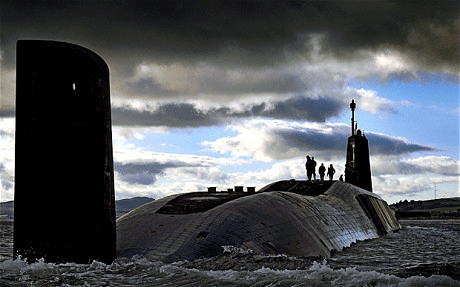
David Mackenzie, Secure Scotland:
The Royal Navy’s stated intention is to
have one nuclear-armed missile submarine always on patrol to enable what is
called the “continuous at sea deterrent” (CASD) and ready to launch its
nuclear weapons.
These boats commonly carry eight missiles. Each missile
can consist of up to 12 warheads, each about seven times the destructive
power of the US atomic bombs that killed 140,000 children, women and men in
Hiroshima on August 6, 1945. This is enough firepower to incinerate
millions and trigger a global nuclear catastrophe.
The boats were intended
for a submerged patrol of 80 days, not underwater tours of over 200 days.
Vengeance set out on its current trip in mid-April.
Let us all hope the
crew come home safe and soon. The patrol extensions are down to the aged
and dilapidated condition of these subs as well as maintenance
difficulties, including a shortage of engineering expertise and skills. On
Monday, former nuclear submarine commander Robert Forsyth wrote on X:
“Ref Vanguard being unable to relieve Vengeance yet – what is so
disheartening is that several of us have been warning of the approaching
crisis for years – inc a 1 to 1 with @JohnHealey_MP – but to cloth
ears. Now CASD is in danger of coming to an all too abrupt end.”
The National 14th Nov 2026,
https://www.thenational.scot/politics/26729016.hms-vengeance-patrol-shows-must-turn-away-nuclear-weapons/
Nuclear bomb in space would disable 98 per cent of satellites within a week
Just one nuclear explosion in space would have global and
long-lasting repercussions, disabling almost every satellite and creating
technological chaos from which it would take years to recover, warn
experts. Zachary Petersen at the University of Wisconsin–Madison and his
colleagues modelled the effect of a 1 megaton explosion 500 kilometres
above the South Atlantic. They found that an initial spike of X-rays from
the blast was damaging, but it wasn’t the most disruptive part: electrons
released by radioactive fission would become trapped in Earth’s magnetic
field, exposing satellites to a kind of artificial radiation belt, over and
over again.
New Scientist 16th Nov 2026, https://www.newscientist.com/article/2598378-nuclear-bomb-in-space-would-disable-98-per-cent-of-satellites-within-a-week/
Walt Zlotow – Democrats don’t have to wait till new Congress convenes January 3 to end Iran war funding

Walt Zlotow, West Suburban Peace Coalition, Glen Ellyn IL 17 November 2026AIMN Editorial, https://theaimn.net/democrats-dont-have-to-wait-till-new-congress-convenes-january-3-to-end-iran-war-funding/
Funding for Trump’s criminal, failed, unsolvable Iran war runs out December 11. Democrats will remain in the minority thru the lame duck session in 2026. But they can filibuster any Republican regular appropriation bill or short term continuing resolution (CR) to prevent continued war funding December 11.
That would leave Trump with two poor options. Admit defeat by ending all military operations including his blockade of Iranian commerce and preparations for further attacks, or face a government shutdown which would cut off funds to continue the war.
A government shutdown has never before been used to stop a senseless, criminal war. Since the war is opposed by a majority of Democrats (93%) and Republicans (51%), a shutdown would likely both be welcomed by the American people and blamed on Republicans for seeking to continue a war they don’t want making life less affordable.
Alas, Democrats are not fully on board to use the filibuster to end the war when war dough runs out December 11. No signal yet from either House Minority Leader Jeffries or Senate Minority Leader Schumer they will ensure there will be no supplemental funding for Trump to continue his war crimes against the Iranian people after December 11.
Senate Minority Leader Chuck Schumer (D-N.Y.), as the recipient of over $1.5 million in Israel Lobby money to support Israeli foreign policy, is loathe to end the Iran war. He offered a mild pushback to Trump’s criminality that has murdered over 3,400 Iranians while incurring 21 US military deaths to take out Iran at the behest of Israel. “Congress is going to end the war and the power of the purse is one of the ways of deterring a president who does war without the consent of the American people.” Schumer implied war on Iran would have been approved if only Trump would have followed the Constitution and requested congressional approval
His challenger to lead the Senate next year, Chris Van Hollen, who gets zilch from the Lobby, put it more bluntly and in tune with the November 3 electorate. “I will not support a single dime for Trump’s illegal and senseless war in Iran. It is endangering our troops and civilians throughout the region and driving up prices here at home. Americans made clear at the polls this week: they are sick of this war and want out. For all these reasons Democrats should use our leverage on both funding negotiations and the National Defense Authorization Act (NDAA) to defund this war now.”
The Iranian people and its government are not enemies of America. The enemies of America are ensconced in the White House, bombing people in little, unarmed boats in the Caribbean, killing people in Cuba by denying them fuel to run their hospitals, by continuing their war on Iran causing casualties daily while making life less affordable for all Americans but the well off. Democrats must not wait one day beyond the 25 days Trump and his war party have left to squander our treasure on killing instead of healing.
You got a mandate to wage peace November 3, Democrats. Now use it.
Insights into Construction Delays at the Vogtle Nuclear Plant: Primary Sources of Delay Identified by the Independent Construction Monitor

The first new reactors built in the United States in decades—two Westinghouse
AP1000s, Units 3 and 4, at the Vogtle plant in Georgia that started
commercial operations in 2023 and 2024—took more than twice the estimated
time to construct and at more than double the cost.
This experience raises
questions about nuclear power’s economic viability and therefore its role
in the energy transition and energy diversification. To better understand
what went wrong so utilities and reactor consortia can reduce the chances
of such consequential delays in future US reactor builds, the authors
examined testimonies by Vogtle’s independent construction monitor (ICM).
The ICM, Dr. William R. Jacobs Jr., reviewed the project’s progress and
any issues impacting schedule or cost. Jacobs had a unique vantage point
into the unfolding debacle throughout the process, and assessed that the
project’s three primary sources of delay were the following: Vogtle Units
3 and 4 lacked a realistic, achievable schedule.
The integrated project
schedule (IPS) used to manage the project and estimate commercial operation
dates was both incomplete and based on incorrect or unrealistic
assumptions. Private entities involved in the project failed to adhere to
the stringent quality assurance requirements of the US Nuclear Regulatory
Commission (NRC). In particular, the use of a new facility in Lake Charles,
Louisiana, with no previous nuclear-grade manufacturing experience created
lasting problems. Westinghouse lacked sufficient design completion at the
start of the project and the design changed during construction.
Both factors adversely impacted procurement and construction and the changes led
to licensing conflicts between what the NRC had certified and what the
consortium built.
Center on Global Energy Policy 15th Nov 2026, https://www.energypolicy.columbia.edu/publications/insights-into-construction-delays-at-the-vogtle-nuclear-plant-primary-sources-of-delay-identified-by-the-independent-construction-monitor/
Australia: The Coalition’s latest energy delusion: nuclear-powered data centres

“nuclear hype has flowed like champagne at a wedding reception” in relation to the growing energy demand of data centres.
November 17, 2026
Coalition MPs are promoting small modular nuclear reactors to power Australia’s growing data centre industry. But the technology remains commercially unproven, expensive and slow, while Big Tech’s commitments fall far short of construction funding.
A new report from the Australian Conservation Foundation debunks the Coalition’s claim that Australia needs nuclear reactors – and in particular small modular reactors (SMRs) – to power data centres.
These claims are being promoted by Liberal Shadow Energy Minister Dan Tehan, Liberal shadow ministers Andrew Hastie and Jonno Duniam, Nationals Leader Matt Canavan, Deputy Leader Darren Chester and Senate Leader Bridget McKenzie. A notable exception is the Queensland LNP government, which does not plan to repeal legislation banning nuclear power.
According to a 2025 report by the International Energy Agency (IEA), data centres accounted for 1.5 per cent of global electricity consumption in 2024 and the figure could reach three per cent by 2030.
In the IEA’s ‘Base Case’ from 2024–2035, 320 gigawatts (GW) of additional capacity are installed to power data centres, of which renewables account for nearly two-thirds and nuclear just 20 GW or 6 per cent.
Over 80 per cent of that projected 20 GW of new nuclear capacity comes from SMRs in the US and China in the IEA’s scenario. However there are good reasons to be sceptical about the deployment of significant SMR capacity – or even modest SMR capacity – by 2035. Or ever.
Indeed the IEA report notes that SMRs “remain to be demonstrated at scale”, that “high levelised costs and regulatory hurdles remain significant barriers to deployment”, and that “emerging challenges” exist such as “establishing supply chains for the higher-purity fuel needed for SMRs”.
Non-binding agreements and non-existent technology
Technology companies have “plans to finance more than 20 GW of SMRs to date”, the IEA claims. But “plans” should not be conflated with secure funding.
Several major technology companies, including Microsoft, Google, Amazon and Meta, have announced nuclear energy partnerships to support growing data-centre demand. However, these commitments are largely non-binding agreements, power purchase arrangements, or modest investments in SMR wannabes rather than direct funding for reactor construction.
A Carnegie analysis notes that AI companies have preferred power purchase offtake agreements – in which a buyer commits to a fixed-price, long-term contract with a power generator to buy electricity – rather than far more expensive and risky direct nuclear ownership or project development. Direct partnerships are mostly with relatively new companies that are developing SMRs, and details are generally opaque.
Alphabet, Amazon, Meta, Oracle and NVIDIA have agreements with SMR developers. The Carnegie analysis notes that the terms of agreements are “largely undisclosed” but only include modest investments “structured to support early-stage SMR companies rather than fund construction directly.” The analysis states: “Critically, these agreements are contingent on technologies that have not yet been commercialized.”
‘Nuclear hype has flowed like champagne’
Dawn Stover, editor of the Bulletin of the Atomic Scientists, notes that “nuclear hype has flowed like champagne at a wedding reception” in relation to the growing energy demand of data centres. However an analysis published in the Bulletin of the Atomic Scientists, argues that corporate press releases linking data centres to nuclear power “are all show, with little substance”.
Non-binding agreements and modest investment are no substitute for contractual agreements with clear funding commitments. Nuclear funding commitments from Amazon and Google, the authors note, “are just a fraction of one percent of their annual expenditures earmarked for building data centers”.
Those nuclear commitments are “primarily meant as greenwashing, in order to divert attention from the negative environmental impacts of data center operations” including much larger fossil fuel investments.
Powering data centres in Australia
In Australia, 165 data centres are operating and a further 225 are planned or proposed. Approximately 70 per cent of the electricity used to power data centres in Australia now comes from renewables according to the Australian Energy Market Operator (AEMO).
AEMO noted in August 2026 that data centre electricity consumption in the National Electricity Market is forecast to increase from 2.8 per cent of the total in 2025/26 to as much as 13 per cent a decade later.
It is in that context that the Coalition is promoting nuclear power for data centres. After a trip to the US, Liberal Shadow Minister Jonno Duniam said: “It was clear to me when talking with representatives of major AI and data centre operatives that, if the moratorium was not in place, these companies would be seriously looking to nuclear SMRs to power their operations …”
That would be a more compelling argument if the ‘major AI and data centre operatives’ were stumping up many billions for new reactors, large or small, in the US or anywhere else. But they aren’t.
Nuclear is no solution
Here is a non-exhaustive list of the reasons why Coalition MPs are barking up the wrong tree by promoting nuclear-powered data centres (for detail see the Australian Conservation Foundation report):
Nuclear power is illegal and unpopular. Federal legislation bans the construction of nuclear power reactors, as do state laws in Queensland, NSW and Victoria.
Coupling unpopular nuclear power with unpopular data centres may be a bridge too far as Crikey noted in August 2025: “A recent Capital Brief/DemosAU poll found that just 20 per cent of respondents support a nuclear plant in their area, even less than the 23 per cent who would support a data centre (imagine how they’d feel about both at once).”
SMRs don’t exist. No SMRs exist worldwide and none are under construction using the standard definition (<300 megawatts, serial modular construction).
Using a loose definition – ignoring modular construction – there are two operating SMRs and five under construction. The combined capacity of those seven projects is 1.2 GW. Far more renewable energy capacity is added every day.
The International Energy Agency expects the addition of nearly 4,800 GW of renewable capacity worldwide in the six years from 2026–31, or 2.2 GW per day on average. SMR additions over that six-year period might or might not reach 1 GW.
Nuclear power is too slow. Based on overseas experience and expert analysis, introducing nuclear power to Australia would likely require around ten years for planning and licensing, followed by another ten years for construction.
SMR advocates claim 3–5 year construction timelines, but the so-called SMRs in China and Russia took 11–12 years to build and around two decades from planning to operation.
Nuclear power is too expensive. Data-centre growth is already placing upward pressure on power prices. Nuclear would not ease these pressures. Electricity from SMRs would be far more expensive than renewable energy.
The latest CSIRO GenCost report gives these 2025 levelised cost estimates: SMR A$433–718 / megawatt-hour, large nuclear $200–328, solar PV $52–88, and onshore wind $78–129.
Nuclear accidents and attacks. In addition to the risk of catastrophic accidents, recent experience in Ukraine and the Middle East highlights the potential for nuclear catastrophe resulting from deliberate or accidental military strikes on nuclear plants.
Nuclear reactors (and data centres) are too thirsty. Nuclear reactors consume large volumes of water daily, and so do data centres.
Dr Jim Green is the national nuclear campaigner with Friends of the Earth Australia and author of the ACF’s new report_, ‘Phantom Energy: Small modular reactors and data centres’._
Blykalla Secures World’s First HALEU Enrichment Contract for a Commercial Lead-Cooled Reactor
Sonal C. Patel, Power Mag 19th Nov 2026
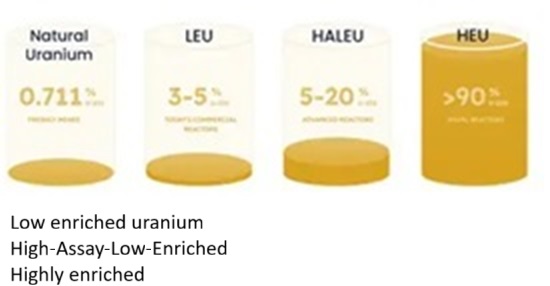
Swedish advanced nuclear developer Blykalla has signed an agreement with Urenco that the companies describe as the world’s first high-assay low-enriched uranium (HALEU) enrichment contract for a commercial lead-cooled reactor. The agreement covers Blykalla’s first commercial 55-MWe Swedish Advanced Lead Reactor (SEALER), which the company plans to deploy in the U.S.
The agreement, signed Nov. 12 at Urenco’s London headquarters and announced Nov. 16, calls for Blykalla to supply the uranium feed and Urenco to enrich the material at its Advanced Fuels Facility in Capenhurst, England. Urenco plans to bring the facility online in 2031 and begin deliveries to Blykalla in the early 2030s.
“We expect to be able to announce more about the location and schedule in the near future,” Blykalla CEO Jacob Stedman said in written responses to POWER………………………………………………………….
Neither company disclosed the contract value or the enrichment level specified for the SEALER fuel…………………………………………………………………………
The Urenco agreement, notably, covers only the enrichment stage of the nuclear fuel cycle. Blykalla has not identified the suppliers that will provide the finished fuel for its first commercial reactor…………………………………………………………………………………………………..
Blykalla’s U.S. development program encompasses Fjäll, its first-of-a-kind nuclear demonstration reactor, and the SEALER-55 for commercial deployment. The company initiated pre-application engagement with the Nuclear Regulatory Commission (NRC) in June 2026 but has not yet filed a license application……………………………
Blykalla has also established a strategic partnership with U.S. sodium-cooled fast reactor developer Oklo…………………………………………………………………………………
“We are coordinating our commercialization efforts in Sweden and the US through a common supply chain strategy,” Stedman told POWER. https://www.powermag.com/blykalla-secures-worlds-first-haleu-enrichment-contract-for-a-commercial-lead-cooled-reactor/
Energy crisis reinforces comeback of nuclear power, says IEA
Unprecedented disruption in the energy world – primarily resulting from
the war in the Middle East – is set to reinforce the comeback of nuclear
power, according to the International Energy Agency’s latest World Energy
Outlook, which has revised its forecast for nuclear upwards.
World Nuclear News 19th Nov 2026 https://www.world-nuclear-news.org/articles/energy-crisis-reinforces-comeback-of-nuclear-power-says-iea
1 This Month
Tell Congress: Prevent Nuclear Catastrophe in Iran

Tell Congress: Prevent Nuclear Catastrophe in Iran

Read the Public Inquiry Report, the Commissioners’ report, Surrendering Australia: The AUKUS Deception is available to download for free at aukuspublicinquiry.com. Or just watch the replay of the National Press Club Luncheon.


Shut down the radiation-damaged Heysham nuclear reactors now
To see nuclear-related stories in greater depth and intensity – go to https://nuclearinformation.wordpress.com

Say No to NASA’s Reckless Nuclear Reactor on the Moon
Say No to NASA’s Reckless Nuclear Reactor on the Moon
-
Archives
- November 2026 (198)
- October 2026 (302)
- September 2026 (339)
- August 2026 (330)
- July 2026 (355)
- June 2026 (287)
- May 2026 (306)
- April 2026 (356)
- March 2026 (251)
- February 2026 (267)
- January 2026 (308)
- December 2025 (358)
-
Categories
- 1
- 1 NUCLEAR ISSUES
- business and costs
- climate change
- culture and arts
- ENERGY
- environment
- health
- history
- indigenous issues
- Legal
- marketing of nuclear
- media
- opposition to nuclear
- PERSONAL STORIES
- politics
- politics international
- Religion and ethics
- safety
- secrets,lies and civil liberties
- spinbuster
- technology
- Uranium
- wastes
- weapons and war
- Women
- 2 WORLD
- ACTION
- AFRICA
- Atrocities
- AUSTRALIA
- Christina's notes
- Christina's themes
- culture and arts
- Events
- Fuk 2022
- Fuk 2023
- Fukushima 2017
- Fukushima 2018
- fukushima 2019
- Fukushima 2020
- Fukushima 2021
- general
- global warming
- Humour (God we need it)
- Nuclear
- RARE EARTHS
- Reference
- resources – print
- Resources -audiovicual
- Weekly Newsletter
- World
- World Nuclear
- YouTube
-
RSS
Entries RSS
Comments RSS

