The Nuclear Financing Gap

Fundamental changes to market structures and risk profiles following deregulation of the world’s electricity markets have left nuclear financing options adrift.
The concern is that the power plant will remain capable over the long term of selling its output at a price that is high enough to cover its costs. Adding to this concern is the possible emergence of any new, competing technology that can sell electricity at a lower price.
NS ENERGY, By Dr Stephen Dansky16th Nov 2026
When the ‘on’ switch was thrown at the first electric power plant, Thomas Edison was not there celebrating with his team of scientists and engineers. Rather, he was celebrating quite a distance away on Wall Street with the bankers who financed his endeavour. Throughout his prolific career, he understood that a great new design is nothing more than an academic exercise unless the banking community is willing to provide the requisite funds for construction.
Today’s nuclear engineers may want to consider that moment in history. The designs for the next generation of nuclear power imply greater safety, and modular construction may improve costs. They may also help countries meet their greenhouse gas targets. Nonetheless, recent research has demonstrated that within deregulated electricity markets, such as those that comprise two-thirds of the US electric market, there should be little expectation of obtaining the requisite financing to construct these new designs.
Market evolution
Much has changed about electricity markets over the last few decades. Previously, all utilities in the US that owned nuclear power plants operated within a regulated cost-of-service framework. These long-standing cost-of-service regulations extend back to several US Supreme Court decisions including Smyth v. Ames and Hope Natural Gas v. Federal Power Commission which led to the ‘used and useful’ doctrine for regulated monopoly utilities. Moreover, all retail customers within the geographic boundaries of a utility’s service territory were legally captive – they could not switch electric providers no matter how high the regulators set the electric rates following placement of a new nuclear plant into the rate base, or how volatile due to an oil embargo. From the viewpoint of lenders and investors, these captive customers provided the ultimate credit support for a utility’s construction plans. Under a regulated monopoly utility framework, the revenue and cost risks of owning a nuclear plant were reduced to a point sufficient to satisfy the financiers.
This regulatory framework supported the financing of more than 90 GW of nuclear capacity in the US. Globally, it supported the financing of over 400 nuclear power plants in 32 countries, and every one of these nuclear plants was financed under some form of government regulation. Referred to as the “sovereign form” of financing by the International Atomic Energy Agency, either the government agreed to assume some or all of the revenue and cost risks, or the government passed the risks on to captive retail customers. Without some form of sovereign assistance, no nuclear power plant in any country has successfully secured financing anywhere in the world.
Within the US, electricity deregulation began with the passage of the Public Utility Regulatory Policies Act of 1978, followed by the Energy Policy Act of 1992, and then by various Federal Energy Regulatory Commission (FERC) rulings. These rulings included Orders 888, 889, 1000, and 2000 to further promote competitive economic efficiencies by providing open access to electric transmission lines and establishing the independent system operators (ISO), thus creating an ‘arms-length’ separation between the operation of the transmission grid and its owners.
Arising from this string of legal and regulatory changes was a restructured electricity market serving approximately two-thirds of the US market. Here, electric utilities were required to divest their regulated electric generating assets, and electric plants are now developed, owned, and operated by non-utility independent power producers (IPPs). No longer are there regulated monopolies for the generation of electricity. There are competitive wholesale and retail electricity markets, and retail customers are free to choose their electric suppliers the same as they choose cell-phone carriers. These IPPs sell their electricity into the wholesale electric grid as a commodity using prices provided by each IPP to the ISO on a daily basis. Cost-of-service regulations are not available to these IPPs. They survive, or not, on their ability to make a return on investment in a competitive market – the same as other competitive businesses such as automotive manufacturing, oil and gas, pharmaceuticals, and food products.
The goal of engineering economists several decades ago to deregulate and restructure the electricity generation market, and bring economic efficiencies through competition, has largely succeeded. Numerous studies have shown that deregulation led to increases in operating performance and plant efficiency, as well as lower electricity prices for customers. However, deregulation also shifted some risks away from electric ratepayers and toward power plant investors. There are multiple types of risk which affect the construction and operation of a power plant, and it is the shifting of revenue risk and how this risk affects different types of power plants differently that is a key to private sector investment in power generation.
Changes in dispatch risk
It is well established that the economics of a high fixed cost/low variable cost technology such as nuclear power improve at higher capacity factors, typically represented as the baseload segment of the market. Capacity factors of 90%+ are considered the critical range of operation if nuclear power is to be cost-competitive vis-à-vis competing technologies, and this characteristic has important financing implications. In other words, it is important to maintain a high output quantity (Q) to keep average fixed costs (AFC) down because nuclear plant fixed costs are high relative to its variable costs. Thus, by operating as a baseload unit, the high fixed costs of a nuclear plant can be allocated over a greater quantity of kWh to minimise AFC, which in turn, minimises the plant’s average total electric costs.
Thus, it is economics, not physics, that restricts nuclear plants from being dispatchable (changing Q during the course of a day to meet changes in electric demand) as this would lower Q and, in turn, increase AFC. The nuclear plant would have insufficient cash flow to meet its debt and equity obligations.
This economic principle that nuclear plants should not be dispatchable also applies to any of the proposed advanced nuclear plant designs. These new designs do not alter the high fixed cost/low variable cost relationship that is inherent to nuclear power, and it is this relationship that dictates whether a power plant economically operates as a baseload, intermediate, or peaking unit. The new designs do not alter the economic issue at the centre of our analysis with its important financing implication that nuclear plants require baseload operation.
The conundrum, whether analysing existing nuclear plant technology or a proposed advanced modular design, is that the daily quoted price (P) of the electricity supplied by the owner of the plant to the ISO must remain low enough to ensure that the plant will be dispatched by the ISO in order to sell a high quantity (Q) of the plant’s output, and thus be a baseload unit, yet the total revenue (TR = P x Q) must be large enough to cover all costs, including the plant’s high capital costs. This is a tight operating window, and the nuclear plant must be able to satisfy this constraint over the plant’s life, despite changes in competing technologies, regulations, and customer demand in order to attract financing. The debt and equity financiers of the nuclear plant seek to have this operating risk minimised because the tight operating window leaves little cushion to absorb the effects of other long-term revenue risks.
Prior to deregulation, nuclear plant owners were able to eliminate this dispatch risk by designating each nuclear plant as “must run”. Today, under deregulation, this ability no longer exists because the dispatch sequence is determined by the ISO and not by the owner of the power plant.
Changes in price and output quantity risks
Lenders and equity investors have concerns about long-term price certainty for all types of power plants, not just nuclear. The concern is that the power plant will remain capable over the long term of selling its output at a price that is high enough to cover its costs. Adding to this concern is the possible emergence of any new, competing technology that can sell electricity at a lower price. The ISO may sequence the new technology to run each day ahead of the older technology. When this occurs, the new technology will push the older plant ‘up the dispatch curve’ which will result in a shortfall of total revenue for the older technology and affect its ability to make payments to lenders and investors.
Prior to deregulation, power plant owners were able to eliminate this long-term price risk based on the previously noted Supreme Court decisions which established the ‘used and useful’ doctrine for regulated monopoly utilities. Under this doctrine, once a power plant is deemed to be used and useful by the appropriate regulatory body, then the prudently incurred costs, including the plant’s fixed capital and the variable fuel costs, plus a reasonable rate of return, continue to be included in the electric rates charged to customers. Today, under deregulation, this ability no longer exists.
Another financing concern is price volatility…………………………………………………………………………………………………………………………………………………………………………………………………………………………………………………………………………………………………………………………………………….
Advanced reactor strategy shift required
At the end of the day, the issue facing the financial community is not whether a technology provides firm vs. interruptible power, or where it fits into the dispatch queue. For project-financed projects within deregulated markets, the issue boils down to the IRR:WACC ratio. Debt and equity investors will continue to prudently pour money into wind and solar projects (and any other forthcoming technology) that have higher IRR:WACC ratios. Unless nuclear power can increase its IRR:WACC ratio on par with other technologies, either by lowering revenue risk to lower its WACC or by lowering its capital costs to increase its IRR, nuclear power will not succeed in attracting private investment within competitive deregulated markets.
Deregulation is here to stay in those markets that have been deregulated. Given that there are multiple technologies, and more to come, to combat greenhouse gases, there isn’t the political appetite to rescind the successes of deregulation. Today’s designers of advanced modular reactors may want to adjust their marketing plans to exclude deregulated markets and focus on regulated markets where there isn’t the competition for funds against other technologies having higher IRR:WACC ratios.
This article first appeared in Nuclear Engineering International magazine. https://www.nsenergybusiness.com/analysis/the-nuclear-financing-gap/
No comments yet.
1 This Month
19 November – Webinar – The Reality of Reprocessing
Time: 11:00 AM Pacific Time (US & Canada) / 2:00 PM Eastern / 7:00 PM UK / 8:00 PM CET
Register for the Zoom Event Here

Tell Congress: Prevent Nuclear Catastrophe in Iran

Tell Congress: Prevent Nuclear Catastrophe in Iran
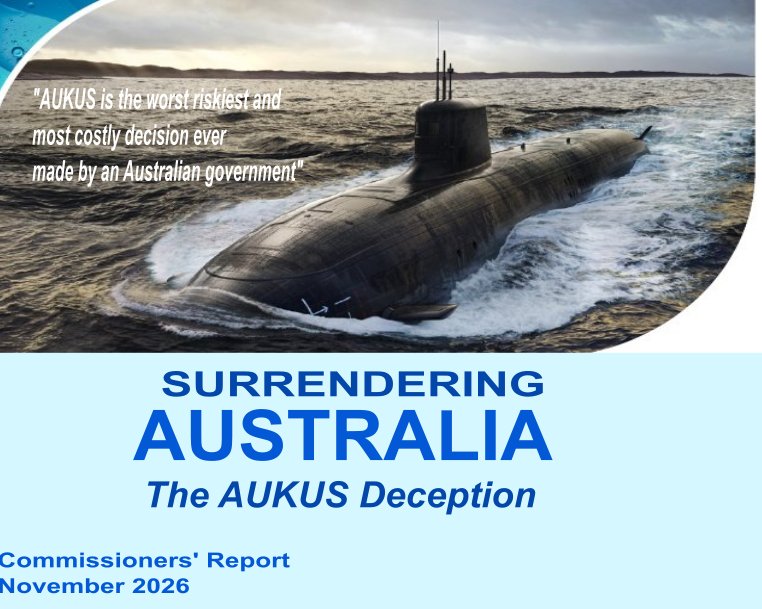
Read the Public Inquiry Report, the Commissioners’ report, Surrendering Australia: The AUKUS Deception is available to download for free at aukuspublicinquiry.com. Or just watch the replay of the National Press Club Luncheon.


Shut down the radiation-damaged Heysham nuclear reactors now
To see nuclear-related stories in greater depth and intensity – go to https://nuclearinformation.wordpress.com

Say No to NASA’s Reckless Nuclear Reactor on the Moon
Say No to NASA’s Reckless Nuclear Reactor on the Moon
-
Archives
- November 2026 (190)
- October 2026 (302)
- September 2026 (339)
- August 2026 (330)
- July 2026 (355)
- June 2026 (287)
- May 2026 (306)
- April 2026 (356)
- March 2026 (251)
- February 2026 (267)
- January 2026 (308)
- December 2025 (358)
-
Categories
- 1
- 1 NUCLEAR ISSUES
- business and costs
- climate change
- culture and arts
- ENERGY
- environment
- health
- history
- indigenous issues
- Legal
- marketing of nuclear
- media
- opposition to nuclear
- PERSONAL STORIES
- politics
- politics international
- Religion and ethics
- safety
- secrets,lies and civil liberties
- spinbuster
- technology
- Uranium
- wastes
- weapons and war
- Women
- 2 WORLD
- ACTION
- AFRICA
- Atrocities
- AUSTRALIA
- Christina's notes
- Christina's themes
- culture and arts
- Events
- Fuk 2022
- Fuk 2023
- Fukushima 2017
- Fukushima 2018
- fukushima 2019
- Fukushima 2020
- Fukushima 2021
- general
- global warming
- Humour (God we need it)
- Nuclear
- RARE EARTHS
- Reference
- resources – print
- Resources -audiovicual
- Weekly Newsletter
- World
- World Nuclear
- YouTube
-
RSS
Entries RSS
Comments RSS


Leave a Reply