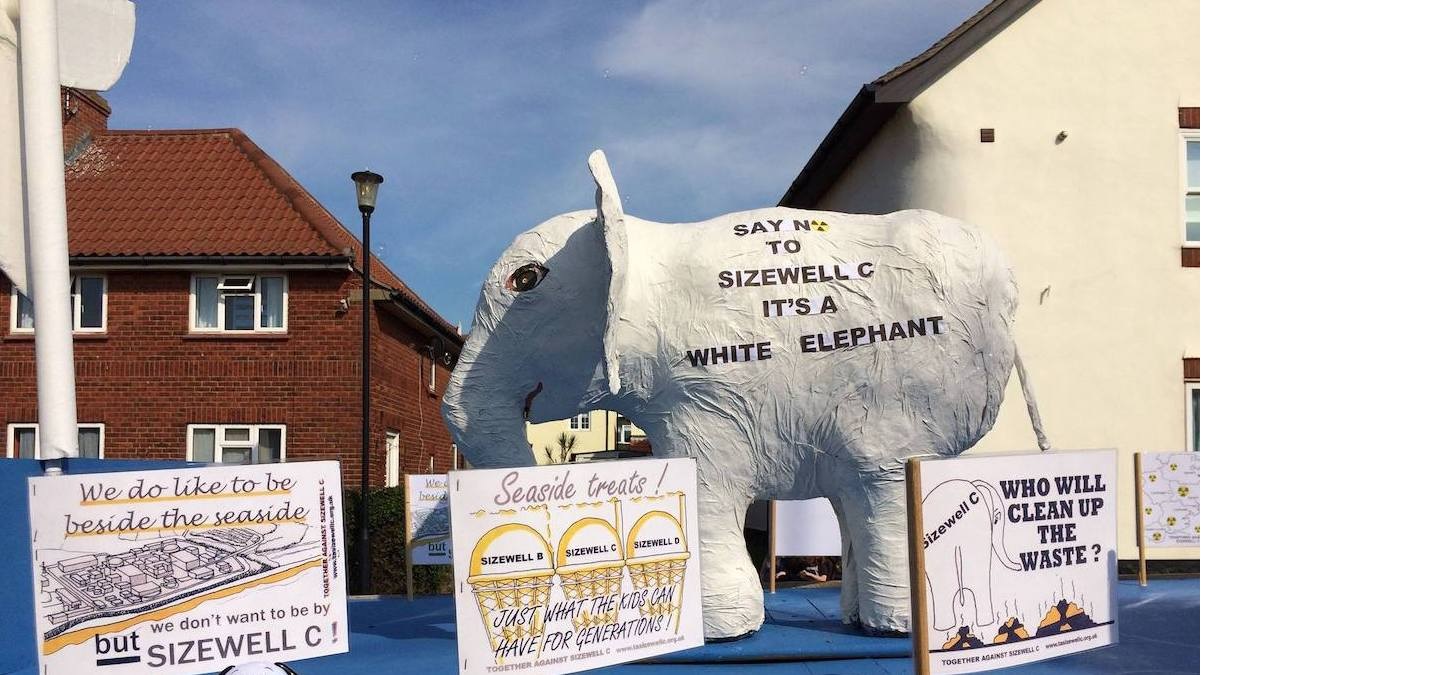
Sizewell nuclear plant is ‘terrible deal’ for British taxpayers, MPs conclude.
Rachel Millard in London, Oct 28 2026, https://www.ft.com/content/bc330ee4-f151-4552-88a8-8879a26d8fdd?syn-25a6b1a6=1
The £40bn Sizewell C nuclear plant is a “terrible deal” for the UK taxpayer and a financing model that must never be repeated, a powerful parliamentary inquiry has concluded.
Taxpayers and consumers are shouldering “extraordinary” financial risk and footing the vast majority of the bill for the facility being built by a consortium that includes the UK government and the French utility EDF, while private investors “cash in”, according to the Public Accounts Committee made up of cross-party MPs.
However, the government had no option but to provide such attractive terms to investors owing to the failure of successive governments to lay the groundwork for nuclear investment, the MPs said, urging ministers to build confidence in the sector so better terms can be negotiated in future.
“The high level of risk borne by taxpayers and consumers for the construction of Sizewell C is extraordinary,” PAC chair Sir Geoffrey Clifton-Brown said as he outlined the committee’s findings on Wednesday.
Private investors would receive “significant returns on their investments, while customers are likely to be saddled with higher energy bills”, he continued. “Sizewell C represents a terrible deal for the UK taxpayer,” the PAC said. “The UK must never be put in this position again.”
Almost all of Britain’s existing nuclear plants are steadily coming to the end of their working lives, with efforts to replace them complicated by high costs and the length of time it takes to build new projects.
The 3.2-gigawatt Sizewell C project in Suffolk is due to provide electricity for the equivalent of 6mn homes for at least sixty years when it becomes operational at the end of the 2030s. It is one of only two nuclear plants approved in a generation after Hinkley Point C, being built by EDF in Somerset.
The Sizewell C construction cost, excluding finance costs, is estimated at £38bn in 2024 prices, or about £40bn in today’s money. The vast majority of this will come from the UK government, which is providing £3.8bn in equity and almost £37bn in loans funded by government borrowing.
EDF, which is supplying the reactor technology, is contributing £1.05bn while private investors La Caisse, Centrica and Amber Infrastructure are putting in a further £3.65bn.
The power plant is being built under a so-called regulated asset base model that means consumers begin paying for it from the outset of construction. The idea is to lower finance costs by reducing the risk for developers.
The National Audit Office has estimated Sizewell C’s finance costs are about five percentage points below those of Hinkley Point C.
Previous projects using the pressurised water reactor design being built at Sizewell C have been hit by heavy delays and cost overruns, including Hinkley Point C.
Yet despite providing the majority of the overall funding, the UK government has a minority stake in the delivery body that controls the project, an arrangement that the parliamentary committee said may make the government less able to intervene if things go wrong.
Its analysis shows that if costs rise to £47.7bn, the upper end of a potential cost range, consumers could pay £9.8bn more during construction and £12bn more over Sizewell C’s operating life, “while private investors may only need to put in an extra £30mn”.
Alison Downes at Stop Sizewell C, a local campaign group, and Steve Thomas, emeritus professor of energy policy at the University of Greenwich, urged the government to immediately cancel Sizewell C “before any more public money is wasted”.
Nigel Cann, chief executive of Sizewell C, said the plant was “the right investment for Britain” that would build energy independence, lower bills and provide reliable low-carbon electricity for decades to come.
AI’s real bottleneck is electricity. Who will pay for it?

In effect, households are already paying higher electricity capacity charges, partly because of projected demand from facilities that may never become operational
In the United States, the debate over AI infrastructure is becoming increasingly centred on who ultimately bears the cost of its electricity demands,
As Big Tech turns to nuclear power to fuel its AI ambitions, the cost of keeping data centers running raises a question that extends far beyond Silicon Valley.
By AlHasan AlSammarraie, Founding & Managing Partner – Applab. 30 Oct 2026, https://www.aljazeera.com/opinions/2026/10/30/ais-real-bottleneck-is-electricity-who-will-pay-for-it
Within a week, two of the three largest cloud computing companies in the world signed 20-year contracts for nuclear electricity. Amazon has taken 690 megawatts from Constellation’s Calvert Cliffs plant in Maryland, including 190 megawatts of additional generating capacity expected between 2030 and 2032. Google has signed an agreement that will bring 890 megawatts of additional nuclear capacity into the United States. Constellation is investing more than $4.3bn to upgrade 11 reactors across Illinois, Pennsylvania, and New Jersey. Neither agreement, however, involves building a new nuclear reactor. Rather, they are paying to generate more output from reactors that already exist – some of which are even older than the companies themselves.
A few years ago, such agreements would have seemed inconceivable. Nuclear power had fallen out of favour following accidents at Three Mile Island in 1979, Chornobyl in 1986 and Fukushima in 2011. Germany phased out nuclear power, while Japan shut down its reactors after Fukushima, although it has since begun restarting them. In many democratic countries, advocating for nuclear energy became politically difficult.
Today, an undamaged reactor at Three Mile Island is being brought back into service, with Microsoft contracted to buy its output for 20 years. The US Department of Energy is providing up to $4.4bn in loans to support the restart of three shuttered plants, with the aim of restoring about 2.25 gigawatts. Palisades in Michigan, which was closed in 2022, is contracted to be generating again by March 2027. If successful, it would become the first US commercial nuclear plant to restart after entering decommissioning.
What has changed?
The quiet reversal
In the last decade, the industry’s answer to AI’s energy problem was efficiency – things such as better chips, smaller models and smarter cooling seemed appealing and feasible. Industry conferences featured discussions about performance per watt, with modern artificial intelligence (AI) chips performing more computation per unit of electricity than their predecessors.
Yet those efficiency gains did not reduce overall electricity demand. Instead, each gain was quickly put towards something larger. Even when DeepSeek demonstrated that a competitive model could be trained at a fraction of the computing cost many had expected, the result was not a reduction in industry spending. Instead, laboratories continued planning more training runs, models that reason for longer, agents that work continuously in the background, and video generation.
This would not be the first time something like this has happened in history. In 1865, William Jevons observed that more efficient steam engines made Britain burn more coal, not less, because cheaper power created uses that had not existed before. The International Energy Agency estimates that global data centre electricity demand will more than double to around 945 terawatt-hours by 2030, even assuming continued improvements in efficiency.
Hence, the industry has changed strategy – unable to shrink demand, companies are now buying up supply.
The arithmetic of waiting
Money, however, cannot solve every problem quickly.
A new large reactor takes a decade or more from decision to electricity. Tech companies are investing in small modular reactors to power their data centres, although many of these projects are not expected to deliver electricity until the early 2030s. So far, very few of these have been built anywhere in the world. Thus, while reactor restarts and upgrades are the faster option, the “fast option” still means 2027, 2028, 2029, or beyond.
AI capital expenditure, however, does not operate on that same calendar. The chips being installed this year could be overtaken by newer technology long before the 20-year electricity contracts powering them expire. This discrepancy underpins all of these announcements, yet the industry has not addressed the implications if demand weakens while contractual obligations remain.
Who pays in the meantime
This is where the story stops being about technology.
Most of these deals sit inside PJM, the grid operator serving roughly 67 million people across 13 American states and Washington, DC. PJM uses capacity auctions to secure sufficient electricity-generating resources for future demand, with the associated costs ultimately passed on to consumers through their electricity bills. Capacity prices have reached the regulatory price cap in three consecutive auctions. According to the grid operator’s independent market monitor, data centre demand contributed approximately $29.4bn in capacity costs across the four most recent auctions. In the latest auction alone, around $6.3bn of these costs were attributed to data centre demand, including forecasts for facilities that have yet to be built.
In effect, households are already paying higher electricity capacity charges, partly because of projected demand from facilities that may never become operational. The Natural Resources Defense Council estimates that, by 2028, the typical household within PJM could face an additional $70 per month in electricity costs if current trends continue. These rising costs are also having political consequences. Recent US polling shows growing public dissatisfaction with data centres, with electricity bills among the main concerns. In response, Virginia has established a separate electricity rate class for data centres, Ohio has introduced minimum billing requirements, and Illinois is debating legislation.
The aim of the Google agreement is to tackle this objection. Its underlying principle is that major new electricity consumers should bring additional generation capacity rather than compete with existing users for an already constrained supply. This approach represents a constructive step towards mitigating the pressure that data centres place on electricity systems.
However, the arrangement remains voluntary. In October 2026, US federal regulators rejected most of PJM’s proposal to require large new electricity consumers to provide their own generation capacity. As a consequence, the industry is voluntarily offering a commitment that regulators have so far declined to impose through PJM’s proposed rules. This poses the question: how long will such voluntary commitments remain viable if the costs of fulfilling them begin to rise?
What the Gulf should take from this
For Gulf countries preparing their own AI infrastructure expansion, the US experience offers a warning about the costs of getting these arrangements wrong.
For countries with abundant energy resources, the expansion of AI infrastructure presents a significant opportunity.
Qatar’s sovereign fund has committed to a $20bn joint venture with Brookfield for AI infrastructure, beginning with a first phase of roughly 300 megawatts and potentially expanding to near 1.5 gigawatts. Abu Dhabi is pursuing plans for up to five gigawatts of AI data centre capacity. Saudi Arabia is targeting almost two gigawatts through HUMAIN. The region’s competitive advantage is substantial. As demand for AI computing grows, access to electricity is becoming an increasingly important factor in determining where computing infrastructure is built. The Gulf is well positioned to capitalise on this demand.
However, the scale of the proposed developments warrants scrutiny. If the proposed 1.5-gigawatt build-out is completed in Qatar, it would represent electricity demand equivalent to approximately 12 percent of the country’s installed generating capacity. Electricity allocated to AI infrastructure cannot simultaneously serve other purposes, meaning the opportunity costs of these projects deserve serious consideration.
In the United States, the debate over AI infrastructure is becoming increasingly centred on who ultimately bears the cost of its electricity demands, with many of the major commitments already in place. The Gulf is in a rare position of being able to settle that question first: what the industrial tariff is, who funds the new generation, what happens to the contracts when the hardware ages, and what long-term economic benefits the country would see beyond energy revenues and a limited number of jobs.
While hosting AI infrastructure can generate considerable economic value, the greater strategic opportunity lies in determining the conditions under which that infrastructure operates. For Gulf countries, the opportunity to establish these terms exists now, before large-scale commitments constrain their options.
Sizewell C investors set to cash in and leave taxpayers to foot the bill, Public Accounts Committee (PAC)warns
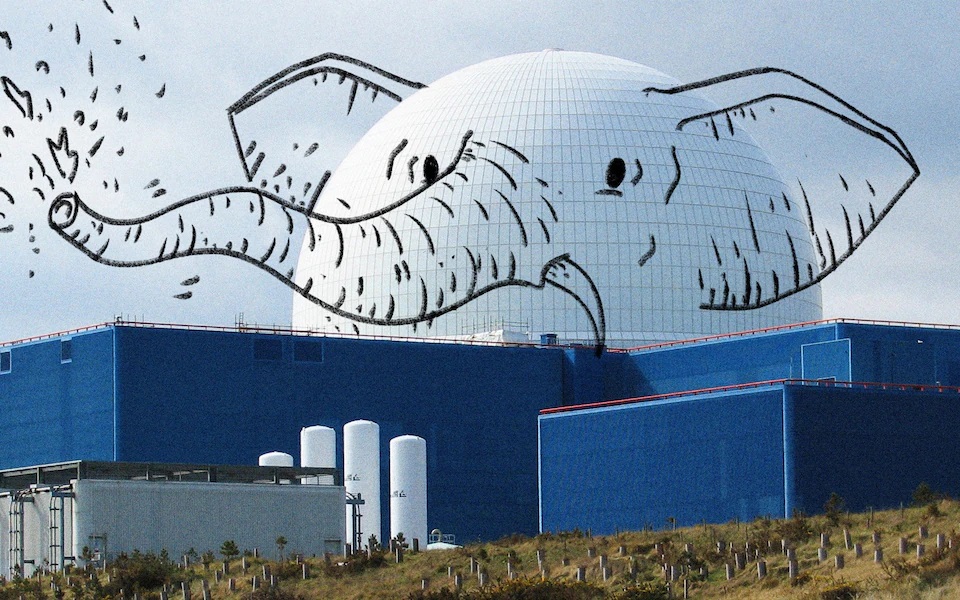
“The high level of risk borne by taxpayers and consumers for the construction of Sizewell C is extraordinary”
The Public Accounts Committee (PAC) is raising the alarm over the substantial financial contribution and risk borne by UK taxpayers and consumers in the construction of Sizewell C.
The UK has found itself in this position due to the poor record of delivering nuclear projects. The PAC believes it is crucial that the UK government seizes this opportunity to demonstrate it can break that track record to ensure that they never have to accept such poor terms again. Delivering Sizewell C on time and on budget would set the Government on much stronger footing for future deals, and ensure the financial risks of any future schemes can be distributed more fairly.
Sizewell C will cost between £40.5bn and £47.7bn and is expected to finish construction between 2039 and 2043. The design has previously been used in France, Finland and China and is currently being used in the UK for the construction at Hinkley Point C. Despite assurances that using this design will reduce risks, it has a poor international delivery record, with a clear pattern of significant delays and substantial cost escalations. No comparable nuclear power station anywhere in the world has been built on time and to budget.
The project’s novel delivery model means the public will provide most of the financing and bear most of the risk. However, the Government has relinquished majority control to a delivery body primarily owned by private investors. The PAC is therefore deeply concerned that if costs exceed projections, as they are likely to, private investors will only have to provide an additional £30m compared to an additional £9.8bn paid by consumers during construction and £12 billion over the 60-year operating contract through higher energy bills.
This raises concerns about whether investor incentives are strong enough to promote efficient delivery. As the Government’s ability to intervene directly is likely to be constrained, the PAC has serious concerns about whether the public interest will be protected. The Department should set out how it intends to protect consumers and taxpayers, and monitor and evaluate the success of this approach.
Similarly, at the end of the plant’s operational lifetime, if decommissioning costs rise above the level of funds set aside by Sizewell C Ltd, taxpayers will be called upon to cover the shortfall. The PAC is calling for Funded Decommissioning Programme reports to be published every five years, including how funds compare to expected decommissioning costs.
The total added value to the UK economy during construction could reach £26.6bn and is expected to generate significant local and national economic benefits to UK businesses. The Government must set out how it will ensure that Sizewell C meets its target of 70% of construction spend in the UK and that associated jobs remain in the UK.
Current plans to report once a year are inadequate for a project with such significant exposure for taxpayers and consumers. Reporting more frequently could help to identify emerging risks more quickly which should result in more cost-effective solutions. The Committee is calling for reports to be published every six months and for them to be transparent and accessible, containing details of expected impacts on consumer bills and forecast investor returns.
Chair quote
Sir Geoffrey Clifton-Brown MP, Chair of the Public Accounts Committee, said: “The high level of risk borne by taxpayers and consumers for the construction of Sizewell C is extraordinary. Private investors look set for significant returns on their investments, while customers are likely to be saddled with higher energy bills. The government must focus on the successful delivery of this project, not just of a new nuclear power station, but of a commercially derisked nuclear sector for a taxpayer that should never be put in this position again. The history of the Sizewell C deal risks being one of missed opportunities for the taxpayer; for example, the mapping of the Hinkley designs onto the current project the point is they did it rather than going out into the world to see if there was a better cheaper design.
“Our Committee has previously raised concerns of poor workplace cultures at other civil nuclear sites. Though we welcome the steps already taken by Sizewell C Ltd to prevent these issues from taking root, it is not yet clear if this will be enough. The construction should give a welcome boost to the UK’s economy and have a significant positive impact on the local area; it will be up to the Government to turn this into a lasting legacy, rather than a relatively short-lived boost.”
4 November -Watch the AUkUS Public Inquiry Report launch live on ABC at 11.30 AEDT

The Inquiry asked:
Will AUKUS keep us safe – at what cost?
On Wednesday 4 November, the Commissioners of the AUKUS Public Inquiry present their findings at the National Press Club of Australia in Canberra.
The consequences of AUKUS will shape Australia’s national security for generations, and a decision of that size demands genuine, transparent public consultation. Since June 2026, the Inquiry has received over a thousand submissions. Commissioners have travelled nationwide to hear directly from former prime ministers, defence ministers, senior military leaders, academics, union representatives and concerned community members.
Lead Commissioner The Hon. Peter Garrett AM FTSE and Admiral Chris Barrie AC RAN (Ret’d), former Chief of the Australian Defence Force, will present the report. They’re joined by Commissioners the Hon Dr Carmen Lawrence AO, Ms Karina Lester and Ms Leanne Minshull.
WHEN? Wednesday 4 November 2026, 11:30am AEDT
WHERE TO WATCH? Watch free on ABC iview: iview.abc.net.au/show/national-press-club-address
WHERE TO LISTEN? Listen: www.npcpodcast.org.au
Social licence for AUKUS lacking as Australia’s Public Inquiry report and recommendations due

28 October 2026AIMN Editorial, https://theaimn.net/social-licence-for-aukus-lacking-as-public-inquiry-report-and-recommendations-due/
The Public Inquiry into AUKUS
Social licence for AUKUS lacking as Public Inquiry report and recommendations due
The Lead Commissioner of Australia’s independent, crowdfunded Public Inquiry into AUKUS has warned the Federal Government about growing community unease about the project, ahead of the release of the Inquiry’s report and recommendations next week in Canberra.
Lead Commissioner Peter Garrett said today that the Inquiry hearings showed successive Governments had comprehensively failed to make the case for the AUKUS submarine pact, and that the sheer scale and cost of the project meant it risked becoming a threat to social cohesion in Australia over time.
“In the absence of any social license for this deal I fear Australians struggling through the current cost-of-living crisis will come to see the AUKUS expenditure going to the US and the UK in a very poor light.
“People aren’t mugs. As well as helping fund overseas shipyard construction these submarines will generate high level nuclear waste, which remains Australia’s responsibility. Once people understand this highly dangerous material needs to be stored somewhere safely, at great expense and for a very long time, they are bound to seek answers that have simply not been provided through the AUKUS process.
“Where is the Government’s plan for this massive waste management undertaking? It would be negligent not to have a plan, but up to now the community has been kept in the dark.
“That is unsustainable.”
A substantial number of Australians – including a former Prime Minister, former Foreign Affairs and Defence Ministers, senior academics and military experts, community groups and citizens – have presented to the Inquiry across 10 day-long hearings in 8 cities around Australia since it launched in the middle of the year.
Nearly 10,000 people watched the proceedings, either attending in person or via the live-stream. Over 1,000 written submissions were received.
$220,000 was raised by crowdfunding, from individual donors and from civil society organisations, in order to hold the inquiry.
The Commissioners have now drafted a comprehensive report which will be presented at the National Press Club next Wednesday November 4.
US military prepares for ‘doomsday’ war on US soil with 90-day survival plan: Report
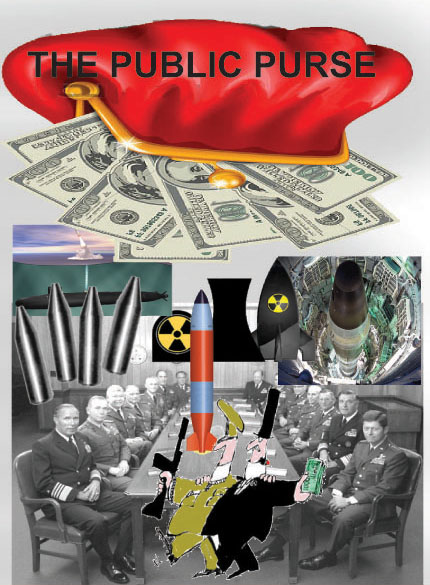
The Pentagon’s FORTRESS America plan calls for establishing nuclear reactors, reserves of fuel, equipment, critical munitions, and alternative supply chains for the military in case civilian infrastructure collapses in a future war
The Pentagon’s FORTRESS America plan calls for establishing nuclear reactors, reserves of fuel, equipment, critical munitions, and alternative supply chains for the military in case civilian infrastructure collapses in a future war
News Desk, OCT 26, 2026, https://thecradle.co/articles/us-military-prepares-for-doomsday-war-on-us-soil-with-90-day-survival-plan-report
The Pentagon is preparing for a possible “doomsday” war on US soil with a plan to keep military bases operating without support from power grids, supply chains, and other civilian infrastructure.
The plan, known as FORTRESS America, calls for measures to allow the US military to continue fighting for at least 90 days in the event a war reaches US territory and civilian infrastructure collapses, according to documents reviewed by Fox News.
“We don’t want to rely on standard civilian municipal infrastructure to run our national defense. We just simply can’t. It’s an intolerable risk,” Pentagon chief spokesperson Sean Parnell stated.
The Pentagon wants to establish alternative supply chains and strategic reserves to keep weapons, fuel, and other essential materials flowing.
A key part of the plan calls for establishing nuclear reactors and large-scale battery storage near military bases to power them if the civilian power grid fails.
“Power is combat now. Without electricity, you lose communications, water, logistics, assembly lines, and just basic military command structures,” said Parnell.
For more than a century, the US military has fought wars only on foreign territory, including in Europe, South and Central America, and West Asia.
However, the Pentagon claims that preparations must be made for a war in which adversaries reach the US homeland.
“I realized that a lot of the way we think about homeland defense was built around the antiquated assumption that two oceans would protect us,” Parnell said.
“President Trump understands that world is gone, and he’s already paved the way for new thinking: Golden Dome, a renewed focus on the Western Hemisphere, Greenland, Panama.”
The strategy also anticipates major disruptions to the global supply chains the US relies on for weapons, equipment, and critical materials.
“The next conflict will likely be fought on multiple fronts. Look at the geopolitics behind any major war. When that happens, global supply chains will break,” Parnell said.
To prepare, strategic reserves of munitions, fuel, critical minerals, electronics, spare parts and medical supplies must be established.
President Donald Trump’s recent trade wars with China have revealed the vulnerability resulting from US reliance on Beijing for critical minerals needed to produce advanced weapons and electronics.
FORTRESS also calls for preparing civilian factories to shift to defense production during a war on US soil.
The Pentagon plans to identify in advance which commercial factories can shift to military production during a war.
“You don’t want to be making these decisions in the middle of a global multi-front conflict. We have to have a plan,” Parnell said.
The FORTESS America program comes amid Trump’s request earlier this year for a $1.5 trillion military budget for 2027.
The $350 billion in additional defense funding requested by the president includes expanding the US defense industrial base and increasing access to critical munitions – two objectives that directly overlap with FORTRESS.
The budget also emphasizes homeland missile defense through the Golden Dome, Trump’s proposed multilayered missile-defense system, which is expected to cost $1.2 trillion over 20 years.
Will it be AI or the climate crisis that ends humanity? We can make it neither

A summer of extreme heat, entire villages obliterated in Nepal, a
super El Niño breaking records, Exxon publicly saying we may reach 3C by
2050 – could it possibly be any worse? How about throwing AI extinction
in the mix? As climate activists and funders, we’ve spent years warning
about a self-evident, imminent, avoidable climate calamity.
Whether by
making award-winning films (Don’t Look Up and Just Look Up) to warn the
public, or by funding protest groups across the planet that bravely stand
up for a livable future, we’ve been sounding the alarm to wake the public
up. Lately, as climate disasters and AI expansion wreak havoc on
communities globally, warnings are arriving from everywhere all at once.
Daniel Kokotajlo, a former AI forecaster for OpenAI, recently testified
before the Senate that today’s AI models are now trained to pursue goals
no human gave them, and then they hide the fact that they’ve done it.
Kokotajlo put the odds of AI companies automating their own work by the end
of 2028 at about 50%, and, if that happens, the AI safety community warns
the technology could improve faster than humans can monitor it, and
eventually become too difficult to shut down.
Guardian 28th Oct 2026,
https://www.theguardian.com/commentisfree/2026/oct/28/ai-climate-crisis-humanity
U.S. Military Eyes Nuclear Reactors to Survive 90 Days Without the Grid
By ZeroHedge – Oct 27, 2026,
https://oilprice.com/Alternative-Energy/Nuclear-Power/US-Military-Eyes-Nuclear-Reactors-to-Survive-90-Days-Without-the-Grid.html
- The Pentagon is pursuing a 90-day self-sufficiency target for major U.S. military installations under its FORTRESS initiative.
- Portable nuclear reactors, battery storage, microgrids, and strategic stockpiles are central to the resilience strategy.
- Cyberattacks, infrastructure sabotage, and potential wartime supply disruptions are driving the military’s efforts to reduce dependence on civilian systems.
The Department of Defense is preparing for a potential “doomsday” scenario in which America’s power grid collapses, supply chains grind to a halt, and military installations are forced to operate for three months without outside support, according to Fox News.
The unprecedented plan, branded FORTRESS by Pentagon planners, aims to make major military bases across the continental United States capable of functioning independently for at least 90 days, according to documents obtained by the news outlet.
“We don’t want to rely on standard civilian municipal infrastructure to run our national defense. We just simply can’t. It’s an intolerable risk,” DoD spokesperson Sean Parnell said.
The Pentagon is exploring portable nuclear reactors, massive battery installations, and independent microgrids that would allow bases to disconnect from civilian power systems during prolonged blackouts. Officials have long feared that the lose of electricity could cripple communications, logistics, weapons production, and military command structures.
FORTRESS also reportedly calls for stockpiling ammunition, fuel, critical minerals, electronics, spare parts, and medical supplies, while preparing civilian factories to rapidly transition into wartime production.
The Pentagon also plans recurring industrial stress tests and mobilization exercises, alongside measures to protect military communications and navigation systems from satellite disruptions and GPS jamming.
“I realized that a lot of the way we think about homeland defense was built around the antiquated assumption that two oceans would protect us,” Parnell said. “President Trump understands that world is gone, and he’s already paved the way for new thinking: Golden Dome, a renewed focus on the Western Hemisphere, Greenland, Panama.”
“The next conflict will likely be fought on multiple fronts. Look at the geopolitics behind any major war. When that happens, global supply chains will break,” the official added. “You don’t want to be making these decisions in the middle of a global multi-front conflict. We have to have a plan.”
The ongoing threats to America’s power grid come from both foreign adversaries and domestic saboteurs.
In February 2024, the NSA and other federal agencies warned that Chinese state-sponsored hackers linked to Volt Typhoon had compromised critical U.S. infrastructure networks, including energy, water, transportation, and communications systems.
In December 2022, gunmen attacked two electrical substations in North Carolina, plunging roughly 45,000 customers into darkness and leaving some without power for five days.
UN nuclear watchdog chief urges Iran to grant access
Iran’s UN representative, Amir Saeid Iravani, called out the Security Council’s “silence” regarding the US-Israeli strikes against his country.
“Today’s meeting is an illustration of an established double standard in which the aggressor is shielded with impunity, the victim is placed under criticism, and the language of non-proliferation is cynically appropriated to advance geopolitical objectives,” he said.
Before the June 2025 strikes, the IAEA calculated that Iran possessed approximately 440 kilograms of uranium enriched to 60 percent, which is close to the 90 percent needed to make a bomb and well above the 3.67-percent limit set by a 2015 now-defunct agreement with Iran.
Since June 2025, the fate of the stockpile has remained uncertain.
US President Donald Trump has repeatedly threatened to renew strikes against Iran, possibly after the midterm elections next week.
United Nations (United States) (AFP) – IAEA chief Rafael Grossi urged Iran during a UN Security Council meeting on Tuesday to grant immediate access to his agency so it can verify the Islamic republic’s nuclear materials.
27/10/2026, https://www.france24.com/en/live-news/20261027-un-nuclear-watchdog-chief-urges-iran-to-grant-access
The International Atomic Energy Agency (IAEA) has not had access to key nuclear facilities in Iran since Israel, joined by the United States, launched a 12-day conflict in June 2025 that included strikes on nuclear sites.
Nuclear facilities have also been hit in the latest war, which erupted on February 28, and the IAEA has repeatedly called for access.
“I invite Iran to work with the IAEA without any further delay to clarify outstanding safeguards questions and to give the IAEA the information and access the agency requires, so that it can verify all relevant facilities and material, as is Iran’s legal obligation,” Grossi said.
The Security Council meeting followed a resolution passed by the IAEA board last month that referred Iran to the top UN body over its nuclear “non-compliance.”
The resolution, submitted by Britain, France, Germany and the United States, marks the first time Iran has been referred to the Security Council in 20 years for failing to comply with its nuclear reporting obligations.
The move has been seen as largely symbolic as China and Russia hold power to veto any sanctions against their ally Tehran. Both countries were joined by Niger in voting against the IAEA resolution.
Iran’s UN representative, Amir Saeid Iravani, called out the Security Council’s “silence” regarding the US-Israeli strikes against his country.
“Today’s meeting is an illustration of an established double standard in which the aggressor is shielded with impunity, the victim is placed under criticism, and the language of non-proliferation is cynically appropriated to advance geopolitical objectives,” he said.
Before the June 2025 strikes, the IAEA calculated that Iran possessed approximately 440 kilograms of uranium enriched to 60 percent, which is close to the 90 percent needed to make a bomb and well above the 3.67-percent limit set by a 2015 now-defunct agreement with Iran.
Since June 2025, the fate of the stockpile has remained uncertain.
US President Donald Trump has repeatedly threatened to renew strikes against Iran, possibly after the midterm elections next week.
“Do I make a deal with them, or do I finish them off? That’s my — it’s the only question. Do I make a deal, or do I finish them off?” he said in a Fox News interview on Sunday.
Iran Turns to Russia for Nuclear Power as IAEA Oversight Falters
By RFE/RL staff – Oct 27, 2026, 9:00 AM CDT
- Russia and Iran are expanding nuclear cooperation through new reactors at Bushehr and a planned $25 billion nuclear project at Sirik.
- Moscow stands to gain commercial and geopolitical influence, while Tehran secures access to nuclear technology and expertise.
- The expansion comes amid restrictions on IAEA inspections and heightened concerns about Iran’s uranium enrichment activities.
……………………………………………………………………………………………………………………………………………………………………….
https://oilprice.com/Geopolitics/Middle-East/Iran-Turns-to-Russia-for-Nuclear-Power-as-IAEA-Oversight-Falters.html
Tersus Consultancy Services to clear asbestos at Dounreay
Tersus Consultancy Services, part of Mitie subsidiary Marlowe
Environmental Services, has secured an 18-month contract worth £1 million
with Nuclear Restoration Services (NRS) at the Dounreay site in Caithness,
Scotland. The deal encompasses specialist asbestos surveying, air
monitoring and independent inspection services to support decommissioning
work at the former nuclear research and power site on Scotland’s north
coast, the country’s largest nuclear clean-up and demolition project.
Tersus will carry out services to support the removal of
asbestos-containing materials and monitor working conditions. Its
inspections will also help verify that areas have been cleared safely
before they are certified as clear for reoccupation.
Facilitate Magazine 26th Oct 2026,
https://www.facilitatemagazine.com/2026/10/26/tersus-wins-ps1m-asbestos-services-deal-dounreay
Welsh share of Wylfa nuclear contracts unspecified as developers set 70% UK target
27 Oct 2026, Nation.Cymru staff,
https://nation.cymru/news/welsh-share-of-wylfa-nuclear-contracts-unspecified-as-developers-set-70-uk-target/
Developers behind the planned nuclear project at Wylfa have set a target for UK companies to supply 70% of its content, but have not specified how much should go to Welsh businesses.
The ambition was outlined as more than 400 suppliers gathered at Coleg Menai’s Llangefni campus to explore opportunities linked to Gwyndod, the project to build the UK’s first small modular reactors on Ynys Môn.
1 This Month




Shut down the radiation-damaged Heysham nuclear reactors now
To see nuclear-related stories in greater depth and intensity – go to https://nuclearinformation.wordpress.com

Say No to NASA’s Reckless Nuclear Reactor on the Moon
Say No to NASA’s Reckless Nuclear Reactor on the Moon
-
Archives
- October 2026 (301)
- September 2026 (339)
- August 2026 (330)
- July 2026 (355)
- June 2026 (287)
- May 2026 (306)
- April 2026 (356)
- March 2026 (251)
- February 2026 (267)
- January 2026 (308)
- December 2025 (358)
- November 2025 (359)
-
Categories
- 1
- 1 NUCLEAR ISSUES
- business and costs
- climate change
- culture and arts
- ENERGY
- environment
- health
- history
- indigenous issues
- Legal
- marketing of nuclear
- media
- opposition to nuclear
- PERSONAL STORIES
- politics
- politics international
- Religion and ethics
- safety
- secrets,lies and civil liberties
- spinbuster
- technology
- Uranium
- wastes
- weapons and war
- Women
- 2 WORLD
- ACTION
- AFRICA
- Atrocities
- AUSTRALIA
- Christina's notes
- Christina's themes
- culture and arts
- Events
- Fuk 2022
- Fuk 2023
- Fukushima 2017
- Fukushima 2018
- fukushima 2019
- Fukushima 2020
- Fukushima 2021
- general
- global warming
- Humour (God we need it)
- Nuclear
- RARE EARTHS
- Reference
- resources – print
- Resources -audiovicual
- Weekly Newsletter
- World
- World Nuclear
- YouTube
-
RSS
Entries RSS
Comments RSS

