Trump Is Building the Machinery to Make Defeat Impossible
Joshua Scheer, SCHEERPOST, October 20, 2026
When Volodymyr Zelenskyy, whose presidential term ended in May 2024, informed Trump that elections would not be held in Ukraine because of the war, Trump responded: “So you’re saying during the war you can’t have elections? So let me just say, three and a half years from now … So you mean if we happen to be in a war with somebody, no more elections? Oh, that’s good.”
An election can be stolen long before the ballots are counted. This searing address from Chris Hedges warns that the Trump administration is assembling the machinery to discredit unfavorable results, intimidate voters and turn claims of election fraud into a justification for federal intervention. The danger, the speech argues, is a government preparing to make its hold on power permanent.
But the indictment reaches beyond Trump. Decades of corporate domination, bipartisan betrayal of working people and the hollowing out of democratic institutions have prepared the ground for authoritarian rule. If the elections are subverted, the speaker argues, defending democracy will require mass organizing, nationwide strikes and sustained public resistance from people whose own future is at stake.
Full Edited Transcript……………………………………………………………………………………………………………………………………………………………………………………………………………………………………………………… https://scheerpost.com/2026/10/20/trump-is-building-the-machinery-to-make-defeat-impossible/
Zelensky still the most dangerous man in the world.

Walt Zlotow West Suburban Peace Coalition Glen Ellyn IL, 20 October, 26
Ukraine President Volodymyr Zelensky has been pushing all out war between the West and Russia since the Russian invasion of February 2022. And ‘all out’ only has one inevitable outcome…nuclear war.
That’s a long time to be put under threat of nuclear annihilation by a former comedian. Zelensky used his celebrity to win the Ukraine presidency in 2019, promising to make peace with the Russian leaning Ukrainians in Donbas on Russia’s border being brutalized by the ultra nationalist Kyiv government for years preceding Zelensky.
The Kyiv deep state quickly disabused Zelensky of reproachment with Donbas Ukrainians and Russia. With the US and NATO cheering Zelensky on, this made the Russian invasion nearly 3 years later.
Zelensky went along, foolishly believing Western aid would defeat an overwhelmingly more powerful Russia that Ukraine had no chance of defeating single handedly.
But right at the start, President Biden, most responsible for provoking the war, declared no US troops or long range weapons for Zelensky because ‘that would lead to nuclear war.’ That essentially sealed Ukraine’s fate, a truth Zelensky could not comprehend.
How right Biden was then and how wrong Zelensky was and is today, demanding endless long range NATO weapons that are reaching deep into Russia.
Microsoft pulls out of AI datacentre project in Essex over power supply concerns
Driven by hopes of an economic transformation, many are taking on increasingly risky debt, including companies vital to the AI boom
Development by UK firm Nscale heralded by ministers as largest of its kind in country loses anchor tenant
Gwyn Topham and Aisha Down, Mon 19 Oct 2026 ,
https://www.theguardian.com/uk-news/2026/oct/18/microsoft-drops-huge-ai-datacentre-project-in-essex-over-power-supply-concerns
The development of a huge AI datacentre hailed by the UK government has received a fresh setback after Microsoft pulled out of the project over concerns about power supplies.
The development by the British company Nscale, heralded by ministers as the country’s largest AI datacentre when it was announced in 2025, was planned to open at Loughton in Essex next year.
Doubts had already emerged about the scheme after the Guardian revealed in March that the location was still an operational scaffolding yard.
Now there are further concerns after Microsoft, one of its largest planned customers and expected to have been the anchor tenant, informed the company that it was pulling the plug on its agreement.
It comes a month after it emerged that power supply problems meant the project would face a lengthy wait before coming online.
Keir Starmer’s government had highlighted the Loughton project when announcing the UK’s AI strategy in 2025, describing it as the “largest UK sovereign AI datacentre”. Datacentres are the central nervous system of AI technology such as chatbots.
The end of the deal with Microsoft, first reported in the Telegraph, means Nscale has lost its only publicly announced customer for the Essex datacentre. It is understood that Microsoft remains on board for another project the company has in Norway.
Doubts had already emerged about the scheme after the Guardian revealed in March that the location was still an operational scaffolding yard.
Now there are further concerns after Microsoft, one of its largest planned customers and expected to have been the anchor tenant, informed the company that it was pulling the plug on its agreement.
It comes a month after it emerged that power supply problems meant the project would face a lengthy wait before coming online.
Keir Starmer’s government had highlighted the Loughton project when announcing the UK’s AI strategy in 2025, describing it as the “largest UK sovereign AI datacentre”. Datacentres are the central nervous system of AI technology such as chatbots.
The end of the deal with Microsoft, first reported in the Telegraph, means Nscale has lost its only publicly
Nscale, which is backed by tech companies including Nvidia, has positioned itself as Britain’s “sovereign” datacentre provider but the loss of an anchor tenant for its Loughton project could undermine its ambition to float on Wall Street this year with a potential valuation of $35bn (£26bn).
Targeting the rapid growth of AI to boost the economy, the UK government’s proposals to harness the technology have focused on two Nvidia-backed companies: the London-based Nscale and the US company CoreWeave.
Official figures show investments in AI are among the factors helping Britain’s economy to beat expectations of a weaker growth performance this year as the war in the Middle East rattles global business activity.
Nscale is a “neocloud”, one of a number of companies with deep ties to Nvidia that are building the key infrastructure for the AI boom. It is this relationship with Nvidia that meant it and CoreWeave were chosen as key players in the UK’s sovereign AI push, which happened under Starmer.
There is, however, a growing chorus of voices which suggest that neoclouds may be a vulnerability in the broader AI economy, especially as delays pile up across partners.
Driven by hopes of an economic transformation, many are taking on increasingly risky debt, including companies vital to the AI boom. If Nscale pushes back its initial public offering in New York, these vulnerabilities may come into sharper focus.
The former UK deputy prime minister Nick Clegg and the former Meta chief operating officer Sheryl Sandberg are board members at the company. Clegg holds a 0.25% stake that could be worth $88m if the company floats at a $35bn valuation.
It emerged earlier this month that UK Power Networks (UKPN), which owns and maintains the electricity grid across London and the south-east of England, had informed Nscale that it would not be able to supply enough power to the company’s Loughton datacentre until the early to mid-2030s.
Nscale said it was “committed to the project” but the failure to find a quick fix to the power supply issue underlines how much energy has become a hindrance to datacentre development.
The scaffolding yard site has been cleared by Nscale, and the company is investigating whether it can generate power onsite and whether it can speed up the connection process.
An Nscale spokesperson said: “We remain committed to both the Loughton project and the UK, and we are exploring alternative power sources for the site, in addition to other expansion sites in the UK.
“Our relationship with Microsoft remains strong and long-term, and this unfortunate London-wide grid issue has no impact on our other contracts.”
Deep concerns regarding the Rolls-Royce development at the Wylfa site

Open Letter to Miatta Fahnbulleh MP, Secretary of State for Energy Security
and Net Zero.
Dear Secretary of State, I am contacting you with a letter
written to the former holder of the post, Ed Milliband, expressing my deep
concerns regarding the Rolls-Royce development at the Wylfa site on Ynys
Mon.
Since writing to Ed Miliband, there have been developments that make
the prospects of a nuclear site on the island even more concerning:
1)Increasing threats of war mean that we will be targets for attack. Russia
and Iran have both threatened us, due to our interventions in Ukraine and
the use of British bases for the bombing of Iran. Whatever the rights and
wrongs of these interventions, it is clear that nuclear power stations are
now regular targets for attack. How are we to be protected? How are we to
get off the island in the event of an attack ( or nuclear accident)? There
are two bridges connecting us to the mainland, and even if there were
three, there would be no safe evacuation possible, without the danger of
accidents.
RAF Valley is also on the island, making us a further target.
The waste produced by the possible new nuclear reactors will also serve as
an ongoing target and risk, as it would remain onsite for at least 100
years, being too hot to remove. Our future generations will be responsible
for this; not a legacy we want to bequeath.
2) Increasing droughts and
wildfires have threatened the safety of nuclear plants all over the world,
including at Sizewell B this year. Should the electricity supply be cut to
a nuclear power station, if backup diesel power is then cut off or damaged,
through flooding, as in the case of the Fukushima nuclear disaster, then
there is also disaster, as the reactors cannot be cooled if there is no
electrical power to the station. So, for a nuclear station to be safe,
there needs to be adequate power in the first place. This can no longer be
relied on.
3) A December 2025 Harvard T.H Chan study found a statistical
link between those living close to nuclear power plants and higher cancer
rates in Massachusetts. The strongest link was seen within 20 to 30
kilometers of a nuclear station, and the risk increased as people got
older. There is also a risk to workers.
4) Whereas the Rolls-Royce site has
advertised that the electricity generated at Wylfa would go to homes, it is
now published that energy could go to AI centres being developed on the
island and nearby. How are we to know the end use of the electricity to be
generated by these nuclear reactors?
The World Nuclear Industry Status
Report ( WNISR) 2026 shows that between March 2025 and June 2026, both
solar and wind power have independently surpassed generating electricity
from nuclear reactors. I understand that you want to mitigate the effects
of climate change in the most efficient and safe ways possible. Nuclear
power is neither efficient or safe, particularly under conditions of
conflict, climate change, or indeed pandemic, where routine maintenance is
reduced, as happened during the Covid pandemic.
We implore you to
reconsider pouring more money into these nuclear reactors, yet to receive
the Generic Development Consent order, and instead concentrate our
resources to upgrading the grid, as you propose, and using our excellent
renewable energy sources.
People Against Wylfa B 19th Oct 2026,
https://www.stop-wylfa.org/
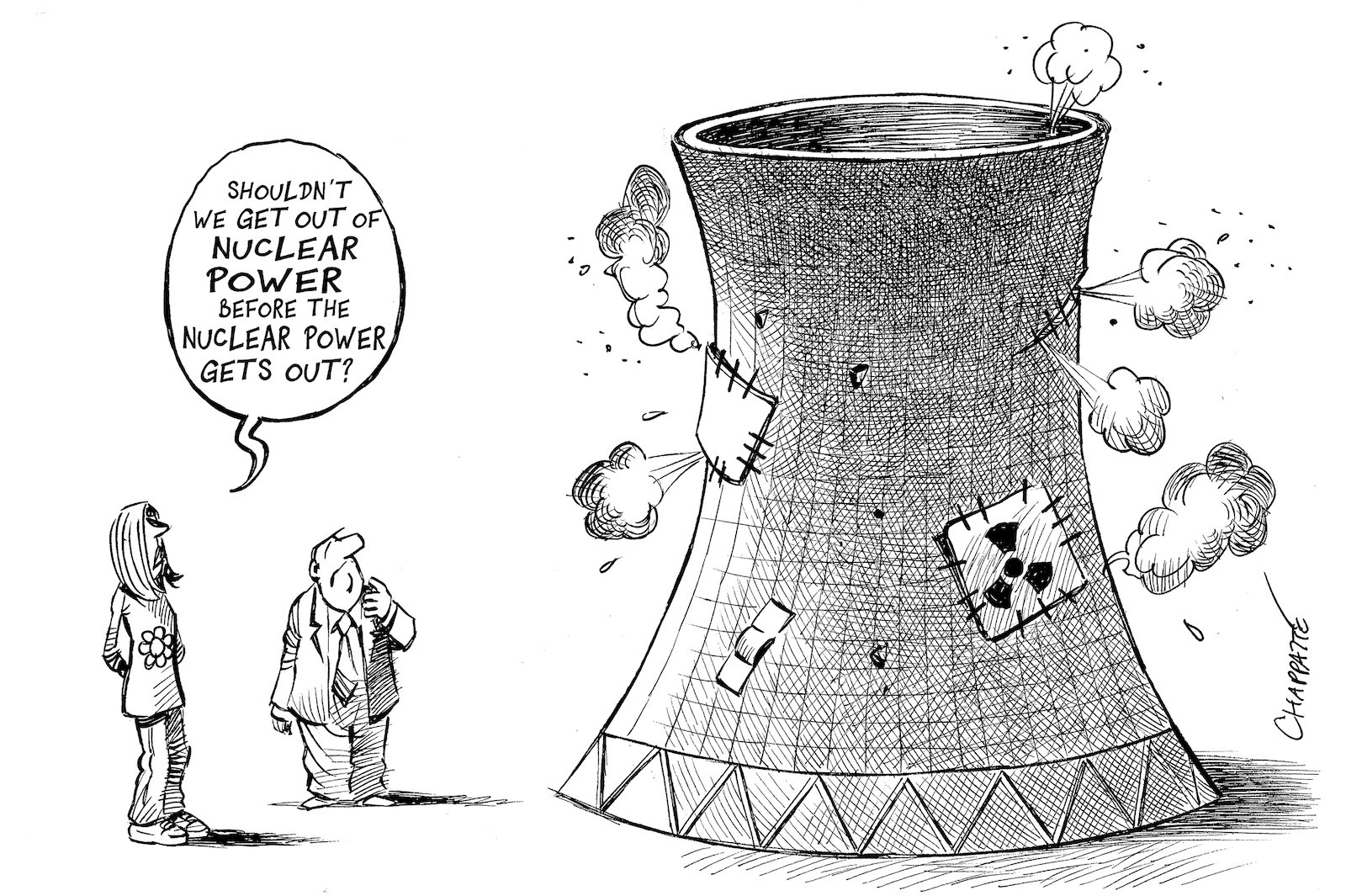
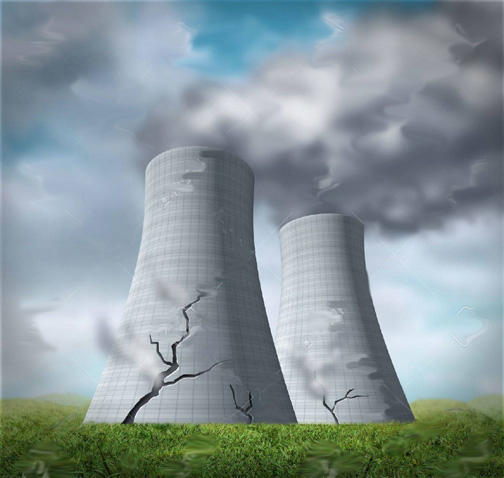
Under pressure from AI data companies, USA government facilitating the upgrade of tired old nuclear reactors

The Nuclear Power Shortcut That Could Add Gigawatts to the U.S. Grid
the U.S. Department of Energy (DoE) announced it would conditionally loan the energy company Vistra $4.2 billion to uprate three nuclear plants in Pennsylvania and Ohio, adding another 430 MW of capacity. Amazon also completed an agreement to uprate Constellation’s Calvert Cliffs Nuclear Power Plant in Maryland, while Google announced plans to increase power production from four reactors in Georgia.
By Felicity Bradstock – Oct 18, 2026, https://oilprice.com/Alternative-Energy/Nuclear-Power/The-Nuclear-Power-Shortcut-That-Could-Add-Gigawatts-to-the-US-Grid.html
- U.S. nuclear operators could add gigawatts of power by upgrading existing reactors instead of building new facilities.
- Google, Amazon, and other tech companies are supporting major nuclear uprate projects to meet growing AI electricity demand.
- Nuclear uprates could deliver additional reliable electricity years before new reactors can be constructed.
The process of increasing the maximum power level at which a commercial nuclear power plant may operate is called a power uprate. Several nuclear plants are now considering applying for permission to uprate operations to produce more power in the mid-term to bridge the gap while more nuclear capacity is being developed.
The United States Nuclear Regulatory Commission (NRC) regulates the maximum power level at which a commercial nuclear power plant may operate. The permitted power level is stated in the license and technical specifications for the plant and cannot be altered unless approved by the NRC. U.S. nuclear plants can request permission from the NRC to increase their power output, or “uprate”.
The NRC will determine whether to grant a plant uprate permission depending on whether it can be achieved safely. To increase power output, nuclear operators must modify the nuclear reactor’s instrumentation, controls, and power-generation systems. Over the past two decades, the NRC has approved uprates that have provided an extra 6 GW of power to the U.S. electricity grid, which is equivalent to six large reactors. The agency is considering uprate requests from various operators that massively boost the country’s nuclear power capacity.
To safely uprate operations, plant operators must upgrade components such as controls, turbines, and pumps within their nuclear facilities to generate more electricity. While these upgrades can cost billions of dollars to implement, they can allow operators to produce more power much more quickly than it takes to build a new facility. Many upgrades can be completed in five years or less. Analysts estimated that increasing electricity output from existing nuclear plants could add a massive 6-8 GW of clean power to the grid.
In October, the largest nuclear power plant operator in the United States, Constellation Energy, announced plans to invest over $4.3 billion to refurbish 11 reactors at six plants in Illinois, Pennsylvania, and New Jersey, enabling them to produce more power. The investment is expected to help Constellation add 890 MW of power to the grid, enough to supply 700,000 homes. Google has agreed to buy electricity from those plants at an undisclosed price.
This is just one of several projects that are expected to support the massive increase in U.S. power demand driven by the rapid rollout of new artificial intelligence (AI) data centres. Also this month, the U.S. Department of Energy (DoE) announced it would conditionally loan the energy company Vistra $4.2 billion to uprate three nuclear plants in Pennsylvania and Ohio, adding another 430 MW of capacity. Amazon also completed an agreement to uprate Constellation’s Calvert Cliffs Nuclear Power Plant in Maryland, while Google announced plans to increase power production from four reactors in Georgia.
The Trump administration, which has announced plans to quadruple the U.S. nuclear power capacity by 2050, is highly supportive of these new projects. Energy Secretary Chris Wright said in a statement, “By getting more power out of the nuclear plants we already have, we can deliver more affordable, reliable, around-the-clock energy.”
Several nuclear plant operators have struggled to secure the funds to upgrade their plants as U.S. power demand plateaued in the 2000s and public perception of nuclear power was poor. However, the rising demand for power driven by data centres and the improved public perception of nuclear power has encouraged tech companies to invest heavily in a wide range of energy projects, from nuclear power to gas plants and renewable sources. Several tech companies are now willing to pump vast amounts of capital into uprating projects to rapidly increase their access to the clean power needed to run massive data centres.
The NRC expects a total of 31 power uprate applications totalling 7.3 GW thermal and 2.4 GW electric between 2026 and 2032. The organisation is expected to approve several of these projects, as many of the operators requesting uprate permissions have decades of experience in nuclear power development in the United States, making them well-versed in managing safety concerns
Some operators are wary of conducting uprate work because the necessary upgrades would require them to stop producing power for several months. However, as tech companies demonstrate their willingness to invest heavily in nuclear energy projects, more companies may be convinced in the coming years.
Uprating operations is unlikely to detract from plans to develop new nuclear plants in the United States, given the projected rise in power demand over the coming decades. However, it could provide an alternative way to rapidly expand the country’s nuclear power capacity to fill the gap while new facilities are being designed, licensed, and constructed.
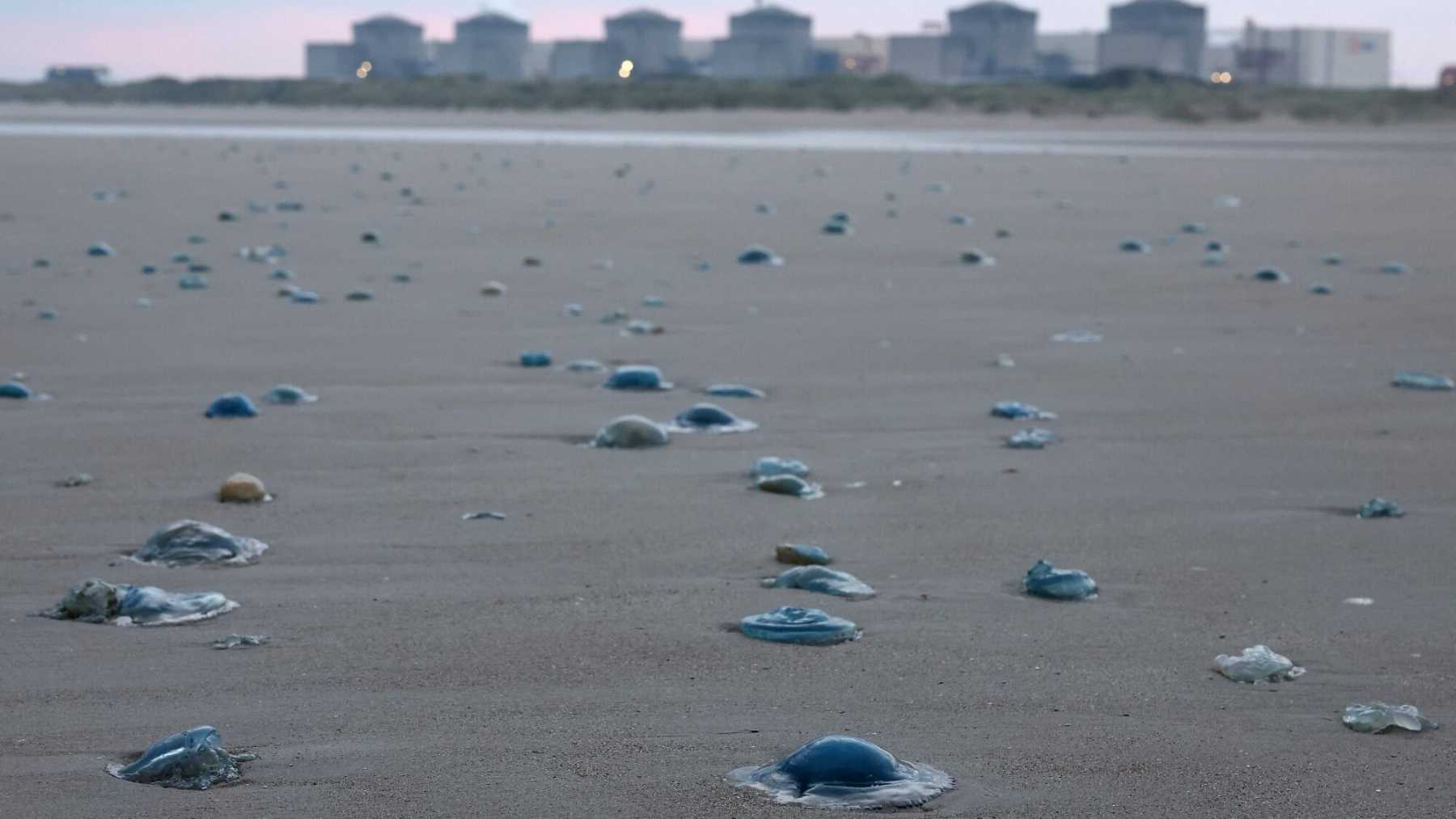
Several tons of jellyfish packed the seawater filters at a nuclear plant on France’s northern coast, and three reactors shut down automatically
By Hugo RojasOCT 17, 2026,
https://www.ecoportal.net/en/france-s-northern-several-tons-jellyfish/43014/
The alarm at the coastal plant came from the water, not the core.
Pumps that normally pull in a steady, boring flow of seawater began choking instead.
Inside the filter drums, something soft and pale was piling up by the ton.
It was not sand, not seaweed, not debris from a storm.
It was jellyfish, drifting in on an ordinary summer tide.
By the time the night was over, three reactors had shut themselves down and a fourth was running at half power.
Why a jellyfish can stop a nuclear reactor cold
A nuclear reactor does not cool itself. It depends on a constant river of seawater pulled through intake pipes to carry heat away from the turbine side, and that water passes through grids and rotating screens first. The filter drums and grids exist to stop seaweed, driftwood and fish, not a soft bodied animal with almost no skeleton.
That is exactly why jellyfish are so effective at jamming them. A weak swimming creature that drifts with the current cannot escape the pull of an intake. Its gelatinous body does not bounce off the mesh the way debris does; it packs flat against it and blinds the filter.
Enough soft tissue in one place and the pressure loss across the drums becomes severe, cooling water flow falls, and the plant’s protection systems order an automatic shutdown to preserve the reactor’s ability to cool itself. All of that happens on the seawater side, in the non nuclear part of the site, well away from anything radioactive.
A swarm that grew from pounds to tons in a matter of days
The plant is Gravelines, sitting between Dunkirk and Calais and drawing its cooling water from a canal connected to the North Sea. A reinforced watch kept by local fishermen and volunteer sea rescuers had spotted only a few dozen kilograms of jellyfish near the site in the days before, on the order of a hundred pounds.
The operator says the swarm then multiplied far faster than anticipated, until several tons of jellyfish pushed into the pumping stations and saturated the filter drums. Units 2, 3 and 4 dropped offline, another unit was cut to half power, and a single reactor kept running at full strength while the last one sat idle for scheduled maintenance.
None of it touched the reactor cores. “This situation has no impact on the safety of the facilities, the safety of personnel, or the environment,” the operator said in a statement. The jellyfish never got near radioactive material, they simply jammed the plumbing.
This has happened before, at Gravelines and far beyond it
What makes the story stranger is that this was not a one time fluke. The same plant had lost four reactors to a near identical swarm almost exactly a year earlier, in August 2025, which shut the whole site down while two units were already in maintenance.
Gelatinous animals have stalled coastal plants elsewhere too. Sweden’s Oskarshamn lost a unit to a sudden jellyfish influx in 2005 and again in 2013, when tons of moon jellyfish clogged the cooling intake of its largest reactor. Scotland’s Torness shut down in 2011, and California’s Diablo Canyon took a unit offline in 2012 after salps, jellyfish like relatives, packed its intake pipes.
Experts quoted on the French shutdowns point to warming coastal water, overfishing and pollution as conditions that let jellyfish thrive longer. That chain is plausible rather than proven, since marine biologists cautioned it is hard to show jellyfish are genuinely increasing because long run historical data barely exists.
The fix is mechanical, not nuclear, and it is still catching up
Engineers have not redesigned the reactors to cope with jellyfish. The countermeasures sit entirely on the seawater side. After the first episode, the operator installed supervision cameras on equipment including the filter drums and the intake canal so the swarm can be watched continuously from the control room.
A partnership with a fishermen’s association and sea rescuers now runs daily visual checks and targeted fishing when a bloom builds. When the water turned thick again, three fishing boats worked around the clock to move jellyfish offshore, and crews netted tens of tons of them out of the water in little more than a day.
It is a strangely low tech answer to a high tech problem. Other energy infrastructure faces its own version of this puzzle, whether it is a dam managing its intake flow or a turbine blade tested against years of wear before it ever meets open water.
What it means for a warming coastline
None of this makes nuclear power newly unsafe. The affected units were reconnected to the grid over the following days and weeks once the drums were cleared, with one unit staying offline longer than the rest.
The story is really about plumbing meeting biology at an inconvenient hour. Even so, the frequency is worth watching, since the same plant has now been halted by the same animal two summers running.
If coastal seas keep favoring jellyfish, plants built decades ago around a certain tonnage of debris may need sturdier intake screens designed for a softer, larger problem than their builders expected. For now it remains a curiosity more than a crisis, proof that a sophisticated machine on the coastline can be stopped by an animal with no brain, no bones and barely any muscle, simply because it floats where the water goes.
New nuclear technology is predicted to transform North Wales.

A major programme delivering Small Modular Reactor (SMR) technology is set
to transform Anglesey and wider North Wales in the coming years. Wylfa on
Anglesey has been selected as the site of the UK’s first SMR nuclear power
station. The move recognises the strong nuclear heritage and expertise of
the area.
Earlier this month, a group of public and private bodies across
industry, local government and the Welsh Government, and led by Bentley
Systems met at a roundtable to discuss benefits for the region. Gary
Pritchard, leader of Isle of Anglesey County Council and Llinos Medi AS/MP
for Anglesey were in attendance. Institution of Civil Engineers Wales Cymru
Fellows provided impartial advice and expertise on building the programme
in its first steps.
The programme will pioneer skills in the region,
develop new vocational and academic training programmes, and create jobs in
Anglesey. ICE Wales Cymru Regional Director Keith Jones said: “ICE Wales
Cymru supports the Welsh and UK governments in the development of Small
Modular Reactors (SMR). Wales is ideally placed to play a very significant
role in clean energy generation and become an energy hub for the UK.
Nuclear power has a key part to play in the transition to net zero”.
Insider Media 19th Oct 2026, https://www.insidermedia.com/news/wales/new-nuclear-technology-set-to-transform-north-wales
Jeffrey Sachs: Europe Must Break With Washington’s March to War
Joshua Scheer, October 17, 2026
Europe’s leaders are gambling with their people’s future—and, Jeffrey Sachs warns, with the survival of the world. Speaking to members of the European Parliament, the economist delivers a blistering indictment of American foreign policy and Europe’s willingness to follow Washington into confrontation with nuclear powers.
Drawing on decades of advising governments, Sachs argues that NATO expansion and the pursuit of American dominance helped squander the promise of peace after the Cold War. From Ukraine to Iran and Gaza, he challenges Western claims to moral leadership and demands a return to diplomacy. Europe, he insists, must find its own voice, negotiate directly with Russia and build relationships with China and the wider world around cooperation rather than war.
Acknowledgment: Thanks to MEP Danilo Della Valle for co-organizing the event with the Fidias Podcast. Visit their YouTube channel to watch more conversations and subscribe.
TRANSCRIPT …………………………………………………………………………………………………………………………………………………………………………………………………………………………………………………….. https://scheerpost.com/2026/10/17/jeffrey-sachs-europe-must-break-with-washingtons-march-to-war/
Democratic senators set up vote on blocking Saudi nuclear deal

Sens. Jeff Merkley (D-Ore.) and Ed Markey (D-Mass.) introduced a measure
Thursday that would block President Trump’s deal to allow Saudi Arabia to
build a civilian nuclear program. The Democrats’ measure is a joint
resolution of disapproval, a legislative tool that requires a vote after
Nov. 29. The senators expressed concern that the deal gives Saudi Arabia
access to U.S. technology for civilian nuclear energy but does not contain
sufficient guardrails against Riyadh using that tech to create nuclear
weapons.
The Hill 15th Oct 2026,
https://thehill.com/homenews/senate/6152383-senators-block-saudi-nuclear-deal/
OPG firm joins UK BWRX-300 project
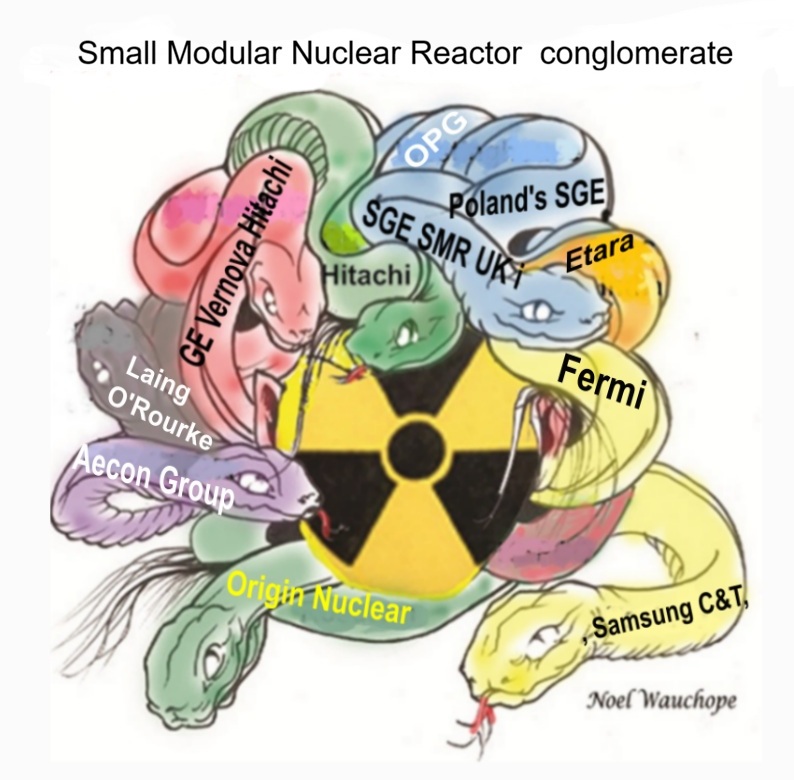
The UK-based project company of European SMR developer and investor SGE, and Origin Nuclear, a subsidiary of Ontario Power Generation, have signed a letter of intent to establish a joint venture for the future operation of a planned fleet of 14 BWRX-300 small modular reactors.
SGE SMR UK is the UK-based project company of Poland’s SGE (formerly Synthos Green Energy). Earlier this year, SGE outlined plans for the privately financed deployment of 14 GE Vernova Hitachi BWRX-300 small modular reactors across three sites in the UK, for which it submitted an application under the UK’s Advanced Nuclear Framework.
The proposed joint venture will see SGE SMR UK and Origin Nuclear work together to establish a UK-based nuclear operating company. Origin Nuclear – whose owner, Canadian nuclear operator Ontario Power Generation (OPG), is developing the first BWRX-300 reactor at Darlington in Ontario – will support the licensing process, commissioning and operational readiness of the reactors, and will also be responsible for plant operations, and centralised support services across the proposed UK BWRX-300 fleet.
“This is a significant step forward for our UK programme,” SGE CEO Rafał Kasprów said. “Securing an operating partner is one of the most important decisions in developing a nuclear project, and with Origin Nuclear and its parent company OPG, we have a partner backed by more than a half century of nuclear experience and direct involvement in the first BWRX-300 project in Canada. It gives us greater confidence in our ability to deliver 14 reactors across three sites in the UK. Just as importantly, it brings us closer to establishing a long-term operating model that can support BWRX-300 projects across Europe.”
“The Darlington New Nuclear Project, where OPG has begun construction of the first BWRX-300, will deliver the reliable, low-carbon electricity Ontario needs to meet rapidly growing demand, while creating opportunities for Origin Nuclear and other Ontario companies to showcase our expertise on the global stage,” said Jos Diening, Origin President and CEO. “As OPG builds the next generation of nuclear infrastructure at home, Origin is helping position Ontario’s world-class supply chain to compete for opportunities around the world.”
The BWRX-300 is a 300 MWe water-cooled, natural circulation SMR with passive safety systems that leverages the design and licensing basis of GE Vernova Hitachi Nuclear Energy’s US Nuclear Regulatory Commission-certified ESBWR boiling water reactor design and its existing, licensed GNF2 fuel design. SGE is a co-investor in the standardised BWRX-300 design alongside GE Vernova Hitachi Nuclear Energy, OPG and the Tennessee Valley Authority (TVA).
The unit under construction in Canada is envisaged as the first of four at OPG’s Darlington New Nuclear site. In September, the US Nuclear Regulatory Commission issued a construction permit to TVA for a BWRX-300 reactor at the Clinch River site in Tennessee.
The first site in the UK is planned to accommodate six BWRX-300 reactors, with the first unit starting commercial operation in 2034. This would be followed by two further multi-unit sites – an approach SGE says is intended to support repeat construction, coordinated procurement and the transfer of experience between projects. The programme is supported by an international delivery team comprising SGE, GE Vernova Hitachi Nuclear Energy, Samsung C&T, Laing O’Rourke, Aecon Group Inc, Fermi Development and Etara.
The proposed total generating capacity from the 14 units of 4.2 GW would be enough, SGE says, to meet around 11% of UK power demand, equivalent to the needs of almost eight million homes, for at least 60 years.
1 This Month



Read the Public Inquiry Report, the Commissioners’ report, Surrendering Australia: The AUKUS Deception is available to download for free at aukuspublicinquiry.com. Or just watch the replay of the National Press Club Luncheon.

19 November – Webinar – The Reality of Reprocessing
Time: 11:00 AM Pacific Time (US & Canada) / 2:00 PM Eastern / 7:00 PM UK / 8:00 PM CET
Register for the Zoom Event Here


Shut down the radiation-damaged Heysham nuclear reactors now
To see nuclear-related stories in greater depth and intensity – go to https://nuclearinformation.wordpress.com

Say No to NASA’s Reckless Nuclear Reactor on the Moon
Say No to NASA’s Reckless Nuclear Reactor on the Moon
-
Archives
- November 2026 (128)
- October 2026 (302)
- September 2026 (339)
- August 2026 (330)
- July 2026 (355)
- June 2026 (287)
- May 2026 (306)
- April 2026 (356)
- March 2026 (251)
- February 2026 (267)
- January 2026 (308)
- December 2025 (358)
-
Categories
- 1
- 1 NUCLEAR ISSUES
- business and costs
- climate change
- culture and arts
- ENERGY
- environment
- health
- history
- indigenous issues
- Legal
- marketing of nuclear
- media
- opposition to nuclear
- PERSONAL STORIES
- politics
- politics international
- Religion and ethics
- safety
- secrets,lies and civil liberties
- spinbuster
- technology
- Uranium
- wastes
- weapons and war
- Women
- 2 WORLD
- ACTION
- AFRICA
- Atrocities
- AUSTRALIA
- Christina's notes
- Christina's themes
- culture and arts
- Events
- Fuk 2022
- Fuk 2023
- Fukushima 2017
- Fukushima 2018
- fukushima 2019
- Fukushima 2020
- Fukushima 2021
- general
- global warming
- Humour (God we need it)
- Nuclear
- RARE EARTHS
- Reference
- resources – print
- Resources -audiovicual
- Weekly Newsletter
- World
- World Nuclear
- YouTube
-
RSS
Entries RSS
Comments RSS

