Why the world’s top nuclear nation is sitting out the hype on small reactors
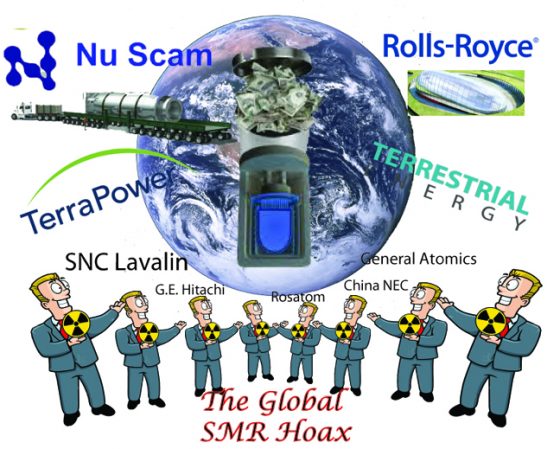
Despite hype and investment, the commercial record of SMRs remains thin, with only two reactors operational globally.
France’s caution about SMRs should raise flags for policymakers and nuclear organizations contemplating these reactors elsewhere
By AnnaJulia Yates, Allison Macfarlane, Alexander Wimmers | Analysis | September 25, 2026, https://thebulletin.org/2026/09/why-the-worlds-top-nuclear-nation-is-sitting-out-the-hype-on-small-reactors/?utm_source=ActiveCampaign&utm_medium=email&utm_content=The%20top%20nuclear%20nation%20sitting%20out%20the%20SMR%20hype&utm_campaign=20260928%20Monday%20Newsletter
Many countries, including the United States, Canada, the United Kingdom, and Sweden, are gripped by a frenzy of enthusiasm for small modular reactors (SMRs). But France does not buy into the hype. Despite remaining staunchly pro-nuclear, with the world’s largest share of electricity generation from nuclear reactors at nearly 70 percent, France gives SMRs only limited, conditional support, treating them as what they are: emerging technologies whose promised advantages have yet to be demonstrated at a commercial scale.
Varied enthusiasm for SMRs across countries may result from national industrial organization and history. The decentralized US power sector, for example, encourages private development of competing energy innovations, compounded by over-budget and delayed large reactor projects that have made SMRs seemingly more attractive. Conversely, France’s state-led nuclear program, with its established supply chain and nuclear infrastructure, has focused on large, standardized reactor builds. However, these differences between France and the United States should not be overstated; in Sweden, state-owned utility Vattenfall is pushing for SMRs, and in the United Kingdom, the government is providing substantial support to development and potential deployment of SMRs.
But all countries face common fundamental problems with ageing fleets and issues bringing new reactors online. Average reactor ages are 39 years in France and the United Kingdom, and 44 years in the United States and Sweden. France’s most recent Flamanville 3 reactor took two decades to build, and at 6 times its original cost; Hinkley Point C in the United Kingdom has been repeatedly delayed at ballooning cost to consumers, and the most recent US newbuild projects resulted in the vendor’s bankruptcy.
France’s centralized system does not insulate it from the challenges SMRs claim to solve, making its cautious approach a noteworthy contrast to other countries’ rush towards SMRs. It serves as a reminder that though technologies provide easy political hype, they must prove safety, economic viability, and a clear advantage over existing low-carbon energy alternatives before major investment is justified.
A difficult start. Small modular reactors are promoted as a way out of nuclear power’s most persistent problems of massive upfront capital requirements, cost overruns, and construction delays. Developers and pro-SMR governments promise that smaller, modularized designs will be cheaper to finance, easier to manufacture, and faster to build—among other announced benefits.
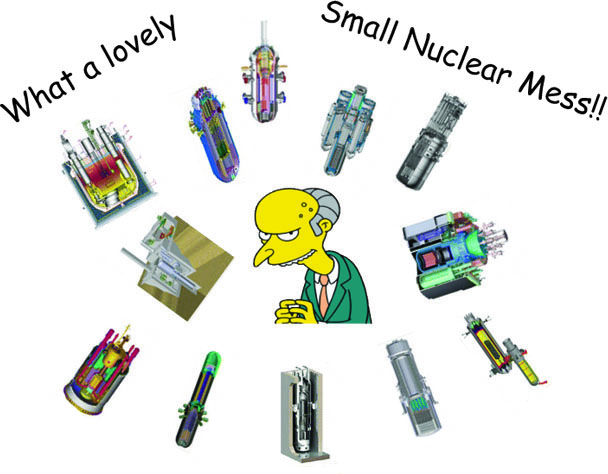
The most obvious difference between SMRs and their larger counterparts is scale: The International Atomic Energy Agency (IAEA) defines an SMR as a reactor producing up to 300 megawatts of electricity—less than one third of what third-generation large reactors typically produce. The OECD’s Nuclear Energy Agency (NEA) currently lists 127 SMR designs worldwide at various development stages.
Despite hype and investment, the commercial record of SMRs remains thin, with only two reactors operational globally.
China connected its high-temperature gas-cooled SMR (called HTR-PM) to the grid in 2021. Russia’s Akademik Lomonosov, a floating plant comprised of two pressurized water SMRs (KLT-40S), has powered the remote Arctic town of Pevek since 2019. In addition to these two reactors, only four demonstration projects are currently preparing or have started construction: GE-Hitachi’s BWRX-300 in Ontario, Canada, Kairos Power’s Hermes reactor in Tennessee, TerraPower’s Natrium project in Wyoming, and China National Nuclear Corporation’s Linglong One in Hainan, China.
These projects do not prove the broader SMR case of efficient deployment: So far, most have faced delays, and the operating record is sparse. Available data from existing reactors show disappointing annual load factors below 21 percent for the Chinese HTR-PM in 2024 and around 30 percent on average for the Russian floating reactor. (The load factor, or capacity factor, is a measure of reactor performance that reflects the actual electrical energy produced over a specific period compared to the maximum possible energy it would produce if it ran continuously at its reference design power. According to the IAEA, in 2023, the median load factor of all commercial power reactors worldwide was 88 percent.) A clearer sense of SMR cost, safety, and waste production will only emerge once more actual operational experience is gathered.
Another problem is the heterogeneity of proposed modular reactor designs, which creates uncertain safety criteria, yet-to-be-established supply chains, and novel waste streams. This mixed bag will further complicate—and slow down—SMR deployment by increasing regulatory, technical, and economic uncertainty.
Large reactors ‘avant tout.’ France relies on nuclear power for nearly 70 percent of its electricity generation. With the addition of the 1650-megawatt-electric Flamanville 3 EPR reactor, which was connected to the grid in 2024, the country now has 57 operable reactors. All of these are pressurized water reactors, with an average output capacity of around 1000 megawatts-electric.
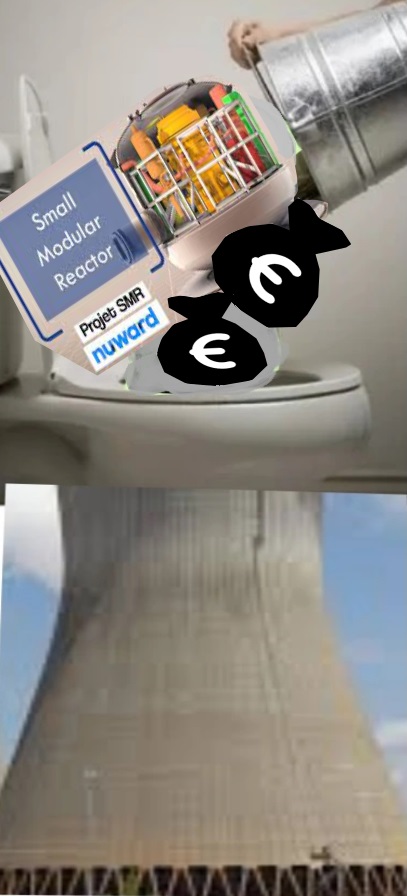
France’s first commercial SMR project, named NUWARD, began in 2017, when state-owned electric utility EDF partnered with the French Atomic Energy Commission (CEA) and two companies in which the French state owns major stakes: Naval Group and TechnicAtome. The initial concept promised a novel plant design consisting of two 170-megawatt-electric modules that would “serve the global market with a competitive solution in the late 2020s.” But in 2024, NUWARD abandoned that design due to technical and market-viability issues, deciding instead to “pivot its SMR product strategy” toward “a design based on proven technology bricks only.” EDF later announced that the new design would be a much larger reactor whose 400 megawatt-electric capacity exceeds the traditional 300 megawatt-electric cutoff for SMRs.
The only other significant French SMR initiative was launched under President Emmanuel Macron’s 2030 investment plan. Published in 2021, the plan includes €129.8 million in state support for 11 advanced nuclear projects, some of which are SMRs. But this support remains conditional and relatively restrained: Participants will have to complete the standard licensing protocol to ensure technical and safety credibility and continually convince the state of their projects’ economic viability before accessing future rounds of funding.
One reason for France’s cautious approach to SMRs is that it already has a well-defined, centralized, and standardized nuclear program, supported by decades of investment. The French government is directly involved in setting national energy priorities, tasking EDF with constructing and “frenchifying” US-designed large pressurized water reactors and refining each successive reactor generation, ultimately standardizing its nuclear fleet.
The clearest expression of this strategy is France’s prioritization of the large EPR2 reactor—a modernized version of the EPR reactor now operating in France, Finland, and China—over SMRs. In 2020, Nuclear Intelligence Weekly reported that EDF “remains almost exclusively focused on developing a more economic version of the EPR”, and focused worker capacity towards the EPR2 with “as many as 1000 engineers involved” in the project versus only “10 to 15” on NUWARD development.
President Macron made this priority explicit: In 2022, he announced plans to build six new EPR2 units once the design is ready, giving large reactors a defined place in the future French nuclear fleet that SMRs have yet to receive. Although the EPR2 design remains conceptual and the first operating reactors are not expected before 2040, Macron’s announcement and EDF’s staffing choices suggest that SMRs remain secondary to France’s long-held strategy of building large reactors.
Skepticism of SMRs. Beyond caution, diverse actors inside the French nuclear establishment have raised concerns about SMRs.
French nuclear safety authorities, for instance, have been vocal about the feasibility and the safety issues of certain SMR approaches. In 2021, the French nuclear regulator ASNR warned that many SMR designs rely on innovative solutions whose “feasibility and efficiency are yet to be demonstrated.” A 2023 parliamentary assessment raised similar concerns, noting that SMR projects show “varying maturities” and that “important research and development efforts remain to be done” for some technologies, including molten-salt, lead-cooled, sodium-cooled, and high-temperature SMRs. In May, the French regulator added that proposed SMR deployment near industrial or densely populated areas would require adapted safety objectives.
France’s major energy union FNME-CGT has been equally critical of the private governance of SMR development. The organization argues that the public interest, which the nuclear energy sector ought to cater to, is at odds with the short-term interests of private start-up companies. In a scathing response to one of the selected projects in the 2030 reactor investment program, the union wrote: “the [SMR] project … is the work of a ‘start-up’ whose shareholding is, to say the least, capitalist, and raises technical and environmental questions.” The union reiterated that advanced reactor projects ought not to be handed to private companies, and “even less so” to start-ups, while voicing concerns about the environmental, territorial, labor, security, and budget risks of advanced reactor programs.
Yves Bréchet, a former High-Commissioner for Atomic Energy of France, has offered a broader warning about the political logic driving SMR enthusiasm. Testifying before the Belgian parliament in 2023, he cautioned: “SMRs must not become a pretext for dispersing resources in pursuit of political optics.” His concern was that government funding for SMRs may be more in pursuit of press releases about technological ambition and international competitiveness than concrete potential. Any decision to pursue them, Bréchet continued, must come from a “thorough scientific and technical review” by an expert body, not from “arbitrary [political] decision.”
Lessons for SMR advocates. France’s caution about SMRs should raise flags for policymakers and nuclear organizations contemplating these reactors elsewhere. The country’s prioritization of large reactors and the skepticism voiced by some French experts point to a clear lesson for countries considering them.
Reactor programs should not be based on hype or political spectacle: A privatized, start-up-led, and lightly regulated approach may generate momentum and attract investors, but it cannot be a substitute for technically credible proof that a reactor is safe, economical, and able to withstand institutional scrutiny. Any policy decision to champion SMR development must be justified by evidence that they are not only technically, commercially, and politically viable, but also necessary: able to address a demonstrated energy need better than traditional large reactors or other available alternatives, like renewables, on time and aligned with societal and environmental objectives. Especially given limited budgets and workforce capacity, governments cannot afford to chase every potentially promising design at once. SMRs cannot be immune to these constraints.
Betting on SMRs will mean choosing to allocate engineers, regulators, public money, and political attention away from other energy options that can deliver low-carbon energy now instead of sometime in an uncertain future. Enthusiasm and innovation alone cannot outweigh the need for concrete evidence for SMRs.
No comments yet.
1 This Month





PLEASE OPPOSE HR 8255 AND S.3639 – bills would accelerate satellite deployment, with no environmental review or safeguards – https://ncstd5li.quorum.us/campaign/169331/
To see nuclear-related stories in greater depth and intensity – go to https://nuclearinformation.wordpress.com
-
Archives
- October 2026 (19)
- September 2026 (339)
- August 2026 (330)
- July 2026 (355)
- June 2026 (287)
- May 2026 (306)
- April 2026 (356)
- March 2026 (251)
- February 2026 (267)
- January 2026 (308)
- December 2025 (358)
- November 2025 (359)
-
Categories
- 1
- 1 NUCLEAR ISSUES
- business and costs
- climate change
- culture and arts
- ENERGY
- environment
- health
- history
- indigenous issues
- Legal
- marketing of nuclear
- media
- opposition to nuclear
- PERSONAL STORIES
- politics
- politics international
- Religion and ethics
- safety
- secrets,lies and civil liberties
- spinbuster
- technology
- Uranium
- wastes
- weapons and war
- Women
- 2 WORLD
- ACTION
- AFRICA
- Atrocities
- AUSTRALIA
- Christina's notes
- Christina's themes
- culture and arts
- Events
- Fuk 2022
- Fuk 2023
- Fukushima 2017
- Fukushima 2018
- fukushima 2019
- Fukushima 2020
- Fukushima 2021
- general
- global warming
- Humour (God we need it)
- Nuclear
- RARE EARTHS
- Reference
- resources – print
- Resources -audiovicual
- Weekly Newsletter
- World
- World Nuclear
- YouTube
-
RSS
Entries RSS
Comments RSS


Leave a comment