More Than Two-Thirds Of The Power Sought For US Data Centers Will Never Materialize
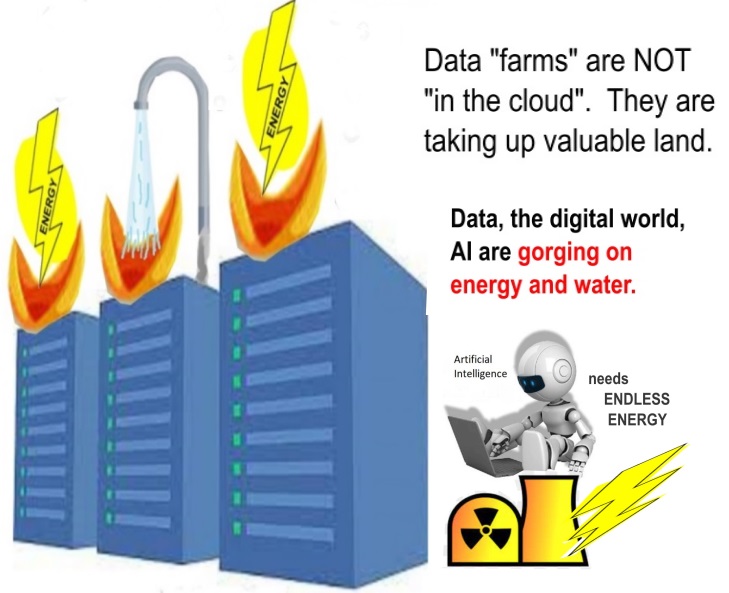
Zero Hedge, by Tyler Durden, Aug 14, 2026
It was almost a year ago, in November 2025, when we first calculated that the AI supercycle was facing a huge problem: namely, a power shortfall of (at least) 44 nuclear power plants, or GW or energy, by 2028.
Fast forward to last week when we made another stunning discovery: the reason why Texas Gov Abbott froze the rollout of new data centers in his state is because the number of interconnection requests facing ERCOT had risen to a mindblowing 474 GW (of which 90% were data centers), when the state’s highest ever power demand just hit 91GW. Needless to say, this will never happen in (maybe) a hundred years, but it does prompt the question we have been asking for years: where will the energy come from.
Well, as it turns out, the answer is nowhere. According to new projections from Wood Mackenzie, zmore than two-thirds of the electricity sought for the artificial intelligence boom in the US isn’t likely to materialize due to “phantom” projects and long-shot pitches.
The consultancy, which was inspired by not only our recent use of the term “bragawatts”, but the Bernstein report it came from (link here for pro subs) which reached the same conclusion…
… said it sees US grid operators and utilities likely committing to about 28% of the 1,066 gigawatts requested for data center projects (as most know by now, a gigawatt is the equivalent generating capacity of a traditional nuclear reactor: enough energy to power about 750,000 households for a year, or about 10-30 data centers).
While certainly no one expects every proposed project to be built, Bloomberg notes that the data reveals how inflated projections of future power demand complicate planning and budgeting by utilities and grid operators. That can translate into higher utility bills, since capital costs for upgrading infrastructure are typically covered through rate hikes.
“Everyone’s trying to figure out the rules of the road in order to make this the most efficient process without increasing grid prices,” said Alex Klaessig, co-founder of energy market intelligence firm Halcyon.
Developers have been taking a shotgun approach to pitching projects to utilities, seeking to get ahead in the AI build-out. That’s overwhelming US grids and creating even more data center bottlenecks. The explosion of requests is stretching approval timelines, forcing more applications to be vetted than ever before, and threatening to undermine US efforts to compete in the global AI race. It’s what prompted Texas to put a pause on all data center construction.
Of course, the counterfactual by the pro-AI lobby immediately emerged, to wit: “If we don’t allow these data centers to come online as fast as we can, then we might lose the future benefits of AI,” Klaessig said, …………………………………………………………………….
Of course, the 1,066 gigawatts of applications cited by Wood Mackenzie would require a staggering jump in US electric capacity. The amount represents 83% of the nation’s total utility-scale generation capacity at the end of last year, according to the US Energy Information Administration.
Making matters worse and adding to the chaos, many applications are from firms with no prior experience building facilities with energy needs that can rival mid-sized cities. The projects of those first-time developers are often disproportionately large, though generally less likely to come to fruition than those from well-established big technology firms, said Wood Mackenzie analyst Caitlin Connelly……………………………….
As we reported previously, Texas Governor Greg Abbott ordered regulators on Aug. 3 to audit every data center seeking access to the state’s main grid, effectively pausing those projects’ approvals until reviews are complete. His surprise call puts $13 billion in industry revenues at risk and threatens to delay almost a fifth of America’s data center pipeline in the medium term, according to BloombergNEF……………………………………………………..
Bottom line: very little of the bombastic projections you see and hear every single day about the pace and size of the AI rollout will ever materialize. That also means that so much of the capital already invested in said rollout will be wasted. The question is how big the negative impact on stocks will be when people finally do the math. https://www.zerohedge.com/energy/most-two-thirds-power-sought-us-data-centers-will-never-materialize
1 Comment »
Leave a Reply
1 This Month
23-25 October – on Zoom – World BEYOND War’s annual global conferenc


Shut down the radiation-damaged Heysham nuclear reactors now
To see nuclear-related stories in greater depth and intensity – go to https://nuclearinformation.wordpress.com

Say No to NASA’s Reckless Nuclear Reactor on the Moon
Say No to NASA’s Reckless Nuclear Reactor on the Moon
-
Archives
- October 2026 (170)
- September 2026 (339)
- August 2026 (330)
- July 2026 (355)
- June 2026 (287)
- May 2026 (306)
- April 2026 (356)
- March 2026 (251)
- February 2026 (267)
- January 2026 (308)
- December 2025 (358)
- November 2025 (359)
-
Categories
- 1
- 1 NUCLEAR ISSUES
- business and costs
- climate change
- culture and arts
- ENERGY
- environment
- health
- history
- indigenous issues
- Legal
- marketing of nuclear
- media
- opposition to nuclear
- PERSONAL STORIES
- politics
- politics international
- Religion and ethics
- safety
- secrets,lies and civil liberties
- spinbuster
- technology
- Uranium
- wastes
- weapons and war
- Women
- 2 WORLD
- ACTION
- AFRICA
- Atrocities
- AUSTRALIA
- Christina's notes
- Christina's themes
- culture and arts
- Events
- Fuk 2022
- Fuk 2023
- Fukushima 2017
- Fukushima 2018
- fukushima 2019
- Fukushima 2020
- Fukushima 2021
- general
- global warming
- Humour (God we need it)
- Nuclear
- RARE EARTHS
- Reference
- resources – print
- Resources -audiovicual
- Weekly Newsletter
- World
- World Nuclear
- YouTube
-
RSS
Entries RSS
Comments RSS


[…] to move forward only with whichever application lands the best deal and the fastest approval. As an account of the projection explained, that practice inflates the apparent demand because a single planned data center can show up as […]
Pingback by A new forecast warns two-thirds of the power promised to AI data centers may never actually get built – Morning Overview | August 28, 2026 |