What no government wants you to know about nuclear weapons – Carol Turner

“In 2025, global nuclear spending rose 19% on the previous year. Nuclear weapons projects are long term projects; governments will shoulder the costs for years or even decades ahead.”
, By Carol Turner, Labour CND,
https://labouroutlook.org/2026/08/13/what-no-government-wants-you-to-know-about-nuclear-weapons-carol-turner/
In August, peace groups across the country commemorated two crimes against humanity committed by the United States in 1945. Crimes against humanity are defined as inhumane acts, widespread or systematic attacks directed against a civilian population. Unlike war crimes, they can occur in peacetime as well as war. The atomic bombing of the Japanese cities of Hiroshima and Nagasaki, on 6 and 9 August, were two such crimes. By 1950, 340,000 people were estimated to have died as a direct result. Second and third generation atom bomb survivors, the hibakusha, continue to suffer to this day.
Nuclear realities in 1945
The US still claims these bombings resulted in the surrender of Japan and ended World War II sooner and with less loss of life than would have otherwise been the case. This is a convenient hypothesis which denies what American historian Gar Alperovitz established in his seminal work on the atomic bombings, and is reinforced by generations of so-called revisionist historians who continue to challenge US government orthodoxy.
By 1945, the Japanese military had suffered a series of defeats culminating in the US capture of Okinawa in April. By now, the Japanese Emperor was losing confidence in the possibility of a military victory. In June, he announced his intention of ending the war and the Supreme Council for the Direction of the War (the war leadership commonly known as the Big Six), agreed to seek assistance from the Soviet Union in opening negotiations with the Allied Powers.
… and today
The world is much changed since 1945, but the possibility of nuclear war has never been higher. Eight more states have joined the US: Russia became a nuclear weapons state in 1949, Britain in 1952, France 1960, China 1964, Israel around 1967, India 1974, Pakistan 1998, and North Korea 2006.
Their nuclear arsenals have reached staggering proportions. SIPRI, the Stockholm International Peace Research Institute, estimates the total number of nuclear warheads is now at around 12,000, and each has considerably more destructive power than the bombs dropped on Hiroshima and Nagasaki.
A new nuclear arms race is already underway, driven by the nuclear weapons states competing to keep ahead of the pack. In the past five years, the nine have spent a total of almost half a trillion dollars maintaining and upgrading their nuclear arsenals, with minimal public scrutiny. In 2025, global nuclear spending rose 19% on the previous year. Nuclear weapons projects are long term projects; governments will shoulder the costs for years or even decades ahead.
The notion that increasing the world’s nuclear capacity makes us safe is arrant nonsense. Proliferation makes nuclear conflict more likely, not less. Statistics demonstrate the magnitude of nuclear risks today, but they cannot begin to convey what it’s like when a nuclear bomb is detonated. What follows is a brief description of what happens when a nuclear bomb is dropped on a large city – not nuclear war, just one explosion in one city. The words are those of the International Red Cross and Red Crescent, not mine.
When a nuclear bomb explodes
The first phase lasts less than a second. A ball of fire hotter than the sun, evaporates everyone and everything within the epicentre of the explosion.
The second phase follows moments later. A shock wave moving faster than the speed of sound, creates winds like hurricanes and tournedos which people and buildings are unable to withstand. Petrol stations and other storage facilities explode and fires spread. The heat burns everything within a 500 square kilometer radius that is capable of burning – plastic, wood, hair, skin.
Millions of people with serious injuries and burns will die in agonising pain within hours or days, with little if any help. Medical centres have been destroyed along with other structures, and medics have been killed and injured just like the rest of the population.
The third phase takes place over the next few days. Black rain falls covering everyone and everything with sticky radioactive dust. Every breath every survivor takes poisons their lungs. The worst affected by this will die in hours or over a few days. Many more will die slowly in the weeks, months, and years ahead. Atom bomb survivors will live with extensive burns and succumb to cancers; and children will be born with shocking birth defects.
What no government ever tells you
After a nuclear attack, you’re on your own. The damage doesn’t end when the fires burn out and the smoke clears. There is no water to drink, no transport to evacuate you from the area, no medical supplies, and the little food that remains quickly runs out. Help from outside is hampered by conditions in the city, and emergency workers are in danger if they get too close. Nearby hospitals are under-equipped and overwhelmed by the sheer number of patients.
A nuclear explosion is like every natural disaster happening at once. No serious humanitarian response is possible. There is no way to help the victims of a nuclear attack.
Commemorating Hiroshima and Nagasaki is more than remembering an historic war crime. It brings home what a nuclear exchange would mean today; and reminds us that the chances of that happening are growing.
Today’s nuclear stakes
Military engagements in Ukraine and Iran both involve nuclear weapons states. Both have been testing grounds for the use of new technology in warfare, including unmanned weaponry. Both conflicts are spreading beyond their original combat zones:
In the case of Ukraine:
- Russia is a nuclear weapons state; Ukraine is supported by the US, Britain, and France, as well as eight European Nato members, including Britain, which host Nato facilities and US nuclear weapons on their territories.
- The bilateral Strategic Arms Reduction Treaty (New START) between the US and Russia, which caps the number of nuclear warheads each deploys, lapsed in February this year. There are no plans to revive it.
- The conflict is expanding. Ukraine is striking deeper into Russia against economic and political as well as military targets. Russia is bombarding Ukraine with drones and missiles.
- The conflict is now encroaching into the Baltic states and some East European neighbours, and Germany and France are discussing a European-wide nuclear force.
In the case of Iran:
- The US and Israel are nuclear weapons states.
- Israel is the only nuclear armed state in the region. It does not acknowledge it has nuclear weapons, and is not a signatory to the nuclear Non-Proliferation Treaty (NPT).
- Israeli politicians have floated the idea of using nuclear weapons against Hamas in Gaza and against Iran.
- There are now 12 countries actively engaged in the military conflict.
- There are growing signs that the war is destabilising the region. Saudi Arabia signed a bilateral security agreement with nuclear armed Pakistan last year. The recent Mecca Joint Defence Agreement (MJDA) between the Saudis, Pakistan. and Turkey, a Nato member, is described as a landmark agreement.
Britain is part of a new nuclear arms race
In 2025, Britain overtook Russia to become the third highest nuclear spender after the US and China. The UK is expanding its nuclear programme beyond the sea-based Trident system, and developing the RAF’s nuclear capability. As of last year, Britain’s nuclear programmes accounted for around 14% of the Ministry of Defence (MoD) budget.
The claim that Britain’s nuclear weapons makes us safe – the myth that this government like every other before it continues to peddle – is the opposite of what’s actually going on. Stationing US nuclear weapons at RAF Lakenheath and buying US nuclear capable fighter jets for RAF Marham make us a primary target in a future war in Europe and beyond.
Neither does military spending help grow the economy or create more jobs. The arms manufacturers are the beneficiaries, not the workforce – BAE Systems, Rolls-Royce, Babcock International, and Lockheed Martin UK which design, manufacture, maintain and refit Trident submarines and supply Trident’s ballistic missiles.
Hope, what hope?
When Andy Burnham became Prime Minister, he promised hope and a new direction for Britain.
Allowing US war planes to fly from Fairford to attack Iran doesn’t bring hope. It extends a war that has already spread. Suppling Ukraine with weapons doesn’t bring hope. It extends a war which the people of Ukraine and Russia don’t want.
Nuclear weapons are accumulated and wars fought in the interest of the establishment not the interests the working class. Burnham’s government cannot bring real change to the lives of the majority if he remains wedded to the war fighting policies of previous governments.
Meeting Nato’s spending targets robs Burnham of the resources for projects that will bring the sort of changes that improve the lives of the majority. Expanding Britain’s nuclear capability and spending more on the military puts the government at the centre of a 21st century arms race.
Which gives you most hope?
Hungary to sink two barges near nuclear plant as river runs dry
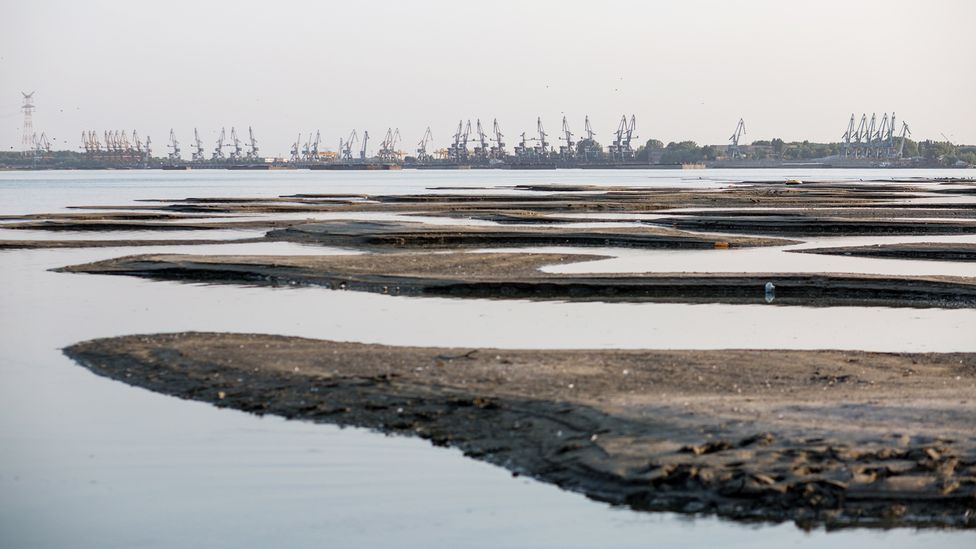
Paks nuclear plant i currently operates at around 25% of its capacity
Rich BoothFriday 14 August 2026, https://www.independent.co.uk/news/world/europe/danube-river-low-hungary-nuclear-power-b3033182.html
Authorities in Hungary will sink two barges today to raise the water level at the Paks nuclear plant in the Danube, Prime Minister Peter Magyar said on Friday.
The plant currently operates at around 25% of its capacity due to a historic drought and record low water levels on the Danube river, from which the nuclear plant draws its coolant.
Neighbouring Romania shut down its last working reactor on Thursday as drought this summer has wreaked havoc in European power production, shipping and public health systems. The drought also raised questions in Hungary and Romania about how to adapt atomic energy to an increasingly extreme climate.
Hungary’s government announced on Wednesday that it would build a riverbed “sill”, a submerged, dam-like structure built crosswise on the bottom of a river channel, to manage water flow. That will take weeks.
The government also said that two 80-metre (260-foot) barges would be submerged near the nuclear plant to raise the water level in the short term so that the plant’s two turbines could be kept working while the riverbed sill was under construction.
“The controlled sinking (of the barges) is expected to begin late this afternoon in order to raise the water level on the Danube,” Magyar said in a Facebook video from Paks on Friday.
Sinking of the barges could raise the water level by 20 centimetres (8 inches) in the short term, while the river sill is expected to raise it by up to 1 metre.
It comes as wrecks of World War Two German warships have resurfaced further up the Danube River in eastern Serbia as record-low water levels exposed sandbanks and stranded boats.
Rusted hulls that have lain submerged for decades since 1945 have emerged, while further north in Novi Sad many small boats docked in marinas remain stranded.
“This has literally never happened before, these wrecks we’re heading towards right now have never been visible like this,” Ljubisa Karalic, a local fisherman in Prahovo, told Reuters.
“They’ve always been completely submerged; what we’re seeing now is utterly unprecedented.” A succession of record-breaking heatwaves in Europe this summer has caused a severe drought in parts of the continent, affecting major waterways such as the Danube and the Rhine. The Danube water temperatures in Serbia hovered around an all-time maximum of 28 degrees Celsius.
“A record has been broken regarding the Danube’s discharge. We hope this represents the minimum, given that rain is forecast for upstream stretches, which should help the situation improve,” Jelena Jerinic of Serbia’s Hydrometeorological Service said. She warned that the river’s biodiversity is threatened as well.
“High (water) temperatures, alongside low water volume, accelerate the proliferation of microorganisms and bacteria while depleting dissolved oxygen levels.”
One-fifth of France’s nuclear capacity offline due to extreme weather and jellyfish

In total, 13 of the 57 reactors in EDF’s nuclear fleet were affected, resulting in a more than 20% shortfall in nuclear power production capacity, a record deficit.
Le Monde with AFPP, August 12, 2026, https://www.lemonde.fr/en/energies/article/2026/08/12/one-fifth-of-france-s-nuclear-capacity-offline-due-to-extreme-weather-and-jellyfish_6756421_98.html
France on Wednesday recorded a more than 20% shortfall in nuclear power production capacity, a record deficit caused by environmentally related outages linked to drought, extreme heat and a jellyfish invasion. France uses nuclear power to generate around 70% of its electricity. The country has seen nuclear power production disrupted by multiple heatwaves and droughts this year.
According to Agence France-Presse (AFP) calculations based on data published by energy group EDF since 2015, 20.4% of generating capacity was unavailable. Between 9:45 am and 10:00 am, EDF’s nuclear fleet recorded a new peak in outages due to “environmental constraints” or “external environmental causes,” both in terms of the number of reactors shut down or operating at reduced output and in terms of lost generating capacity.
In total, 13 of the 57 reactors in EDF’s nuclear fleet were affected. Eight reactors were completely shut down while five were operating at reduced power. Much of the lost nuclear generating capacity was due to full or partial shutdowns at five of the six reactors at the Gravelines nuclear power plant after a swarm of jellyfish clogged pumps used to cool the units.
Experts say overfishing, plastic pollution and warming seas due to climate change have created conditions allowing jellyfish to thrive and reproduce. Outside the Gravelines plant, the largest in Western Europe, the shutdowns or production reductions affecting other reactors are linked to extreme heat and droughts, depriving the plants of the water they need for cooling.
Mutiny aboard US carrier Abraham Lincoln off Iranian coast

mounting complaints from crew members following protests by their families over the ship’s prolonged deployment
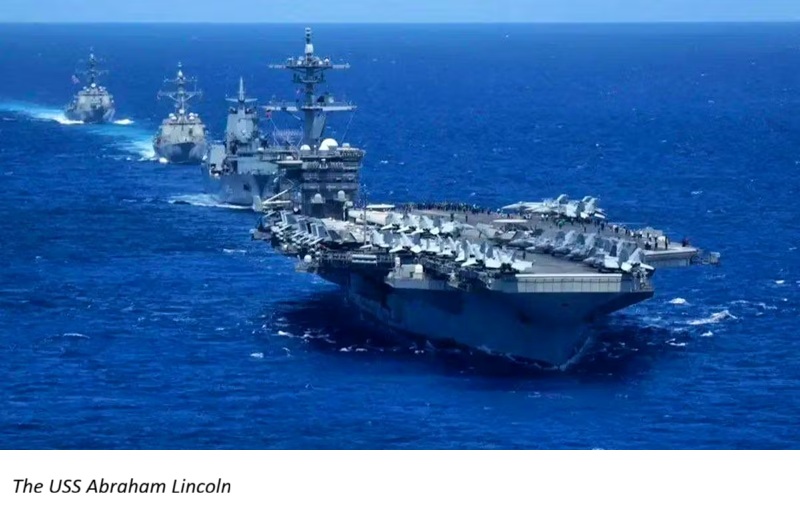
The USS Abraham Lincoln has been deployed for over 260 days, which is a modern-era record for a U.S. aircraft carrier. This prolonged deployment has led to significant stress and mental health challenges among the crew
August 12, 2026, Bruce K. Gagnon, https://space4peace.blogspot.com/2026/08/mutiny-aboard-us-carrier-abraham.html
Recent reports indicate a serious mutiny situation aboard the USS Abraham Lincoln. Seven U.S. Navy personnel have possibly been killed and several others injured in a violent clash among the crew, highlighting growing unrest and morale issues during an extended deployment.
Worried families vented their anxieties about loved ones onboard the Lincoln at an emotional town hall meeting with navy leaders in San Diego last Thursday, Stars and Stripes reported. One spouse among the 200 or so family members said that her husband had texted her that day saying “he hopes he doesn’t wake up tomorrow”.
A woman at the meeting told acting navy secretary, Hung Cao that the navy had “broken trust between us and the leadership”, the paper reported. The Navy Times gave details of thwarted suicide attempts onboard the aircraft carrier during the current deployment. Annabelle Loma told the outlet that her husband had tried to jump overboard after his spell at sea kept being extended. “He’s scared. He thinks he’ll get a dishonorable discharge, and just because he was burnt out his 13-year career is ruined, just like that,” she said.
Bonnie York, whose stepson is aboard the Lincoln, told MS NOW she had been told a doctor or therapist on the ship warned the crew needed to reach port before people started “losing their minds.” She voted for Trump—and partly because he promised not to start any new wars. She no longer believes the country is safer for it. “You’ve essentially stranded them out there,” she said of the crew.
Seven US Navy personnel have reportedly been killed and several others wounded in a violent clash aboard the USS Abraham Lincoln, as growing unrest among the carrier’s crew has exposed mounting pressure inside the US military amid a prolonged deployment.
The incident erupted after an adviser to US Central Command (CENTCOM) chief Brad Cooper boarded the carrier to address mounting complaints from crew members following protests by their families over the ship’s prolonged deployment, according to Tasnim News Agency, citing an informed military source. The adviser was reportedly met with boos and had water bottles thrown at him while addressing a gathering of personnel. The confrontation subsequently escalated into a fight among crew members involving knives and other bladed weapons, leaving seven personnel dead and several others wounded, according to the source.
Pistol Pete Hegseth, the defense secretary, dismissed the accounts as “more fake news”.
Deployment Context
The USS Abraham Lincoln has been deployed for over 260 days, which is a modern-era record for a U.S. aircraft carrier. This prolonged deployment has led to significant stress and mental health challenges among the crew
Conditions and Morale
Reports from military families describe poor living conditions, including food shortages and inadequate facilities, contributing to the deteriorating morale.
Response and Claims
In addition to internal conflicts, there are external tensions, with Iran claiming to have attacked the carrier, although U.S. officials have denied these allegations.
Paper Tiger: the Failure of America’s Trillion Dollar War Machine

So the US is using multi-million dollar missiles that are irreplaceable in the short term to try, and often fail, to intercept Shahed drones that cost Iran between $20,000 and $50,000 each.
To make up for the Navy’s dwindling missile stocks in the war zone, the US is flying B-1 bombers from a British airbase at Fairford in England to fire Tomahawk missiles at Iran
SCHEERPOST, August 12, 2026, Medea Benjamin and Nicolas J. S. Davies
According to the Stockholm International Peace Research Institute (SIPRI), the United States spent $21 trillion on its military between 2001 and 2024 (in constant 2024 dollars), equal to the combined military spending of the next eighteen countries. Iran barely made that list at all, spending only 2% of what the US did, and SIPRI estimated Iran’s 2025 military budget at only $7.5 billion. So how is Iran holding its own against the multi-trillion-dollar US war machine?
A critical difference between the US war on Iran and previous US and allied bombing campaigns against Yugoslavia, Afghanistan, Iraq, Libya and now Gaza, is that the US and Israel have failed to destroy Iran’s air defense system and cannot fly warplanes over Iran without risking the loss of planes and pilots to enemy fire. Iran has wisely built its critical defense infrastructure underground, with arms factories, weapons stockpiles and launch sites sheltered safely beneath its impenetrable mountainous terrain.
US Secretary of War Pete Hegseth claimed on March 10th that the US had “total air dominance” over Iran, but that is still not true. Instead, US forces are mainly attacking Iran with stand-off weapons from outside Iran’s borders, radically depleting US stockpiles of extraordinarily expensive weapons.
Even though US warplanes avoid entering Iranian airspace, the Congressional Research Service has reported that the US has lost at least four F-15 fighters, an F-35, an A-10, seven KC-135 refueling planes, an E-6 AWACS plane, two MC-130J special operations aircraft, a helicopter, a high-altitude Triton drone and 24 MQ-9 Reaper drones.
By contrast, during the full-scale invasion of Iraq in 2003, US forces lost only one A-10 and six helicopters, after systematically destroying much of Iraq’s air defenses through a low-intensity bombing campaign conducted under cover of the so-called no-fly zones, which the US, UK and France unilaterally imposed after the First Gulf War in 1991.
In 2003, the US Armed Forces dropped 13,000 tons of bombs and missiles on Iraq in the first 30 days of the war. But only 800 tons, or 6%, of those munitions, were cruise missiles and other stand-off weapons like the ones the US is now relying on against Iran.
The US has already depleted a third of its stand-off and air defense weapons stocks, including JASSM and Tomahawk cruise missiles and SM-2, -3 and -6 anti-aircraft missiles, as well as half its stocks of Patriot and THAAD interceptors and the new Precision Strike Missiles that are replacing the shorter-range ATACMs. These missiles range in price from $700,000 each for JASSMs up to $12 million each for THAAD interceptors, and many will take years to replace.
So the US is using multi-million dollar missiles that are irreplaceable in the short term to try, and often fail, to interceptShahed drones that cost Iran between $20,000 and $50,000 each. This is a stark contrast from Iraq in 2003, when the US weapon of choice was its 500 lb. GBU-12 Paveway II laser-guided bomb, which cost only $22,000, and the 7,000 bombs used to attack Iraq were easily restocked.
To make up for the Navy’s dwindling missile stocks in the war zone, the US is flying B-1 bombers from a British airbase at Fairford in England to fire Tomahawk missiles at Iran. So many planes are now flying from so far away to attack Iran that the US has also had to send dozens more aerial refueling planes to reinforce the sixty it already hadstationed in Israel.
The Russians have demonstrated in Ukraine that the capacity to quickly ramp up production of relatively inexpensive artillery shells and drones can be more critical in a war than spending trillions on big-ticket weapons programs. Meanwhile, the corrupt US military-industrial complex has built a gold-plated revolving door between the US arms industry, the Pentagon top brass and a captive, co-opted civilian government. It has produced ever more expensive weapons, but it has lost nearly every war it has fought.
……………………………………………………………………………………………………………………………………………………………………………………………………. in his 2018 book Losing Military Supremacy: the Myopia of American Strategic Planning, Andrei Martyanov warned that huge US investments in aircraft-carriers and other big-ticket warships and warplanes were rapidly being rendered obsolete by a new generation of Russian and Chinese missiles capable of traveling much faster and farther than the most advanced missiles in the US arsenal.
Now Iranian missiles and drones have fundamentally altered the military balance in the Middle East. They have driventhe US military out of its bases in the Persian Gulf and are forcing US aircraft carriers to stay 1,000 miles from the coast of Iran. US Central Command has had to relocate its regional headquarters from Qatar to Jordan, but Iran has attacked it there too.
Now the United States is repositioning more of its forces in the Middle East to Israel. This raises the stakes, and increases the risks, of any future escalation in the war on Iran, and it further expands the entangling US military alliance with the genocidal state of Israel, which most Americans now oppose.
On August 8, Iran reiterated six points from the Memorandum of Understanding that Trump already signed on June 17, and insisted that the United States must comply with them before it will reopen the Strait of Hormuz to international shipping.
Western commentators have described these as tough new conditions, but they are neither new nor tougher than before. They simply make explicit what was already implicit—for example, by specifically mentioning Palestine and Yemen, whereas the original memorandum merely called for ending the war “on all fronts, including Lebanon.” The United States and Israel started this war, and the United States has the power to end it by negotiating in good faith, based on the memorandum it already agreed to.
The American people have sacrificed enormously to pay for this obsolete, overpriced, and ineffective war machine. Many have paid with their lives, their limbs or their health. All of us pay the opportunity cost of our leaders’ warmongering and reckless squandering of our national wealth, leaving us without the basic support systems that our neighbors in other developed countries take for granted, from universal free healthcare and quality public education to living wages and paid vacation time.
The US government’s corrupt priorities leave our most serious problems unaddressed, while undermining global efforts to address them, from the destruction of the climate and the natural world to the ever-present danger of nuclear war.
As this year’s primary election results suggest, most Americans want a society that cares for its people, with a government that addresses our most urgent needs. That must surely include dismantling this failed, corrupt, out-of-control and absurdly expensive war machine.
Medea Benjamin and Nicolas J. S. Davies are the authors ofWar In Ukraine: Making Sense of a Senseless Conflict, now in a revised, updated 2nd edition.
Medea Benjamin is the cofounder of CODEPINK for Peace, and the author of several books, including Inside Iran: The Real History and Politics of the Islamic Republic of Iran.
Nicolas J. S. Davies is an independent journalist, a researcher for CODEPINK and the author of Blood on Our Hands: The American Invasion and Destruction of Iraq. https://scheerpost.com/2026/08/12/paper-tiger-the-failure-of-americas-trillion-dollar-war-machine/
Growing U.S. military Footprint In Guam Intensifies Concerns Over Environmental Damage And Sovereignty
SCHEERPOST,August 15, 2026, Gaea Cabico Prism
In Yigo, the northernmost village in Guam, there is a well that cannot be shut down.
Known as Y-15, the well sits atop the island’s northern aquifer, which supplies around 80% of the island’s drinking water. Even if contaminants are detected, Y-15 has to keep pumping. There is simply no alternative.
The well also sits just below a hill near Upi Elementary School—attended by around 400 children—and just outside the back gates of Andersen Air Force Base, which hangs over the community like a permanent shadow. Generations of Indigenous CHamoru families have called Yigo home, relying on these waters for drinking, cooking, and other daily activities.
But in September 2025, one such family learned that the well supplying their home of 17 years was contaminated with high levels of dieldrin, a pesticide once widely used on crops and for termite control beginning in the 1950s. The Environmental Protection Agency (EPA), which classifies dieldrin as a probable human carcinogen, banned all uses of the pesticide in 1987 over concerns about its damage to the environment and links to serious health effects, including cancer, Parkinson’s disease, and reproductive issues such as decreased fertility and increased numbers of stillbirths. Because dieldrin accumulates in the body, long-term exposure—even in small amounts—can cause serious harm, according to the EPA.
More than 1,200 residents of Yigo were told not to drink water from Y-15 because of dieldrin contamination……………………………………..
Dieldrin is just one piece of a much larger and troubling environmental legacy in Guam.
Per- and polyfluoroalkyl substances (PFAS)—better known as “forever chemicals”—have also been detected across the island’s water systems. These compounds can persist in soil and groundwater for decades, and they have been linked to a range of health effects, including cancer, immune and thyroid dysfunction, liver and kidney disease, and serious reproductive issues.
For Monaeka Flores, an advocate with the grassroots environmental organization Prutehi Guåhan, the island’s environmental problems are inseparable from the military buildup that has reshaped the island. From hazardous waste dumping, base construction, and open-air detonations of munitions to live-fire exercises in sensitive habitats, advocates say that Guam’s land and water bear the toxic legacy of the U.S. military………………………………………………………………………………………………………………………………………………………………………………
The long arc of colonization
While Guam is only 30 miles long and nine miles wide, the U.S. Defense Department controls roughly a quarter of its land—and military expansion is accelerating. Much of the military buildup on the island is justified on the grounds of national security as the U.S. seeks to strengthen its position in the Pacific amid tensions with China and North Korea.
A missile defense system designed to protect the territory from potential outside threats, live-firing range complex, and new Marine Corps base are currently in the works. The buildup could also expose more people to potential environmental contamination. Roughly 10,000 active-duty personnel, their dependents, and government civilians are expected to arrive by 2036. ………………………………………………………….
What is unfolding in Guam is not happening in isolation.
From Okinawa, Japan to the Marshall Islands and the Diego Garcia military base in the Chagos Archipelago, communities living near U.S. military bases have documented patterns of environmental harm, including contamination linked to toxic chemicals and hazardous waste.
There is “very significant environmental damage” due to leaks and the military’s accidental—or sometimes intentional—dumping of hazardous, toxic materials, said David Vine, a political anthropologist and author of “Base Nation: How U.S. Military Bases Abroad Harm America and the World.” “It’s a clear pattern across the network of bases in the Pacific and around the world, including the 50 states,” he told Prism
Guam’s many environmental problems are concentrated around military bases, the island’s airport, and sites where firefighting occurred. As just one example: A major source of PFAS contamination on the island is the powerful fire suppressant known as Aqueous Film Forming Foam, which is used to extinguish jet fuel fires……………………………………………………………………………………………………
Activists, community leaders, and CHamoru families increasingly frame their struggle against the military’s pollution and contamination not only as an effort to protect fragile ecosystems, but also as a broader fight for demilitarization and decolonization. They are demanding both the removal of militarized infrastructure and the restoration of sovereignty over their ancestral lands………………………………………………………………………………………………………………….. https://scheerpost.com/2026/08/15/growing-u-s-military-footprint-in-guam-intensifies-concerns-over-environmental-damage-and-sovereignty/
US Military Morale In The Middle East In The Overflowing Toilet
By Colonel (Ret) Ann Wright, Popular Resistance., August 13, 2026
Military Families Speak Out For Their Loved Ones….Again and Again and Again.
Rotten food, no room in the incoming missile shelters, confiscation of alert notification devices for incoming missiles (cellphones), infrequent mail, jumping off aircraft carriers, overflowing toilets.
Rotten food, overflowing toilets into bunking areas, no room in the incoming missile shelters, confiscated cellphones that are the notification devices for incoming missiles, infrequent mail, social media closed down, were some of the issues that military families identified at the national conference of Veterans For Peace.
Spouses and parents of Air Force, Army, Marine and Navy, members of Military Families Speak Out, told of plummeting morale, lack of basic supplies and attacks on U.S. military bases that are not reported in the U.S. media.
The frustration of the military families at the VFP conference echoed the descriptions of life on U.S. military bases in the Middle East under attack by the Iranian response to the brutal U.S.-Israeli 5-month attack on Iran made by military families who met with the Acting Assistant Secretary of the Navy and the Commander of the U.S. Pacific Fleet in San Diego on August 6, 2026.
Big Problems on Long Deployments for U.S. Naval vessels, Ships’ Infrastructure and Sailor’s Physical and Mental Health
On August 6, 2026, the Navy’s senior leadership held listening sessions with the families of aircraft carrier USS Abraham Lincoln’s sailors – one in-person session in San Diego, and a second online session later the same evening. Family members leaked recordings of those sessions that described conditions aboard the aircraft carrier USS Abraham Lincoln: showers plagued with stubborn mildew, flagging morale, heavy fatigue, shortages of supplies and food, contaminated water supplies and lost mail.
Since departing from departing Naval Base San Diego on November 21, 2025, the USS Abraham Lincoln and its crew of 5,000 sailors and Marines has been deployed more than 250 days, with only a stop in Guam in December and a brief visit in Oman in June after 208 days at sea.
A second aircraft carrier USS Gerald R. Ford had similar problems when it sailed from the Caribbean to the Middle East after being off Venezuela in the kidnapping of Venezuelan President Nicolas Maduro and his wife in January 2026. During that deployment, the ship’s toilets kept failing, with sewage often overflowing and spilling onto the floor. Additionally, a fire broke out in the laundry room, causing enough damage that the Ford went into a port on the Greek island of Crete for repairs.
More than 200 sailors were treated for smoke inhalation, with one sailor medically evacuated from the carrier, after being injured in the damage control effort. Two others were treated for lacerations.
The smoke damage from the laundry room fire extended to the berthing. More than 100 bunks and personal gear were destroyed in the fire.
Articles in Stars and Stripes and the Navy Times detail at least six attempts by crew members to jump overboard from the USS Abraham Lincoln, with interviews conducted with sailors and families of those on board who described the impacts of the lengthy deployment.
USS Abraham Lincoln Sailor’s Father Proposes ‘Parent Swap’ To Replace His Son……………………..
Army and Marine Ground Forces Under Missile Attacks
Families of U.S. ground forces on the U.S. military bases scattered all over the Middle East describe overcrowding to no room in shelters against incoming missile and commands’ confiscating cellphones that are the notification devices for incoming missiles.
The U.S. military says that Iran watches social media postings of attacks and to prevent such postings, cellphones may be taken away, but families respond that notification of incoming missile attacks is by cellphone.
According to the news outlet War Horse, the only public source for injuries during the U.S. attack on Iran is the Defense Casualty Analysis System, which provides monthly totals for the War on Iran with limited demographic data…………………………….
Hundreds of Troops Suffering From Head Trauma
A large portion of the wounded suffering from head trauma has led some military health experts to worry that traumatic brain injuries—caused by damage to the brain that can impact thinking, movement, and emotion—could become the signature injury of this war, as in the U.S. wars in Iraq and Afghanistan.
18 US troops have been killed and 624 wounded Since February 28
The Pentagon has attempted to reduce the accounting on the number of US military killed in wounded in the war on Iran by separating those killed/wounded before the May 1 ceasefire and after. The total killed and wounded before and after the ceasefire are 18 US troops have been killed and 624 wounded since the US began its war against Iran on 28 February……………………
Senate Armed Services Committee Finally Getting Involved
The U.S. Congress is finally getting involved. On August 12, 2026, Senator Richard Blumenthal, a member of the Armed Services Committee, wrote a letter to Defense Secretary Pete Hegseth and the Acting Secretary of the Navy to express “serious concern” about the increasing length of deployments and demand answers about living conditions aboard the carrier…………………………………..https://popularresistance.org/us-military-morale-in-the-middle-east-in-the-overflowing-toilet/
Ann Wright served 29 years in the U.S. Army/Army Reserves and retired as a Colonel. She was also a U.S. diplomat for 16 years. She resigned from the U.S. Department of State in March 2003 in opposition to the U.S. war on Iraq. She is a member of Veterans For Peace, CODEPINK: Women for Peace, World Beyond War and many other organizations. She is the co-author of “Dissent: Voices of Conscience.” She lives in Honolulu, Hawaii.
Romania relies on Bulgaria and the wind after shutting down Cernavodanuclear plant
Strong wind, the prosumers shifting their input during peak
hours, and the imports from Bulgaria helped Romania’s power system on the
first day after Nuclearelectrica shut down its last reactor on August 13,
leaving the country without nearly 20% of its electricity production.
Romania Insider 14th Aug 2026,
https://www.romania-insider.com/ro-relies-bulgaria-wind-cernavoda-aug-2026
More Than Two-Thirds Of The Power Sought For US Data Centers Will Never Materialize
Zero Hedge, by Tyler Durden, Aug 14, 2026
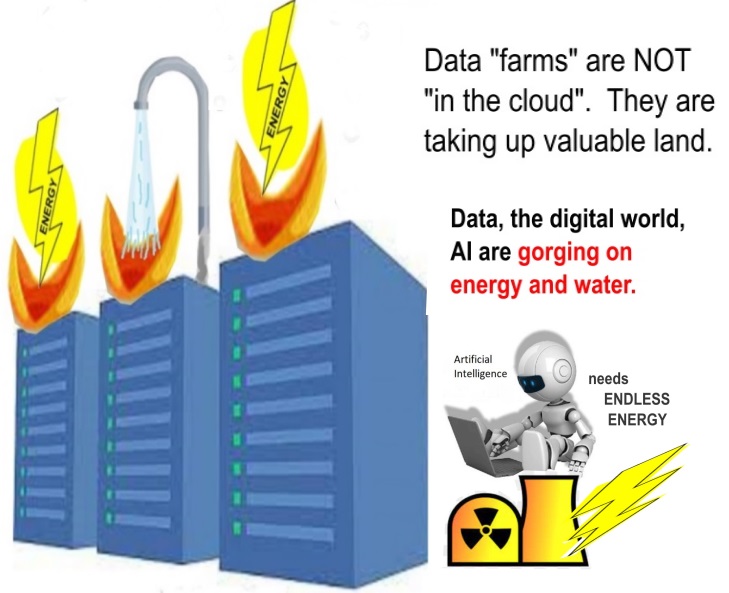
It was almost a year ago, in November 2025, when we first calculated that the AI supercycle was facing a huge problem: namely, a power shortfall of (at least) 44 nuclear power plants, or GW or energy, by 2028.
Fast forward to last week when we made another stunning discovery: the reason why Texas Gov Abbott froze the rollout of new data centers in his state is because the number of interconnection requests facing ERCOT had risen to a mindblowing 474 GW (of which 90% were data centers), when the state’s highest ever power demand just hit 91GW. Needless to say, this will never happen in (maybe) a hundred years, but it does prompt the question we have been asking for years: where will the energy come from.
Well, as it turns out, the answer is nowhere. According to new projections from Wood Mackenzie, zmore than two-thirds of the electricity sought for the artificial intelligence boom in the US isn’t likely to materialize due to “phantom” projects and long-shot pitches.
The consultancy, which was inspired by not only our recent use of the term “bragawatts”, but the Bernstein report it came from (link here for pro subs) which reached the same conclusion…
… said it sees US grid operators and utilities likely committing to about 28% of the 1,066 gigawatts requested for data center projects (as most know by now, a gigawatt is the equivalent generating capacity of a traditional nuclear reactor: enough energy to power about 750,000 households for a year, or about 10-30 data centers).
While certainly no one expects every proposed project to be built, Bloomberg notes that the data reveals how inflated projections of future power demand complicate planning and budgeting by utilities and grid operators. That can translate into higher utility bills, since capital costs for upgrading infrastructure are typically covered through rate hikes.
“Everyone’s trying to figure out the rules of the road in order to make this the most efficient process without increasing grid prices,” said Alex Klaessig, co-founder of energy market intelligence firm Halcyon.
Developers have been taking a shotgun approach to pitching projects to utilities, seeking to get ahead in the AI build-out. That’s overwhelming US grids and creating even more data center bottlenecks. The explosion of requests is stretching approval timelines, forcing more applications to be vetted than ever before, and threatening to undermine US efforts to compete in the global AI race. It’s what prompted Texas to put a pause on all data center construction.
Of course, the counterfactual by the pro-AI lobby immediately emerged, to wit: “If we don’t allow these data centers to come online as fast as we can, then we might lose the future benefits of AI,” Klaessig said, …………………………………………………………………….
Of course, the 1,066 gigawatts of applications cited by Wood Mackenzie would require a staggering jump in US electric capacity. The amount represents 83% of the nation’s total utility-scale generation capacity at the end of last year, according to the US Energy Information Administration.
Making matters worse and adding to the chaos, many applications are from firms with no prior experience building facilities with energy needs that can rival mid-sized cities. The projects of those first-time developers are often disproportionately large, though generally less likely to come to fruition than those from well-established big technology firms, said Wood Mackenzie analyst Caitlin Connelly……………………………….
As we reported previously, Texas Governor Greg Abbott ordered regulators on Aug. 3 to audit every data center seeking access to the state’s main grid, effectively pausing those projects’ approvals until reviews are complete. His surprise call puts $13 billion in industry revenues at risk and threatens to delay almost a fifth of America’s data center pipeline in the medium term, according to BloombergNEF……………………………………………………..
Bottom line: very little of the bombastic projections you see and hear every single day about the pace and size of the AI rollout will ever materialize. That also means that so much of the capital already invested in said rollout will be wasted. The question is how big the negative impact on stocks will be when people finally do the math. https://www.zerohedge.com/energy/most-two-thirds-power-sought-us-data-centers-will-never-materialize
1 This Month





PLEASE OPPOSE HR 8255 AND S.3639 – bills would accelerate satellite deployment, with no environmental review or safeguards – https://ncstd5li.quorum.us/campaign/169331/
To see nuclear-related stories in greater depth and intensity – go to https://nuclearinformation.wordpress.com
-
Archives
- October 2026 (10)
- September 2026 (339)
- August 2026 (330)
- July 2026 (355)
- June 2026 (287)
- May 2026 (306)
- April 2026 (356)
- March 2026 (251)
- February 2026 (267)
- January 2026 (308)
- December 2025 (358)
- November 2025 (359)
-
Categories
- 1
- 1 NUCLEAR ISSUES
- business and costs
- climate change
- culture and arts
- ENERGY
- environment
- health
- history
- indigenous issues
- Legal
- marketing of nuclear
- media
- opposition to nuclear
- PERSONAL STORIES
- politics
- politics international
- Religion and ethics
- safety
- secrets,lies and civil liberties
- spinbuster
- technology
- Uranium
- wastes
- weapons and war
- Women
- 2 WORLD
- ACTION
- AFRICA
- Atrocities
- AUSTRALIA
- Christina's notes
- Christina's themes
- culture and arts
- Events
- Fuk 2022
- Fuk 2023
- Fukushima 2017
- Fukushima 2018
- fukushima 2019
- Fukushima 2020
- Fukushima 2021
- general
- global warming
- Humour (God we need it)
- Nuclear
- RARE EARTHS
- Reference
- resources – print
- Resources -audiovicual
- Weekly Newsletter
- World
- World Nuclear
- YouTube
-
RSS
Entries RSS
Comments RSS

